What an AI coding agent costs per ticket, and how to budget it in 2026
Anthropic now puts Claude Code at about $13 per developer per active day. That number tells a team lead very little until it is divided by tickets. Here is how to work out cost per shipped ticket, three worked examples at November 2026 list prices, and the five habits that cut the bill without slowing anyone down.
The invoice nobody can explain
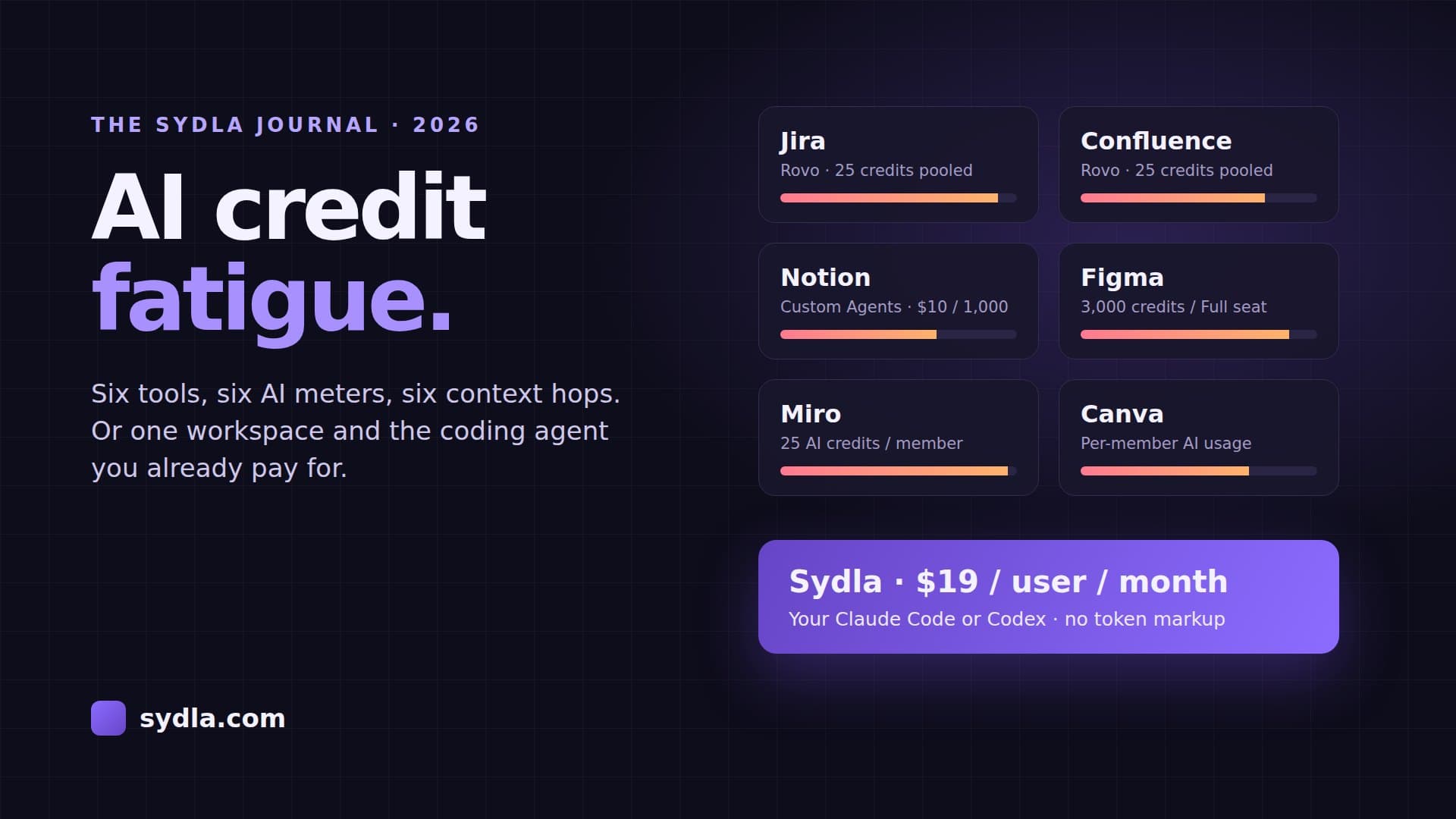
At the end of the month, the AI line arrives in pieces. A Claude or ChatGPT plan per engineer, an API bill for the overnight runs, Rovo credits in Jira, AI credits in Figma, credit packs in Notion, Miro and Canva. Finance asks a simple question: what did we get for it? Nobody can answer, because every meter counts something different and none of them counts tickets.
We wrote about the six meters in AI credit fatigue. This post is about the one meter that does real work, the coding agent, and how to turn its spend into a number a product team can plan with: cost per shipped ticket.
What Anthropic says Claude Code costs in 2026
Anthropic's Claude Code costs page gives the clearest public baseline. Across enterprise deployments, the average is around $13 per developer per active day and $150 to $250 per developer per month, with 90% of users staying below $30 per active day. Earlier versions of the same page said $6 a day; the number doubled as people gave agents longer, more autonomous work.
The same page lists what moves the number: model choice, codebase size, and running several instances or automation. It adds one warning teams often miss: agent teams use about seven times more tokens than a standard session when teammates run in plan mode.
On a subscription, you pay in quota rather than dollars: Claude Pro, Max at $100 and Ultra at $200 a month, or a ChatGPT plan for Codex, from Plus at $20 to Pro at $100 to $500 and Business at $25 a seat. Quota is still a budget. When a vague ticket burns half a week's limit, the next ticket waits.
Cost per ticket is the number that matters
A daily average hides the question a team lead actually has: which work is expensive, and why? Dividing spend by tickets answers it. The formula is short:
- Add every run on the ticket. First attempts, retries after a failed check, and the run that fixed review comments.
- Add the review. A second agent session that checks the change against the criteria costs tokens too.
- Divide by tickets that shipped. Abandoned branches count in the numerator, never in the denominator.
At list prices, the token cost of a run comes down to four counts: fresh input, cache writes, cache reads and output. Coding sessions reread the same files on every turn, so most input should be cache reads. On Opus 5.5 and Sonnet 5.5, a cache read costs one twentieth of fresh input. A session whose cache keeps breaking can cost several times more for the same work.
Three worked examples at November 2026 list prices
These are worked examples, not benchmarks: token counts we picked to resemble a medium ticket, such as adding a filtered export to a settings page. A run is about 3 million input tokens across all turns (90% cache reads, 10% cache writes) and 80,000 output tokens. A review session is a third of that input and 20,000 output tokens.
| Scenario | Cost per ticket | Runs | Model | What drives it |
|---|---|---|---|---|
| Clear brief, criteria and states | $2.36 | 1 run + 1 review | Sonnet 5.5 | Agent builds once and checks itself against numbered criteria |
| Same ticket on the bigger model | $4.72 | 1 run + 1 review | Opus 5.5 | Twice the token price, same amount of work |
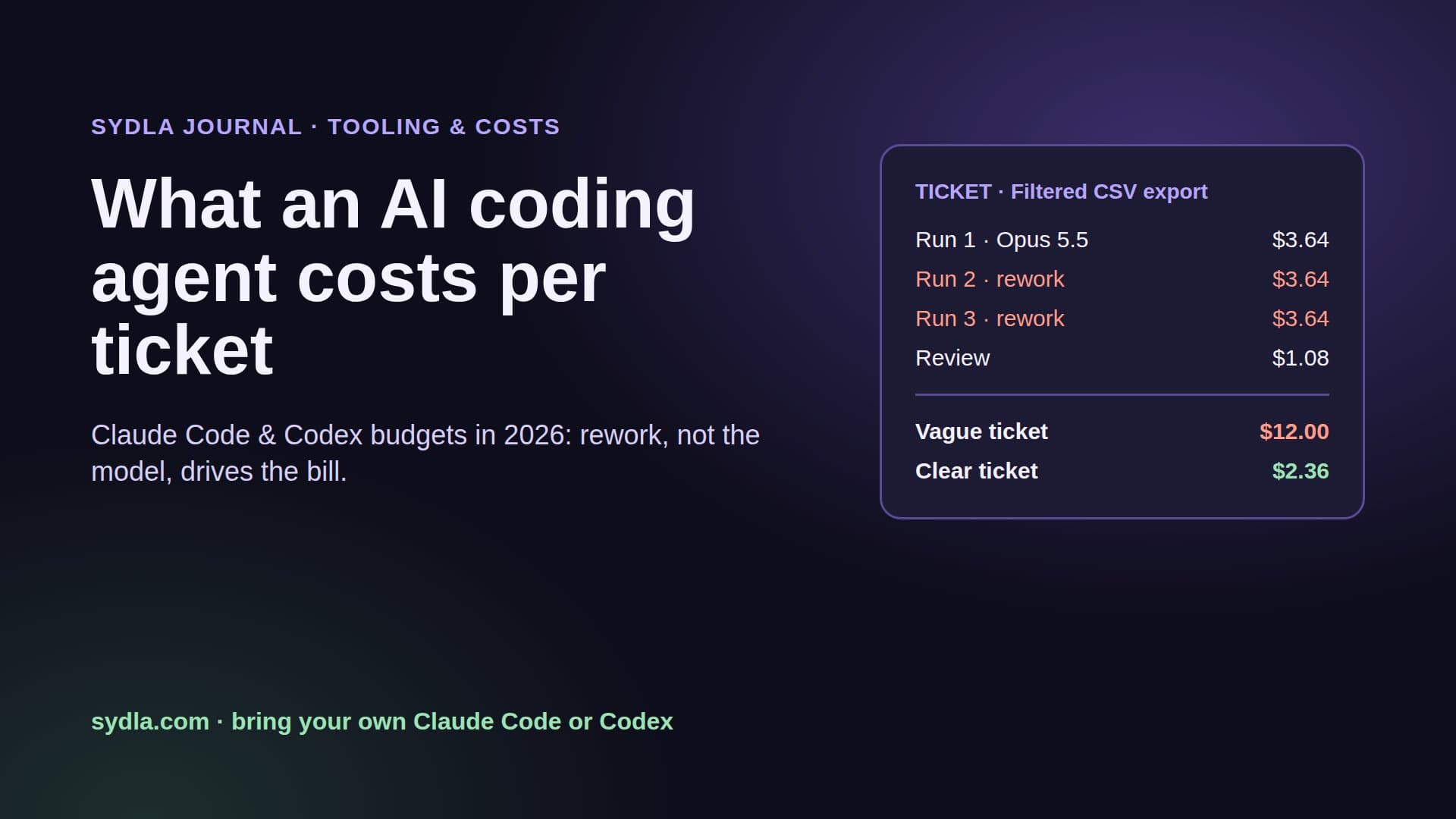
| Vague ticket, rebuilt twice | $12.00 | 3 runs + 1 review | Opus 5.5 | Missing states and criteria found in review, not before the run |
| Agent team in plan mode | about $12.70 | 1 team run | Sonnet 5.5 | About 7x tokens of a single session, per Anthropic |
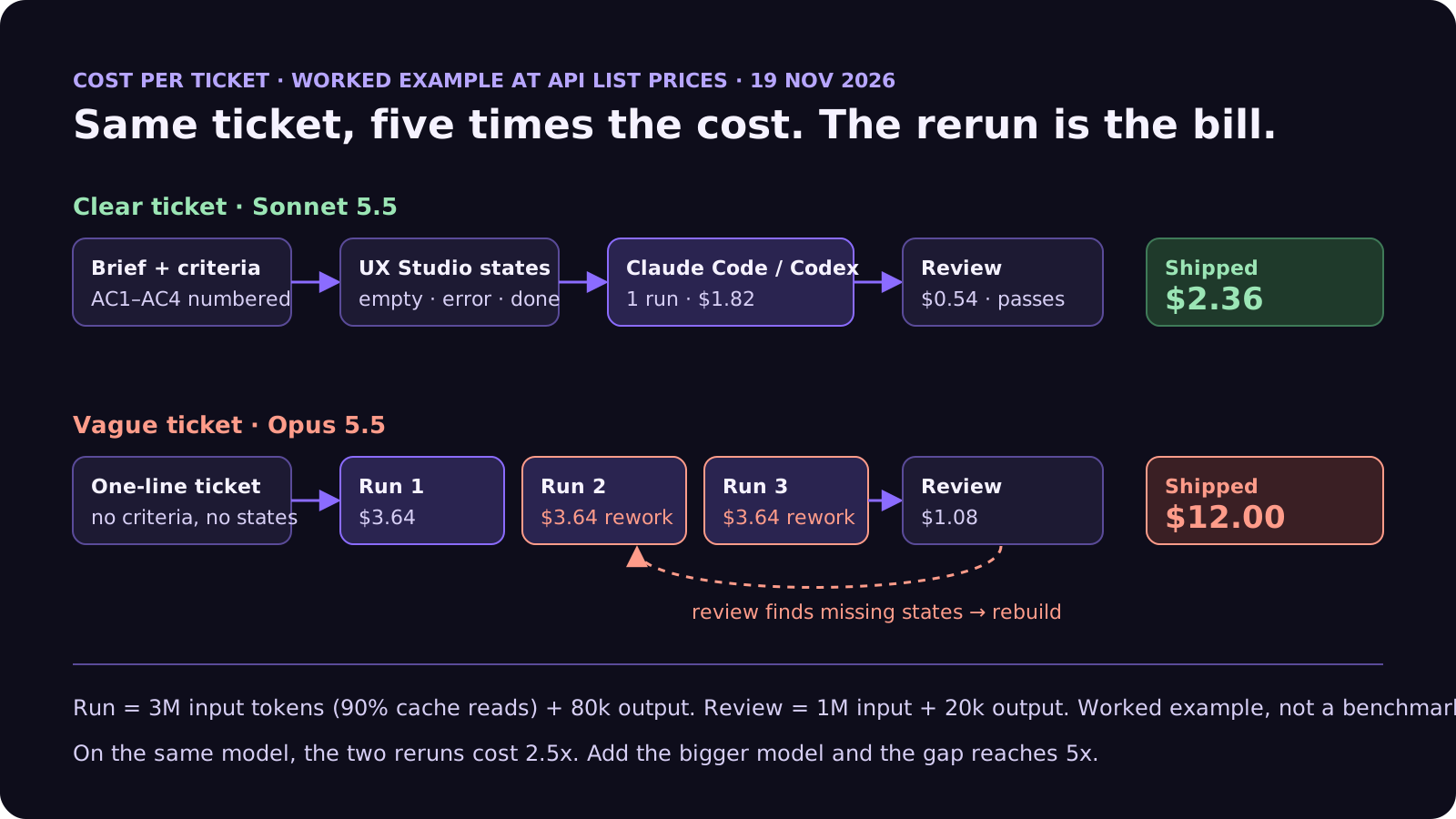
Compare the second and third rows: same model, two and a half times the cost. The difference is the two extra runs, and they happen when the agent discovers what the ticket meant only after a person reviews its work. Picking a smaller model halves the bill; a clear brief on the right model cuts it by five.
Where the extra spend comes from
When we look at expensive tickets, the same causes come back:
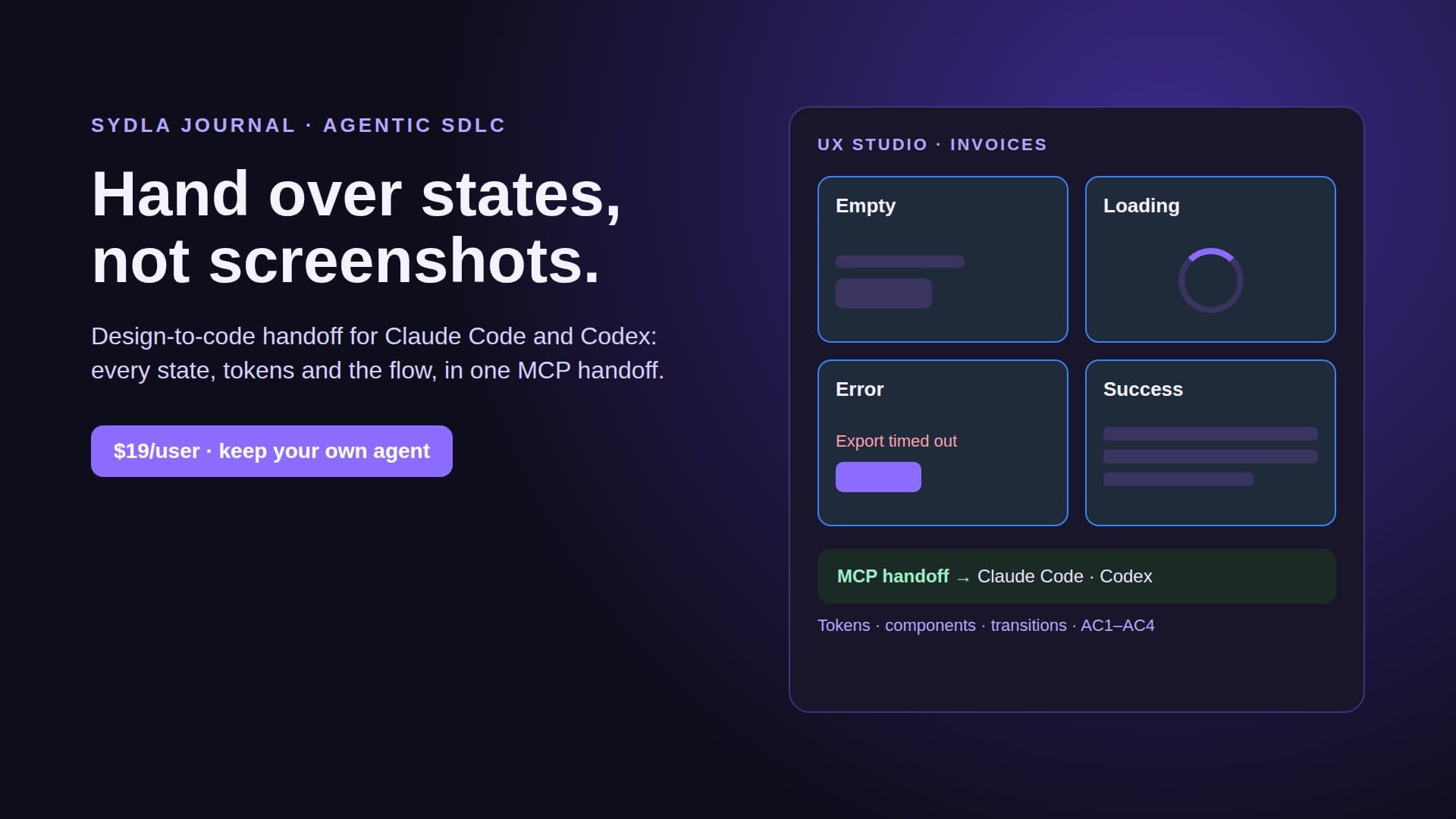
- Missing states. The agent builds the happy path, review asks for empty, loading and error, and the run starts again. Our design-to-code handoff guide covers handing over states instead of screenshots.
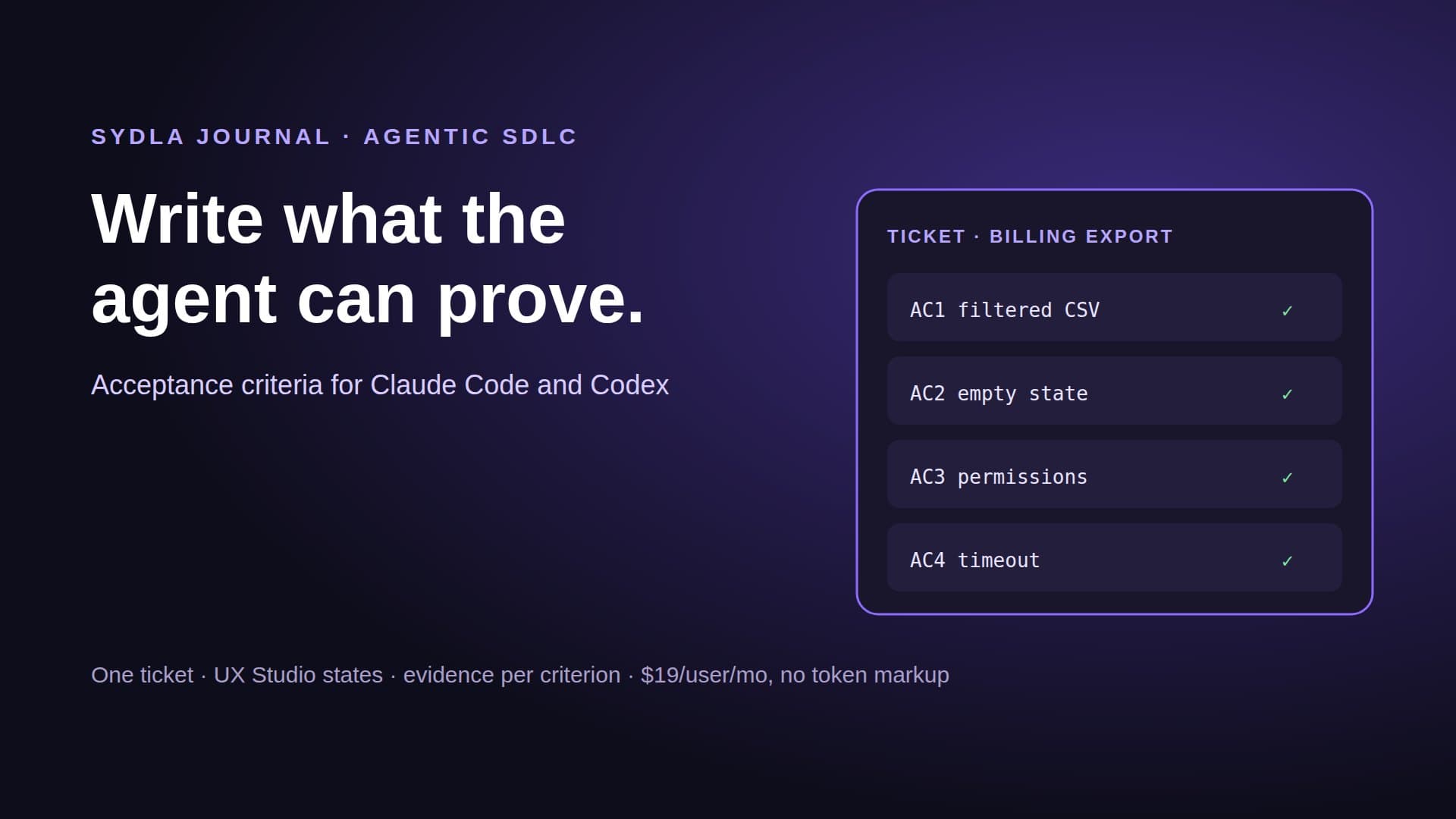
- Criteria that cannot fail. Fast and user-friendly give the agent nothing to check. The acceptance criteria guide lists six rules for criteria an agent can verify.
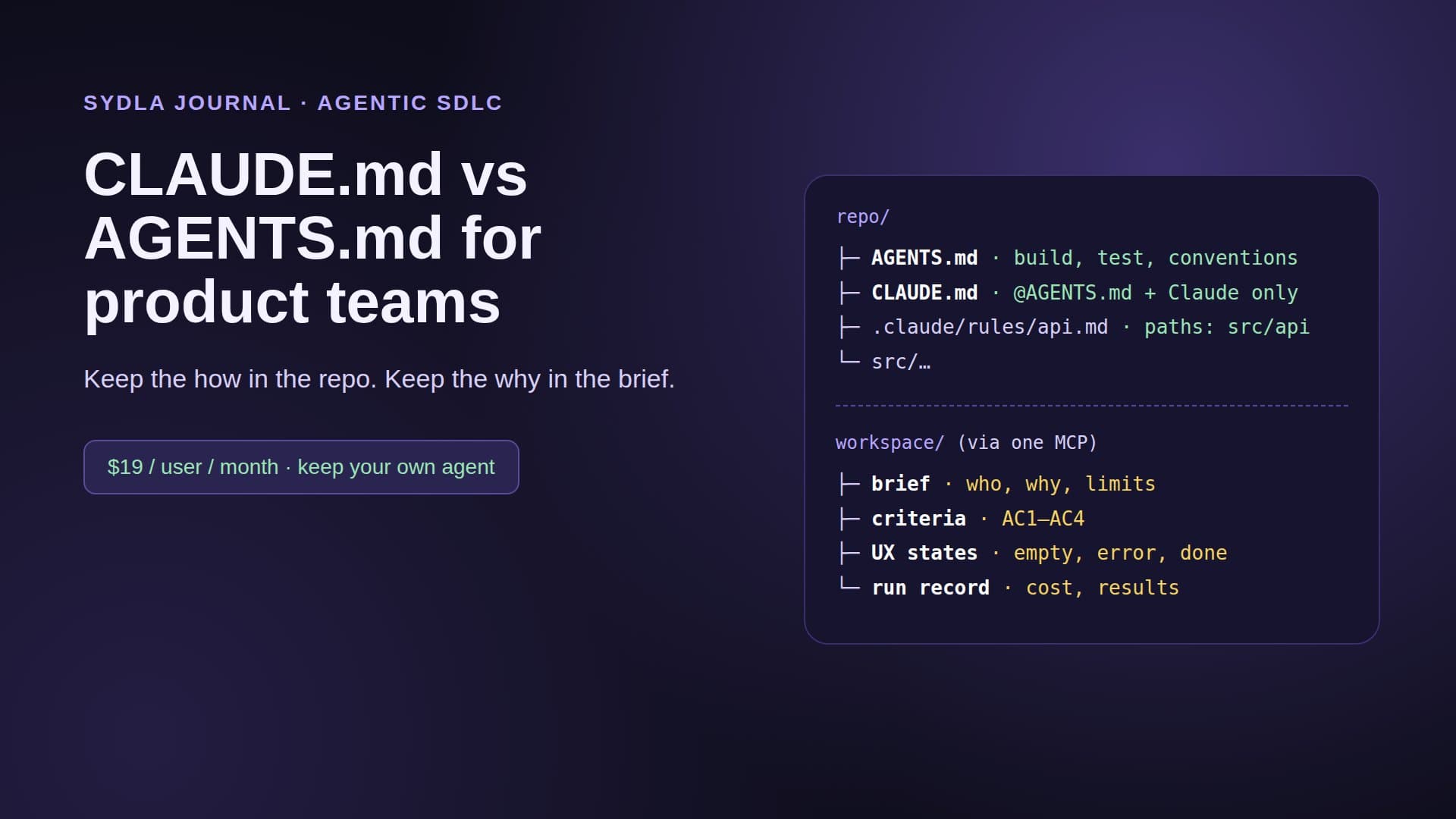
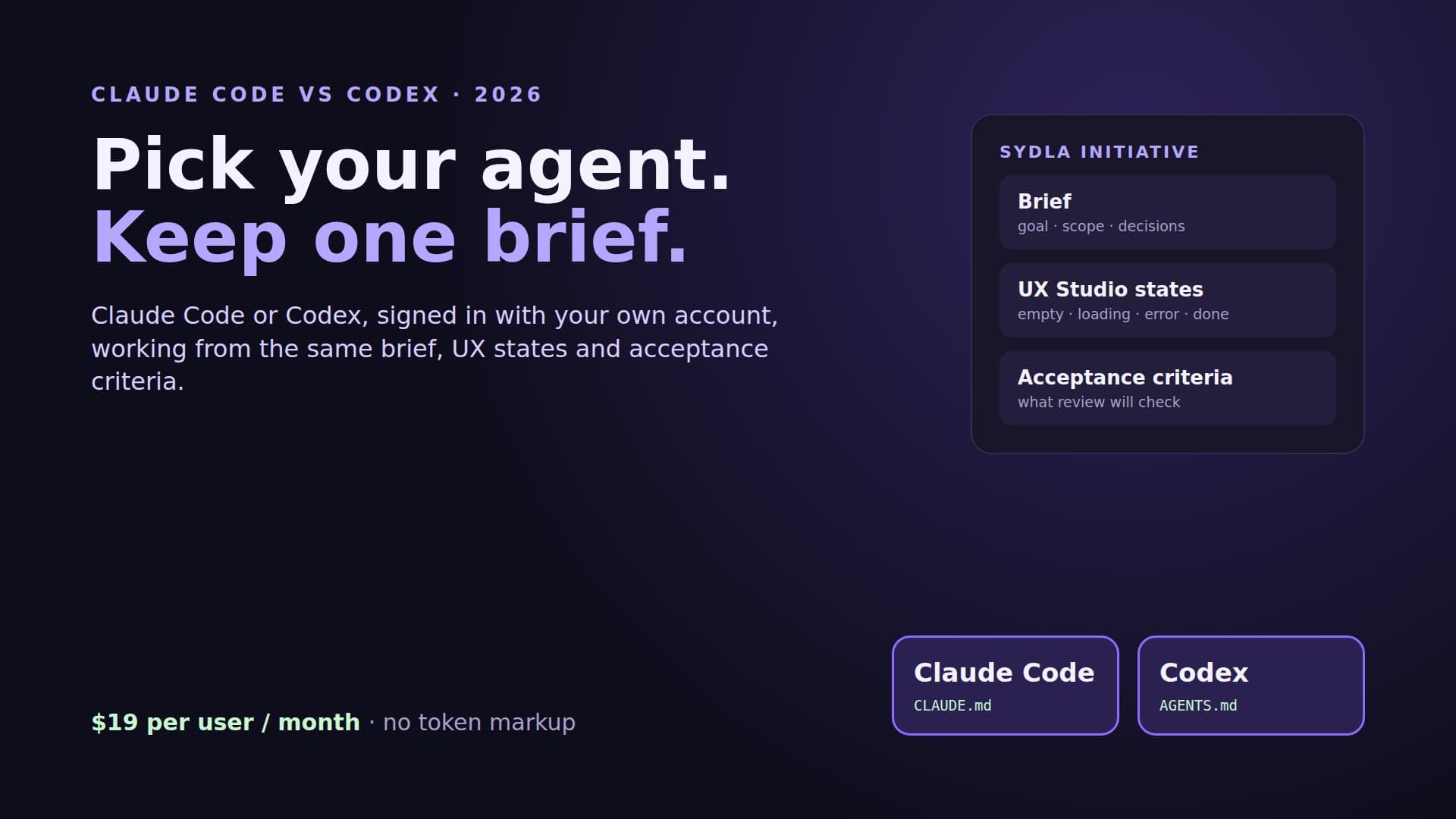
- Context pasted by hand. A spec copied into CLAUDE.md is reread on every turn of every session. Anthropic recommends keeping that file under 200 lines; CLAUDE.md vs AGENTS.md shows what to move out.
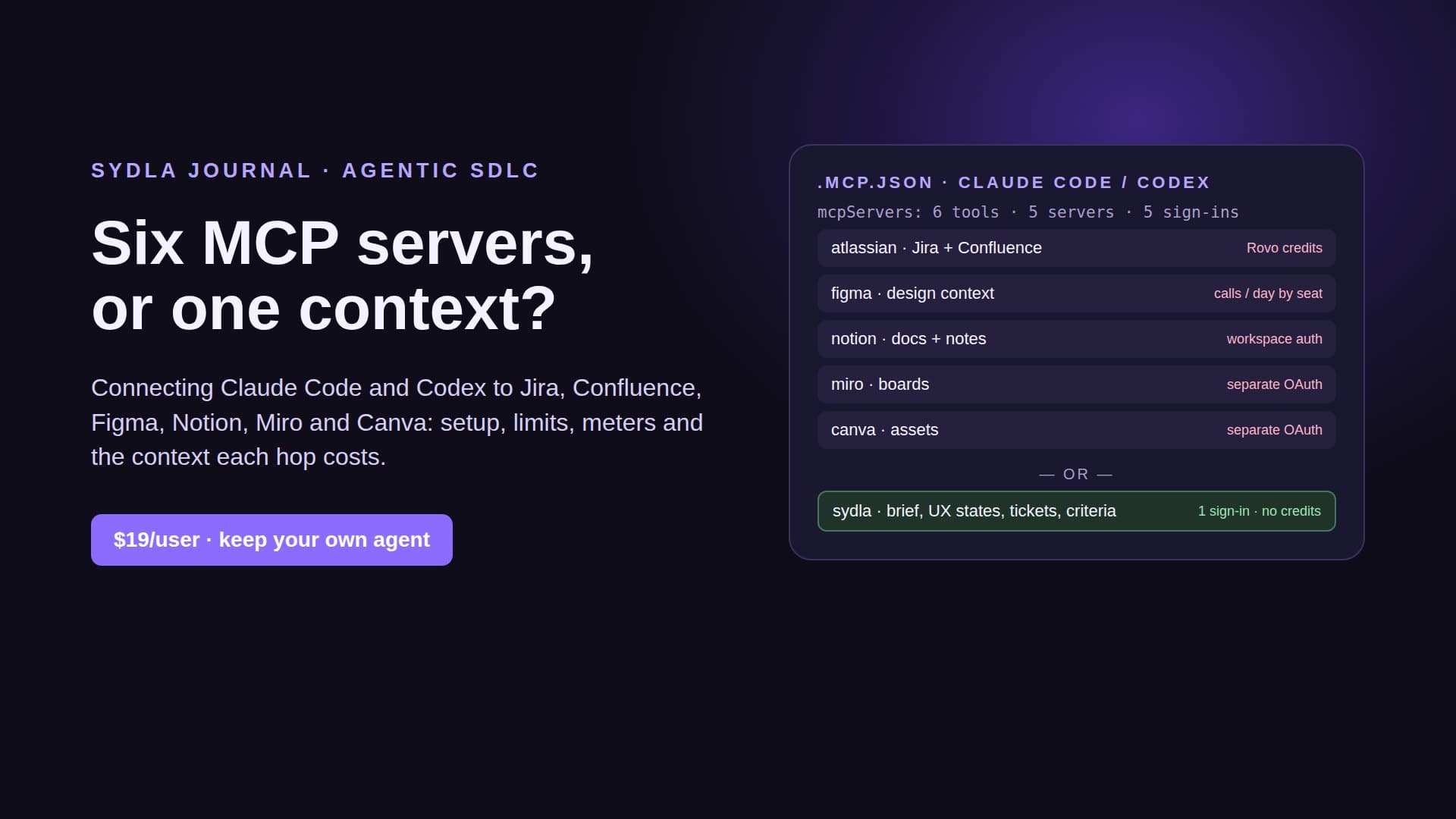
- Too many MCP servers. Each connected server adds tool definitions to the context. Six tools often means six servers, each with its own limits, as our MCP servers guide shows.
- The biggest model for every step. Anthropic suggests Sonnet for most coding, Opus for hard reasoning and Haiku for simple subagent tasks.
Built-in agents bill differently
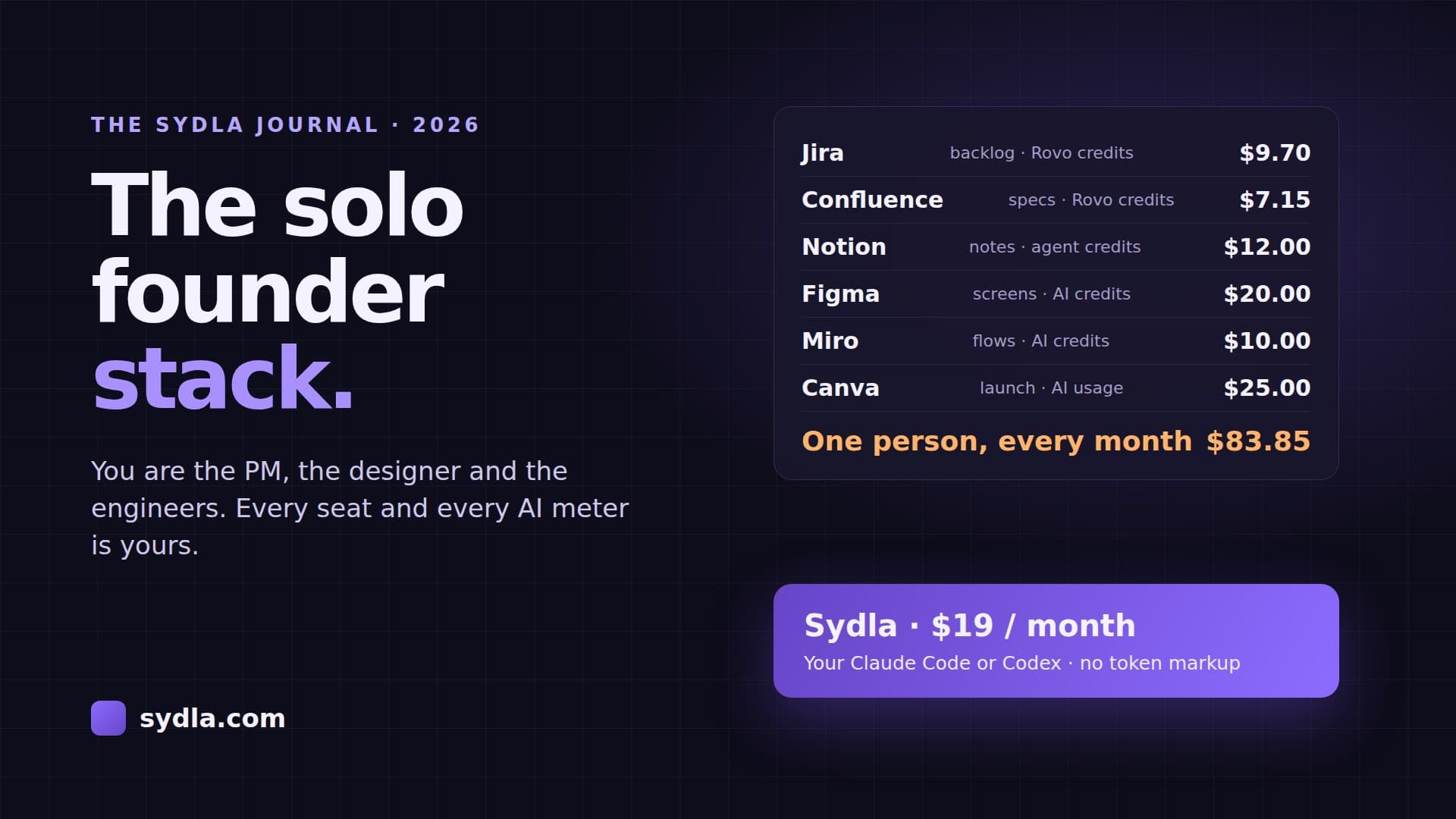
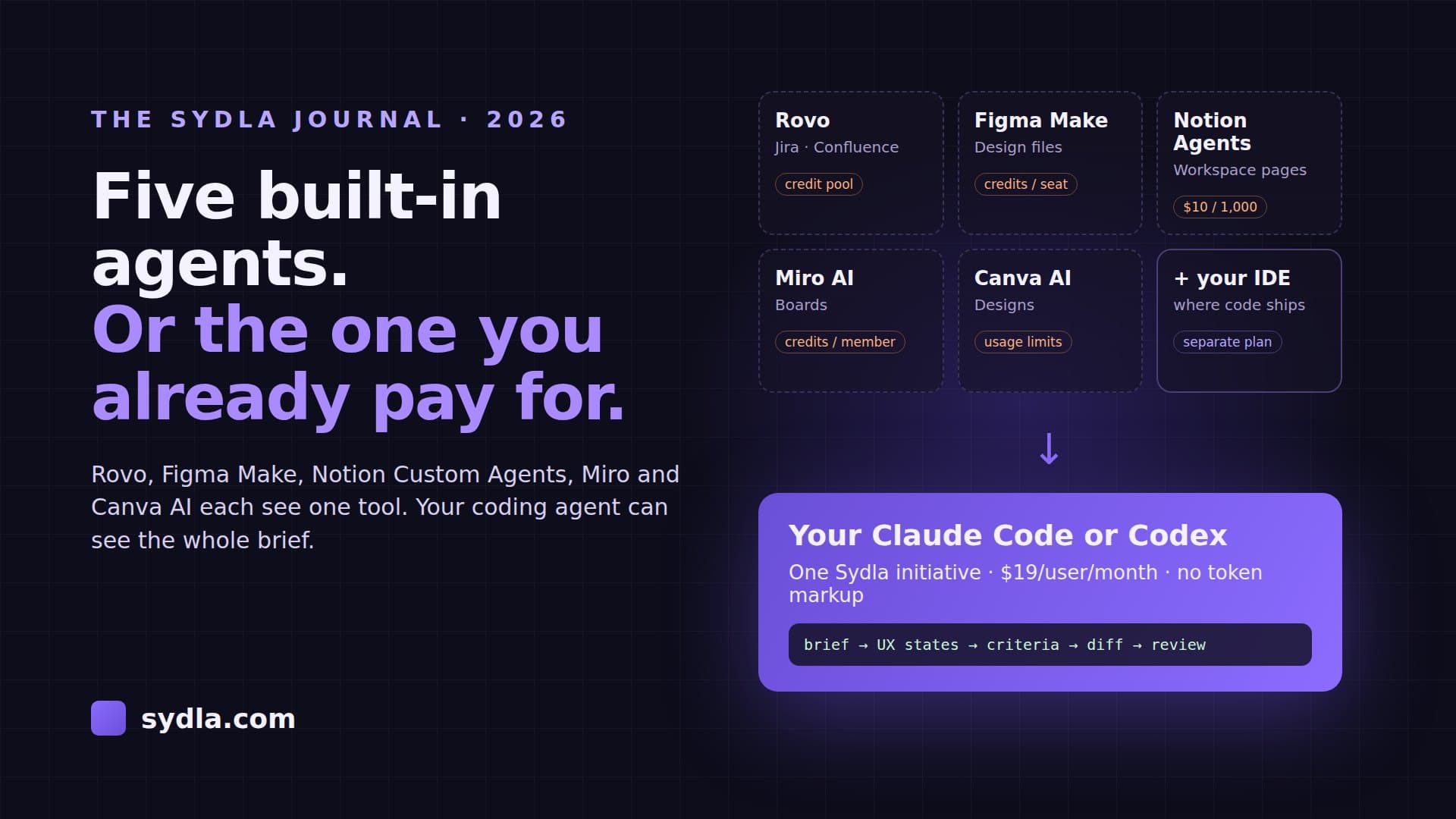
Agents inside your other tools charge in credits, not tokens, which makes cost per ticket harder to see. Here is what one person pays in a typical six-tool stack before any coding agent, and how each AI layer is billed:
| Tool and plan | Seat / month | Built-in AI billing | Counts tickets? |
|---|---|---|---|
| Jira Standard | $9.70 | Rovo credits, 25 per user per month on Standard; Rovo Dev listed at $20 per developer with 2,000 credits, then $0.01 per credit | Credits per interaction, not per ticket |
| Confluence Standard | $7.15 | Rovo on the same credits | No |
| Notion Plus | $12.00 | Notion AI and Custom Agents on Notion credits | No |
| Figma Professional, Full seat | $20.00 | AI credits per seat, MCP calls capped per day | No |
| Miro Starter | $10.00 | Create with AI on Miro credits | No |
| Canva Business | $25.00 | Canva AI usage per member | No |
| Six-tool total | $83.85 | Up to six meters, plus your coding agent | No |
| Sydla | $19.00 | None: your own Claude Code or Codex plan pays for the model, with no markup | Yes, every run is recorded on its work item |
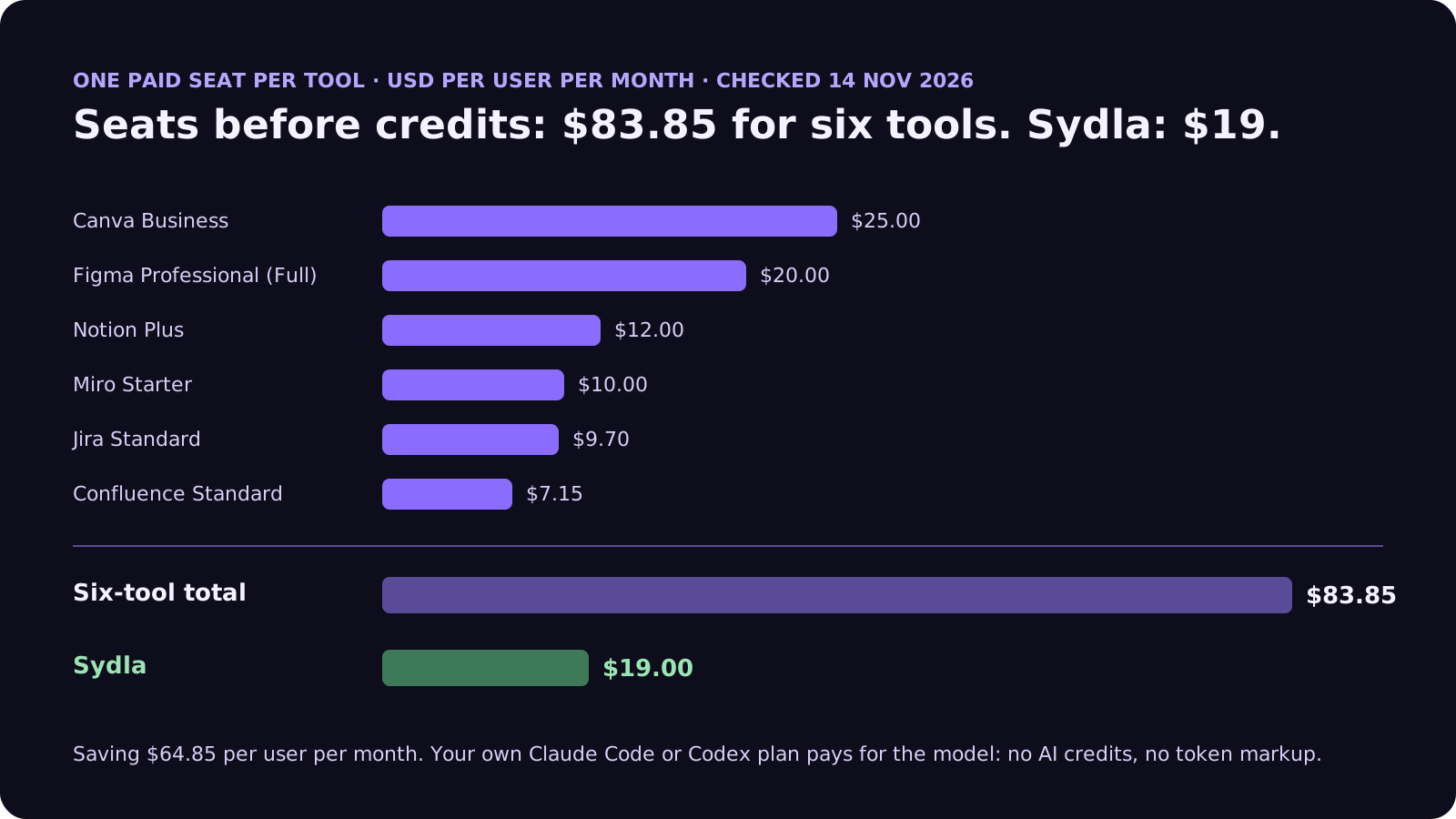
Atlassian notes that Rovo Dev is reaching end of life as a standalone product, with its capabilities moving into eligible Jira subscriptions, so check its current terms before budgeting. The comparison overview covers each tool, and the pricing section lists every source.
Spend on the coding agent, not on six meters
Moving the brief, criteria, states and tickets into one workspace saves $64.85 per person per month on seats alone. At Anthropic's average of $13 per active day, that covers about five days of Claude Code per person every month. The best AI budget is the one you can trace to shipped work.
How Sydla Desktop puts a price on every ticket
Sydla is built so the expensive part, the run, starts with everything it needs and ends with a record of what it cost. The flow goes from brief to UX Studio to your own agent to review:
- Brief and criteria first. The work item has a brief in Sydla Docs with numbered acceptance criteria. Gaps show up before a token is spent.
- States in UX Studio. Screens with empty, loading, error and done states are published as a handoff at the version a person approved.
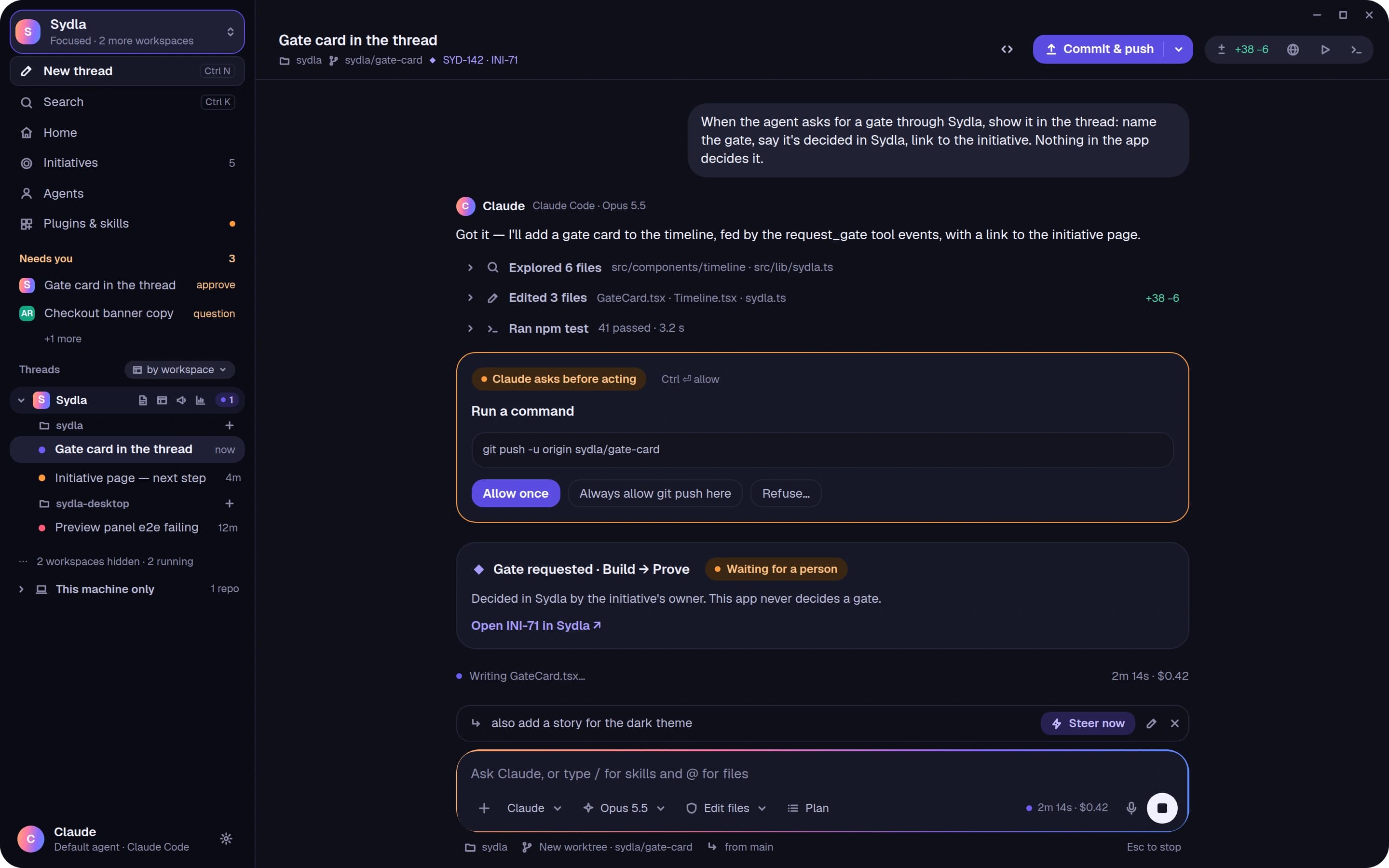
- Your own agent runs. Sydla Desktop launches the Claude Code or Codex CLI you already use, signed in with your own Anthropic or OpenAI account, in your local checkout. Through one Sydla MCP connection it reads the work item, the brief, the criteria and the handoff. The Desktop guide covers the first run.
- The run is recorded. Cost, criterion results and the merge request are written back to the work item. Agents can forecast a piece's cost before anyone launches it, and only a person chooses who does the work.
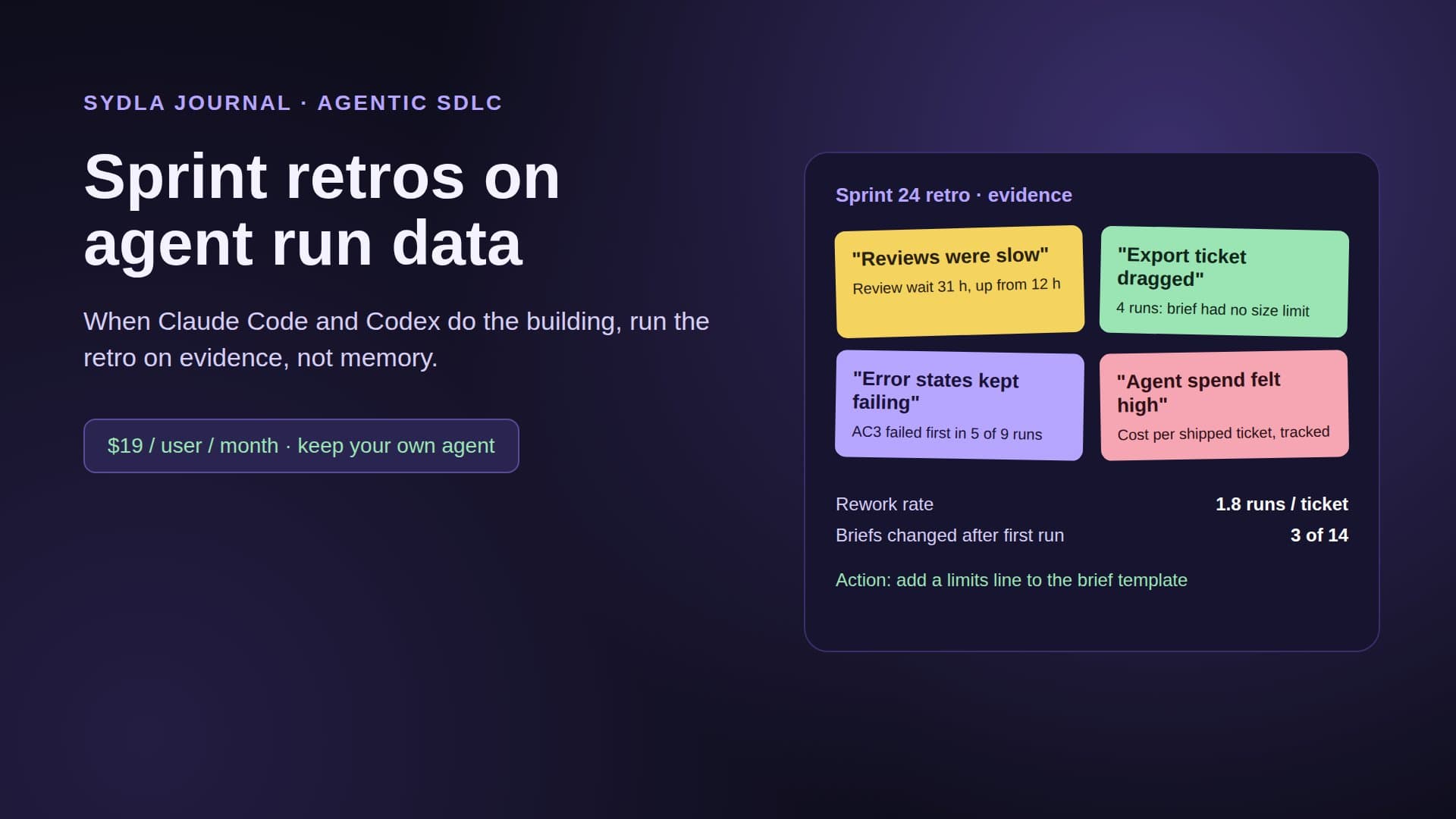
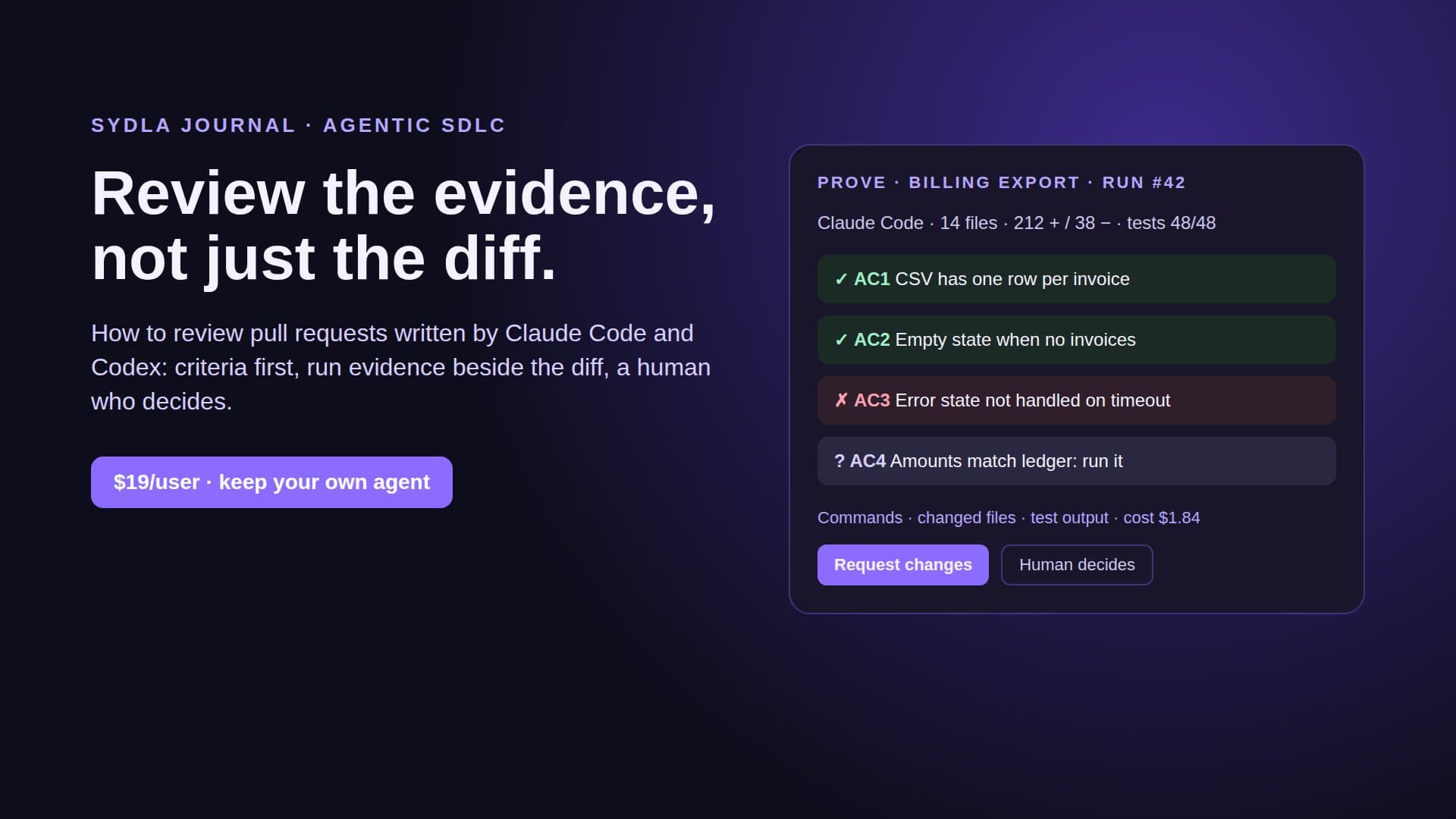
- Review with evidence. The reviewer sees which criteria passed and what the run cost. Our four-pass review checklist covers that step, and sprint retrospectives on run data shows how to read cost per shipped ticket across a sprint.
There are no Sydla AI credits and no token markup: your Claude or ChatGPT plan pays for the model and $19 pays for the workspace.
Five habits that cut the cost per ticket
Try these on the next ten tickets and compare against the ten before:
- Refuse tickets without criteria. No numbered, testable criteria, no run. This is the cheapest fix on the list.
- Hand over states, not screenshots. Every state the agent has not seen is a likely rerun.
- Match the model to the step. Sonnet for most builds, Opus for hard design problems, Haiku for simple subagent work, and a lower effort level for small changes.
- Clear between tasks. Anthropic recommends /clear between unrelated work and /usage to check where a session's tokens went. Long mixed sessions keep paying to reread old context.
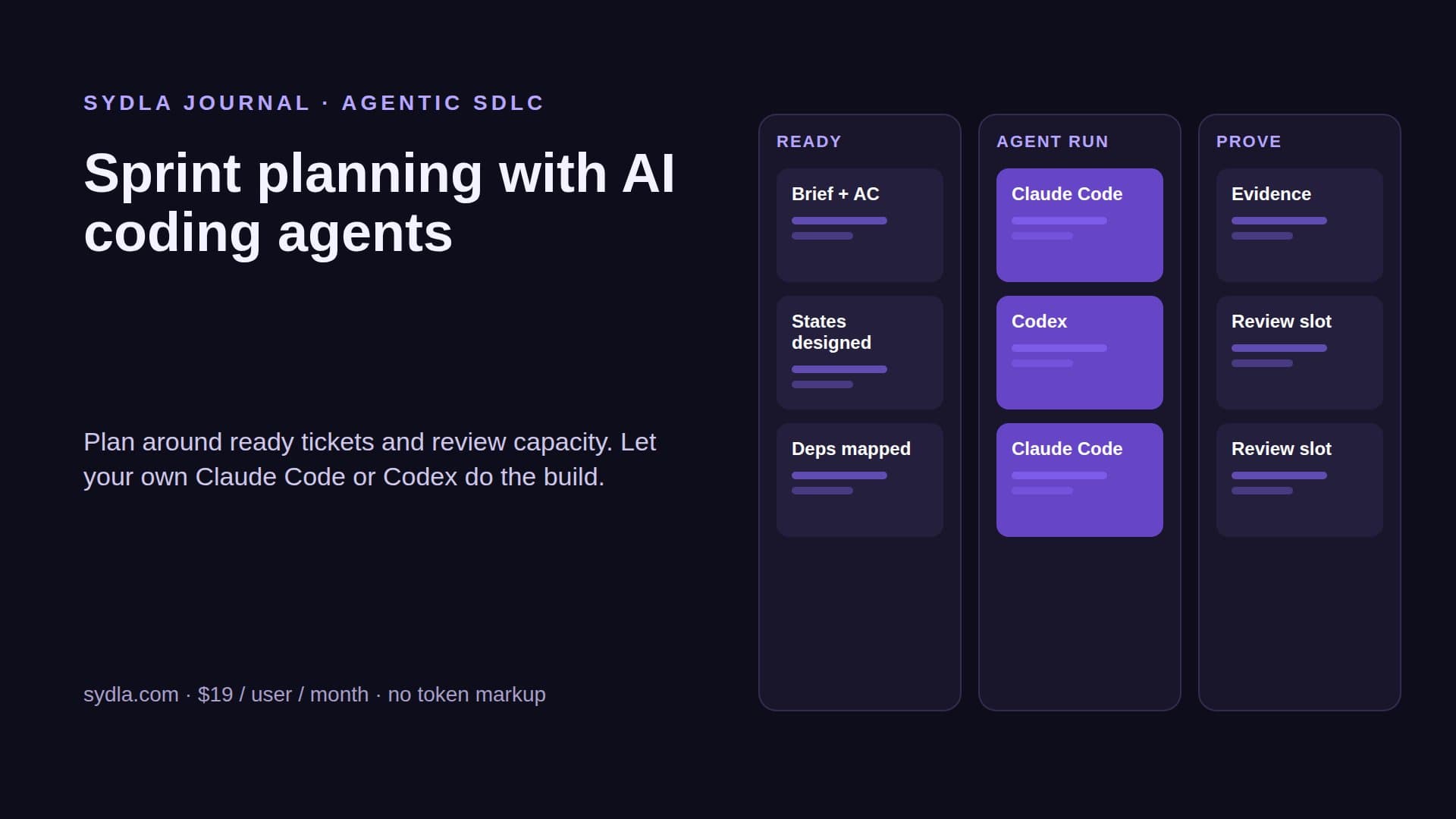
- Track runs per shipped ticket. If the average climbs above one and a half, the problem is upstream of the agent. Our sprint planning guide shows how to plan around readiness and review capacity.
Frequently asked questions
How much does Claude Code cost per developer in 2026?
Anthropic's Claude Code costs page reports an average of around $13 per developer per active day and $150 to $250 per developer per month across enterprise deployments, with 90% of users below $30 per active day. Costs vary with model choice, codebase size and how many instances or automations run. On a Claude subscription, usage counts against the plan's limits instead of a per-token bill.
How much does an AI coding agent cost per ticket?
It depends mostly on how many runs a ticket needs. At November 2026 API list prices, a medium ticket with about 3 million input tokens, mostly cached, and 80,000 output tokens costs about $1.82 per run on Sonnet 5.5 and $3.64 on Opus 5.5. With one review session, a clear ticket comes to about $2.36 on Sonnet 5.5. A vague ticket rebuilt twice on Opus 5.5 comes to about $12.
Why do some tickets cost five times more than others?
Rework. When states or acceptance criteria are missing, the agent builds the wrong thing, review finds the gap, and the run starts again. Each rerun pays for the whole context again. Agent teams in plan mode also use about seven times more tokens than a single session, according to Anthropic.
How do I reduce Claude Code or Codex costs without slowing the team?
Write numbered, testable acceptance criteria before the run; hand over every UX state; keep CLAUDE.md or AGENTS.md short and move product context into the brief; disconnect MCP servers you do not use; use Sonnet for most coding and Haiku for simple subagent tasks; clear the session between unrelated tasks; and track runs per shipped ticket.
Does Sydla charge AI credits or mark up tokens?
No. Sydla costs $19 per user per month and you bring your own Claude Code or Codex account, so your Anthropic or OpenAI plan pays for the model with no markup. Sydla records each run's cost and criterion results on the work item. One seat each of Jira, Confluence, Notion, Figma, Miro and Canva costs $83.85 per user per month.