Rovo credits go pay as you go on 3 December 2026: what a Jira and Confluence team will actually pay
From 3 December 2026, Rovo usage past your allowance is billed at $0.01 a credit, and pay as you go is on by default. A Jira and Confluence Standard seat brings 50 credits a month; one chat message costs 10. Here is the rate card, a worked example for an eight-person team, the admin settings to change this week, and where a bring-your-own-agent workspace fits.
The meter starts on 3 December
Since 31 August 2026, every Rovo chat message, agent run and enriched context call in Jira and Confluence has been counted against a credit allowance. Until now, going over it mostly meant a warning. On 3 December 2026 that changes: Atlassian starts billing Rovo usage past the allowance at $0.01 per credit, $10 per 1,000, and pay as you go is enabled by default. If nobody in your organization opens the admin settings before then, the overage simply appears on your next invoice.
The allowance is smaller than it sounds. A Standard seat of Jira brings 25 Rovo credits a month, and a Standard seat of Confluence another 25. A single Rovo Chat quick answer costs 10. That is five questions per person per month before the meter runs, and the deeper features, such as Think deeper and advanced agents, cost a variable amount on top.
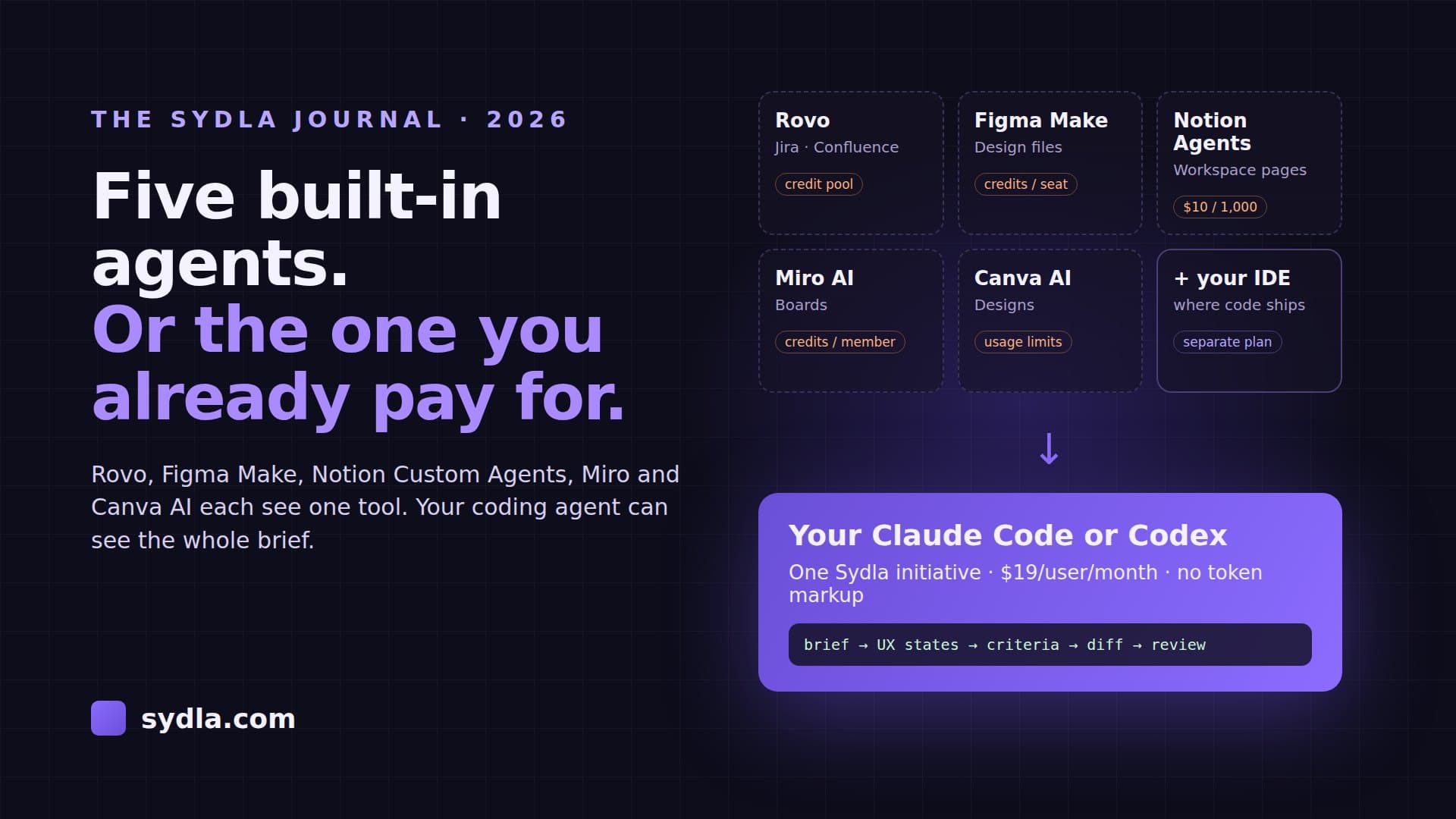
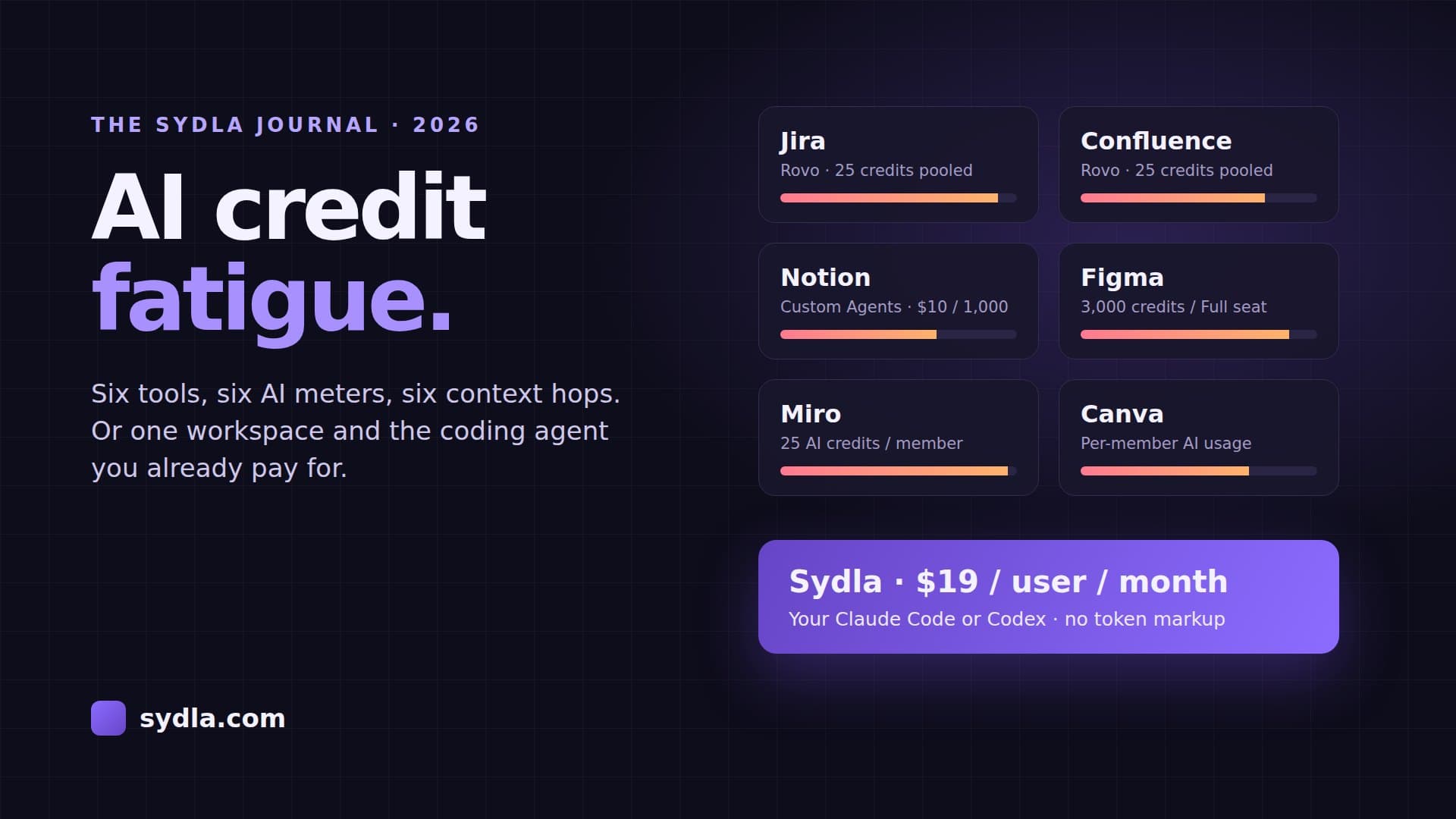
This matters more for teams that work with coding agents. Claude Code and Codex now read tickets and pages through the Rovo MCP server, and the search and context tools they lean on are metered per call. Your agent's tokens are already billed by Anthropic or OpenAI; the context it reads is now billed by Atlassian too. Our AI credit fatigue piece described the six meters a typical stack runs. This post looks at the one that turns into money in two weeks.
How Rovo credits work, in six facts
Everything below comes from Atlassian's own support pages, checked on 20 November 2026:
- Allowances are per user, per product, per month. Jira, Confluence and Jira Product Discovery give 25 credits on Standard, 70 on Premium and 150 on Enterprise. Bitbucket gives 25 or 70. Service Collection and Teamwork Collection give 250, 700 or 1,500.
- Everything lands in one pool. All allowances in the organization are combined into a single shared pool. Ten heavy users can spend what fifty light users brought. Allocating credits by user is listed as coming soon, so today there is no per-person cap.
- Nothing rolls over. The pool refreshes on your usage billing date each month, and unused credits expire.
- Pay as you go is on by default from 3 December 2026. List price $0.01 per credit, charged on the next invoice. Prepaid usage packs exist, with volume discounts on annual packs.
- Admins can cap or stop it. Organization admins can set a monthly limit on the Rovo credits meter or switch pay as you go off. When the limit is reached, metered features pause until the allowance resets. Alerts go out at 80% and 100% of the allowance.
- Rovo Dev is a separate pool. Rovo Dev credits cover the Rovo Dev CLI and related features: 350 per user per month on the free plan, 2,000 per month at the organization level on Standard. Code Reviewer, though, draws on Rovo credits, and that billing also starts on 3 December 2026.
What each action costs
Atlassian's rate card sorts usage into two groups, Intelligence for AI work and Context for Teamwork Graph and MCP calls. In chat, each user message is a billable event; for agents and AI features, each invocation is.
| Usage | Credits | Examples |
|---|---|---|
| Free intelligence | 0 | Rovo Search inside Atlassian apps, definitions, summaries |
| Basic intelligence | 10 per event | Rovo Chat quick answers, basic Rovo agents without model selection |
| Premium intelligence | Variable | Rovo Chat Think deeper, advanced agents with model selection, Jira coding agent, Confluence slides |
| Free context | 0 | Installing Rovo MCP or the Teamwork Graph CLI, writes such as updating a work item, fetching one Jira work item or one Confluence page |
| Enriched context | 1 to 10 per call | Cross-product search and context tools such as searchAtlassian, search and getTeamworkGraphContext |
| Beta features | 0 unless stated | AI features still in beta |
Premium costs depend on reasoning steps, search volume, tools invoked and model power. Atlassian's summary is that deeper, broader or more agentic work uses more credits. That is fair, and it is also the reason nobody can forecast the bill from the rate card alone.
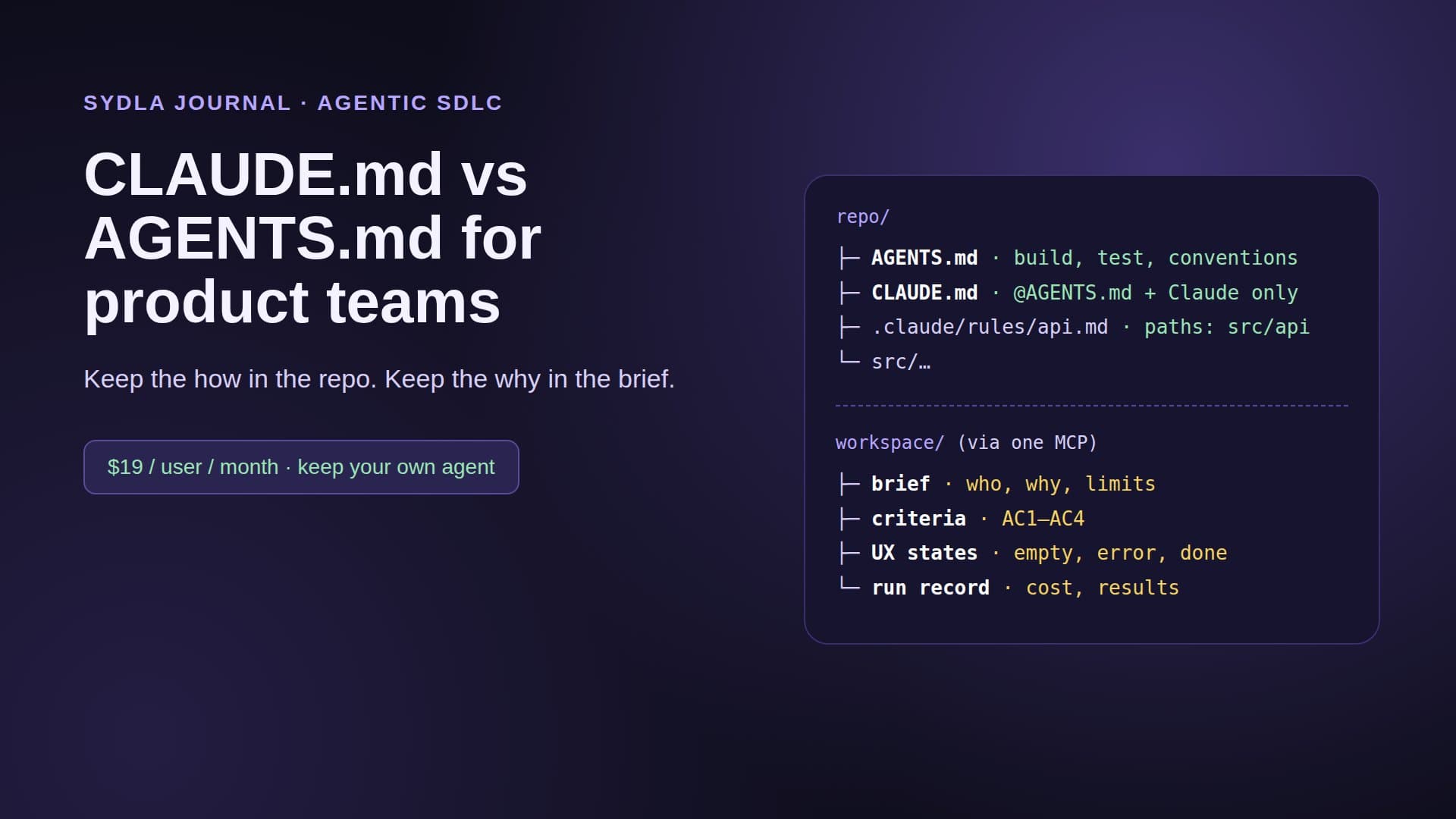
For coding agents the useful detail is in the context rows. Fetching a ticket by its key is free. Asking Rovo to search across Jira and Confluence for everything related to a ticket is an enriched call, and an agent exploring a codebase's history can make dozens of those in one session. If you keep Rovo MCP, tell your agent in CLAUDE.md or AGENTS.md to fetch by key and to stop searching once it has the ticket and its linked page. Our MCP servers guide covers the other limits of each server.
A worked example: an eight-person product team
Take a team of eight on Jira Standard and Confluence Standard: a product manager, a designer, a support lead, two engineering leads and three developers who use Claude Code or Codex every day. The usage numbers below are assumptions for illustration, not Atlassian data.
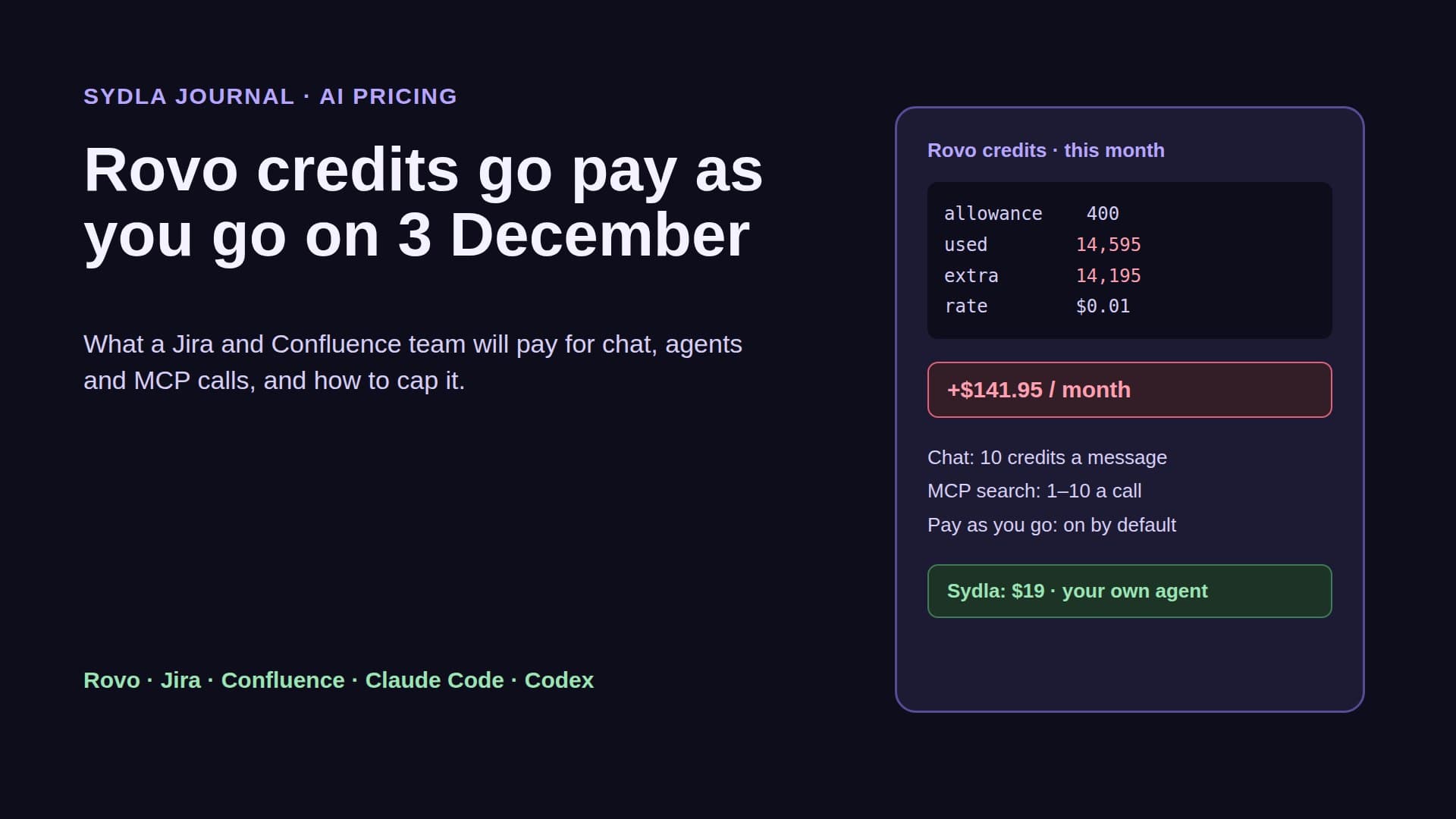
- Allowance. 8 users × (25 + 25) credits = 400 credits a month, pooled.
- Chat. Each person asks Rovo Chat four quick questions a workday, over 21 workdays, at 10 credits each: 840 credits per person, 6,720 for the team. No Think deeper, no advanced agents.
- Coding agents. Each of the three developers' agents makes 25 enriched Rovo MCP calls a day, at an assumed 5 credits each, the middle of Atlassian's 1 to 10 range: 2,625 credits per developer, 7,875 in total.
- Total. 14,595 credits used, 14,195 over the allowance. At $0.01 that is $141.95 a month, about $17.74 per user, on top of $16.85 in Jira and Confluence seats. Any premium usage comes on top.
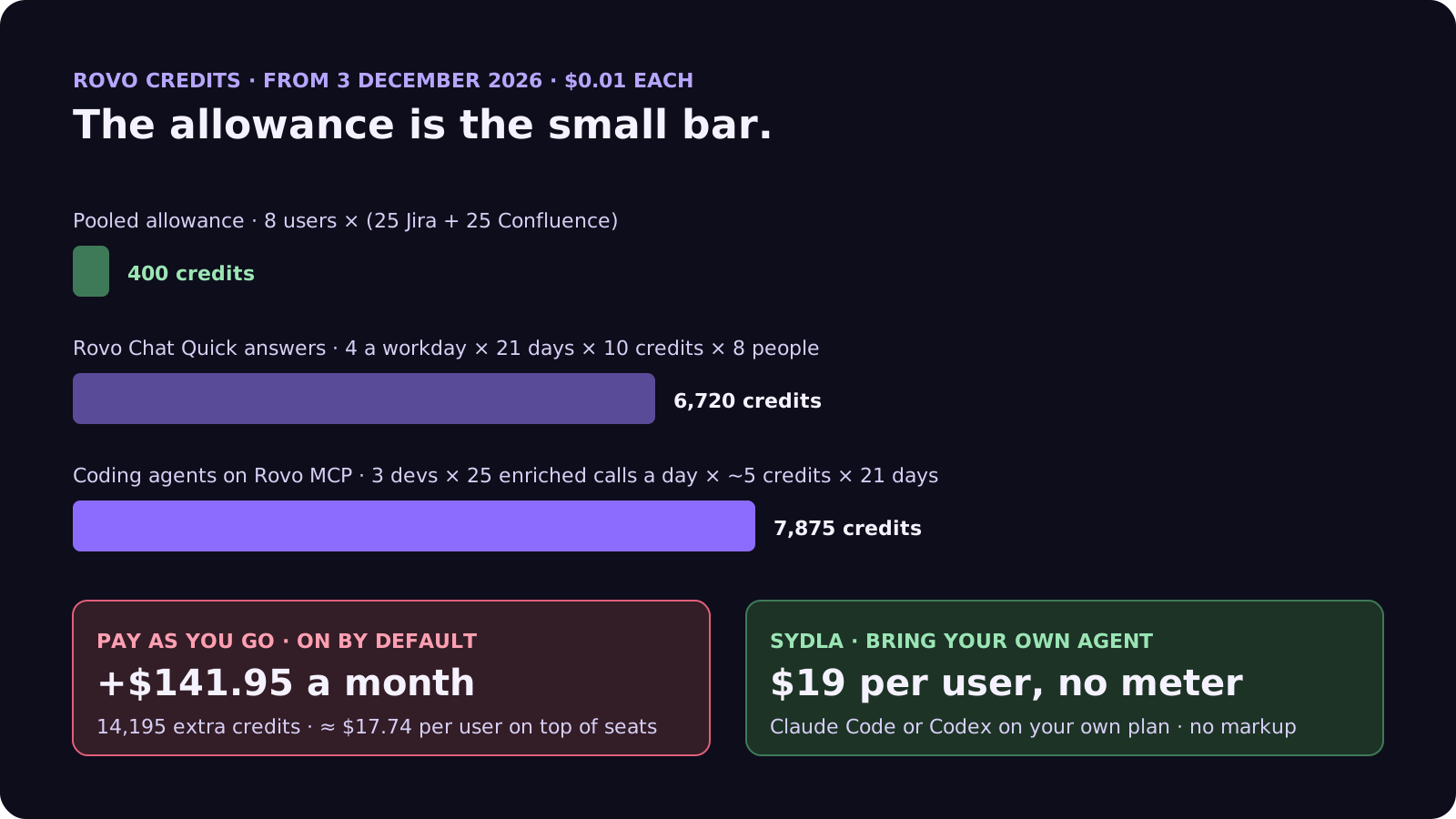
Change the assumptions and the bill moves, but the shape stays the same: the allowance covers a few days of normal use, and anything agent-driven is metered per call. Moving to Premium raises the allowance to 140 credits per user across the two products, which still covers fourteen chat messages. Teamwork Collection's 250 credits per user is the first allowance that resembles daily use, at a higher seat price.
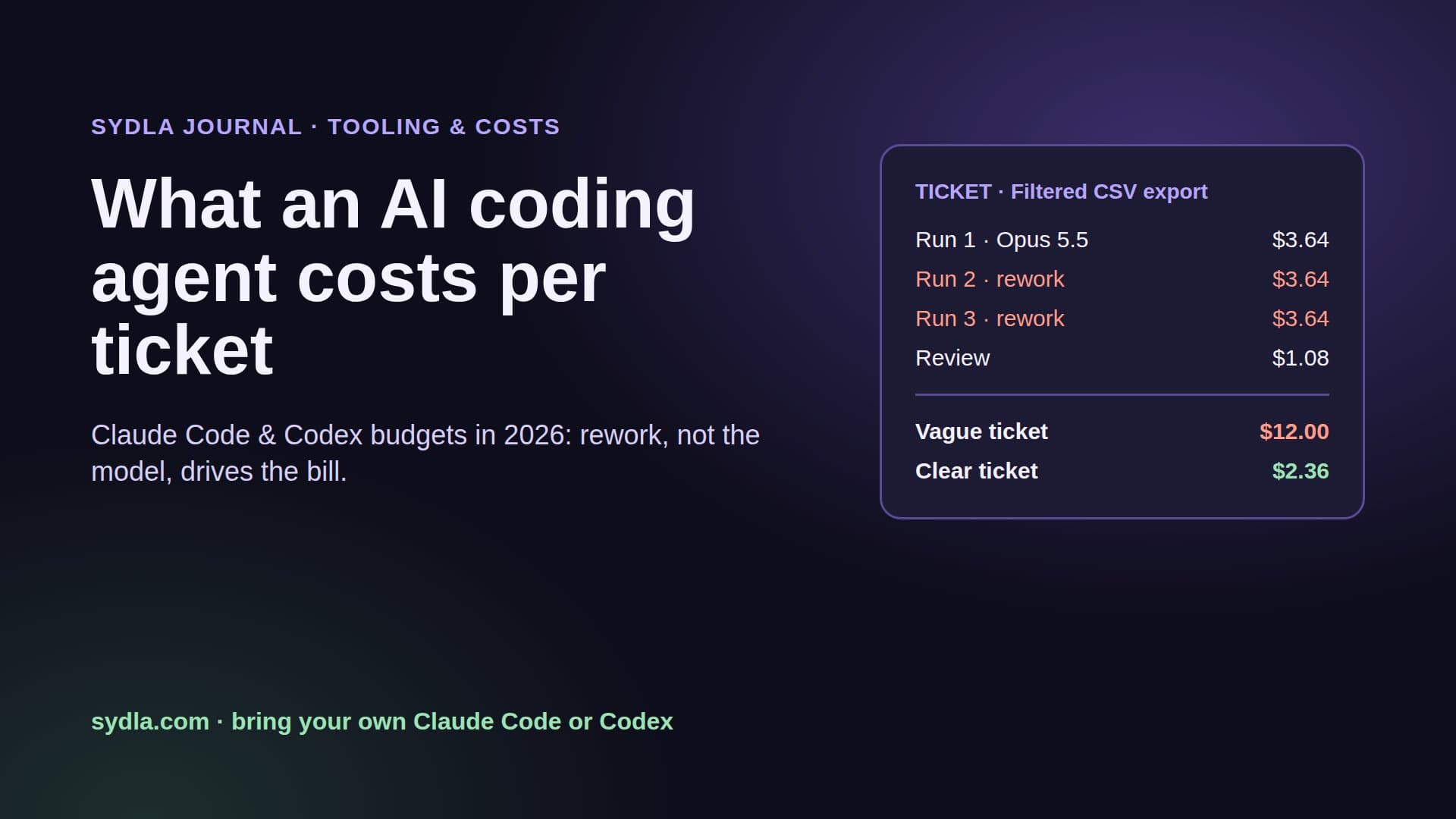
None of this counts the model your developers already pay for. Our cost per ticket breakdown shows what Claude Code and Codex cost per shipped ticket on their own plans.
Five settings to change before 3 December
If you stay on Rovo, these are the steps worth fifteen minutes in Atlassian Administration this week:
- Read last month's meter. Usage, then Meters, then Rovo credits shows usage by app, by user and by feature since 31 August. The CSV export covers up to three months. This is your real baseline, better than any estimate.
- Set a monthly limit. Put a cap on the Rovo credits meter that matches a budget someone approved. Remember that a limit below what is already spent pauses metered features until the reset.
- Decide on pay as you go. If overage needs budget approval in your company, switch it off and let features pause at the allowance. Switch it back on when the budget exists.
- Point the alerts at an owner. The 80% and 100% alerts go to admins. Make sure someone who can act on them receives them.
- Tune your agents. Tell Claude Code or Codex to fetch work items and pages by key, not to search, and give them the ticket key in the prompt. Free lookups do most of what an agent needs.
Six tools, six meters: the stack next to Sydla
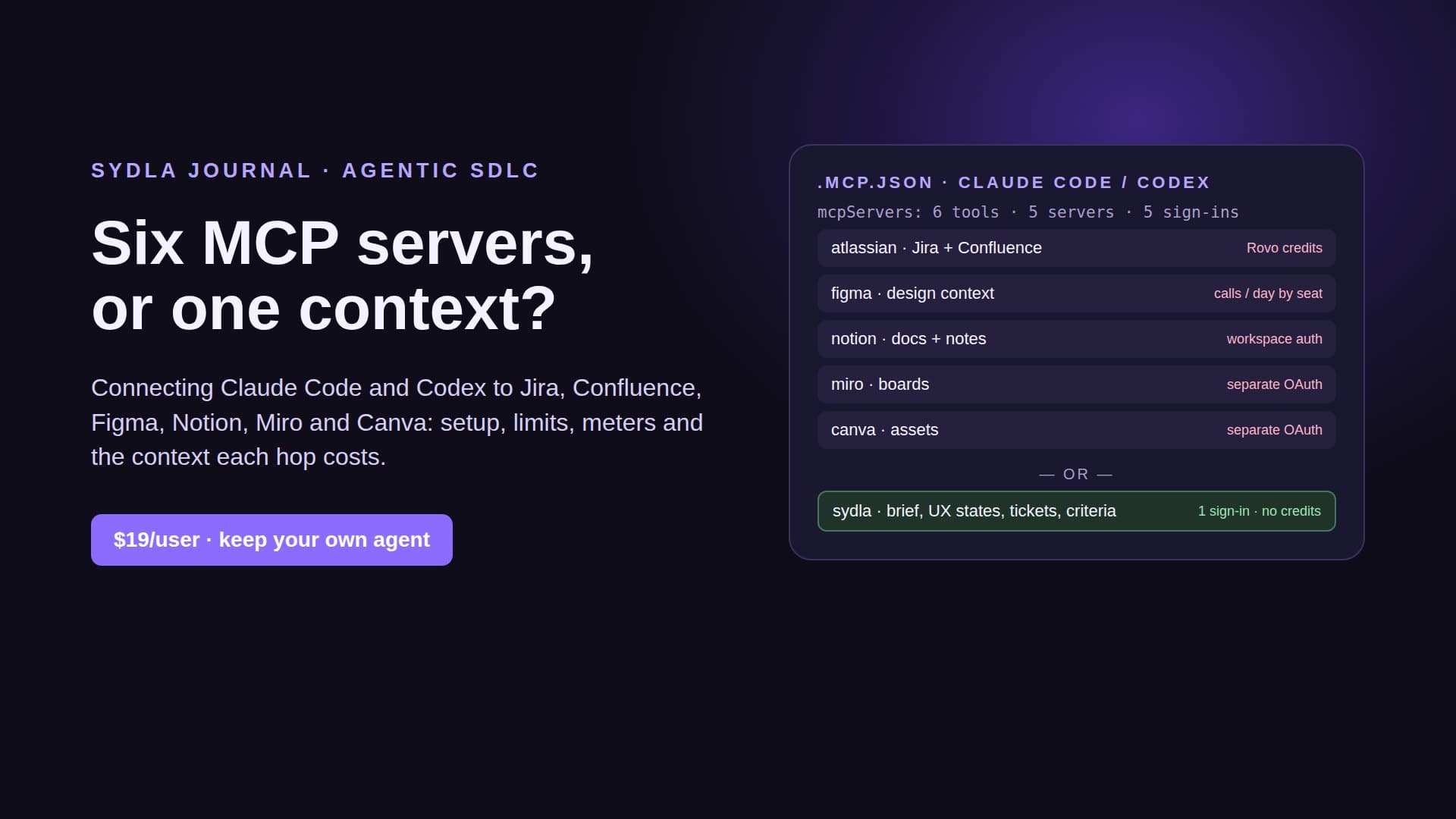
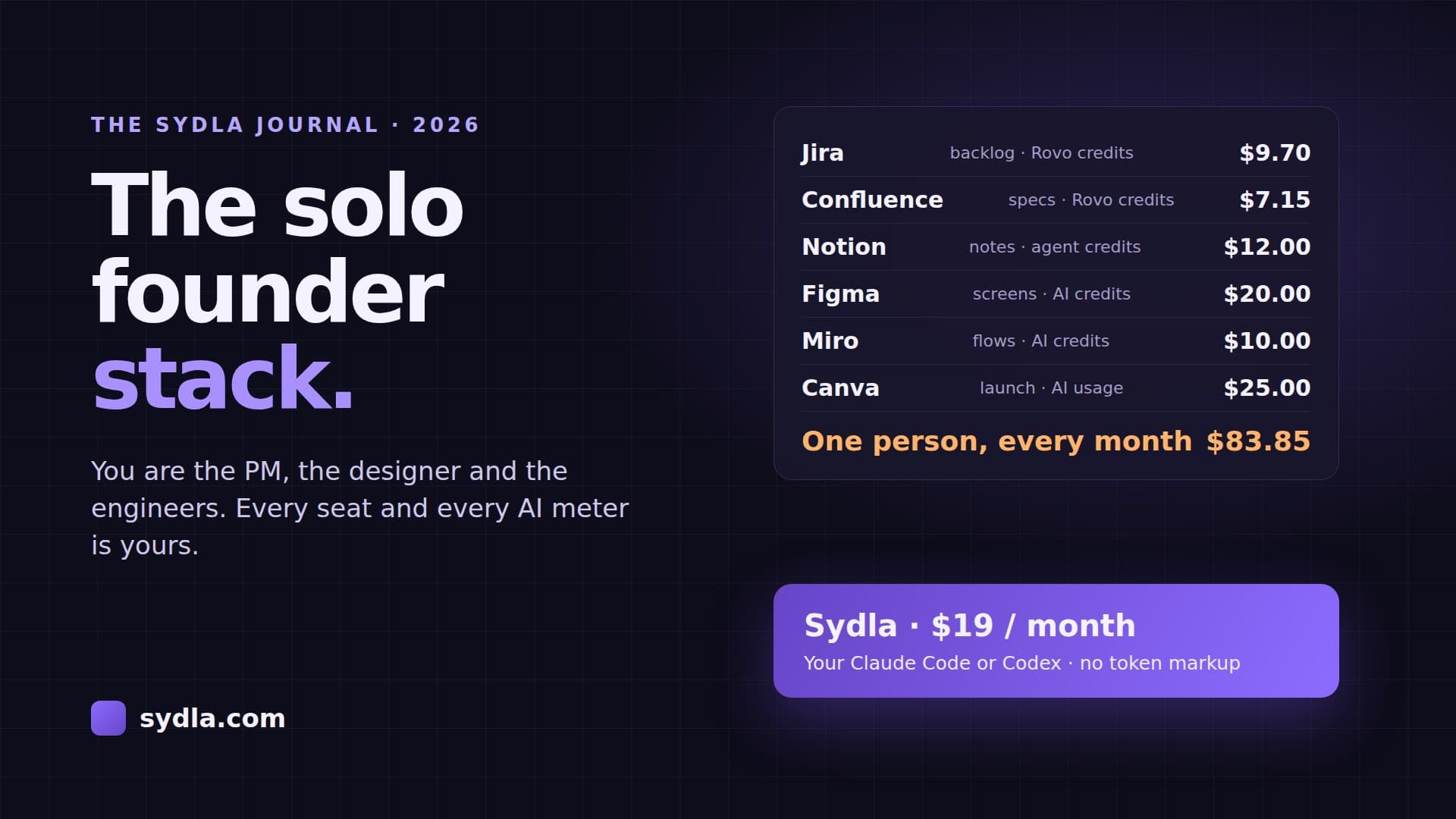
Rovo is one meter. Most product teams run several, each with its own allowance, reset date and admin page. Here is one paid seat of each tool next to Sydla. Each has its own page on our comparison hub.
| Tool and plan | Seat / month | Built-in AI billing | What the agent needs from it |
|---|---|---|---|
| Jira Standard | $9.70 | 25 Rovo credits per user per month, pooled; $0.01 per extra credit from 3 December 2026 | The ticket and acceptance criteria |
| Confluence Standard | $7.15 | 25 Rovo credits per user per month, same pool | The spec and decisions |
| Notion Plus | $12.00 | Notion AI and Custom Agents on Notion credits | Notes and research |
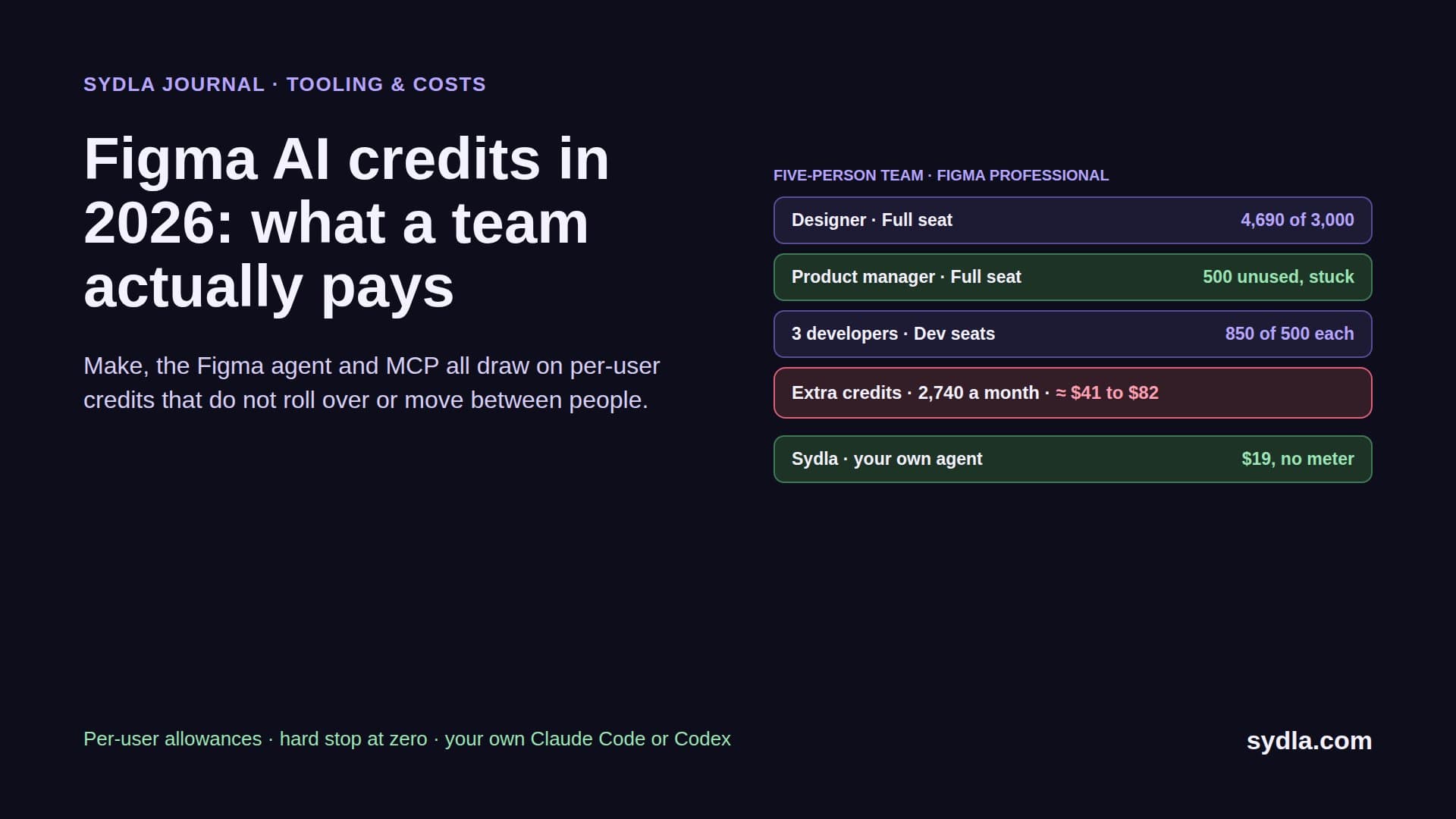
| Figma Professional, Full seat | $20.00 | 3,000 AI credits a month; MCP reads capped per day | Screens and states |
| Miro Starter | $10.00 | Create with AI on Miro credits | Flows and diagrams |
| Canva Business | $25.00 | Canva AI usage per member | Launch and marketing visuals |
| Six-tool total | $83.85 | Up to six meters, plus your coding agent | Six context hops per ticket |
| [Sydla](/) | $19.00 | None: your own Claude Code or Codex plan pays for the model, with no markup | One work item: brief, criteria, states, runs and evidence |
That is $64.85 per user per month less than the six-tool stack before any overage, and on the worked example above the gap grows by another $17.74. Details are in the pricing section.
Walkthrough: the same ticket without a credit meter
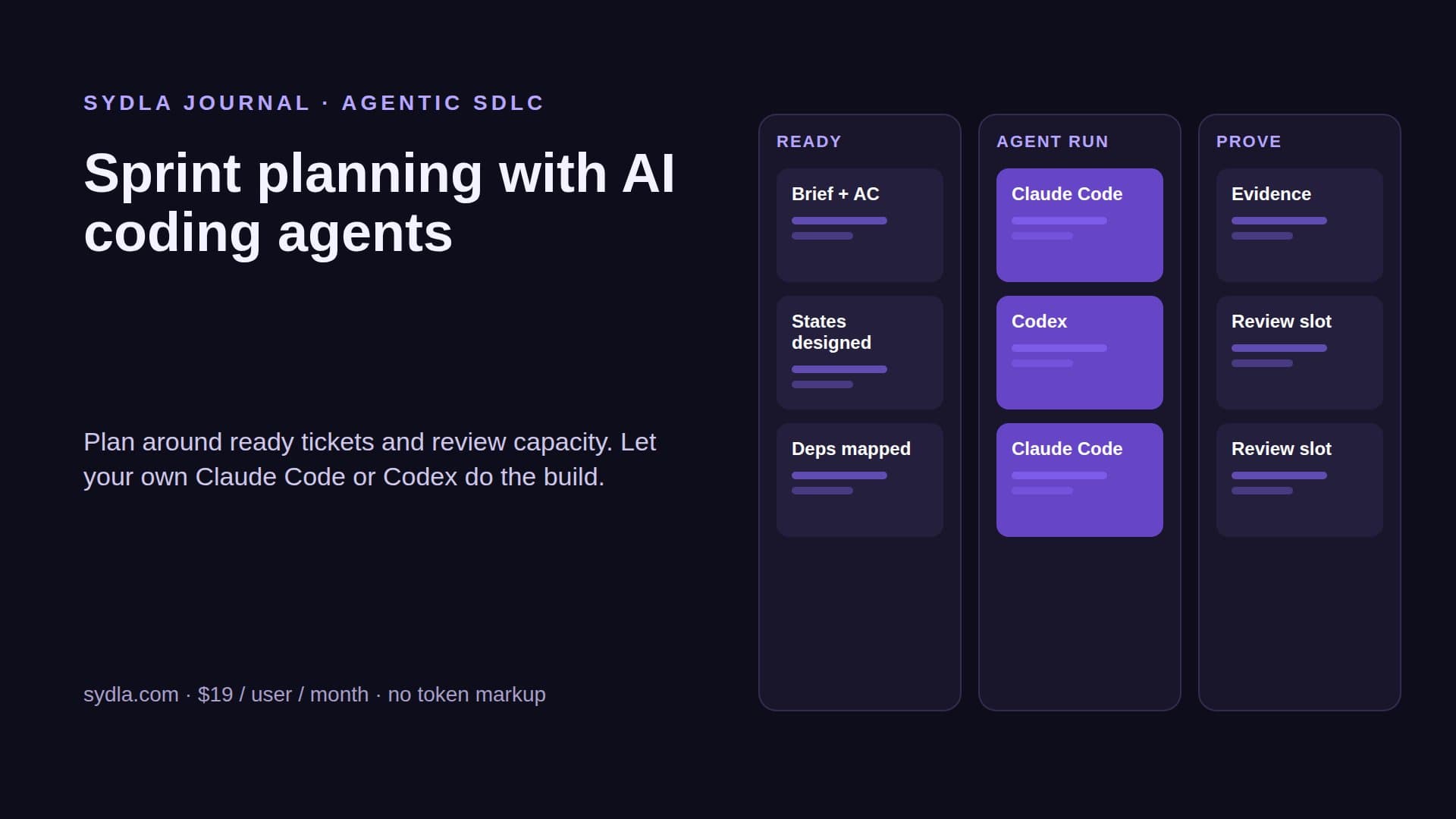
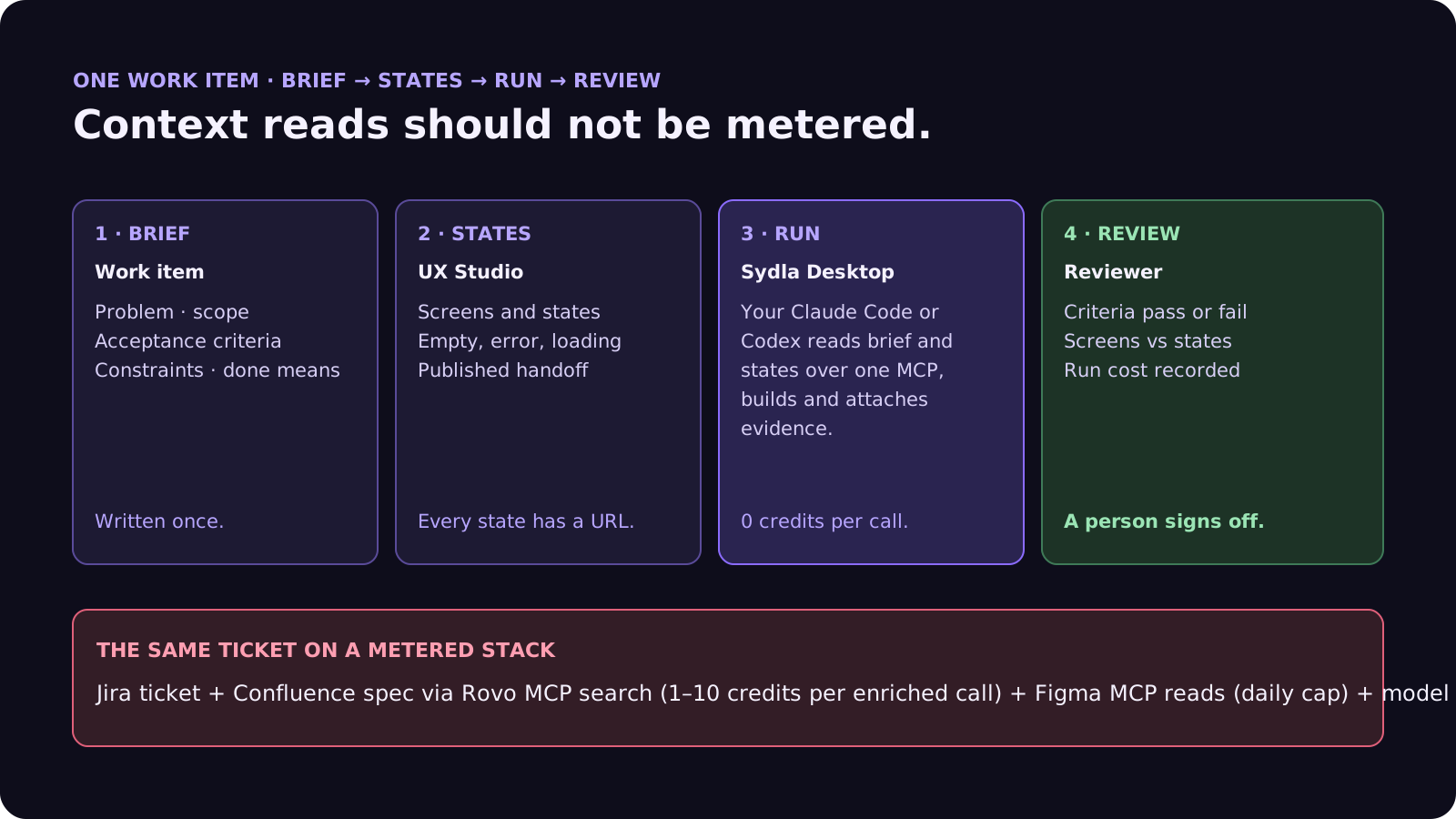
In Sydla, the context an agent needs sits on one work item, and reading it is not billed per call. Here is how a ticket moves from brief to merge with the agent you already pay for.
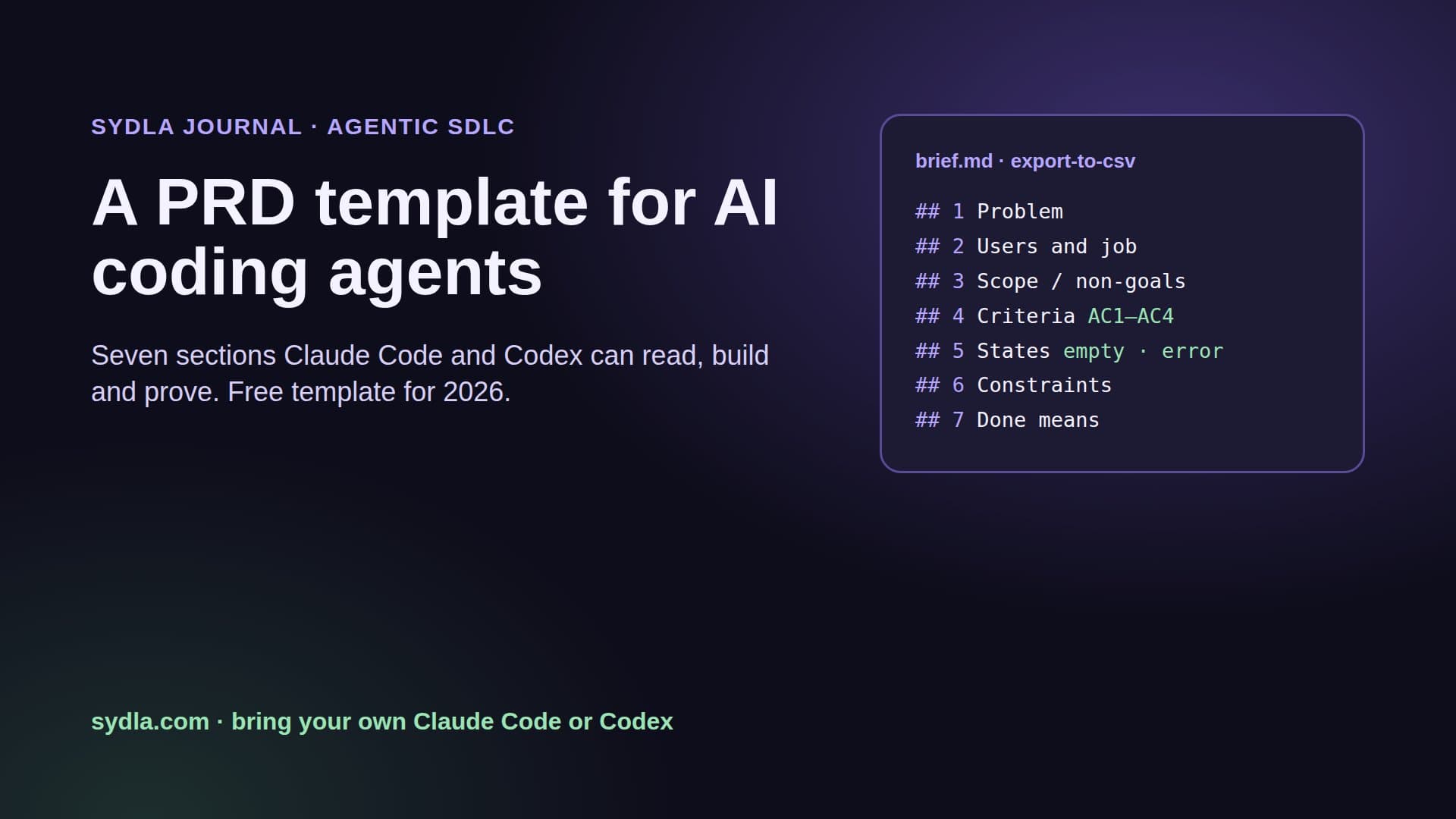
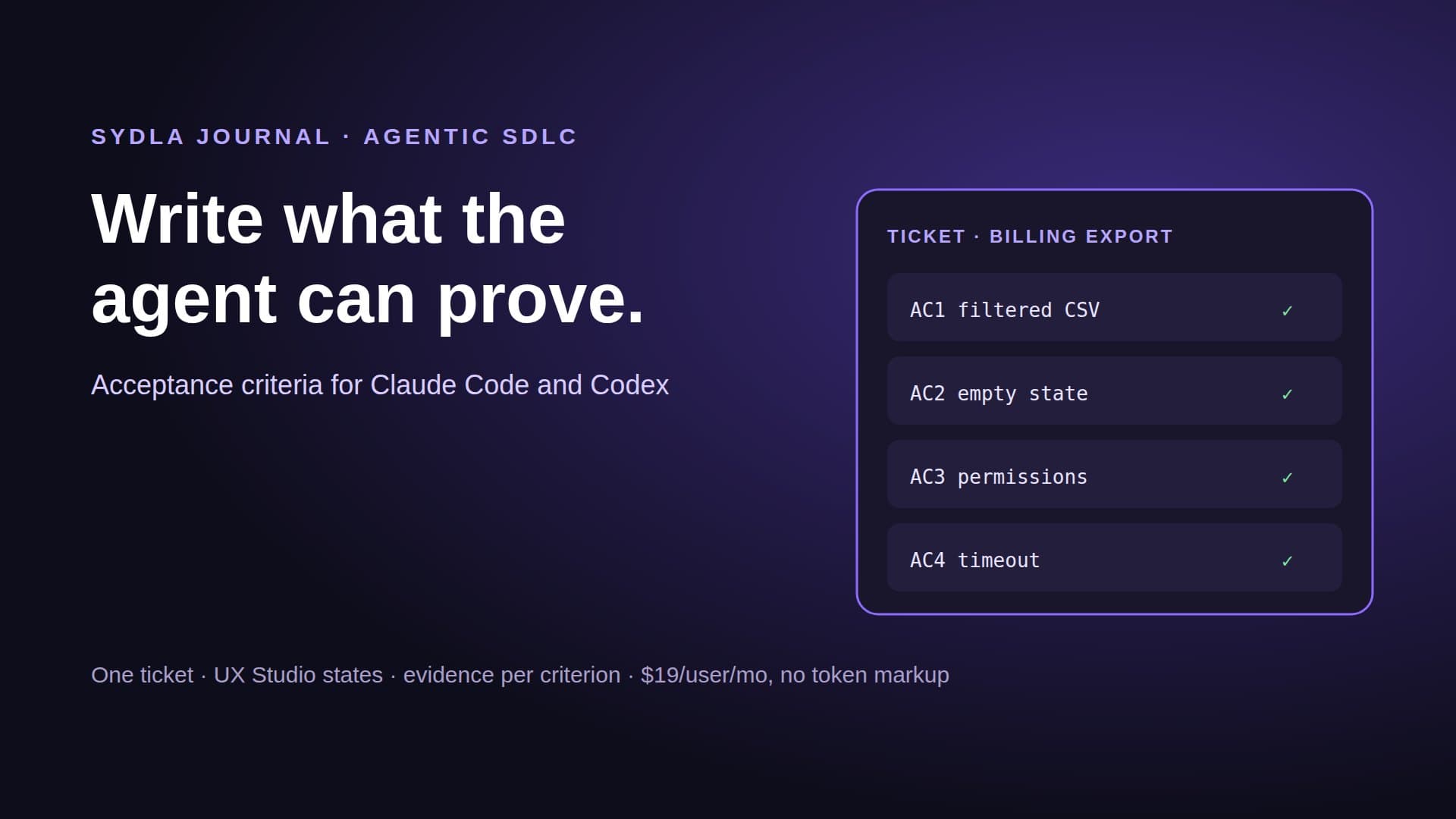
- Brief on the work item. Problem, scope, acceptance criteria and what done means, written once and read by every person and agent. Our PRD template for agents shows the seven sections.
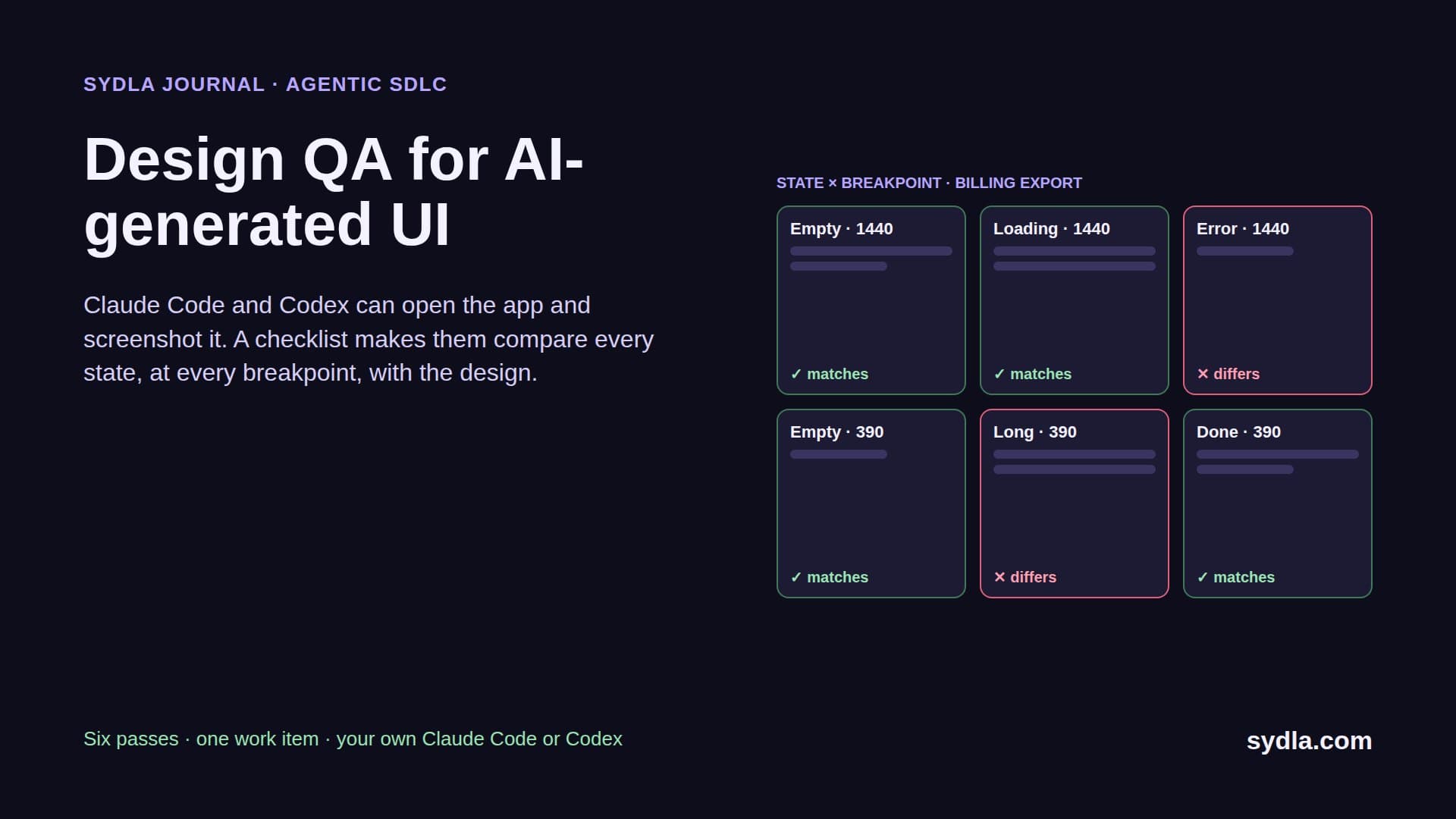
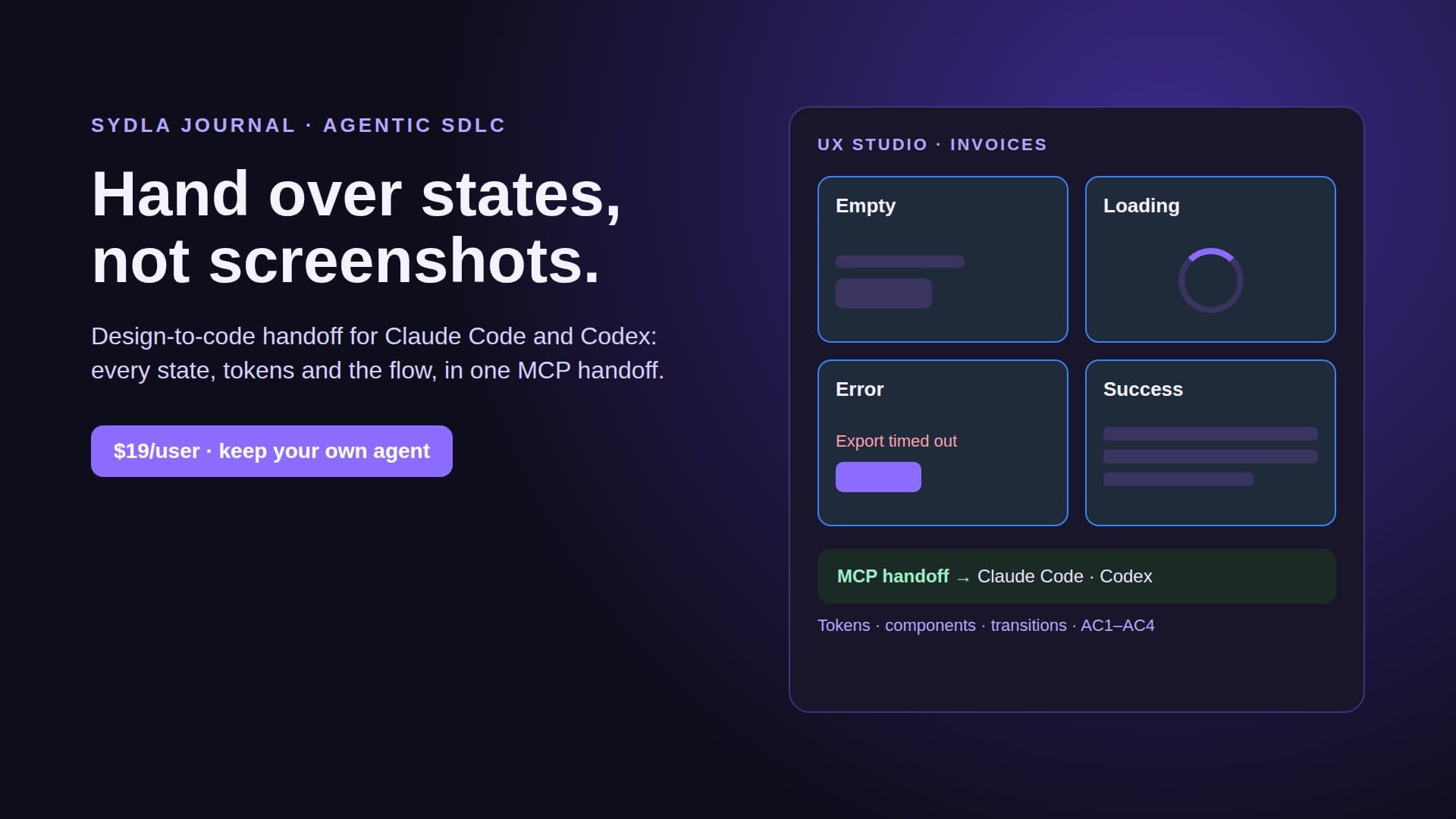
- States in UX Studio. Every screen and state, including empty, loading and error, with its own URL and a published handoff, so the agent builds from states rather than screenshots. Our design handoff guide explains why.
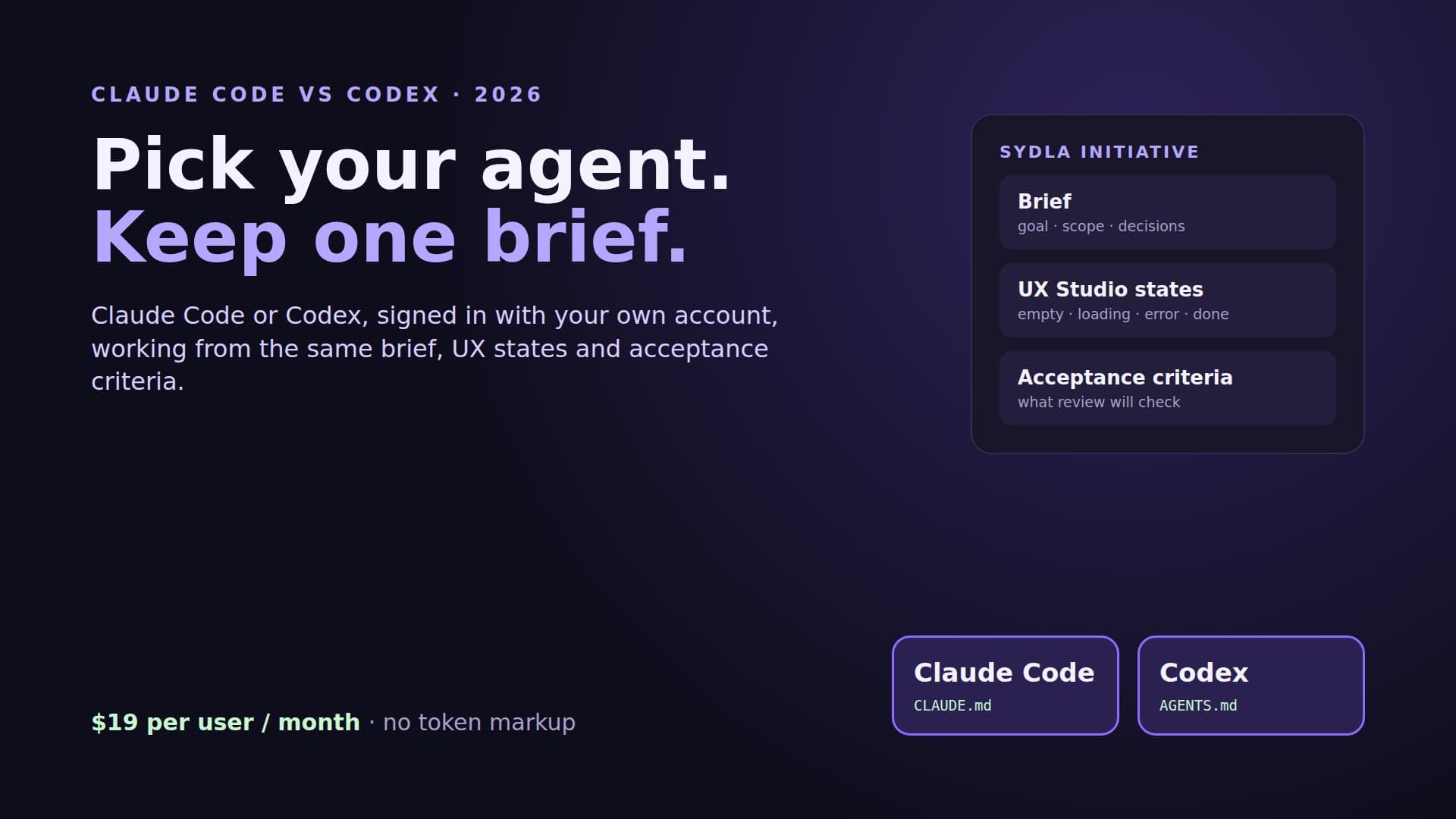
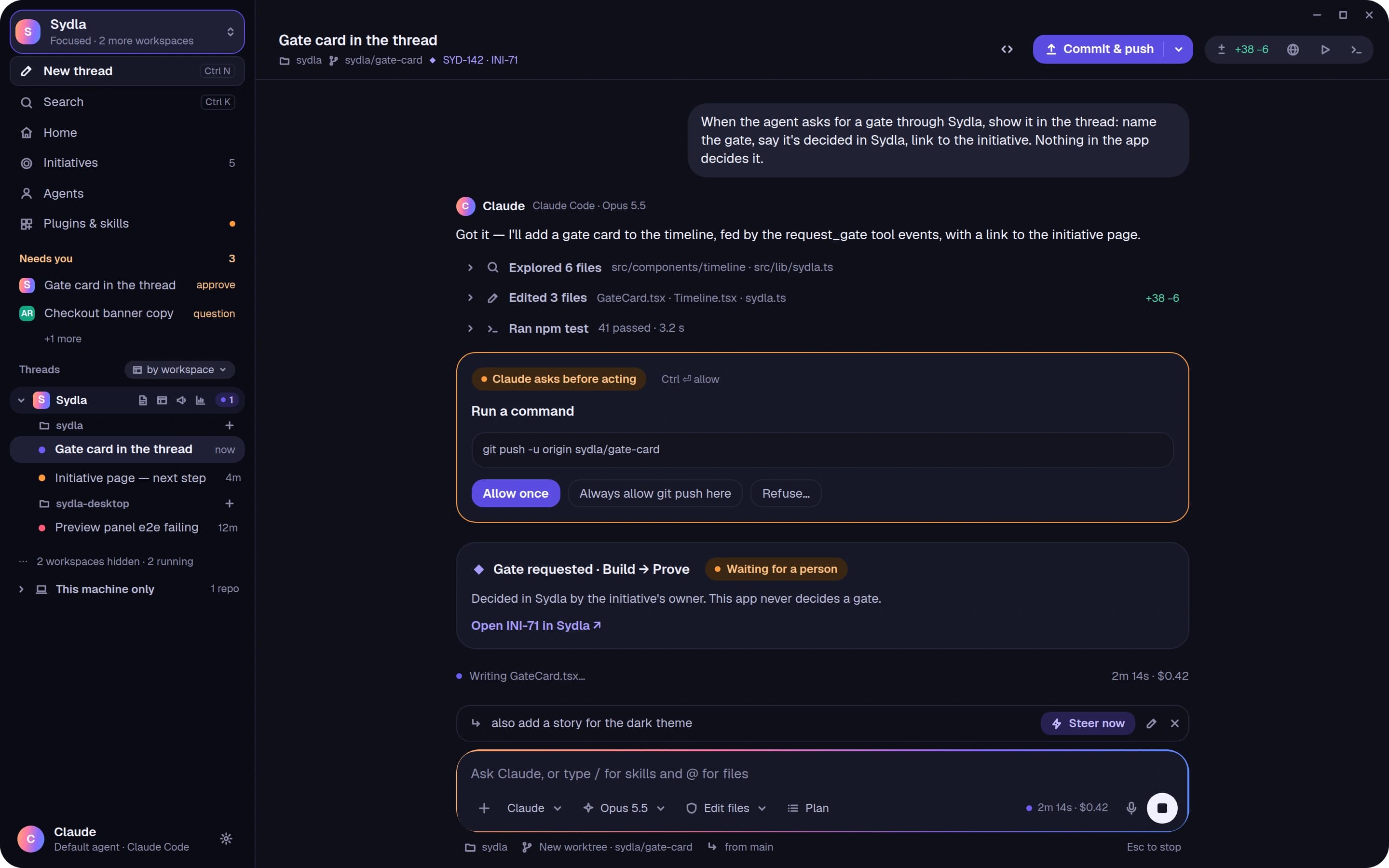
- Run in Sydla Desktop with your own agent. Sydla Desktop launches the Claude Code or Codex CLI on your machine, signed in with your own Anthropic or OpenAI account, in your local checkout. The agent reads the brief and the states through one Sydla MCP connection, builds, runs the tests and attaches the evidence to the run. There are no Sydla AI credits and no token markup. The Desktop guide walks through the first run.
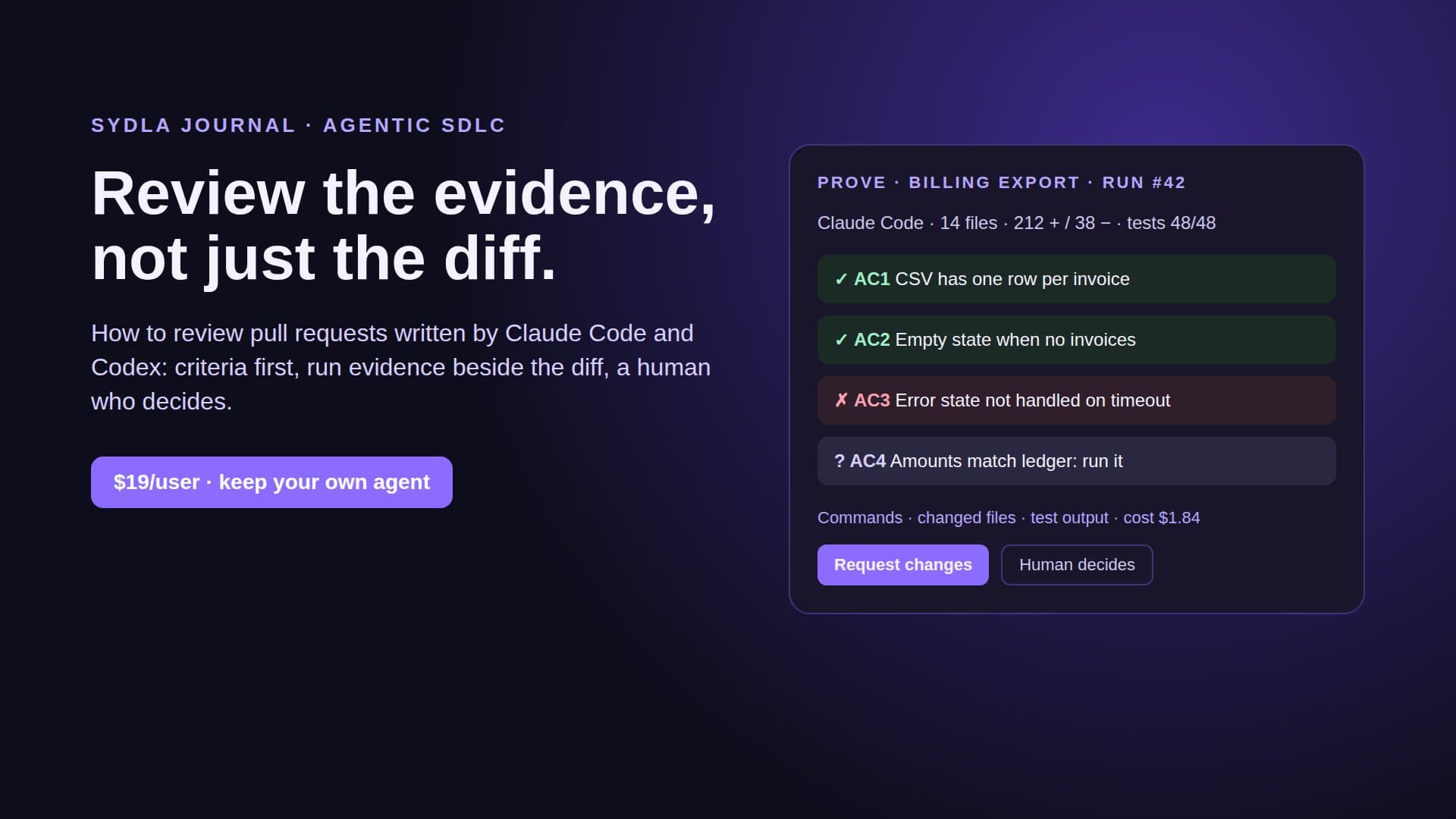
- Review and sign-off. A reviewer checks each criterion against the evidence and the screens against the states, then signs off on the work item. The run's model cost is recorded next to it. Our AI pull request review guide covers the review itself.
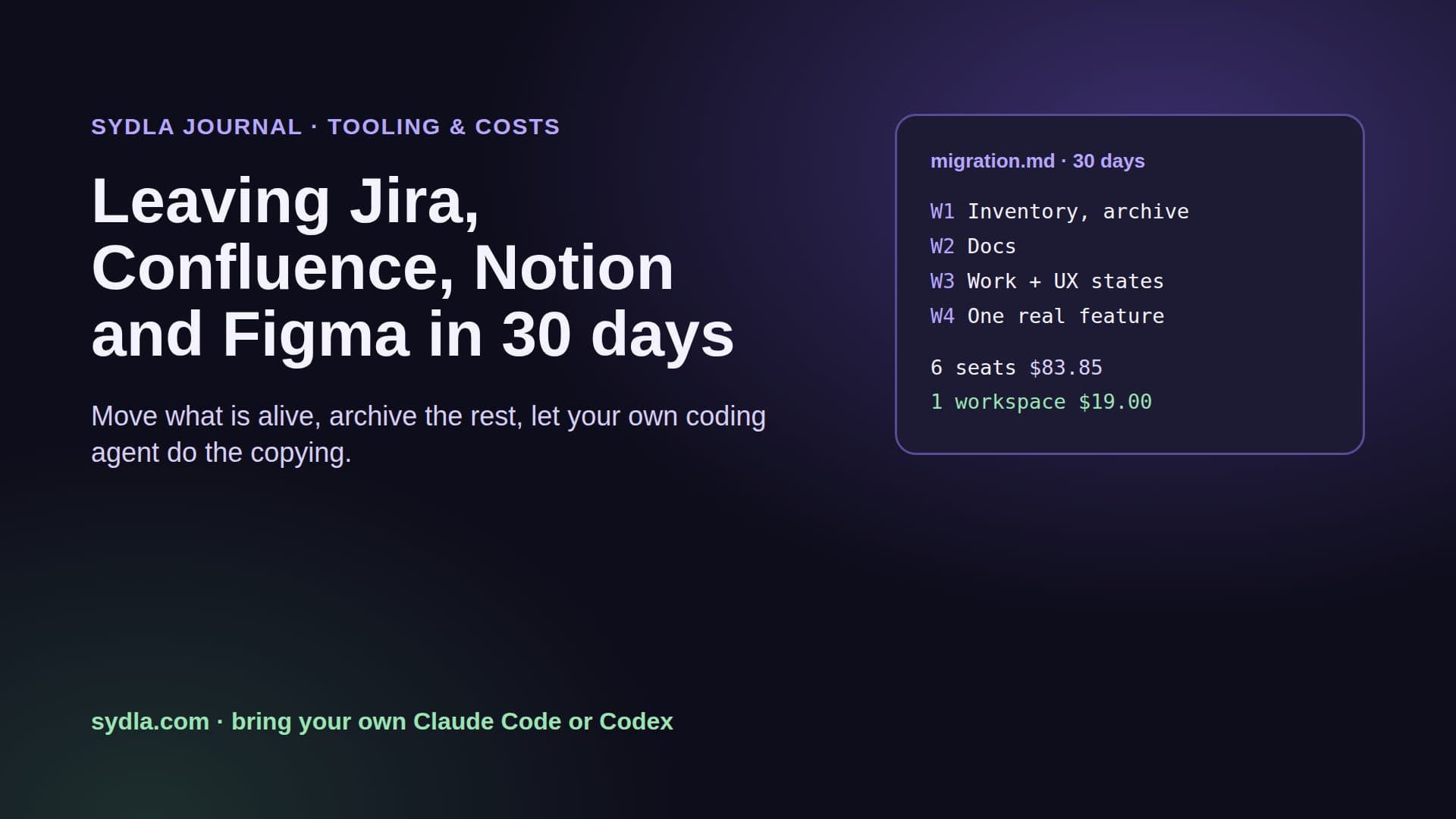
If you are moving off Jira and Confluence rather than capping Rovo, our 30-day migration plan covers exports, what to archive and when to cancel. If you are comparing agents, see Claude Code vs built-in AI agents.
Frequently asked questions
When does Rovo pay as you go start?
On 3 December 2026. From that date, Rovo credit usage beyond your organization's monthly allowance is billed at a list price of $0.01 per credit, or $10 per 1,000 credits, on your next invoice. Pay as you go is enabled by default, and organization admins can switch it off or set a monthly limit.
How many Rovo credits do I get per user?
Jira, Confluence and Jira Product Discovery include 25 Rovo credits per user per month on Standard, 70 on Premium and 150 on Enterprise. Service Collection and Teamwork Collection include 250, 700 or 1,500. All allowances in an organization are combined into one shared pool that refreshes monthly, and unused credits do not roll over.
How many credits does a Rovo Chat message use?
A Rovo Chat quick answer is a Basic event and costs 10 Rovo credits per message. Think deeper and advanced agents with model selection are Premium events with a variable cost that depends on reasoning steps, searches, tools and model. Rovo Search inside Atlassian apps, definitions and summaries are free.
Do Rovo MCP calls from Claude Code or Codex use credits?
Some do. Installing Rovo MCP, write operations and single-product lookups, such as fetching one Jira work item or one Confluence page, are free. Enriched calls such as cross-product search and Teamwork Graph context tools cost 1 to 10 Rovo credits per call in most cases. Telling the agent to fetch by key instead of searching keeps most calls free.
How much does Sydla cost compared with Jira, Confluence, Notion, Figma, Miro and Canva?
Sydla costs $19 per user per month with no AI credit meter. One paid seat each of Jira Standard, Confluence Standard, Notion Plus, Figma Professional Full, Miro Starter and Canva Business costs $83.85 per user per month, so the saving is $64.85 per user per month before any overage. You bring your own Claude Code or Codex account, so your Anthropic or OpenAI plan pays for the model with no markup.