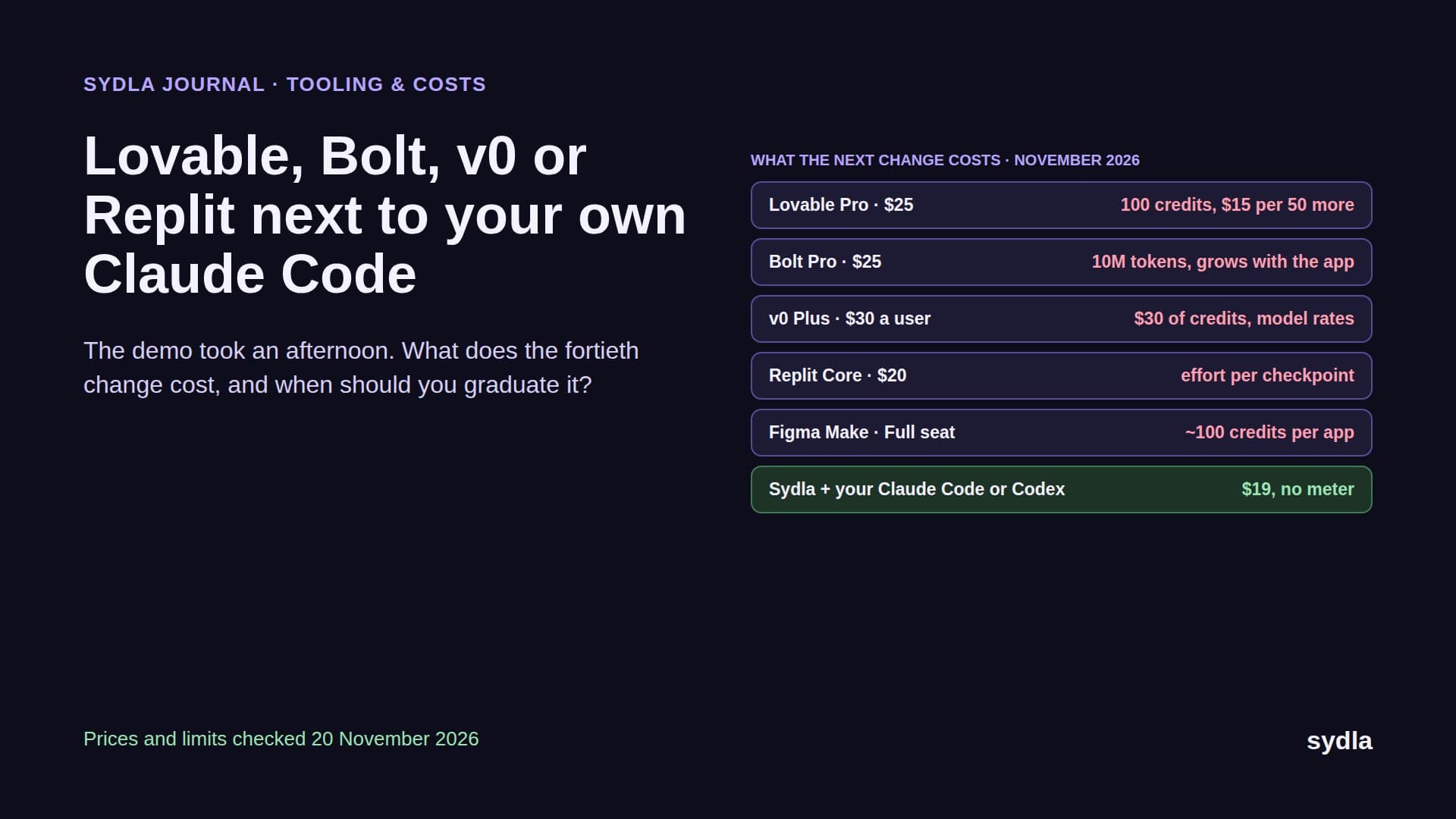
Lovable, Bolt, v0 or Replit? What prompt-to-app credits really cost next to your own Claude Code (2026)
Prompt-to-app builders get you from idea to demo in an afternoon, then bill every change on their own meter. Here is what Lovable, Bolt, v0, Replit Agent and Figma Make charge in November 2026, and how to graduate the prototype to the Claude Code or Codex plan you already pay for.
The demo was free. The fortieth fix was not.
You open Lovable or Bolt on a Saturday, describe a booking app, and by dinner it has a login screen, a database and a public URL. It feels like cheating. Three weeks later the same project has a pricing page, Stripe and twelve screens, and every change goes through a chat box that bills it. Fix the date picker, and the agent breaks the calendar. Fix the calendar, and the date picker is back. Each round costs credits, and the top-up button sits next to the error message.
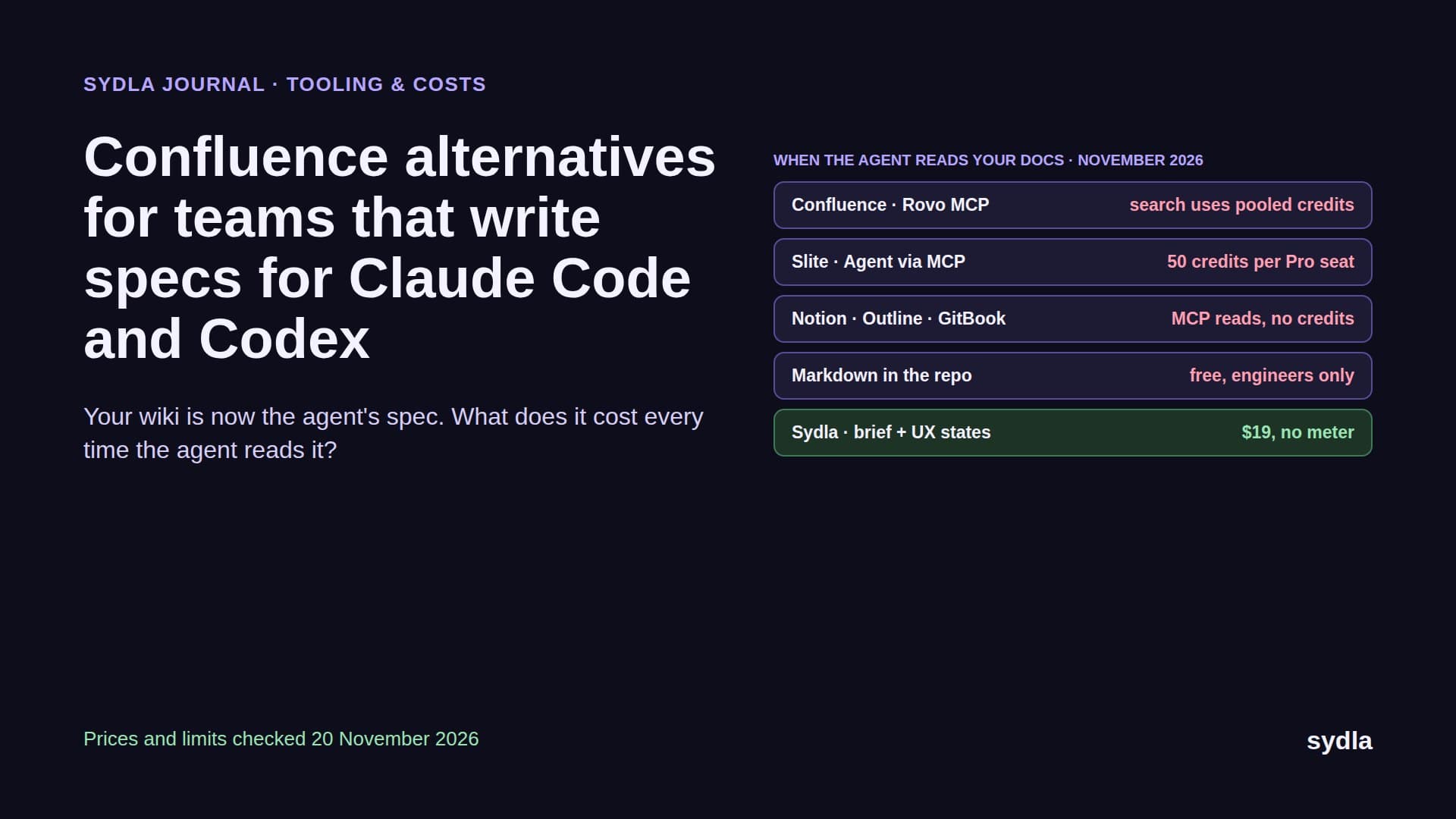
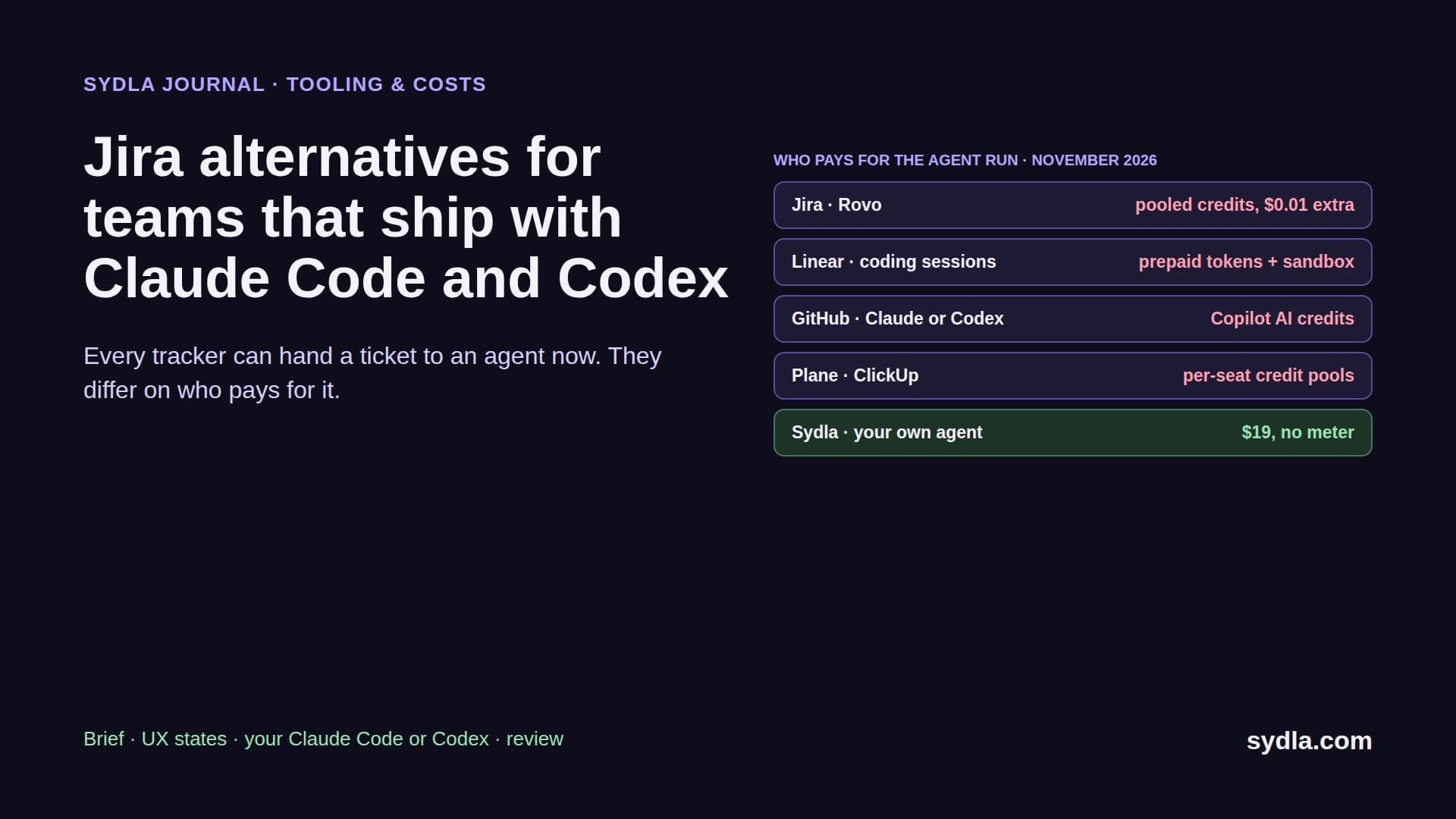
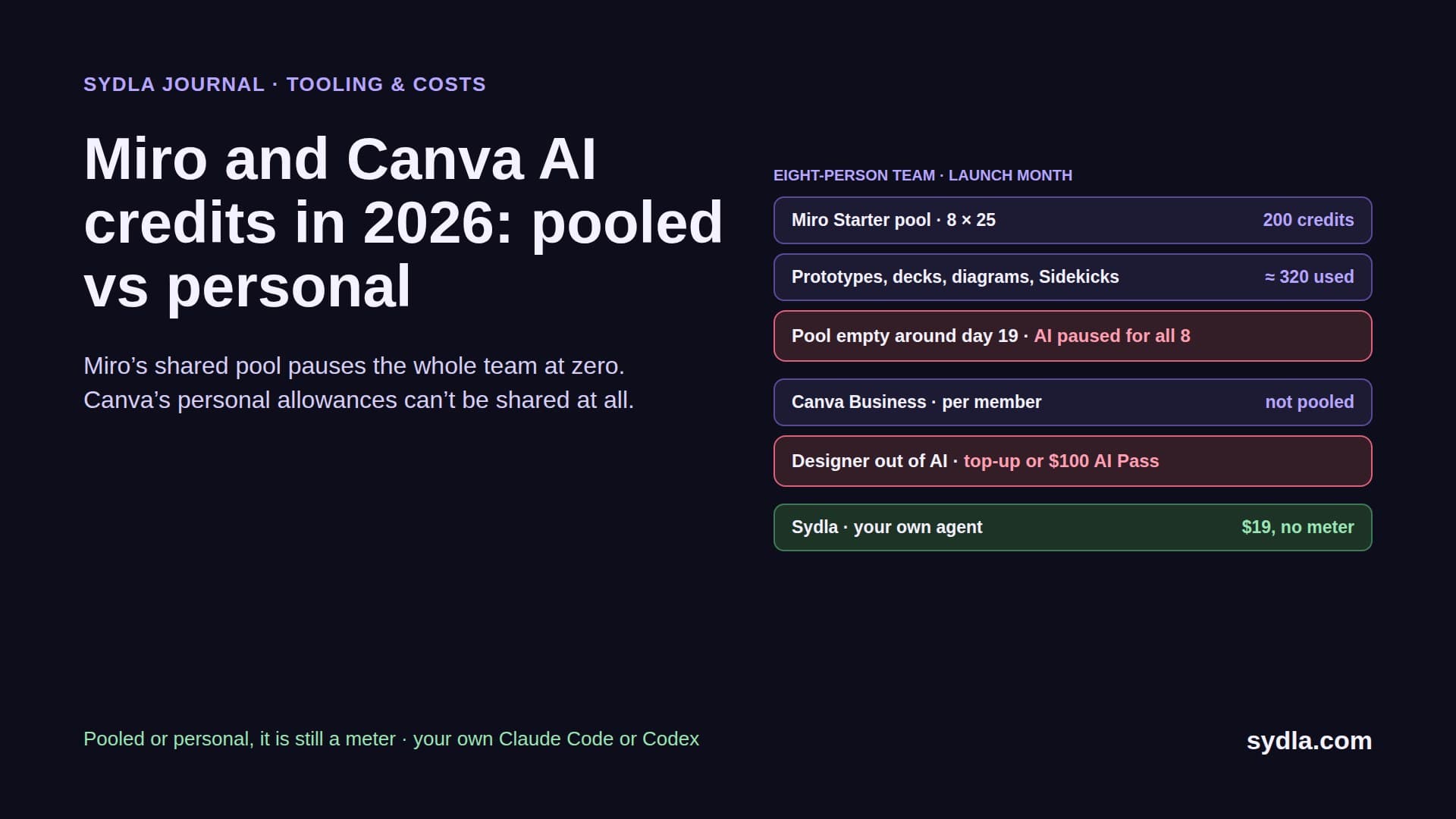
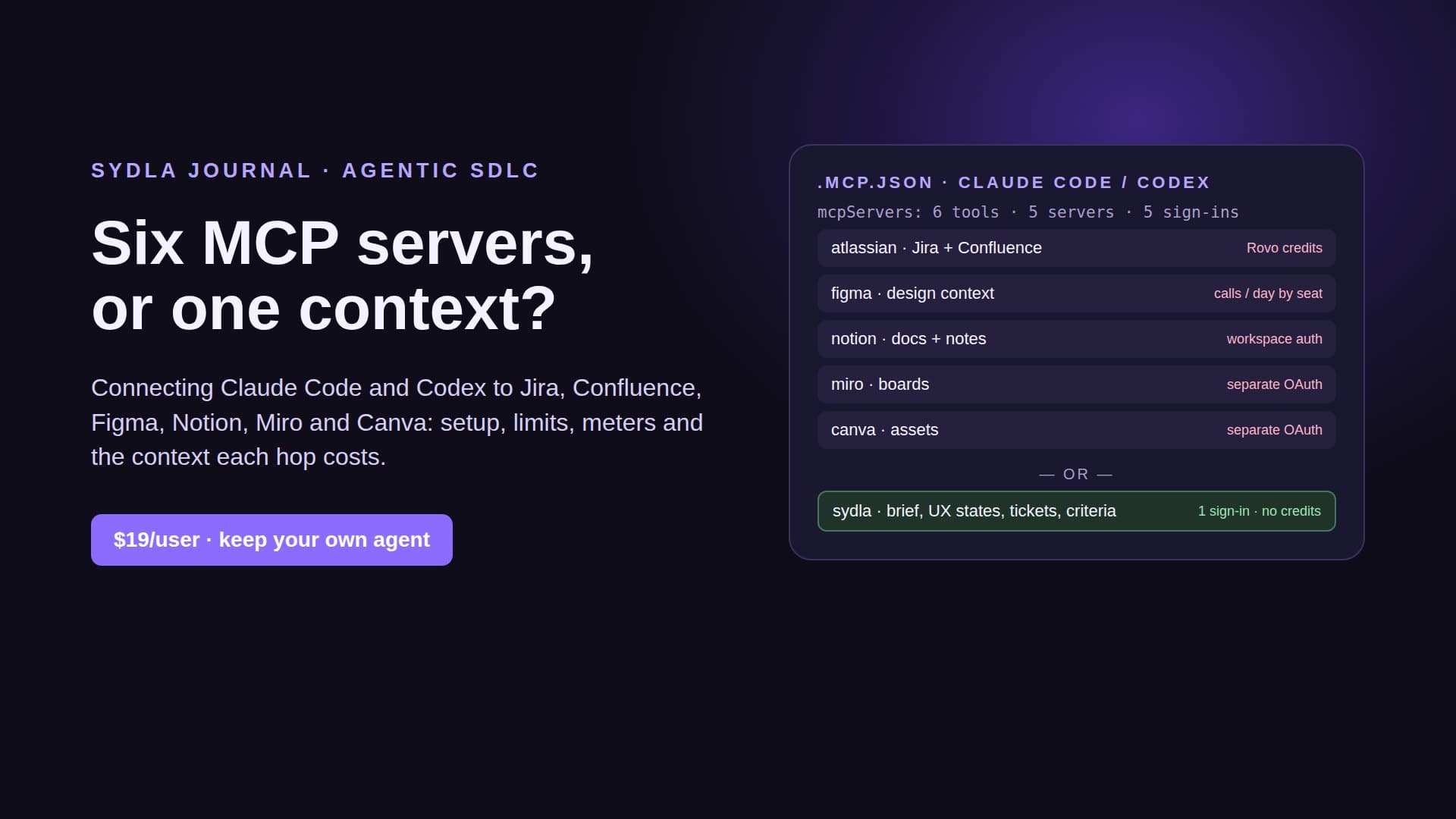
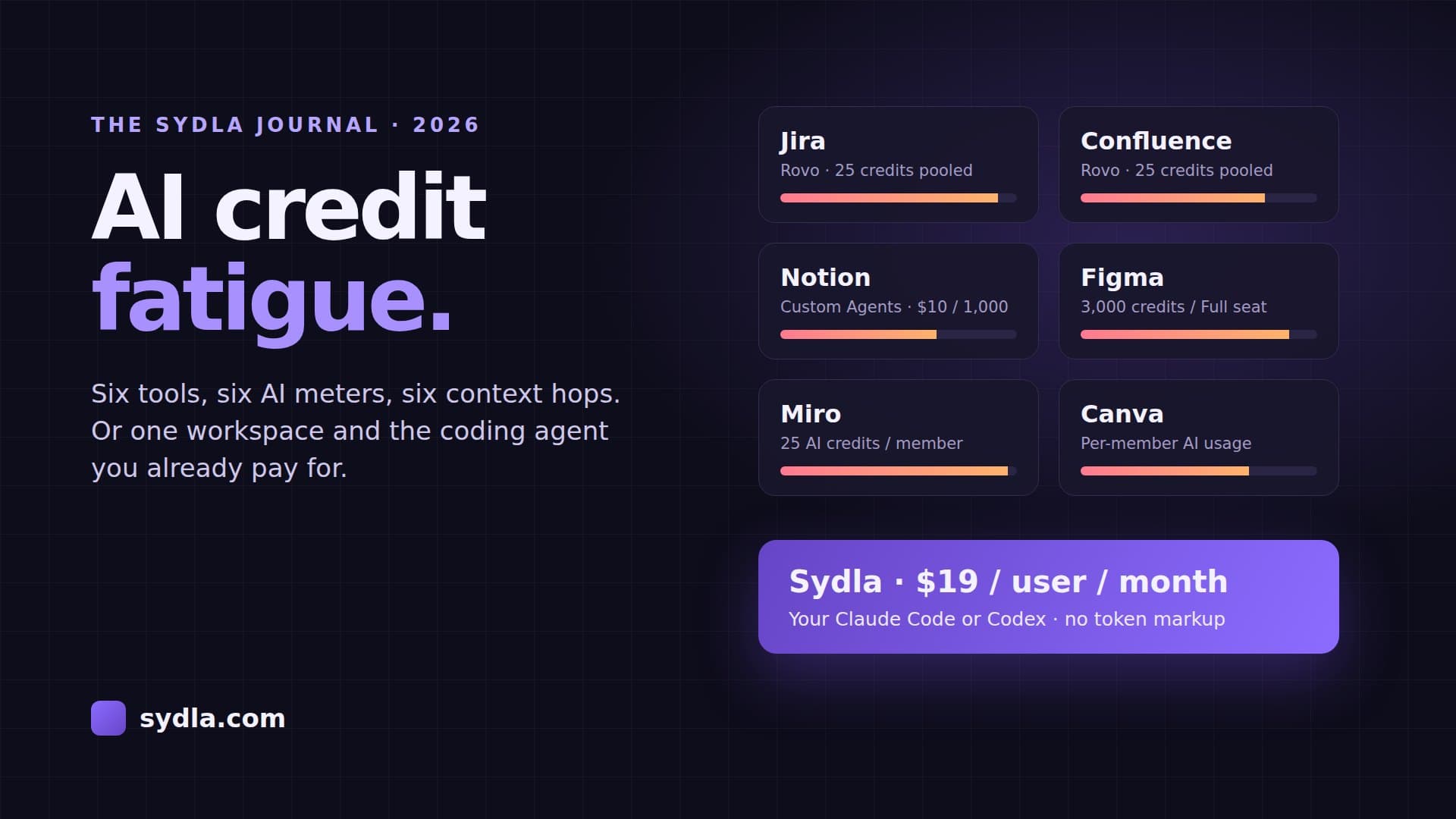
That is the second half of AI credit fatigue. The product stack already runs six meters: Rovo credits in Jira and Confluence, Notion credits, Figma AI credits, Miro credits and Canva's AI allowance. Prompt-to-app builders add a seventh, and it is the one that bills the actual code. Meanwhile many of the founders using them already pay $20 a month for Claude Code or for a ChatGPT plan that includes Codex.
This guide compares Lovable, Bolt, v0, Replit Agent and Figma Make on how they meter a change, using each vendor's own pricing page and docs as of 20 November 2026. Then it shows when to move the prototype into your own repository and keep building with the coding agent you already pay for.
How each builder meters a change
The five tools look alike in a demo and bill very differently. Lovable sells credits and prices each message by complexity. Bolt sells tokens. v0 converts tokens into dollar credits at per-model rates. Replit bills effort per checkpoint. Figma Make draws on the same seat credits as the rest of Figma.
| Builder and plan | Price / month | What you get | How a change is billed | When it runs out |
|---|---|---|---|---|
| Lovable Pro | $25 | 100 credits a month plus 5 build credits a day; unlimited workspace members | By complexity: about 0.50 credit to make a button gray, 1.20 to add authentication, 2.00 for a landing page; Plan mode 1 credit per message | Top-ups at $15 per 50 credits, valid 12 months, or the next tier: 200 credits for $50, 400 for $100 |
| Bolt Pro | $25 | From 10M tokens a month, no daily limit | Tokens per message; larger projects send more context with every prompt | Higher Pro tiers; reload tokens only on the top monthly tier or annual plans |
| v0 Plus | $30 per user | $30 of credits per user each month, plus $2 of daily login credits | Tokens at model rates: v0 Pro $2 in and $10 out per million tokens, v0 Max $4 and $20 | Buy more credits; Business is $100 per user |
| Replit Core | $20 | $20 of credits for the stronger models, plus a free mode allowance | Effort-based, one checkpoint per request; simple fixes cost less than builds | Pay as you go beyond the credits, unless you set a usage limit |
| Figma Make on a Full seat | $20 | 3,000 Figma AI credits per seat a month, shared with every other Figma AI feature | About 30 credits for a font change, 75 to make a design interactive, 100 or more for an app from scratch | Admins buy add-on credits; the seat allowance does not roll over |
Two details matter more than the headline price. First, rollover: Lovable and Bolt keep unused monthly credits or tokens for two months on paid plans, Replit Pro keeps them for two months, and Figma seat credits reset every month. Second, team pricing: Lovable prices by credits with unlimited members, while Bolt Teams costs $30 per member and its tokens are not shared between members.
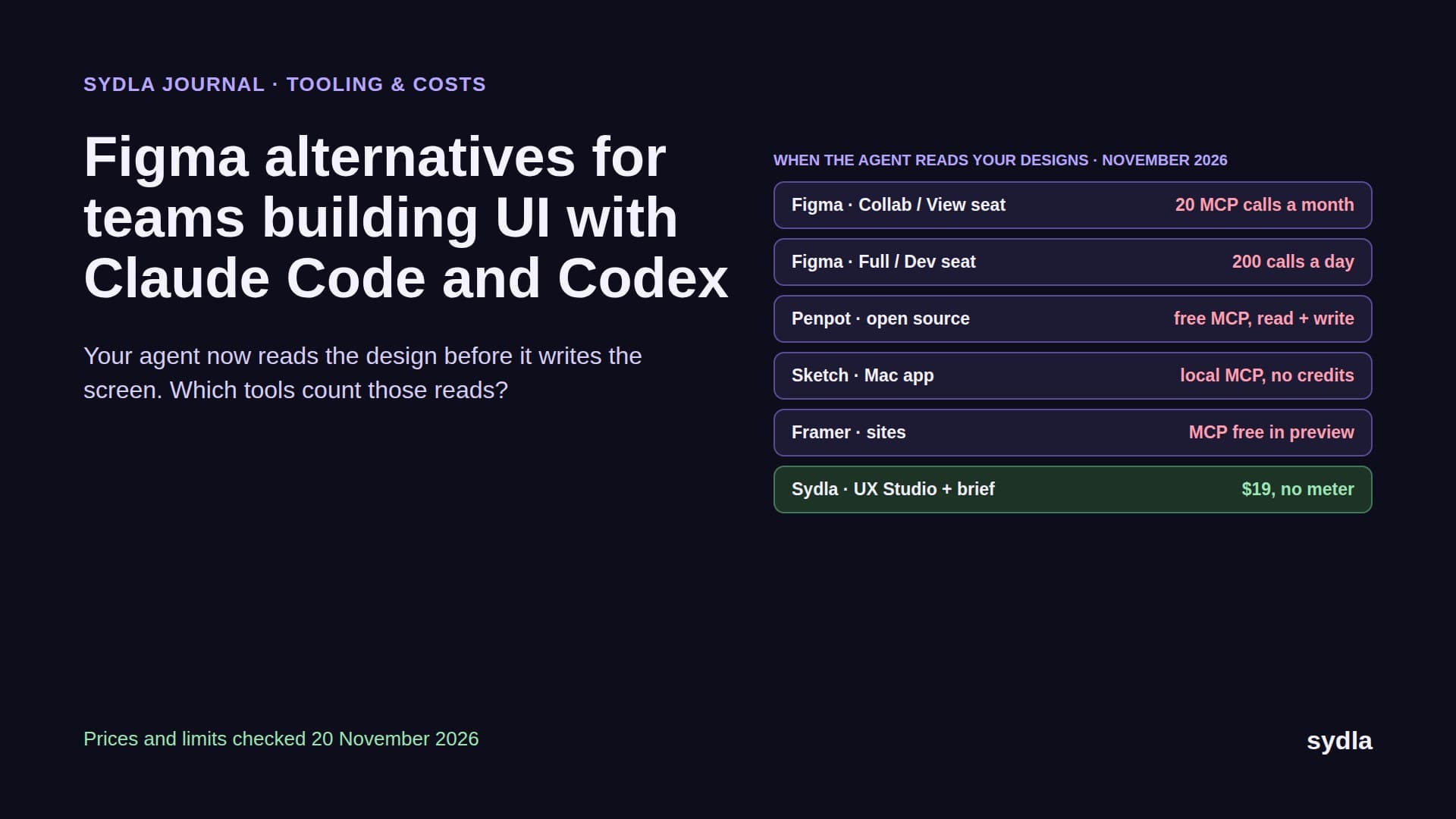
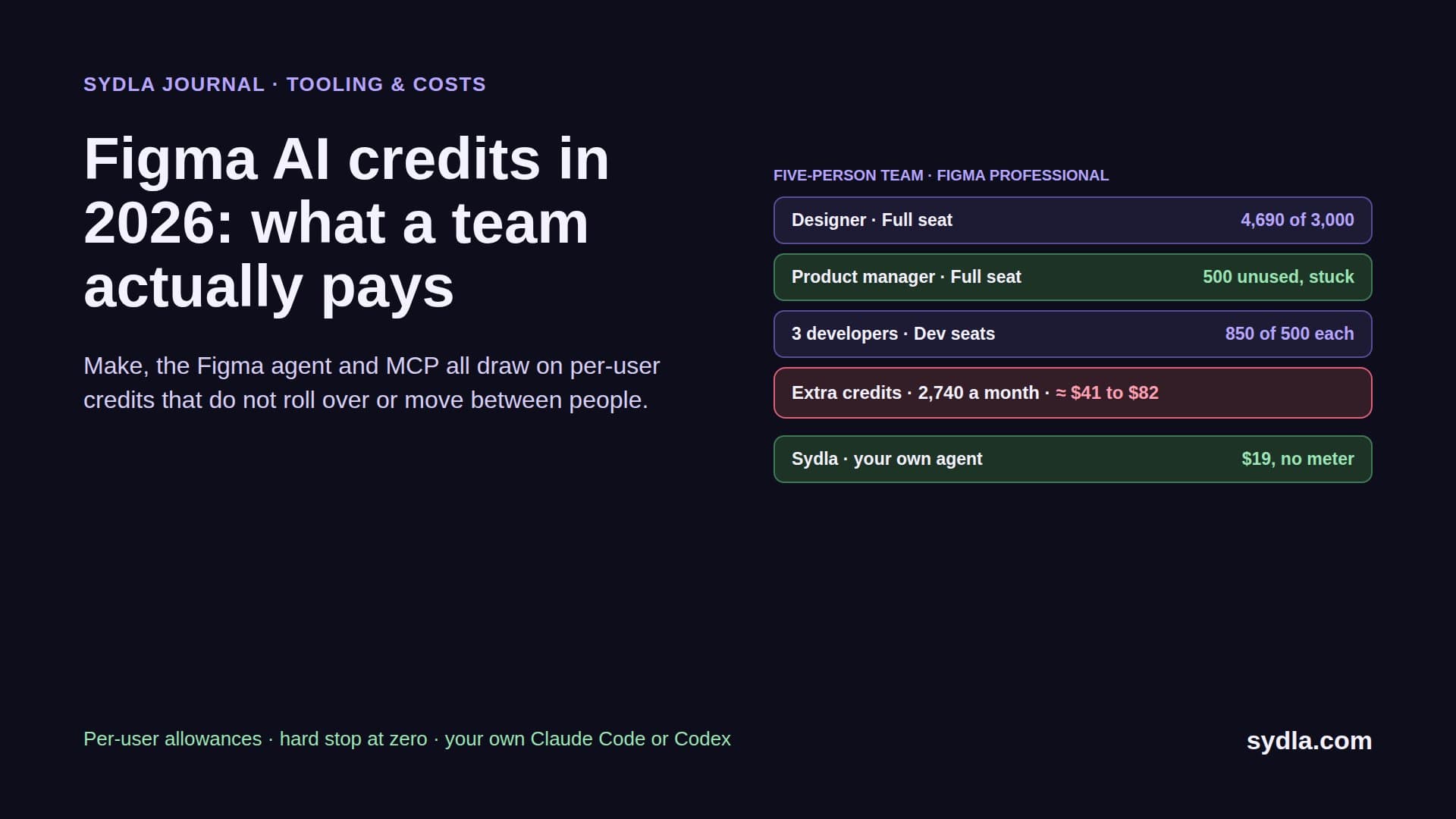
Our Figma AI credits guide covers the full Figma rate card, including the agent and Weave tools that now draw on the same budget as Make.
Where the meter bites: the iteration loop
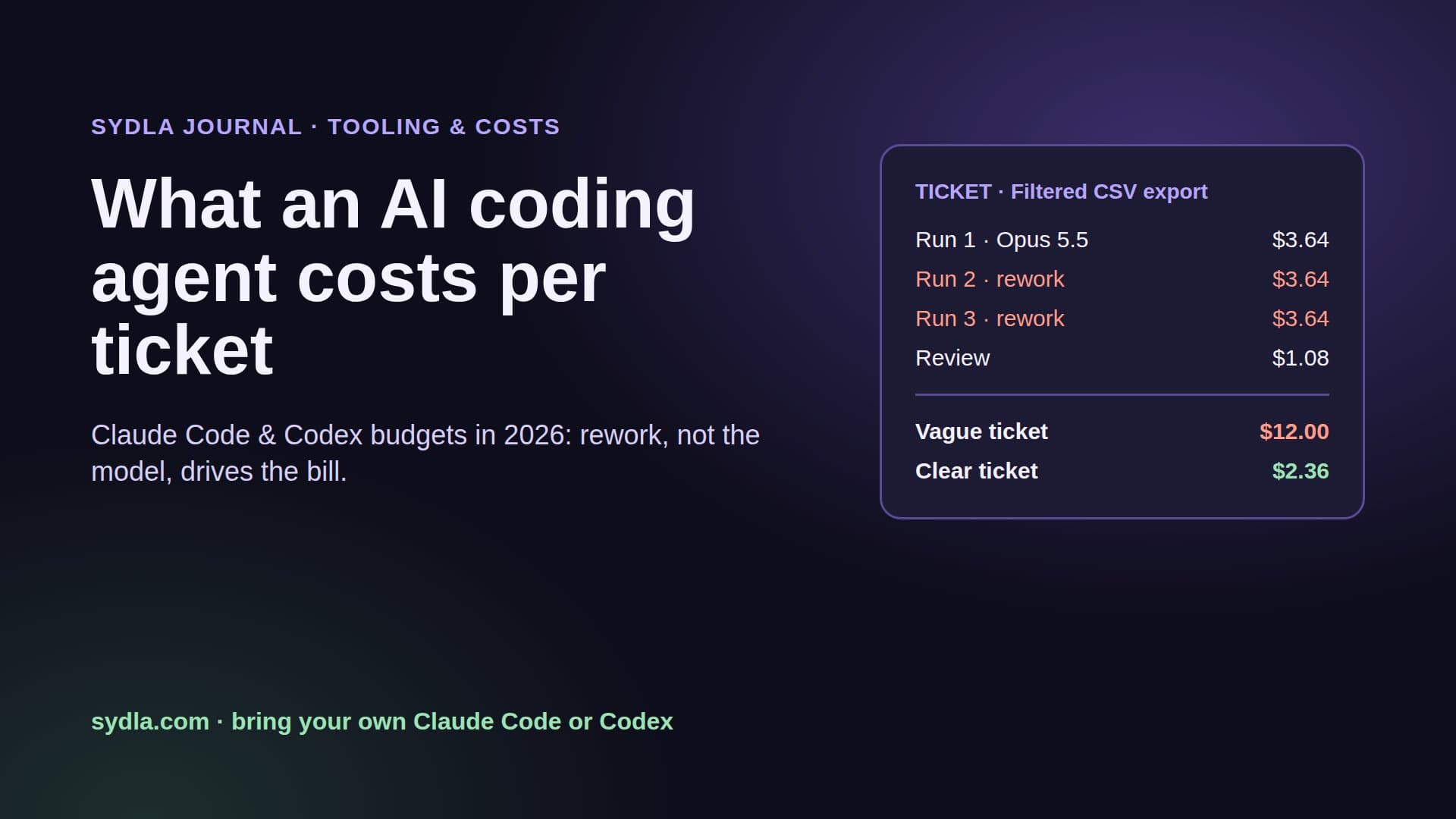
Per-message prices look tiny. Lovable's own examples run from half a credit to two credits, which is $0.13 to $0.50 at the Pro rate of $0.25 per credit. The bill comes from how many messages a real product needs once the easy part is done.
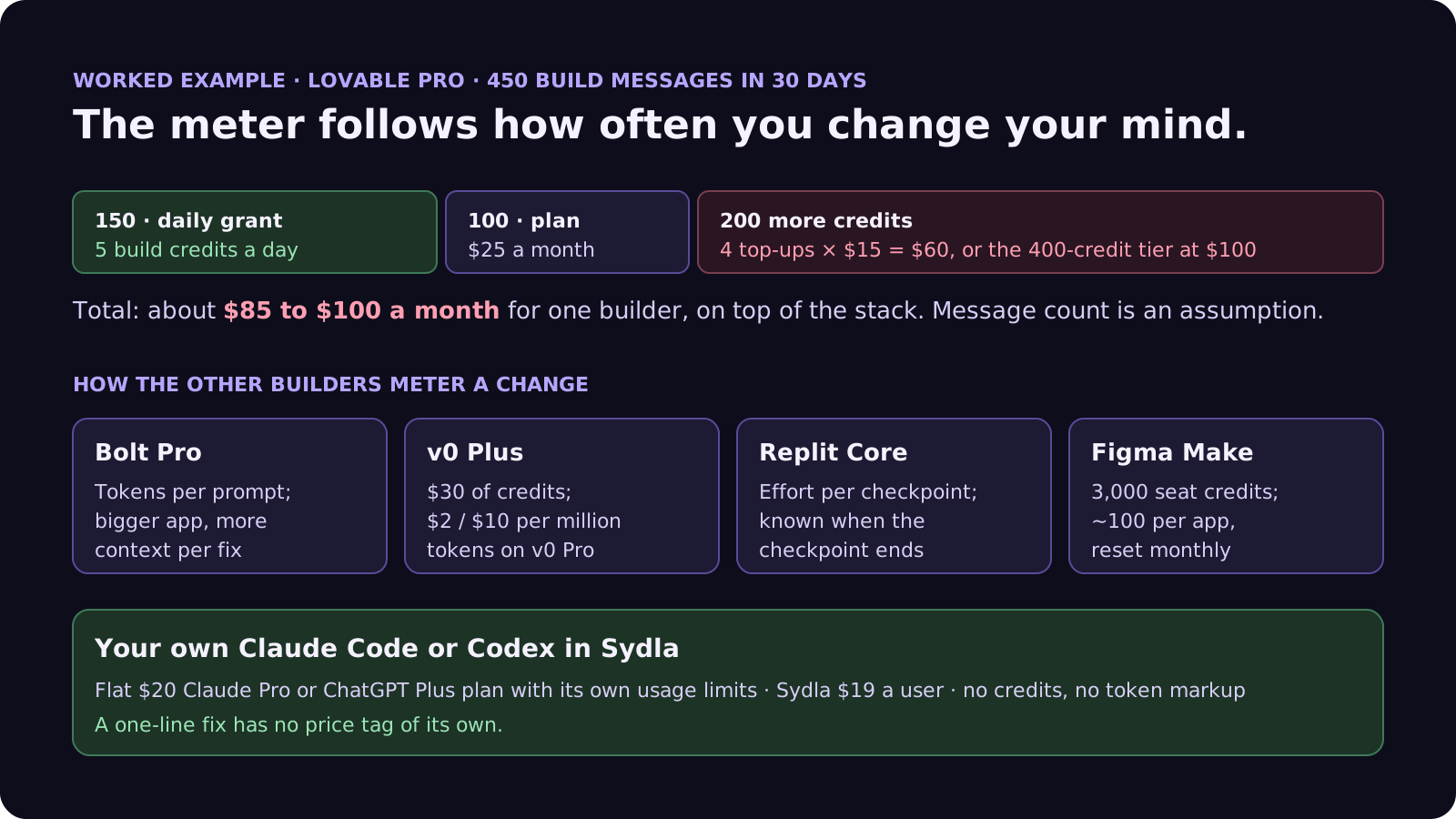
Here is a worked example on Lovable's published figures, with an assumed workload. A founder sends 15 build messages a day for 30 days, at an average of one credit each: 450 credits. The daily grant covers 150 of them. The remaining 300 need either the 400-credit tier at $100 a month, or the 100-credit plan plus four top-ups of 50 credits, which is $25 + $60 = $85. The same pattern applies to Bolt tokens and v0 credits: the meter follows how often you change your mind, not how big the app is.
The loop also grows with context. Bolt sends the project with every prompt, so a larger app spends more tokens on the same one-line fix. v0 charges input tokens at model rates. Replit's effort pricing is only known once the checkpoint ends. None of this is hidden, and each vendor documents it clearly. It is just a different shape of bill from a flat subscription, and it lands on top of the seats you already pay for.
The full bill: six seats, one builder, one agent
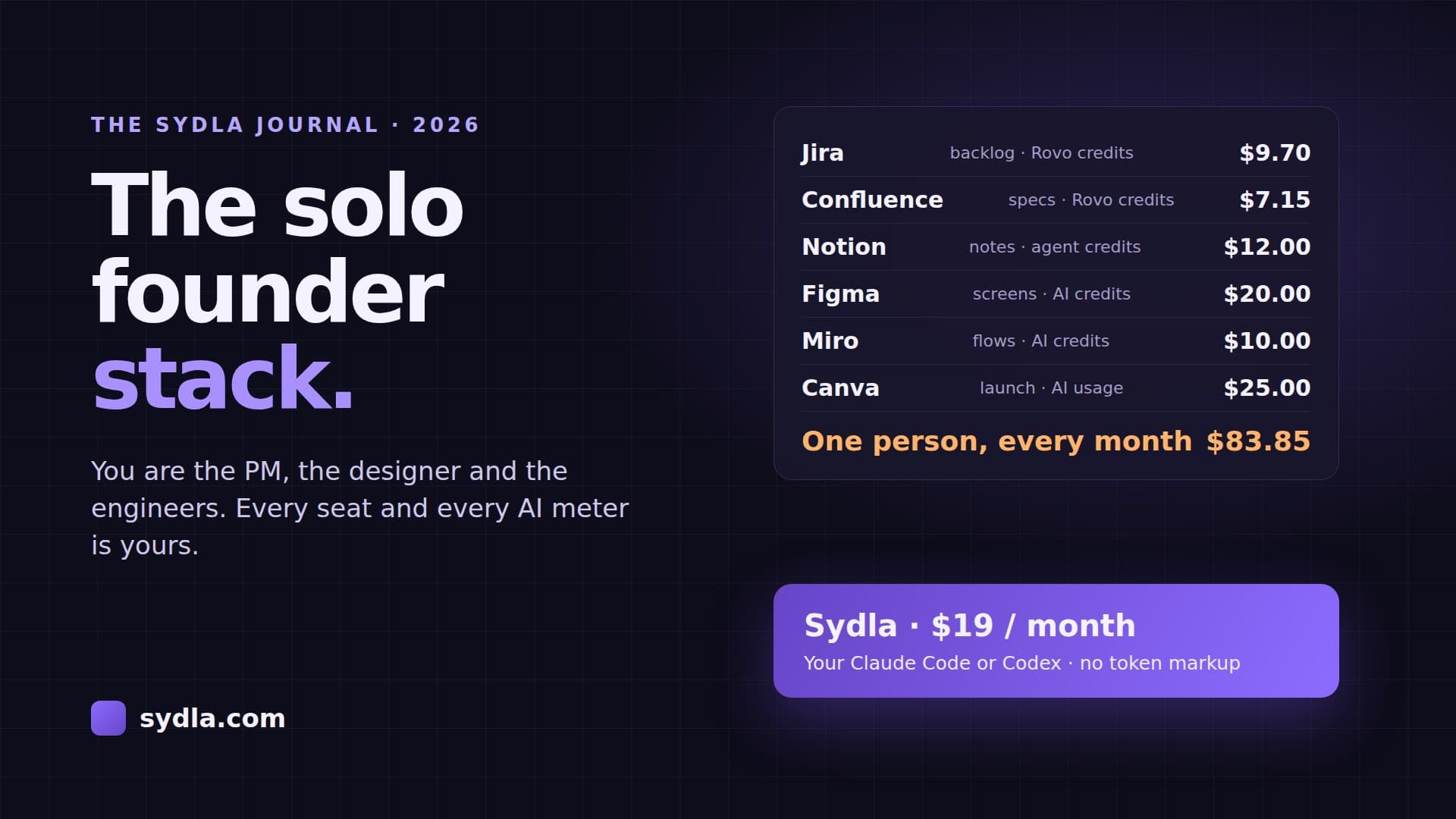
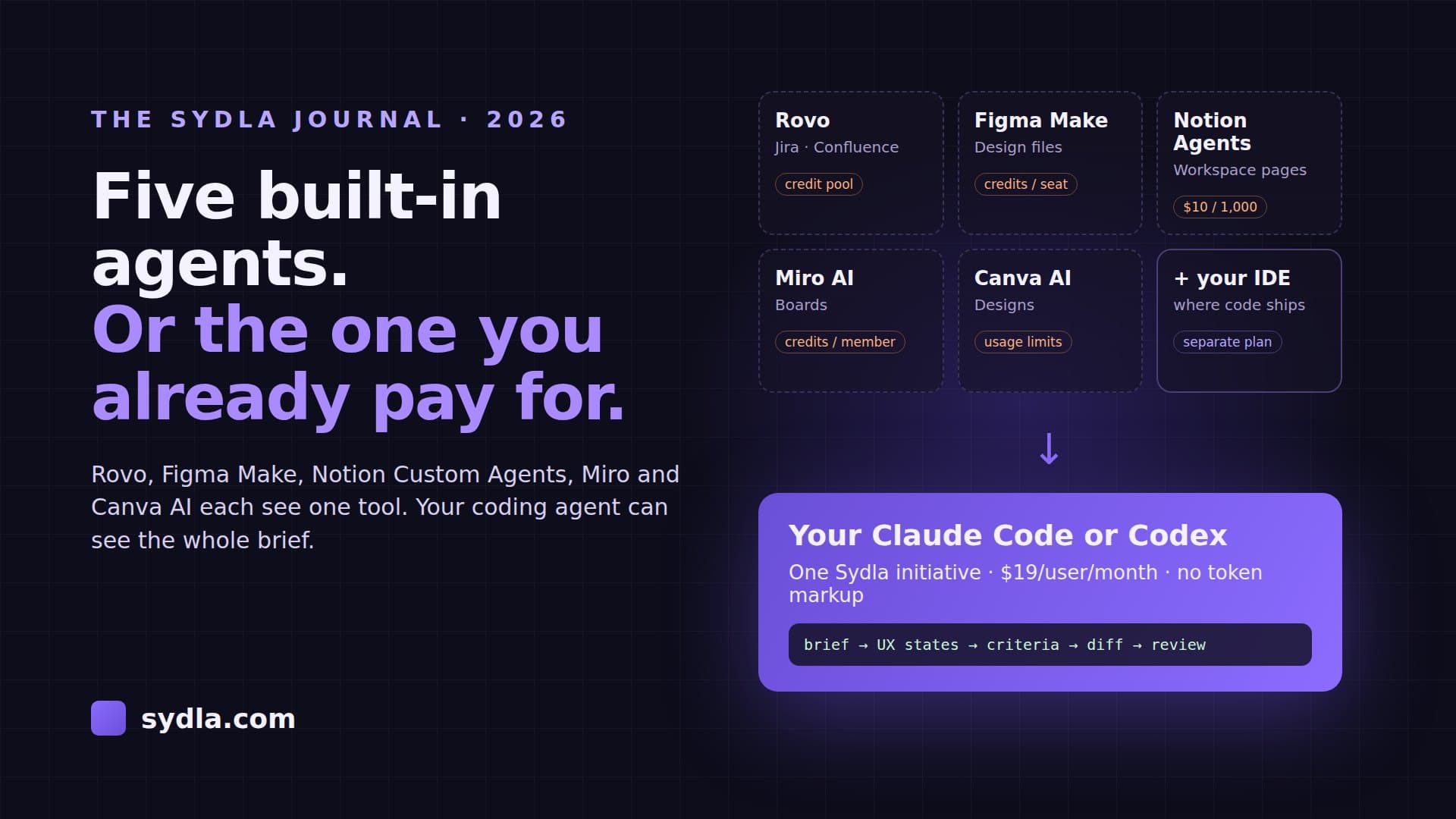
Prompt-to-app builders rarely replace the rest of the stack. The brief still lives in Notion or Confluence, the tickets in Jira, the screens in Figma, the user flows on a Miro board and the launch assets in Canva. Here is what one person pays per month with an app builder on top.
| Tool and plan | Seat / month | AI meter | What it owns |
|---|---|---|---|
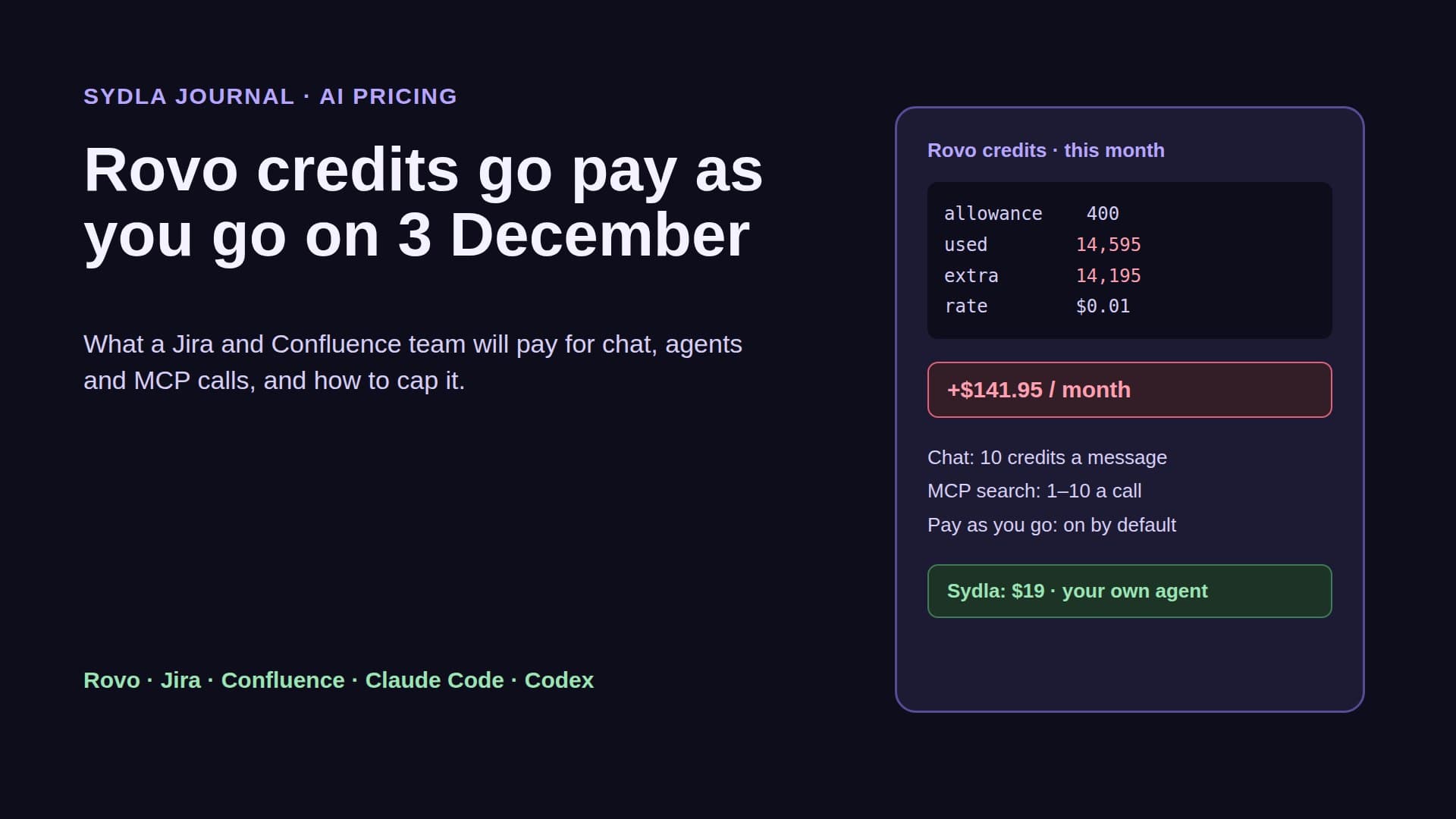
| Jira Standard | $9.70 | Rovo credits: 25 per user, pooled; $0.01 per extra credit from 3 December 2026 | Tickets and plan |
| Confluence Standard | $7.15 | The same Rovo pool | Specs and decisions |
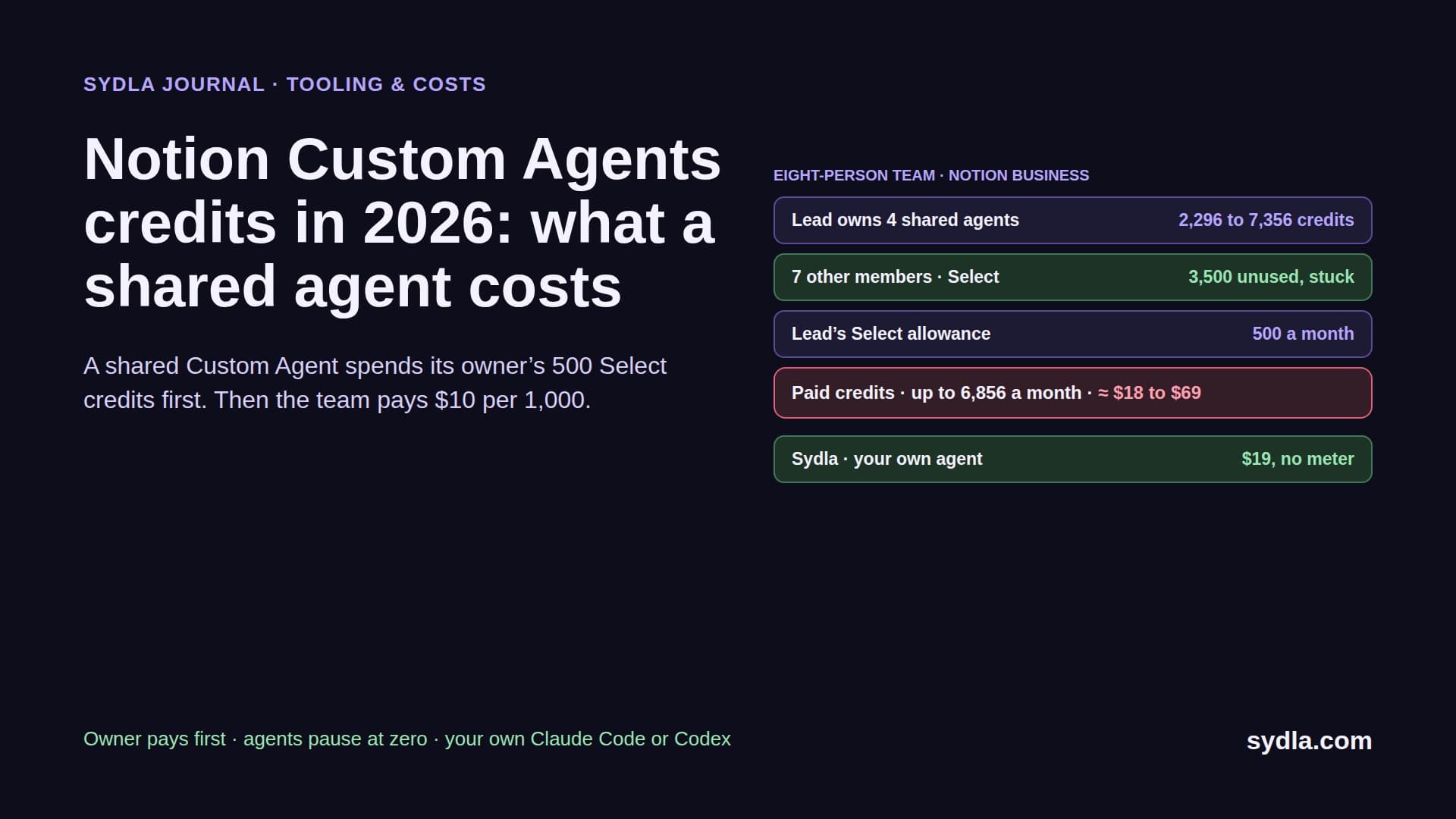
| Notion Plus | $12.00 | Custom Agents need Business or Enterprise, then $10 per 1,000 credits | Notes and research |
| Figma Professional, Full seat | $20.00 | 3,000 AI credits per seat, no rollover | Screens and Figma Make |
| Miro Starter | $10.00 | 25 credits per member, pooled | User flows |
| Canva Business | $25.00 | Per-member AI allowance | Launch assets |
| Six-tool total | $83.85 | Six meters | Six places to look |
| Plus Lovable or Bolt Pro | +$25.00 | Credits or tokens per change | The prototype |
| [Sydla](/) | $19.00 | None: your Claude Code or Codex plan pays for the model, with no token markup | Brief, plan, UX states, agent runs and review in one workspace |
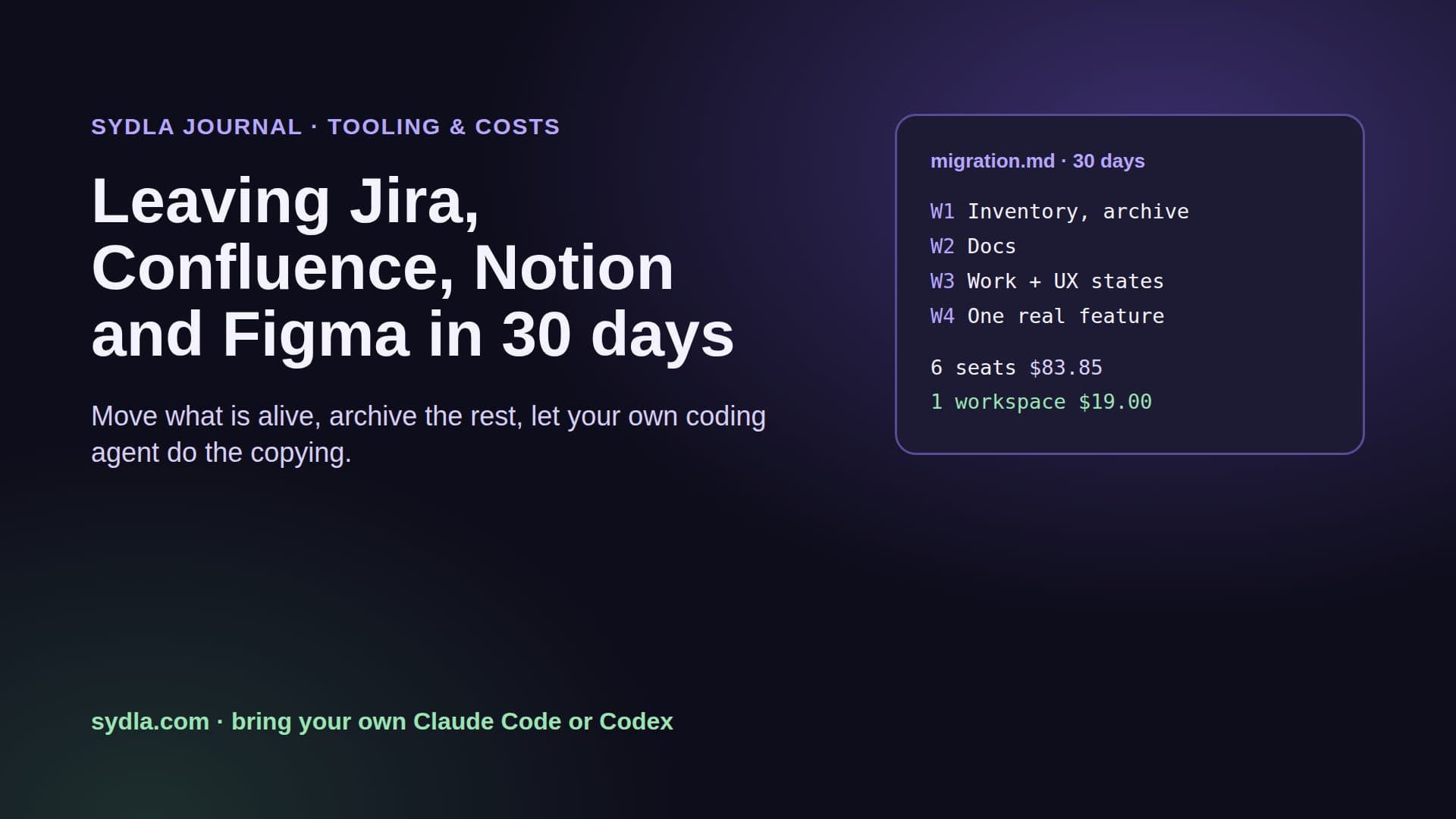
Sydla costs $64.85 per user per month less than the six-tool stack, before any builder or extra credits. The pricing section lists every plan and source, and the full comparison explains where each specialist tool still wins. If you are a team of one, the solo founder stack guide works the same numbers for a year.
What builders do well, and where they stop
Prompt-to-app builders are the fastest way from an idea to something you can click. They host it, wire a database and give non-engineers a way to test an interaction without waiting for anyone. For a landing page, a waitlist or a throwaway demo for an investor meeting, they are hard to beat.
They stop in three places, and each matters more as the product grows:
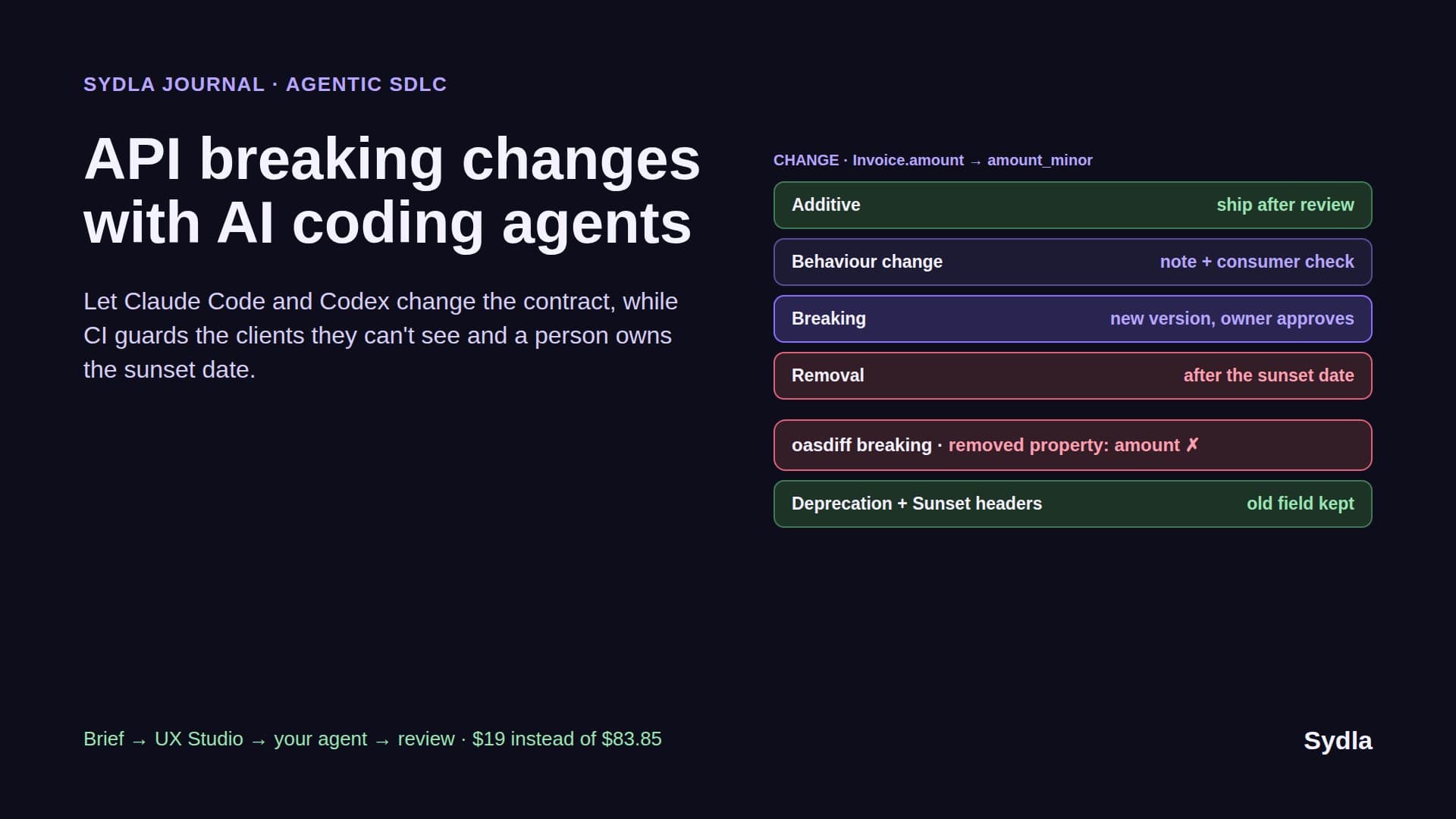
- The repository shape is theirs. Bolt commits every change to main and cannot switch branches. v0 works on its own branch and opens pull requests, which is safer. Lovable syncs to GitHub, GitLab or Bitbucket on every plan, but code download and editing start on Pro. Exporting works; living in two places at once does not.
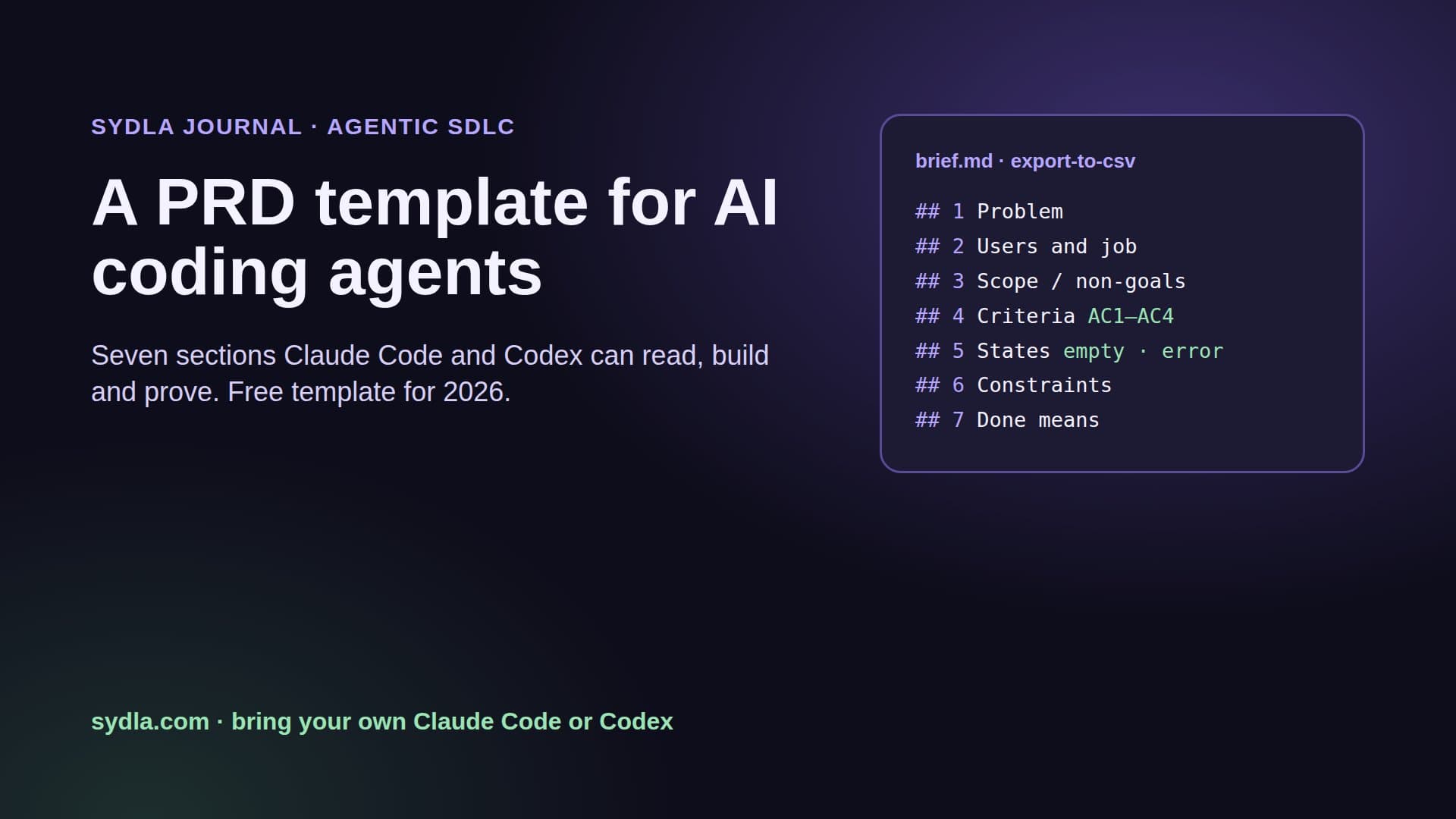
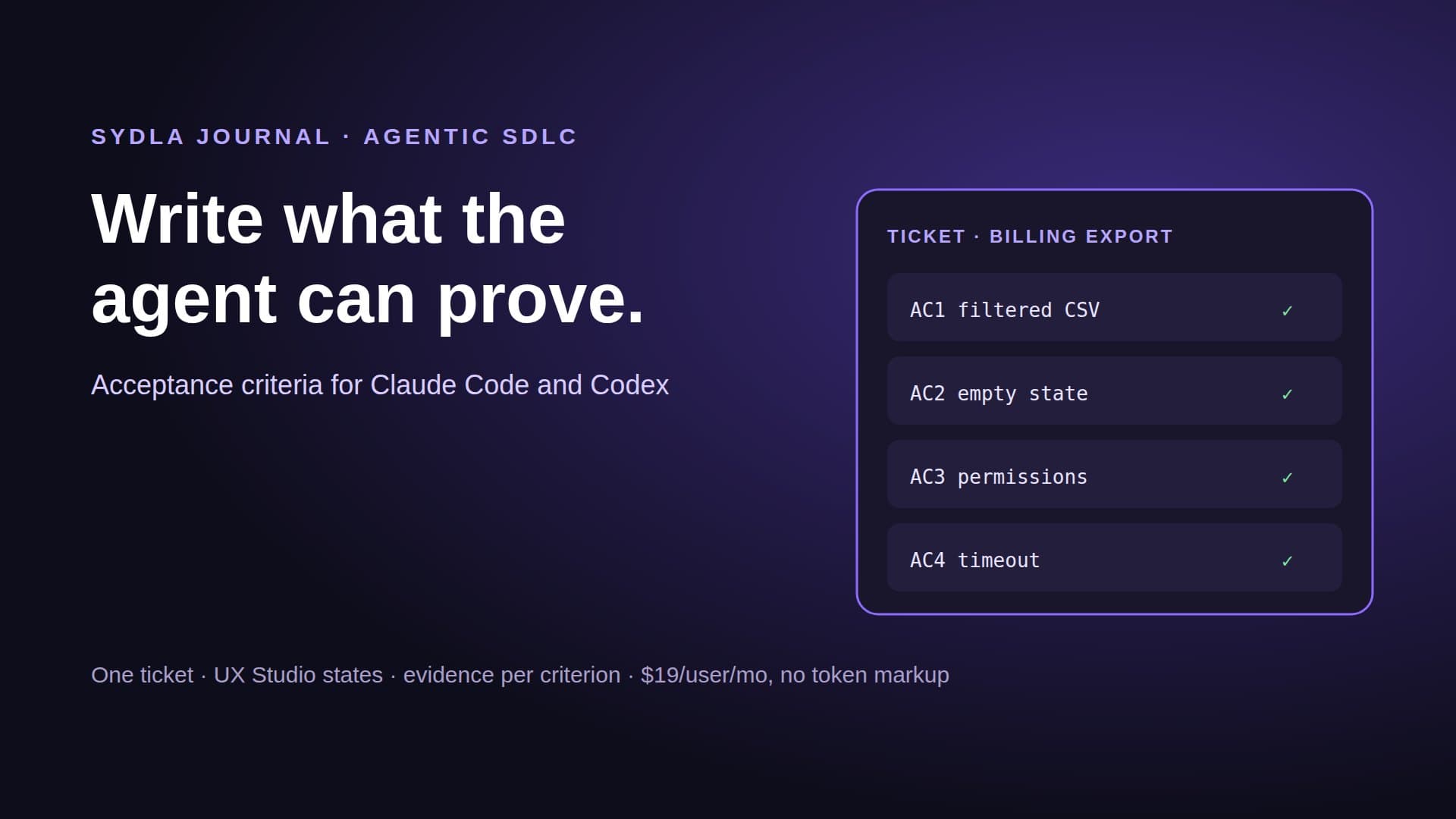
- There is no brief. The chat history is the spec. Nothing records the acceptance criteria, the decisions or what is out of scope, so each fix is judged by whether the screen looks right today. Our acceptance criteria guide explains why agents need numbered criteria to stop the fix-and-break loop.
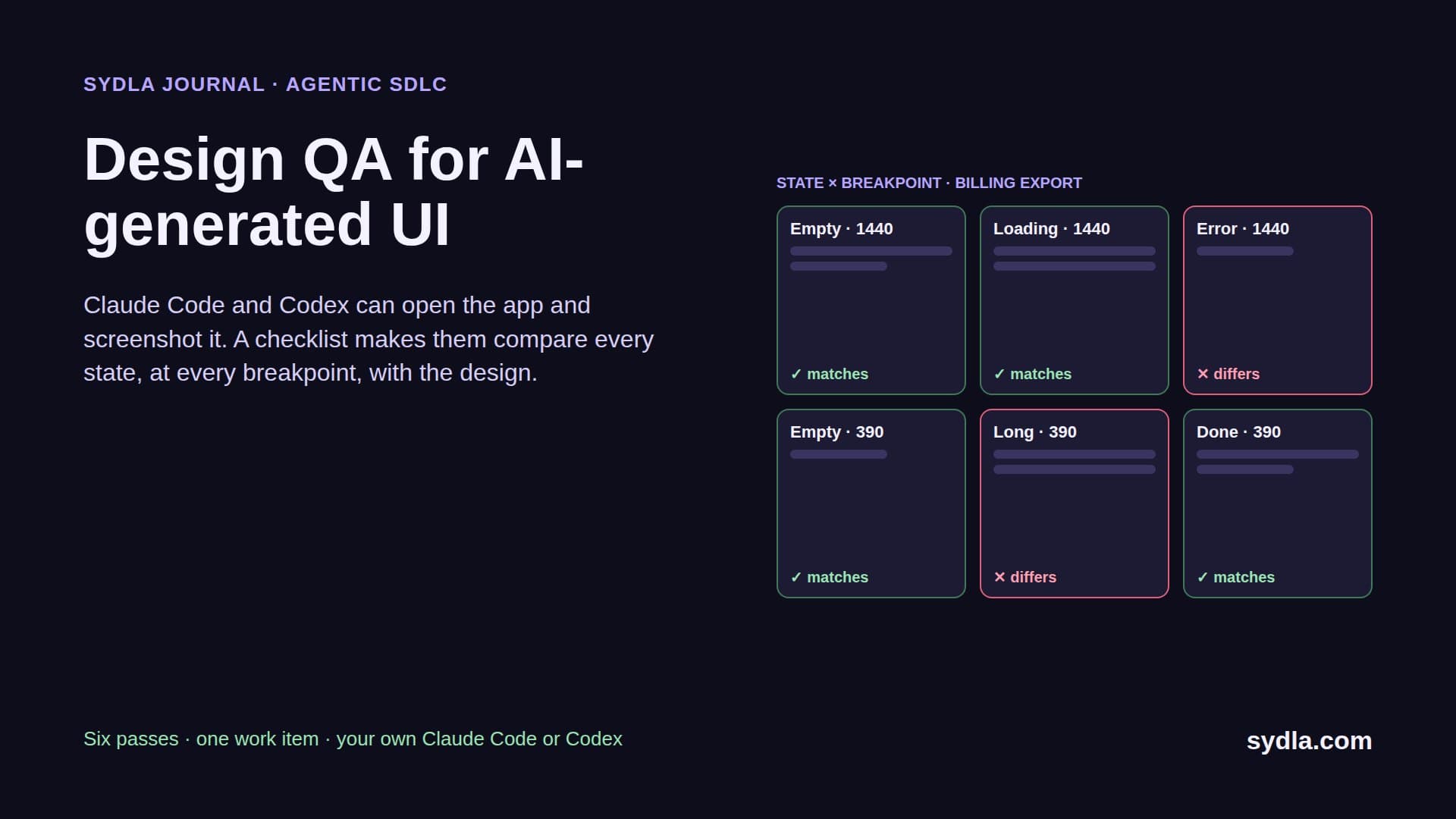
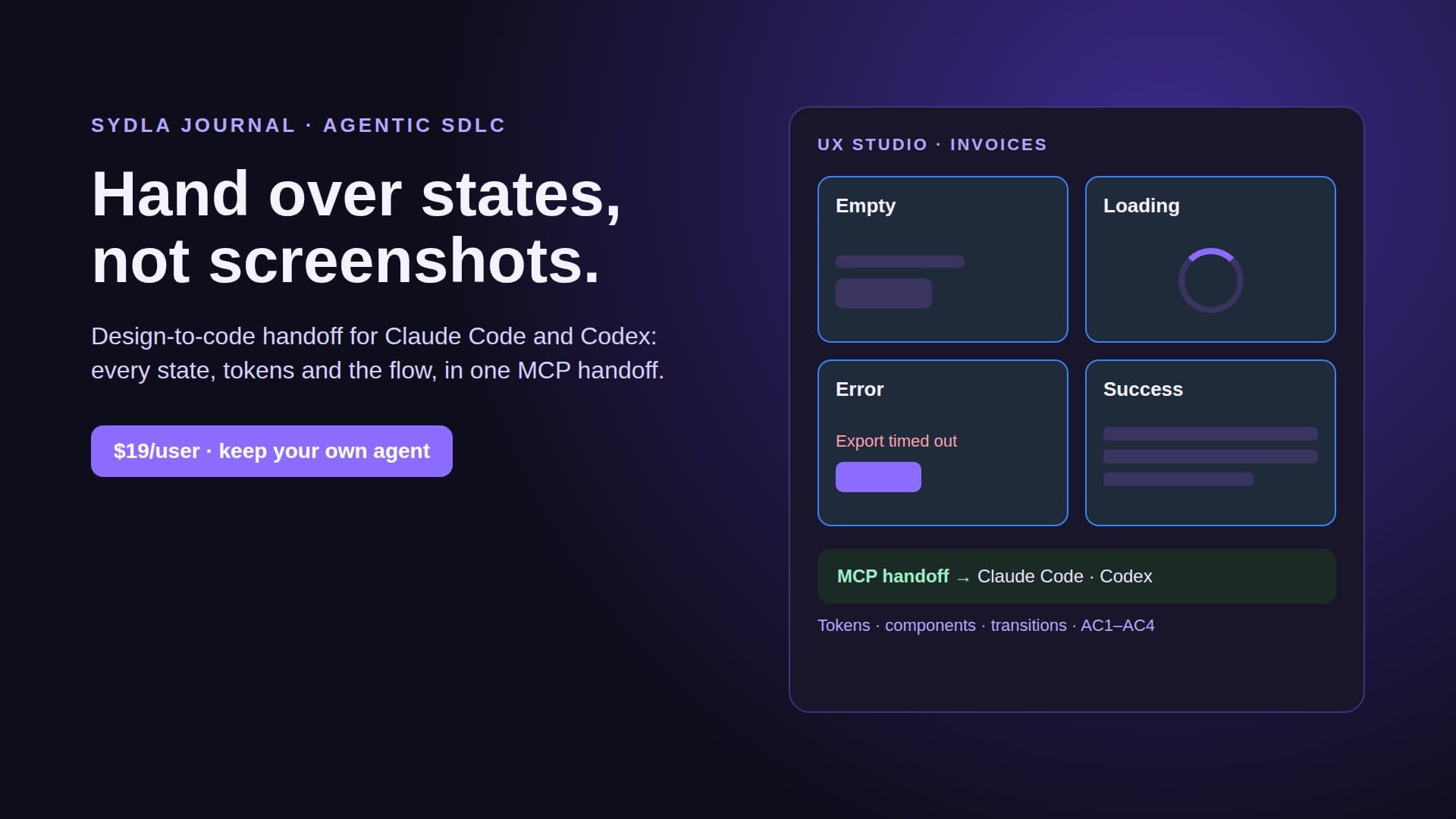
- The states are missing. A builder generates the happy path. The empty, loading, error and permission-denied screens appear only when someone asks, one prompt at a time. Designing them first is the subject of our design-to-code handoff guide.
Walkthrough: graduate the prototype to your own Claude Code or Codex
You do not have to throw the prototype away. Treat it as the first draft of the spec, move the code into a repository you control, and let the coding agent you already pay for take over. Here is the path in Sydla:
- Export the code. Connect Lovable, Bolt or v0 to GitHub or GitLab and let it push the project. Clone the repository locally and confirm it builds and runs without the builder.
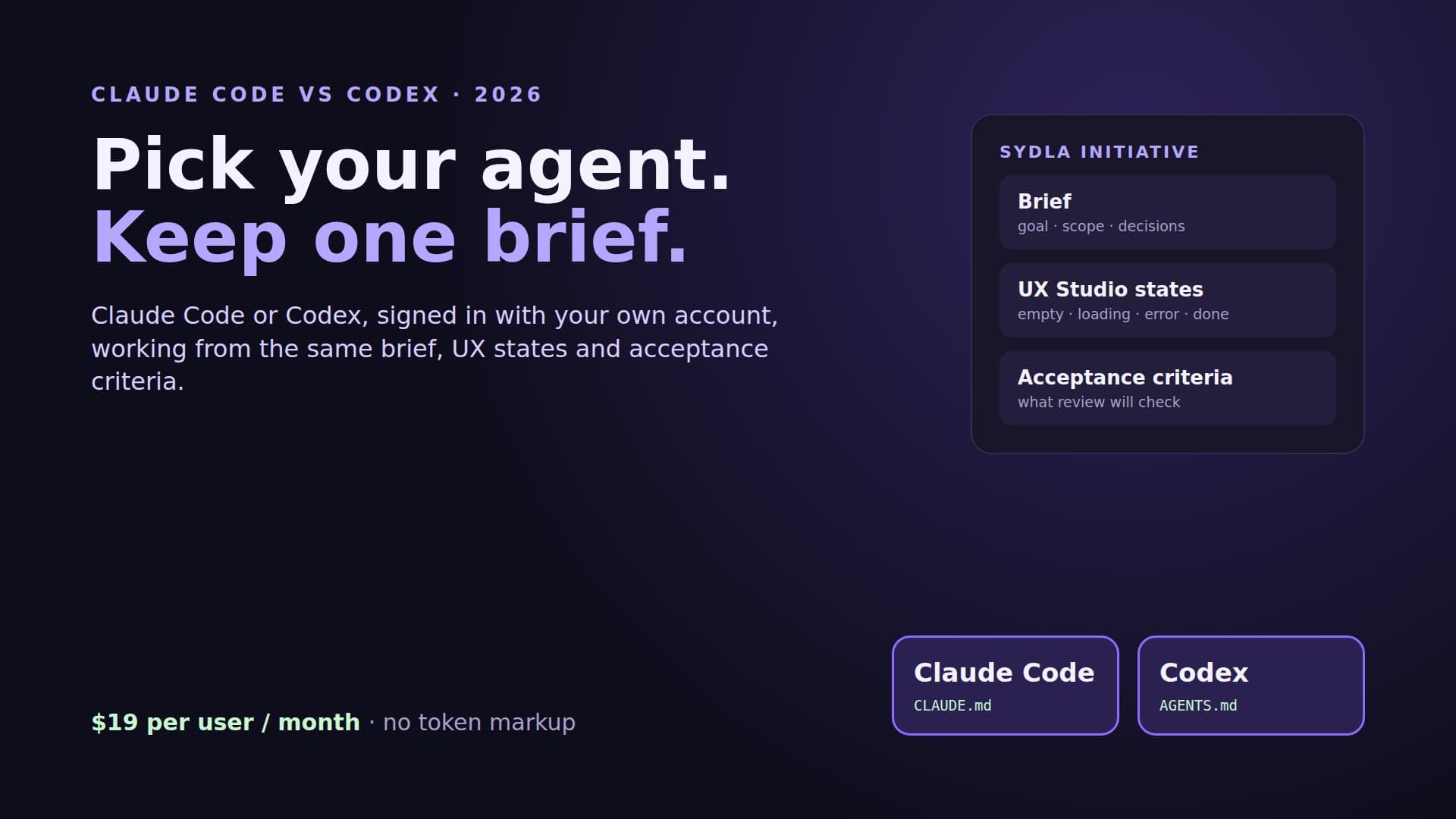
- Write the brief from what the prototype taught you. In Sydla Docs, record the goal, the users, what is out of scope and numbered acceptance criteria, such as: AC2, a visitor with no bookings sees the empty state with a button to book, not a blank page. The brief, the plan and its tickets sit in one initiative.
- Draw the states in UX Studio. Use the prototype's screens as the happy path, then add the empty, loading, error and success states a reviewer will check, and publish the handoff on the same initiative.
- Open a thread in Sydla Desktop. Add the folder. Desktop matches its Git remote to your Sydla project, so a thread started from a piece of work opens in that folder on its own branch. It starts the Claude Code or Codex CLI already signed in on your machine. Choose Read only to frame the change, Edit files to implement it, or Full access.
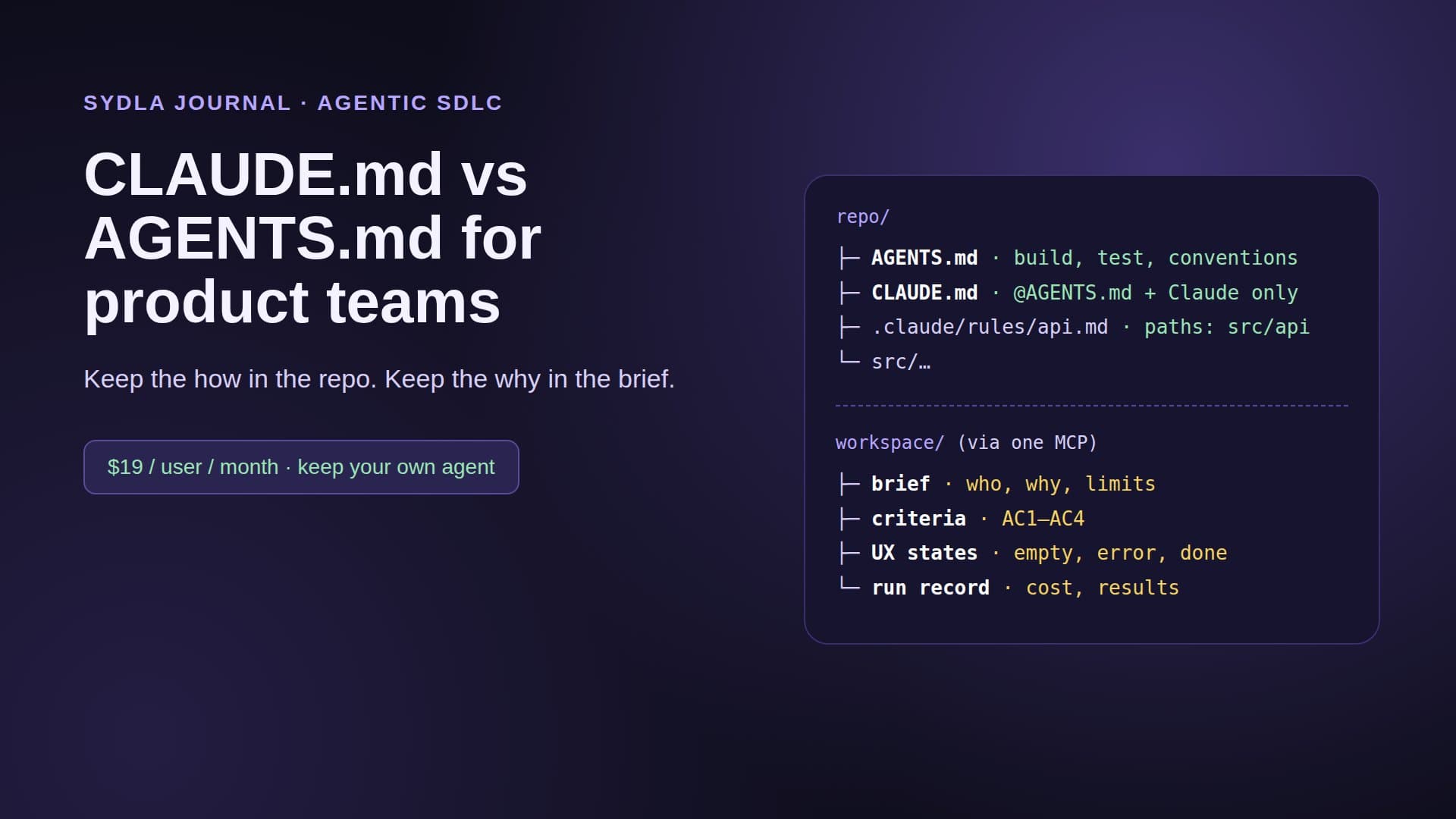
- Let the agent read the initiative. Through one Sydla MCP connection, the agent opens the brief, the criteria and the UX handoff. Nobody pastes a chat history into a prompt. It edits, runs the tests and opens the local dev server in its own headless browser to check each state.
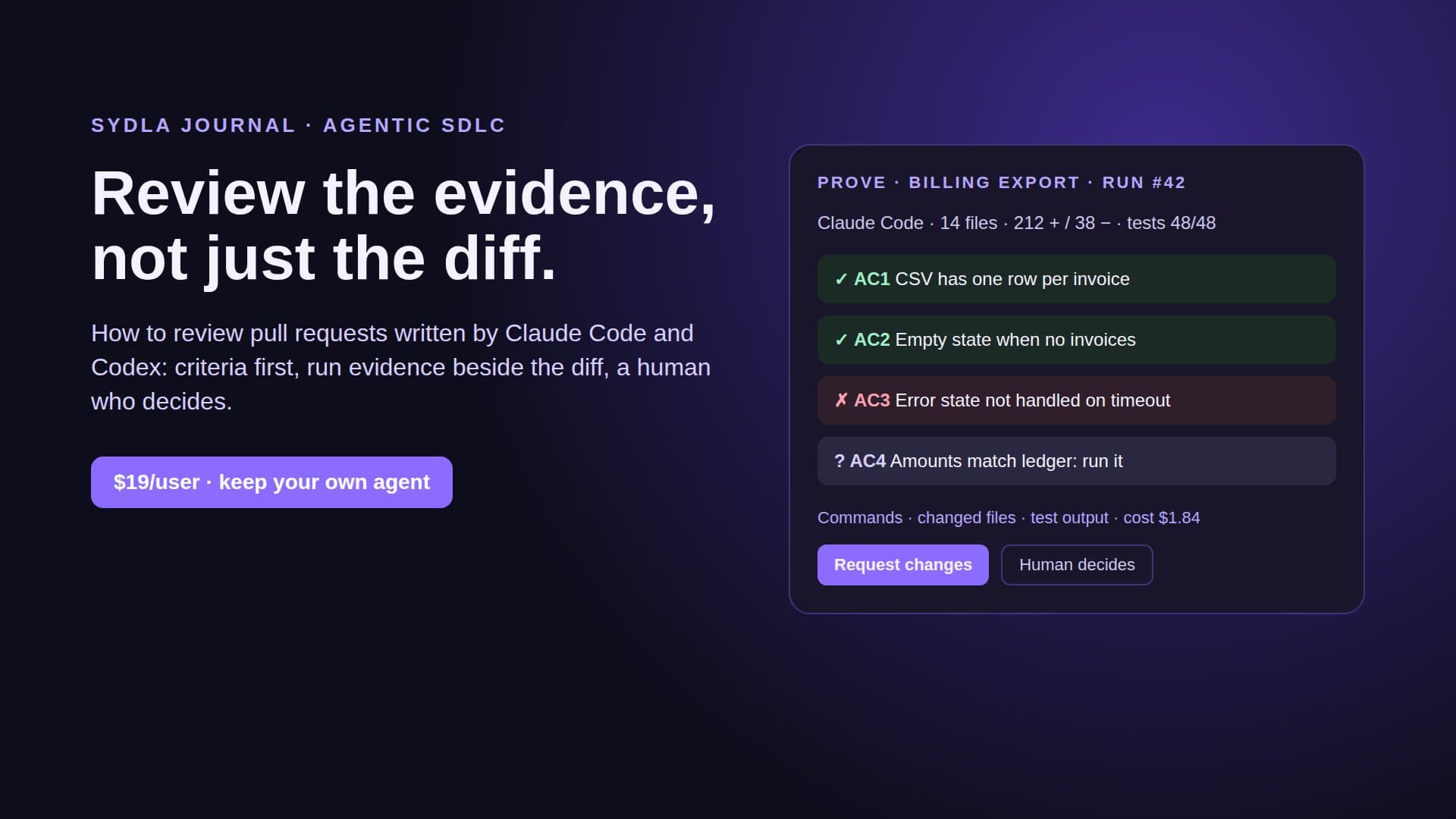
- Review the evidence and decide. The thread shows every command and tool call, and Changes shows the diff against the last commit. Compare it with the criteria and the states, commit on the thread's branch, and ship through your usual review. A person makes the gate decision, never the agent.
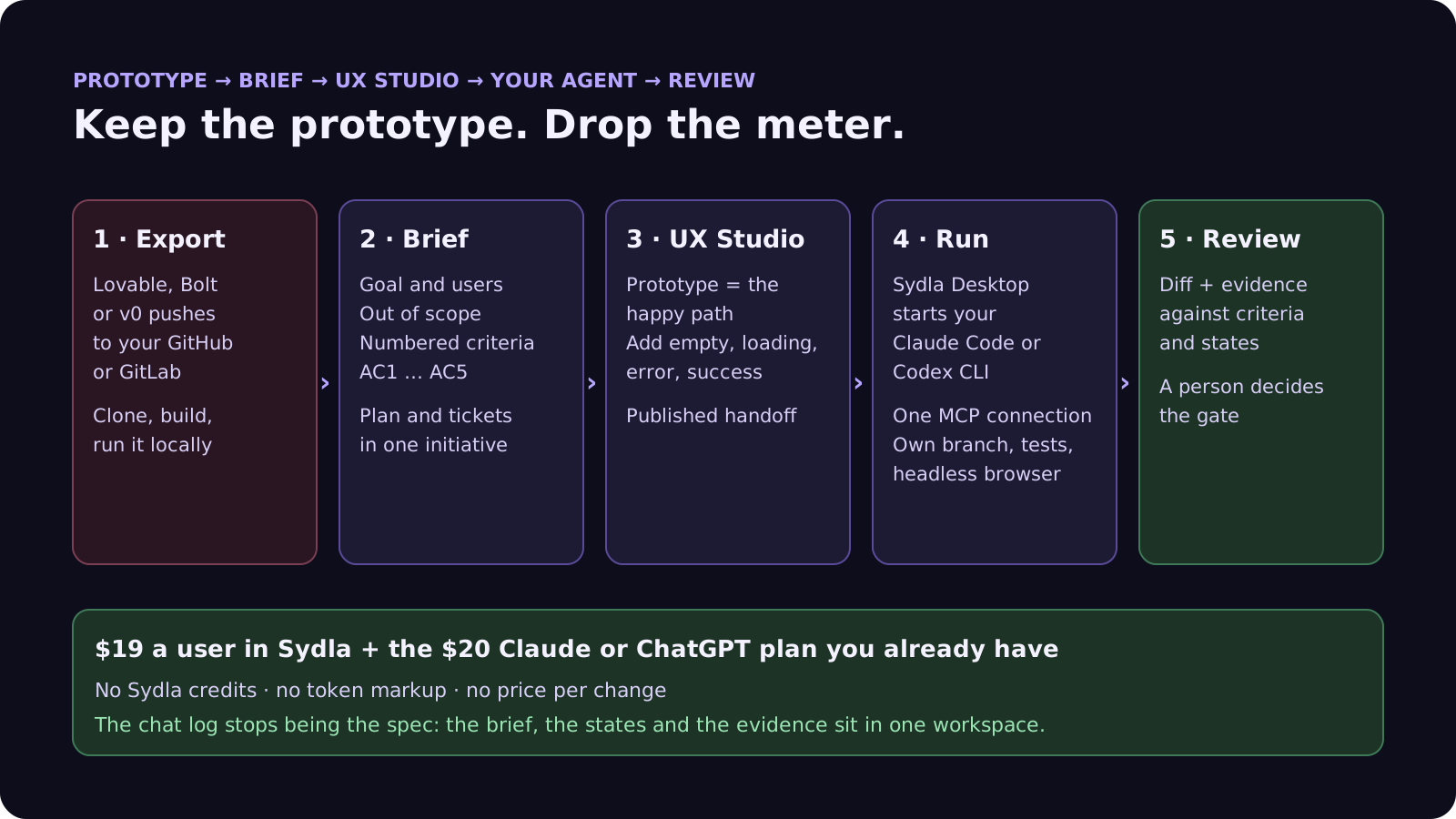
The economics change with the last step. Claude Code is included in Claude Pro at $20 a month, with Max at $100 and Ultra at $200 for heavier use. Codex is included in ChatGPT Plus at $20. Those plans have usage limits of their own, but a one-line fix no longer has a price tag, and Sydla adds no credits or token markup on top. The Desktop guide covers the first session, and Claude Code vs Codex for product teams helps you pick the agent.
Which tool fits which stage
There is no single winner. Most founders use a builder and a coding agent at different stages of the same product:
- Validating an idea this week: Lovable or Bolt on the free or entry plan. Ship the demo, then stop paying for iterations.
- Generating UI for an existing Next.js app: v0, because it works on a branch and opens pull requests instead of pushing to main.
- You want hosting, database and agent in one browser tab: Replit Core, with a usage limit set on day one.
- A designer testing an interaction: Figma Make, inside the seat credits the team already has.
- A product with paying users, a roadmap and more than one person: move the code to your own repository and let Claude Code or Codex work from a shared brief, states and criteria in Sydla. If you are leaving several tools at once, the 30-day migration plan shows what to move first.
Keep the prototype, drop the meter
Prompt-to-app builders earned their place: they made the first version of a product almost free. The trouble starts when the fortieth change costs as much attention as the first and the spec lives in a chat log. A brief, designed states and your own coding agent turn that loop into reviewable work.
Pick the prototype you are still paying to patch. Export it, write its brief and states in Sydla this week, and hand it to the Claude Code or Codex account you already use. Start your $19/mo AI SDLC workspace and keep your Claude Code and Codex accounts exactly as they are.
Frequently asked questions
How much does Lovable cost in 2026?
Lovable Pro starts at $25 a month for 100 credits, or $21 a month billed annually, plus a daily grant of 5 build credits. Higher tiers give 200 credits for $50 and 400 for $100. Each message costs credits by complexity, from about 0.50 for a small change to 2.00 for a landing page. Top-ups on Pro cost $15 per 50 credits and are valid for 12 months. Unused monthly credits roll over for two months.
How much does Bolt.new cost?
Bolt Pro costs $25 a month and starts at 10M tokens with no daily limit. The free plan includes 1M tokens a month with a 300K daily limit. Teams costs $30 per member a month, and each member's tokens are their own. Unused paid tokens stay valid for two months. Larger projects use more tokens per prompt because more context is sent.
How do v0 credits work?
v0 Plus costs $30 per user a month and includes $30 of credits per user, plus $2 of daily credits when you log in. Usage is metered on tokens at per-model rates, for example $2 per million input tokens and $10 per million output tokens on v0 Pro. The free plan allows 7 messages a day. v0's Git integration works on a branch and opens pull requests.
What is Replit's effort-based pricing?
Replit bills Agent work per checkpoint according to the effort a request takes, so a small bug fix costs less than a new feature. Core costs $20 a month, or $18 billed annually, and includes $20 of credits. Beyond the credits, usage continues on pay as you go unless you set a usage limit, which blocks usage-based services until the next cycle.
Can I move a Lovable, Bolt or v0 app to Claude Code or Codex?
Yes. All three can push the project to a Git repository. Clone it, confirm it builds, then continue with Claude Code or Codex locally. In Sydla, write a brief with numbered acceptance criteria and the UX states first, then run your own agent in Sydla Desktop. Sydla costs $19 per user per month, sells no AI credits and adds no token markup to your Claude or ChatGPT plan.