AI SDLC platform buyer's checklist: 9 questions to ask in 2026
Every product tool now sells an AI agent, and every agent runs on its own meter. Before you renew six tools or sign for a new platform, ask nine questions about who pays for the agent run, what the agent can read and where its evidence lands. Then test the answers on one real feature in two weeks.
Every tool now sells an agent. Who is buying the work?
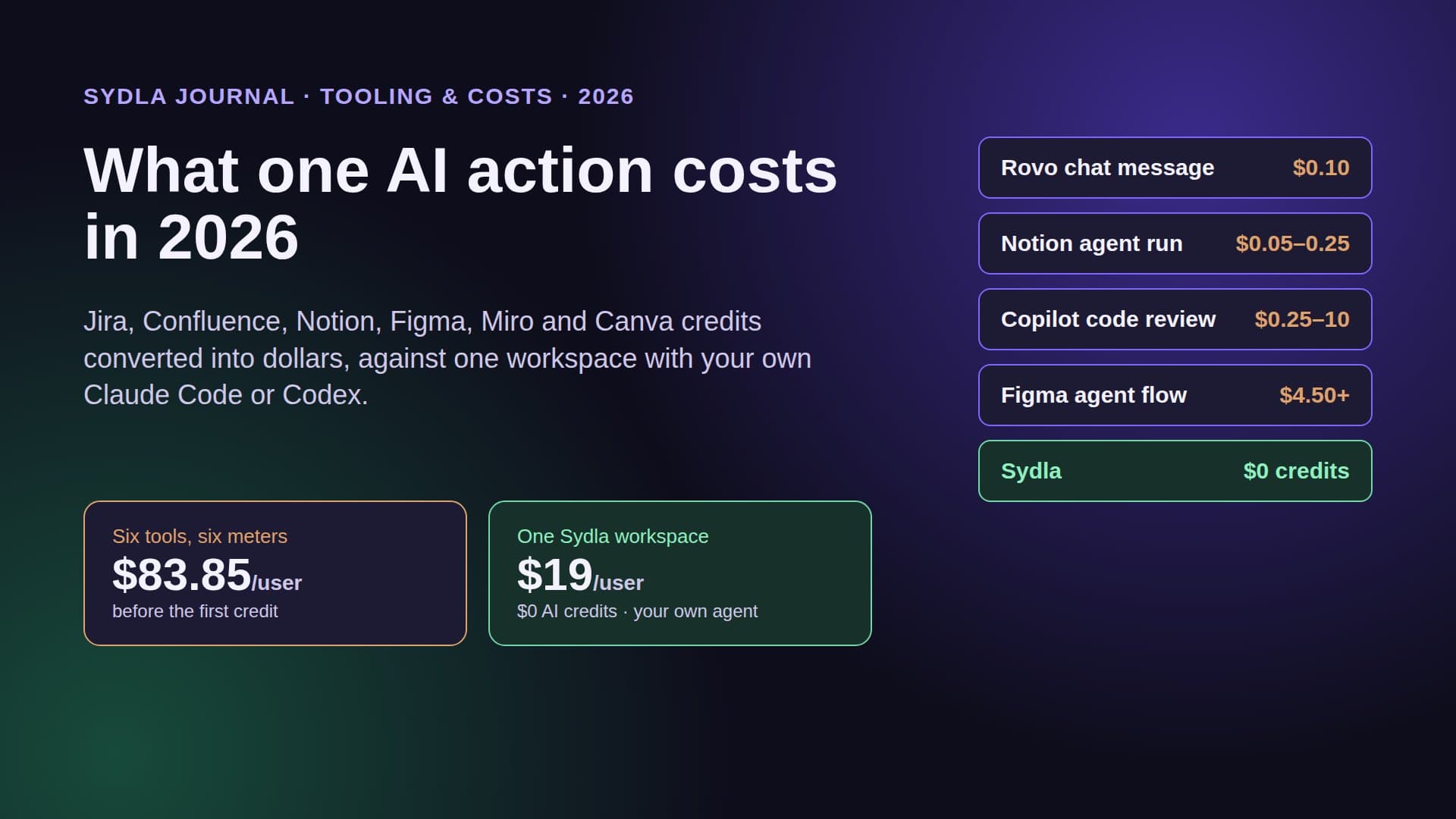
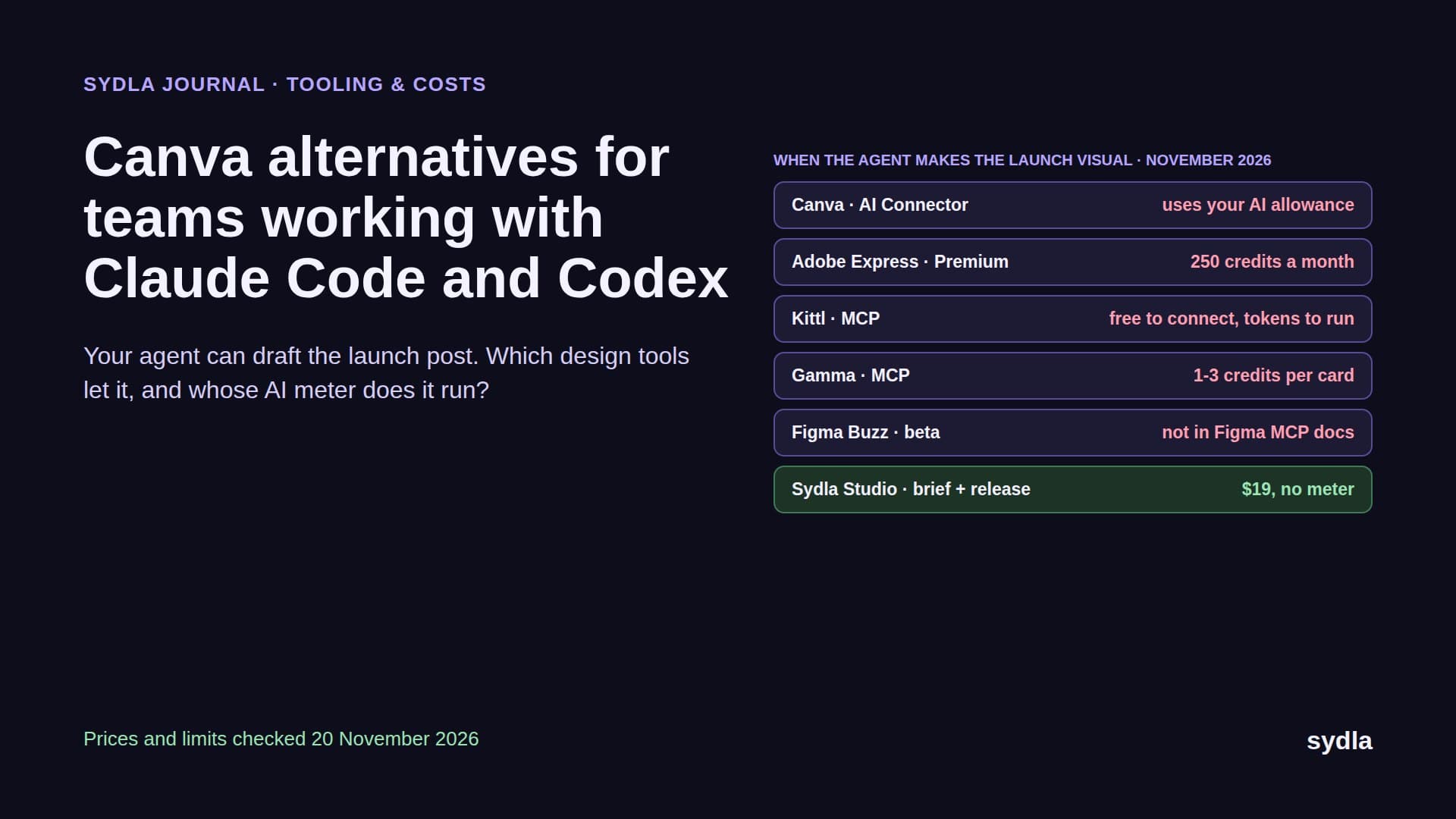
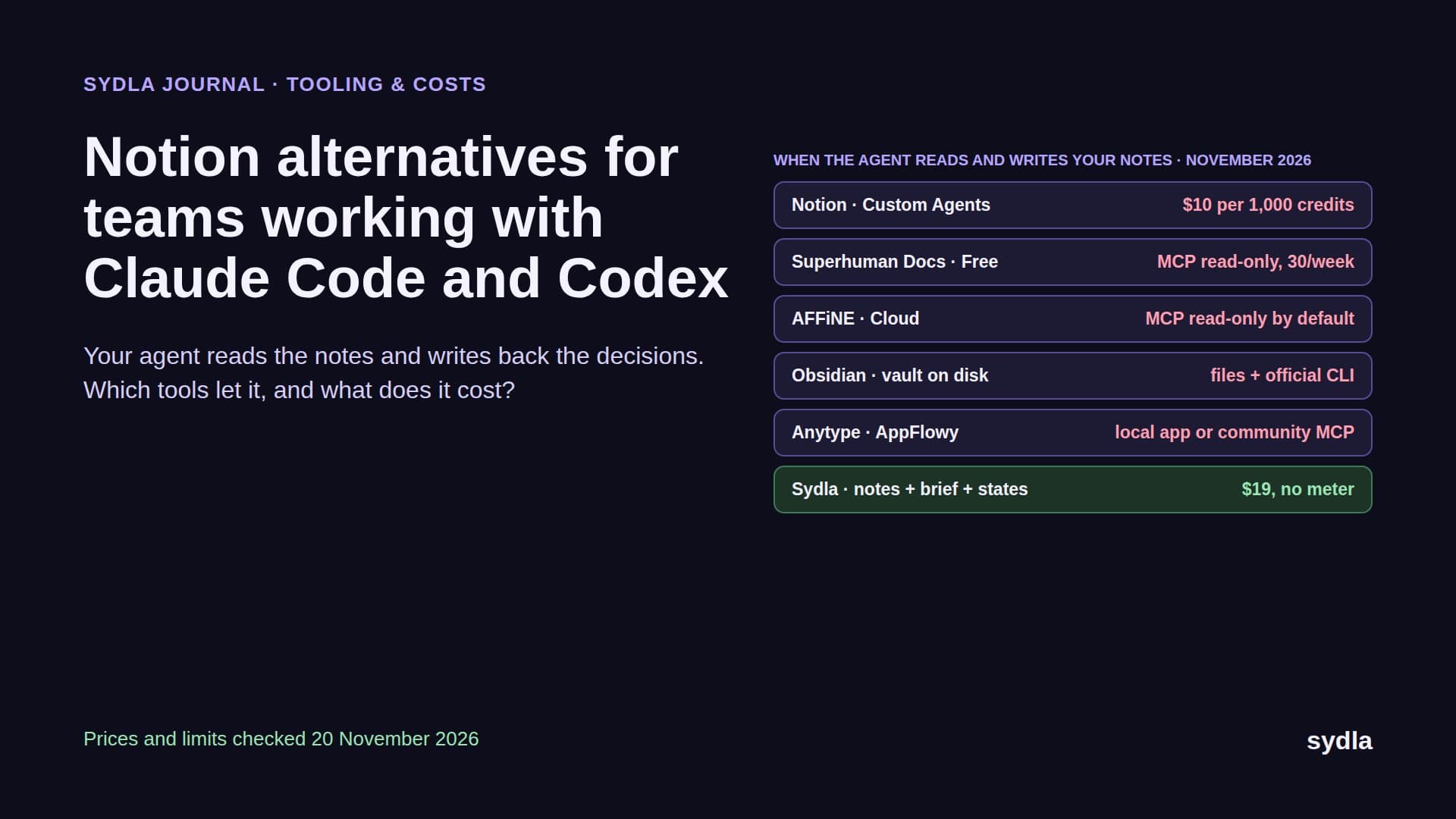
In 2026 almost every tool a product team pays for ships its own AI agent. Jira and Confluence have Rovo. Figma has its agent and Make. Notion has Custom Agents. Miro and Canva have their own AI on their own credits. Each one looks good in a demo, and each one is billed on a different meter that runs out on a different day.
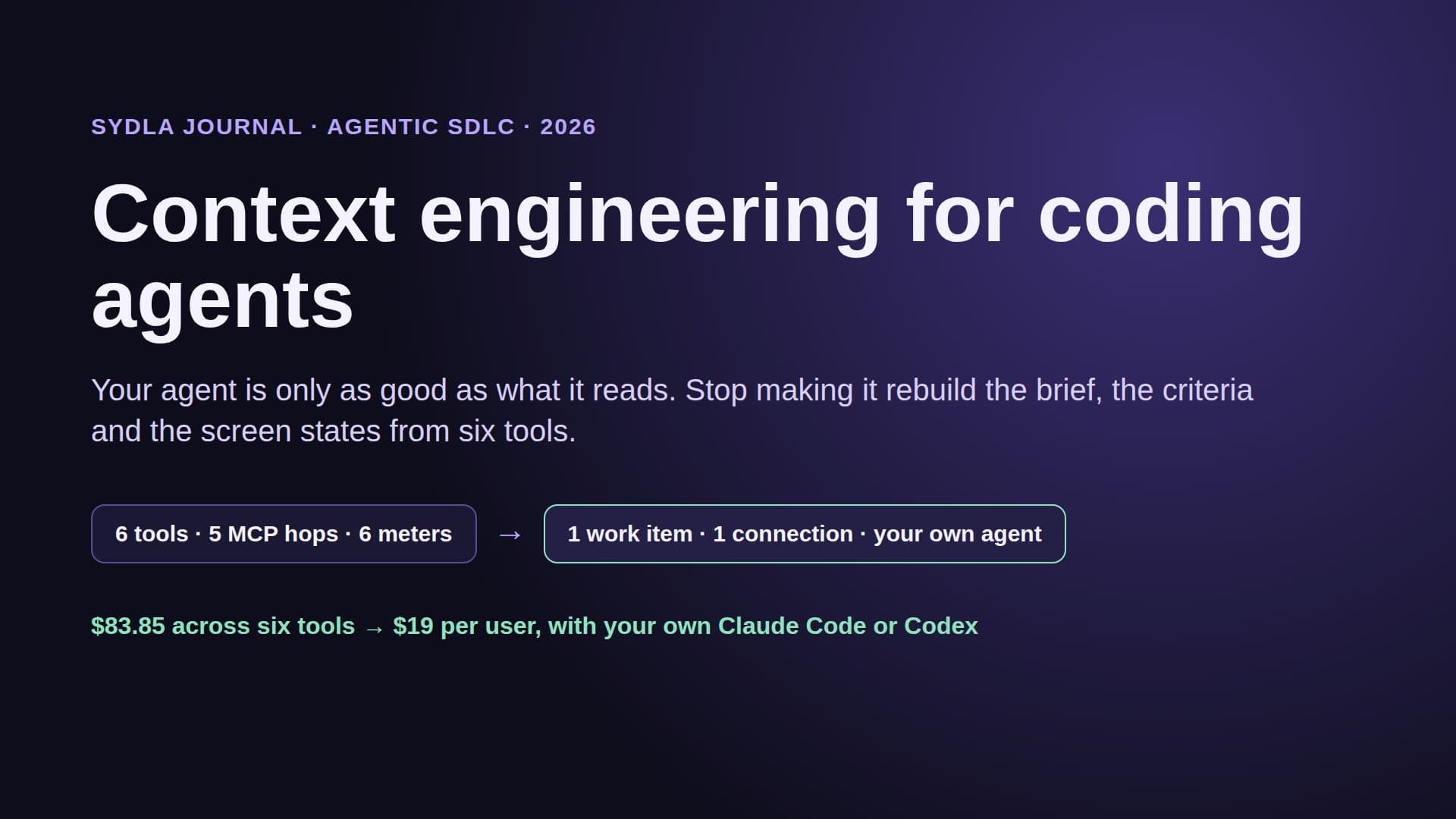
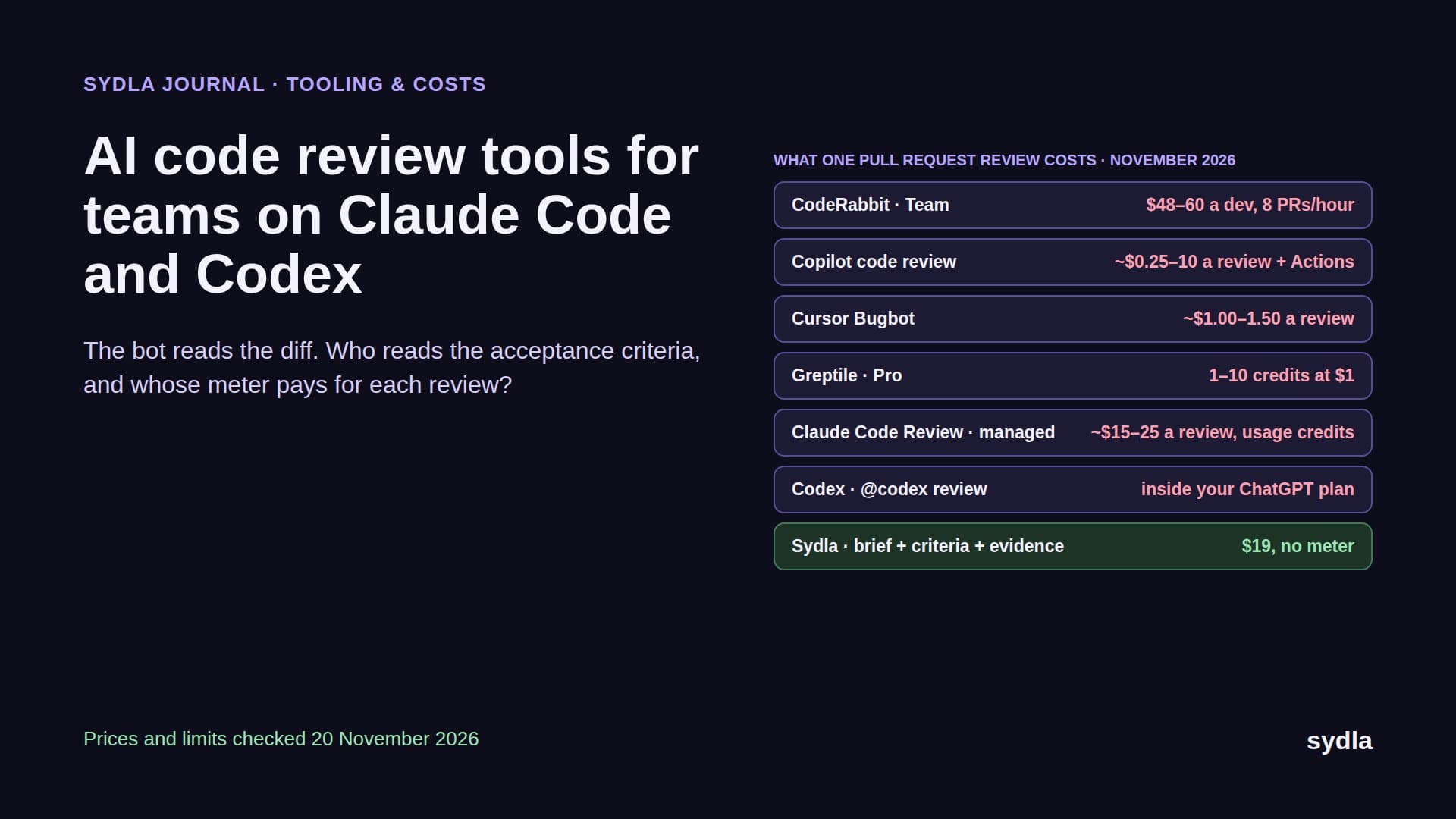
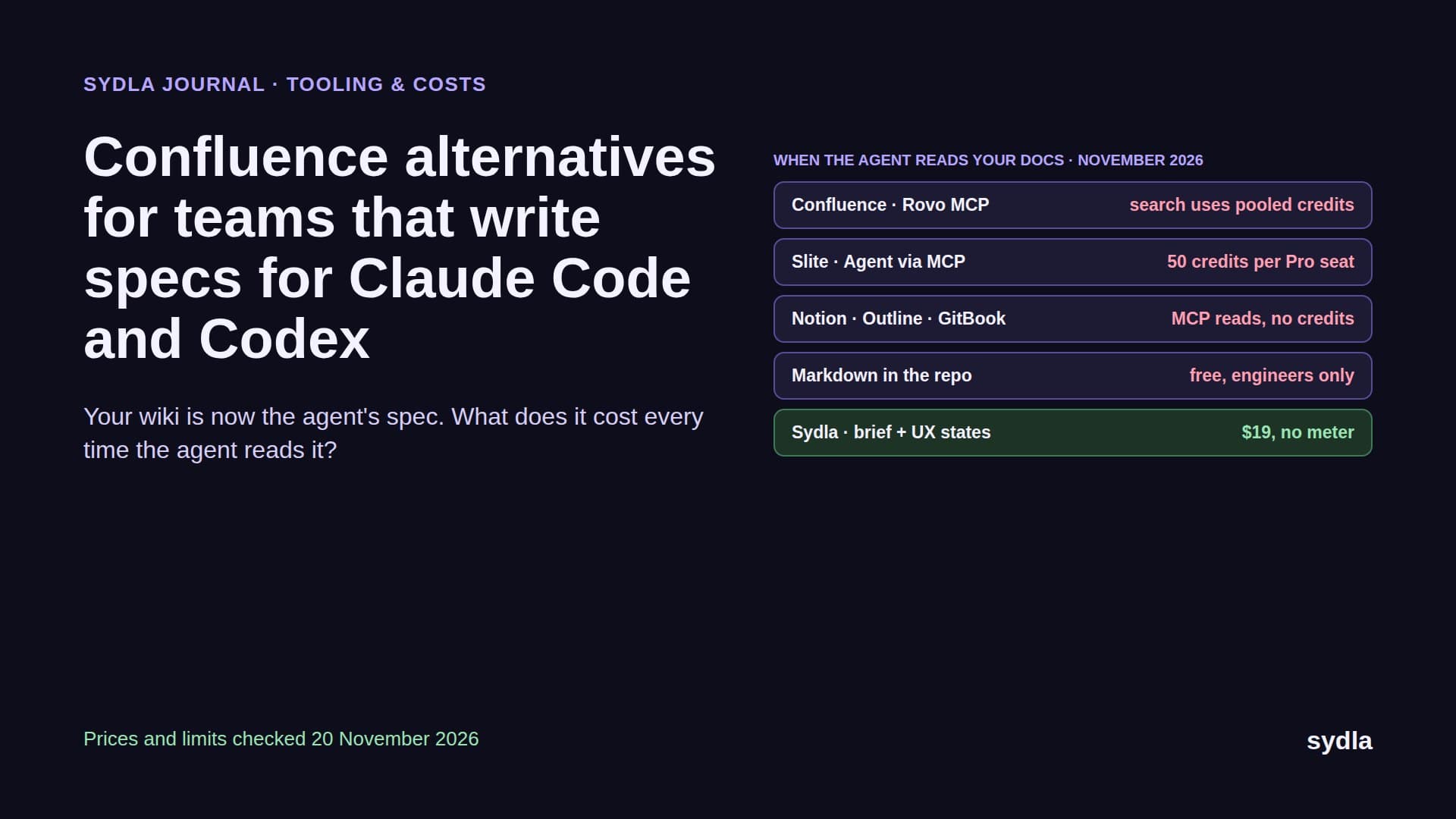
Then your engineers open Claude Code or Codex, the agent that actually writes the code, and it has to read the ticket, the spec, the decision and the frames from four or five of those tools before it can start. Every read is an MCP call, and some of those calls cost credits too. That is AI credit fatigue: the team pays for many agents, and the one doing the work still has to collect its context by hand.
Analysts have noticed. Forrester's agentic development platforms landscape, published in July 2026, looked at 25 platforms and said differentiation is moving away from coding help towards orchestration, context, governance, model choice and cost transparency. Its advice to buyers was blunt: polished demos are not enough. This checklist turns that advice into nine questions you can put to any vendor, including us, and a two-week trial to check the answers.
The 2026 stack: seat prices, AI meters and handoffs
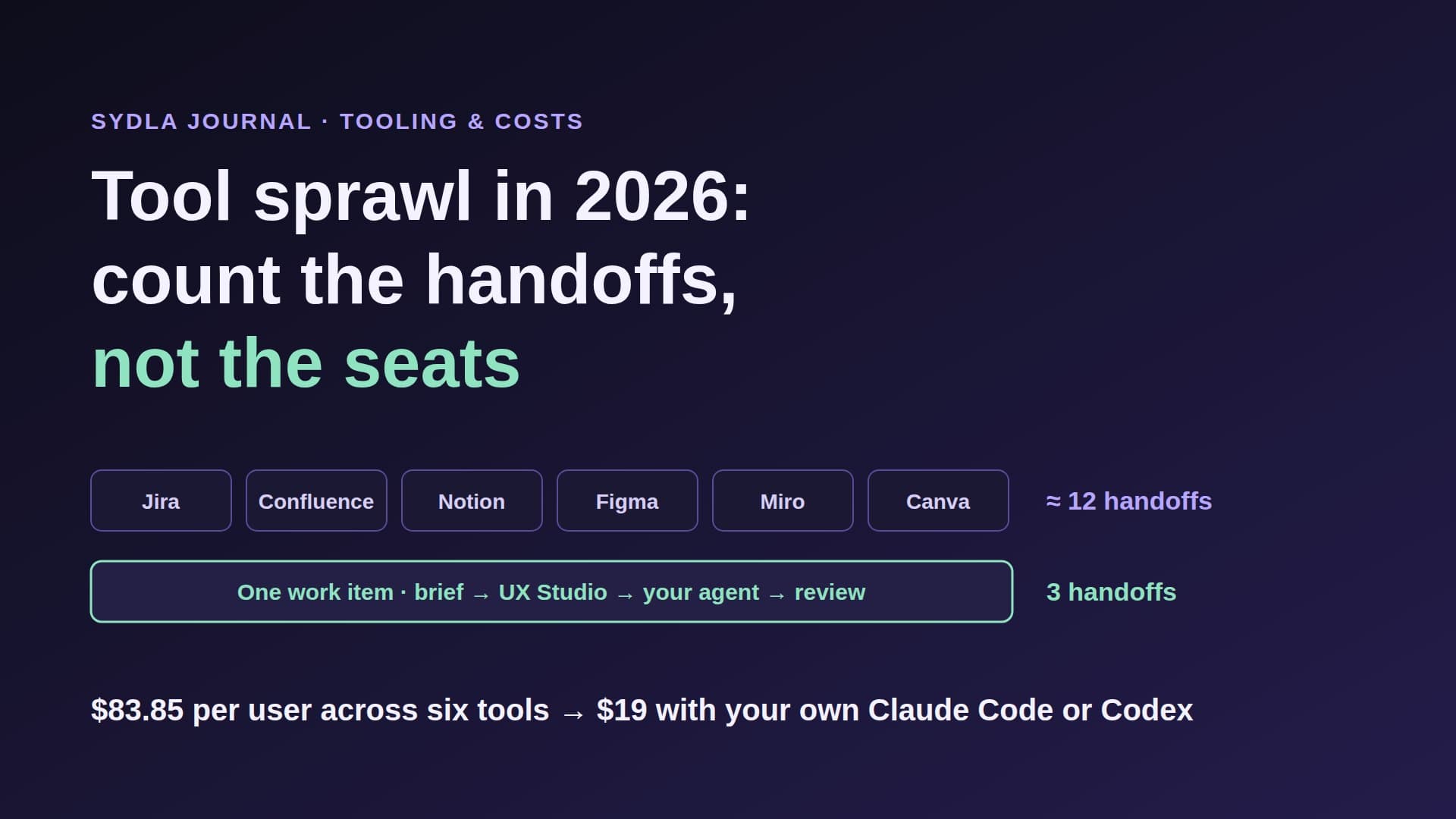
Start with what you already pay. Here is the usual six-tool product stack at November 2026 list prices, with the AI meter each tool runs on and the handoff it adds to one feature. If you want the reasoning behind each row, see the Jira, Confluence, Notion, Figma, Miro and Canva comparisons.
| Tool | Price per user | AI meter in November 2026 | Handoff it adds to one feature |
|---|---|---|---|
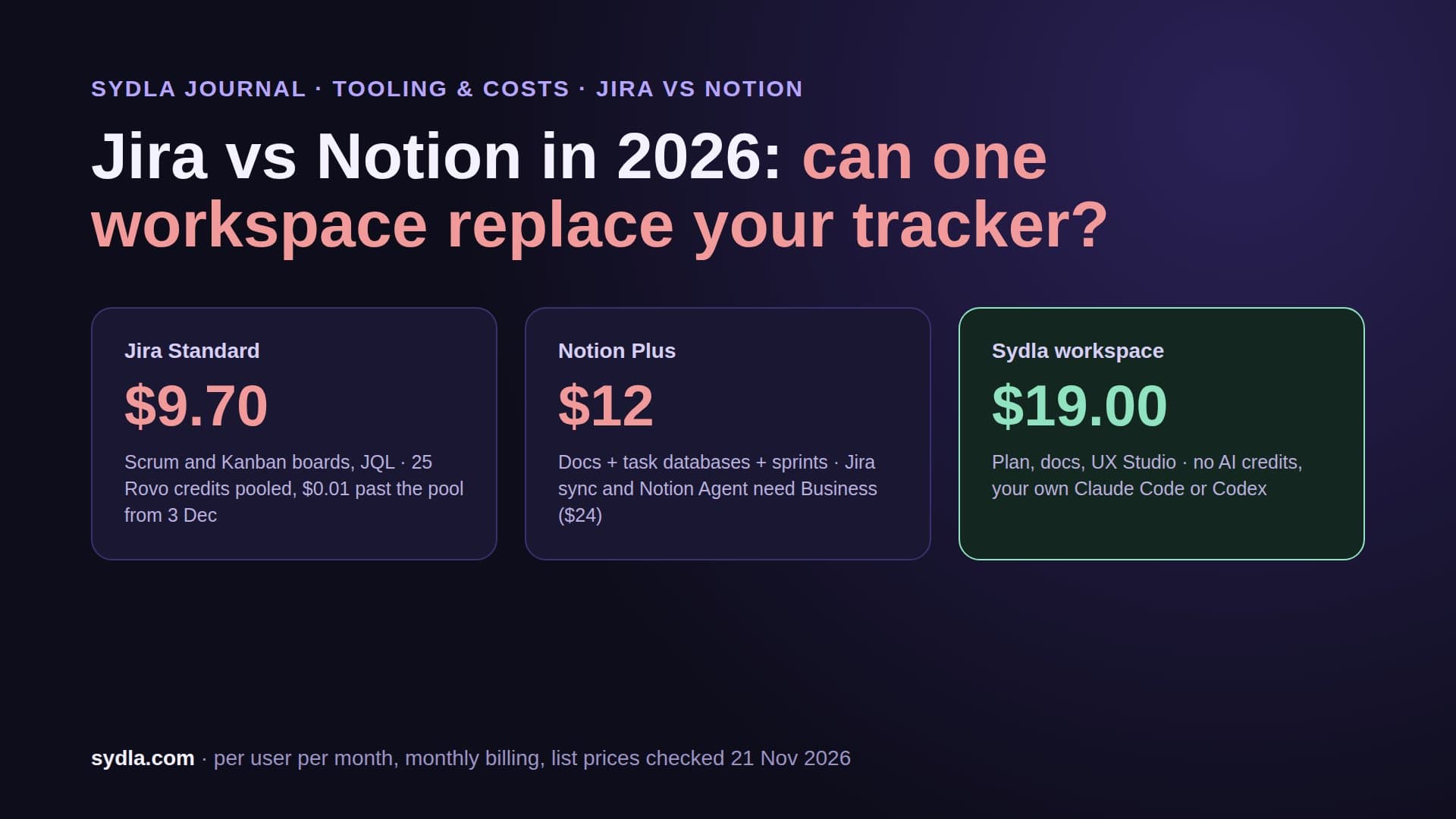
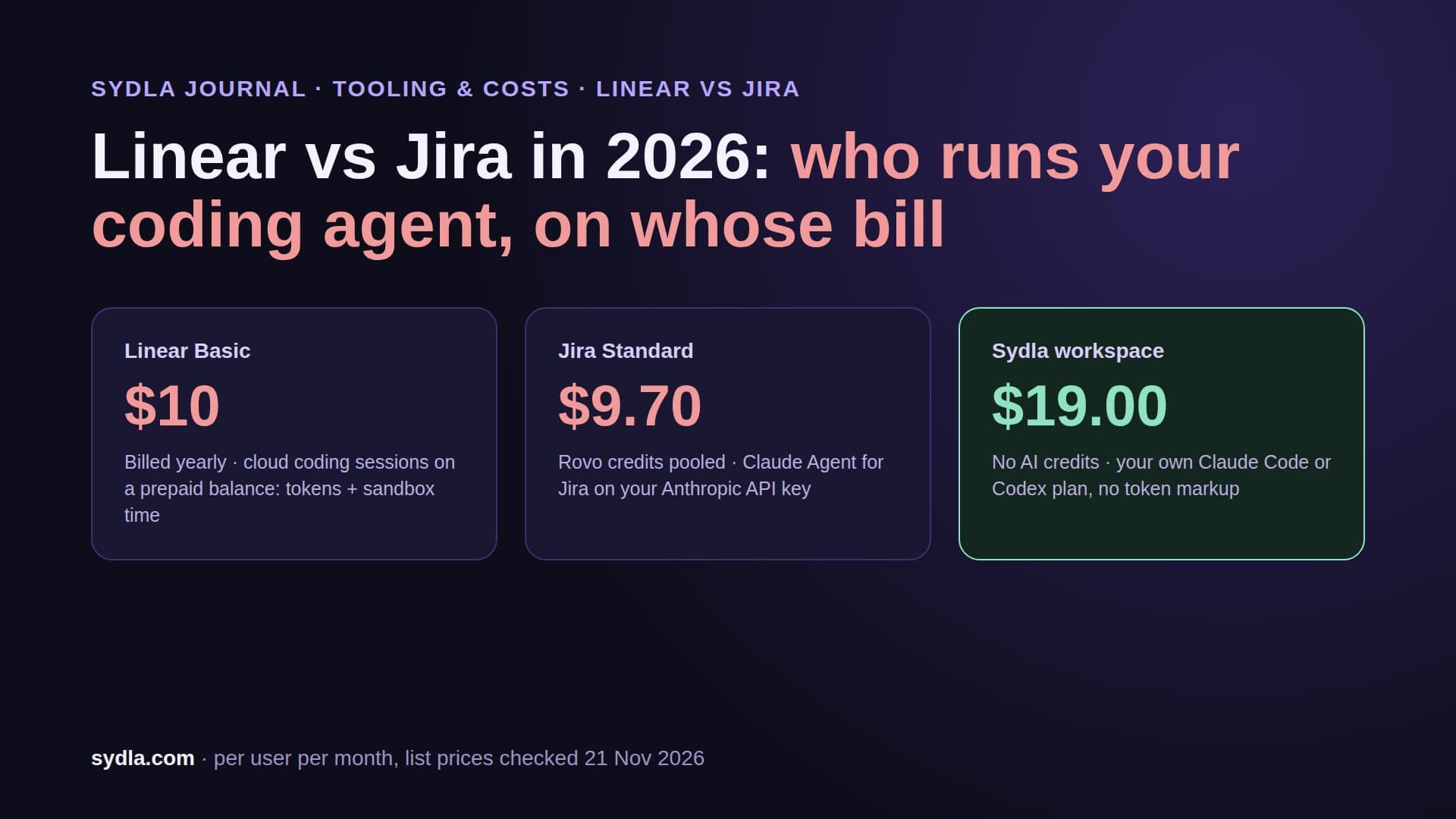
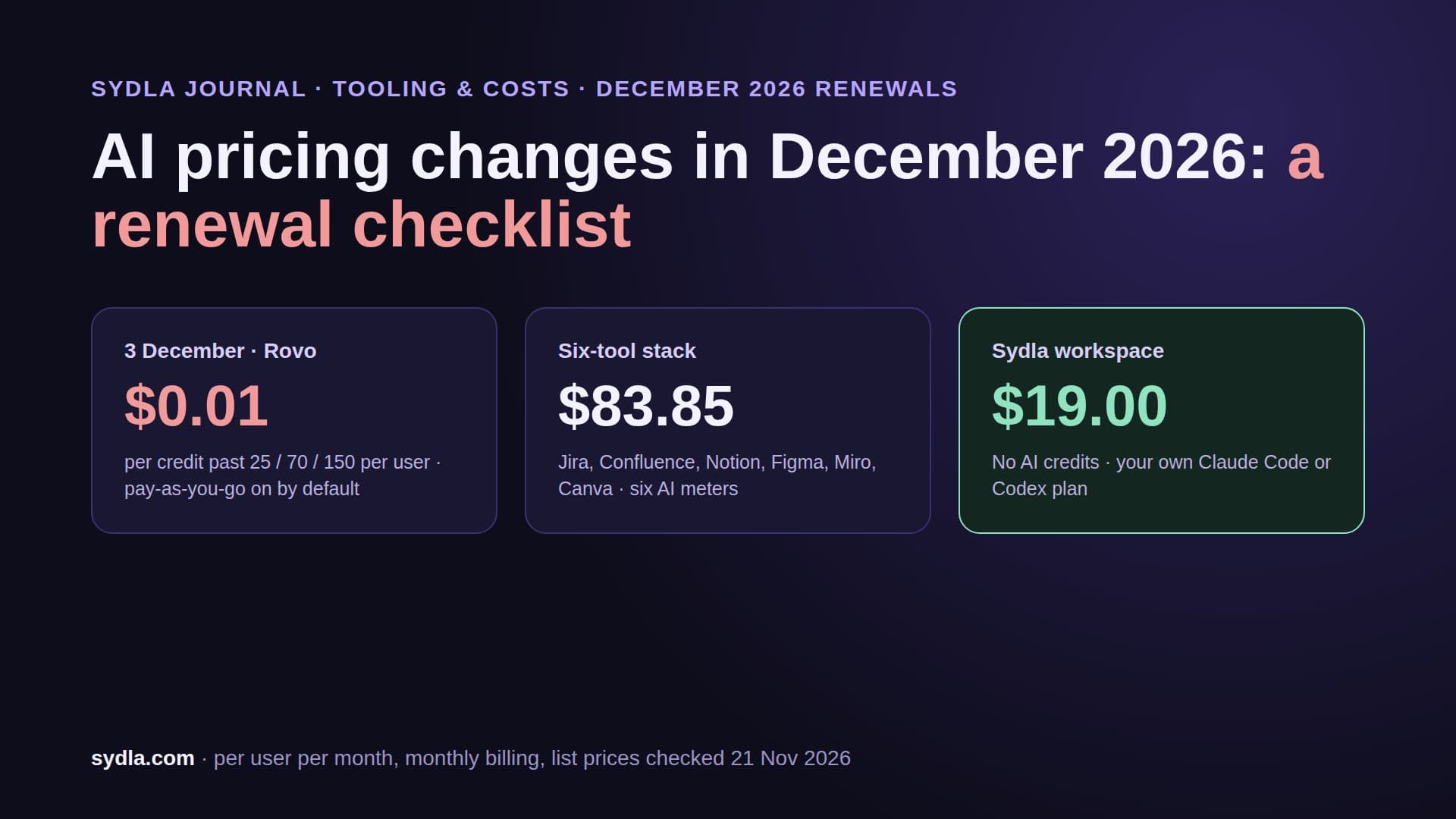
| Jira Standard | $9.70 | Rovo credits, 25 per user pooled across the org; extra usage $0.01 per credit from 3 December 2026 | The request is retyped as a ticket |
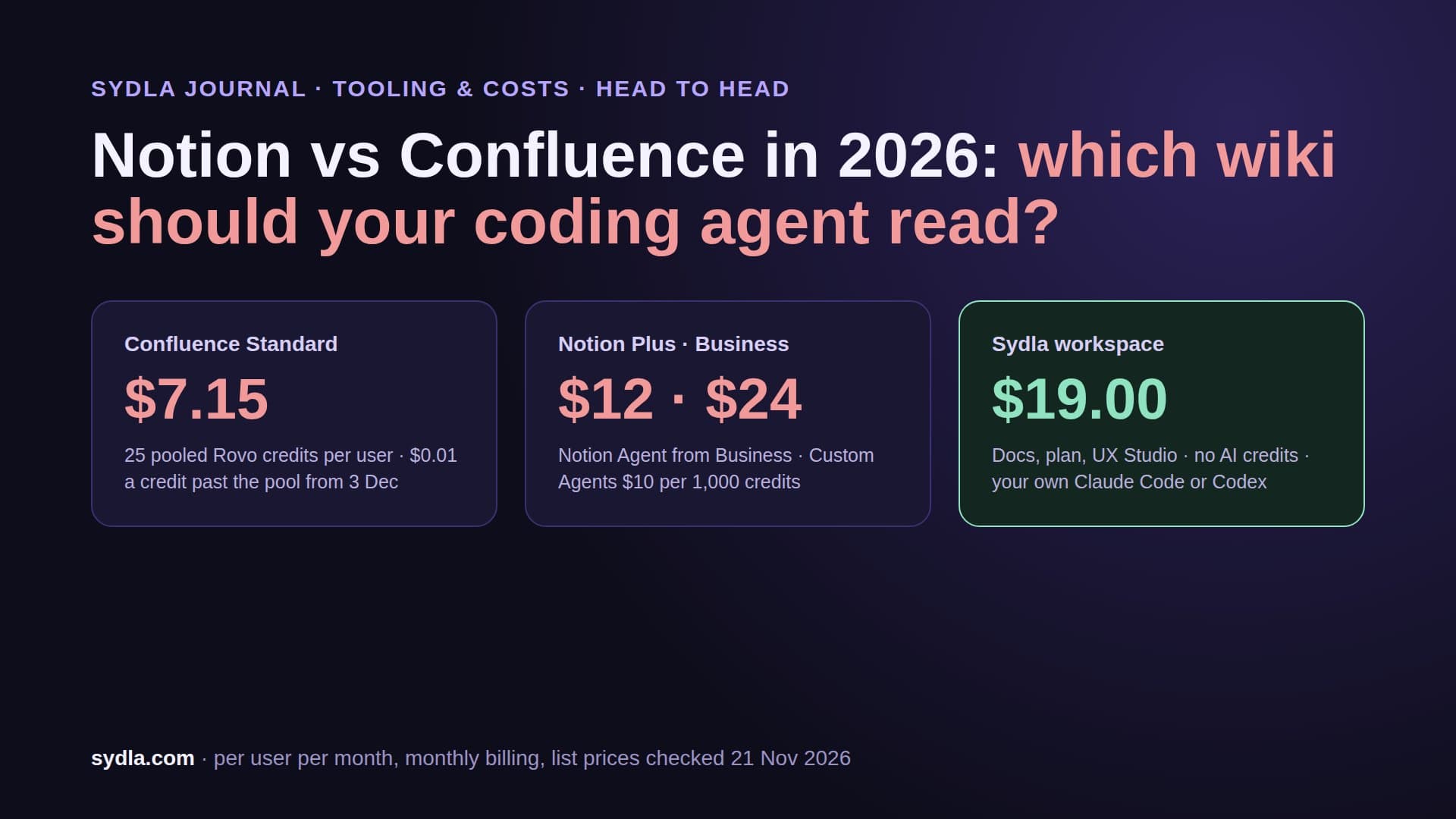
| Confluence Standard | $7.15 | Same Rovo pool; enriched MCP searches 1 to 10 credits per call | The ticket is rewritten as a spec |
| Notion Plus | $12.00 | Custom Agents need Business; extra credits $10 per 1,000 | Decisions stay in meeting notes |
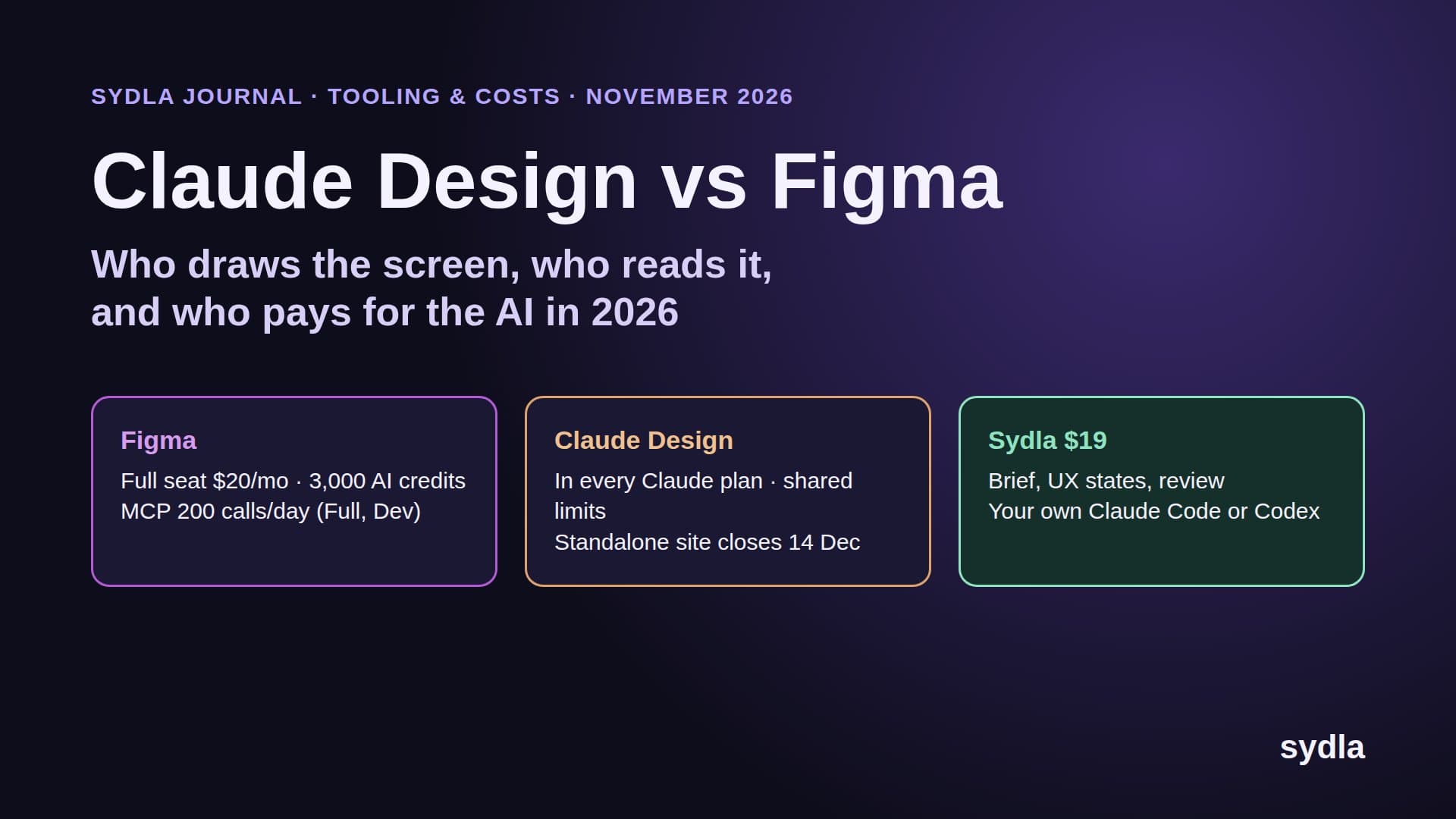
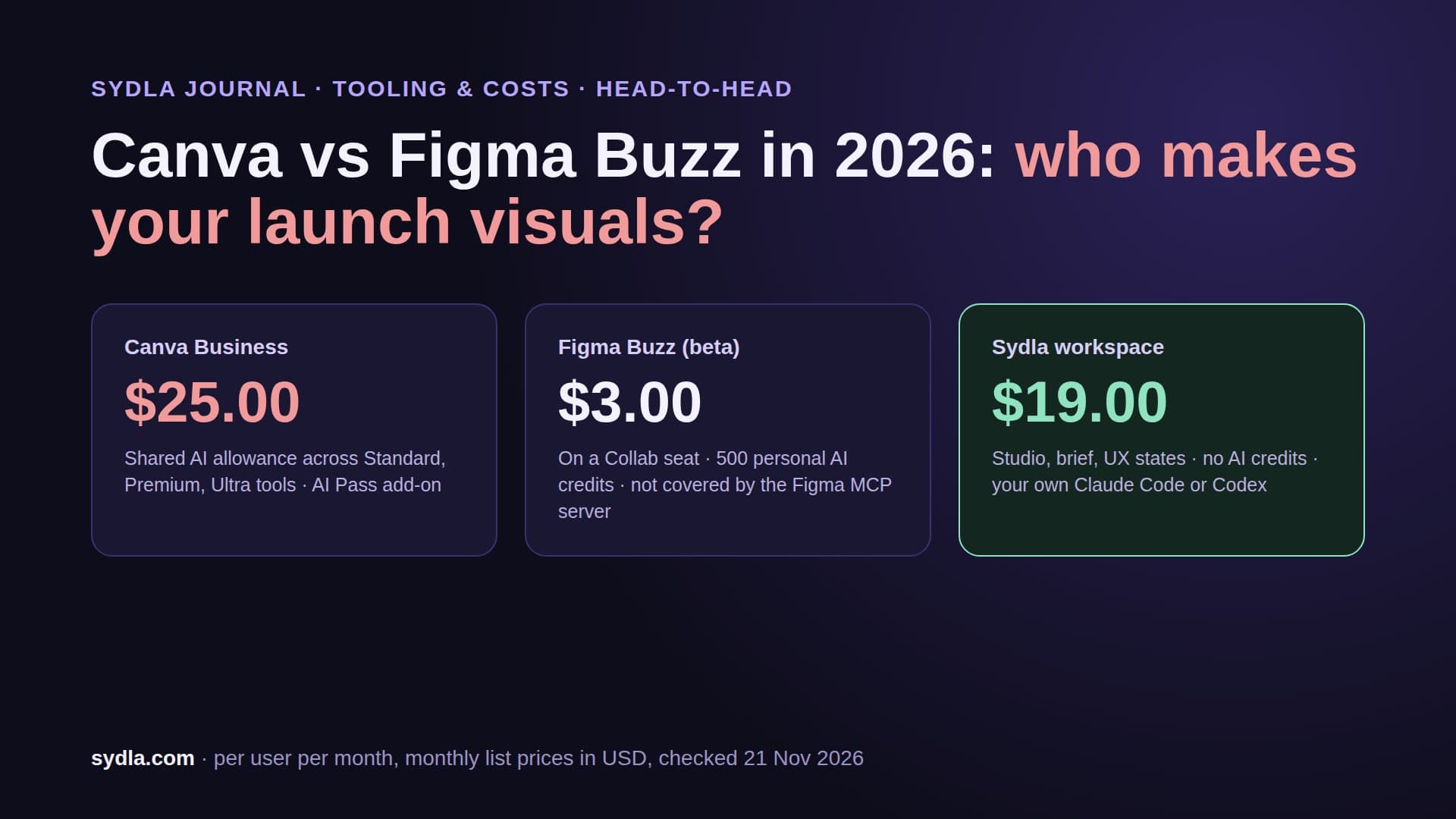
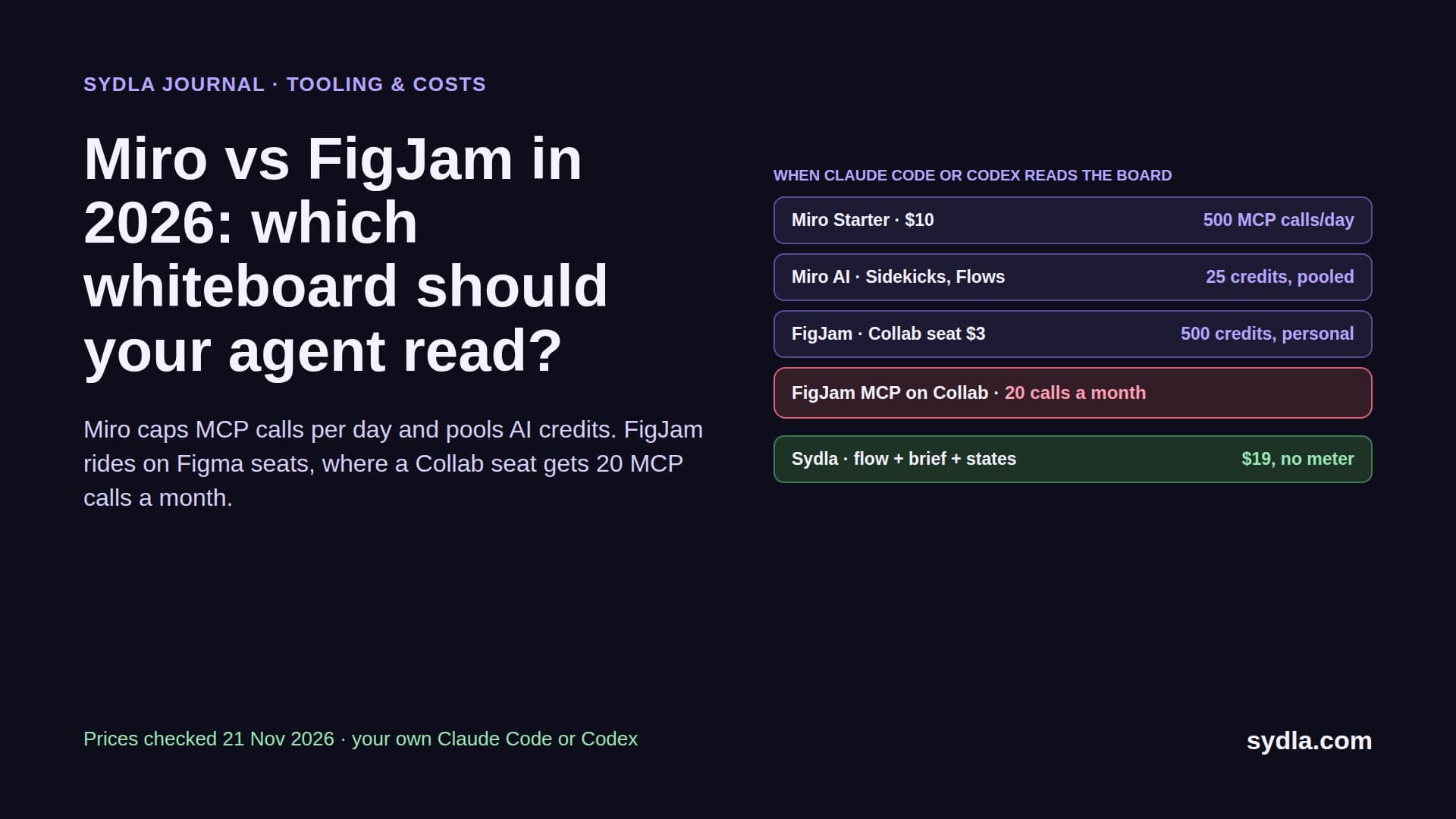
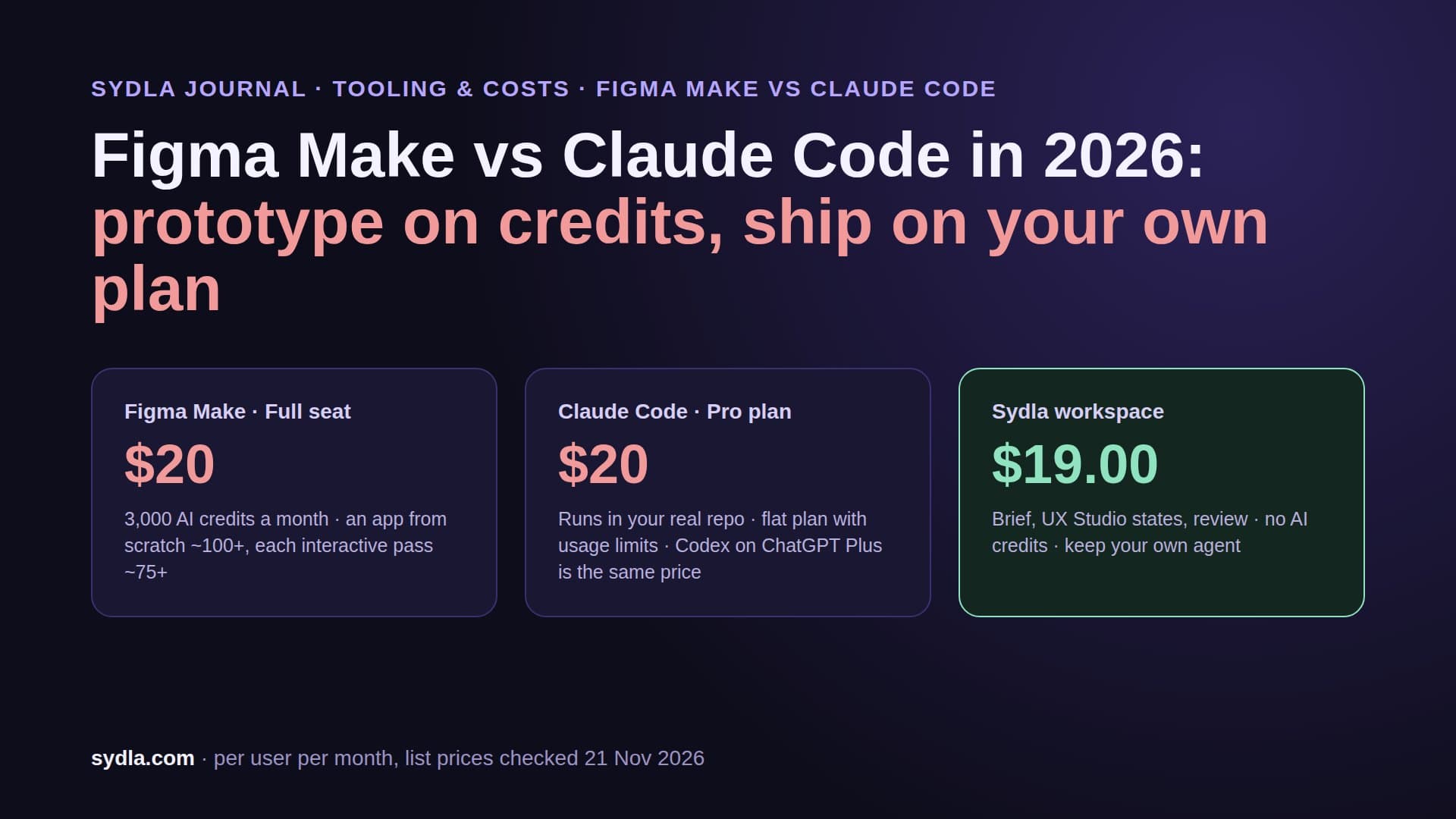
| Figma Professional Full | $20.00 | 3,000 AI credits per Full seat; MCP reads 200 a day on Full and Dev, 20 a month on View and Collab | Frames are linked or screenshotted into the ticket |
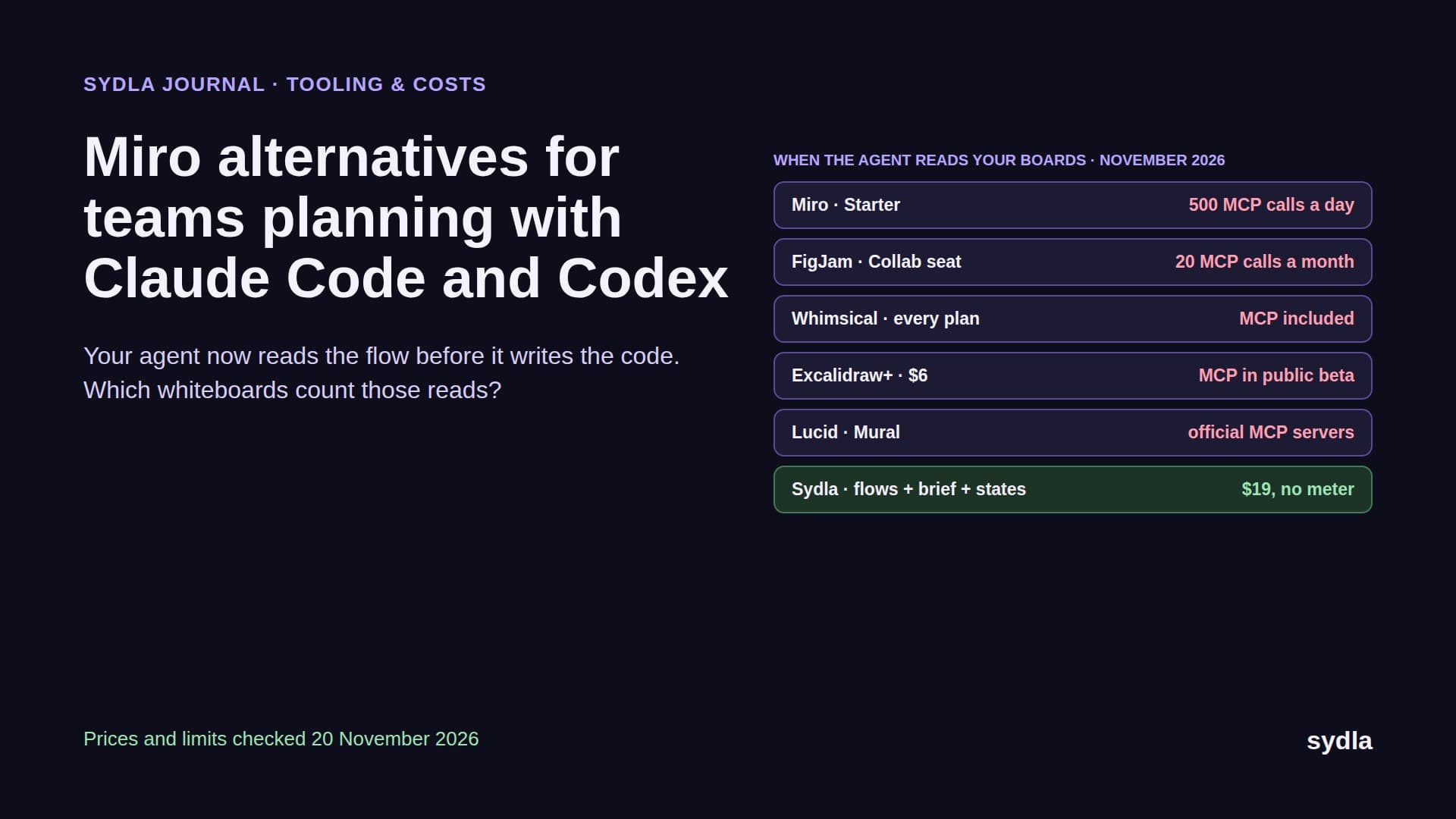
| Miro Starter | $10.00 | 25 AI credits per license, pooled; AI pauses for everyone at zero | The flow is redrawn as frames |
| Canva Business | $25.00 | AI usage allowance per plan | Screens are exported again for launch |
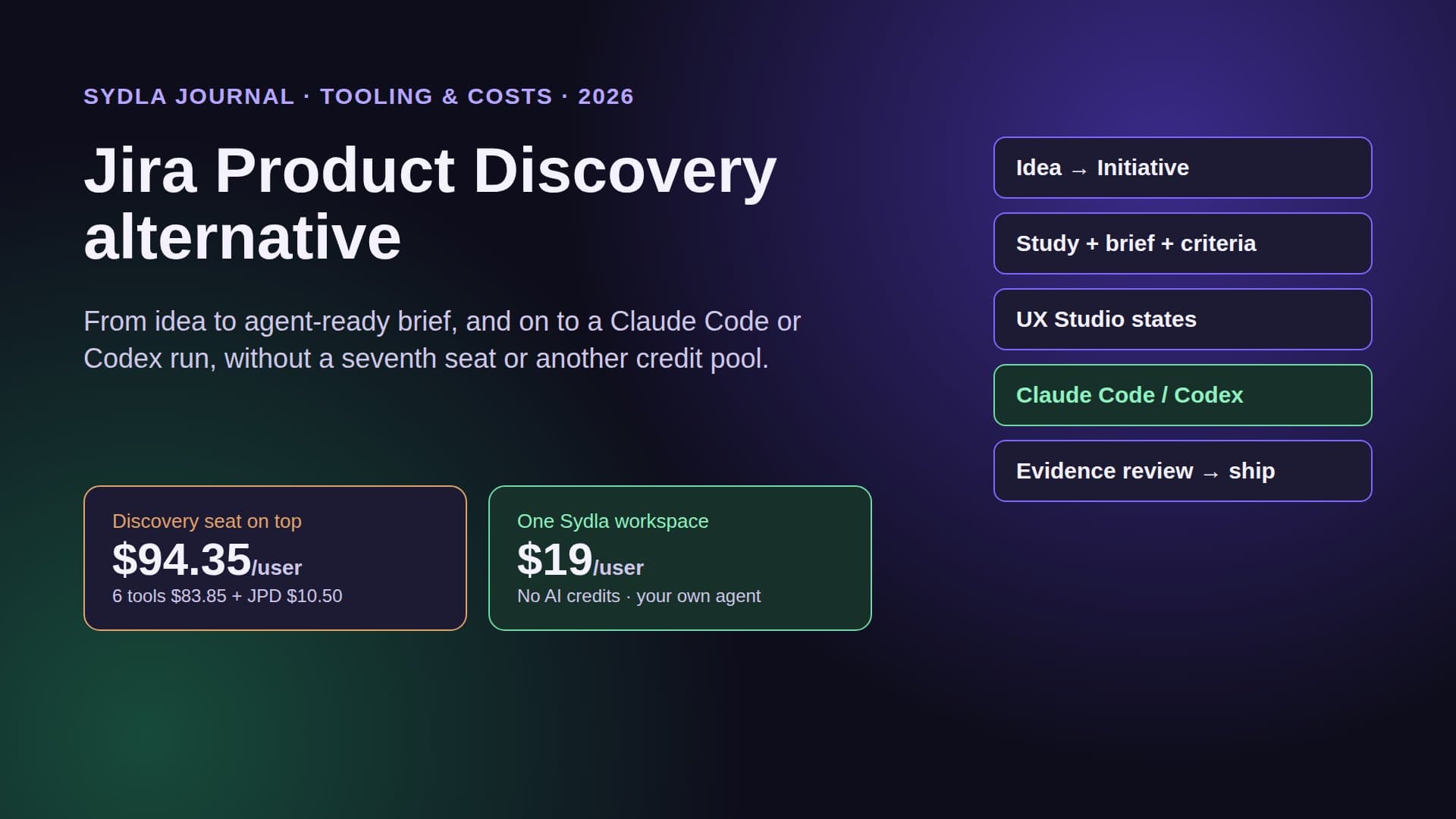
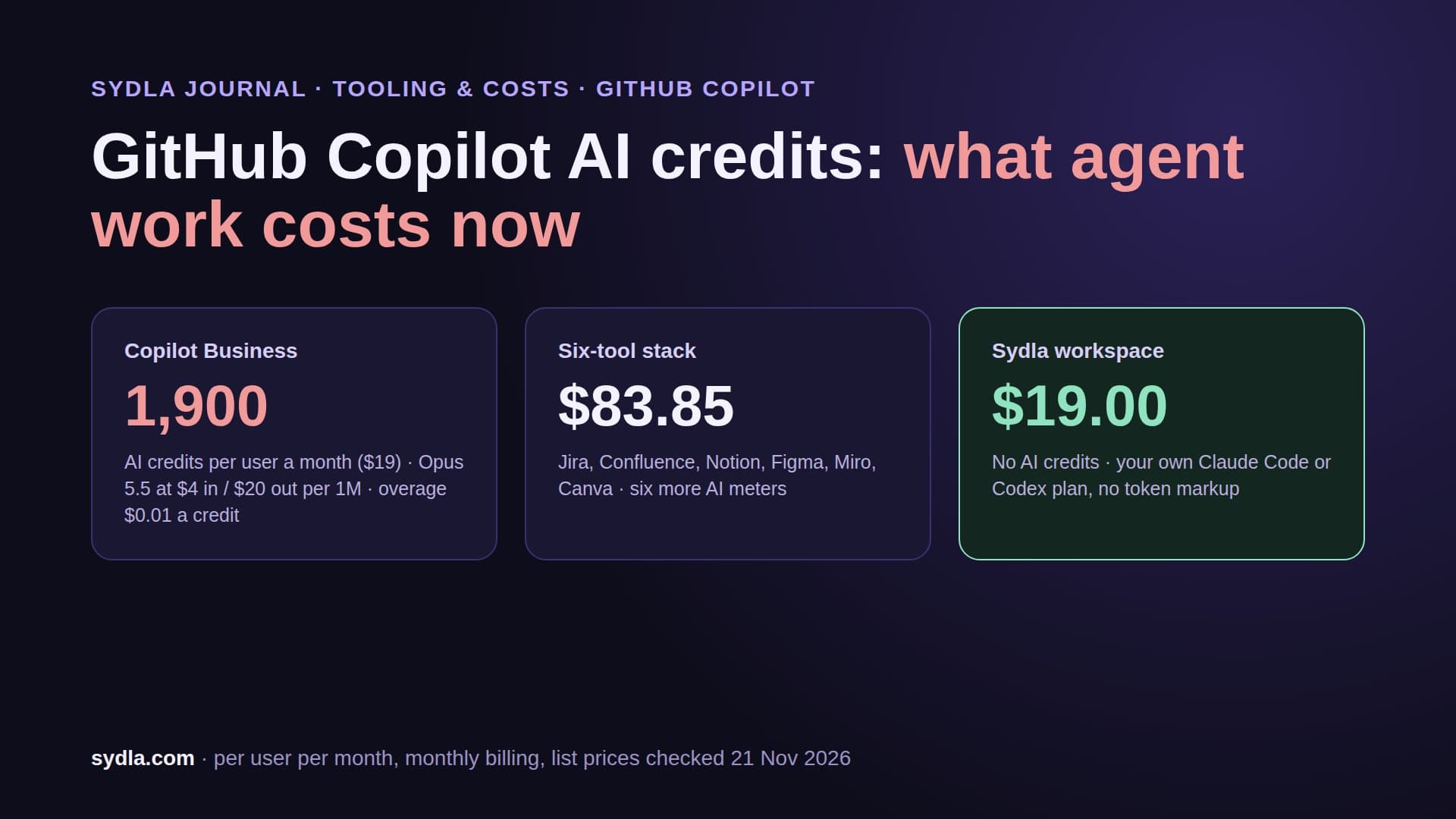
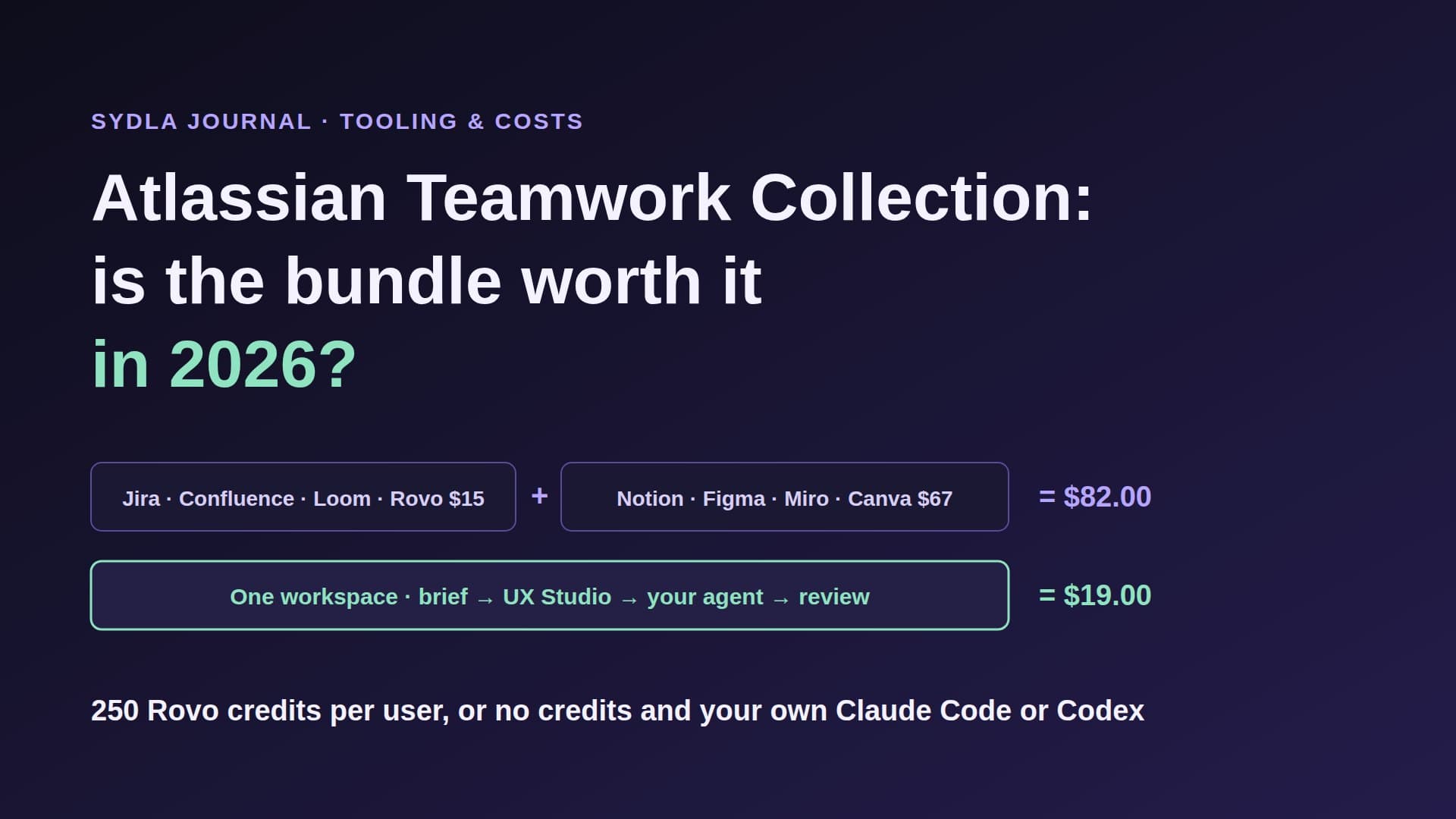
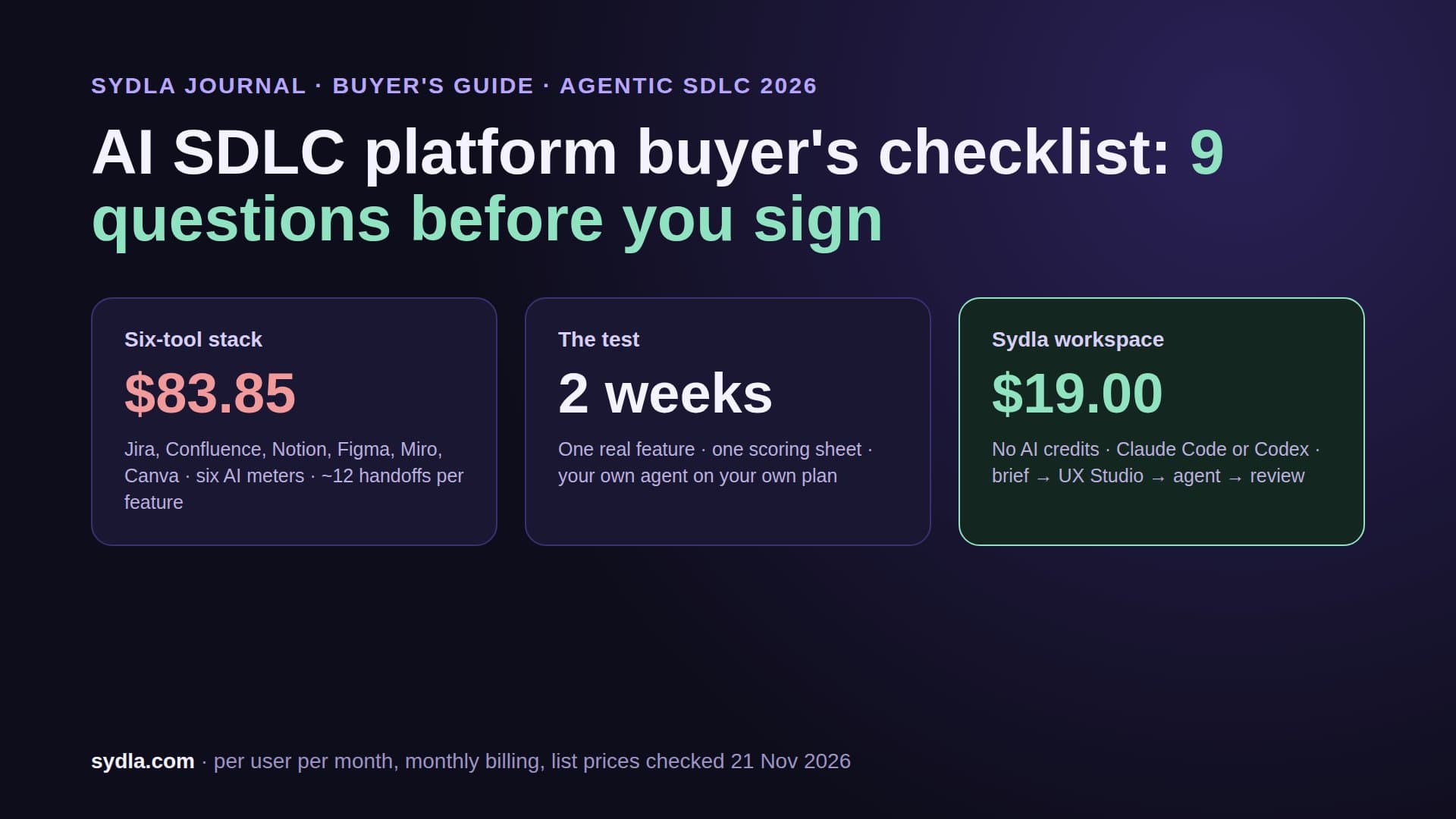
| Six-tool stack | $83.85 | Six meters, six renewal dates | About twelve handoffs per feature |
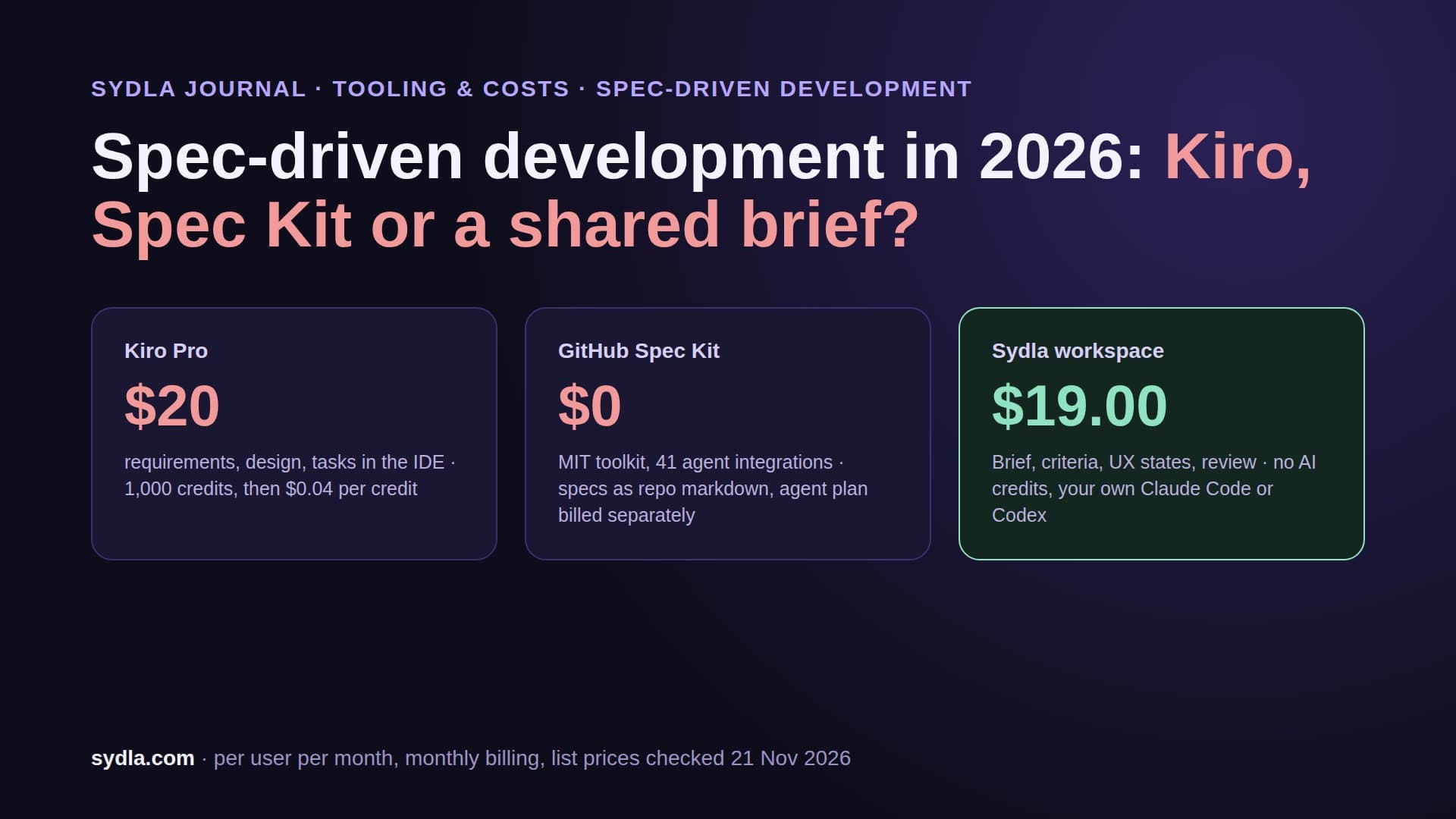
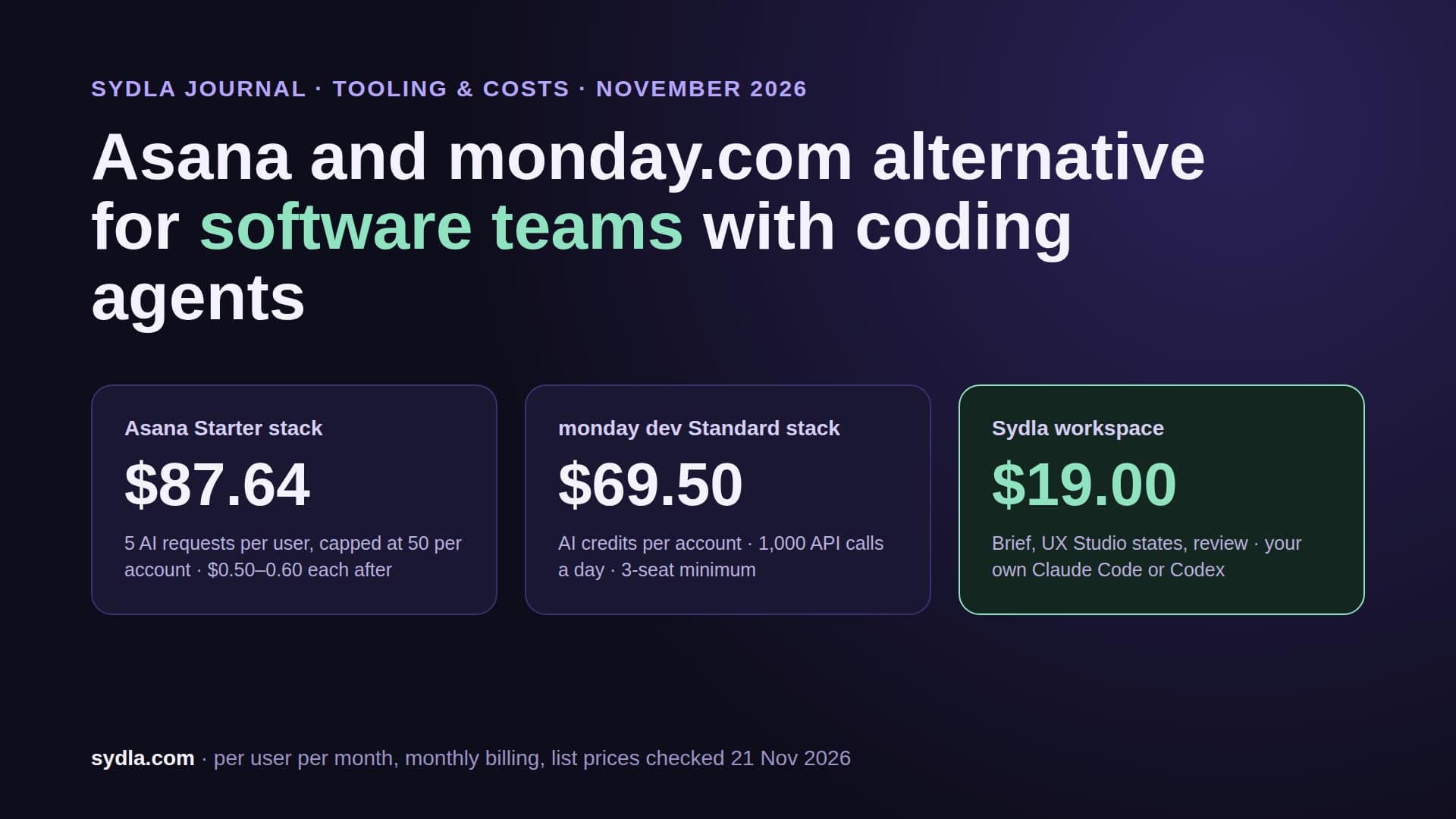
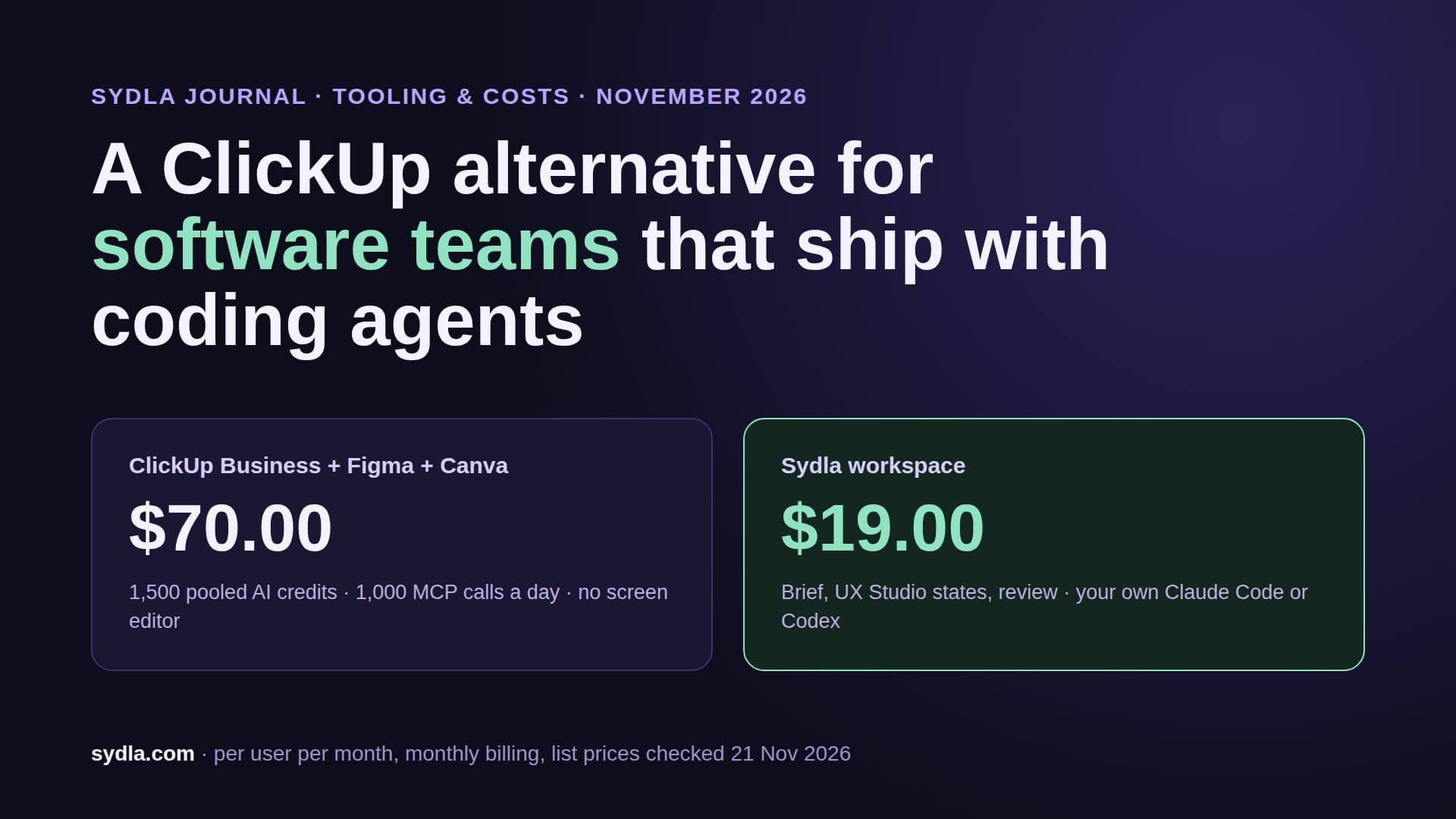
| Sydla workspace | $19.00 | No Sydla AI credits; your own Claude Code or Codex plan | Three handoffs, all on one work item |
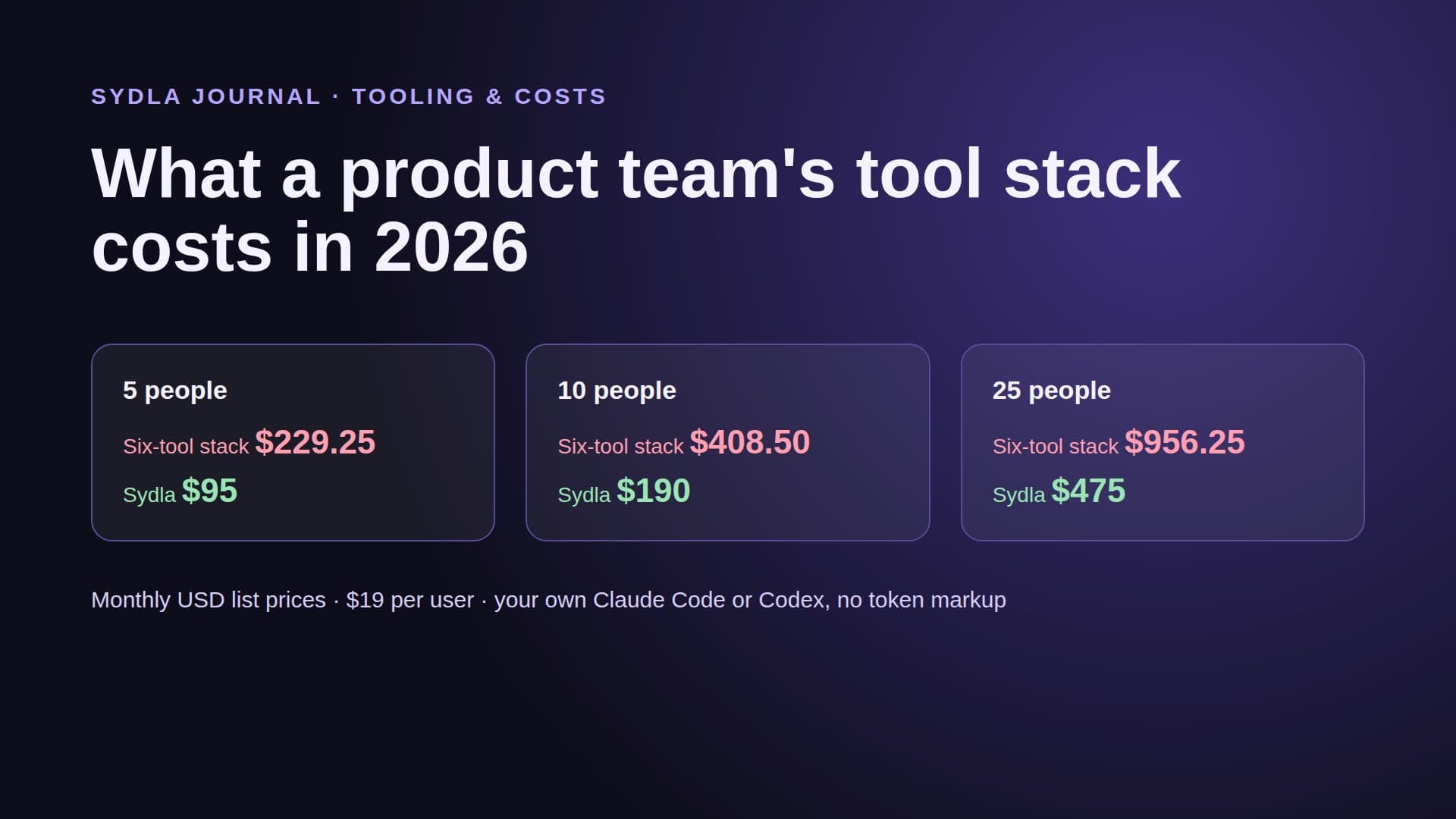
The seat gap alone is $64.85 per user per month, or $778.20 a year, before any credit top-up. Our team stack cost breakdown runs the numbers for teams of 5, 10 and 25. But seat price is only question nine on the list. The first eight decide whether the platform makes your agents faster or just adds a seventh meter.
The 9 questions to ask any AI SDLC platform
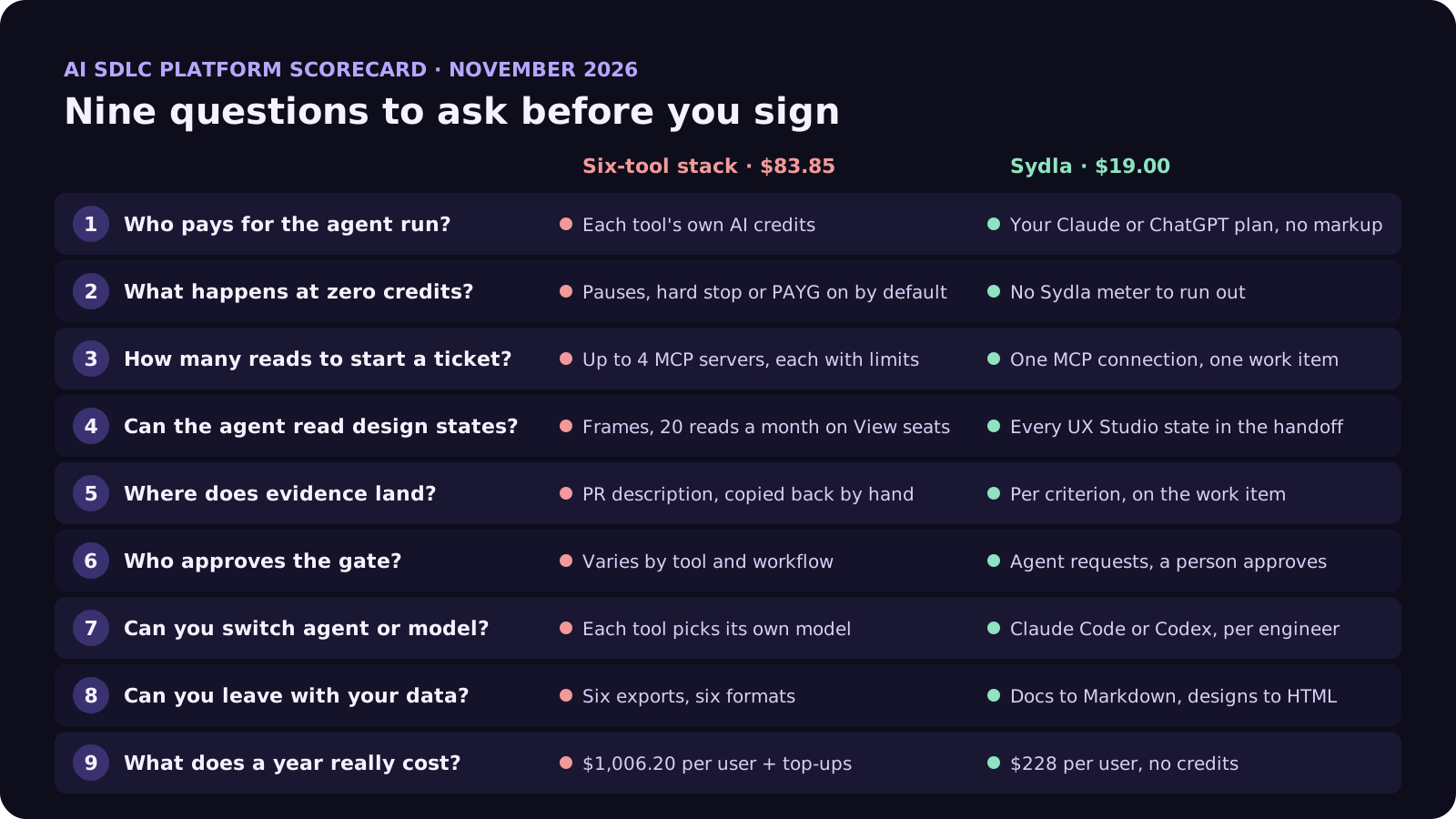
Ask each vendor these questions in writing, and ask them to show the answer on your own work rather than on a demo project. The scorecard below shows how the six-tool stack and Sydla answer each one.
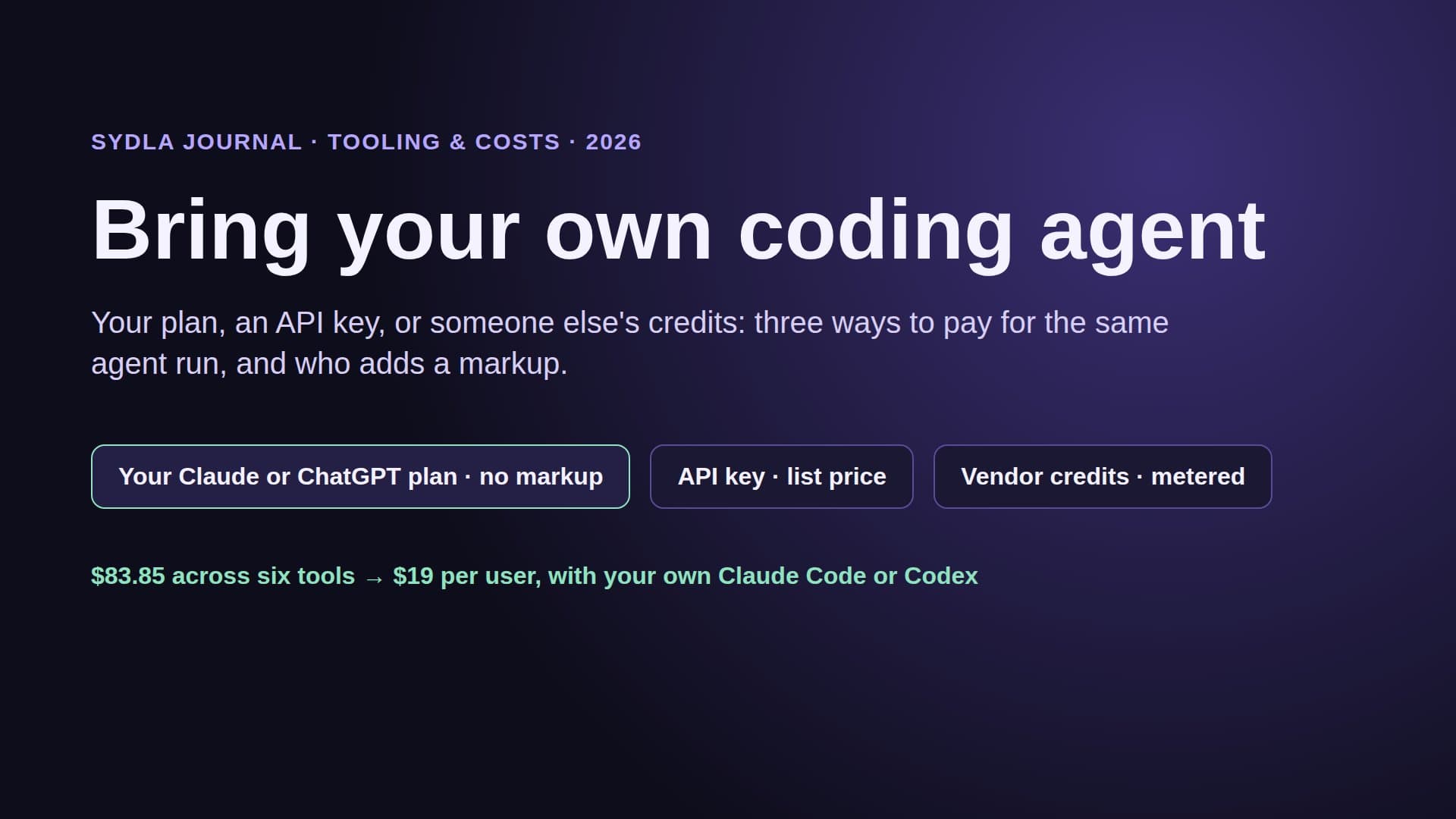
- Who pays for the agent run? There are three models: the vendor's credits, an API key with a margin on top, or your own Claude or ChatGPT plan with no markup. Ask which one applies to the agent that writes code, not to the chat sidebar. Our bring your own coding agent guide explains the difference.
- What happens when the meter hits zero? Some tools pause AI for the whole team, some hard stop per seat, and Rovo extra usage at $0.01 per credit is on by default from 3 December 2026. Ask who gets the alert, who can cap it and whether unused credits roll over.
- How many places does the agent read to start one ticket? Count the MCP servers your coding agent needs to load the ticket, the spec, the decision and the design. Each one is a sign-in, a token budget and sometimes a daily limit. Our MCP servers guide lists the limits per tool.
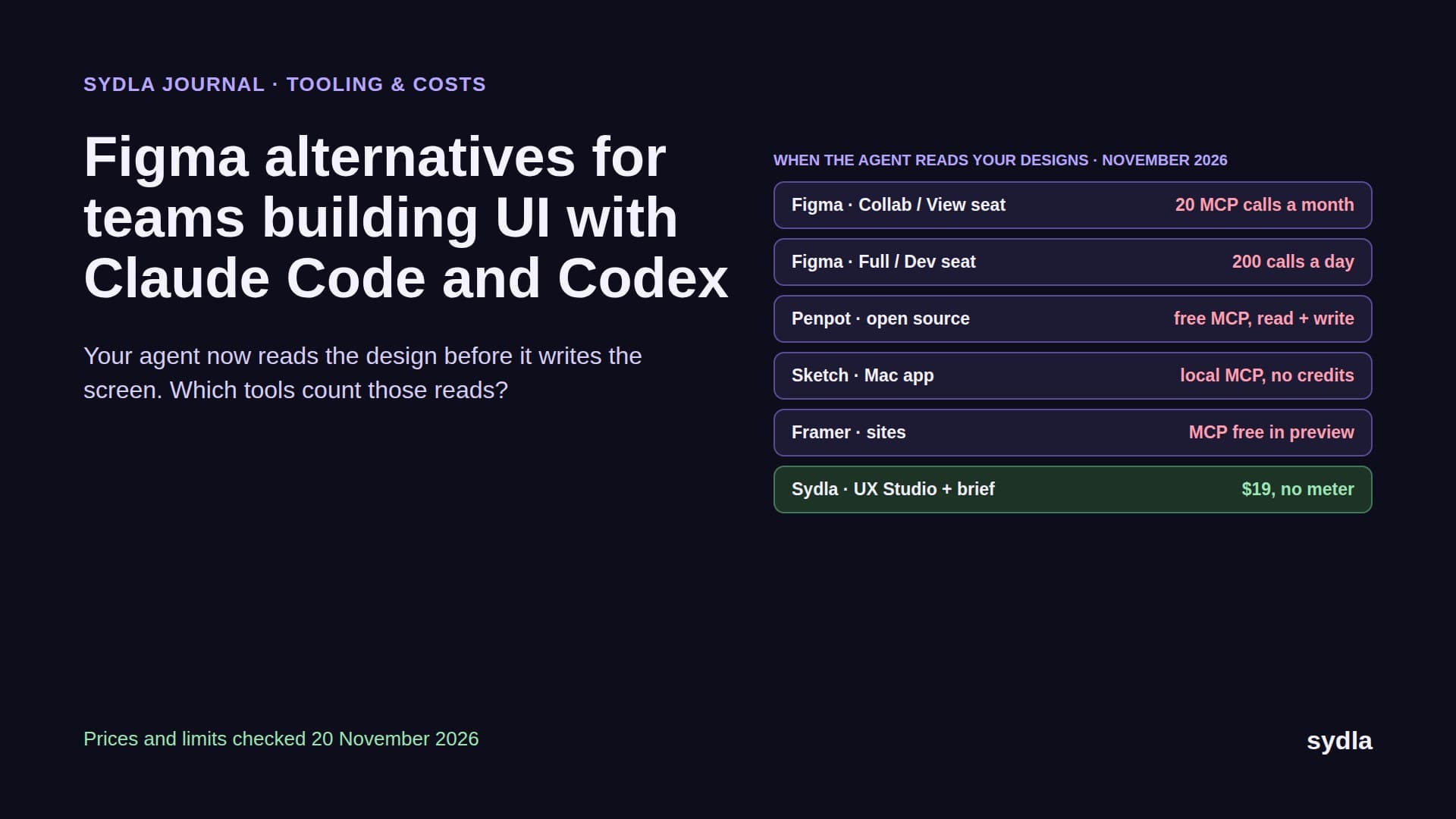
- Can the agent read design states, not screenshots? An agent builds better UI from named empty, loading, error and success states than from a picture of the happy path. Ask whether reading them needs a paid design seat, and how many reads a month it gets.
- Where does the agent's evidence land? A good run ends with a result per acceptance criterion, written where the reviewer will look. If it ends in a pull request description that someone copies back into the ticket, that is one more handoff.
- Who approves the gate? Forrester lists human oversight and auditability as must-haves before scaling. Ask whether an agent can merge or ship on its own, and where the record of who approved what is kept.
- Can you switch agent or model? Models change every few months. Ask whether each engineer can pick Claude Code or Codex, and the model, without a new contract.
- Can you leave with your data? Ask for the export formats before you sign. Six tools means six exports in six formats, and your code should always stay in your own Git.
- What does a year really cost per person? Add seats, expected credit top-ups, the extra design seats agents need to read frames, and the agent plans you already pay for. Builder.io suggests looking at three years, not one.
Run a two-week trial on one real feature
Answers in a sales call are easy. Answers on your own backlog are not. Endor Labs recommends a two- to four-week proof of concept on three to five representative repos, with the expected results written down before any tool runs. Builder.io says to put a real backlog task in front of the people who will use the tool. For a lean team, one real feature and two weeks is enough.
- Pick a feature you would ship anyway. Small, with real UI states and at least four acceptance criteria. A CSV export, a settings page or an onboarding step works well.
- Write the scoring sheet first. One row per question above, plus three numbers to count: handoffs, AI meters touched and criteria with evidence at the end.
- Run the feature through each option. Same brief, same engineer, same coding agent. Note every time someone copies, pastes, screenshots or re-explains something.
- Review like it is production. Use the four-pass review on each result: intent, evidence, risk, run it.
- Score it together. Product, design and engineering fill the sheet in one meeting. Lukewarm engineers are a warning sign, whatever the demo looked like.
Count the cost of the trial too: credits used, top-ups triggered and seats you had to add so the agent could read something. That number is the best forecast of your next renewal.
How Sydla answers the checklist: brief, UX Studio, your agent, review
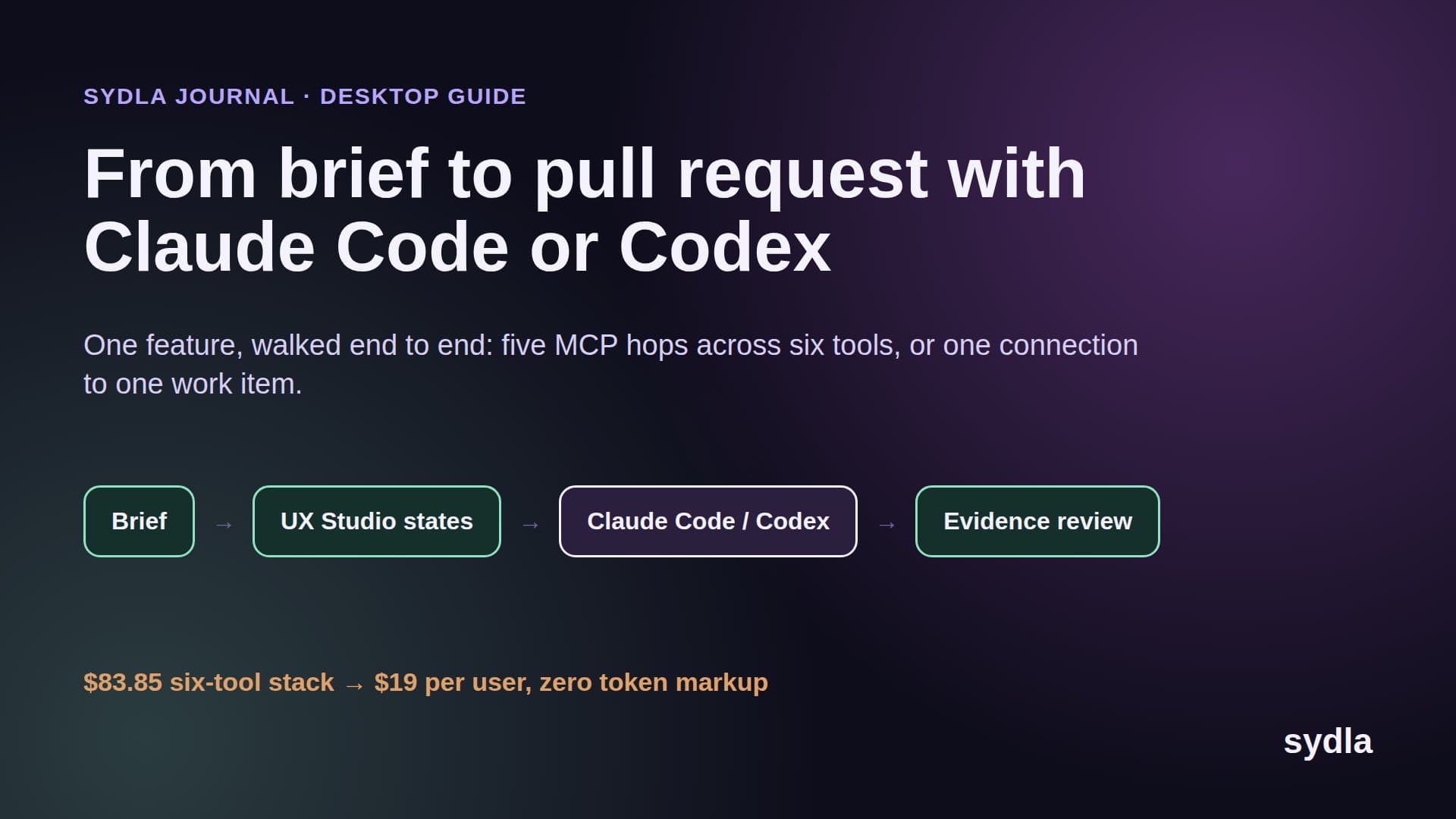
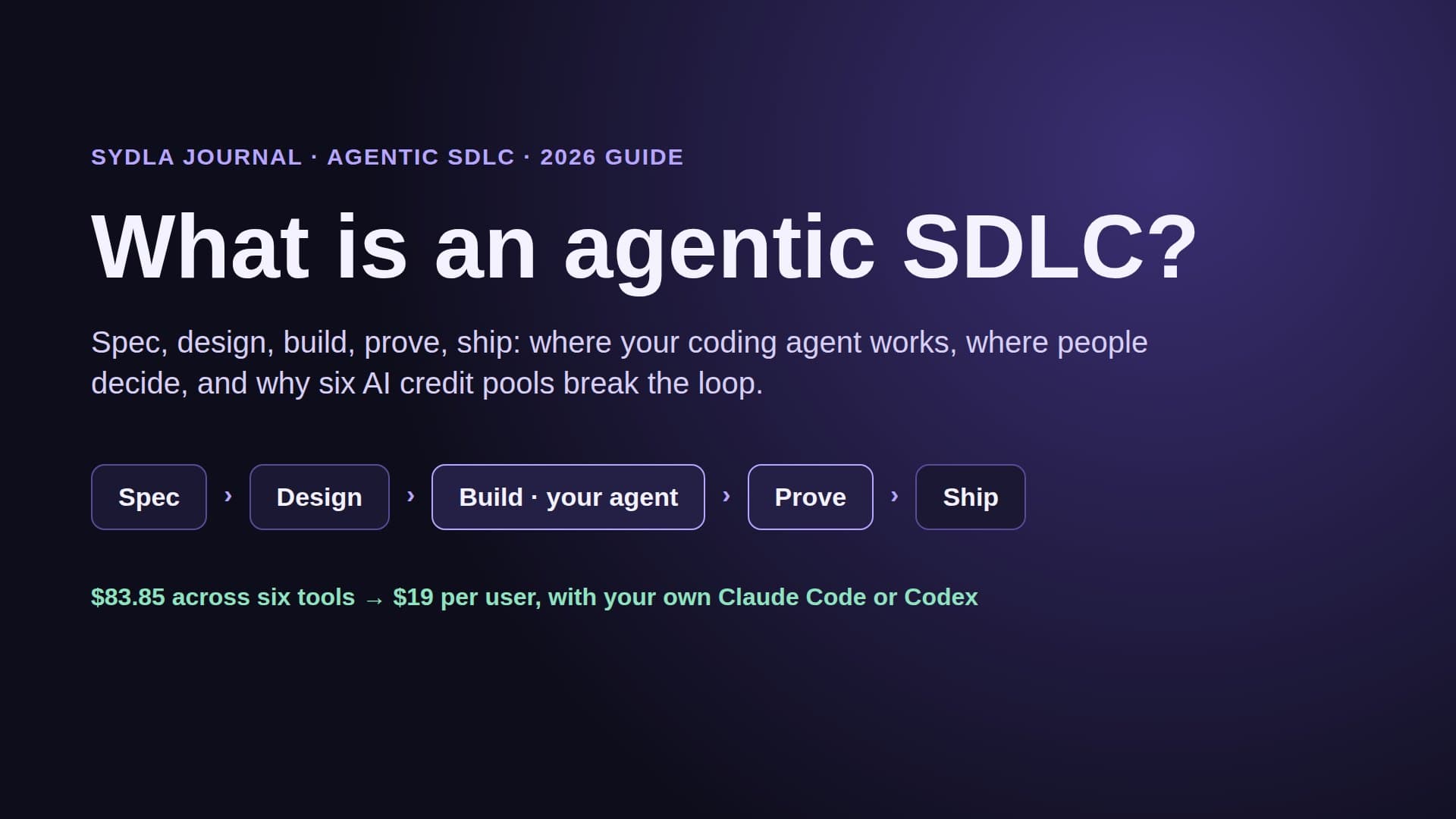
Here is how the same trial feature runs in Sydla, step by step. It is the loop we describe in what is an agentic SDLC, and every step reads and writes the same work item.
- A person writes the brief. Problem, users, scope, non-goals and acceptance criteria go into one Sydla doc linked to the initiative. It replaces the Jira ticket, the Confluence spec and the Notion decision note. The PRD template for coding agents has the sections to fill.
- The designer draws the states in UX Studio. Empty, loading, error and success states, the transitions between them and the design tokens, then a published handoff. Agents read it without a design seat and without a monthly read quota, as explained in our design handoff guide.
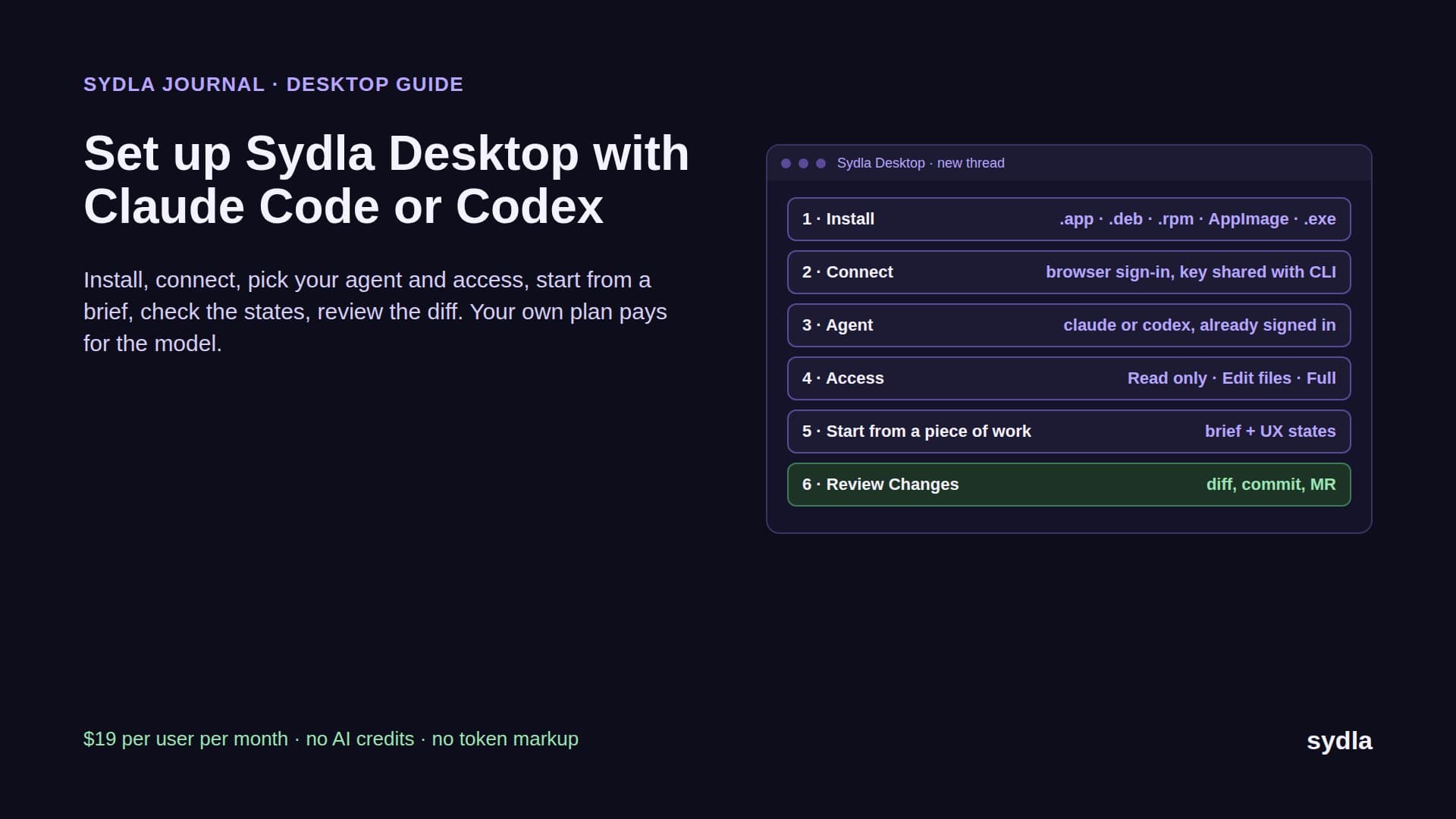
- The engineer starts a thread in Sydla Desktop. They open the work item and pick Claude Code or Codex and a model. Desktop runs the claude or codex CLI already installed and signed in on their machine, on their own Claude or ChatGPT plan or their own API key. Sydla sells no AI credits and adds no token markup. The Desktop setup guide walks through the install.
- The agent reads one work item through one MCP connection. It loads the initiative context, the ticket with its criteria and the UX handoff with every state, when it needs each one. The repo's CLAUDE.md or AGENTS.md still applies, because it is the real CLI with the engineer's own settings.
- The agent writes evidence per criterion. As it works in a branch and runs tests, it marks each acceptance criterion passed or failed, with a note, on the work item.
- A person reviews and ships. The reviewer checks the states in Preview and the diff in Changes. The agent can request a gate; only a person approves it. Ship then walks through commit, merge request, merge and tag.
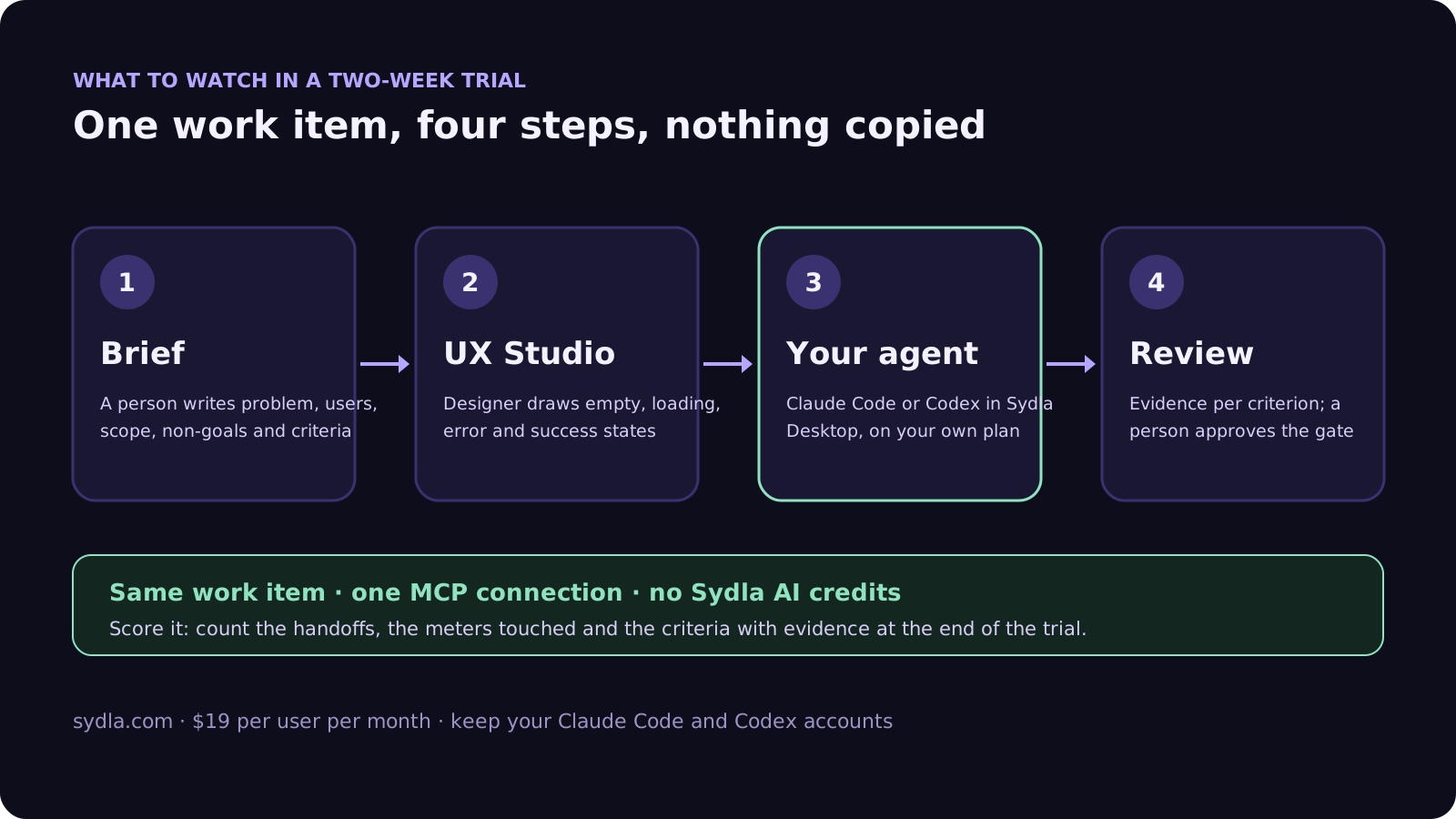
Because each engineer runs the agent on their own plan, a team can mix Claude Code and Codex on the same initiative. Our Claude Code vs Codex comparison helps decide who uses which.
When the checklist says keep what you have
A good checklist can also tell you not to switch. Keep a tool when it scores well on your own trial, or when the work it holds never reaches a ticket or an agent.
- Large design systems. A design team maintaining hundreds of components in Figma can keep it and publish only the states engineers need. See Figma alternatives for coding agents.
- Compliance history. If audits depend on years of Jira workflows, archive them and move new work only. The 30-day migration plan shows what to export first.
- Work outside the product loop. A sales deck or a company wiki that no agent reads costs seats, not handoffs.
For everything between the request and the merged pull request, the questions usually point the same way: fewer tools, fewer meters, and one place where the agent reads and writes. You can see the plan in the pricing section, compare every tool on the comparison hub, and start a workspace for your two-week trial today.
Frequently asked questions
What is an AI SDLC platform?
An AI SDLC platform is a workspace where planning, specs, design, coding agents and review share the same context, so an AI coding agent can read what to build and write back proof of what it built. Forrester calls this category agentic development platforms: software development platforms that use agentic AI to help teams build software.
What should I ask before buying an AI SDLC platform?
Ask nine questions: who pays for the agent run, what happens when credits run out, how many places the agent reads to start a ticket, whether it can read design states, where its evidence lands, who approves the gate, whether you can switch agent or model, how you export your data, and what a year really costs per person including top-ups.
How long should an AI SDLC platform trial be?
For a lean product team, two weeks on one real feature is enough. Write the scoring sheet before you start, run the same brief with the same engineer and coding agent through each option, and count handoffs, AI meters touched and acceptance criteria with evidence at the end. Larger teams may follow Endor Labs' advice of two to four weeks on three to five repos.
How much does Jira, Confluence, Notion, Figma, Miro and Canva cost per user in 2026?
At monthly list prices in November 2026 the stack costs $83.85 per user: Jira Standard $9.70, Confluence Standard $7.15, Notion Plus $12.00, Figma Professional Full $20.00, Miro Starter $10.00 and Canva Business $25.00, before AI credit top-ups. That is $1,006.20 per user a year. Sydla costs $19 per user per month, or $228 a year, with no AI credits.
Can I keep my Claude Code or Codex subscription with Sydla?
Yes. Sydla Desktop runs the Claude Code or Codex CLI installed and signed in on your machine, with your own Claude or ChatGPT plan or your own API key. Sydla adds no token markup; the agent reads the brief, acceptance criteria and UX Studio states through one MCP connection and writes evidence back to the same work item.