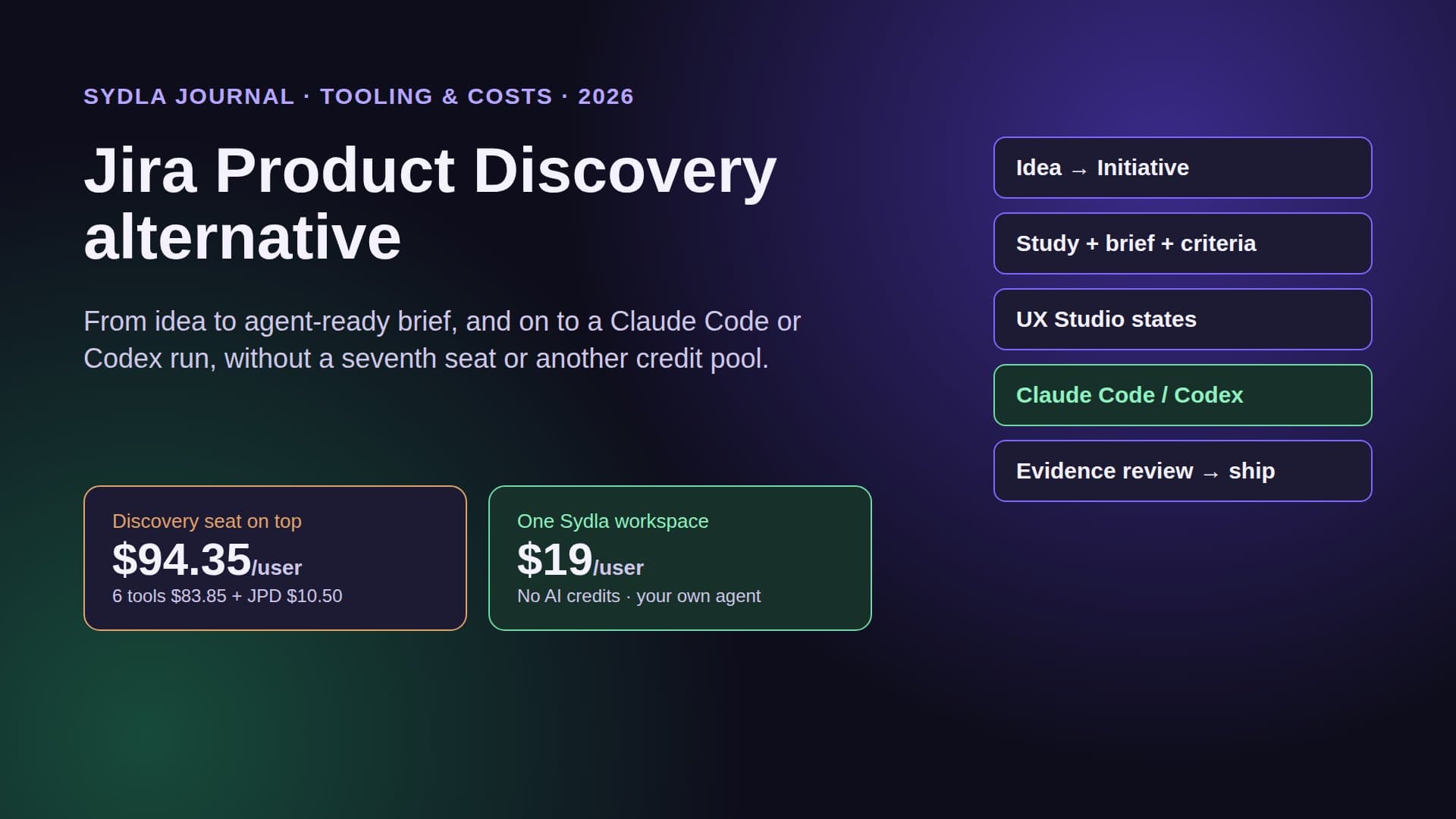
Jira Product Discovery alternative in 2026: from idea to agent-ready brief
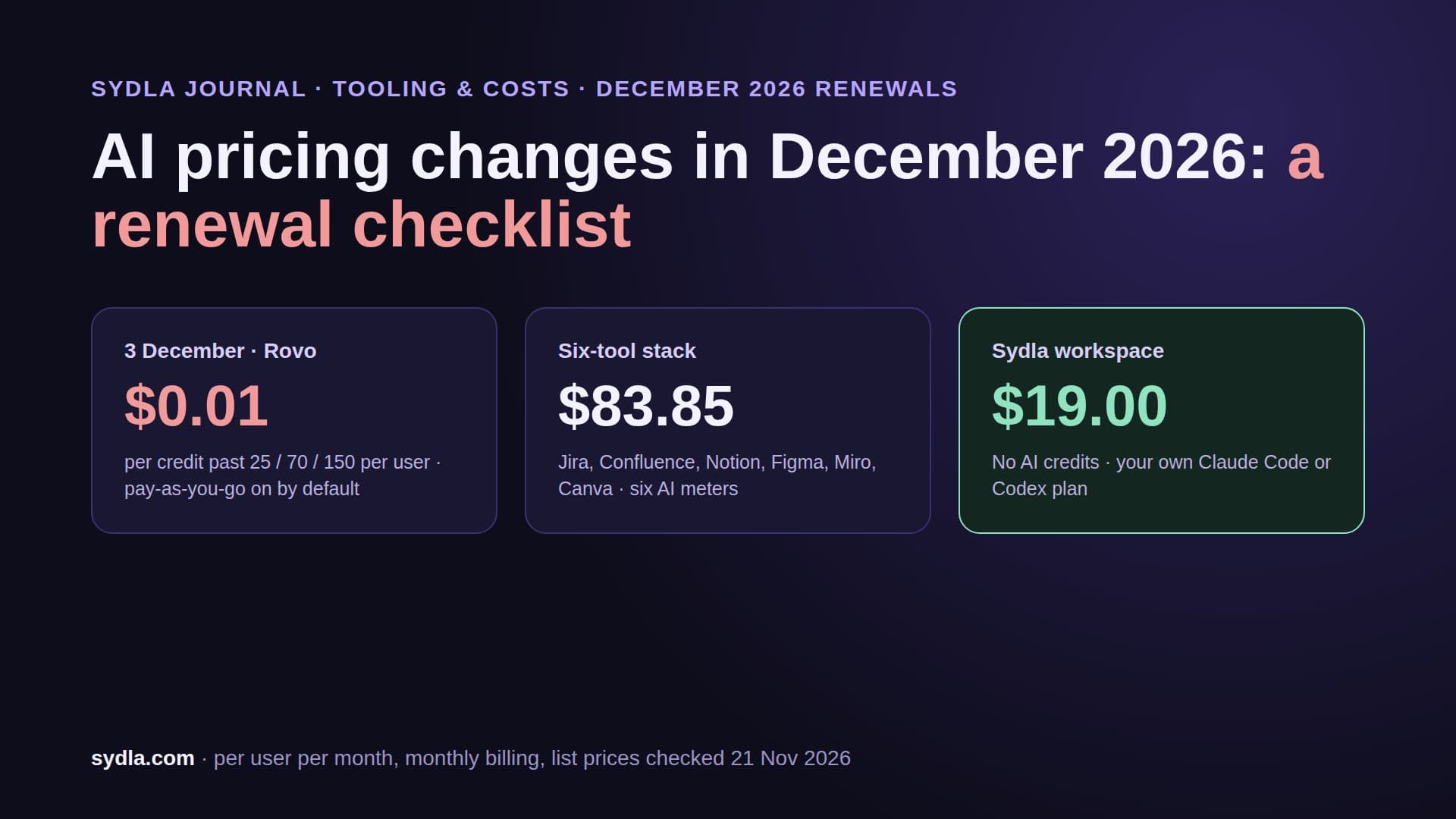
Product discovery tools now charge twice: once per creator or maker seat, and again in AI credits that expire every month. Here are the 2026 prices for Jira Product Discovery and Productboard, what they add to a six-tool stack that already costs $83.85 per user, and how to take an idea all the way to a Claude Code or Codex run in one workspace.
The seventh tool nobody counted
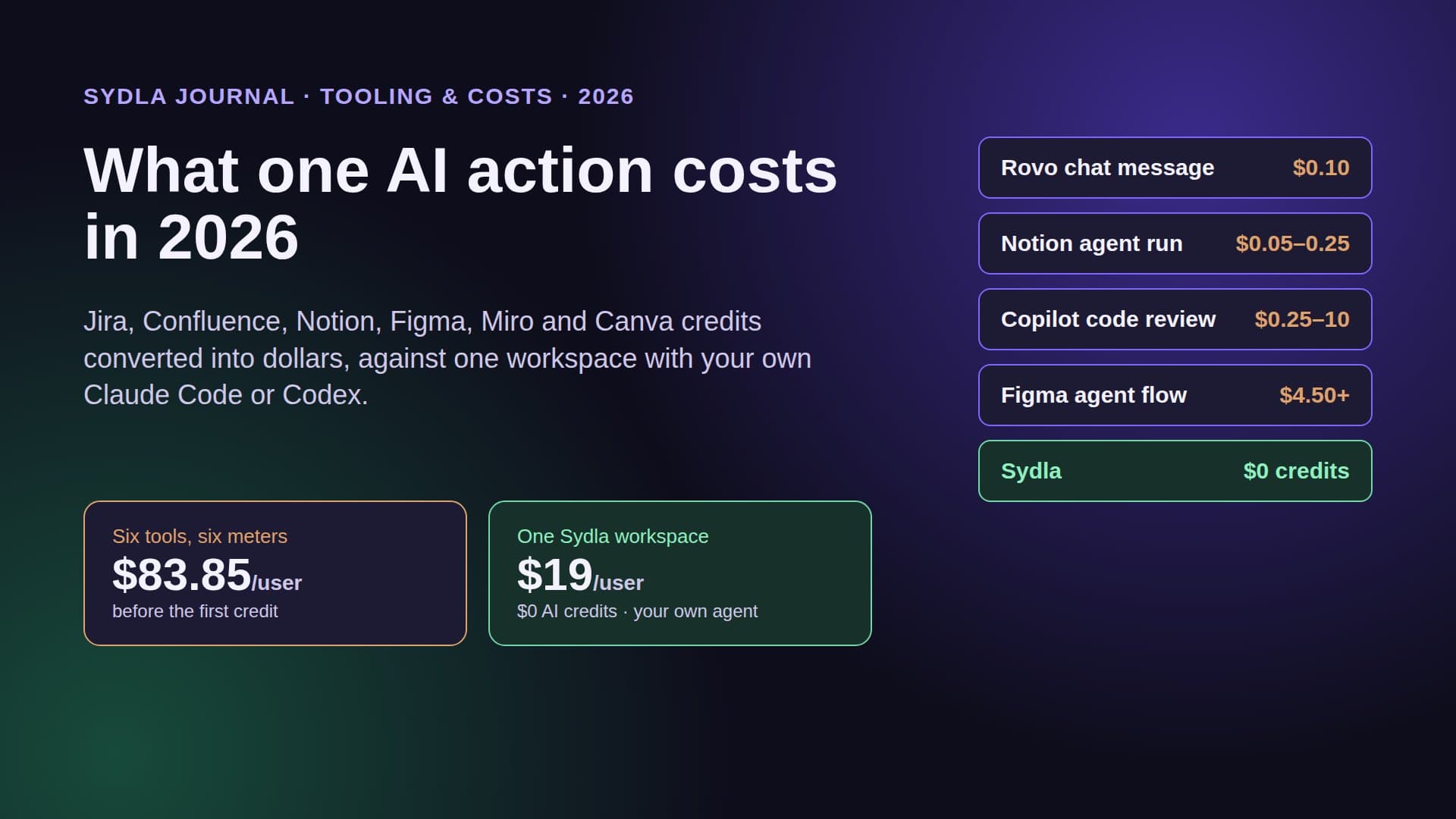
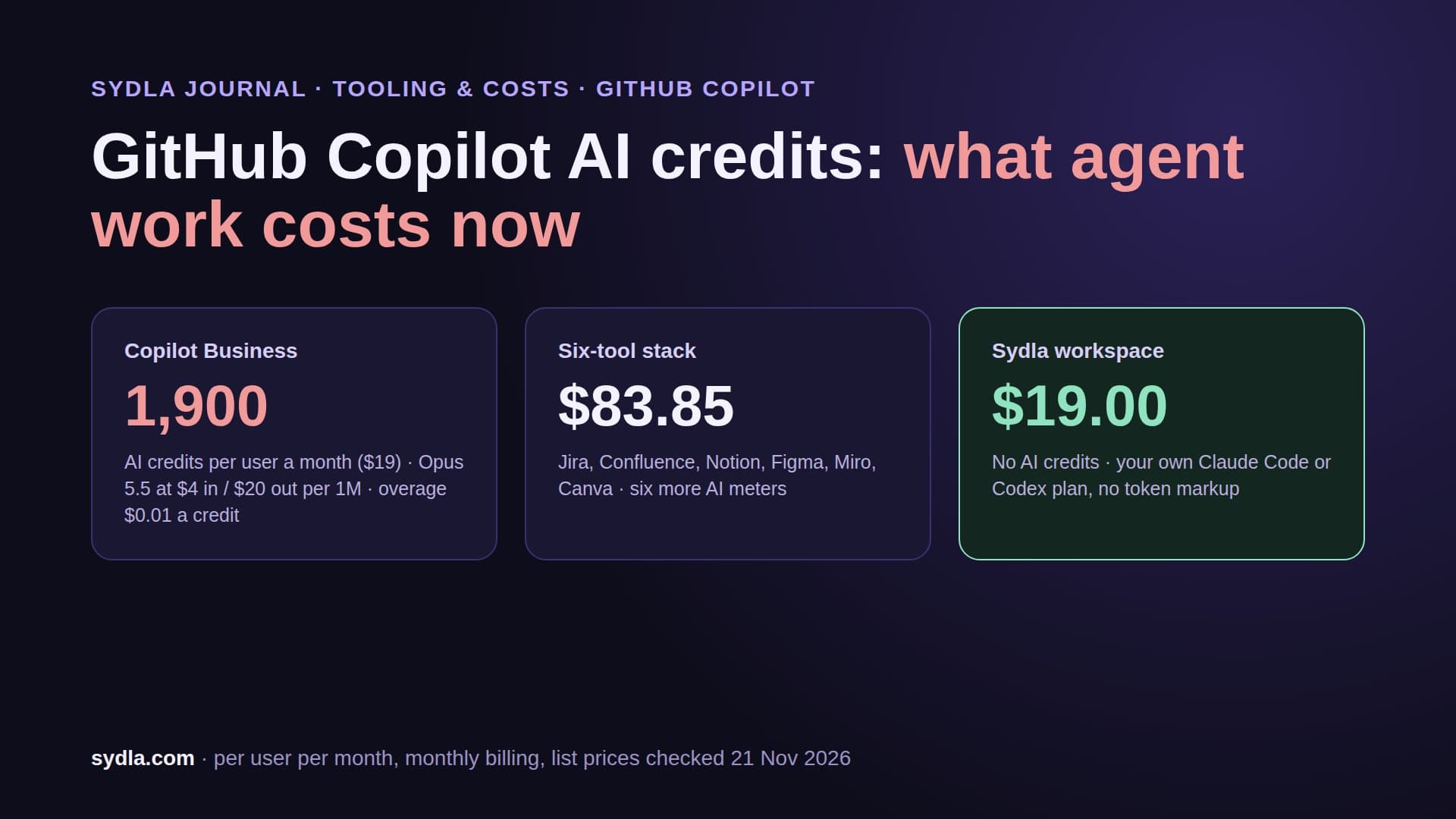
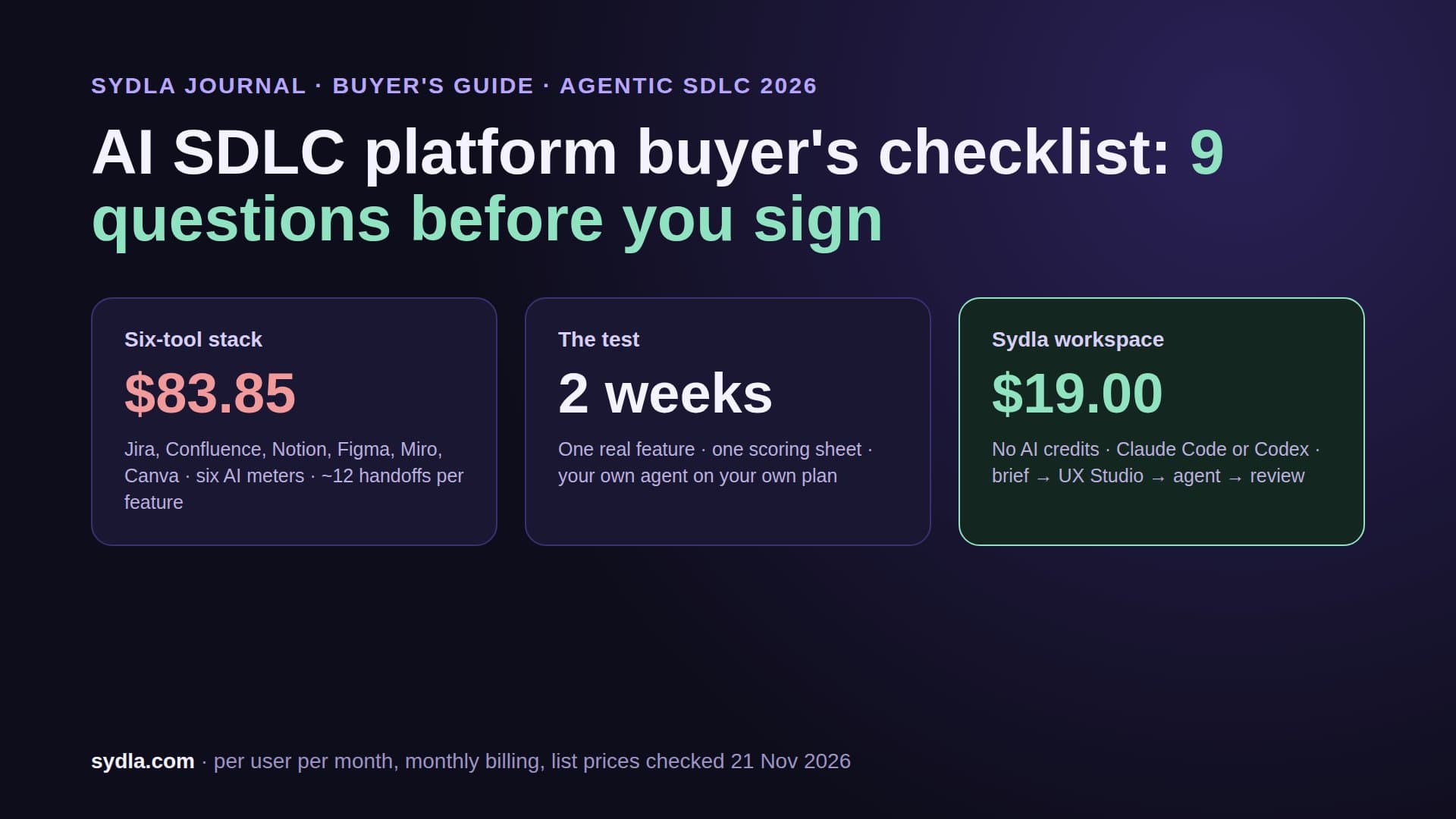
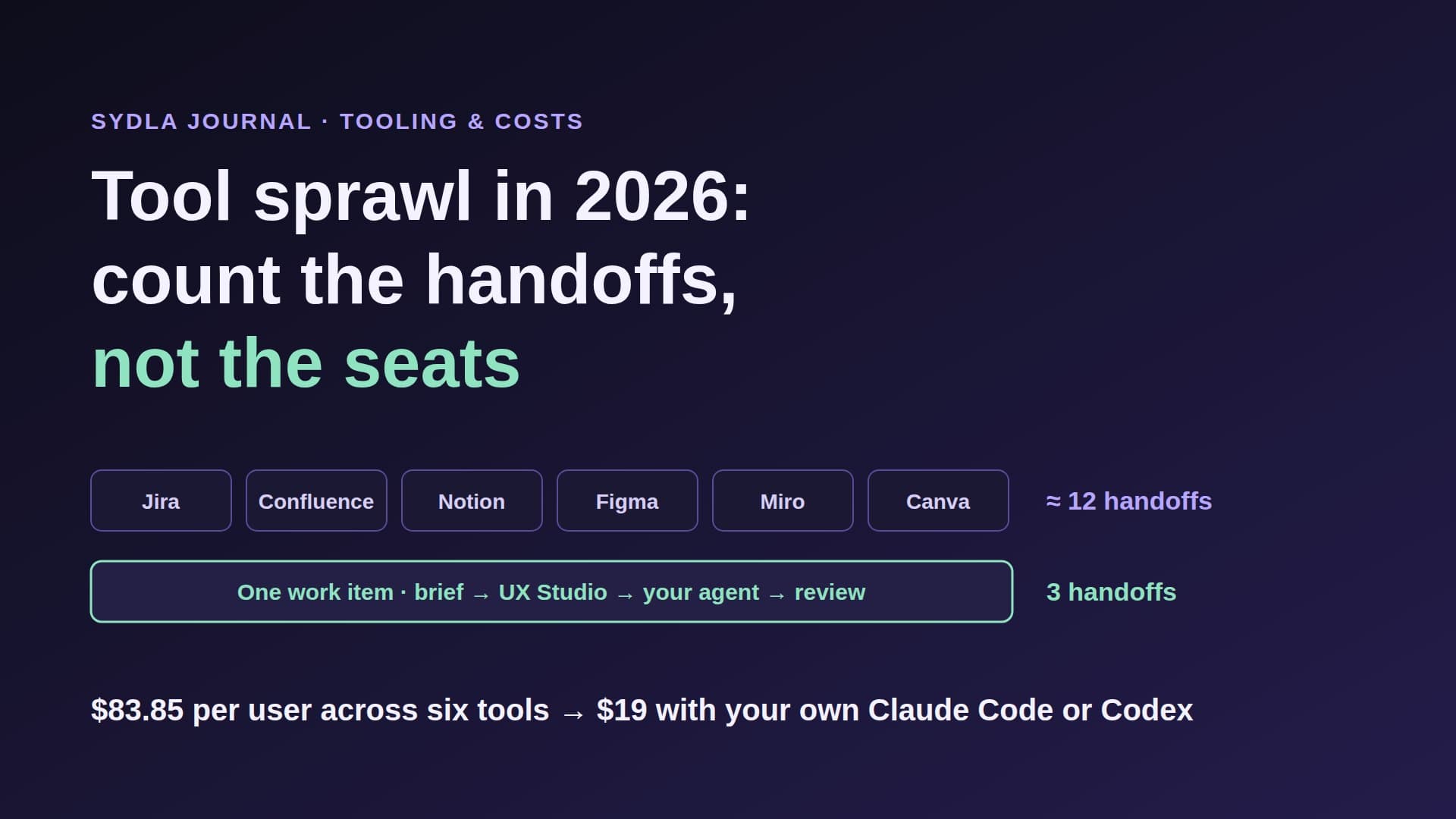
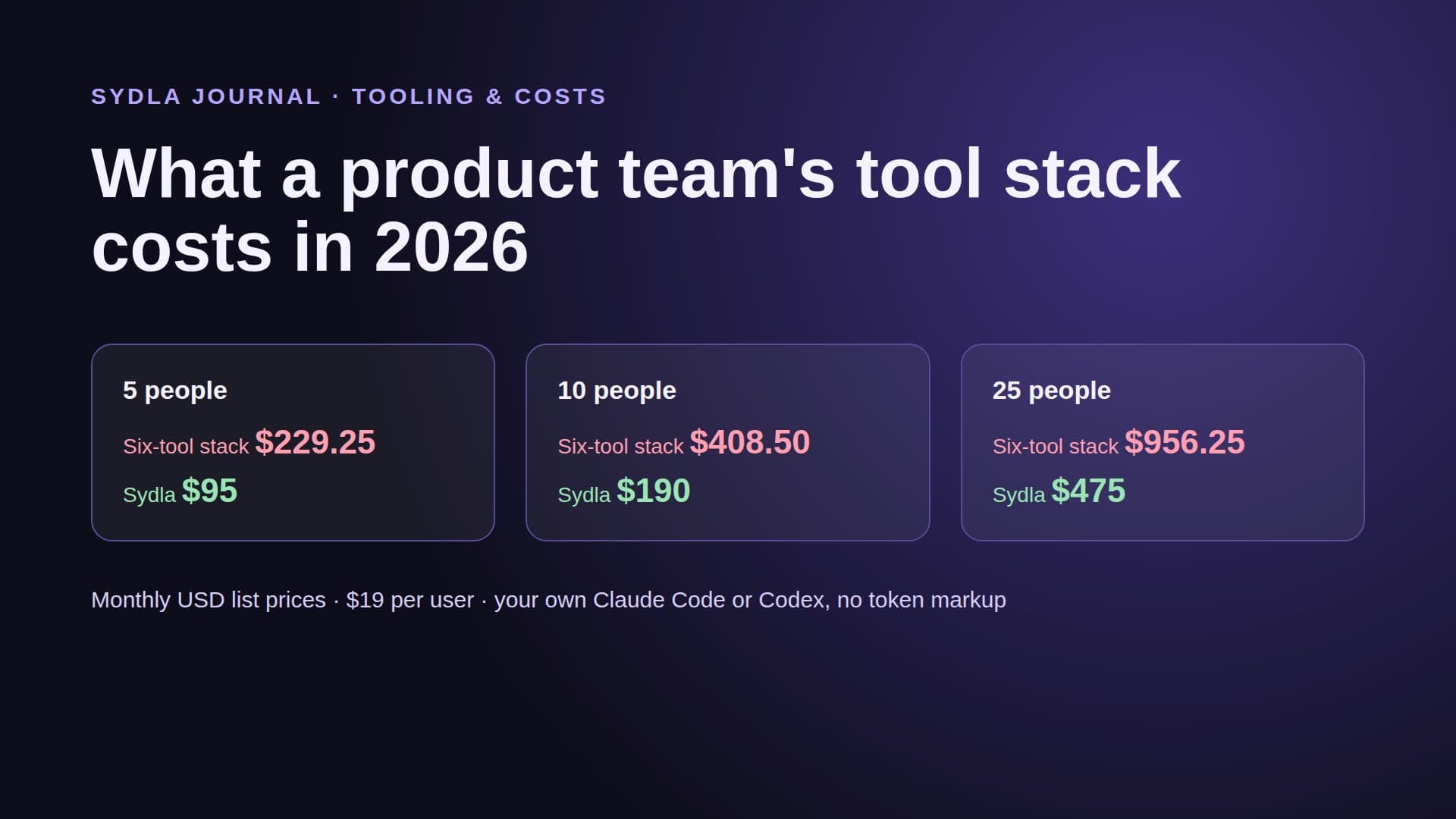
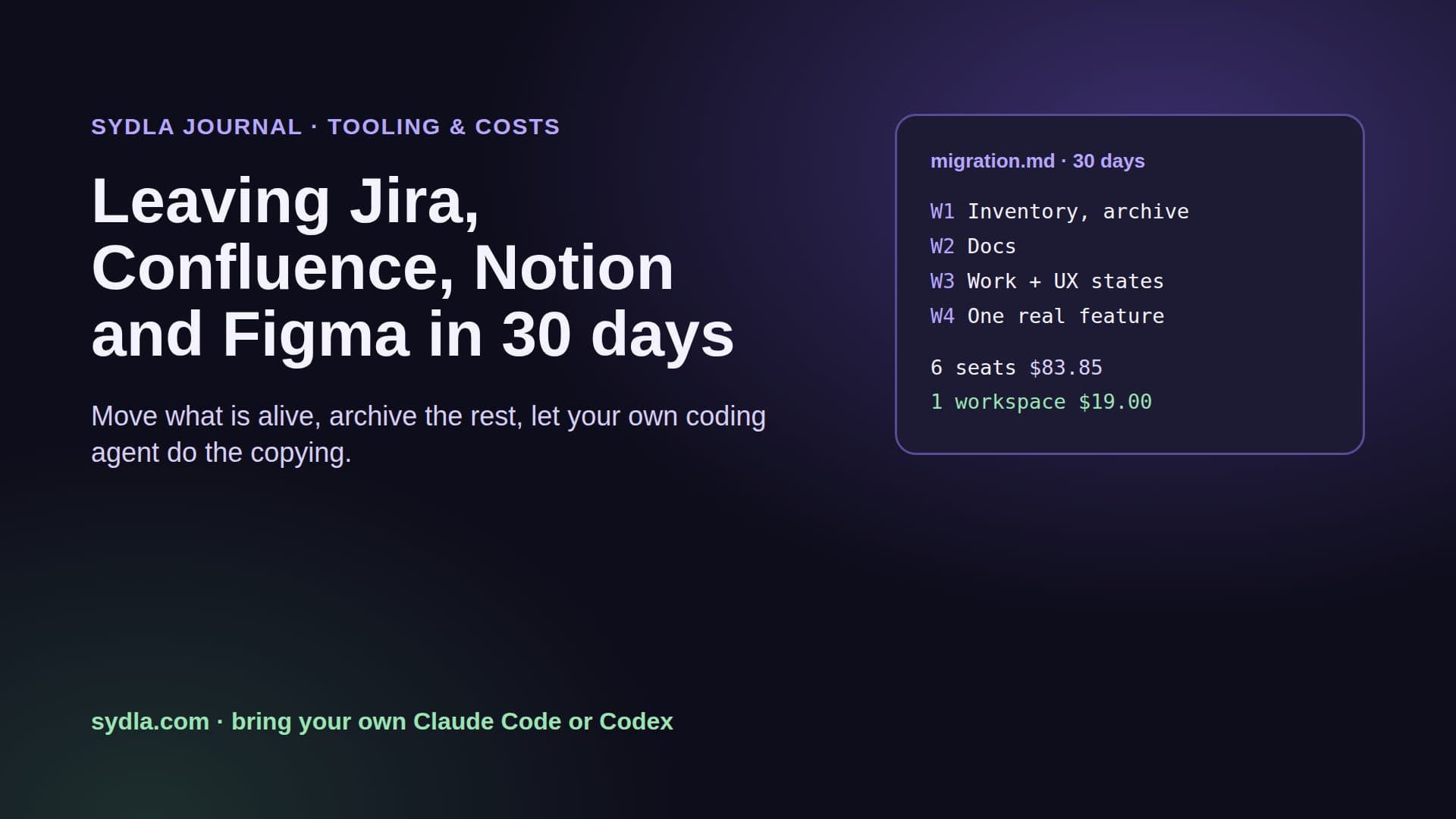
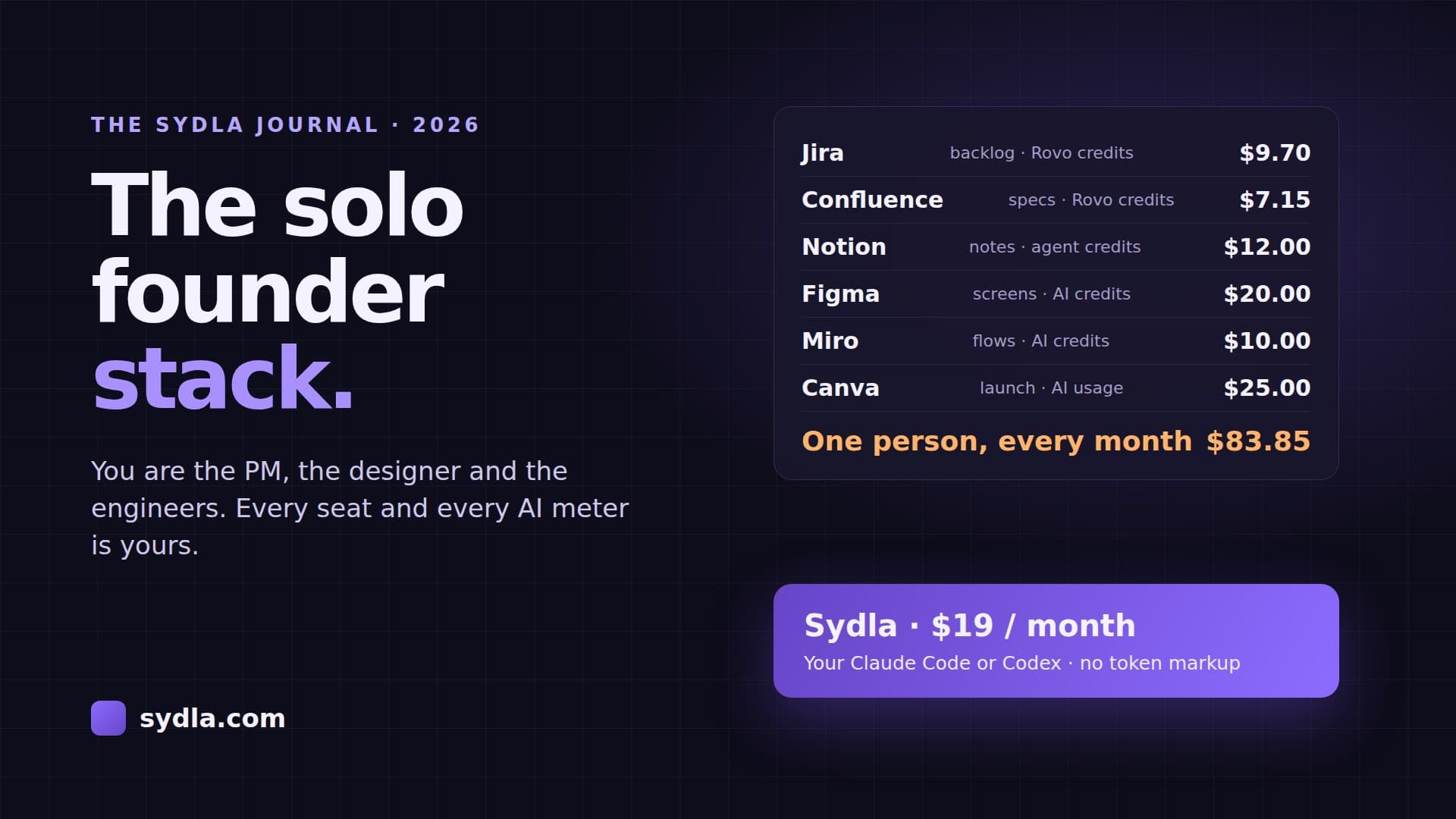
When teams add up their tool stack, they usually count six products: Jira for tickets, Confluence for specs, Notion for notes, Figma for screens, Miro for workshops and Canva for launch visuals. At list price that is $83.85 per user per month. Then someone in product asks for a place to collect ideas, score them and share a roadmap, and a seventh tool arrives: Jira Product Discovery, Productboard or something like them.
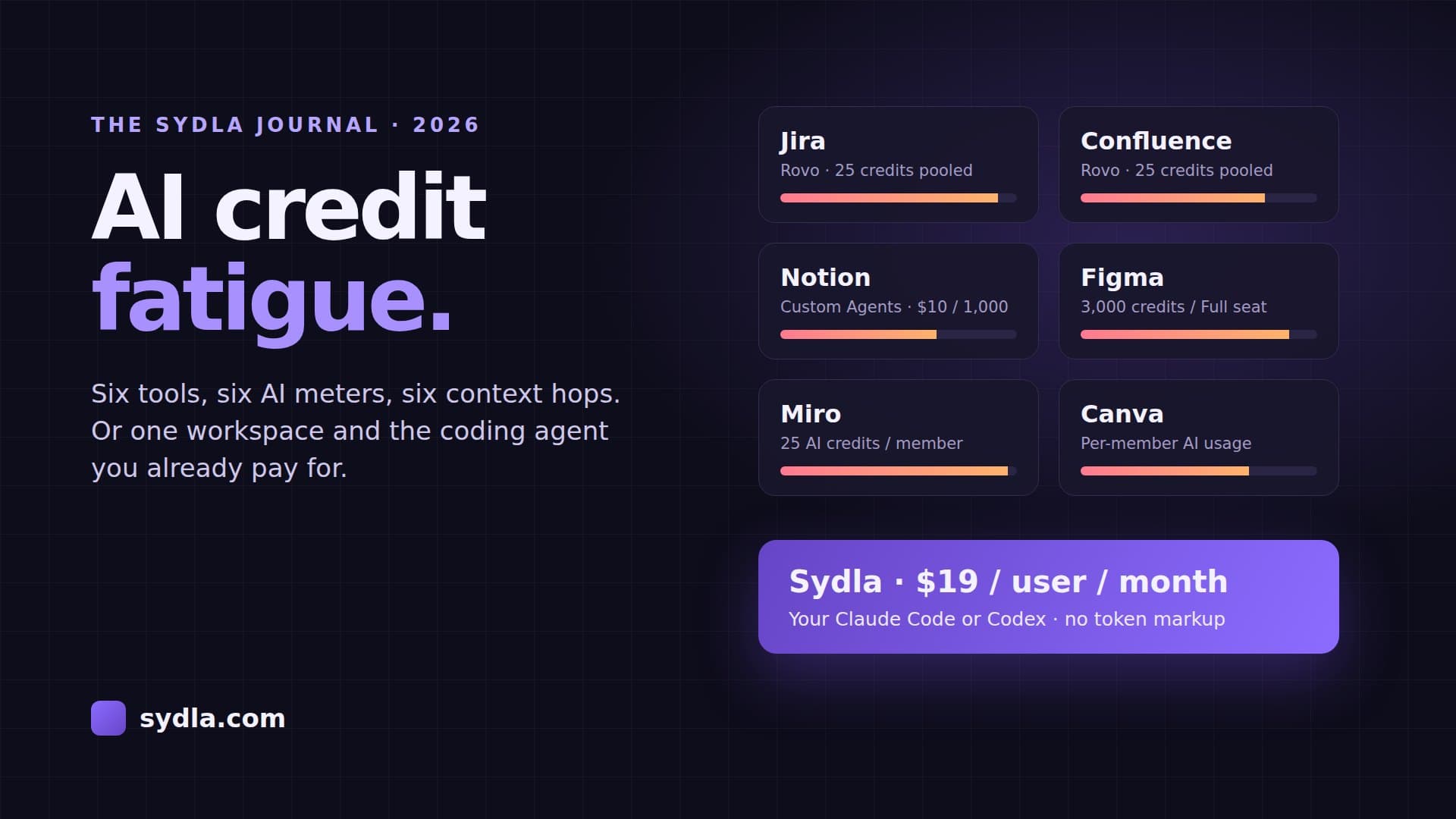
In 2026 that seventh tool has its own AI and its own meter, like the other six. Productboard put its Spark AI on pooled monthly credits in the autumn. Atlassian sells discovery per creator, and the Rovo credits that power its AI come from your Jira and Confluence plans, not from the discovery app. We have called this pattern AI credit fatigue: every tool bills its AI on its own allowance with its own reset date, and none of them pays for the coding run that ships the idea.
This post looks at that seventh tool. It covers what Jira Product Discovery and Productboard cost in November 2026, where discovery breaks down once a coding agent builds the feature, and how Sydla takes an idea to a Claude Code or Codex run without another seat or another credit pool.
What product discovery tools cost in 2026
Jira Product Discovery charges per creator. Creators are the people who create and manage ideas, fields and views. Contributors only need a free Atlassian account, and anyone with Jira or Jira Service Management access is a contributor by default. So engineers can comment and vote for free, and the bill grows with the number of product people.
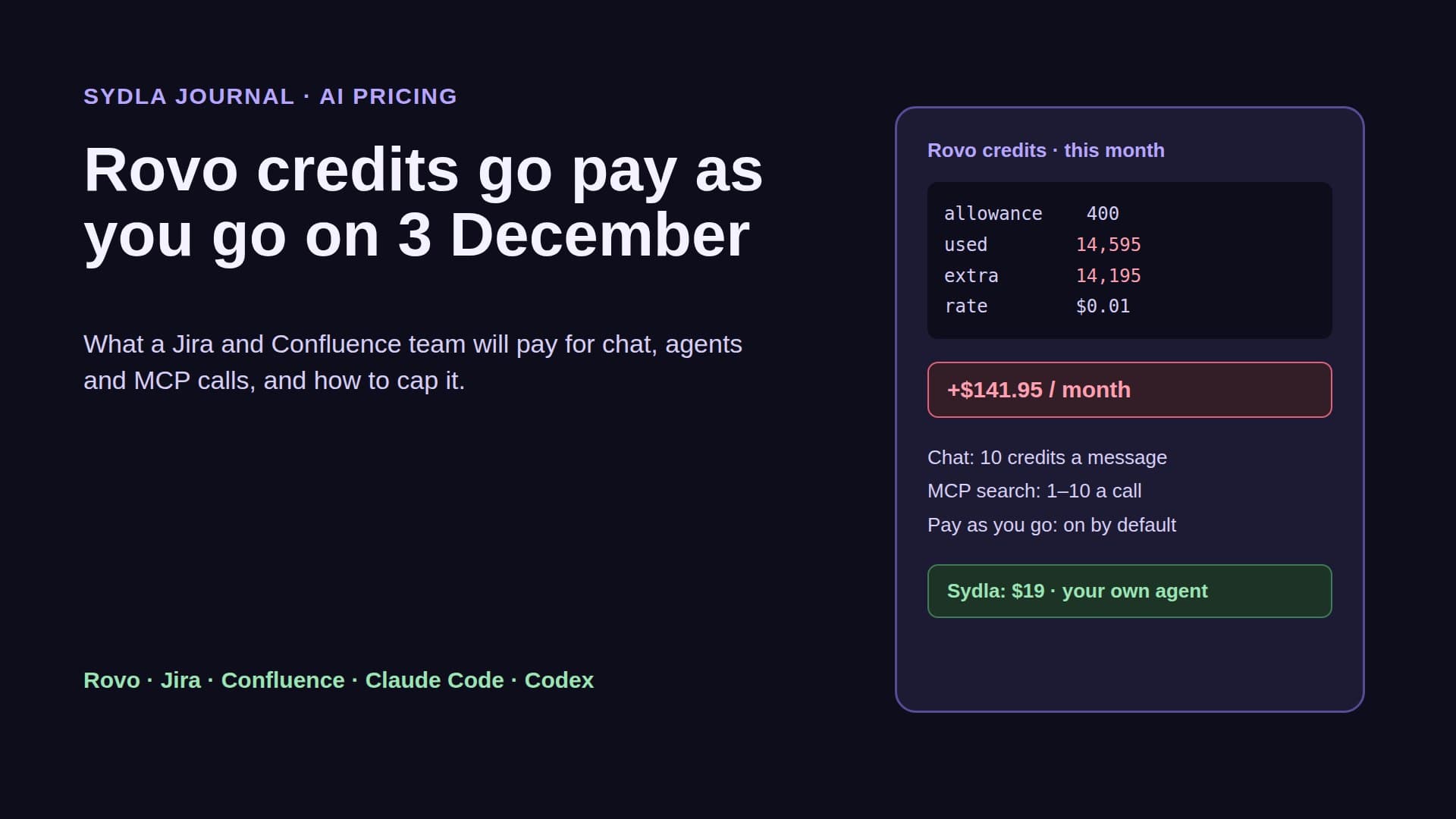
On its pricing page, monthly billing is free for up to 3 creators with 2GB of storage, $10.50 per creator on Standard and $26.25 per creator on Premium. Enterprise is annual only, through sales. Atlassian's usage page says the standalone app includes one metered allowance, Automation steps. Rovo credits are included in Jira, Confluence and the collections, not in Product Discovery on its own. When a product manager asks Rovo to summarise insights or draft an idea, the credits come from the organisation's Rovo pool. That pool moves to pay-as-you-go at $0.01 per credit on 3 December 2026, with extra usage on by default. Our Rovo credits guide covers the rate card.
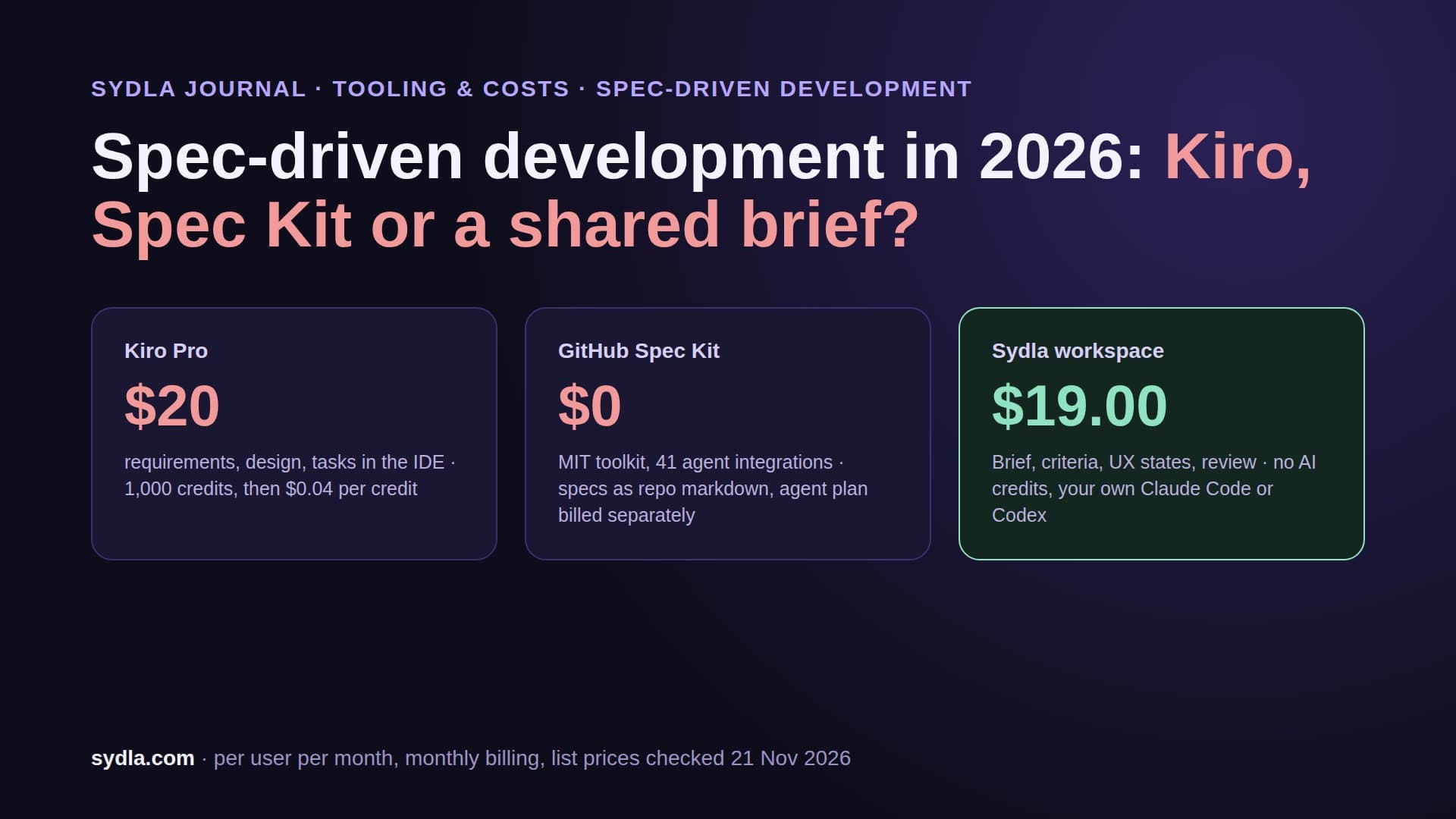
Productboard charges per maker and meters its AI. Its Spark billing FAQ, updated on 13 November 2026, lists Free at $0 with 50 credits per workspace. Plus is $25 monthly or $19 annually per maker, with 250 credits per maker. Business is $75 monthly or $59 annually, with 500 per maker. Enterprise is custom, with 1,500 base credits plus 800 per maker. Credits are pooled, they expire on the monthly renewal date, and on self-serve plans every AI feature stops when the pool is empty. Top-ups cost $5 per 50 credits on monthly plans. The FAQ also lists typical task costs: a product brief is about 25 credits, a spec 29, competitive research 33 and roadmap planning 53.
The full stack, priced per seat and per meter
Here is the six-tool stack with a discovery tool on top, at monthly list prices in USD before tax. The last column says where each tool sits on the road from idea to merged pull request.
| Tool and plan | Price per user | AI credits and agent access in 2026 | Role from idea to pull request |
|---|---|---|---|
| Jira Product Discovery Standard | $10.50 | Per creator, contributors free; standalone app includes Automation steps, AI draws on the org Rovo pool | Ideas, scoring, roadmap |
| Productboard Plus | $25.00 | Per maker ($19 yearly); 250 pooled Spark credits per maker, expire monthly, AI stops at zero | Ideas, feedback, briefs |
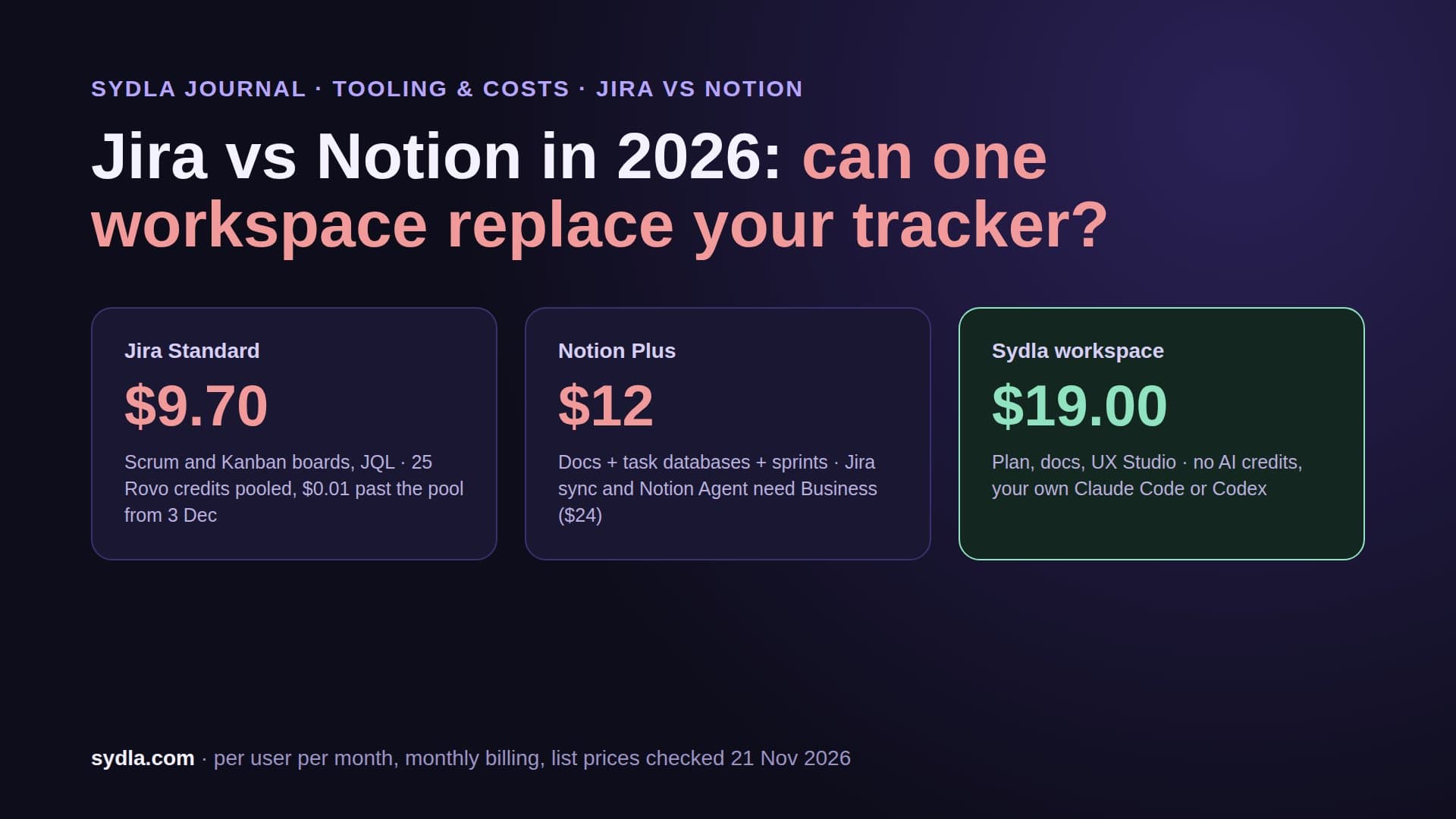
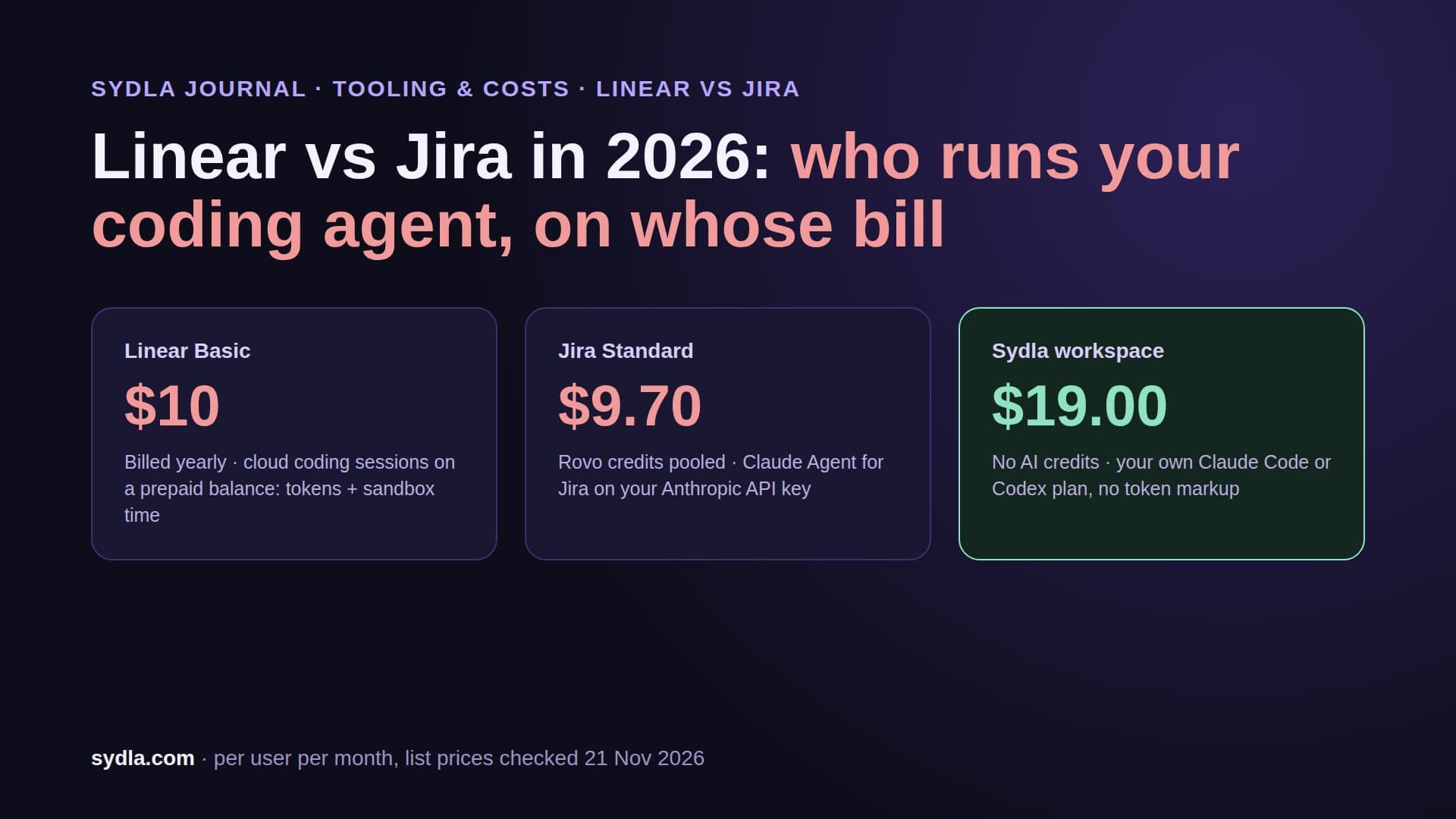
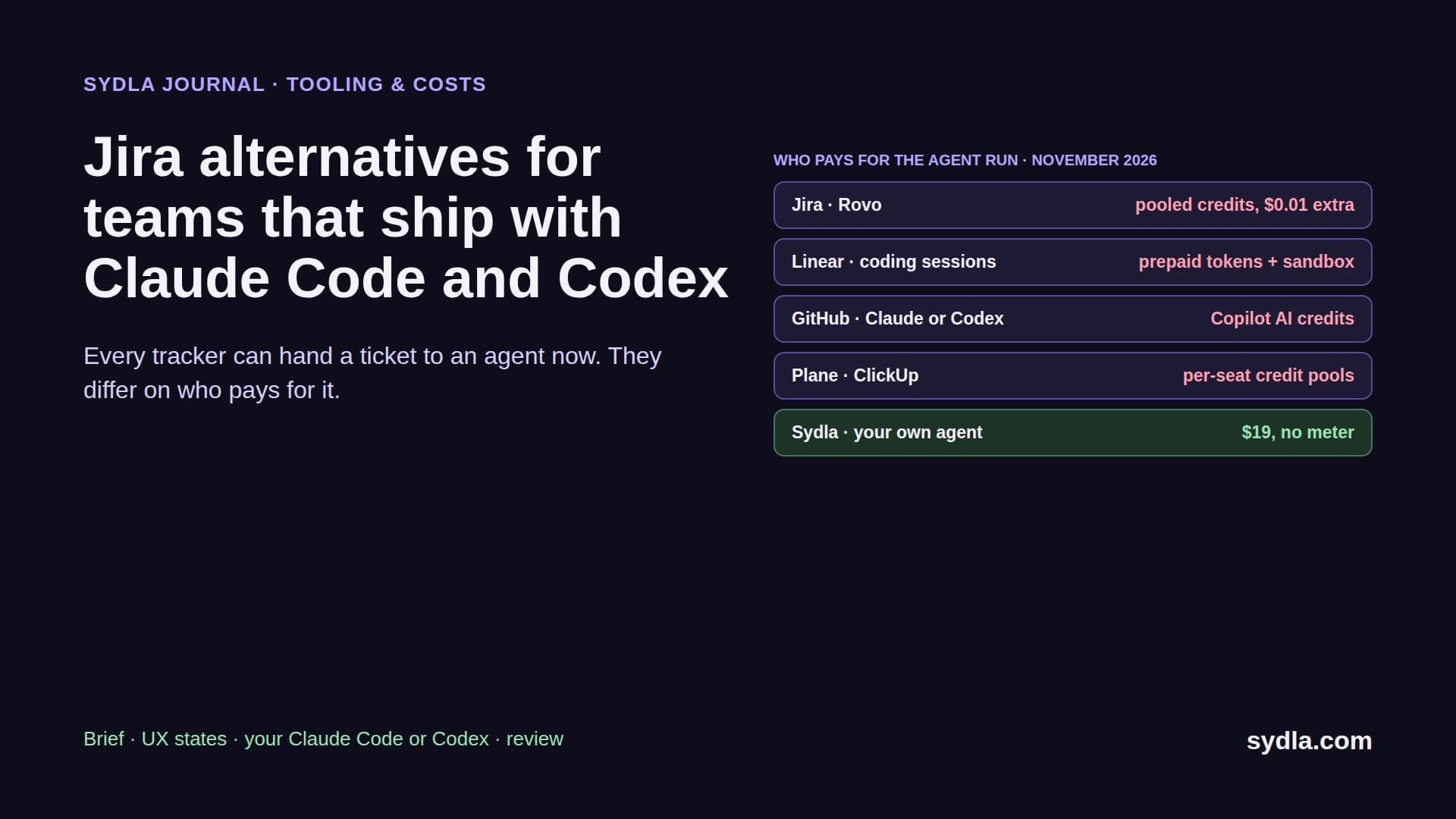
| Jira Standard | $9.70 | 25 Rovo credits per user, pooled; pay-as-you-go at $0.01 per credit from 3 Dec 2026 | Delivery tickets |
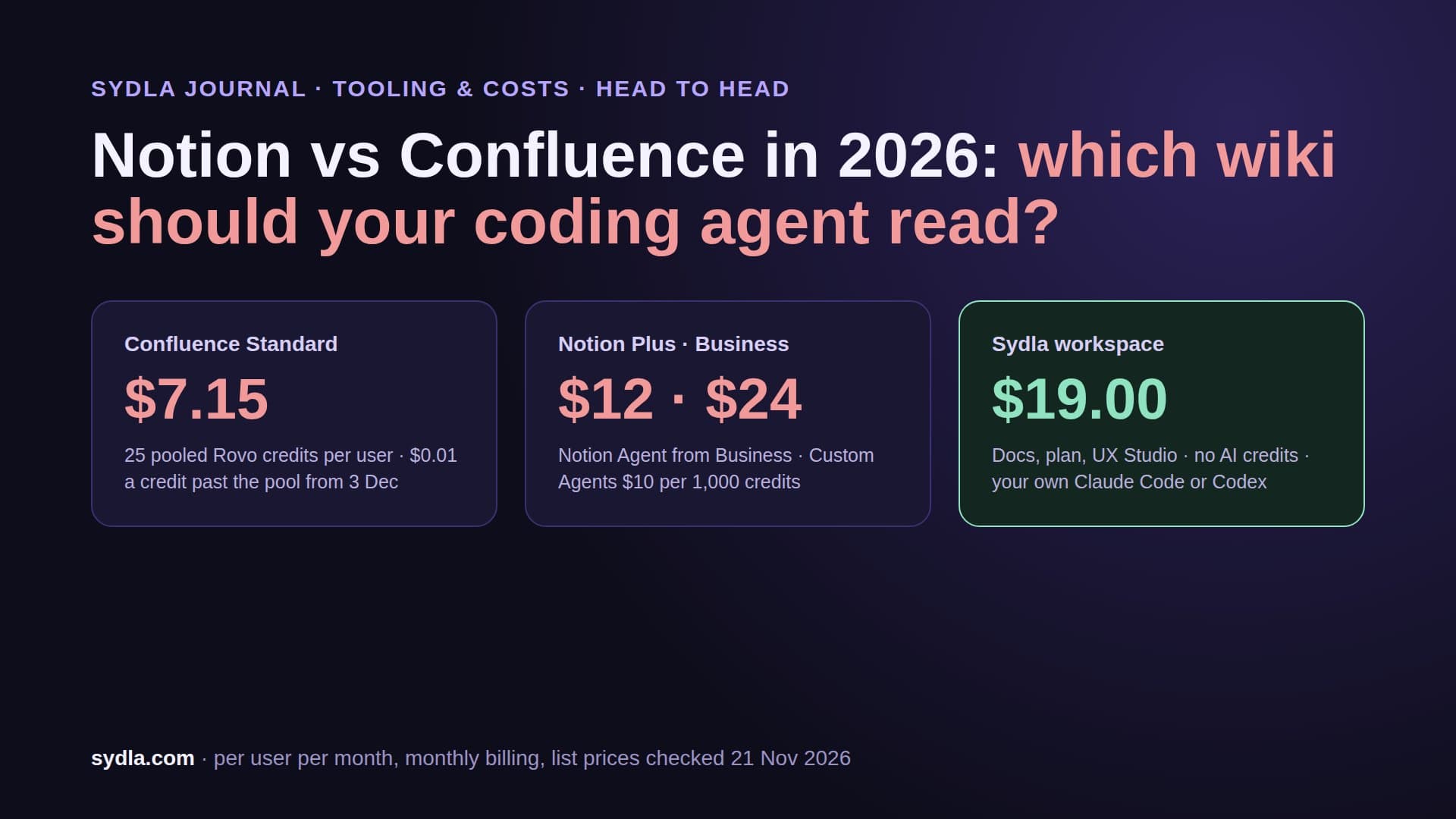
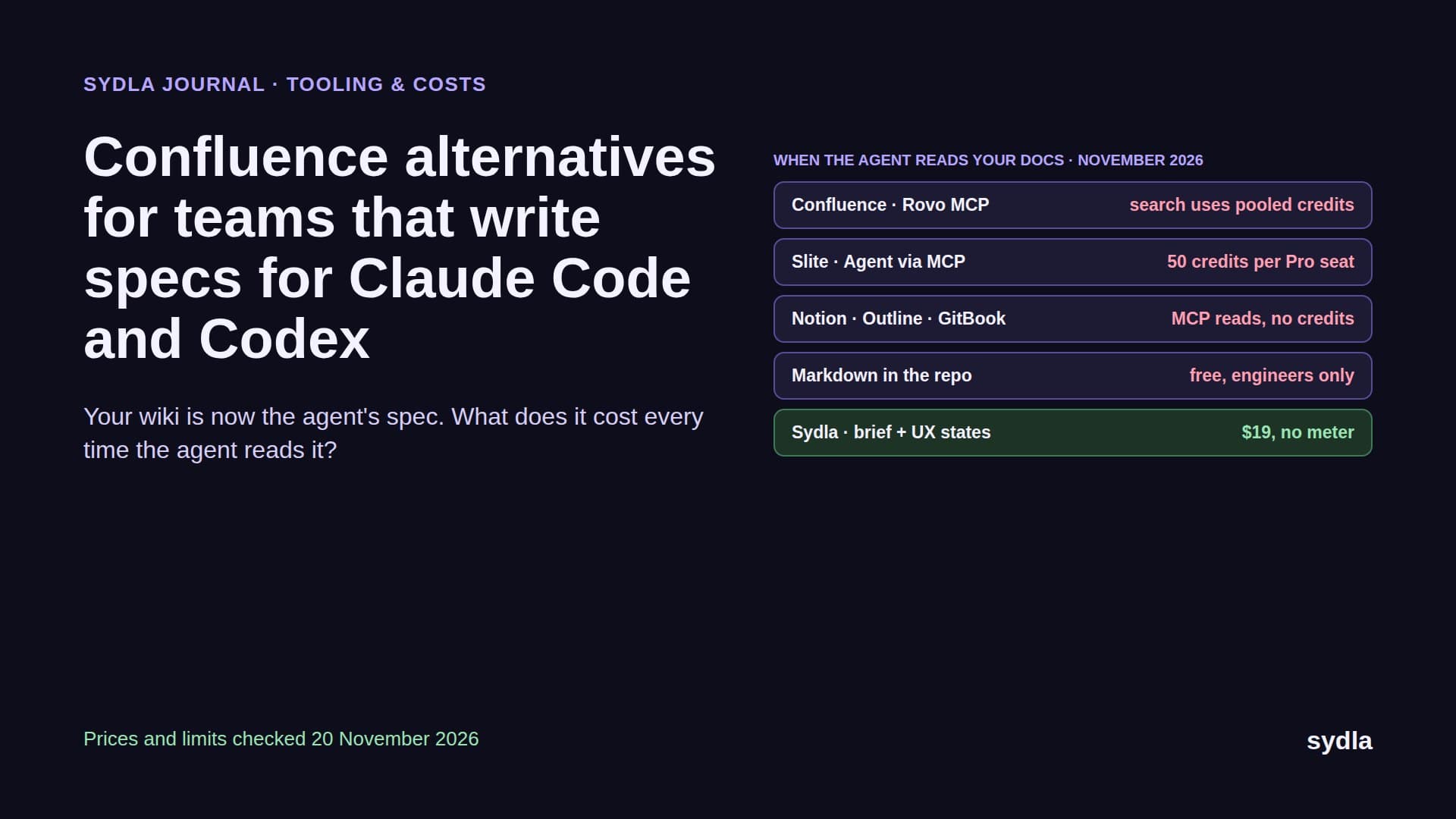
| Confluence Standard | $7.15 | Same Rovo pool; MCP enriched search 1 to 10 credits per call | Specs and decisions |
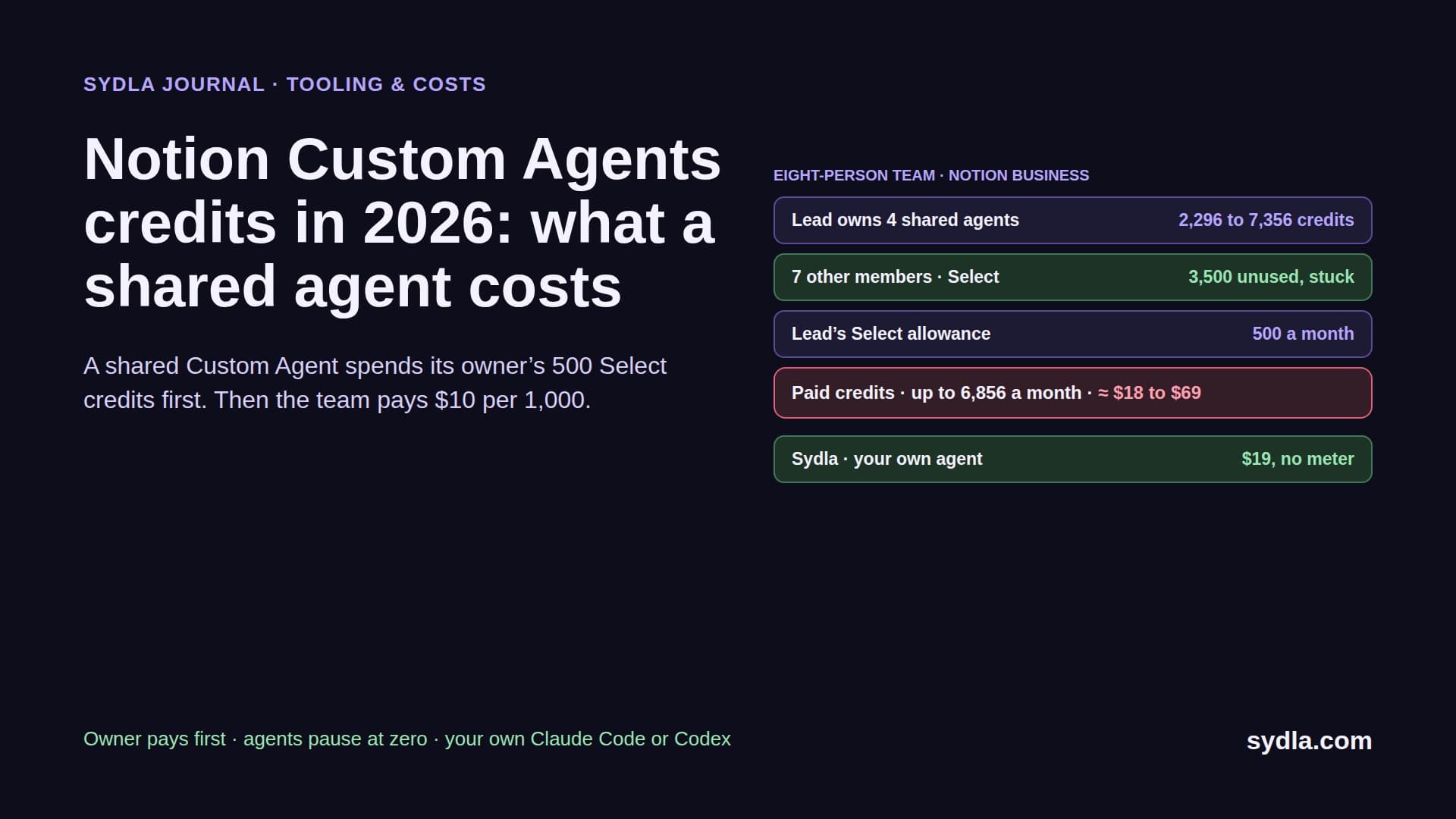
| Notion Plus | $12.00 | Custom Agents on Business and Enterprise; extra usage $10 per 1,000 credits | Research notes |
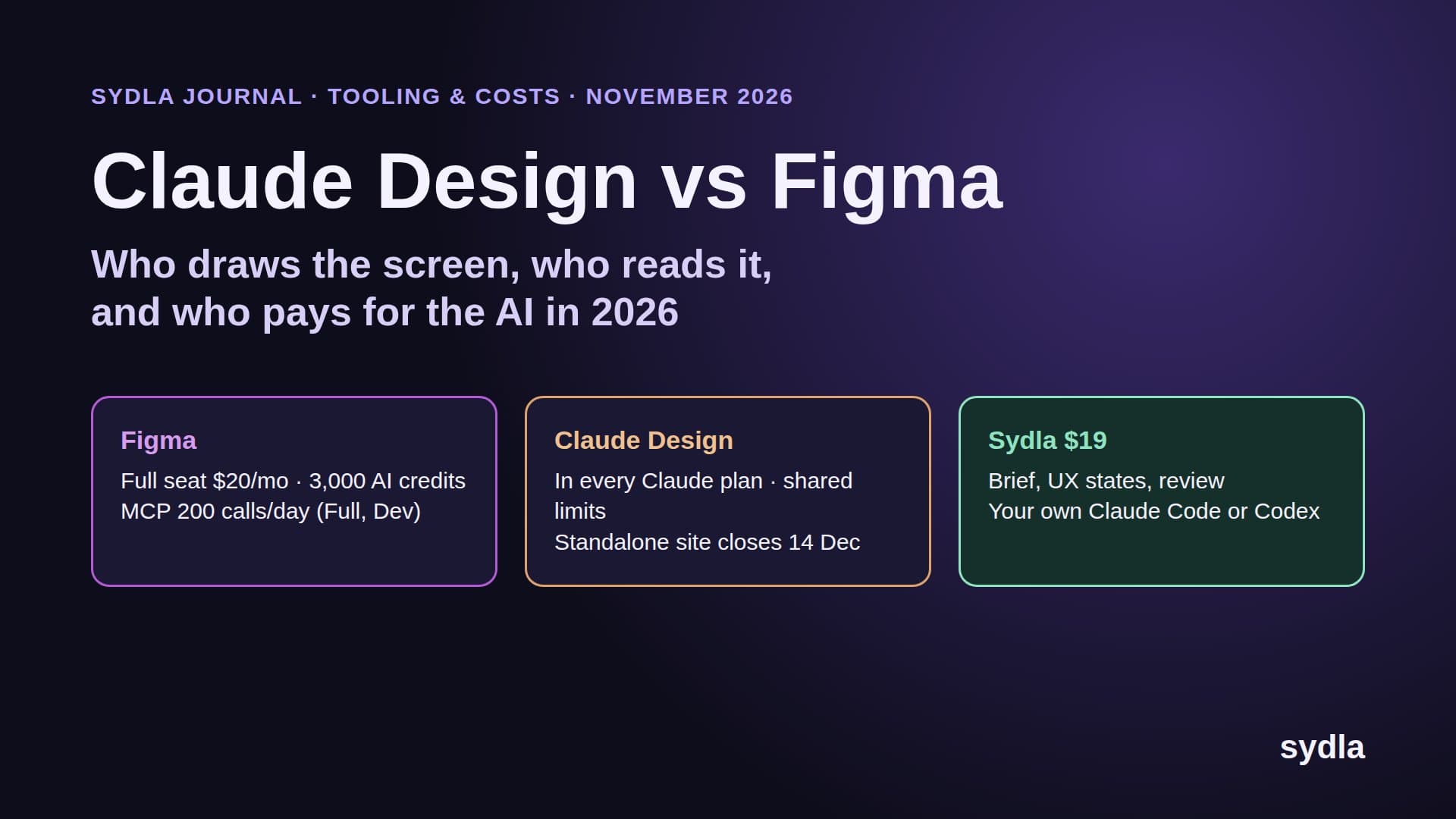
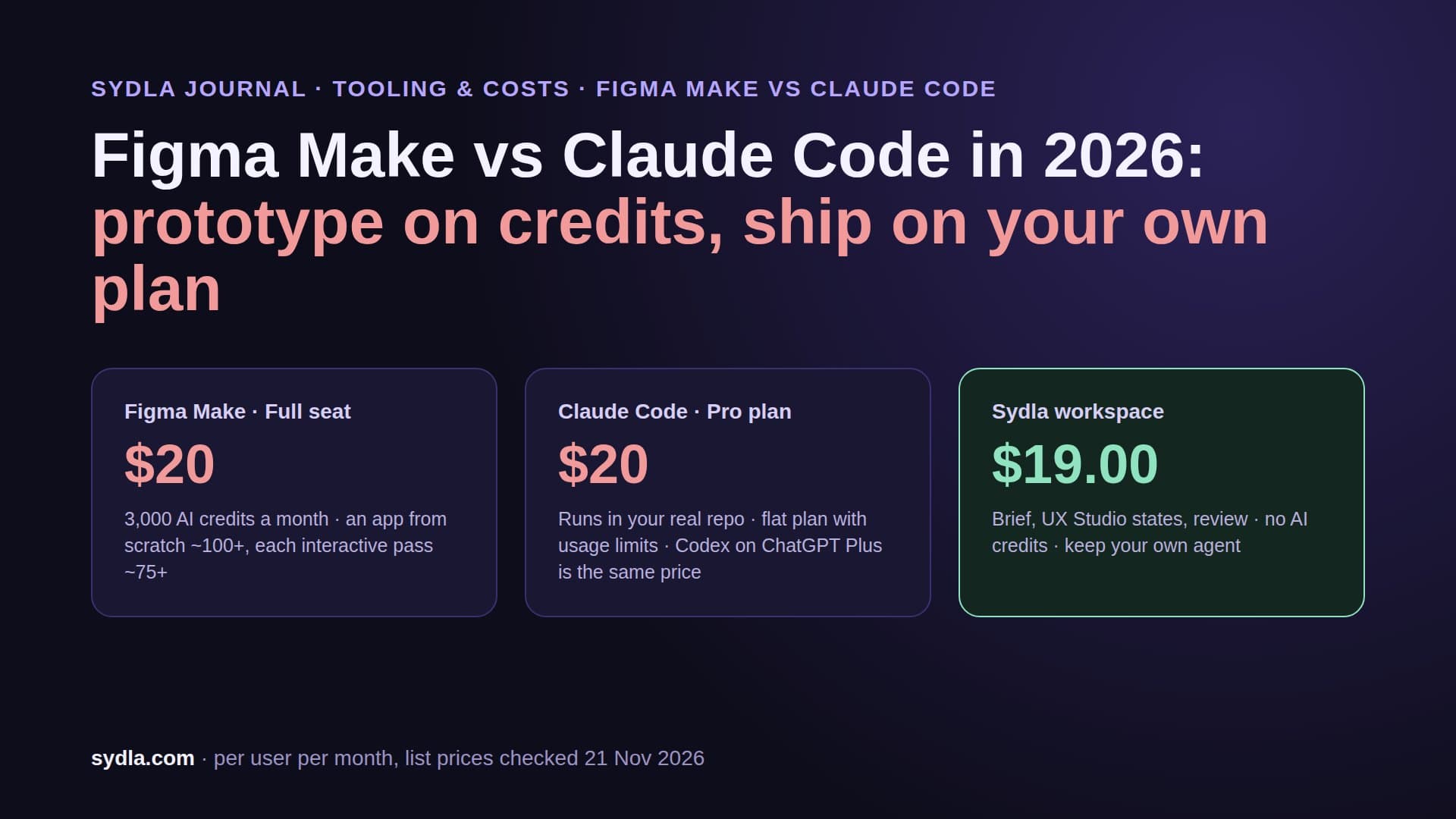
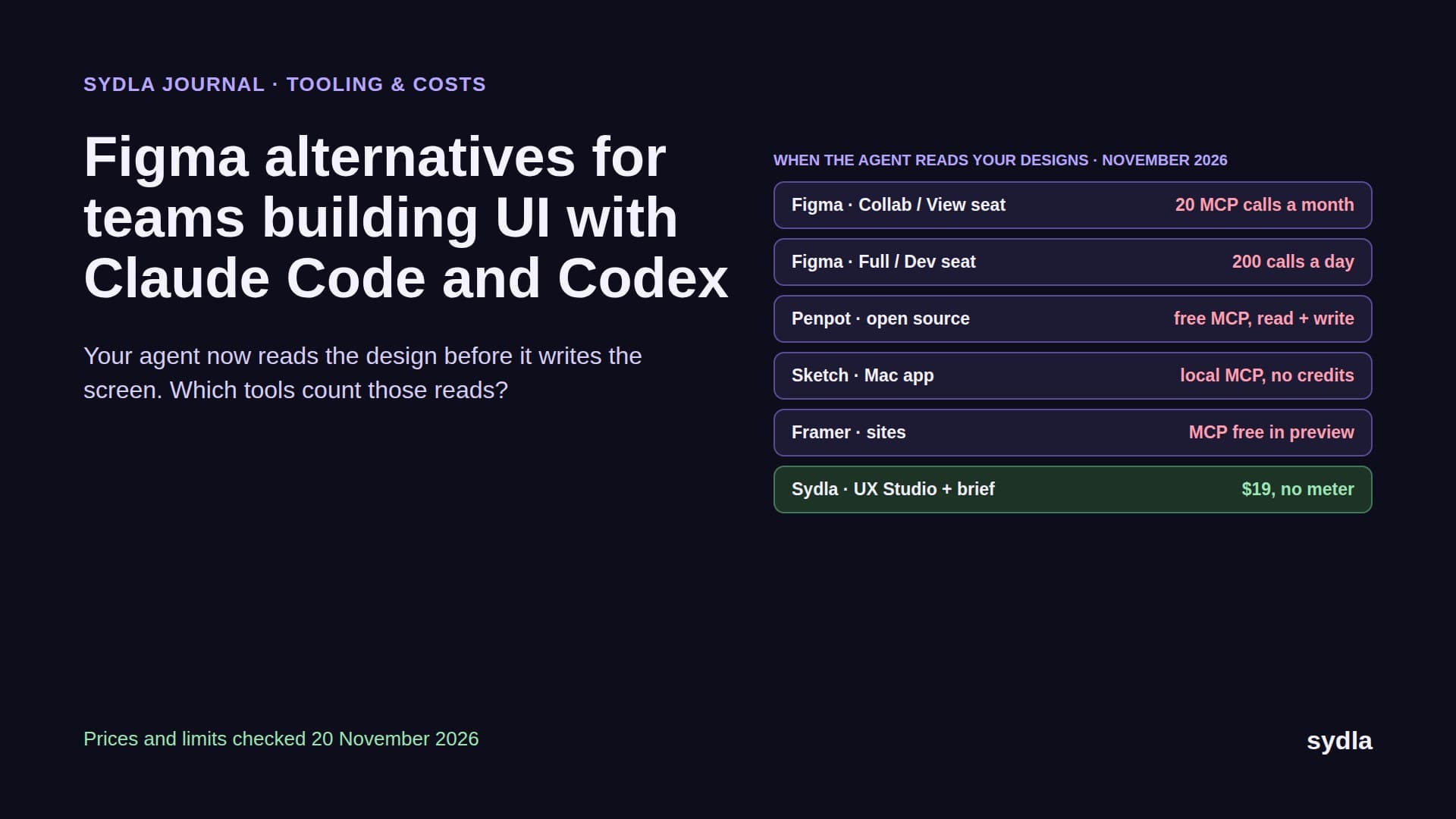
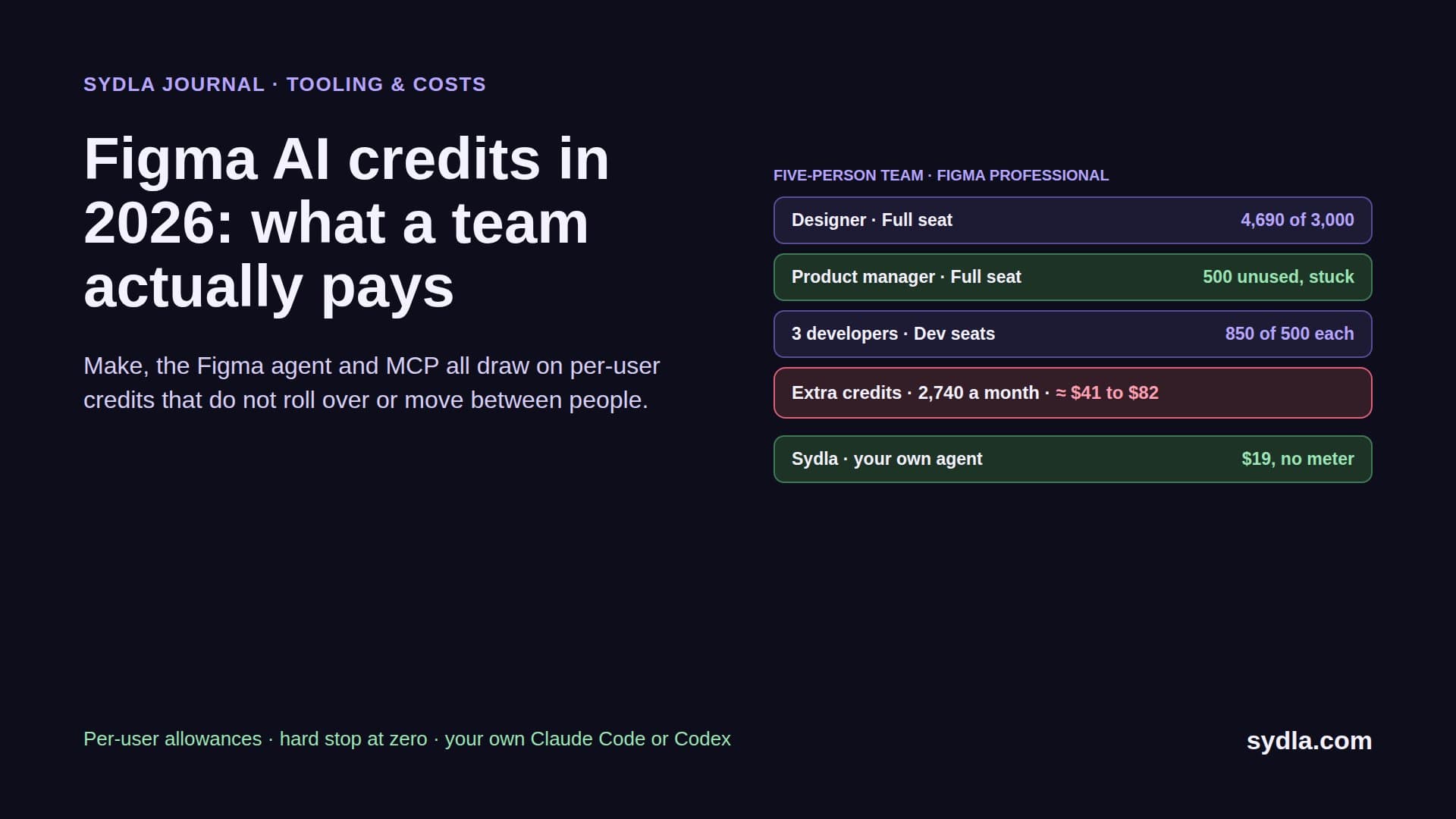
| Figma Professional Full | $20.00 | 3,000 AI credits per Full seat, not shared; MCP 200 reads a day on Full and Dev seats | Screen states |
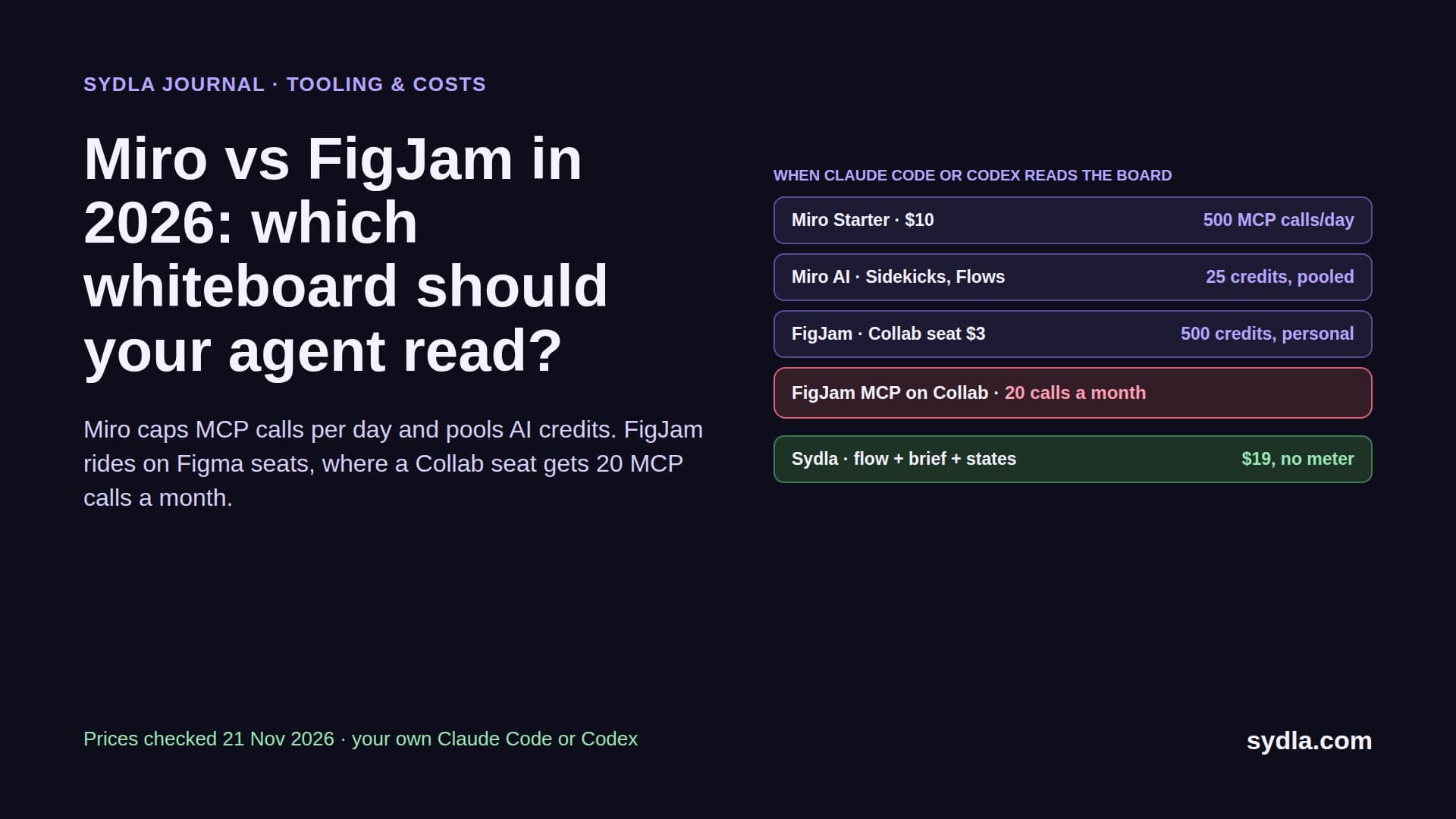
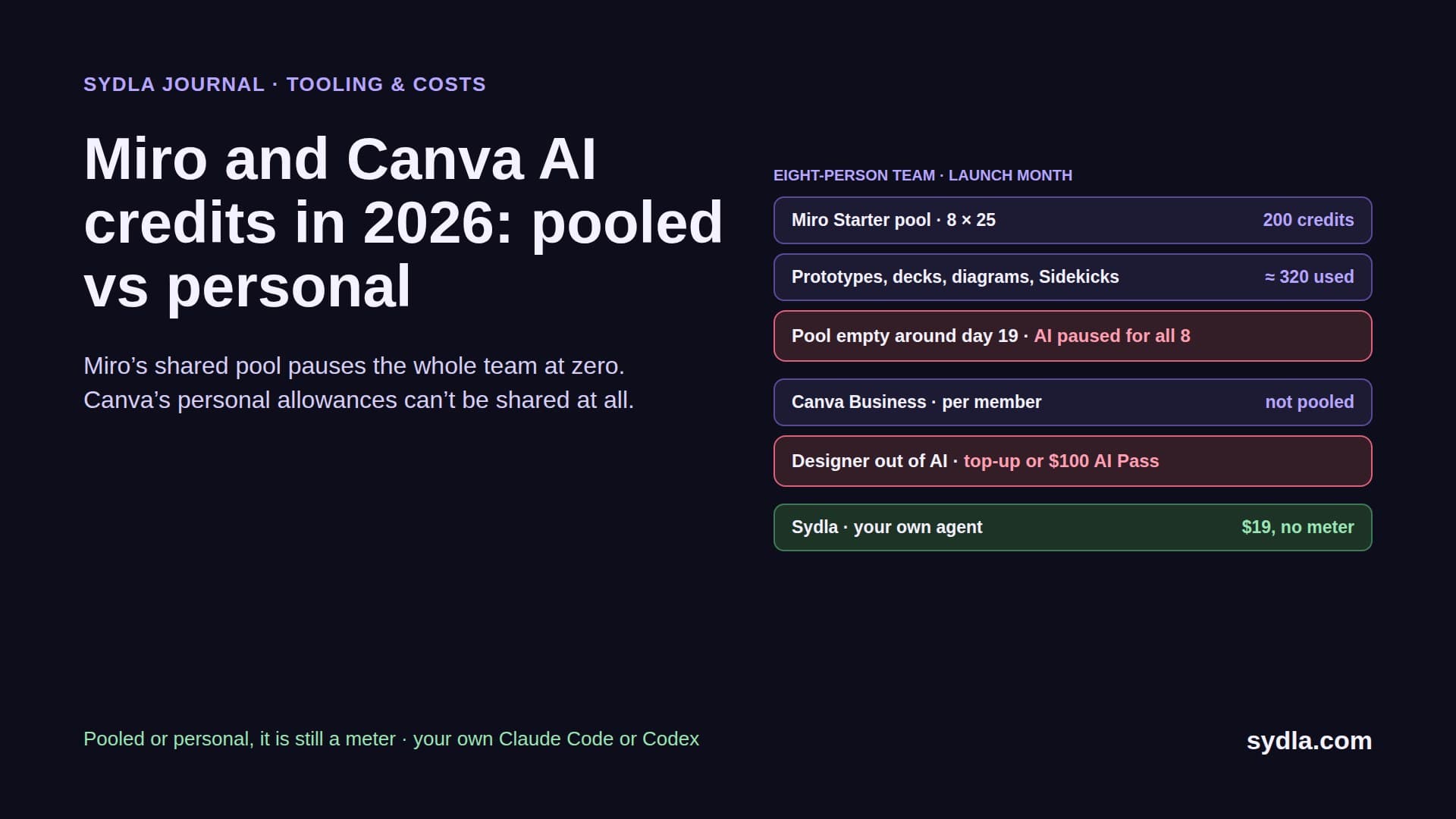
| Miro Starter | $10.00 | 25 AI credits per license, pooled; AI pauses for the team at zero | Discovery workshops |
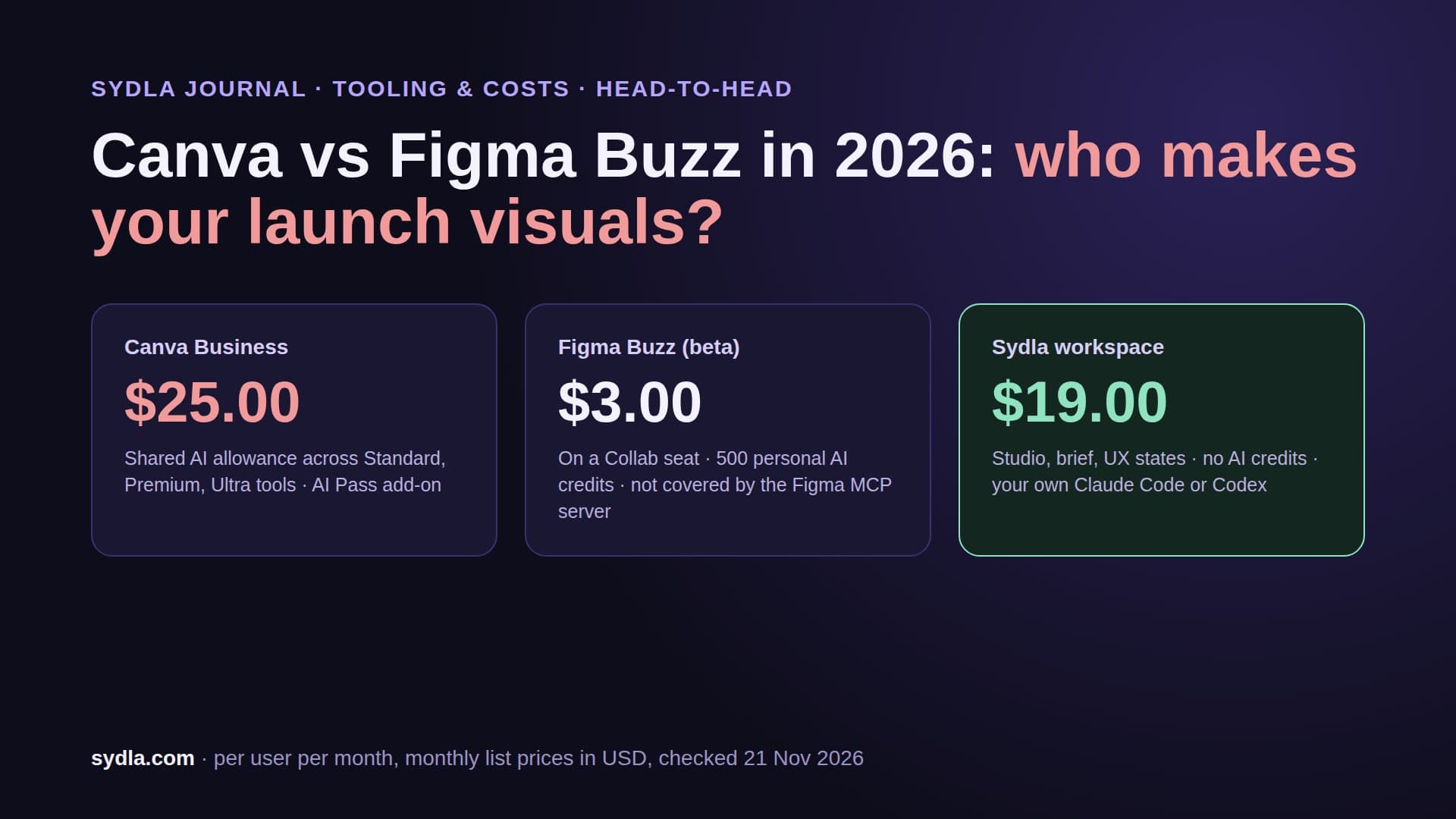
| Canva Business | $25.00 | Separate AI allowance per plan tier | Launch visuals |
| Six tools + JPD Standard | $94.35 | Seven bills, six AI meters, plus the coding agent plan | Idea to PR across seven tools |
| Sydla workspace | $19.00 | No Sydla AI credits; your own Claude Code or Codex plan, zero token markup | Idea to PR in one workspace |
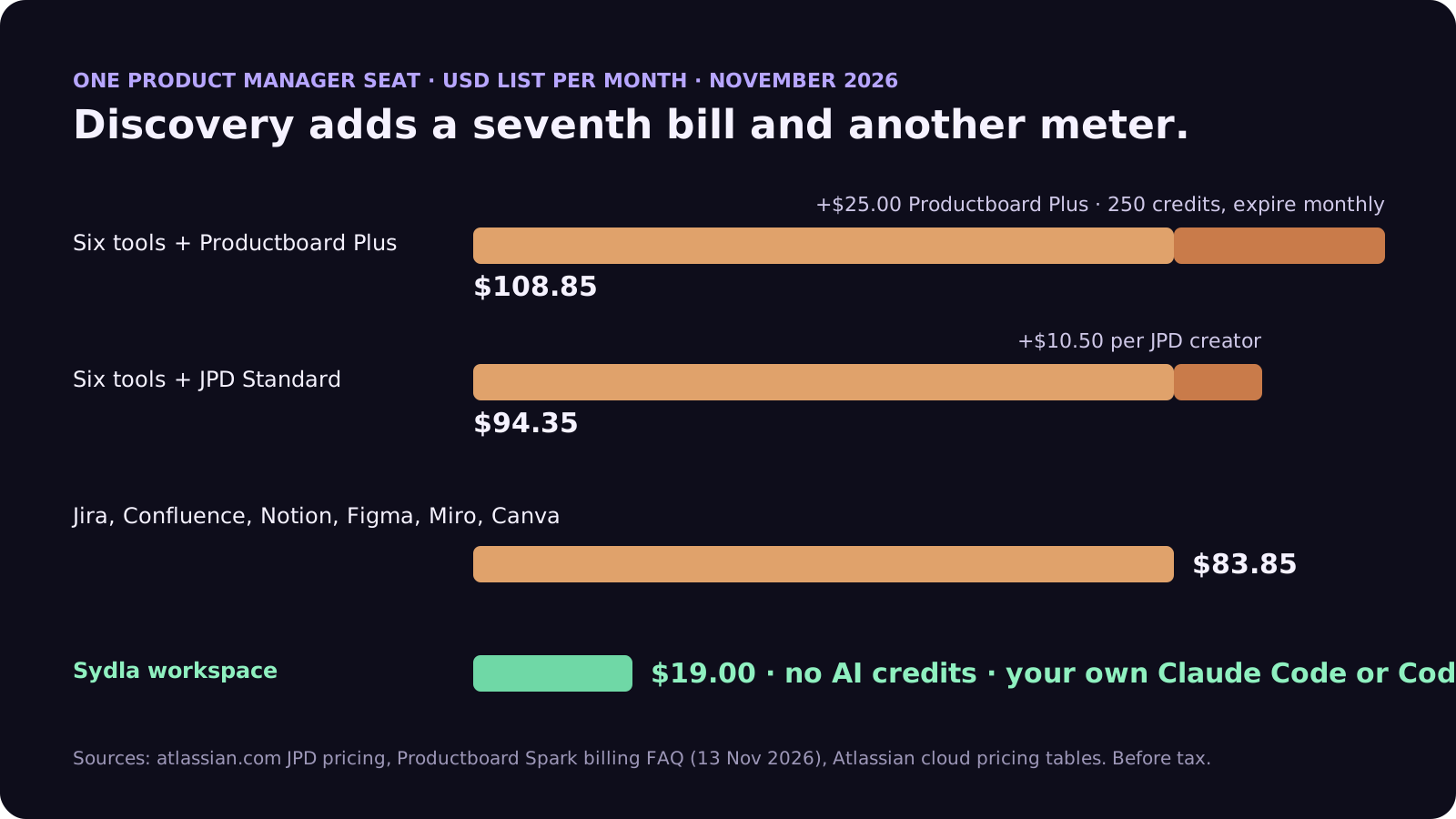
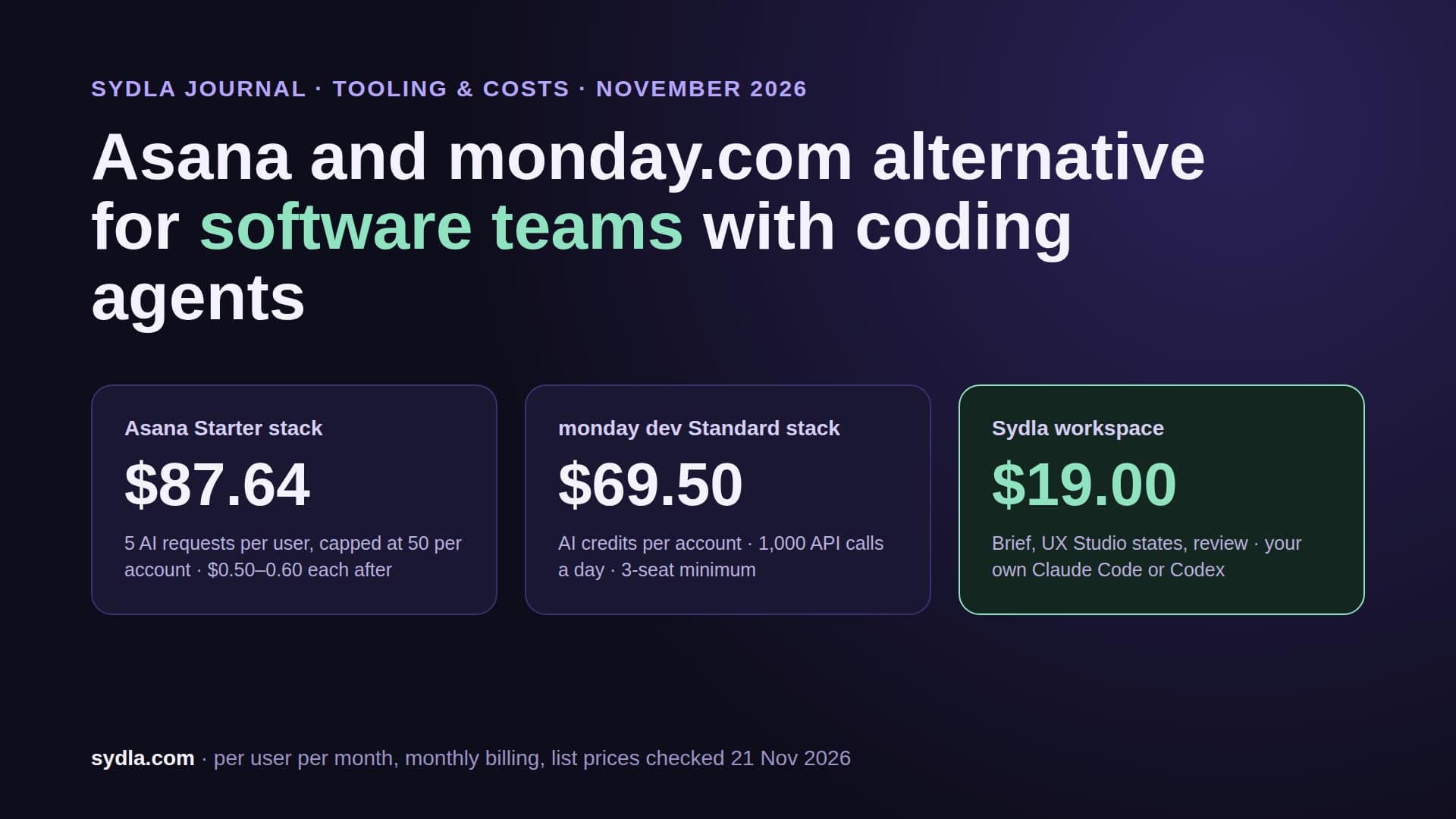
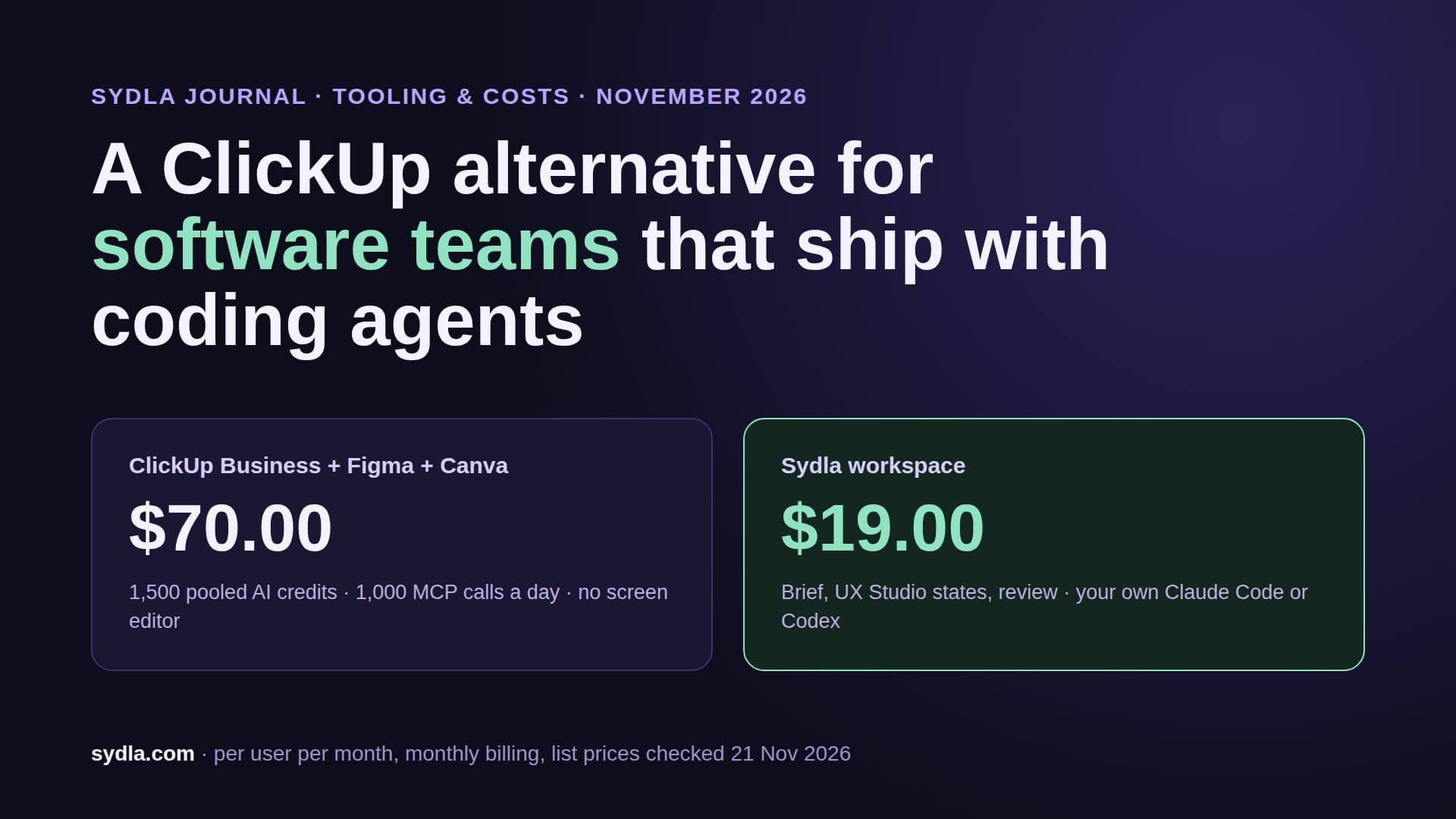
Without the discovery tool, the gap is already $64.85 per user per month. With Jira Product Discovery Standard on a product manager's seat, that person's stack reaches $94.35. With Productboard Plus billed monthly it reaches $108.85. The comparison hub shows, tool by tool, where each one still earns its place.
Where discovery breaks once an agent builds the feature
Discovery tools were built for a world where a person picks up the prioritised idea and writes the ticket. In 2026 a coding agent often picks it up, and it needs a different handoff. The agent needs to know why the idea won, which constraints the team agreed and what done means, in a form it can read and test against.
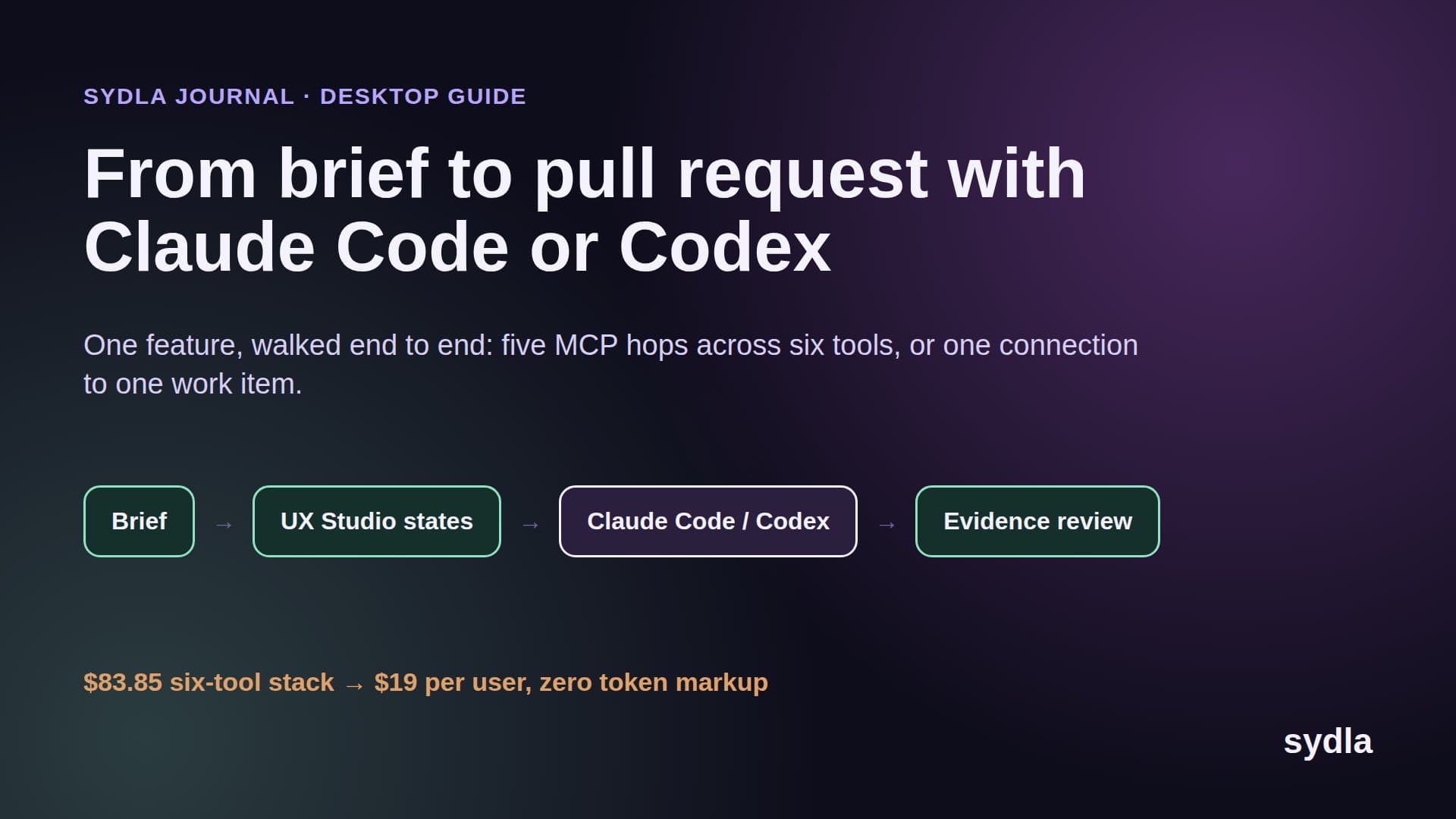
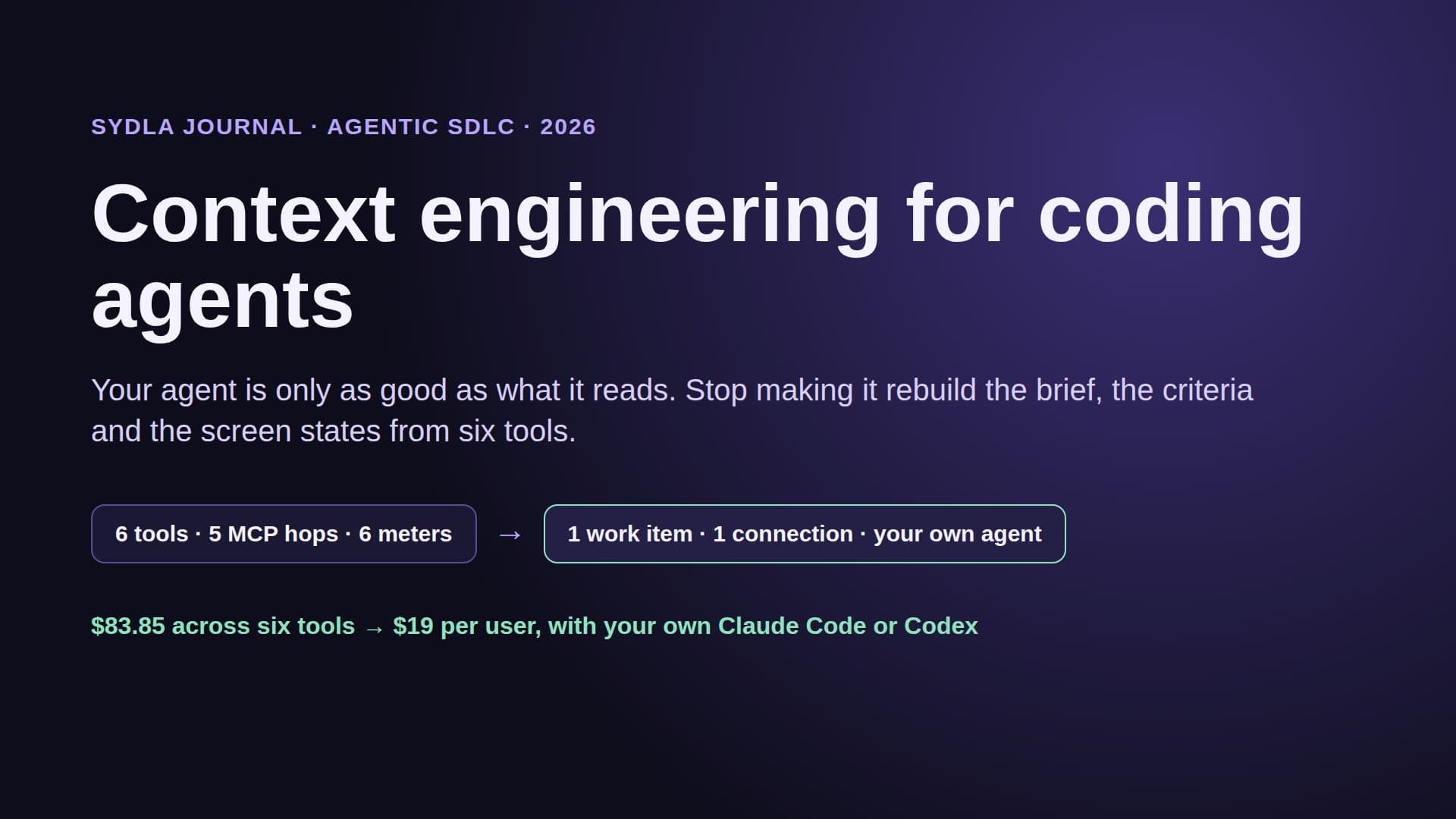
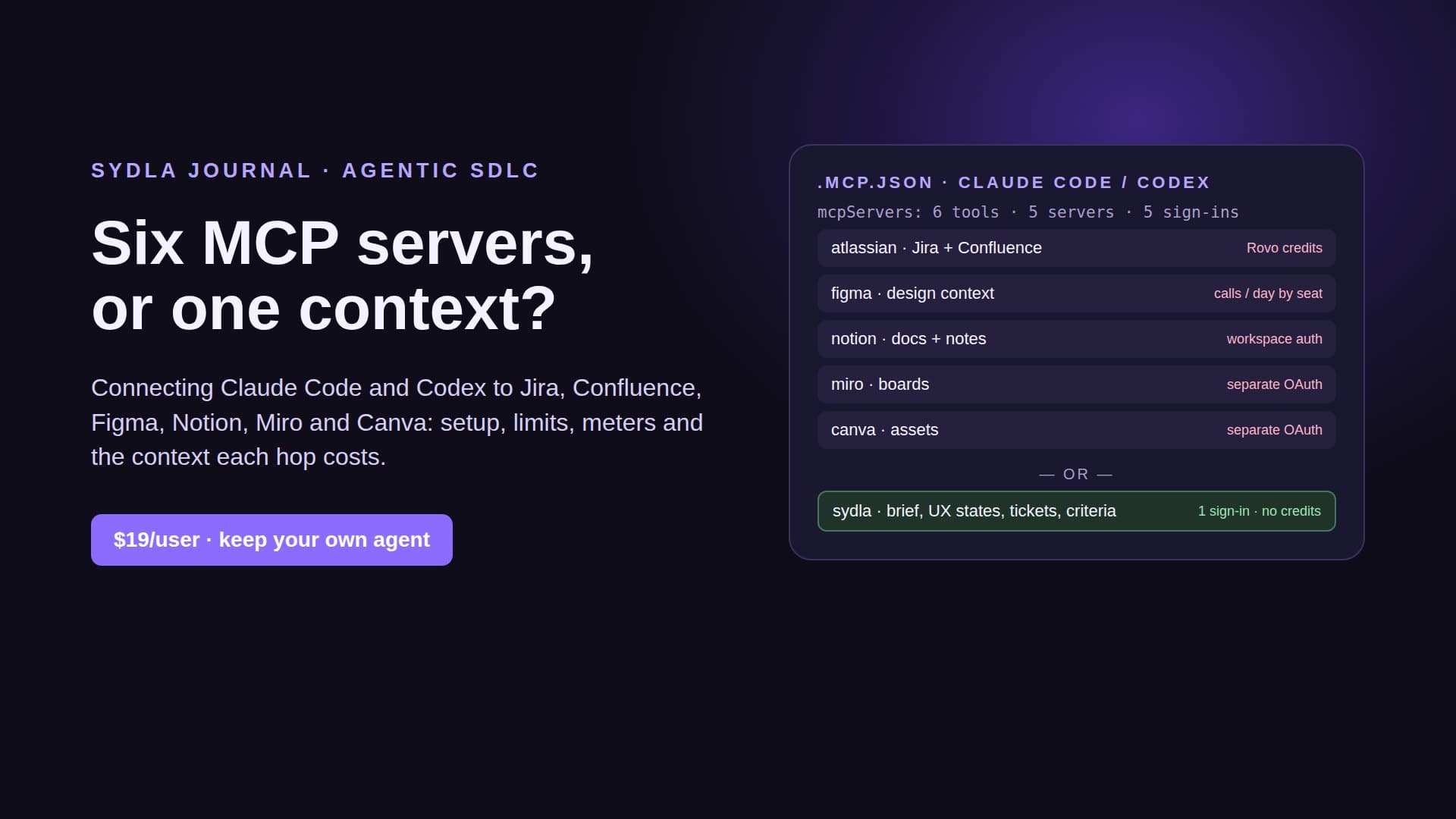
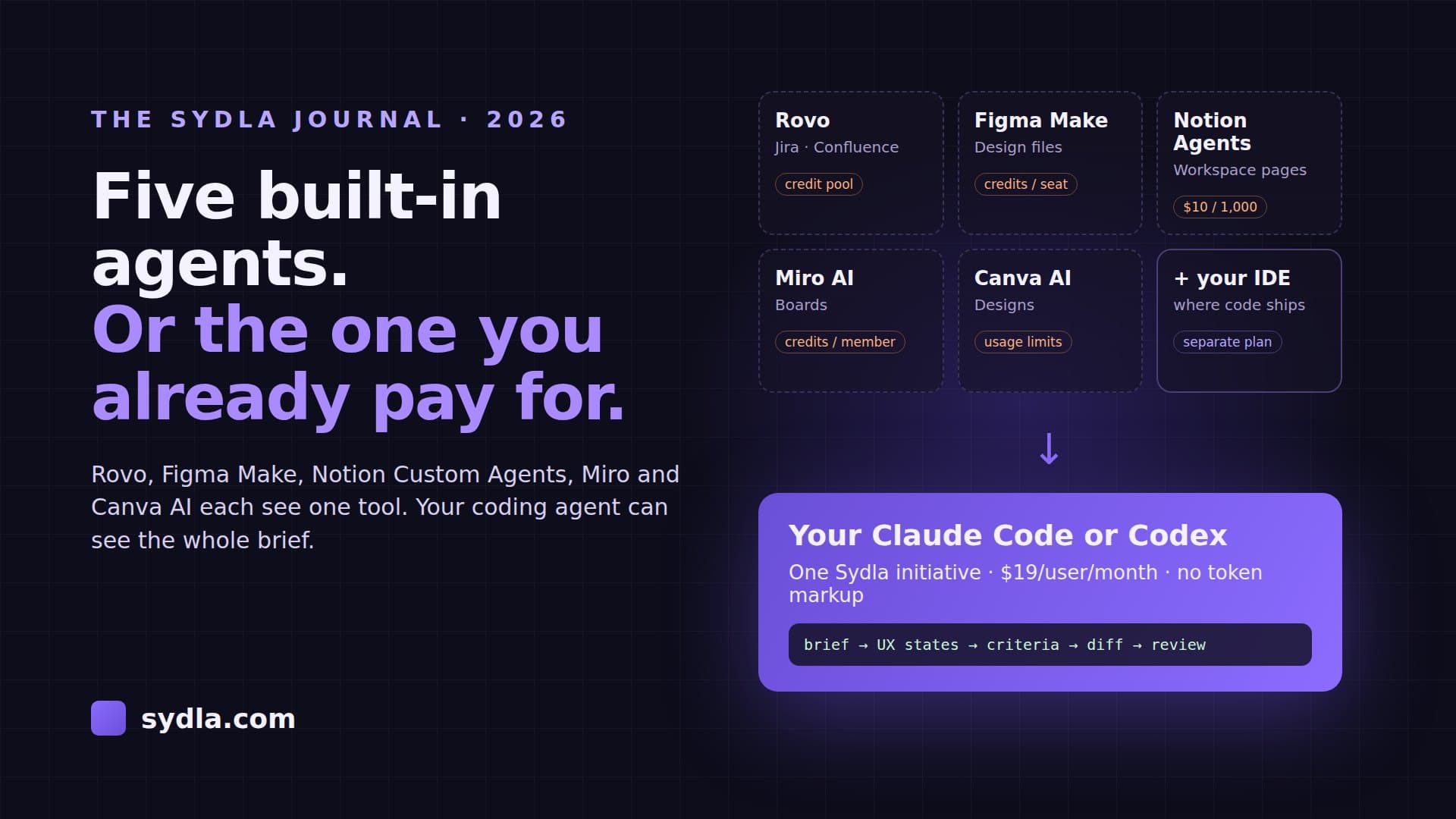
On a seven-tool stack that handoff runs through four copies. The idea and its insights live in the discovery tool. Someone writes a delivery ticket in Jira and links back. The spec goes to Confluence, the screens to Figma. When Claude Code or Codex starts the run, it reaches each copy through a separate MCP server, each with its own login, rate limit and meter, and none is sure to hold the latest version. We counted five such hops for one small feature in our brief-to-pull-request walkthrough.
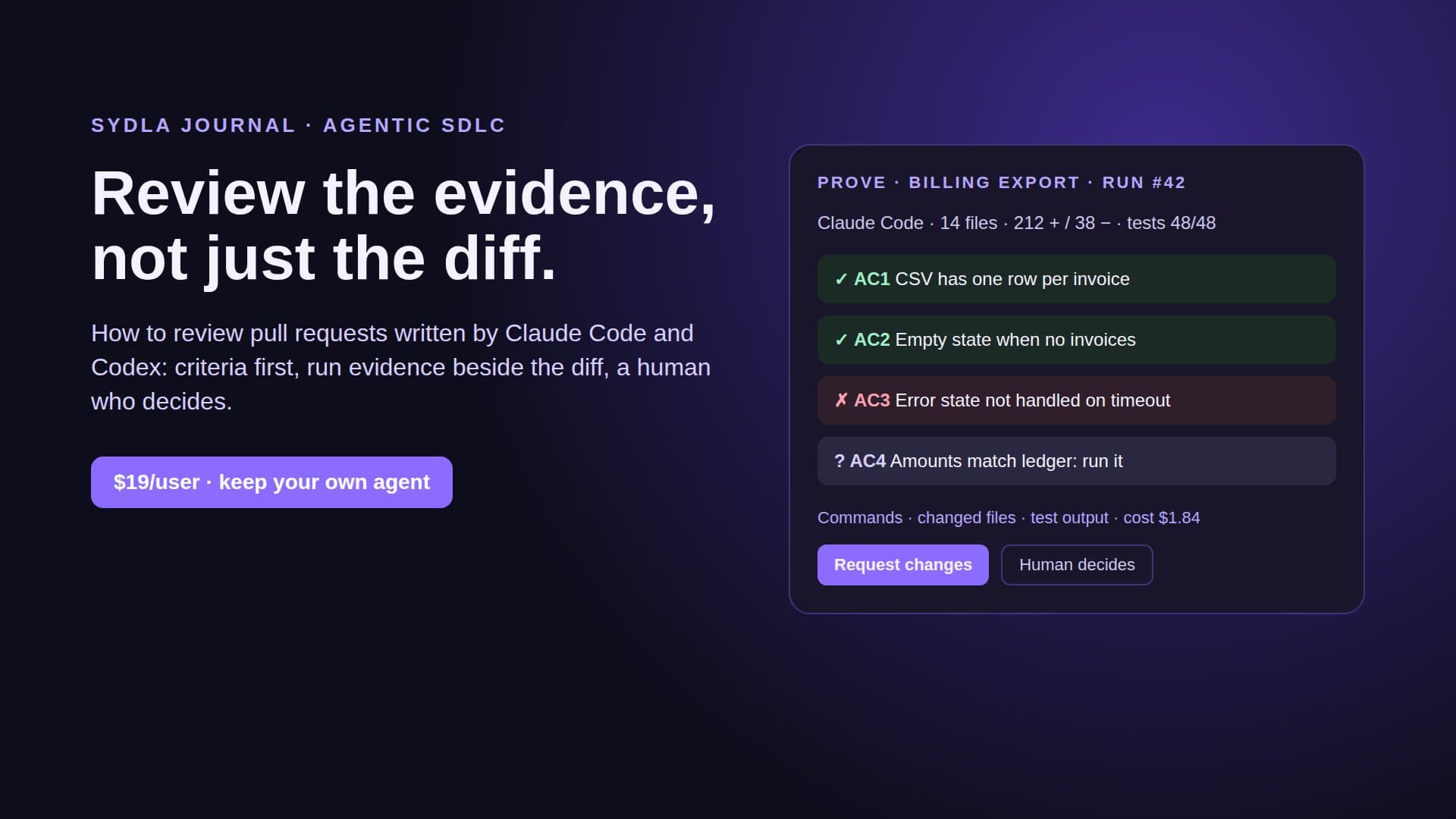
The score that made the idea win rarely reaches the agent either. Reach, impact and effort fields are useful for ranking, but they are not acceptance criteria. An agent that gets a title, a link and a score will build something plausible, and the reviewer then rebuilds the intent from the diff. Our guide to acceptance criteria for AI coding agents explains why numbered, testable criteria are the part that has to survive the handoff.
Idea to pull request in one workspace
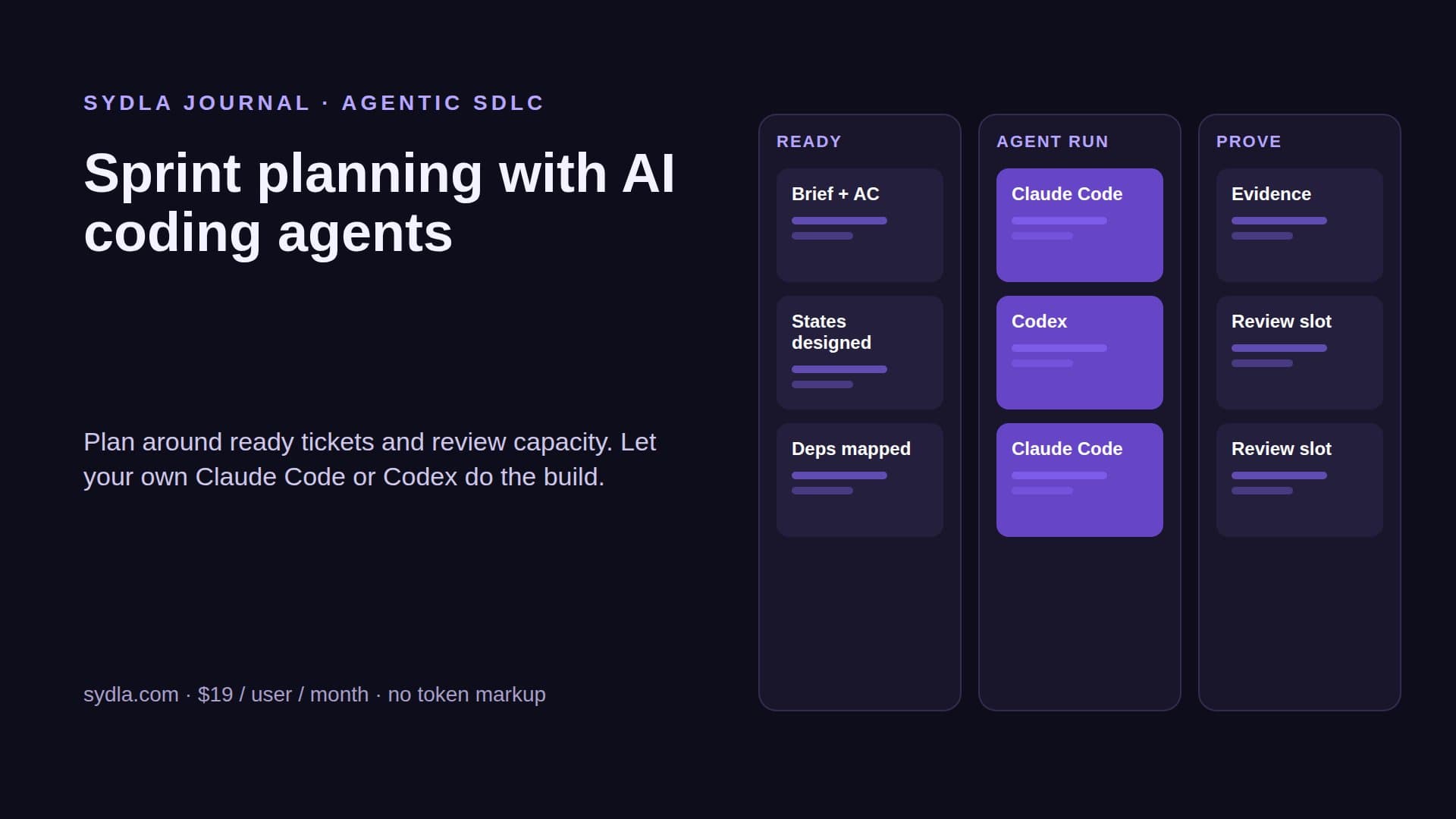
In Sydla, discovery and delivery share one model: a workspace holds projects, projects plan initiatives, initiatives break into epics and tickets. An initiative starts from a goal, not a ticket. It has an owner, a status and a target date, and it links the documents that justify it: the study, the spec, the decisions. The Planning view shows every initiative on a roadmap across projects, which covers the roadmap job that discovery tools are bought for.
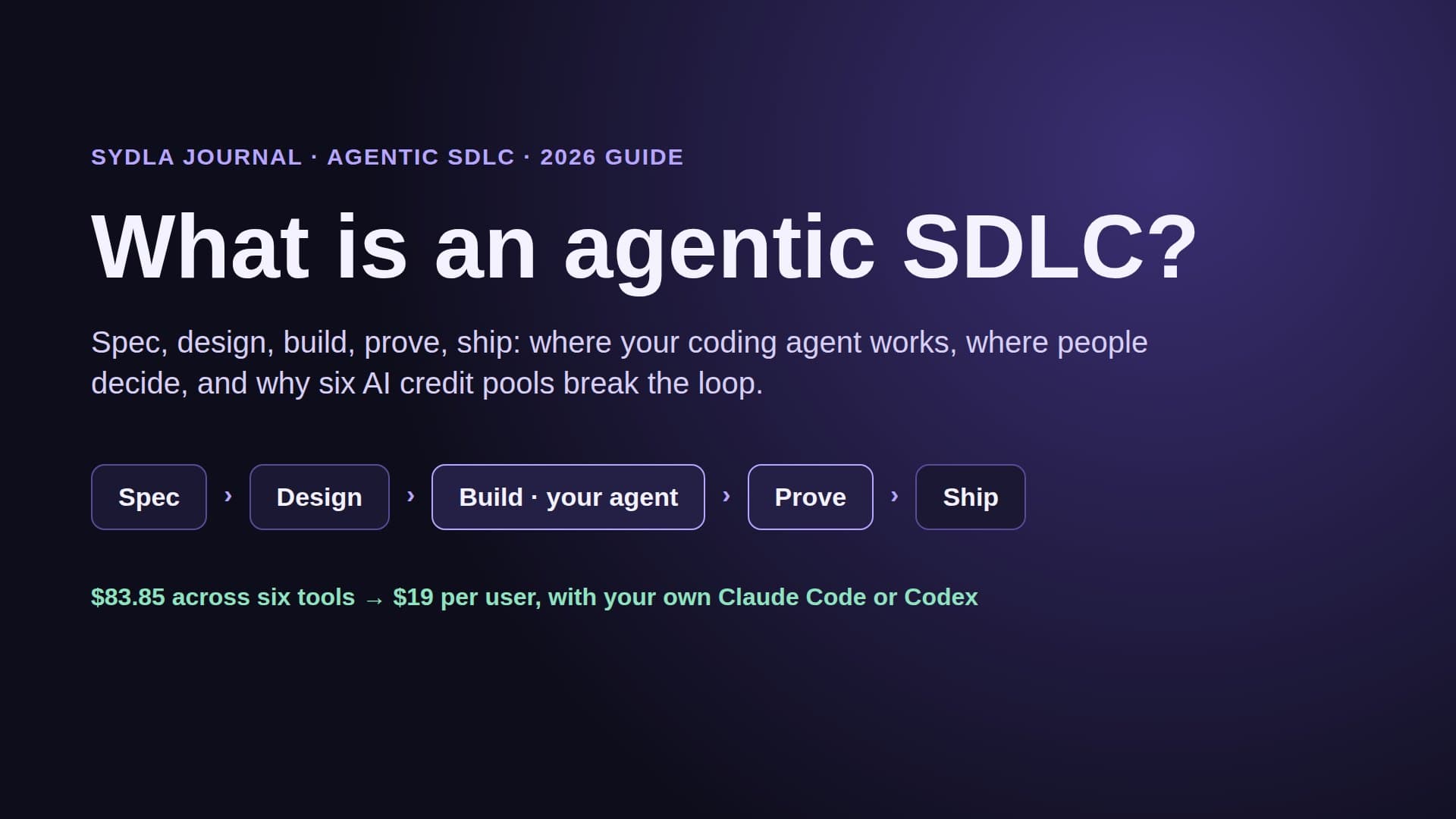
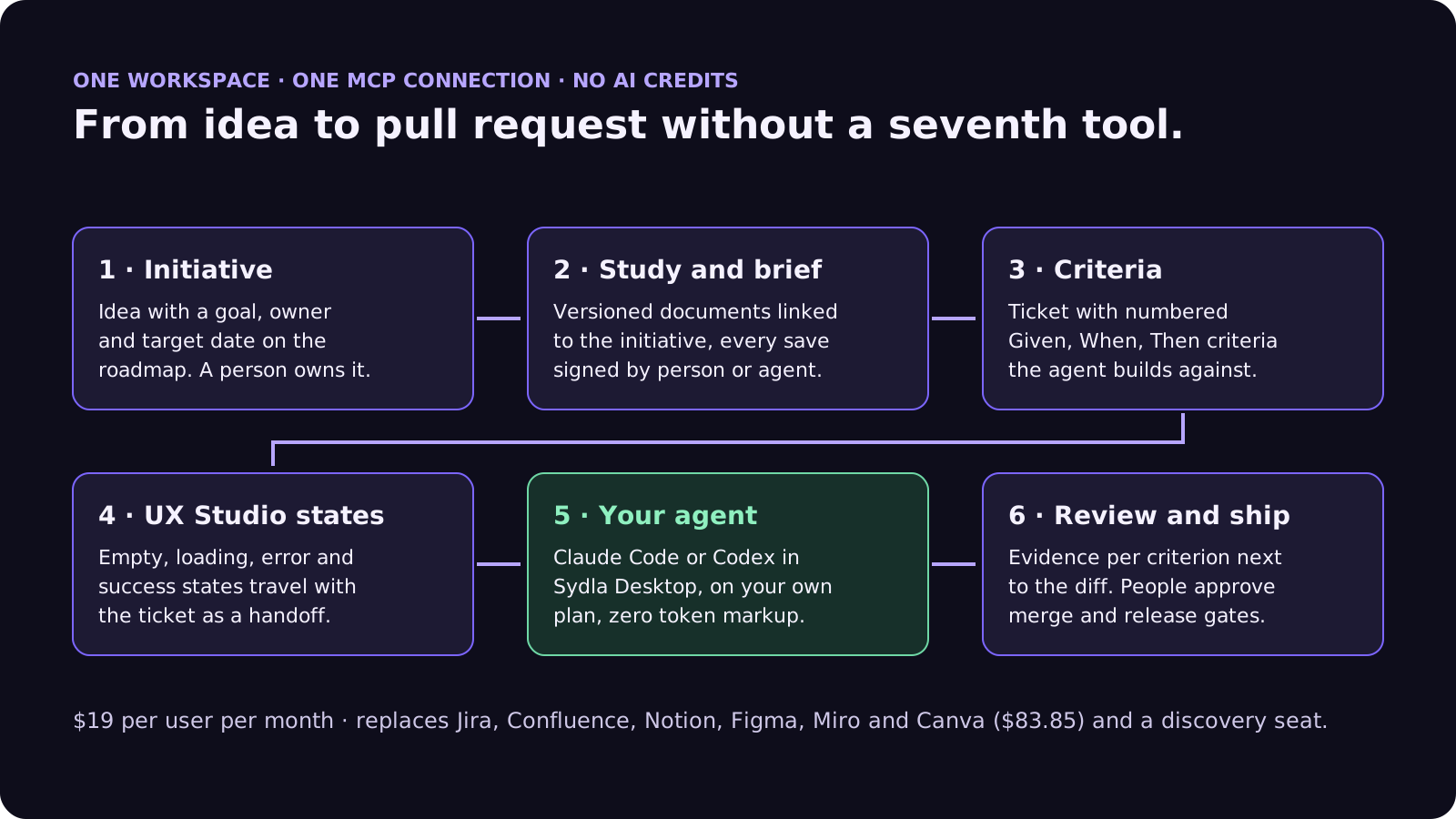
From there the road to a pull request has five stops, each in the same place:
- Idea to initiative. Capture the idea as an initiative with its goal and owner. An agent can frame it and propose the plan of work, epics and pieces, but a person chooses who does each piece.
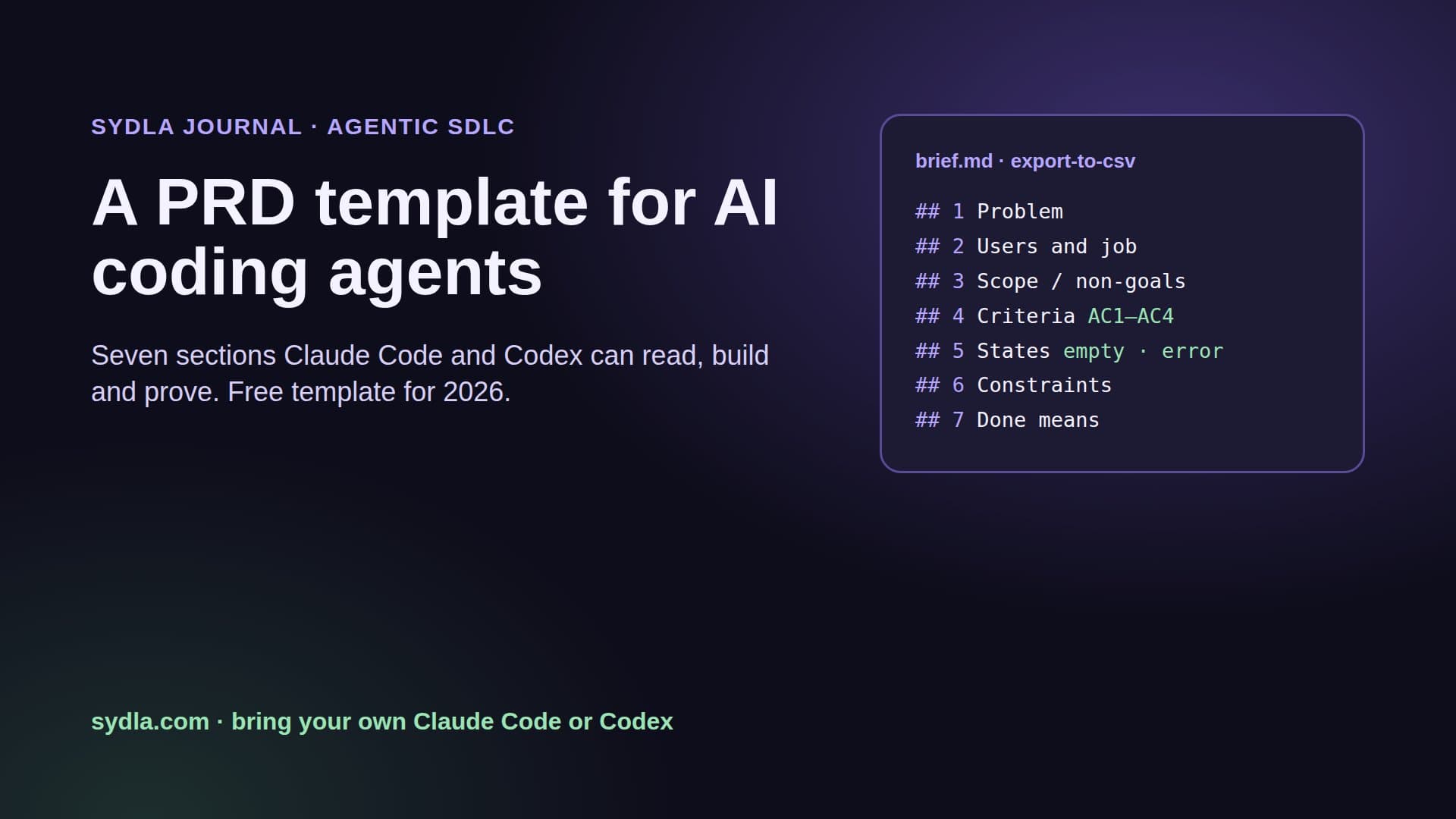
- Study and brief. The study and the brief are versioned documents linked to the initiative. Every save is signed by its author, a person or an agent, so you can see who changed the scope and when.
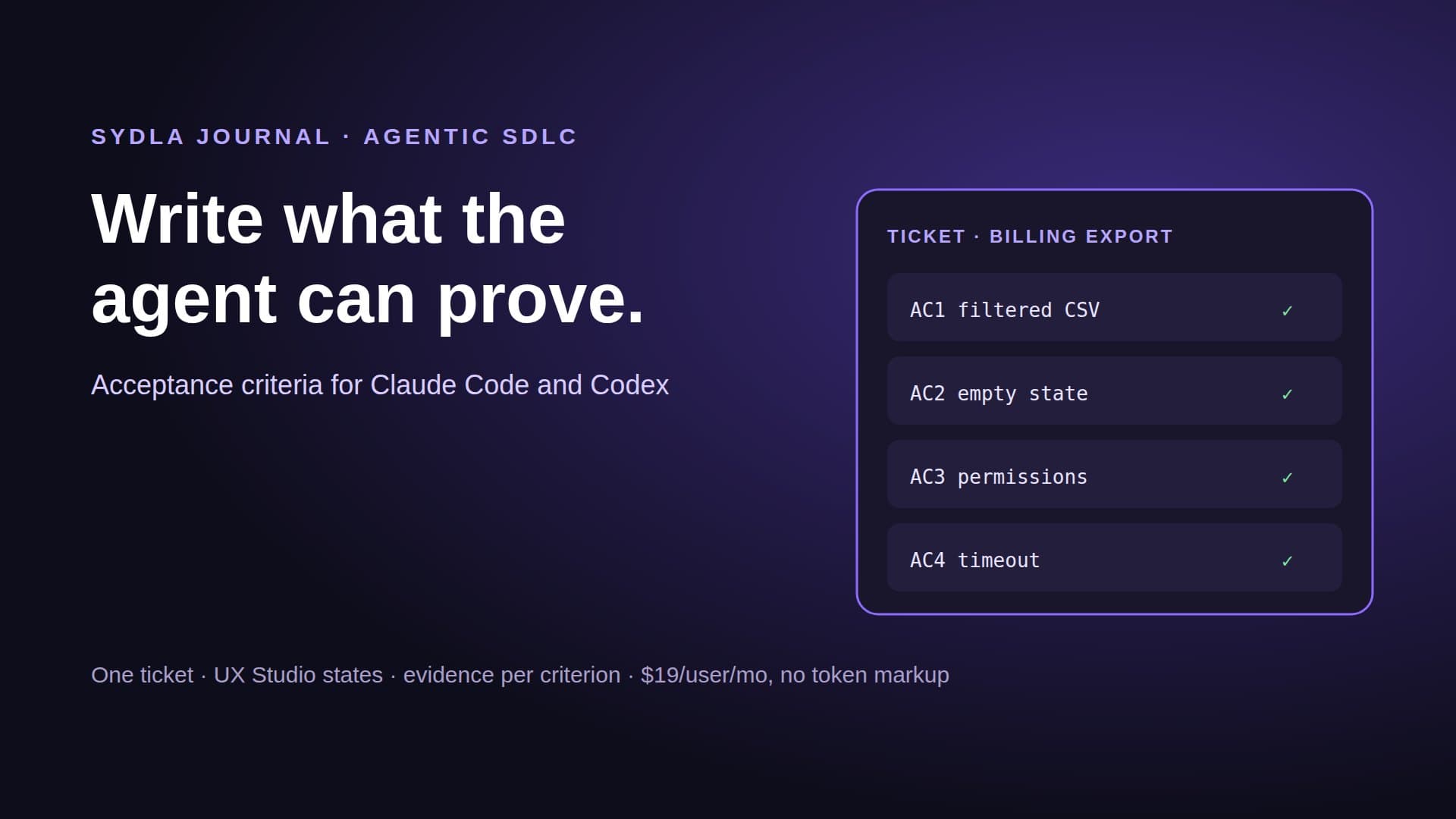
- Criteria on the ticket. Each ticket carries numbered Given, When, Then criteria, the part the agent builds against and the reviewer checks.
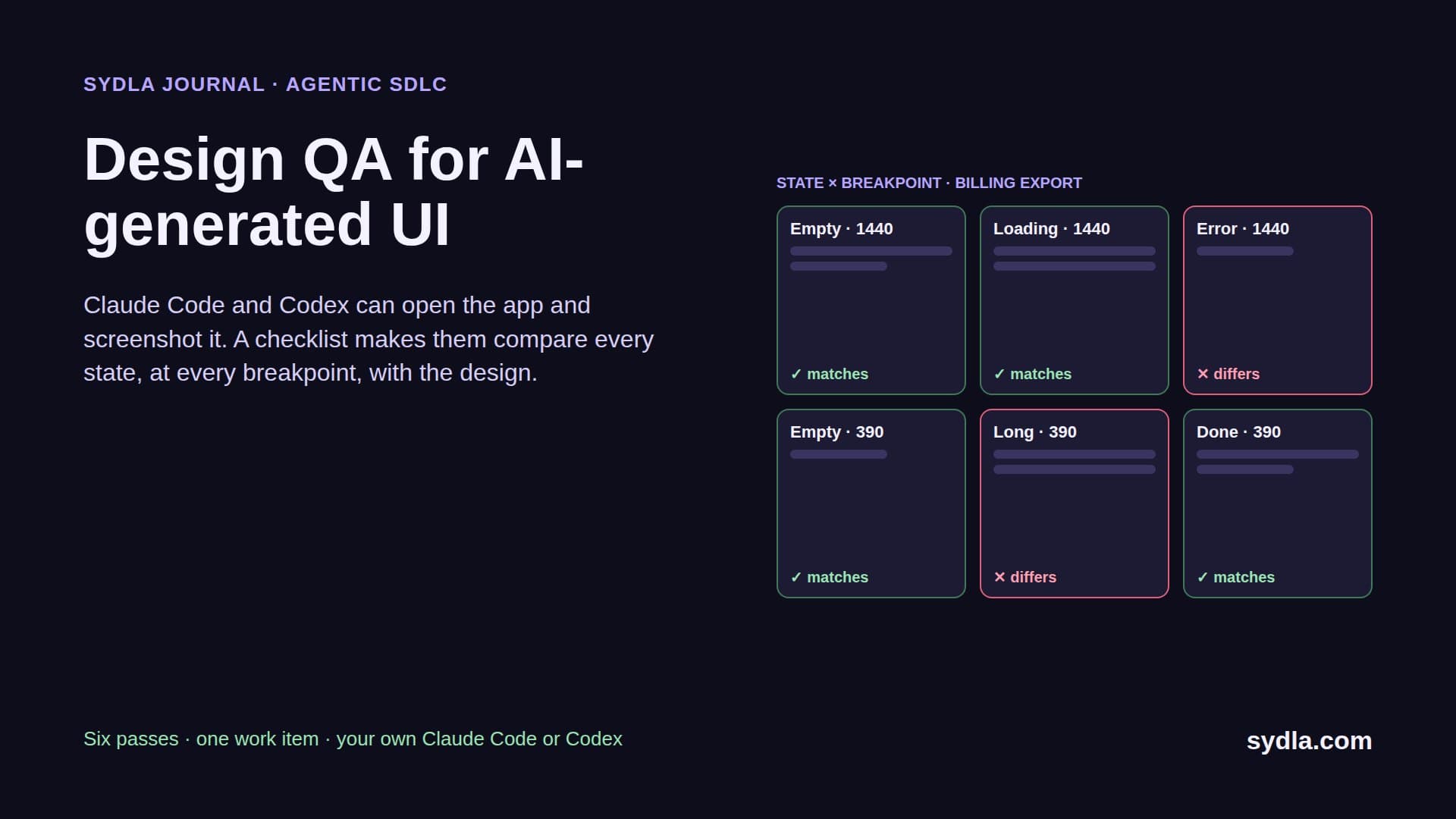
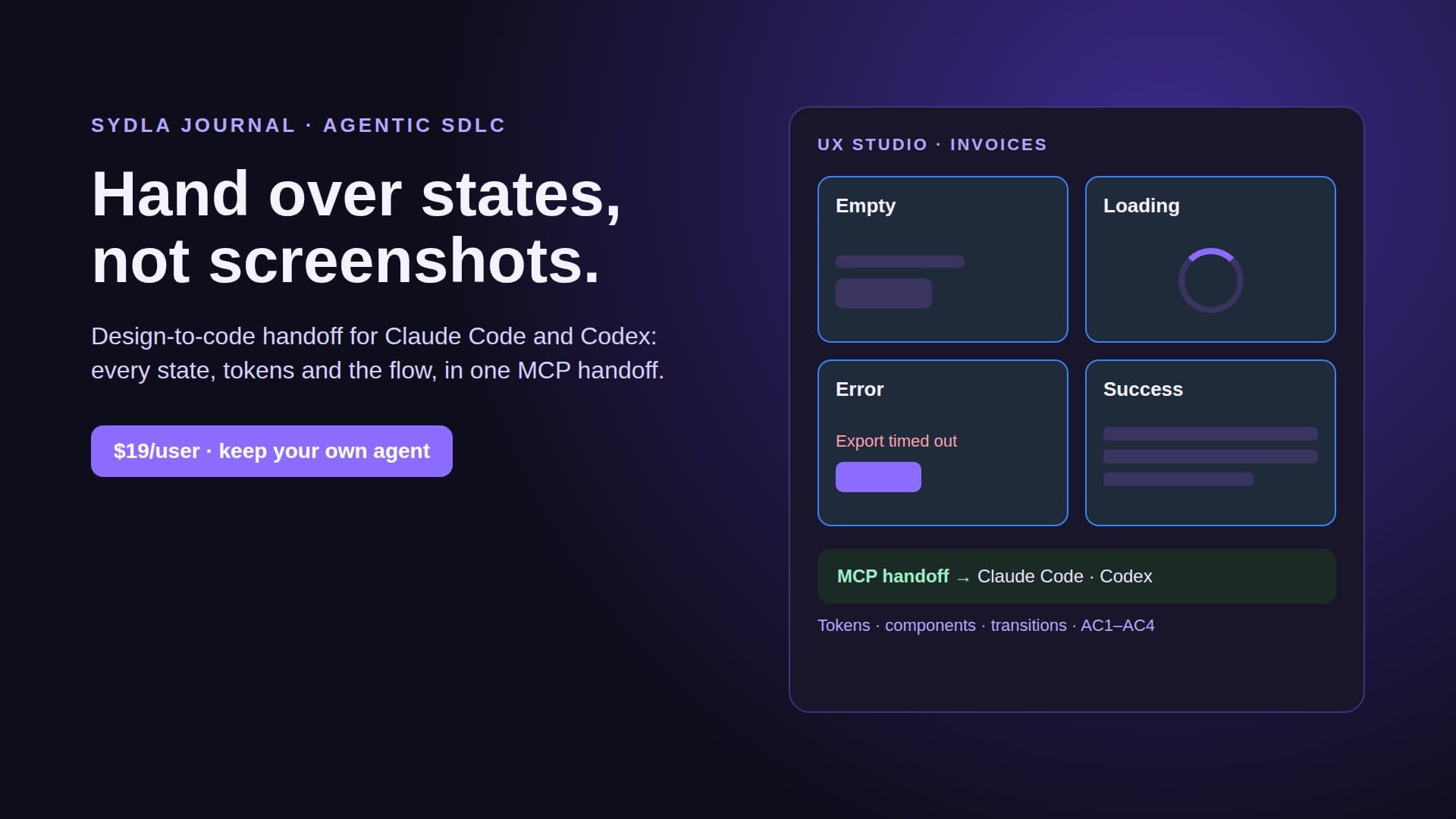
- UX Studio states. Screens and their states, empty, loading, error and success, live in UX Studio and travel with the ticket as a handoff instead of a frame link. Our design handoff guide covers why states beat screenshots.
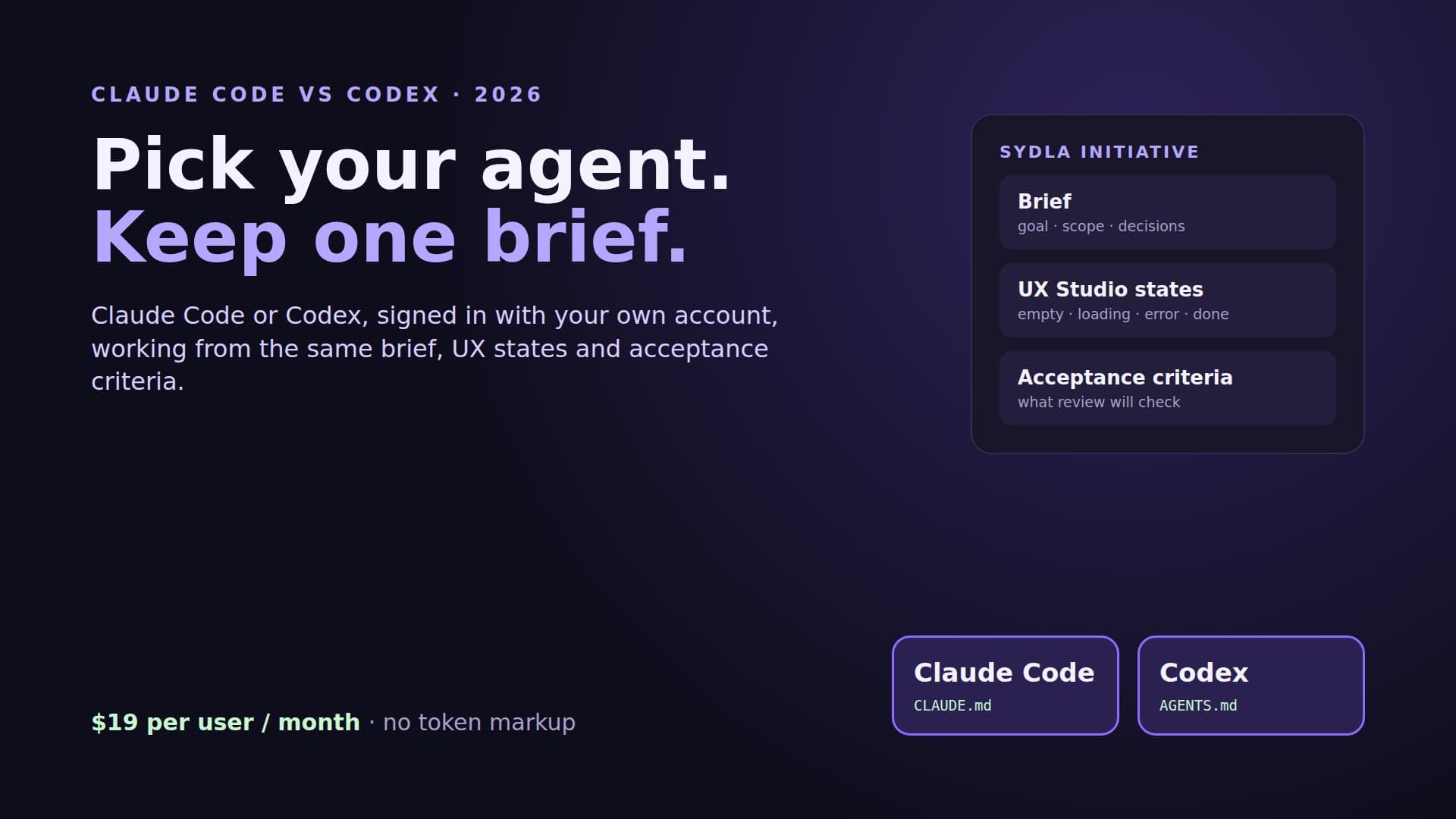
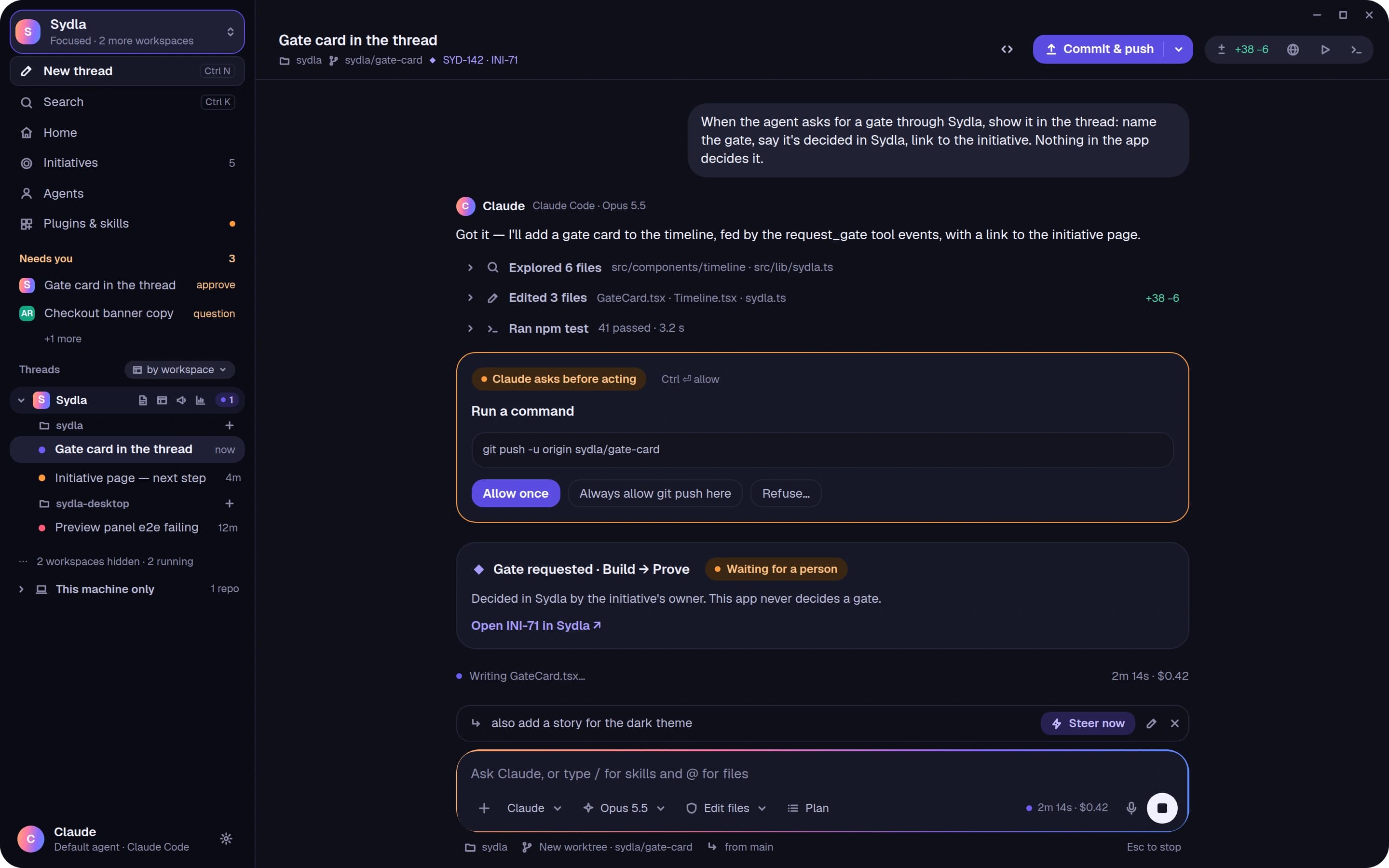
- Your agent, your plan. Sydla Desktop runs your signed-in Claude Code or Codex CLI in a thread on the ticket. The agent works on a branch and records evidence against each criterion. A person approves the scope, design, merge and release gates, and agents can request a gate but never decide one.
Technical walkthrough: connect Claude Code or Codex to the brief
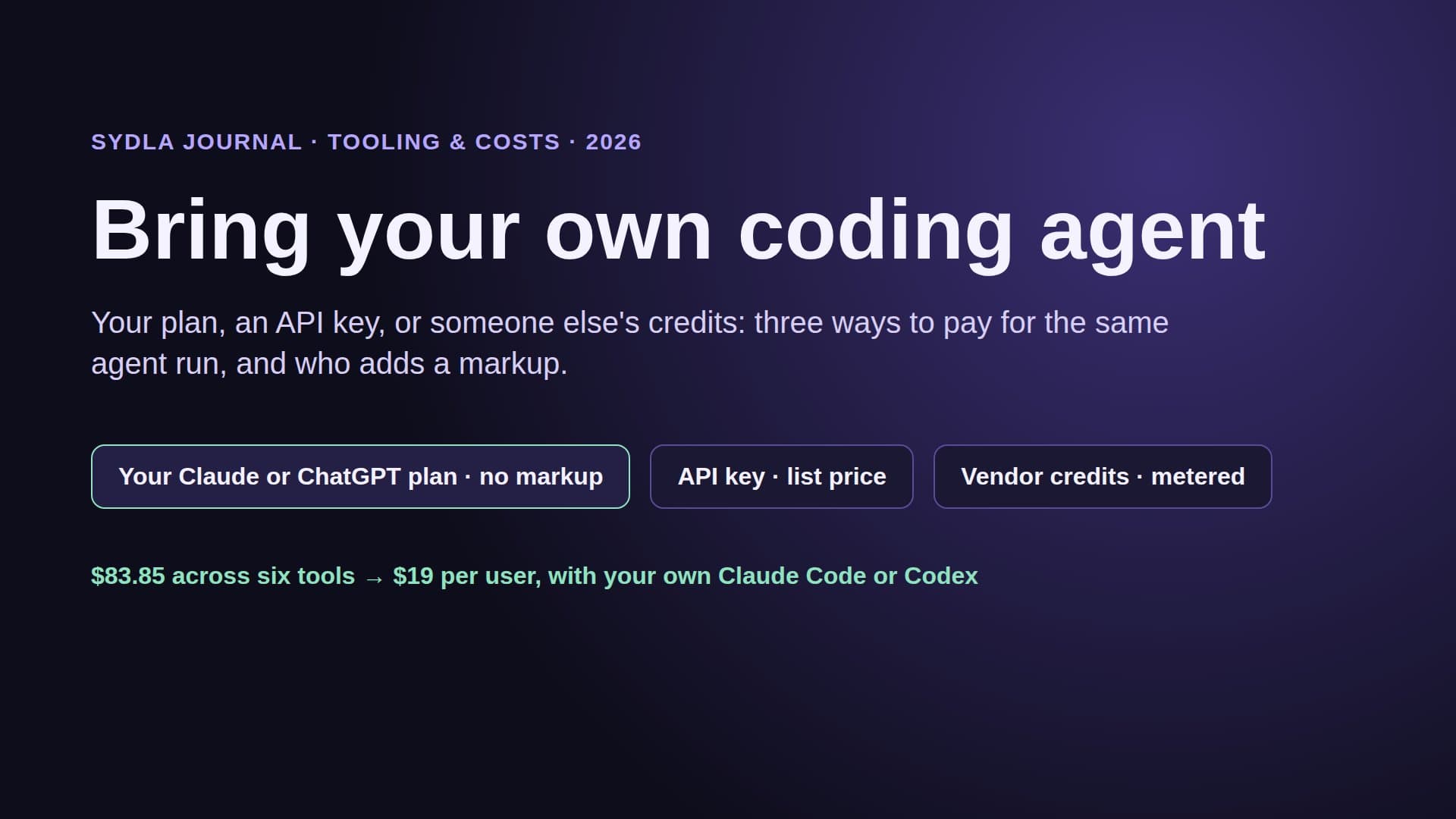
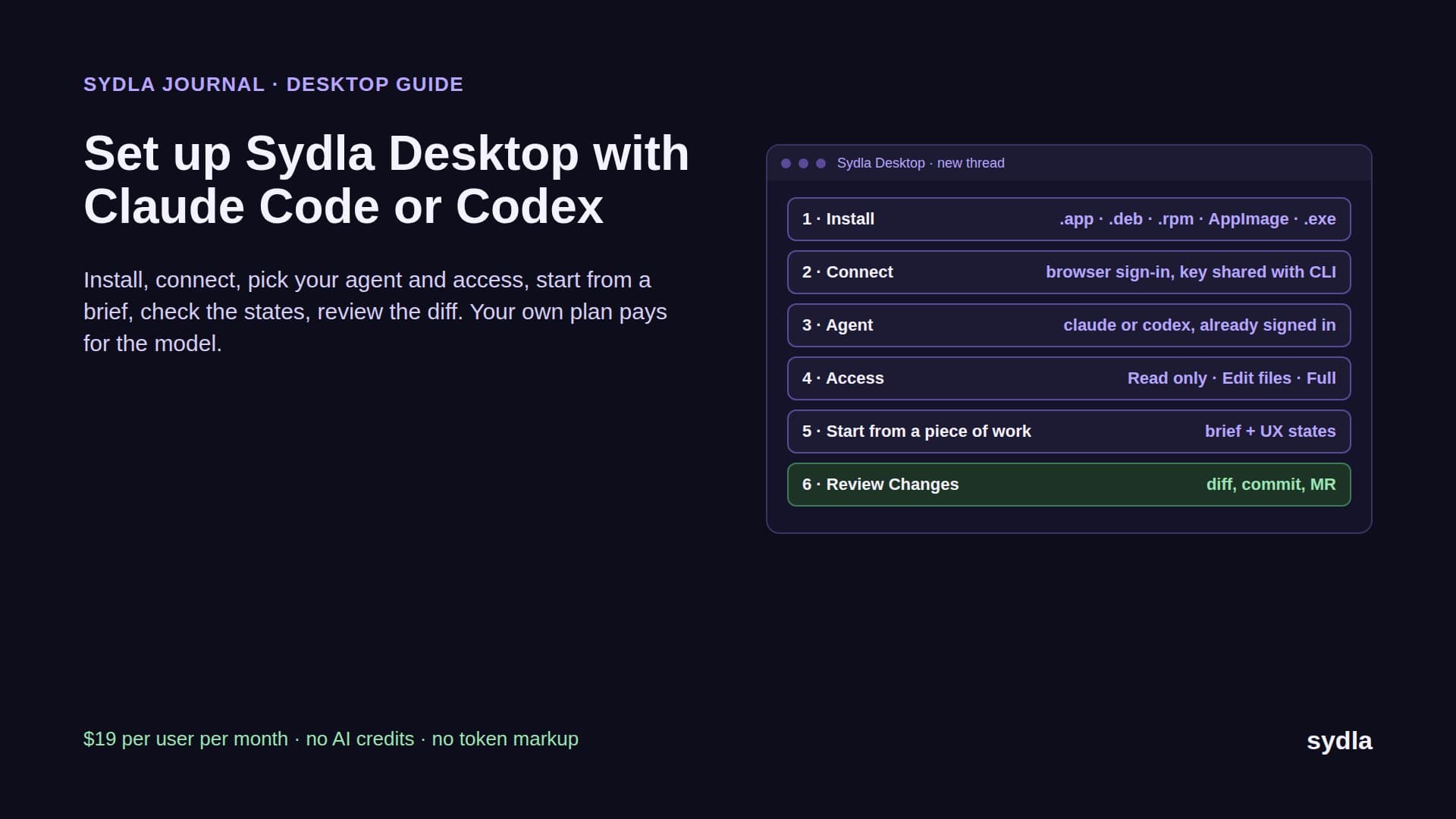
In Sydla Desktop there is nothing to configure per tool. Sign in, open the work item, start a thread and choose claude or codex. Desktop uses the CLI you already have signed in, so the model, the limits and the bill stay on your own Claude or ChatGPT plan. Each thread has an access level, Read only, Edit files or Full access. A Preview panel and a Changes view sit next to the conversation. Finish and Ship asks you to confirm the commit, push, merge request, merge and tag one at a time. The Desktop setup guide covers installers for macOS, Windows and Linux.
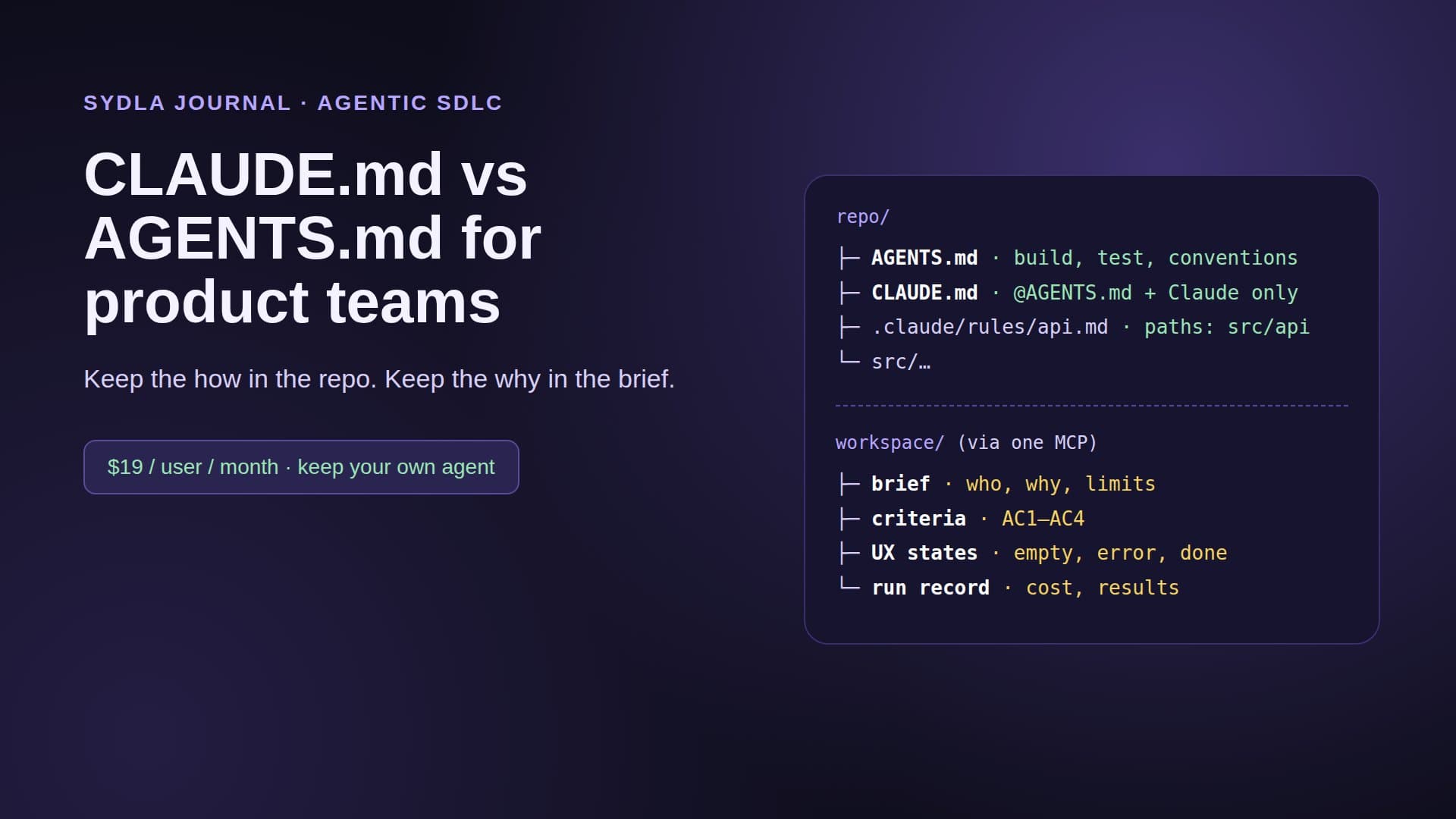
Outside Desktop, the same context is one MCP connection away. For Claude Code, add the Sydla MCP server once with claude mcp add, using the HTTP transport and the sydla.com/mcp URL. For Codex, add an mcp_servers.sydla table to config.toml with the same URL and your key in http_headers. The agent can then read the initiative, the brief, the criteria and the UX Studio handoff for the ticket it is working on, and write its notes and run record back.
A typical first prompt is short because the context is not in the prompt. Something like: read the work item, list the criteria you will test, then build on a branch and record evidence for each criterion. The agent pulls what it needs through the one server, and the reviewer later reads that evidence next to the diff. Our guide to reviewing AI-generated pull requests shows what to check.
When a dedicated discovery tool still makes sense
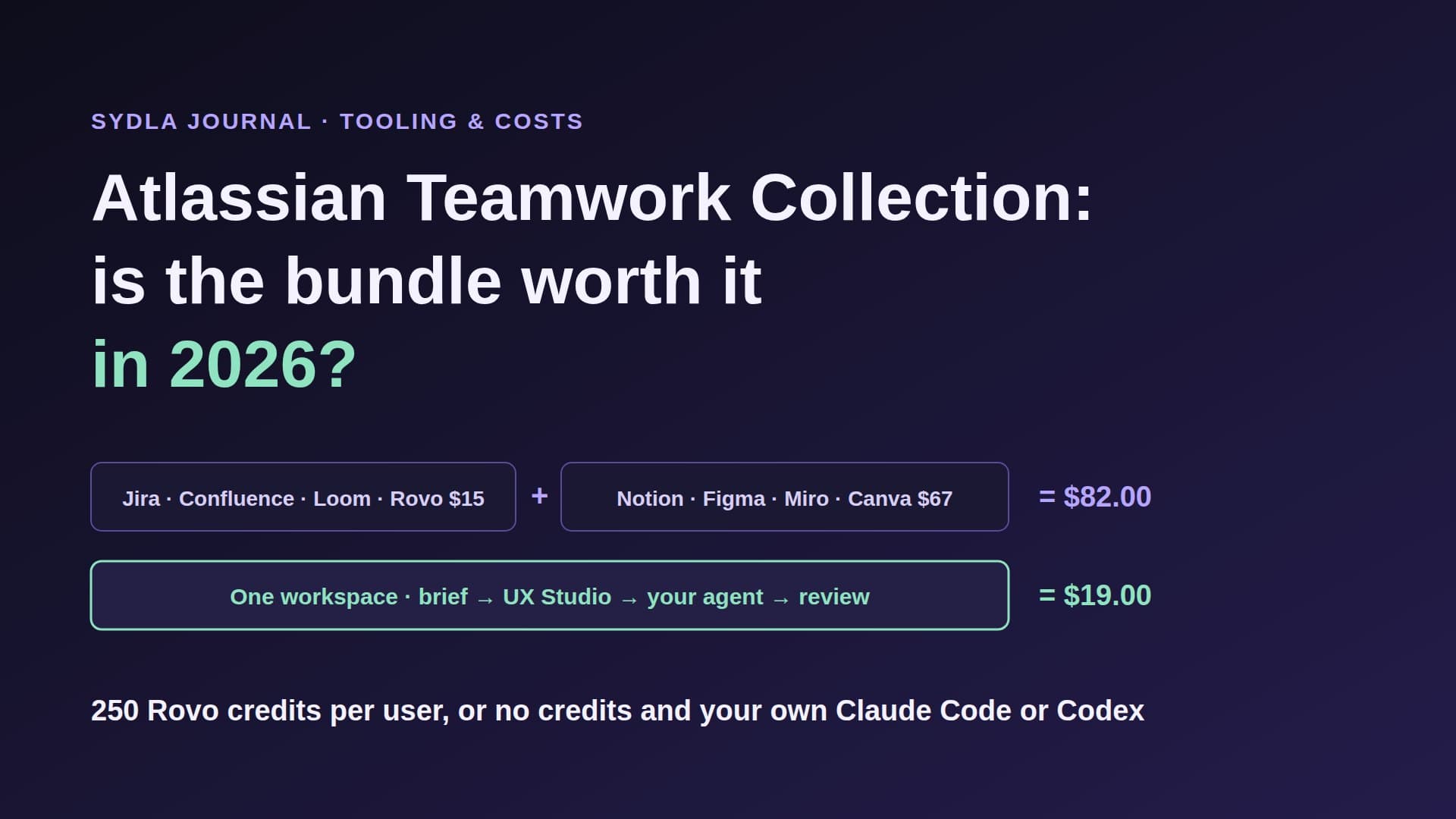
Be honest about scale. If you run discovery for many product teams, with heavy customer-feedback intake from support and sales and a portfolio roadmap shown to executives, a dedicated tool is built for that. Productboard's feedback pipeline and Jira Product Discovery's tight Jira link are real strengths, and teams already standardised on Atlassian may prefer to stay. Our Teamwork Collection alternative and Jira alternatives posts cover that choice.
For a solo founder, a founding engineer or a lean product team of two to ten people, the maths and the workflow point the other way. Discovery there is a short list of initiatives, a study each and a brief that an agent can build from. A separate seat and a separate credit pool for that list cost more than they return. Our solo founder stack shows the one-person version.
Try it on your next idea
Pick the idea at the top of your discovery board. Make it an initiative in Sydla, write a one-page study, cut the first ticket with three or four numbered criteria, sketch its states in UX Studio and run it with the agent you already pay for. Then see how many tools you opened along the way.
The plan is $19 per user per month, with every feature included and no AI credits to buy. See the pricing section, then start your workspace and keep your Claude Code and Codex accounts.
Frequently asked questions
How much does Jira Product Discovery cost in 2026?
On monthly billing, Jira Product Discovery is free for up to 3 creators, then $10.50 per creator per month on Standard and $26.25 per creator on Premium. Enterprise is annual only, through sales. Contributors are free, and Jira users are contributors by default. The standalone app includes Automation steps; Rovo AI usage draws on your organisation's Rovo credit pool.
How do Productboard Spark credits work?
Productboard includes Spark AI on every plan with pooled monthly credits: 50 per workspace on Free, 250 per maker on Plus ($25 monthly or $19 yearly), 500 per maker on Business ($75 or $59) and 1,500 base plus 800 per maker on Enterprise. Credits expire each renewal date. On self-serve plans AI stops when the pool is empty, and top-ups cost $5 per 50 credits on monthly plans.
What is a good Jira Product Discovery alternative for small software teams?
For lean teams that build with coding agents, an AI SDLC workspace such as Sydla covers discovery and delivery together. Ideas become initiatives with a goal, owner and roadmap date, studies and briefs are versioned documents, and tickets carry numbered criteria and UX states that Claude Code or Codex builds against. It costs $19 per user per month with no AI credits.
Can Claude Code or Codex read product discovery context directly?
Yes, if the context is behind an MCP server. With a separate discovery tool, the agent needs one MCP connection per tool and each one has its own limits and AI meter. In Sydla, one MCP connection or a Sydla Desktop thread gives the agent the initiative, brief, criteria and UX Studio handoff for the ticket, and the run uses your own Claude or ChatGPT plan.
How much does Sydla save compared with Jira, Confluence, Notion, Figma, Miro and Canva?
At November 2026 list prices the six-tool stack costs $83.85 per user per month: Jira $9.70, Confluence $7.15, Notion $12.00, Figma $20.00, Miro $10.00 and Canva $25.00. Sydla is $19, a saving of $64.85 per user per month, or $75.35 for a product manager who also holds a Jira Product Discovery Standard seat.