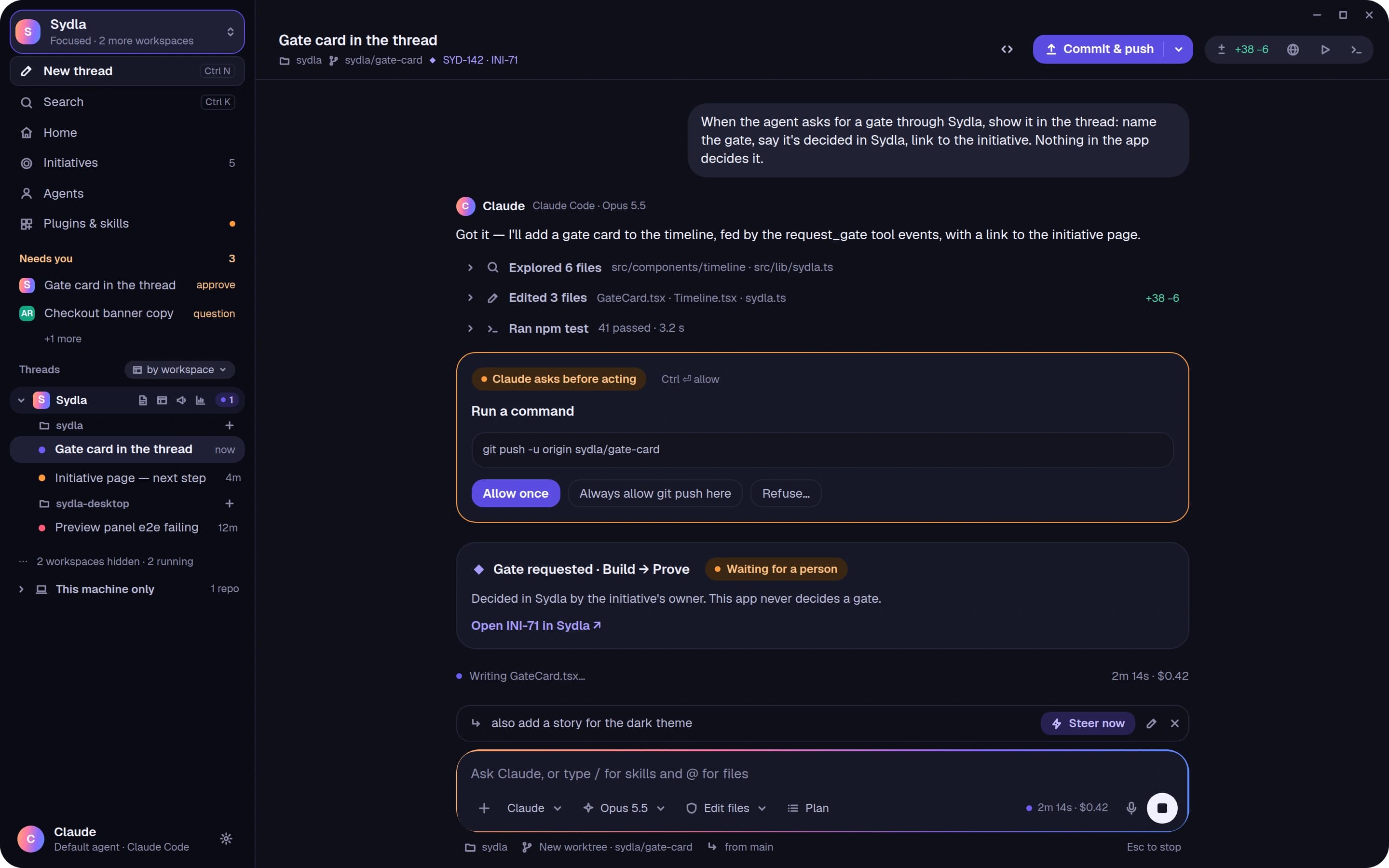
Atlassian Teamwork Collection in 2026: is the bundle worth it, and what is the alternative?
Atlassian now sells Jira, Confluence, Loom and Rovo as one Teamwork Collection: $15 per user at ten seats, with ten times the Rovo credits of the standalone apps. It is a better deal than buying Jira and Confluence apart. It still leaves Figma, Notion, Miro and Canva on separate bills, and your coding agent on yet another meter. Here is the math, and when a different kind of bundle makes more sense.
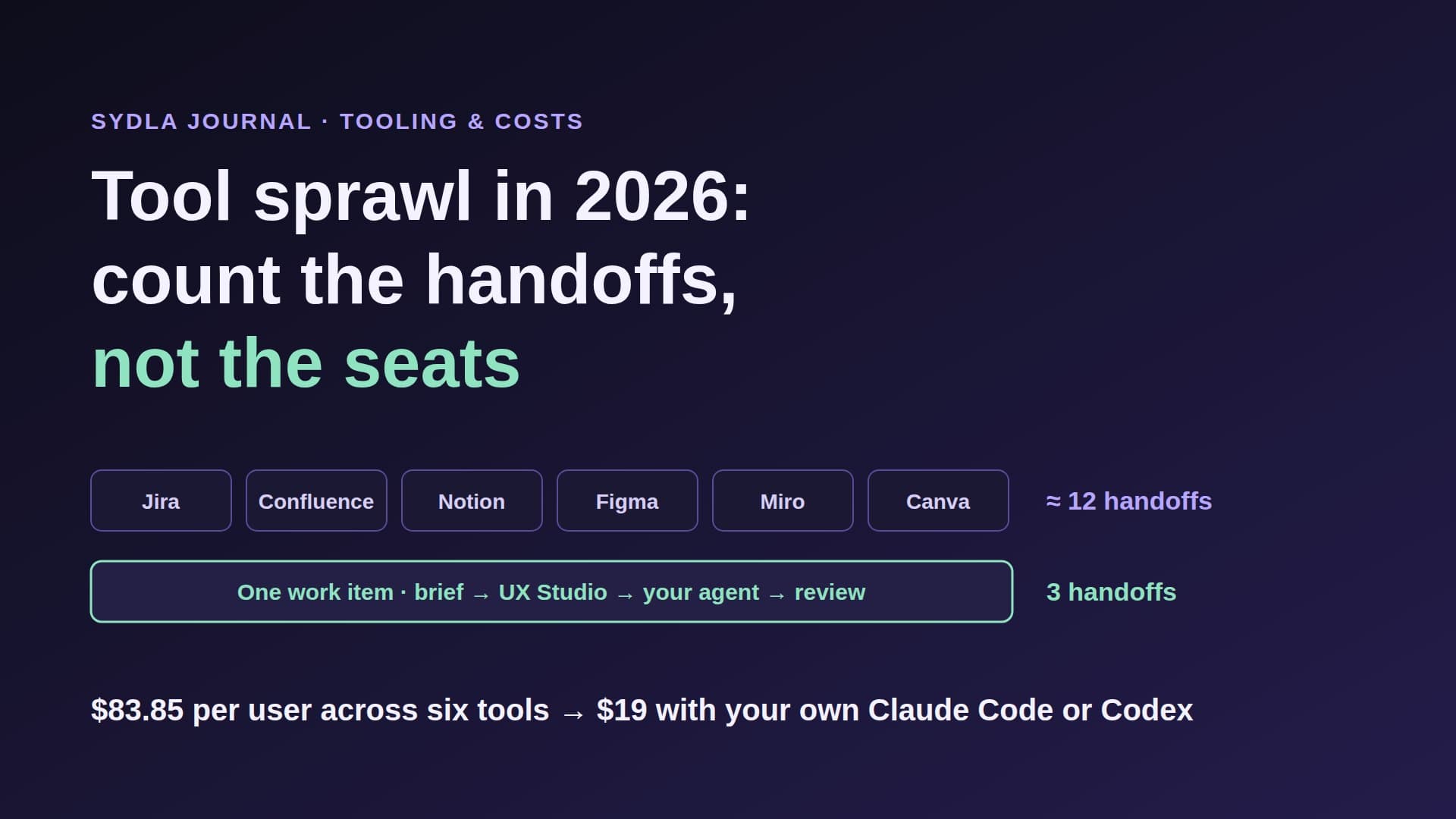
Atlassian's answer to tool sprawl is a bigger Atlassian bundle
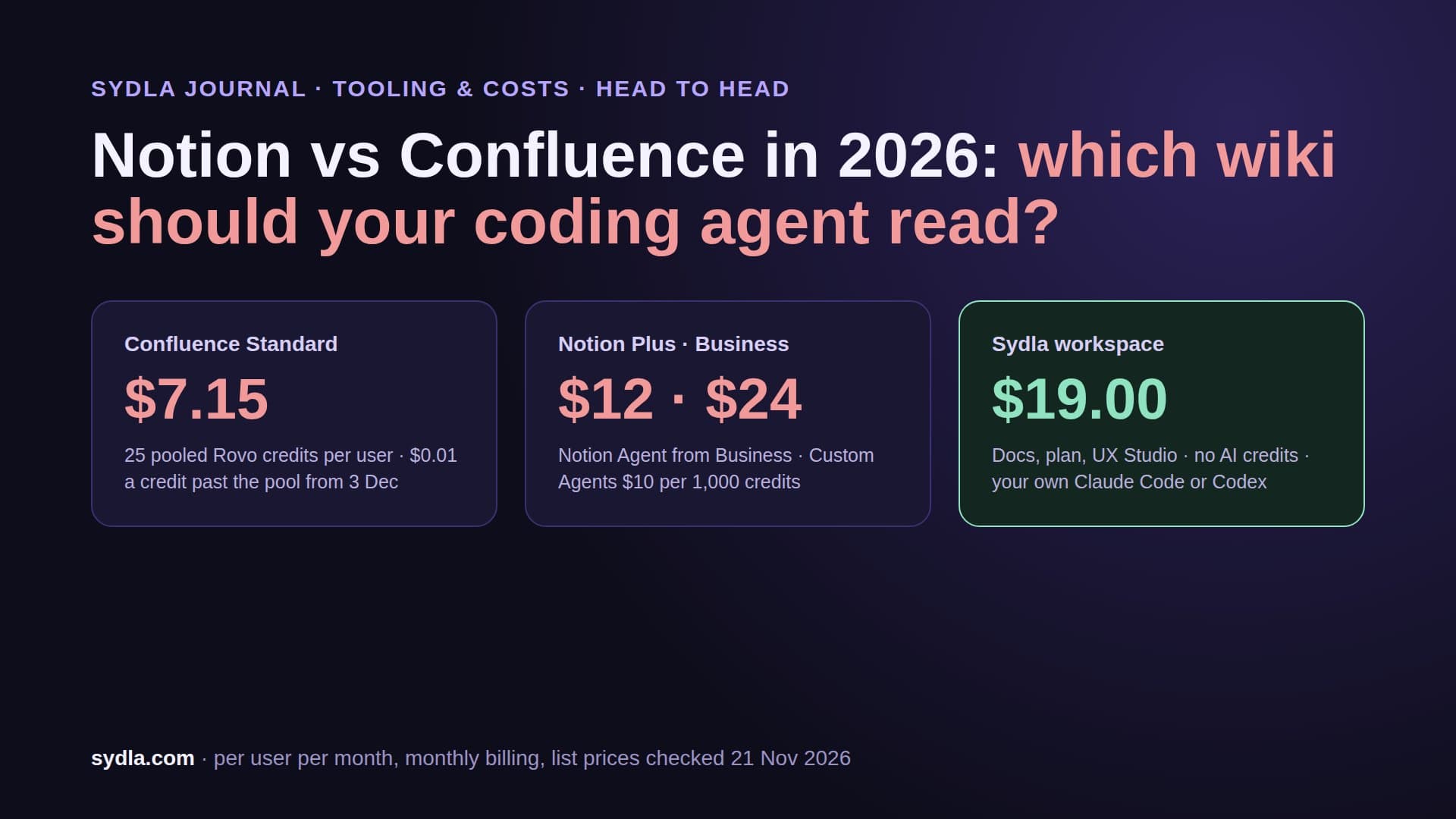
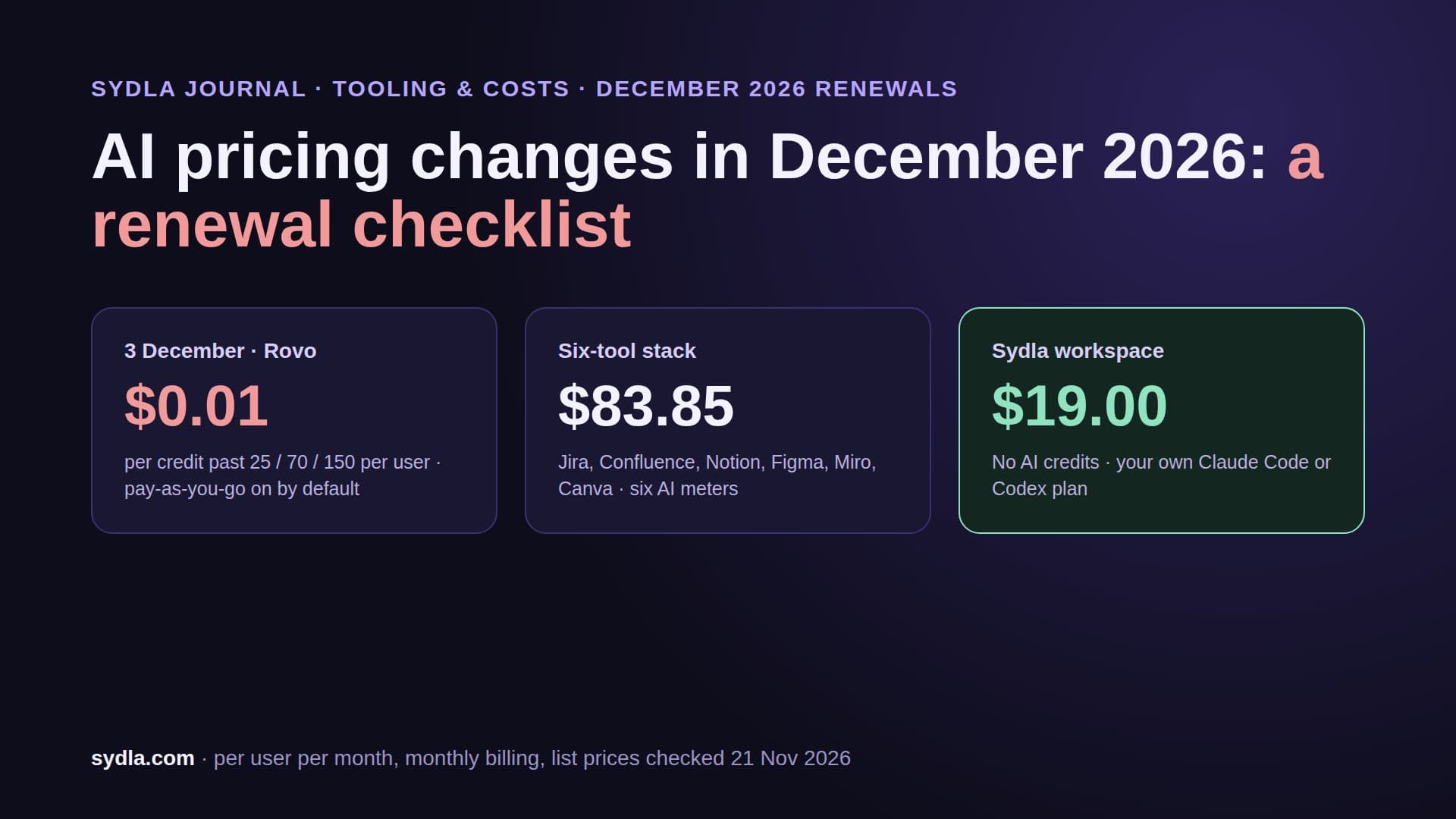
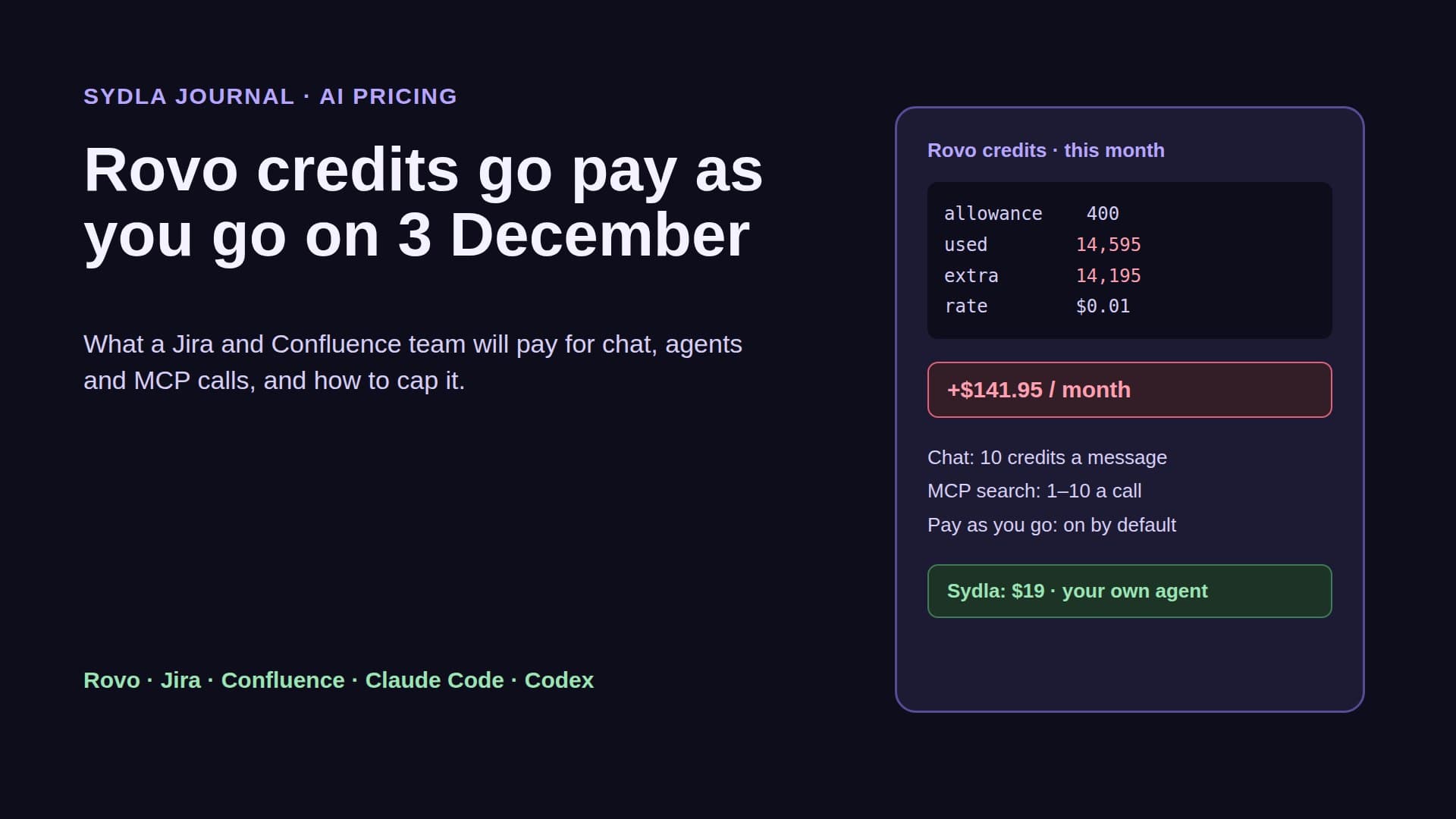
On 3 December 2026 Rovo moves to usage-based billing. Every Jira and Confluence plan keeps a monthly allowance of Rovo credits, and anything above it is billed at $0.01 per credit, with pay-as-you-go switched on by default. For many teams the first reaction is to look at the allowance, and the allowance is small: 25 credits per user per month on Jira Standard and another 25 on Confluence Standard.
Atlassian's own pricing pages point to one way out. "Upgrade to Teamwork Collection for 10x the allowances per tier compared to standalone app subscriptions." Teamwork Collection is one subscription for Jira, Confluence, Loom and Rovo, with a single price per user and 250 Rovo credits per user on Standard.
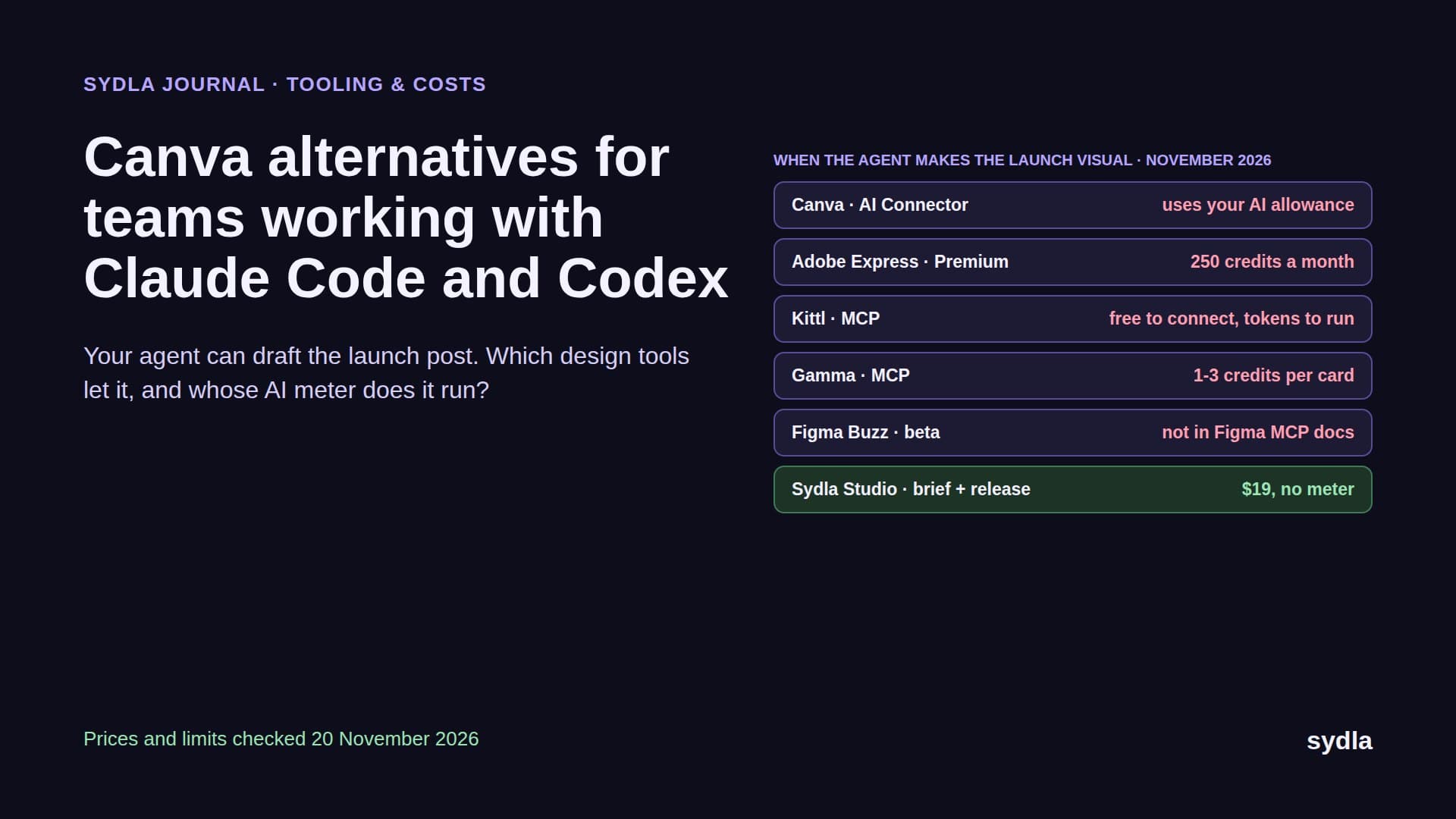
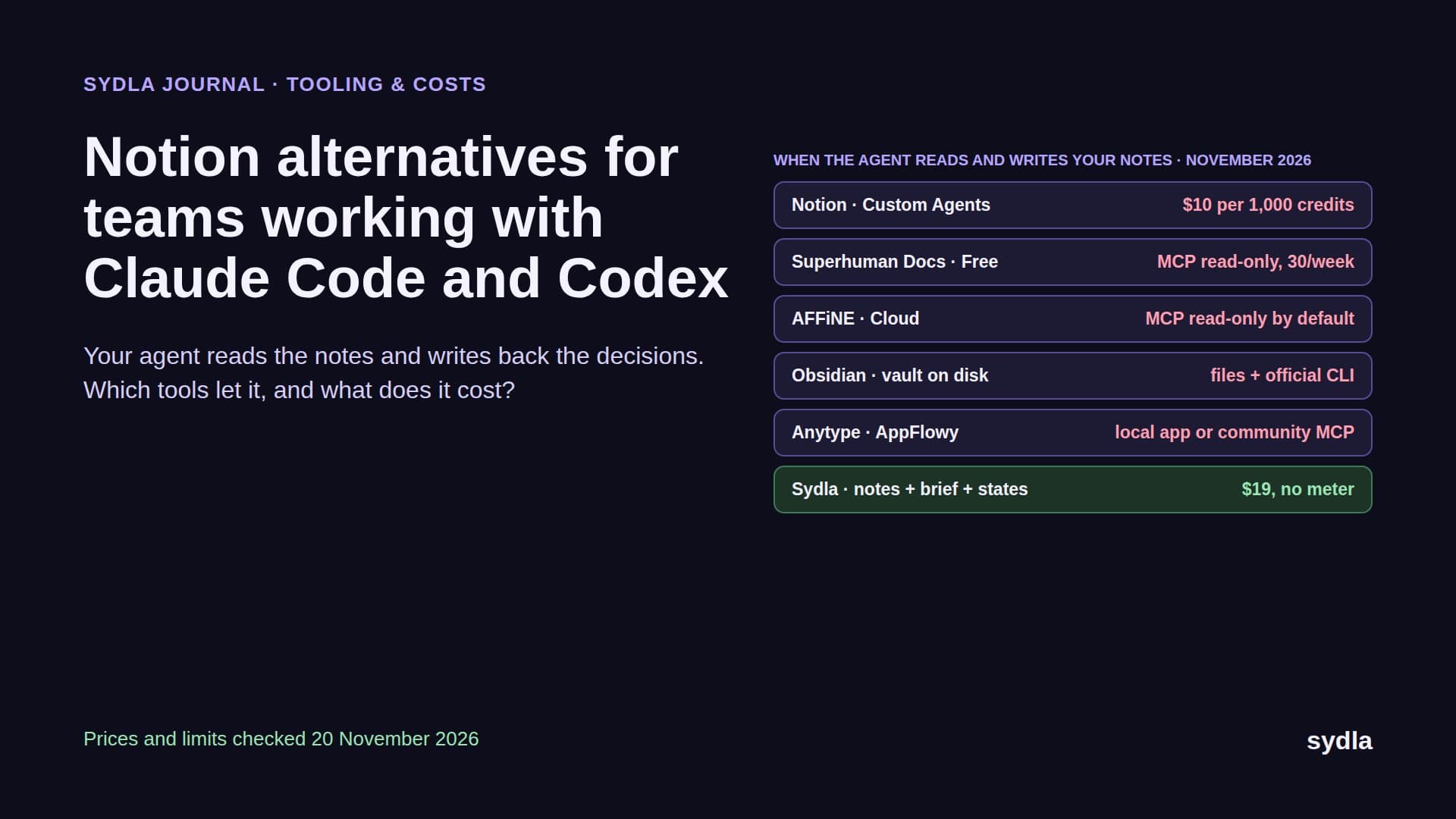
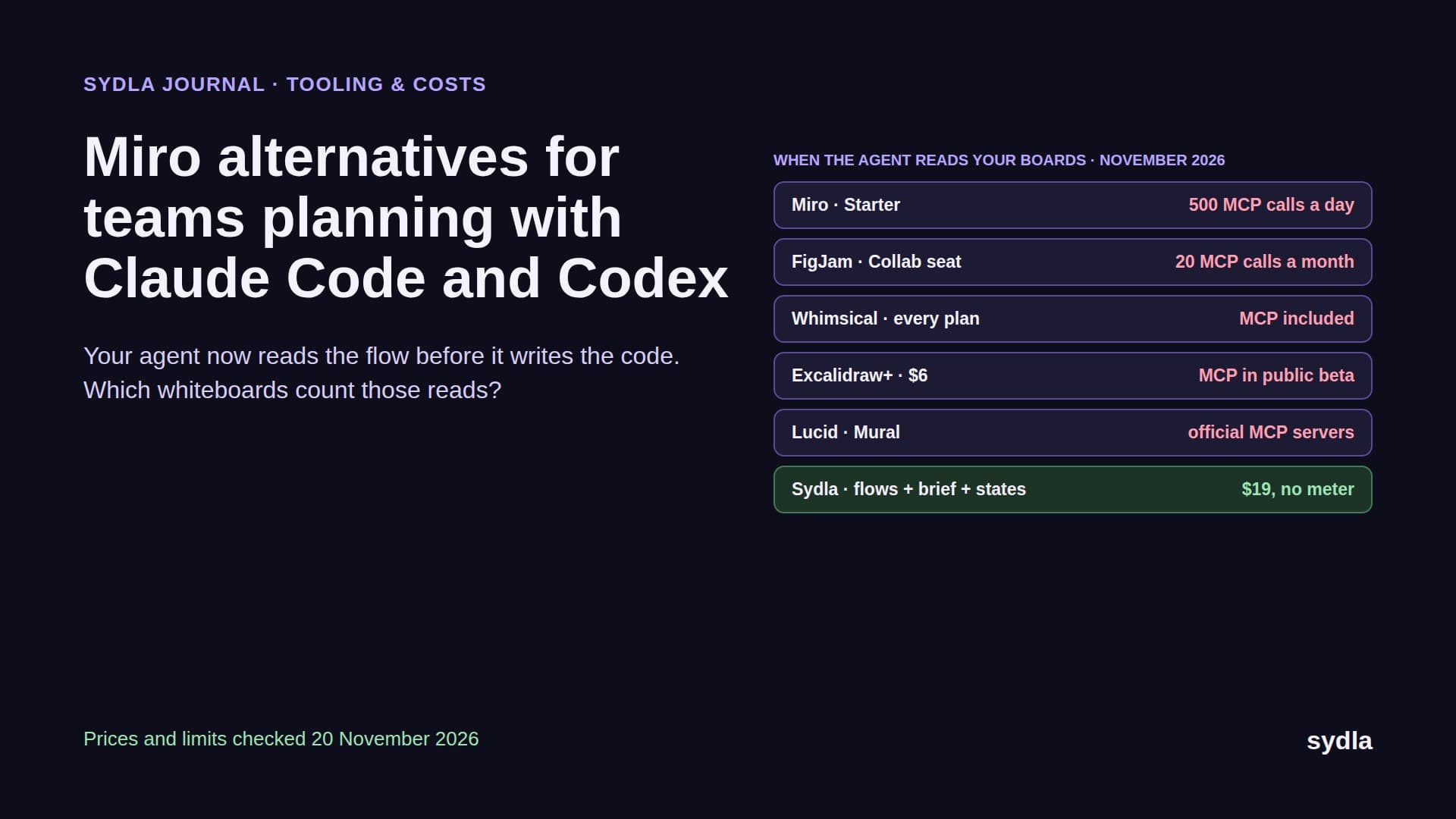
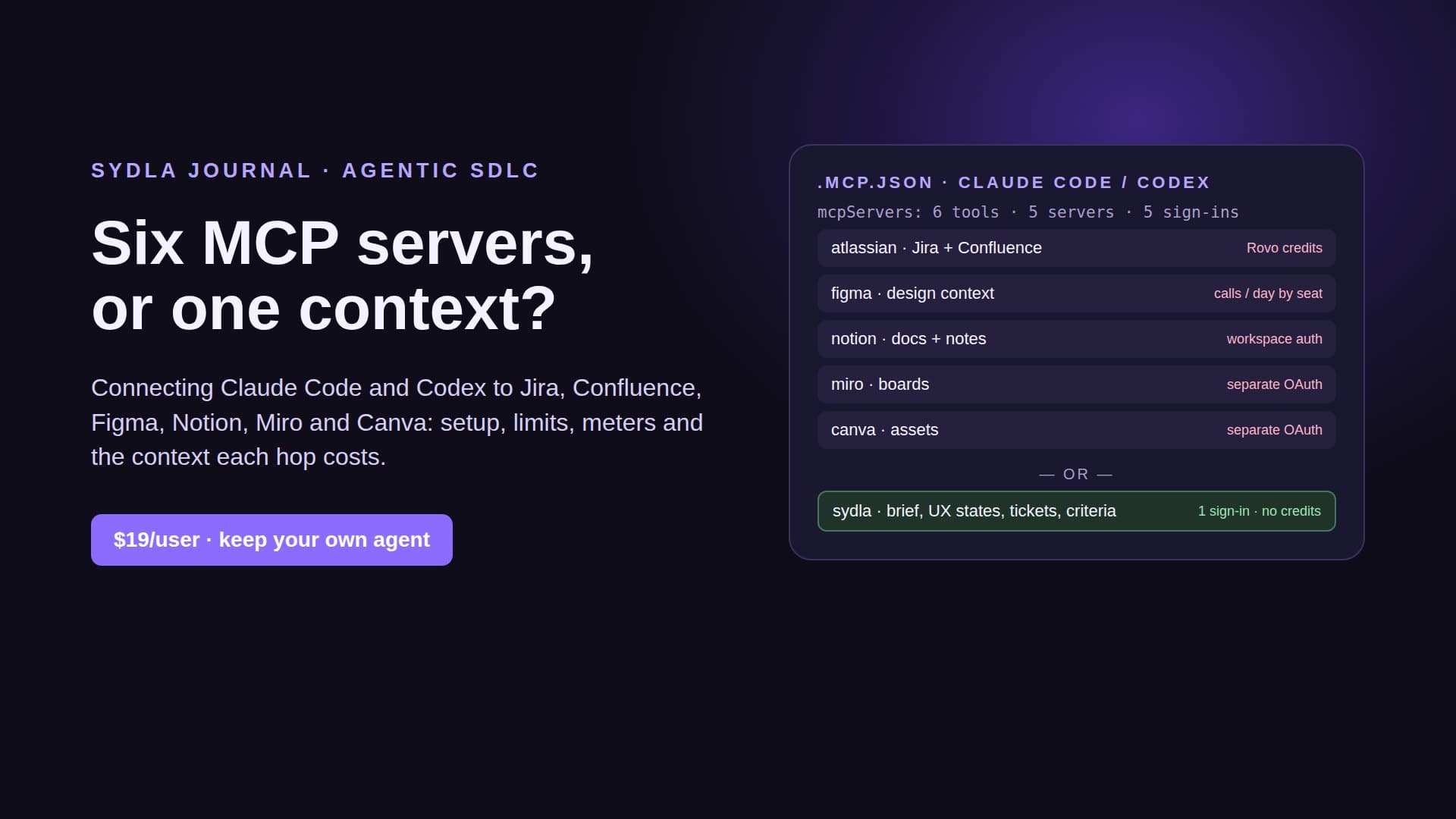
If your team lives in Jira and Confluence, that is a real improvement, and we will show the math. But a product team in 2026 rarely stops at Atlassian. The brief is in Confluence, the decisions in Notion, the flow on a Miro board, the screens in Figma and the launch visuals in Canva. And the agent that actually writes the code runs on a Claude or ChatGPT plan that no Atlassian bundle includes. This guide looks at what the Teamwork Collection fixes, what it leaves untouched, and when a different kind of bundle is the better buy.
What the Teamwork Collection includes in November 2026
Atlassian Teamwork Collection is a single subscription for Jira, Confluence, Loom and Rovo, plus Atlassian's platform apps such as Goals, Teams, Studio, Search, Chat and Insights. You pay one price per user for the whole collection instead of paying for each app.
- Free: up to 10 users, unlimited spaces and pages, 3 whiteboards per user, 25 Loom videos per person of up to 5 minutes, 200 automation steps a month and 2 GB of storage. No Rovo Search, Chat or Agents beyond the included free features.
- Standard: $15 per user per month at a 10-person team size on monthly billing ($14.02 at the larger default team size on the pricing page). Adds Rovo Search, Chat and Agents, 2,500 automation steps per user, unlimited Loom videos and 250 GB of storage.
- Premium: $29 per user per month at 10 users ($28.76 at the default). Adds unlimited whiteboards, cross-team planning, Loom AI, Atlassian Guard Standard and a 99.9% uptime SLA.
- Enterprise: annual billing through sales, multiple sites and the largest Rovo allowance.
The Rovo allowance is where the collection really differs from buying the apps one by one. Atlassian's usage limits page lists, per user per month on Standard, Premium and Enterprise: Jira 25, 70 and 150 credits; Confluence 25, 70 and 150; Loom 25, 70 and 150; Teamwork Collection 250, 700 and 1,500. Credits are pooled across the organisation, refresh on the billing date and do not roll over. Our Rovo credits guide covers which actions spend them and the five admin settings to check before 3 December.
Teamwork Collection vs Jira plus Confluence: the bundle math
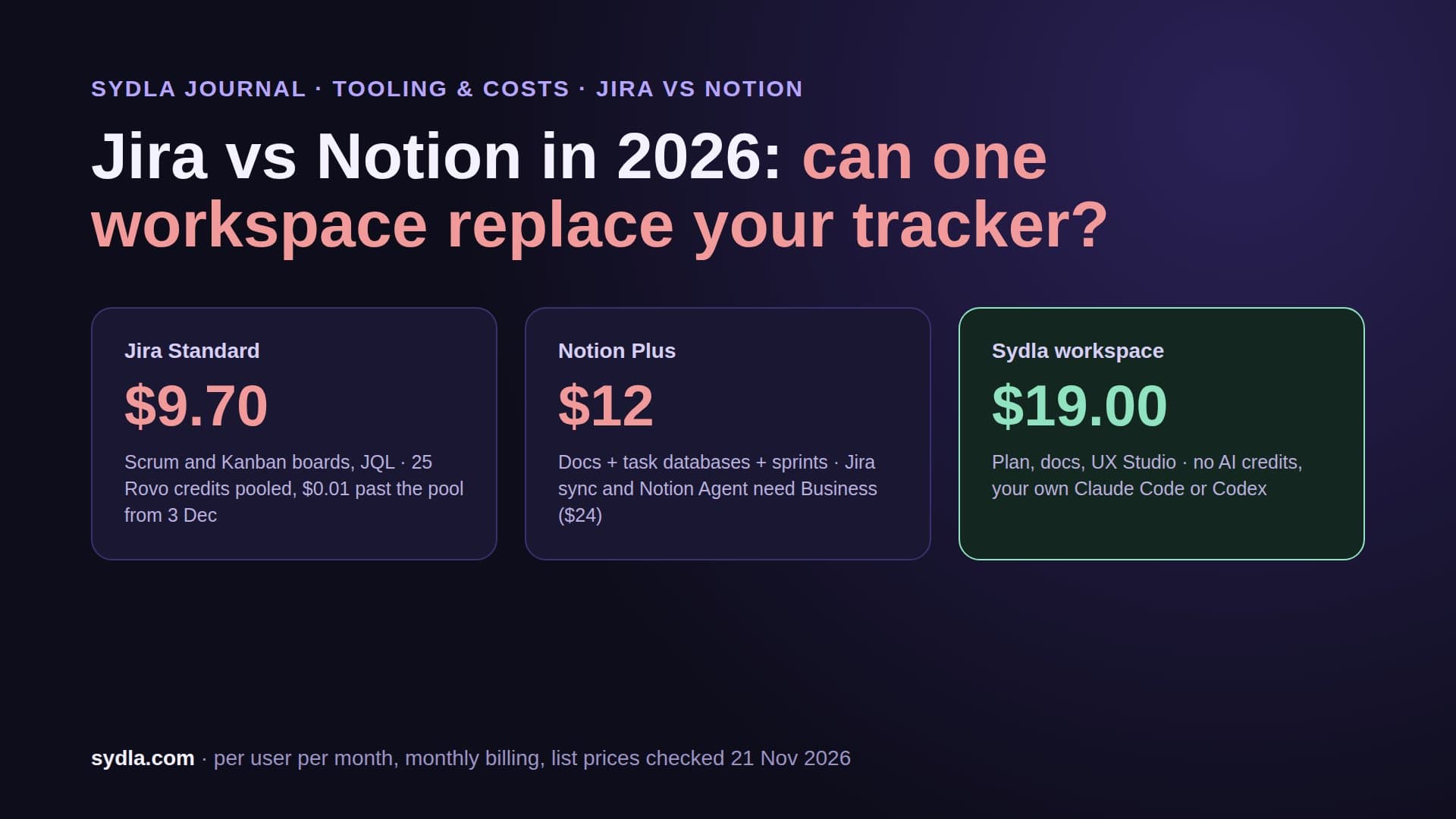
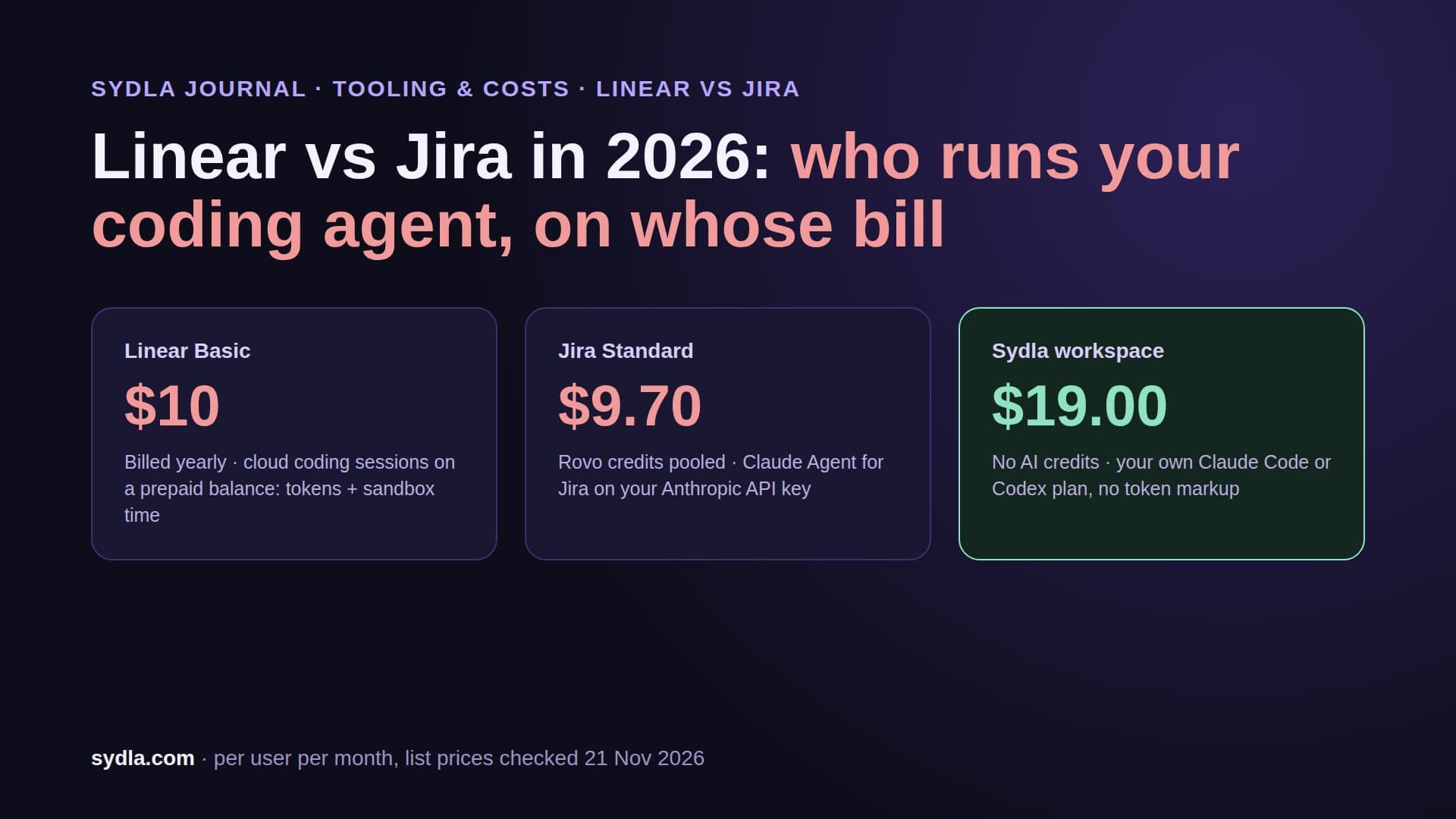
Take a 10-person team on Standard. Bought apart at the list prices we use across this Journal, Jira Standard costs $9.70 and Confluence Standard $7.15, so $16.85 per user, or $168.50 a month for the team. The pool is 10 users times 50 credits, so 500 Rovo credits.
The Teamwork Collection at the same size costs $15 per user, $150 a month, and adds Loom. The pool is 10 users times 250 credits, so 2,500 Rovo credits. You pay less and get five times the credits of Jira and Confluence together.
Now add usage. In our Rovo credits worked example, an eight-person team that leans on Rovo Chat, agents and enriched MCP searches used about 14,600 credits a month, roughly 1,800 per person. Scale that to ten people and you get about 18,000 credits. That is an assumption, not a measurement, but it shows how the bill moves:
- Jira plus Confluence apart: 18,000 minus 500 included leaves 17,500 credits over, or $175.00 of pay-as-you-go on top of $168.50 of seats. About $343.50 a month.
- Teamwork Collection Standard: 18,000 minus 2,500 included leaves 15,500 credits over, or $155.00 on top of $150.00 of seats. About $305.00 a month.
- Light use, 200 credits per person: 2,000 credits a month. Apart you pay $15.00 over the allowance; the collection covers it with 500 credits to spare.
So the honest answer is yes: if you are staying on Atlassian, the collection beats buying Jira and Confluence separately, at almost any level of AI use. What it does not change is the shape of the bill. Heavy users still pay per credit, the pool still runs out for everyone at once, and every agent call through the Rovo MCP server still goes through the same meter.
What the bundle leaves out: four more tools and your coding agent
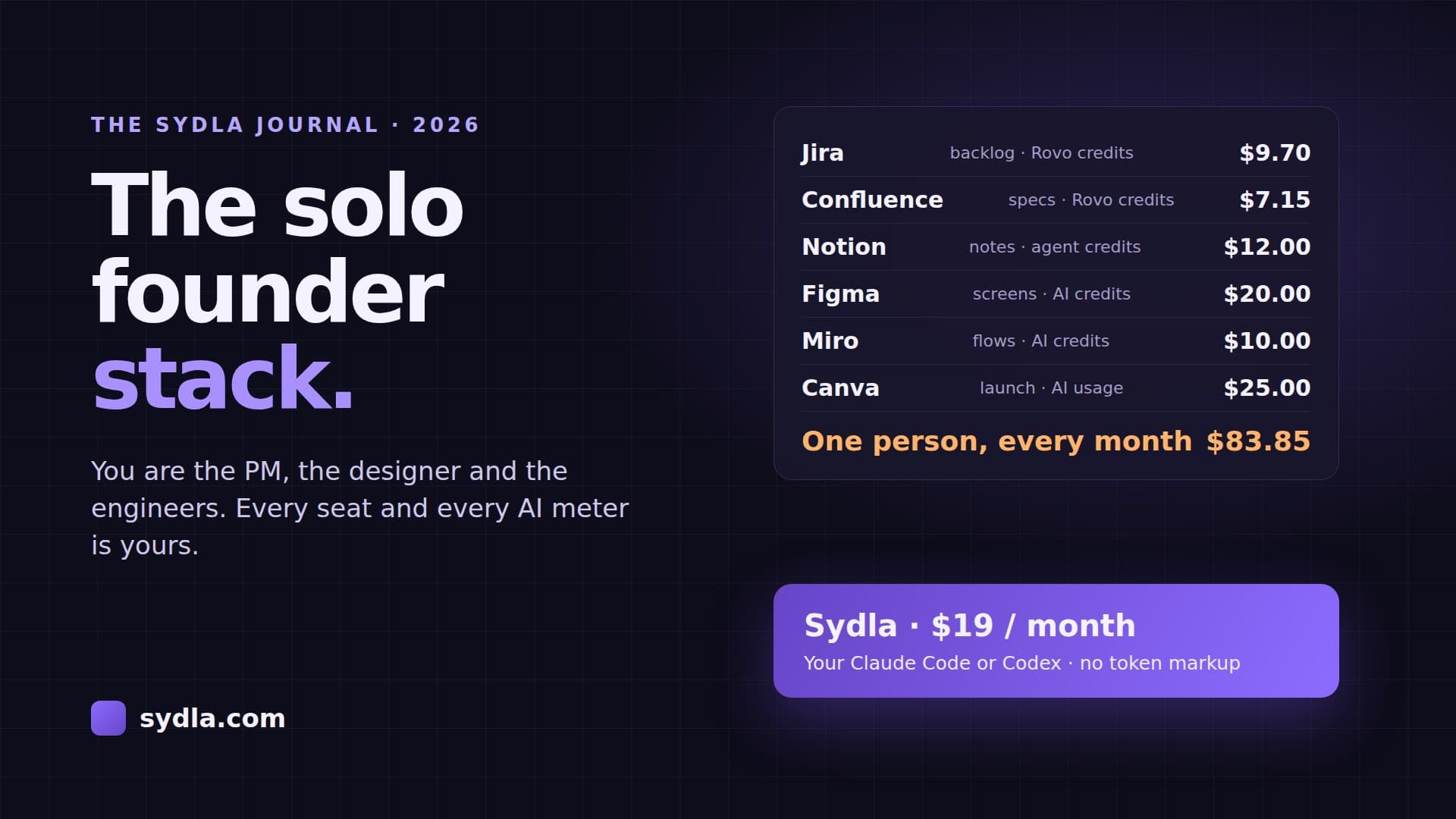
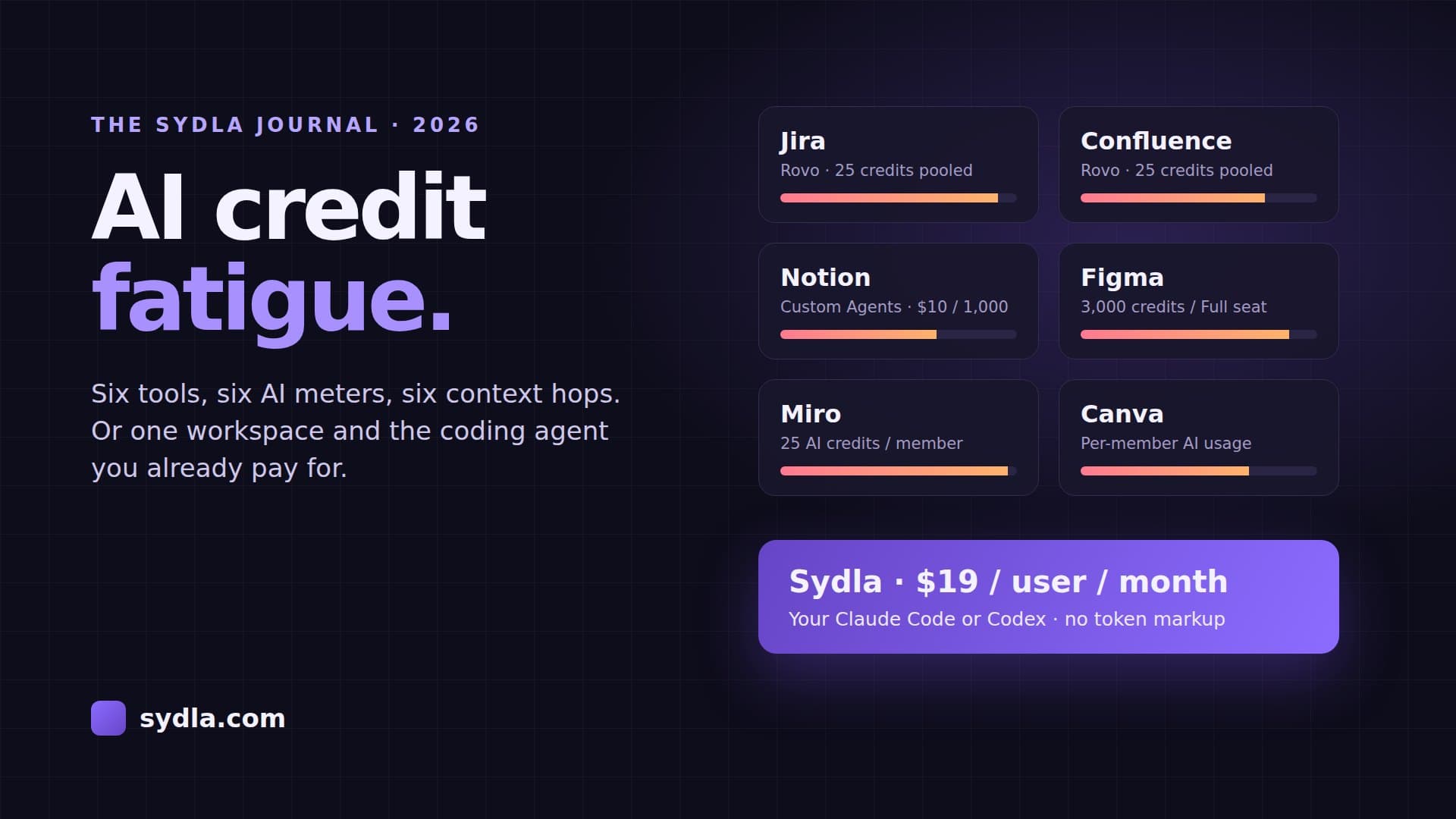
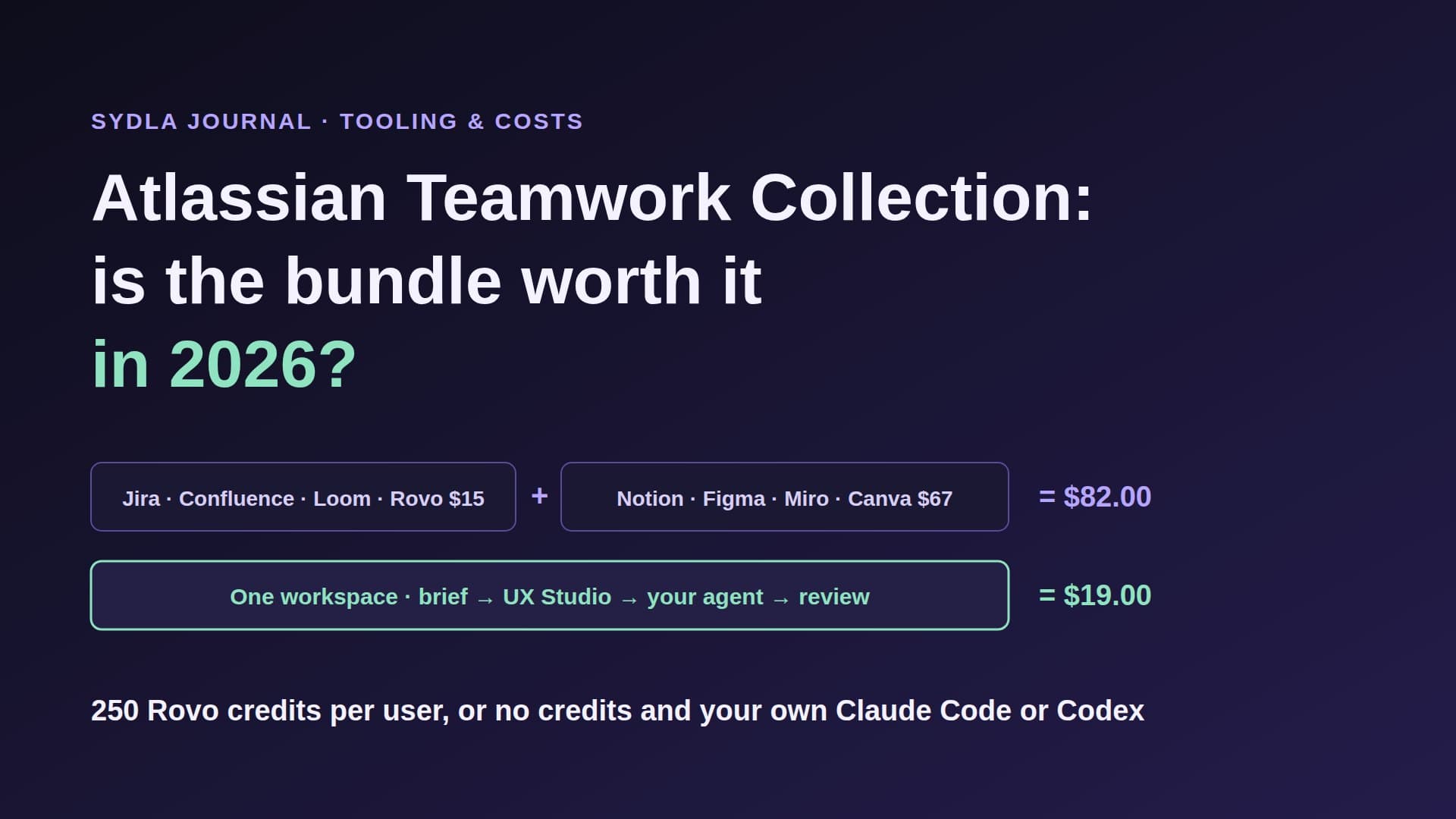
The collection replaces two lines of the usual product stack. Here is the whole stack at November 2026 list prices, with the Teamwork Collection in place of Jira and Confluence.
| Tool | Price per user | AI meter in November 2026 | What the coding agent has to reach |
|---|---|---|---|
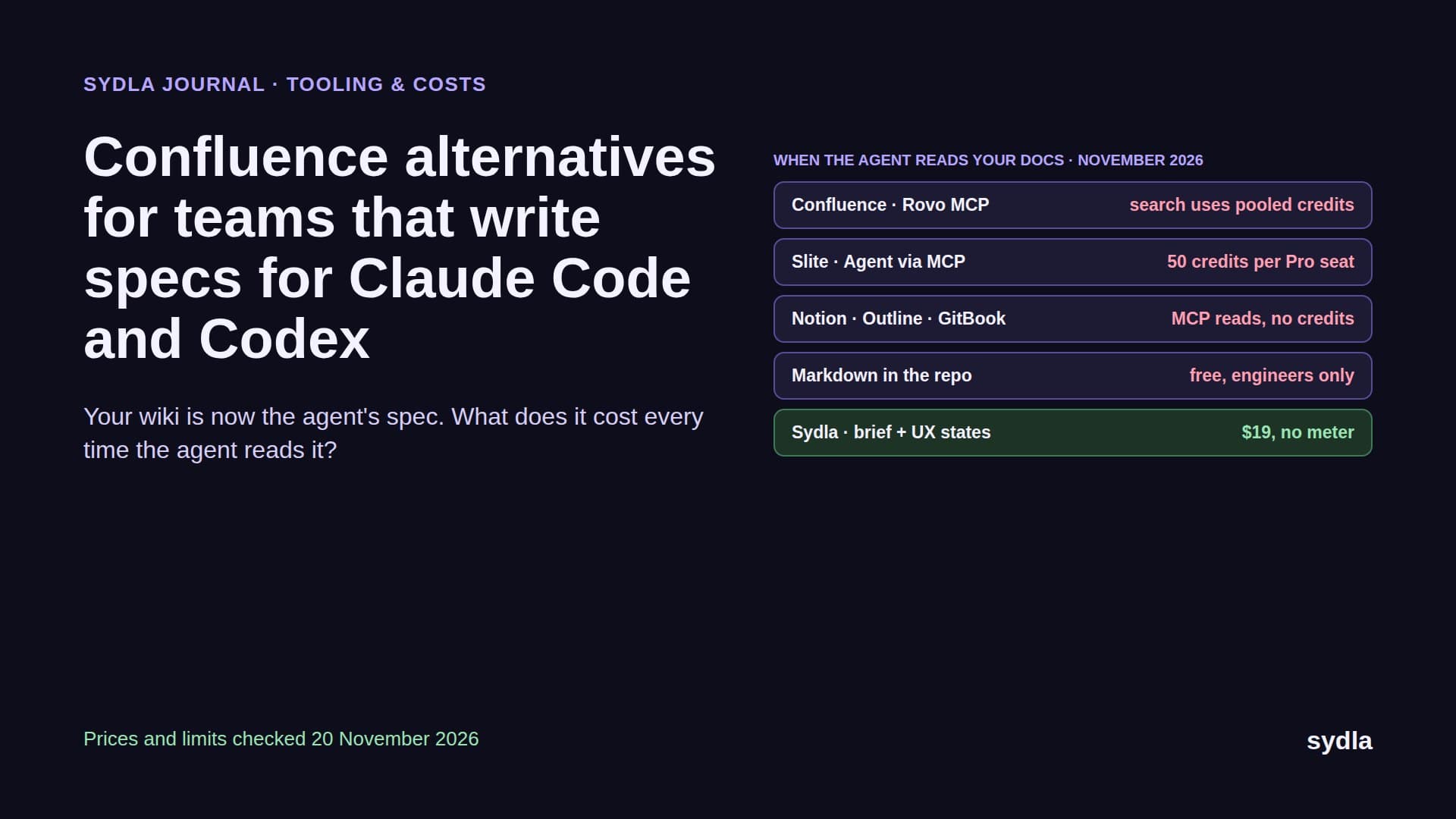
| Teamwork Collection Standard (Jira, Confluence, Loom, Rovo) | $15.00 | 250 Rovo credits per user, pooled; $0.01 per extra credit from 3 December 2026 | Tickets and specs through the Rovo MCP server; enriched searches cost 1 to 10 credits per call |
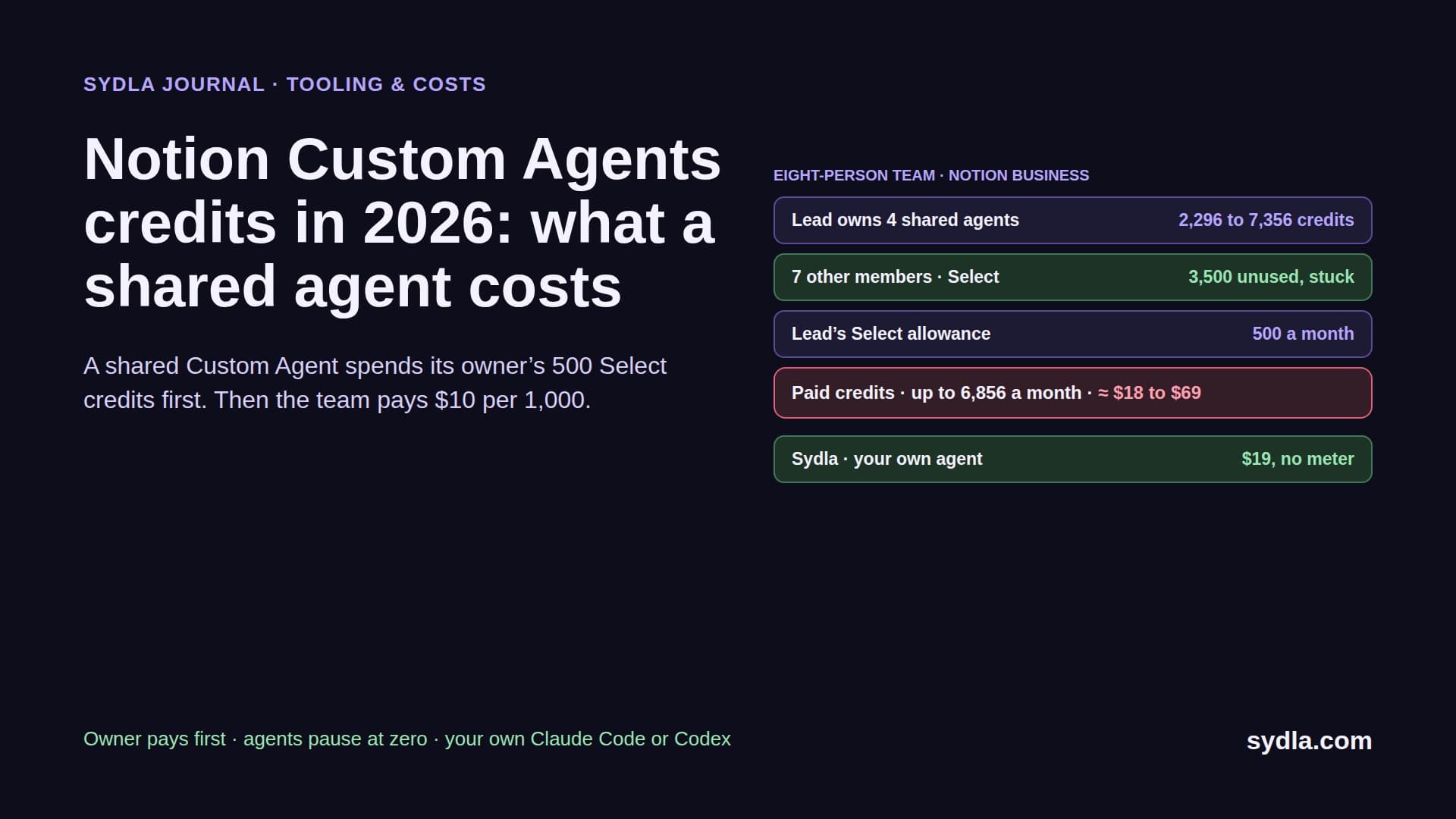
| Notion Plus | $12.00 | Custom Agents need Business; extra credits $10 per 1,000 | Decisions and meeting notes through the Notion MCP server |
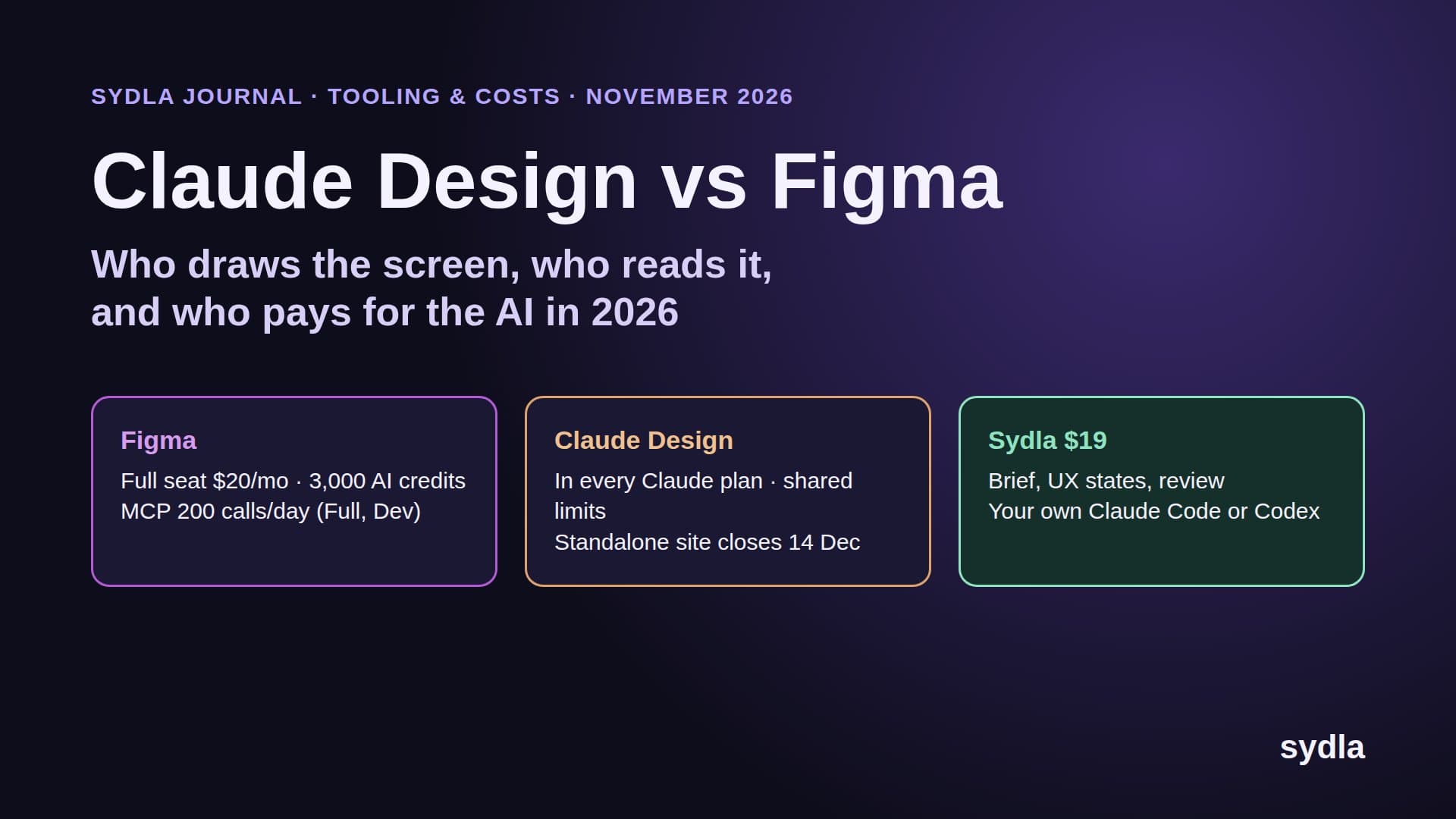
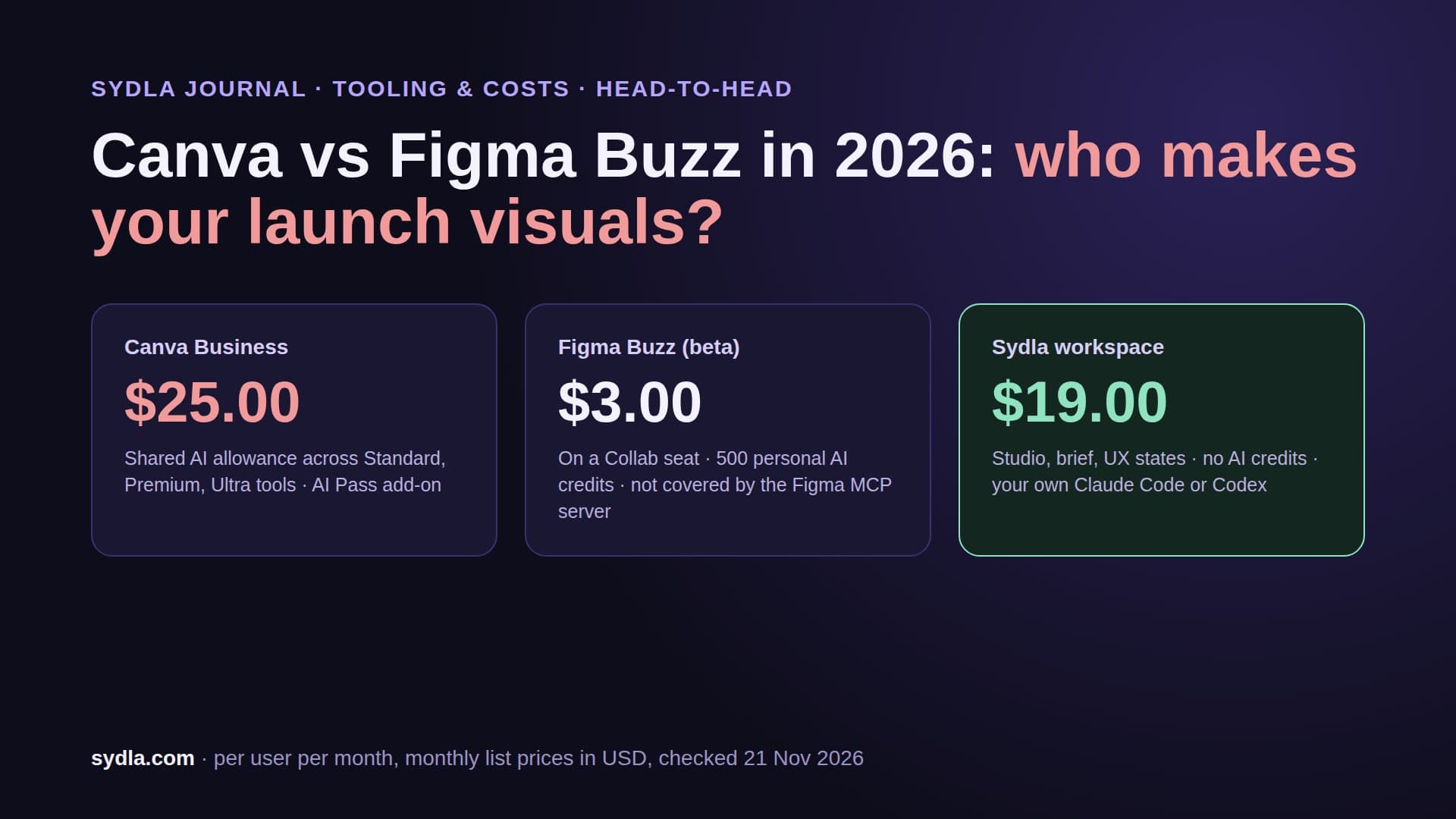
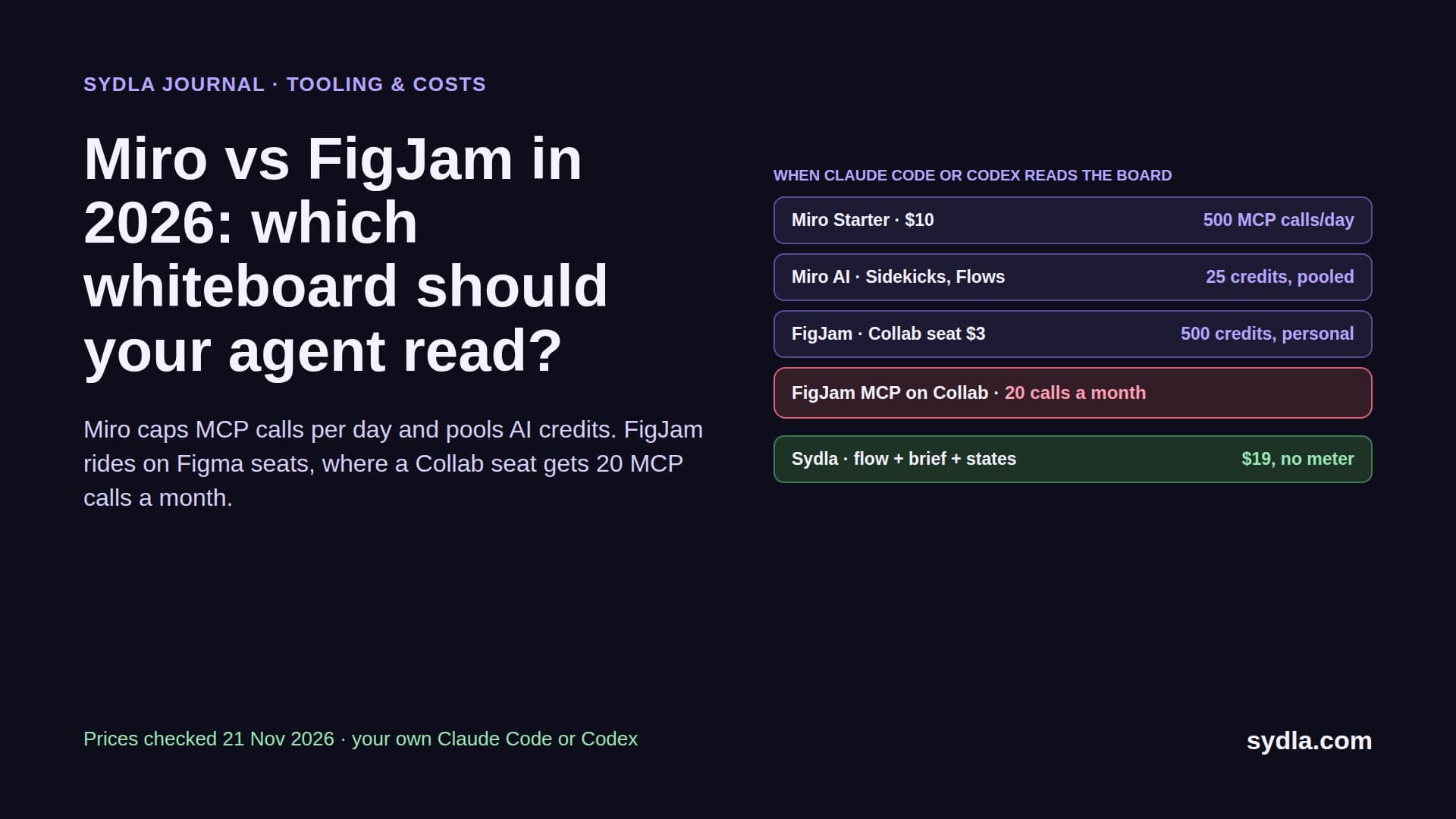
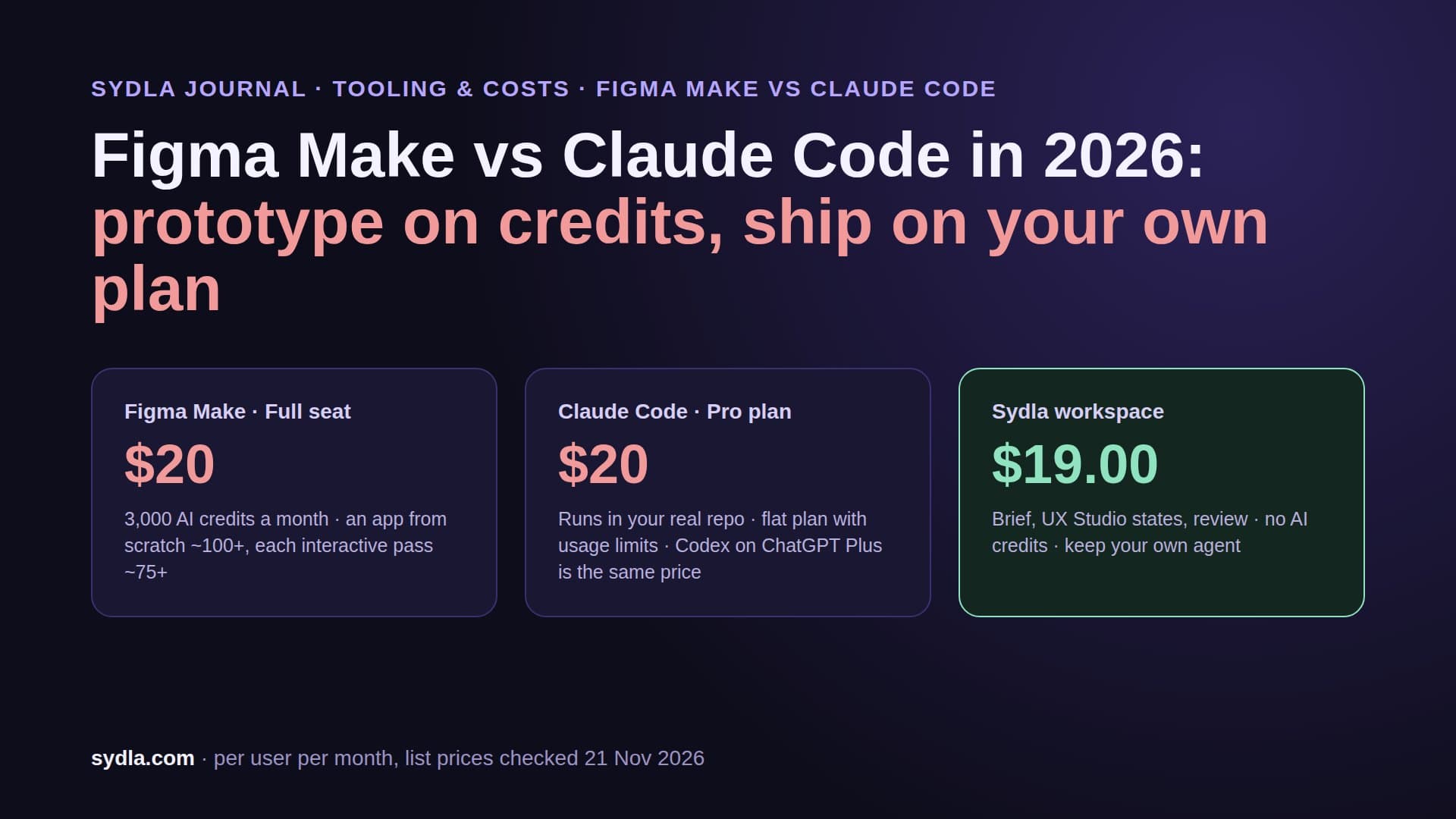
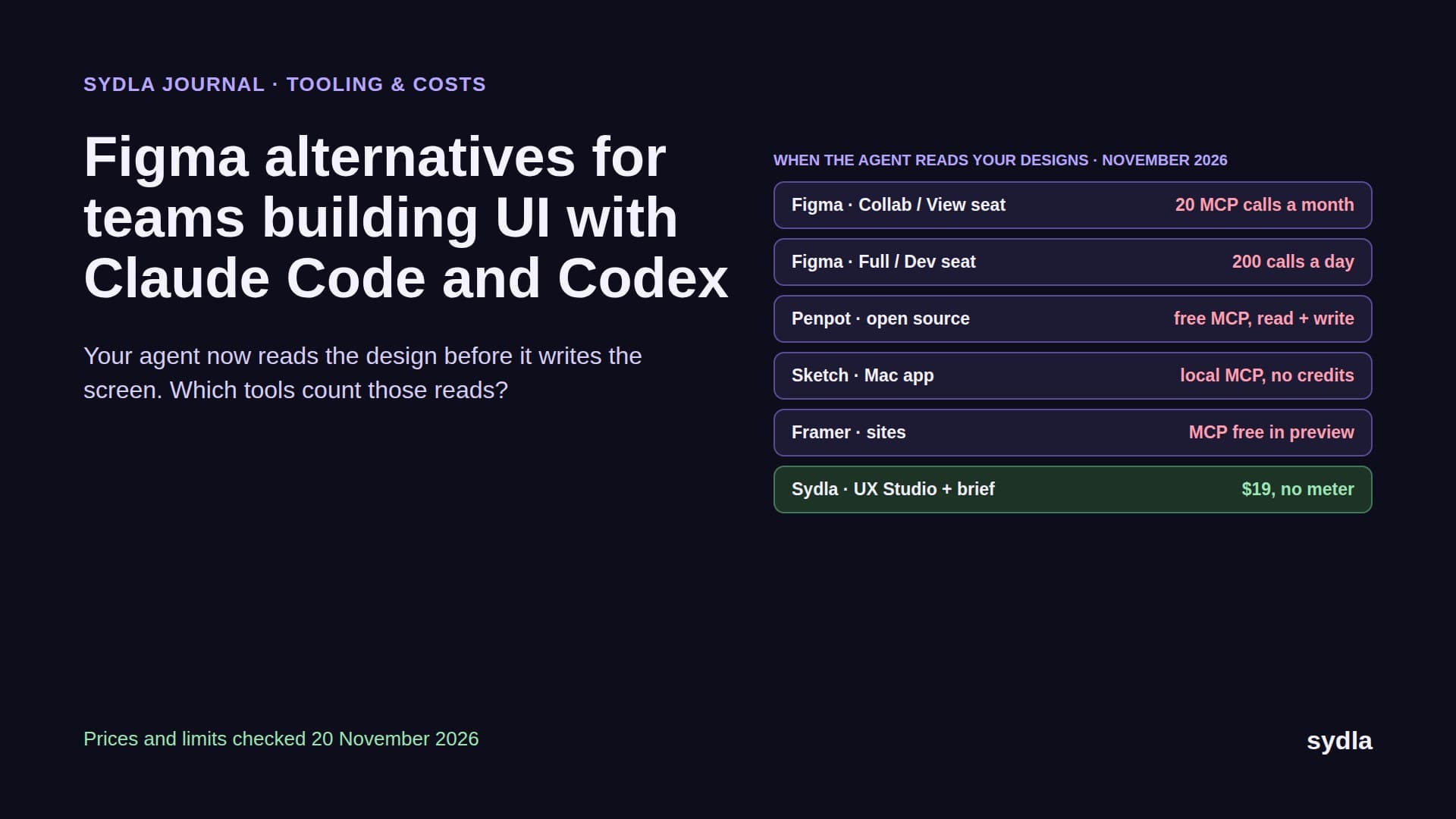
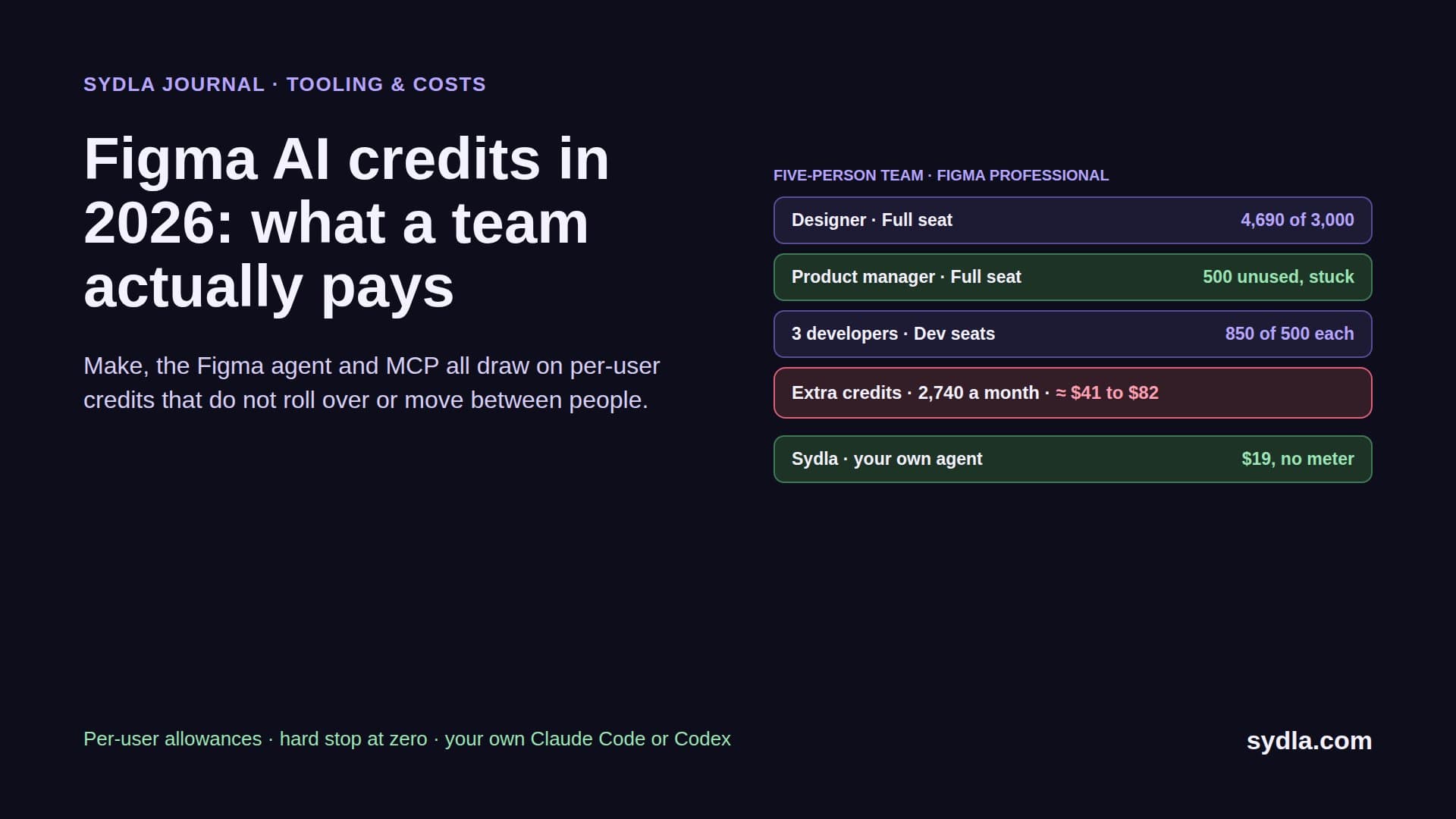
| Figma Professional Full | $20.00 | 3,000 AI credits per Full seat, not shared | Frames through Figma MCP: 200 reads a day on Full and Dev seats, 20 a month on View and Collab |
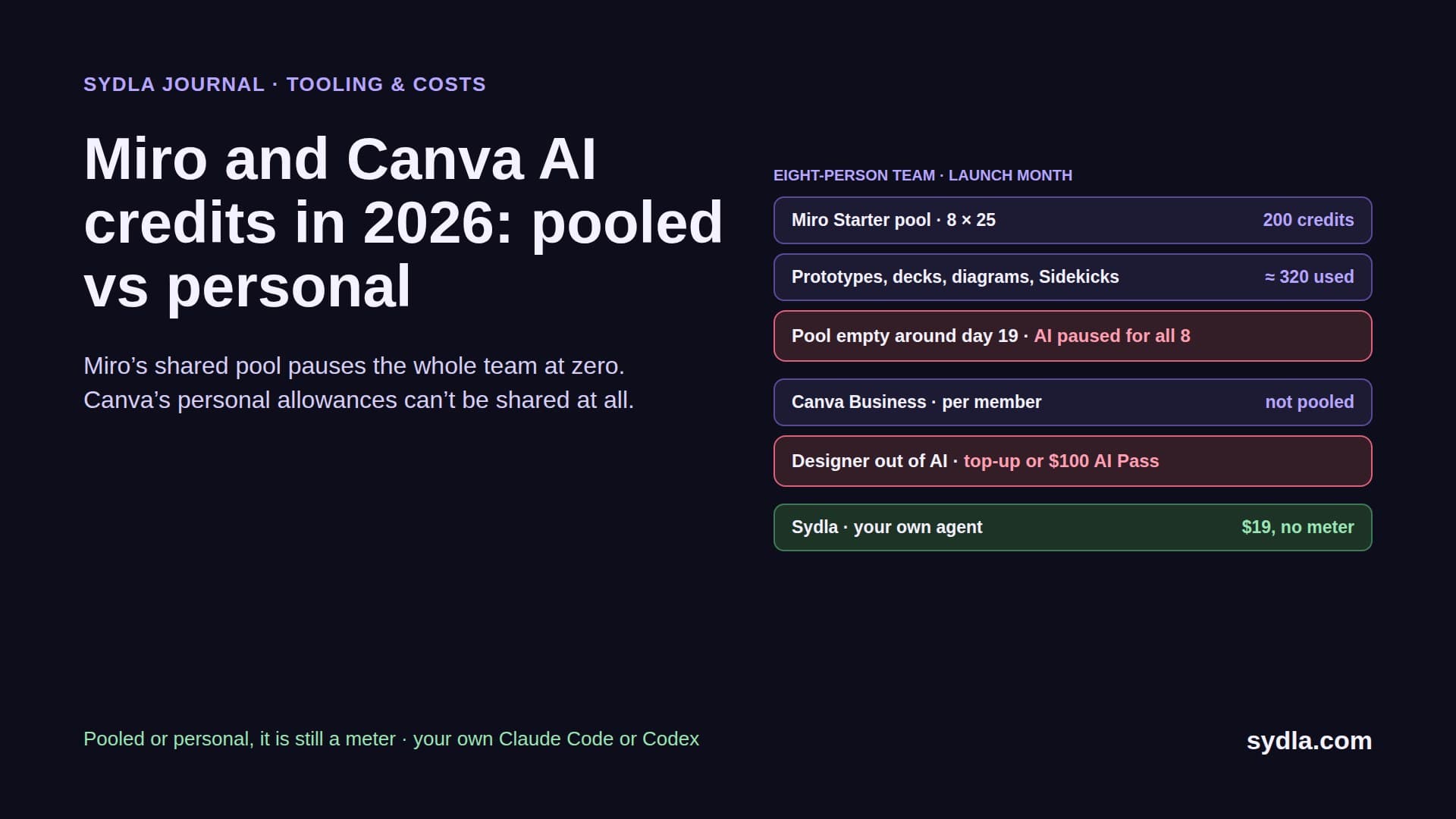
| Miro Starter | $10.00 | 25 AI credits per license, pooled per team | Flows through the Miro MCP server, 100 to 10,000 calls a day by plan |
| Canva Business | $25.00 | AI usage allowance per person | Launch visuals through the Canva AI connector |
| Stack with Teamwork Collection | $82.00 | Five meters, five renewal dates | Five MCP servers or connectors |
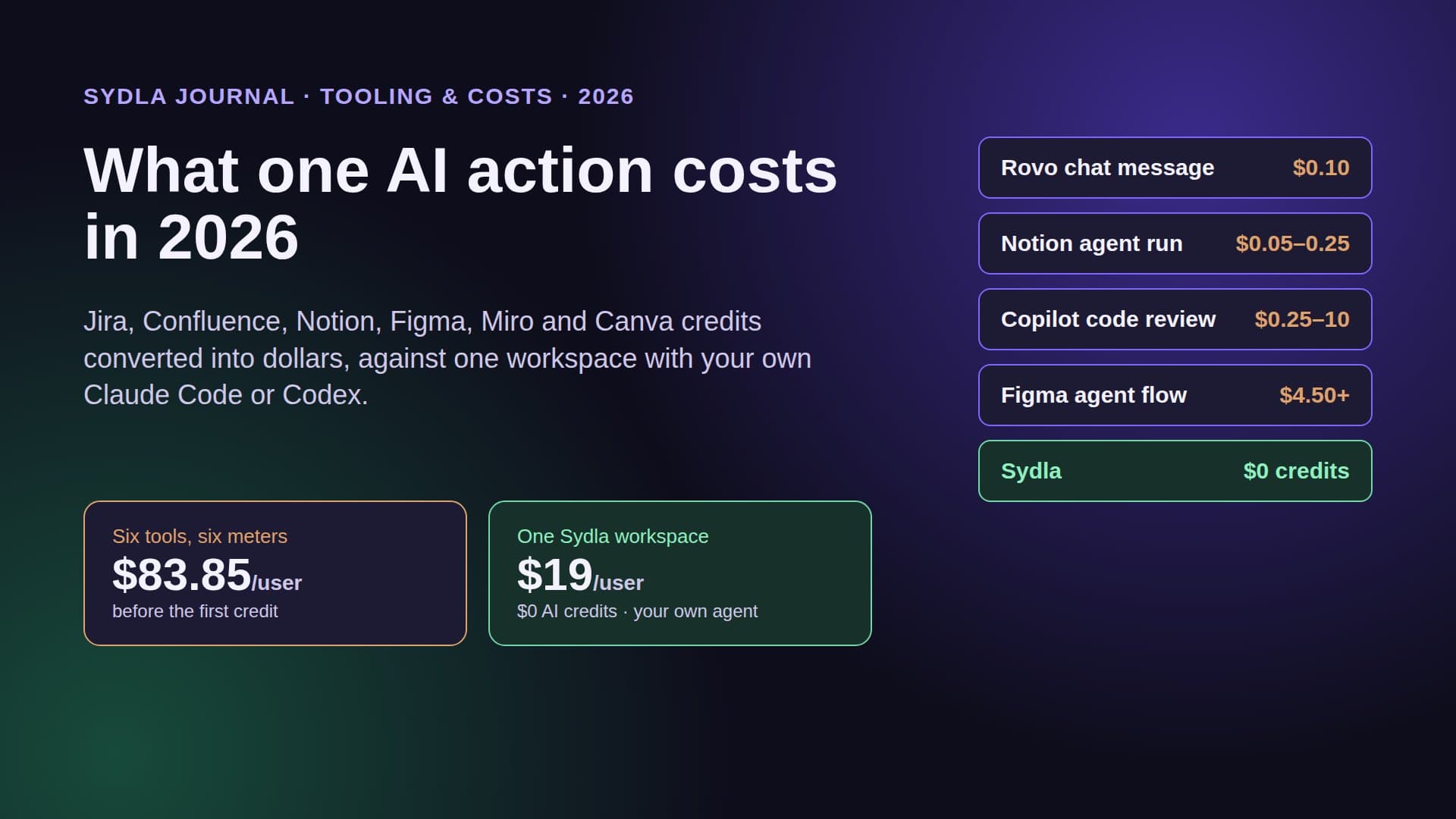
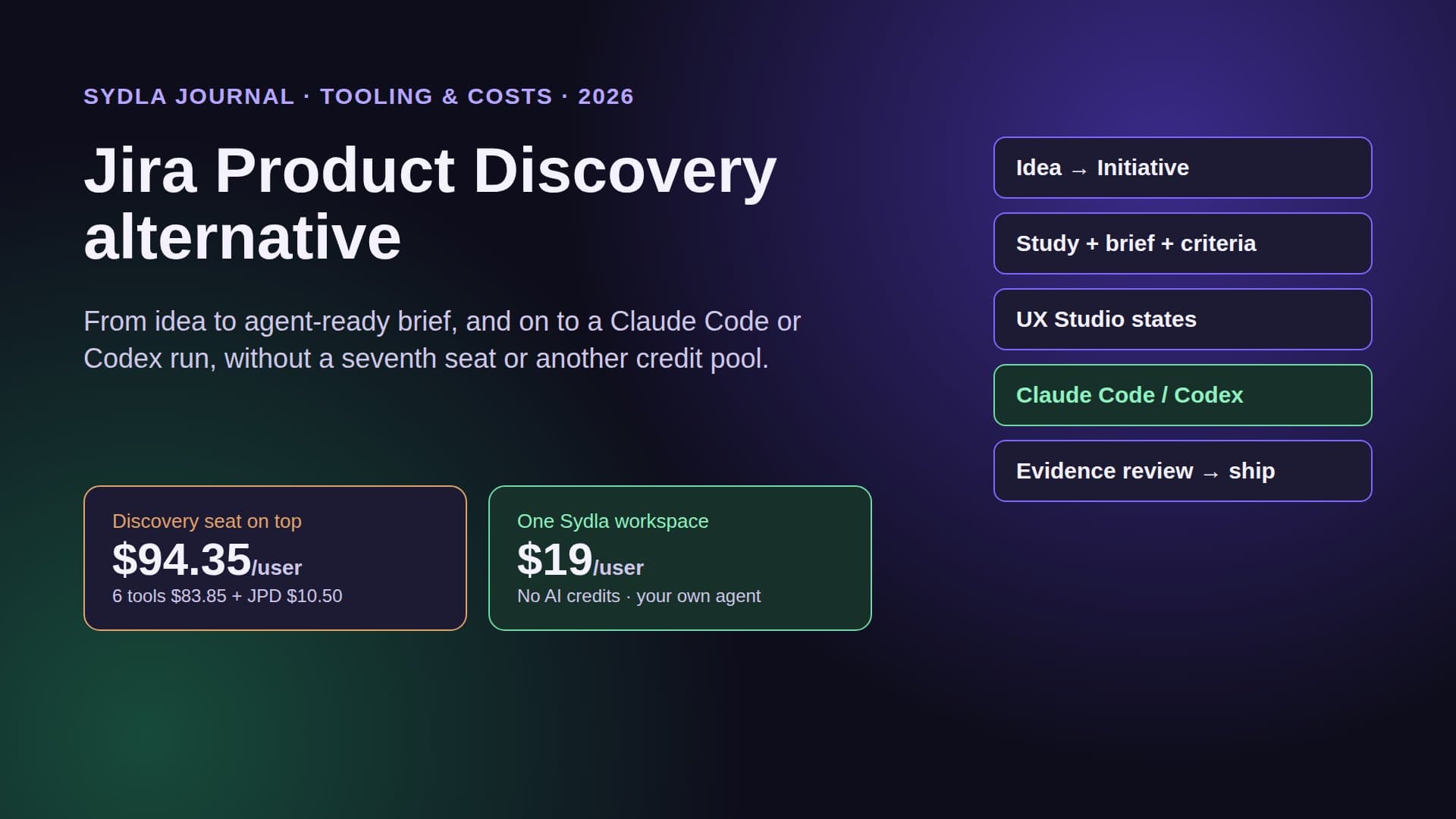
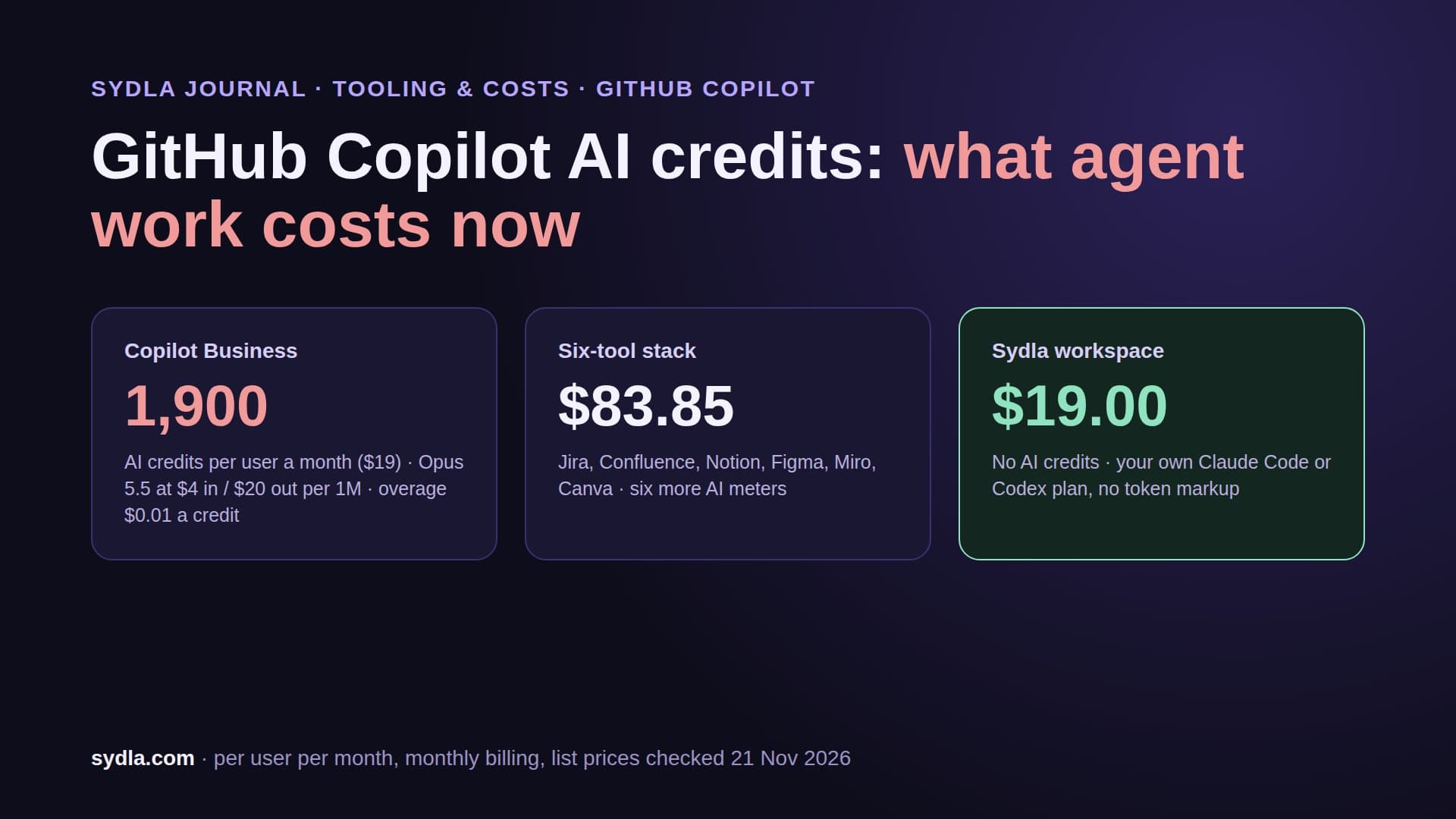
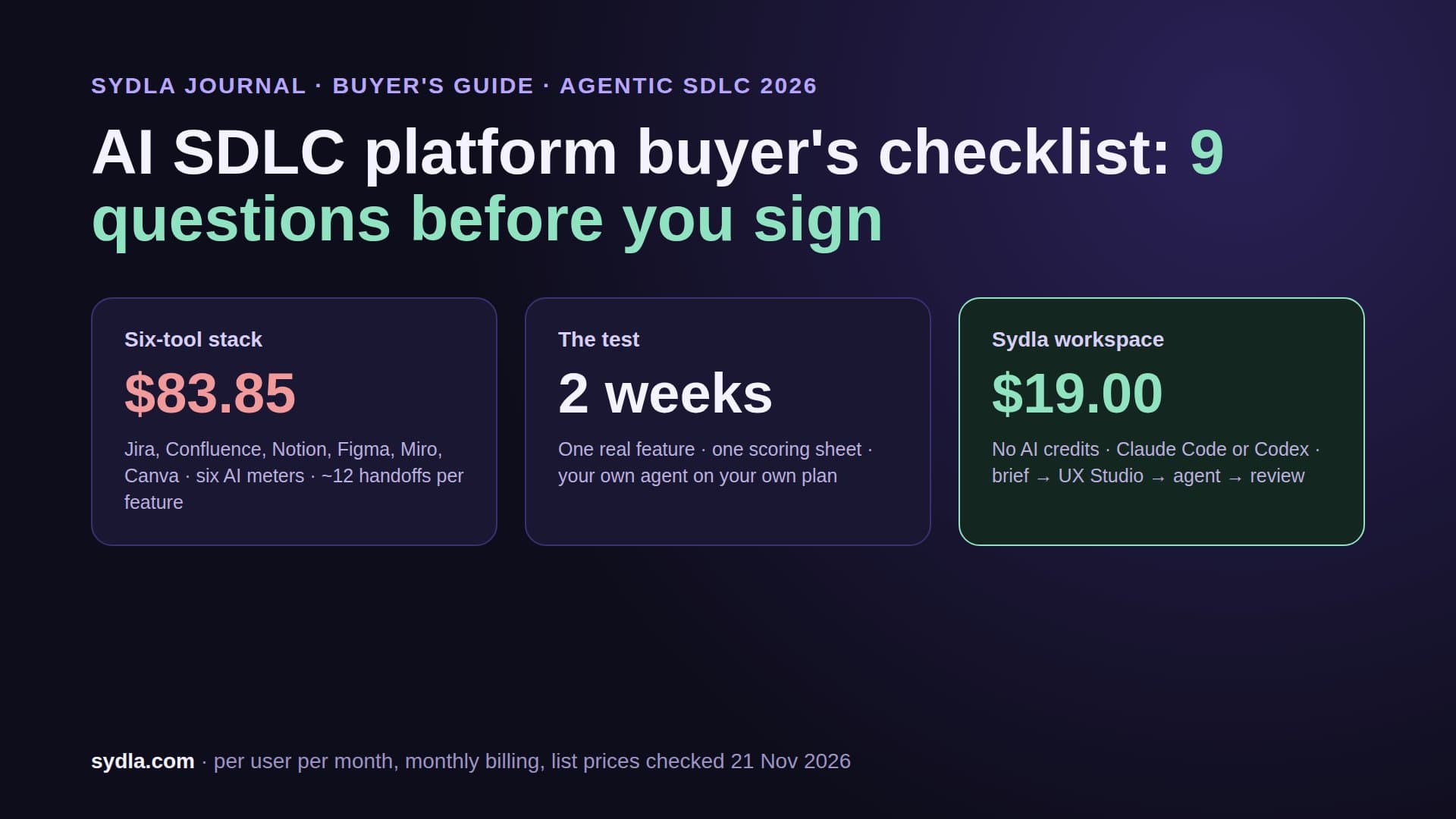
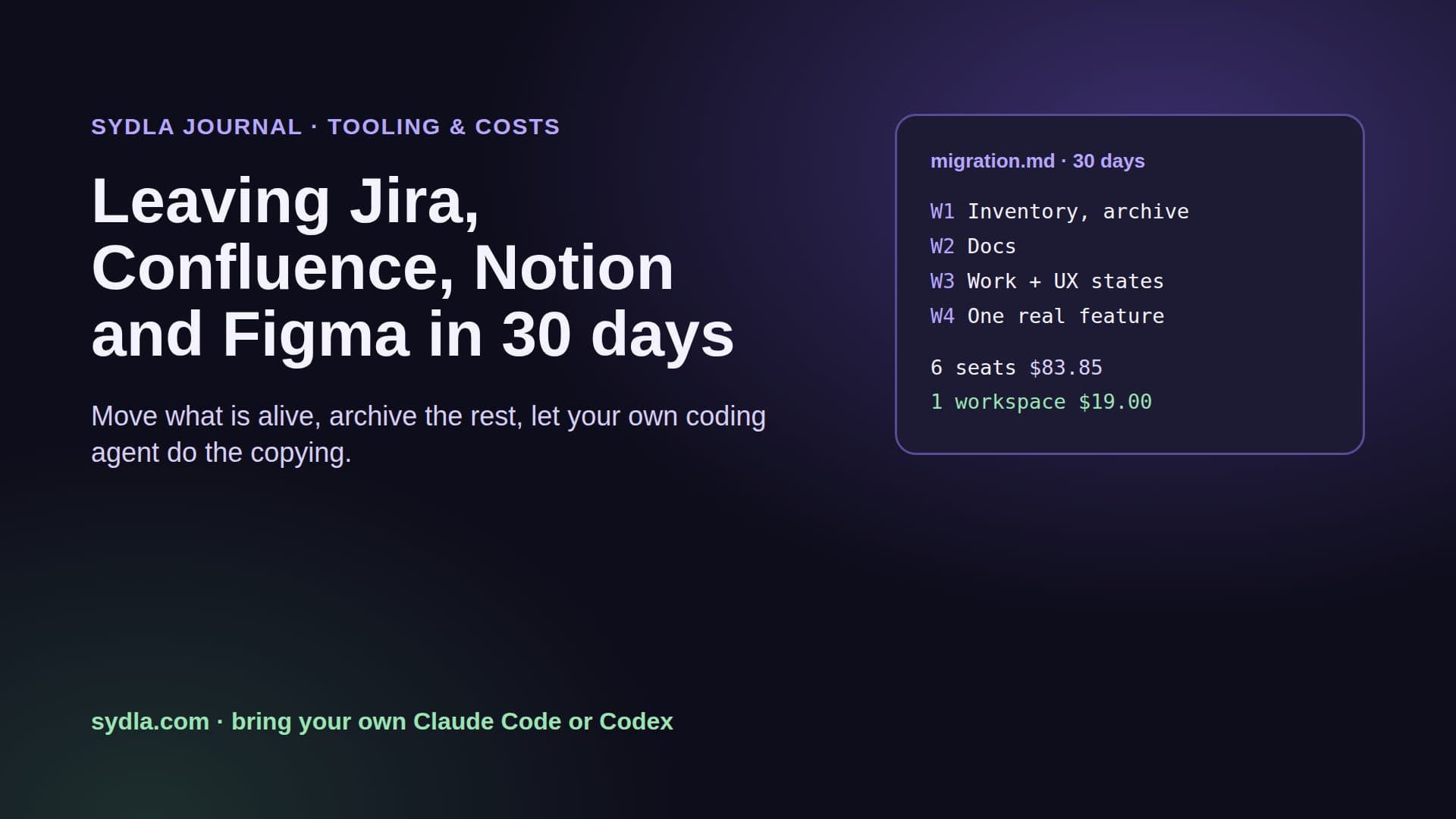
| Stack with Jira and Confluence apart | $83.85 | Six meters | Six |
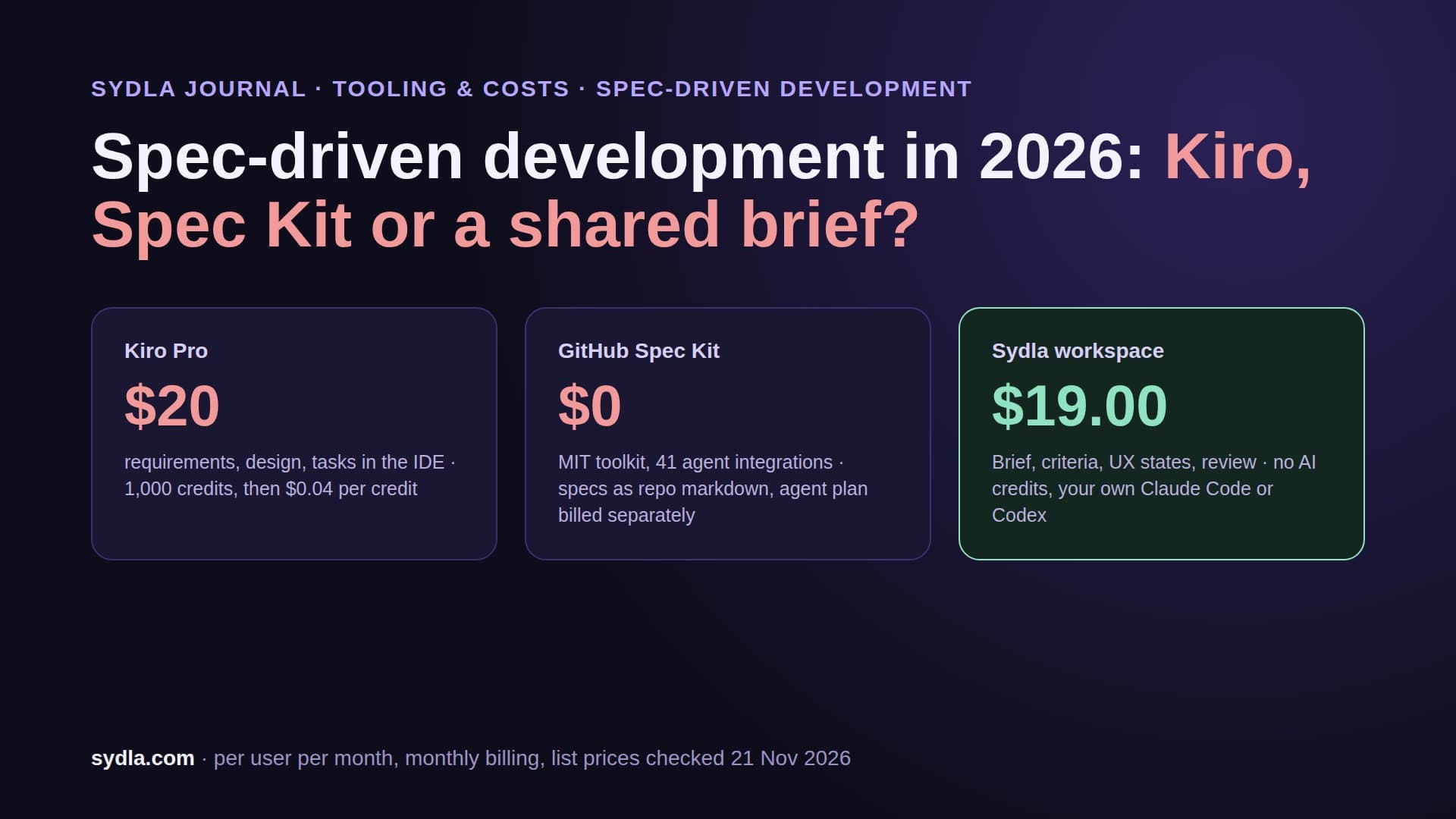
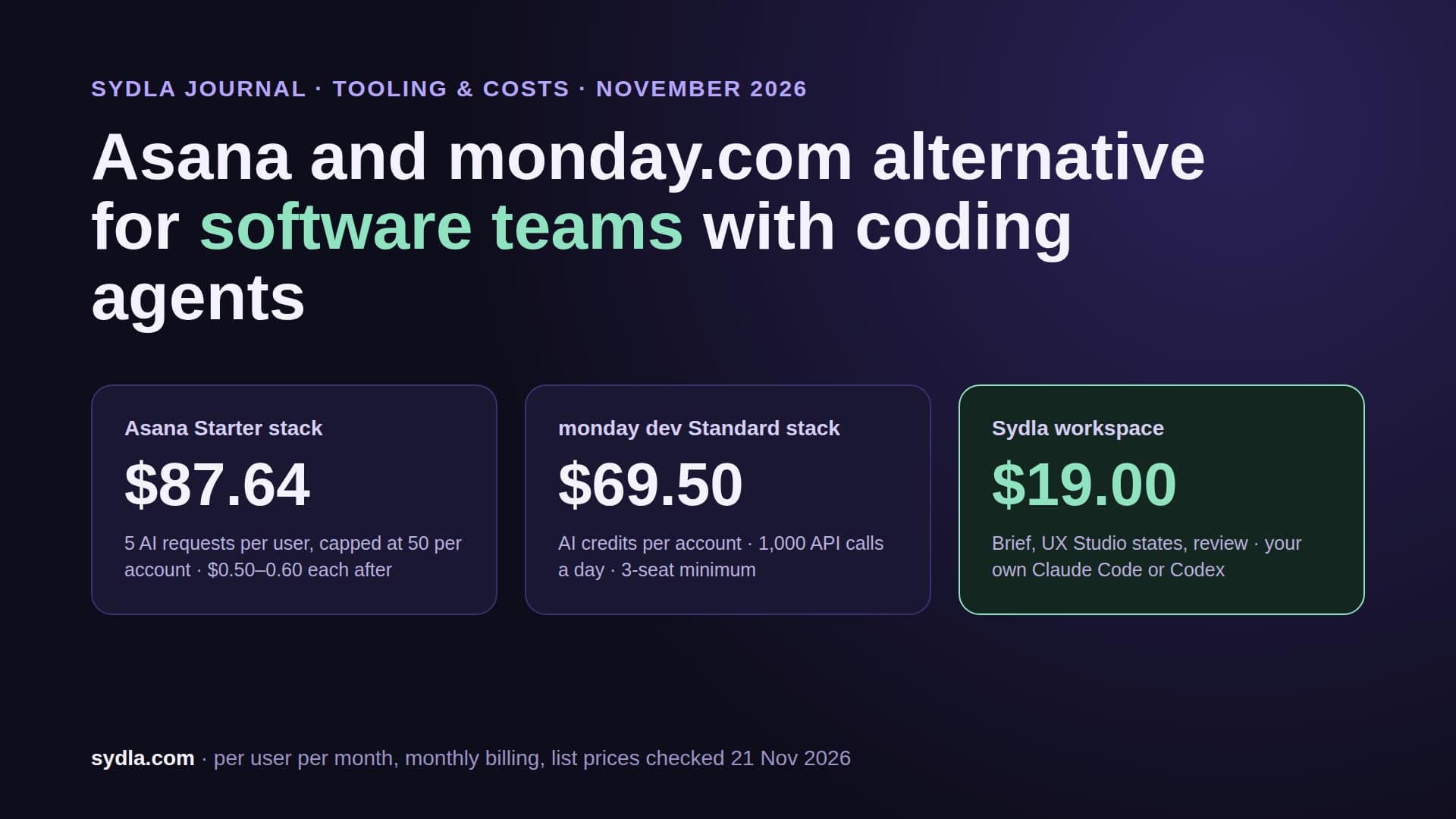
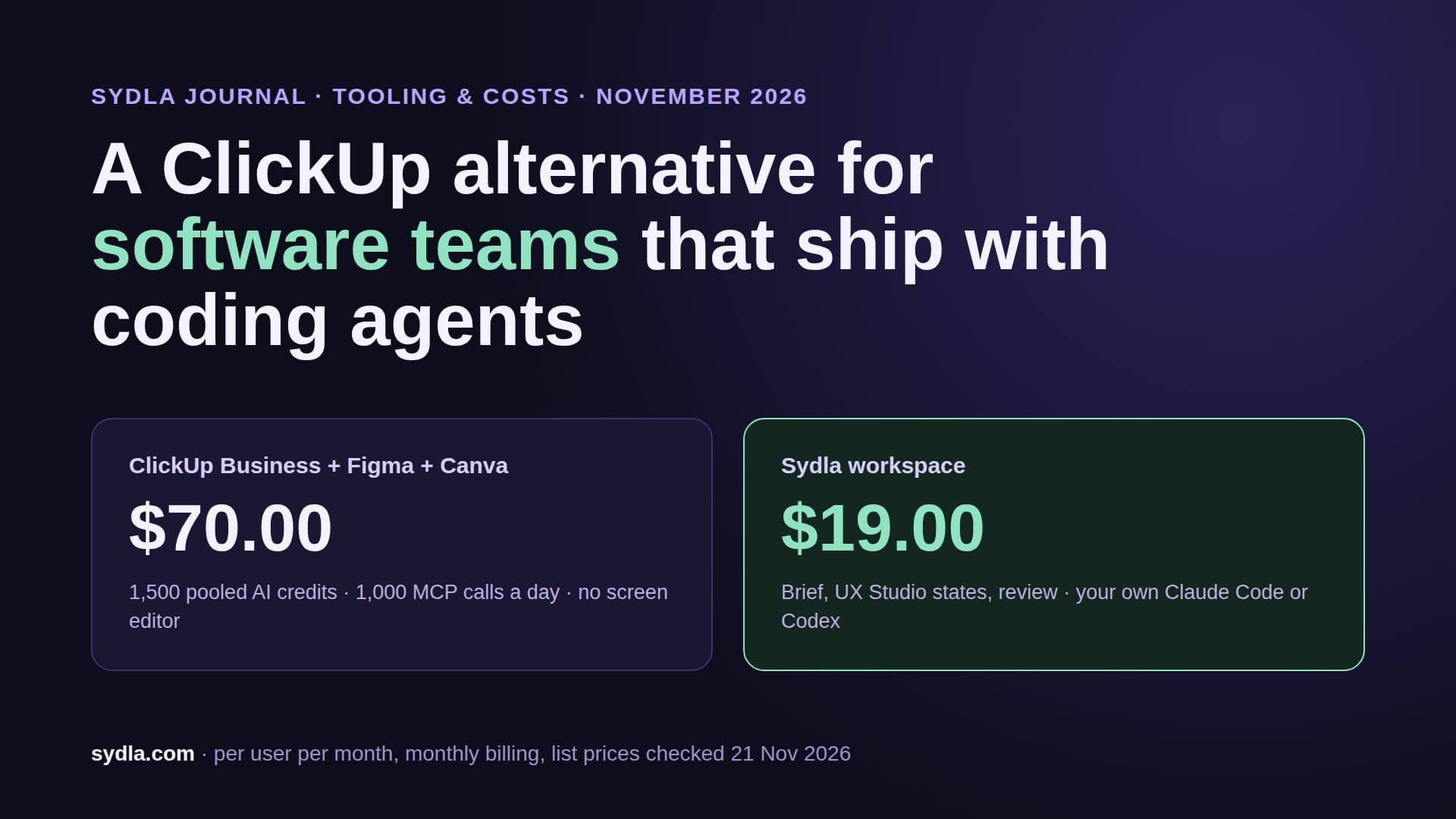
| Sydla workspace | $19.00 | No Sydla AI credits; your own Claude Code or Codex plan | One MCP connection to the brief, criteria and UX states |
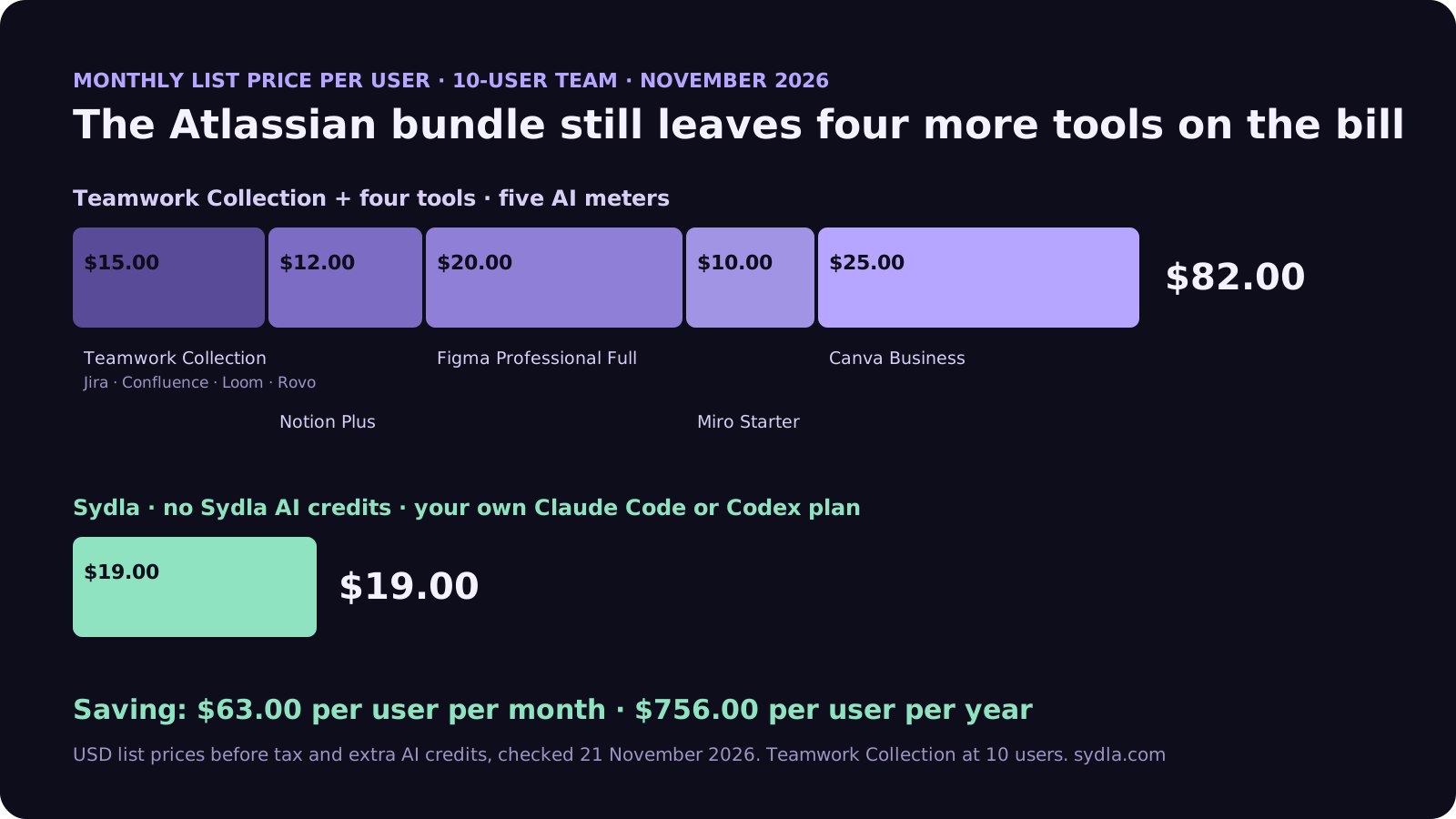
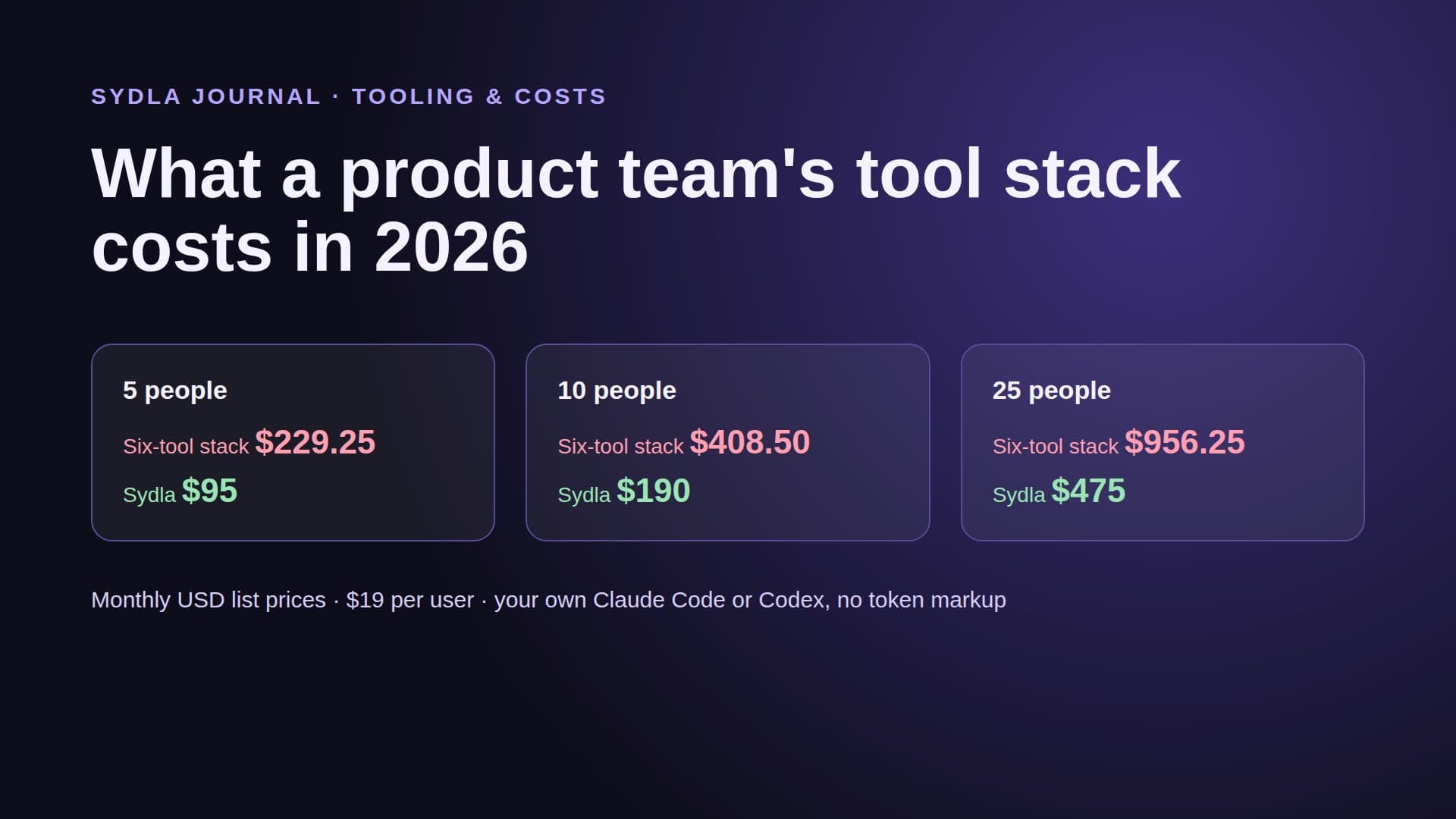
The bundle saves $1.85 per user on the full stack. Sydla saves $63.00 per user per month against the stack with the collection, or $64.85 against the stack bought apart, which is $778.20 per user per year. The comparison hub is honest about where each tool still wins, and our team stack cost breakdown does the same math for 5, 10 and 25 people.
Rovo agents vs your own coding agent
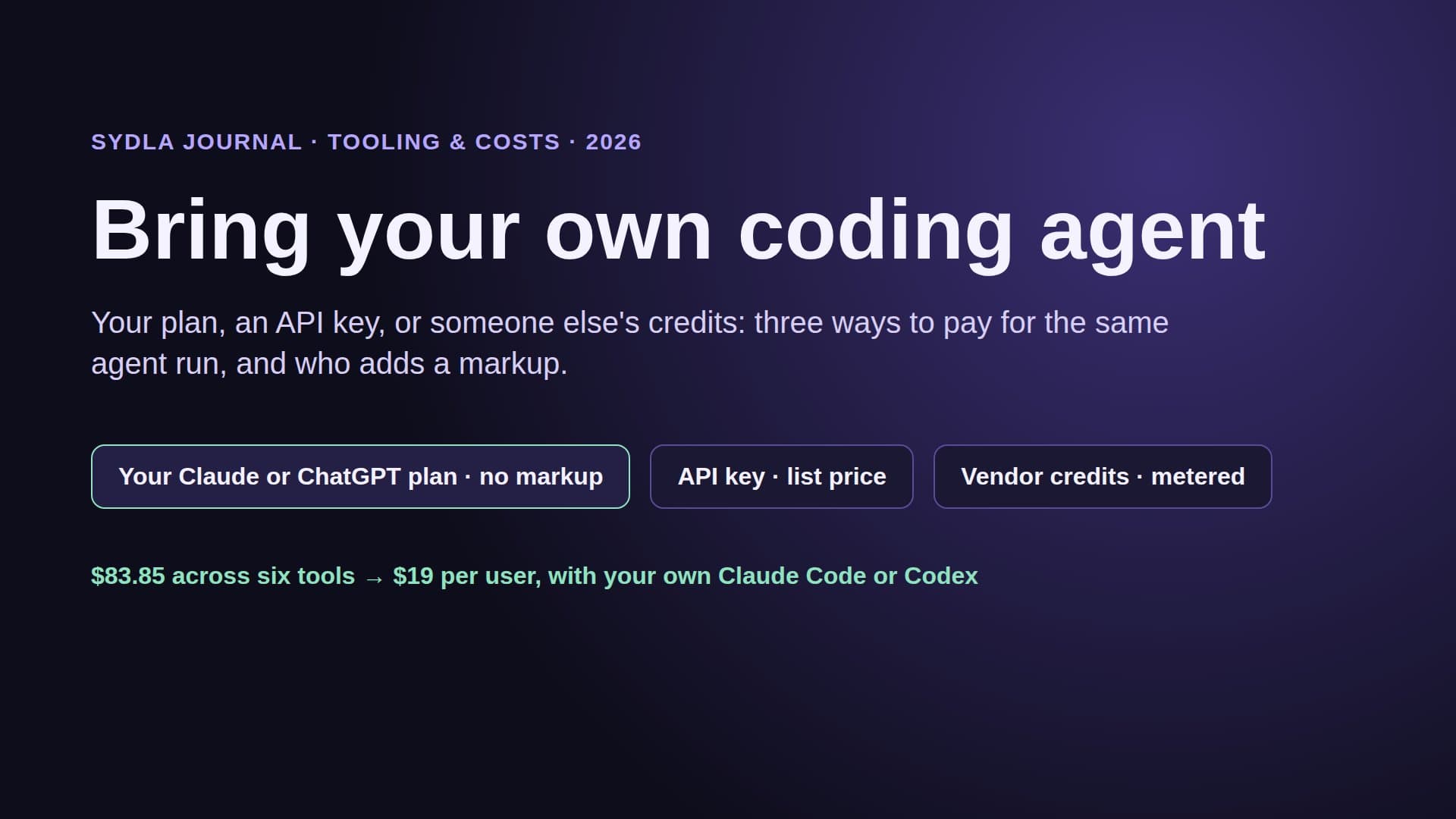
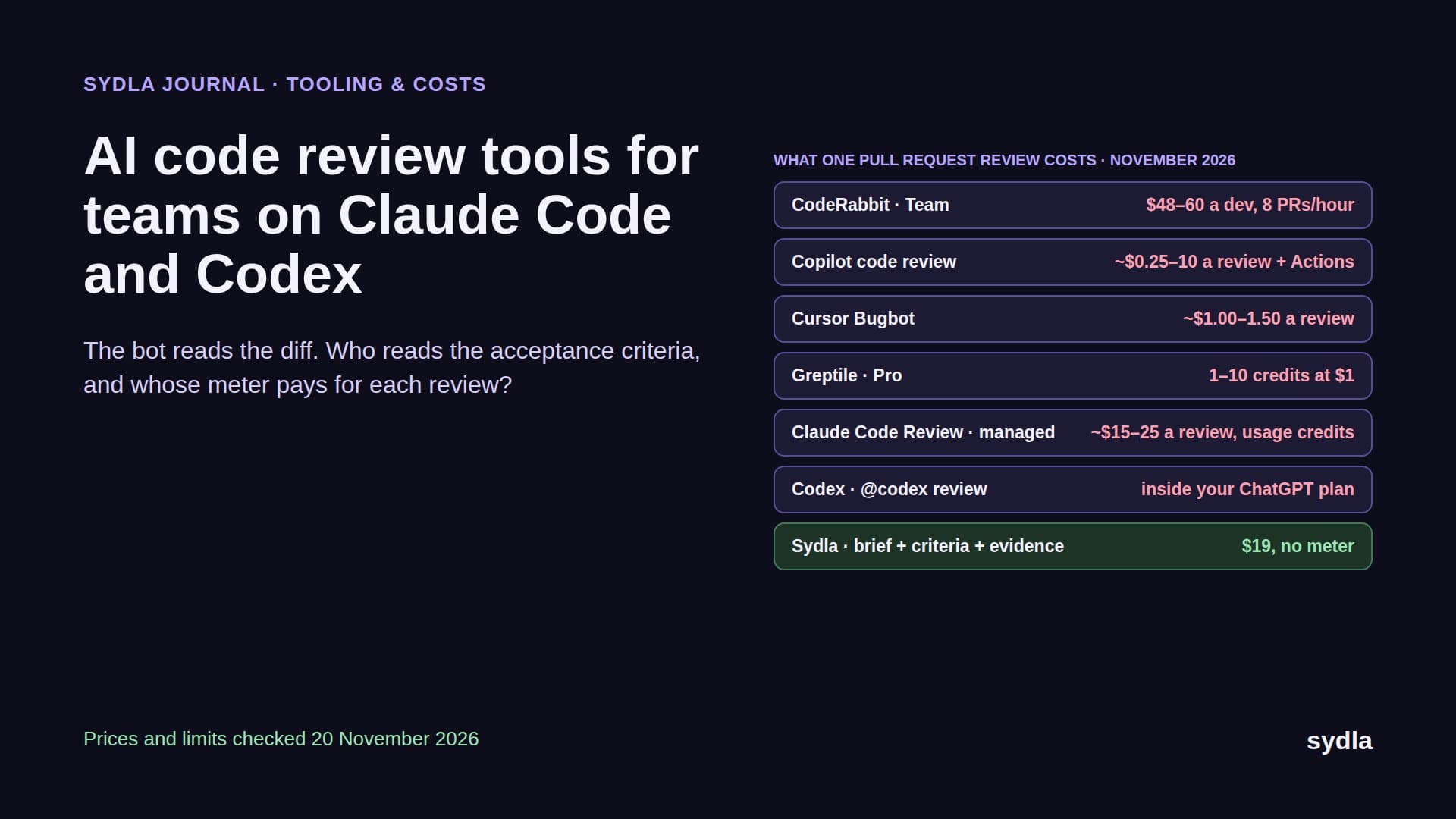
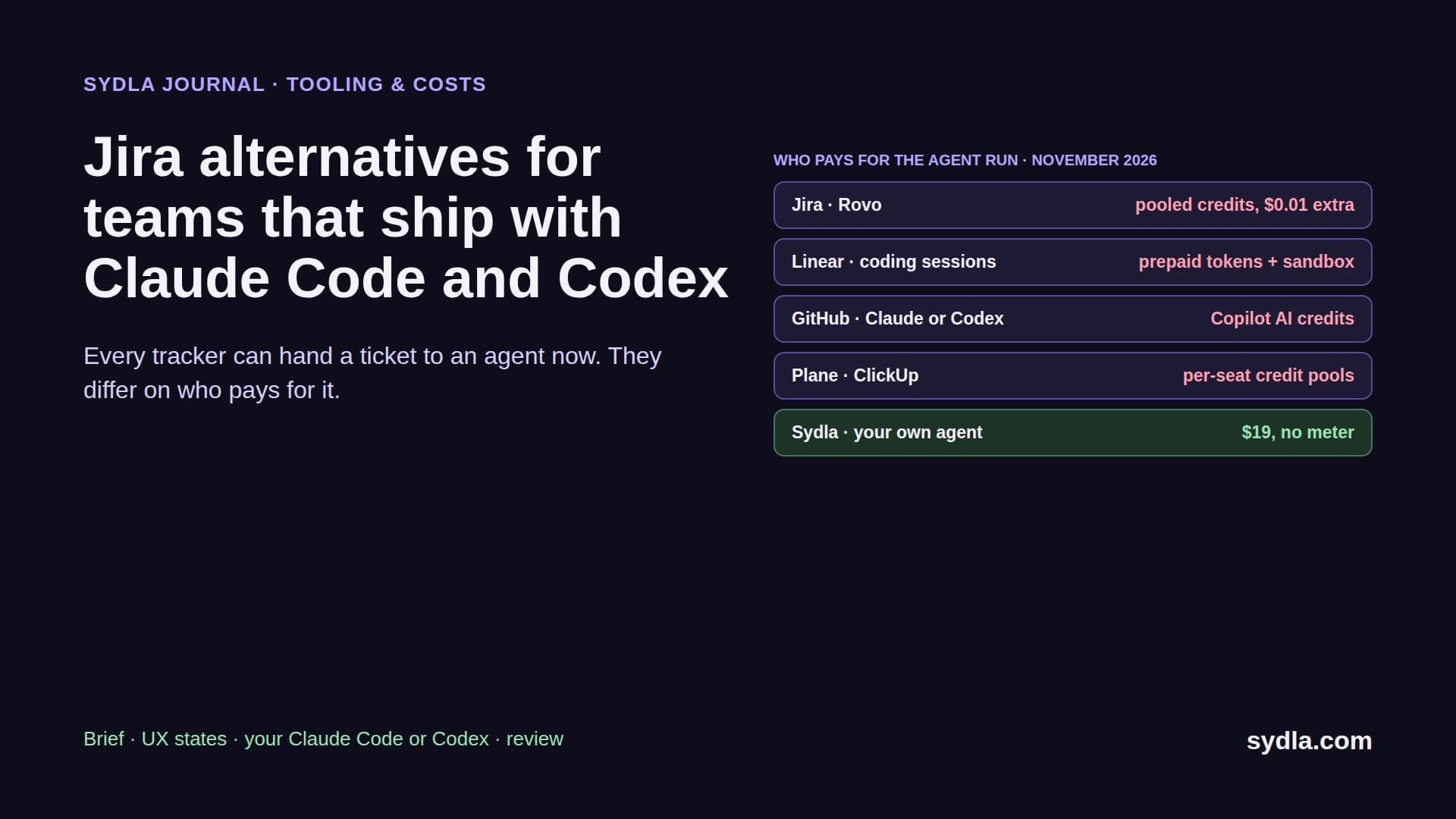
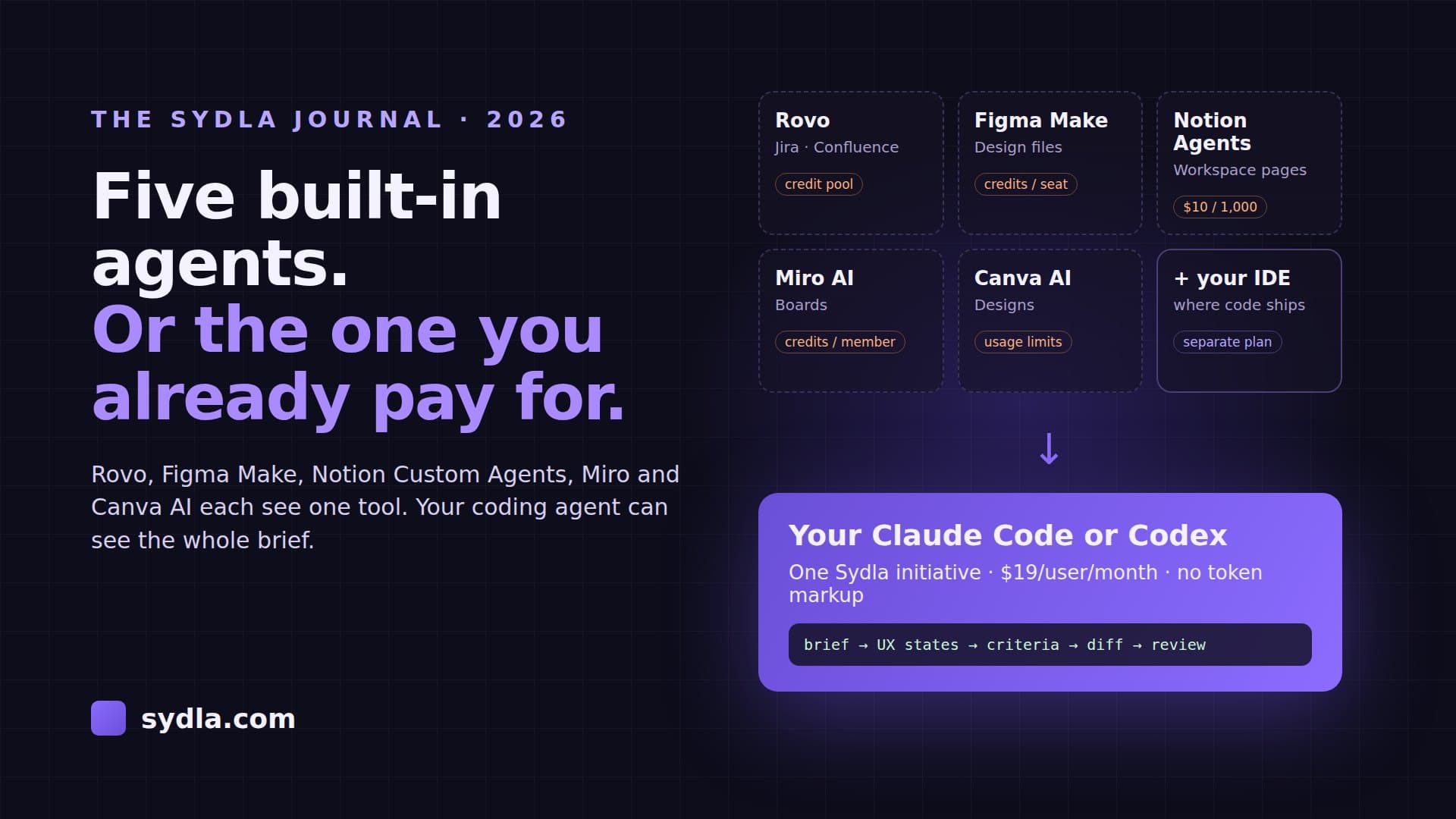
The other thing the collection does not change is who pays for the agent. Inside Atlassian, AI work happens on Rovo credits: Rovo Chat, Rovo agents, the Jira Coding Agent and, from 3 December, the Code Reviewer. Outside Atlassian, most engineers already pay for Claude Code or Codex through their own Claude or ChatGPT plan. When that agent reads a Jira ticket or a Confluence page through the Rovo MCP server, simple lookups are free but enriched searches spend from the same Rovo pool.
That leaves a team paying for AI twice: once in the coding agent plan, once in the credits the tracker charges to read context for it. Our comparison of Claude Code and built-in AI agents maps what each built-in agent can reach, and bring your own coding agent explains the three ways a run gets paid for.
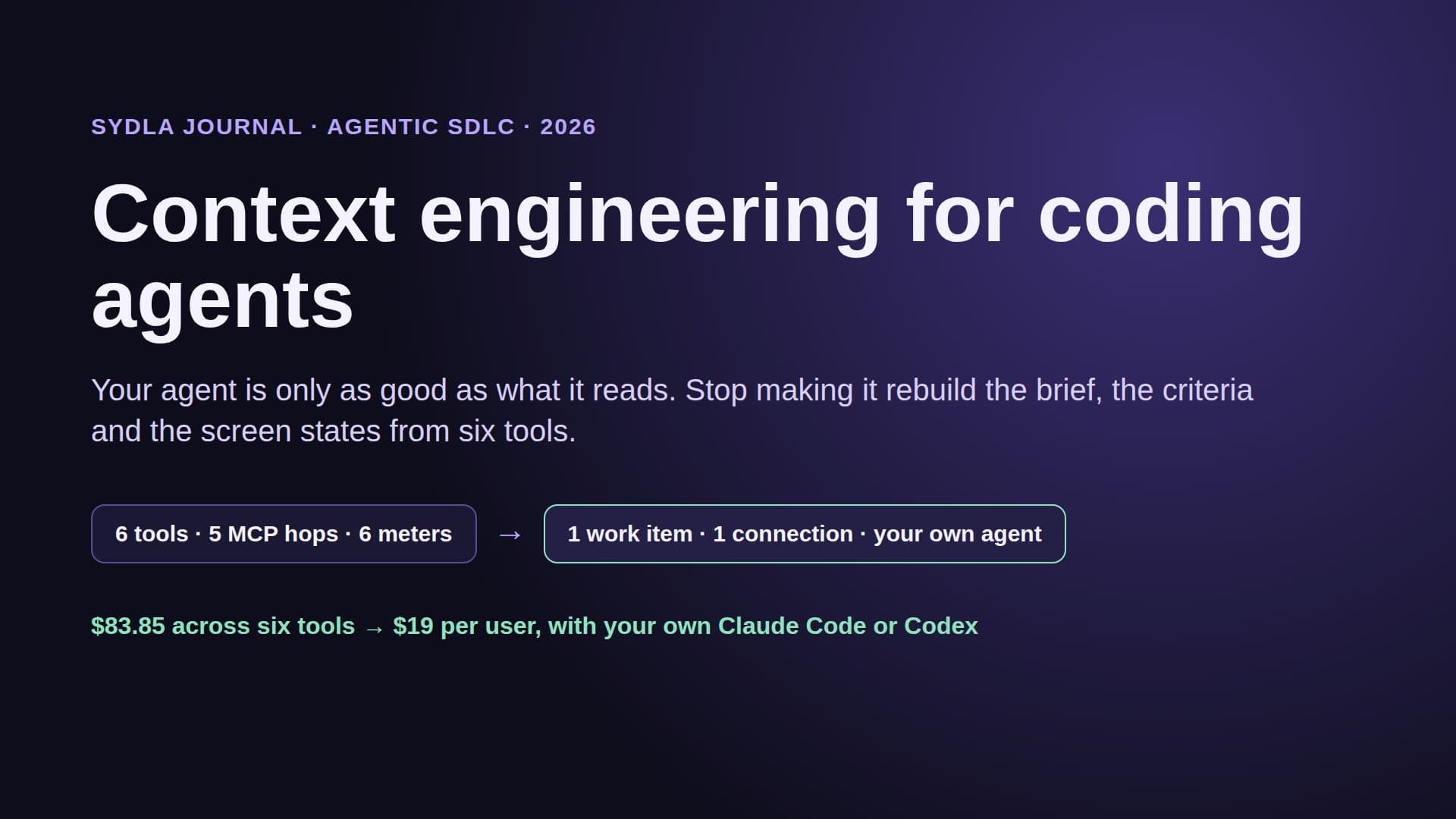
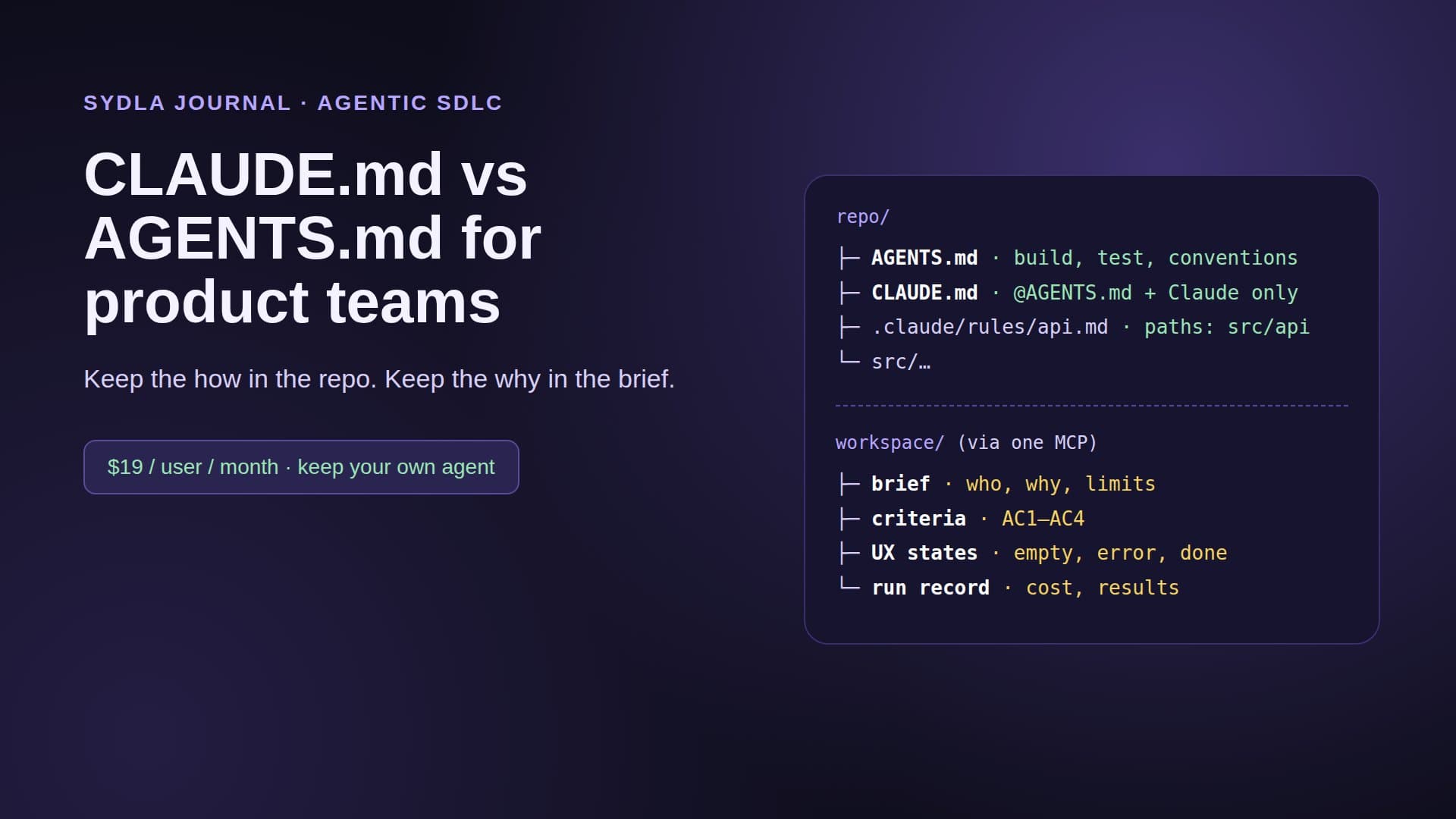
Sydla takes the other route. It has no AI credits to sell. The agent is the Claude Code or Codex you already run, and reading the work item, the acceptance criteria and the UX states costs nothing on the Sydla side.
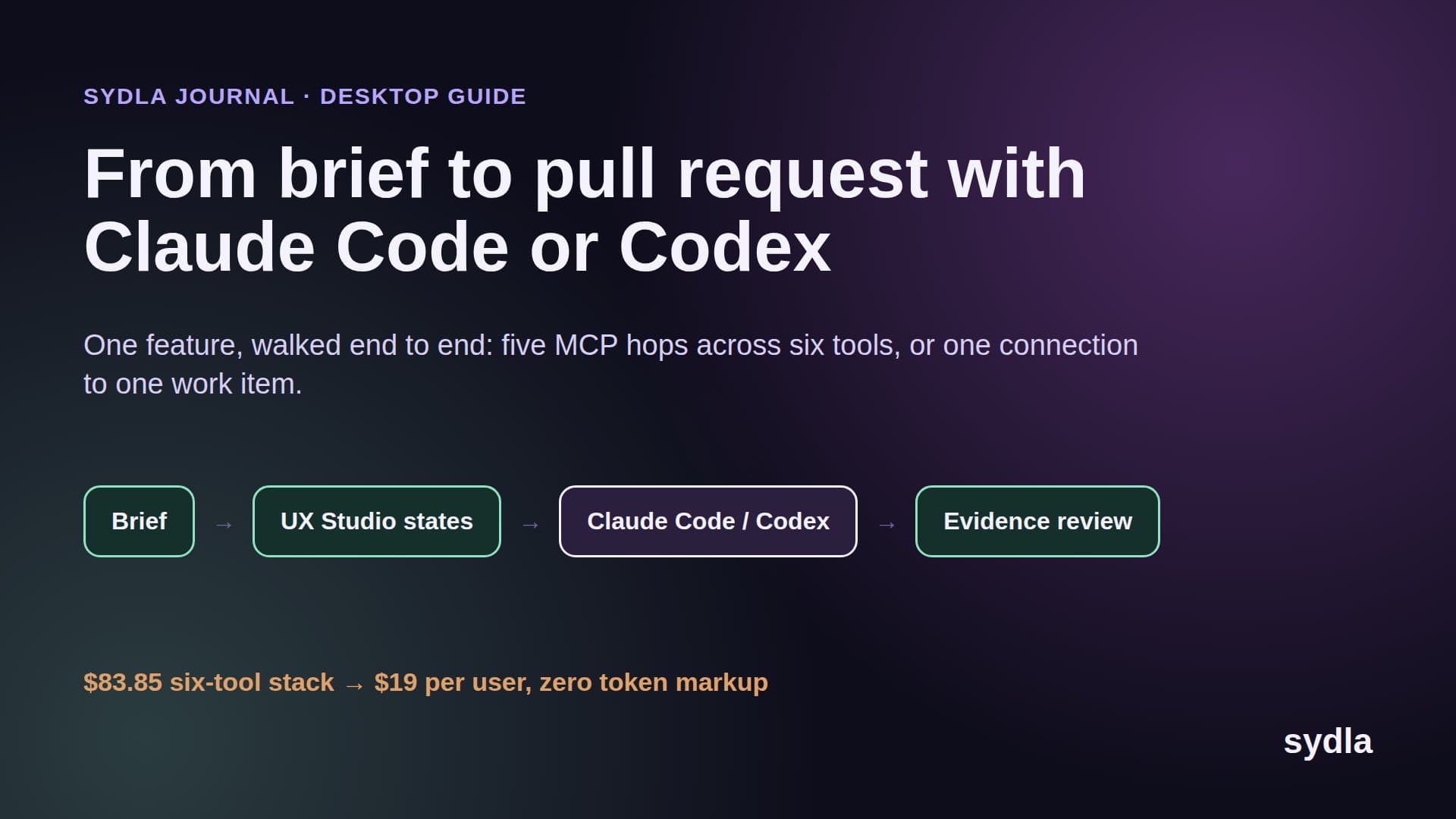
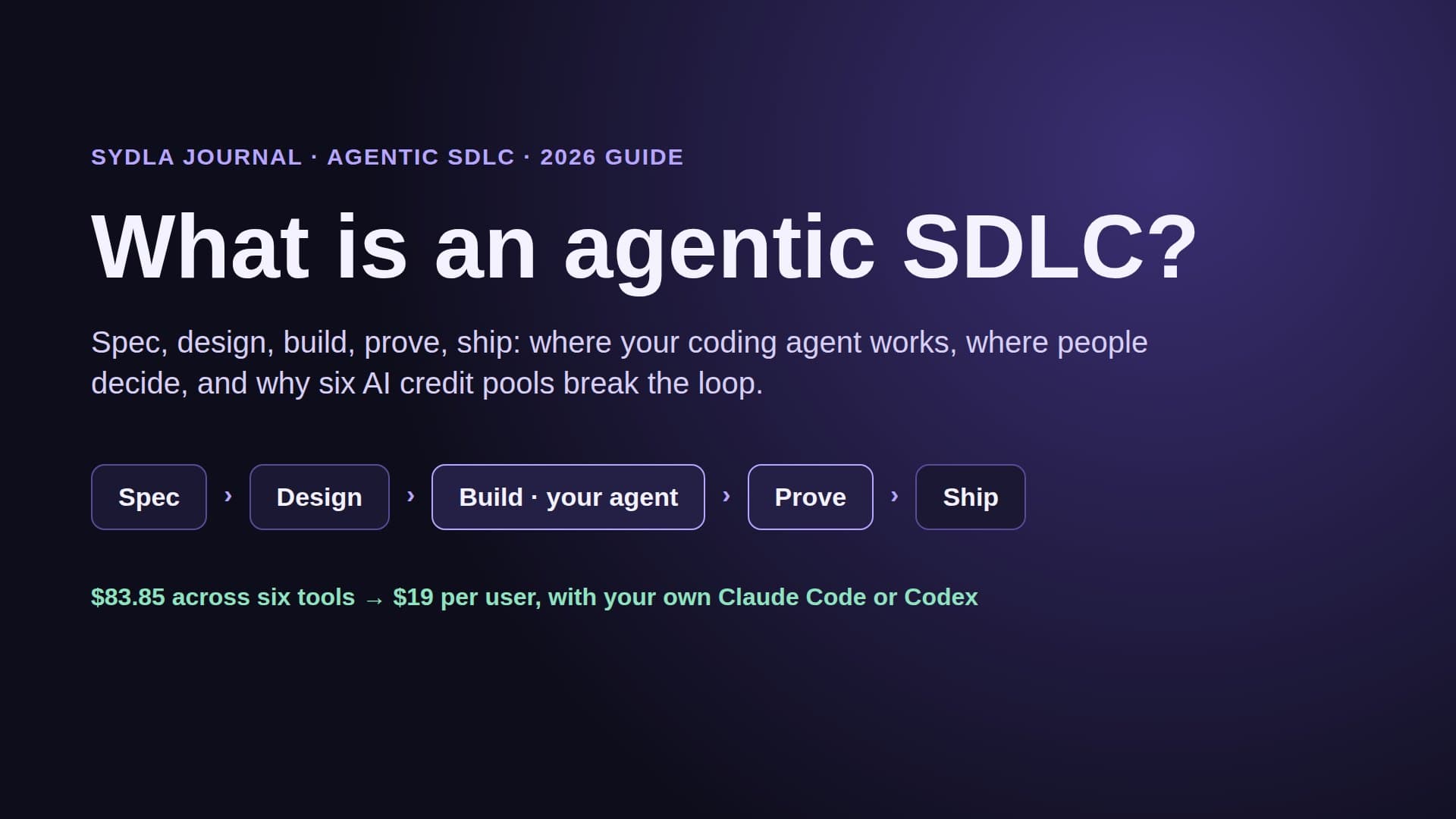
How Sydla Desktop connects Claude Code or Codex to one brief and UX Studio
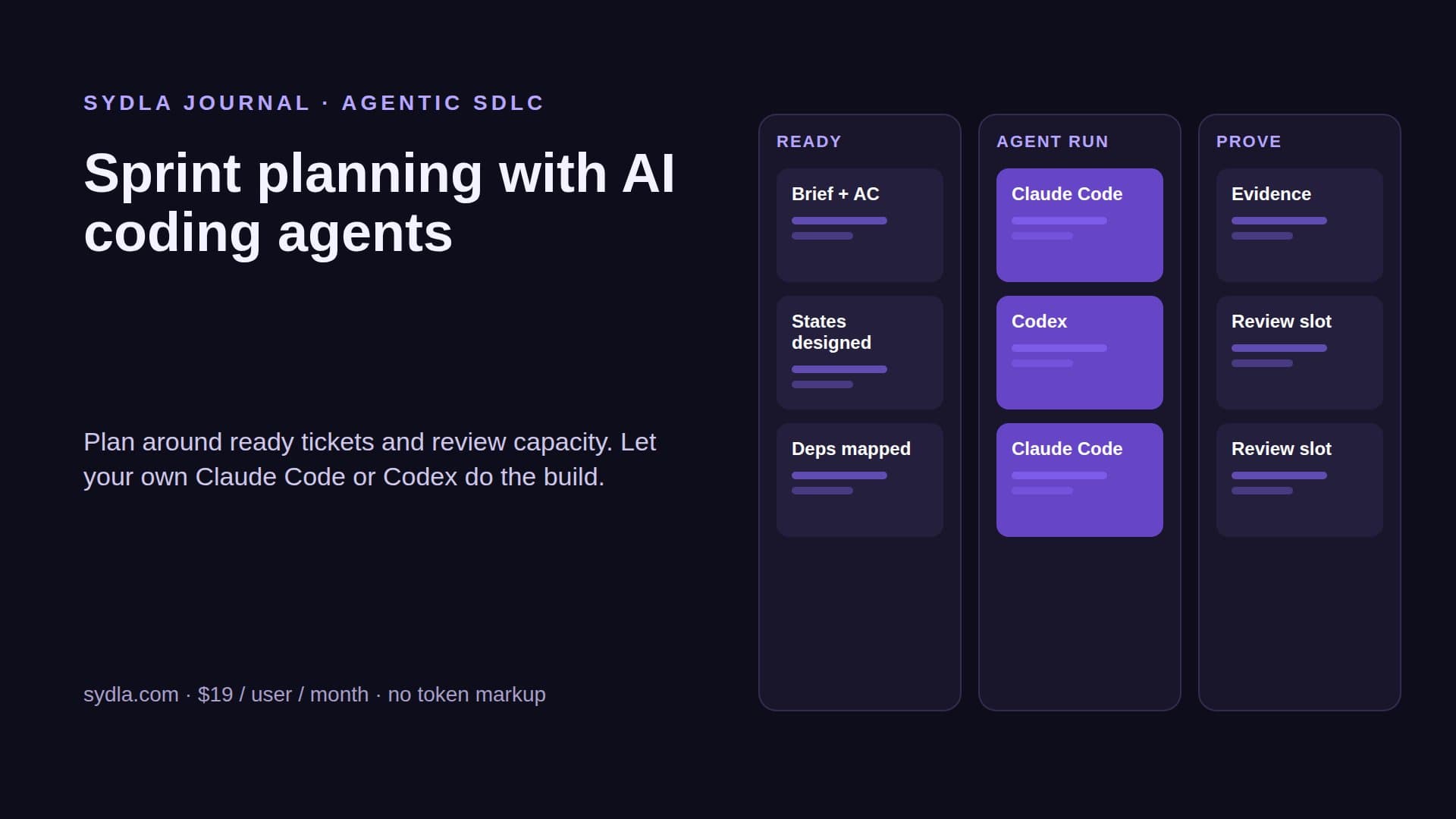
Here is a small feature, a customer wants to export billing history as CSV, moving through one Sydla work item in Sydla Desktop.
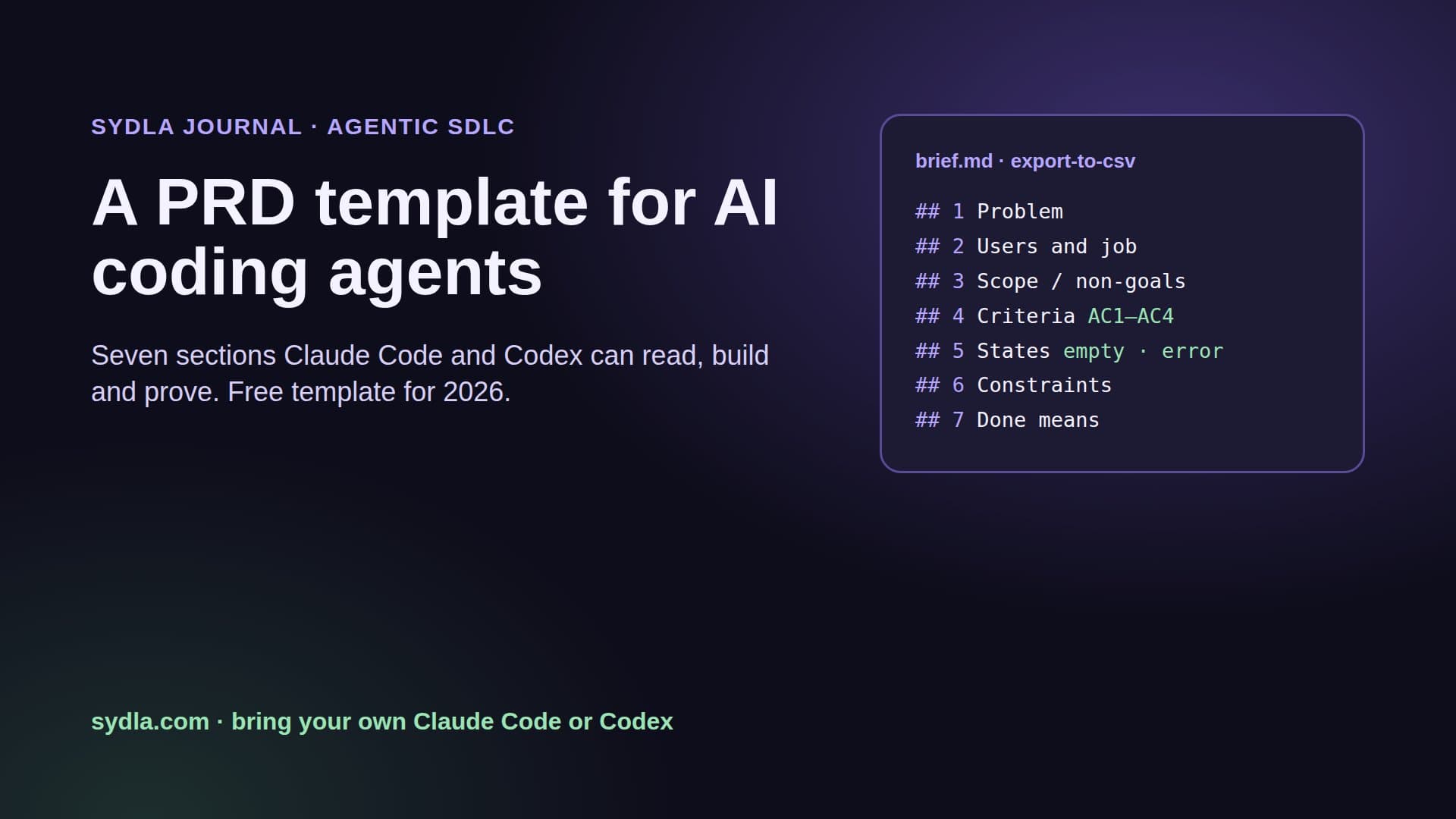
- The brief replaces the ticket and the spec. The product owner writes the problem, users, scope, non-goals and acceptance criteria in one Sydla doc linked to the initiative. Nothing is copied from a Jira ticket into a Confluence page. The PRD template for AI coding agents lists the seven sections.
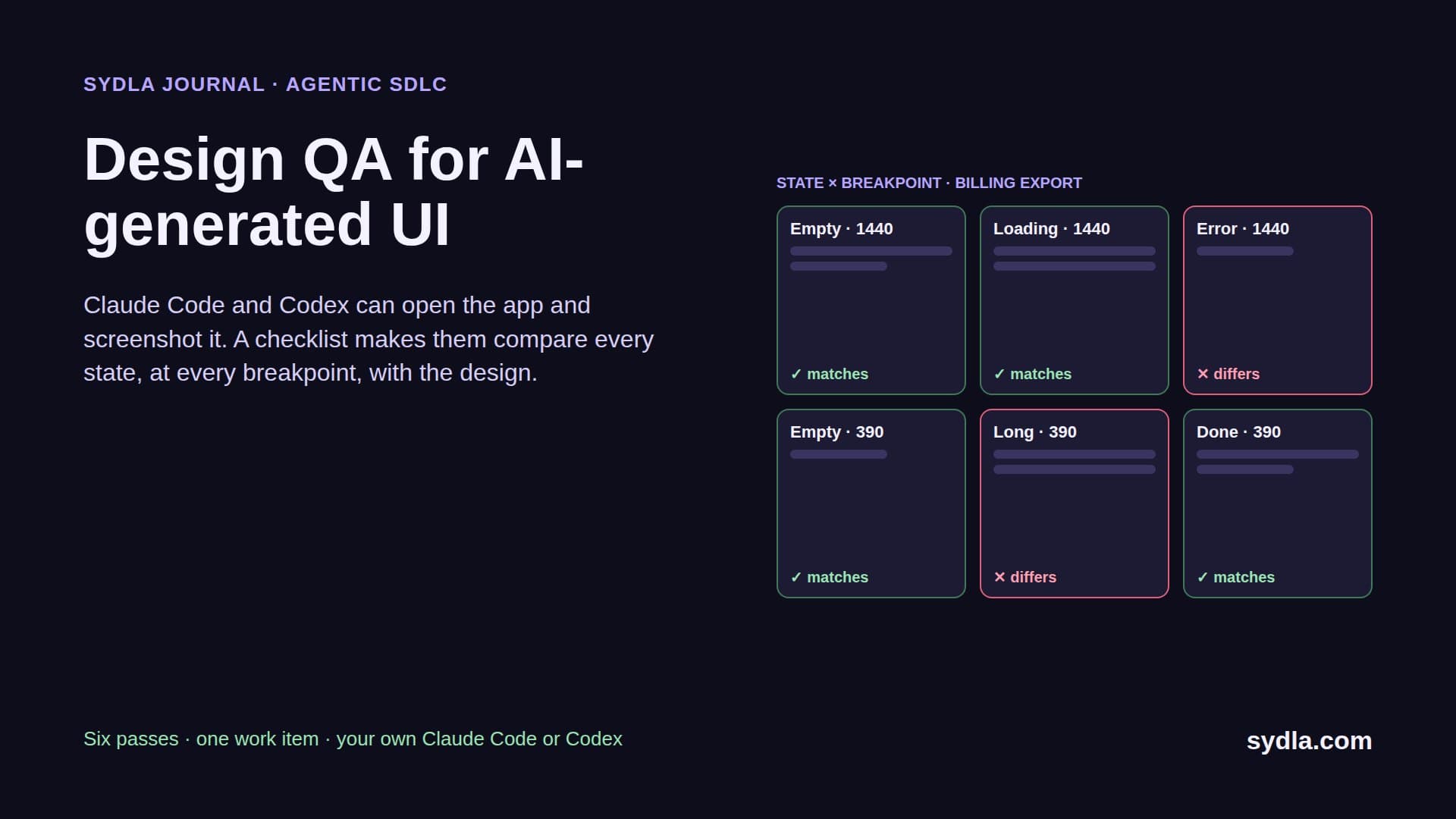
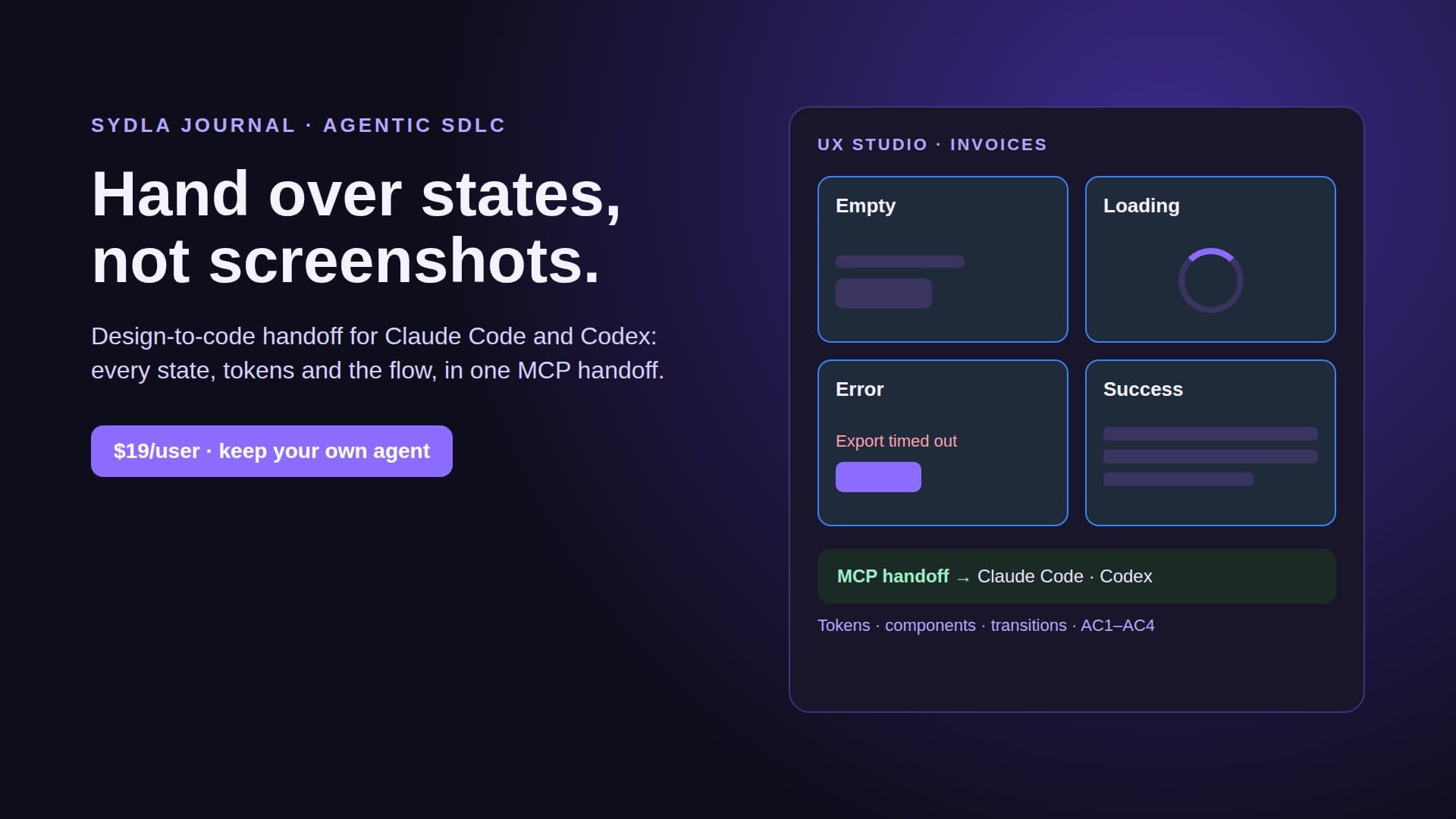
- UX Studio replaces the frames and the flow board. The designer draws the empty, loading, error and success states, the transitions between them and the tokens, then publishes a handoff. Engineers and agents read it without a design seat and without a monthly read quota.
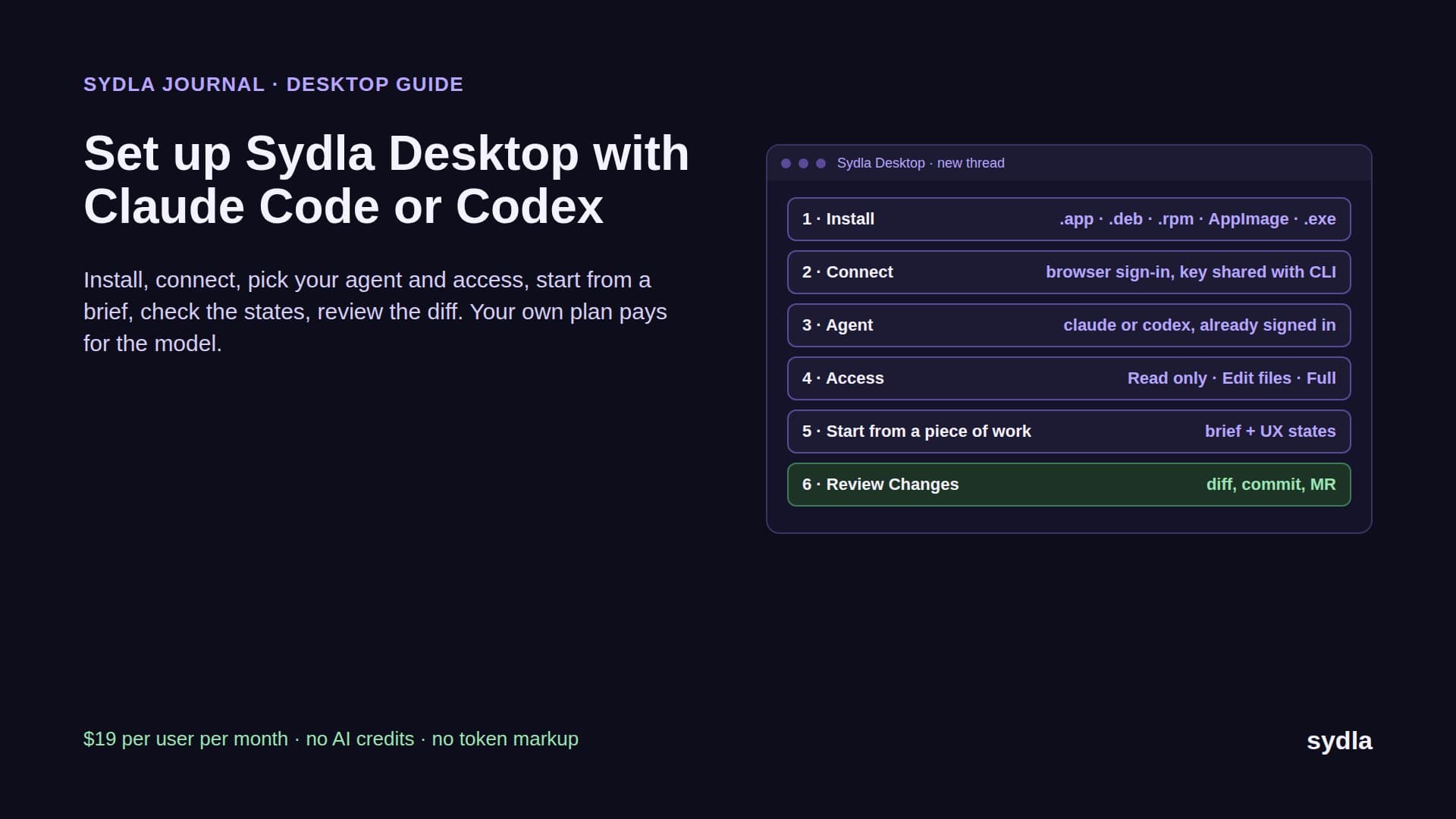
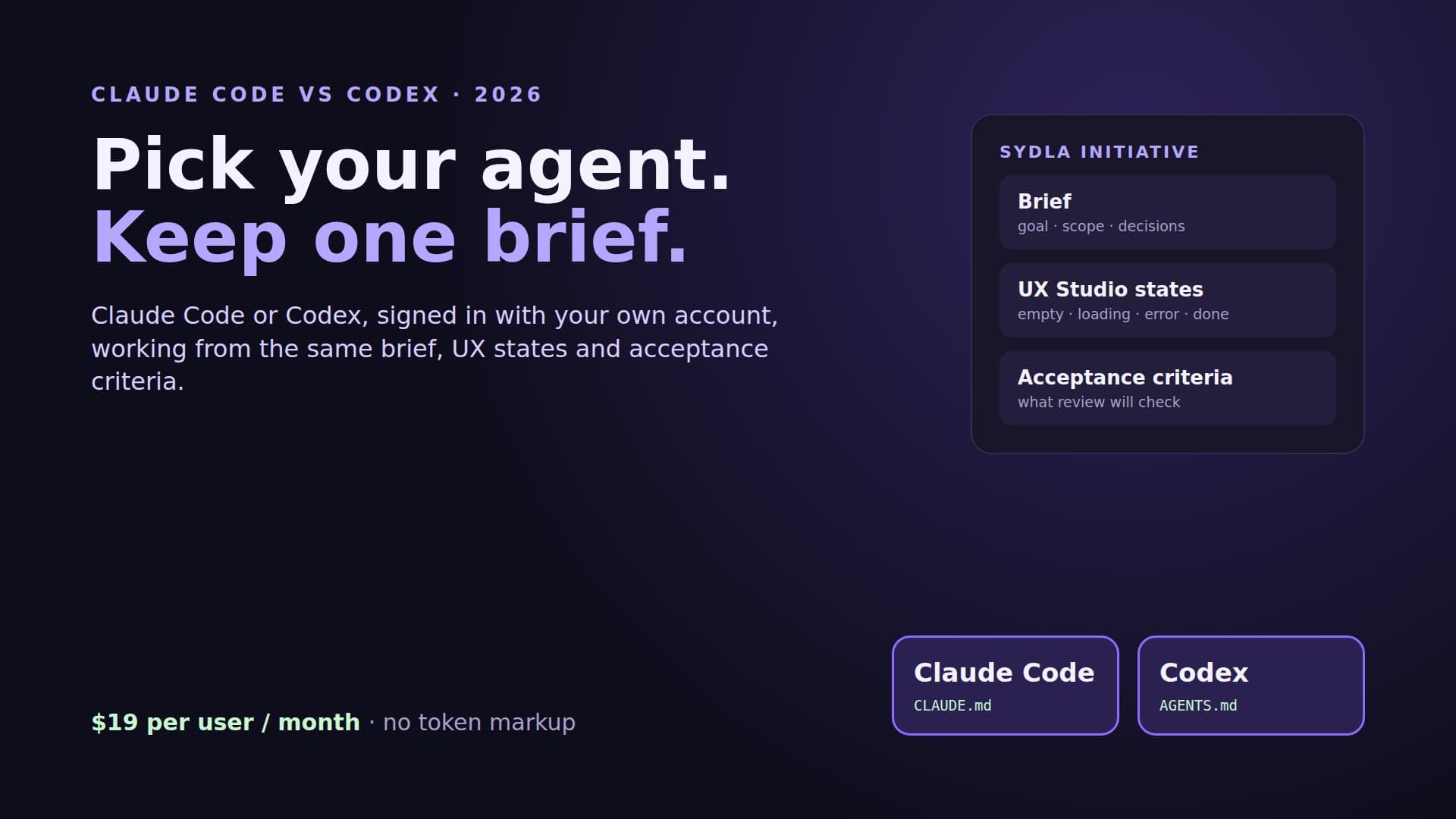
- The engineer starts a thread in Sydla Desktop. They open the piece of work and pick Claude Code or Codex and the model. Desktop runs the claude or codex CLI already installed and signed in on their machine, on their own plan or API key, with their CLAUDE.md or AGENTS.md. Sydla adds no token markup.
- The agent reads everything through one MCP connection. Initiative context, ticket, criteria and every UX state, loaded when it needs them, instead of hopping between Rovo, Notion, Figma and Miro servers.
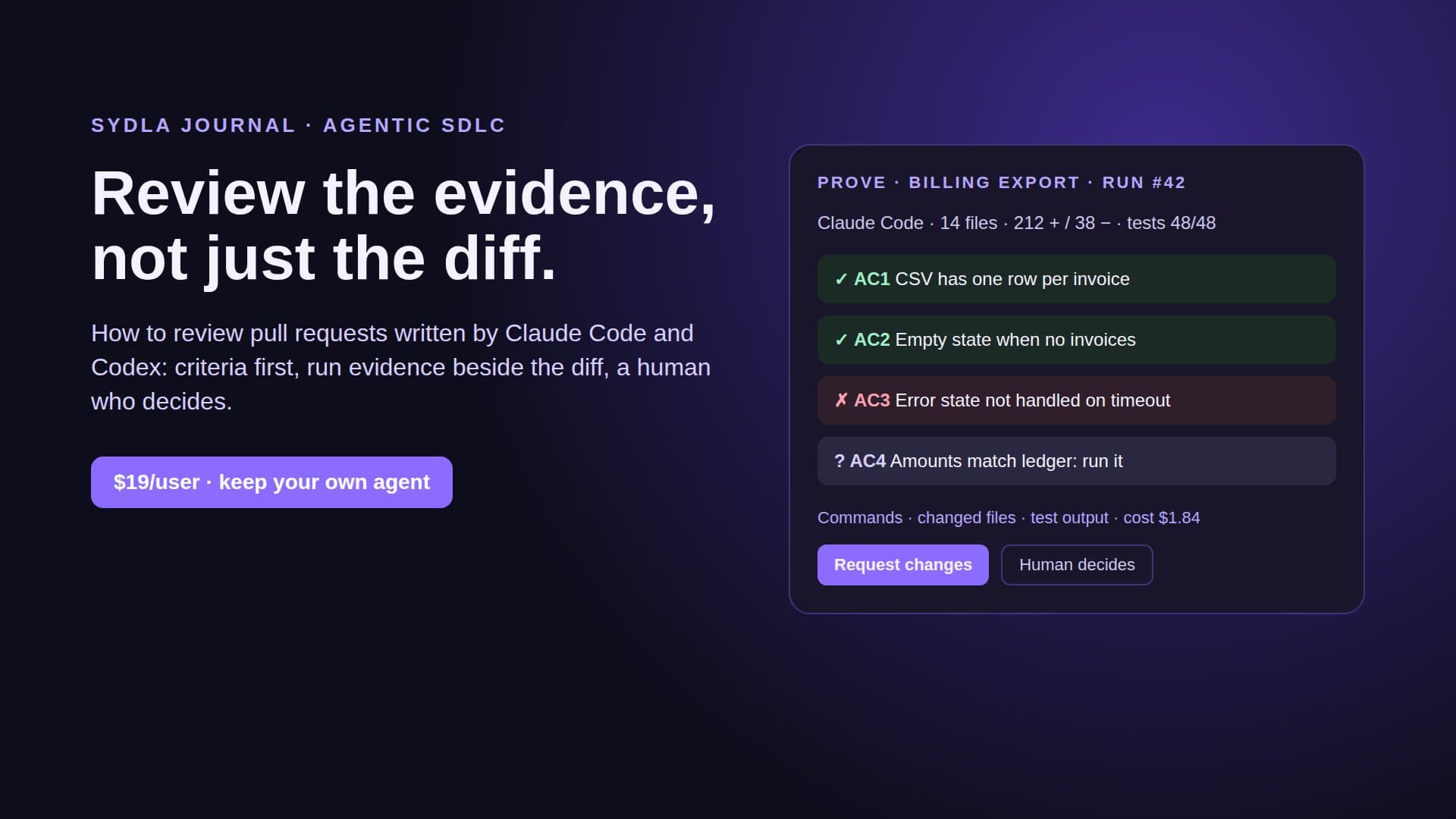
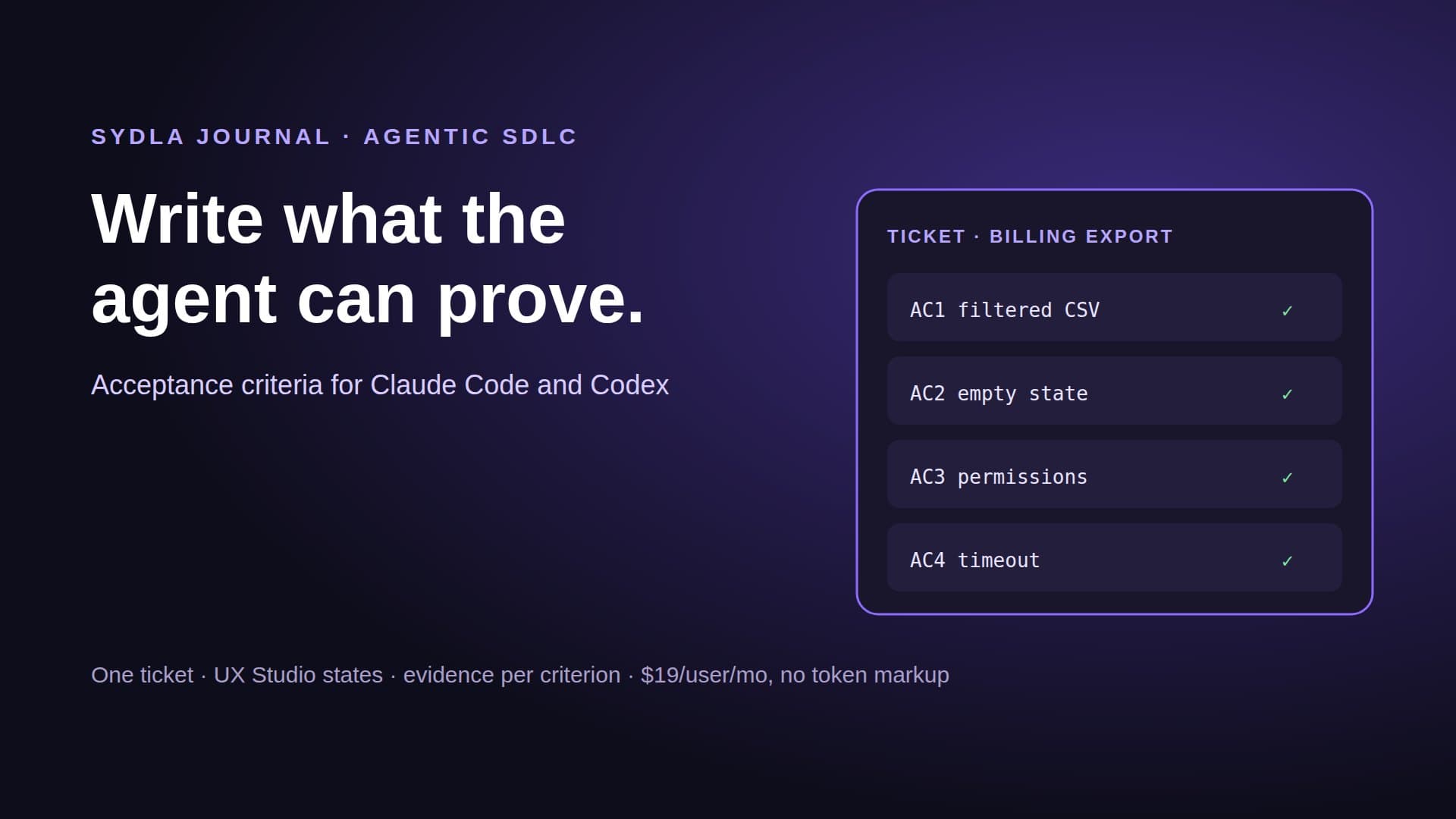
- The agent writes evidence back. As it works in a branch and runs the tests, it marks each acceptance criterion passed or failed with a note on the work item.
- A person reviews and ships. The reviewer checks the states in Preview, the diff in Changes and the evidence per criterion, following the four-pass review. The agent can request a gate; only a person approves it. Finish and Ship then walks through commit, merge request, merge and tag.
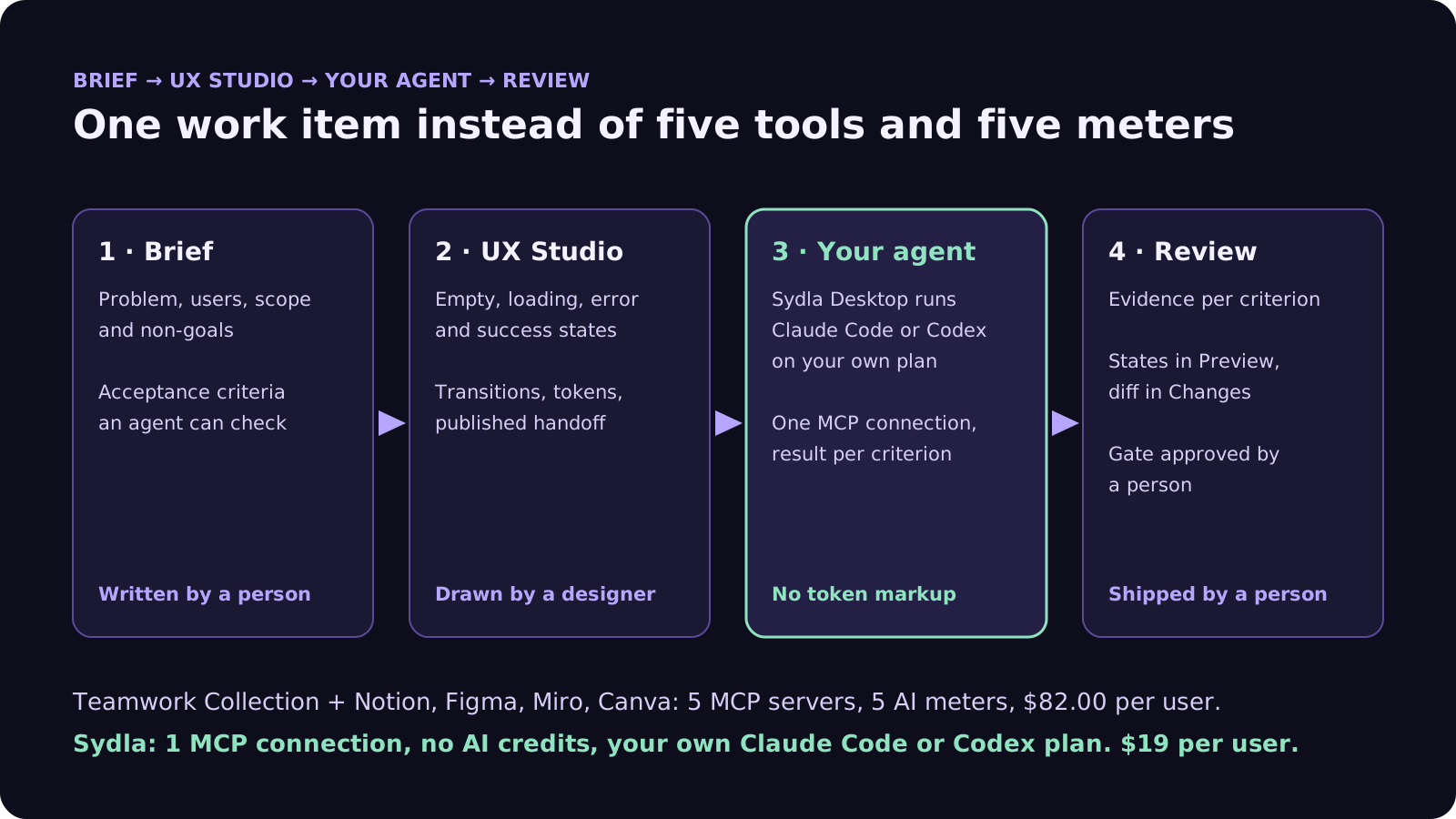
The same loop works whether one engineer prefers Claude Code and another Codex; our Claude Code vs Codex comparison helps split the work.
When the Teamwork Collection is the right choice
There are good reasons to buy the collection, and we would rather say so.
- You are a large Atlassian shop. Hundreds of users, Jira Service Management next door, years of workflows and audit history. The collection is the cheapest way to get more Rovo credits without leaving.
- Your team works mostly in Jira and Confluence. If design, notes and launch visuals are not part of your daily loop, the other four tools are not on your bill and the bundle math above is all that matters.
- You want Atlassian's agents, not your own. If the team prefers Rovo agents and the Jira Coding Agent over running Claude Code or Codex, keeping the credits in one pool makes sense.
For a lean product team or a solo founder, the question is different: not how to get more credits for two tools, but how to stop paying for six. The Jira alternatives and Confluence alternatives guides compare the trackers and wikis one by one. If you decide to move, the 30-day migration plan shows what to export first. Sydla is $19 per user per month, see the pricing section, and you can start a workspace with the Claude Code or Codex account you already have.
Frequently asked questions
What is Atlassian Teamwork Collection?
Teamwork Collection is a single Atlassian Cloud subscription that includes Jira, Confluence, Loom and Rovo, plus platform apps such as Goals, Teams, Studio, Search, Chat and Insights. You pay one price per user for the whole collection instead of paying for each app separately.
How much does Teamwork Collection cost in 2026?
In November 2026 Teamwork Collection is free for up to 10 users. Standard is $15 per user per month and Premium $29 per user per month at a 10-user team size on monthly billing, slightly less per user for larger teams. Enterprise is sold annually through Atlassian sales.
How many Rovo credits does Teamwork Collection include?
Teamwork Collection includes 250 Rovo credits per user per month on Standard, 700 on Premium and 1,500 on Enterprise, ten times the 25, 70 and 150 included with standalone Jira or Confluence. Credits are pooled across the organisation, do not roll over, and usage above the allowance is billed at $0.01 per credit from 3 December 2026.
Is Teamwork Collection cheaper than Jira and Confluence?
For most teams, yes. At 10 users Teamwork Collection Standard costs $15 per user against $16.85 for Jira Standard and Confluence Standard bought separately, includes Loom, and gives five times their combined Rovo credits. It does not replace Notion, Figma, Miro or Canva, so the full product stack still costs about $82 per user per month.
What is the best Atlassian alternative for small teams using Claude Code or Codex?
For a small product team, a workspace that keeps tickets, docs and UX states together and lets engineers bring their own coding agent is usually cheaper than an AI-credit bundle. Sydla costs $19 per user per month, has no AI credits, and runs Claude Code or Codex on each engineer's own plan through Sydla Desktop, reading the brief, acceptance criteria and UX Studio states through one MCP connection.