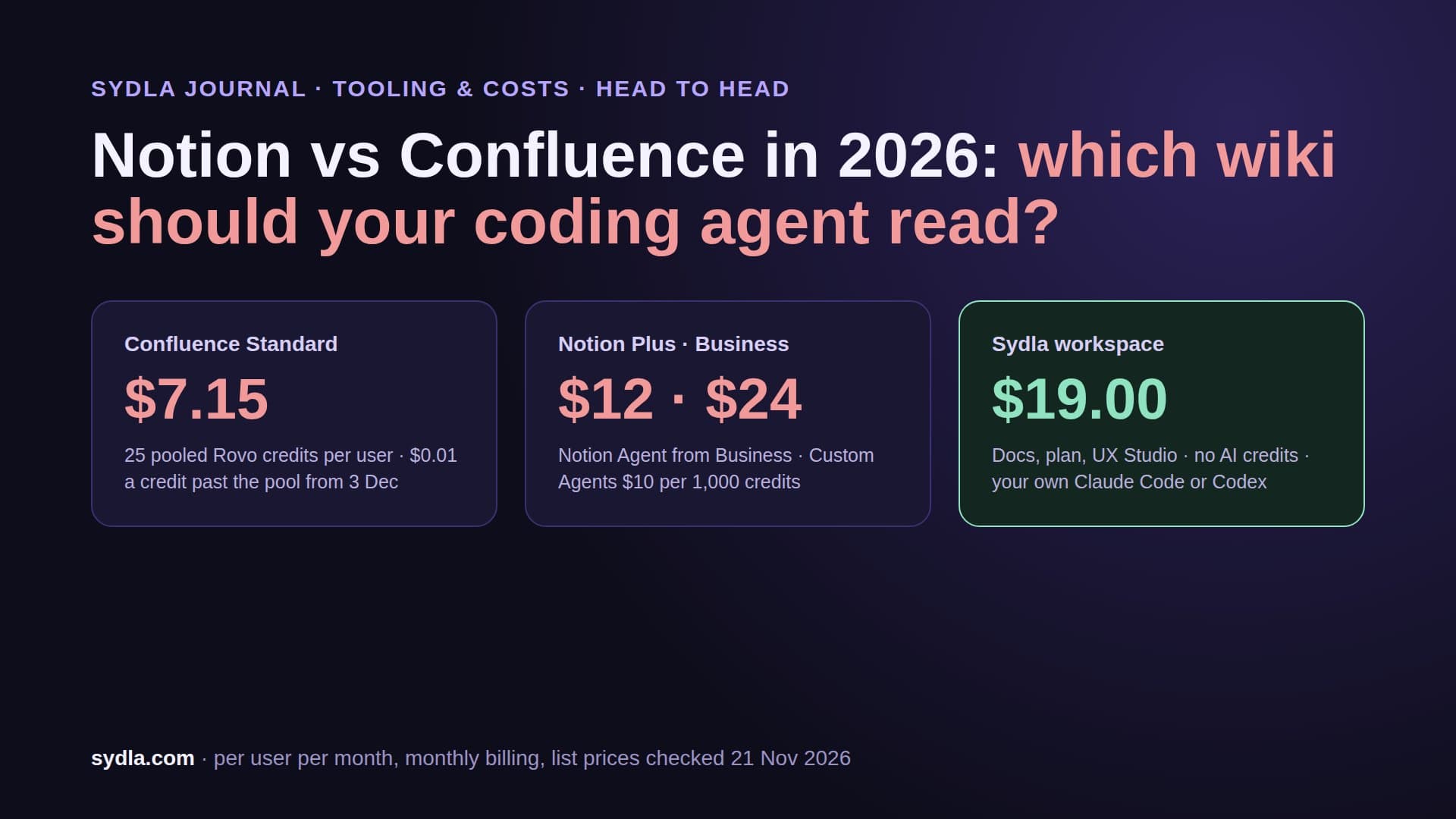
Notion vs Confluence in 2026: which wiki should your coding agent read?
Your wiki is now the memory your coding agent reads before it writes a line. Confluence meters agent searches in pooled Rovo credits; Notion keeps MCP reads free but puts its own agents behind Business and credits. Here is the head-to-head on price, AI, agent access and migration, checked on 21 November 2026.
The wiki became your agent's memory
The old Notion vs Confluence debate was about structure. Confluence was the governed corporate library next to Jira; Notion was the flexible blank page that grew into a wiki. In 2026 a new reader joined the argument. Before Claude Code or Codex writes a line, it wants the spec, the decisions and the edge cases, and those live in your wiki.
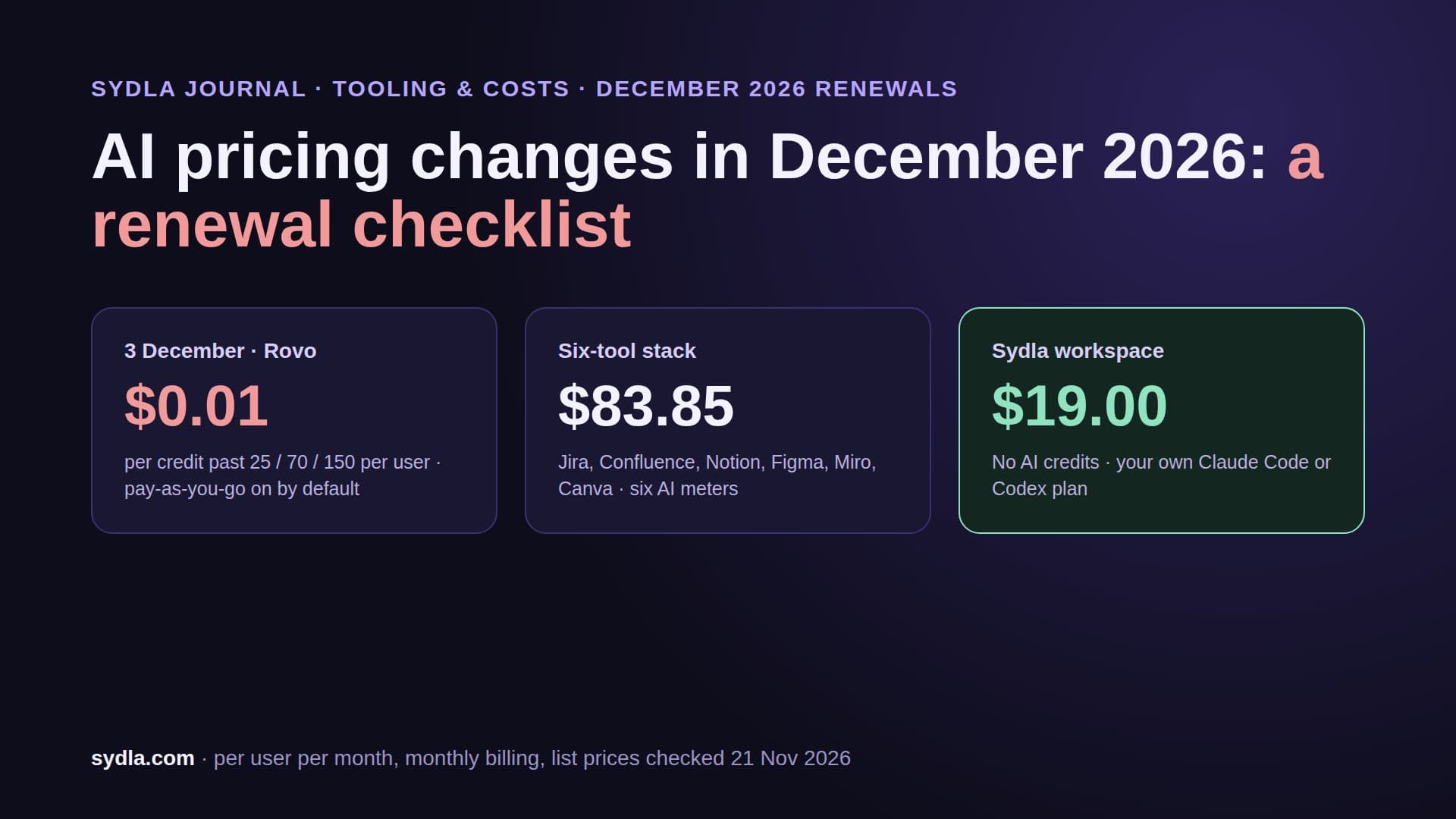
So the question changed from where people write to what an agent pays to read. Confluence answers through Rovo and the Atlassian Rovo MCP server, metered in pooled credits that go pay-as-you-go on 3 December 2026. Notion answers through its hosted MCP server and its own agents, metered in Notion credits. Every page read is a small line on someone's bill, the kind of AI credit fatigue teams now budget for.
There is a deadline too. Atlassian's Data Center products reach end of life on 28 March 2029, and new Data Center sales already ended on 30 March 2026. Many self-hosted Confluence teams are choosing a cloud wiki this year anyway. This guide compares the two on vendor pages read on 21 November 2026, then shows a third option: put the brief next to the design states and the agent run in Sydla.
Notion vs Confluence at a glance: prices and AI meters
List prices first, monthly billing per user in USD. Confluence raised Standard and Premium on 13 October 2026. Notion bills Plus and Business 20% cheaper yearly.
| Plan | Seat / month | AI included | What an agent read costs | Limits to know |
|---|---|---|---|---|
| Confluence Free | $0 | No Rovo Search, Chat or Agents | Rovo needs a paid plan | Up to 10 users, 2GB storage |
| Confluence Standard | $7.15 | 25 Rovo credits per user, pooled | Fetch by key free; enriched searches 1 to 10 credits; $0.01 a credit past the pool from 3 December 2026 | 250GB storage, credits do not roll over |
| Confluence Premium | $14.10 | 70 Rovo credits per user, pooled | Same rate card, larger pool | Unlimited storage, analytics |
| Notion Free | $0 | Trial of Notion AI | Notion MCP reads spend no credits | 5 MB uploads, 7-day page history |
| Notion Plus | $12 ($10 yearly) | Trial of Notion AI | Notion MCP reads spend no credits | 30-day page history |
| Notion Business | $24 ($20 yearly) | Notion Agent; Custom Agents on Notion credits | MCP reads free; agent runs spend credits, extra $10 per 1,000 | 90-day page history |
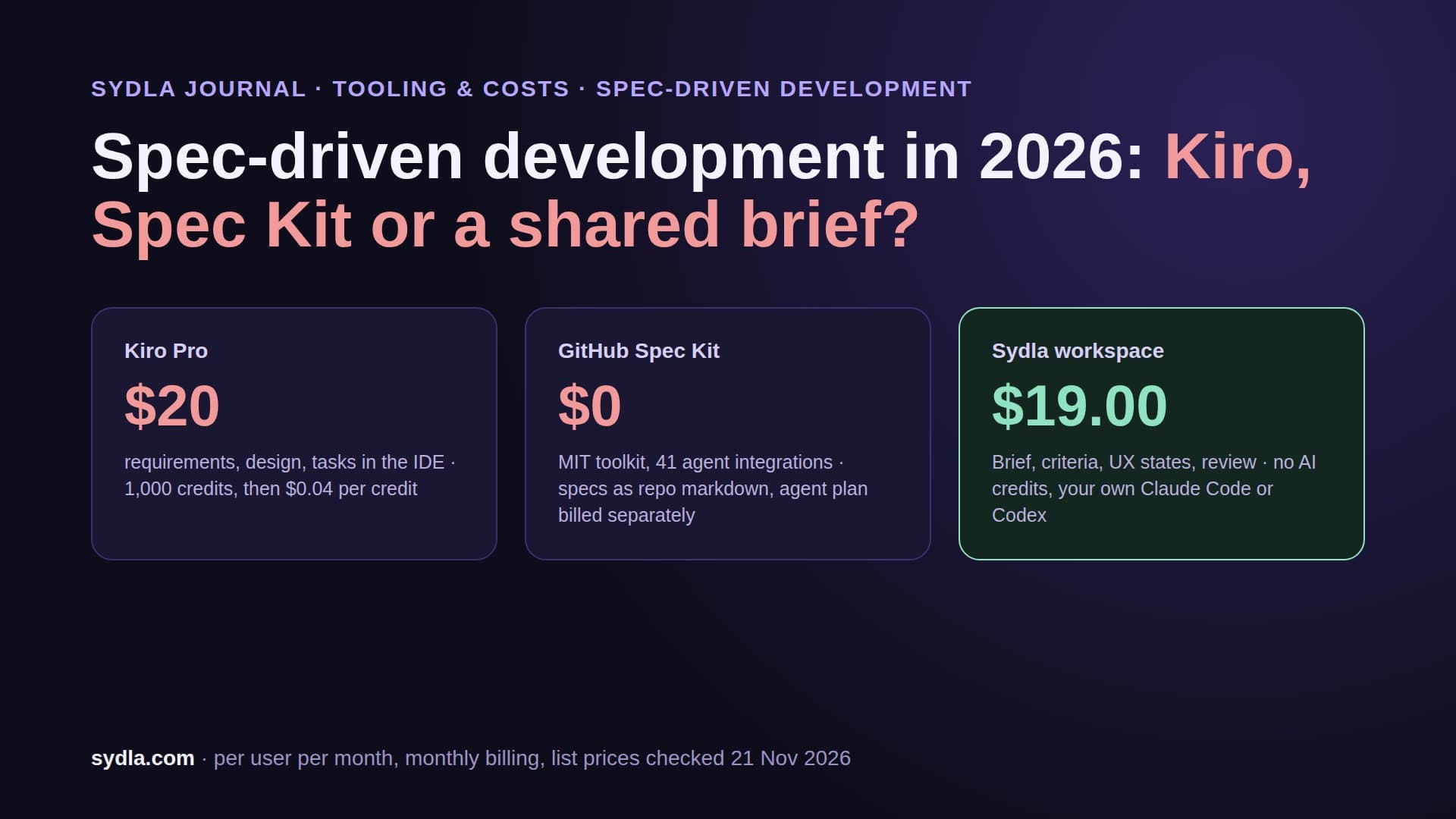
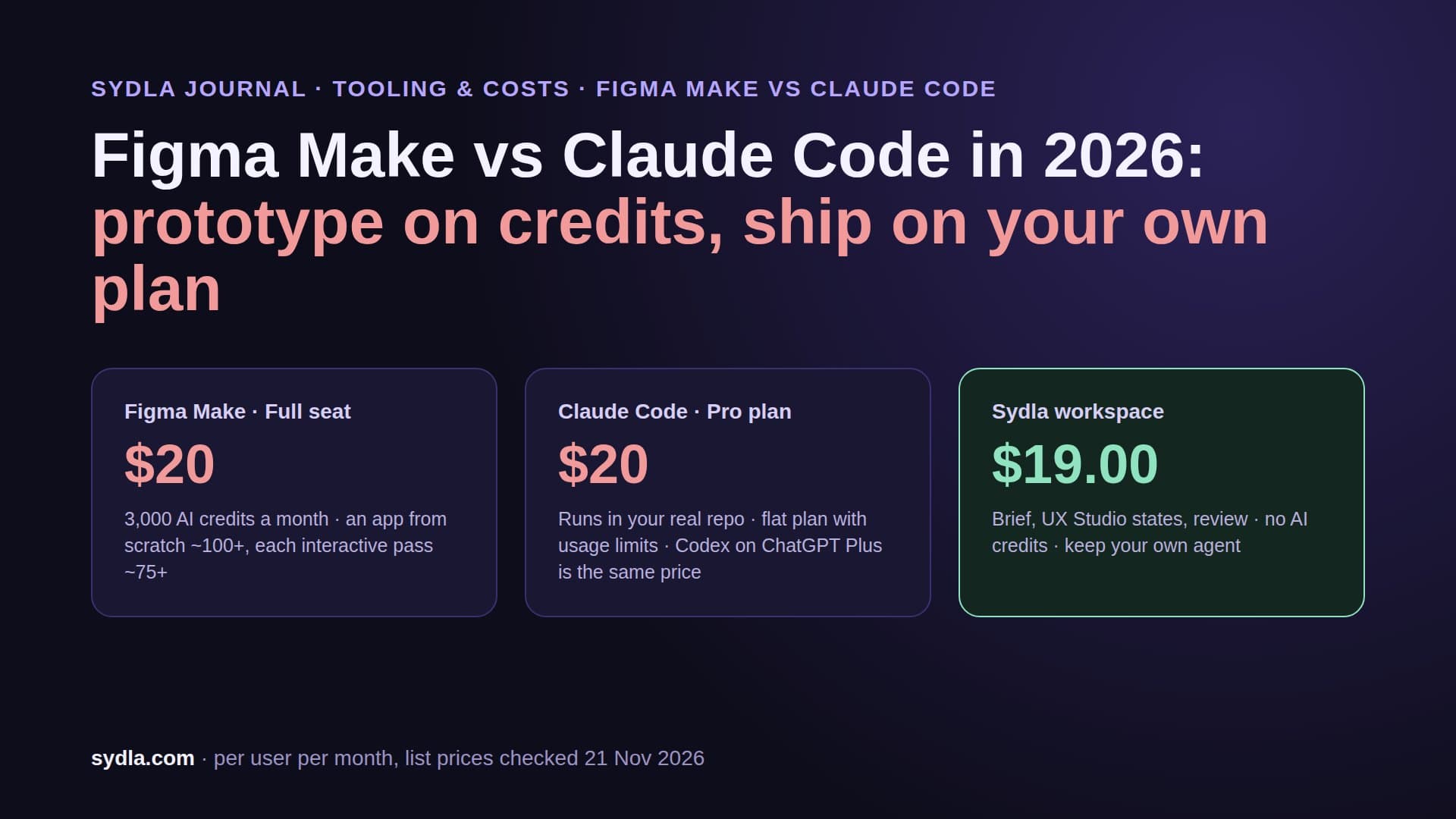
| Sydla | $19.00 | No Sydla AI credits | Your own Claude Code or Codex plan reads docs through one MCP, no markup | Docs, plan, UX Studio and threads included |
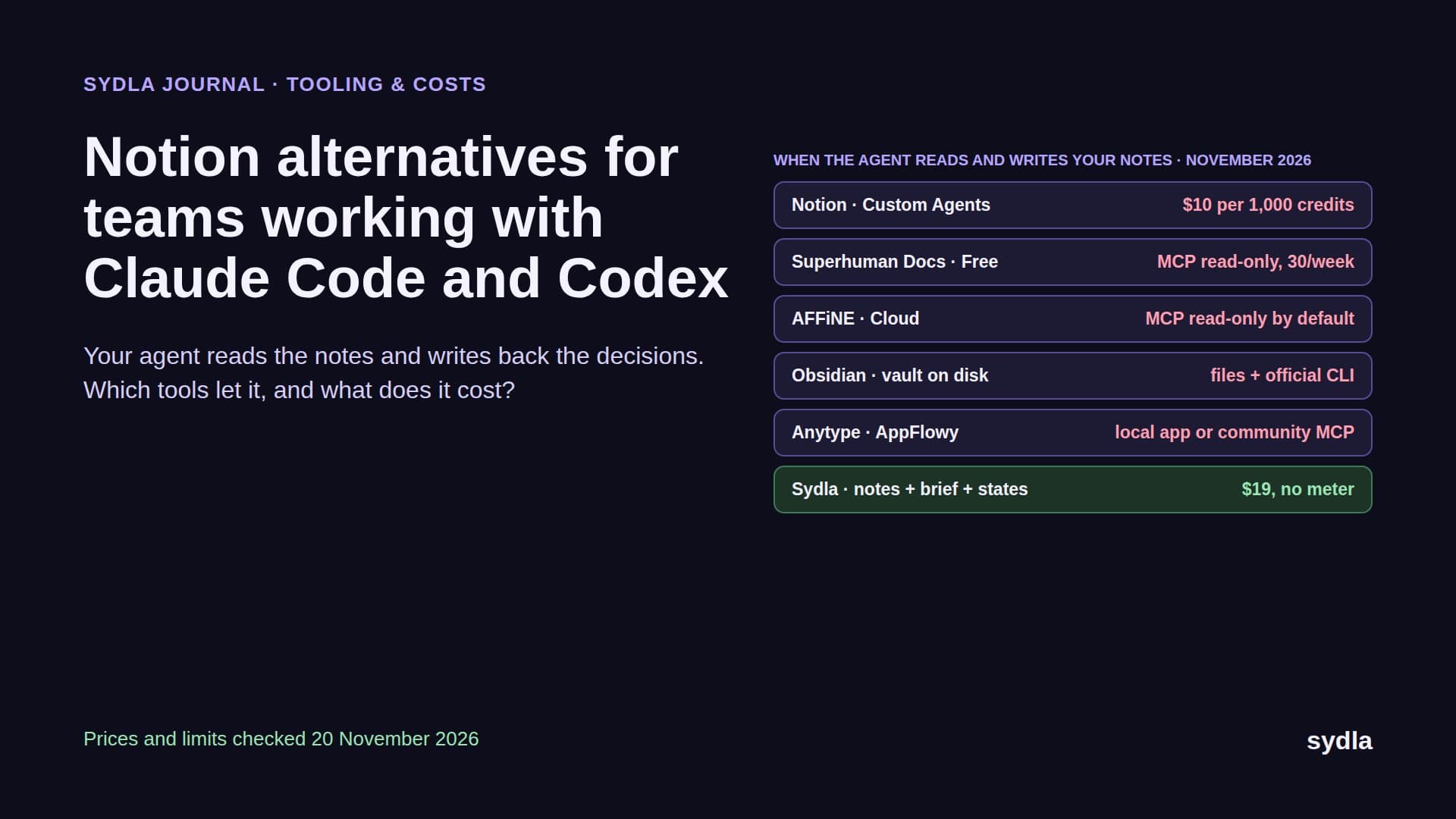
On paper Confluence Standard is the cheapest paid wiki. The AI column changes the picture: Confluence includes a small Rovo pool and meters what an agent searches beyond it, while Notion keeps reads free and charges for its own agents. Our Rovo credits guide and Notion credits guide have both rate cards in full.
How Confluence feeds Claude Code and Codex
Connect Claude Code or Codex to the Atlassian Rovo MCP server and the agent can search, summarize, create and update Confluence pages with your permissions. Fetching a page by its ID is free. Asking Rovo to search across spaces, or to pull Teamwork Graph context around a ticket, is an enriched call that costs 1 to 10 pooled Rovo credits.
The pool is small. A Confluence Standard seat brings 25 credits a month, Premium 70, Enterprise 150, shared across the organisation and reset monthly. One Rovo Chat quick answer costs 10. From 3 December 2026, usage past the pool is billed at $0.01 a credit, and pay-as-you-go is on by default. An agent exploring the history of a feature can make dozens of enriched calls in one session, so tell it in CLAUDE.md or AGENTS.md to fetch pages by ID and stop searching once it has the spec. Our MCP servers guide counts those calls tool by tool.
Confluence's strength is everything around the page: Jira links, space permissions, page trees, a Marketplace with thousands of apps, and Rovo agents that work across both products. If your team already lives in Jira, the agent gets one Atlassian MCP connection for tickets and docs.
How Notion feeds Claude Code and Codex
Notion's hosted MCP server lets Claude Code or Codex search, read, create and update pages and databases. It acts with your full Notion permissions, so scope the connecting account carefully, and Enterprise admins can allow or block MCP clients. Reading through MCP spends no Notion credits; only a Notion agent run does.
Notion's own AI is gated harder. Free and Plus get a trial. Notion Agent comes with Business at $24. Custom Agents, which run on triggers and schedules, are free to try and then cost $10 per 1,000 Notion credits, bought on Business and Enterprise only. Since 2 November 2026 a Custom Agent spends its owner's Select credits first, then the owner's extra allowance, then workspace credits if the owner allows it. A weekly status-update agent is a few dollars a month; a dozen of them is a line item.
Notion's strength is flexibility. Docs, databases, meeting notes and lightweight projects share one data model, and a page can become a table without a migration. That suits small product teams writing specs and decisions in one place. It suits strict governance less: permissions are page-based and an import does not bring Confluence restrictions with it.
Worked example: a 10-person team for one month
Take a 10-person product team with four engineers who each run 40 Claude Code or Codex sessions a month. Assume each session makes 3 enriched searches at about 5 credits, so 2,400 Rovo credits a month. The team shape and search counts are our assumptions; the prices and rate cards are published.
On Confluence Standard, 10 seats cost $71.50 and the pool holds 250 credits, so 2,150 credits go pay-as-you-go: $21.50, $93.00 in total. Add Jira Standard and the seats rise to $168.50, the pool to 500 credits and the overage falls to $19.00: $187.50. On Notion Plus the same reads spend no credits and the bill is $120.00, but the team has no Notion Agent beyond a trial. On Notion Business it is $240.00 with Notion Agent and a credit balance for Custom Agents.
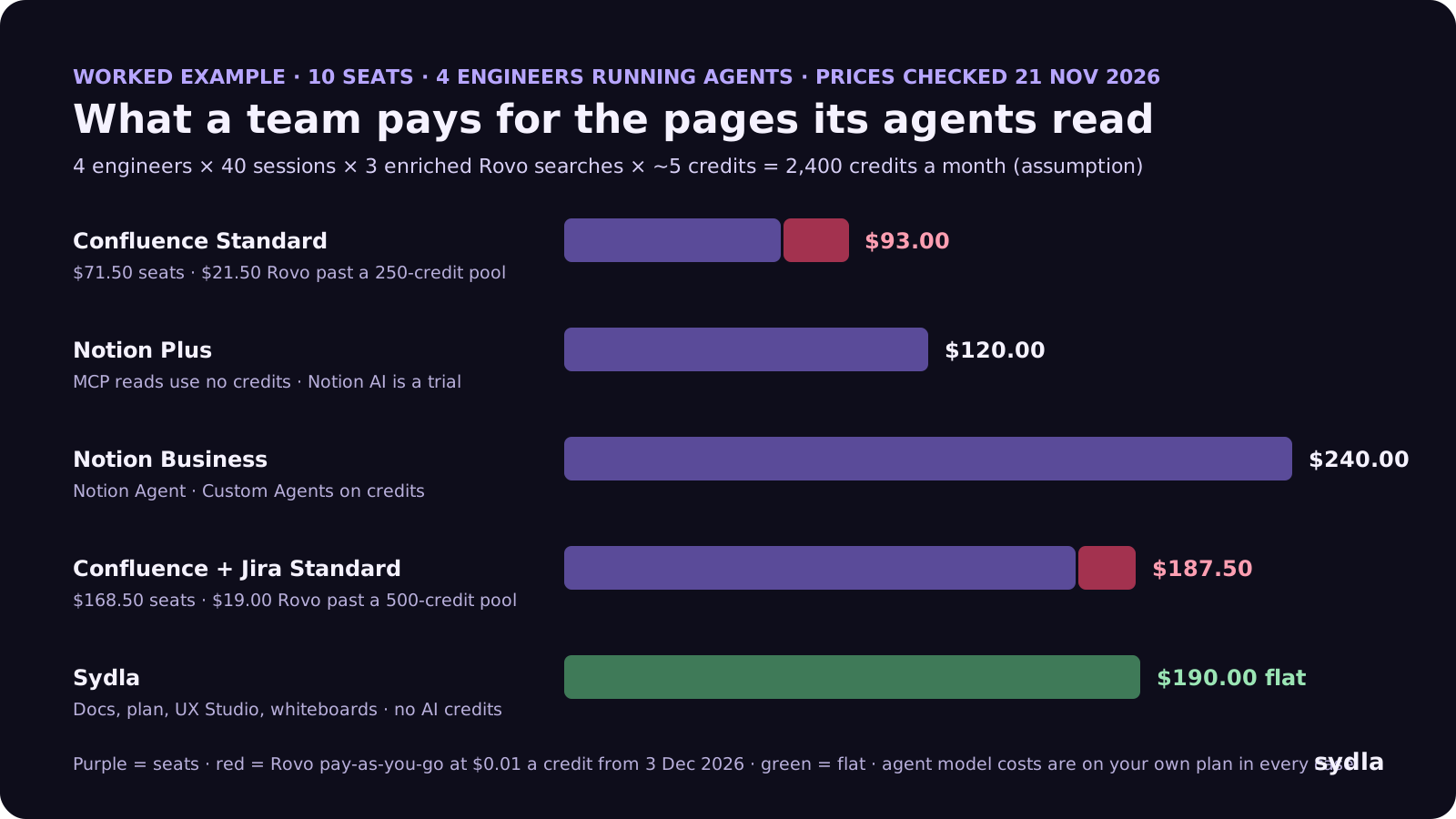
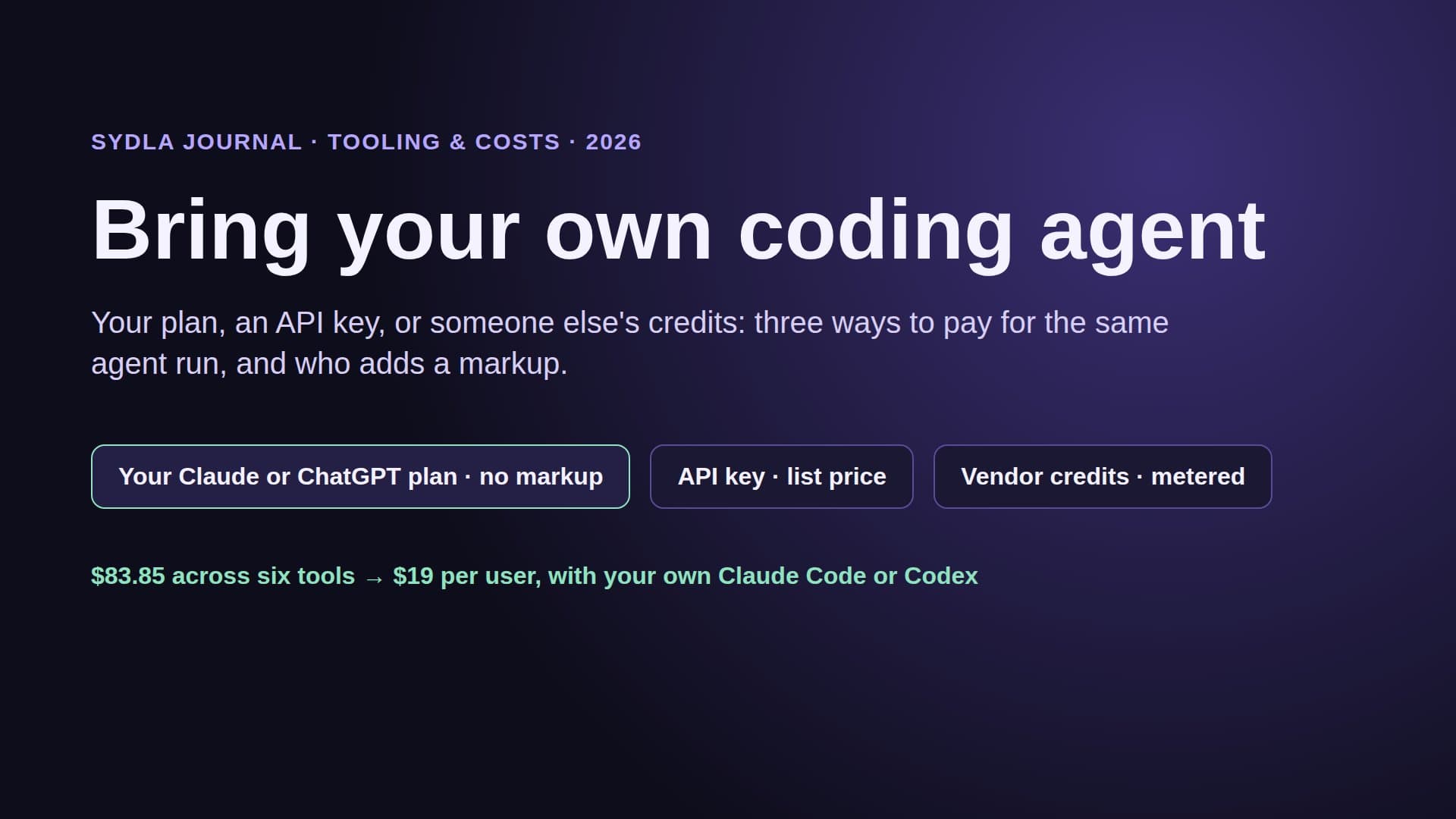
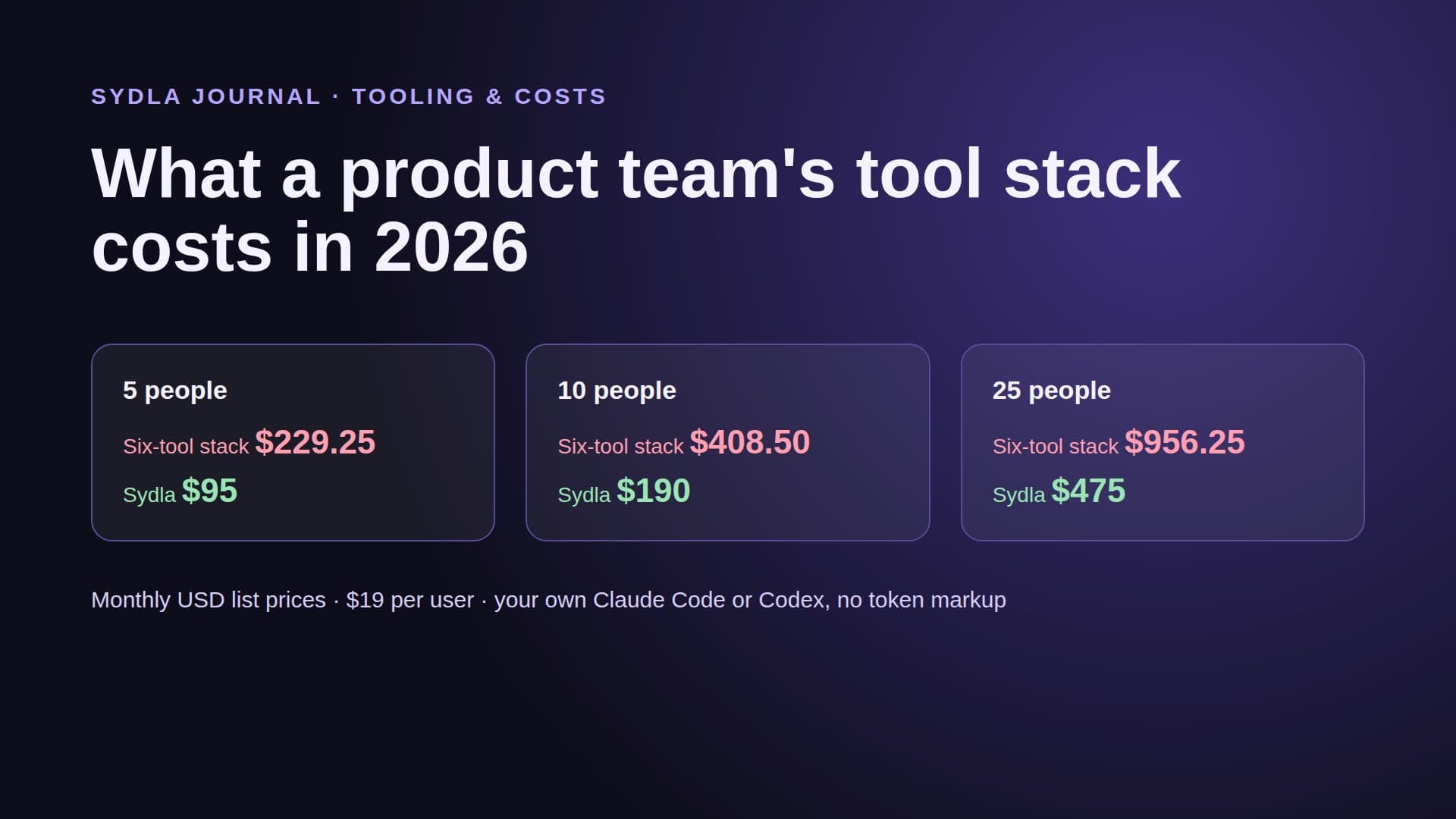
Look at the last two bars. For about the same $190, an Atlassian team gets a wiki and a tracker with a credit meter, and a Sydla team gets docs, the plan, UX Studio and whiteboards with no meter. In every case the model itself runs on your own Claude or ChatGPT plan. Our team stack cost guide runs the same maths at 5, 10 and 25 people.
Migration both ways, and the Data Center deadline
Both vendors now import from each other. Notion's Confluence importer has two modes. The zip importer takes part of a space, up to 5GB, or 15GB on request. The API importer takes a whole workspace up to 30GB and about 50,000 pages, and keeps comments and user mapping. Permissions do not come across: imported pages land private to the person who imported them. Most macros are unsupported, though an Expand macro becomes a toggle. Importing several spaces at once needs Business or Enterprise.
Confluence's Notion importer takes a Notion export zip and turns each teamspace into a space. You need to be a Notion workspace owner with create-space permission in Confluence. Guests are not imported, synced blocks and buttons are unsupported, and equations and Mermaid diagrams arrive as plain text. Free and Standard sites that go over storage get 14 days to fix it.
If you run Confluence Data Center, the clock is fixed: existing customers can buy new licences and apps until 30 March 2028, and licences become read-only on 28 March 2029. Whichever wiki you pick, migrate what is alive, not everything. Our 30-day migration plan moves live pages first, archives the rest and cancels at renewal.
What neither wiki holds
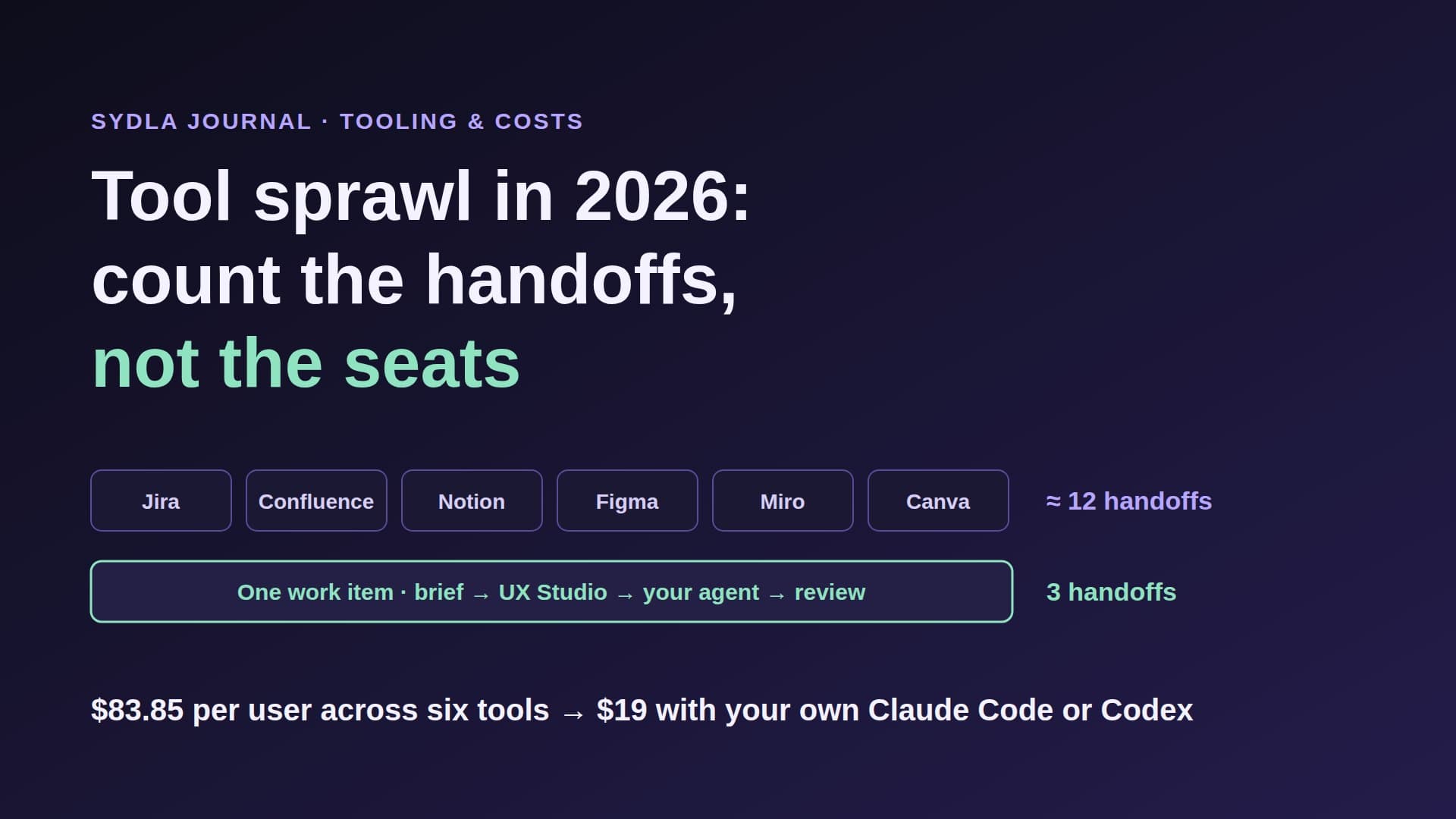
Pick Notion or Confluence and the spec has a home. The rest of the context does not. The ticket lives in a tracker, the states in a design file, the flow on a whiteboard and the launch visuals in a design app. Each adds a seat, an AI meter and an MCP server your agent must call before it builds anything.
| Tool and plan | Seat / month | Built-in AI billing | Handoff it adds to one feature |
|---|---|---|---|
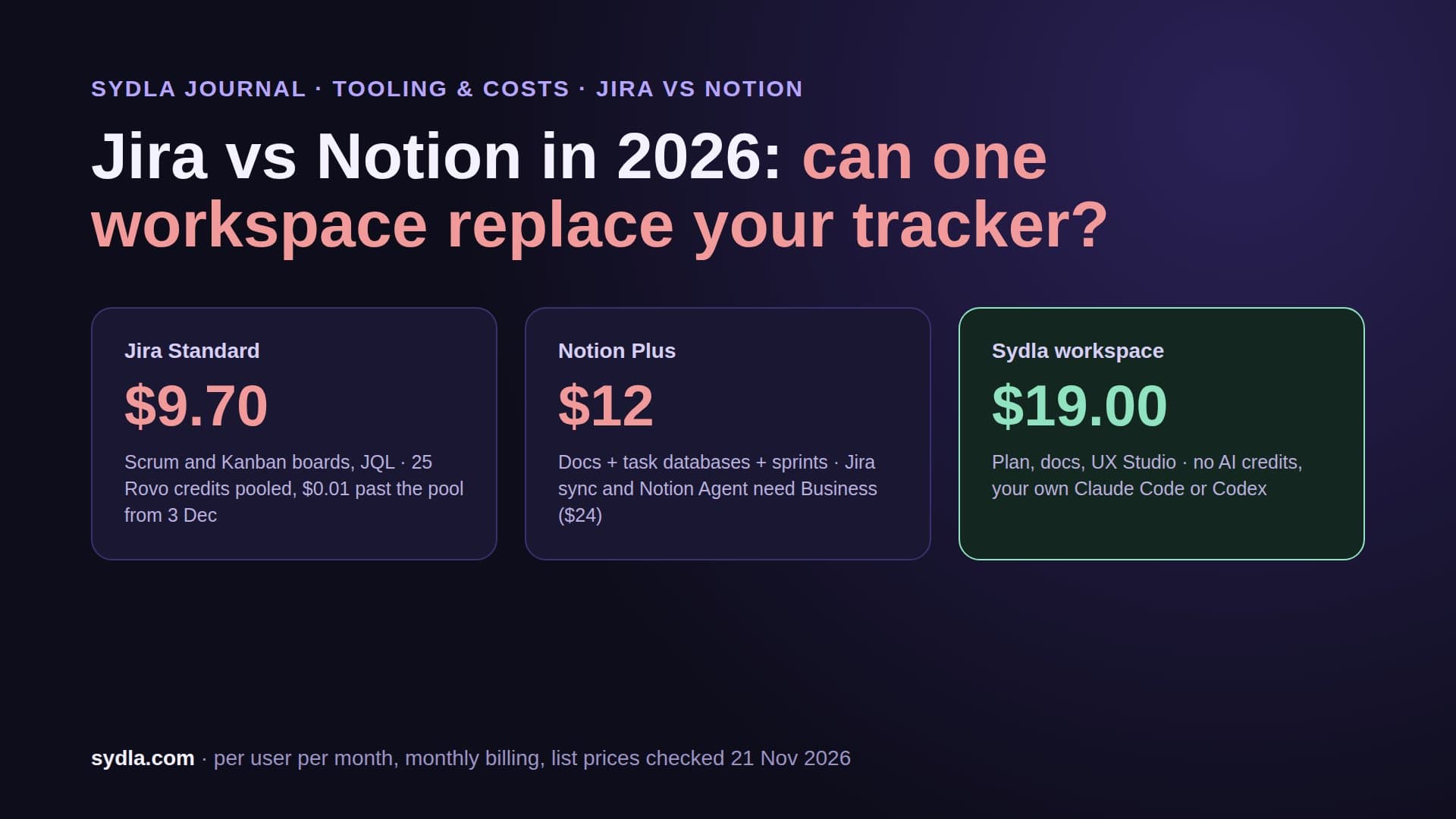
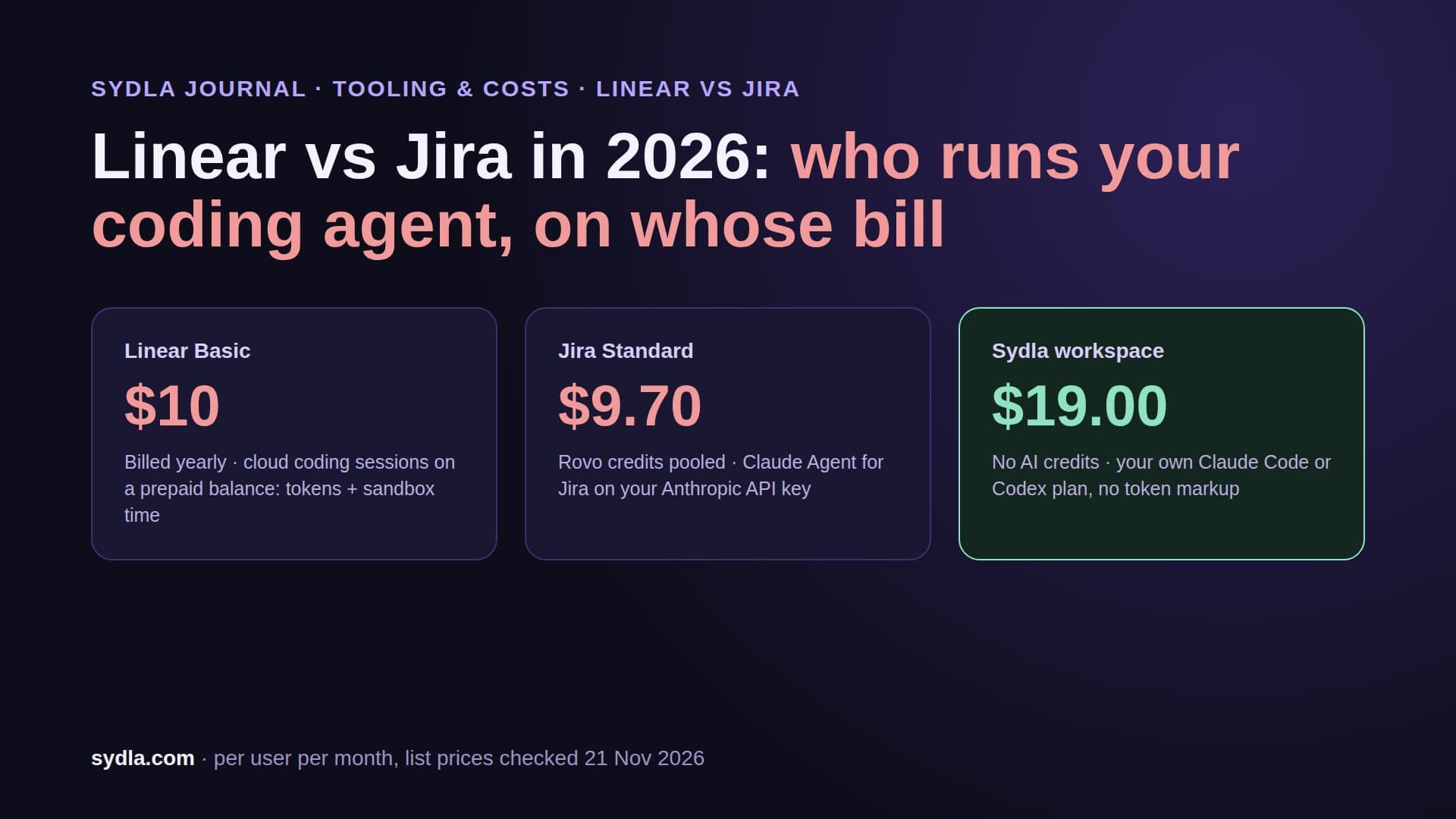
| Jira Standard | $9.70 | 25 Rovo credits per user, pooled | The request is retyped as a ticket |
| Confluence Standard | $7.15 | Same Rovo pool; enriched MCP searches 1 to 10 credits | The ticket becomes a spec |
| Notion Plus | $12.00 | Custom Agents need Business, then $10 per 1,000 credits | Decisions stay in meeting notes |
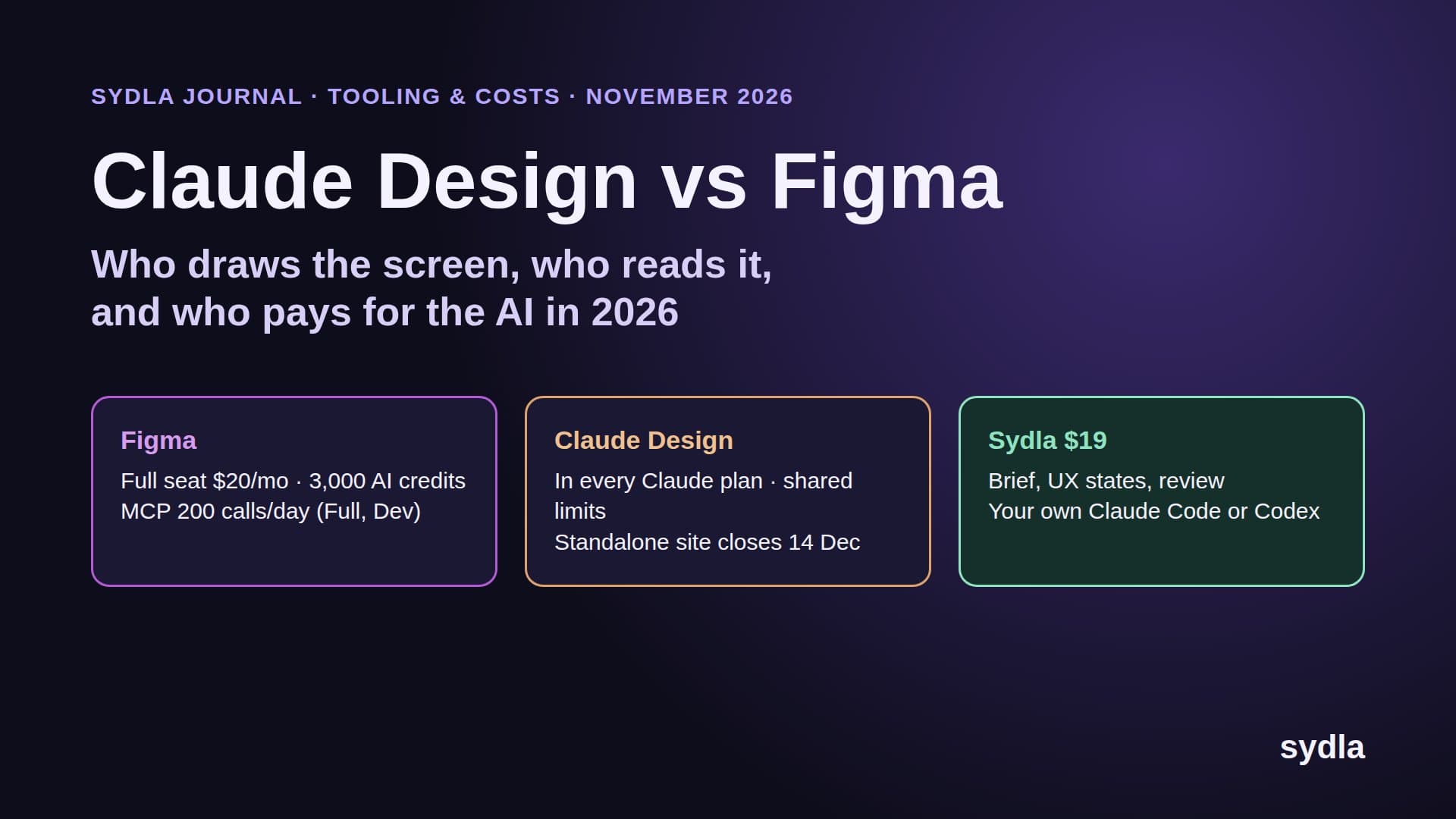
| Figma Professional, Full seat | $20.00 | 3,000 AI credits; MCP reads 200 a day | Frames are screenshotted into the ticket |
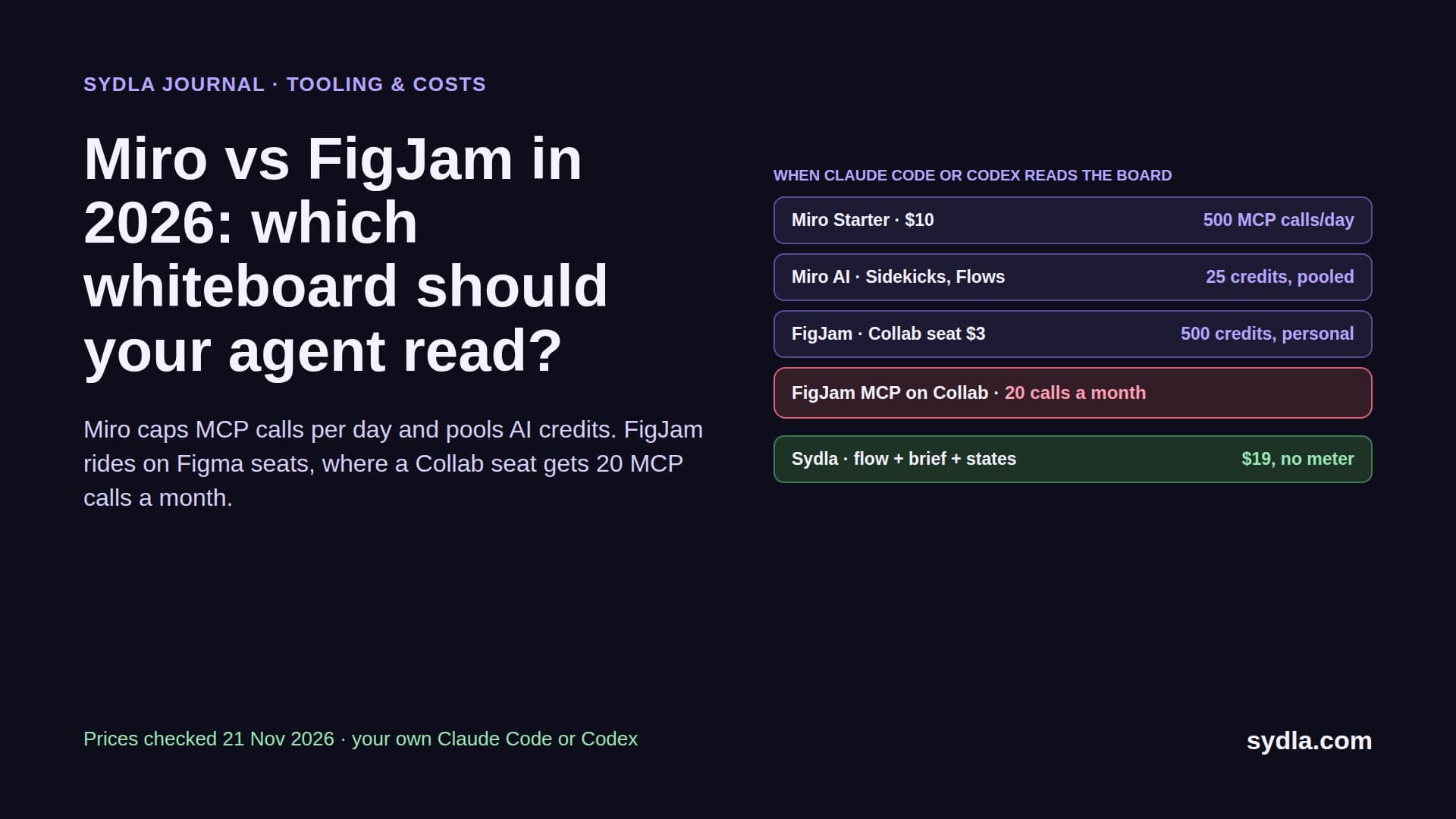
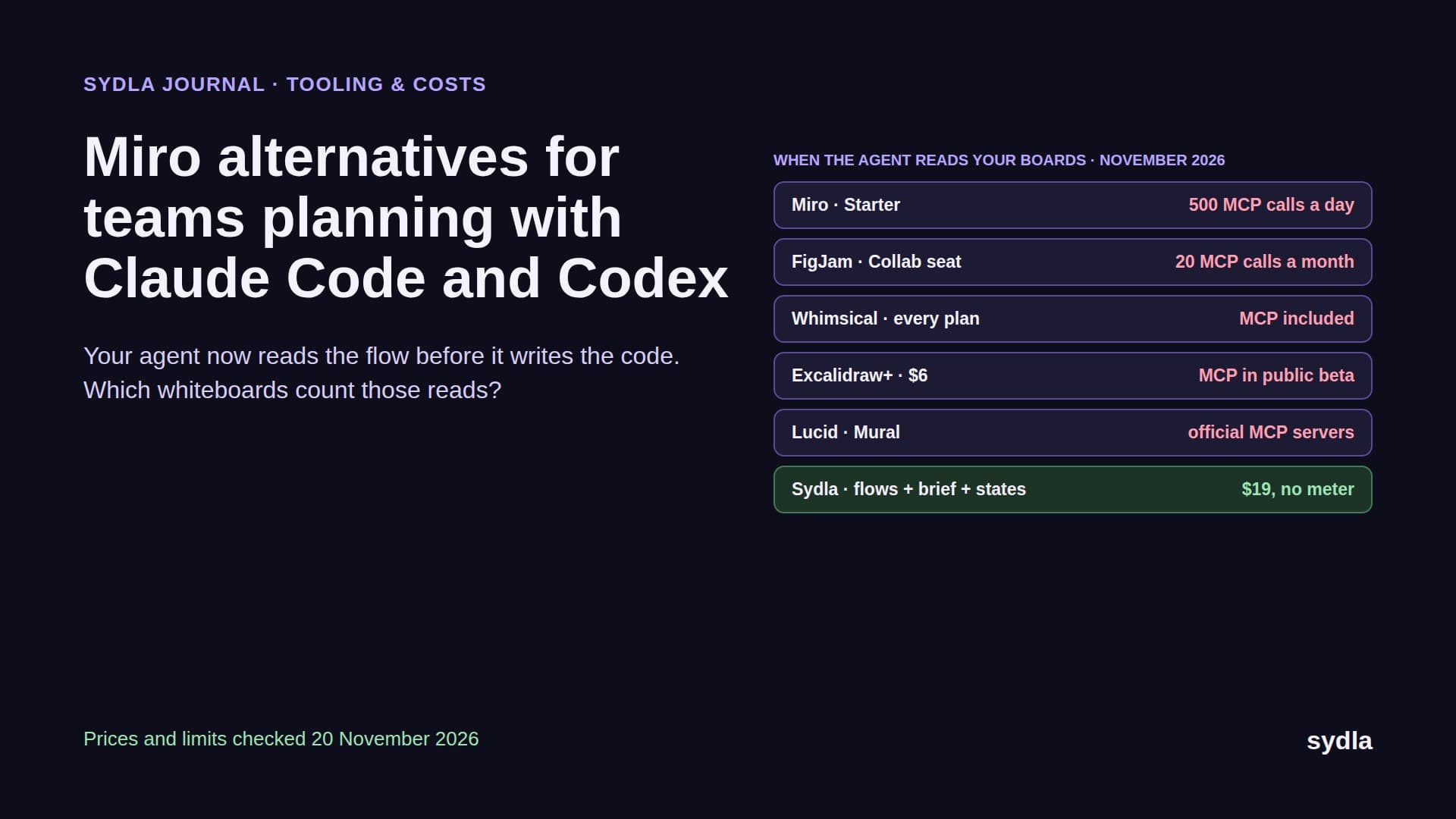
| Miro Starter | $10.00 | 25 credits per member, pooled | The flow is redrawn as frames |
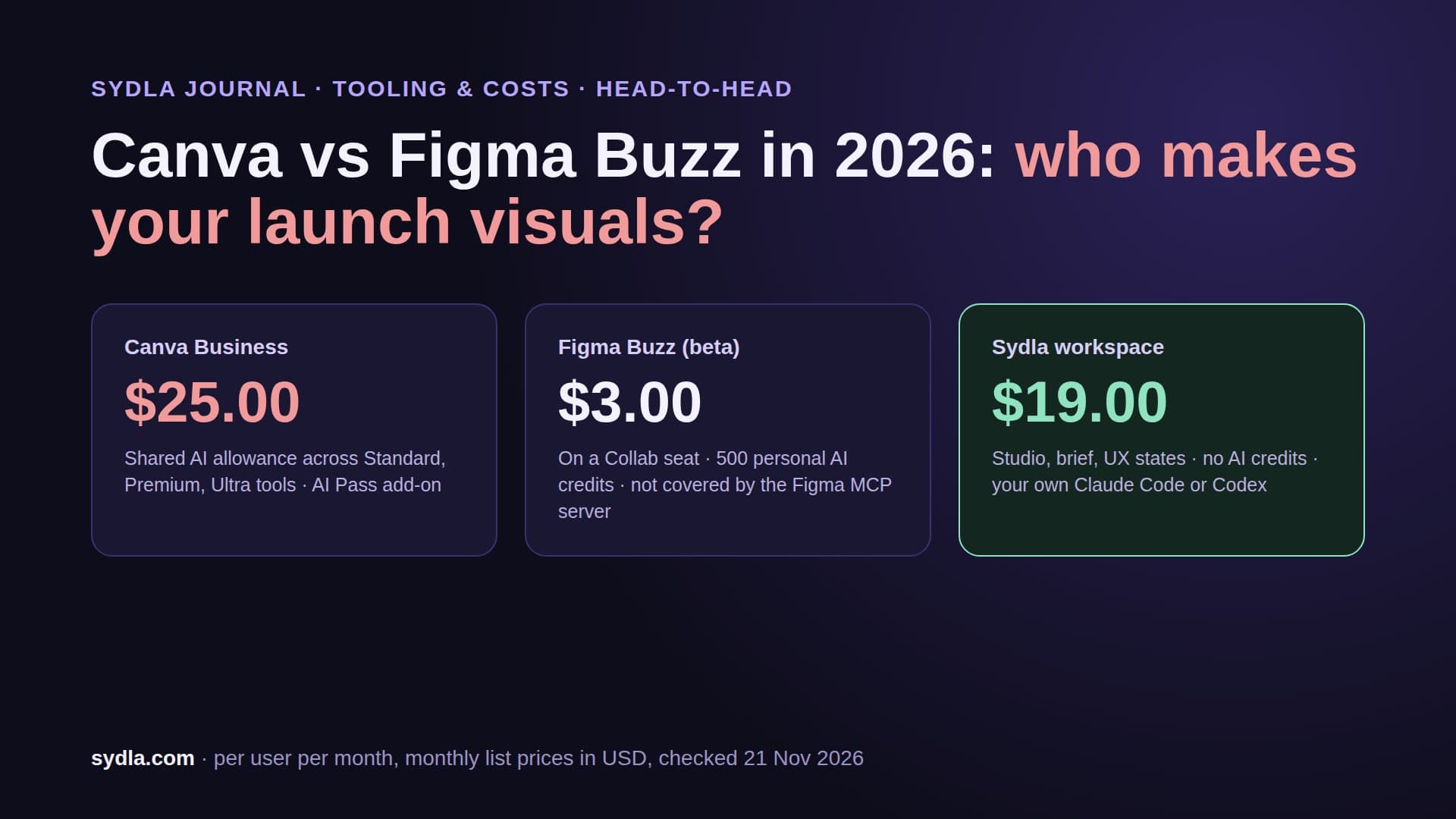
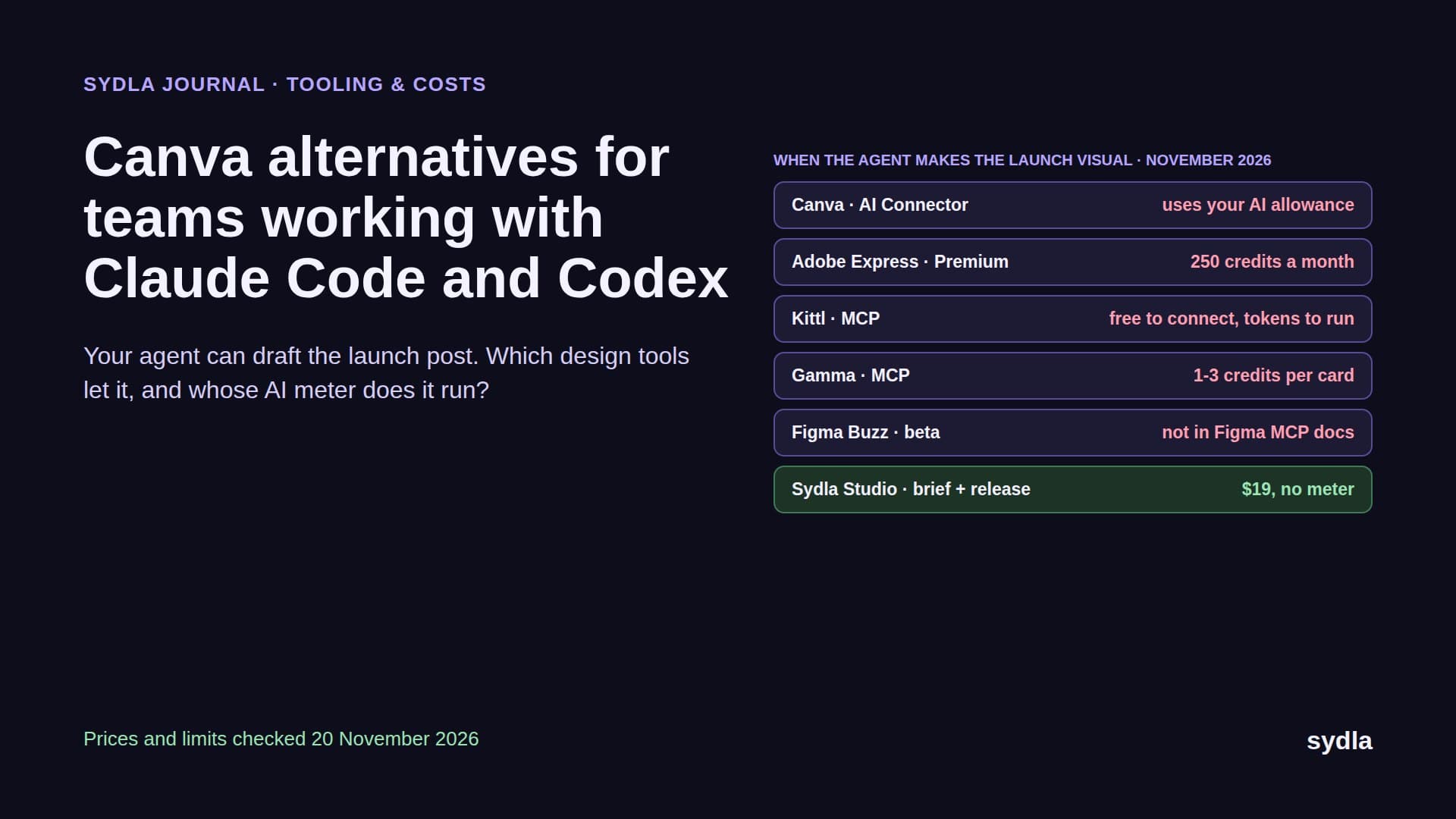
| Canva Business | $25.00 | AI allowance per plan | Screens are exported again for launch |
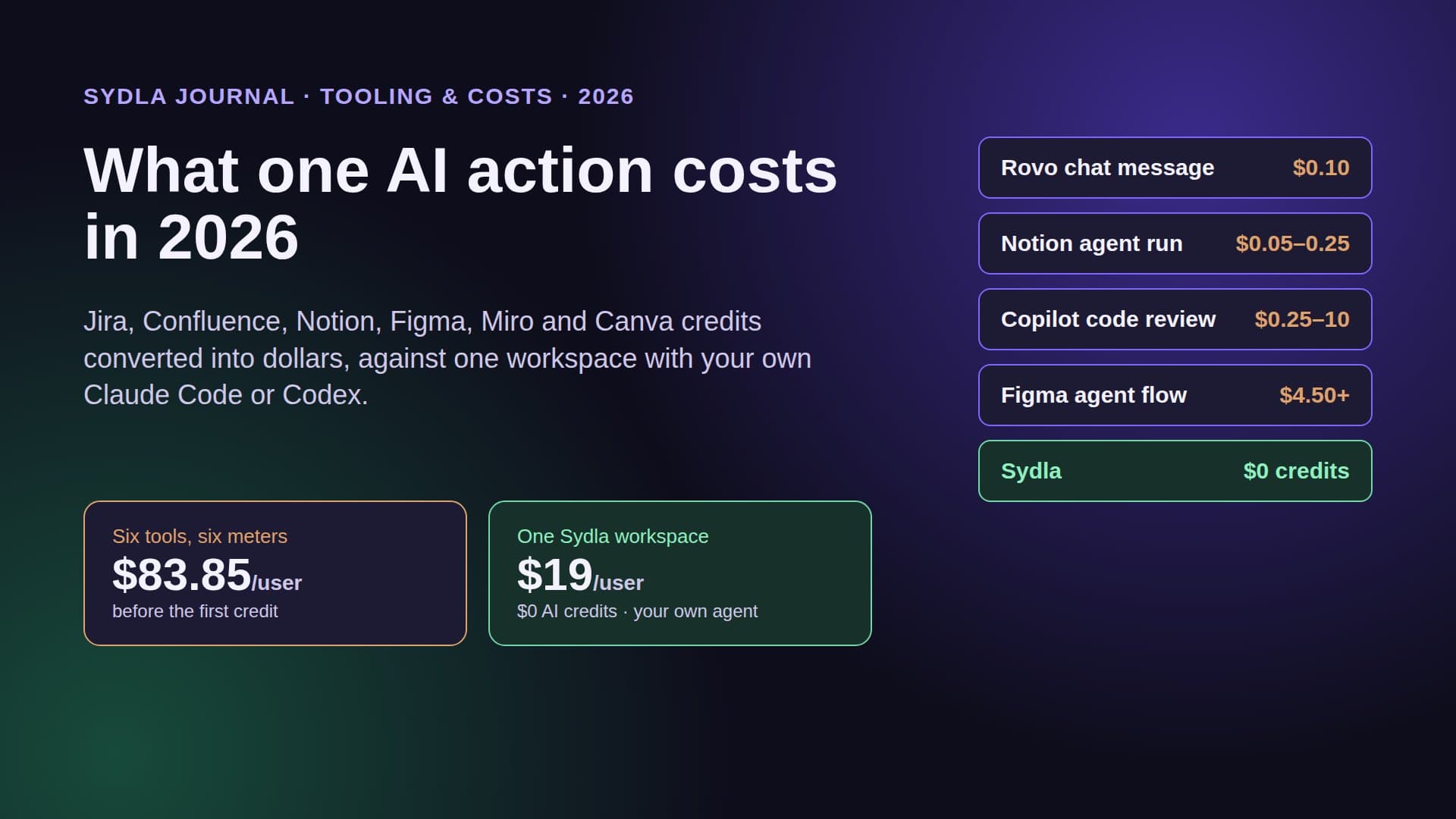
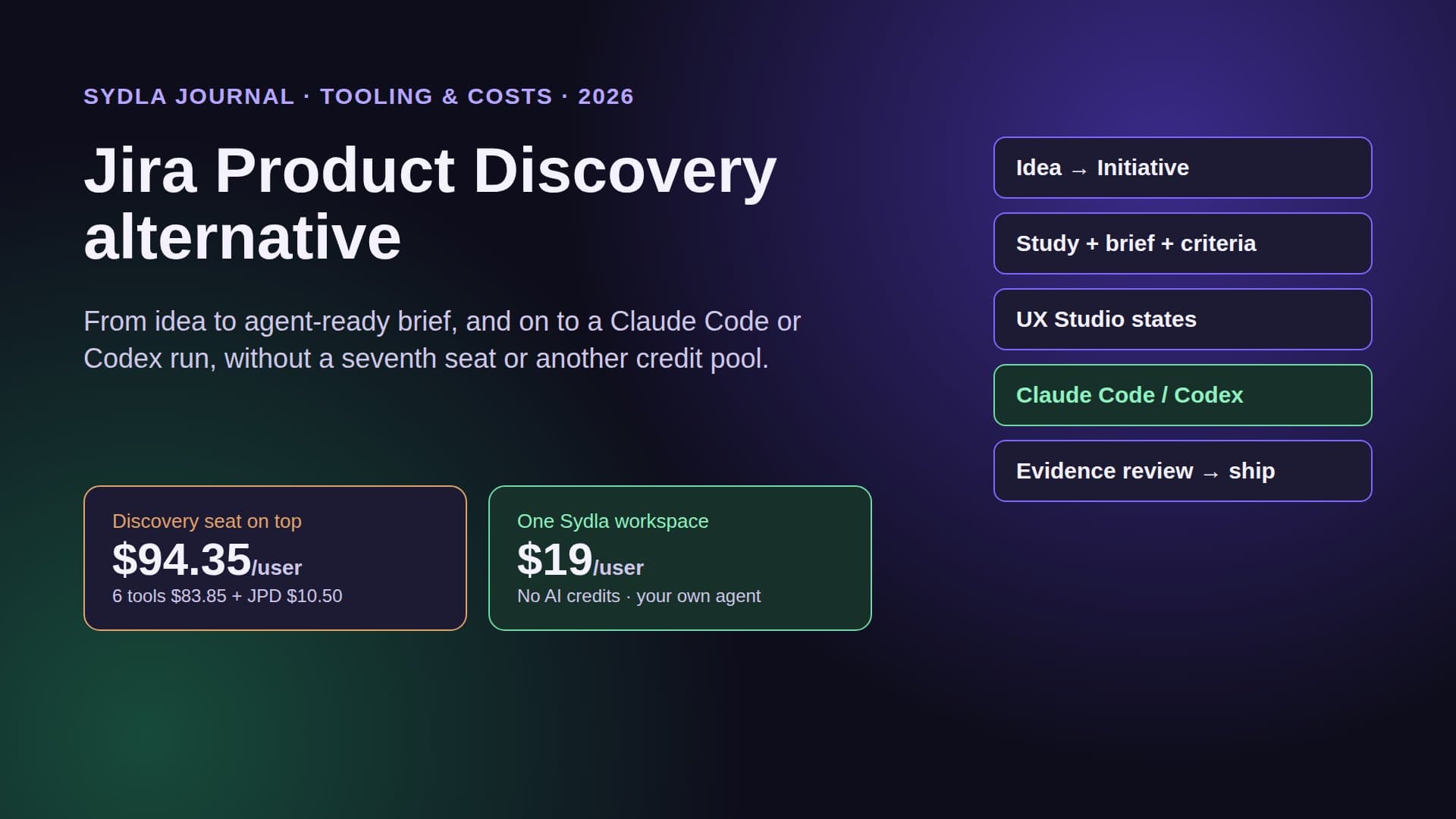
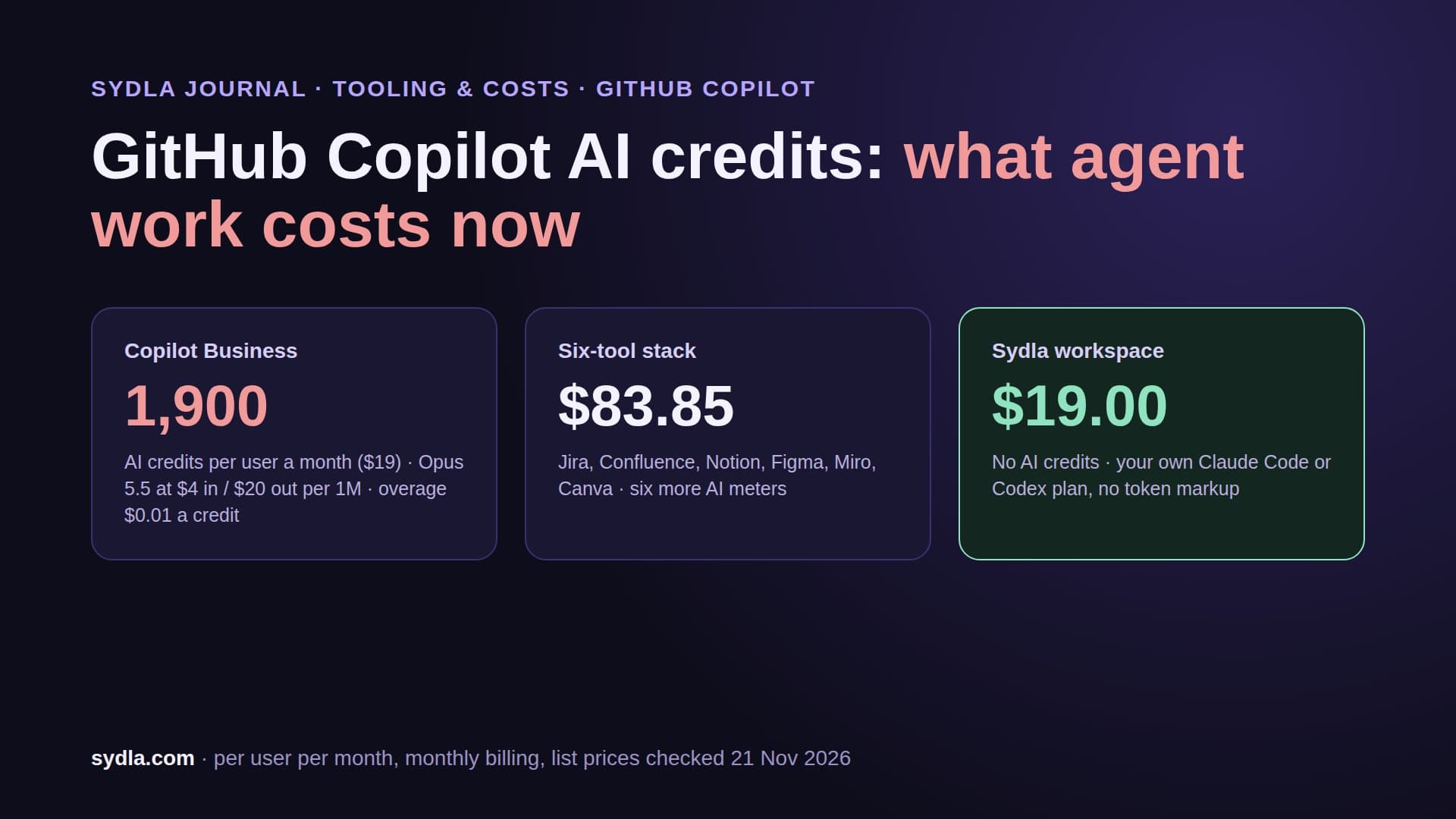
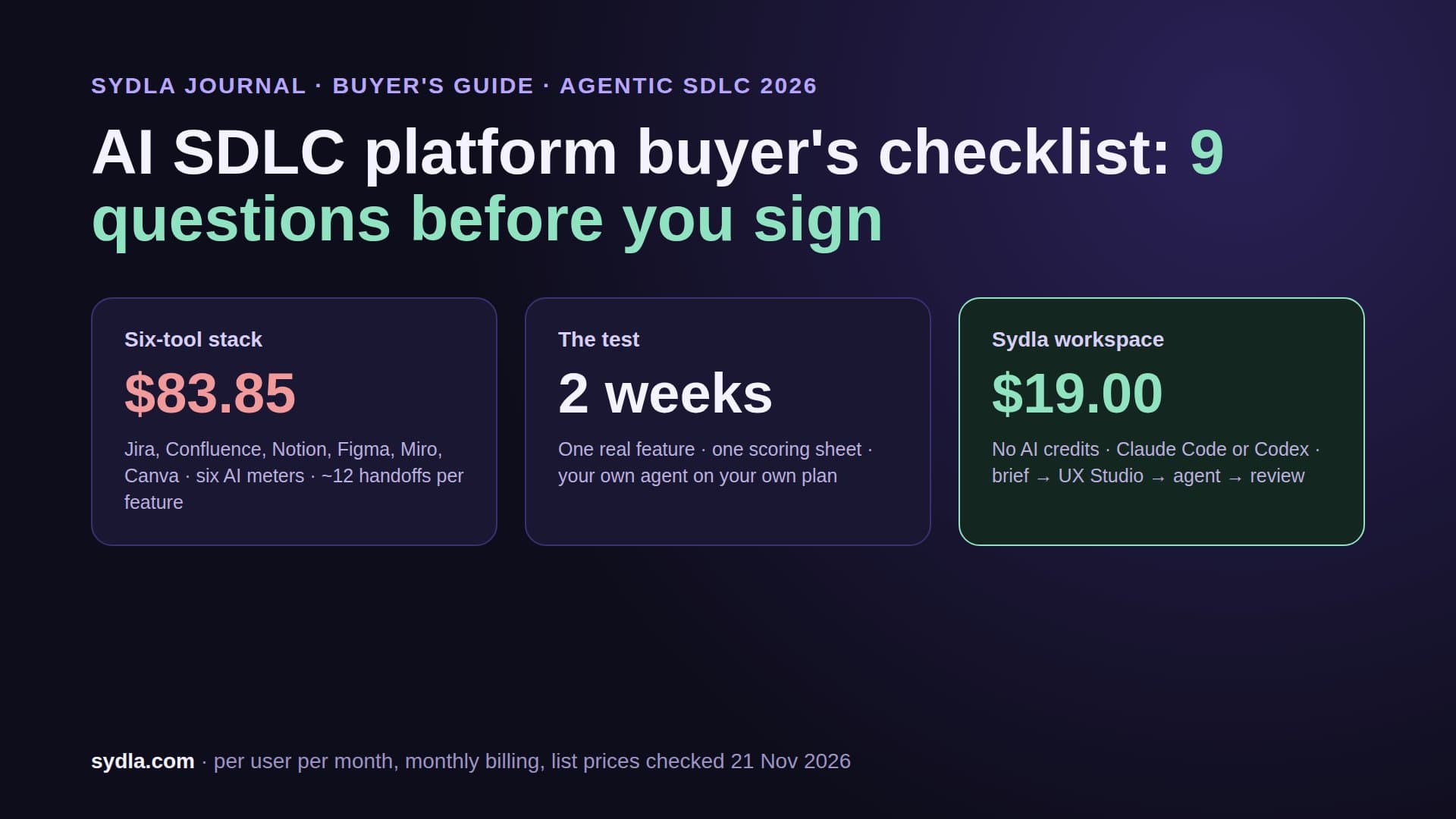
| Six-tool stack | $83.85 | Six meters, six renewal dates | About twelve handoffs per feature |
| Sydla | $19.00 | No Sydla AI credits; your own Claude Code or Codex | One work item: brief, criteria, UX states, runs, evidence |
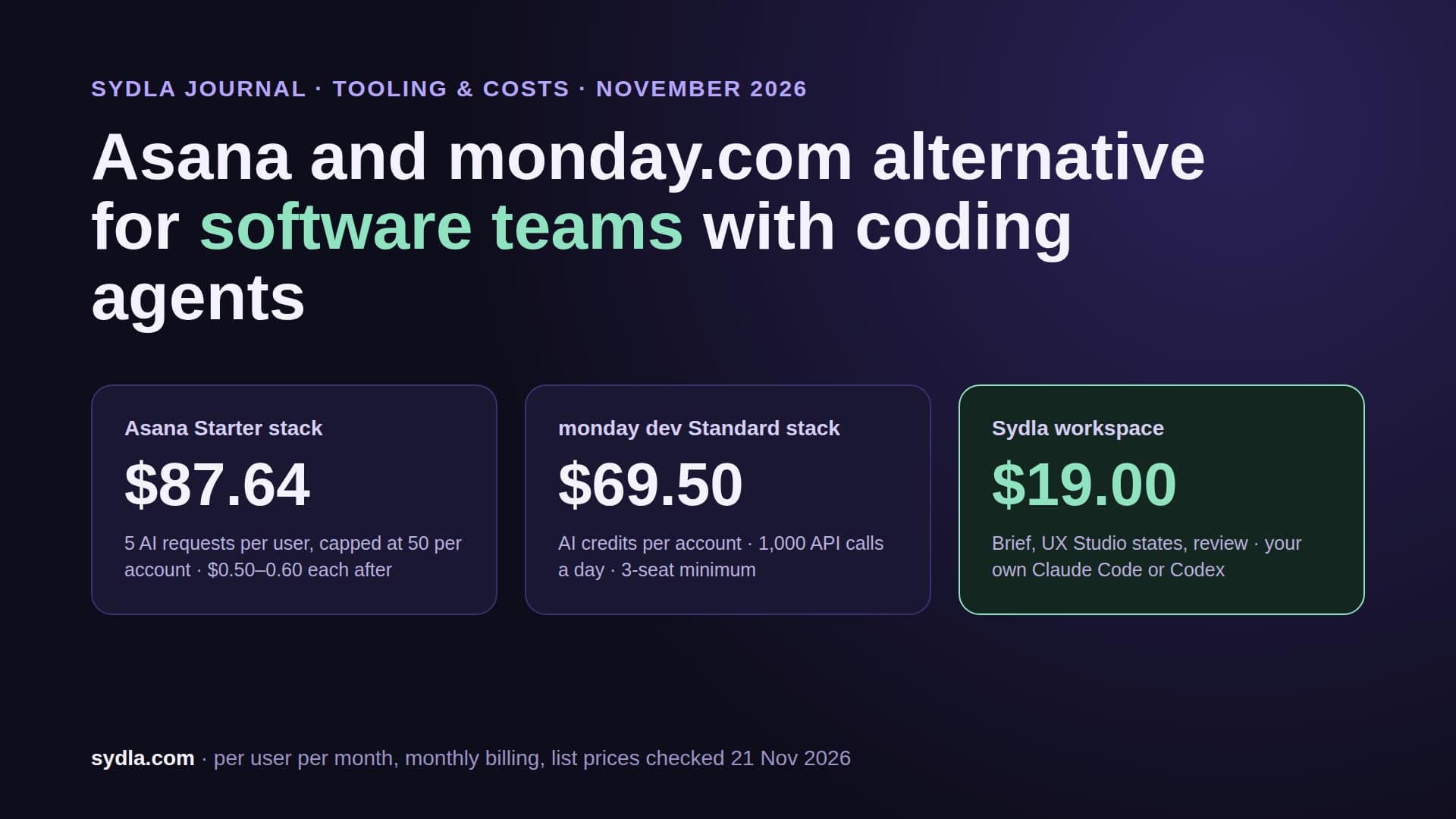
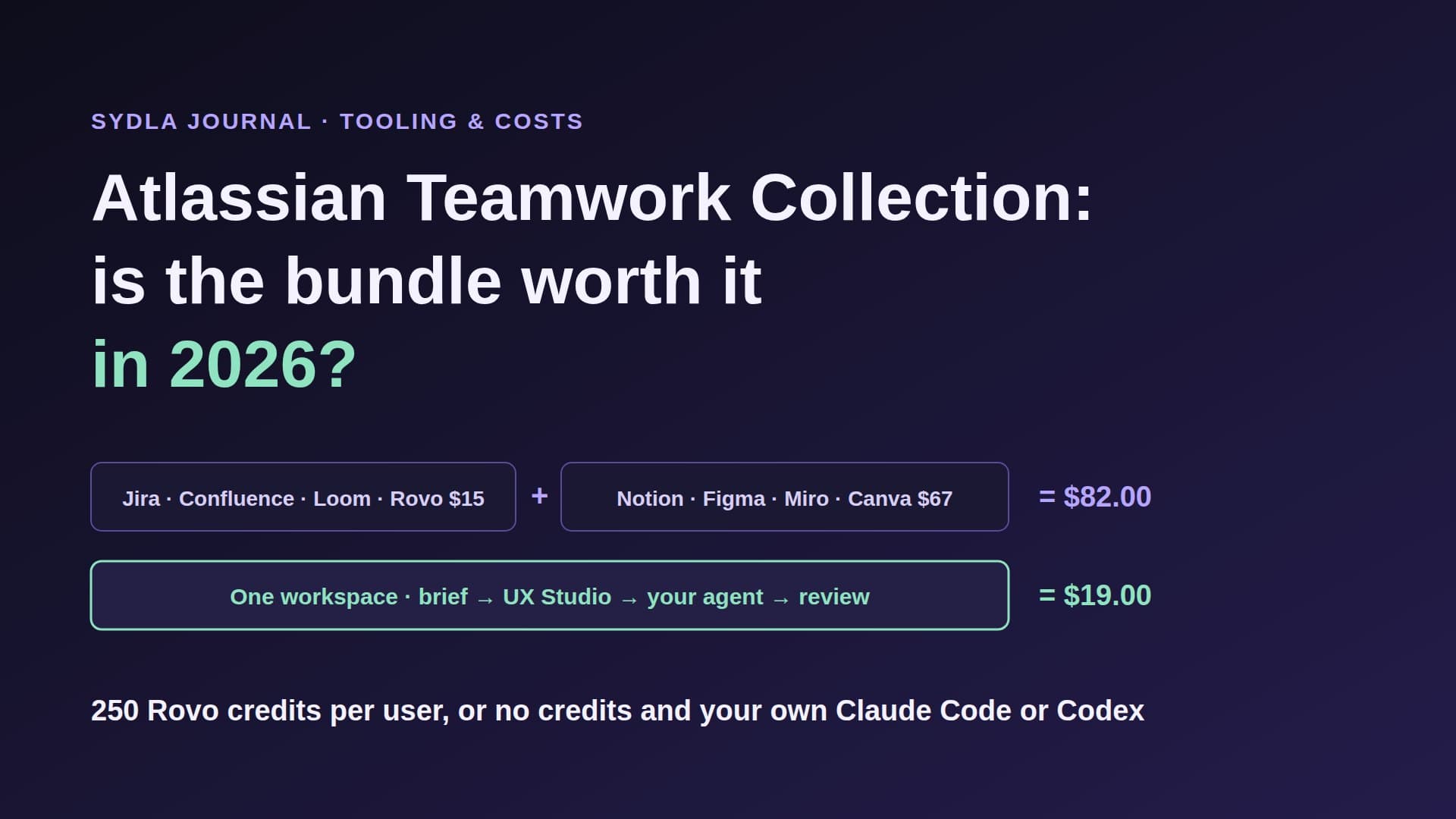
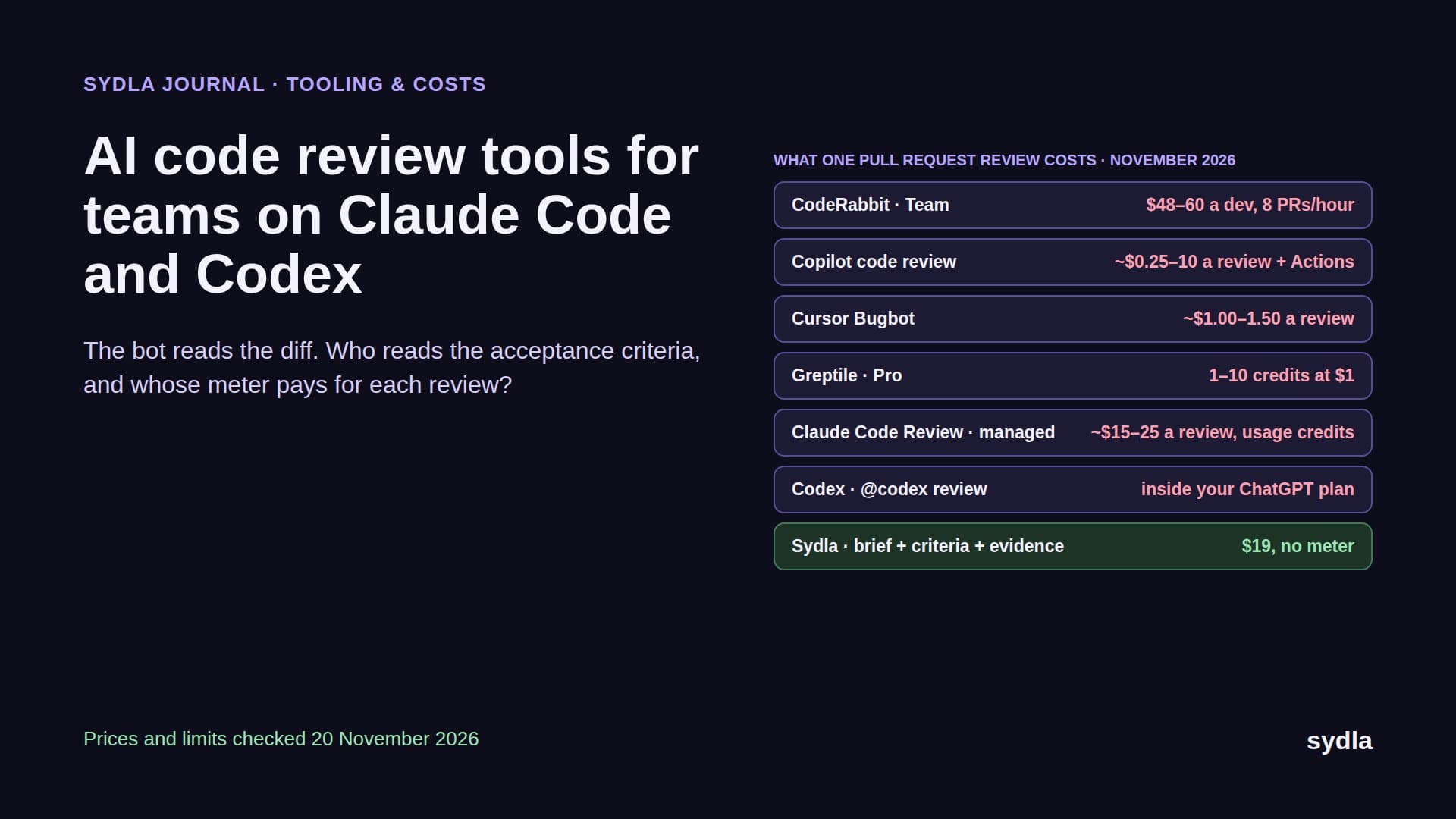
Many teams pay for both wikis: Confluence for engineering, Notion for product. Against the full stack, Sydla saves $64.85 per user per month, $778.20 a year, before any agent spend. The pricing section has the plan, and the comparison hub is honest about where each specialist tool still wins. For more options, see our Confluence alternatives and Notion alternatives guides.
Walkthrough: your own Claude Code or Codex reading one brief in Sydla Desktop
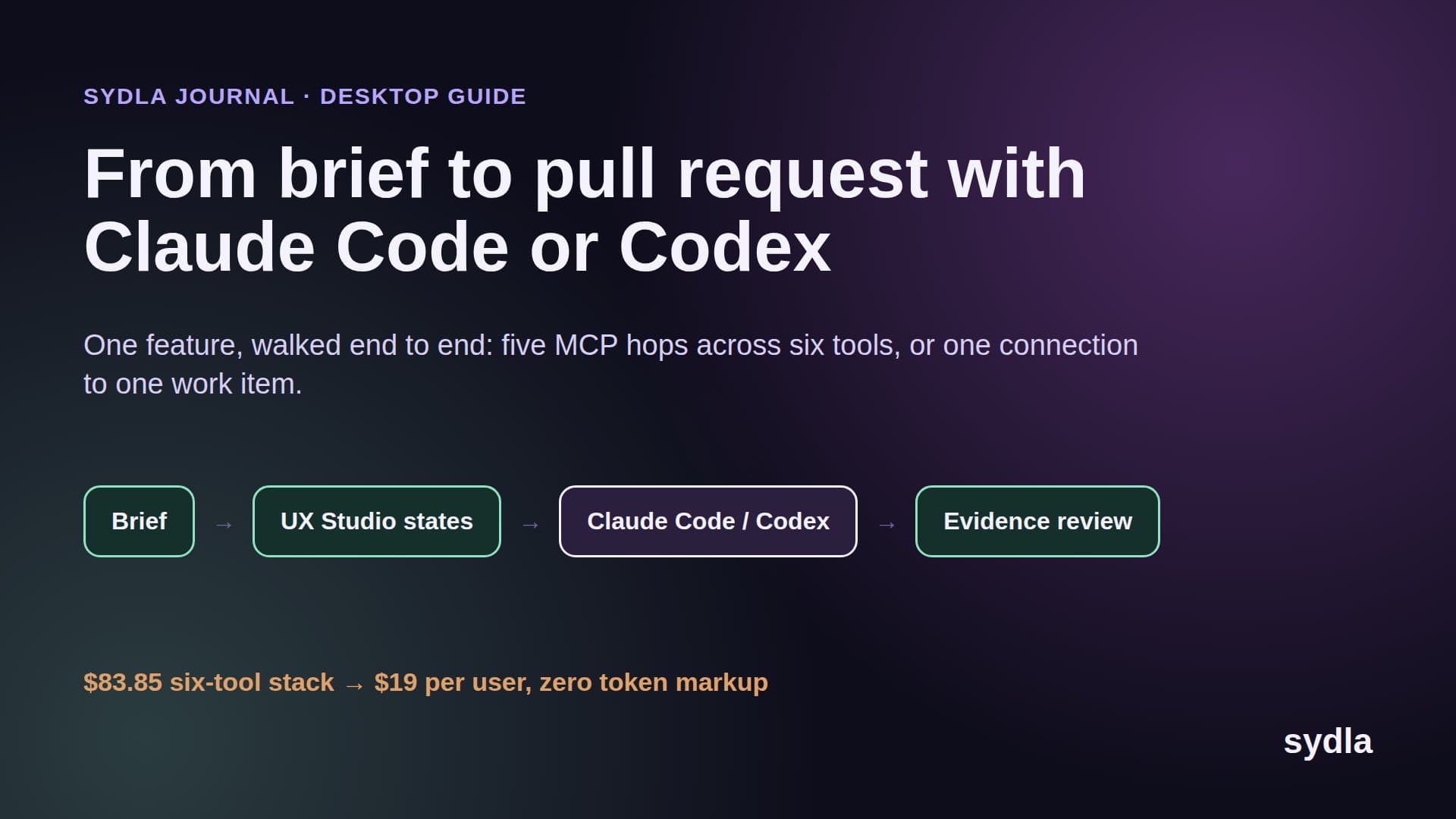
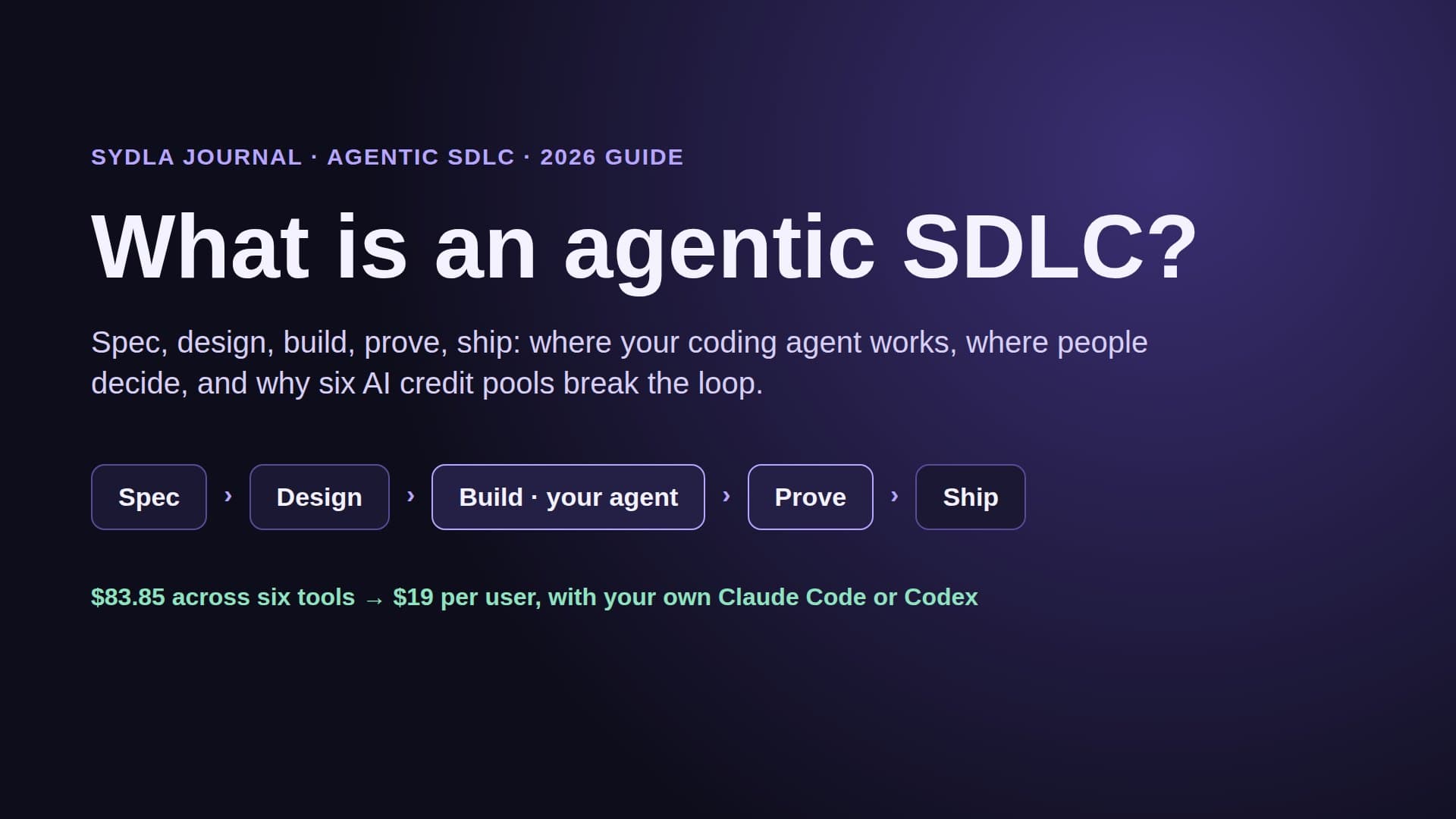
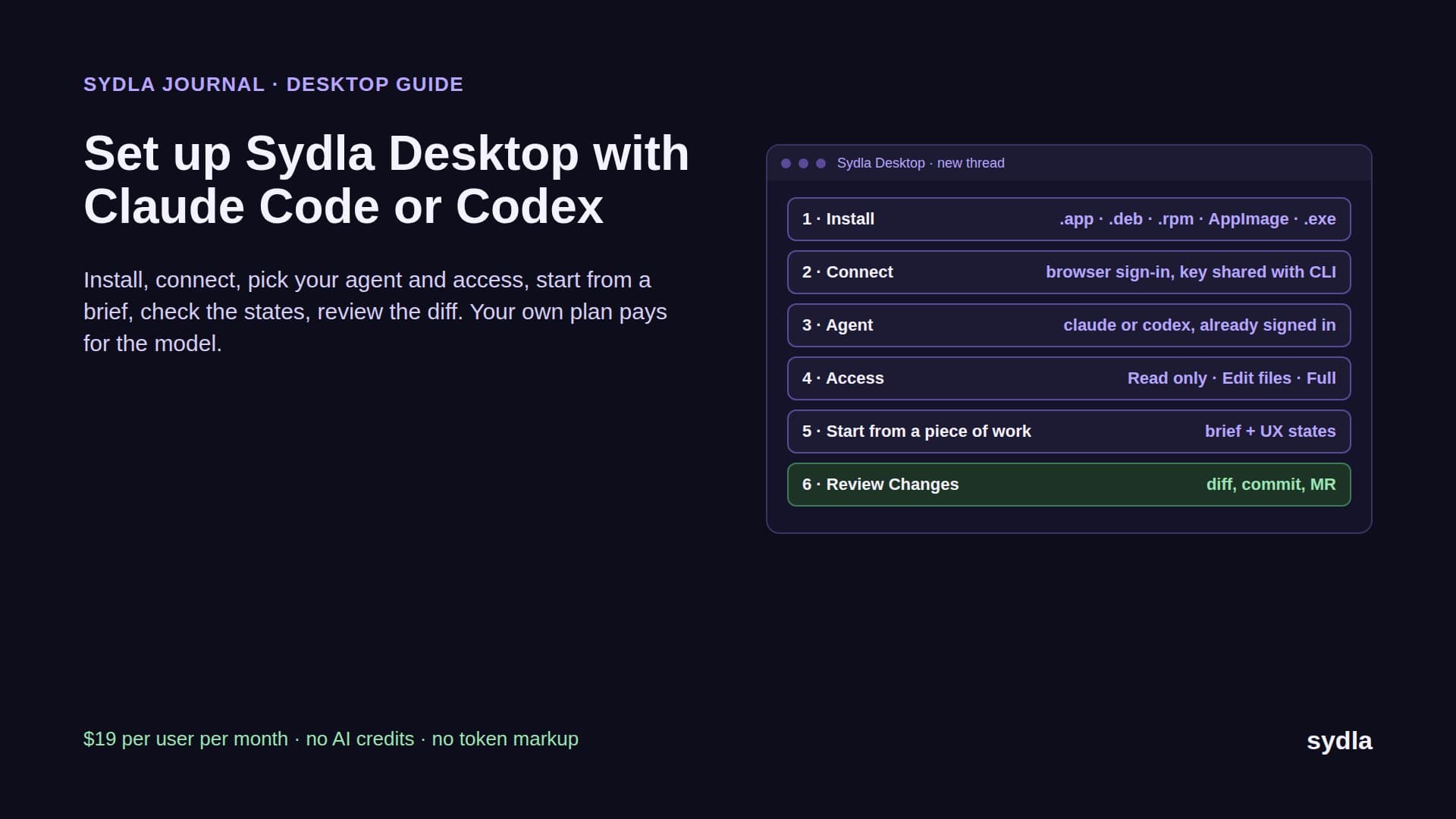
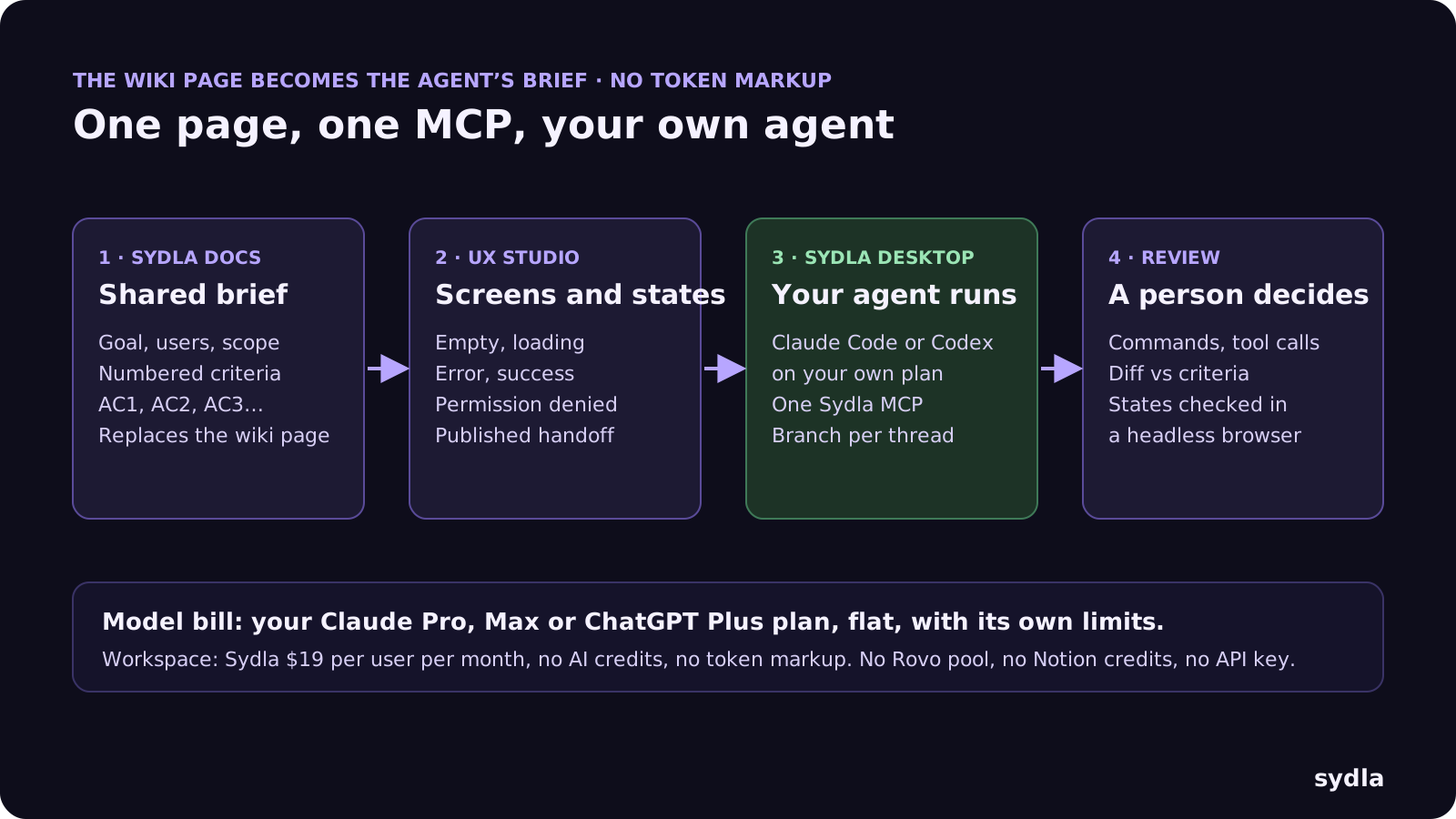
Sydla is not only a wiki. The page that would sit in Confluence or Notion becomes the brief on a work item, next to its UX states, its plan and its agent runs. The agent runs on your machine with the CLI and plan you already have. Here is the loop:
- Write the brief once. In Sydla Docs, record the goal, the users, what is out of scope and numbered acceptance criteria, for example: AC3, an admin who imports a Confluence space sees which macros were flattened, not a silent success. The PRD template for coding agents lists the seven sections that matter.
- Draw the states in UX Studio. Add the empty, loading, error, success and permission-denied screens next to the happy path and publish the handoff on the same initiative. The agent reads states, not a screenshot pasted into a page. See design-to-code handoff.
- Open a thread in Sydla Desktop. Add your repository folder. Desktop matches its Git remote to your Sydla project, so a thread started from a piece of work opens in that folder on its own branch. It launches the Claude Code or Codex CLI already signed in on your machine, on your own plan and limits, in Read only, Edit files or Full access mode.
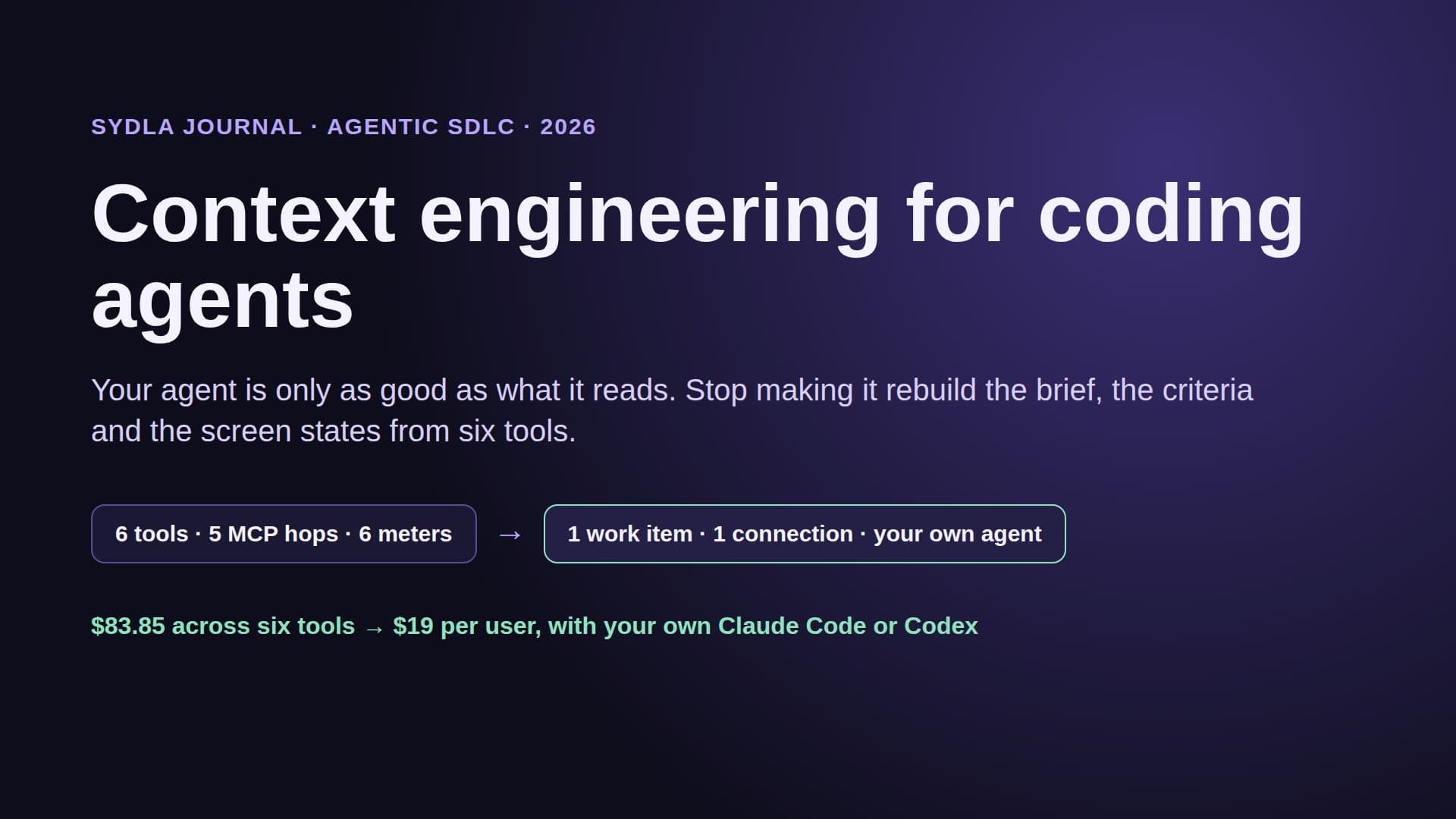
- Let the agent read the initiative. Through one Sydla MCP connection the agent opens the brief, the criteria and the UX handoff by reference. No enriched search to pay for, no page permissions to widen. It edits, runs the tests and opens the dev server in its own headless browser to check each state.
- Review the evidence, then decide. The thread shows every command and tool call; Changes shows the diff. Check it against the criteria and the states, commit on the thread's branch and open the merge request. A person makes the gate decision, never the agent. The AI pull request review guide has the four-pass checklist.
The Sydla Desktop setup guide covers installation, context engineering for coding agents explains why one brief beats ten search results, and Claude Code vs Codex for product teams helps you pick an agent, or both.
Which one should you pick?
There is no single winner. It depends on your size, your governance needs and how much your agents read:
- Pick Confluence if you already run Jira, need space-level permissions, audit and Marketplace apps, or are moving off Data Center before 2029. Set a Rovo budget before 3 December and tell your agents to fetch pages by ID.
- Pick Notion if your team wants one flexible place for specs, notes and lightweight projects and your agents mostly read. MCP reads are free; budget for Business if you want Notion Agent and Custom Agents.
- Pick Sydla if you are a solo founder, an early engineering team or a lean product team that already pays for Claude Code or Codex and wants the brief, the UX states, the plan and the evidence in one place instead of six. See the solo founder stack for the one-person version, and Linear vs Jira if the tracker is your next decision.
Keep your agent. Drop the meters.
Confluence and Notion both became the agent's memory, and both put a meter near it: a Rovo pool that goes pay-as-you-go on one side, Business seats and Notion credits on the other. Neither gives the agent the states it should build or the evidence a reviewer needs.
Take the next spec you were going to write in a wiki. Write it as a brief in Sydla this week, add its states, open a Desktop thread and let your own Claude Code or Codex build it. Start your $19/mo AI SDLC workspace and keep your Claude Code and Codex accounts exactly as they are.
Frequently asked questions
Is Notion cheaper than Confluence in 2026?
Not on seats. Confluence Standard is $7.15 and Premium $14.10 per user per month; Notion Plus is $12 and Business $24 per user per month, or $10 and $20 billed yearly. The difference is AI billing: Confluence includes 25 to 70 pooled Rovo credits per user and bills extra credits at $0.01 from 3 December 2026, while Notion MCP reads spend no credits and Notion's own agents need Business and Notion credits.
Can Claude Code read Confluence and Notion pages?
Yes. Both offer hosted MCP servers. The Atlassian Rovo MCP server lets Claude Code or Codex search, read, create and update Confluence pages; fetching a page by ID is free, but enriched searches cost 1 to 10 pooled Rovo credits. Notion's MCP server reads and writes pages and databases with your full Notion permissions and spends no credits unless a Notion agent runs.
How do you migrate from Confluence to Notion?
Use Notion's Confluence importer. The API importer moves an entire workspace up to 30GB and about 50,000 pages and keeps comments and user mapping; the zip importer moves part of a space up to 5GB, or 15GB on request. Permissions do not import, pages land private to the importer, and most macros are unsupported. Multi-space import needs Notion Business or Enterprise.
When does Confluence Data Center reach end of life?
Atlassian announced on 8 September 2025 that new Data Center subscriptions ended for new customers on 30 March 2026, existing customers can buy new licences and apps until 30 March 2028, and all Data Center licences expire and become read-only on 28 March 2029.
Is there an alternative to Notion and Confluence for teams using AI coding agents?
Sydla is an AI SDLC workspace at $19 per user per month that combines docs, the plan, UX Studio and whiteboards with no AI credits. Sydla Desktop runs your own Claude Code or Codex CLI on your plan and connects it to the brief, acceptance criteria and UX states through one MCP connection, replacing a six-tool stack that costs $83.85 per user per month.