What a product team's tool stack costs in 2026: 5, 10 and 25 people
Per-seat prices look small until you multiply them by a team and add the tier you are forced into. Here is the 2026 bill for a 5, 10 and 25 person product team, the six cliffs that push it up, and how the same team ships with one workspace and its own coding agents.
The per-seat price is the smallest number on the bill
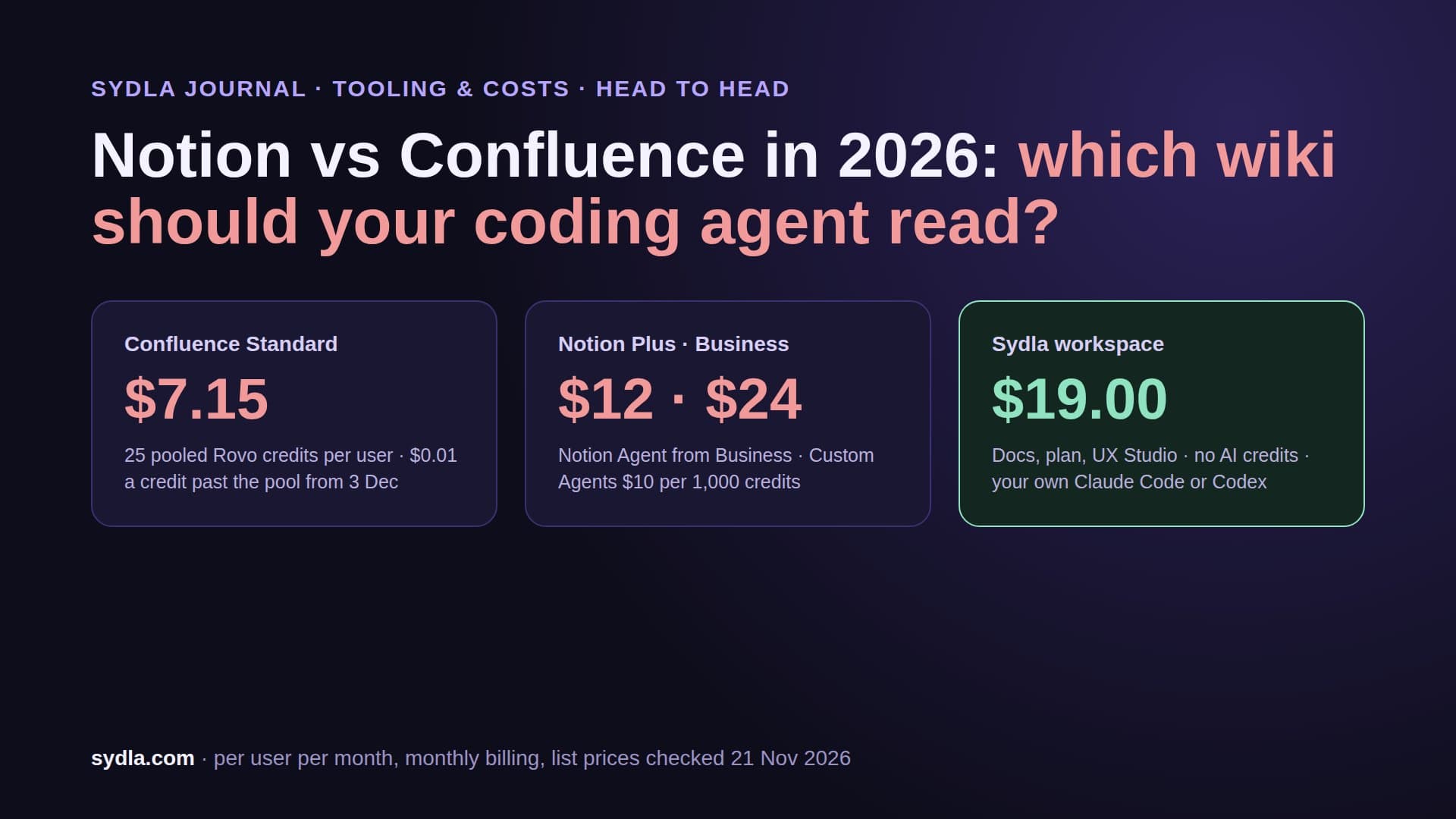
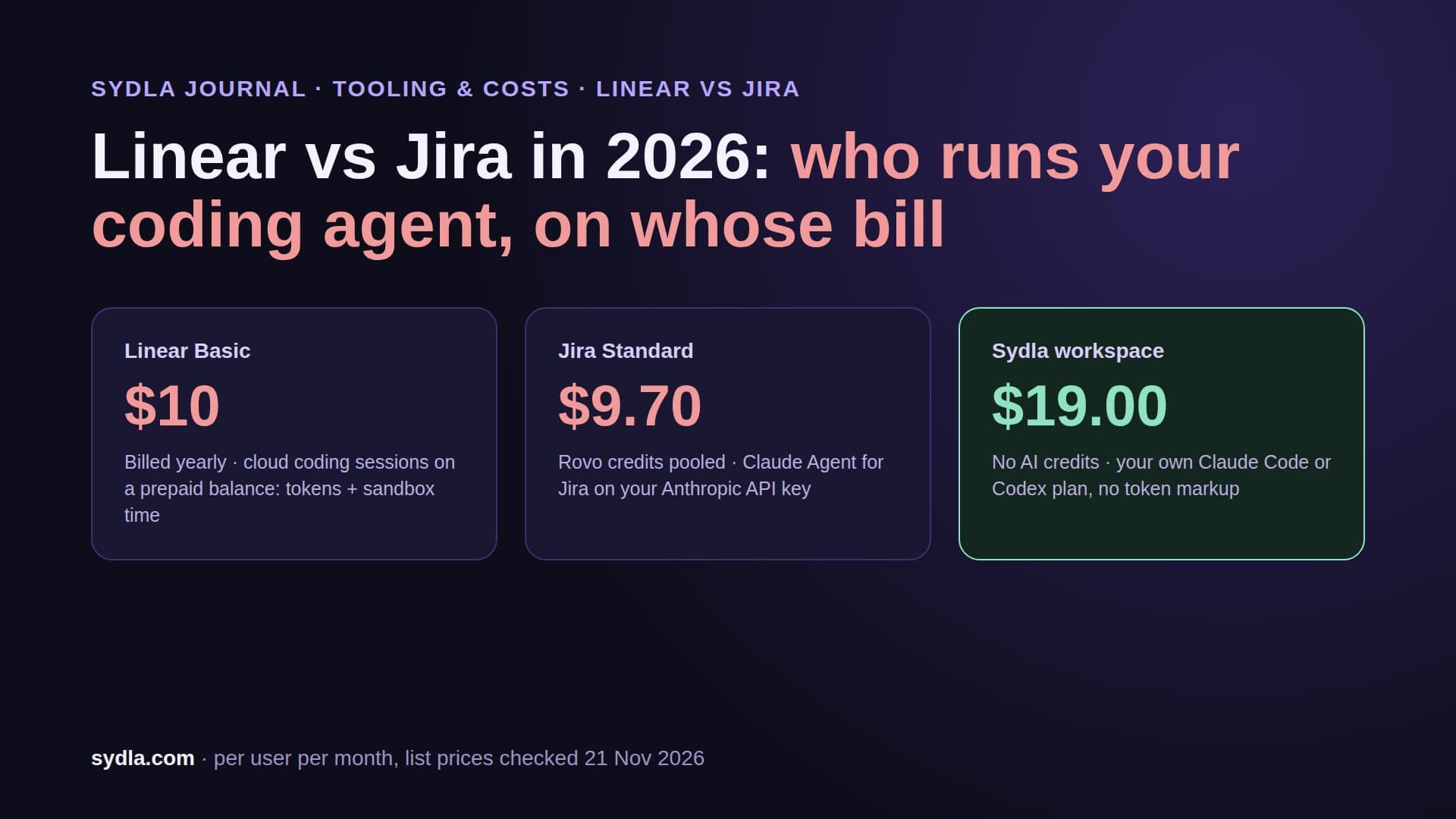
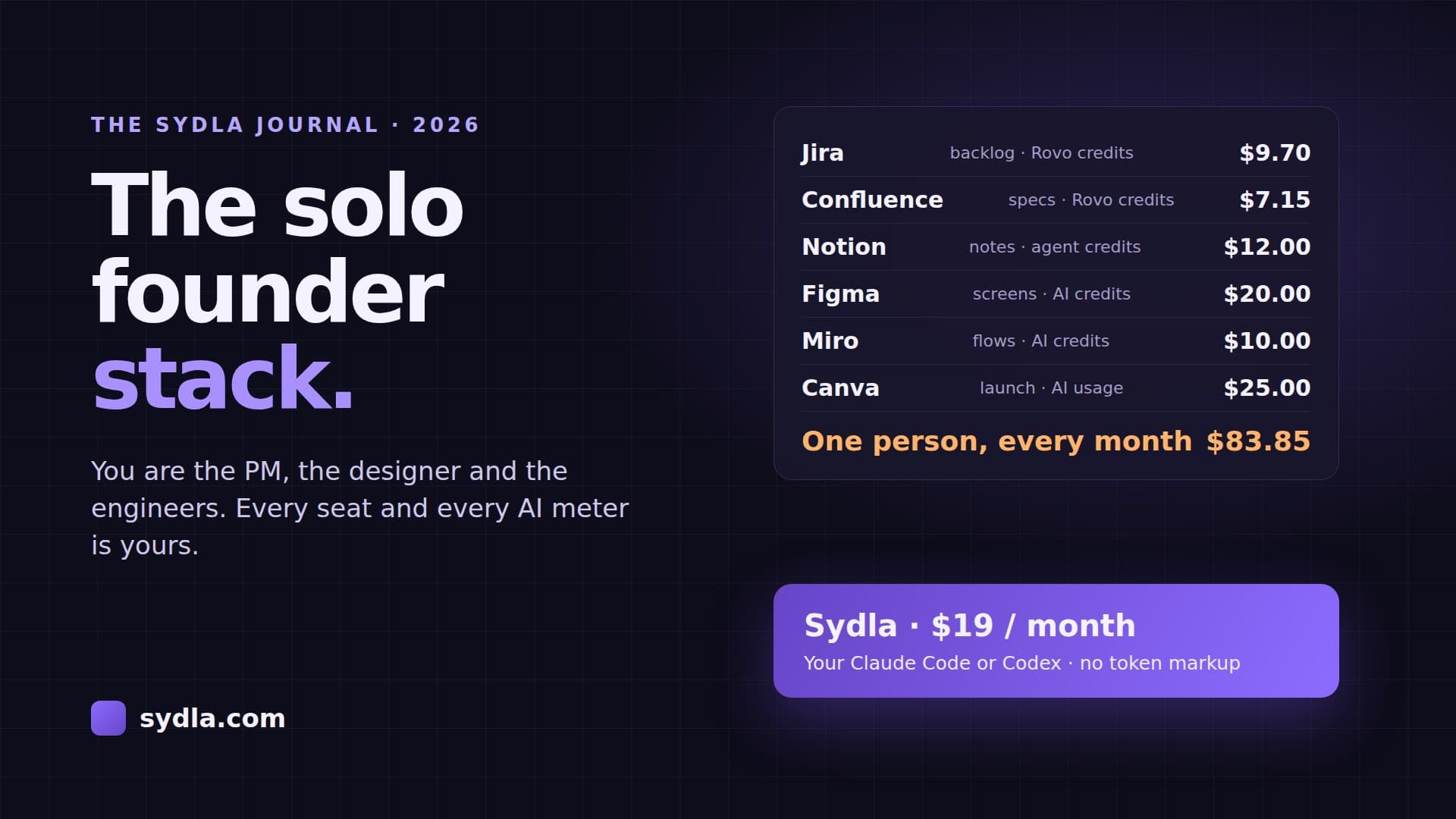
Every tool in a product team's stack is priced to look cheap. $9.70 for Jira. $7.15 for Confluence. $12 for Notion. Nobody signs a purchase order for a single seat, though. You sign for the team, then for the plan the team grows into, then for the AI meter that runs out on the 19th of the month.
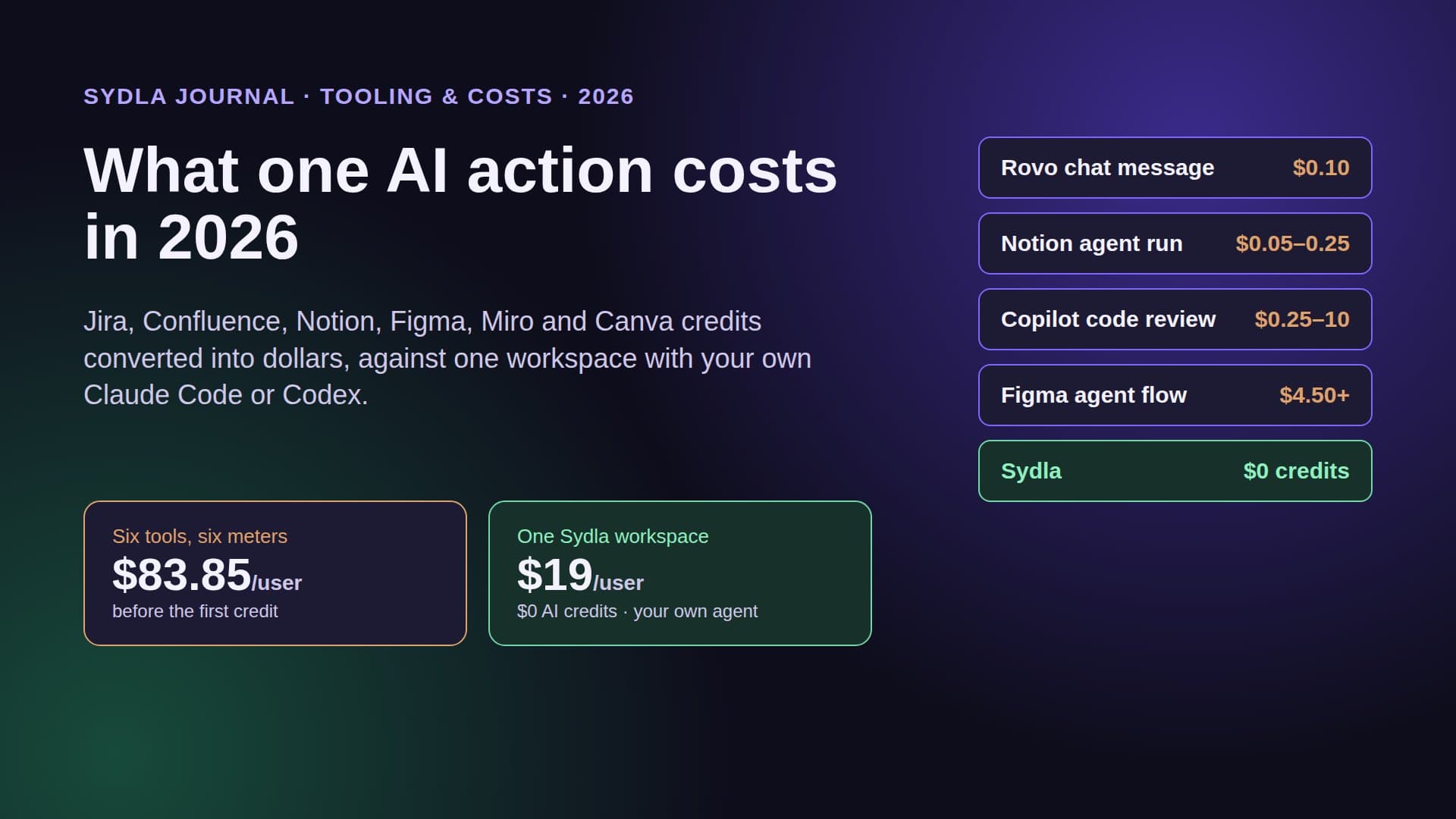
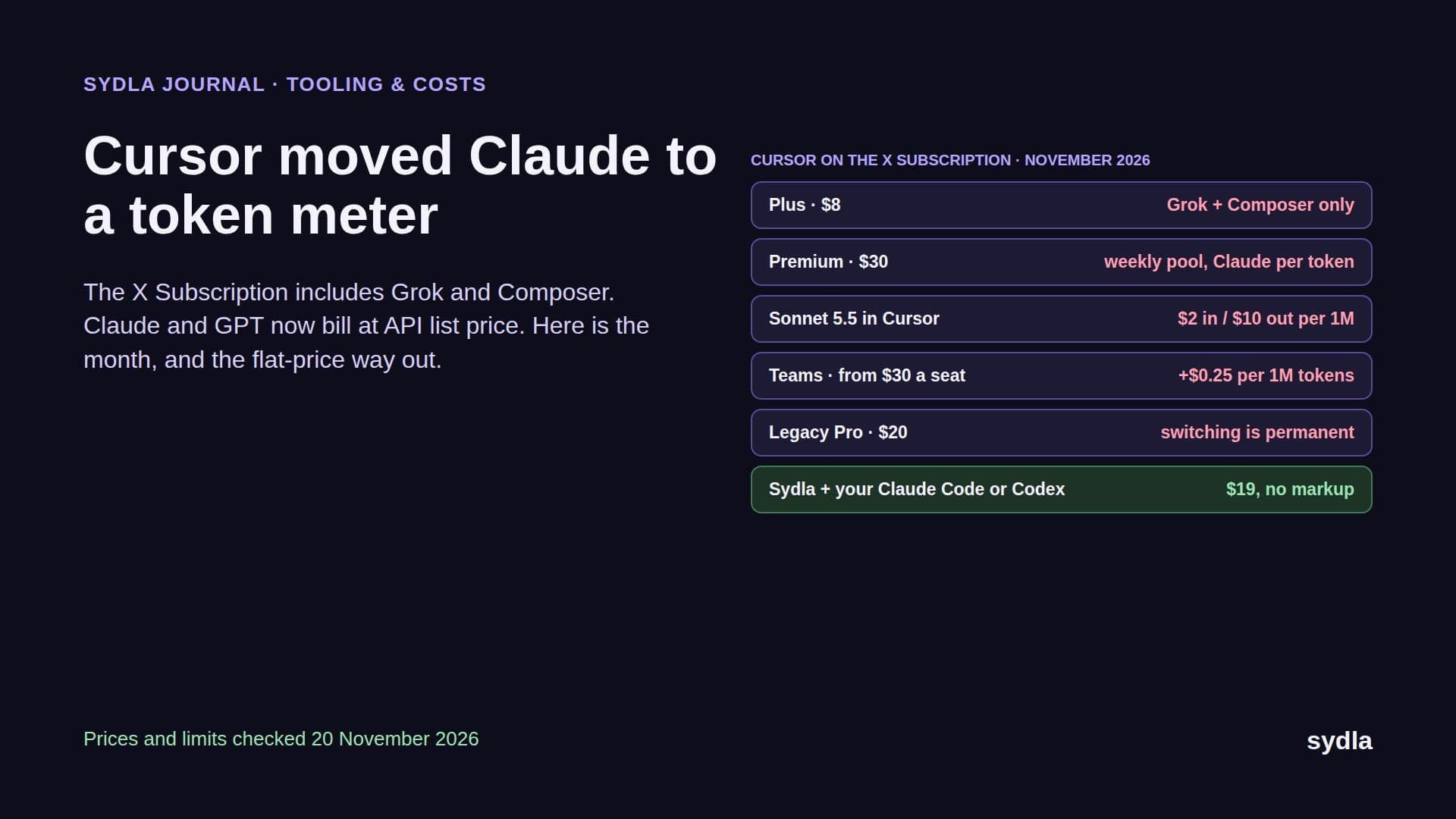
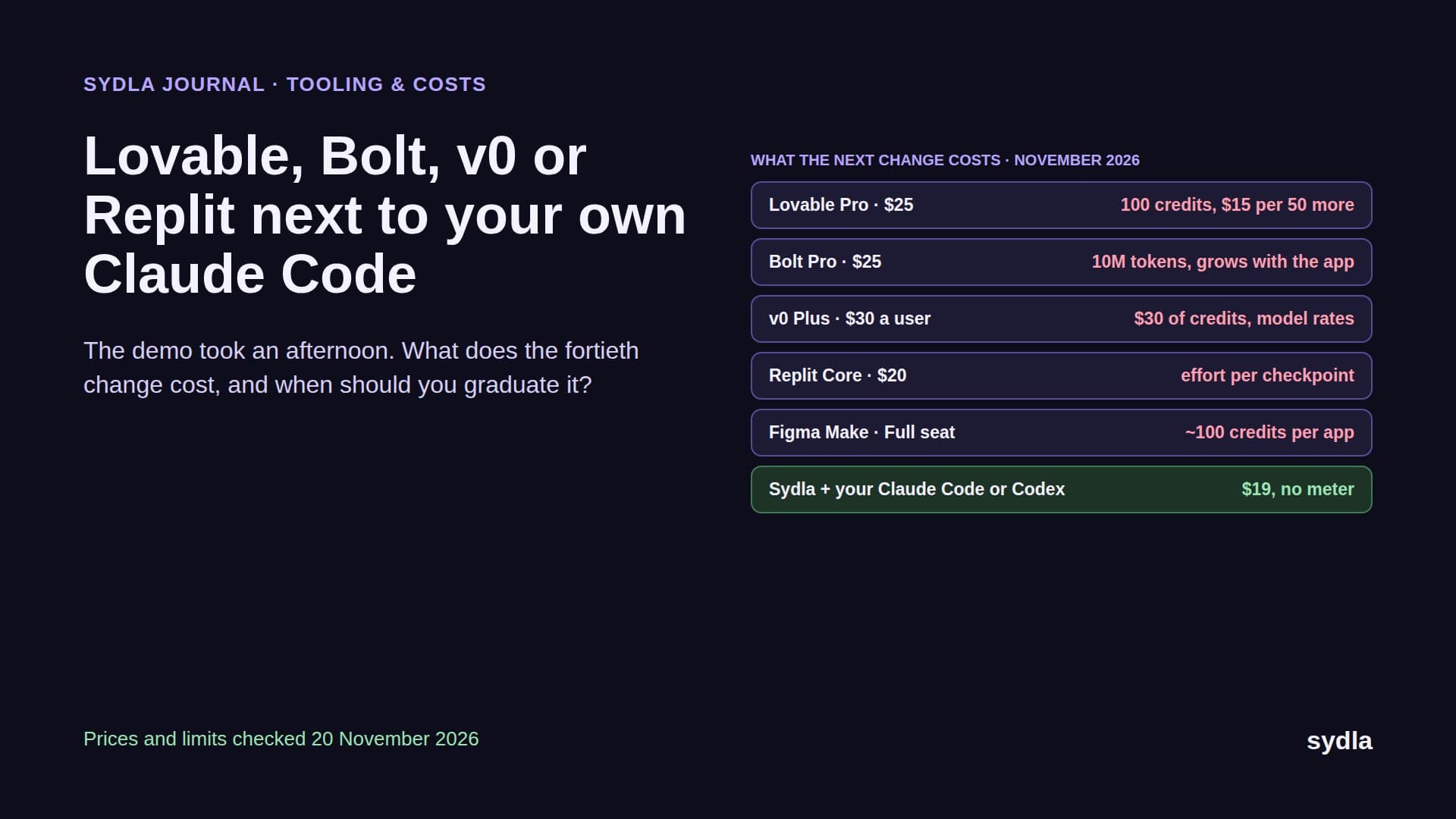
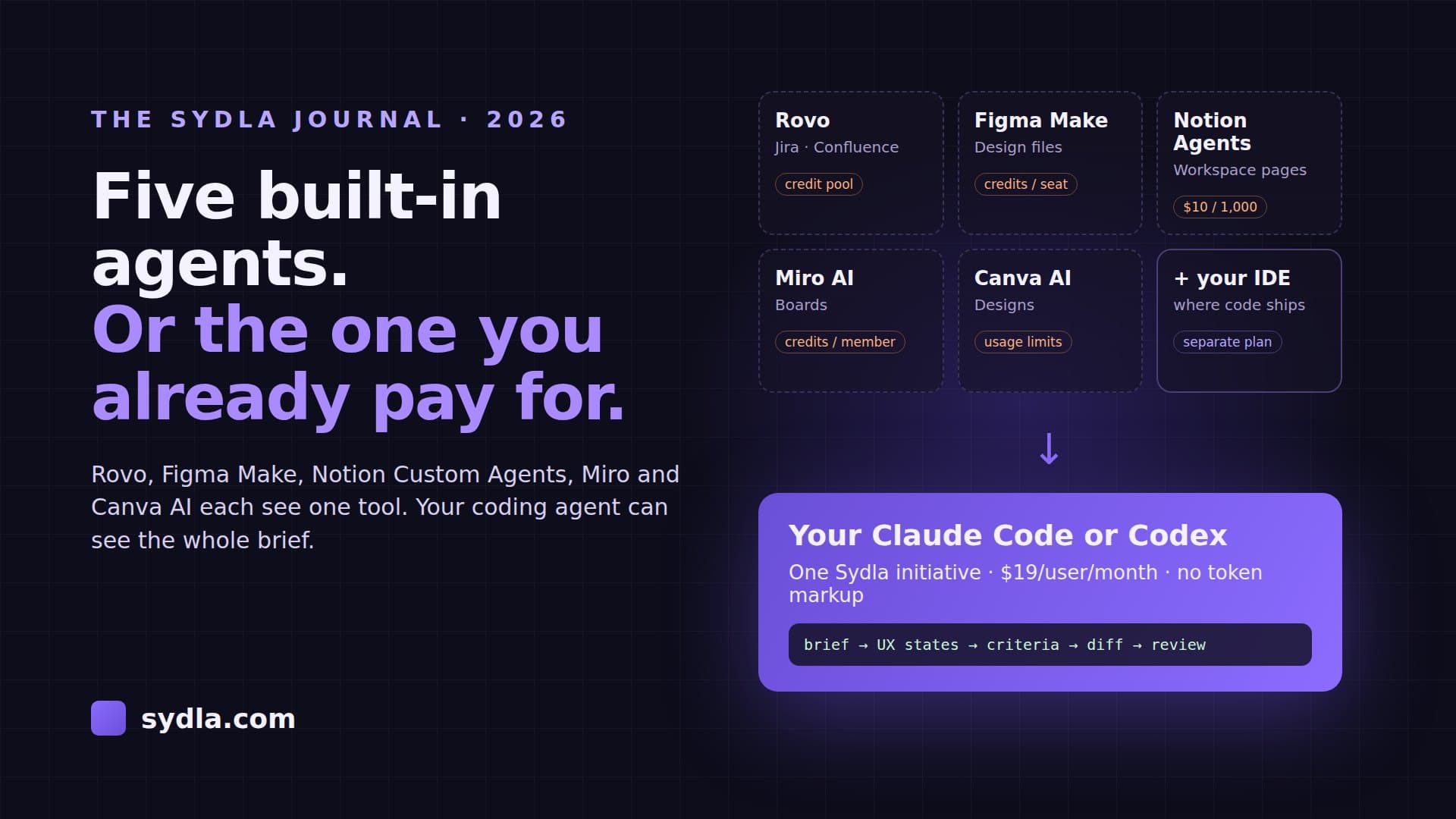
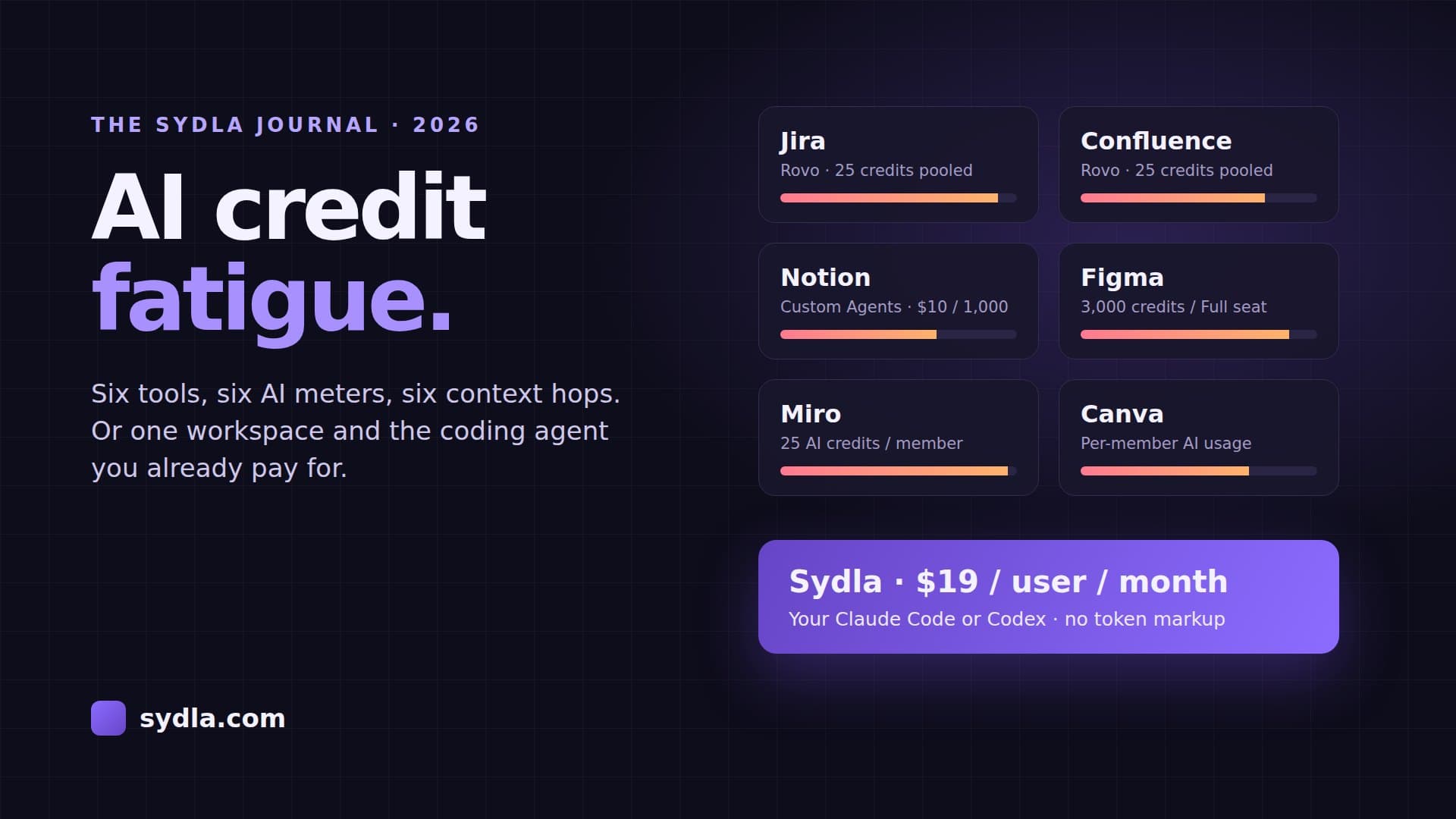
In 2026 that third line is the one that hurts. Rovo, Figma AI, Notion Custom Agents, Miro credits and Canva's AI allowance each have their own pool and reset date, and the coding agent that actually builds the product, Claude Code or Codex, is paid for separately on top. We called this AI credit fatigue. Our solo founder guide did the math for one person.
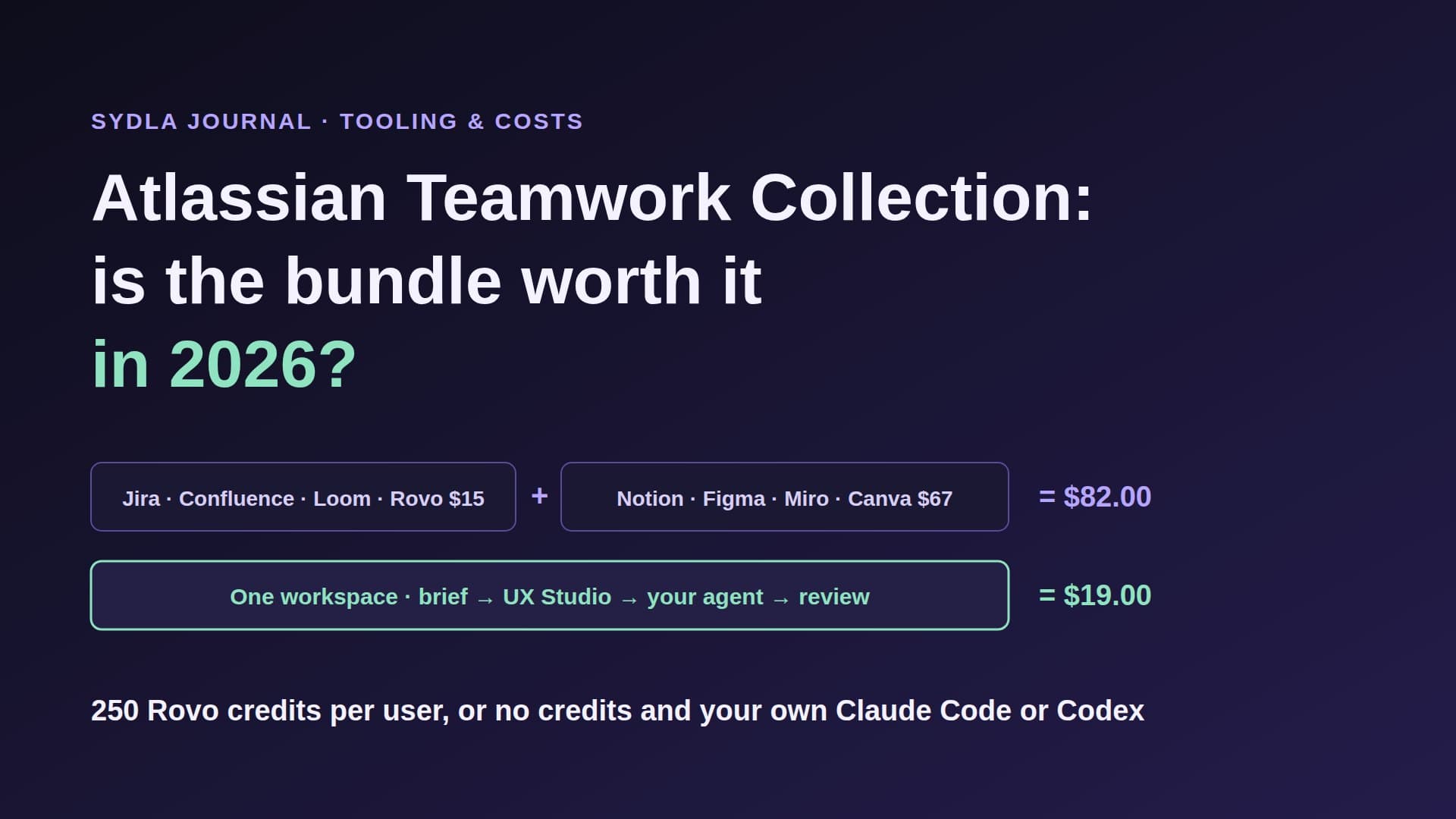
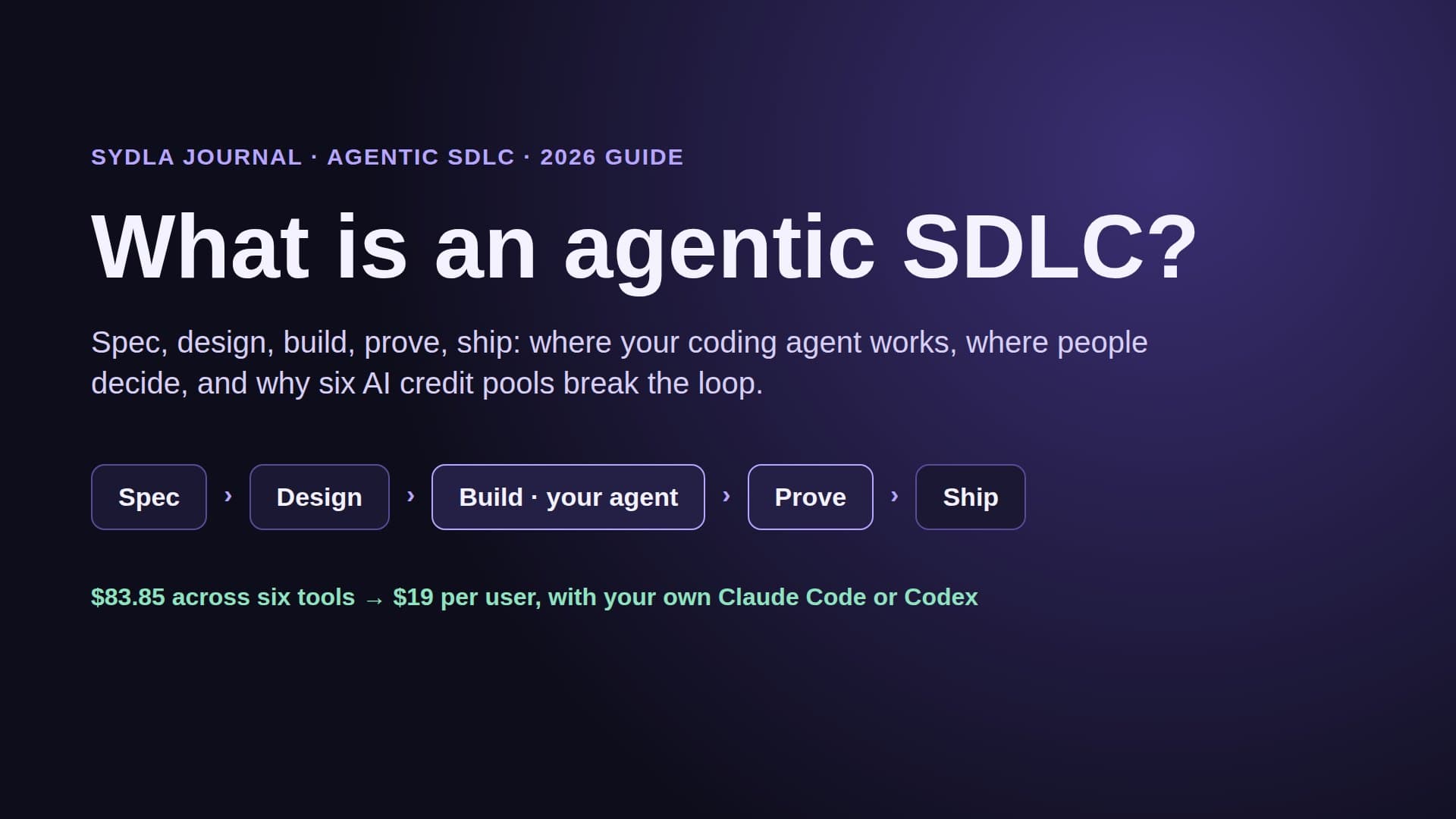
This post does it for teams. We price a realistic seat mix for 5, 10 and 25 people, list the six tier cliffs that move the bill as you hire, and show how the same team runs brief, design, build and review in Sydla at $19 per user with the coding agents it already has.
Six price changes to know before you budget 2027
The stack changed price more often in 2026 than in any year before. These are the facts that matter for a team budget, each checked on the vendor's own pages on 20 November 2026.
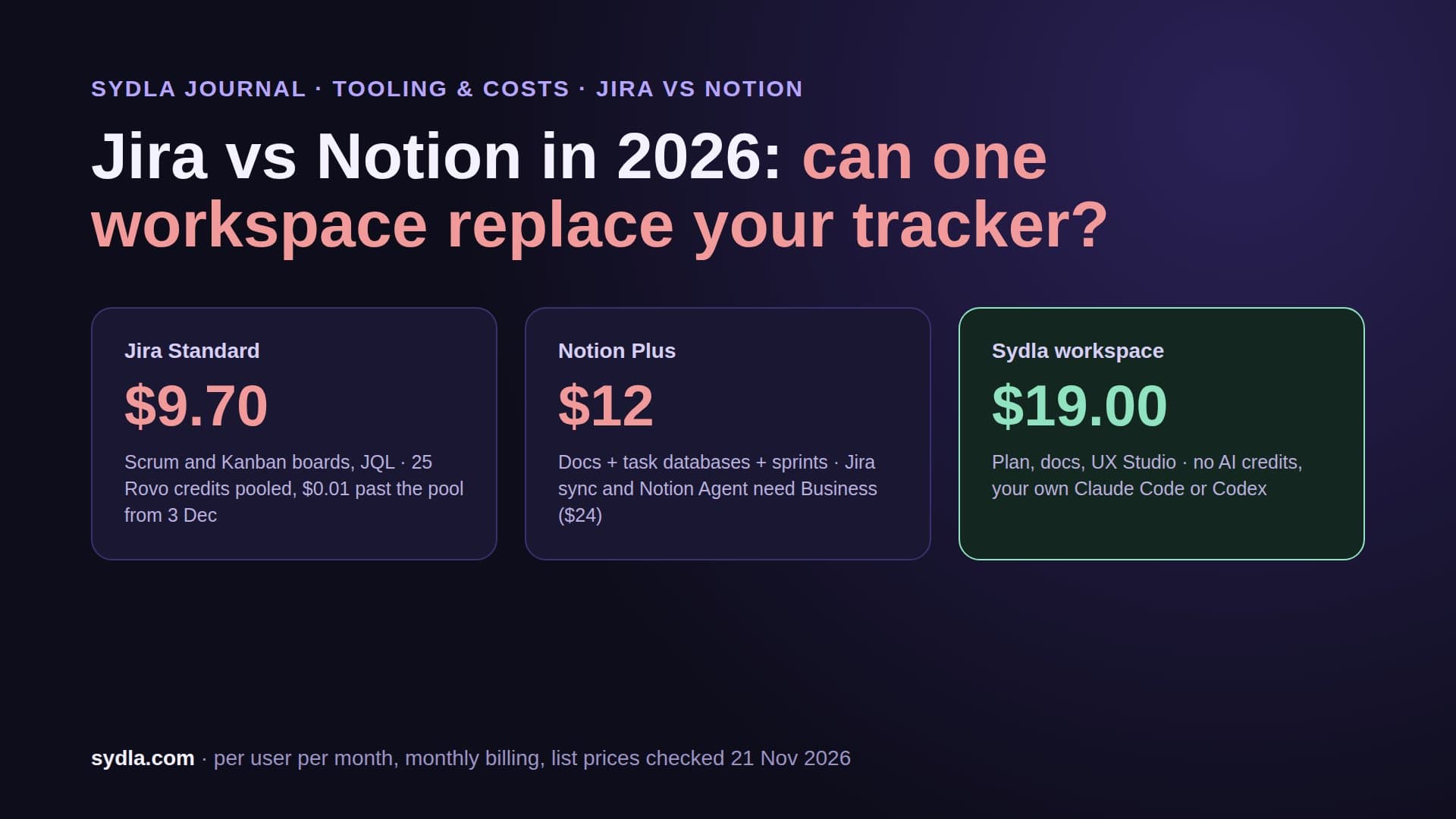
- Atlassian raised Cloud list prices on 13 October 2026. For 1 to 100 users, Jira Standard went from $9.05 to $9.70 per user per month and Confluence Standard from $6.70 to $7.15. Premium went from $18.30 to $19.60 for Jira and from $13.20 to $14.10 for Confluence.
- The 11th user ends Jira Free. Jira and Confluence Free cover up to 10 users. Add one more and the site moves to a Standard trial, after which all 11 people are billed, not just the new hire: about $185 a month for the pair, from zero.
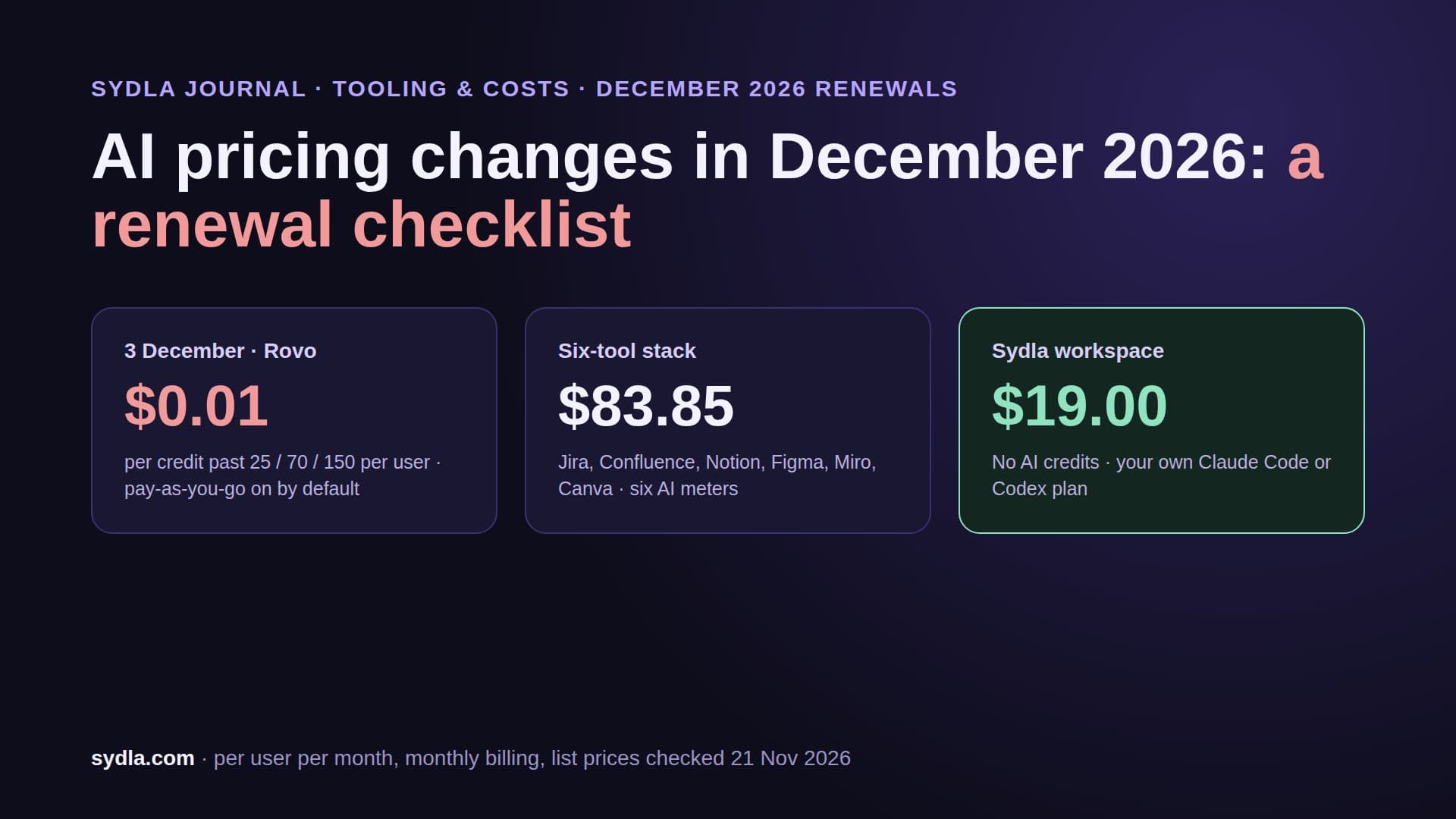
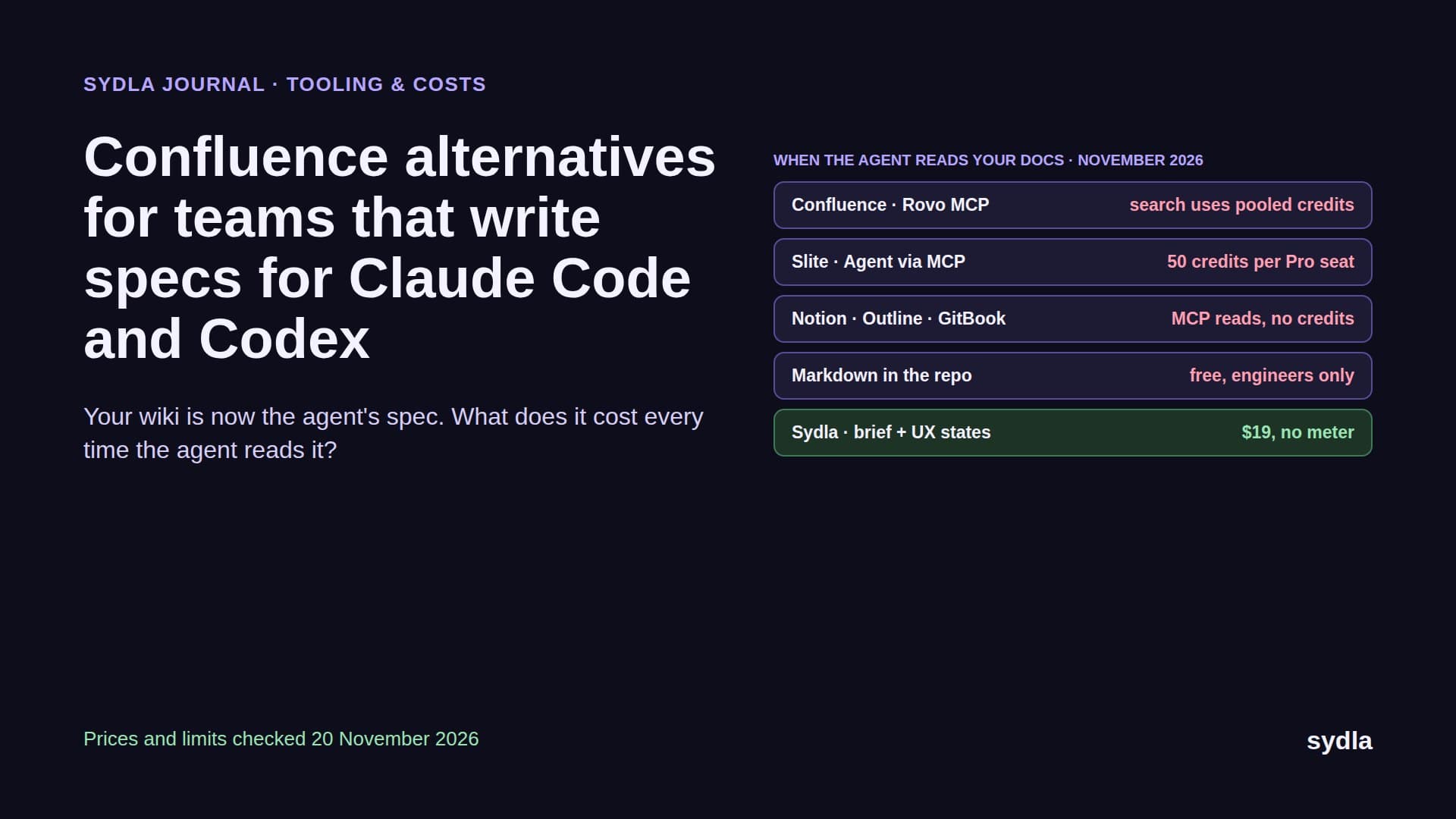
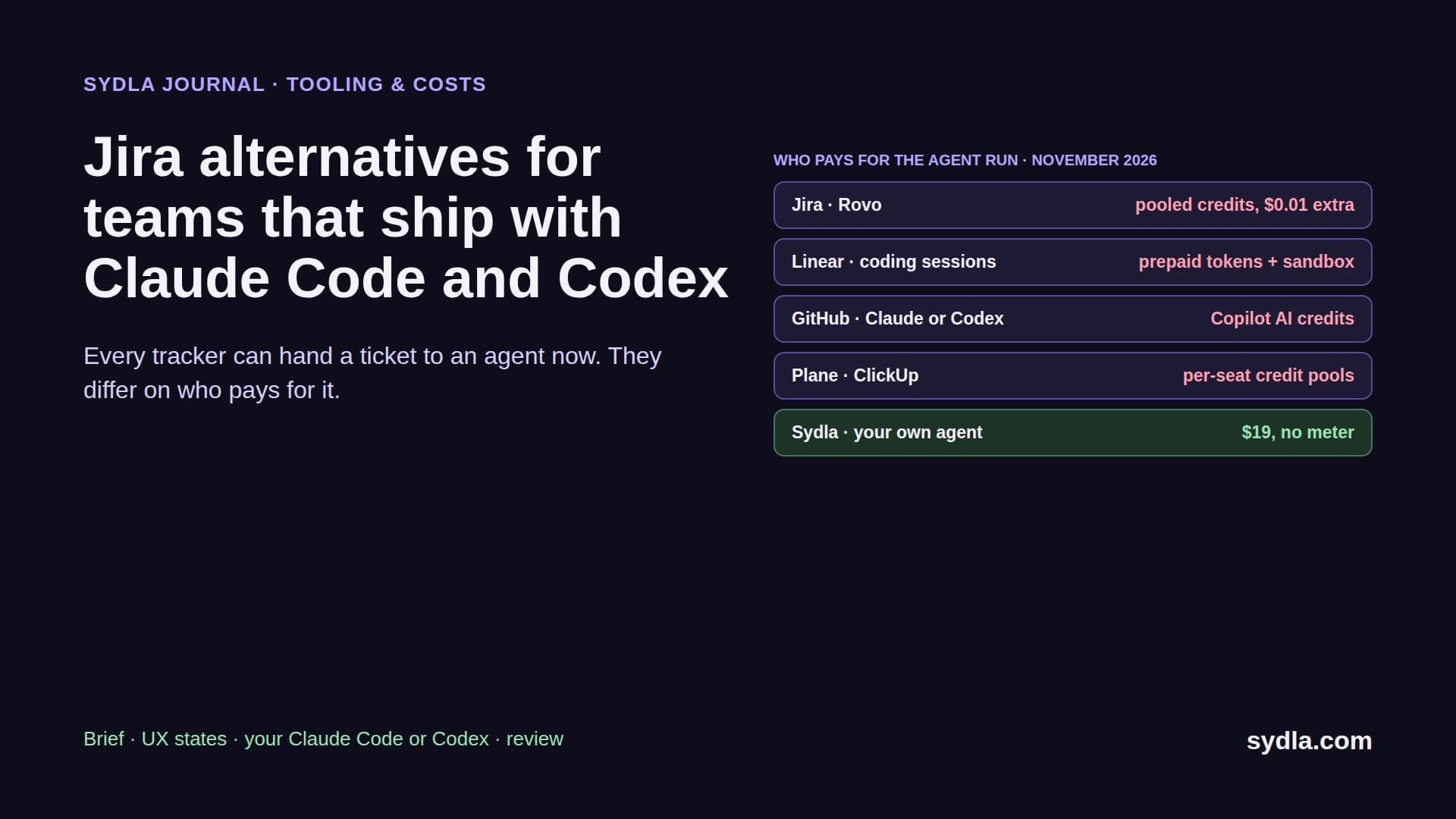
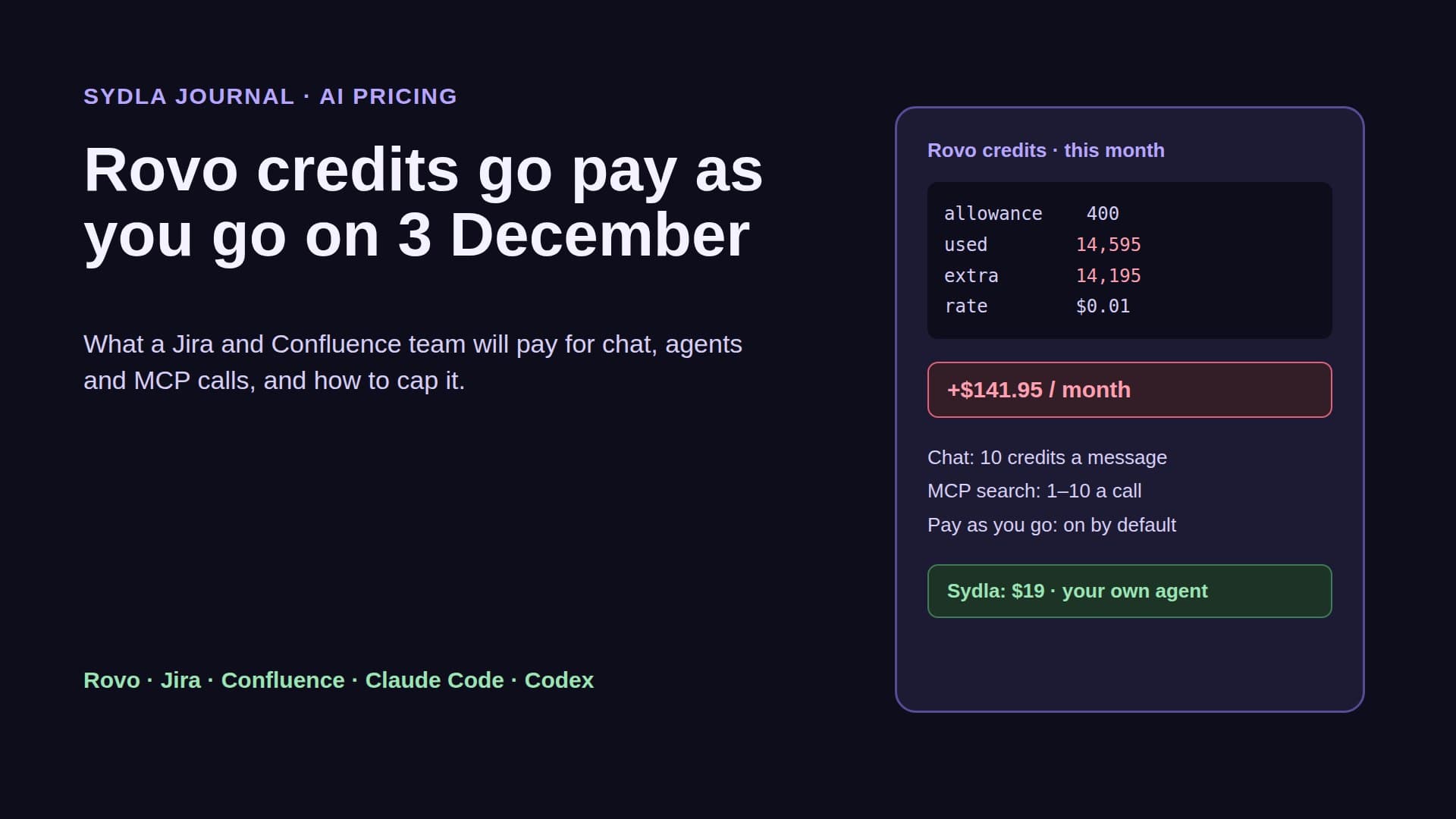
- Rovo goes pay-as-you-go on 3 December 2026. Standard includes 25 Rovo credits per user and Premium 70, pooled across the site. From December, usage beyond the pool is billed at $0.01 per credit and the setting is on by default. Our Rovo pay-as-you-go guide covers the admin settings.
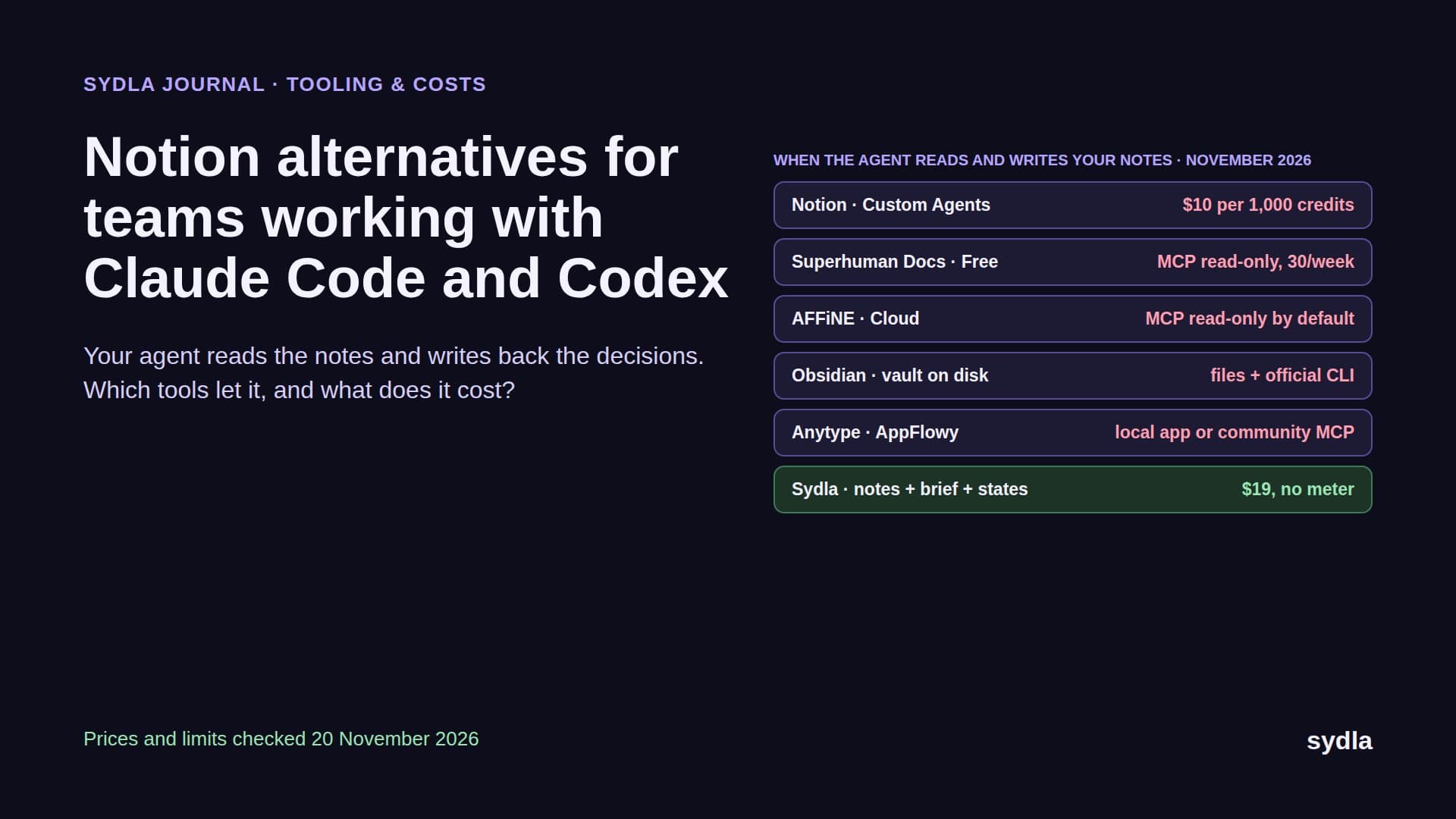
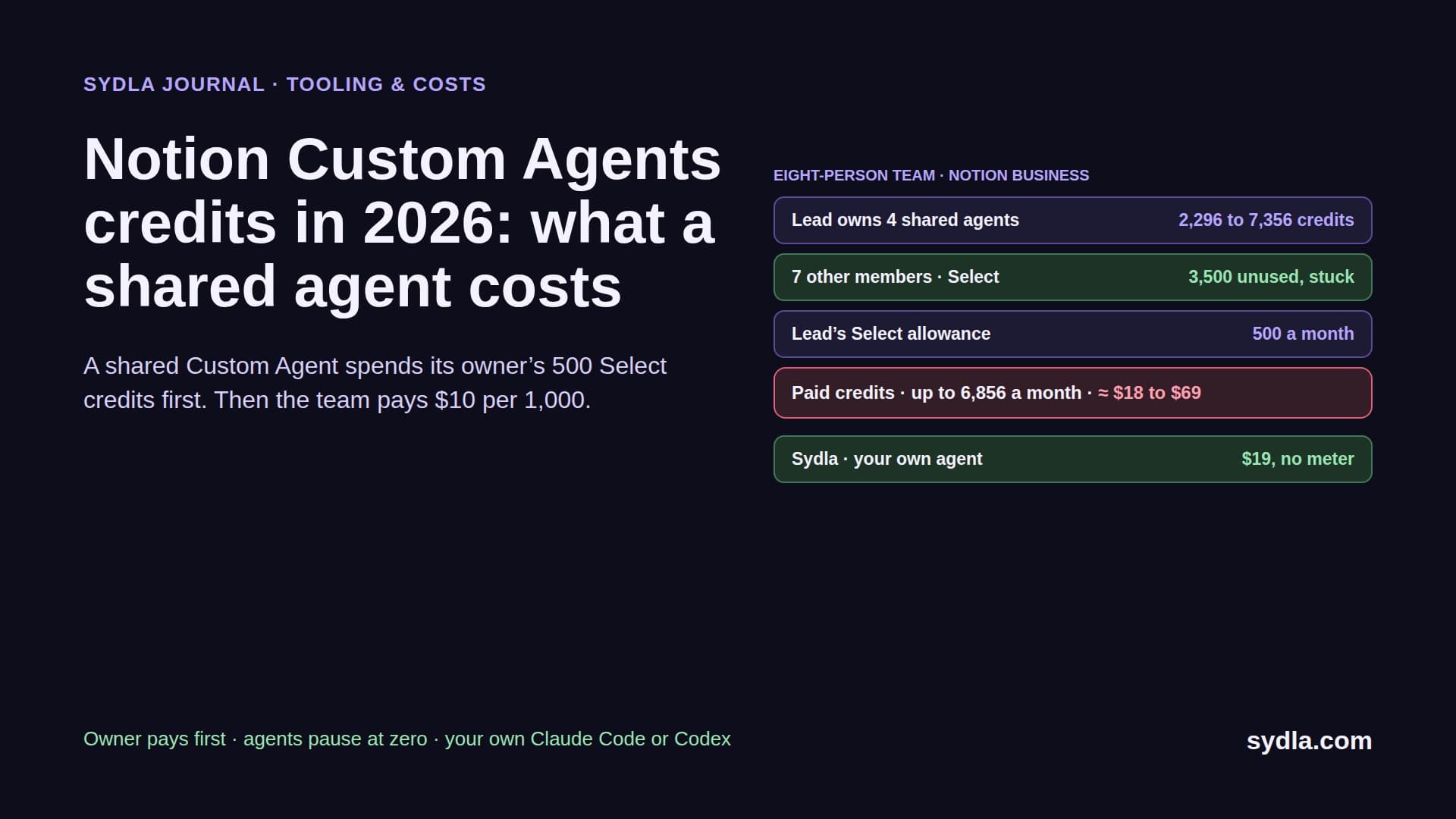
- Notion's agents need Business. Custom Agents are not on Plus. Business is $20 per member billed yearly, or $24 monthly, double the Plus price, and extra agent usage is $10 per 1,000 Notion credits.
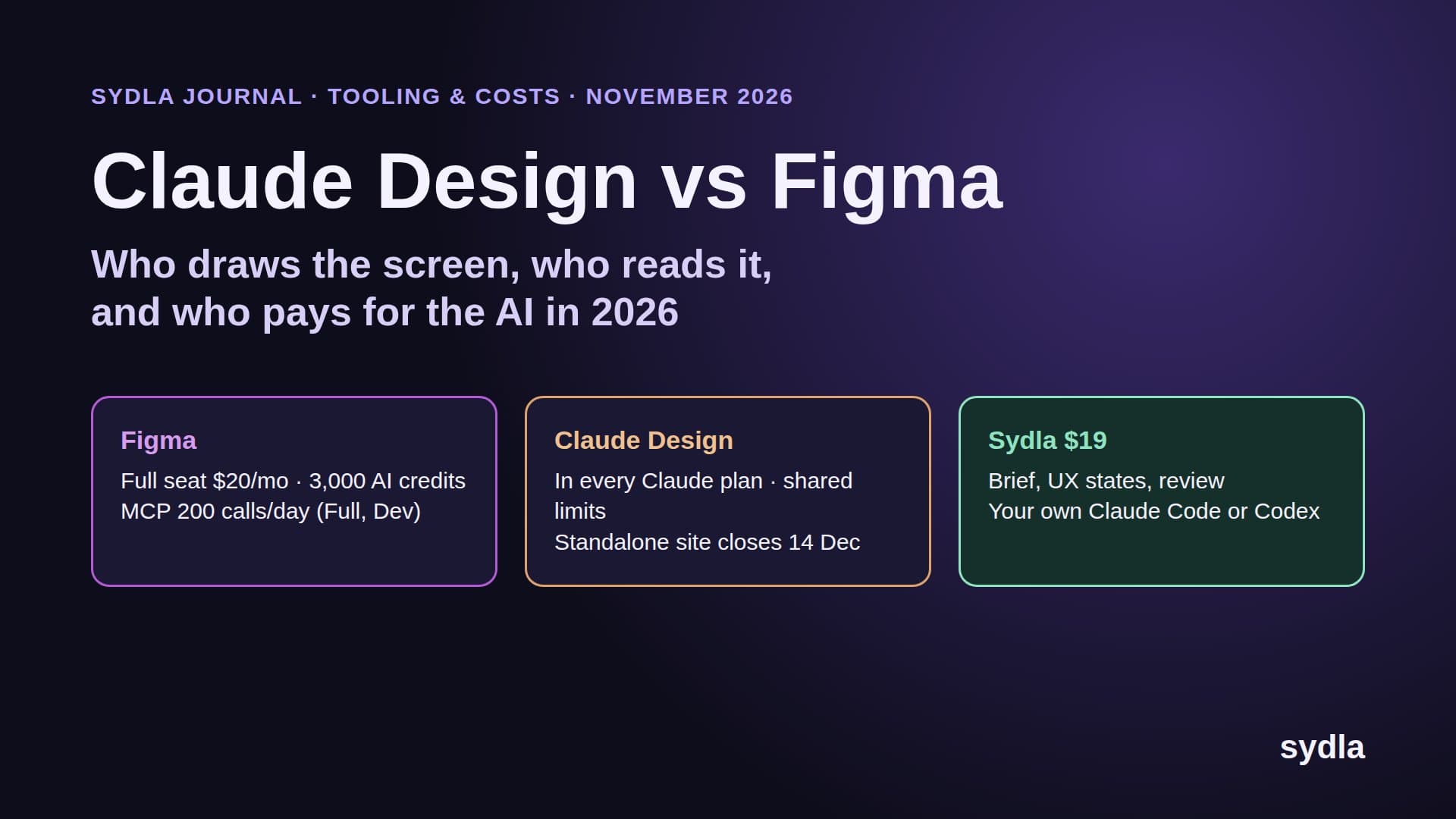
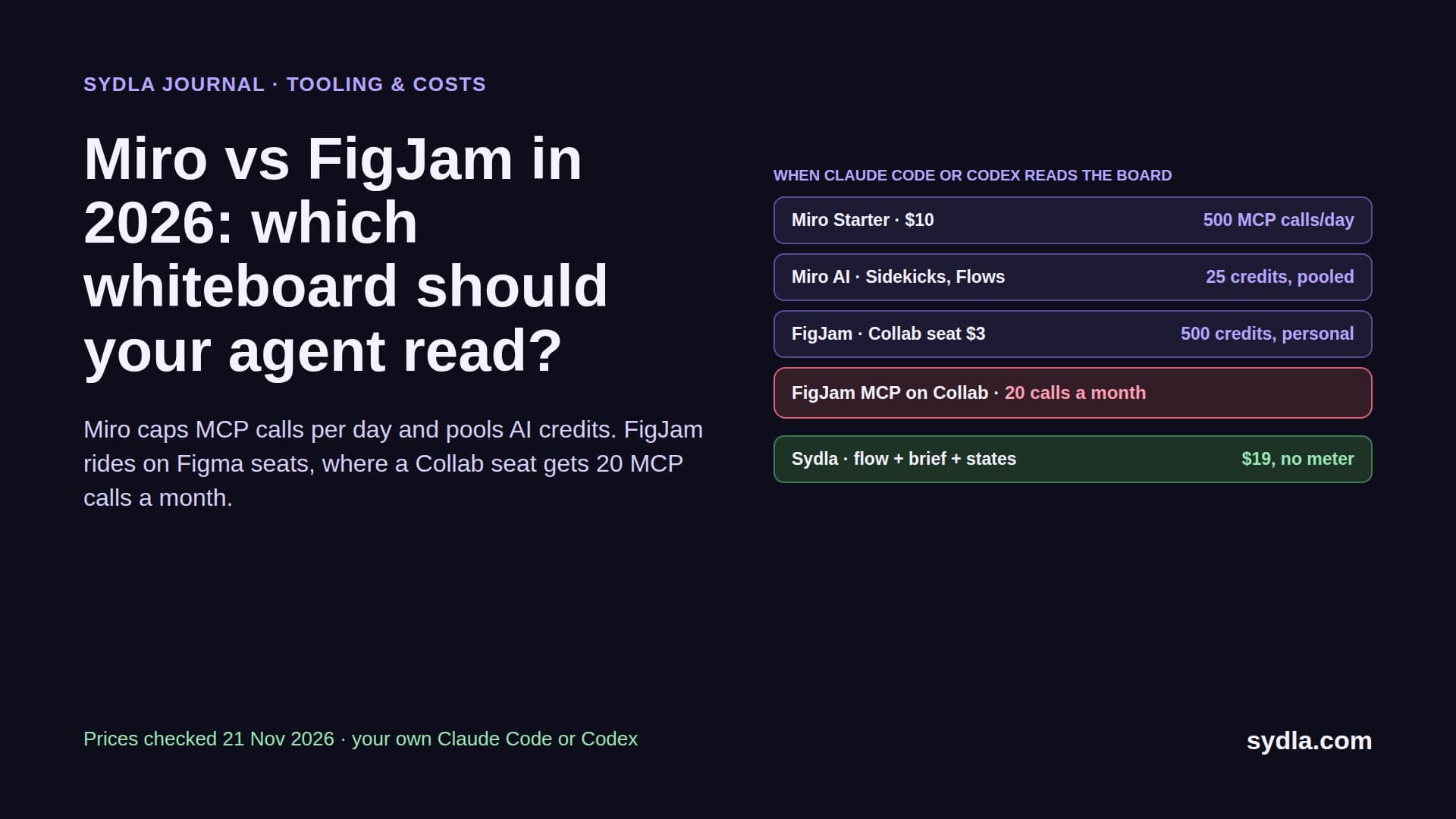
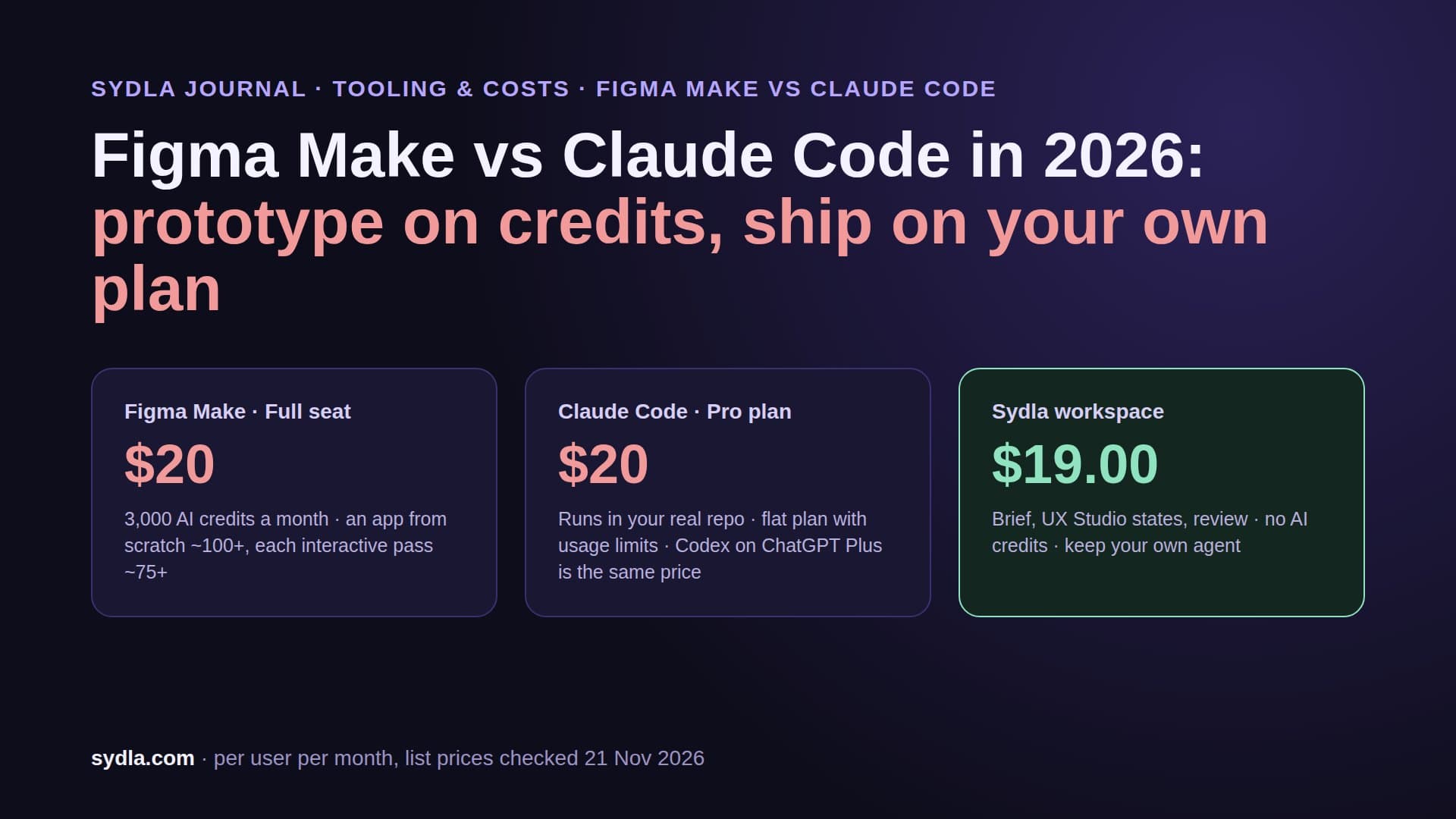
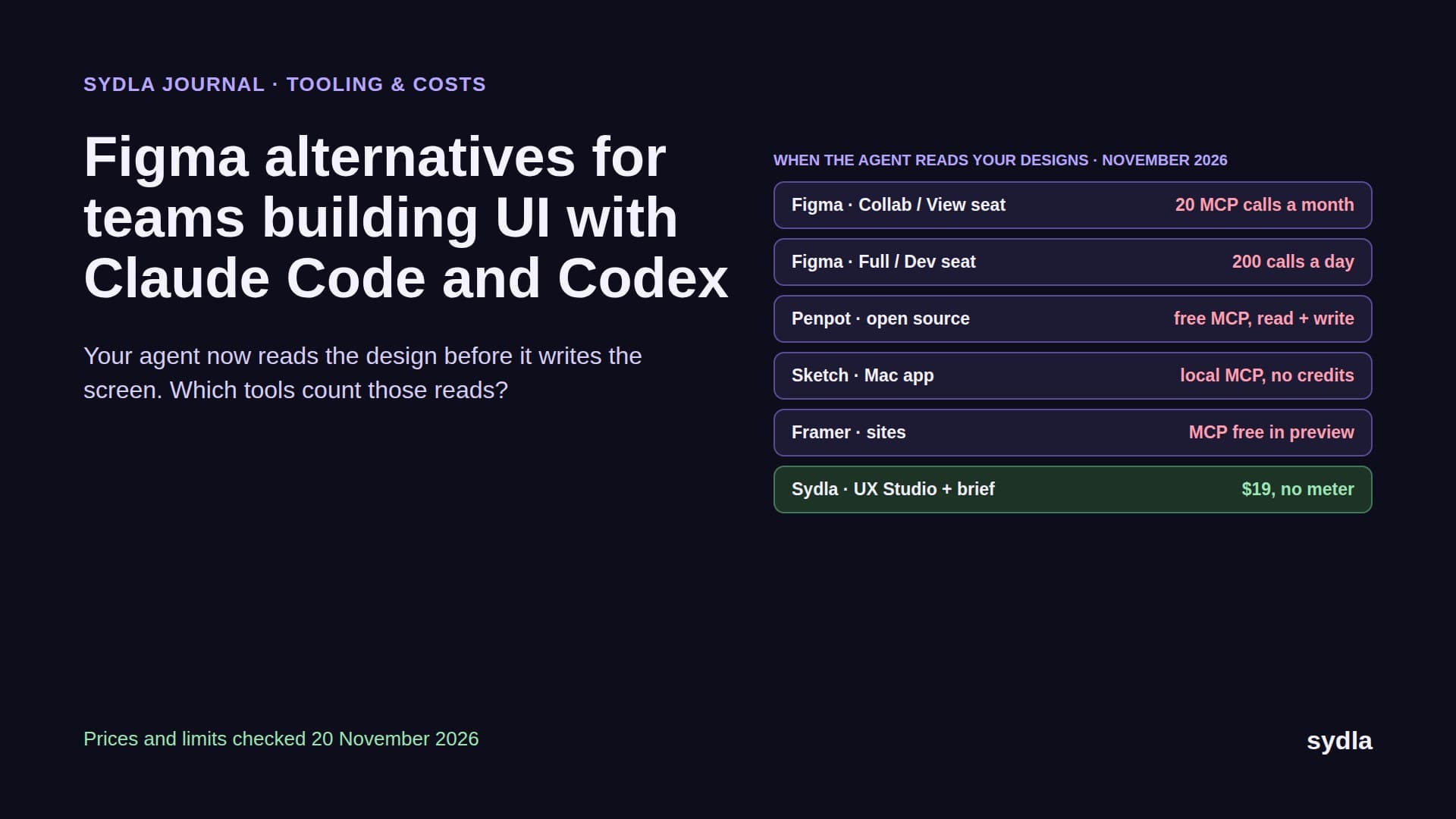
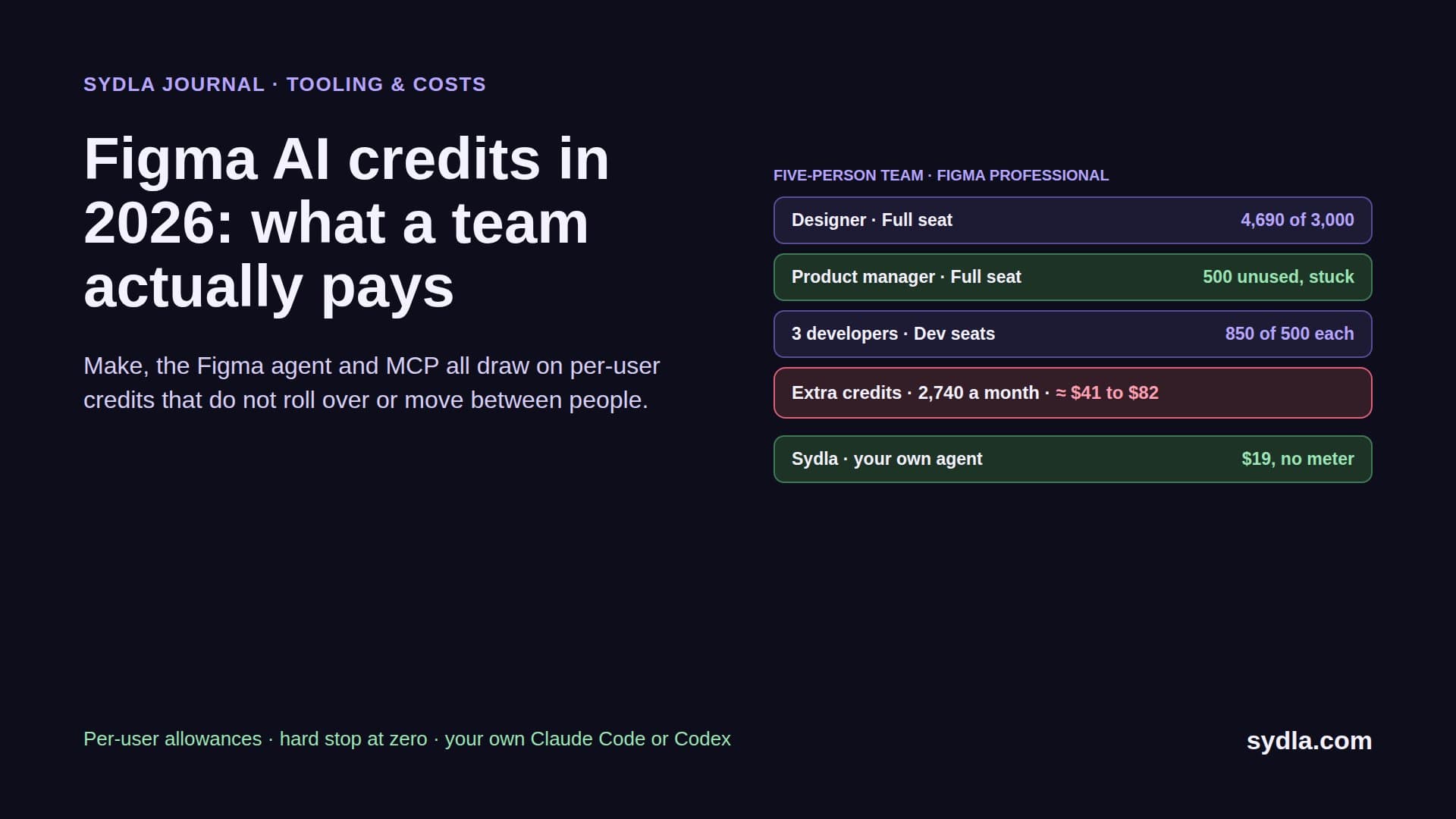
- Figma limits what engineers' agents can read. On Professional, View and Collab seats get 20 MCP reads a month; Full and Dev seats get 200 a day. A team that wants Claude Code to read designs pays for engineering seats. Organization, needed for shared libraries at scale, is $55 per Full seat per month, billed annually.
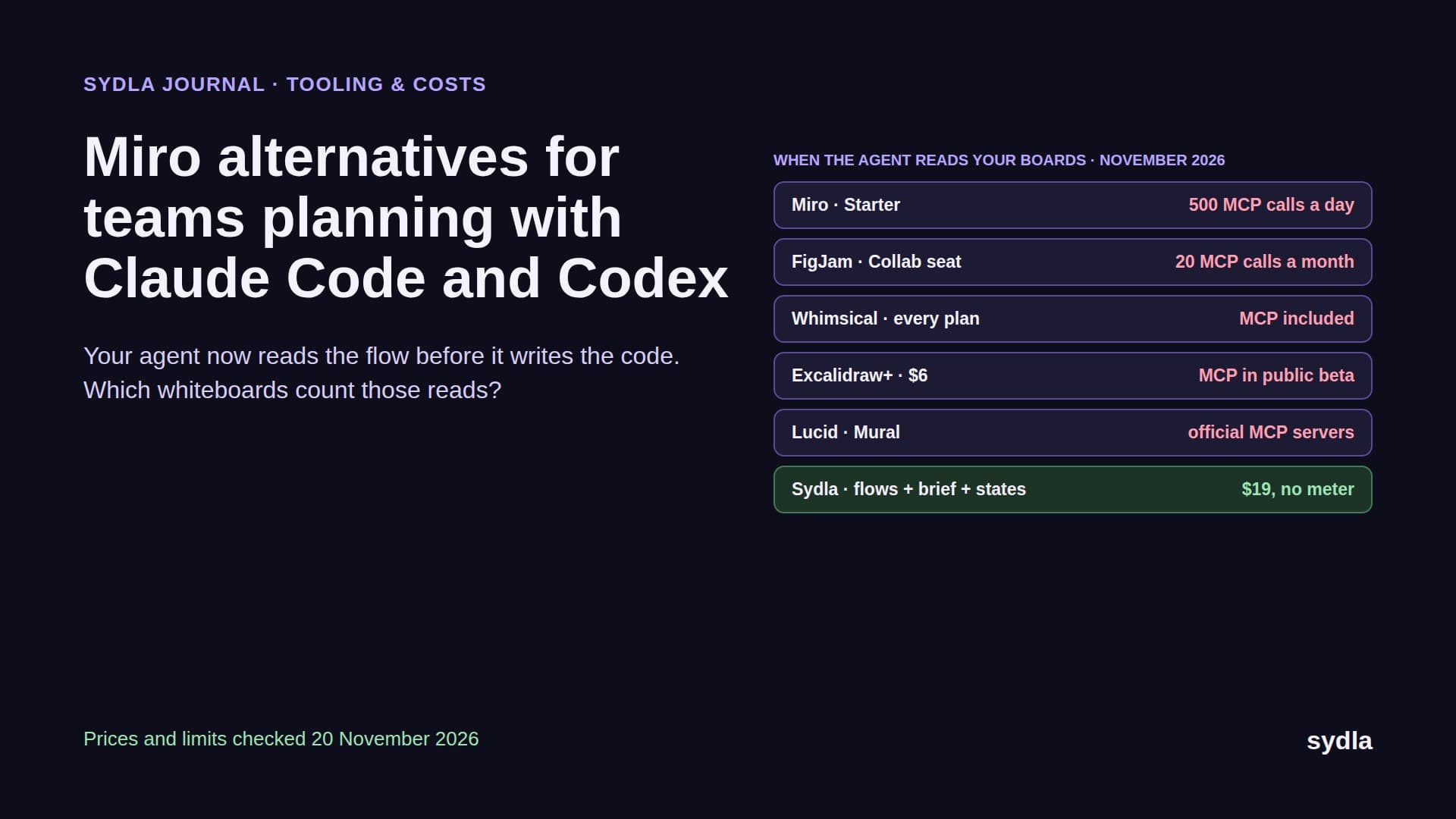
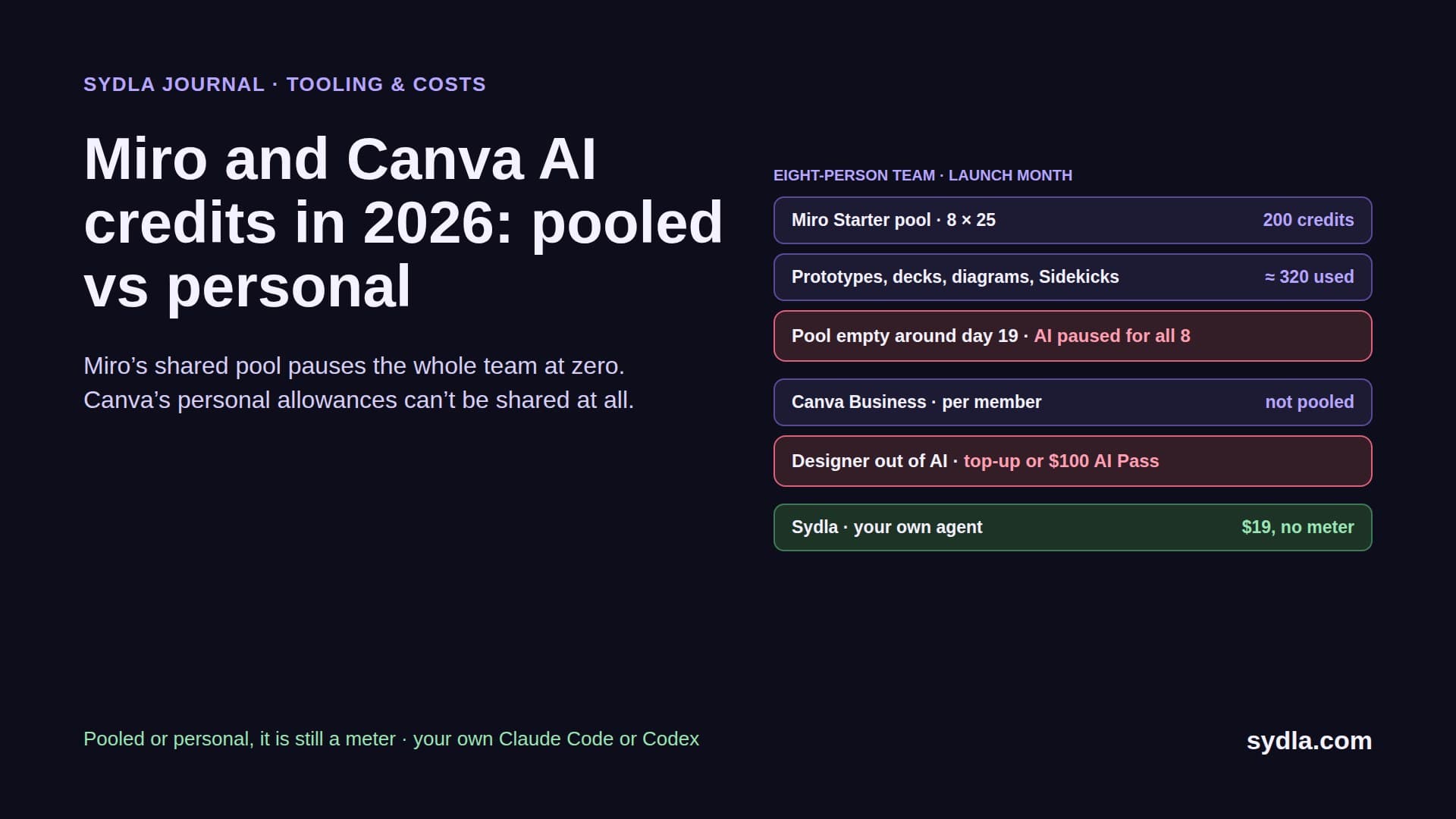
- Miro Business went up. Miro raised Business from $16 to $20 per member billed yearly, and from $20 to $25 billed monthly. AI credits are pooled per team: 25 per Starter license, 50 per Business license, and AI pauses for everyone when the pool is empty.
None of these changes is outrageous on its own. Together they mean a team that budgeted in January is paying a different bill in December, without anyone choosing a new plan.
The 2026 bill for 5, 10 and 25 people
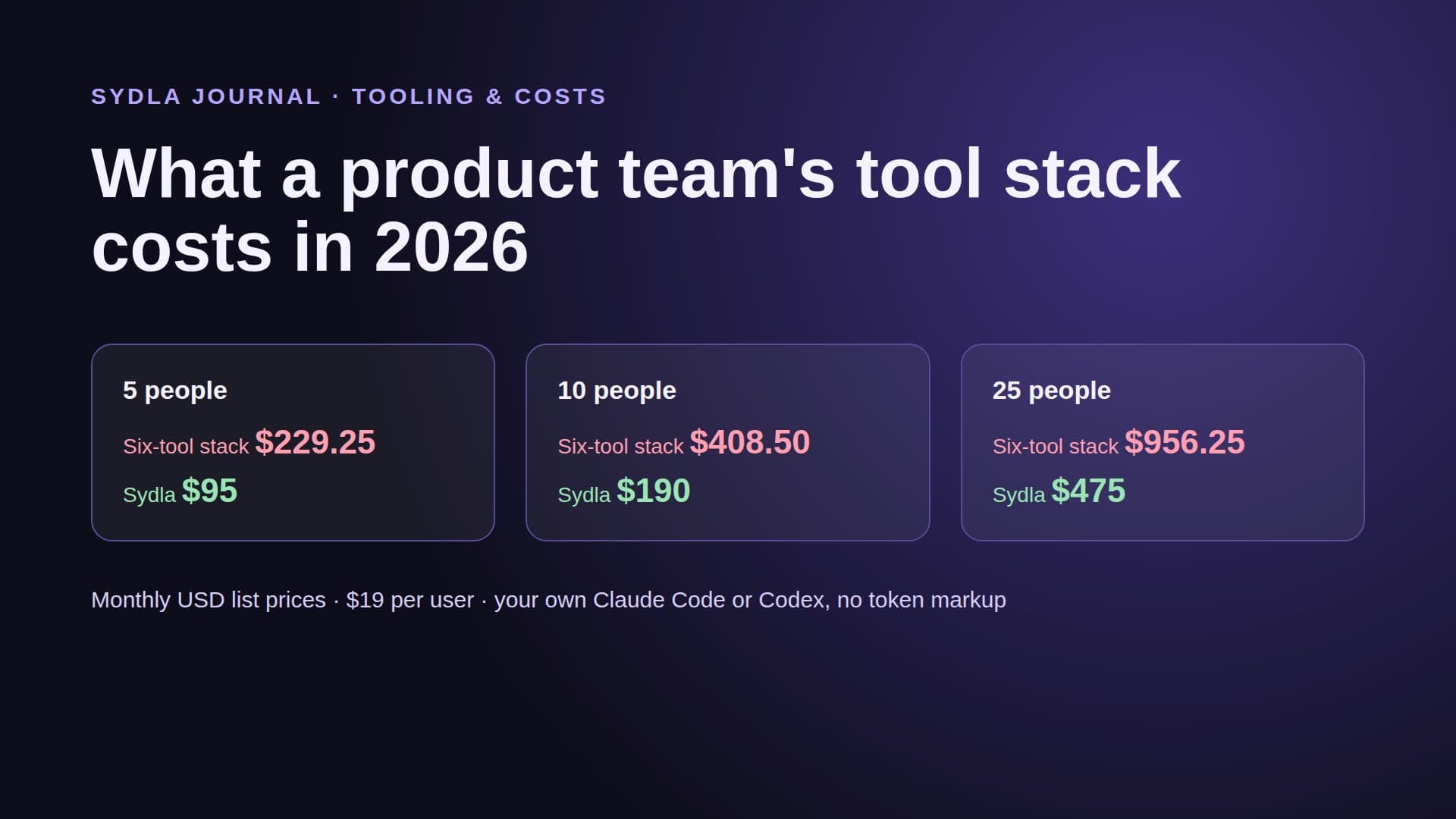
The table below uses monthly USD list prices before tax and a lean, realistic seat mix rather than every seat for everyone. Everyone gets Jira, Confluence and Notion Plus. Figma Full seats go to designers and product managers only, with engineers on free View seats. Miro goes to product, design and the tech lead. Canva goes to marketing and one designer. It is our example, not a benchmark: change the counts to match your team.
| Line item | 5 people | 10 people | 25 people | Seats in the mix |
|---|---|---|---|---|
| Jira Standard, $9.70 | $48.50 | $97.00 | $242.50 | Everyone |
| Confluence Standard, $7.15 | $35.75 | $71.50 | $178.75 | Everyone |
| Notion Plus, $12.00 | $60.00 | $120.00 | $300.00 | Everyone |
| Figma Professional Full, $20.00 | $40.00 | $40.00 | $100.00 | 2 / 2 / 5 designers and PMs |
| Miro Starter, $10.00 | $20.00 | $30.00 | $60.00 | 2 / 3 / 6 product and design |
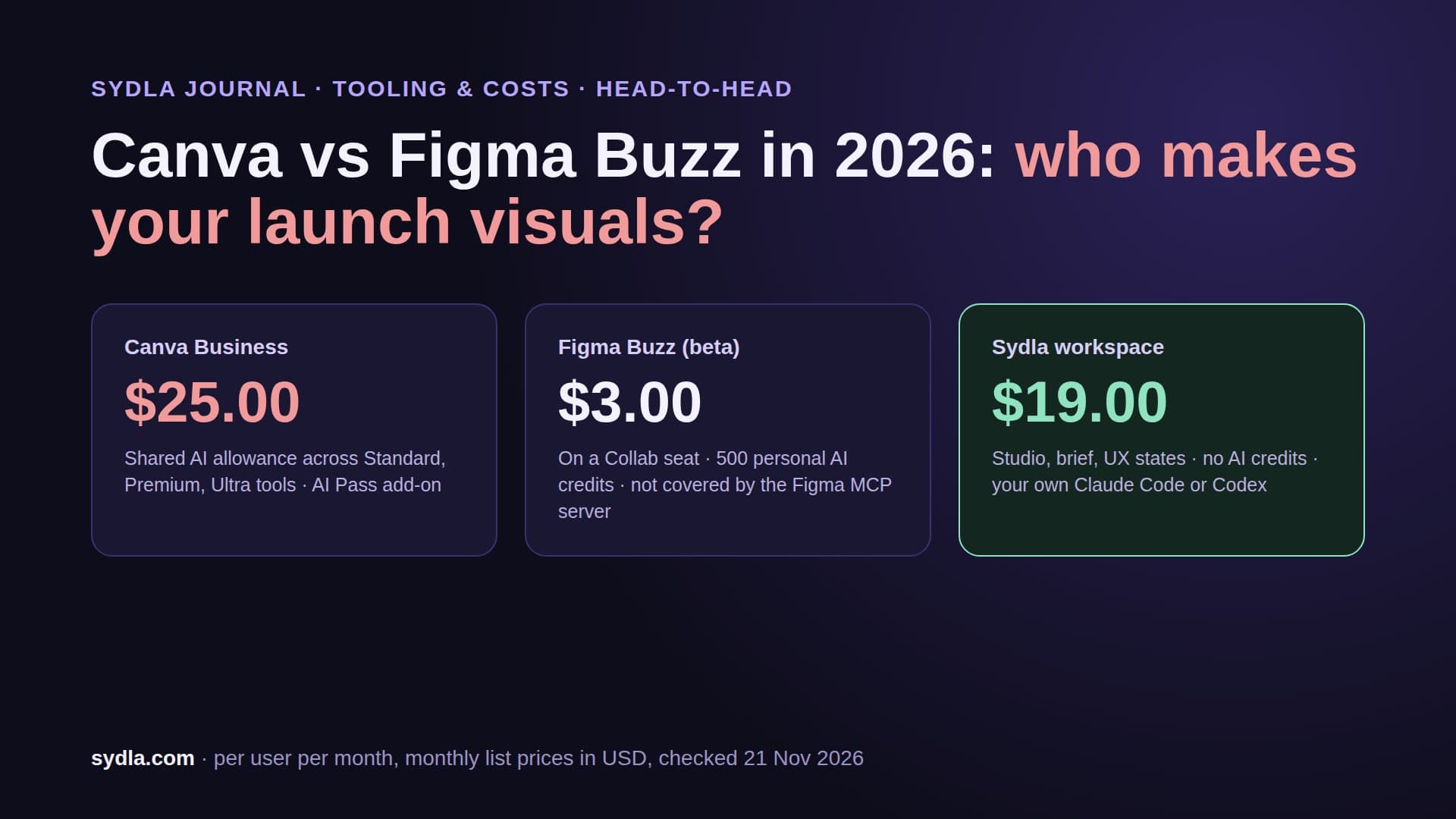
| Canva Business, $25.00 | $25.00 | $50.00 | $75.00 | 1 / 2 / 3 marketing and design |
| Lean stack total | $229.25 | $408.50 | $956.25 | Six tools, six AI pools |
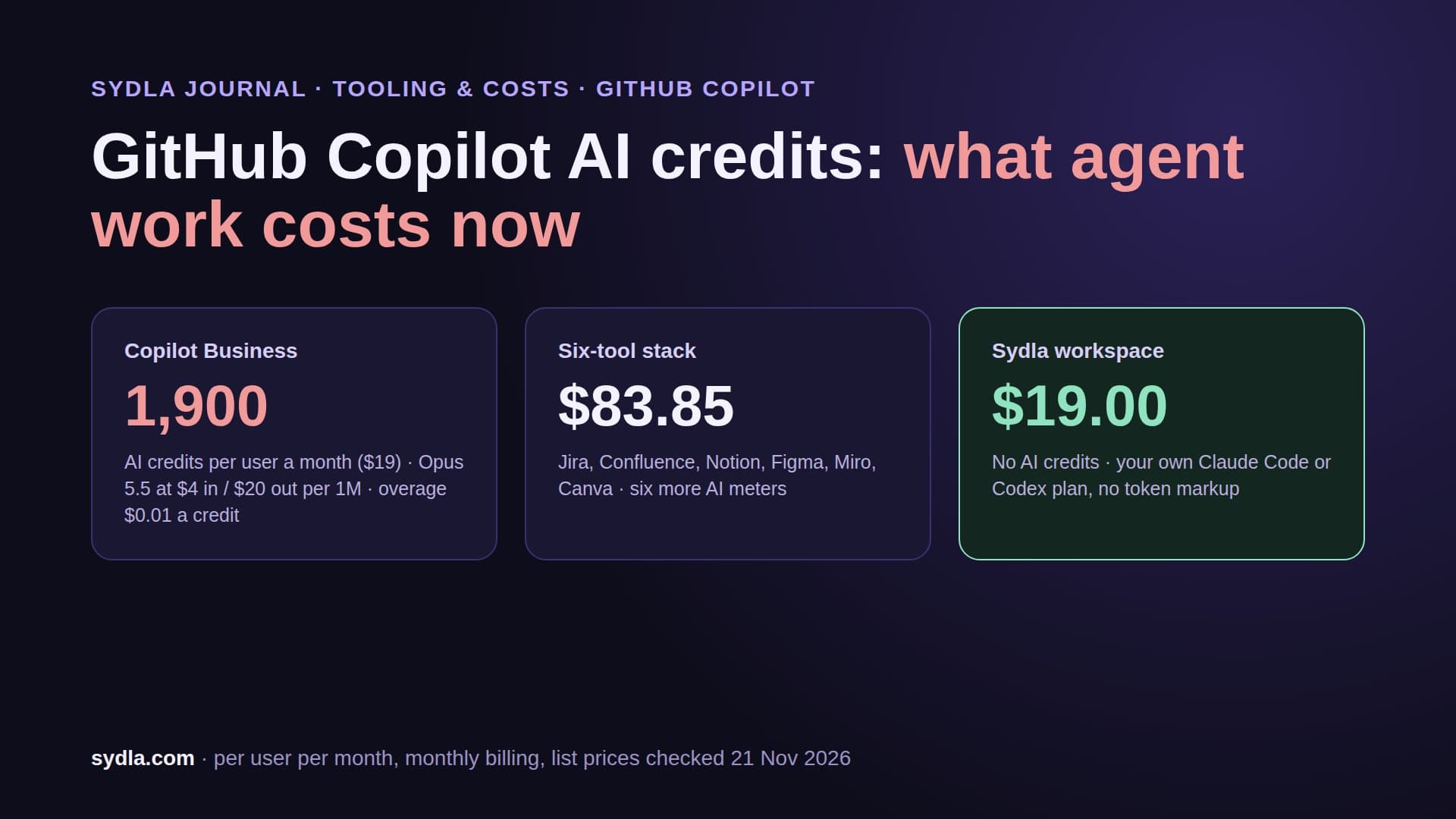
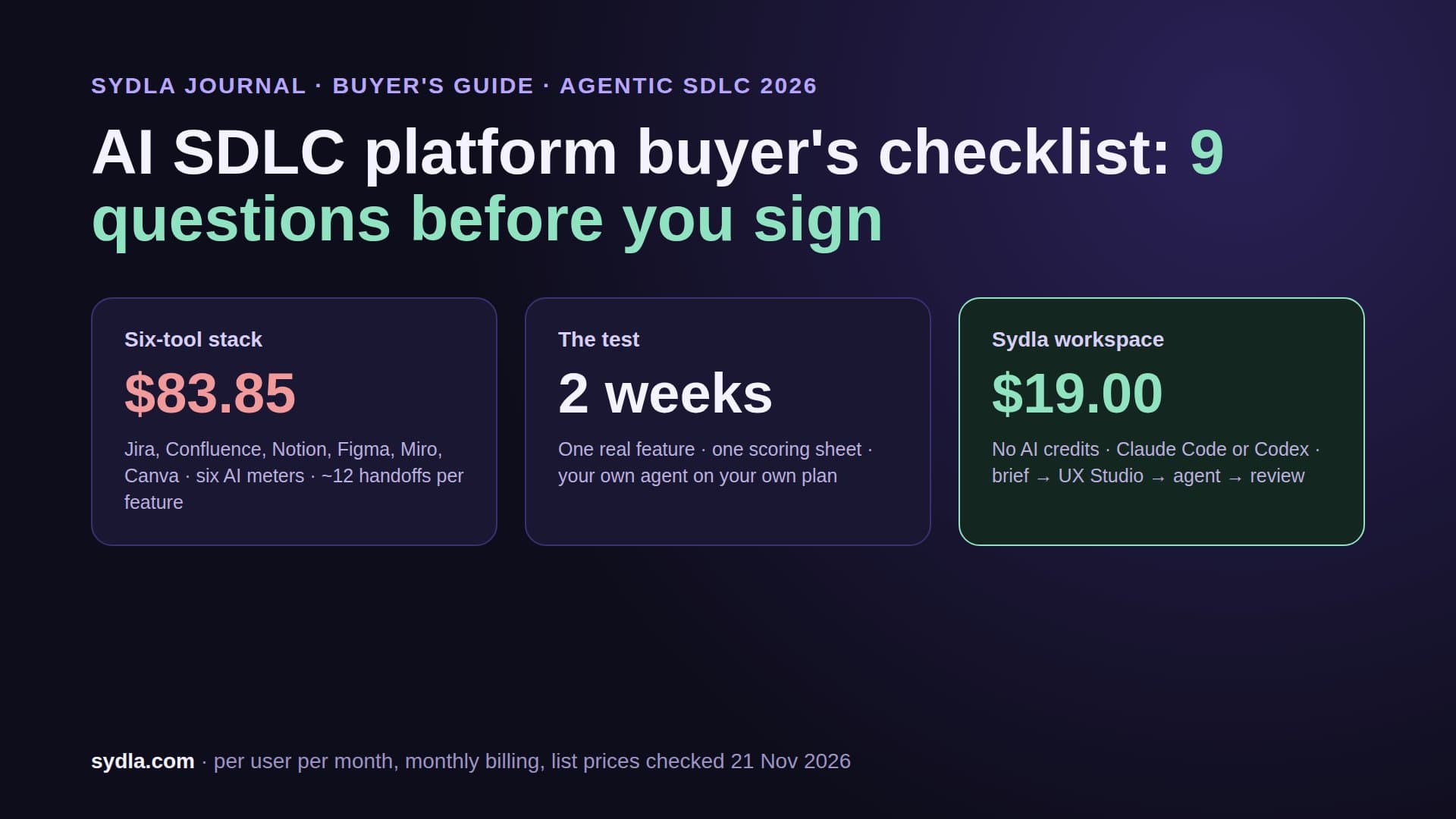
| Every seat for everyone | $419.25 | $838.50 | $2,096.25 | $83.85 per person |
| [Sydla](/) at $19 per user | $95.00 | $190.00 | $475.00 | One workspace, your own agents |
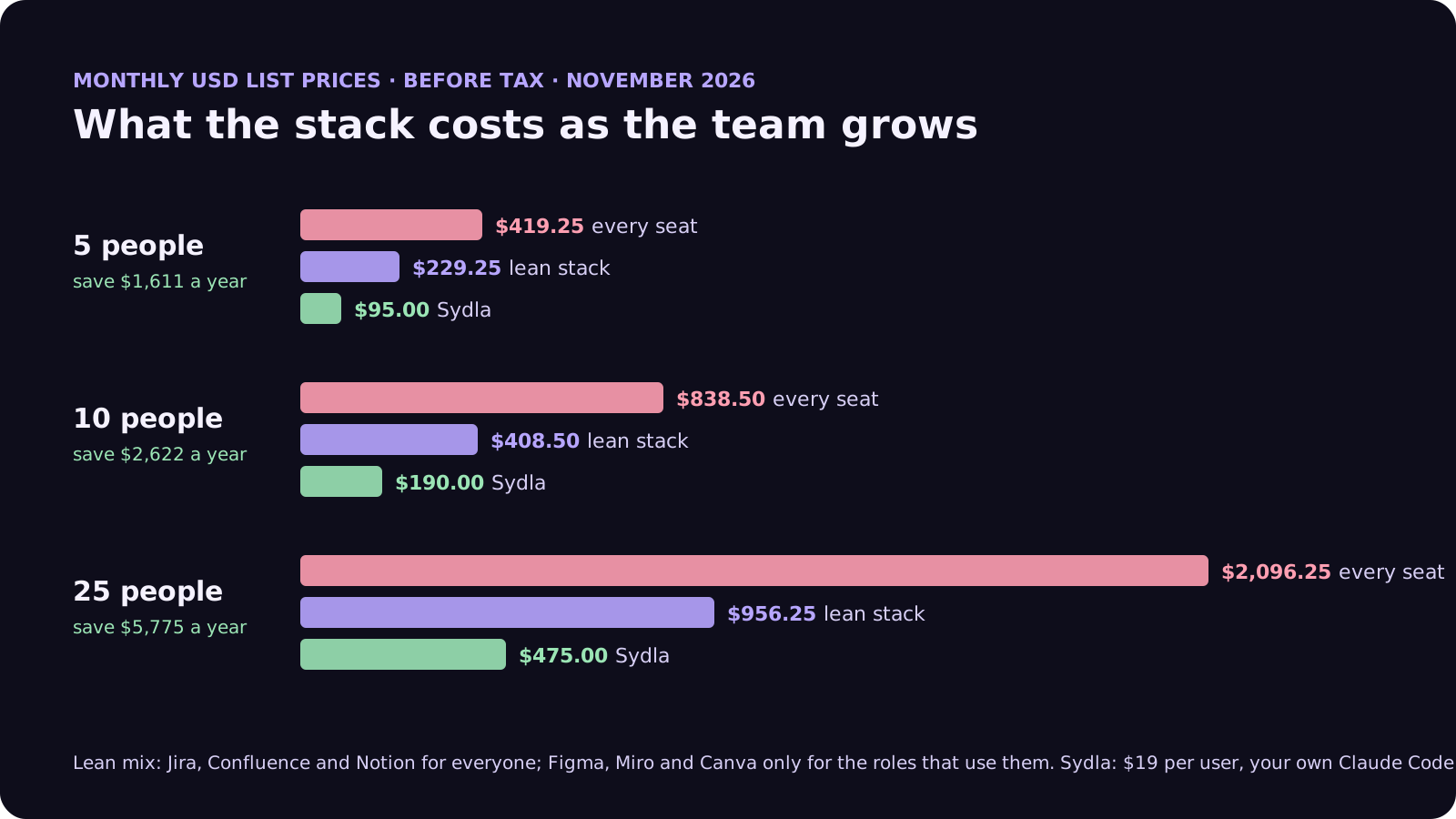
Against the lean mix, Sydla saves $134.25 a month for 5 people ($1,611 a year), $218.50 for 10 ($2,622 a year) and $481.25 for 25 ($5,775 a year). Against the every-seat stack, the saving is the familiar $64.85 per user per month. Neither number includes the AI top-ups, which is the next section.
Two honest caveats. A 5-person team can stay on Jira and Confluence Free, which brings its lean stack to $145 a month, still above $95. And plenty of teams will keep one specialist tool, often Figma for a design-heavy product; the comparison hub says plainly where each tool still wins.
The line that isn't in the table: six AI pools
Seat prices are predictable. AI usage is not, and in a team it is shared in ways nobody sees until it runs out. Take the 10-person team above. Its Rovo pool is 250 credits a month across Jira and Confluence. Its Miro pool is 75 credits across three Starter licenses. Its two Figma Full seats have 3,000 AI credits each that cannot be shared with each other. Notion's agents are not available at all on Plus.
Every pool behaves differently. Rovo is pooled per site and bills on from December. Figma credits are per seat with a hard stop. Miro pauses AI for the whole team when its pool is empty. Canva's allowance is personal. Our credit guides on Figma, Notion and Miro and Canva have the per-action rate cards.
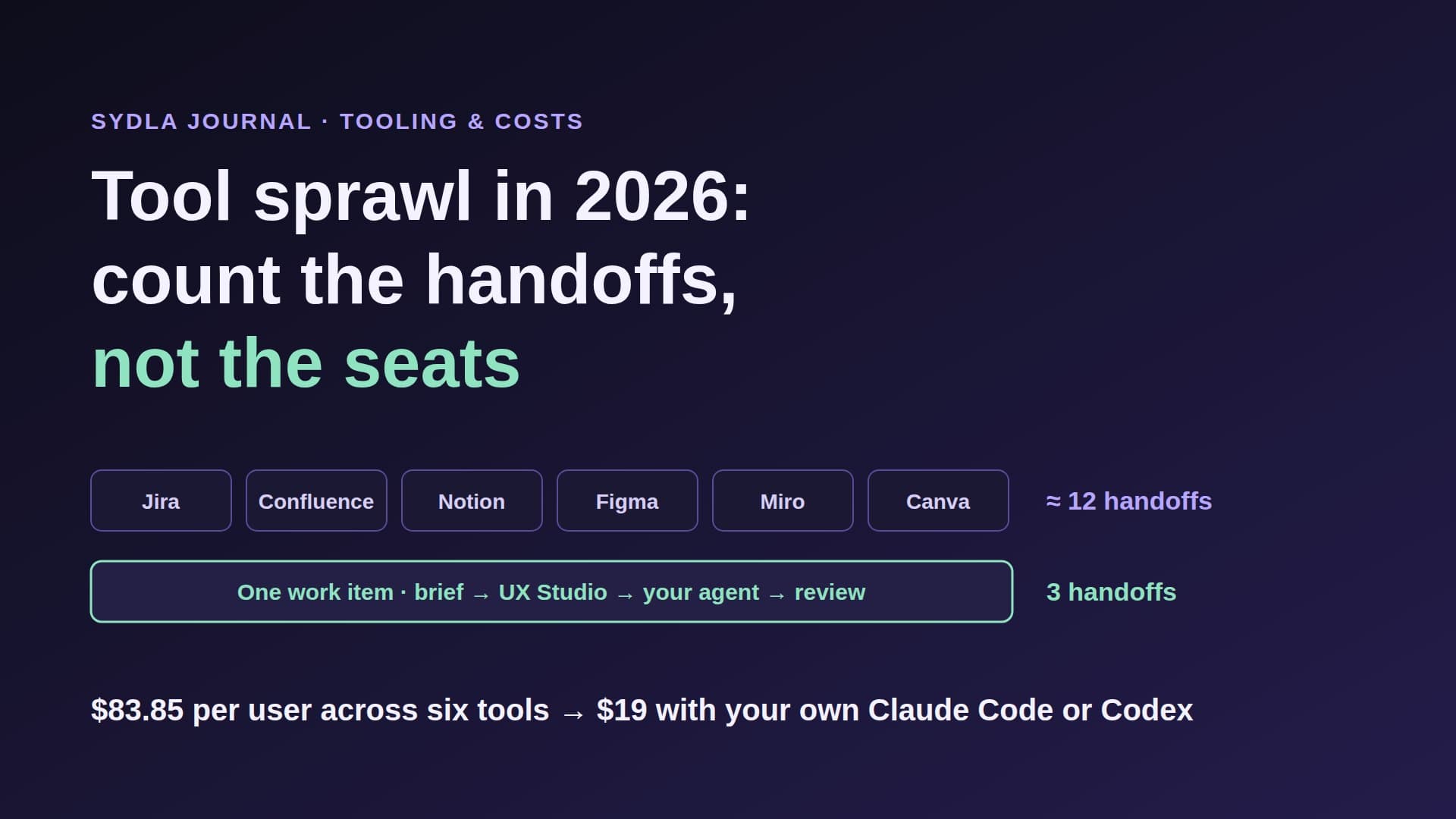
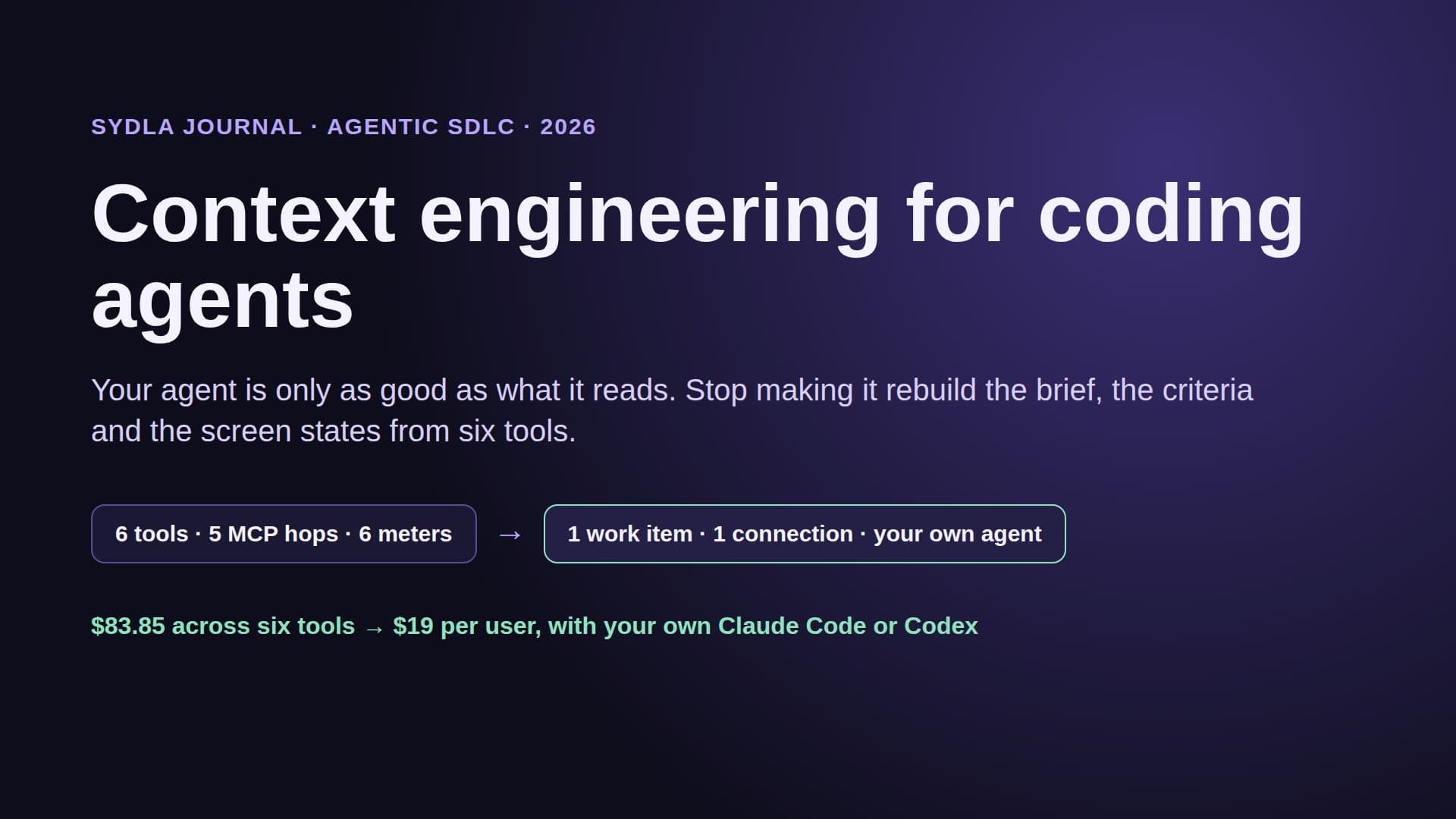
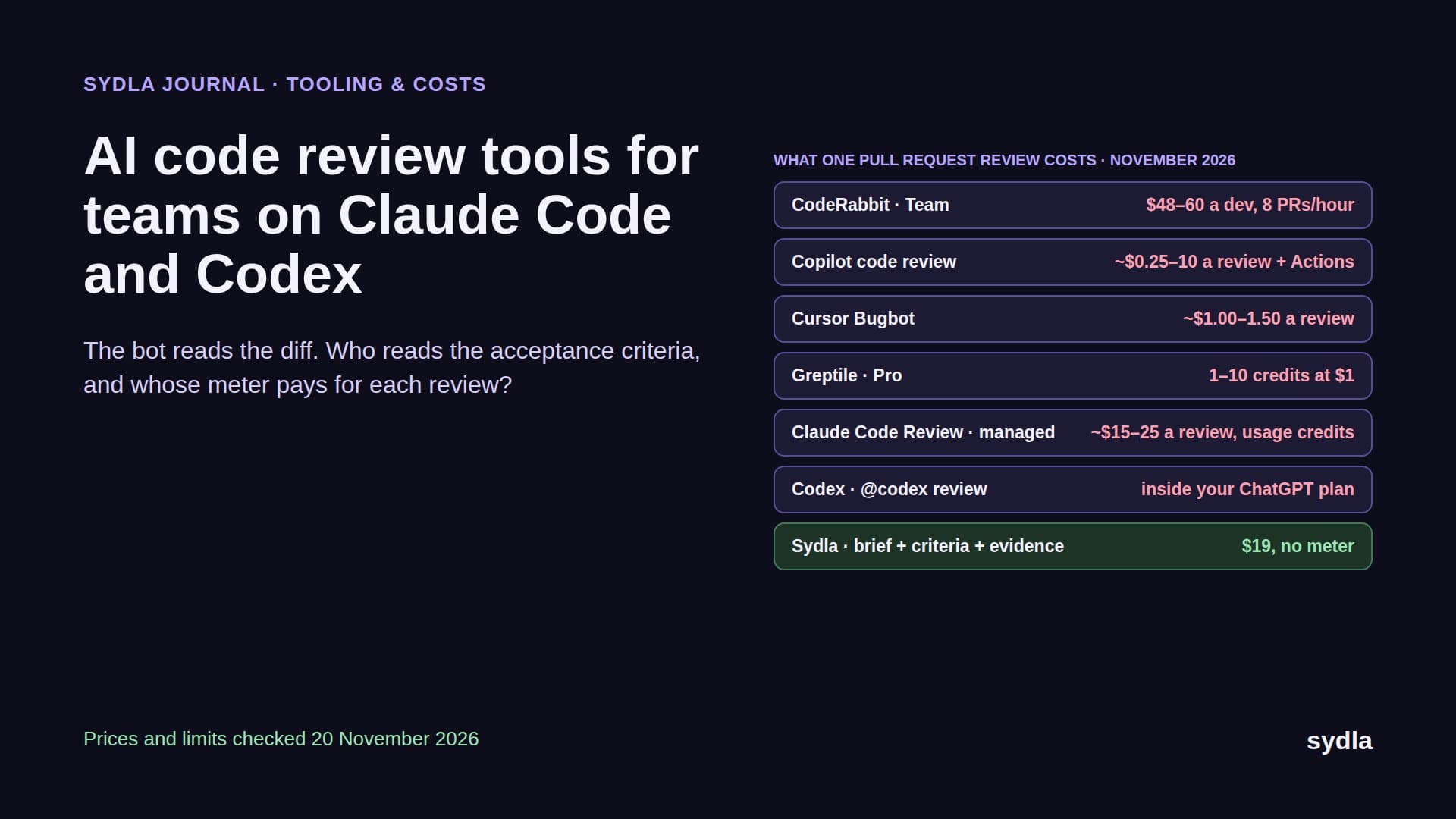
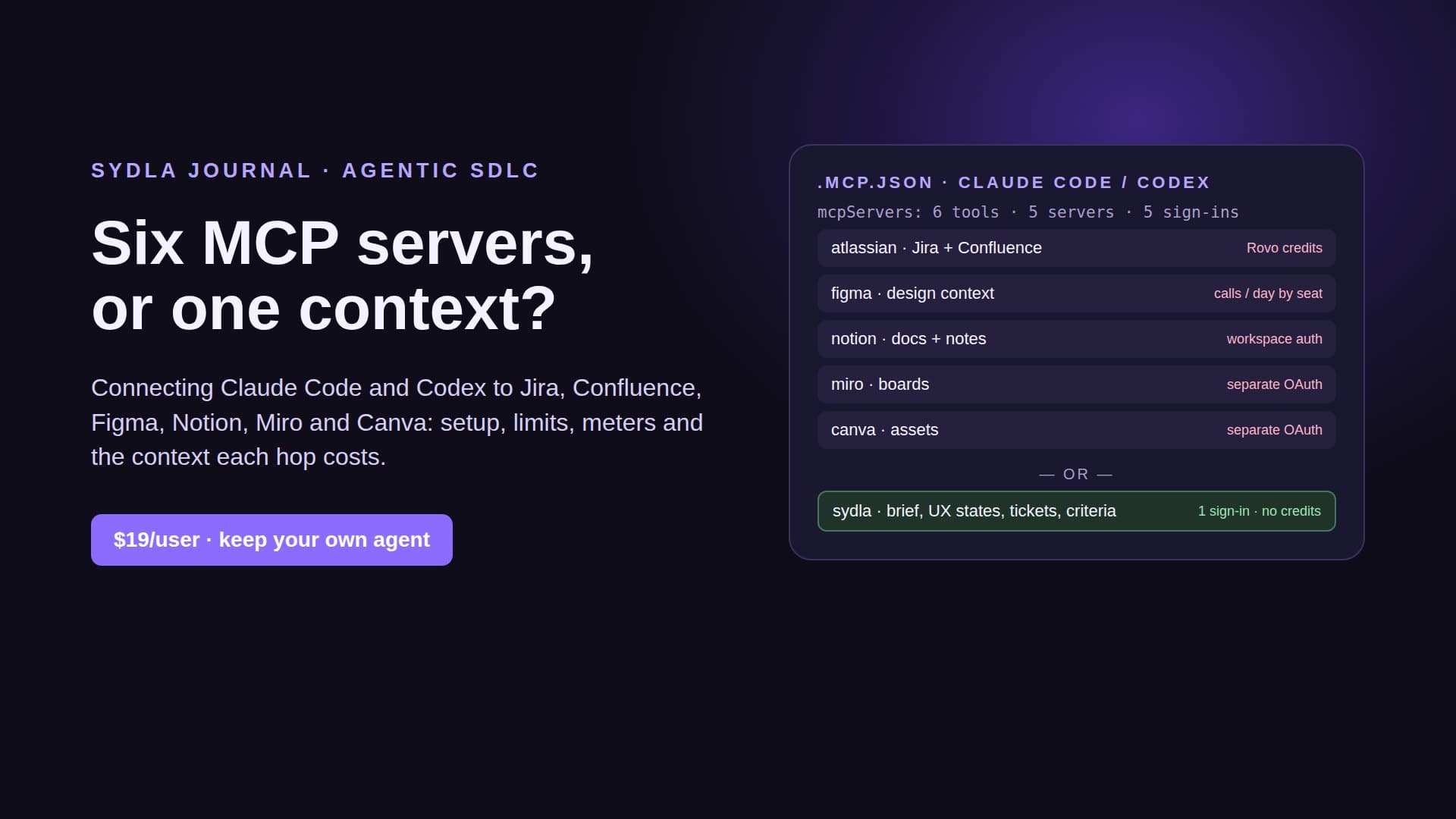
Meanwhile the engineers on that team already pay Anthropic or OpenAI for Claude Code or Codex. That is the agent that writes the code, and in a six-tool stack it spends its first minutes on every ticket hopping across MCP servers, each with its own login and rate limit, to rebuild the context the team already wrote down. The team pays for AI seven times and the agent that matters gets the least context.
How the same team works in Sydla with its own agents
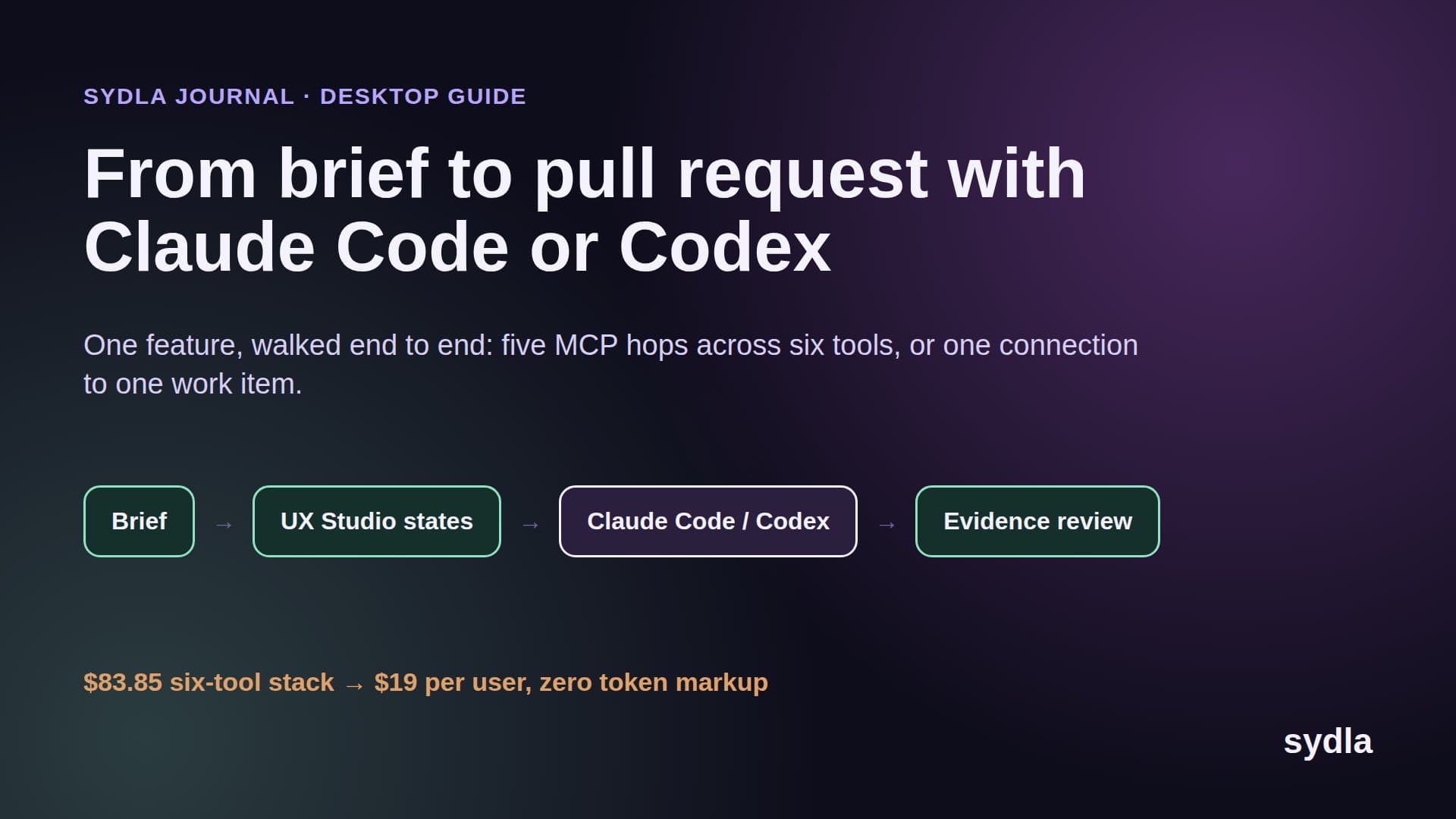
Sydla replaces the six hand-offs with one work item and leaves the model bill where it already is. There are no Sydla AI credits and no token markup. Here is the loop, as it runs in Sydla Desktop today.
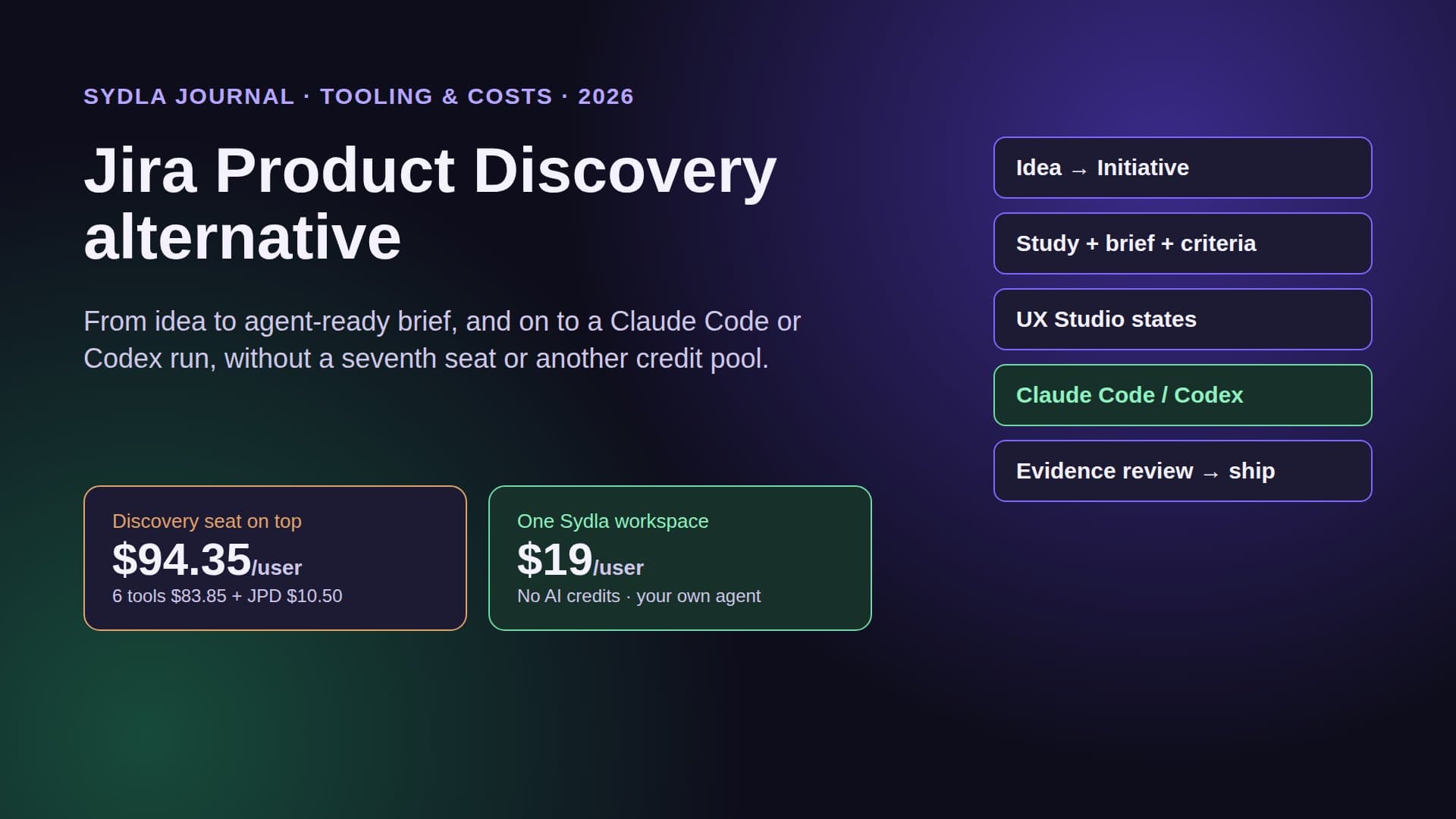
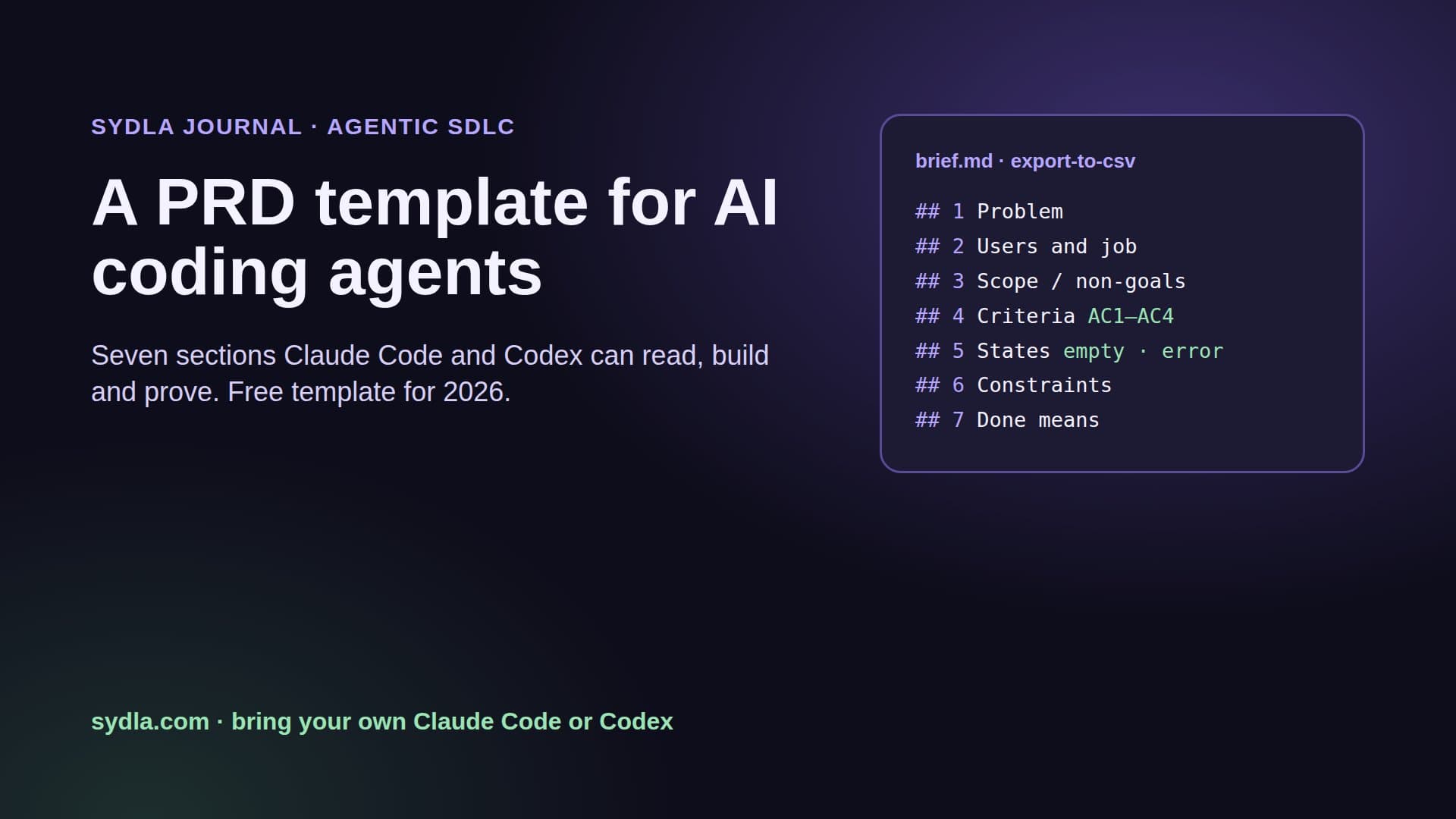
- Brief. The PM writes the brief and the acceptance criteria in a Sydla doc linked to the initiative, the work Jira, Confluence and Notion split between them.
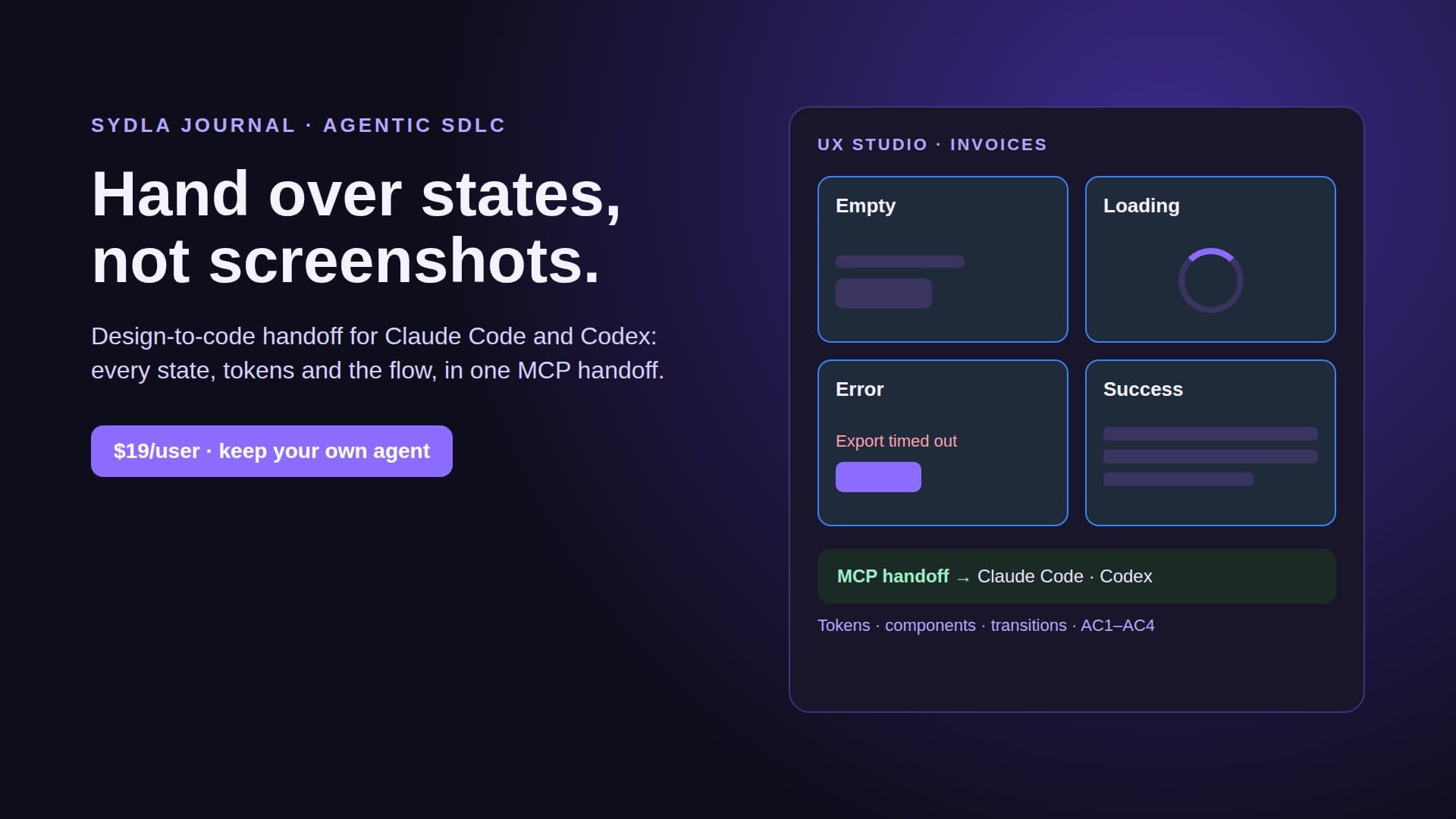
- UX Studio. The designer draws the screens with their empty, loading, error and success states and the transitions between them, the job of Figma and Miro. Engineers don't need a design seat to read them.
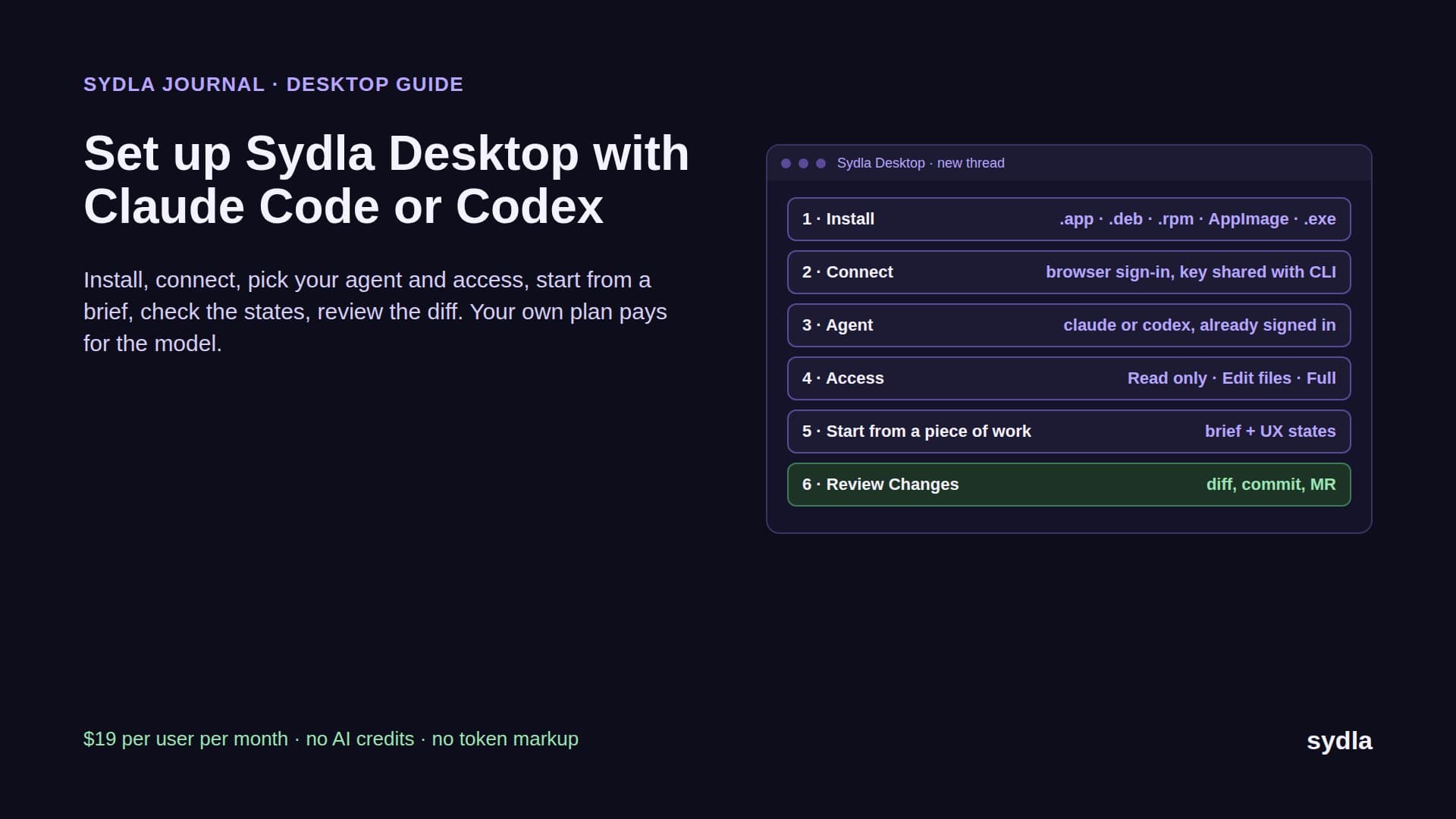
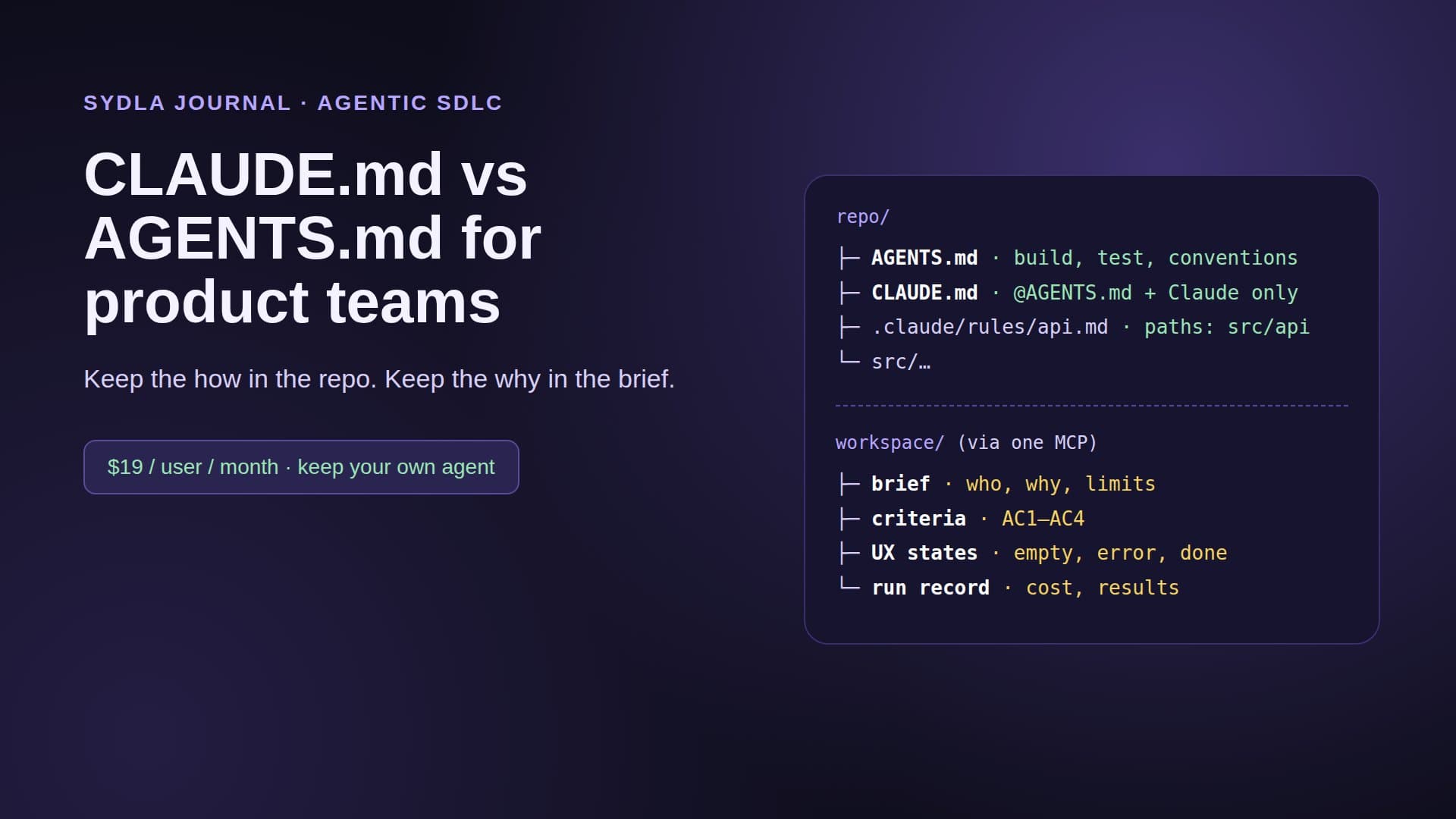
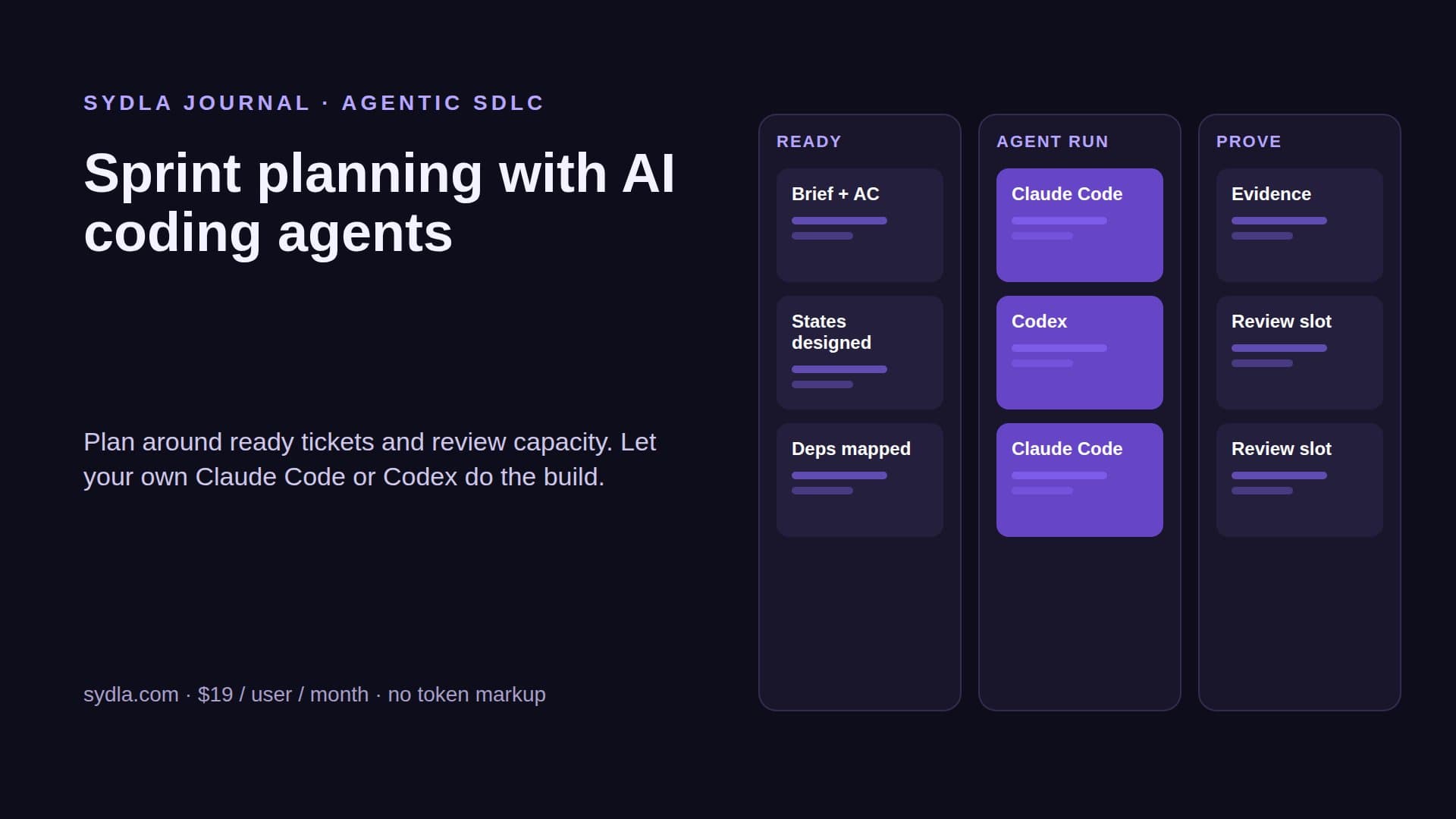
- Agent run. An engineer opens Sydla Desktop, which runs the claude or codex CLI already signed in on their machine. They start a thread from the piece of work, so the first message names the initiative, and the agent reads the brief, criteria and UX handoff through Sydla's MCP tools: one connection, not six. Access is set per thread to Read only, Edit files or Full access.
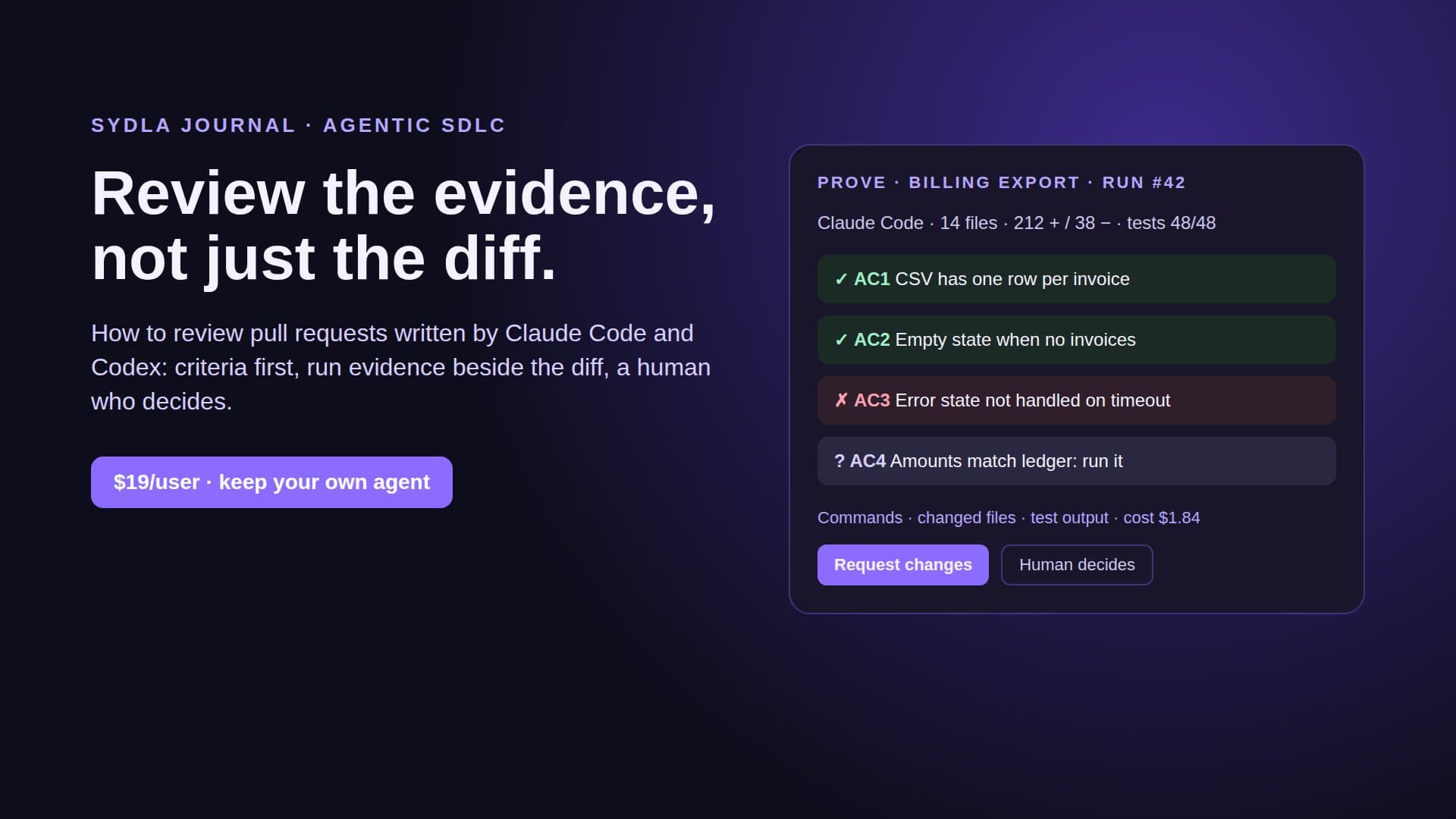
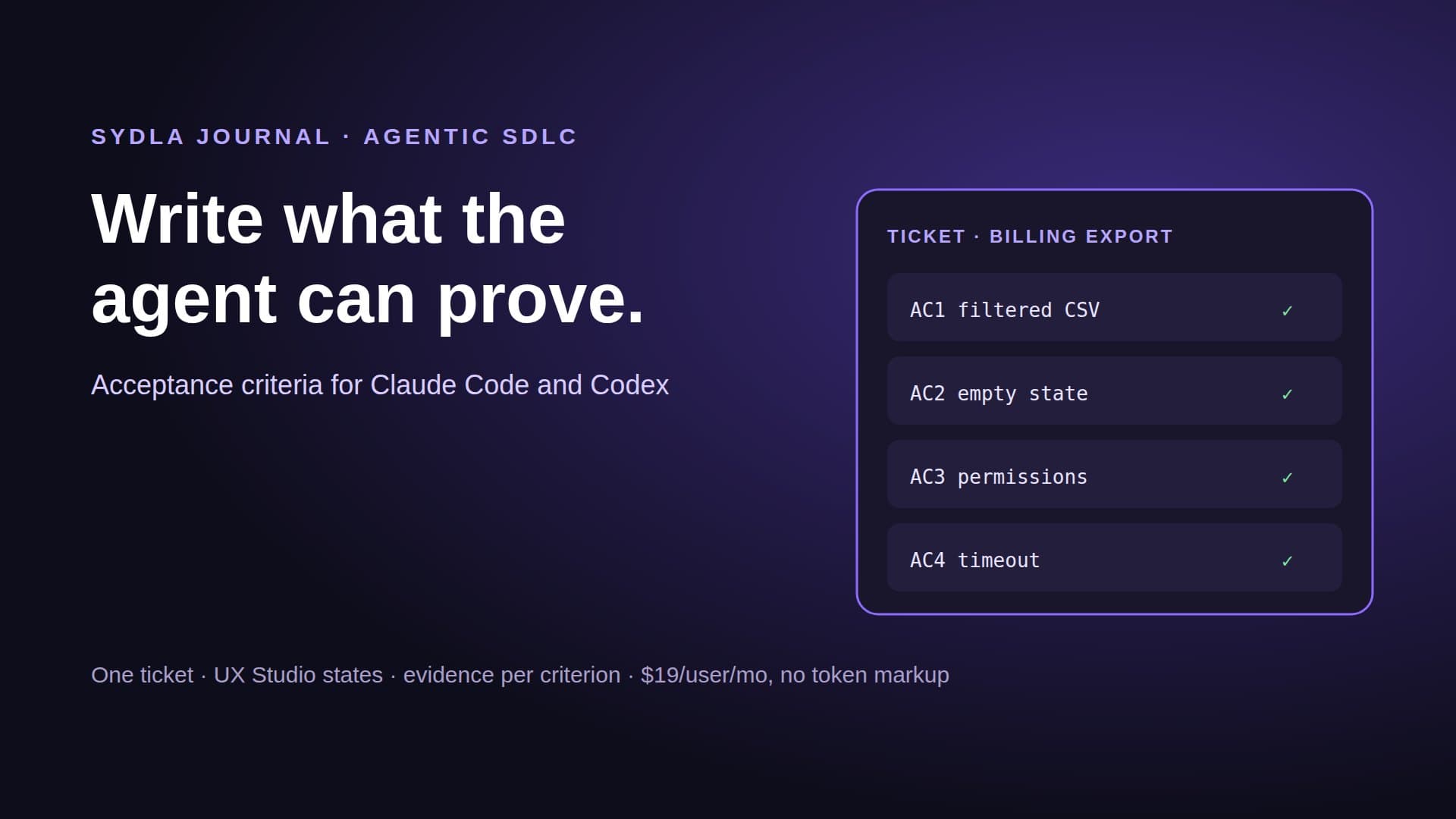
- Evidence-backed review. The agent records its run against the criteria. The engineer checks each state in the Preview panel, reads the diff in Changes, and Finish and Ship asks to confirm the commit, push, merge request, merge and tag one by one.
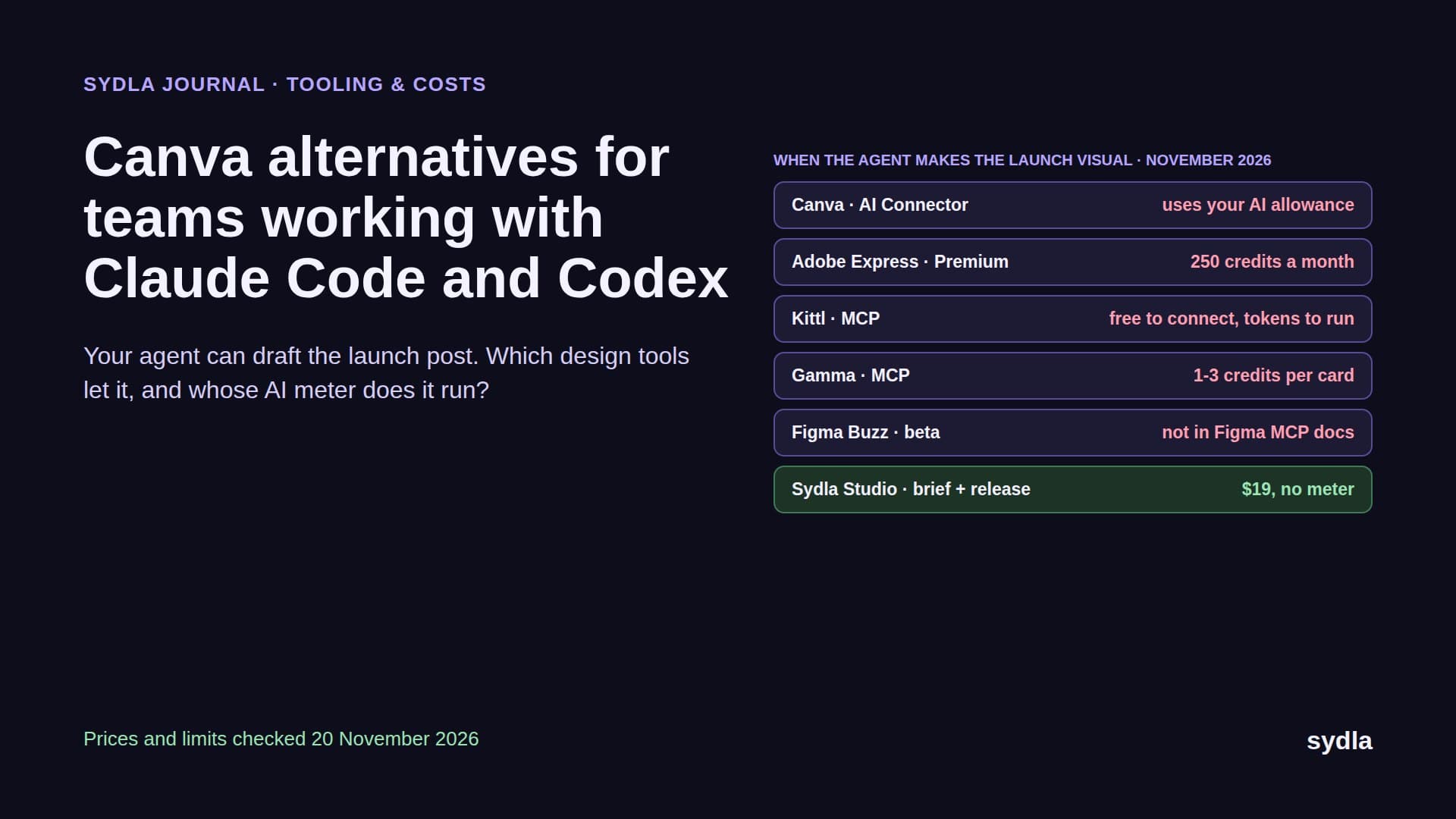
- Launch. Marketing makes the launch visuals in Sydla Studio from the same brand kit, the job Canva did.
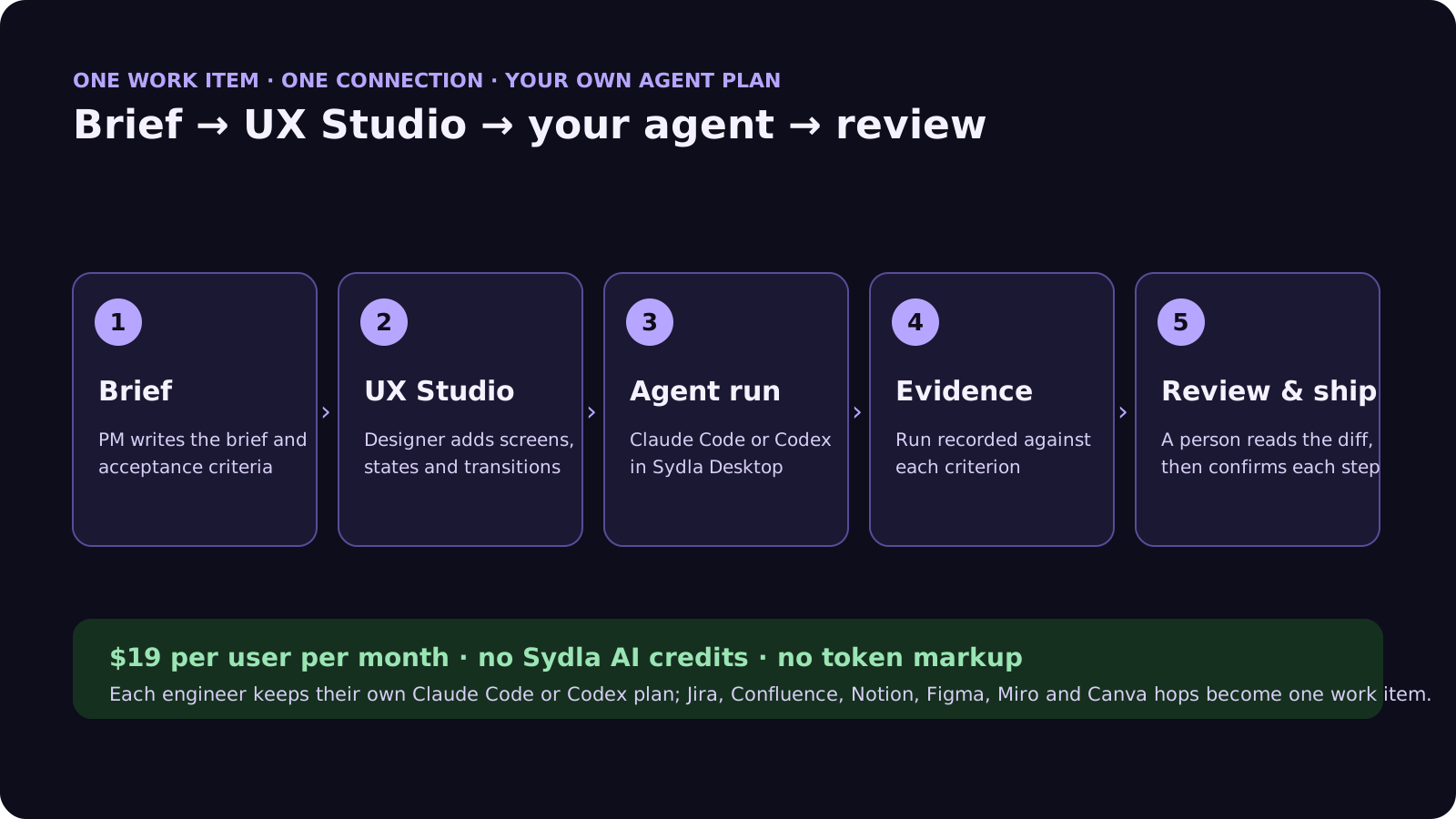
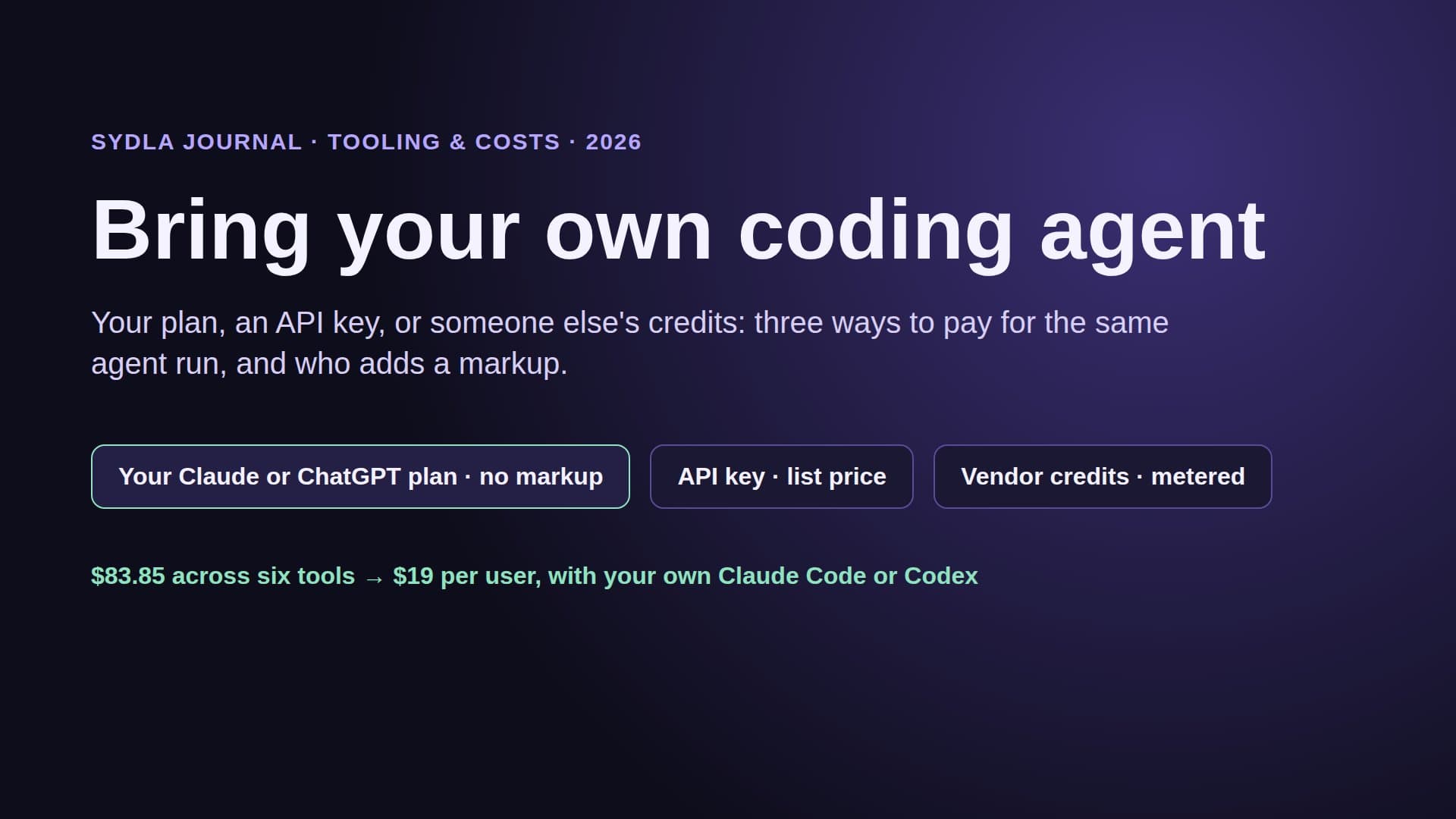
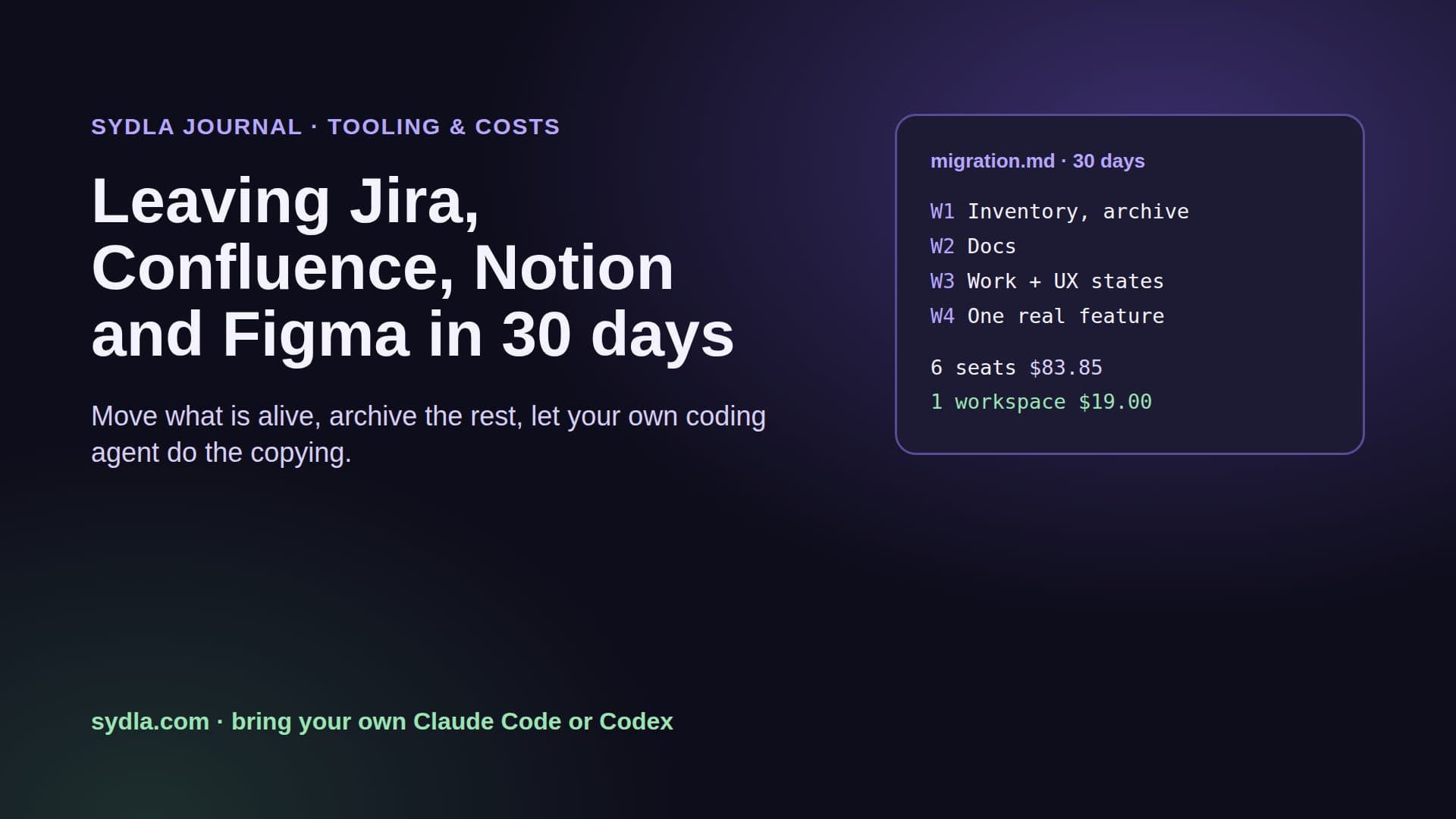
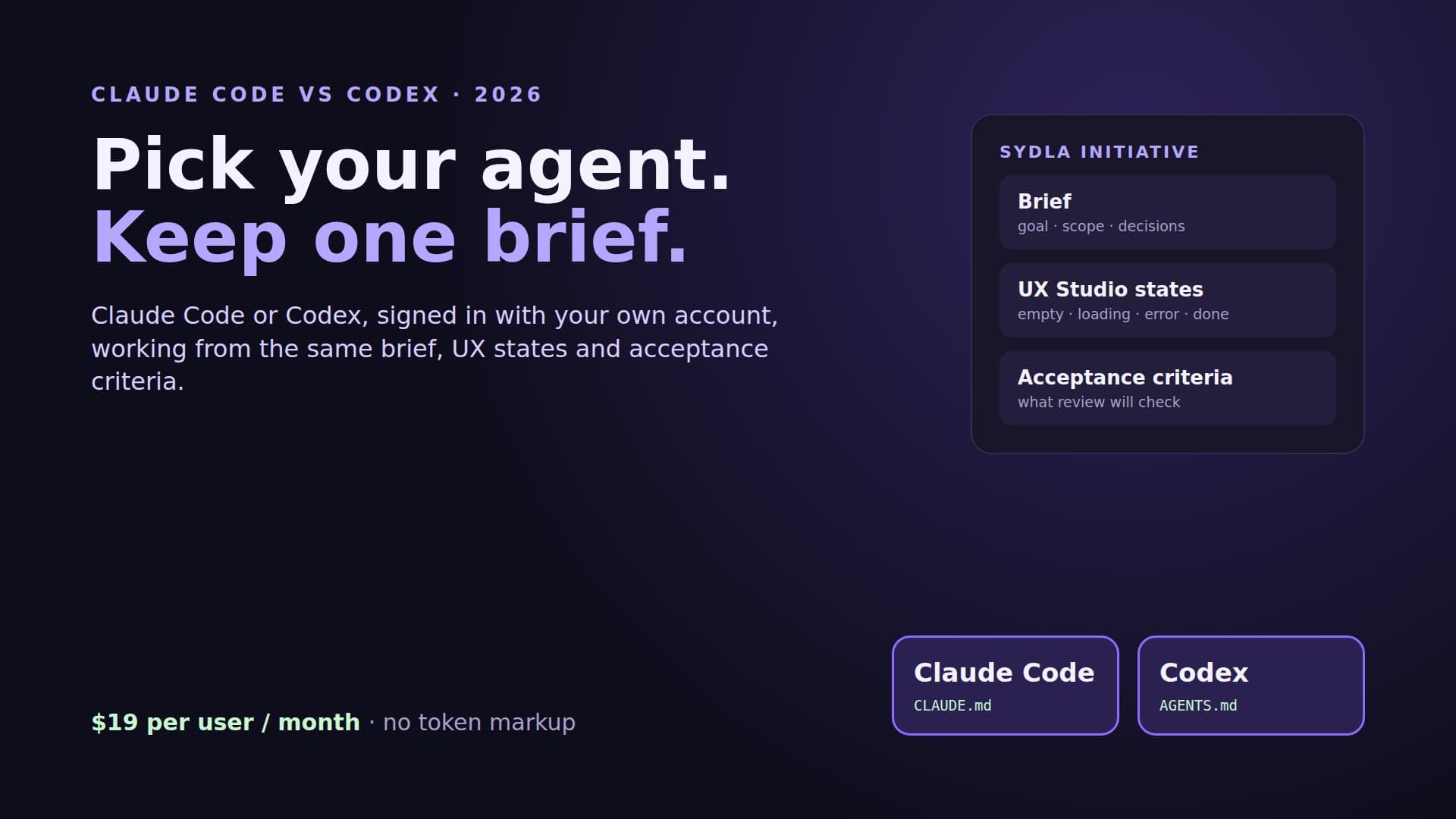
Each engineer keeps their own plan, whether Claude Pro, Max or a ChatGPT plan with Codex, and the team can mix both on the same initiative. If you are moving from Jira and Confluence, our 30-day migration plan shows what to export first.
Run the numbers for your own team in 15 minutes
You don't need a procurement project to see your own figure. Open the billing pages you already have and fill in five numbers.
- Count real seats, not invited users. Export the user list from each admin console and count paid seats. Look for people who have a seat in a tool they haven't opened in 60 days.
- Note the plan each tool forces. Are you on Notion Plus but want agents? Jira Free with an 11th hire coming? Miro on Starter with a pool that empties mid-month? Price the plan you will be on in six months.
- Add last quarter's AI top-ups. Rovo overage, Figma add-ons, Notion credits, Miro bundles and Canva top-ups. Divide by three.
- Add the coding-agent plans. Claude Code and Codex seats are a constant on both sides, but they show what the team already spends on the AI that writes code.
- Compare with $19 times your headcount. Then decide which specialist tool, if any, is worth keeping on top.
Most teams find the seat total within ten percent of our lean example and the AI top-ups larger than they expected. The pricing section has the Sydla plan, and signing up takes a minute.
Frequently asked questions
How much does a software tool stack cost per employee in 2026?
For a product team using Jira Standard, Confluence Standard, Notion Plus, Figma Professional, Miro Starter and Canva Business, one seat of each costs $83.85 per person per month at list price. A leaner mix that gives design tools only to designers costs about $38 to $46 per person: $229.25 a month for 5 people, $408.50 for 10 and $956.25 for 25, before AI top-ups.
How many users does the Jira Free plan allow?
Jira Free allows up to 10 users. When an 11th user is added, the site moves to a trial of Jira Standard, and after it every user is billed at the Standard rate, $9.70 per user per month for 1 to 100 users since 13 October 2026.
Did Atlassian raise Jira and Confluence prices in 2026?
Yes. From 13 October 2026, the monthly list price for 1 to 100 users rose from $9.05 to $9.70 for Jira Standard, $18.30 to $19.60 for Jira Premium, $6.70 to $7.15 for Confluence Standard and $13.20 to $14.10 for Confluence Premium. Rovo usage beyond the pooled credits is billed at $0.01 per credit from 3 December 2026.
What does Sydla cost for a team of 10?
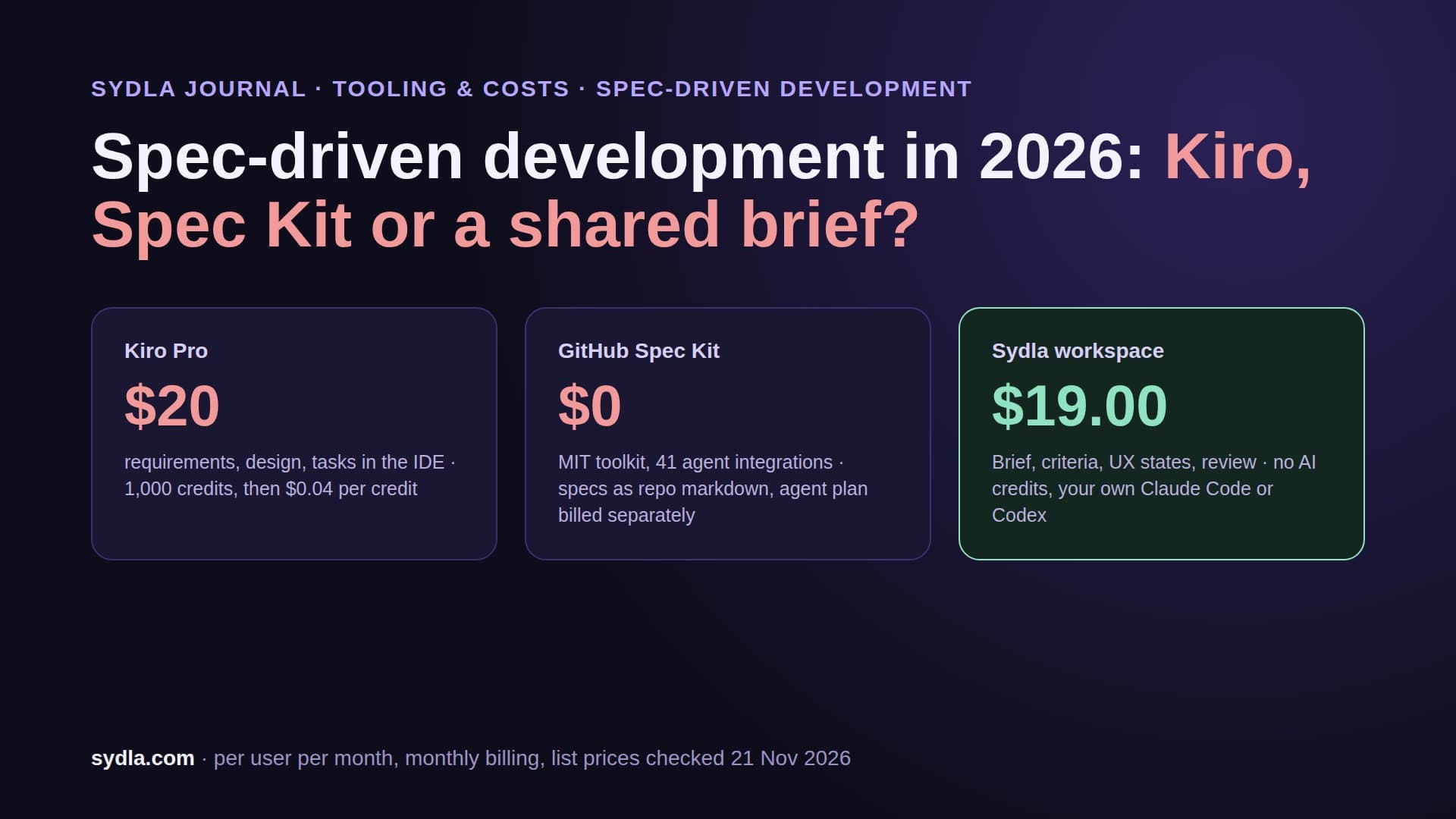
Sydla costs $19 per user per month, so $190 a month for 10 people. There are no Sydla AI credits: each engineer runs their own Claude Code or Codex subscription from Sydla Desktop with no token markup, against the brief, acceptance criteria and UX states stored in Sydla.
Can a team mix Claude Code and Codex in one workspace?
Yes. Sydla Desktop runs whichever CLI each engineer has installed and signed in, claude or codex, per thread. Both read the same work item through Sydla's MCP tools, so two engineers on different plans see the same brief, criteria and screen states.