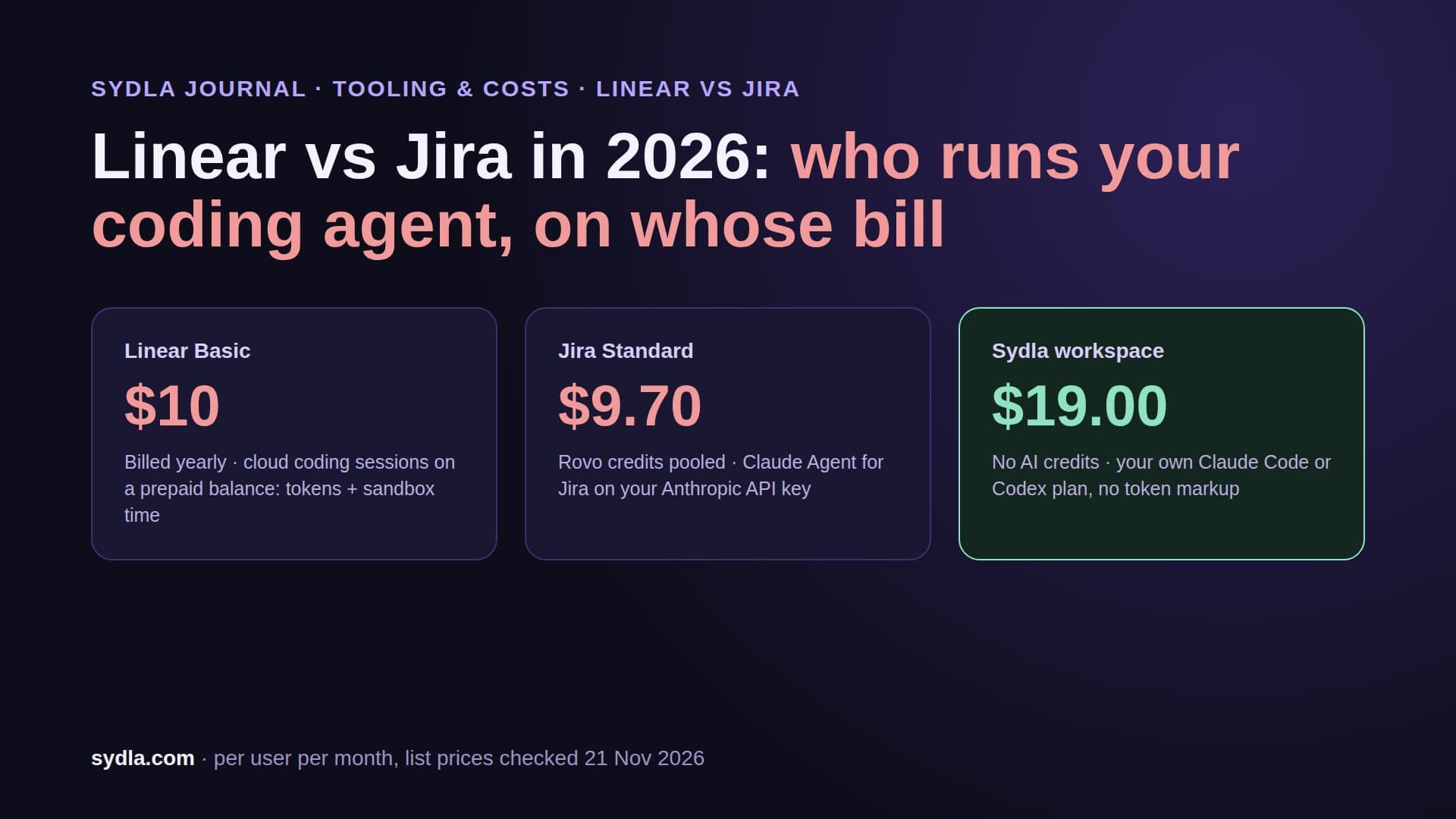
Linear vs Jira in 2026: who runs your coding agent, and on whose bill
Both trackers now hand tickets to Claude Code and Codex. Linear runs them in its cloud on a prepaid balance; Jira runs Claude on your Anthropic API key and searches on Rovo credits. Here is the head-to-head on price, agents, context and migration, checked on 21 November 2026.
The tracker became the agent's front door
The old Linear vs Jira argument was about taste. Linear was fast and opinionated; Jira was configurable and everywhere. In 2026 a second question sits on top: when you assign a ticket to Claude Code or Codex, where does the agent run, what does it read, and who pays for every token?
Both vendors answered in the same month. On 11 June 2026 Linear announced that Linear Agent can write code using Claude Code and Codex in cloud coding sessions. On 18 June Atlassian launched Claude Agent for Jira, two days after a deep link that opens a work item in Claude Code, Codex, Cursor or Copilot. Same promise, very different bills.
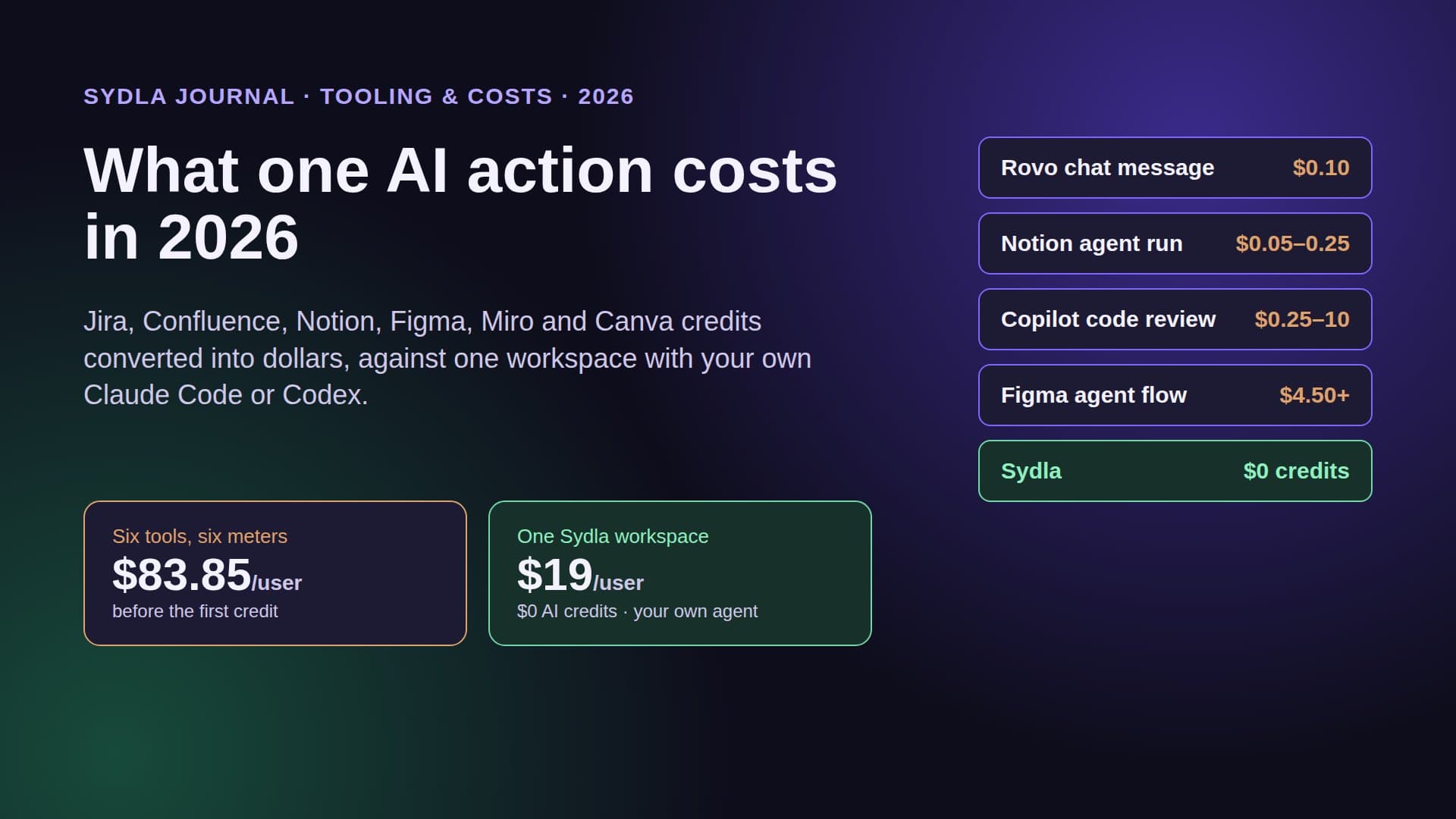
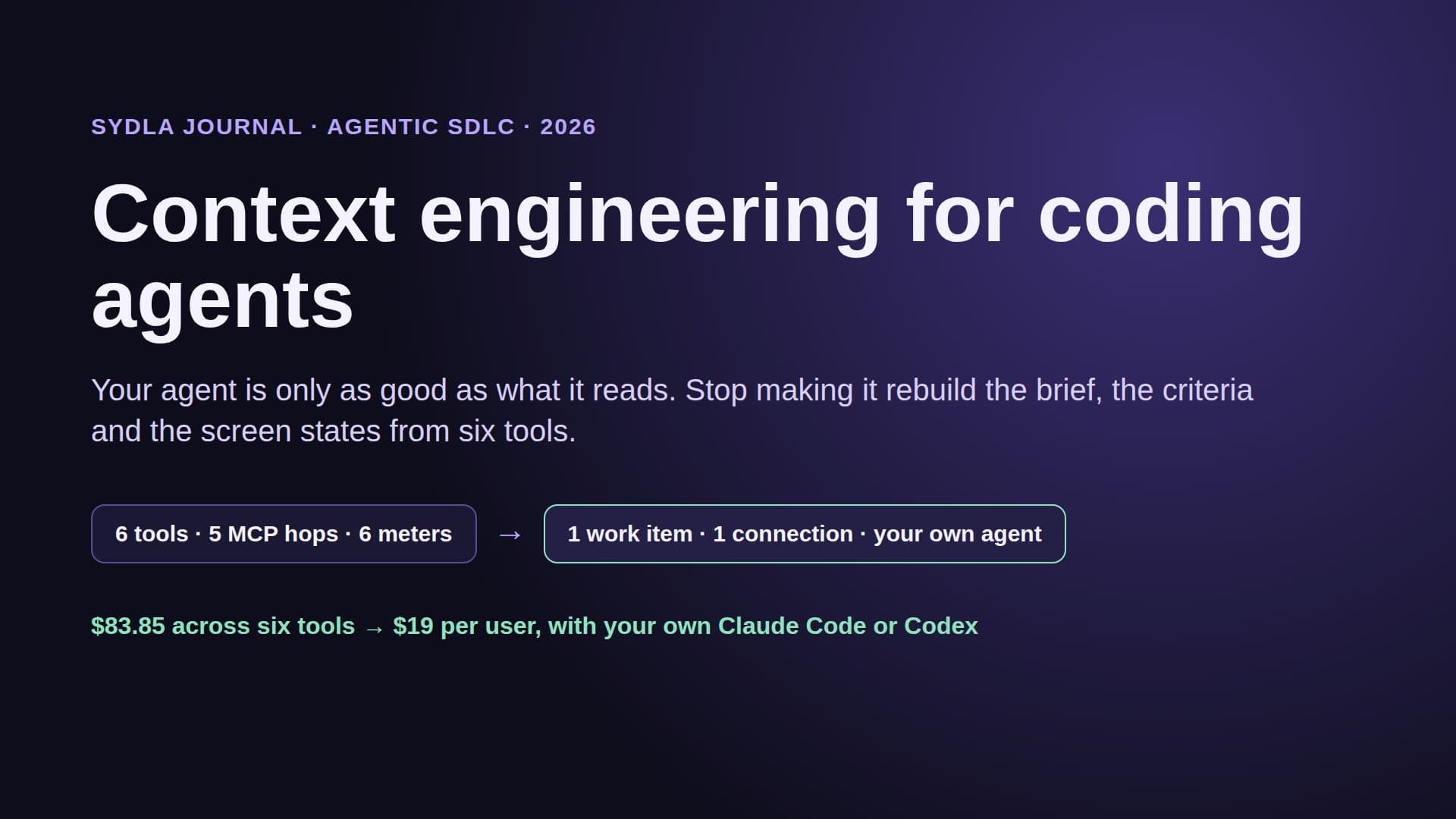
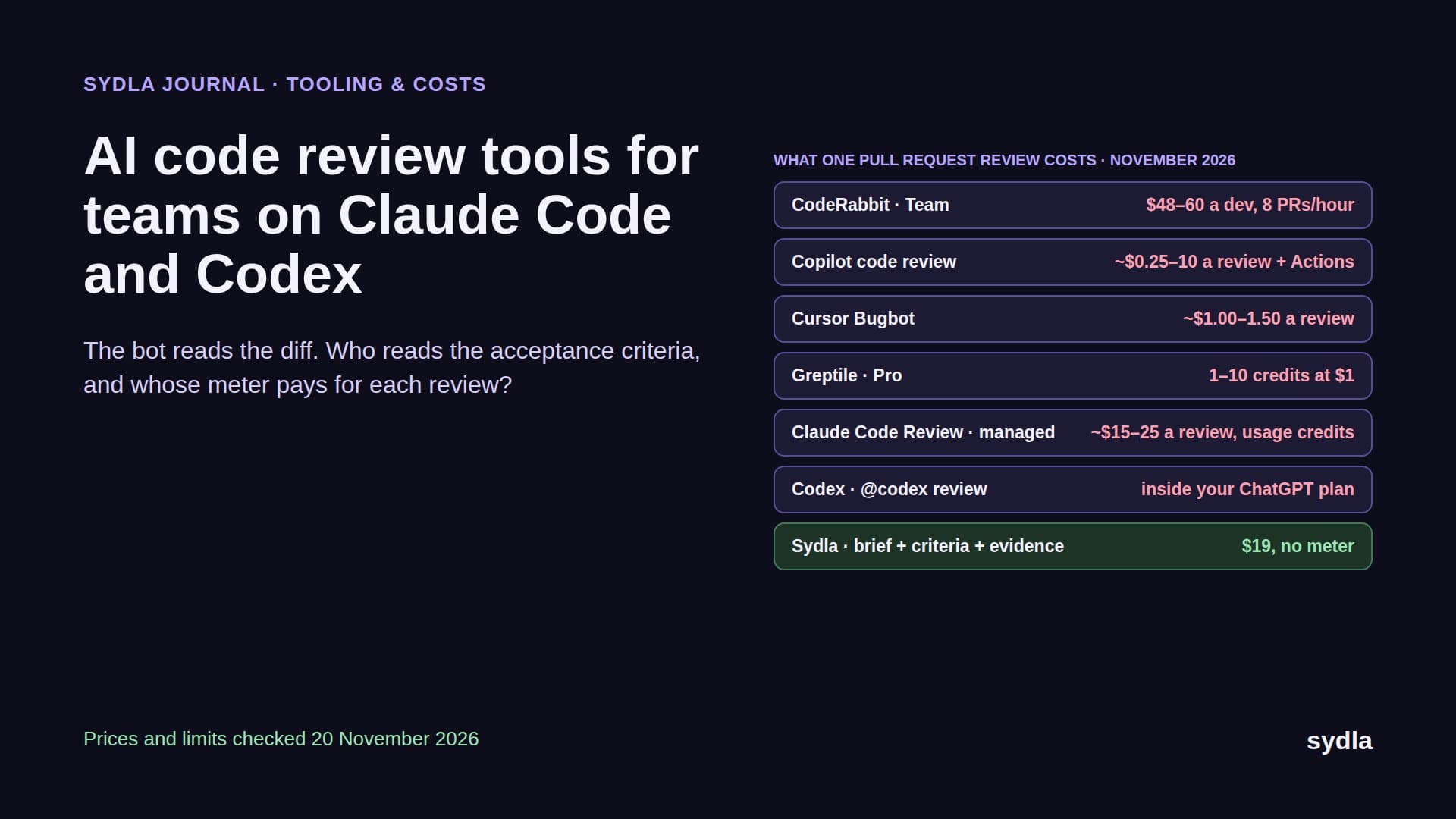
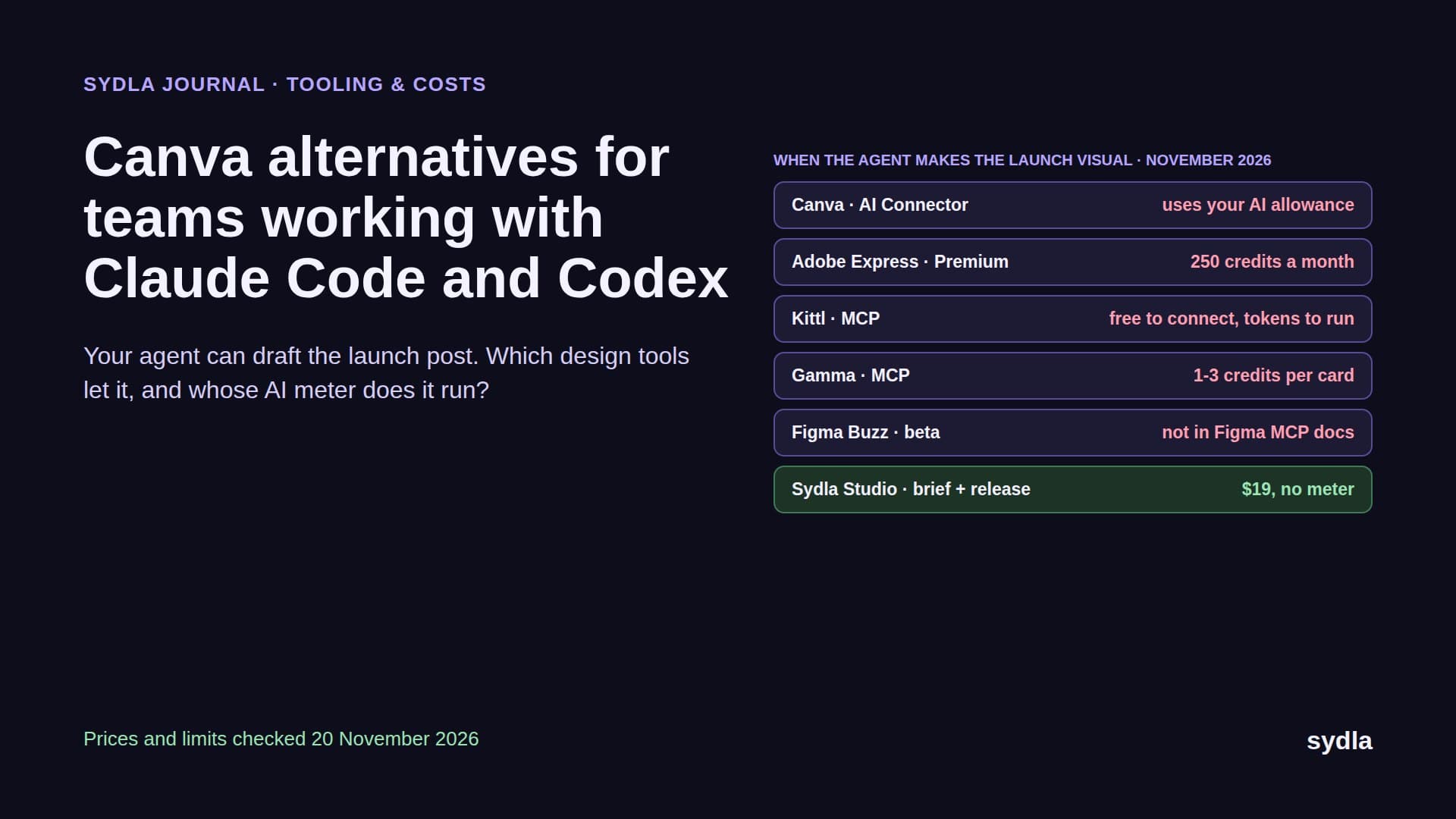
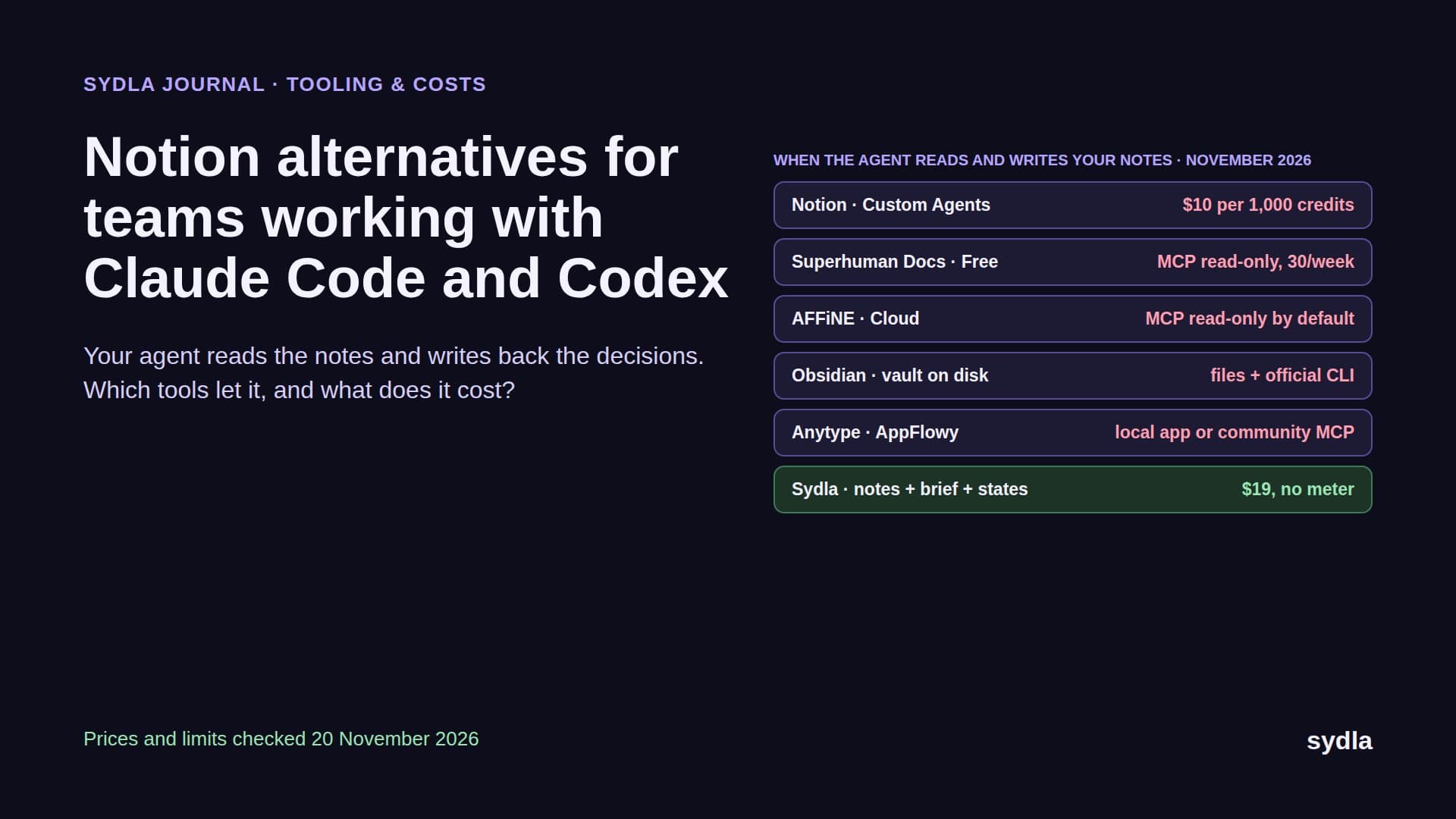
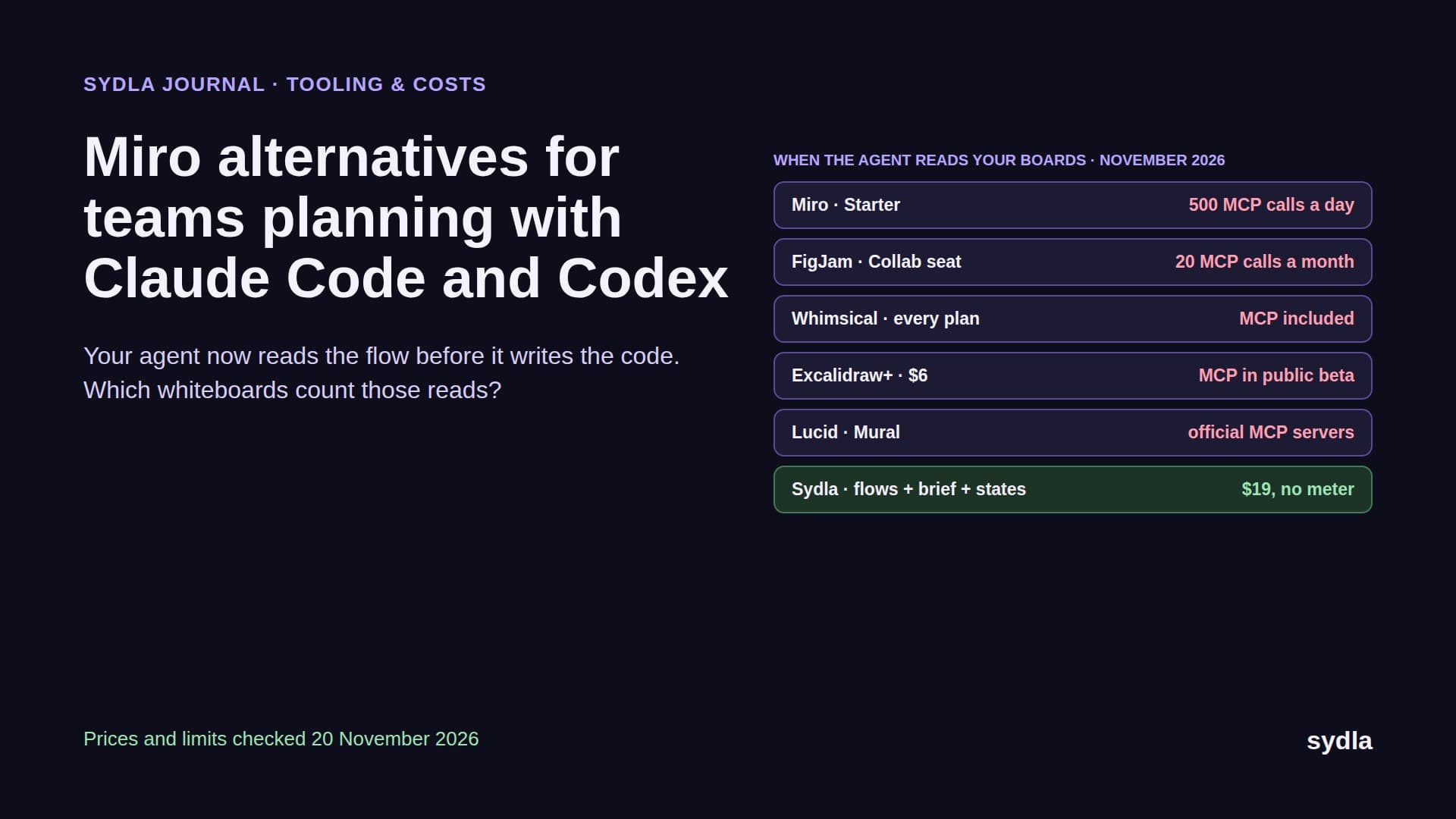
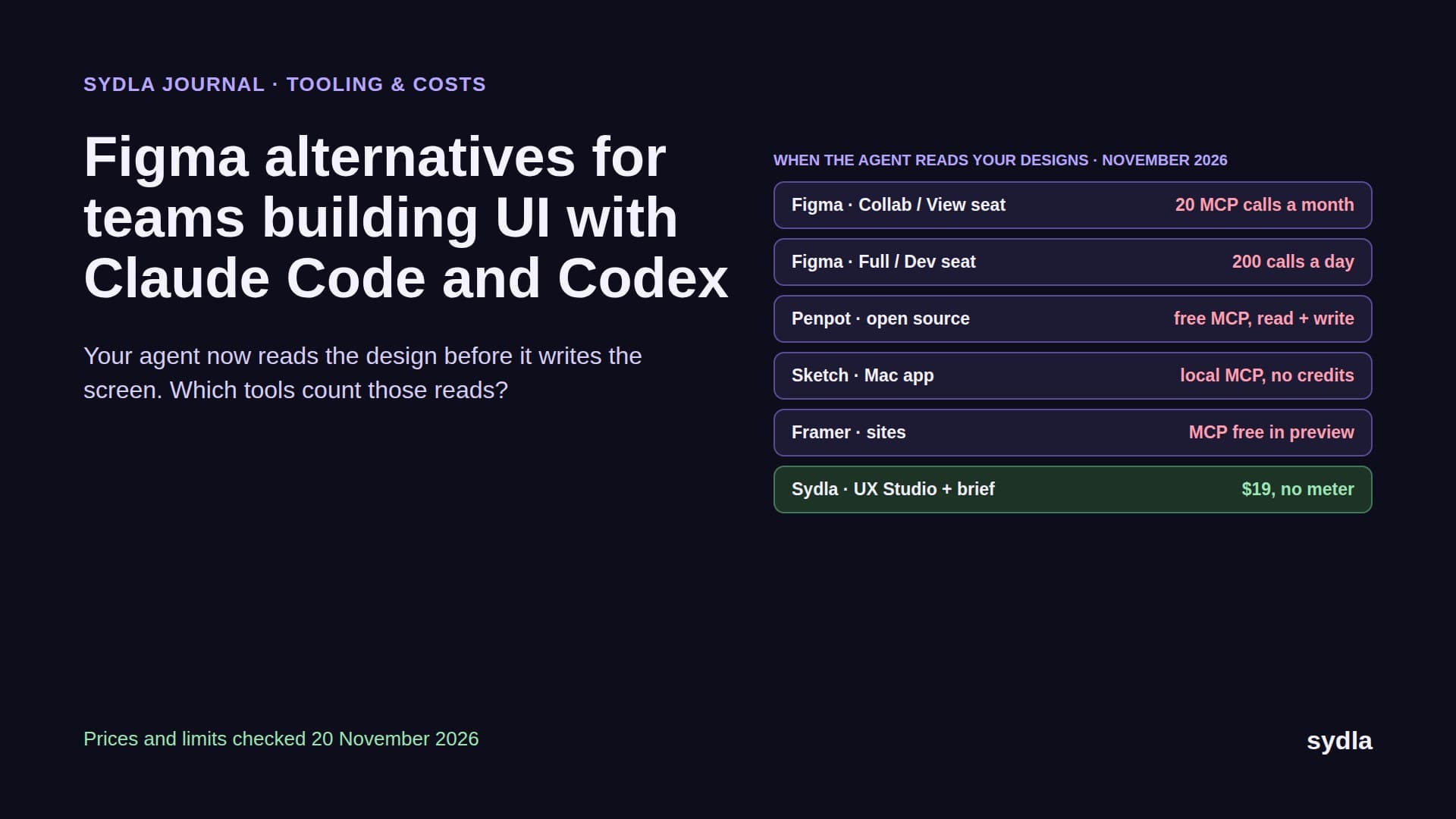
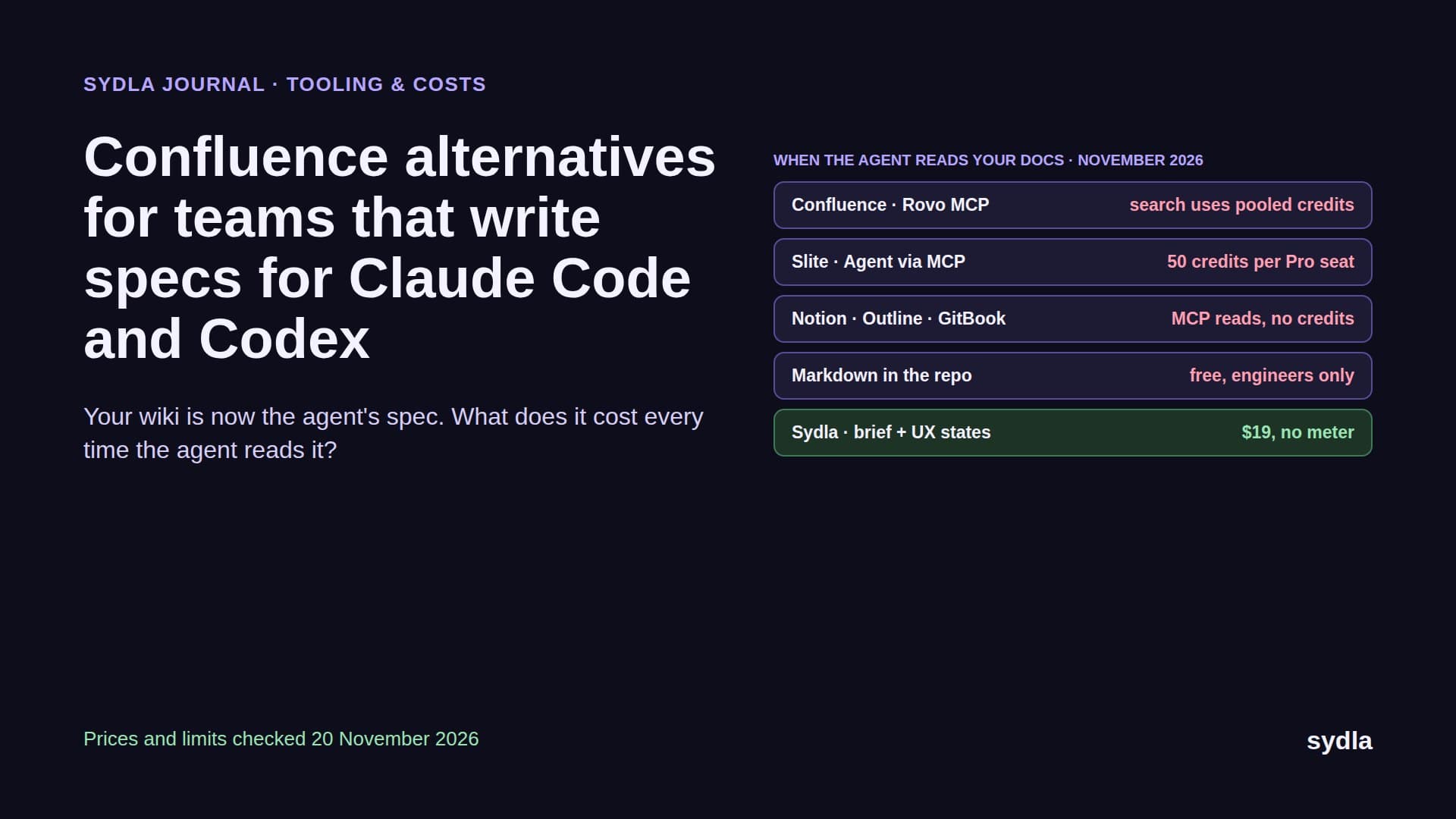
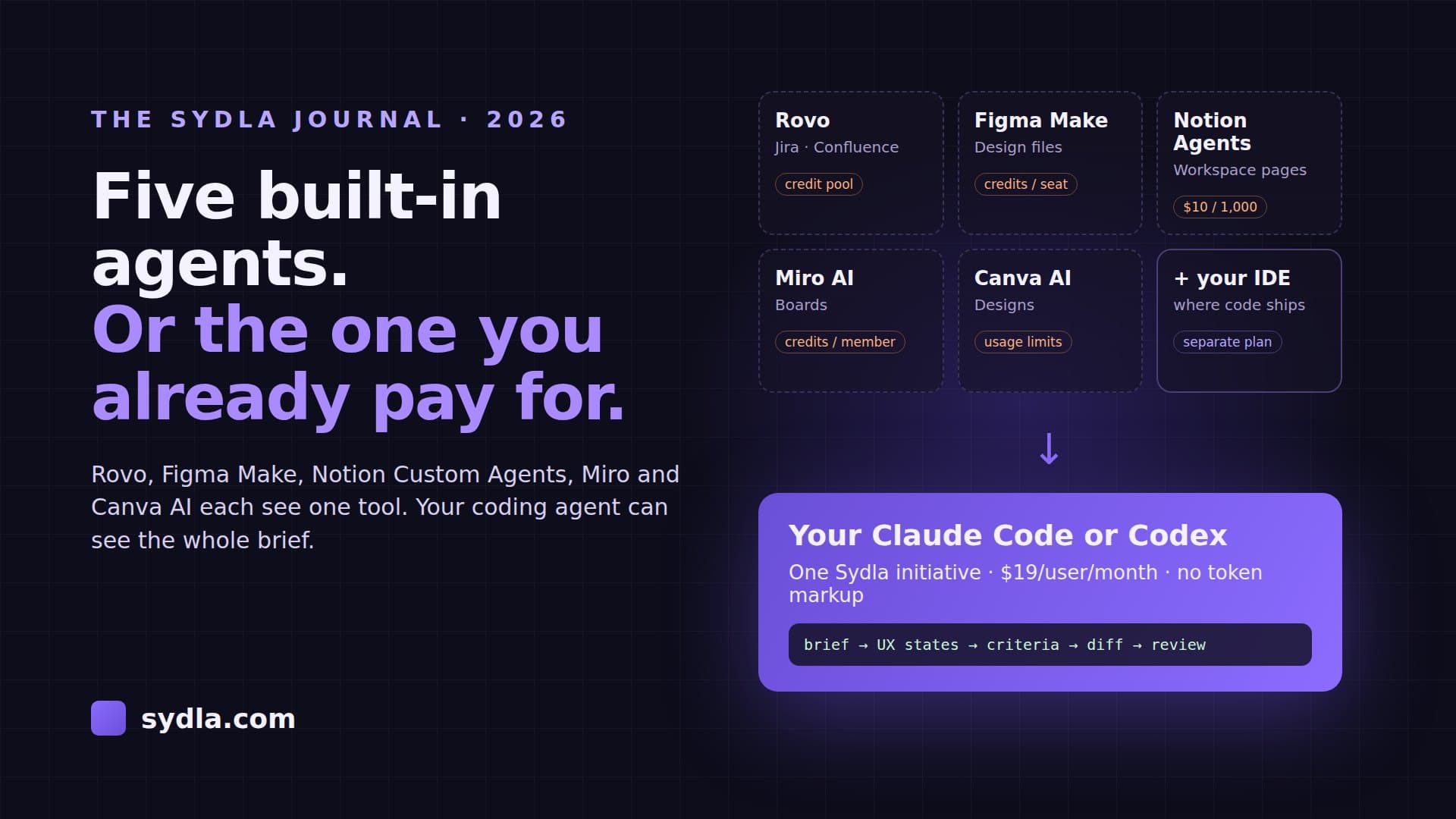
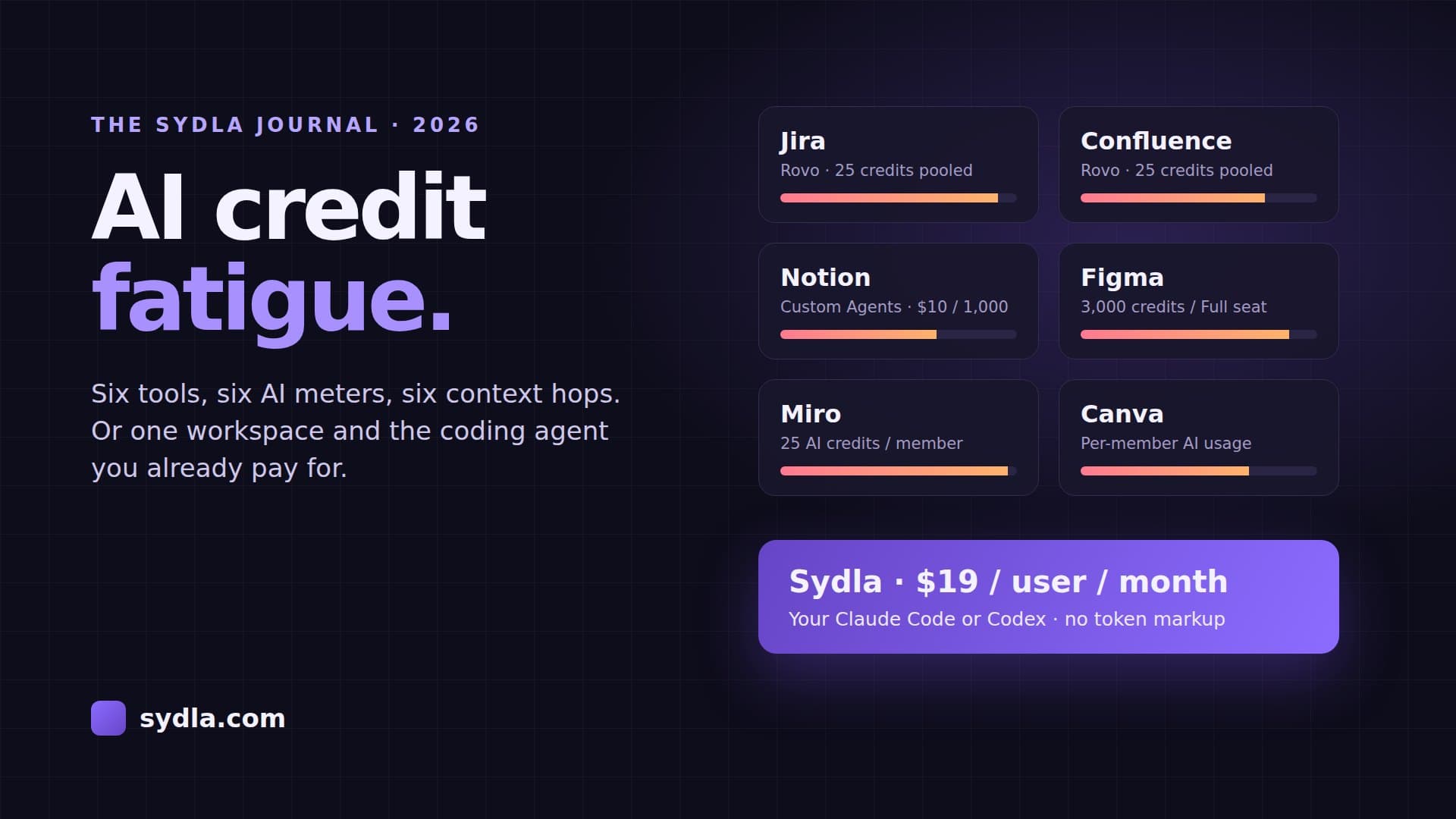
That bill is new AI credit fatigue in its purest form. And neither tracker holds the spec, the design states or the launch visuals, so the agent still hops across Confluence, Notion, Figma, Miro and Canva to find them. This guide compares the two trackers on vendor pages read on 21 November 2026, then shows a third option: keep your own agent plan and put the brief, the states and the review in Sydla.
Linear vs Jira at a glance: prices and AI meters
List prices first. Linear publishes yearly-billed prices only. Jira's Standard price rose on 13 October 2026. Both offer a free tier, with very different limits.
| Plan | Seat / month | AI included | What the coding agent costs | Limits to know |
|---|---|---|---|---|
| Linear Free | $0 | Linear Agent and MCP access | Cloud coding agent requires AI credits | 2 teams, 250 issues |
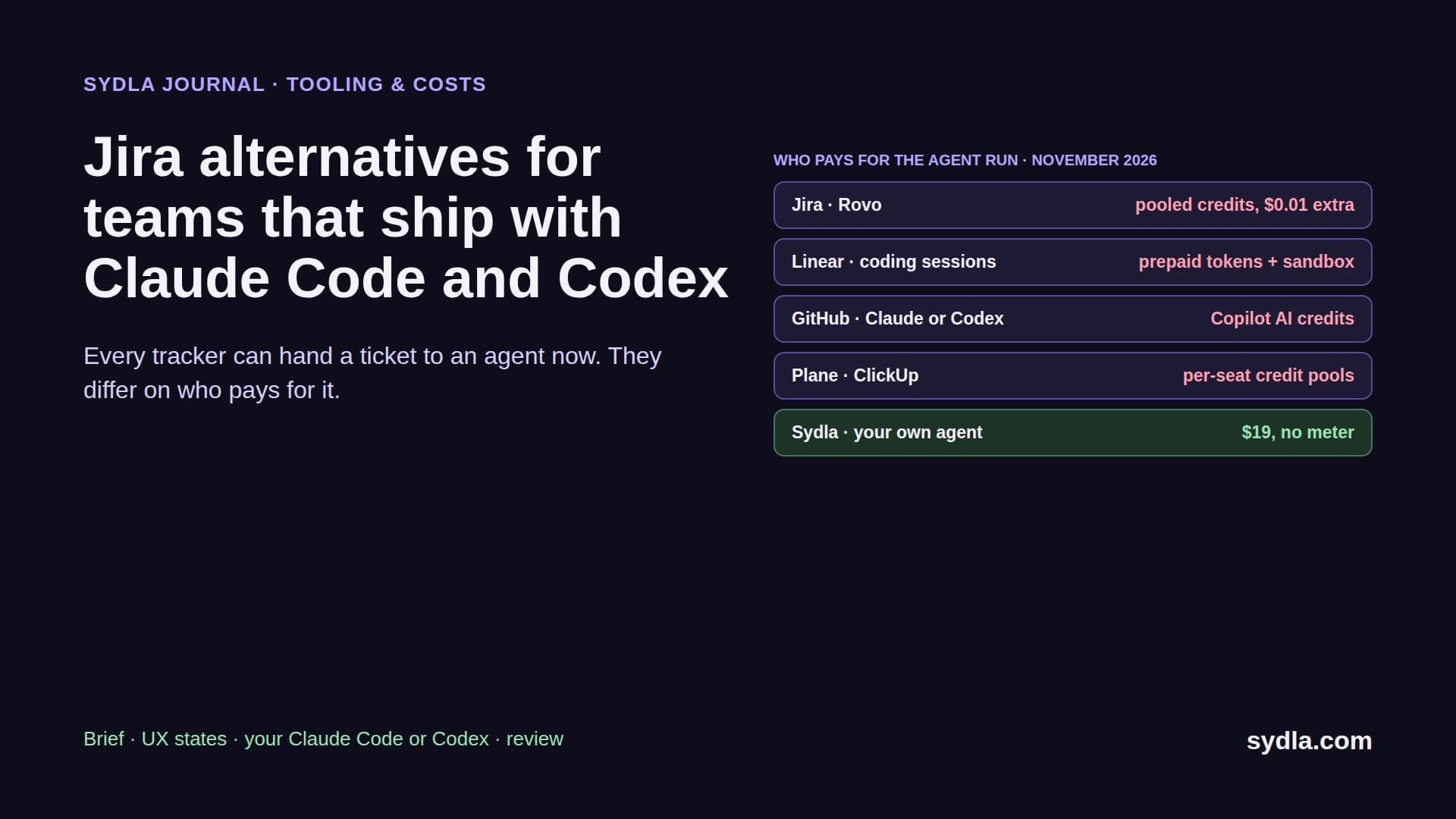
| Linear Basic | $10 (yearly) | Linear Agent, MCP, Guided Reviews | Tokens at provider rates, no markup, plus sandbox time, from a prepaid balance | 5 teams |
| Linear Business | $16 (yearly) | Adds Triage Intelligence and Code Intelligence | Same prepaid balance | Unlimited teams, private teams |
| Jira Free | $0 | Free-tier AI limits apply | Coding agent automations need a paid plan with Rovo | Up to 10 users |
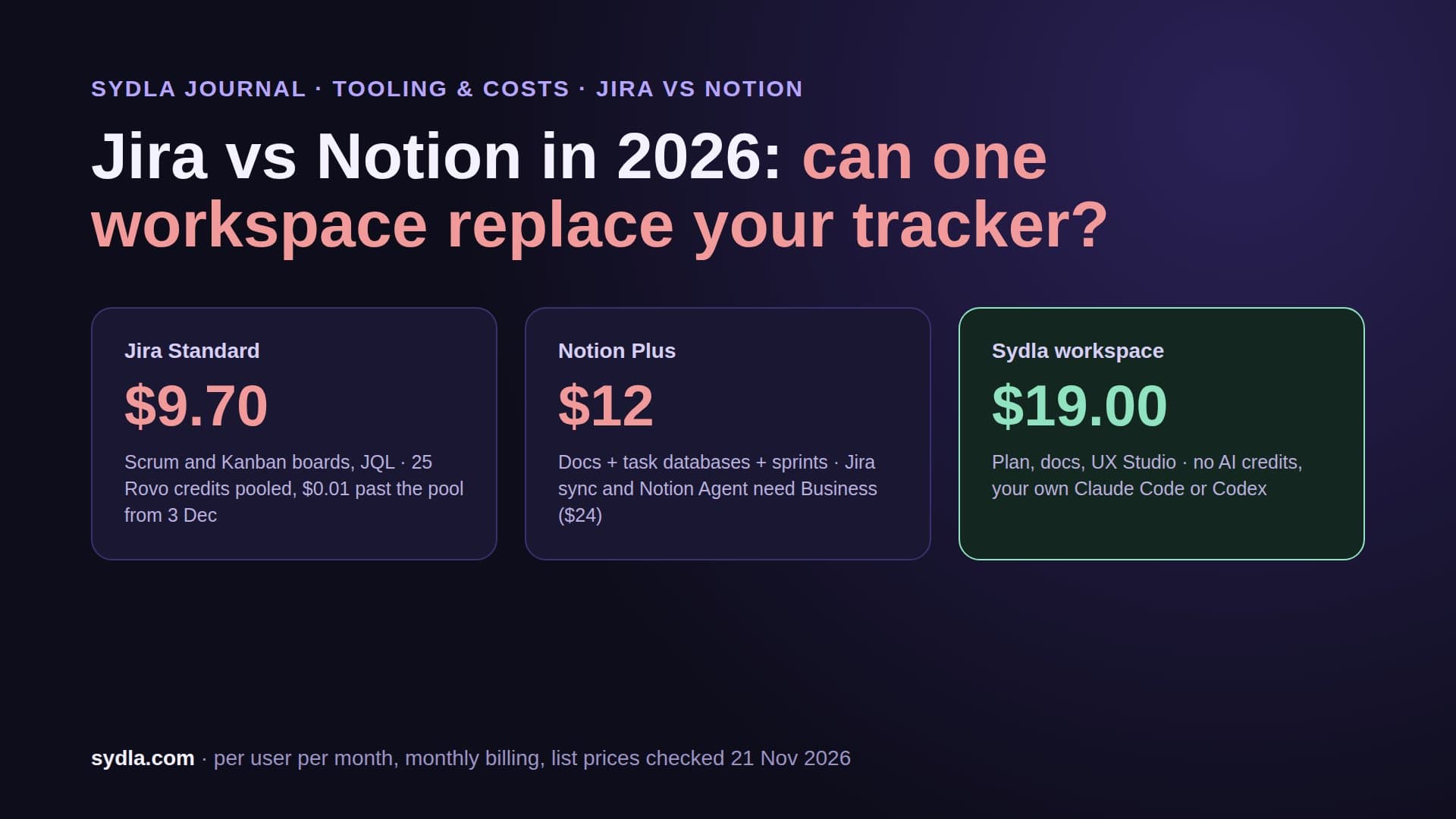
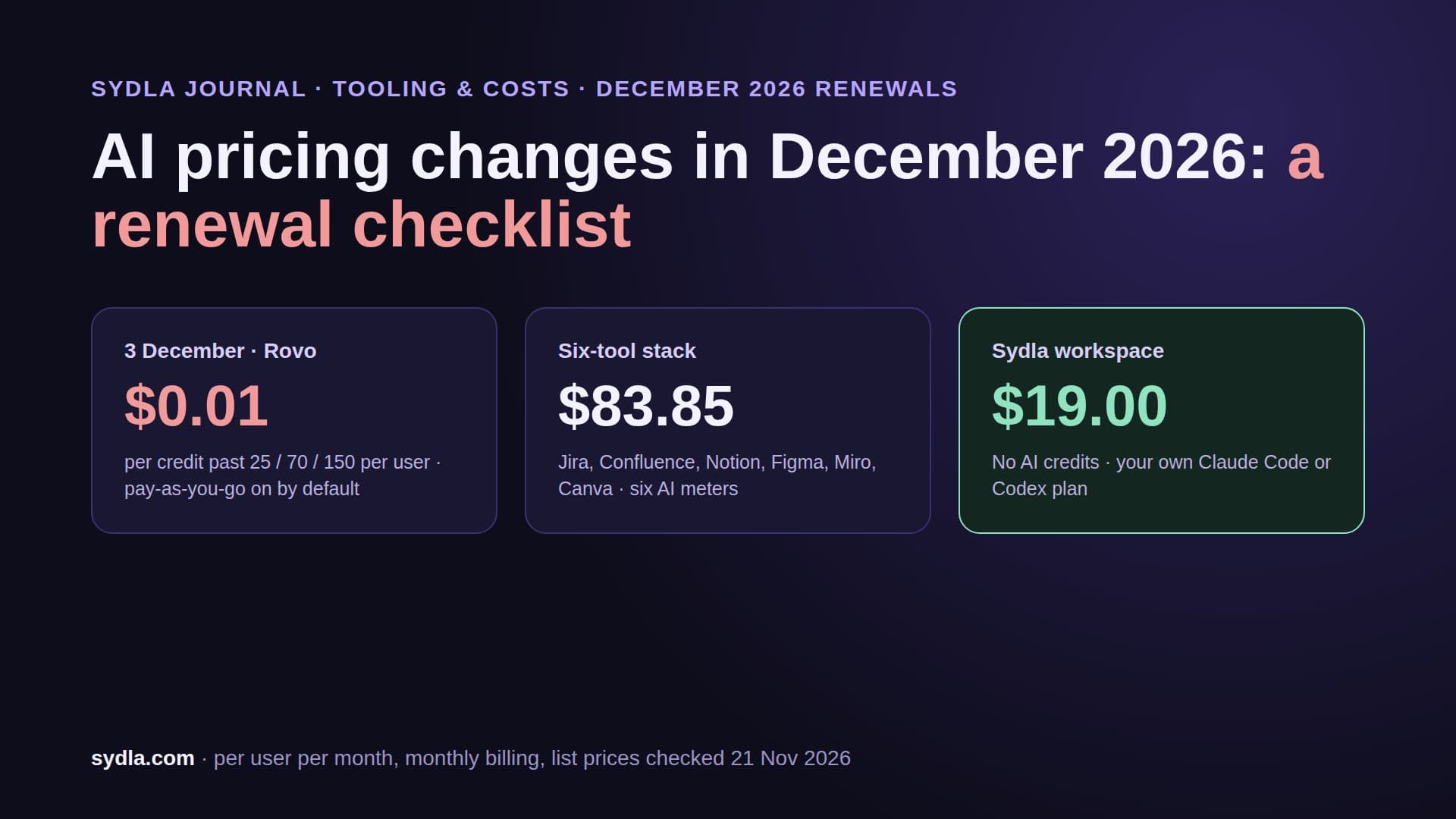
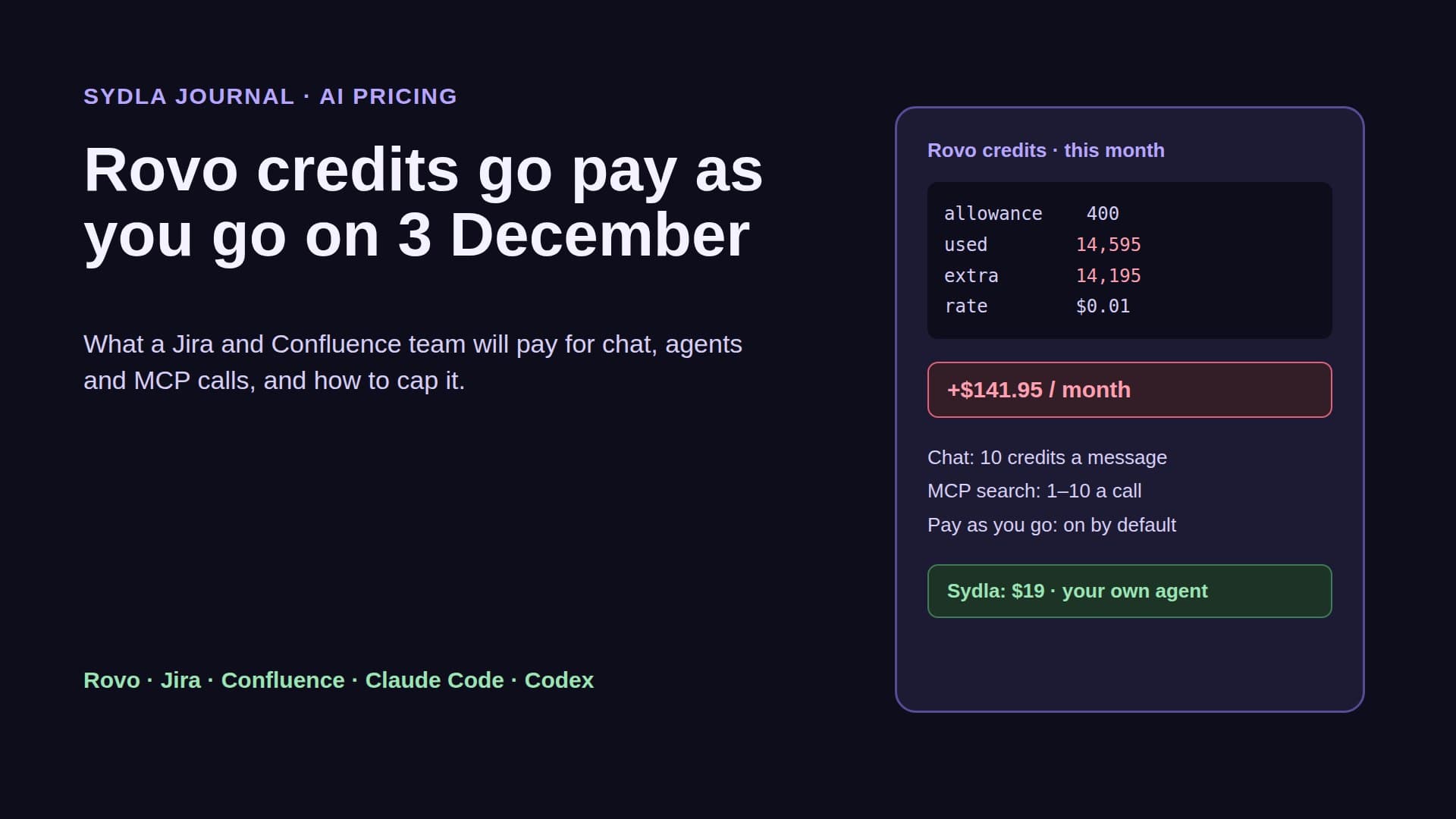
| Jira Standard | $9.70 | 25 Rovo credits per user, pooled | Claude Agent for Jira on your Anthropic API key; Rovo extra at $0.01 a credit from 3 December 2026 | Credits do not roll over |
| Jira Premium | $19.60 | 70 Rovo credits per user, pooled | Same, larger pool | Advanced planning |
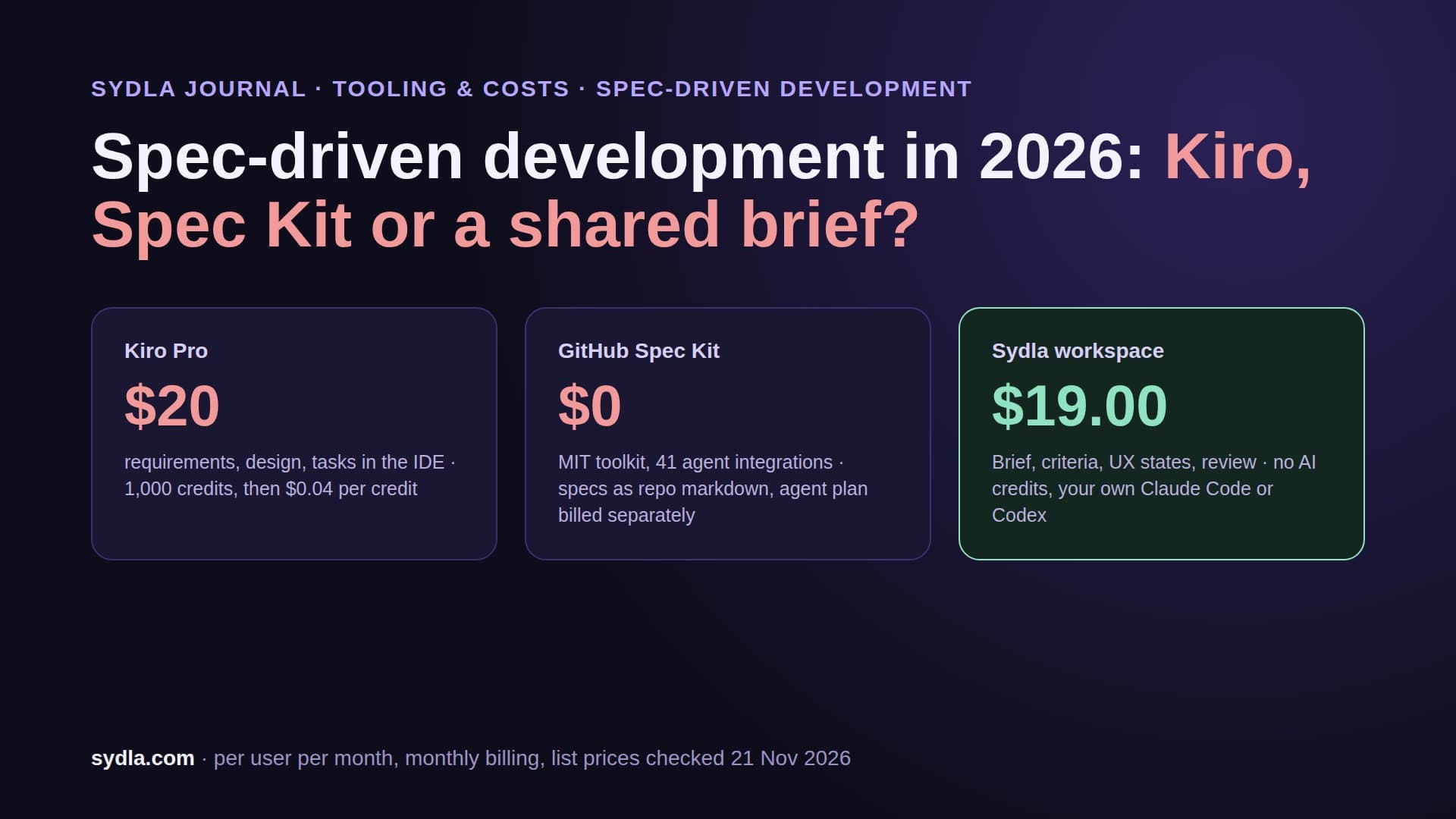
| Sydla | $19.00 | No Sydla AI credits | Your own Claude Code or Codex plan, on your machine, no markup | Docs, UX Studio, plan and threads included |
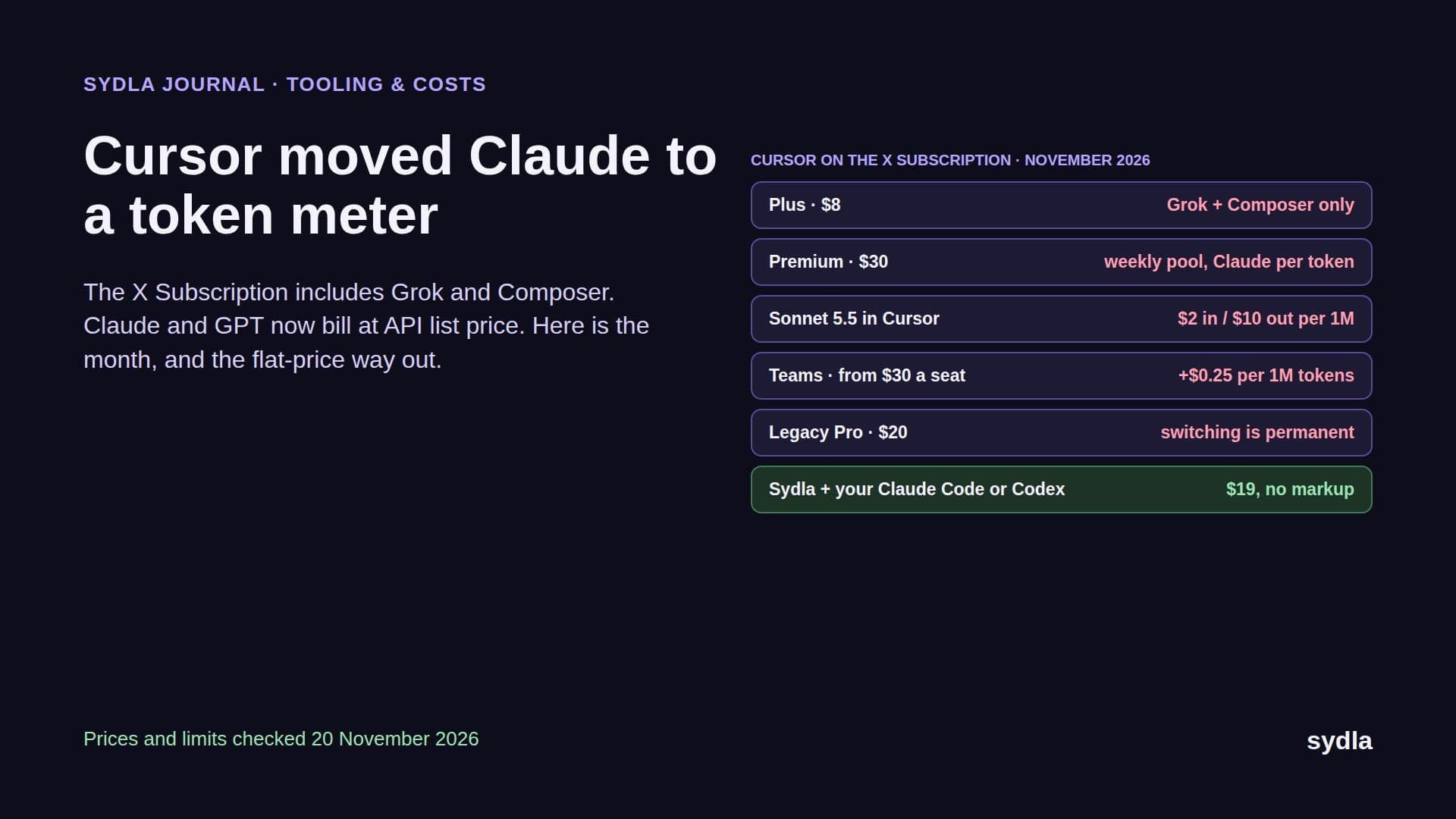
Read the AI column carefully. Linear includes its own agent everywhere and meters only the cloud coding work. Jira includes a small Rovo pool per seat and meters everything above it, starting with pay-as-you-go on 3 December. Our Rovo credits guide has the full rate card.
How Linear runs Claude Code and Codex
Assign an issue to Linear, or ask for a change in a comment or a Slack thread, and Linear starts a coding session in its cloud. It clones the repository through your GitHub connection, runs Claude Code or Codex in a sandbox and returns a diff with preview links in the same thread. Linear says it resolves roughly 30% of its own incoming bug reports this way, mostly on the first pass.
The billing is honest pass-through. Model tokens are charged at the provider's published rates with no markup, plus sandbox runtime in 5-minute increments: $0.03125 Small, $0.0625 Medium, $0.125 Large and $0.25 XL. It all comes from a prepaid, workspace-wide balance an admin tops up, $10 at a time or $50 on auto reload, and funds expire 12 months after purchase. Since 8 October there is a usage explorer and spend limits that pause usage when reached.
On 12 November Linear added bring your own key. Tokens then go to your provider, but the changelog is explicit: you need an API key, not a ChatGPT or Claude subscription, and sandbox time still draws on Linear credits. A Claude Pro, Max or ChatGPT Plus plan your developers already pay for does not cover Linear's cloud sessions.
How Jira runs Claude Code and Codex
Atlassian took three routes. Claude Agent for Jira, on the Marketplace since 18 June 2026, lets you pick Claude in the assignee dropdown. It runs on Anthropic's Claude Managed Agents infrastructure, pushes a branch and opens a draft pull request in GitHub. You connect your own Anthropic API key and a GitHub service account, and you need Standard, Premium or Enterprise with Rovo enabled. Since 29 July, Jira Automation can also call Copilot, Cursor or Claude as an action step on paid plans with Rovo.
The third route is the interesting one for subscription users. The Open in coding tool button, launched on 16 June, opens a work item in Claude Code, Codex, Cursor, Copilot, Rovo Dev CLI or VS Code with the ticket's context pre-filled. For terminal tools Jira shows a prompt to copy into your terminal. That run uses your own plan. The catch is context: Jira packages it through Atlassian MCP, and enriched Rovo MCP searches cost 1 to 10 pooled credits a call. Our MCP servers guide counts those calls.
Worked example: a month of agent work on each
Take one developer who hands two tickets a day to Claude Opus 5.5, 40 sessions a month. Assume each session reads 0.5 million fresh input tokens, writes 0.2 million to cache, re-reads 4 million cached tokens and writes 0.1 million output tokens. At Anthropic's list rates that is $2.00 + $1.00 + $0.80 + $2.00 = $5.80 a session, $232 a month. The shape is our assumption; the rates are published.
On Linear Basic, add the $10 seat and 20 minutes of Medium sandbox per session, 4 × $0.0625 = $0.25, or $10 a month: $252. On Jira Standard with Claude Agent for Jira, add the $9.70 seat to the same $232 on your API key: $241.70, before any Rovo credits for search. Run the same work with Claude Code included in a Claude Max plan at $100, plus Sydla at $19, and the month is $119 flat, within the plan's usage limits.
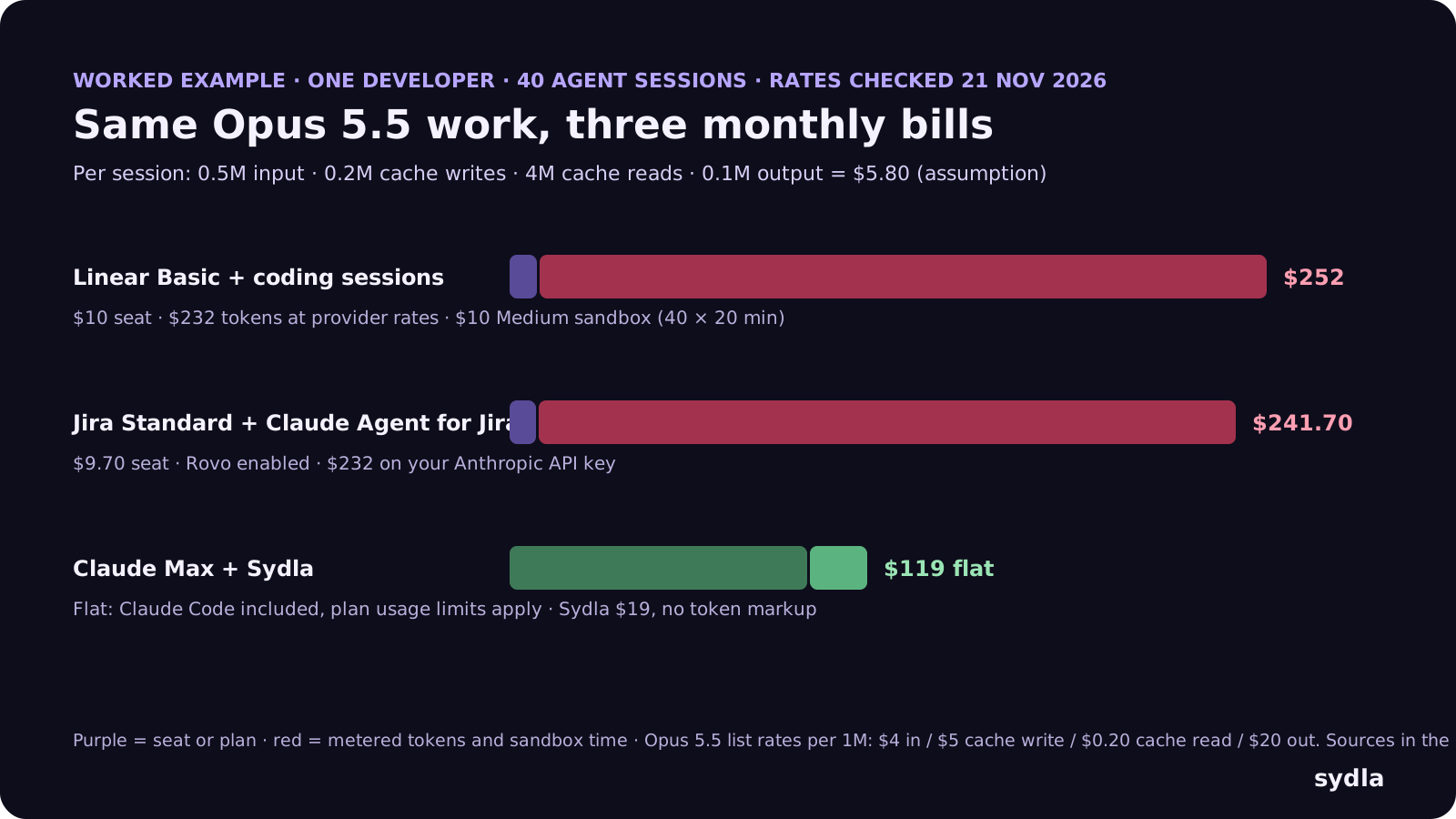
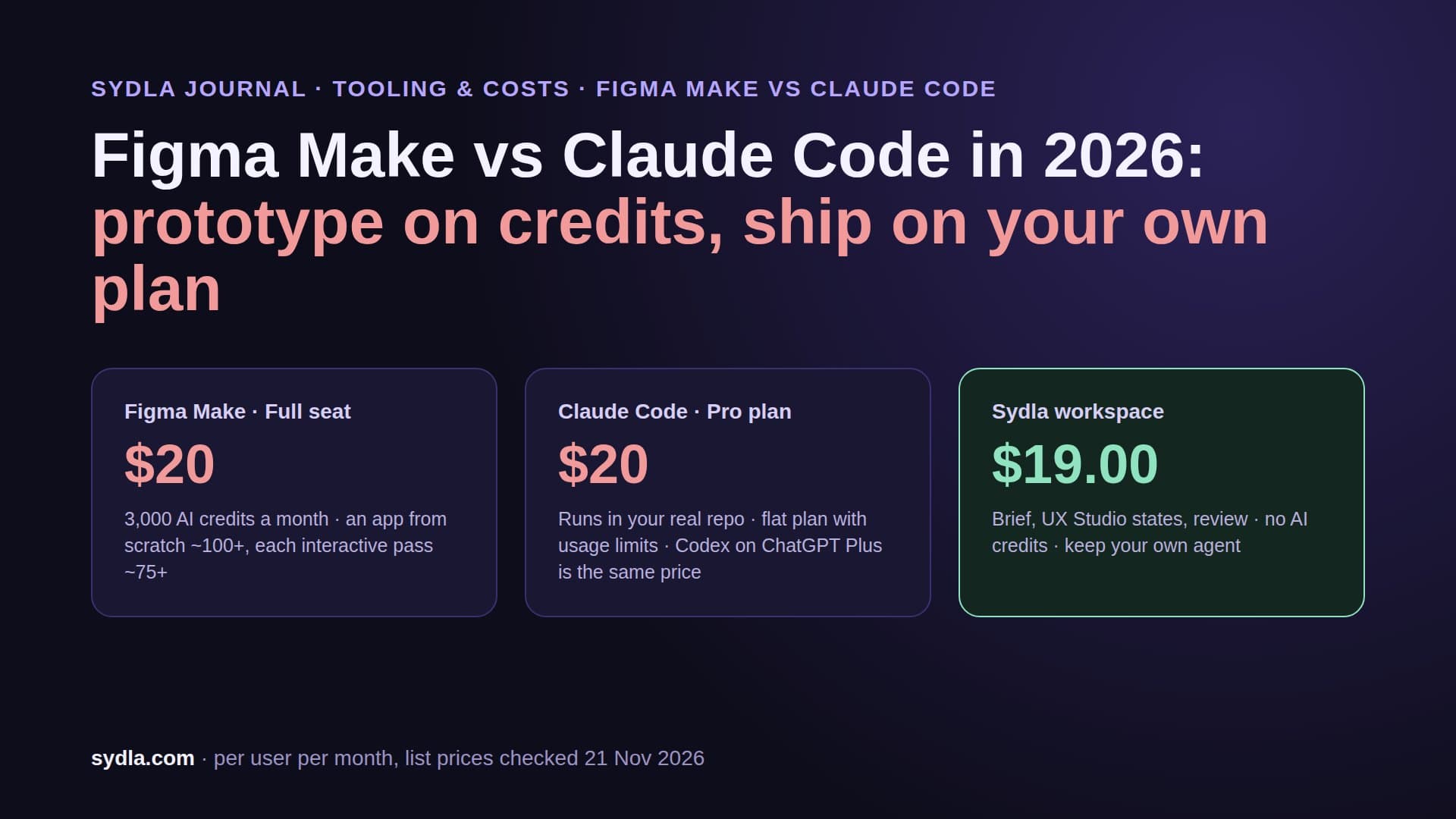
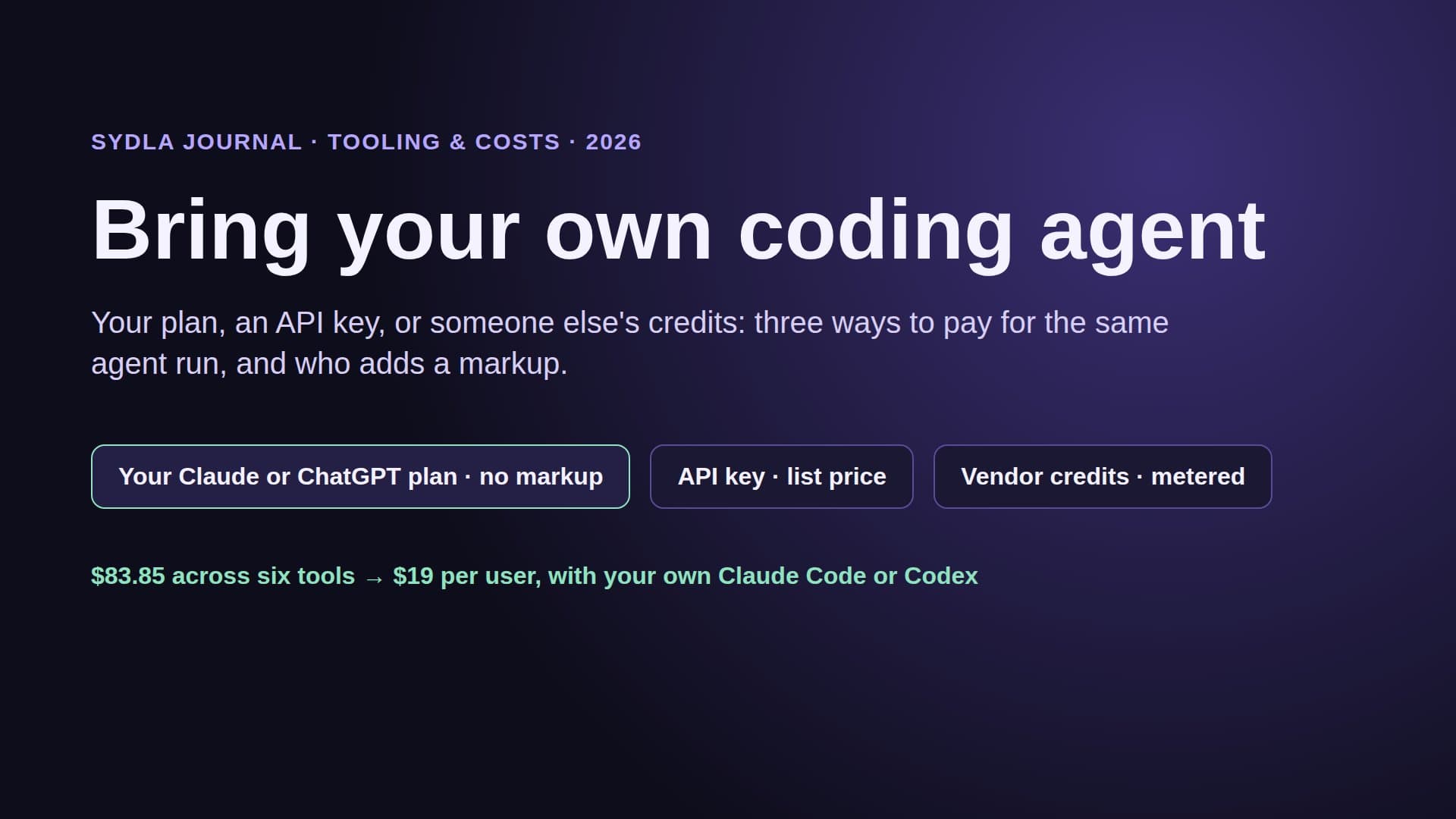
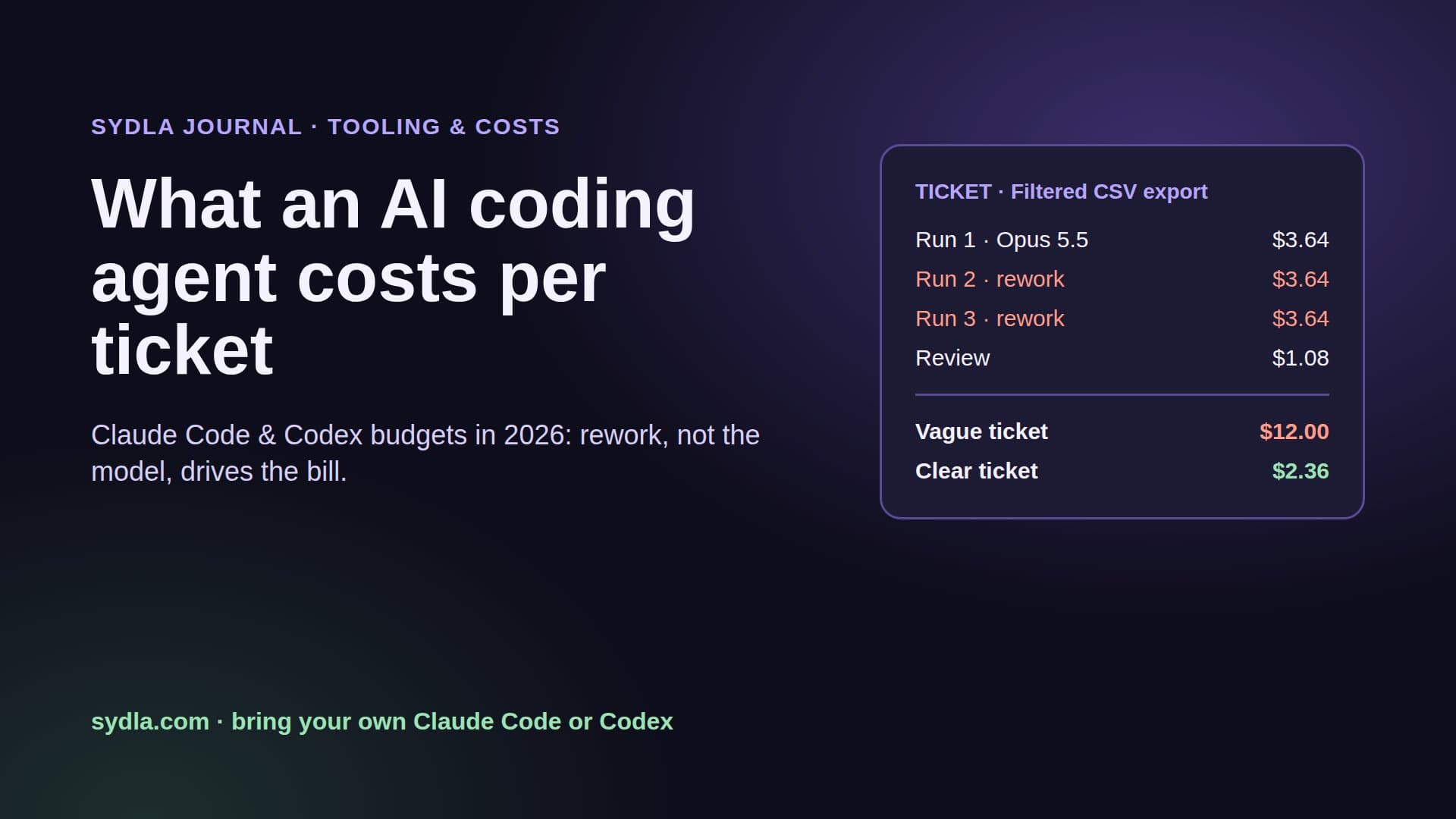
A flat plan has limits, and a team that runs agents all day will meet them. But a limit is a ceiling on a known price, not a meter on every cached file. For lighter use, Claude Pro at $20 or ChatGPT Plus at $20 covers Claude Code or Codex. Our cost per ticket guide runs the same maths across ticket types, and bring your own coding agent explains the three ways to pay for a run.
What neither tracker holds
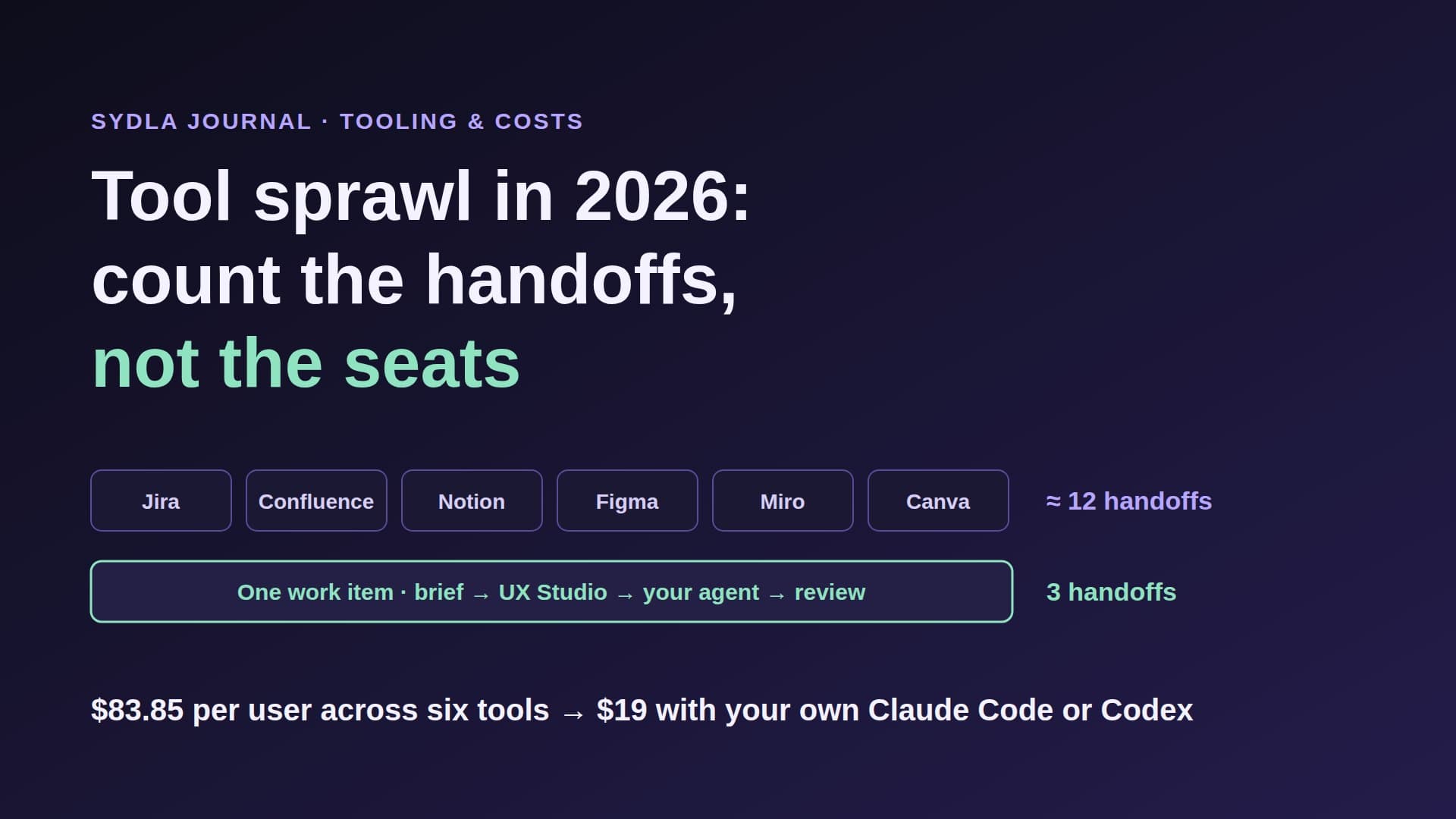
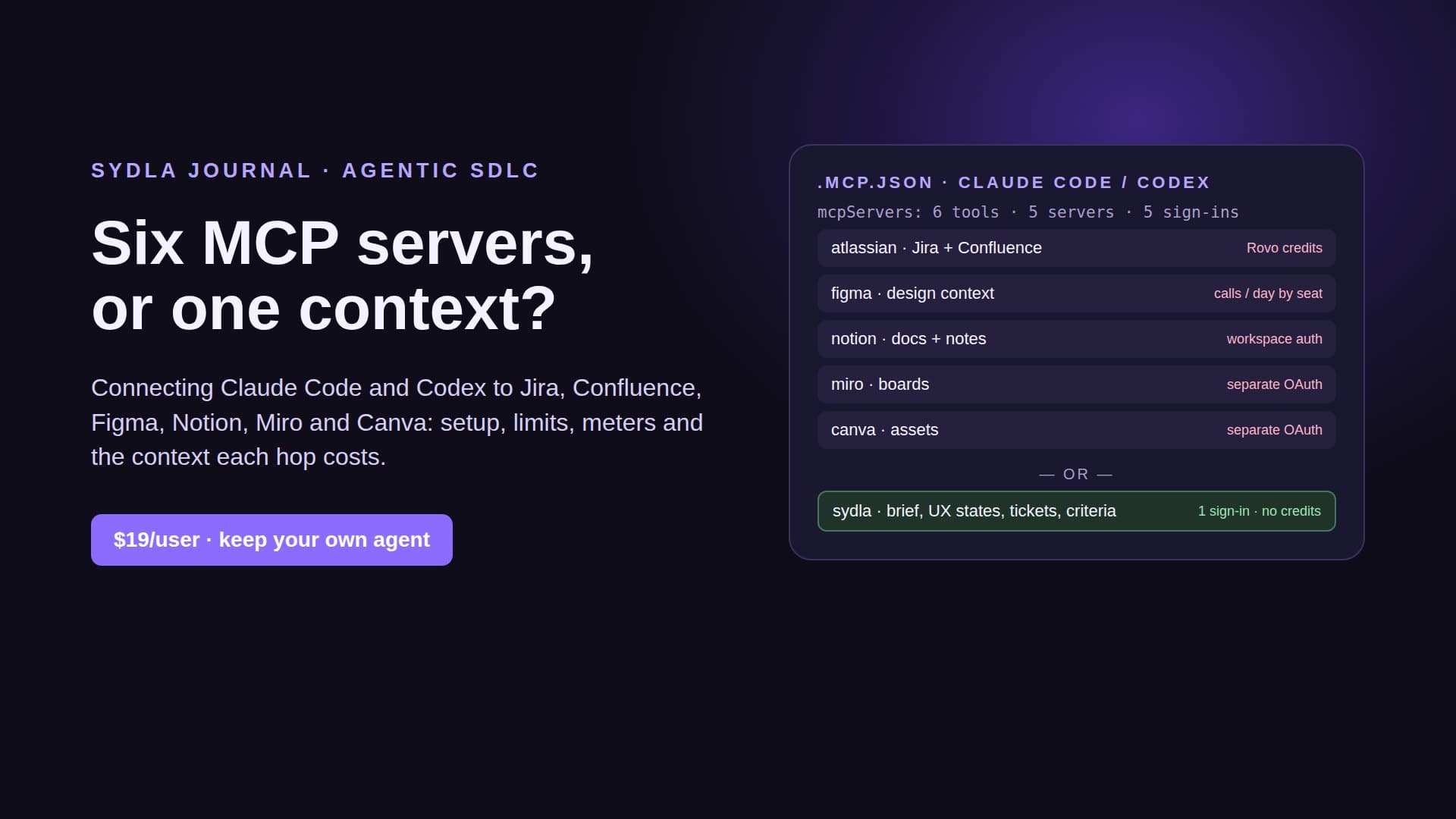
Pick Linear or Jira and the ticket is solved. The rest of the context is not. The spec lives in a wiki, the states in a design file, the flow on a whiteboard and the launch visuals in a design app. Each one adds a seat, an AI meter and an MCP server the agent must call before it writes a line.
| Tool and plan | Seat / month | Built-in AI billing | Handoff it adds to one ticket |
|---|---|---|---|
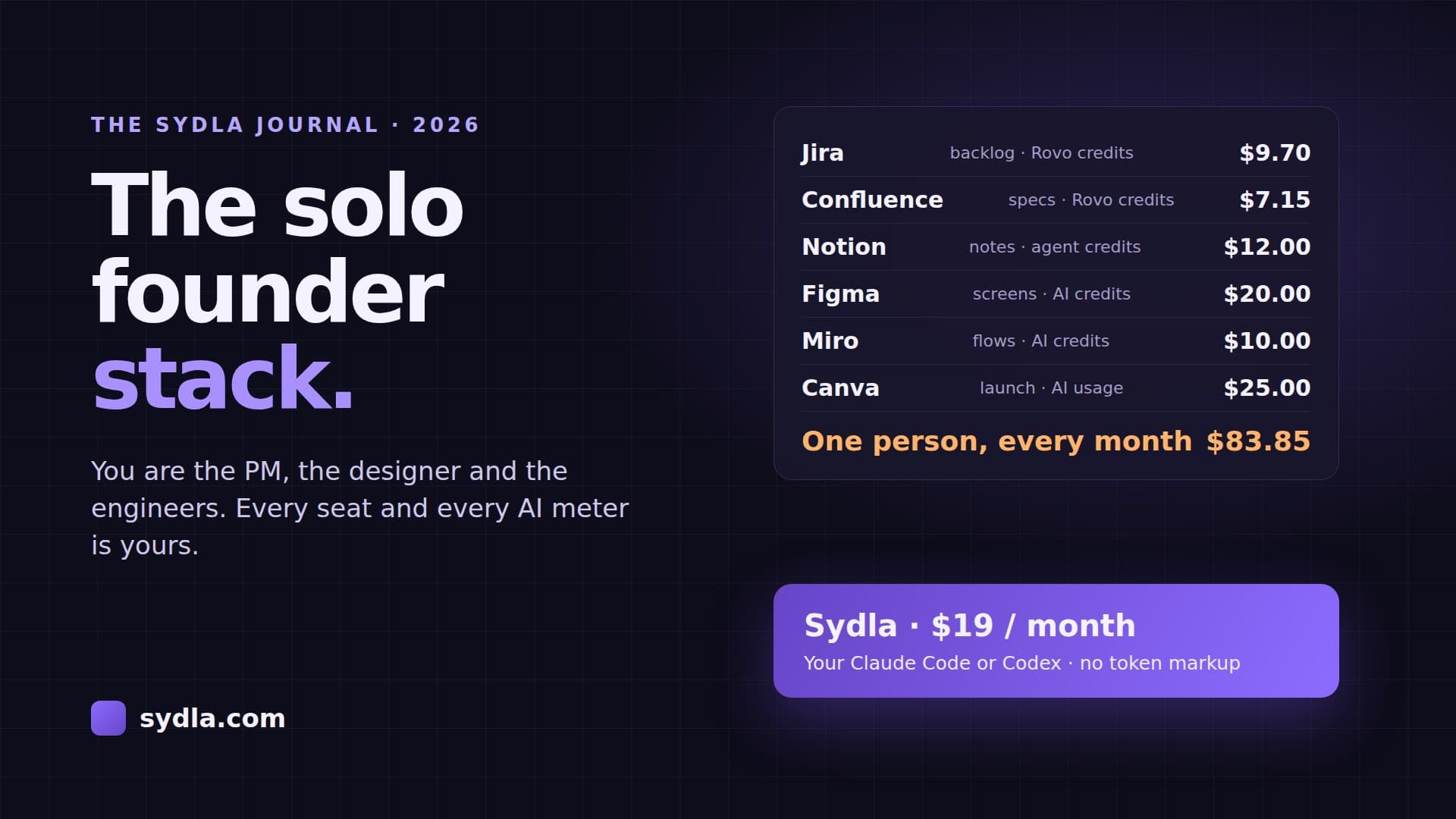
| Jira Standard | $9.70 | 25 Rovo credits per user, pooled | The request is retyped as a ticket |
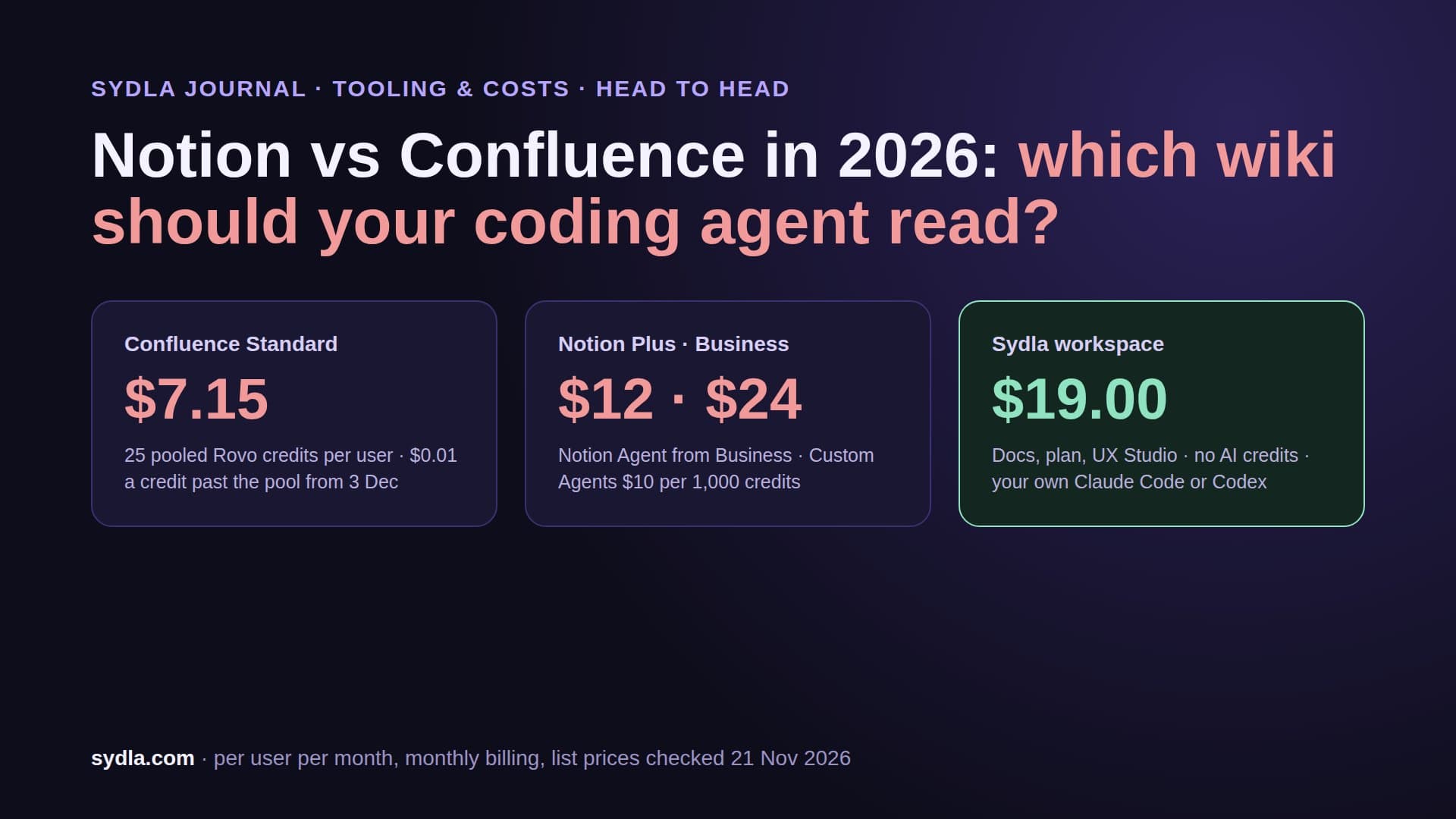
| Confluence Standard | $7.15 | Same Rovo pool; enriched MCP searches 1 to 10 credits | The ticket becomes a spec |
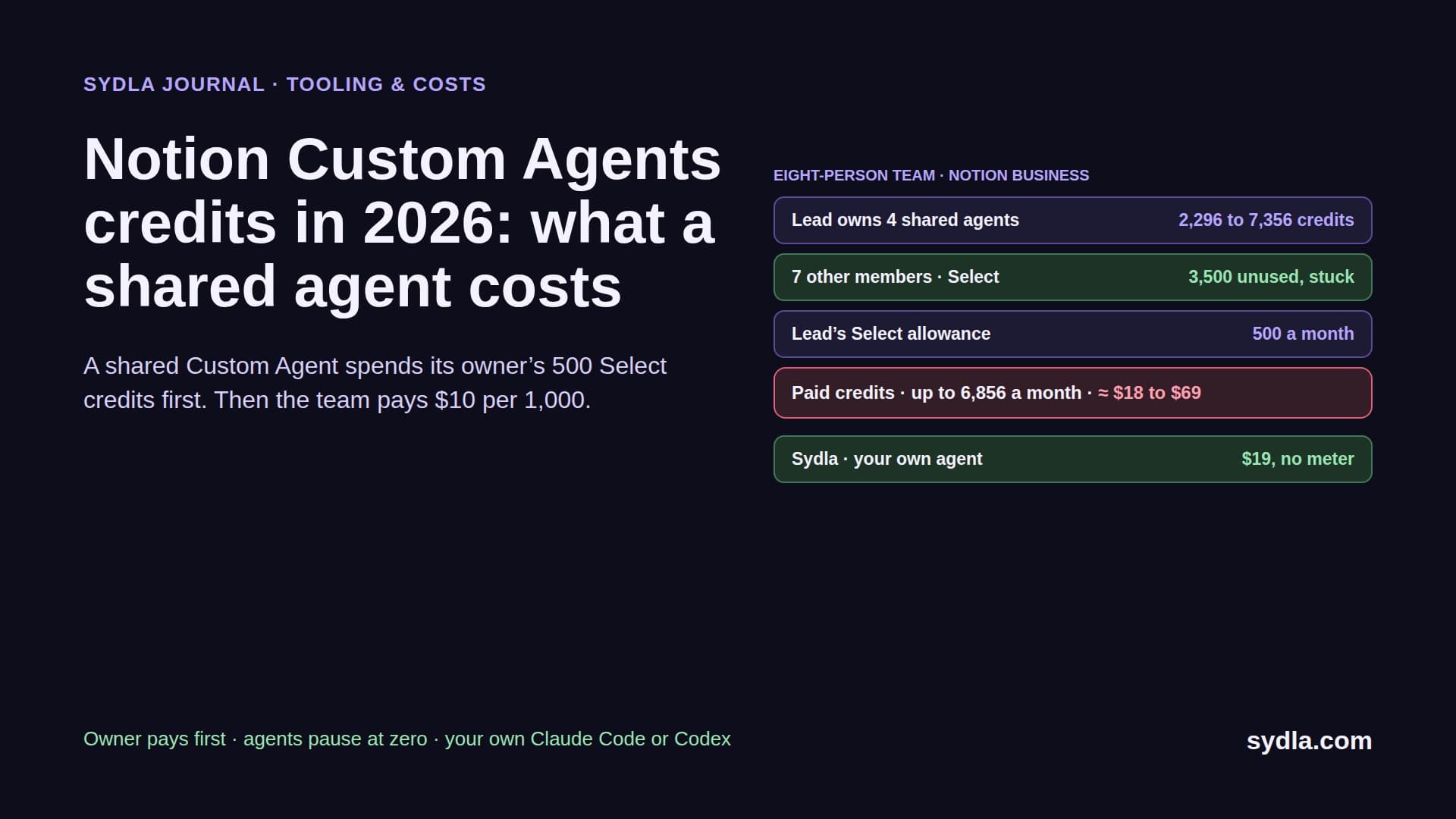
| Notion Plus | $12.00 | Custom Agents need Business, then $10 per 1,000 credits | Decisions stay in meeting notes |
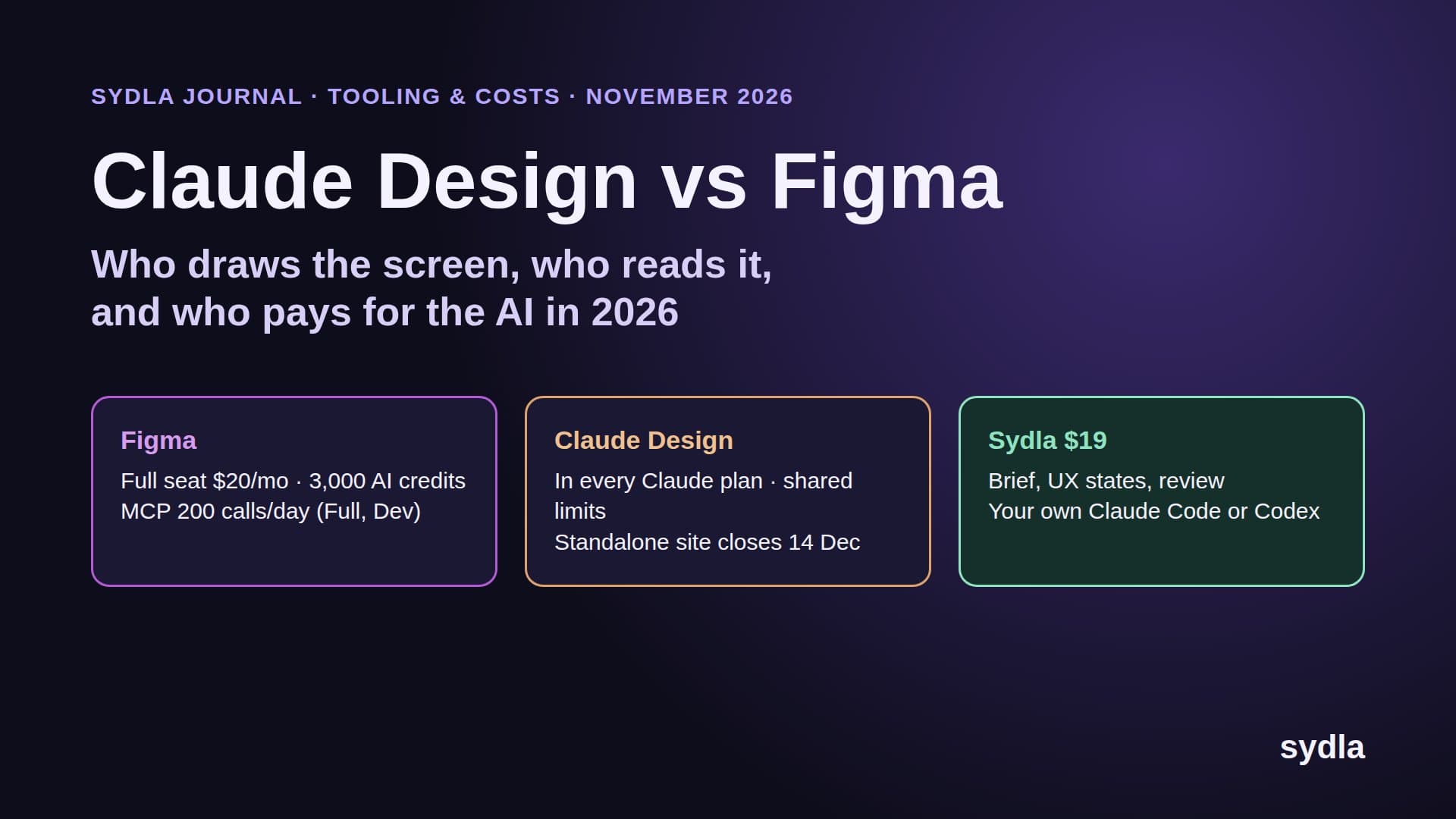
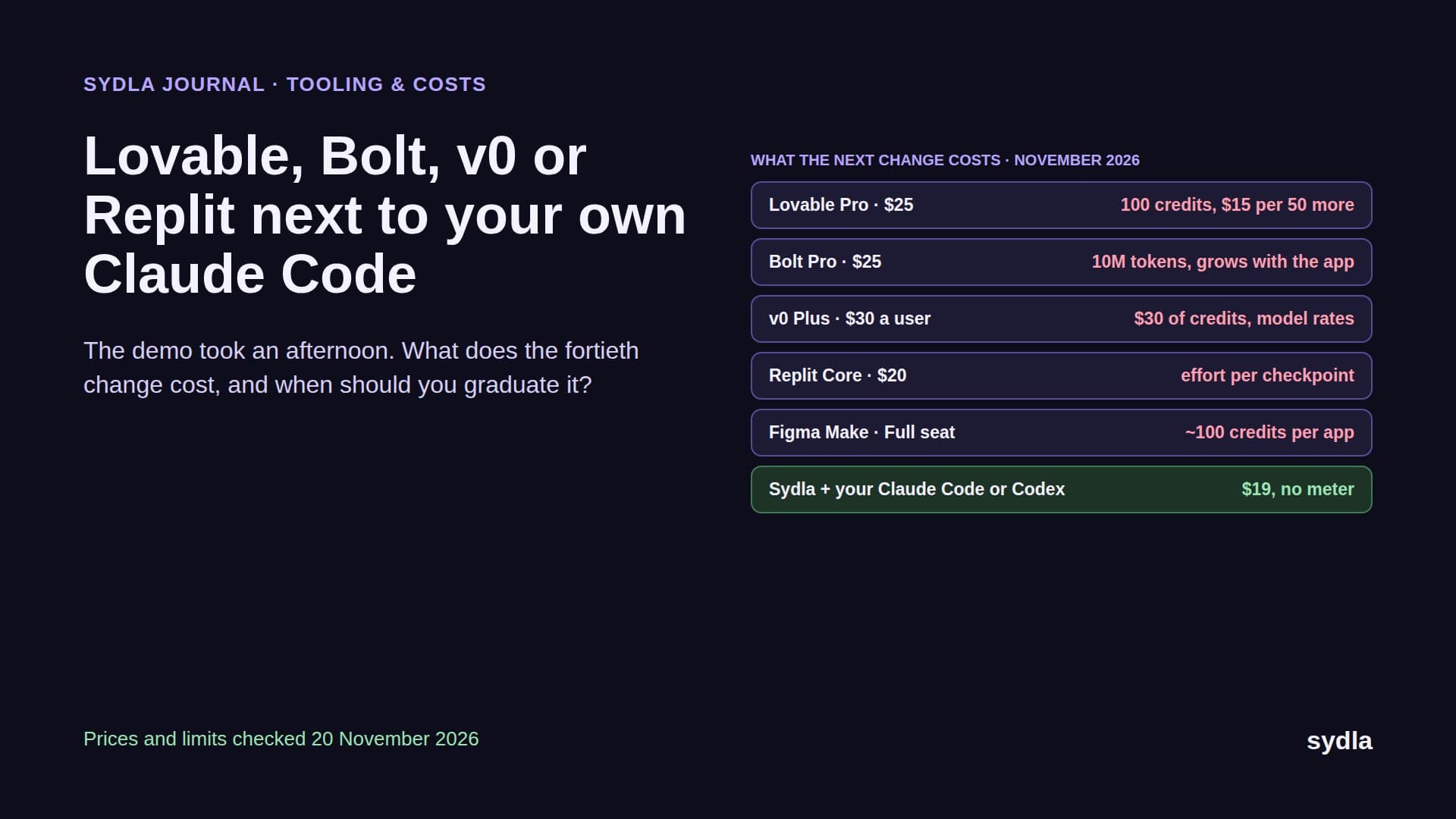
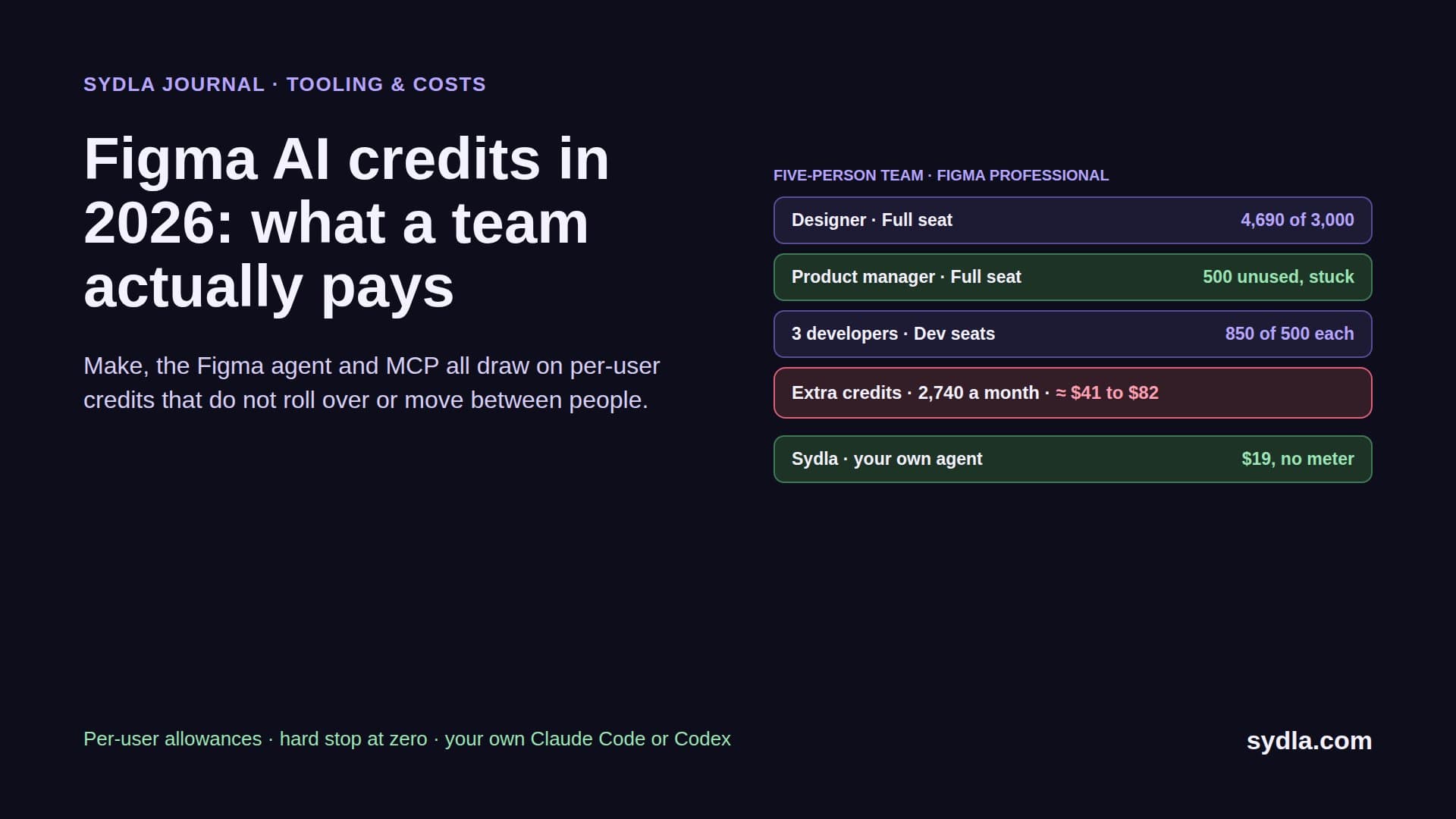
| Figma Professional, Full seat | $20.00 | 3,000 AI credits; MCP reads 200 a day | Frames are screenshotted into the ticket |
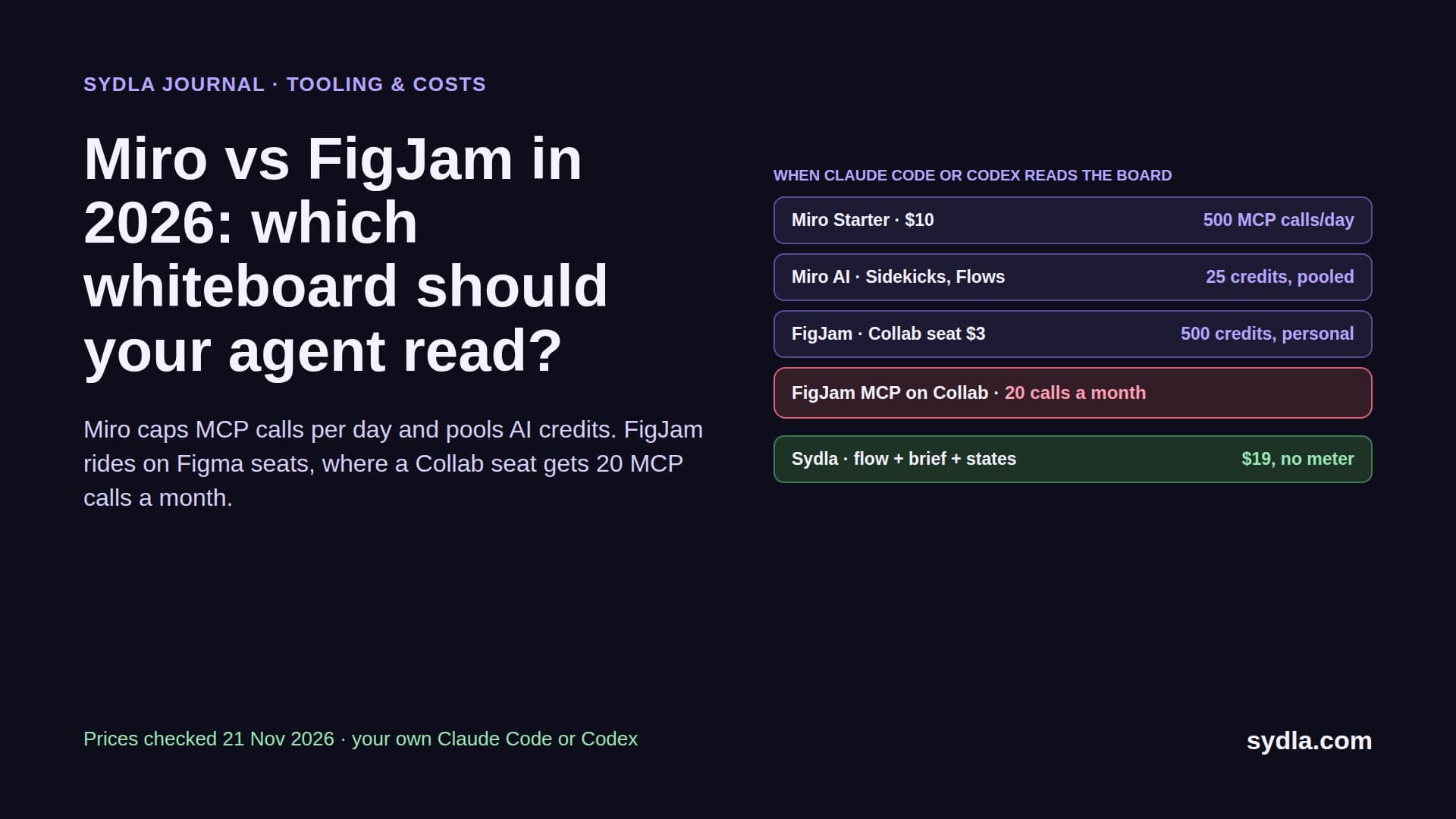
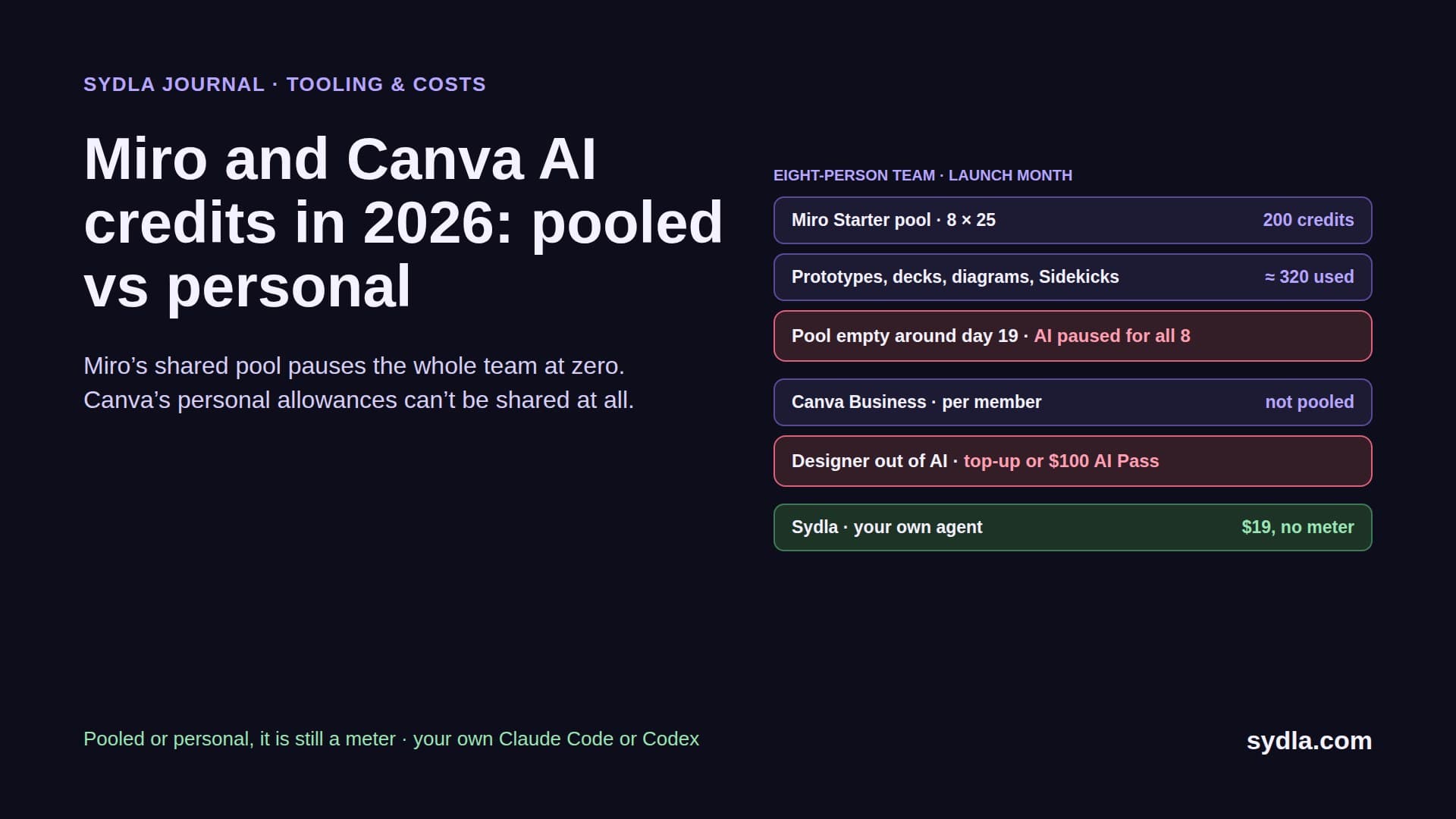
| Miro Starter | $10.00 | 25 credits per member, pooled | The flow is redrawn as frames |
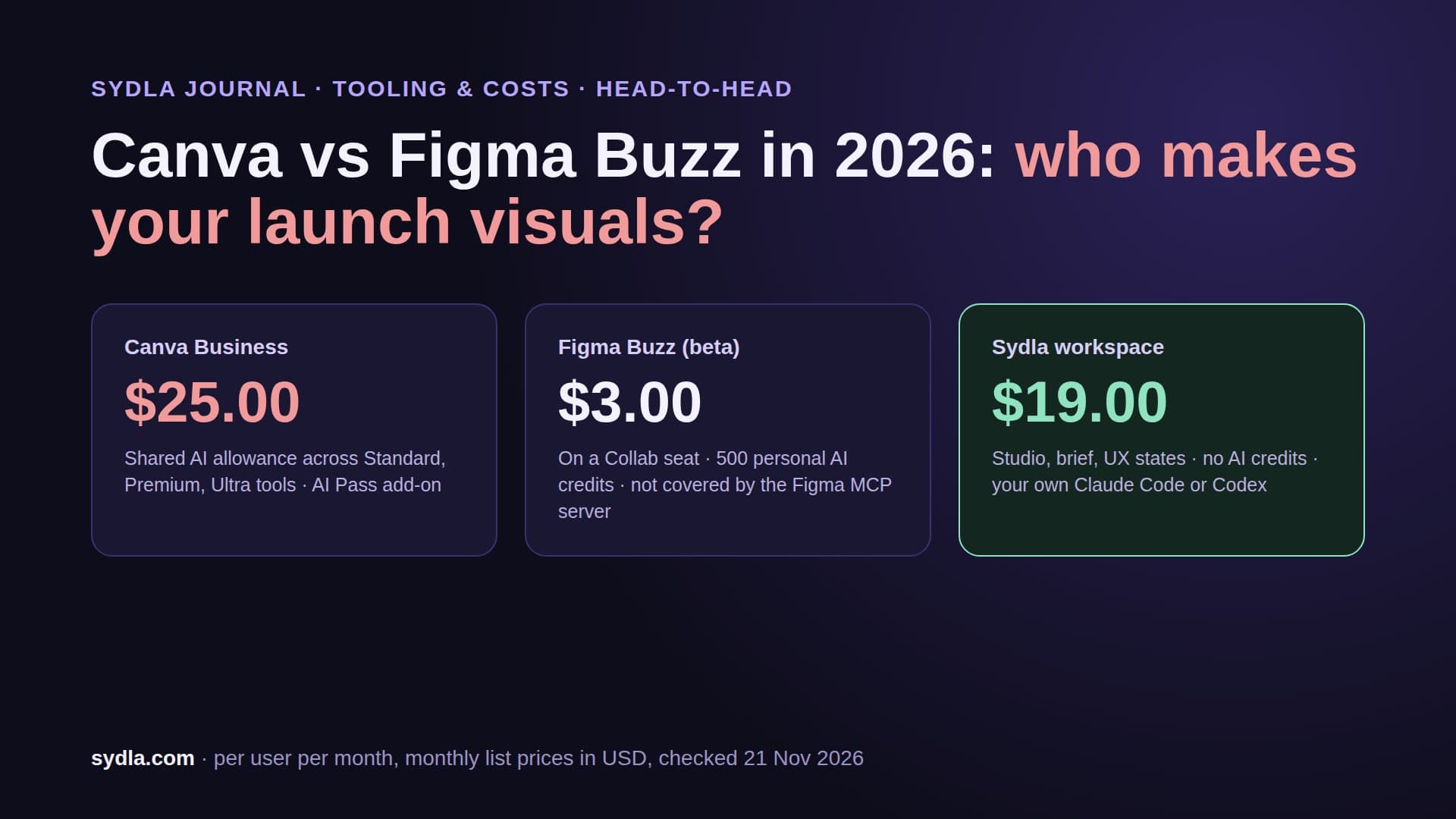
| Canva Business | $25.00 | AI allowance per plan | Screens are exported again for launch |
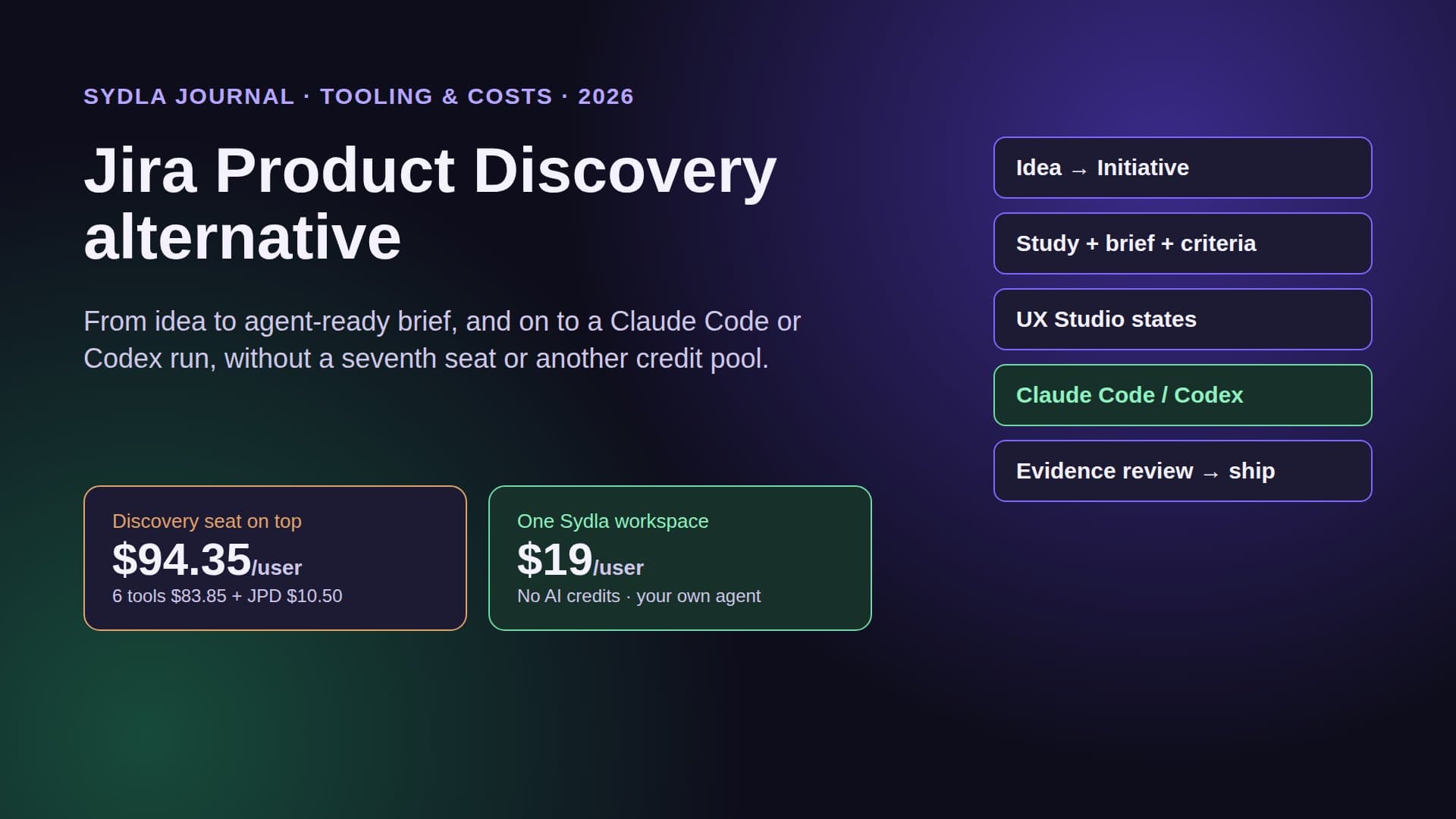
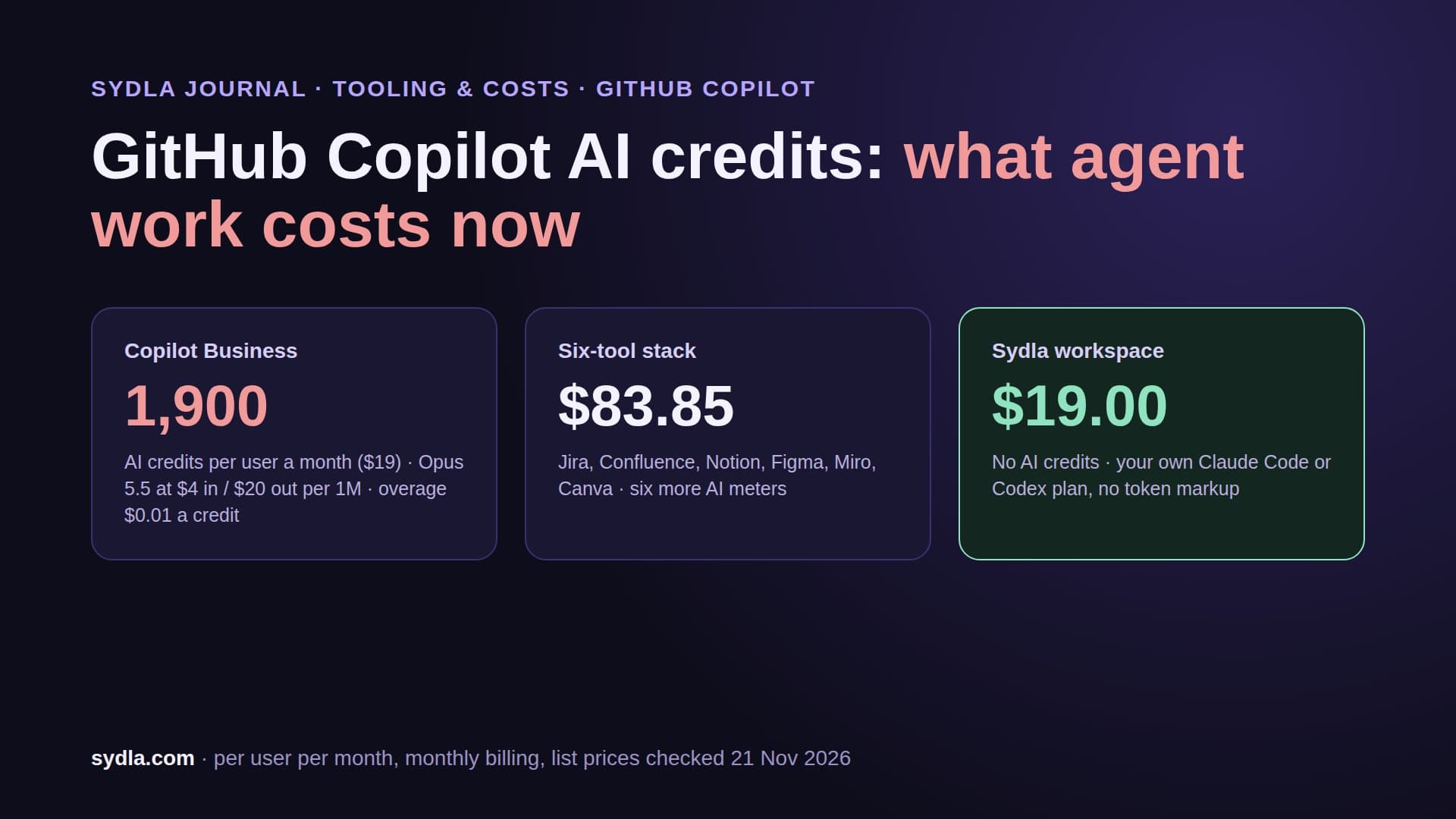
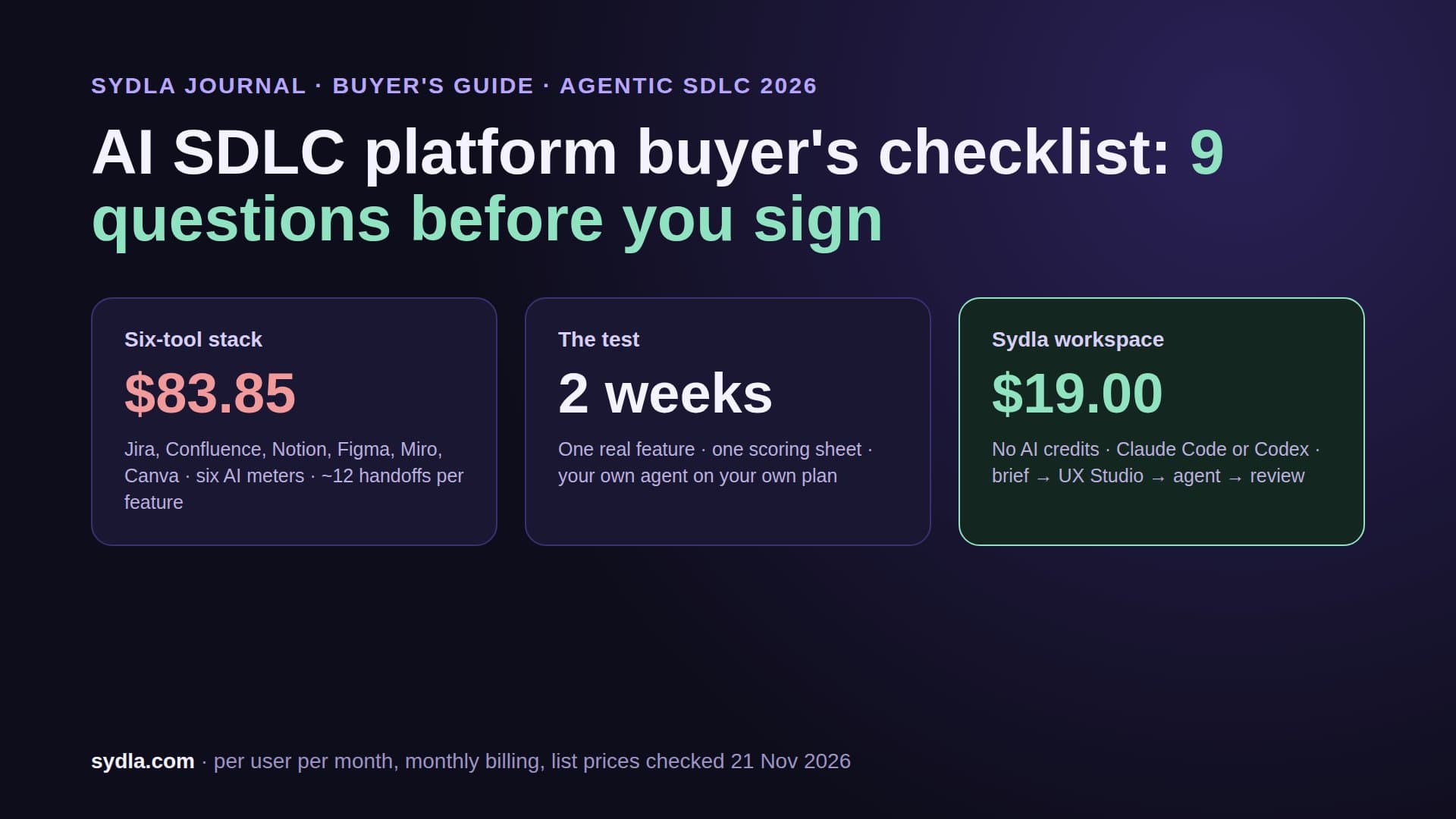
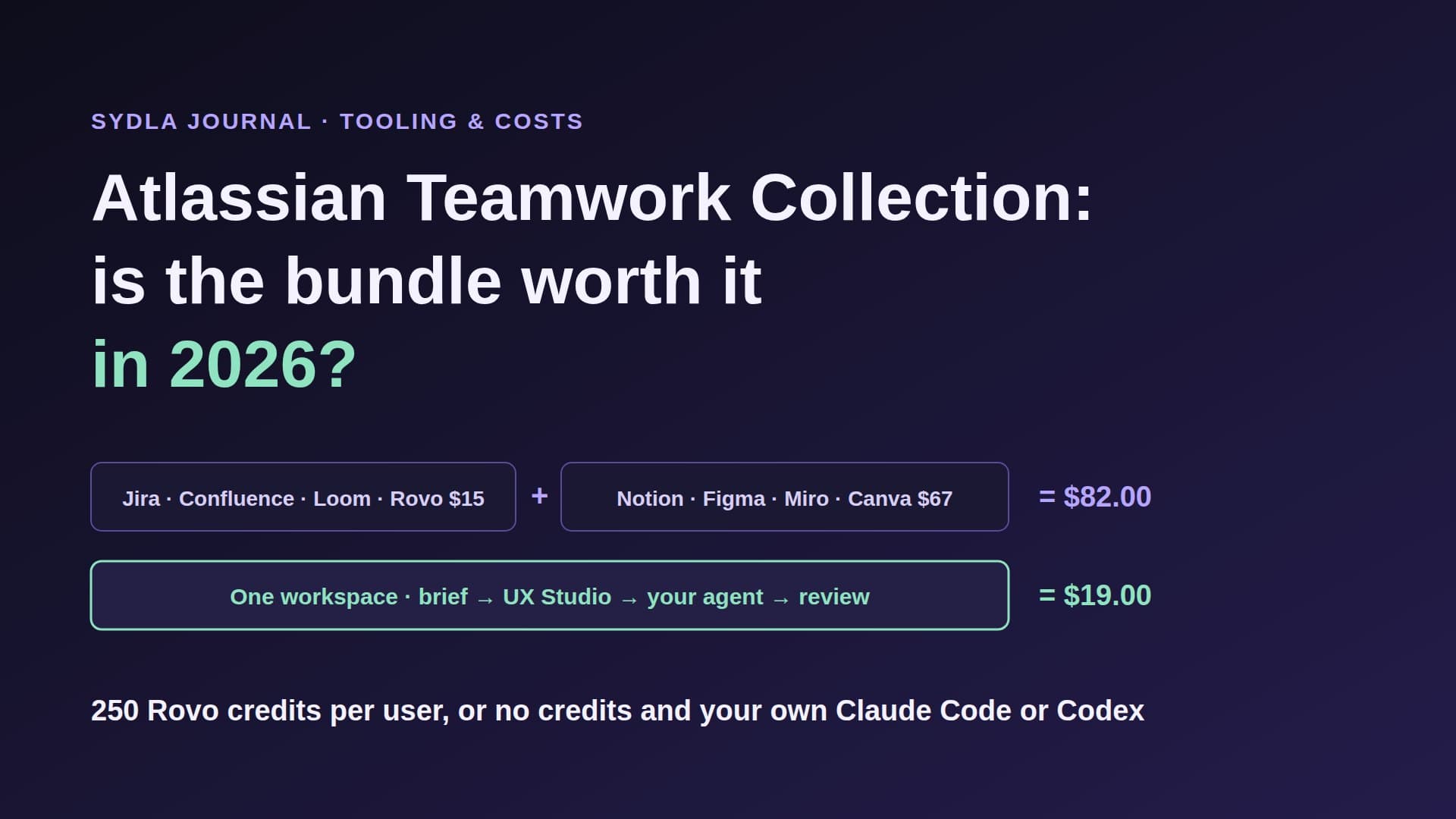
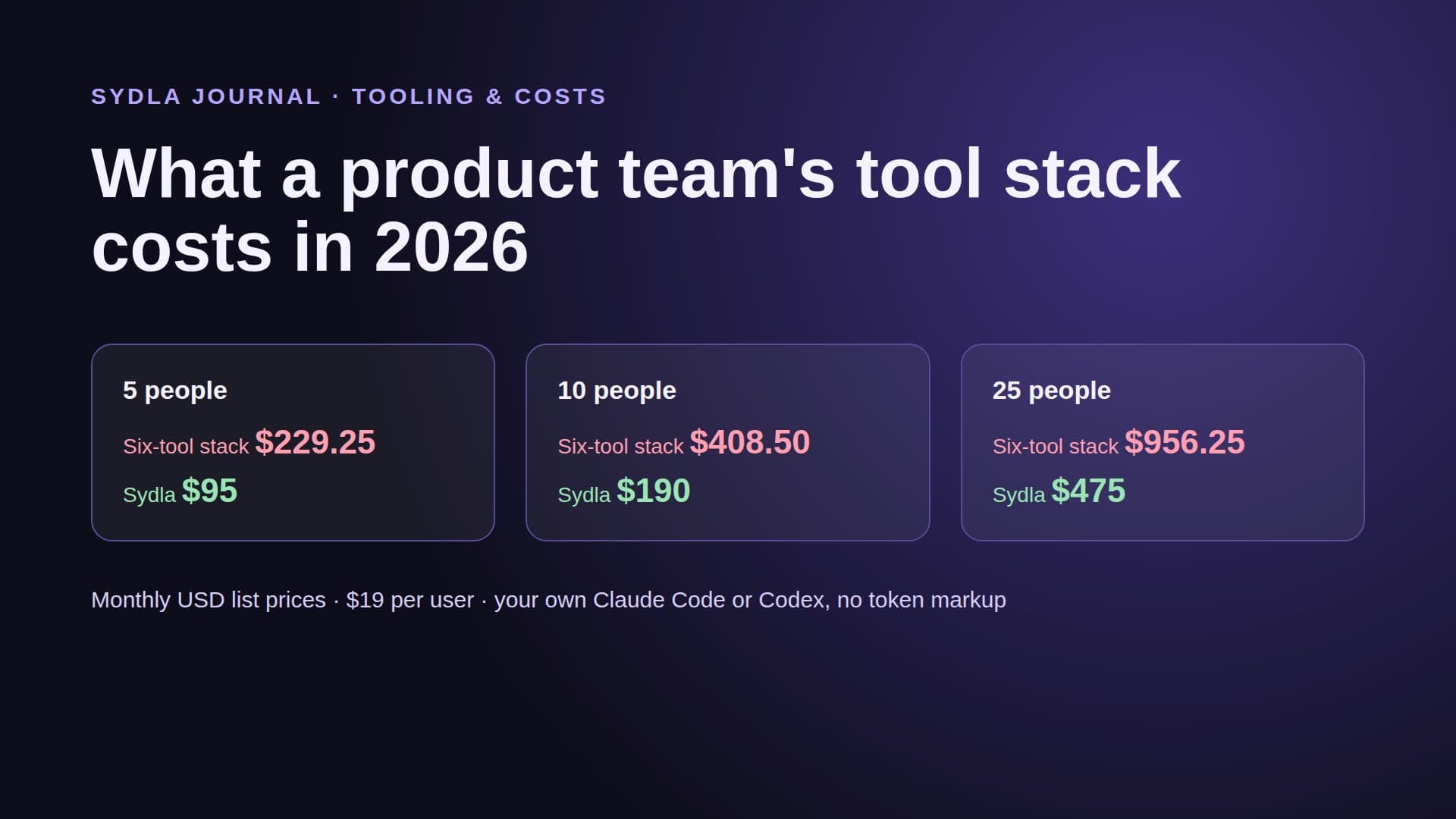
| Jira stack | $83.85 | Six meters, six renewal dates | About twelve handoffs per feature |
| Linear stack (Linear Basic yearly replaces Jira and Confluence; docs in Notion) | $77.00 | Prepaid balance plus four meters | Same hops, one fewer wiki |
| Sydla | $19.00 | No Sydla AI credits; your own Claude Code or Codex | One work item: brief, criteria, UX states, runs, evidence |
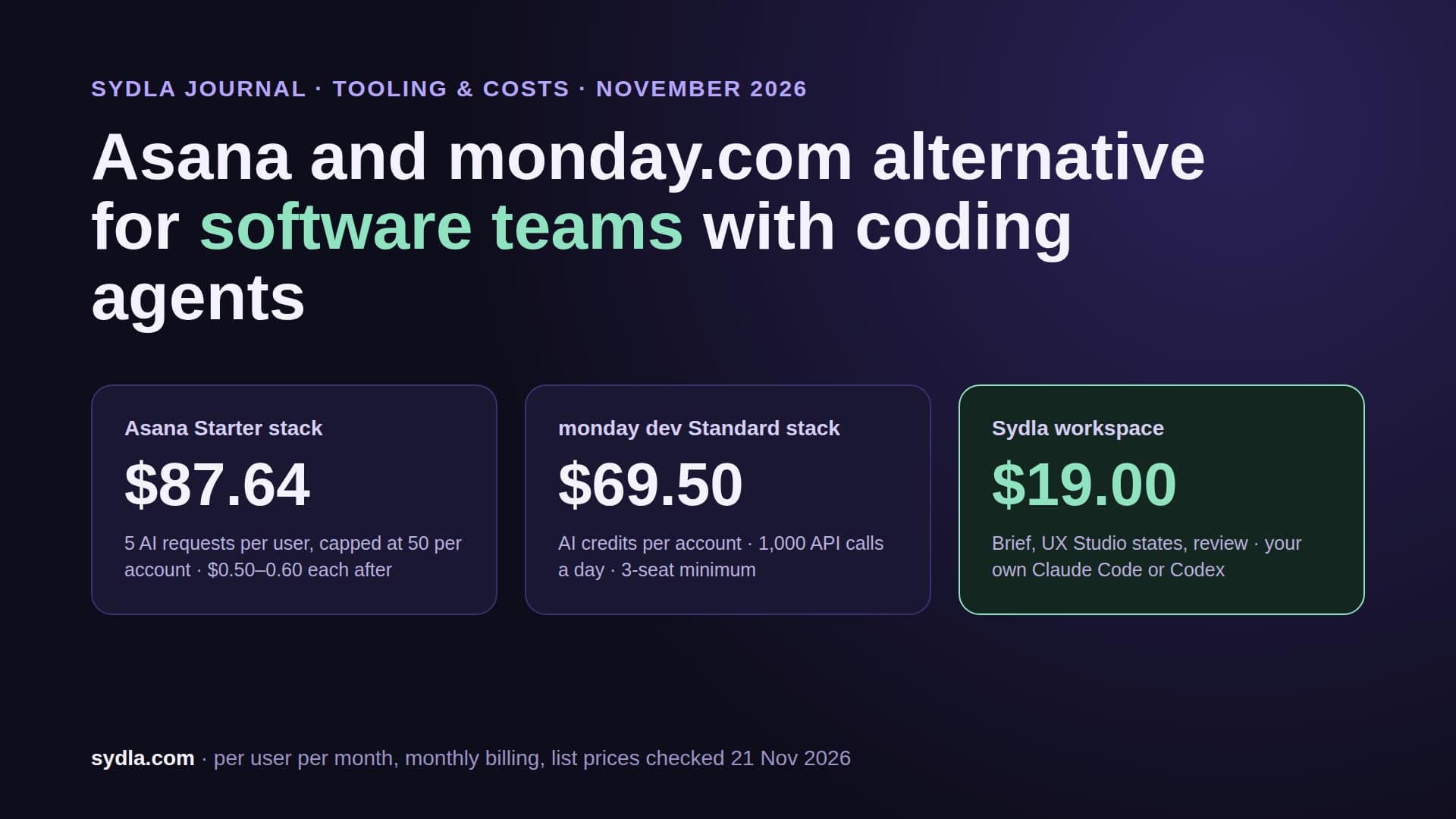
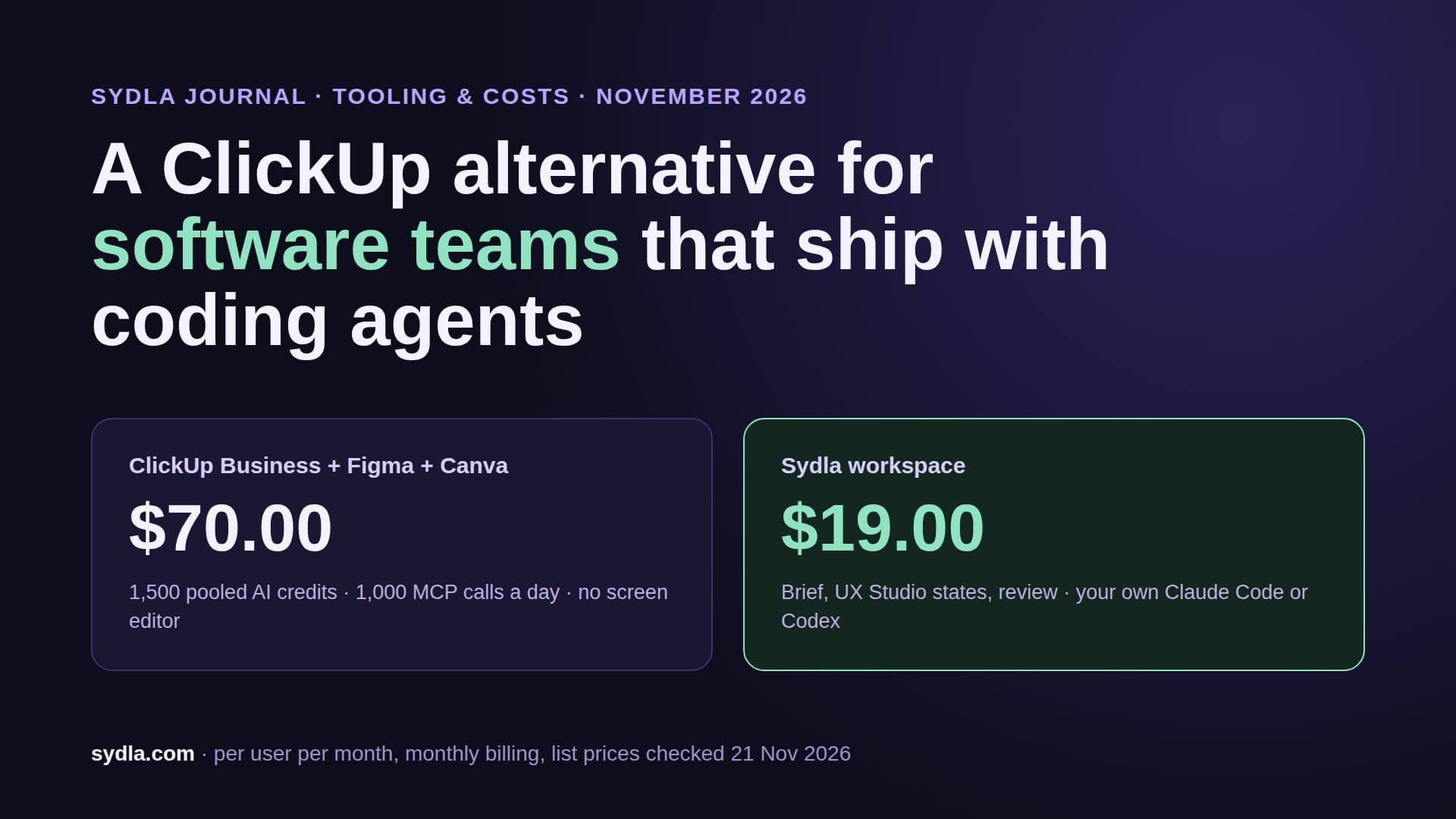
Against the Jira stack, Sydla saves $64.85 per user per month, $778.20 a year, before any agent spend. Against the Linear stack it saves $58. The pricing section has the plan, and the comparison hub is honest about where each specialist tool still wins. Our Jira alternatives guide adds GitHub, Plane and ClickUp to the picture.
Walkthrough: Claude Code or Codex on your own plan with Sydla Desktop
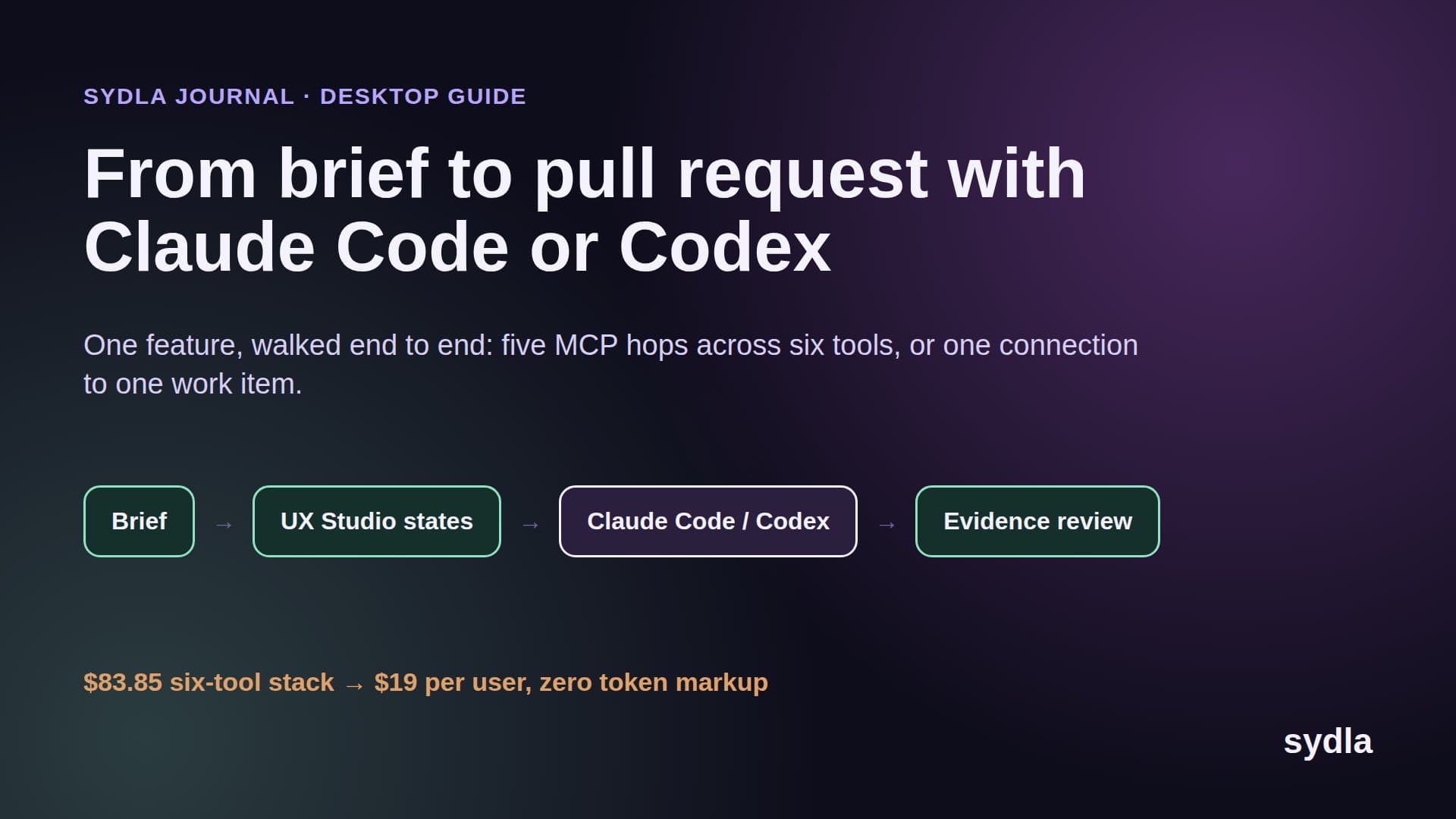
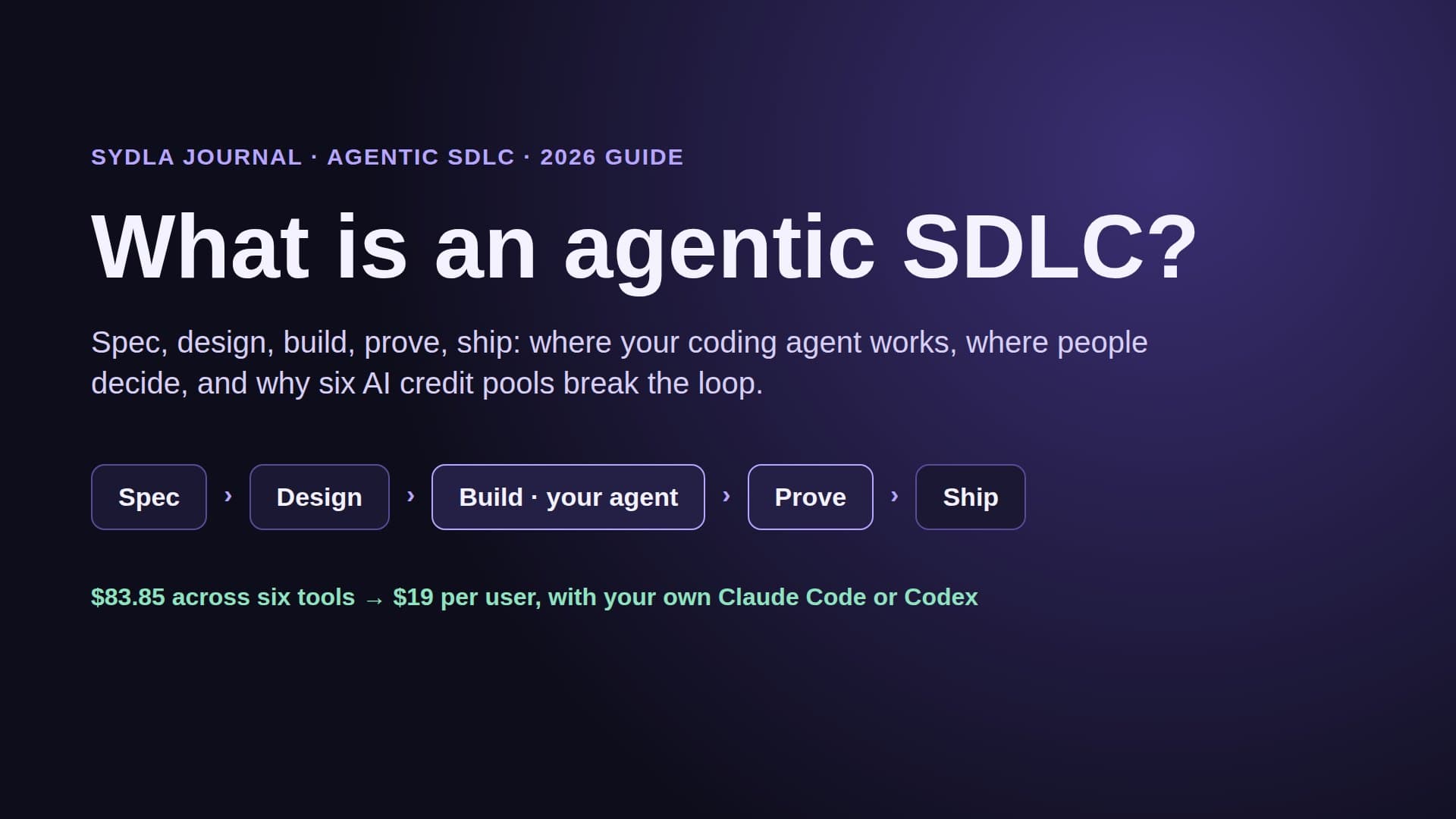
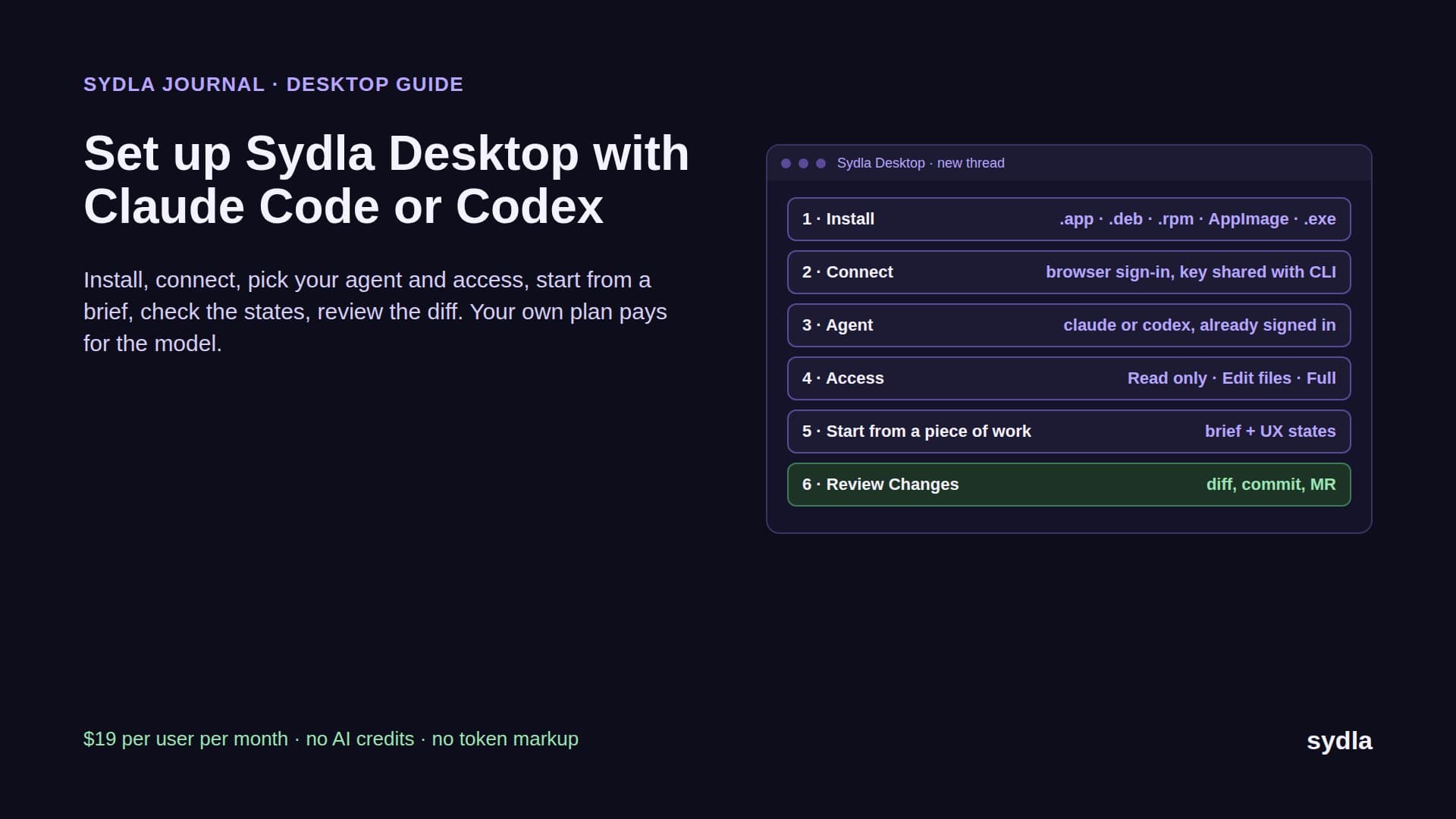
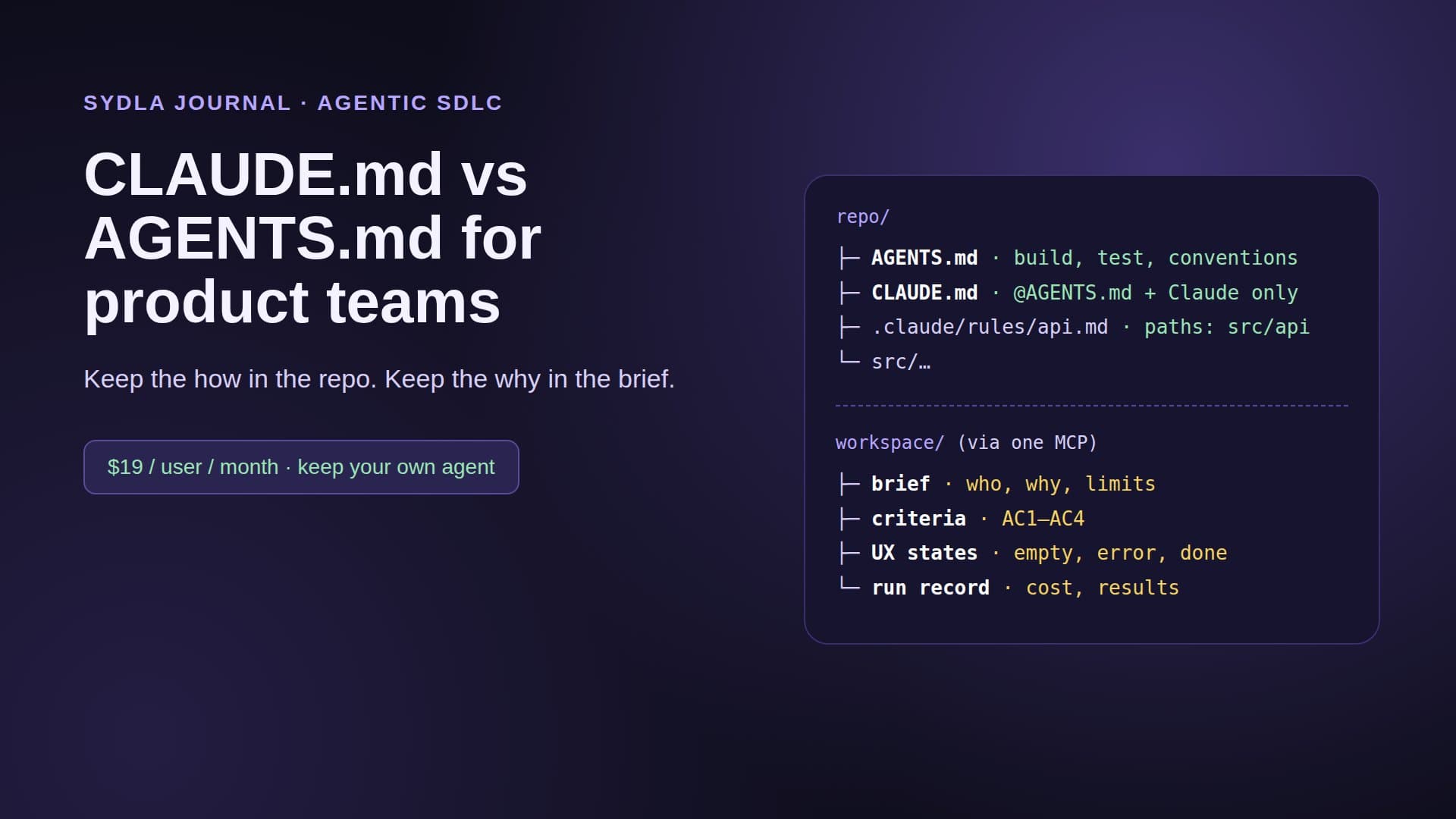
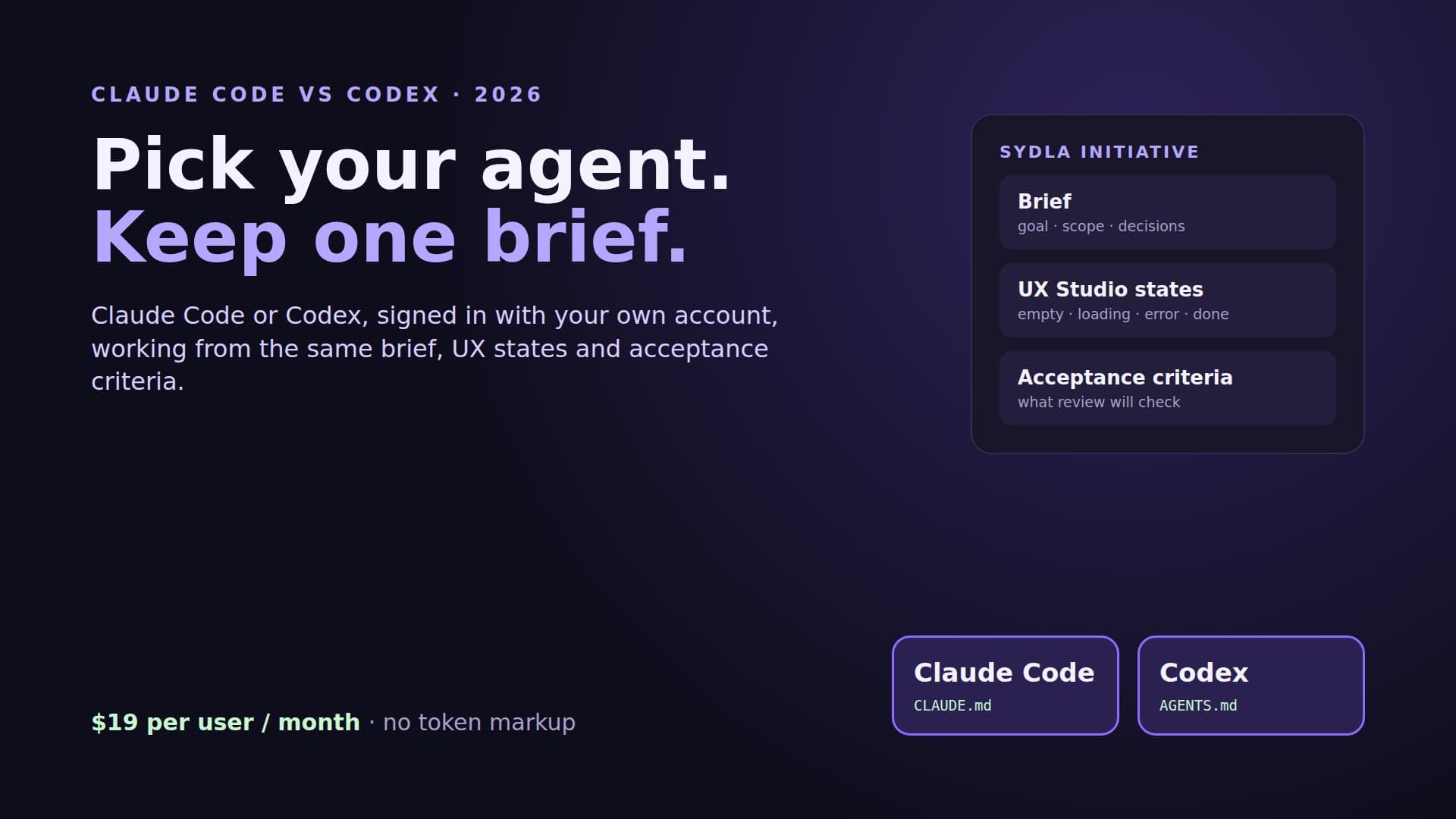
Sydla is not only a tracker. It keeps the brief, the plan, the UX states and the agent runs on one work item, and the agent runs on your machine with the CLI and plan you already have. Here is the loop:
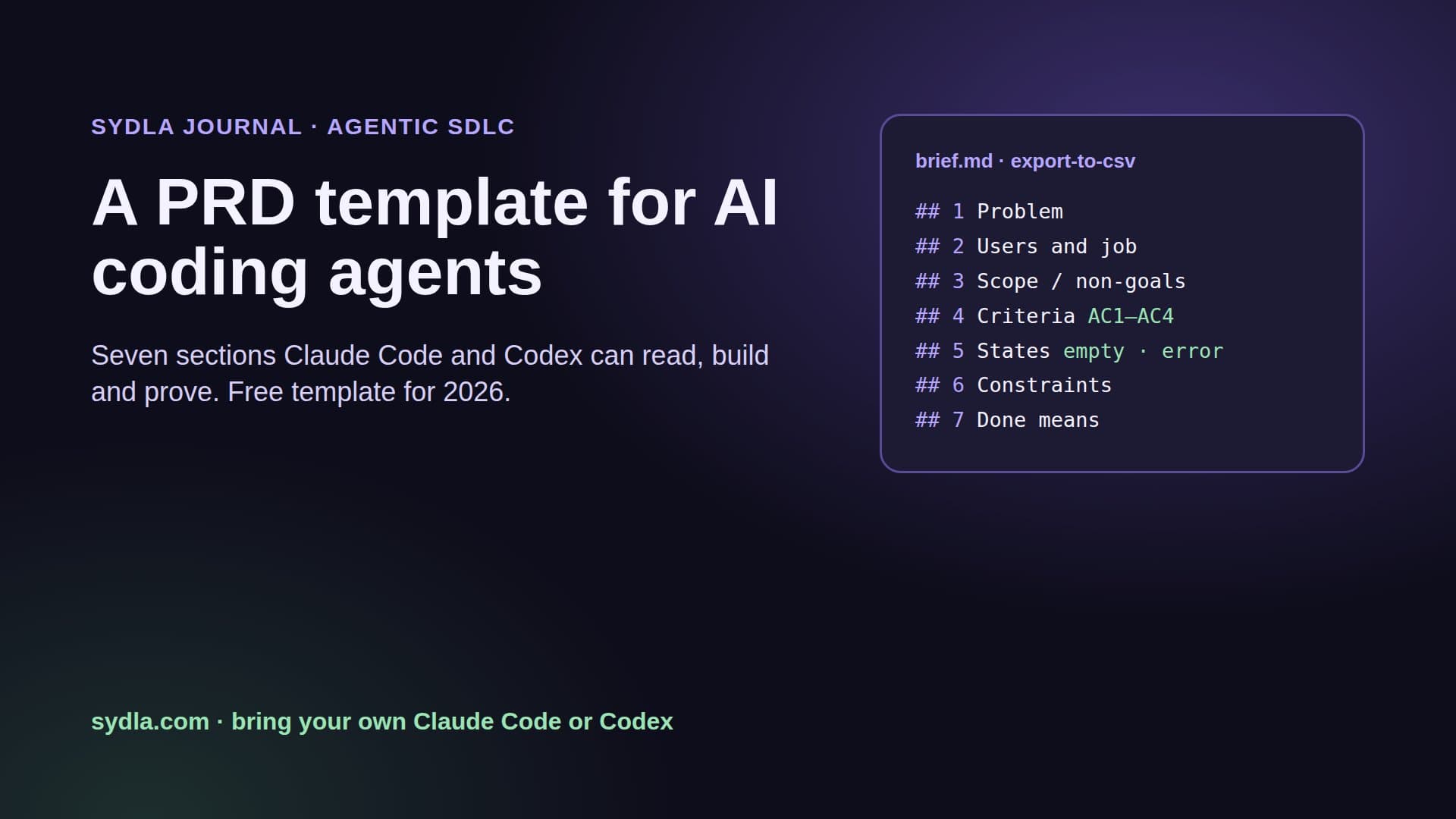
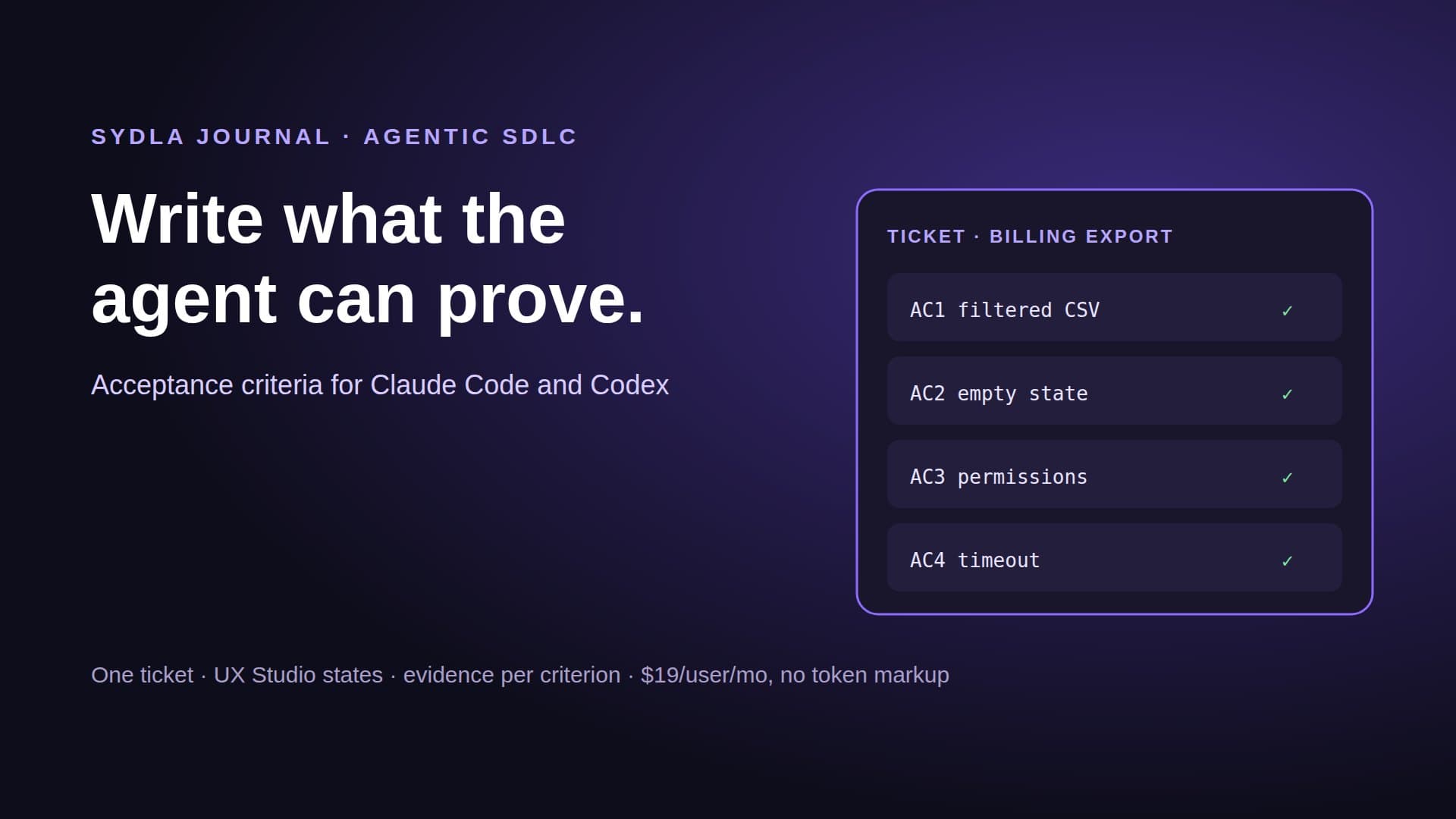
- Write the brief once. In Sydla Docs, record the goal, the users, what is out of scope and numbered acceptance criteria, for example: AC2, a workspace admin who imports a Jira CSV with custom fields sees which fields were skipped, not a silent success. The PRD template for coding agents lists the seven sections that matter.
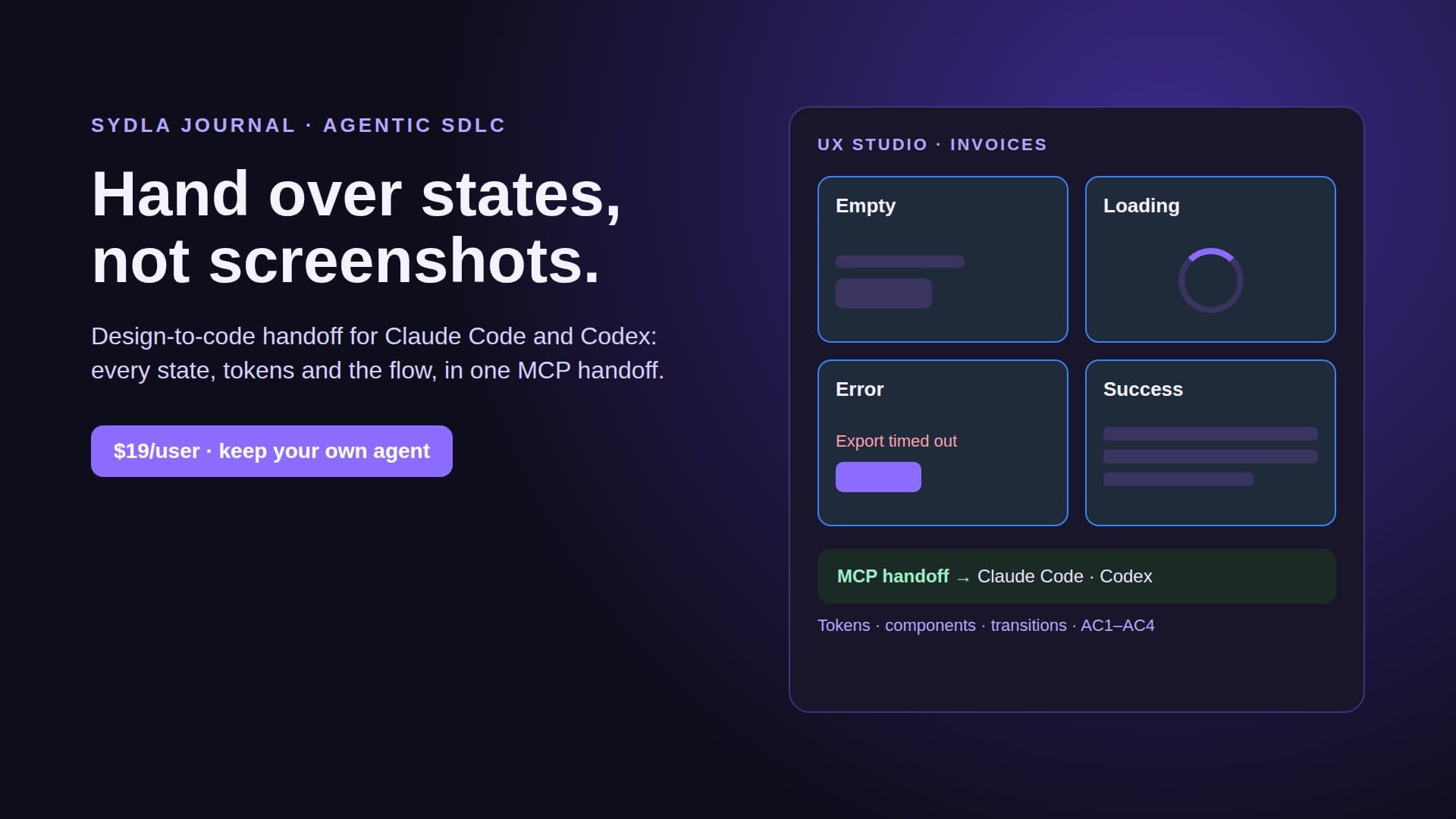
- Draw the states in UX Studio. Add the empty, loading, error, success and permission-denied screens next to the happy path and publish the handoff on the same initiative. The agent reads states, not a screenshot pasted into a ticket. See design-to-code handoff.
- Open a thread in Sydla Desktop. Add your repository folder. Desktop matches its Git remote to your Sydla project, so a thread started from a piece of work opens in that folder on its own branch. It launches the Claude Code or Codex CLI already signed in on your machine, on your own plan and limits, in Read only, Edit files or Full access mode.
- Let the agent read the initiative. Through one Sydla MCP connection the agent opens the brief, the criteria and the UX handoff. It edits, runs the tests and opens the dev server in its own headless browser to check each state against the design.
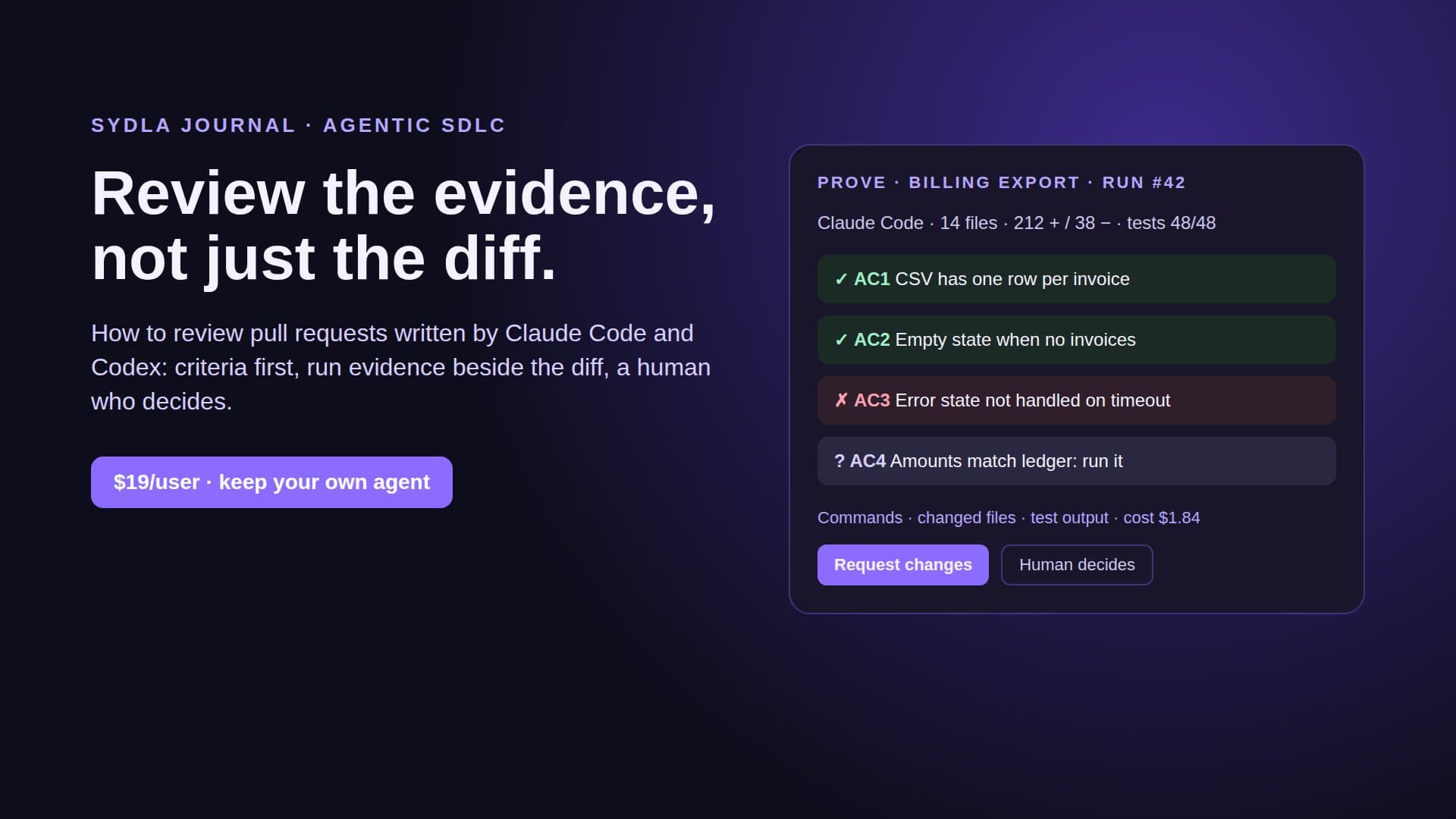
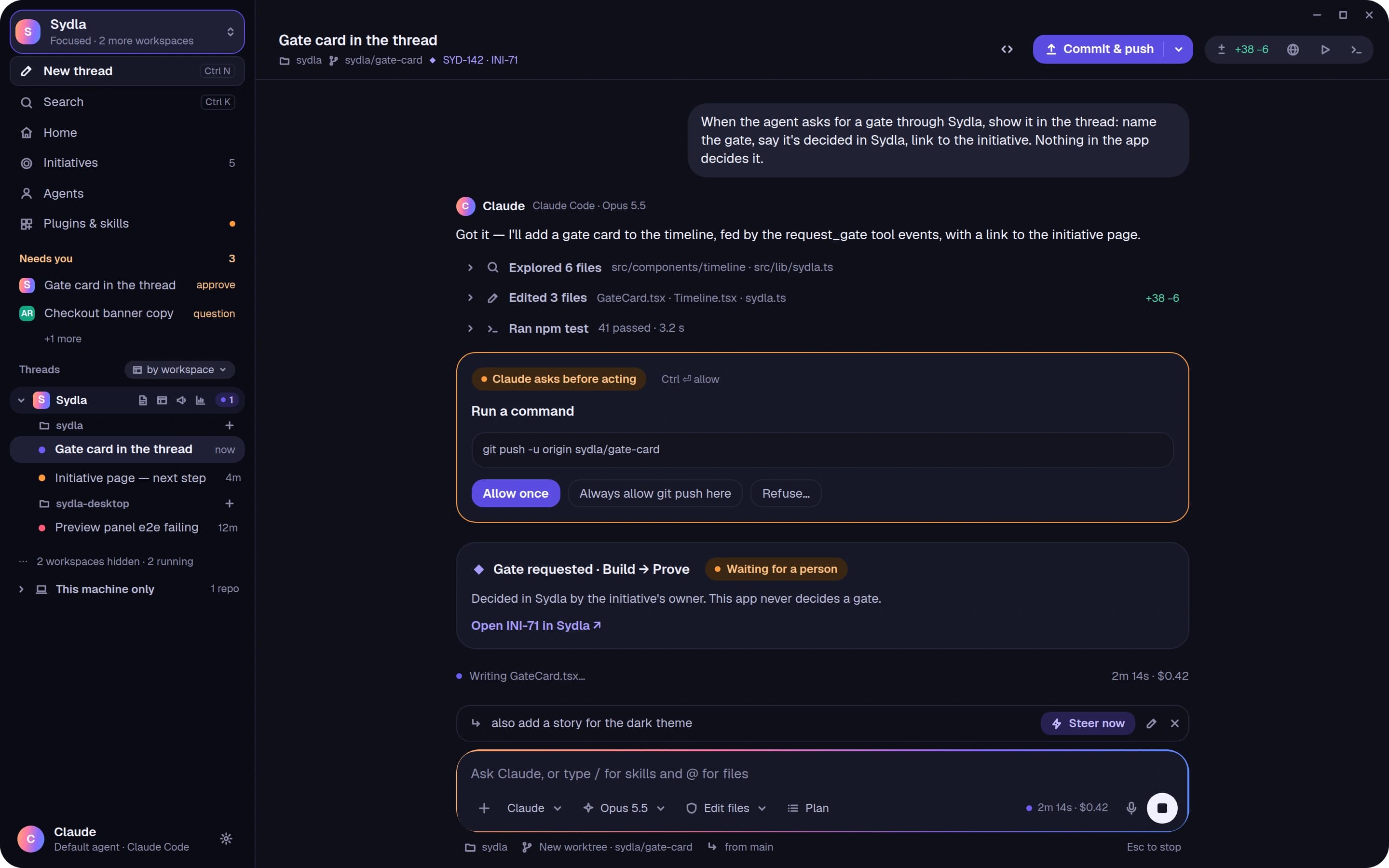
- Review the evidence, then decide. The thread shows every command and tool call; Changes shows the diff. Check it against the criteria and the states, commit on the thread's branch and open the merge request. A person makes the gate decision, never the agent. The AI pull request review guide has the four-pass checklist.
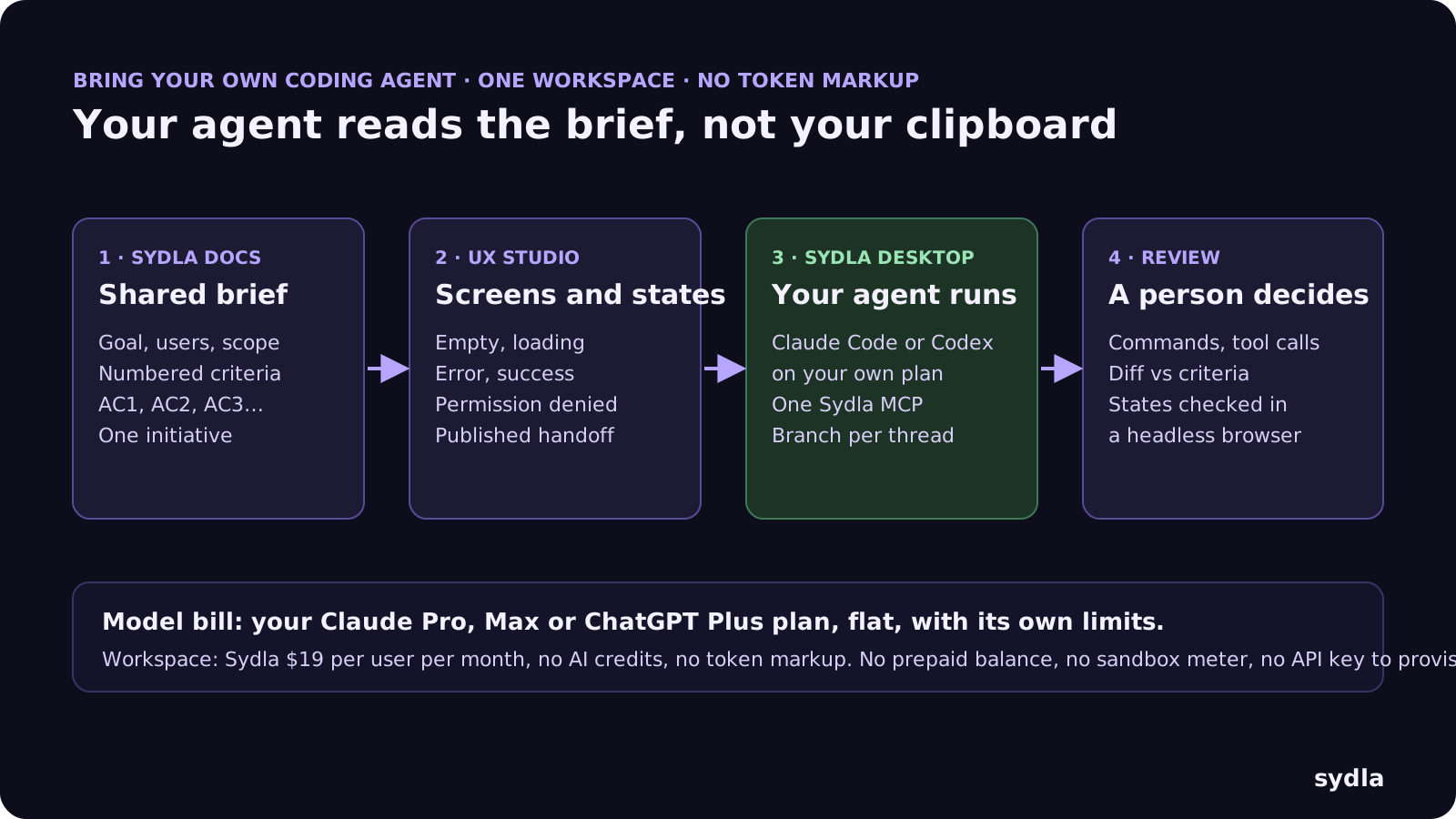
The money changes at step three: the model bill is your Claude or ChatGPT plan, flat. The Sydla Desktop setup guide covers installation, and Claude Code vs Codex for product teams helps you pick one, or both.
Switching: Jira to Linear, or either to Sydla
Linear's Jira importer is good, with clear edges. The API import maps summary, description, assignee, priority, estimate, comments, labels and sub-tasks, turns epics into projects, and can keep a two-way Jira Sync. Custom fields do not import. Attachments copy only with API credentials, imported issues get a Migrated label, and you can delete an import within 7 days. Issue numbers match only when you import into an empty team with closed issues included.
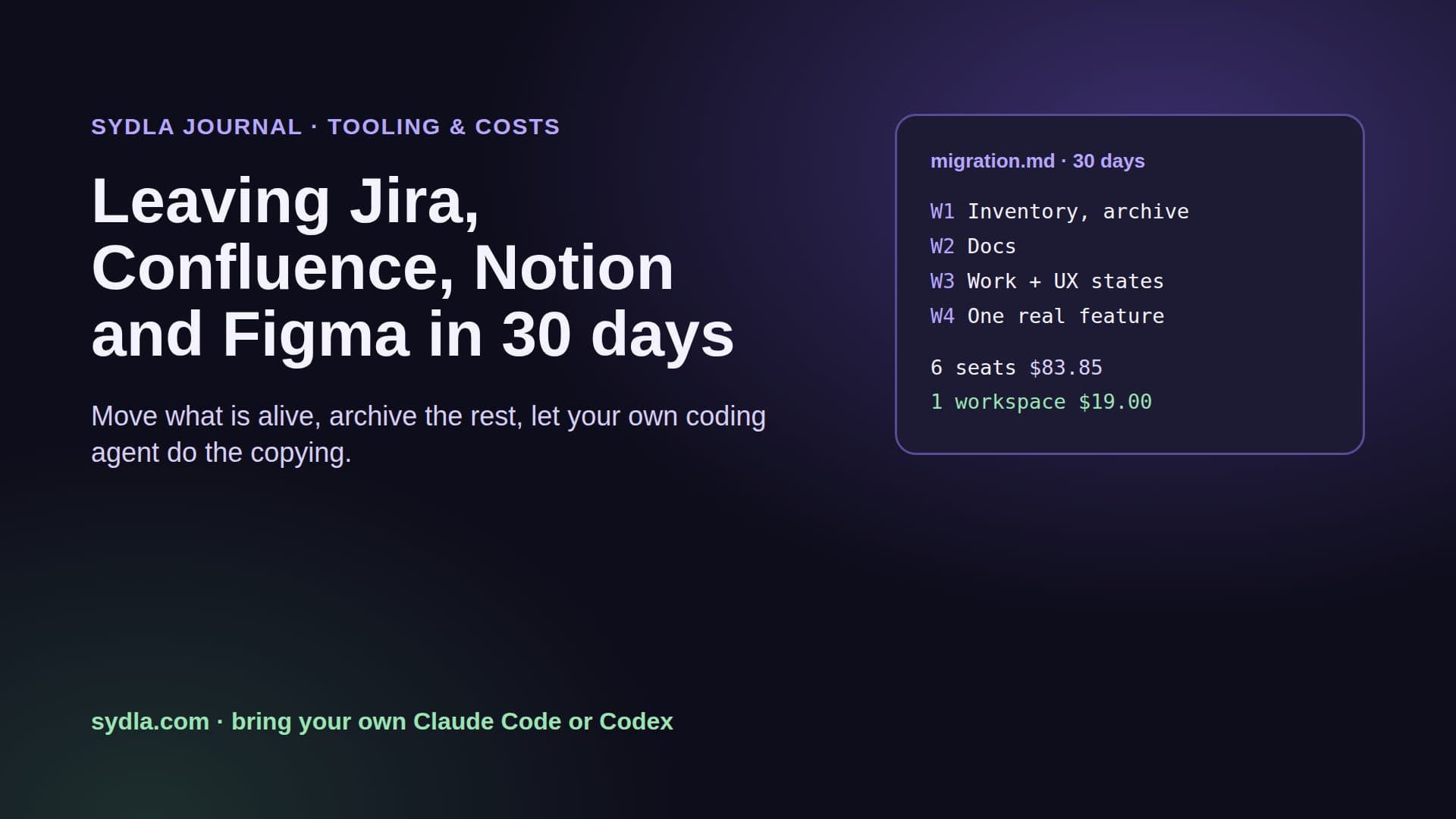
Moving to Sydla is a different job, because you move more than tickets. Our 30-day migration plan moves what is alive, archives the rest and cancels at renewal. Week one is inventory and exports, week two docs, week three tickets and UX states, week four one real feature end to end.
Which one should you pick?
There is no single winner. It depends on your size, your process and where you want agents to run:
- Pick Jira if you are a large or regulated organisation that needs custom workflows, Marketplace apps and Confluence next door, and you are ready to manage Rovo budgets and API keys.
- Pick Linear if your engineers want the fastest tracker and you are happy to let agents run in Linear's cloud on a prepaid balance and an API key. The pass-through pricing is clear and MCP is on every plan.
- Pick Sydla if you are a solo founder, an early engineering team or a lean product team that already pays for Claude Code or Codex, and you want the brief, the UX states, the plan and the evidence in one place instead of six. See the solo founder stack for the one-person version.
Keep your agent. Drop the meters.
Linear and Jira both made the tracker the agent's front door, and both moved the agent onto a meter: a prepaid balance and an API key on one side, a Rovo pool and an API key on the other. Neither gives the agent the states it should build or the evidence a reviewer needs.
Take the next ticket you were going to assign to an agent. Write its brief and states in Sydla this week, open a Desktop thread and let your own Claude Code or Codex build it. Start your $19/mo AI SDLC workspace and keep your Claude Code and Codex accounts exactly as they are.
Frequently asked questions
Is Linear cheaper than Jira in 2026?
On seats they are close. Linear Basic is $10 and Business $16 per user per month billed yearly; Jira Standard is $9.70 and Premium $19.60 per user per month. The difference is AI billing: Linear meters cloud coding sessions at provider token rates plus sandbox time from a prepaid balance, while Jira includes 25 to 70 pooled Rovo credits per user and bills extra credits at $0.01 from 3 December 2026.
Can Linear run Claude Code and Codex?
Yes. Since 11 June 2026 Linear Agent can write code using Claude Code and Codex in cloud coding sessions. They need AI credits: model tokens at the provider's published rates with no markup, plus sandbox runtime from $0.03125 to $0.25 per 5 minutes. With bring your own key, added on 12 November 2026, you need an API key, not a ChatGPT or Claude subscription, and sandbox time still uses Linear credits.
How do you assign a Jira ticket to Claude?
Install Claude Agent for Jira from the Atlassian Marketplace, connect an Anthropic API key and a GitHub service account, and select Claude in the assignee dropdown, mention it in a comment, or use an automation rule. It needs Jira Standard, Premium or Enterprise with Rovo enabled and opens a draft pull request. You can also use Open in coding tool to start a local Claude Code or Codex session with the ticket's context.
Does Linear import custom fields from Jira?
No. Linear's Jira importer maps title, description, assignee, priority, dates, estimate, comments, labels, sub-tasks, statuses and epics to projects, but custom fields do not import. Attachments are copied only with API credentials, imported issues get a Migrated label, and an import can be deleted within 7 days.
Can I use Claude Code with Linear or Jira on my own subscription?
Partly. Both offer MCP servers, and Jira's Open in coding tool hands a prompt to your local Claude Code or Codex, which then runs on your plan. Their built-in cloud agents need API keys or credits. Sydla Desktop runs your own Claude Code or Codex CLI on your plan and connects it to the brief, acceptance criteria and UX states through one MCP connection, for $19 per user per month with no AI credits.