Context engineering for coding agents: one brief, not six tools
Your coding agent is only as good as what it reads. In most teams that context is spread across Jira, Confluence, Notion, Figma, Miro and Canva, and the agent pays in tokens, rate limits and credits to put it back together. Here is what context engineering means for a product team, and how to give Claude Code or Codex one source of truth.
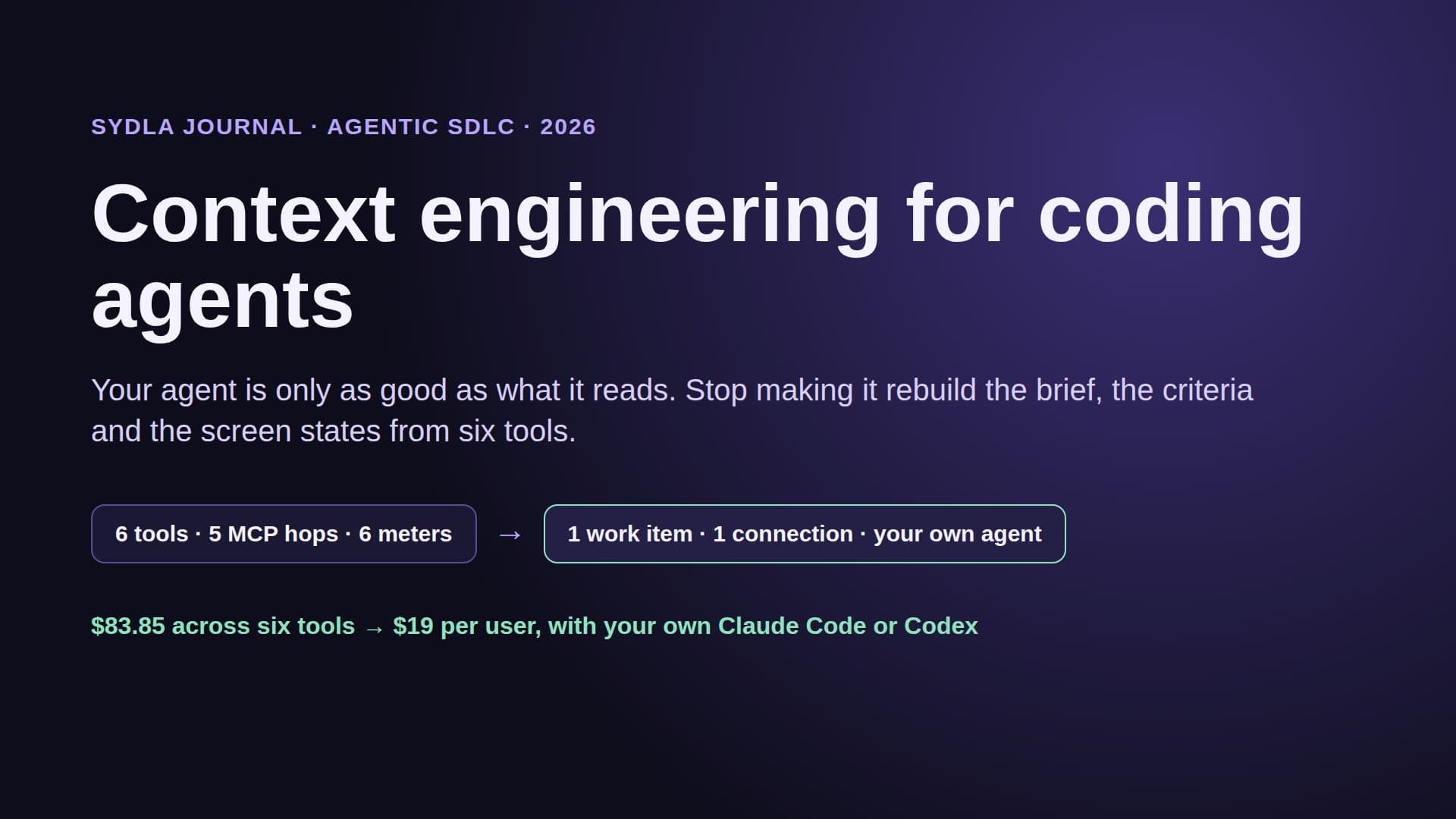
Your agent is not the bottleneck. Its context is.
Claude Code and Codex can now write, test and refactor most of a feature on their own. Yet the same complaint keeps coming back from product teams in 2026: the agent built the wrong thing. It missed the error state. It ignored a decision made in a meeting two weeks ago. It used the old copy from the spec instead of the new copy from the design.
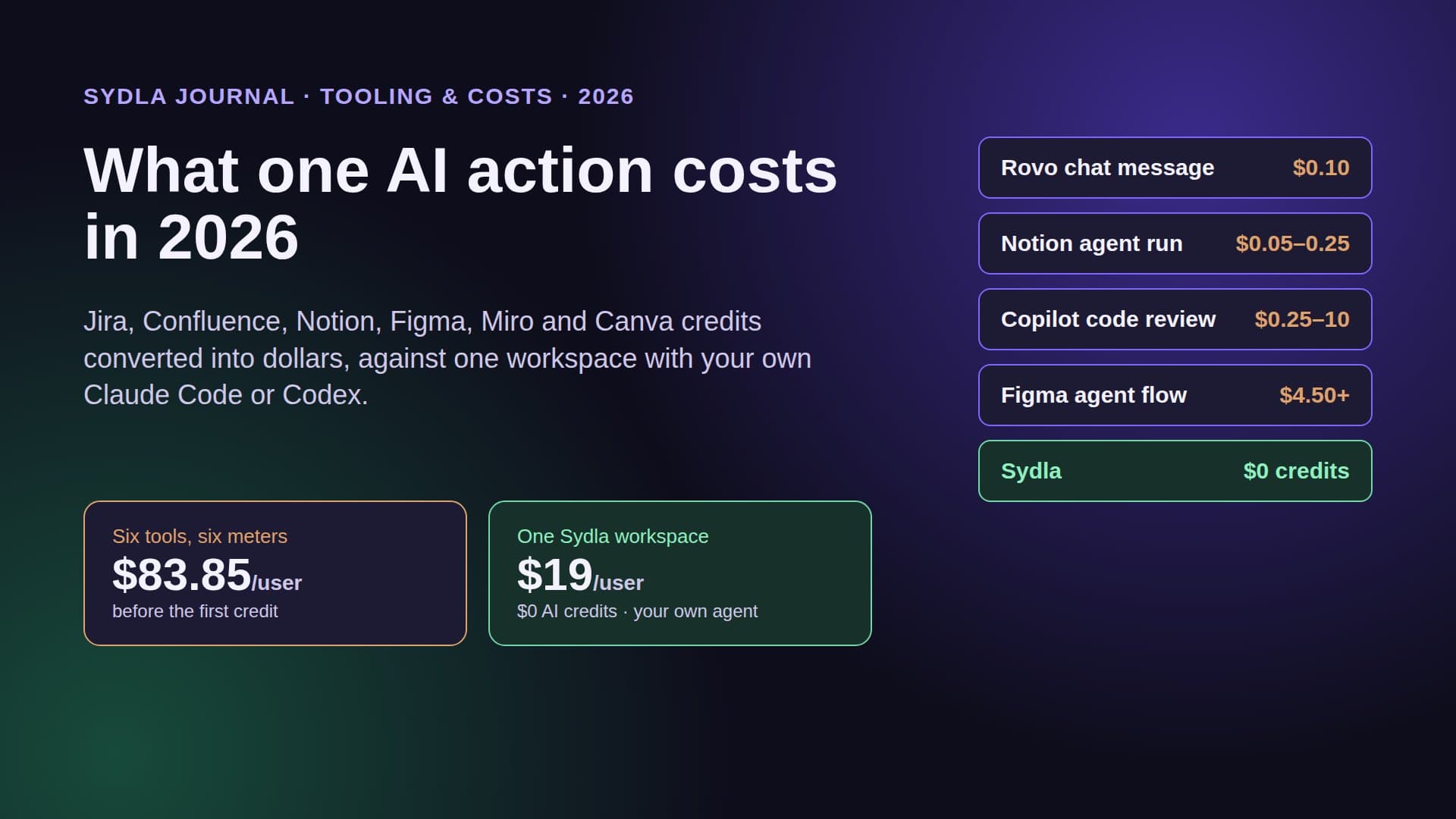
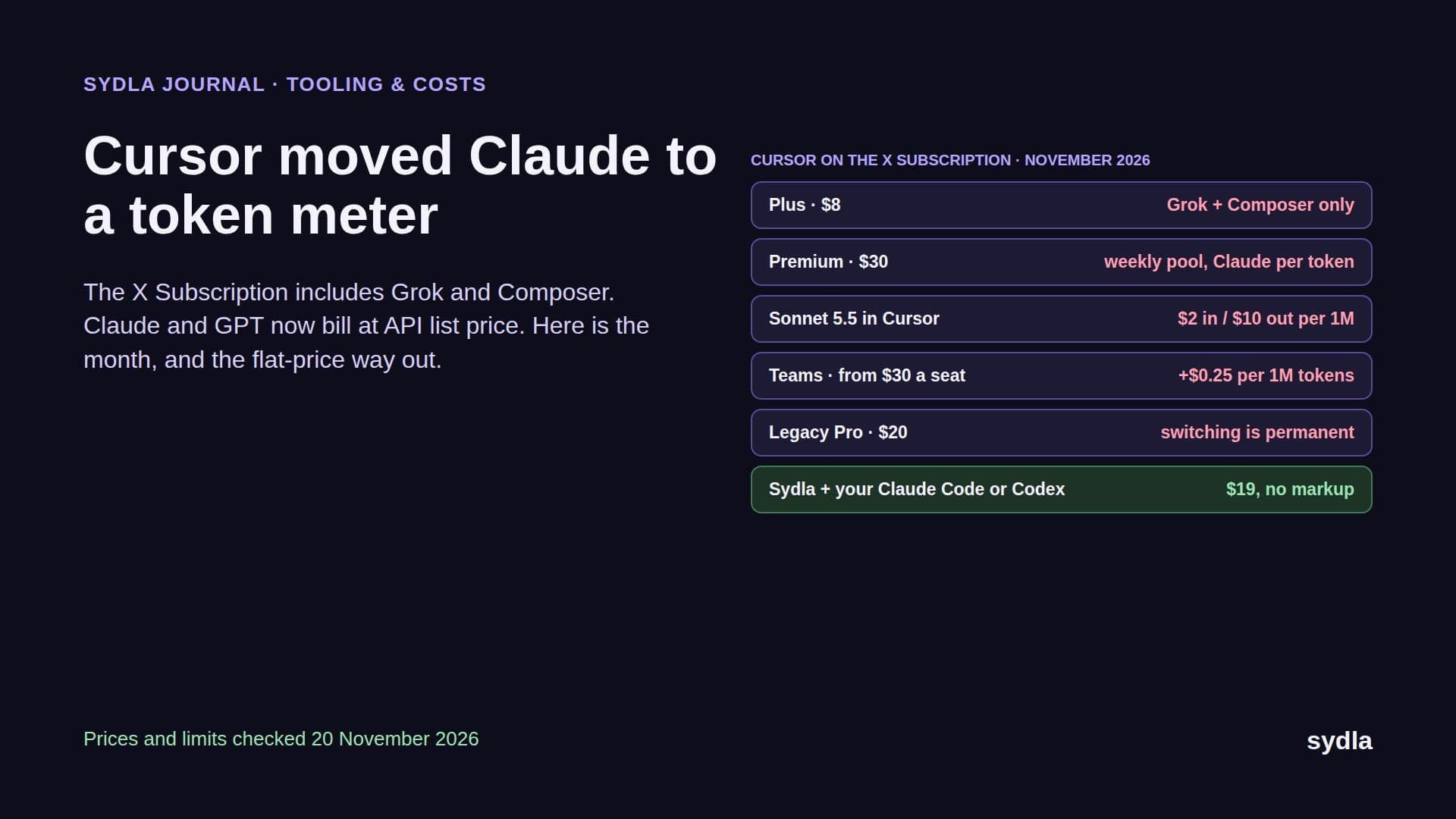
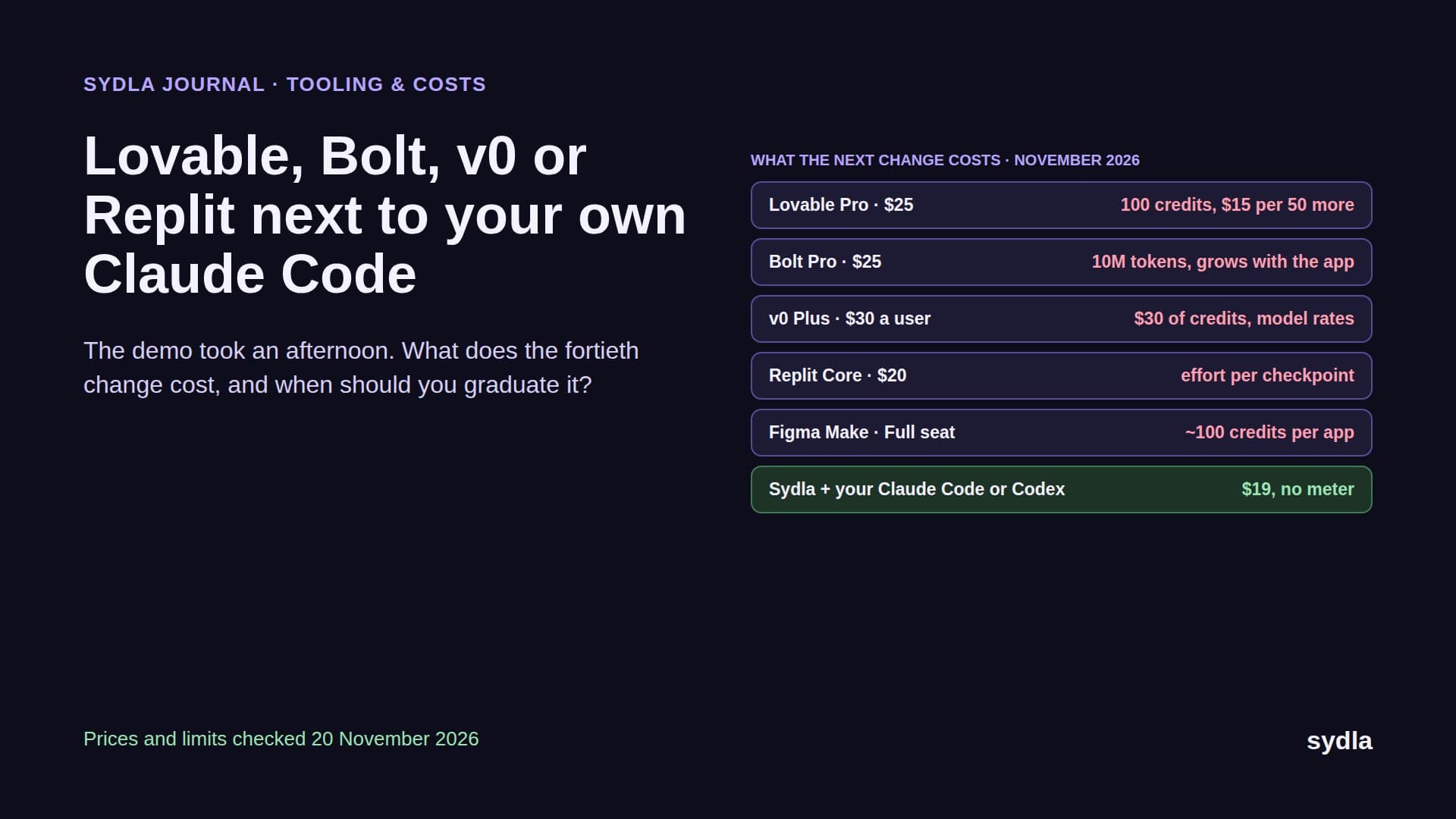
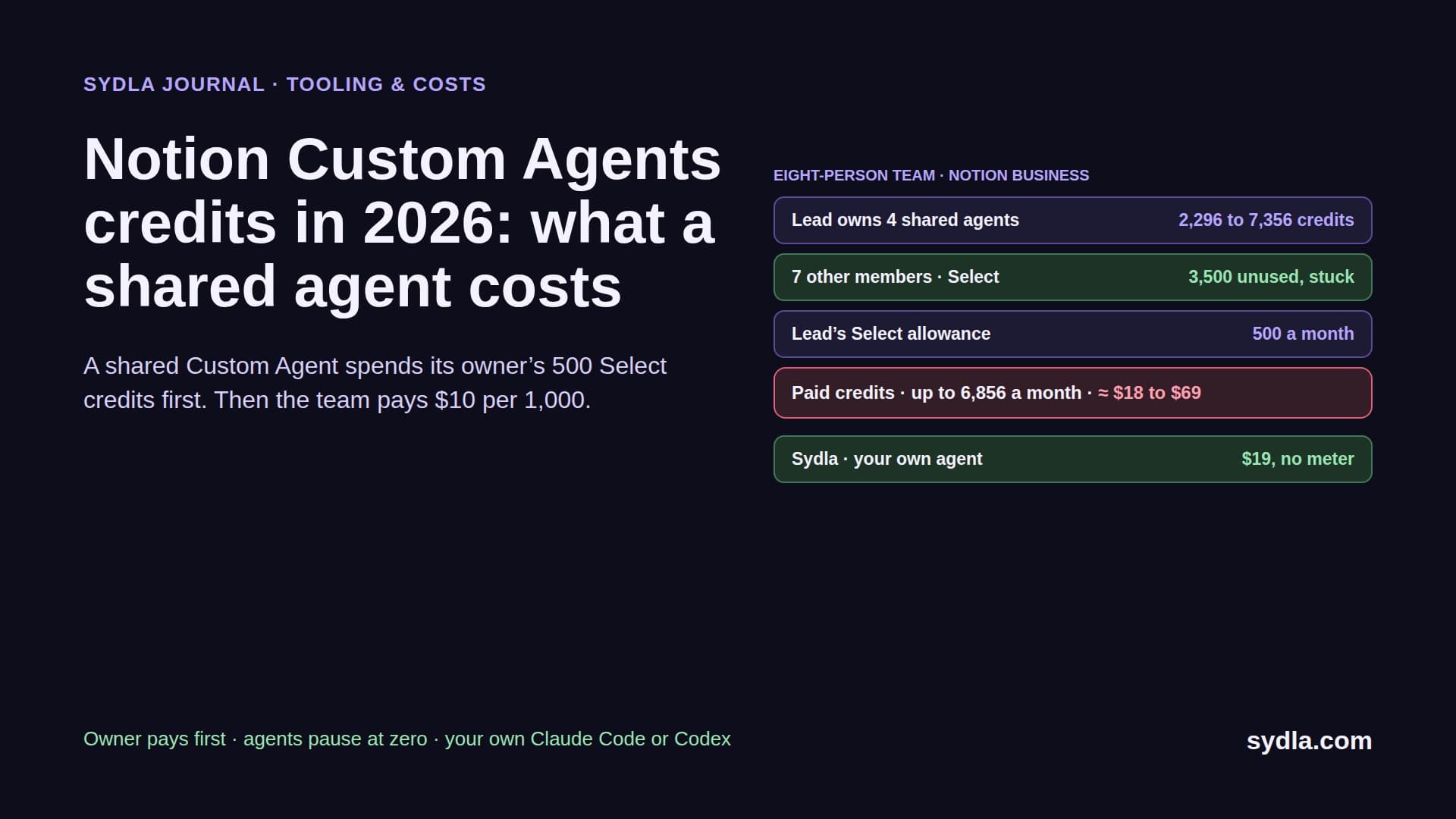
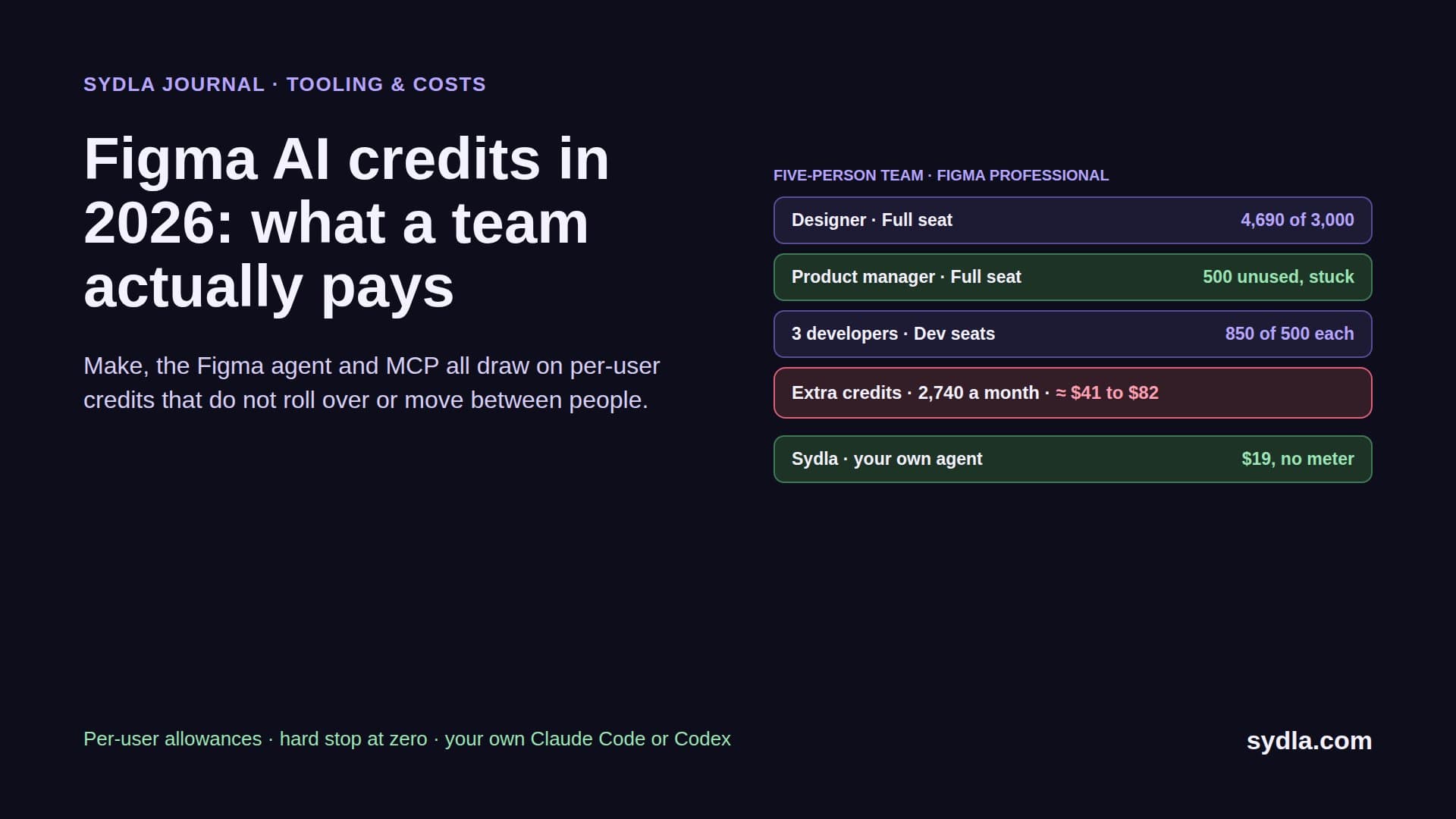
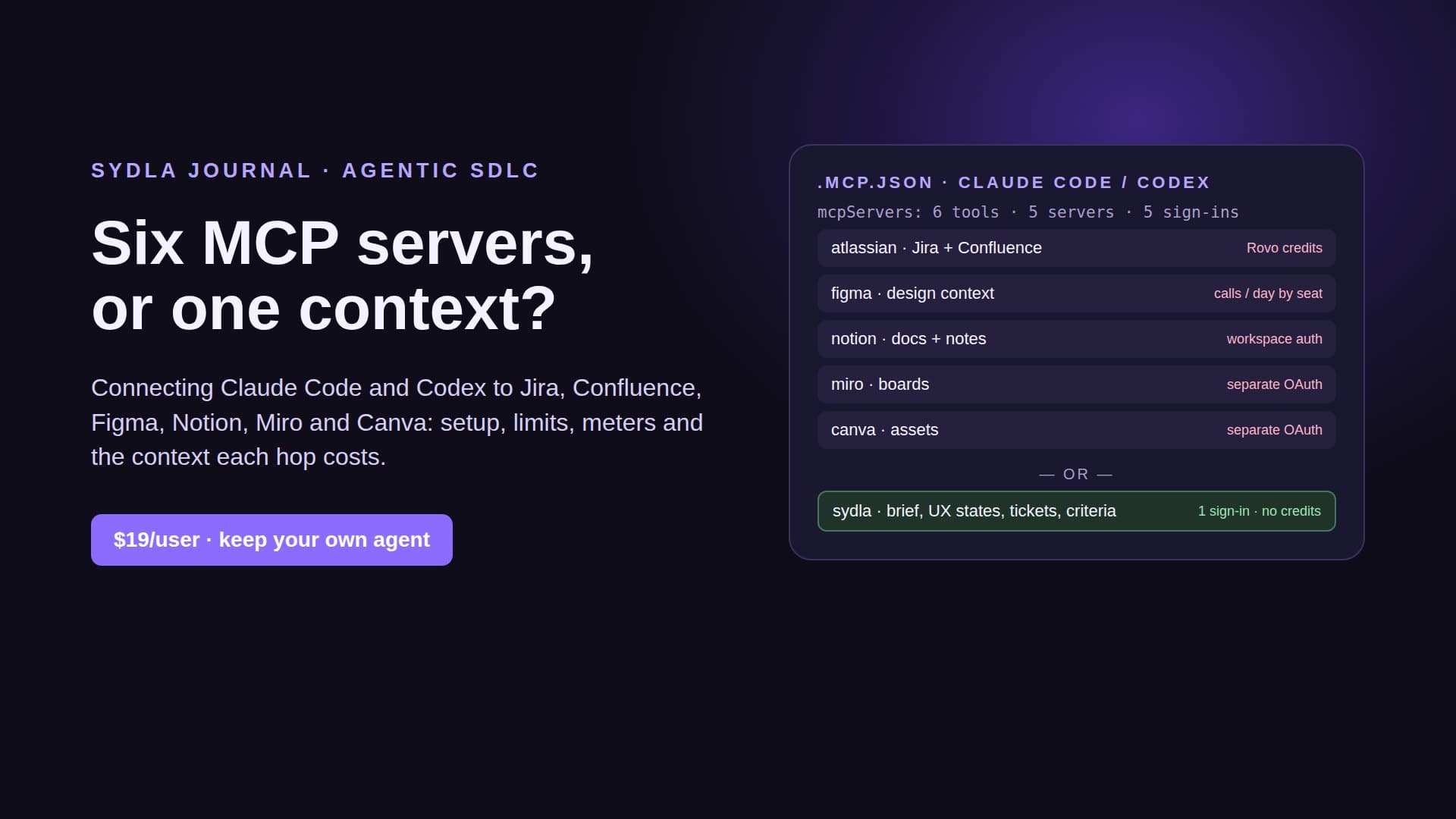
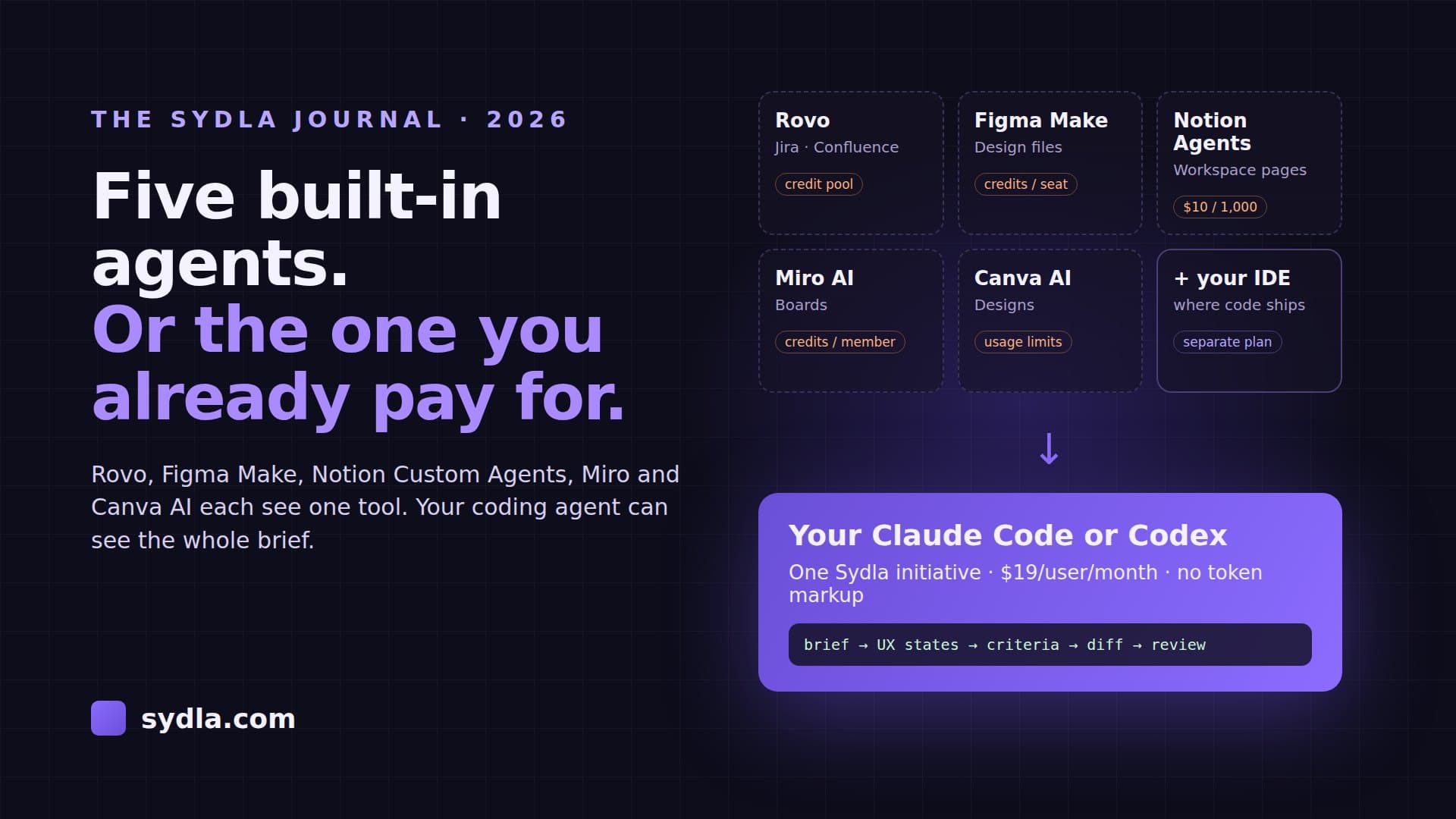
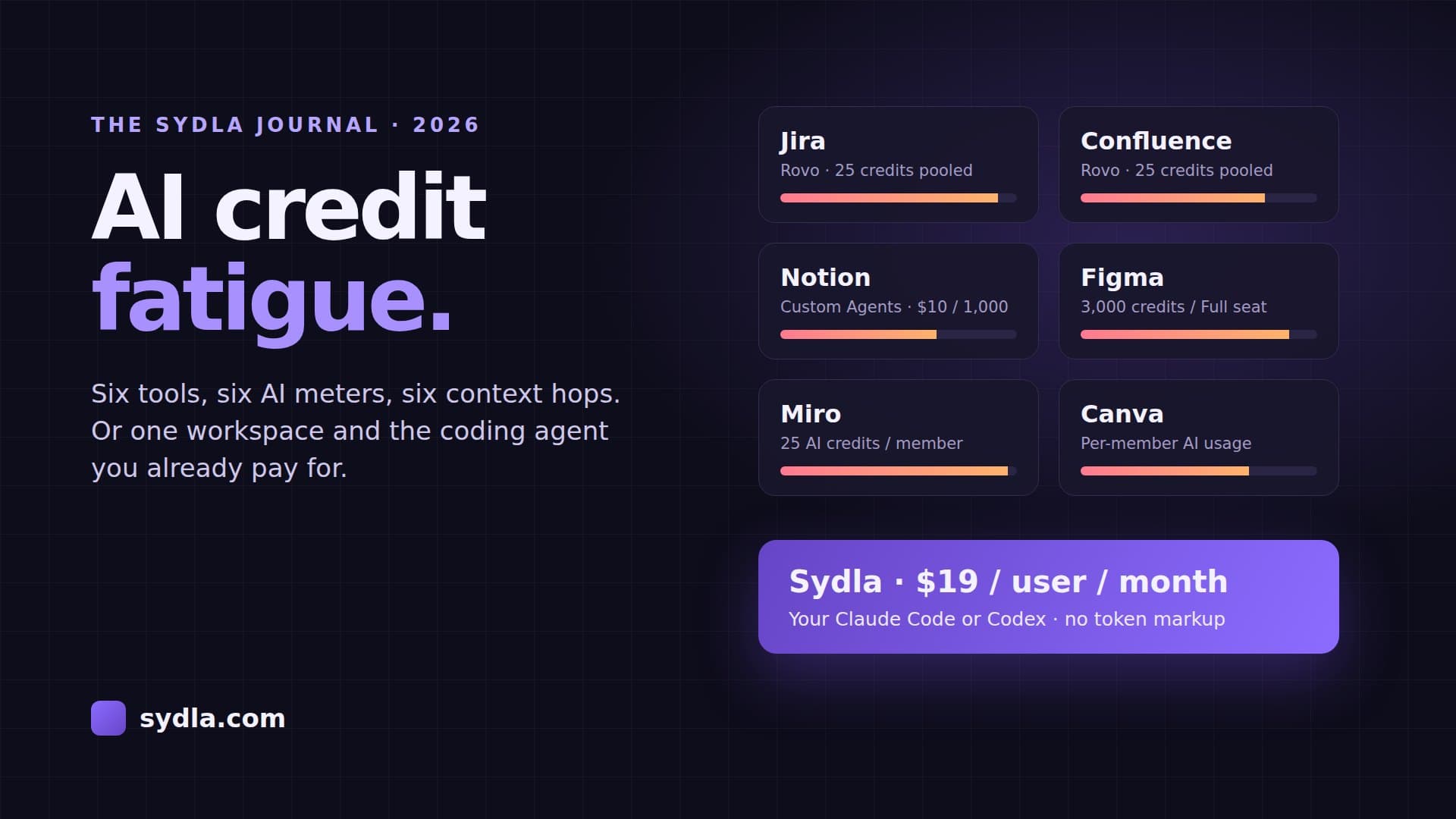
In almost every case the model was fine. The context was not. The ticket lived in Jira, the spec in Confluence, the decision in a Notion page, the screens in Figma, the flow on a Miro board and the launch assets in Canva. Each tool now ships its own AI on its own meter, and the agent that actually writes the code has to hop through five MCP servers to rebuild a picture that a person could have written once. Some of those reads cost credits, all of them cost tokens, and the result is still incomplete. That is AI credit fatigue seen from the agent's side.
This guide explains context engineering in plain terms for product teams, shows where an agent's context lives in a six-tool stack, and walks through how to give Claude Code or Codex one source of truth instead.
What context engineering means for a product team
Context engineering is the work of deciding what an AI agent reads before and during a task, so it gets the smallest set of information that leads to the right result. Anthropic's engineering team describes it as the next step after prompt engineering: context is a finite resource, the model has an attention budget, and recall gets worse as the window fills, an effect they call context rot. Their advice is to keep the set of tokens small and high-signal and to let the agent pull information in just in time through tools, instead of loading everything up front.
For a coding agent working on a product, the context has four layers. Each one has a different owner.
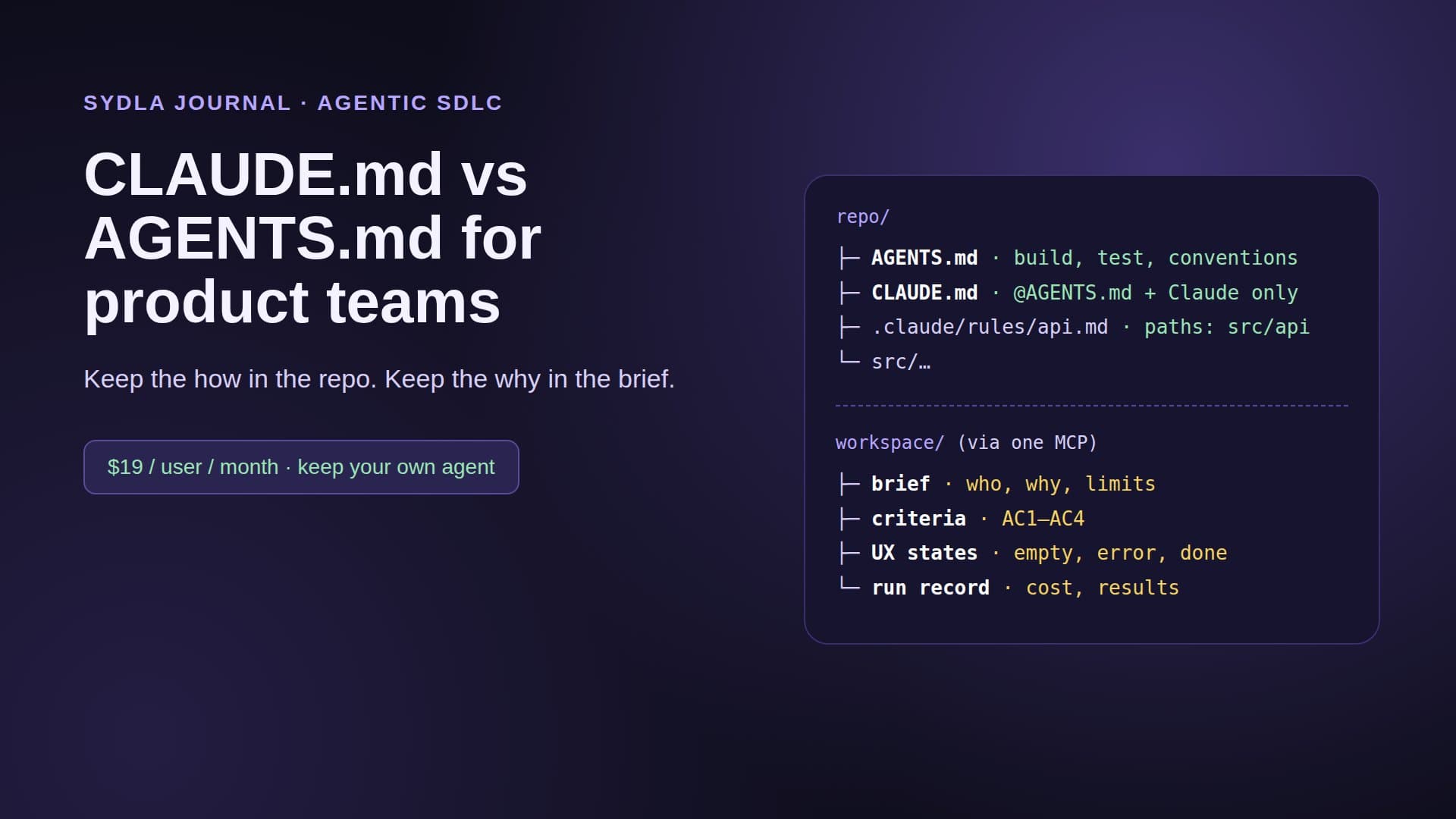
- Repository instructions. How to build, test and style code in this repo. This lives in CLAUDE.md or AGENTS.md and belongs to engineers. Claude Code recommends keeping each CLAUDE.md under 200 lines; Codex caps combined AGENTS.md files at 32 KiB by default. Our guide to CLAUDE.md and AGENTS.md covers this layer.
- The work item. What to build and why: the problem, the users, scope, non-goals and acceptance criteria. This belongs to the product owner.
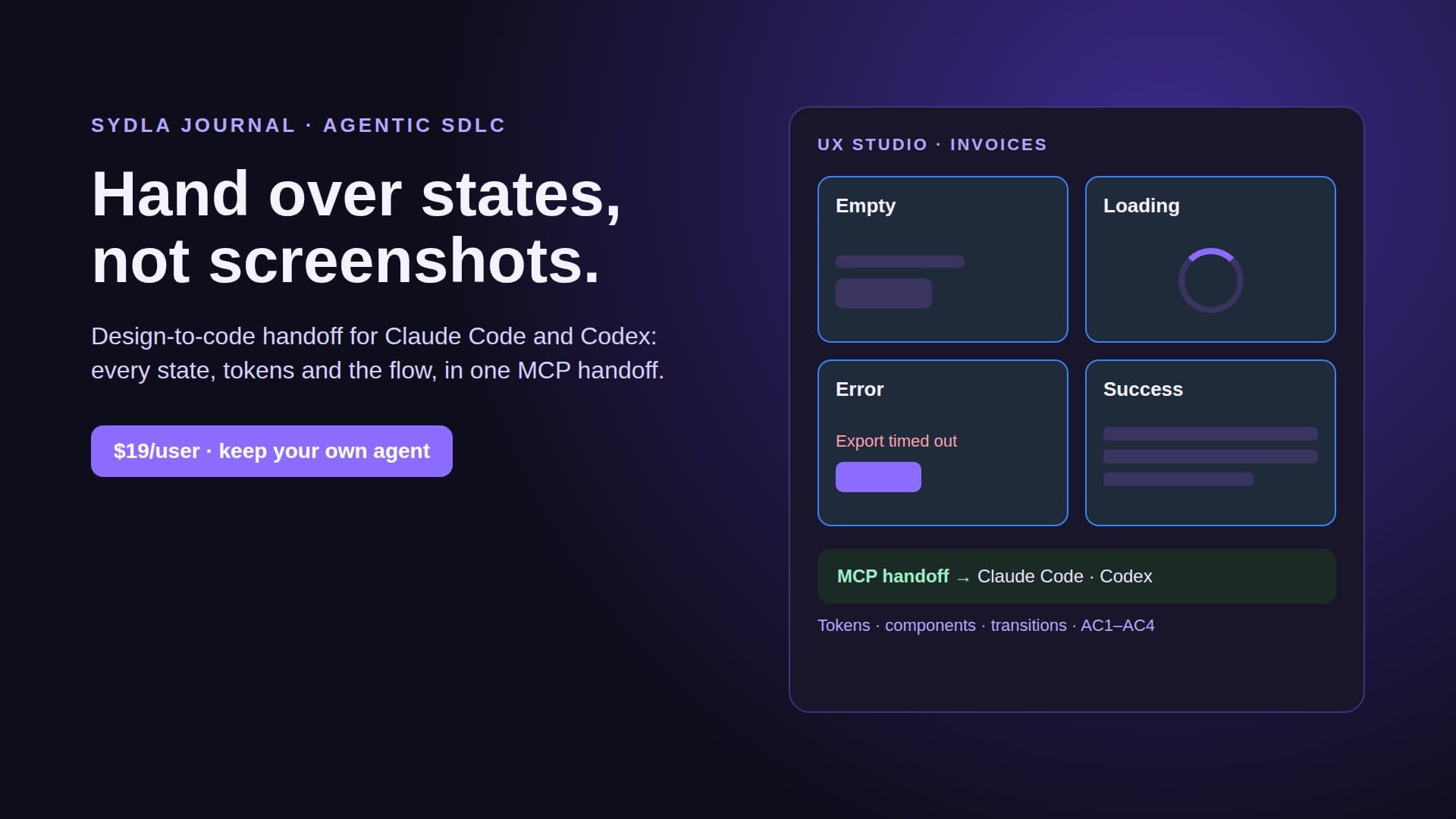
- The design states. What it should look like in every state: empty, loading, error, success, plus the transitions between them. This belongs to the designer.
- Run memory and evidence. What the agent tried, what passed, what a reviewer said. This belongs to the run, and it is the layer most teams lose between sessions.
Repository instructions are a solved problem for most teams. The other three are where the agent goes wrong, because in a typical stack they are split across six products that were never designed to be read by an agent.
Where your agent's context lives in a six-tool stack
Here is the stack most product teams still pay for, with the seat price, the piece of context each tool holds and what it costs the agent to read it in November 2026.
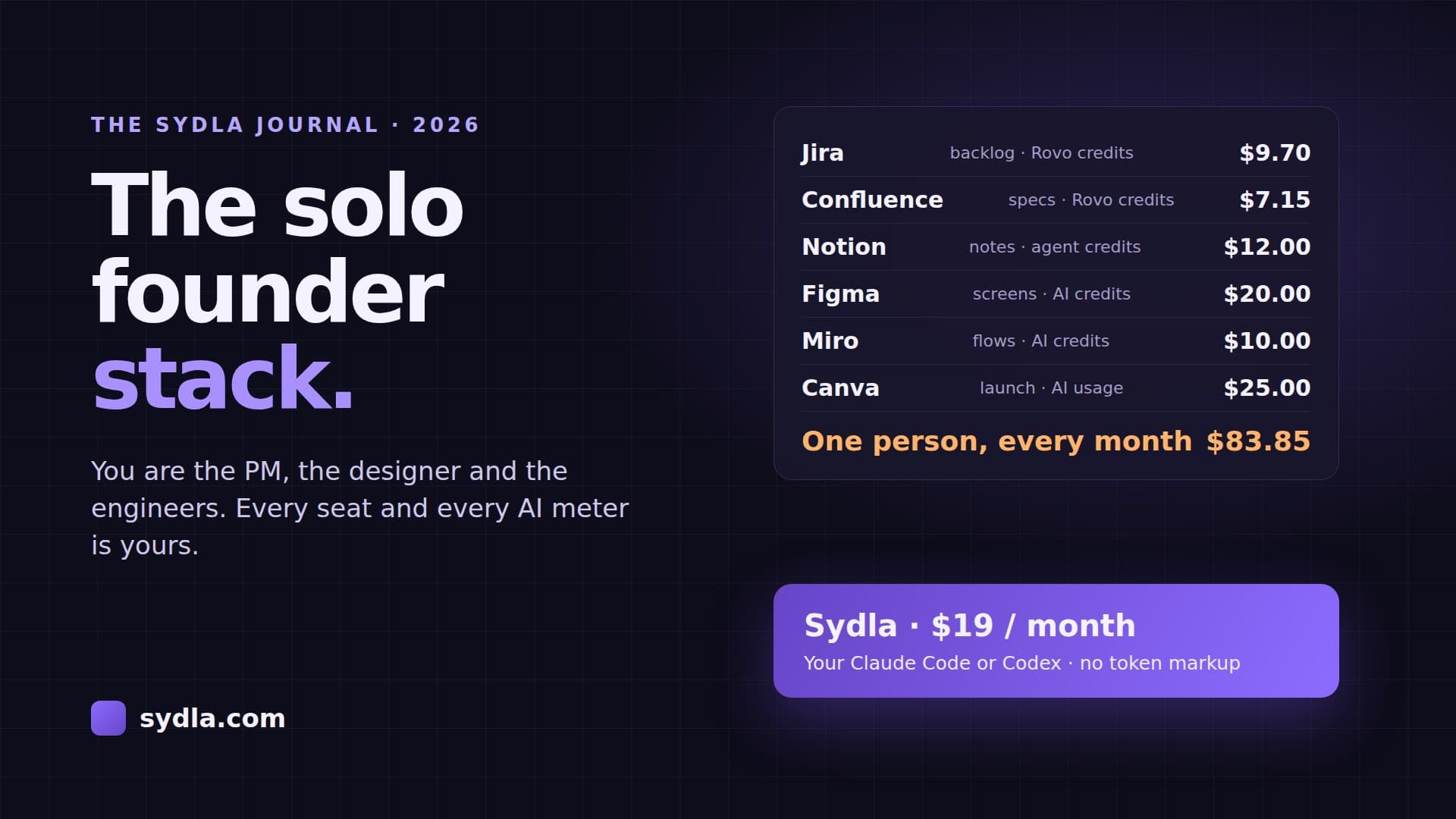
| Tool | Price per user | Context it holds | What the agent pays to read it |
|---|---|---|---|
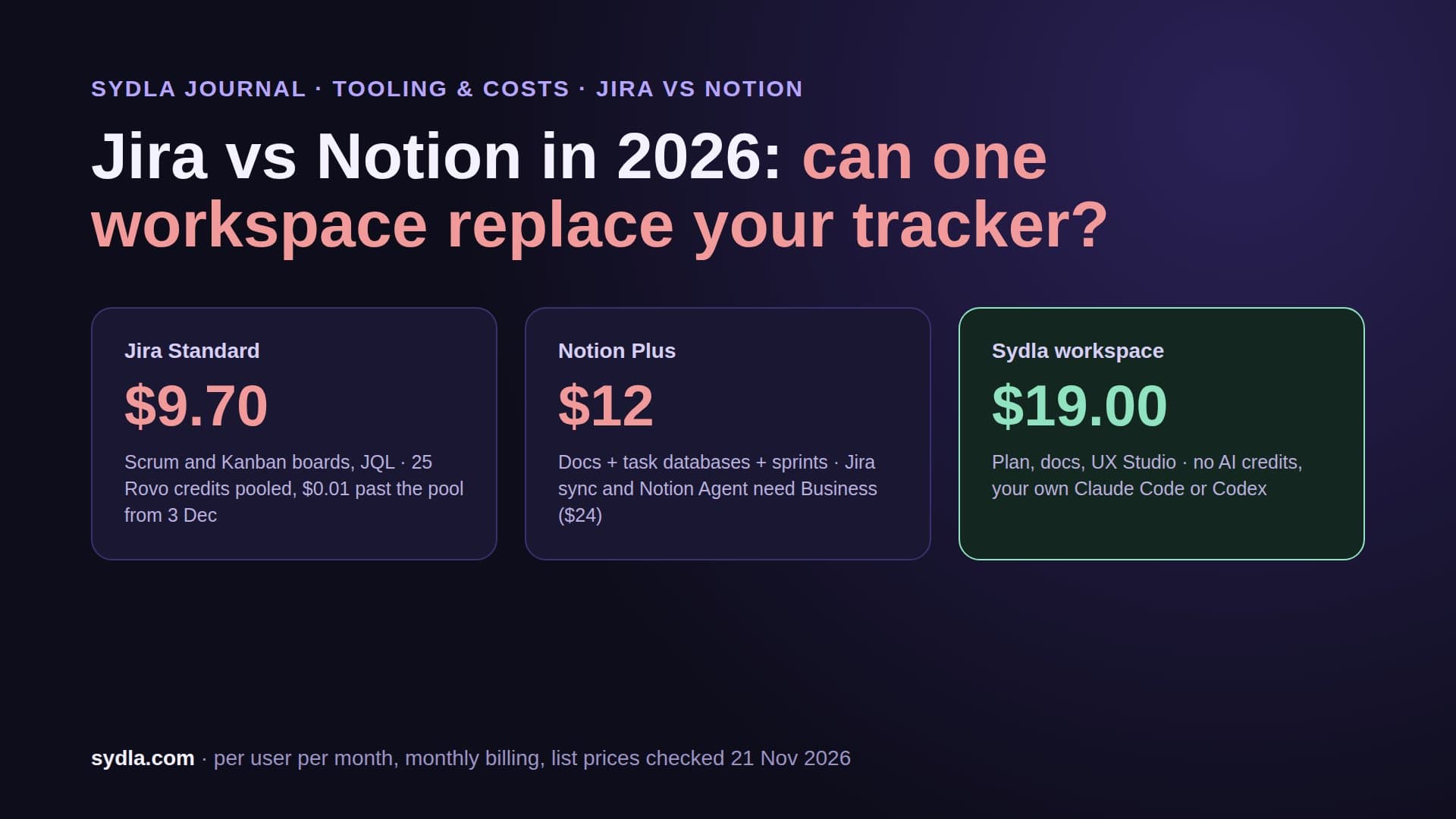
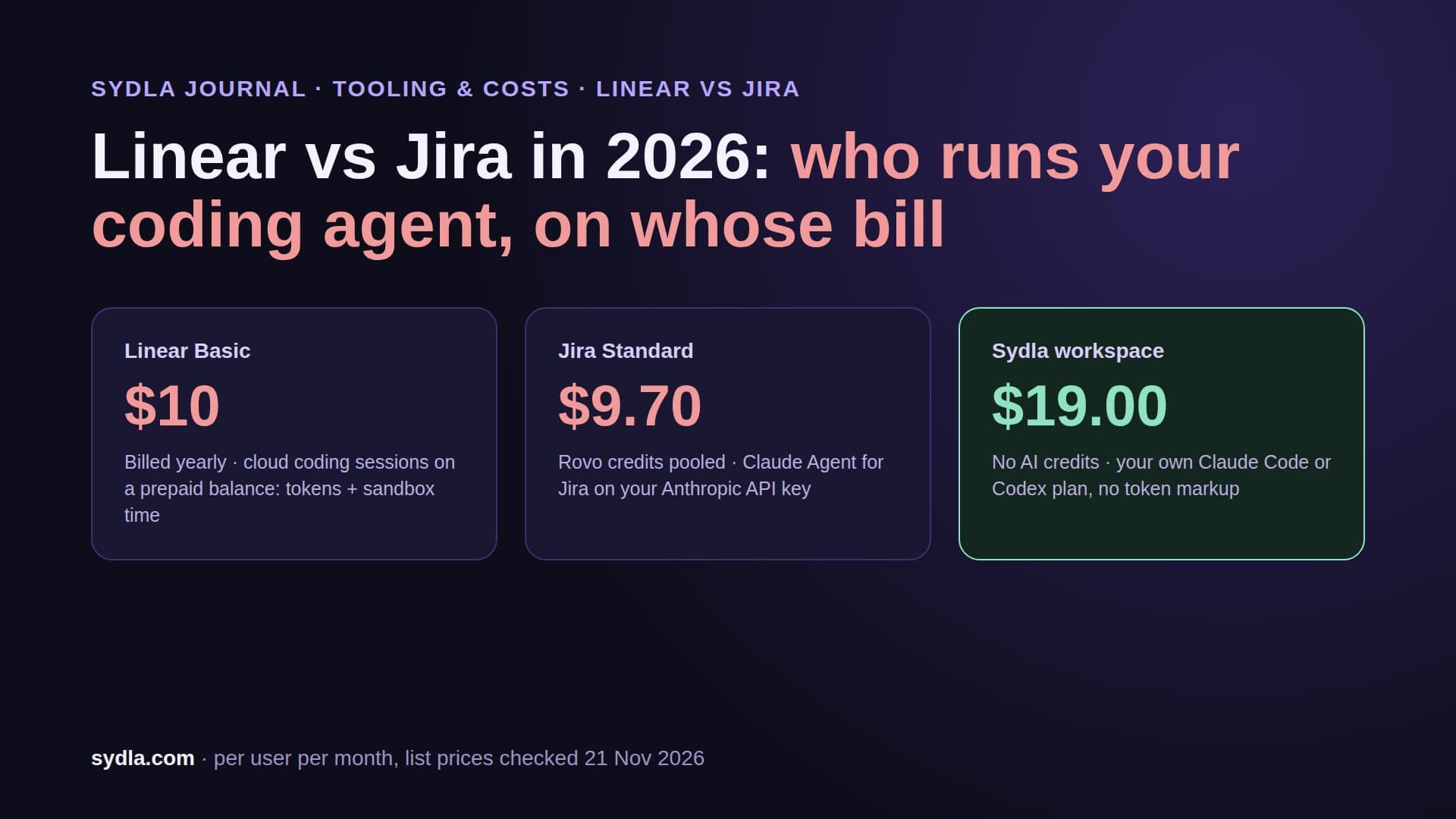
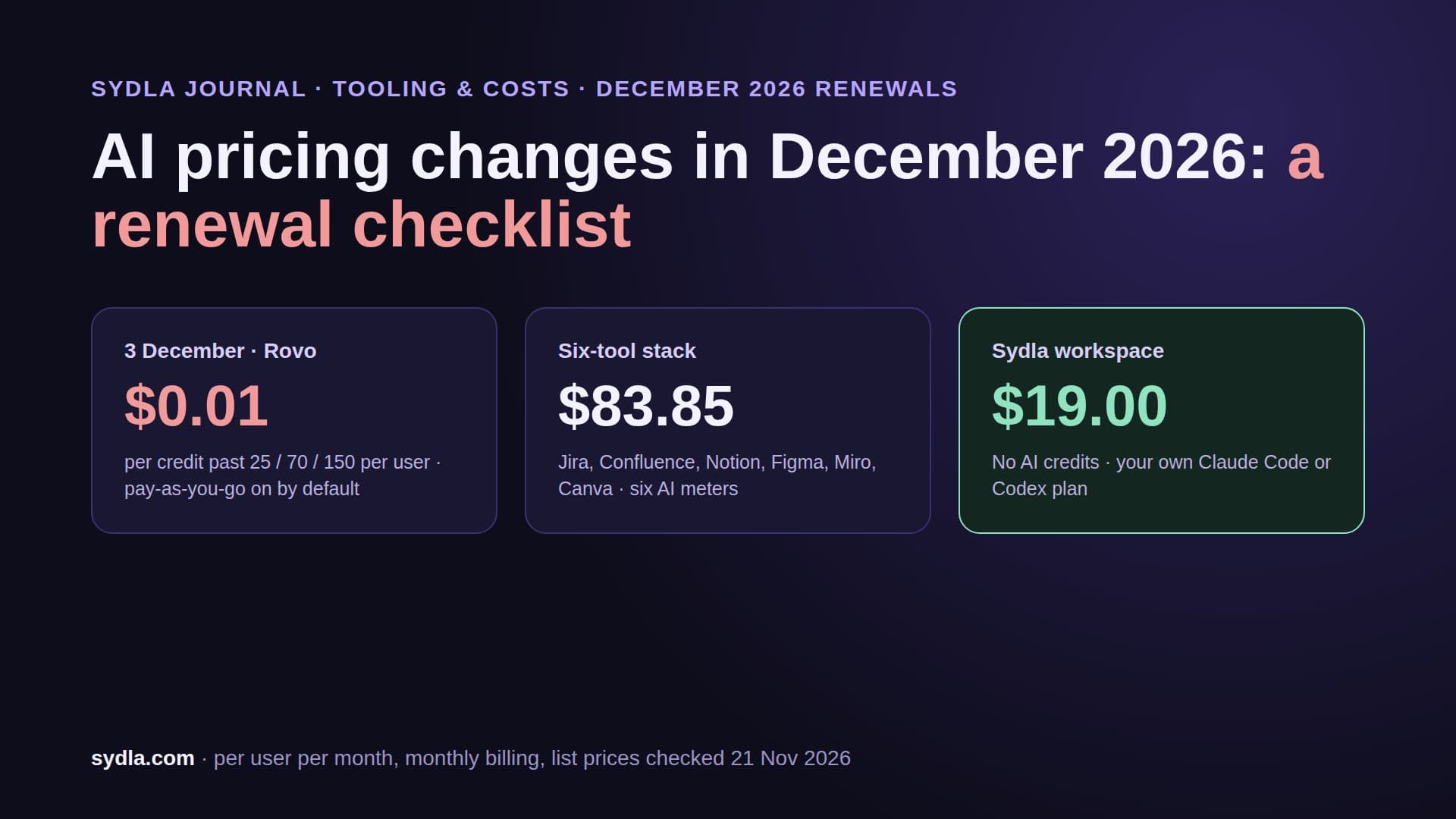
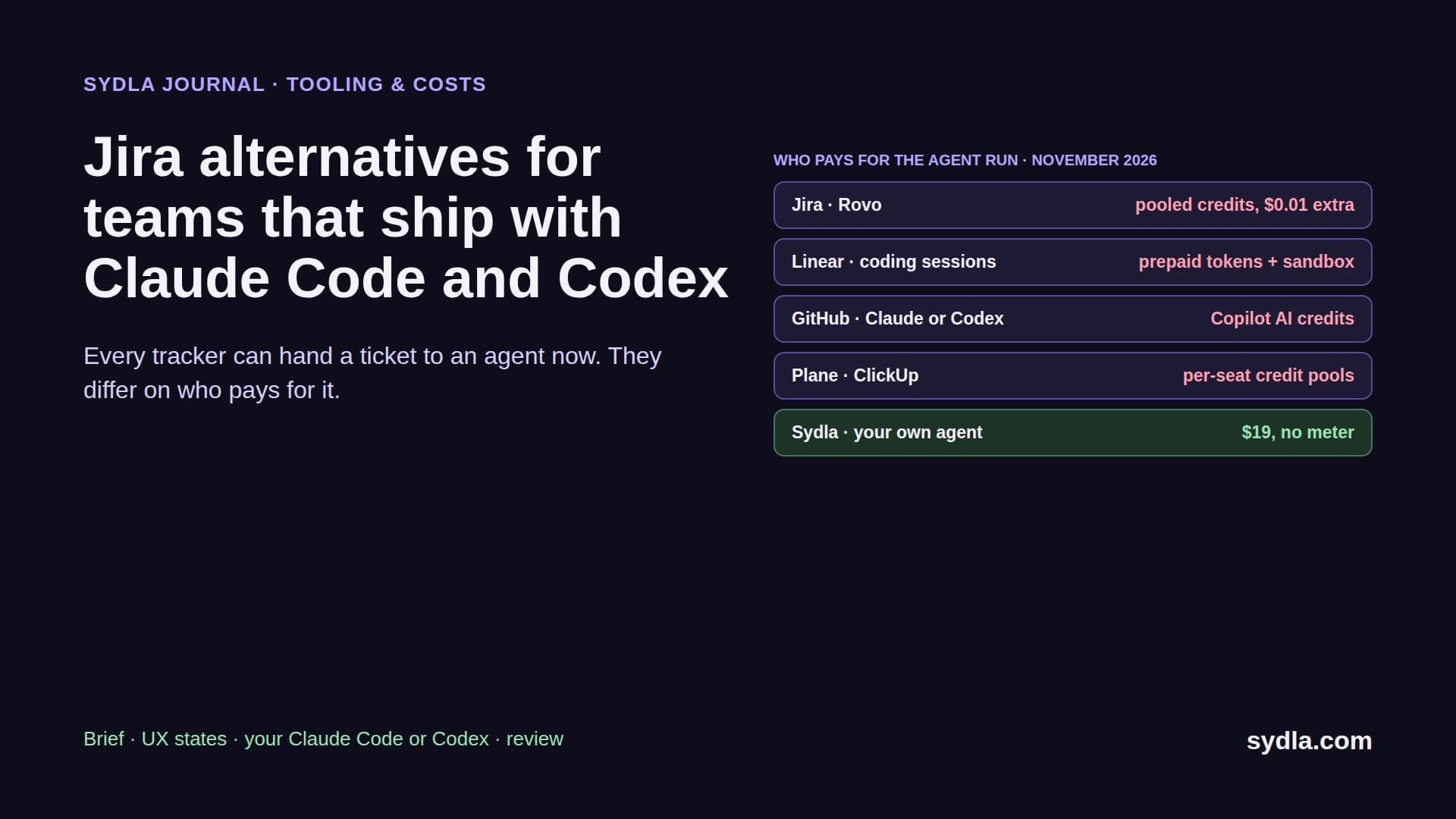
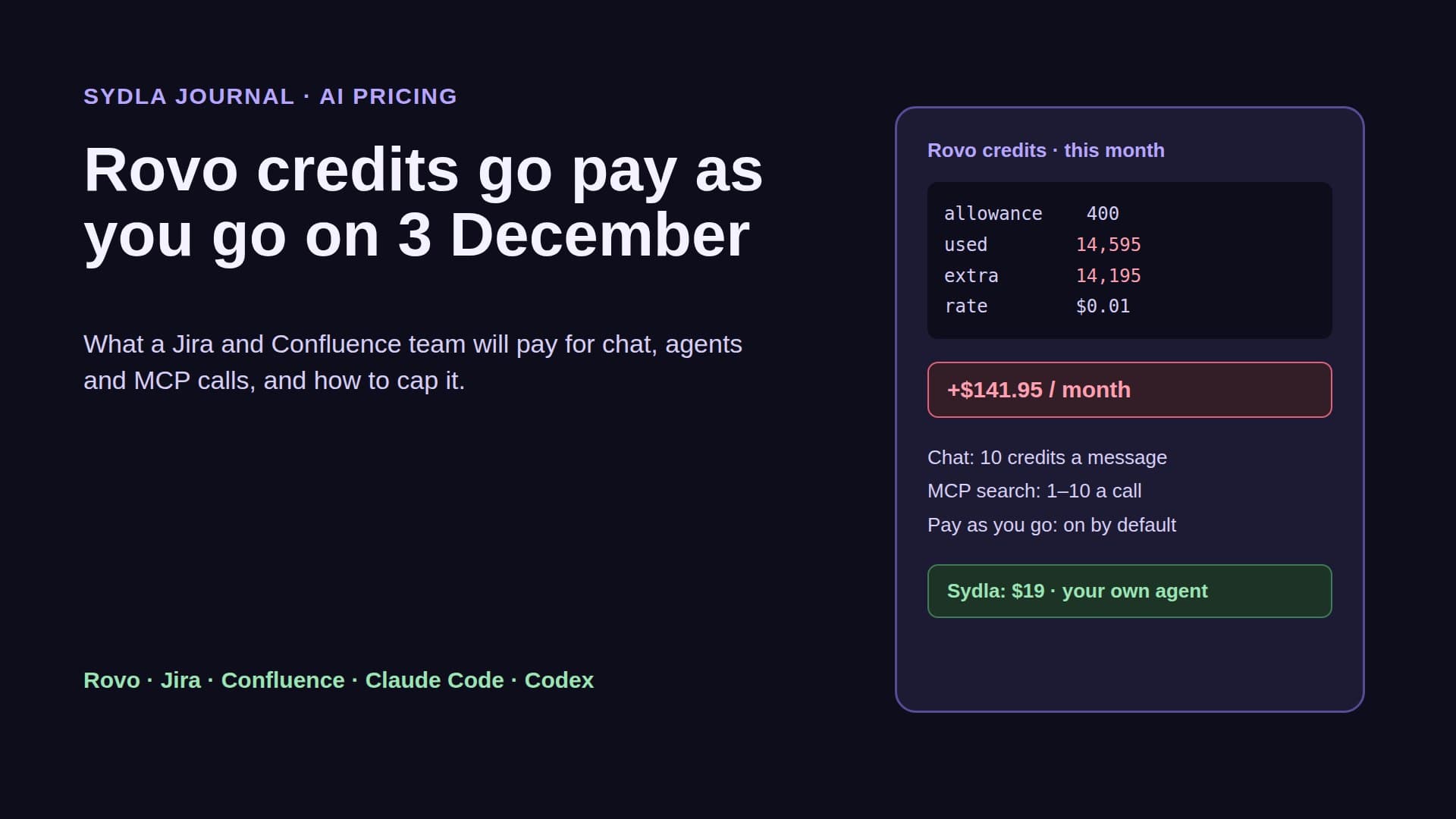
| Jira Standard | $9.70 | Ticket, status, comments | Rovo MCP; enriched searches cost 1 to 10 credits from a pool of 25 per user, then $0.01 per credit from 3 December 2026 |
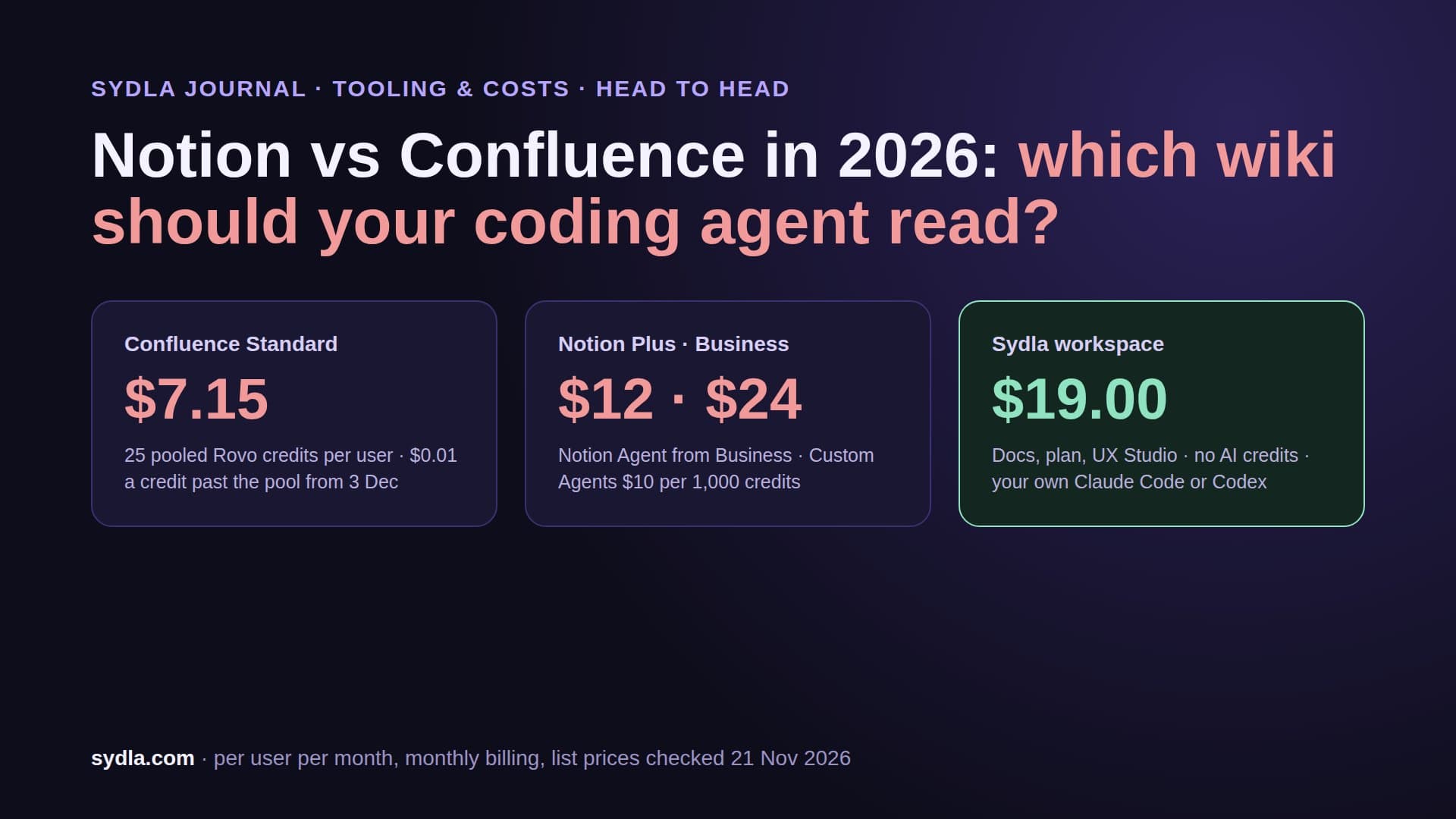
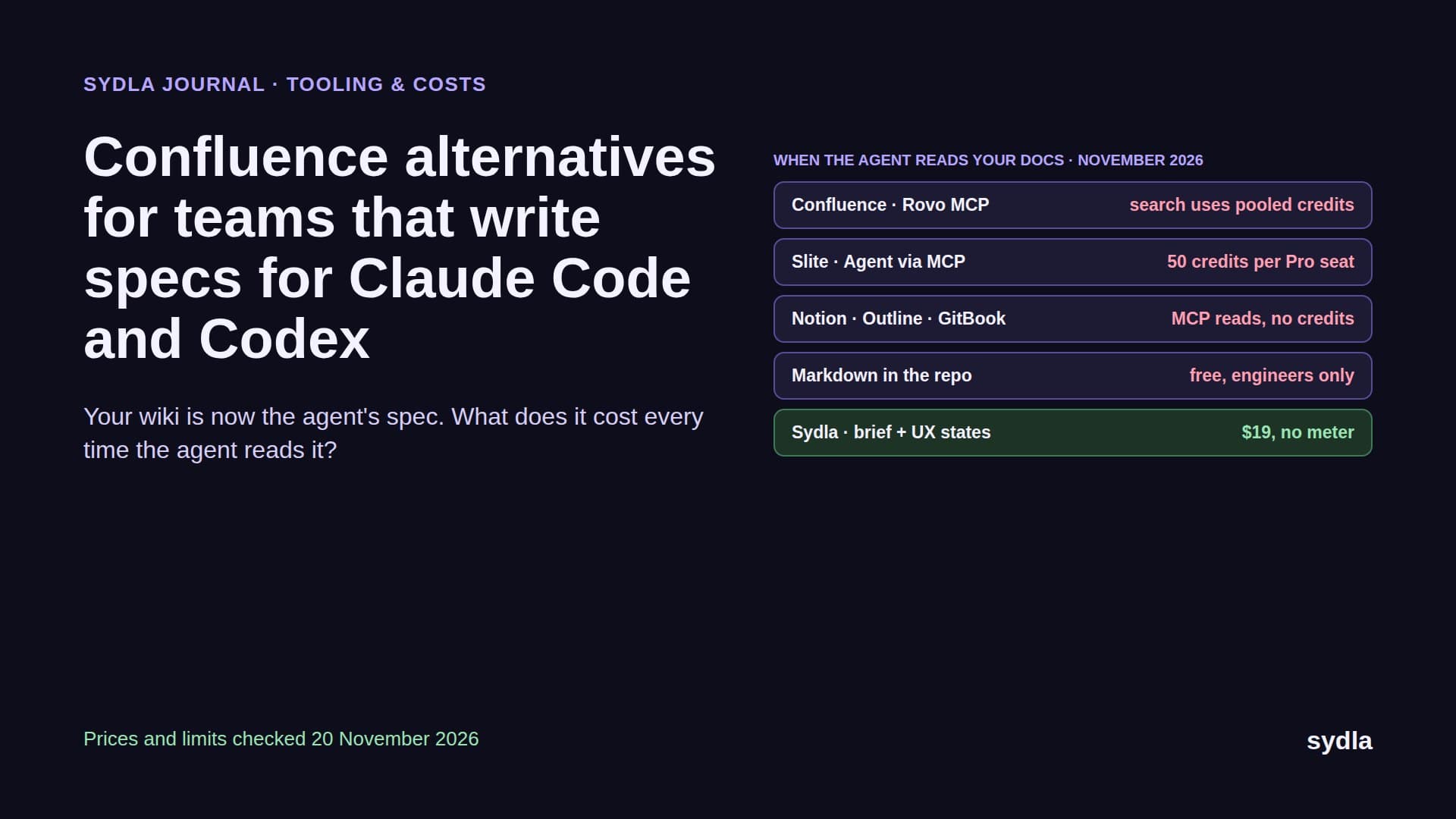
| Confluence Standard | $7.15 | Spec, decisions, runbooks | Same Rovo pool and the same per-call credits |
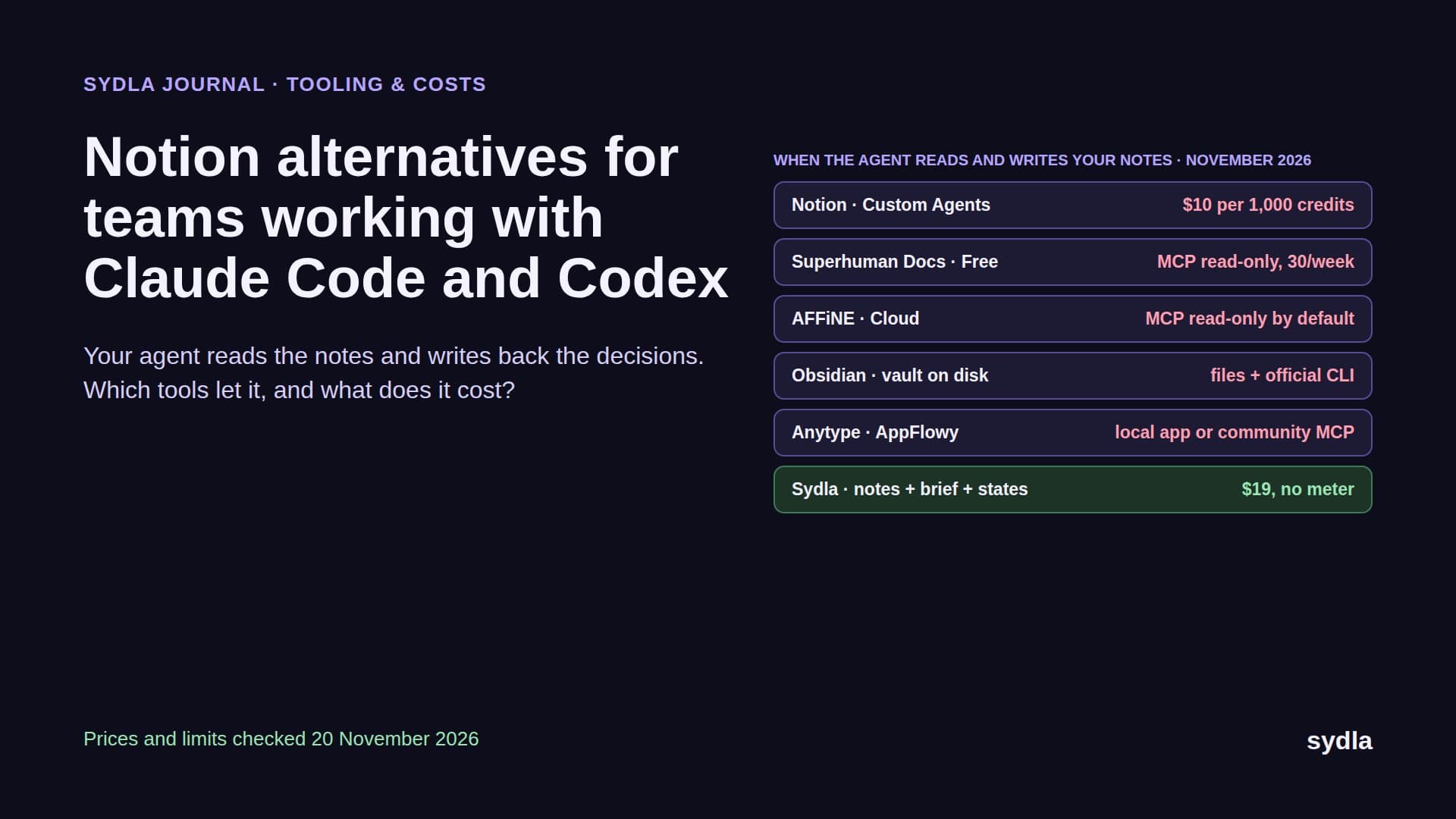
| Notion Plus | $12.00 | Meeting notes, product decisions | Notion MCP on all plans; its own agents need Business, $10 per 1,000 extra credits |
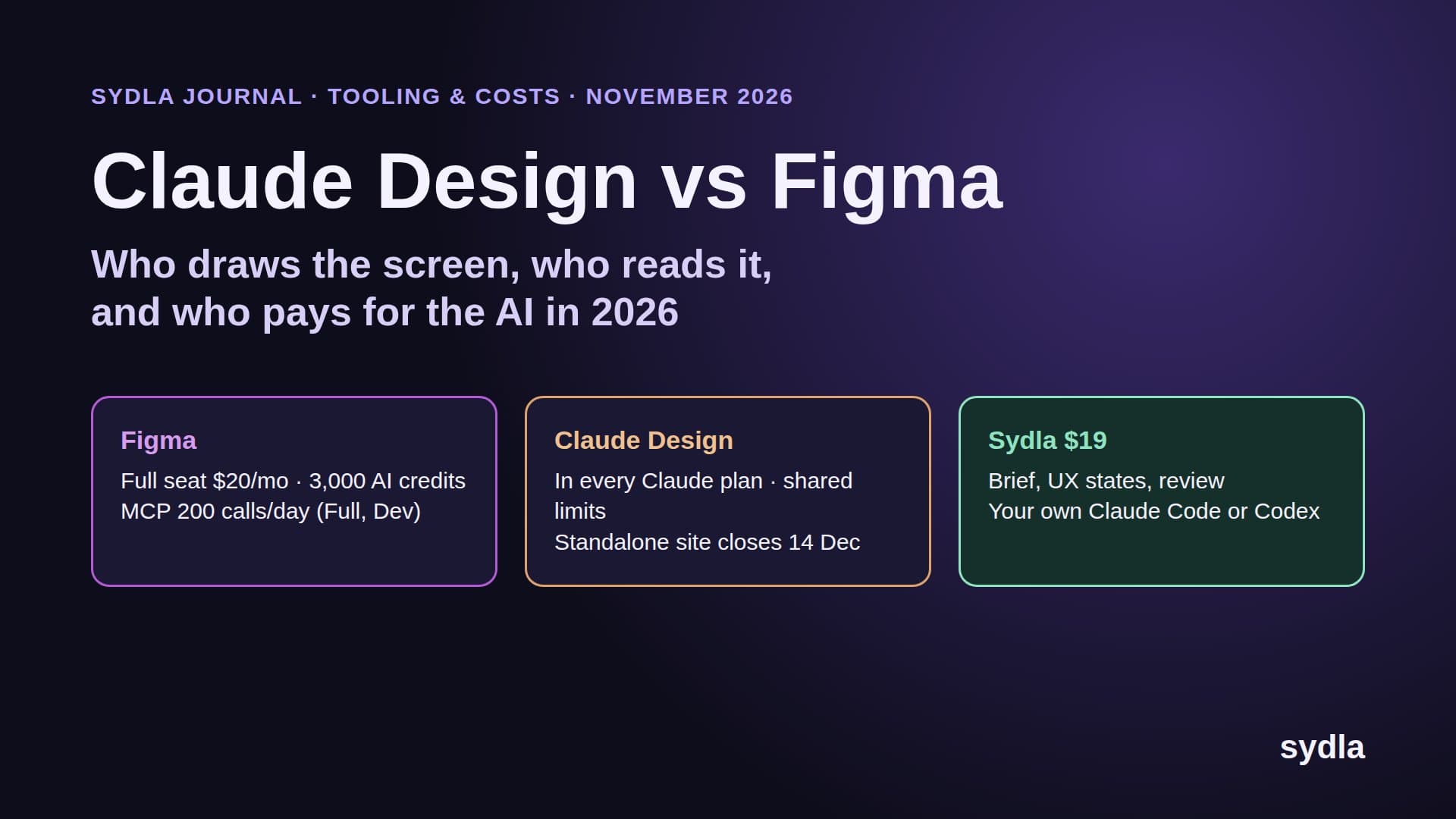
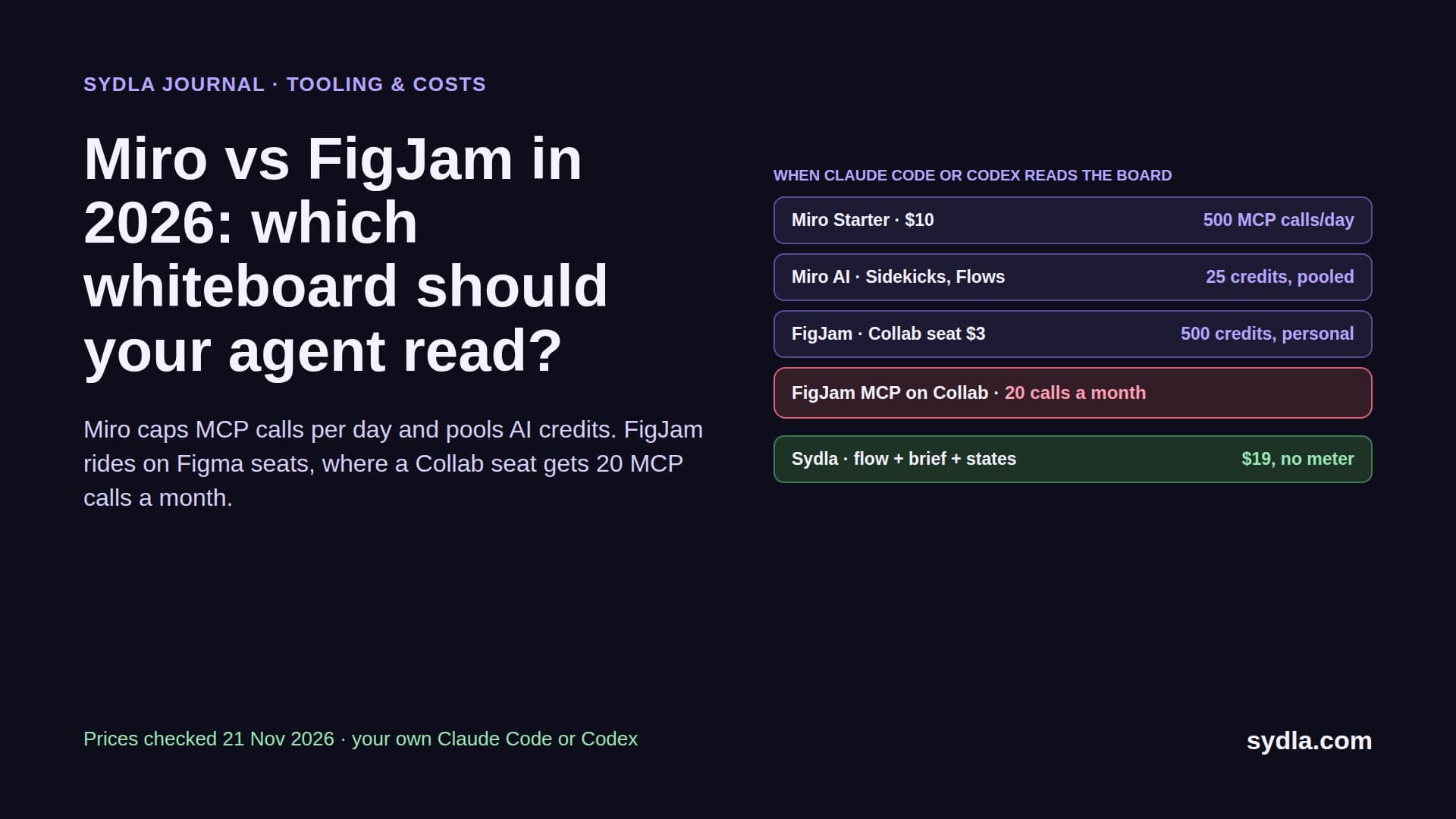
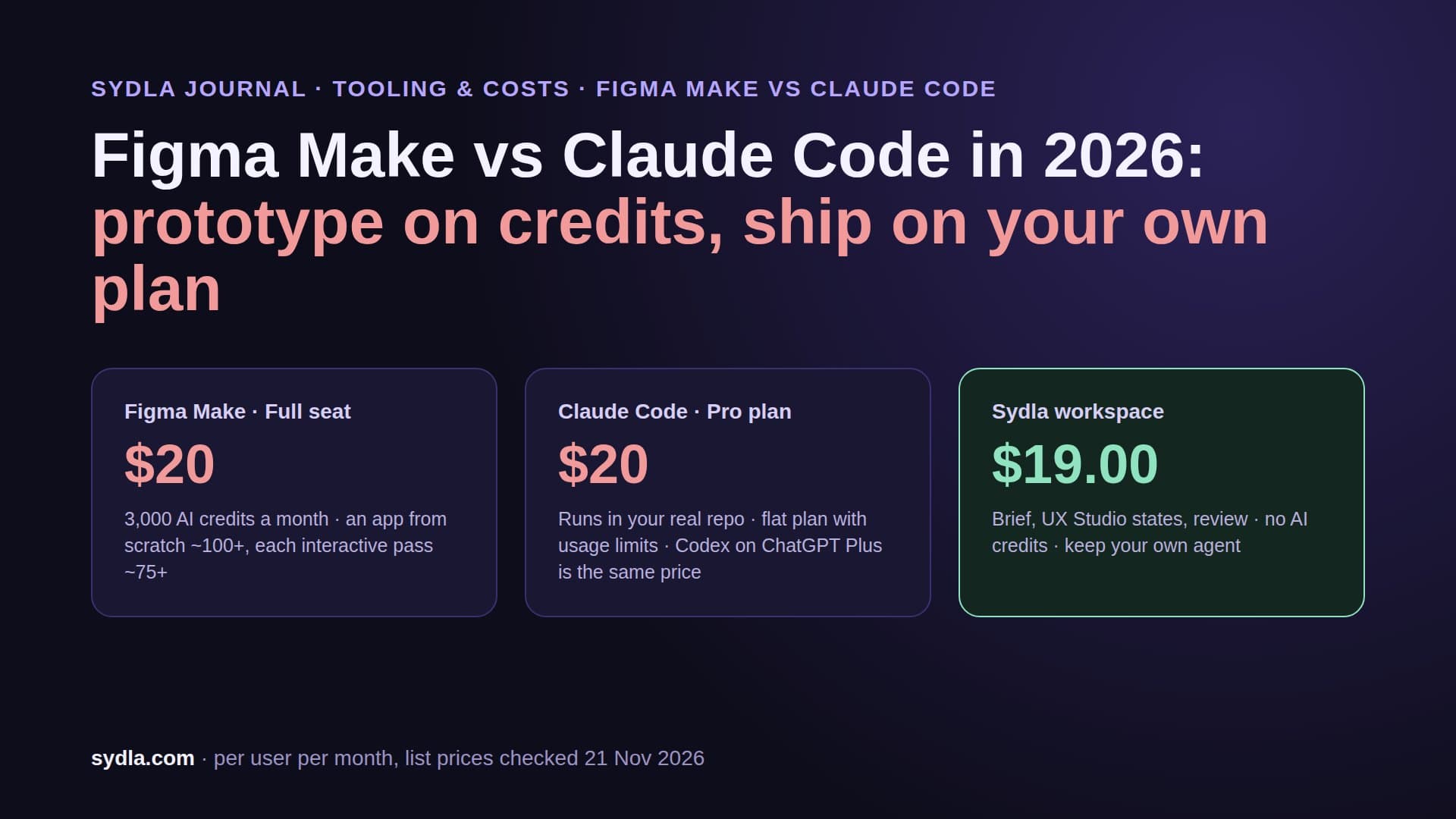
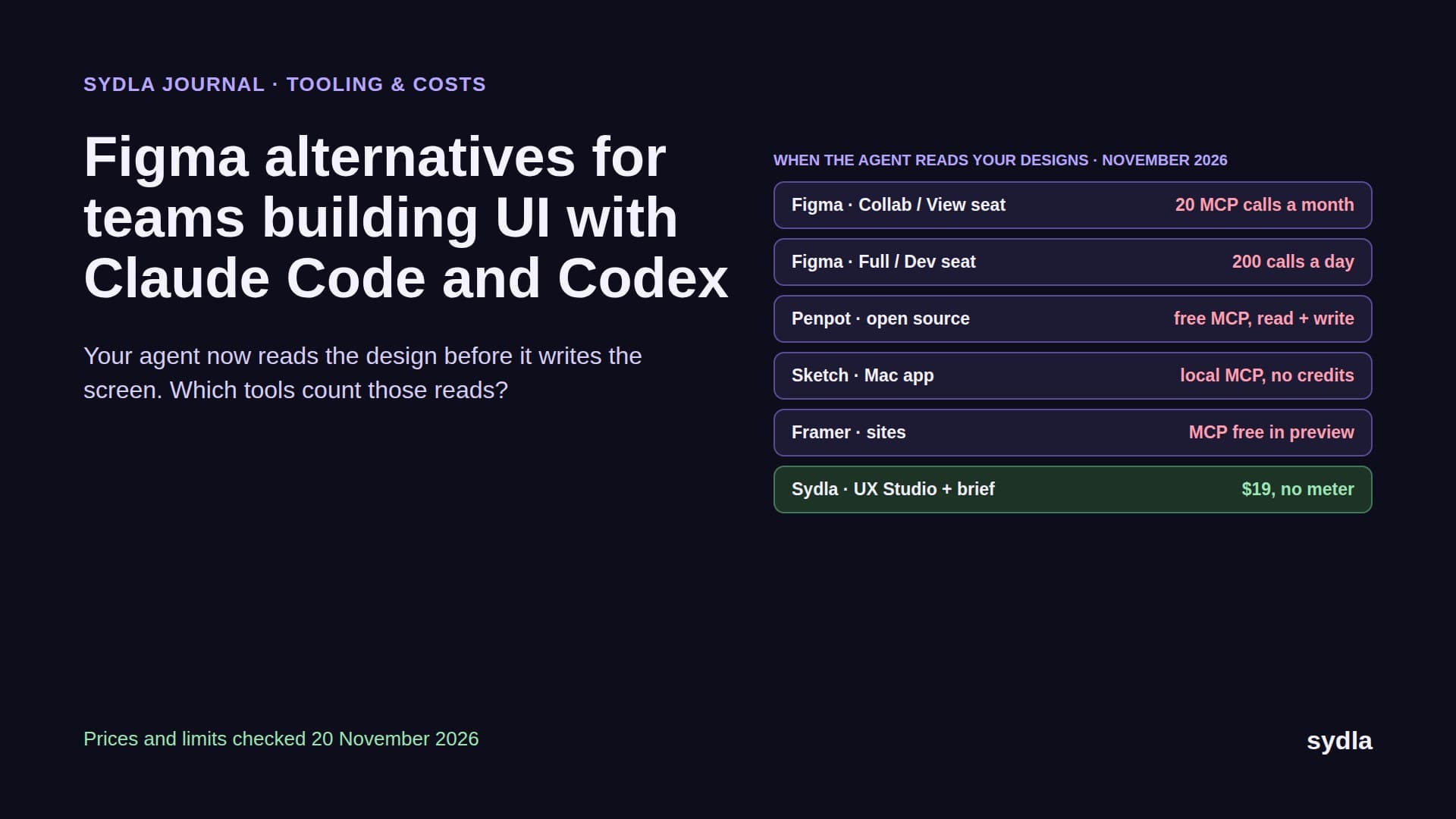
| Figma Professional Full | $20.00 | Frames, components, tokens | 200 MCP reads a day on Full and Dev seats, 20 a month on View and Collab; large frames come back as sparse metadata |
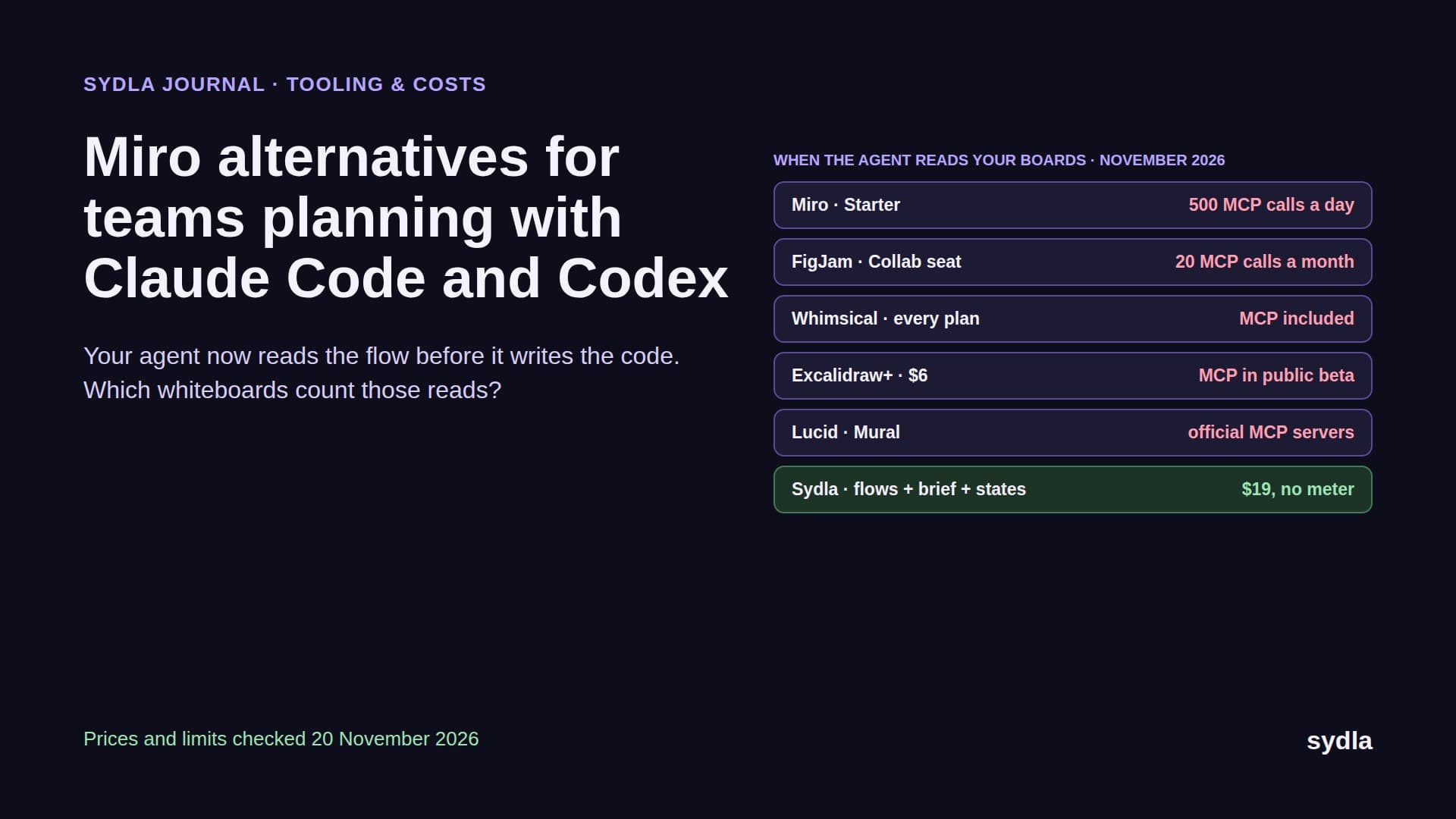
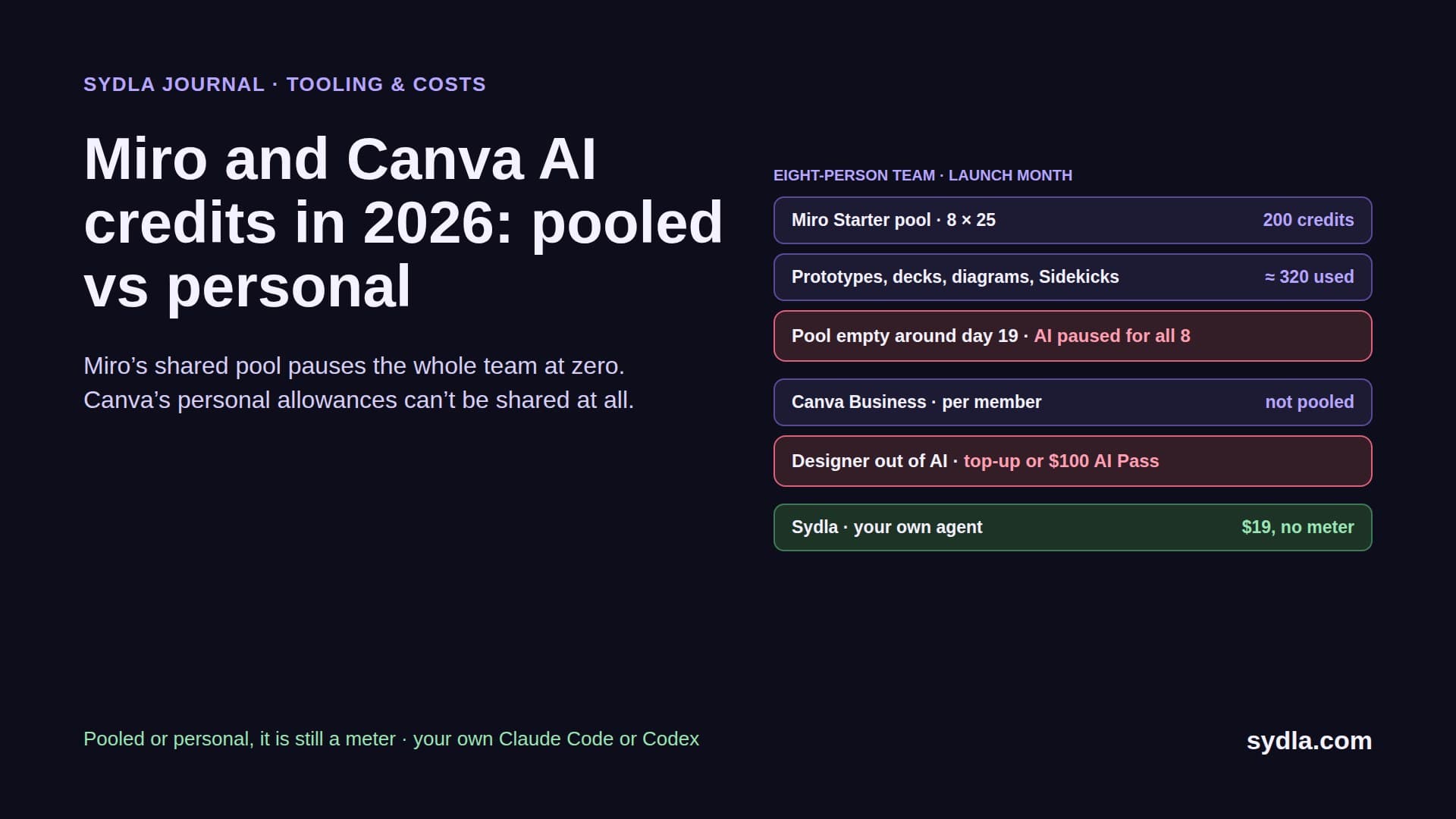
| Miro Starter | $10.00 | User flows, workshop boards | Miro MCP from 100 to 10,000 calls a day by plan |
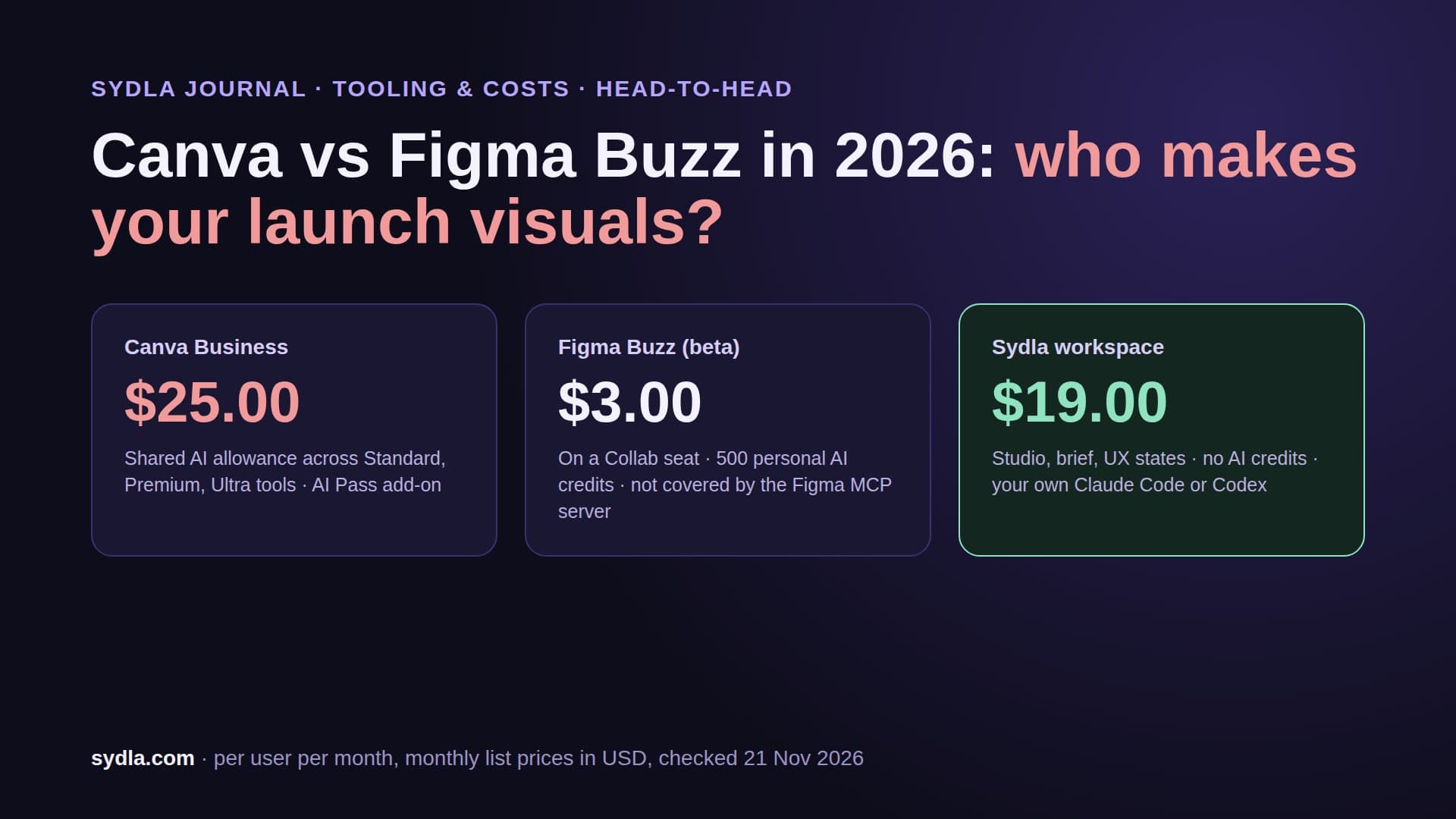
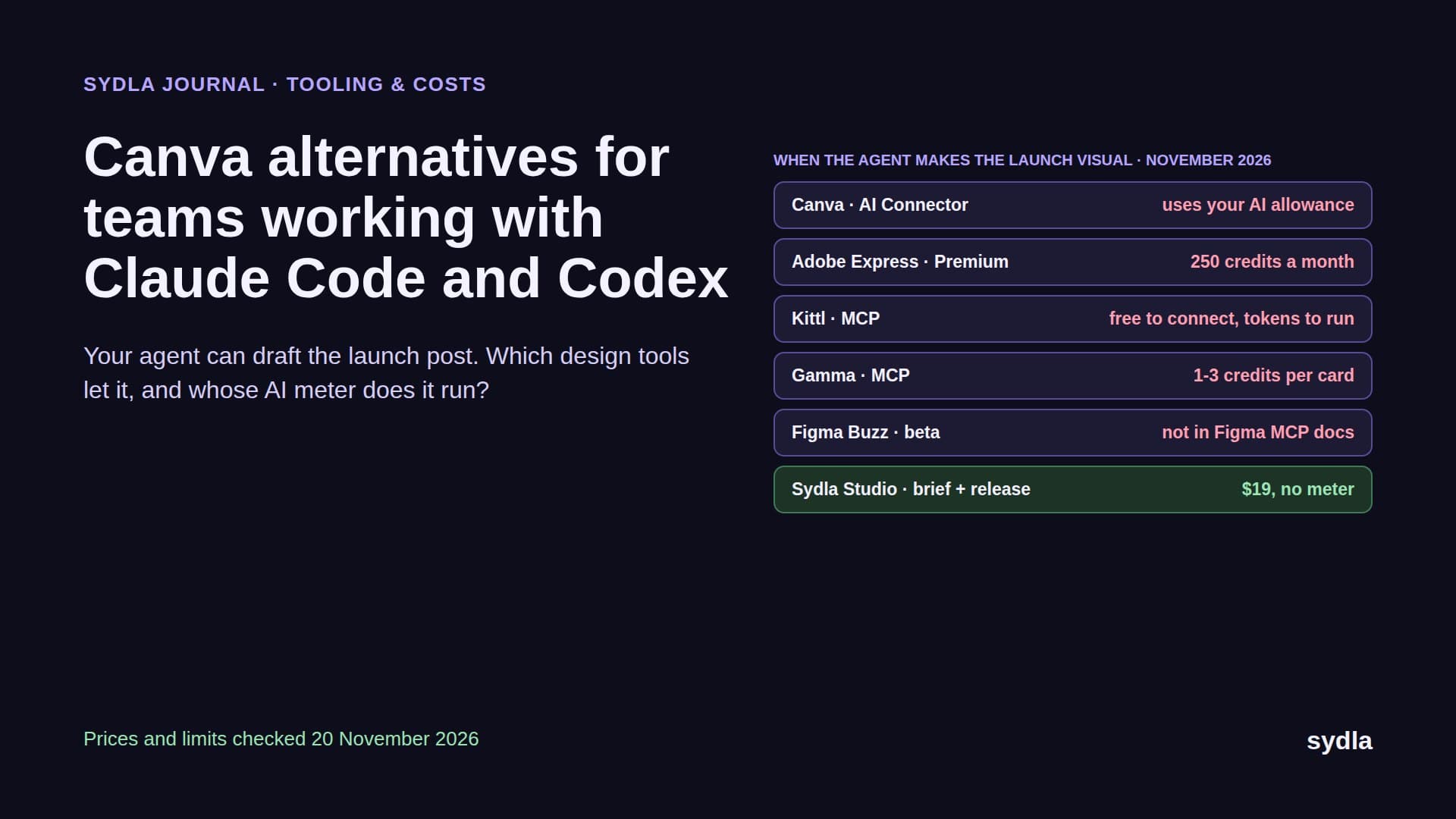
| Canva Business | $25.00 | Launch visuals, brand kit | A connector for chat assistants, outside the code loop |
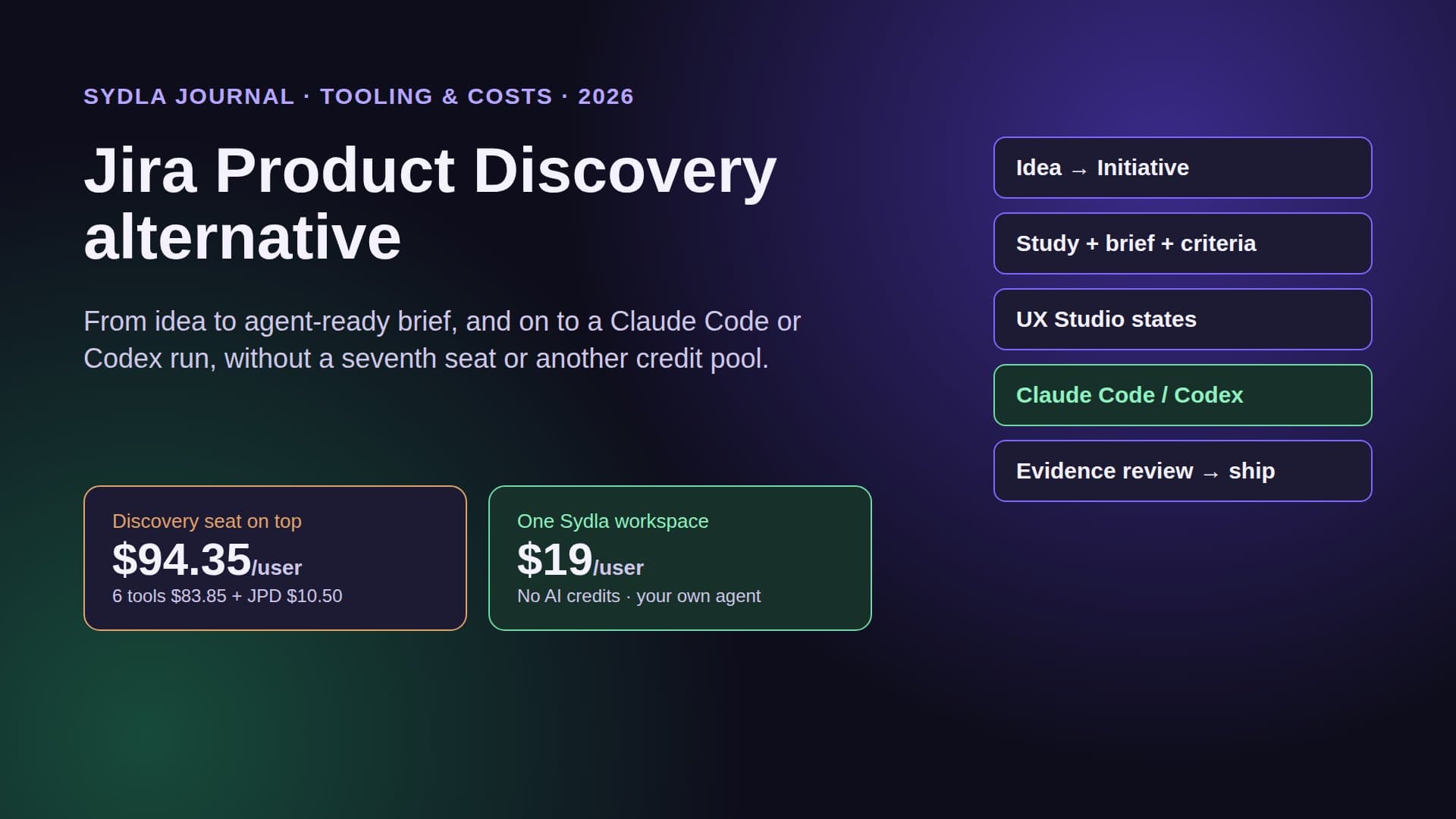
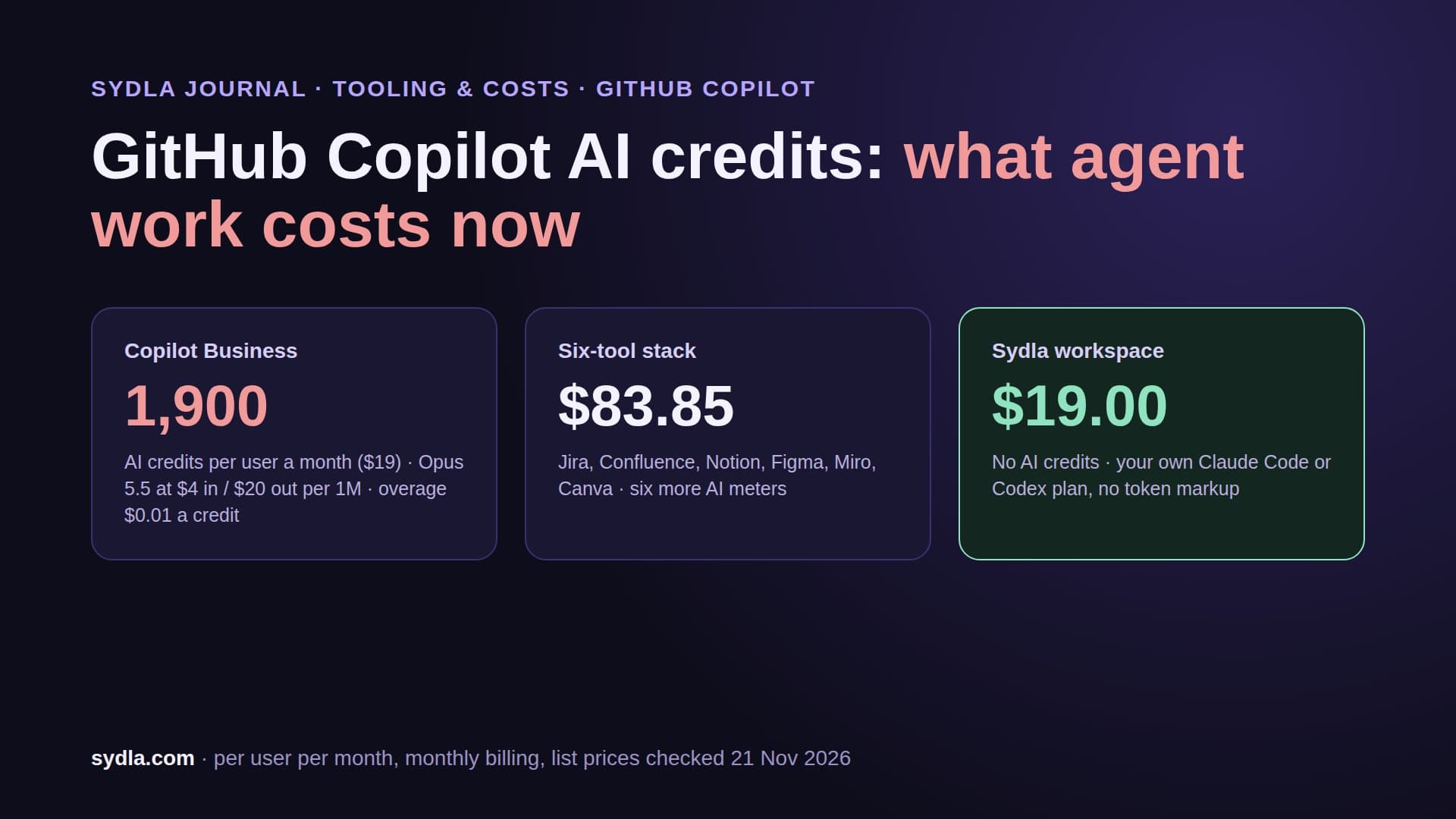
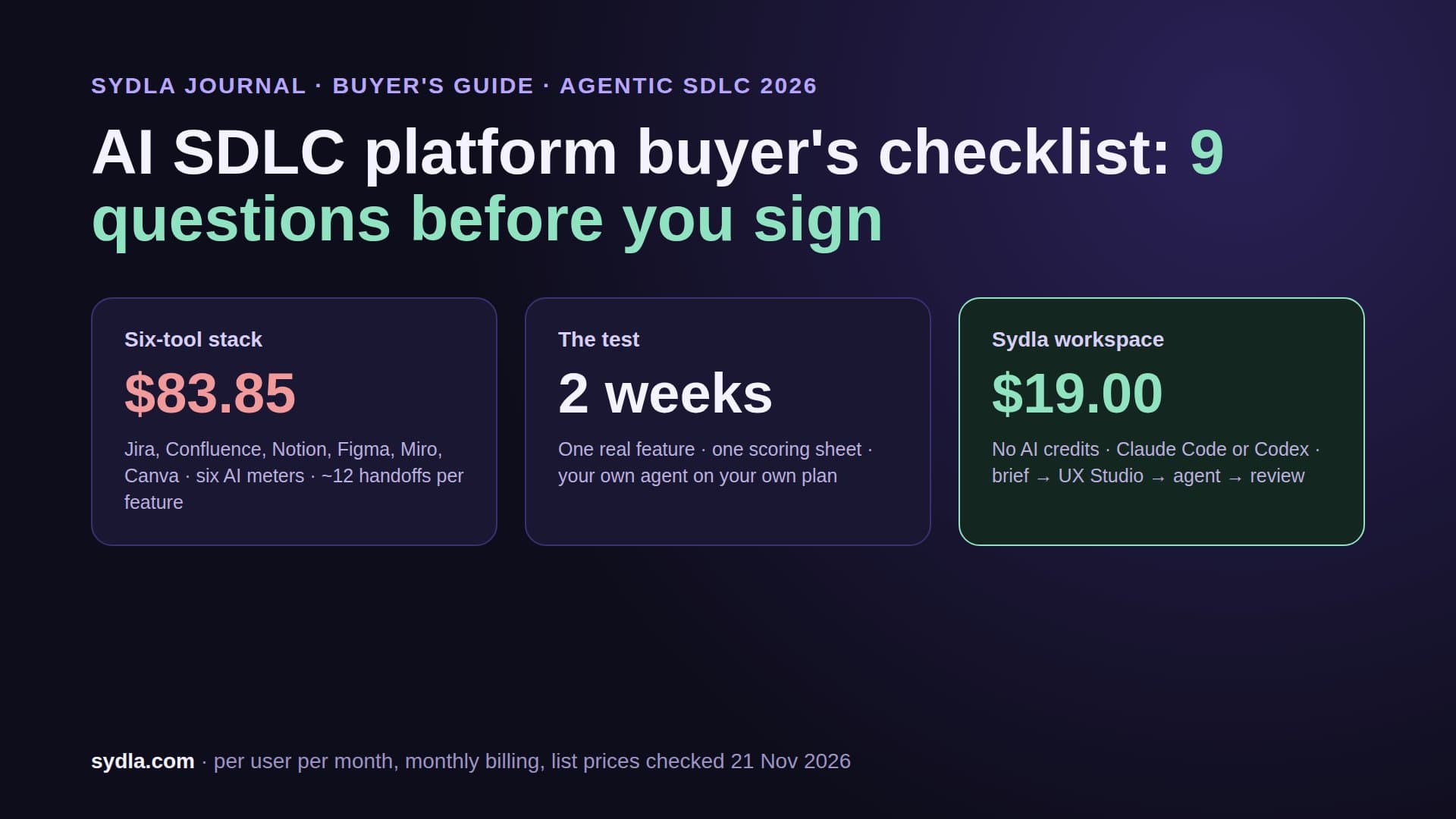
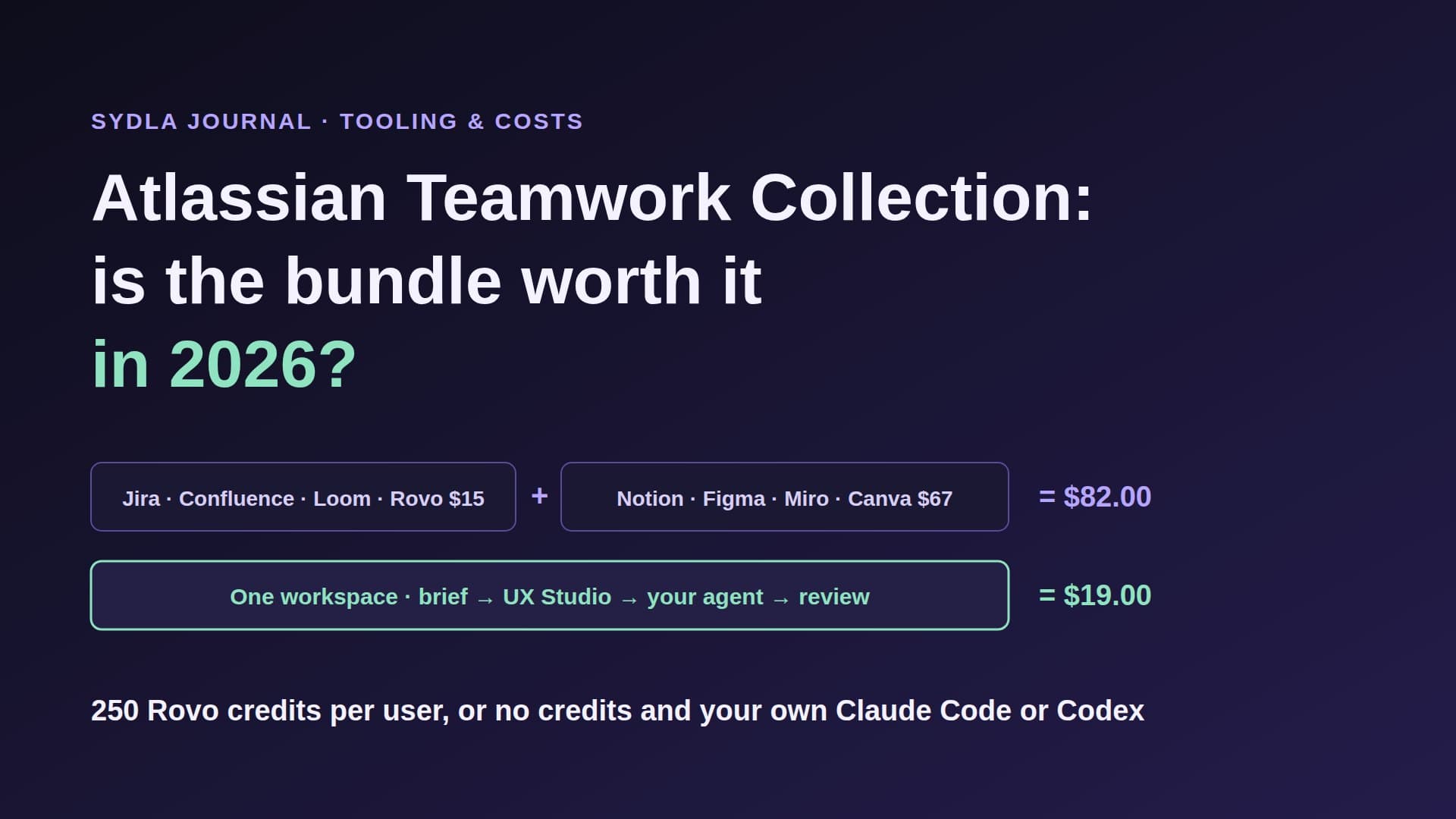
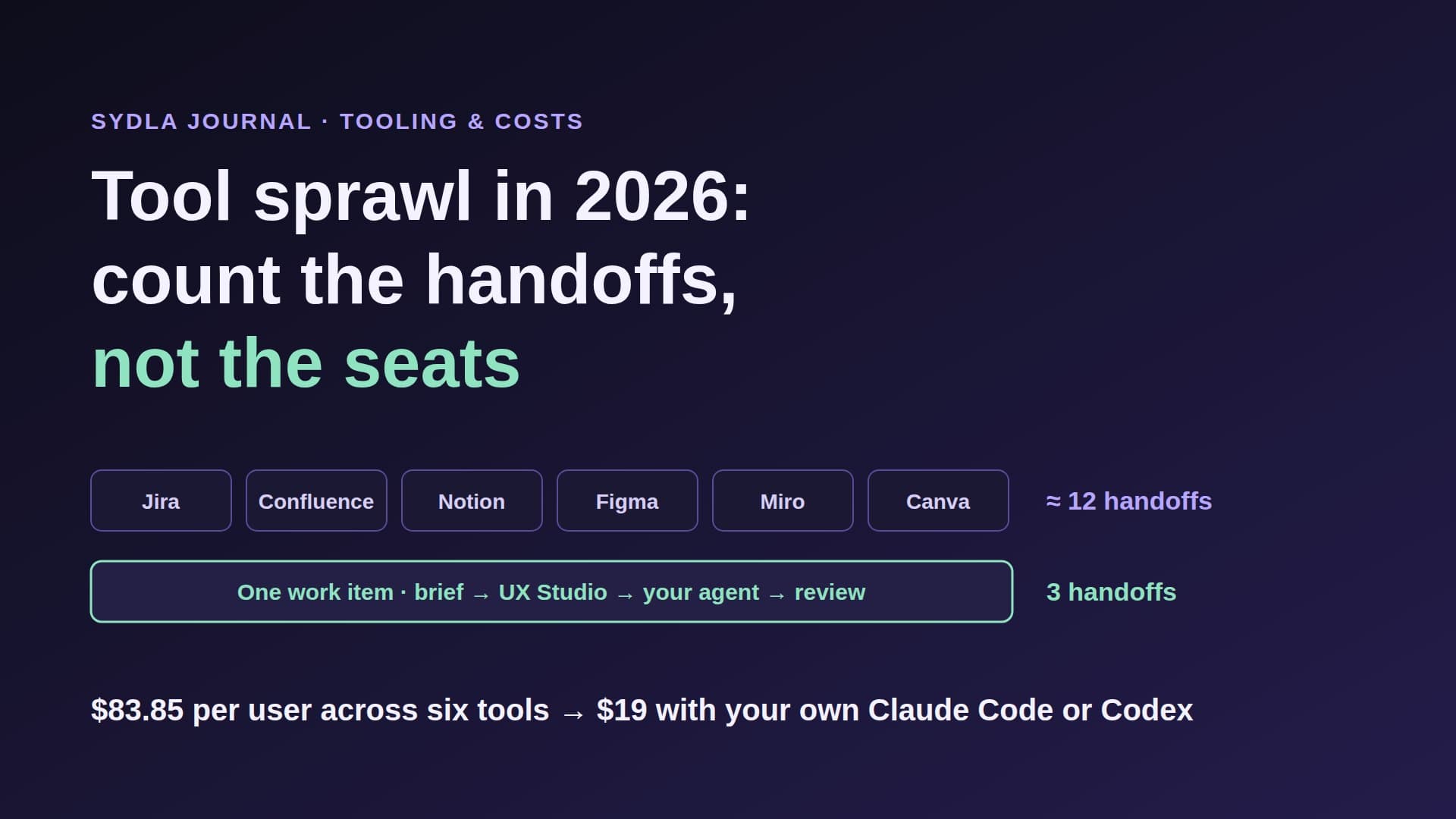
| Six-tool stack | $83.85 | Six partial views of one feature | Five MCP connections, six meters, six sign-ins |
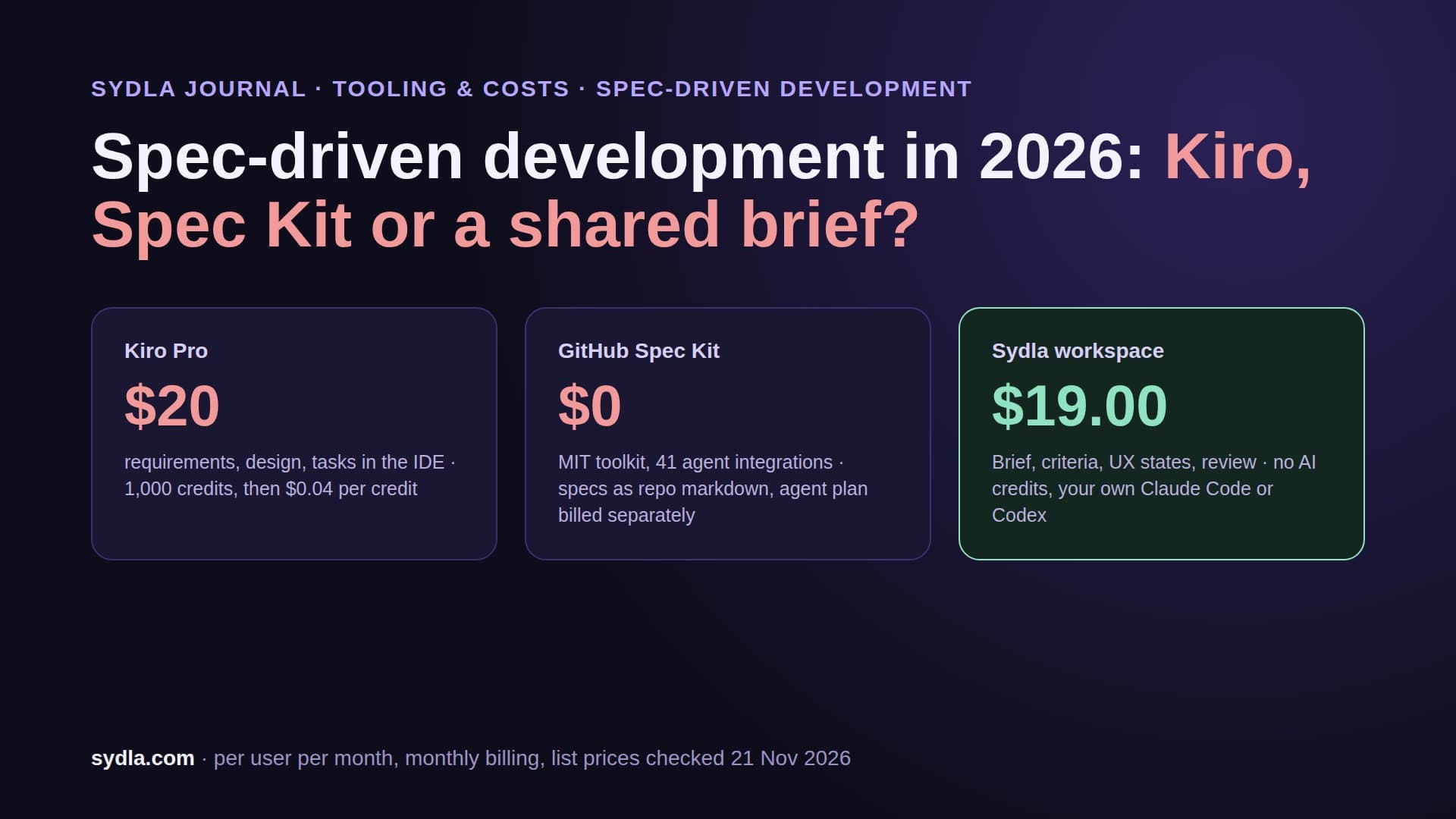
| Sydla workspace | $19.00 | Brief, criteria, UX states, decisions and run evidence on one work item | One MCP connection, no Sydla AI credits, your own Claude Code or Codex plan |
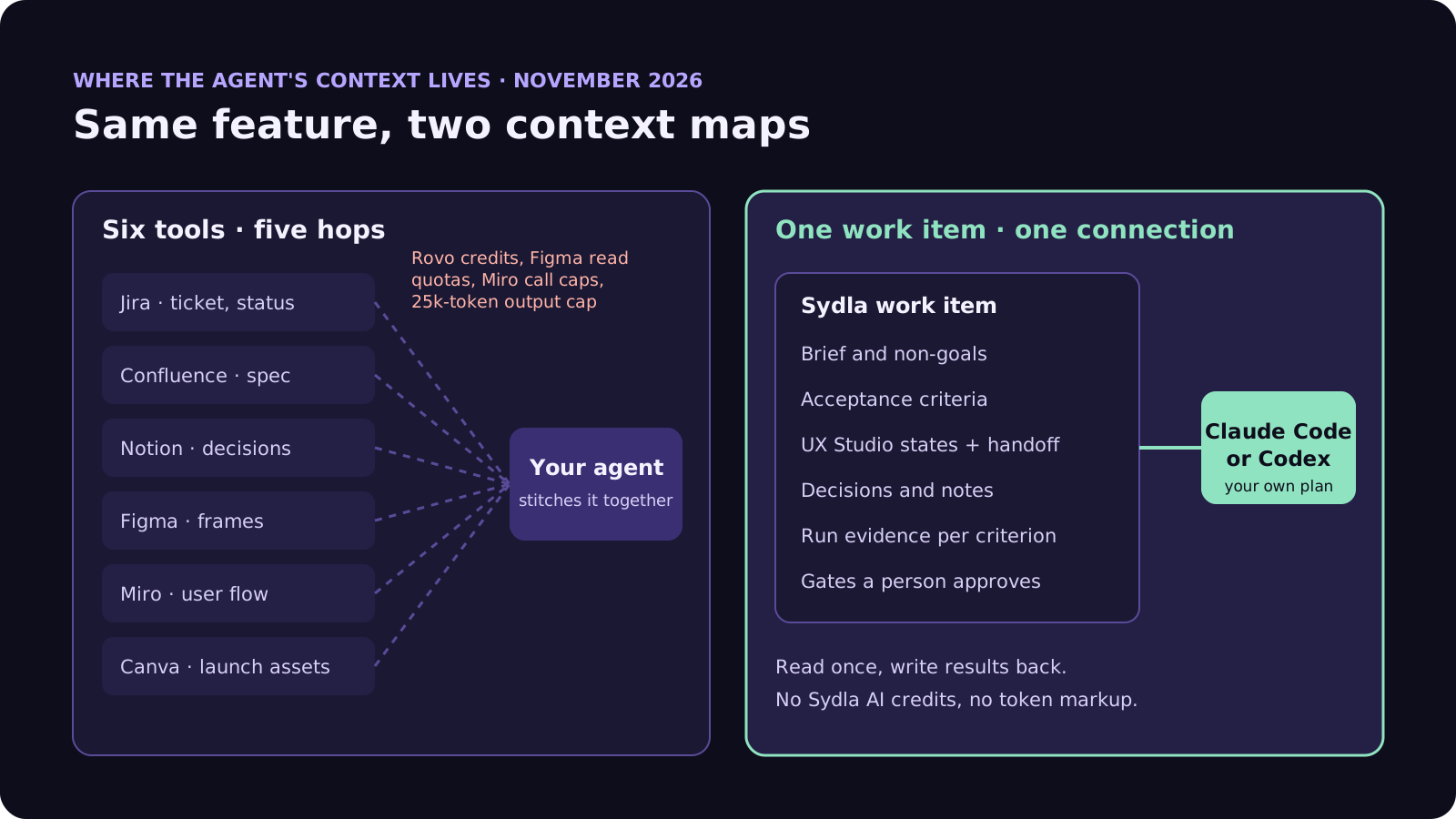
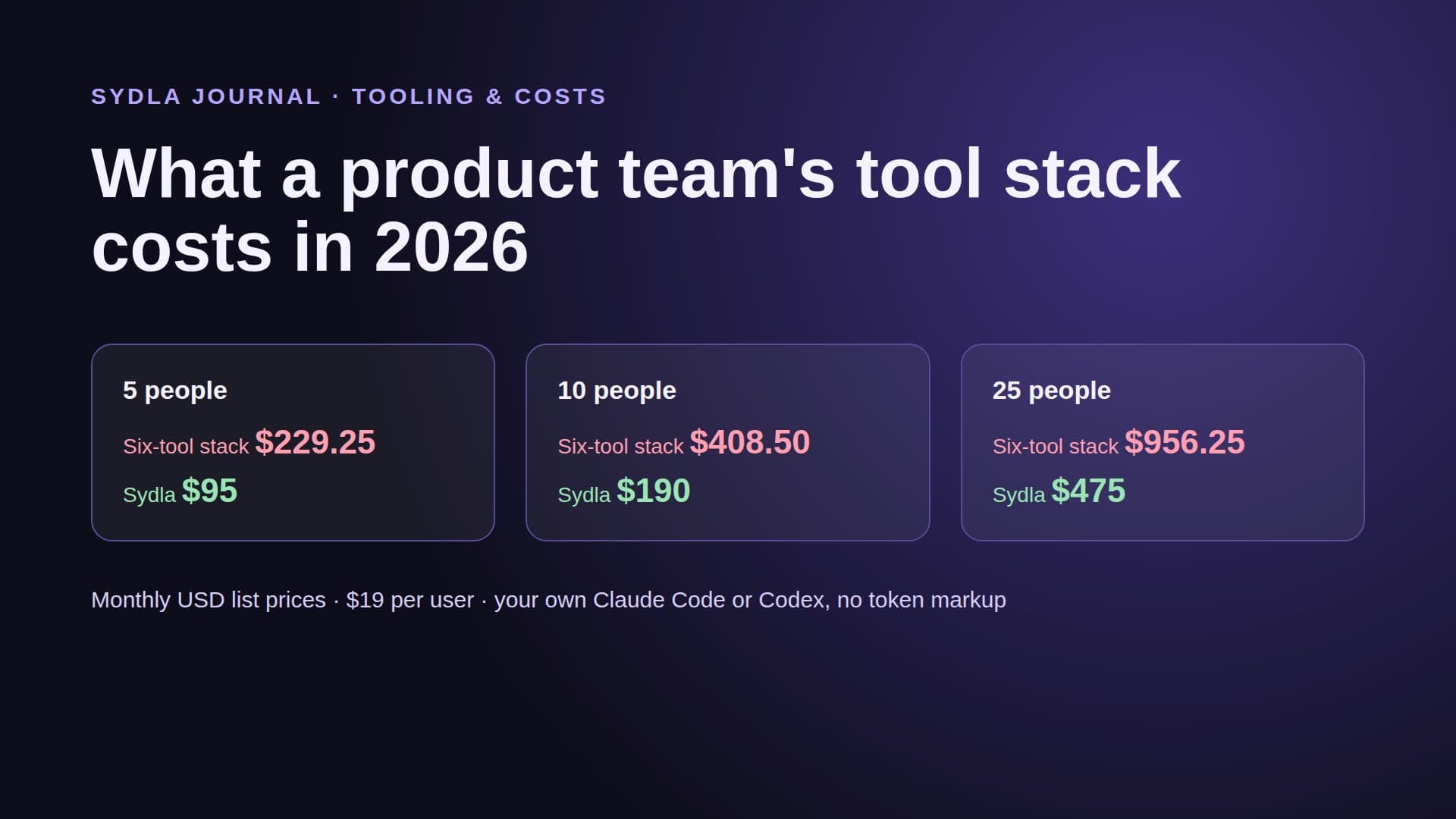
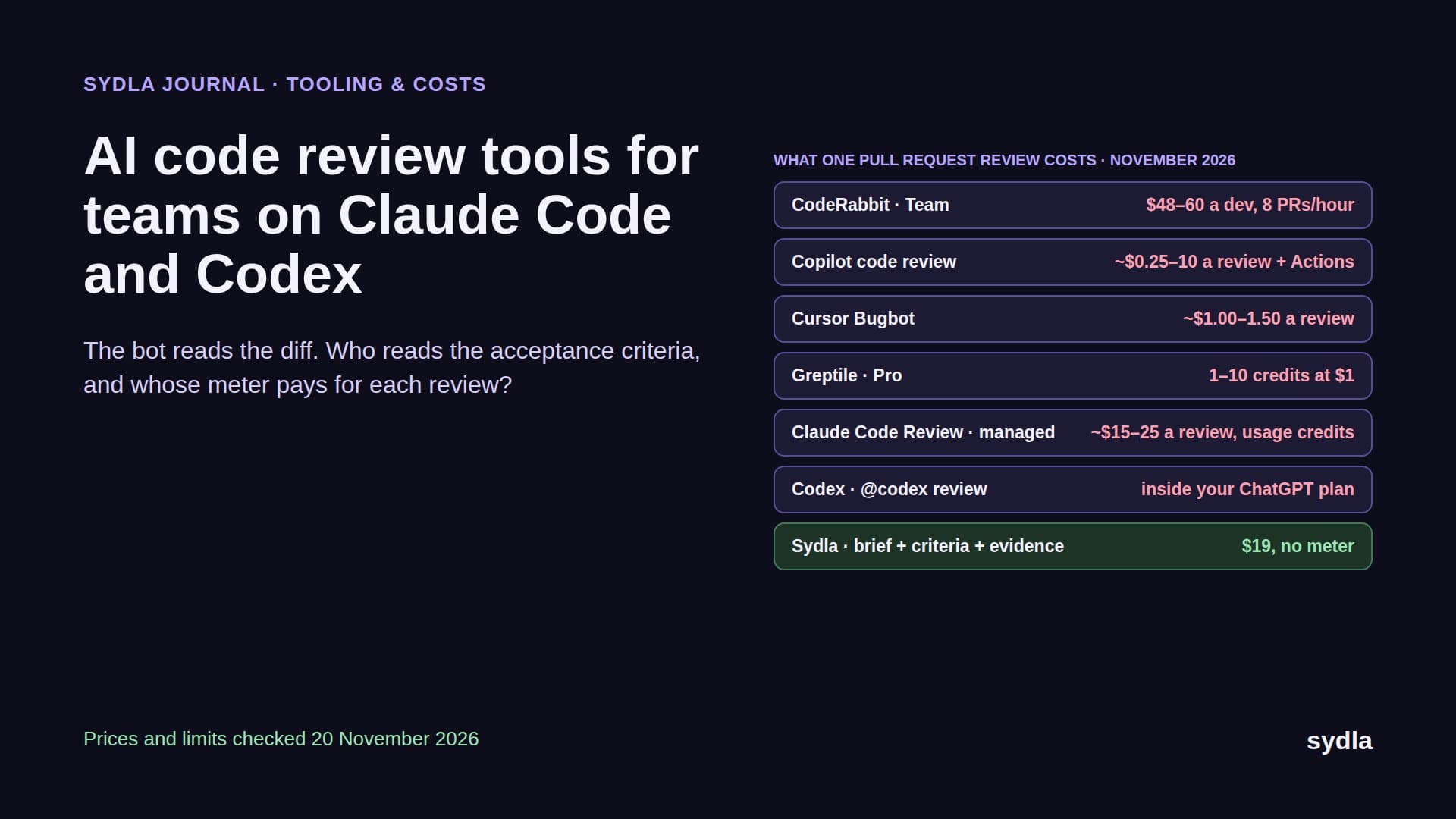
The money is the easy part to see: $64.85 per user per month, before any extra credits. The harder cost is in the window. Claude Code shows a warning when a single MCP result passes 10,000 tokens and, by default, moves anything over 25,000 tokens out to a file. One large Figma frame or a long Confluence page can use a big share of that budget on its own, and the agent still has to work out which of six sources is the latest. Our comparison hub is honest about where each tool still wins, and the MCP servers guide counts the hops in detail.
Five rules for engineering the context of one ticket
You don't need a new tool to start. These rules work in any stack, and they get easier when the context lives in one place.
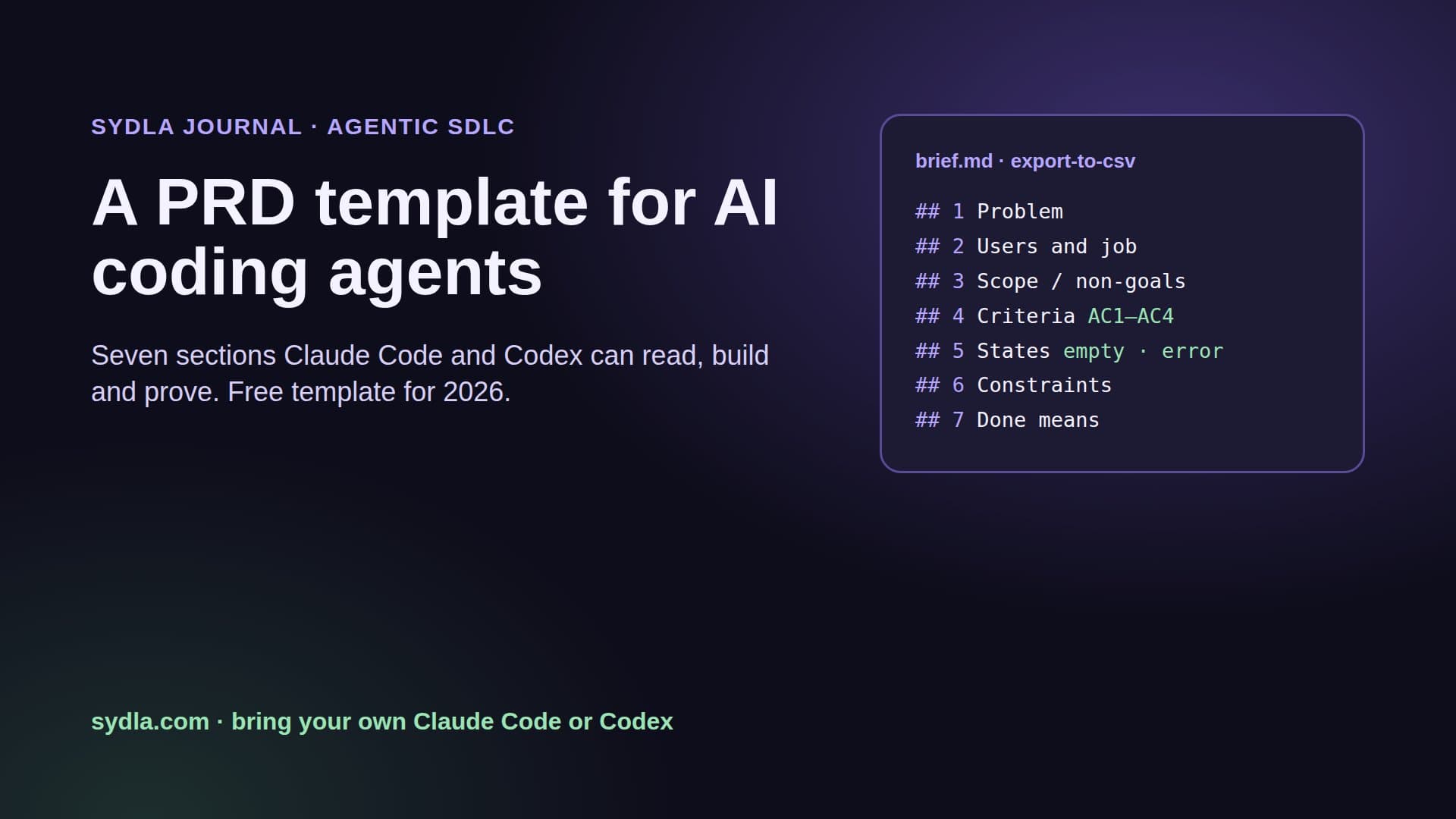
- Write the brief for a reader with no memory. The agent was not in the meeting. Put the problem, the users, the scope, the non-goals and the decisions in the brief itself, not in a link to a thread. Our PRD template for AI coding agents has the seven sections that matter.
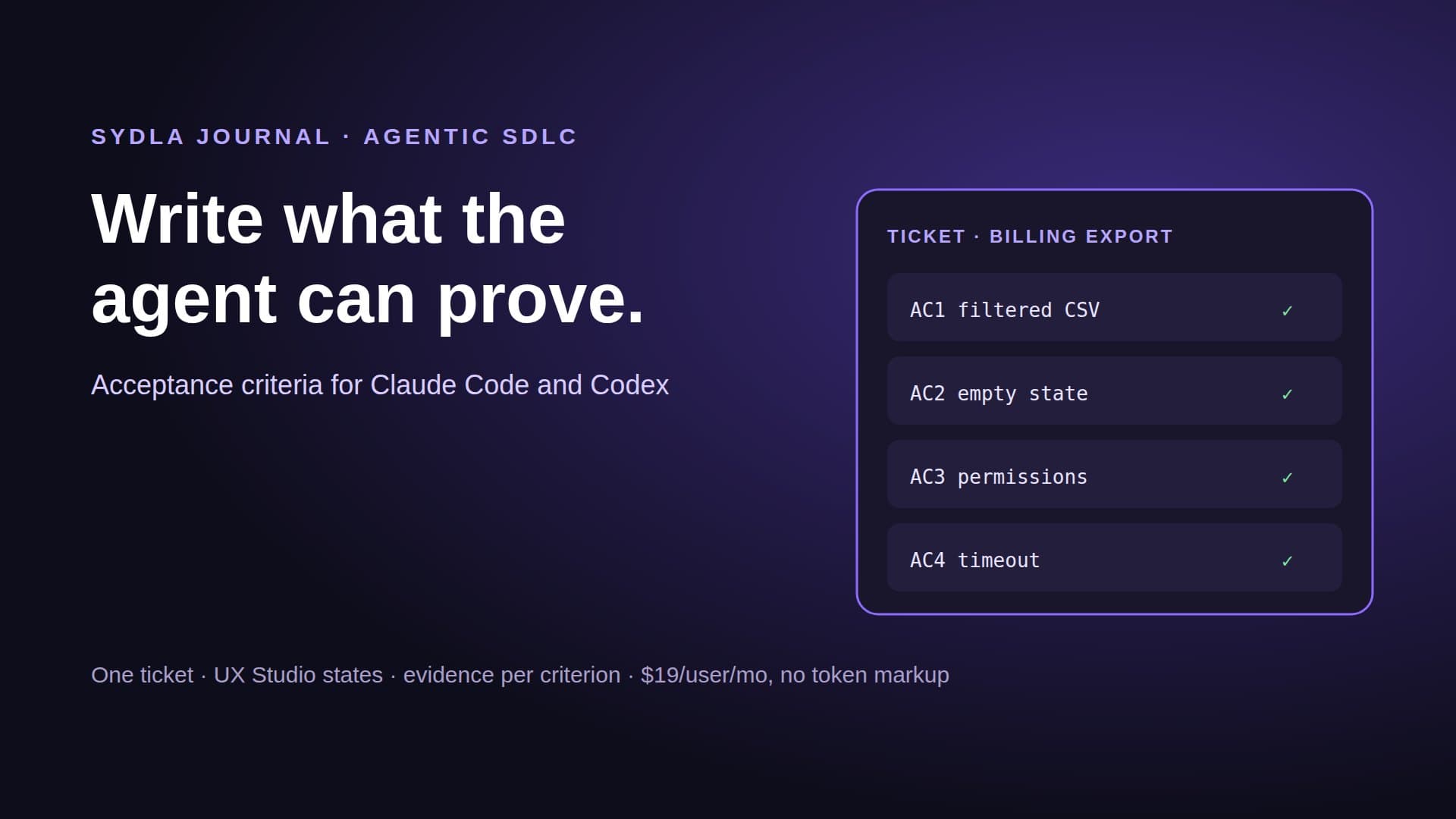
- Make every criterion checkable. A criterion the agent can run as a test is worth more than a page of prose. Name the state, the input and the expected result.
- Give states, not screenshots. A frame shows one moment. An agent needs the empty, loading, error and success states and what moves between them. See our design-to-code handoff guide.
- Retrieve just in time, from one source. Let the agent pull the work item when it starts and the design state when it reaches the UI, through one connection. Every extra server adds tool names, sign-ins, rate limits and a chance to read a stale copy. Claude Code's own cost guide says to run /context to see what fills the window.
- Write results back where the next reader looks. The agent should record what passed and what failed against each criterion on the work item itself. The reviewer, the next session and the next agent then start from evidence, not from a chat log that was compacted away.
How Sydla Desktop connects Claude Code or Codex to the brief and UX Studio
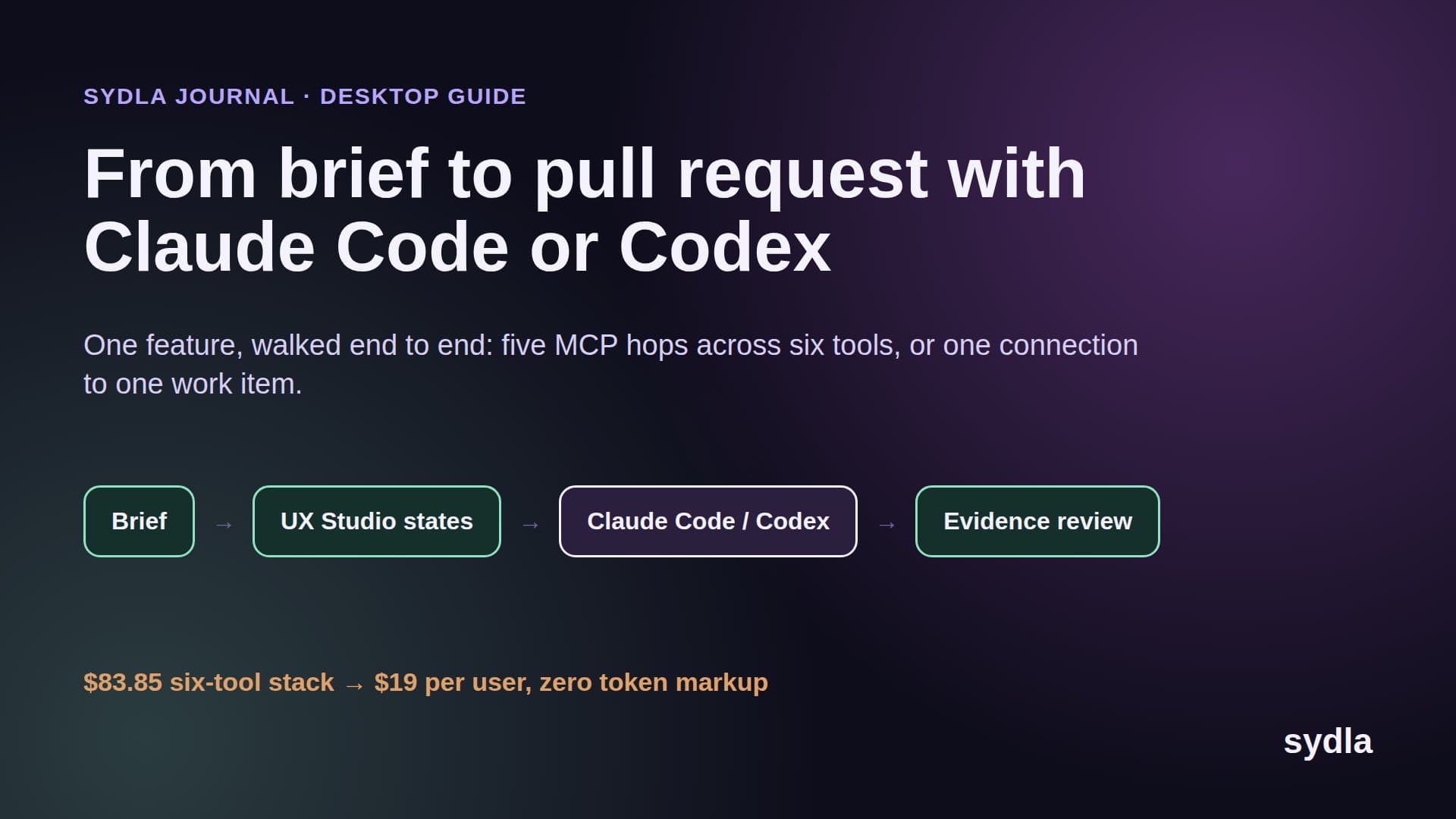
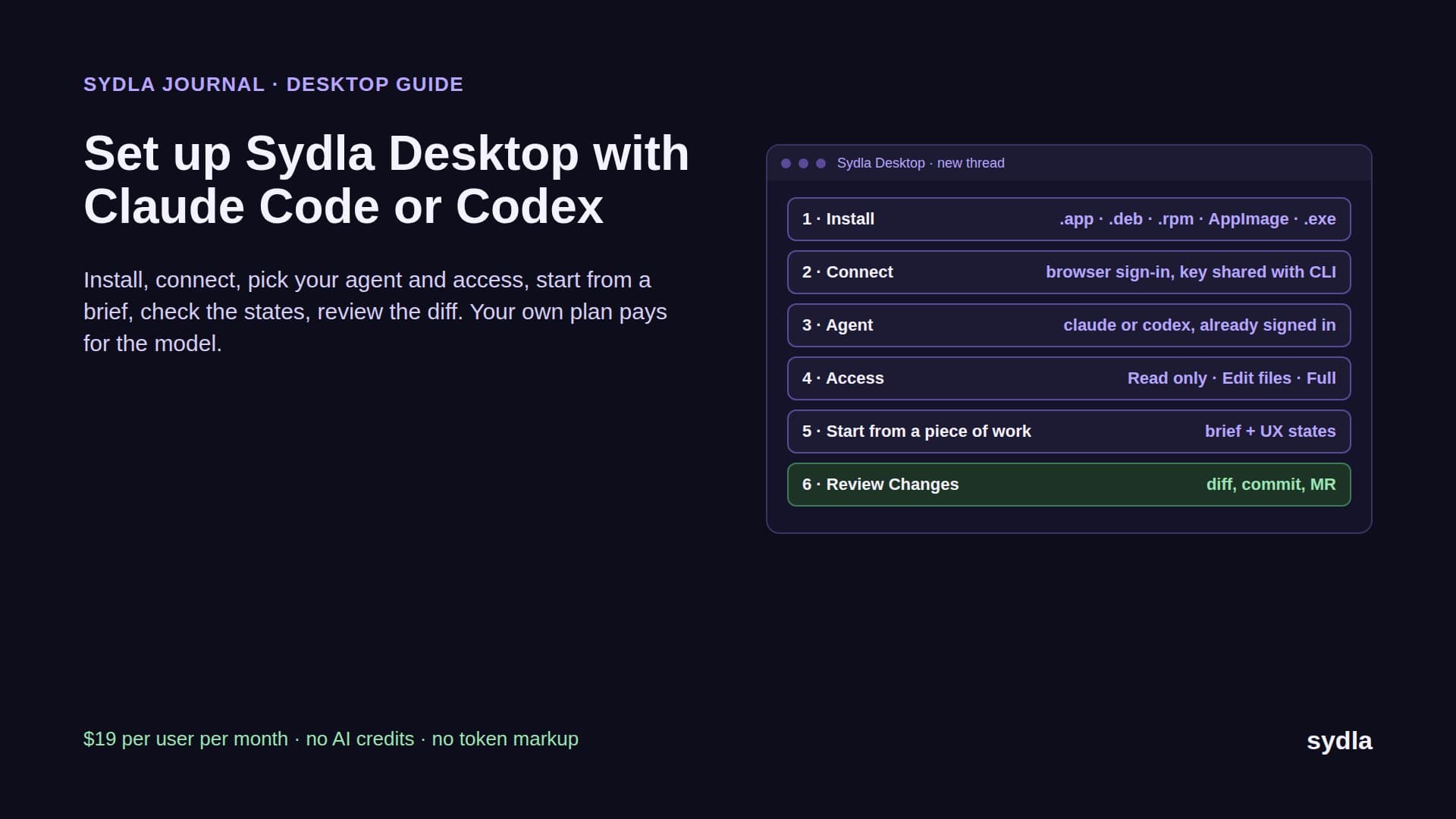
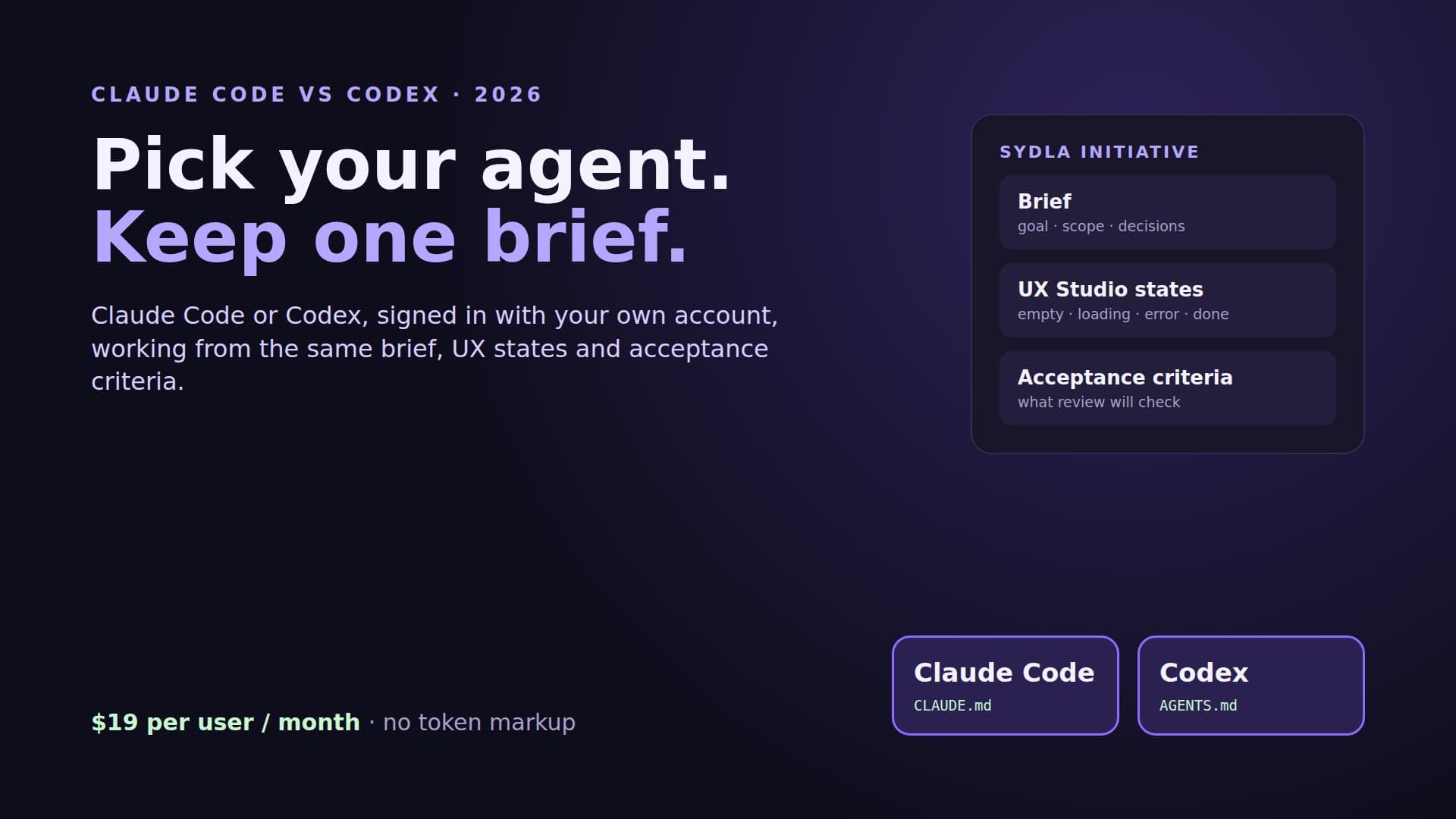
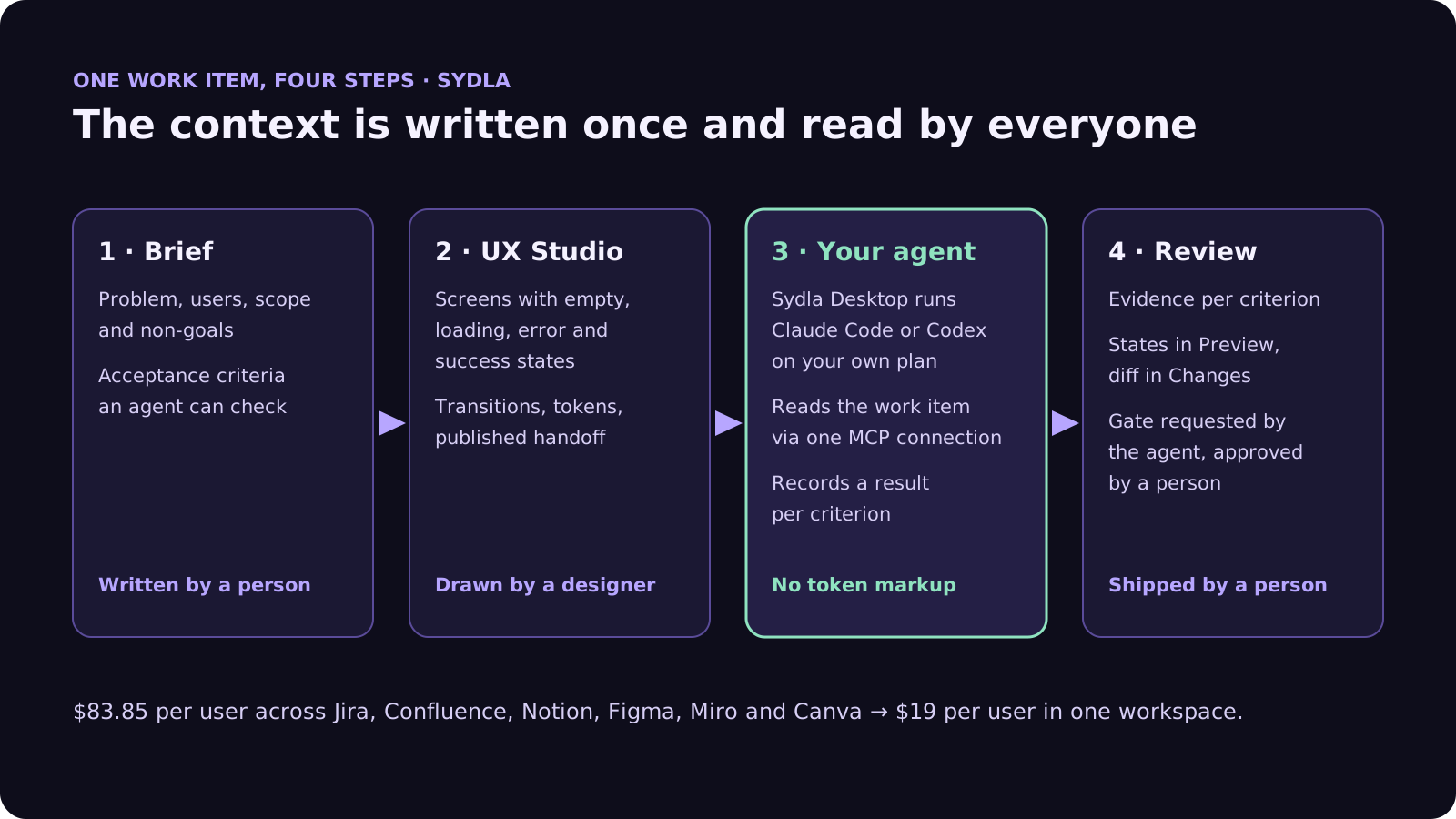
Sydla is built around these rules. The brief, the acceptance criteria, the UX Studio states, the decisions and the run evidence sit on one work item, and Sydla Desktop runs the agent your engineers already pay for against it. Here is one feature, end to end.
- The product owner writes the brief. Problem, users, scope, non-goals and acceptance criteria go into a Sydla doc linked to the initiative. That one page replaces the Jira ticket, the Confluence spec and the Notion decision log that used to drift apart.
- The designer draws the states in UX Studio. Each screen gets its empty, loading, error and success states, the transitions between them and the design tokens, then a published handoff. Engineers and agents read it without a design seat or a monthly read quota.
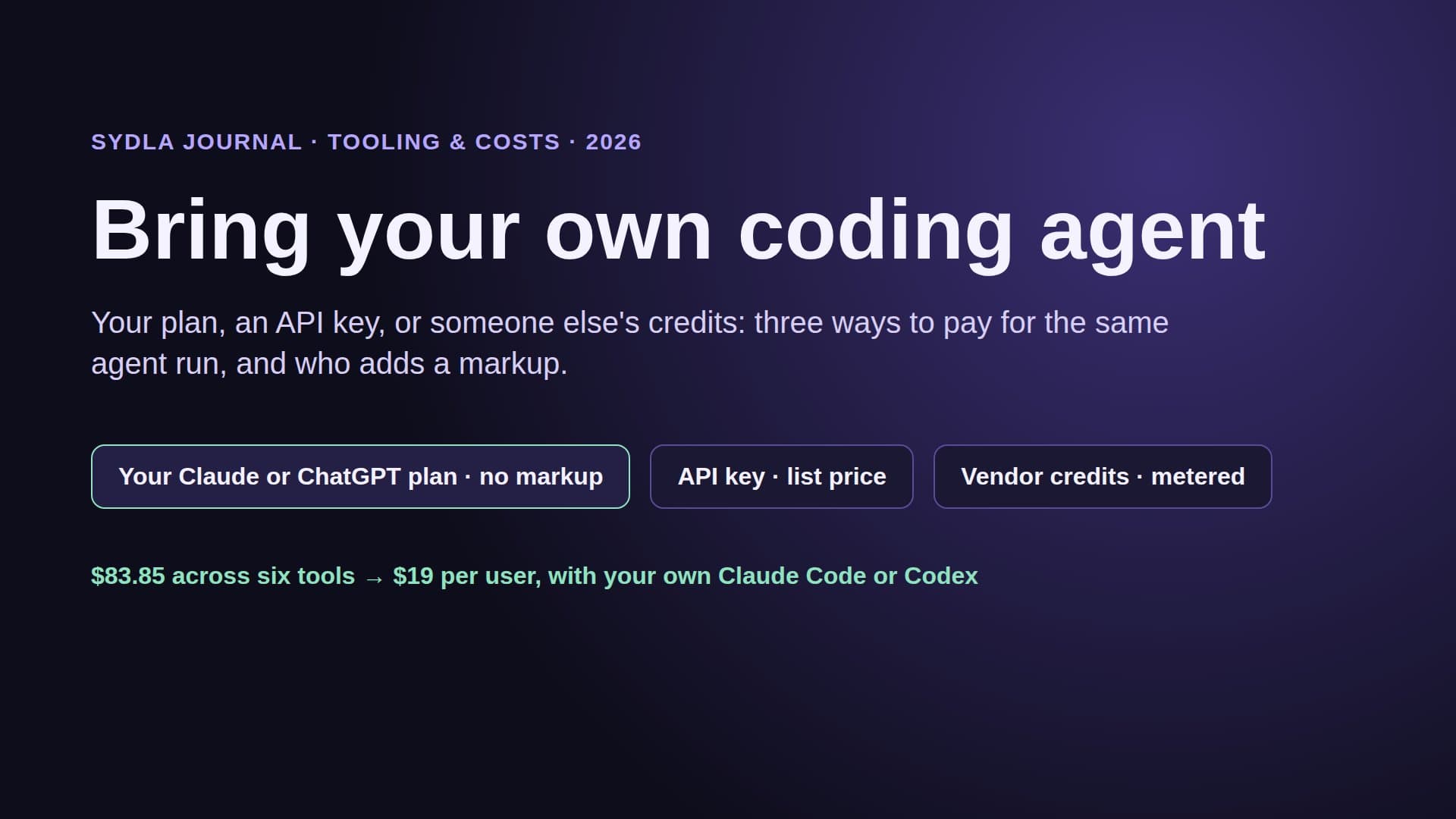
- The engineer opens a thread in Sydla Desktop. They start a thread from the piece of work and pick Claude Code or Codex and the model. Desktop runs the claude or codex CLI installed on their machine, signed in with their own Claude or ChatGPT plan, or with an API key if that is how they set it up. Sydla adds no token markup.
- The agent reads the work item through one MCP connection. It loads the initiative context, the ticket with its criteria and the UX handoff with every state, only when it needs each one. The repo's own CLAUDE.md or AGENTS.md still applies, because it is the real CLI with the engineer's settings and permission rules.
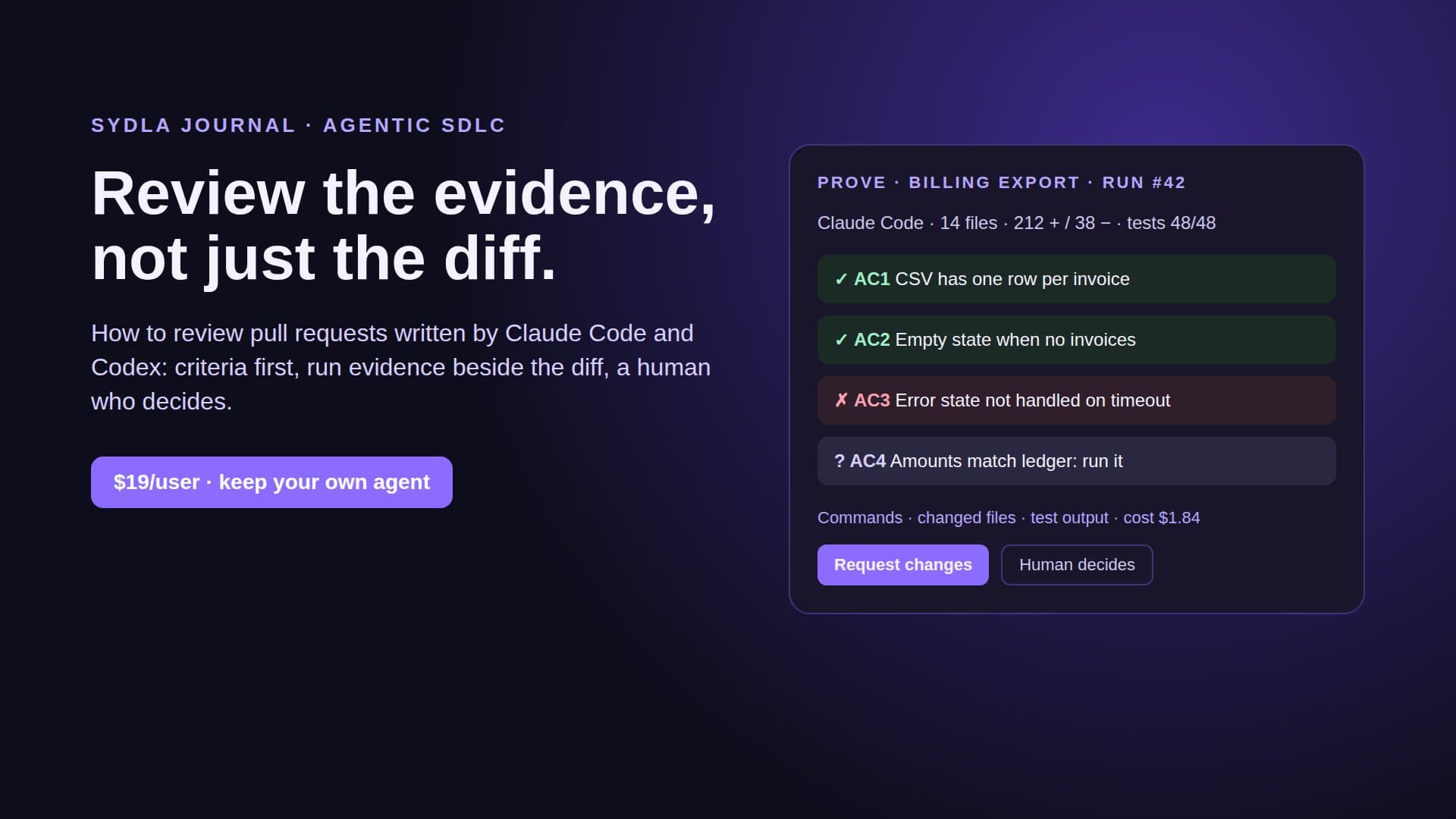
- The agent records evidence per criterion. As it works in a branch and runs the tests, it marks each acceptance criterion passed or failed, with a note. The result stays on the work item for the next session and the next person.
- A person reviews and ships. The engineer checks the states in Preview and the diff in Changes. The agent can request a gate; only a person approves it. Finish and Ship then confirms the commit, merge request, merge and tag one step at a time.
Because each engineer's model bill stays on their own plan, a team can mix Claude Code and Codex on the same initiative. Our Claude Code vs Codex comparison helps decide who uses which, and the bring your own coding agent guide explains why your own plan carries no markup.
When a six-tool stack is still the right call
One source of truth is not the answer for every team, and we would rather say so.
- Large organizations with Jira workflows built into compliance. If audits depend on years of Jira history and custom workflows, keep Jira and point your agent at it carefully. Our Jira alternatives guide covers the trade-offs.
- Design teams that live in Figma all day. A team that builds a large design system in Figma may keep it, and publish only the states engineers need. See Figma alternatives for coding agents.
- Work that never reaches code. A marketer resizing a campaign in Canva or a support lead summarizing tickets is well served by the built-in agent of that tool.
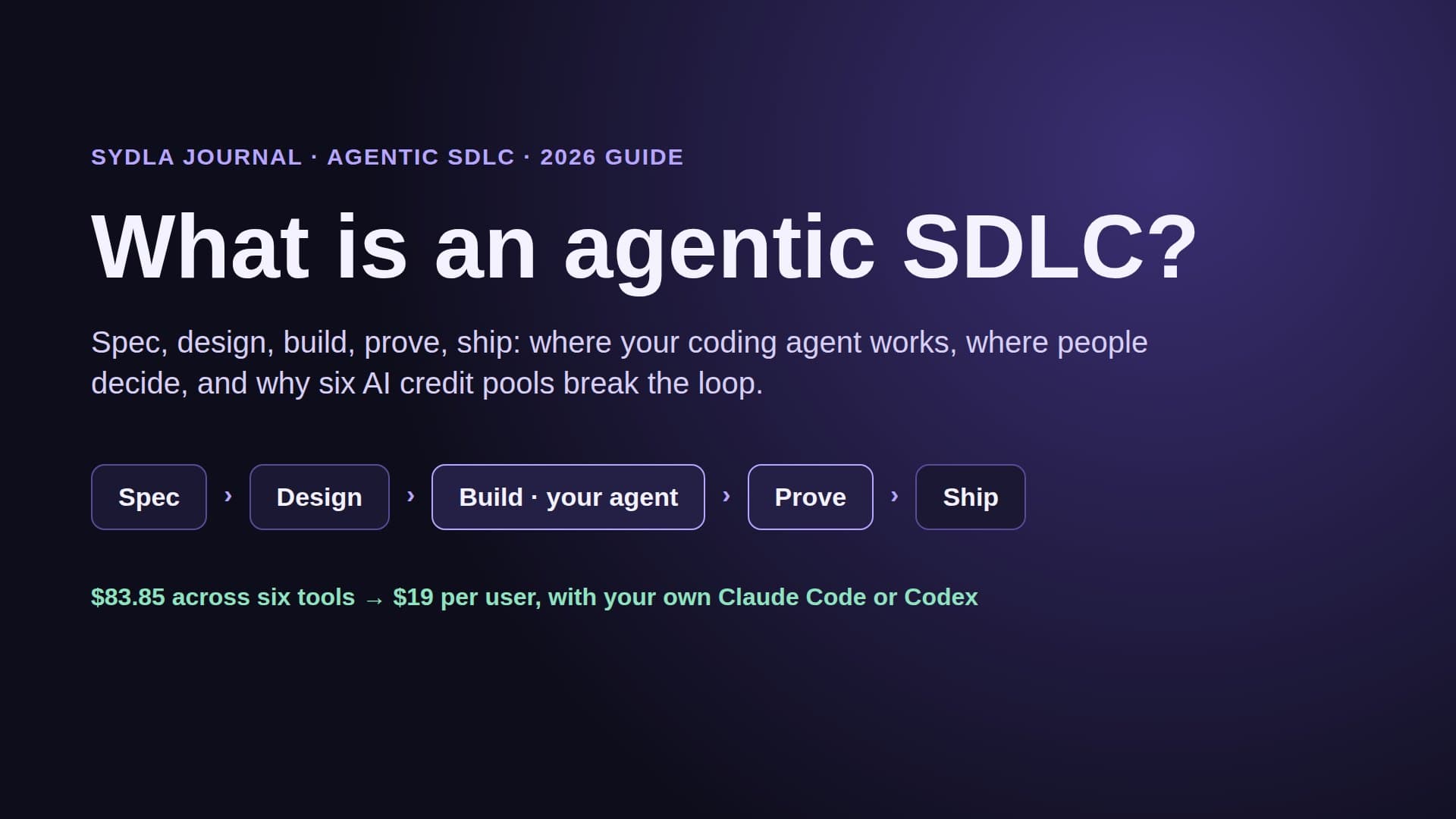
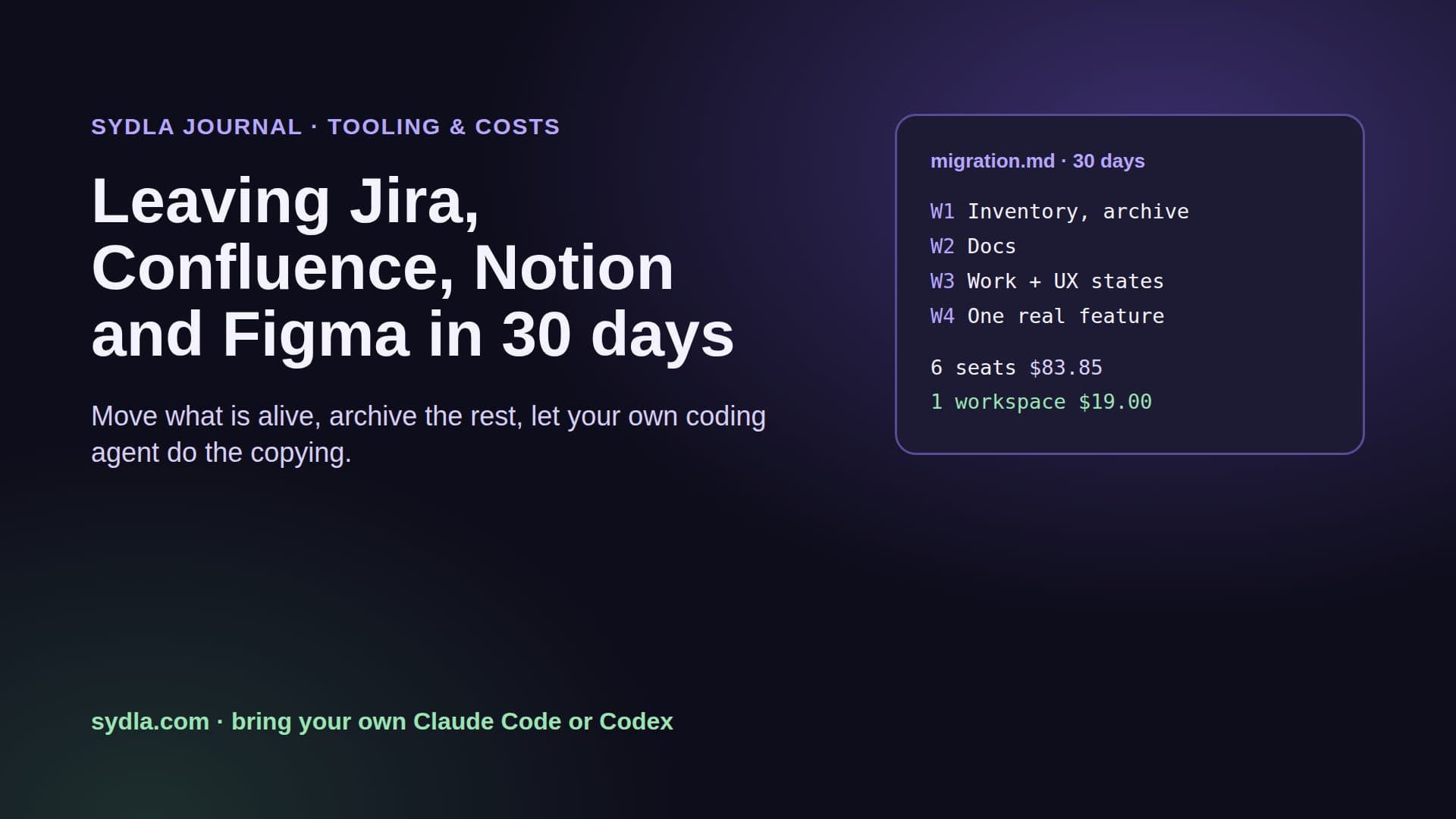
For everything between the brief and the merged pull request, giving the agent one work item to read is the cheapest context fix most lean teams can make. The pricing section has the plan: $19 per user per month, no AI credits to buy. If you are moving off the old stack, the 30-day migration plan shows what to export first, and what is an agentic SDLC shows how the stages fit together.
Frequently asked questions
What is context engineering for coding agents?
Context engineering for coding agents is the practice of deciding what an agent like Claude Code or Codex reads before and during a task, so it gets the smallest set of high-signal information that leads to the right change. For a product team that means four layers: repository instructions, the work item with its acceptance criteria, the design states, and the run's evidence.
How is context engineering different from prompt engineering?
Prompt engineering is about wording one instruction. Context engineering is about everything the agent can see across a whole task: system instructions, files, tool results, memory and the documents it retrieves. Anthropic describes context engineering as the natural next step after prompt engineering, because agents run over many turns and their context window is a limited resource.
Why does my coding agent miss requirements from Jira, Confluence or Figma?
Usually because the requirement is split across tools. The ticket, the spec, the decision and the design each live in a different product, the agent reads them through separate MCP servers with their own limits, and large results can be cut or moved out of the window. Claude Code warns above 10,000 tokens per MCP result and caps results at 25,000 tokens by default. Putting the brief, criteria and states on one work item removes most of these misses.
How much does a Jira, Confluence, Notion, Figma, Miro and Canva stack cost per user in 2026?
At monthly list prices in November 2026 the stack costs $83.85 per user: Jira Standard $9.70, Confluence Standard $7.15, Notion Plus $12.00, Figma Professional Full $20.00, Miro Starter $10.00 and Canva Business $25.00, before AI credits. Sydla replaces the six for $19 per user per month, a saving of $64.85 per user per month.
Can I use my own Claude Code or Codex subscription with Sydla?
Yes. Sydla Desktop runs the Claude Code or Codex CLI installed and signed in on your machine, with your own Claude or ChatGPT plan or your own API key. Sydla has no AI credits and adds no token markup; it gives the agent the brief, acceptance criteria and UX Studio states through one MCP connection.