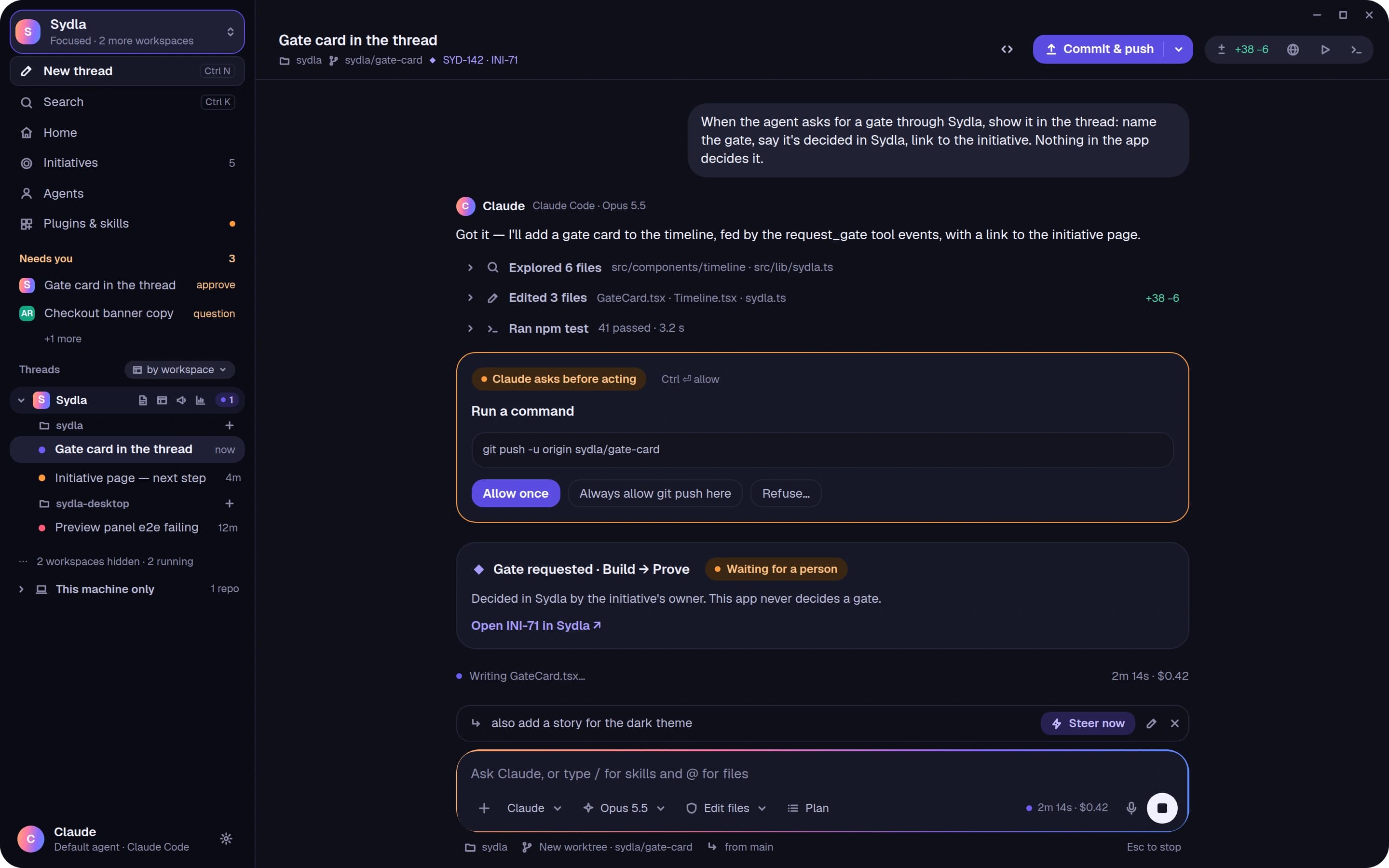
GitHub Copilot AI credits in 2026: what agent work costs now, and how to keep Claude Code on a flat plan
Since 1 June 2026 every GitHub Copilot plan bills agent work in AI credits, priced token by token. Here is what each plan includes, what a month of Claude agent sessions costs on Copilot, and how to keep Claude Code or Codex on the flat plan you already pay for.
The seat price stayed. The agent moved to a meter.
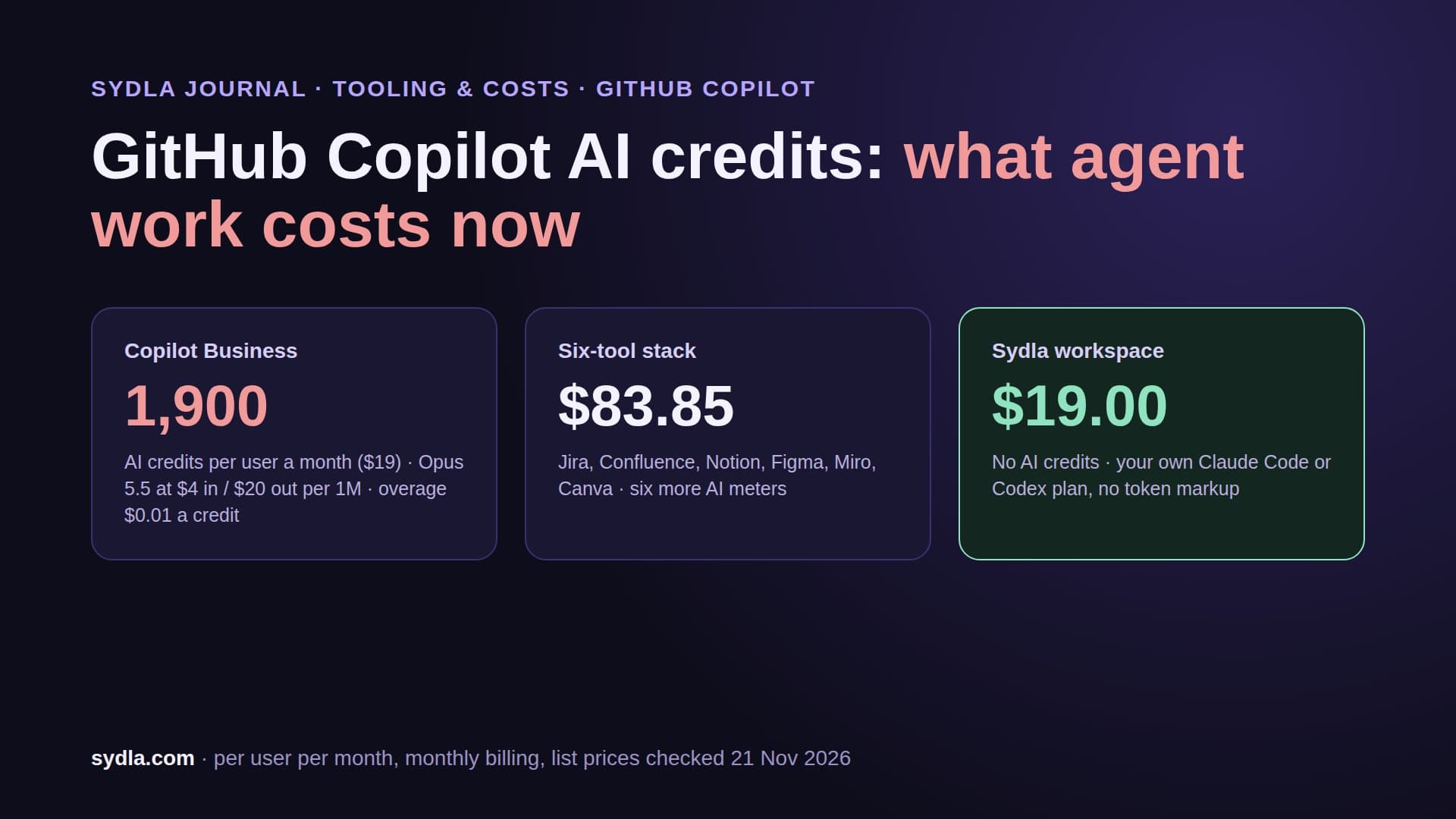
For three years GitHub Copilot was the easy line on the budget: $19 a developer on Business, and nobody counted requests. On 1 June 2026 that changed. Every Copilot plan now bills on GitHub AI Credits, and every credit is one cent of model tokens. Completions in the editor are still unlimited. Everything an agent does, from Copilot Chat to the cloud agent to Claude or Codex running inside GitHub, now draws on a pool.
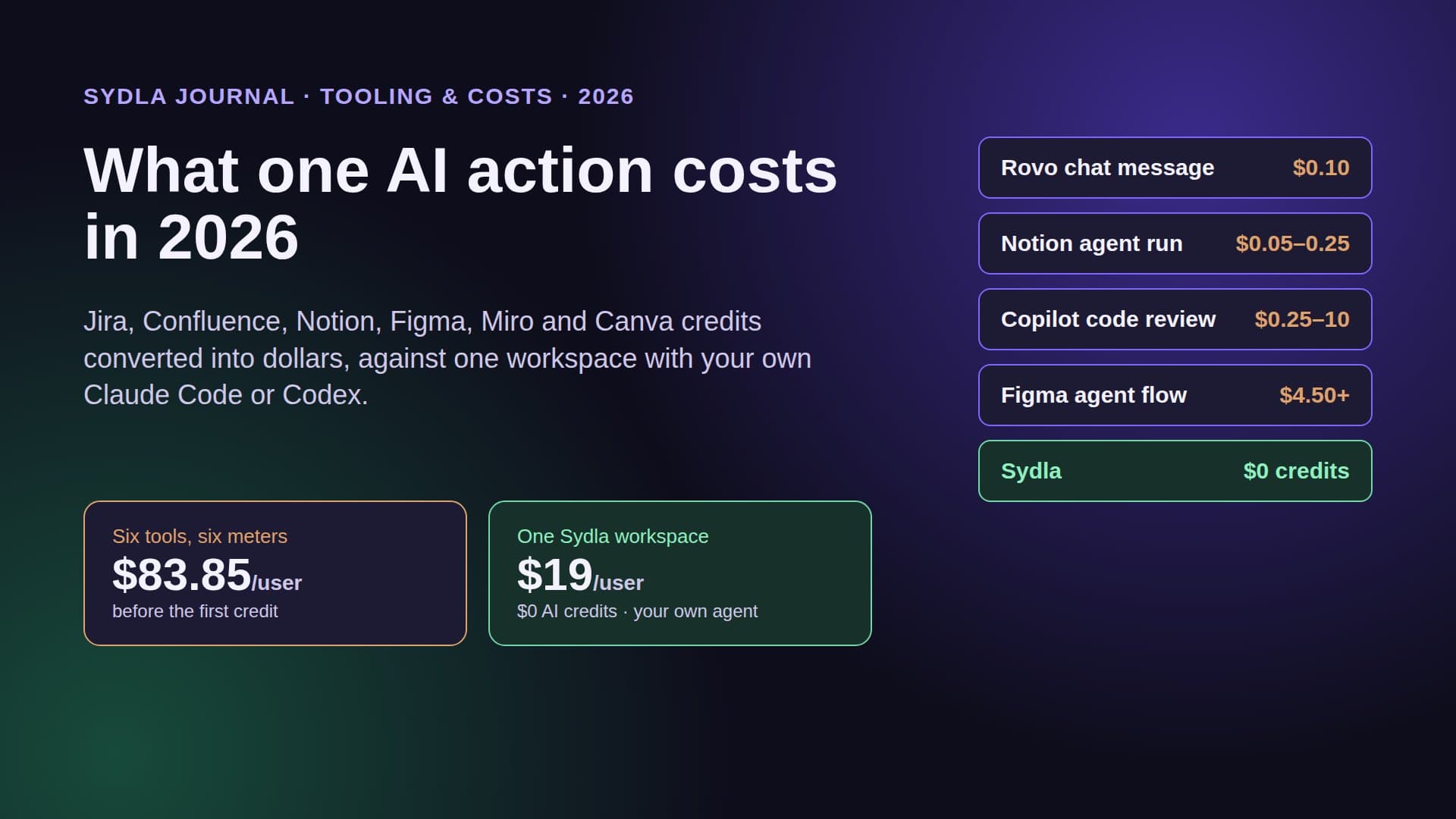
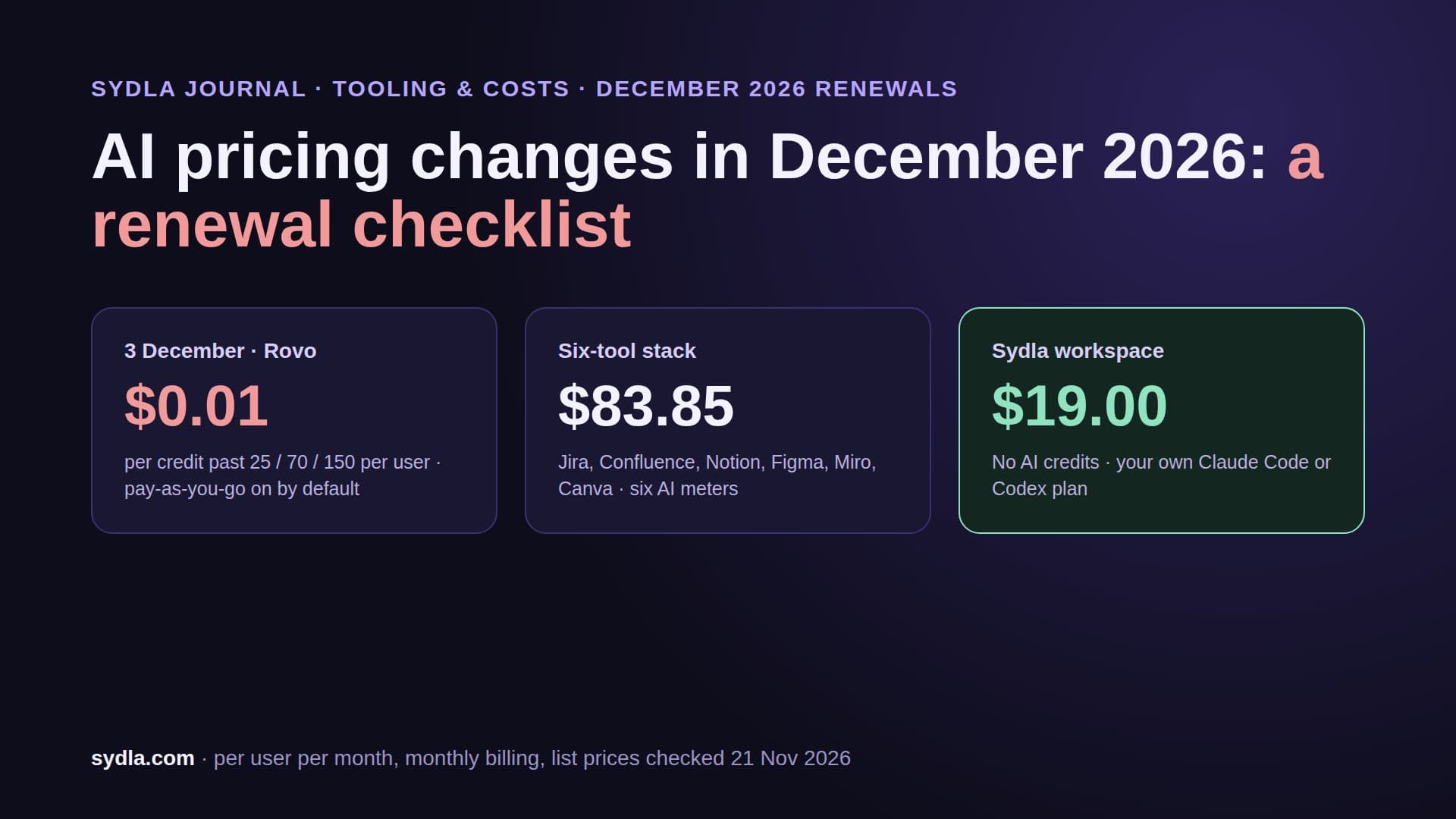
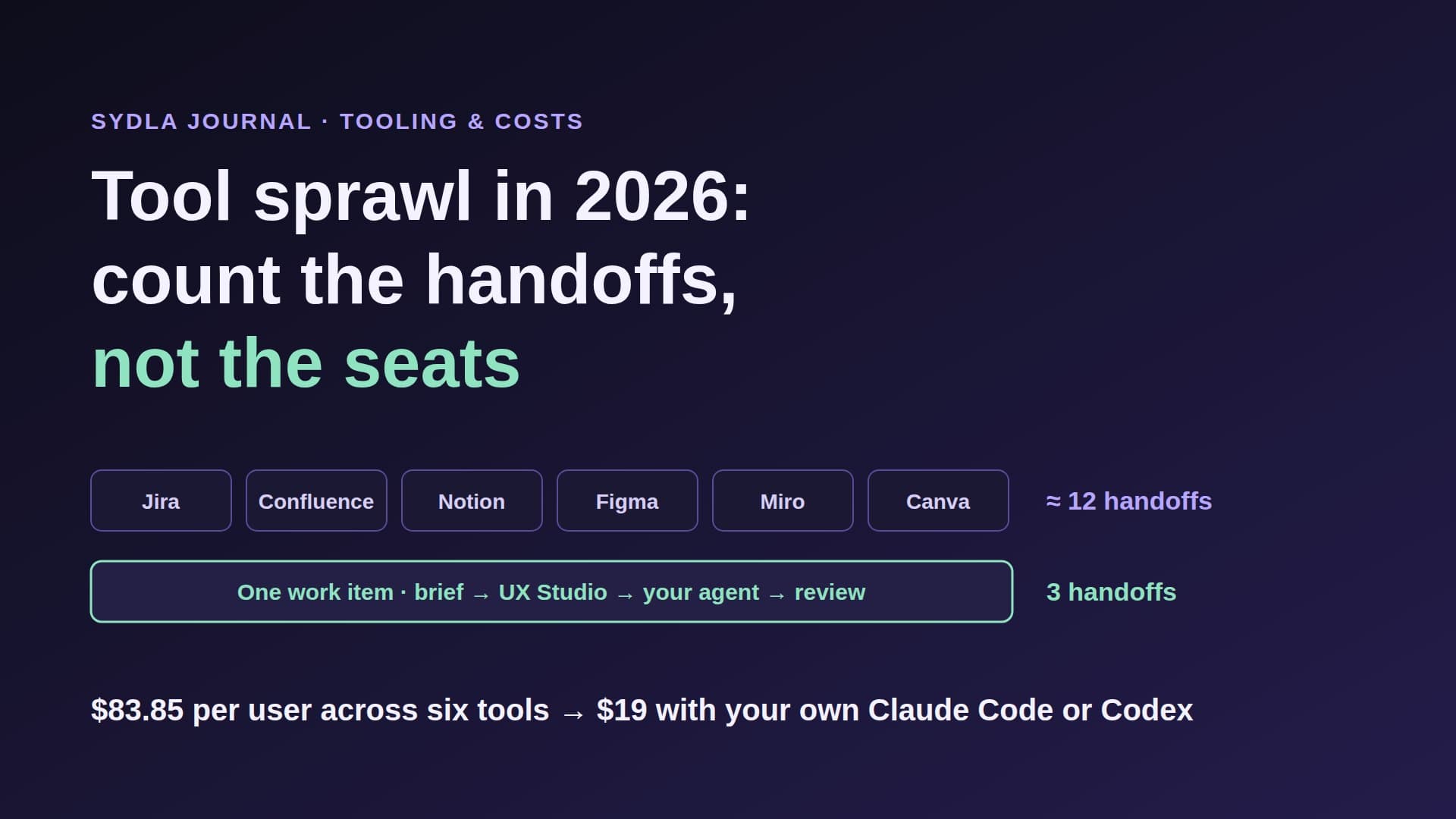
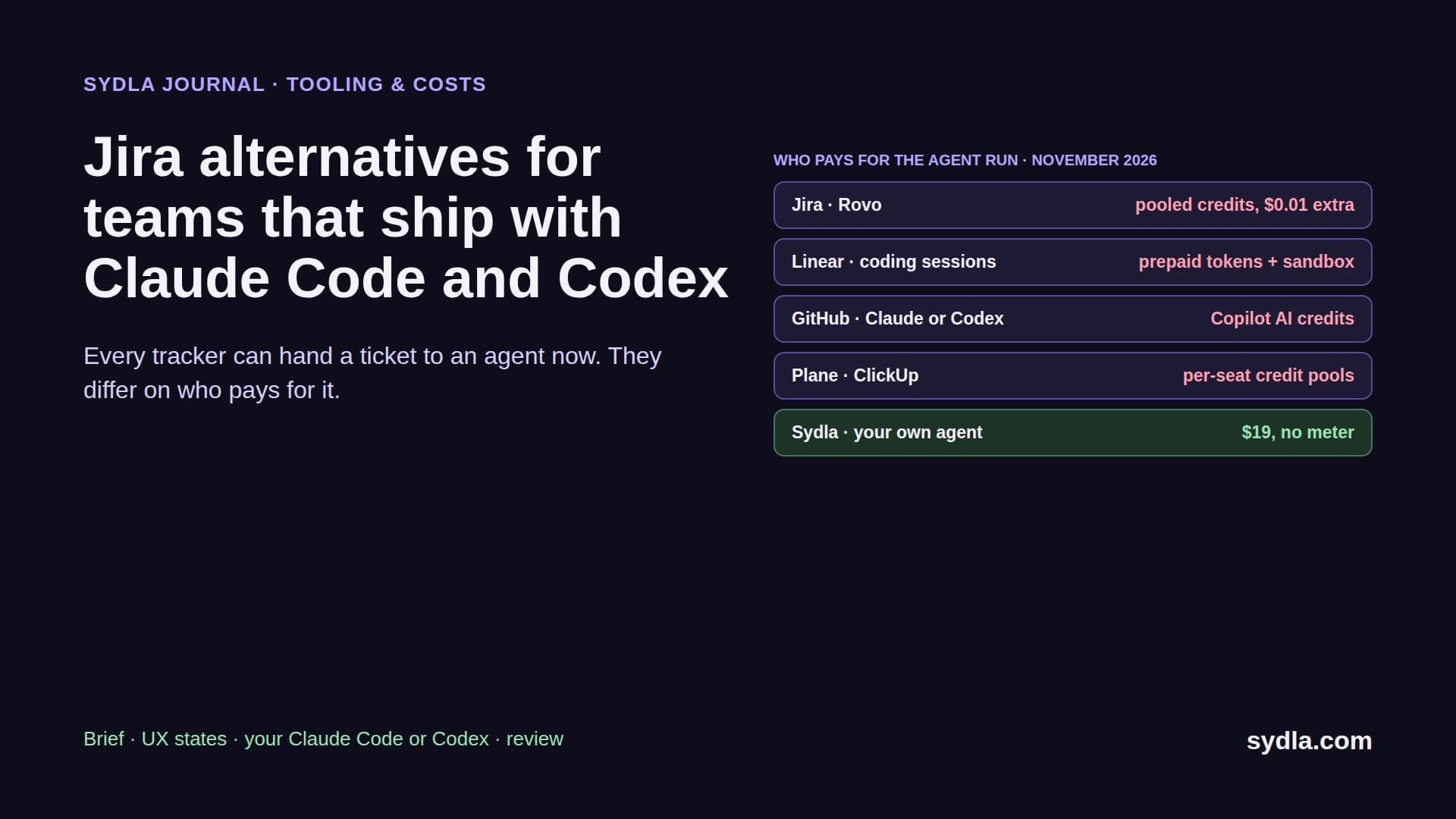
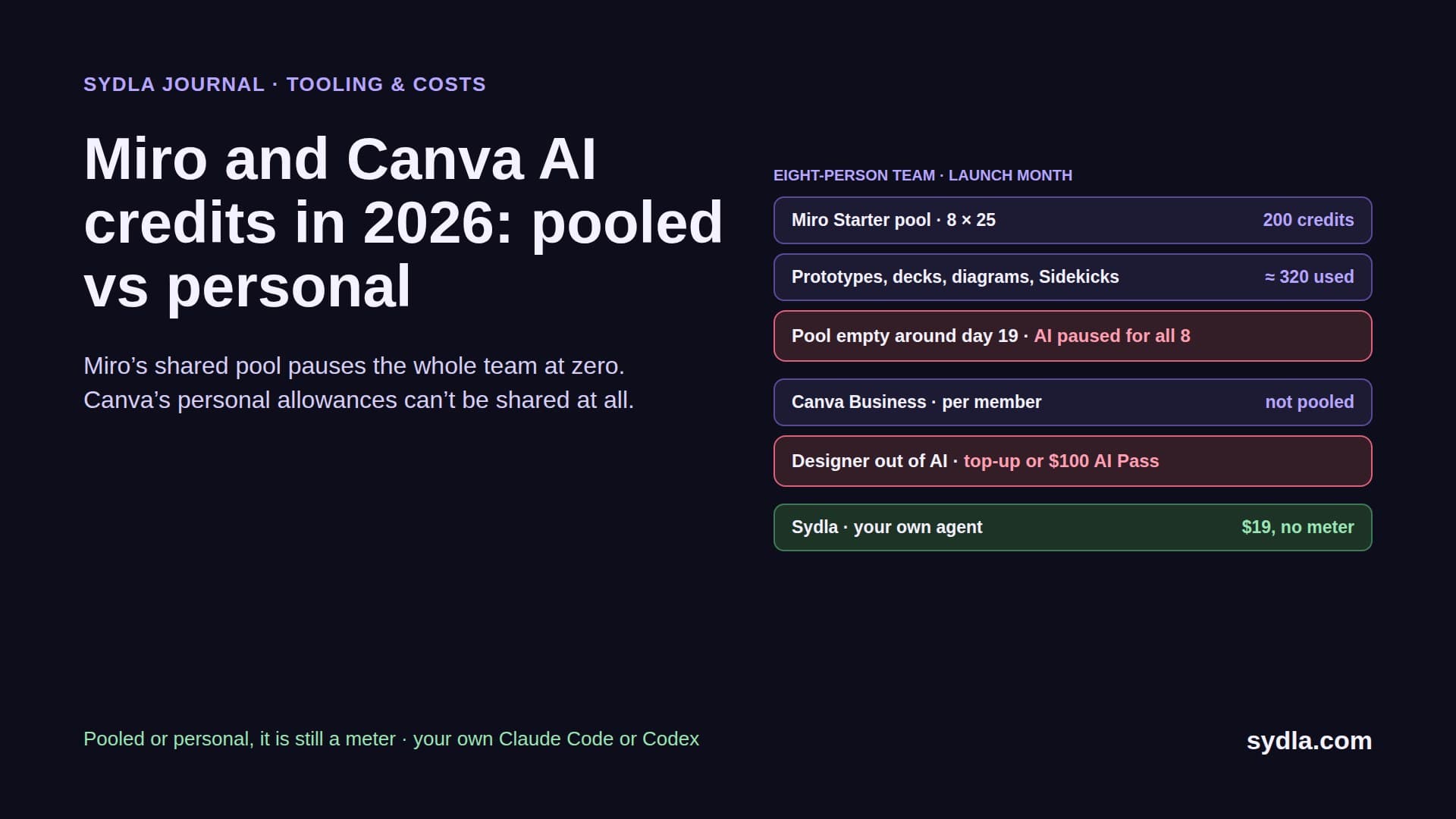
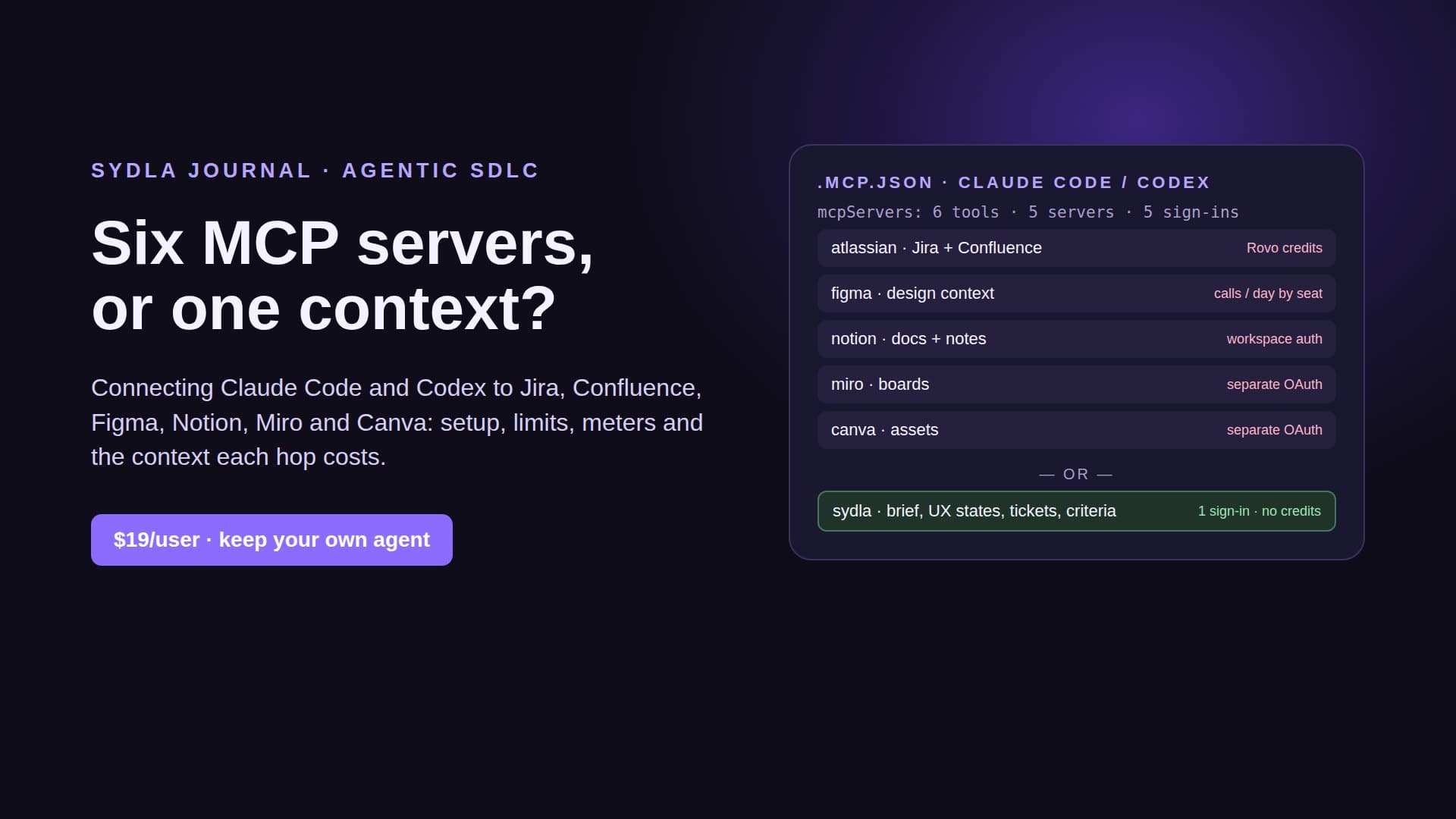
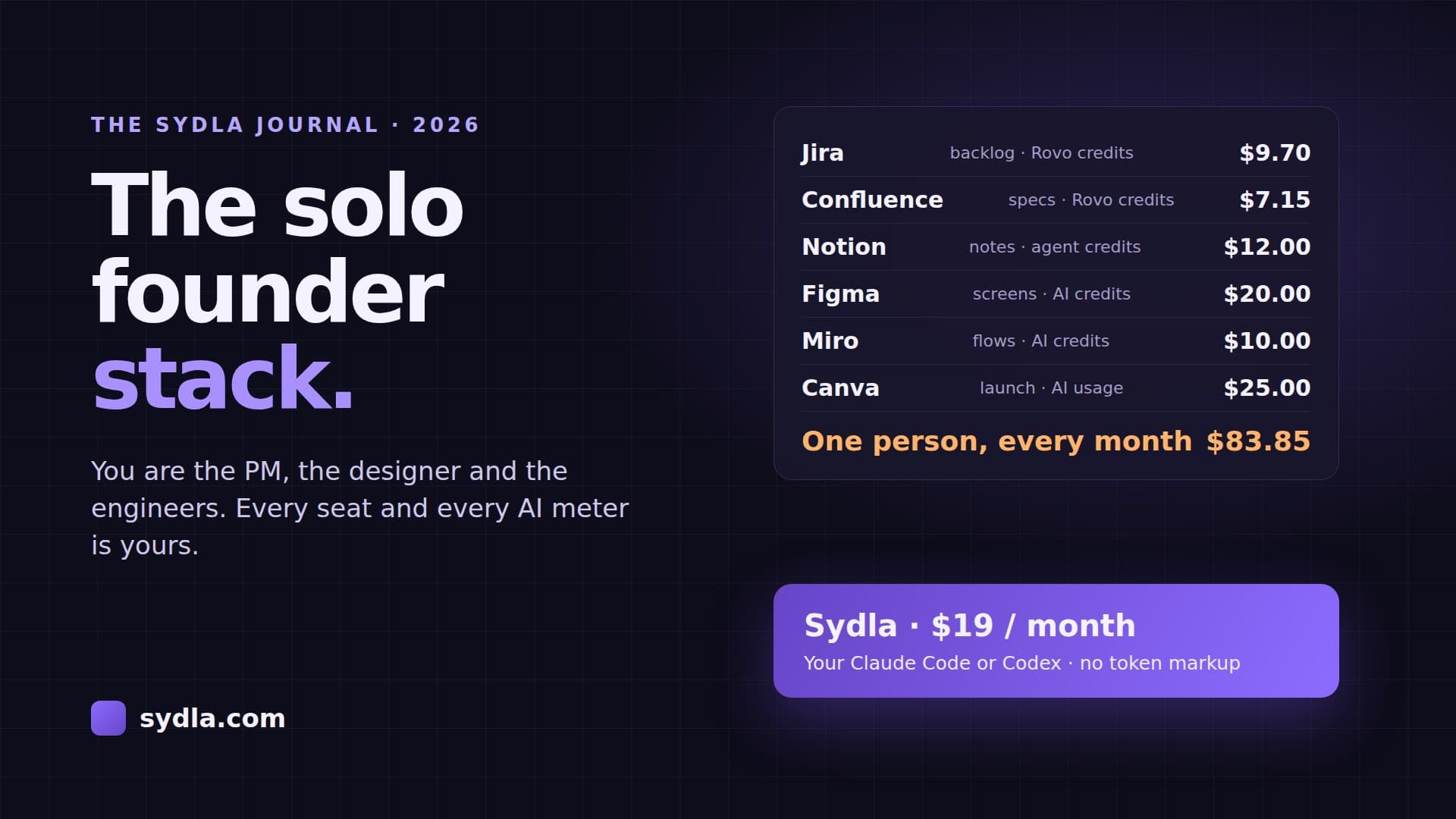
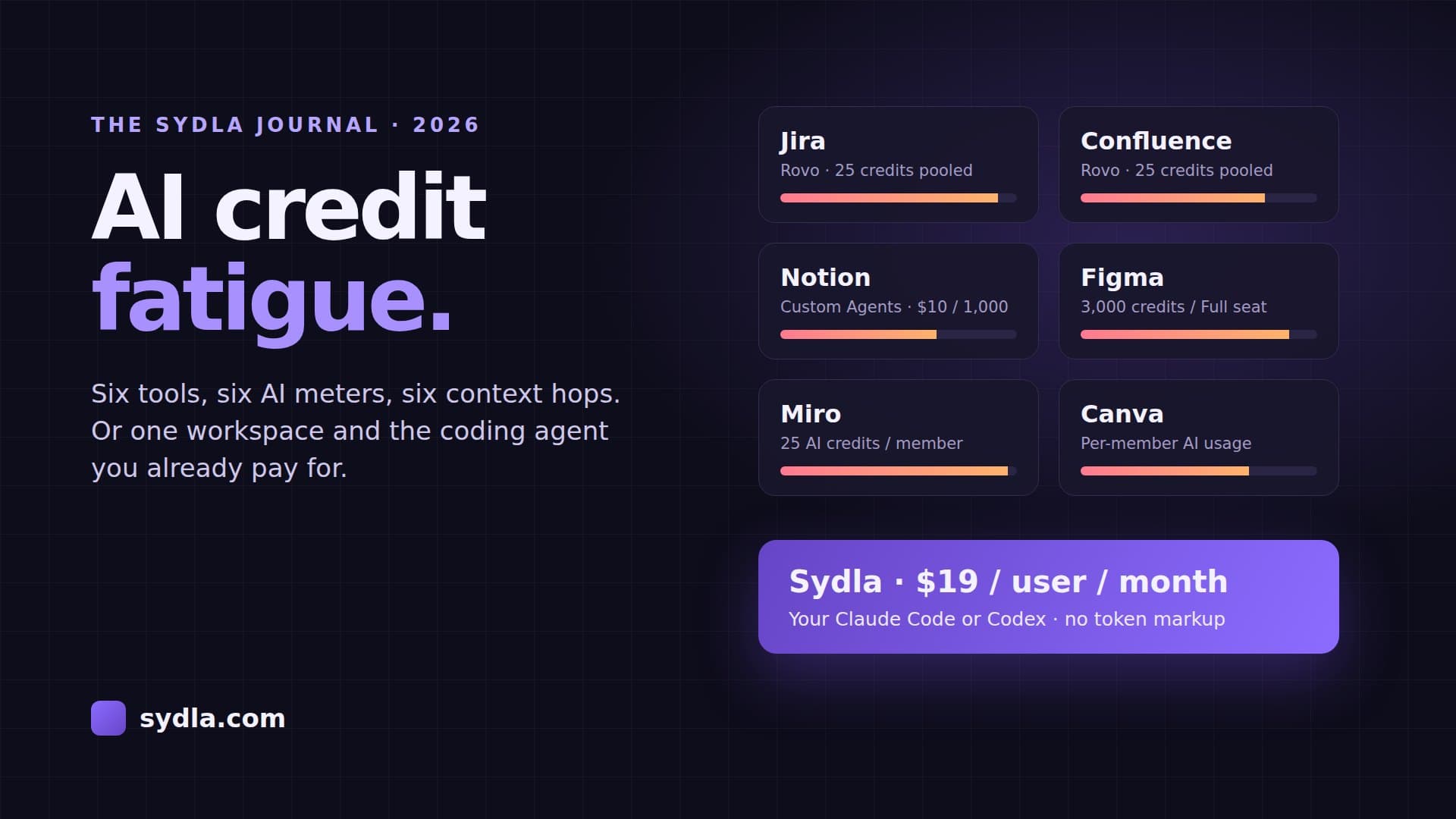
That is the newest form of AI credit fatigue. A product team already watches six AI meters: Rovo credits in Jira and Confluence, Notion credits, Figma AI credits, Miro credits and Canva's allowance. The place where code gets written is now the seventh, and it is the one that grows fastest, because agents read a lot of context on every run.
This guide reads GitHub's own docs as of 21 November 2026. It shows what each Copilot plan includes, works out what a month of Claude agent work costs at GitHub's rates, and explains the other path: keep Copilot completions if you like them, and run Claude Code or Codex on your own plan, connected to a shared brief and UX states in Sydla.
Copilot plans and included AI credits in November 2026
One AI credit is worth $0.01. Business and Enterprise seats include their price in credits, pooled across the whole organisation. Individual plans add a flex allotment on top of a base that matches the price. GitHub says base credits never change and flex credits will vary over time.
| Plan | Price / month | Included AI credits | How the credits behave | Agents |
|---|---|---|---|---|
| Free | $0 | Small allowance, 2,000 completions a month | No paid usage | No third-party coding agents |
| Pro | $10 | 1,000 base + 500 flex = 1,500 ($15) | Personal, reset on the 1st, no carryover | Cloud agent, Claude and Codex agents |
| Pro+ | $39 | 3,900 base + 3,100 flex = 7,000 ($70) | Personal, then optional additional usage in USD | Same, more premium models |
| Max | $100 | 10,000 base + 10,000 flex = 20,000 ($200) | Personal, higher spending limits | Priority access to premium models |
| Business | $19 a seat | 1,900 per user ($19) | Pooled across the org; paid usage on by default | Cloud agent and third-party agents on credits |
| Enterprise | $39 a seat | 3,900 per user ($39) | Pooled across the enterprise | Same, plus enterprise controls |
Three details matter more than the table suggests. First, unused credits are forfeited at midnight UTC on the first of each month. Second, on Business and Enterprise, extra usage is on by default: when the pool runs dry, work continues at $0.01 a credit unless an admin turns off the AI credits paid usage policy or sets a budget. Third, the generous summer promotion, 3,000 credits on Business and 7,000 on Enterprise, ended on 1 September. Many teams sized their budgets in June and July on numbers that no longer apply.
GitHub's June changelog also said new sign-ups were paused for Pro, Pro+ and Max. Check the plans page before you count on an individual plan for a new hire.
How credits are spent: token by token, model by model
There are no flat request multipliers any more. Each model has a published price per million input, cached, cache-write and output tokens, and the total is converted into credits. Claude Opus 5.5 costs $4 per million input tokens, $5 per million cache writes, $0.20 per million cache reads and $20 per million output tokens. Claude Sonnet 4.6 is $3 in and $15 out. Claude Haiku 5.5 is $0.10 in and $0.50 out. GPT-5.3-Codex is $1.75 in and $14 out. Those match the providers' own list prices, so GitHub adds no margin on the tokens. It simply stops including them.
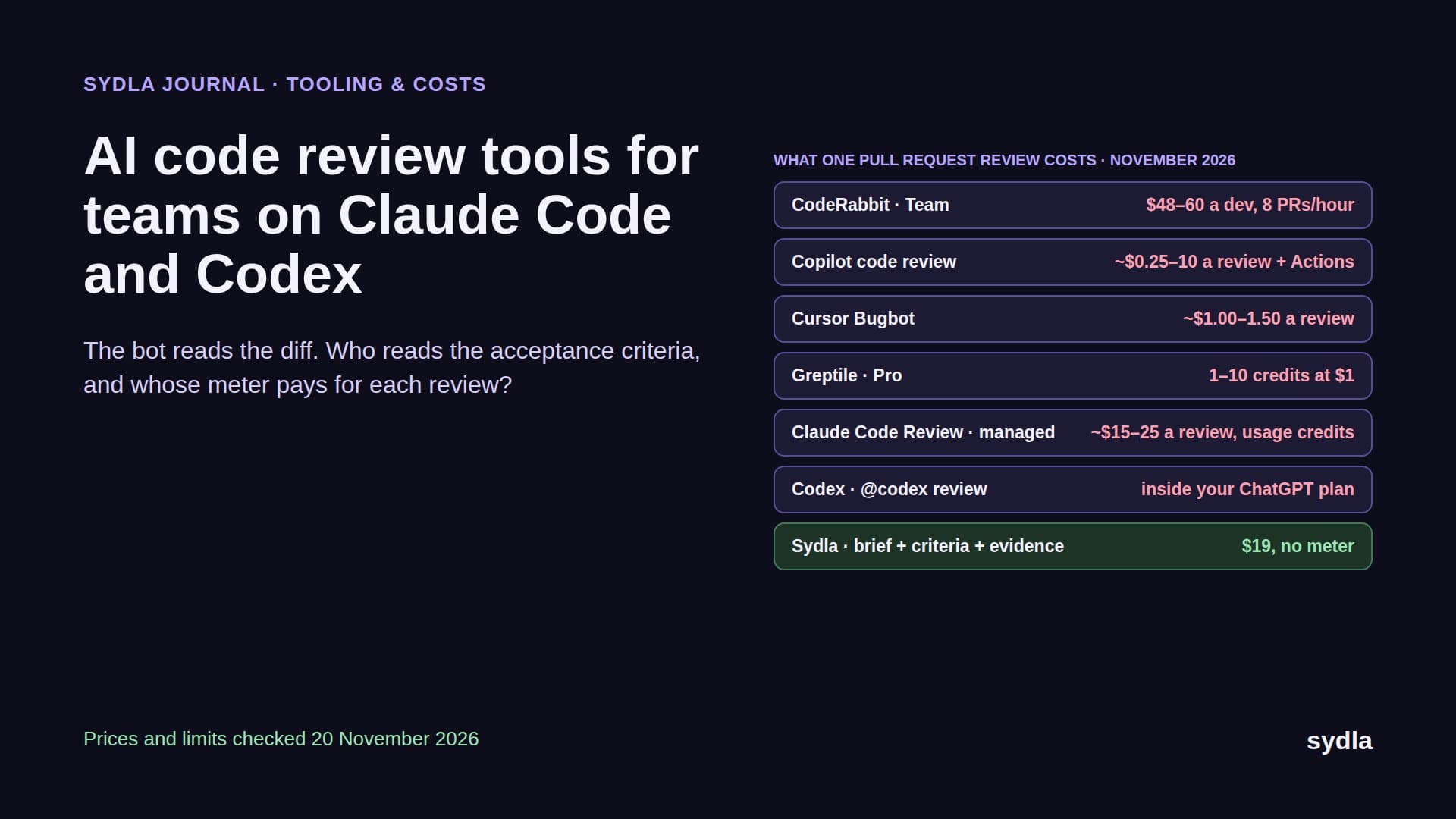
Some lines are easy to miss. Copilot code review uses a model GitHub picks, at about $0.25 for a Lite review, $1.50 for Balanced and $10 for Max, and since June it also burns GitHub Actions minutes on top of the credits. The cloud agent runs on credits too. Our AI code review tools guide compares review costs across vendors. GitHub also runs promotions: 30% off model costs with Copilot Fusion until 30 November, and 10% with auto model selection. Useful, but temporary.
Worked example: a month of Claude agent work on Copilot
Take one developer who hands two medium tickets a day to an agent on Claude Opus 5.5, 40 sessions a month. Assume each session reads 0.5 million fresh input tokens, writes 0.2 million to cache, re-reads 4 million cached tokens and writes 0.1 million output tokens. That shape is our assumption, but it is typical for an agent working in a real repository. At GitHub's rates one session costs $2.00 + $1.00 + $0.80 + $2.00 = $5.80, or 580 credits. Forty sessions use 23,200 credits, $232 of tokens.
On a Business seat, 1,900 credits are included, so the developer's share of the bill is the $19 seat plus $213 of additional credits: $232 a month. On Pro+ it is $39 plus $162: $201. On Max it is $100 plus $32: $132. Pooling helps if some colleagues barely use agents, but on a team where everyone works this way, five developers on Business cost about $1,160 a month, not $95.
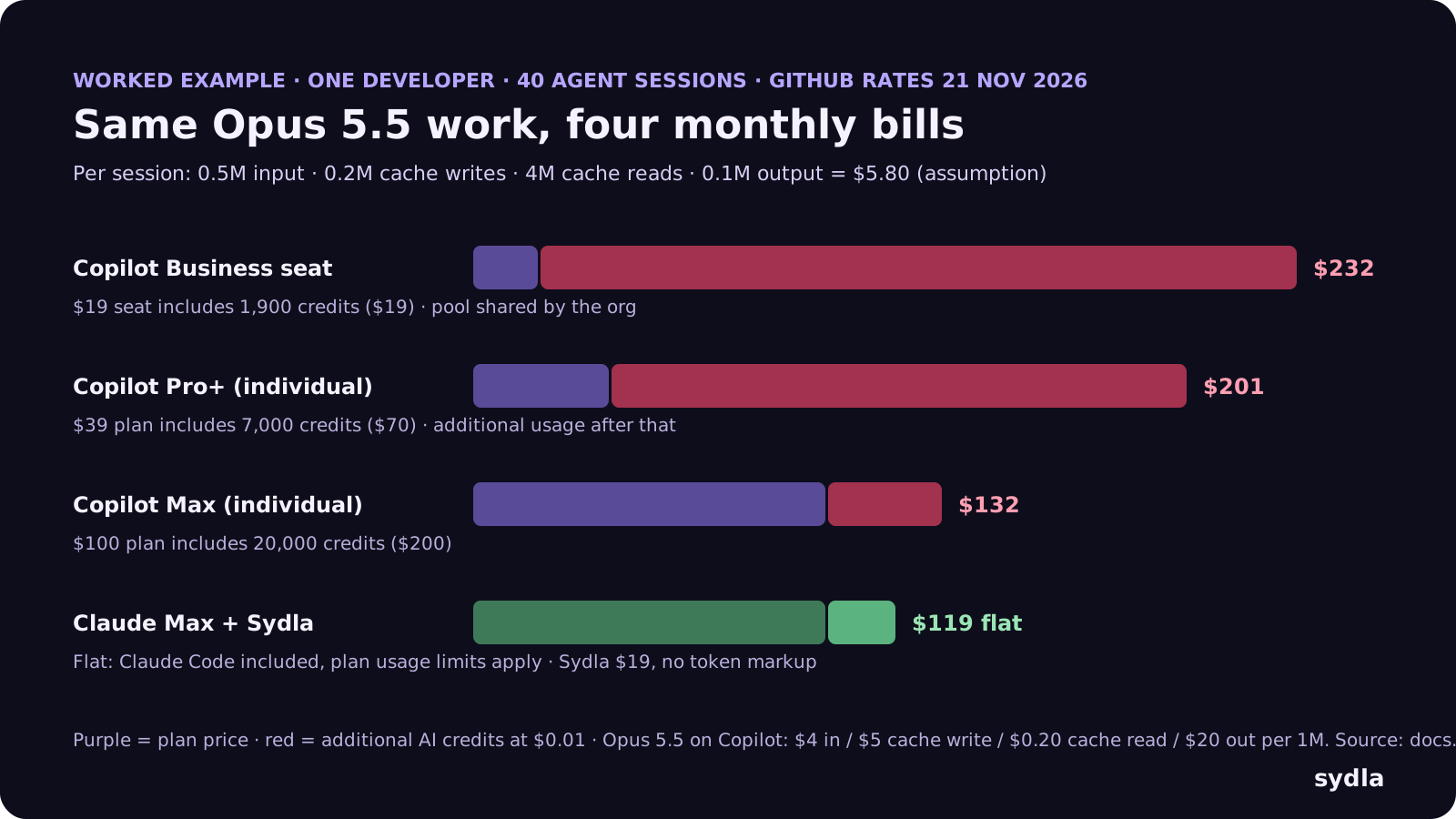
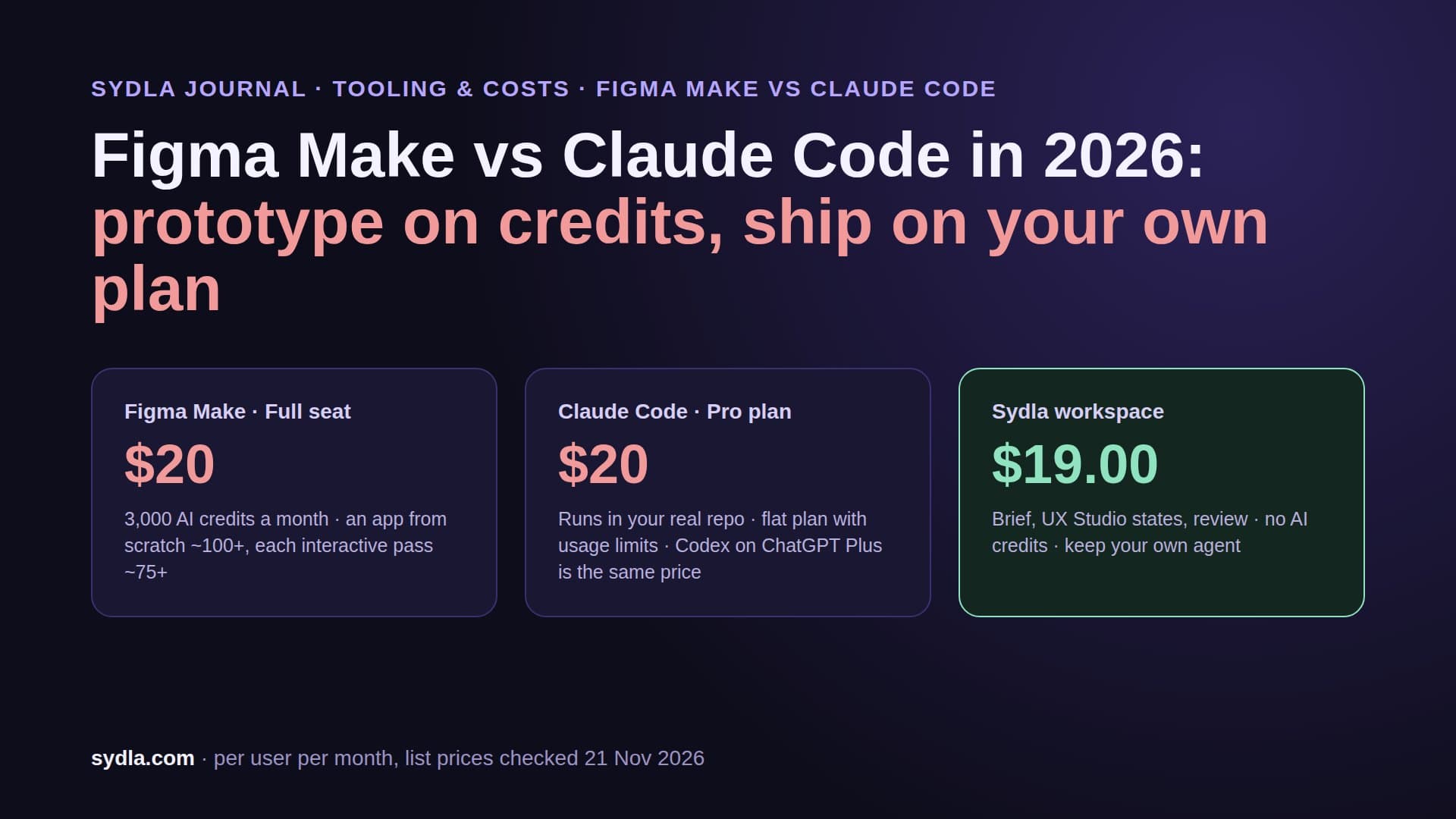
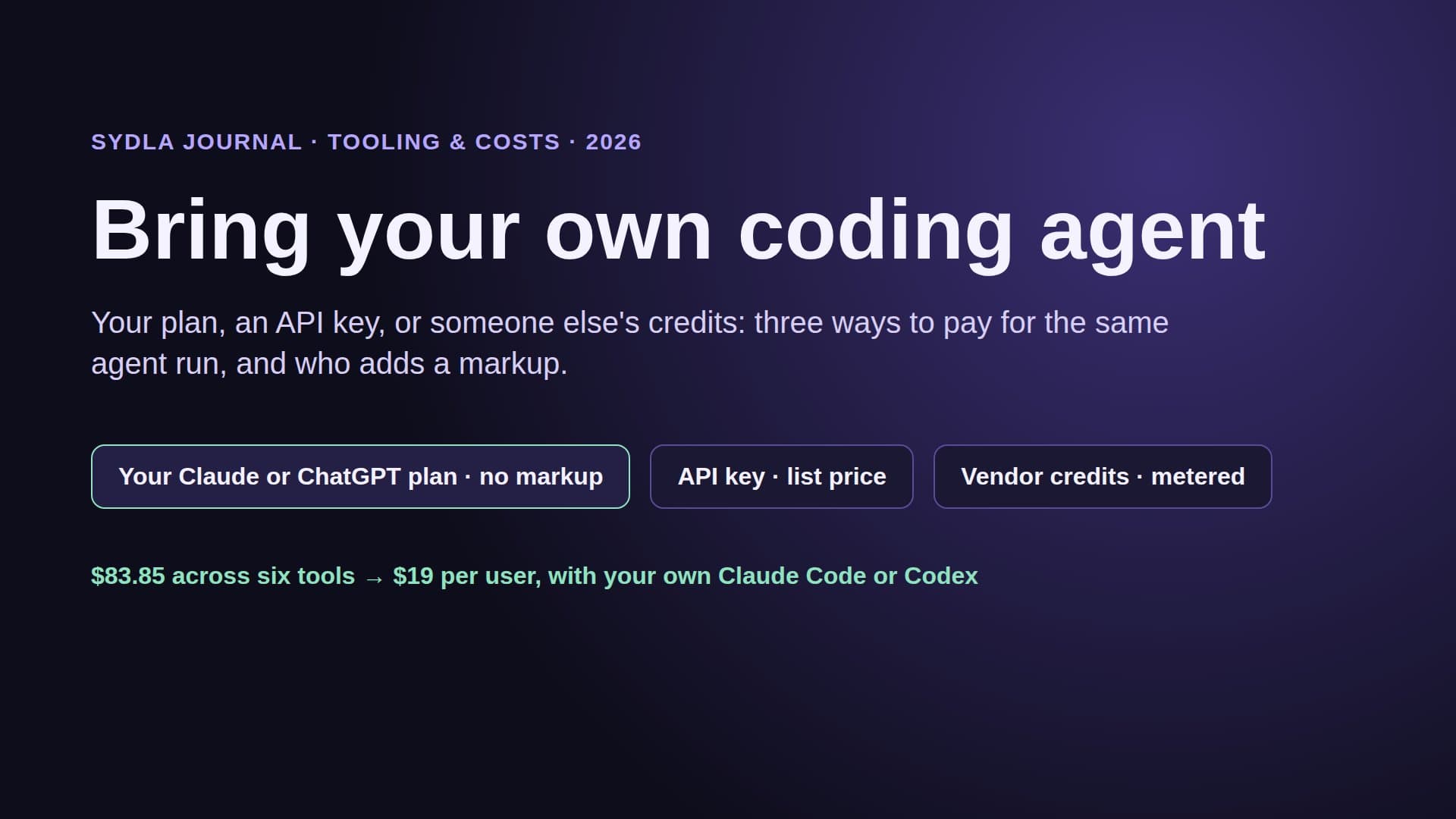
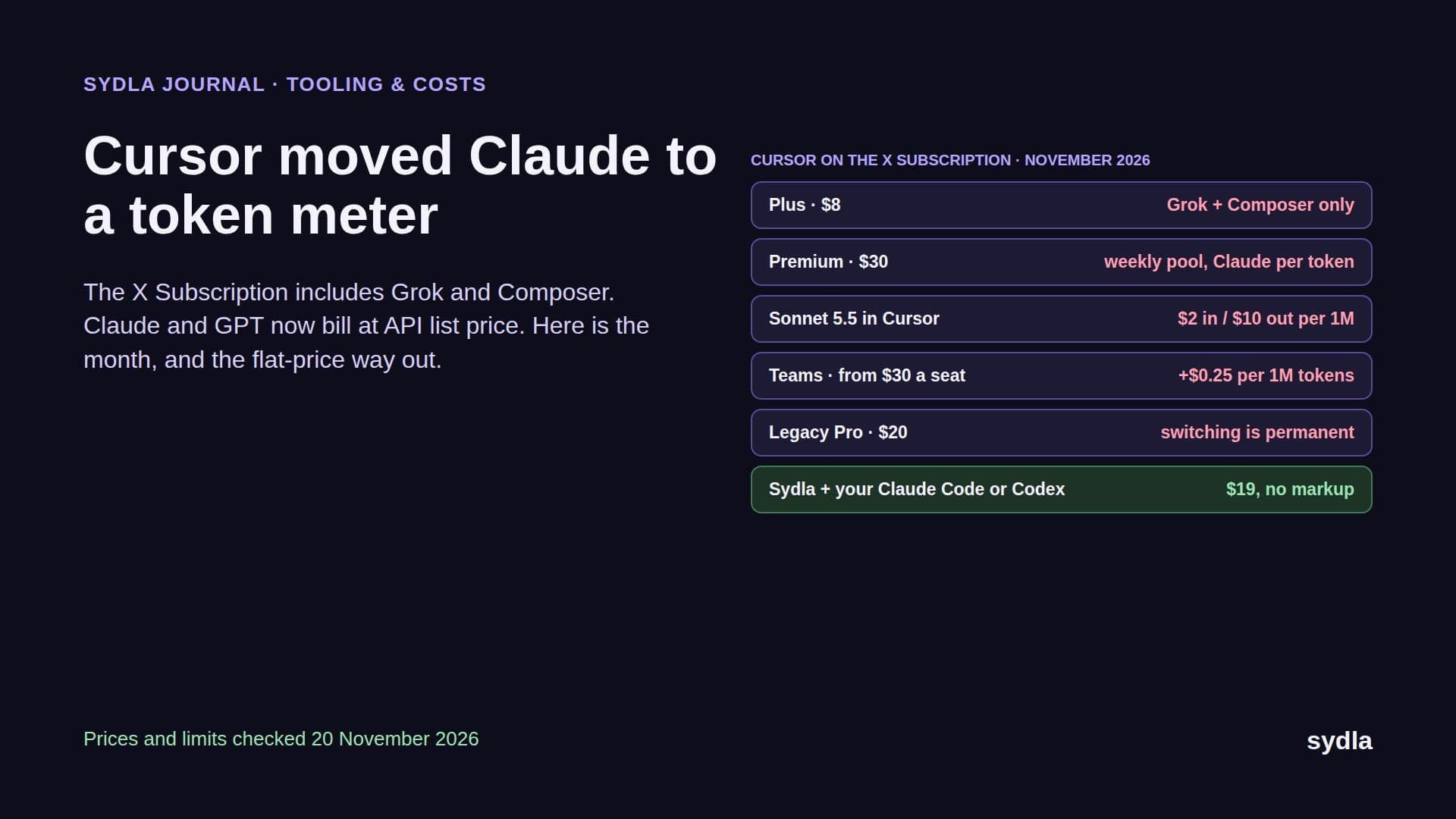
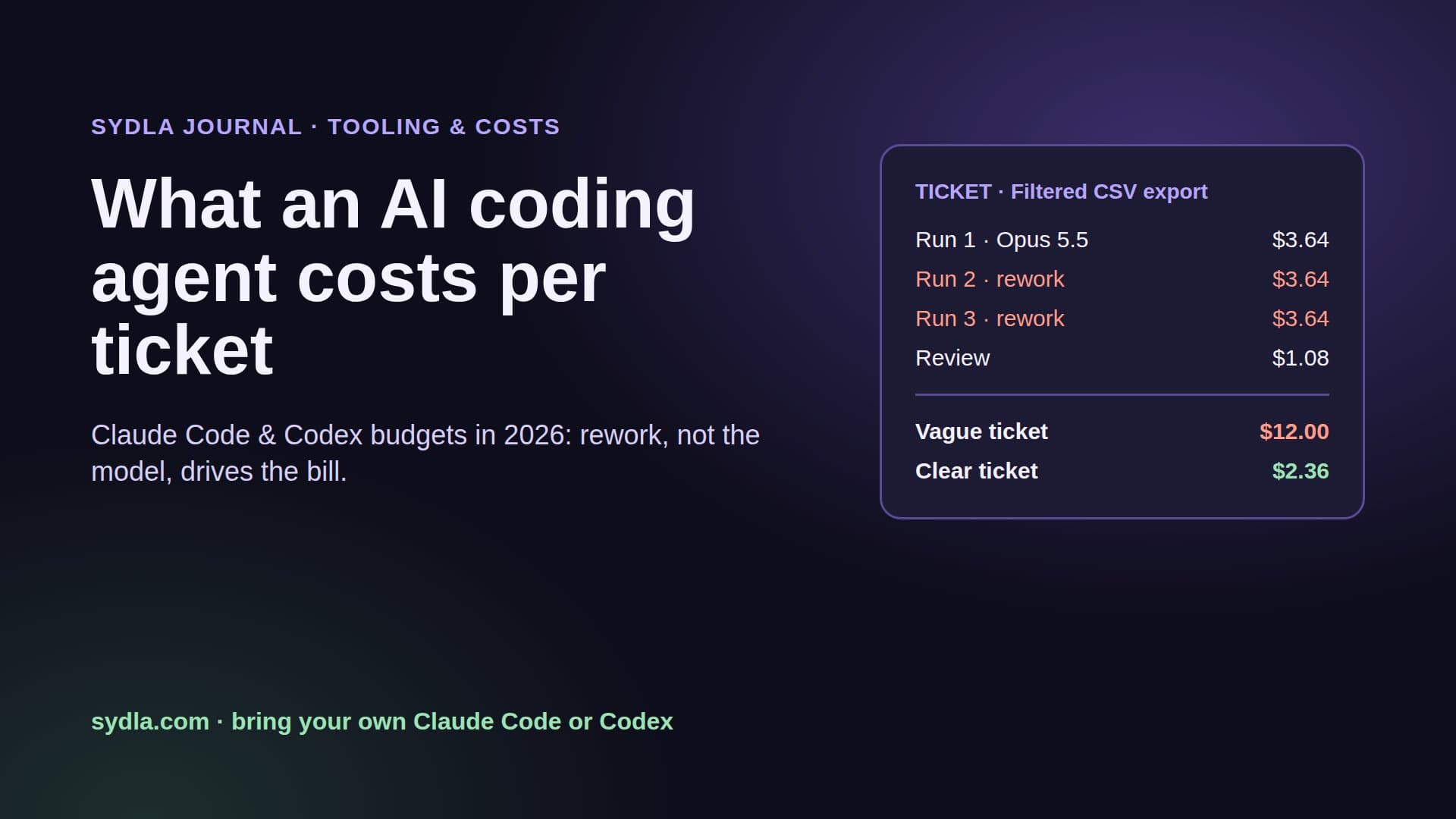
Now set that next to a flat plan. Claude Code is included in Claude Pro at $20 a month, or $17 billed yearly, with Max at $100 and Ultra at $200 for heavy use. Codex is included in ChatGPT Plus at $20. Those plans have usage limits, and a team that runs agents all day will meet them. But a limit is a ceiling on a flat price, not a meter on every cached token. Our cost per ticket guide runs the same maths on real tickets, and the Cursor pricing breakdown shows the same shift in another editor.
The Copilot meter is one of seven
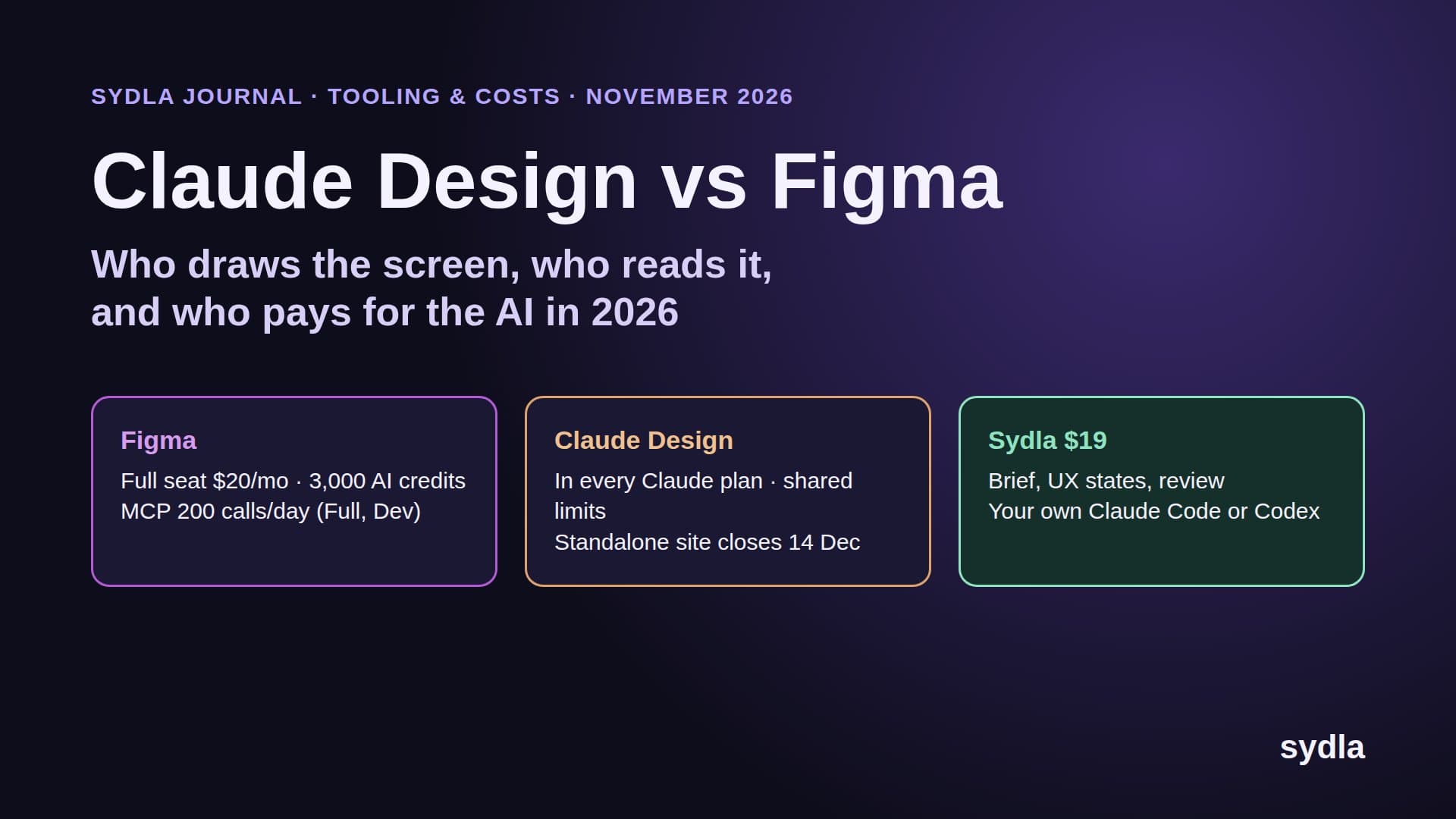
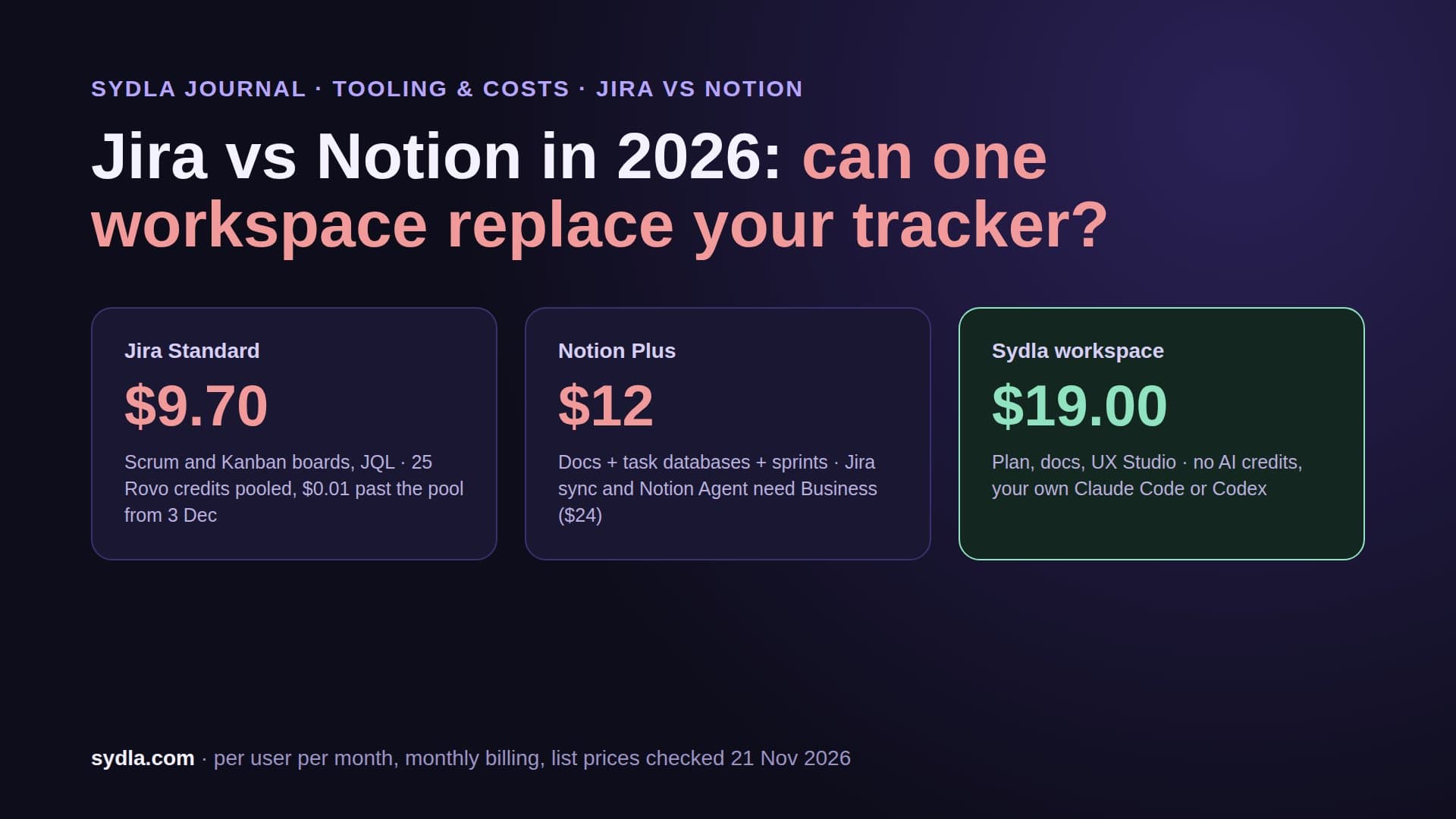
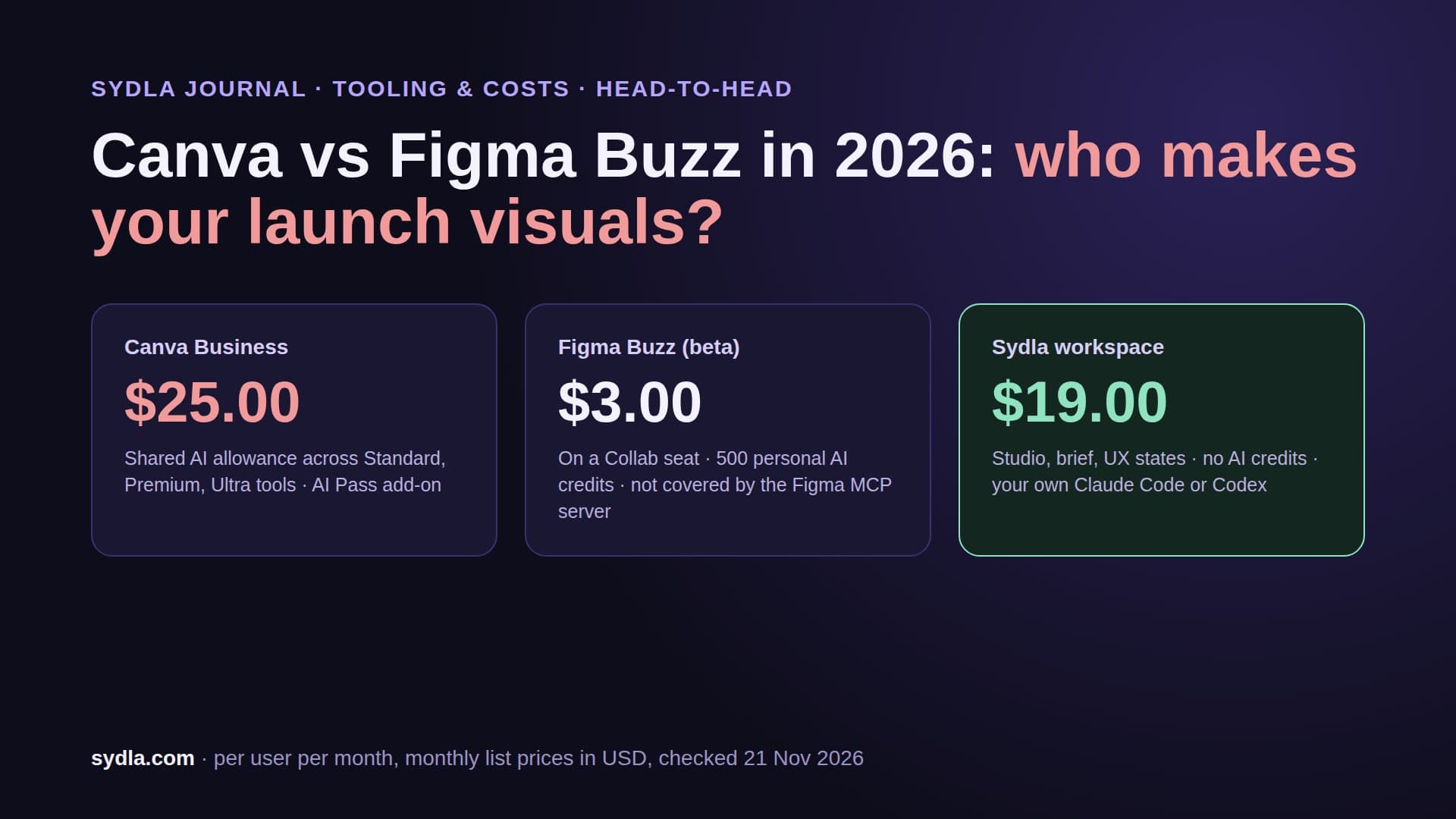
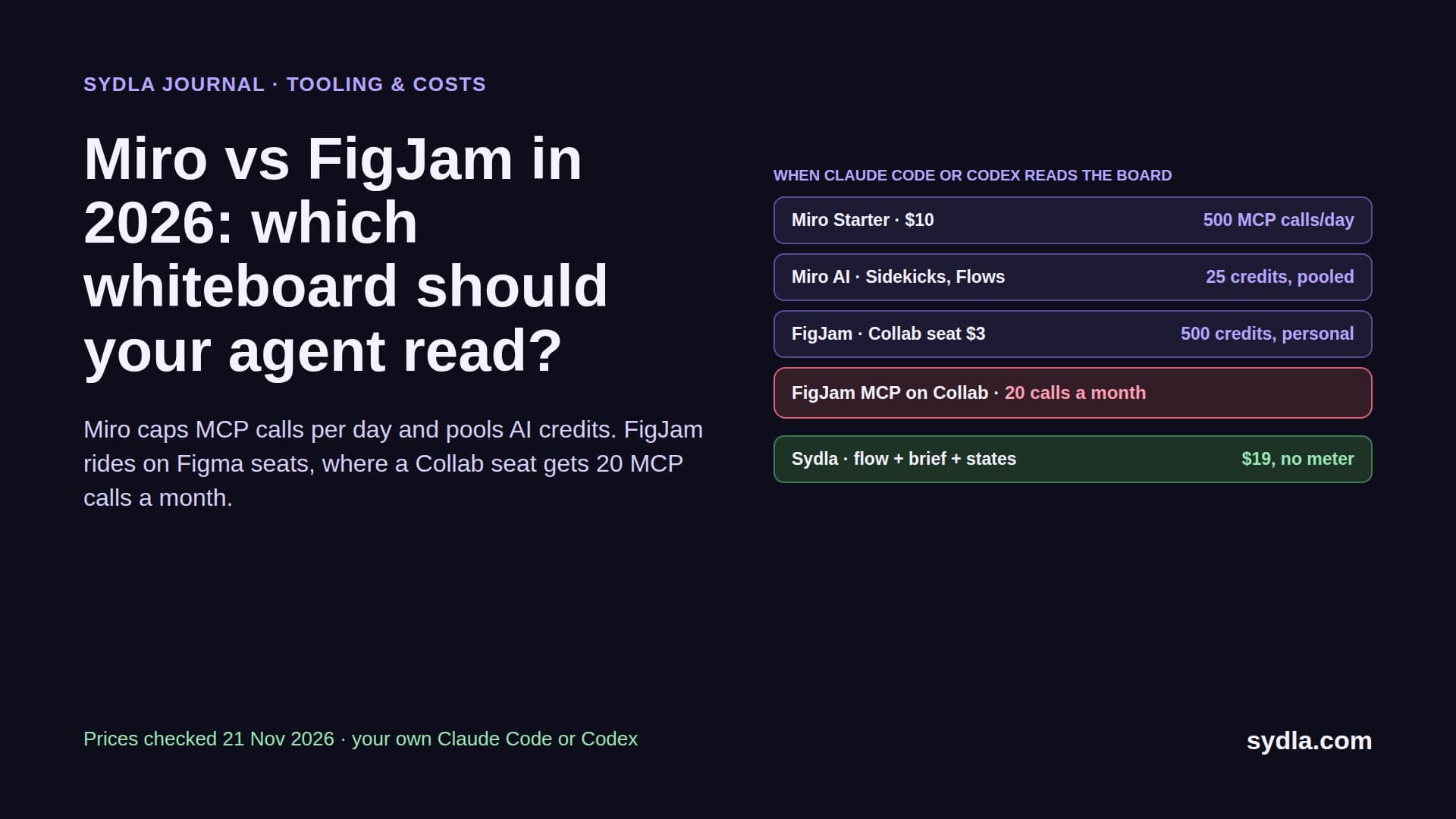
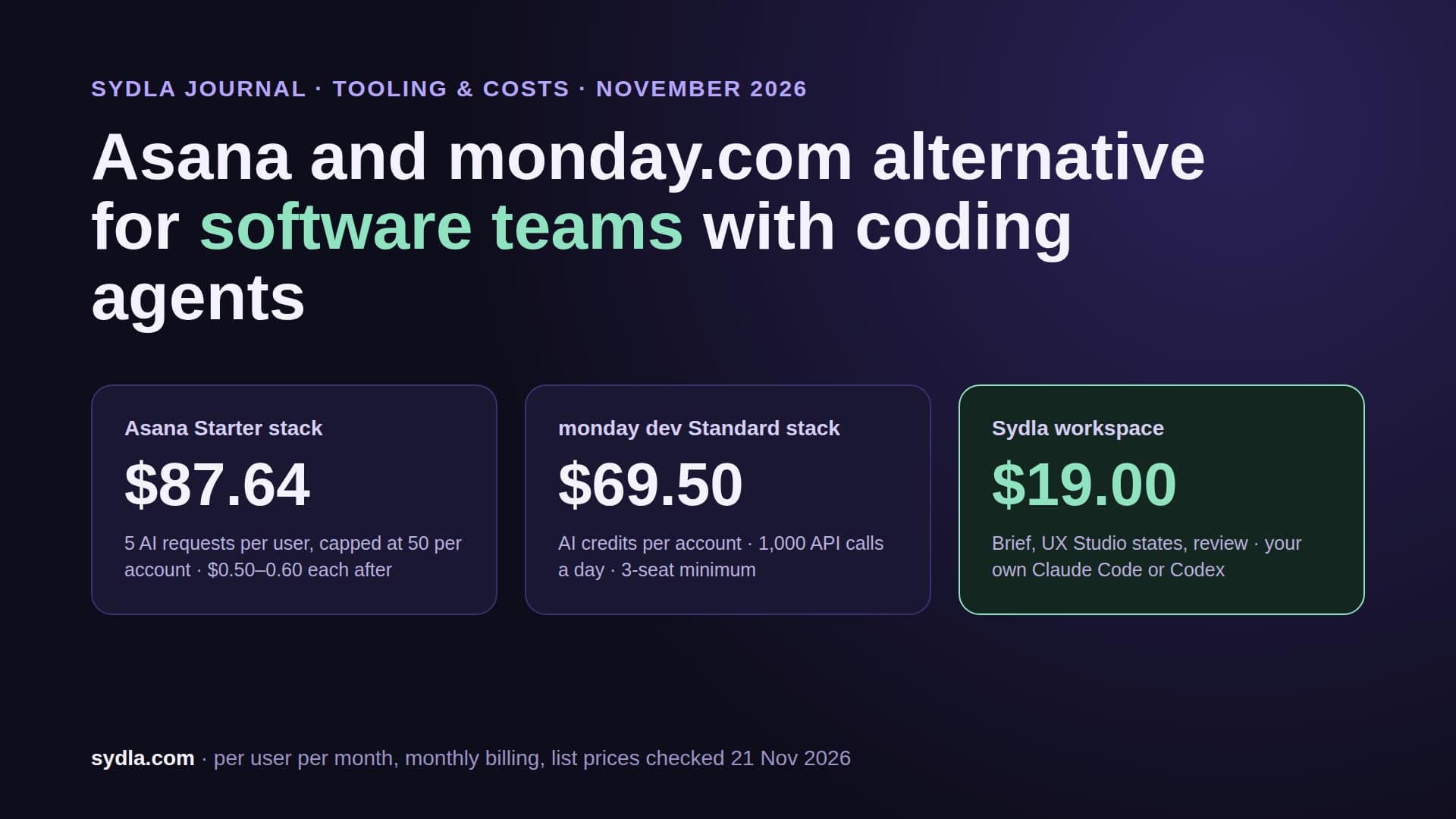
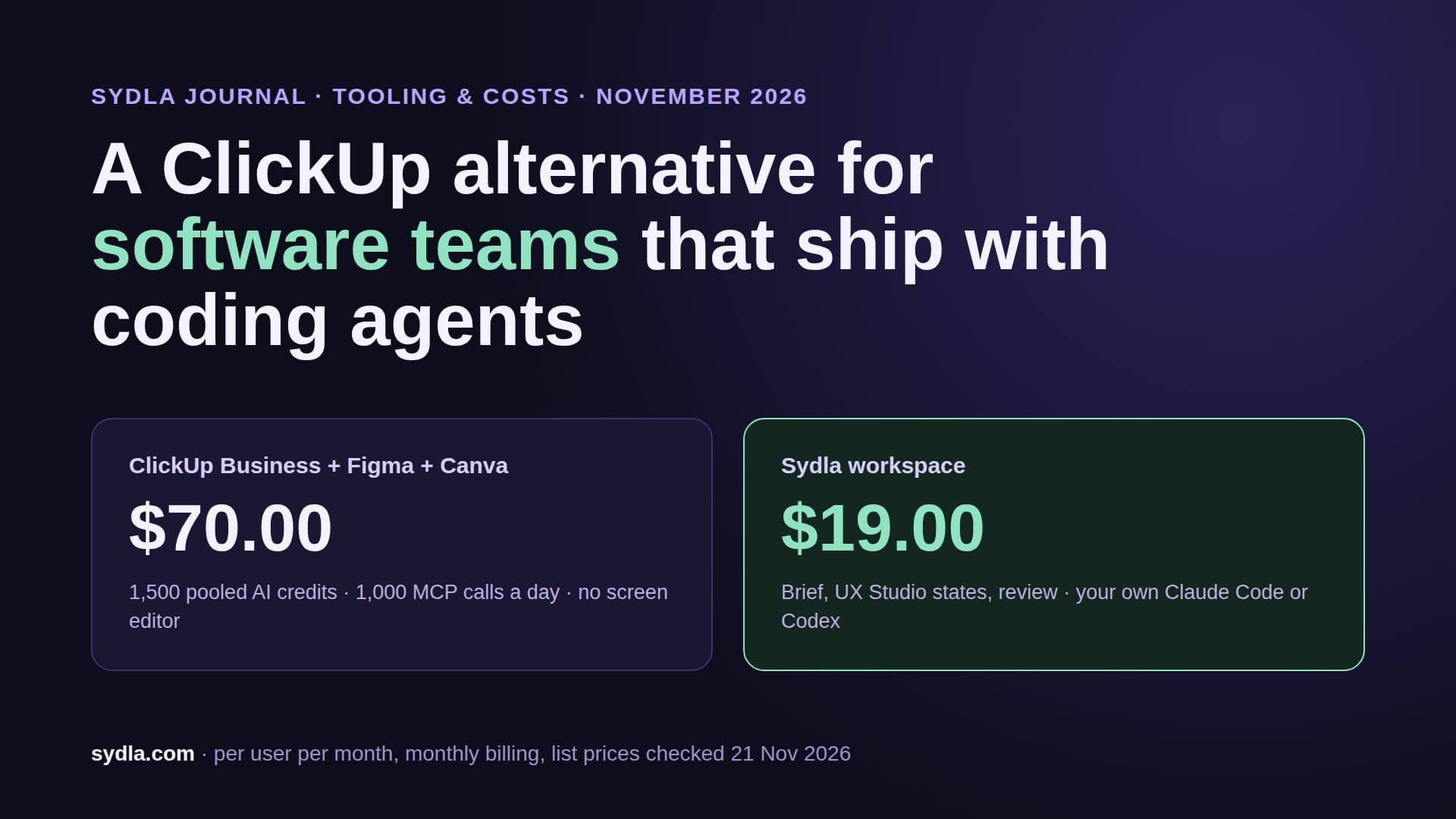
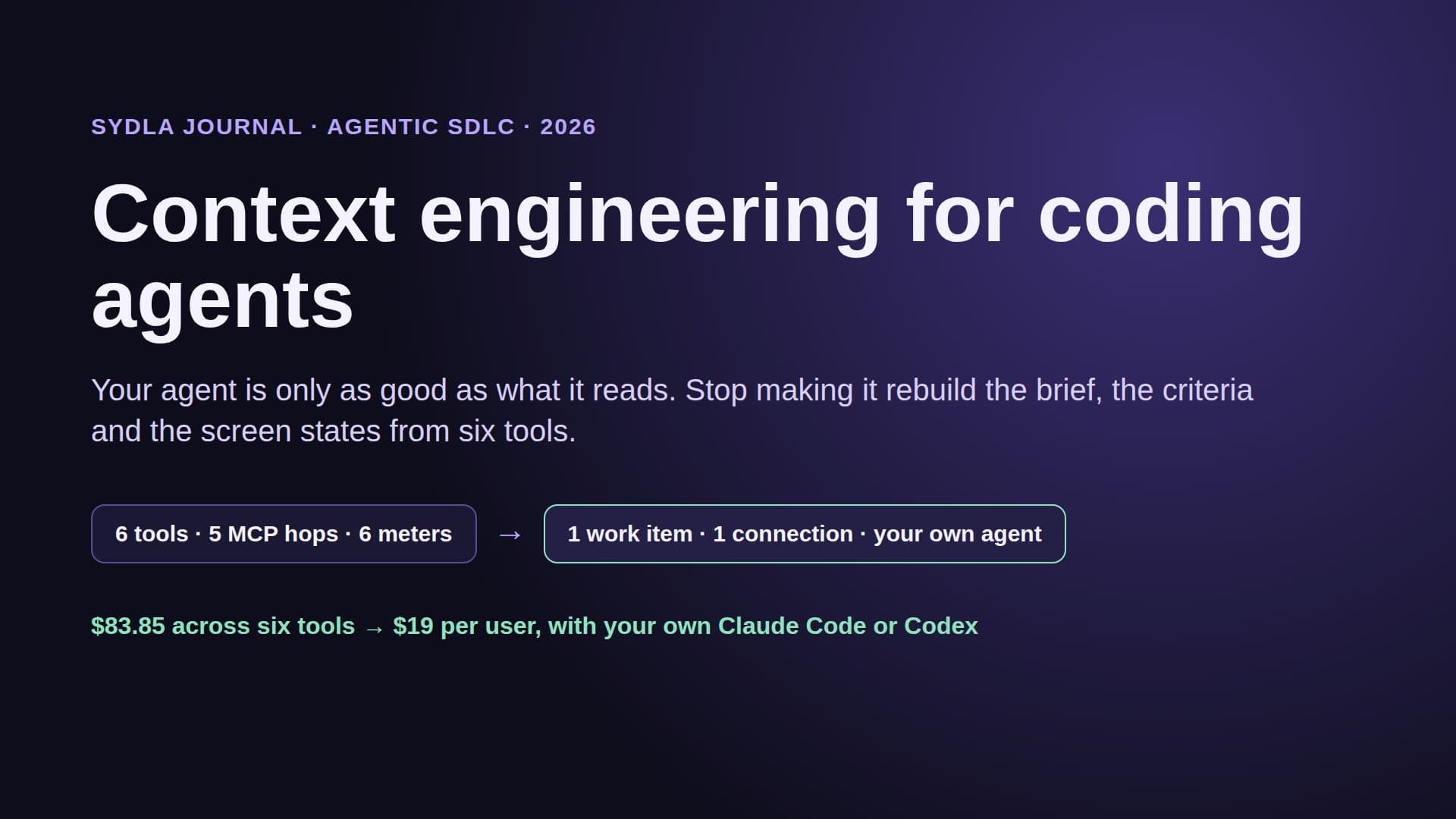
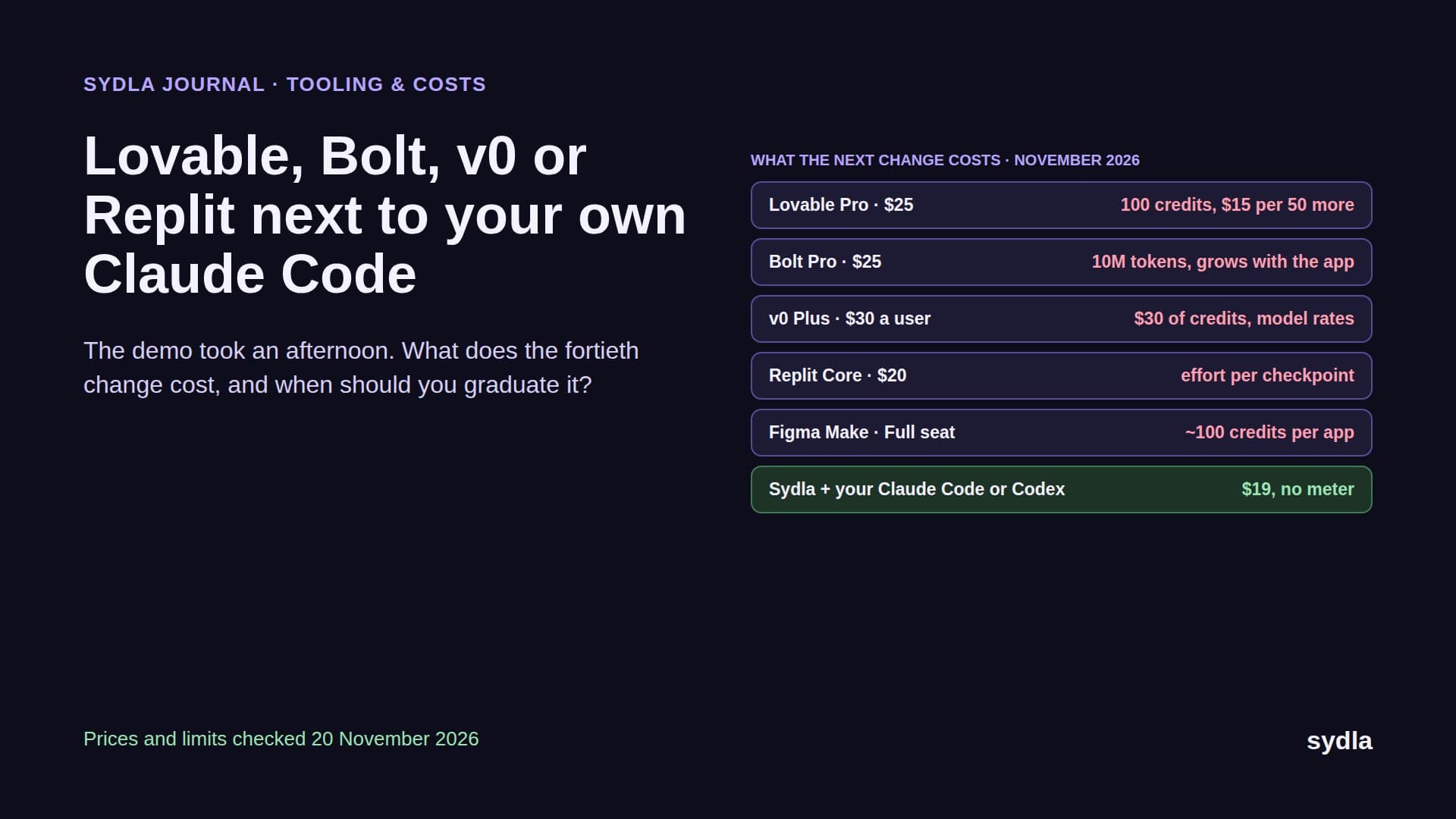
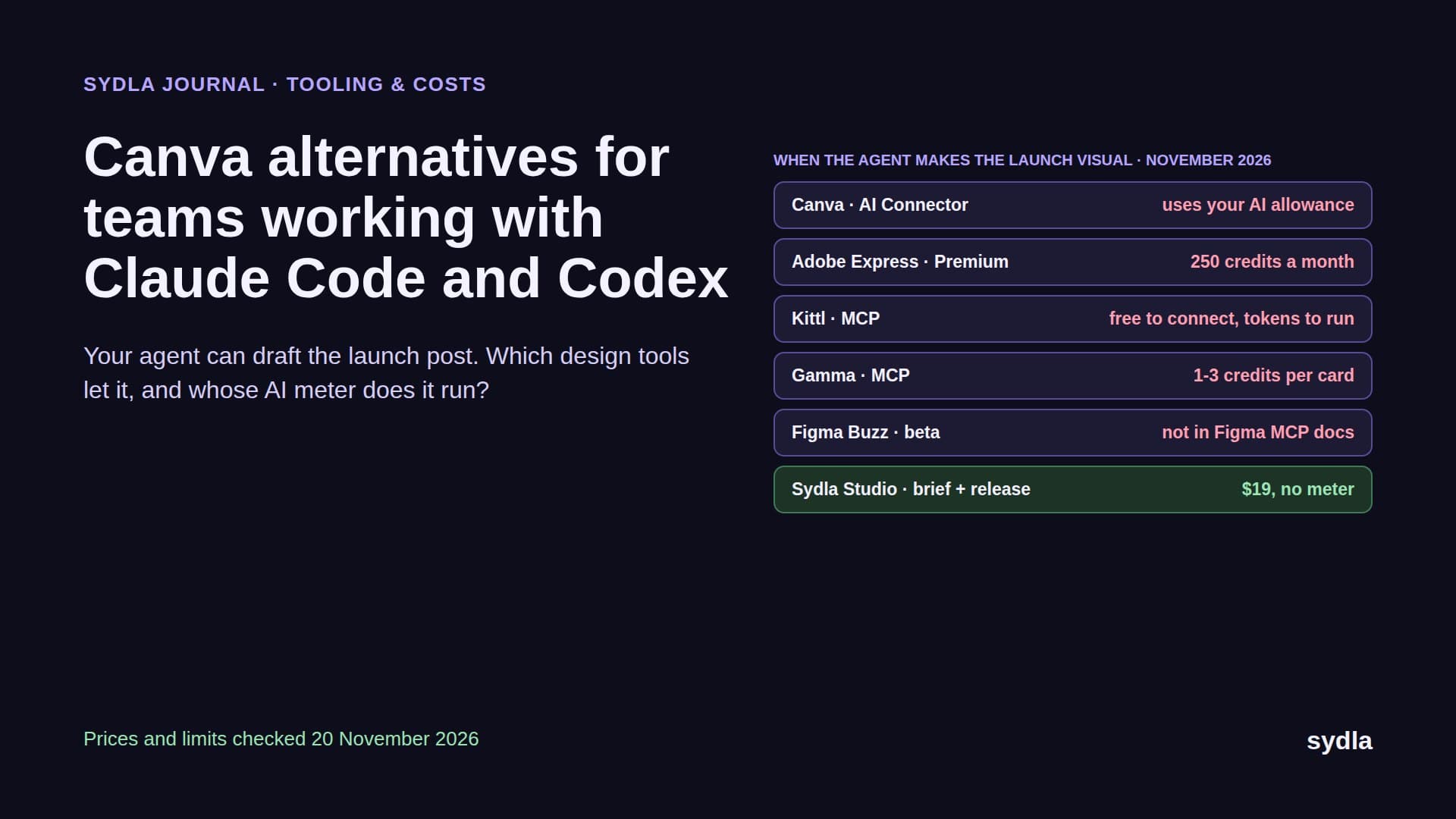
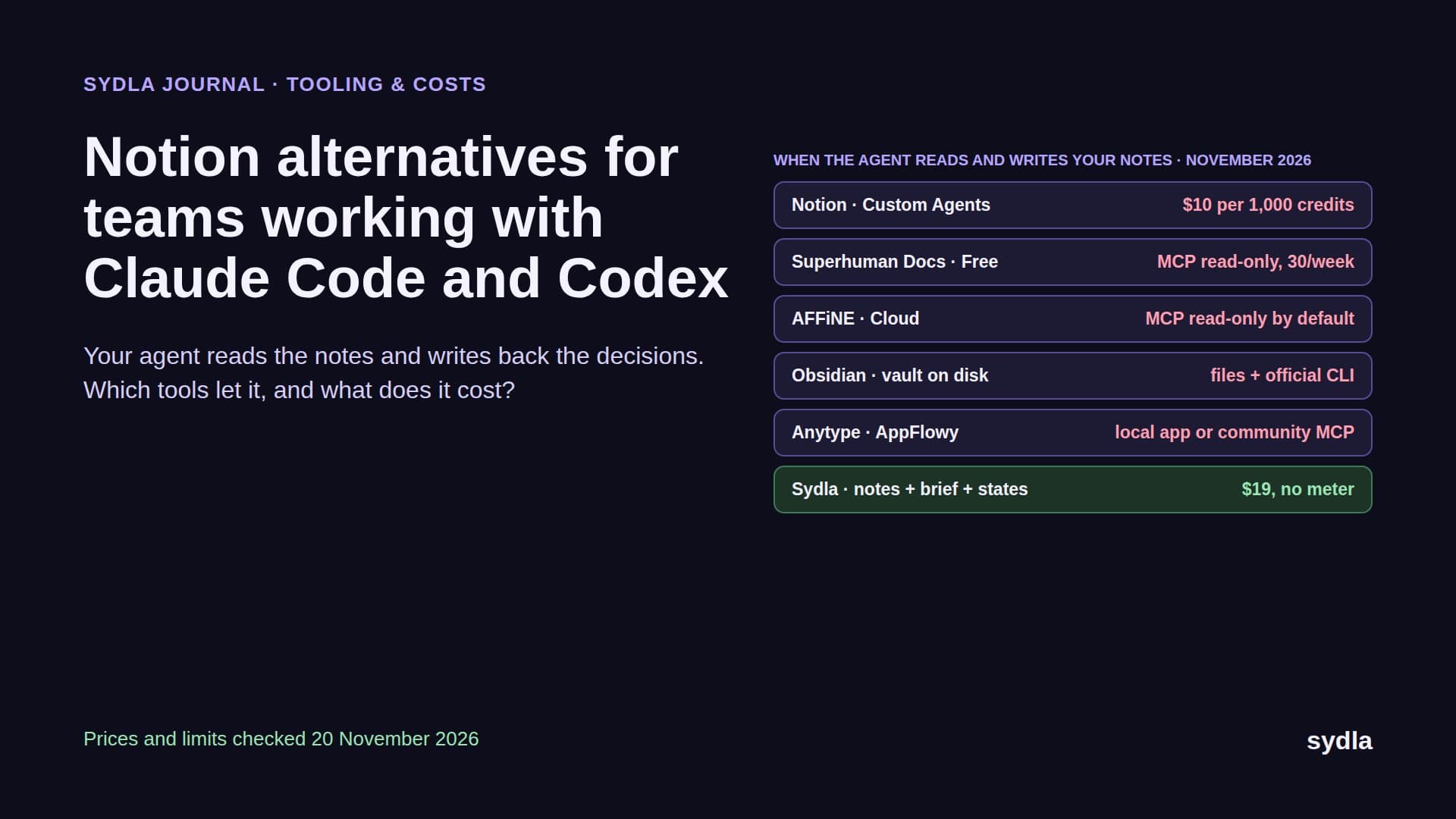
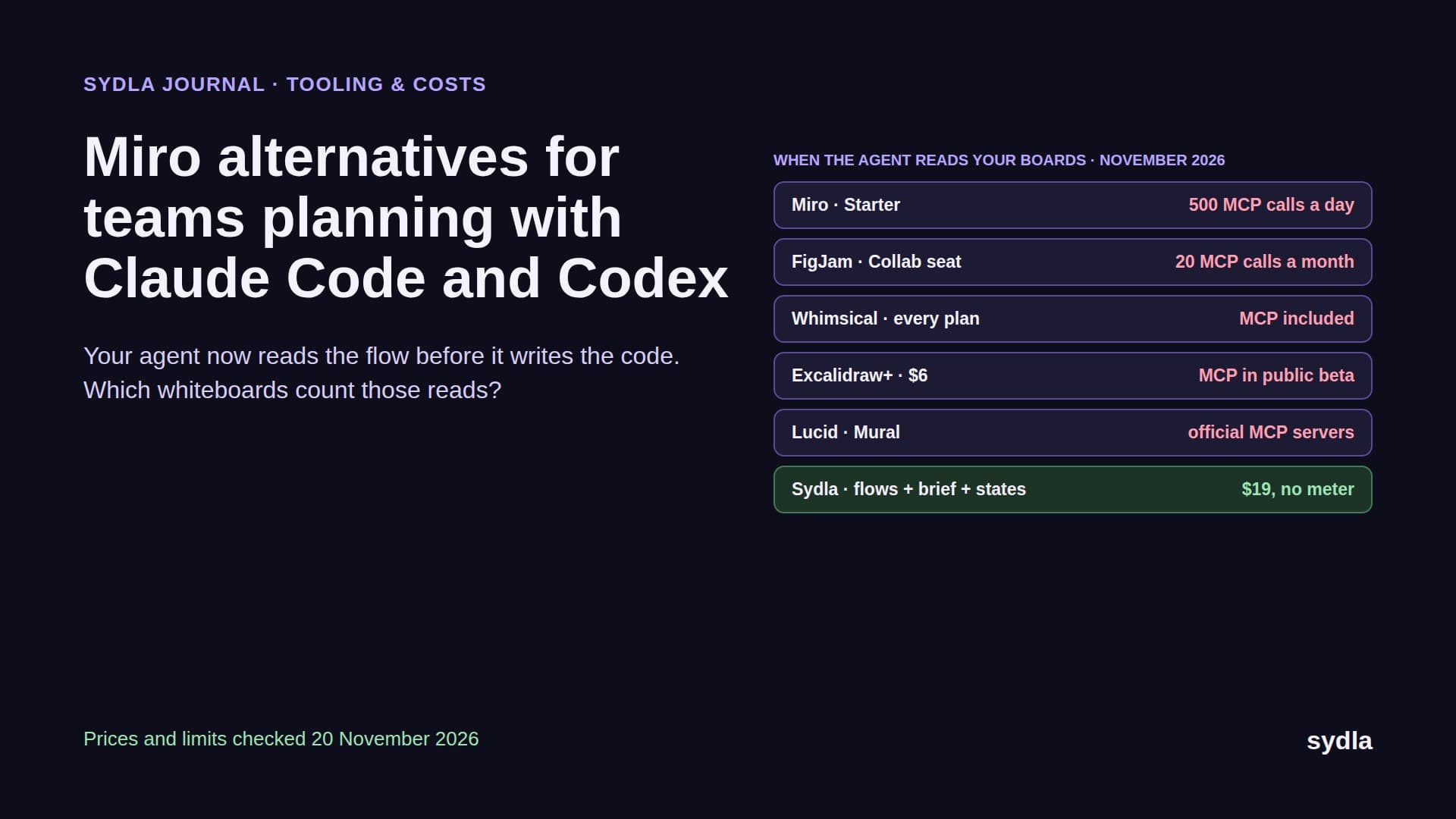
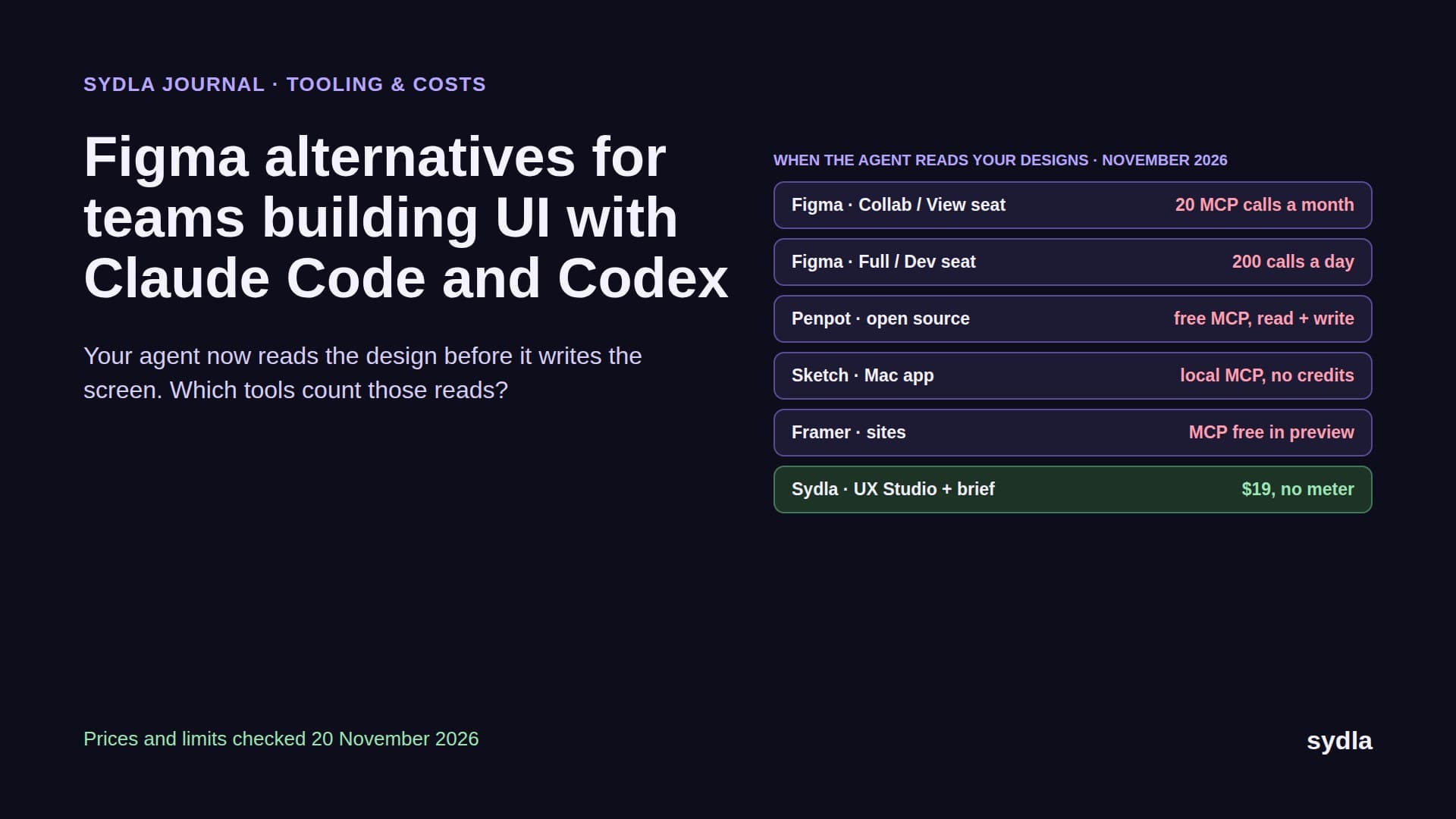
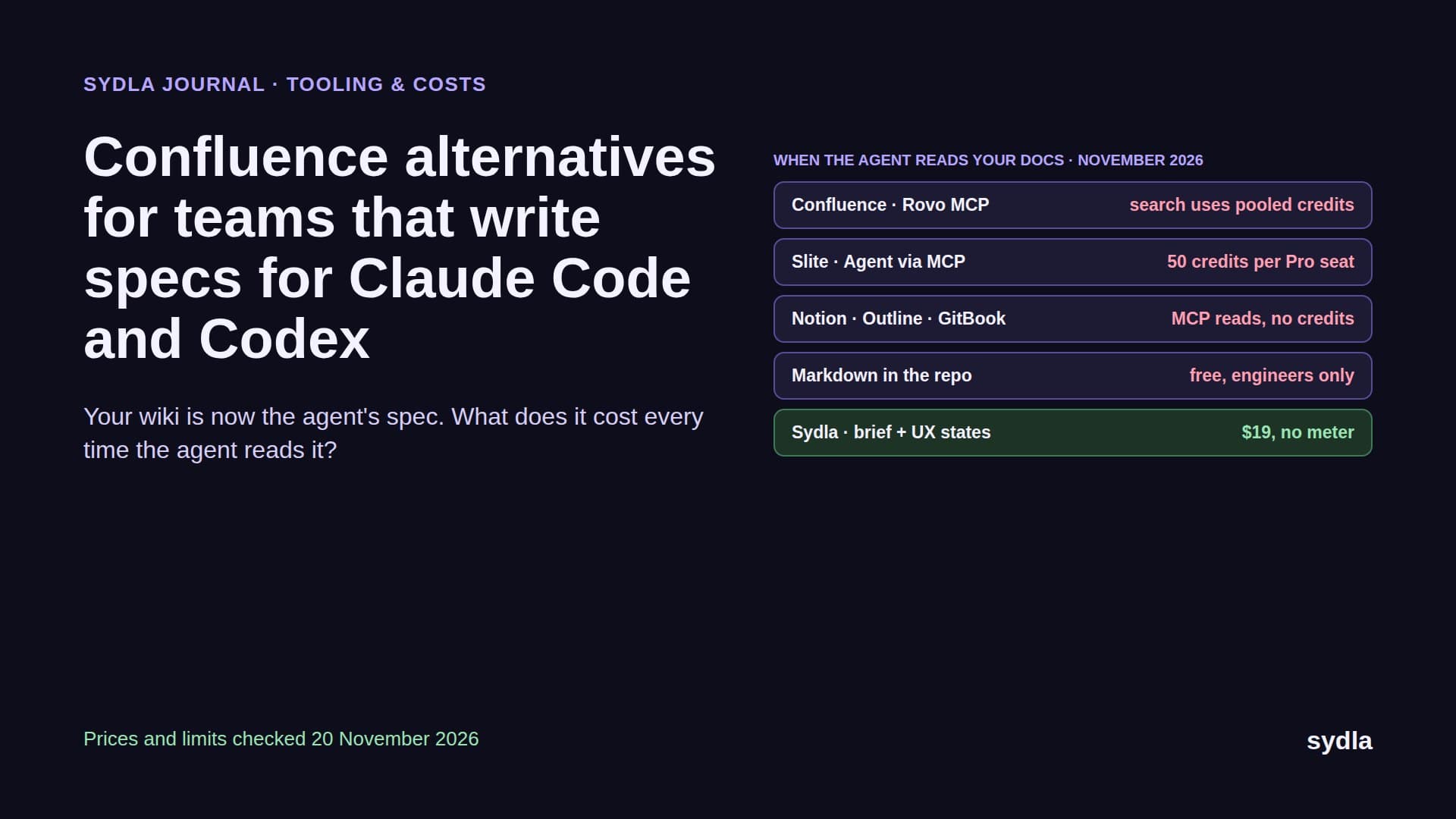
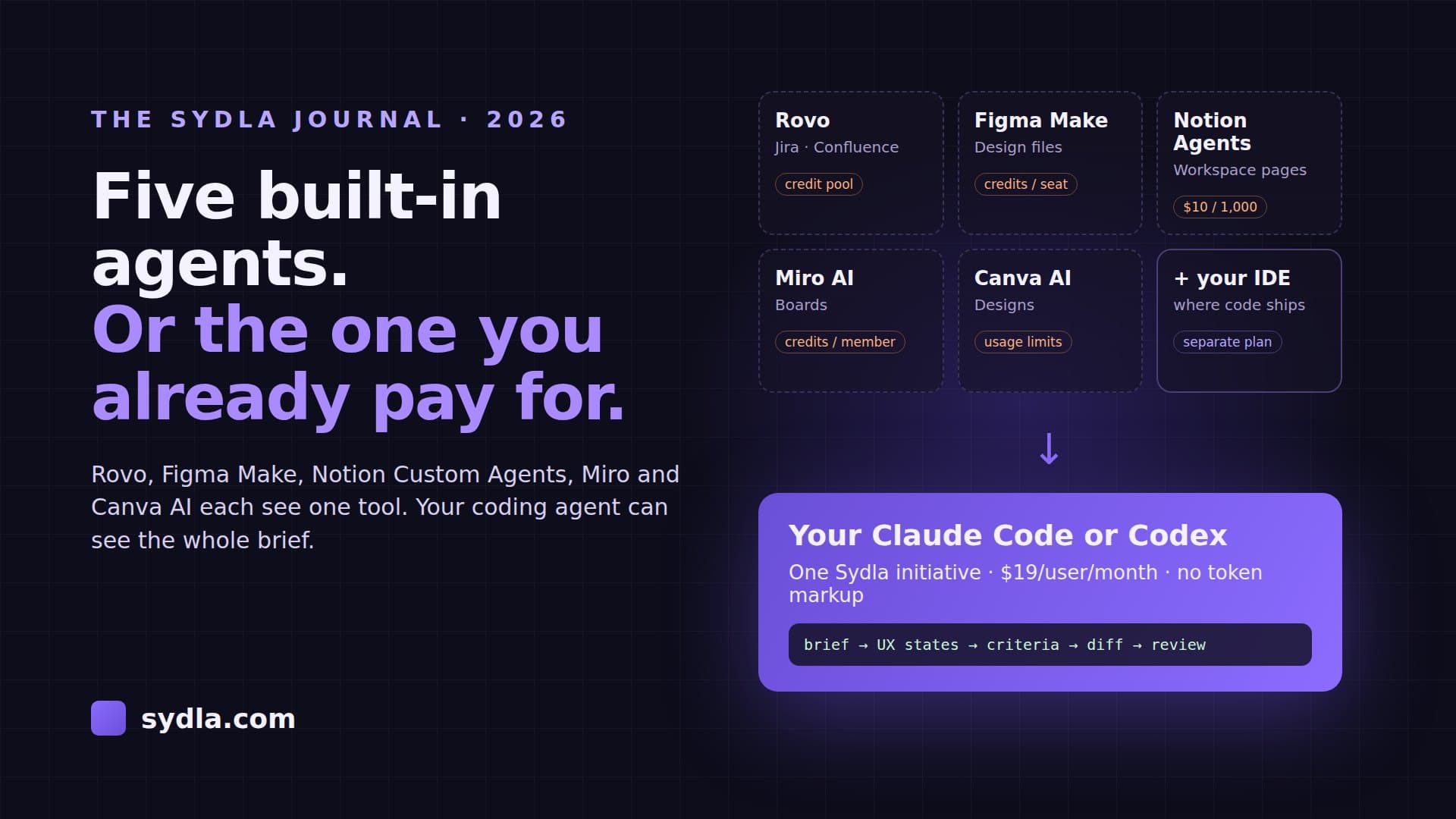
Even a perfectly budgeted Copilot pool does not give the agent what it needs to do the work well. The ticket is in Jira, the spec in Confluence, the decision in Notion, the states in Figma, the flow in Miro and the launch visuals in Canva. Each tool has its own seat, its own AI allowance and its own MCP server the agent must call. Each one has a page on our comparison hub.
| Tool and plan | Seat / month | Built-in AI billing | Handoff it adds to one ticket |
|---|---|---|---|
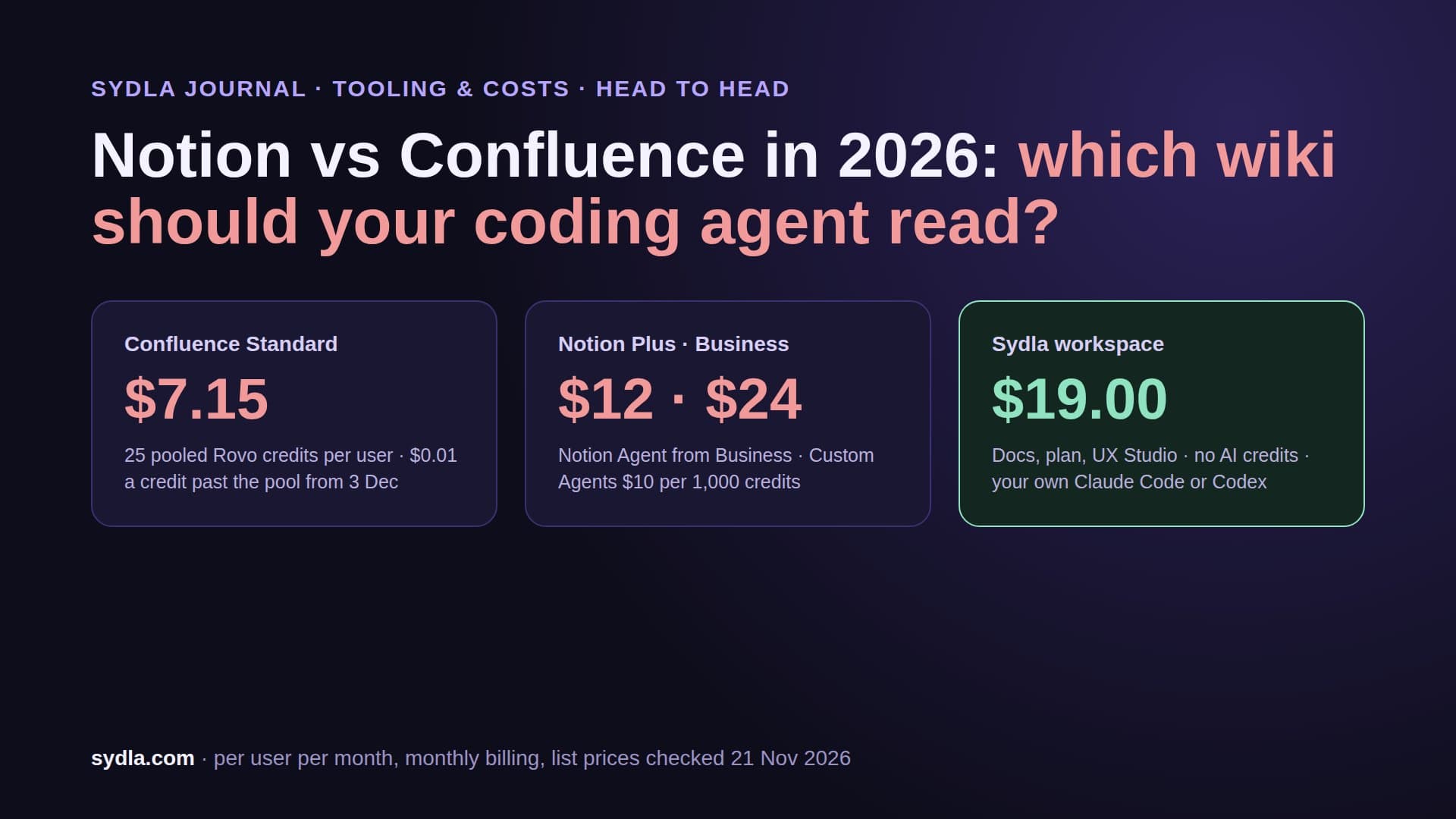
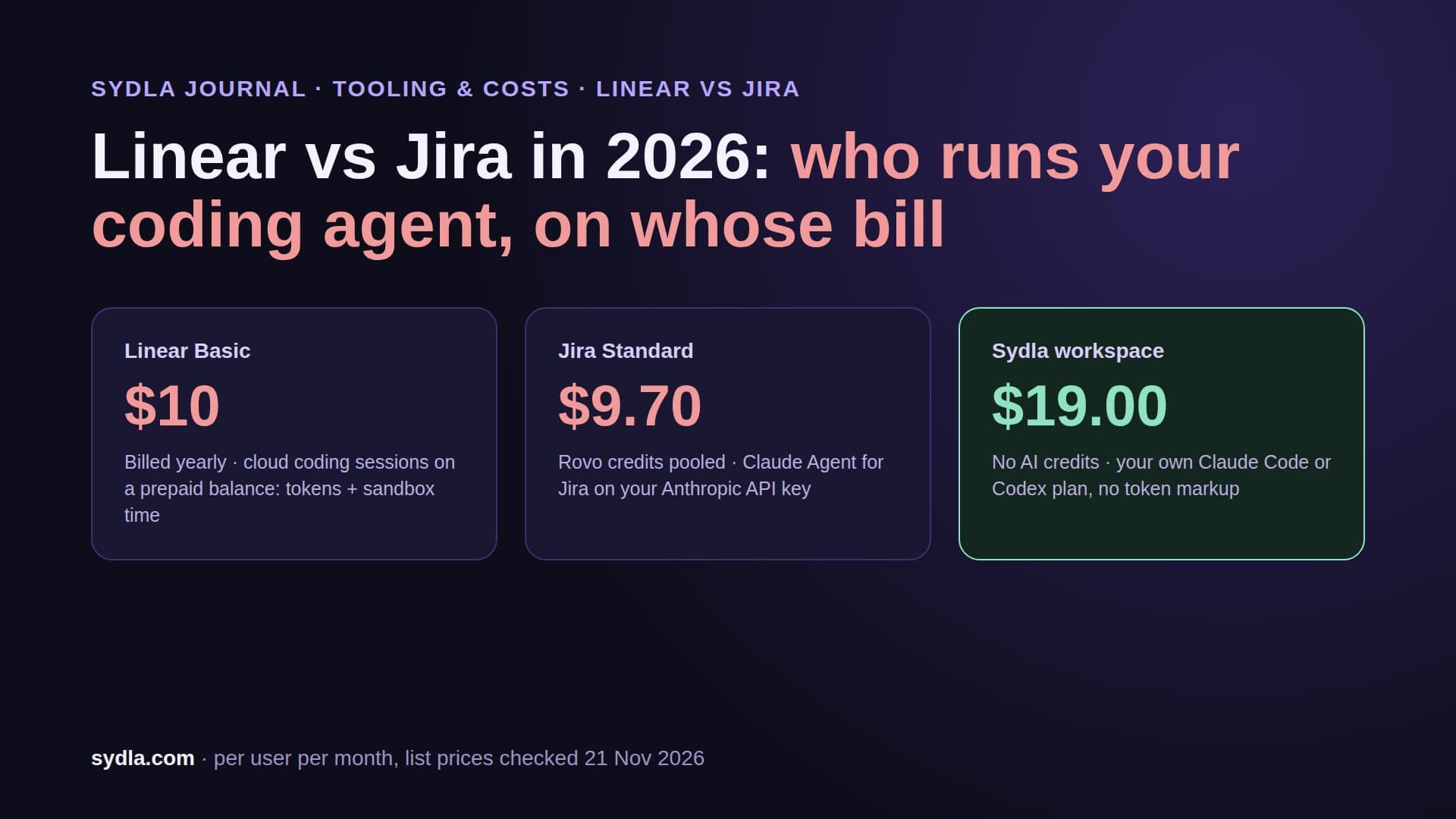
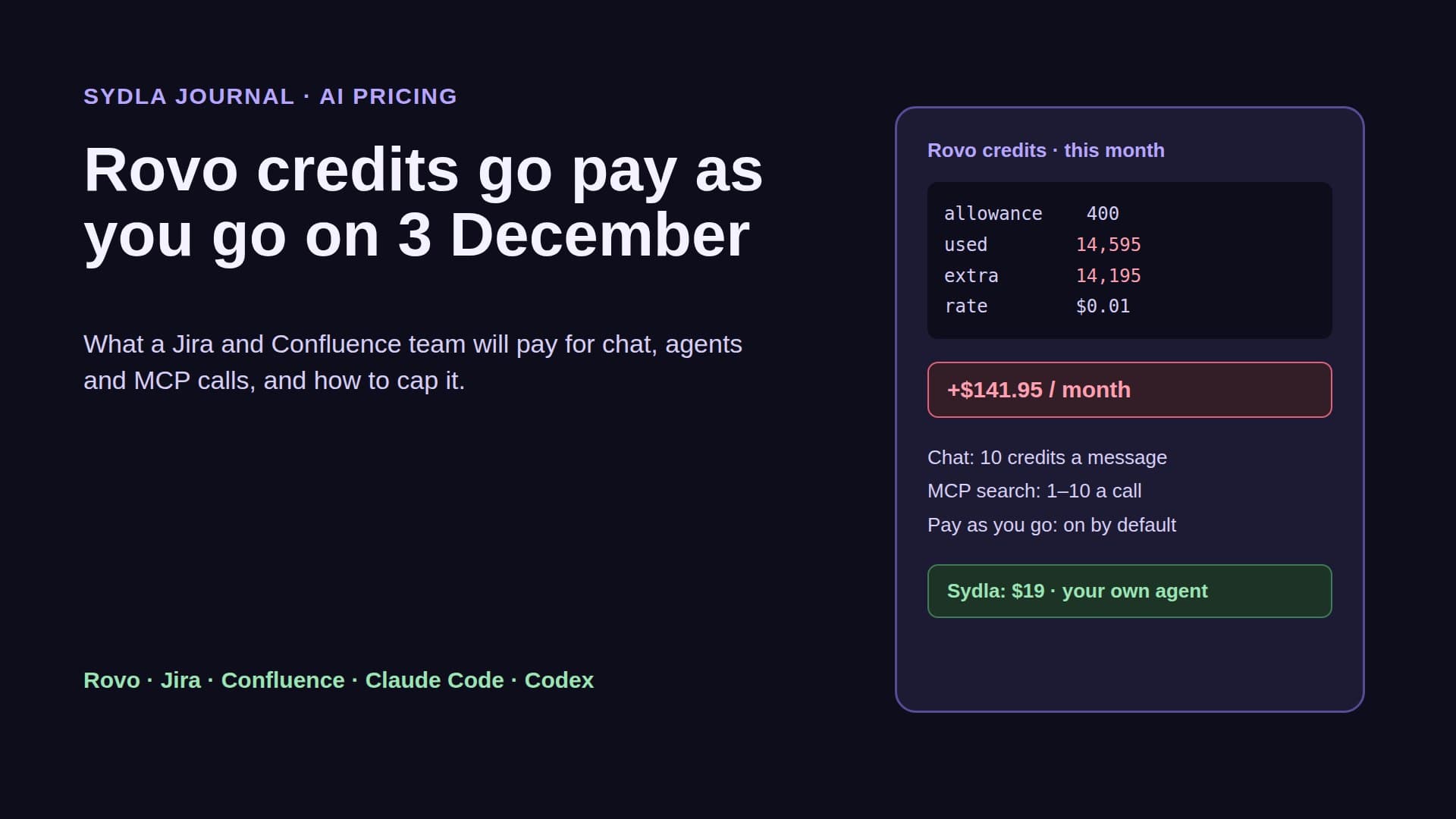
| Jira Standard | $9.70 | 25 Rovo credits per user, pooled; $0.01 per extra credit from 3 December 2026 | The request is retyped as a ticket |
| Confluence Standard | $7.15 | Same Rovo pool; enriched MCP searches 1 to 10 credits each | The ticket becomes a spec |
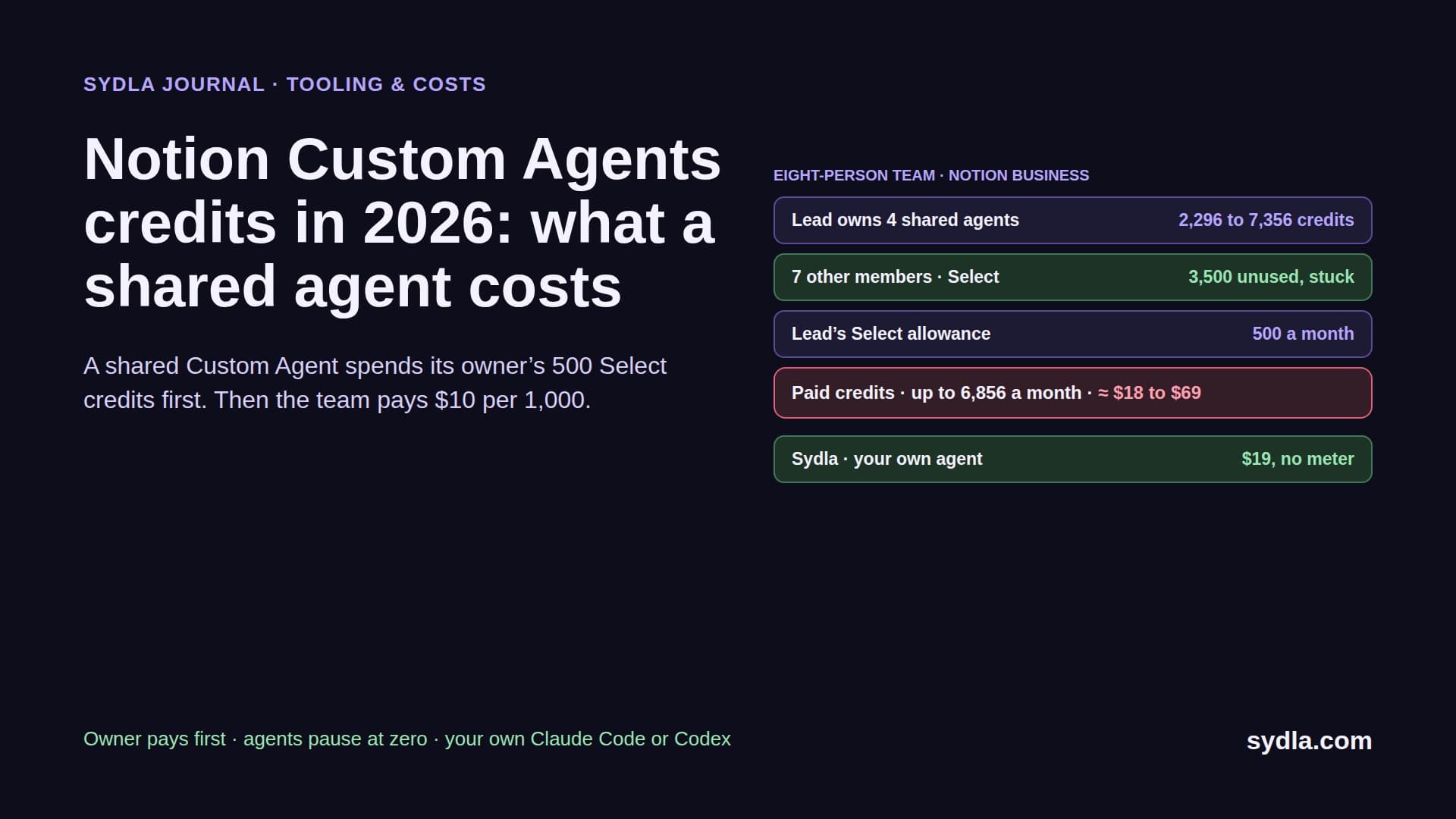
| Notion Plus | $12.00 | Custom Agents need Business, then $10 per 1,000 credits | Decisions stay in meeting notes |
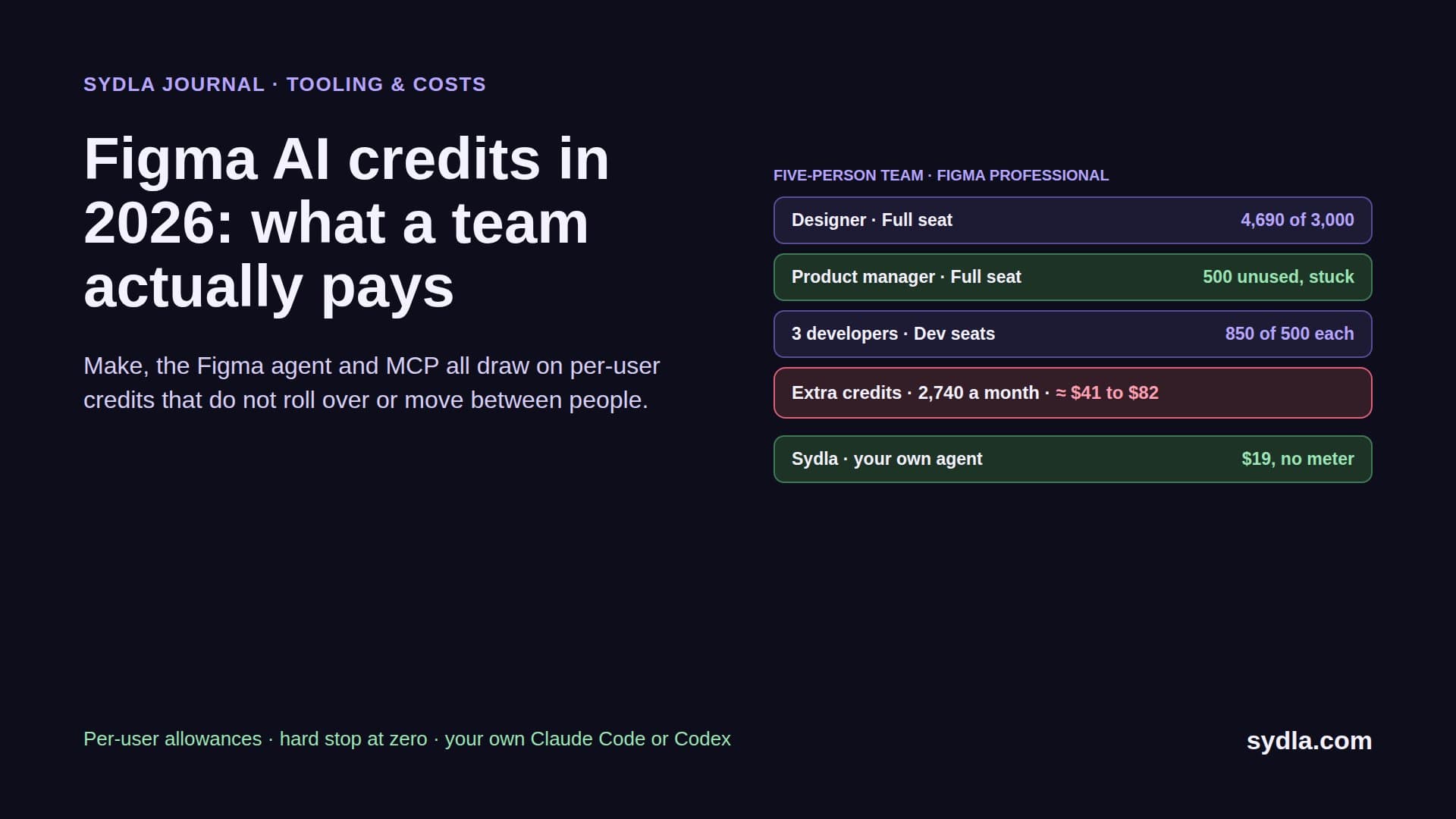
| Figma Professional, Full seat | $20.00 | 3,000 AI credits; MCP reads 200 a day on Full and Dev seats | Frames are screenshotted into the ticket |
| Miro Starter | $10.00 | 25 credits per member, pooled; AI pauses at zero | The flow is redrawn as frames |
| Canva Business | $25.00 | AI allowance per plan | Screens are exported again for launch |
| GitHub Copilot Business | $19.00 | 1,900 AI credits per user, pooled; $0.01 per extra credit | The agent rebuilds context from all of the above |
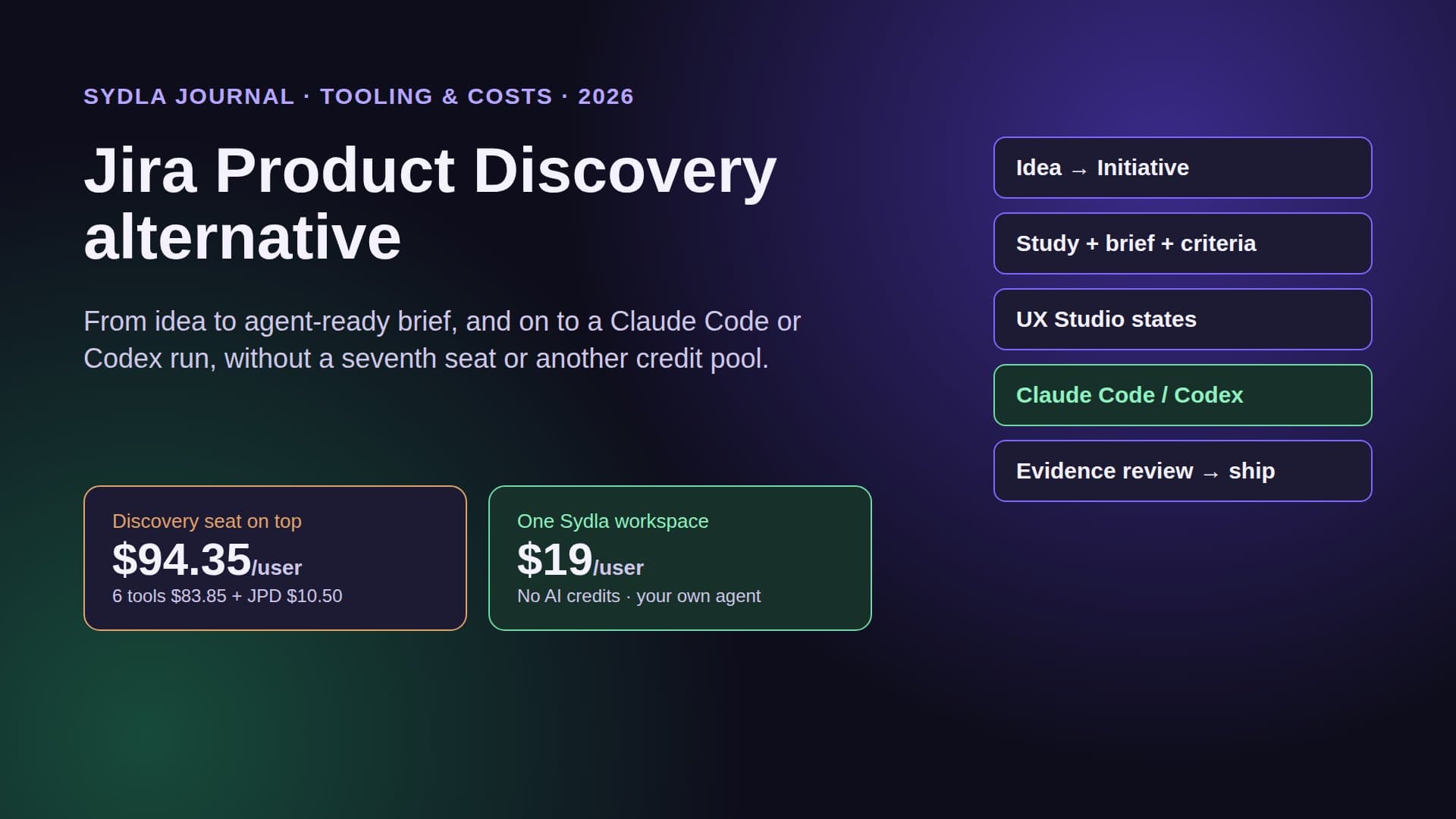
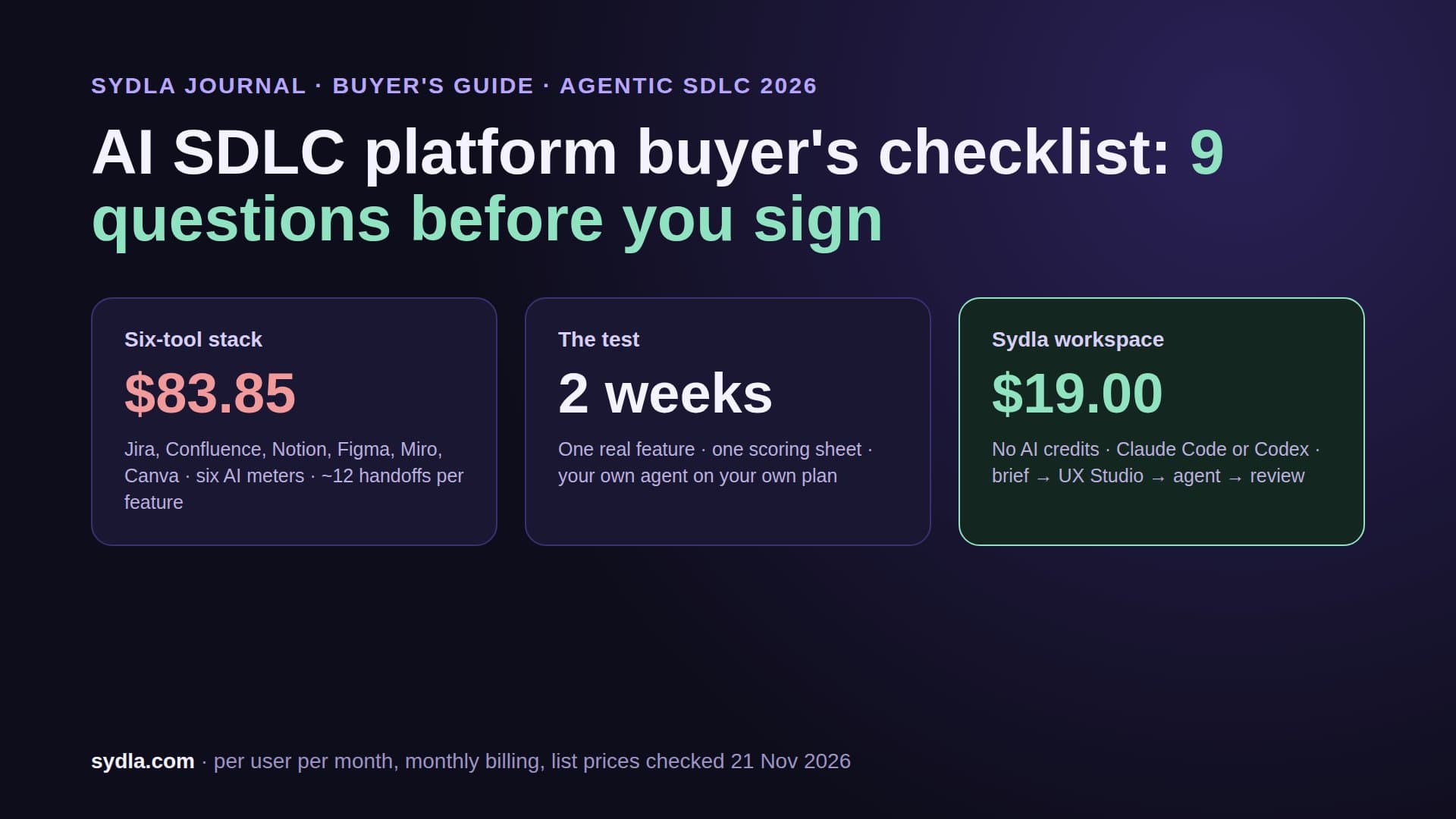
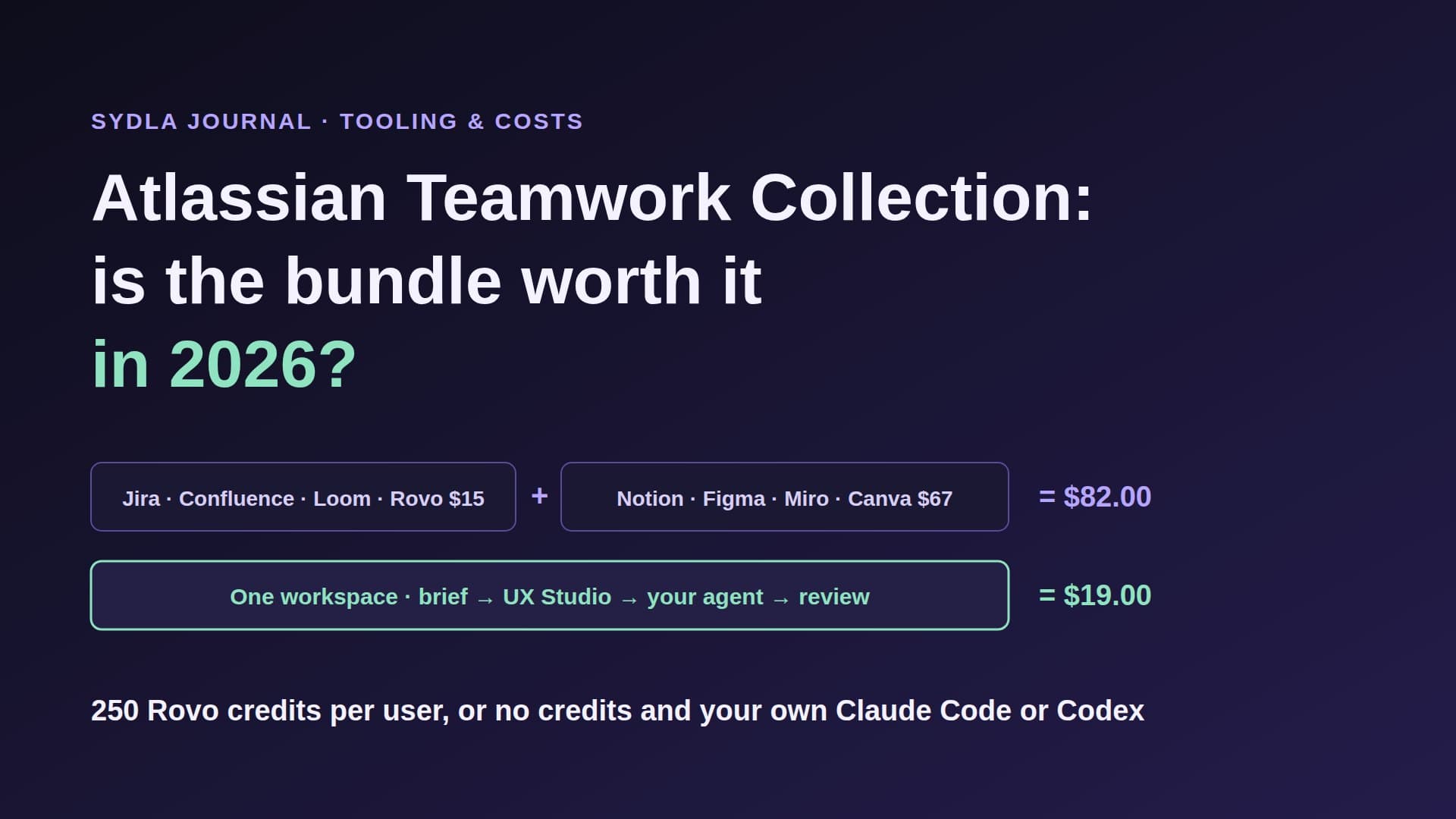
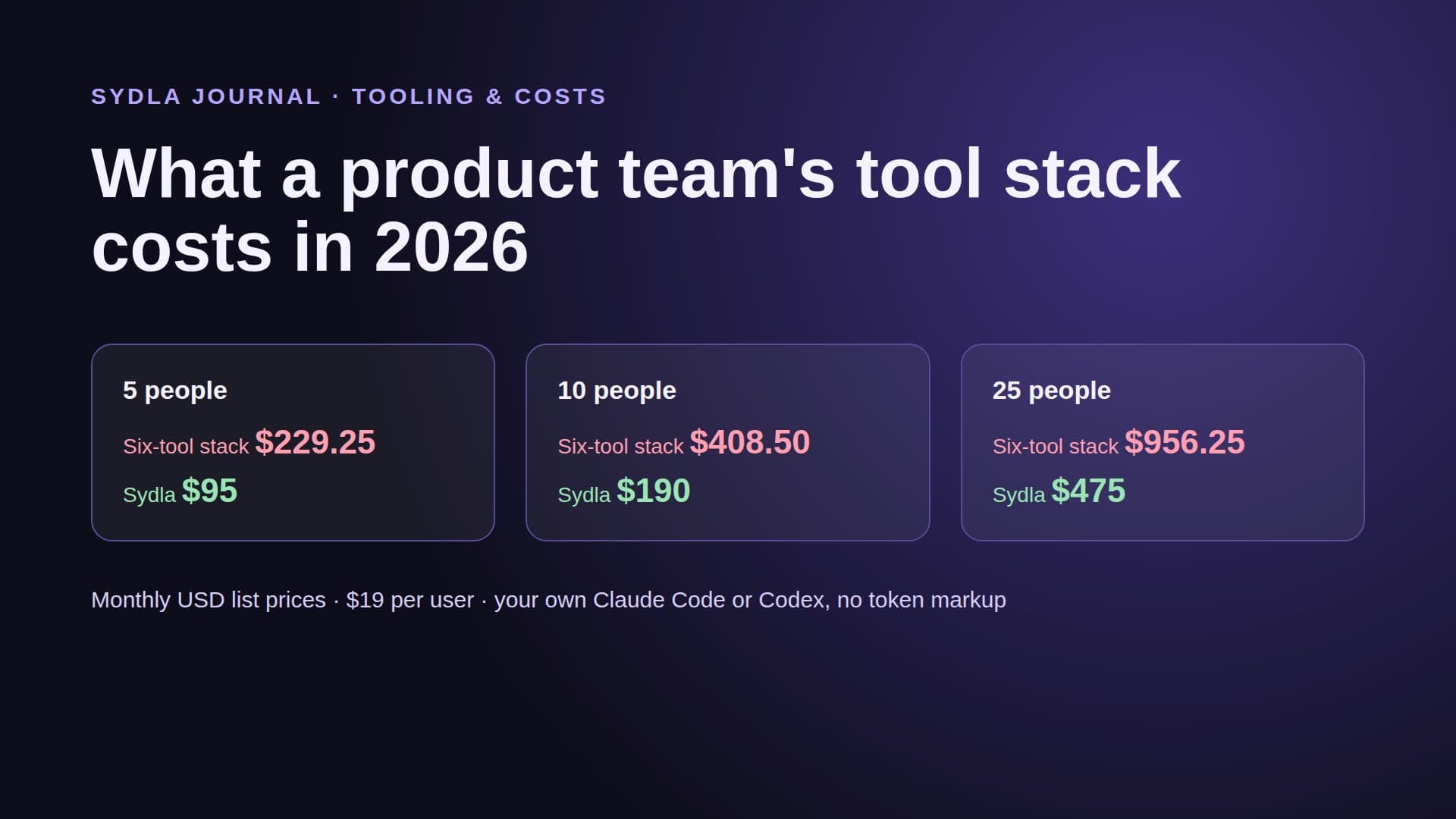
| Six tools + Copilot | $102.85 | Seven meters, seven renewal dates | About twelve handoffs per feature |
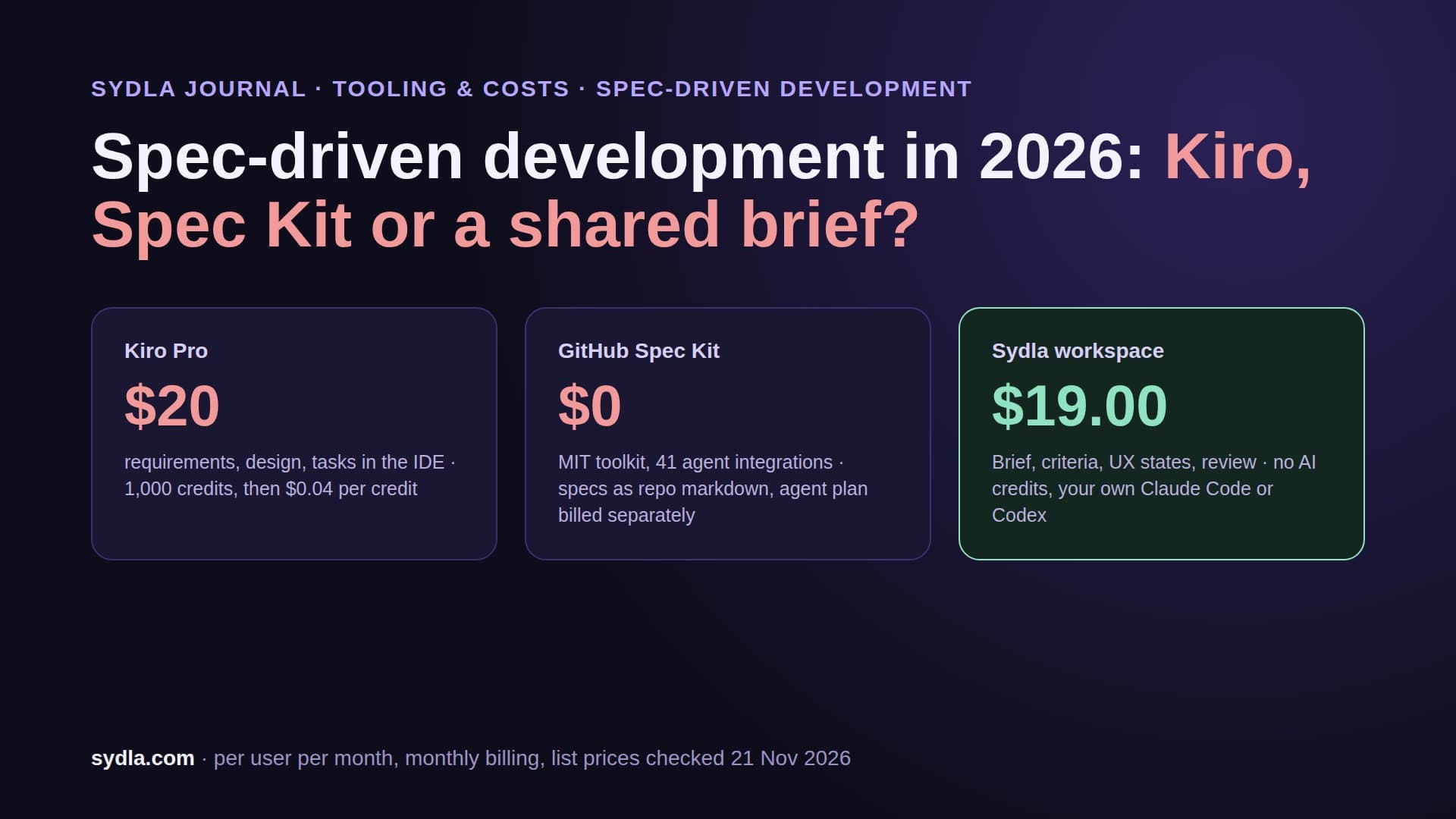
| [Sydla](/) | $19.00 | No Sydla AI credits; your own Claude Code or Codex plan, no token markup | One work item: brief, criteria, UX states, runs, evidence |
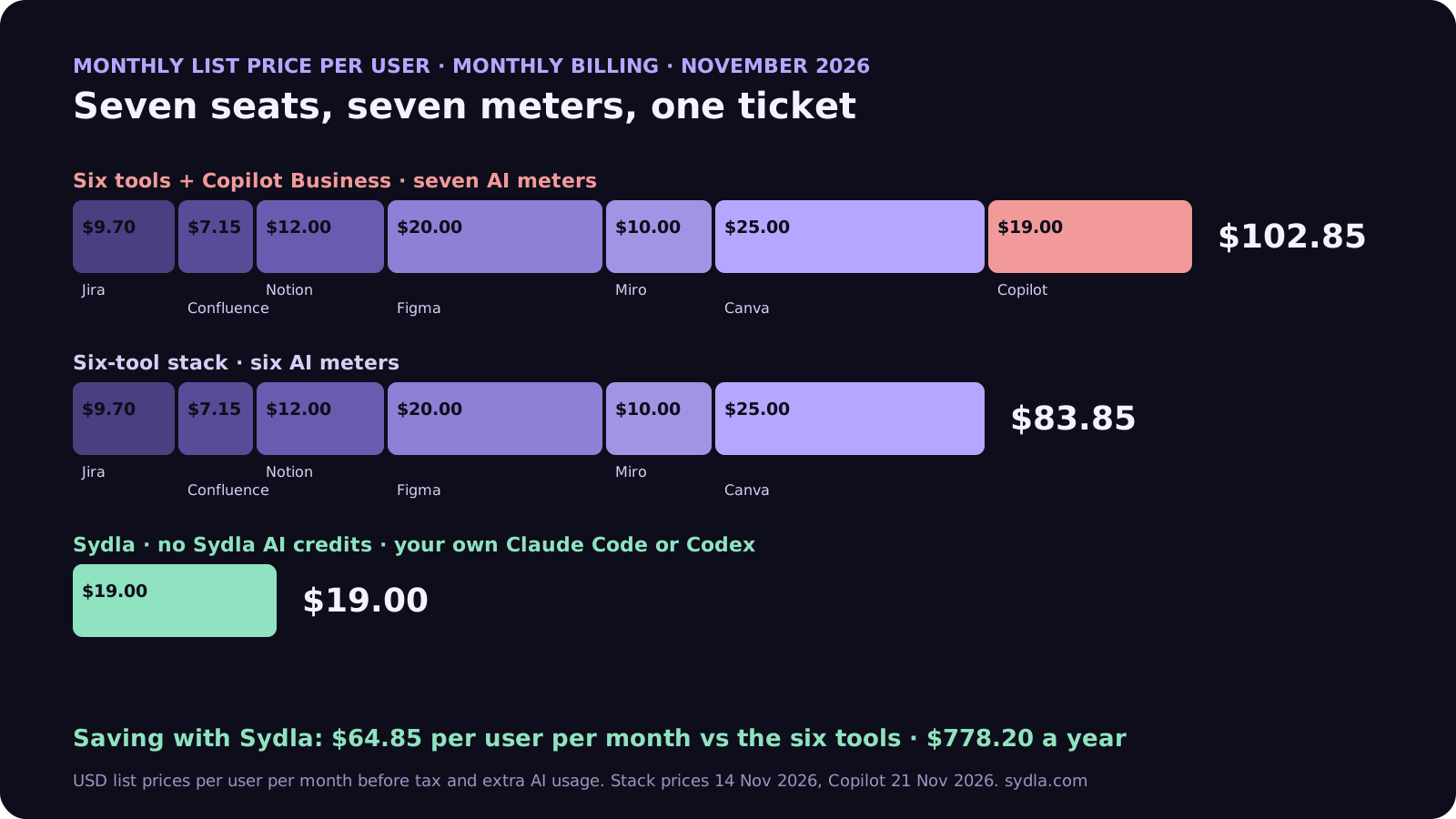
Against the six tools alone, Sydla saves $64.85 per user per month, $778.20 a year, before any agent spend. The pricing section lists the plan, and the full comparison is honest about where each specialist tool still wins. The bigger cost is the hop: every MCP server is another login, another rate limit and another stale copy of the truth. Our MCP servers guide counts them tool by tool.
Walkthrough: run Claude Code or Codex on your own plan with Sydla Desktop
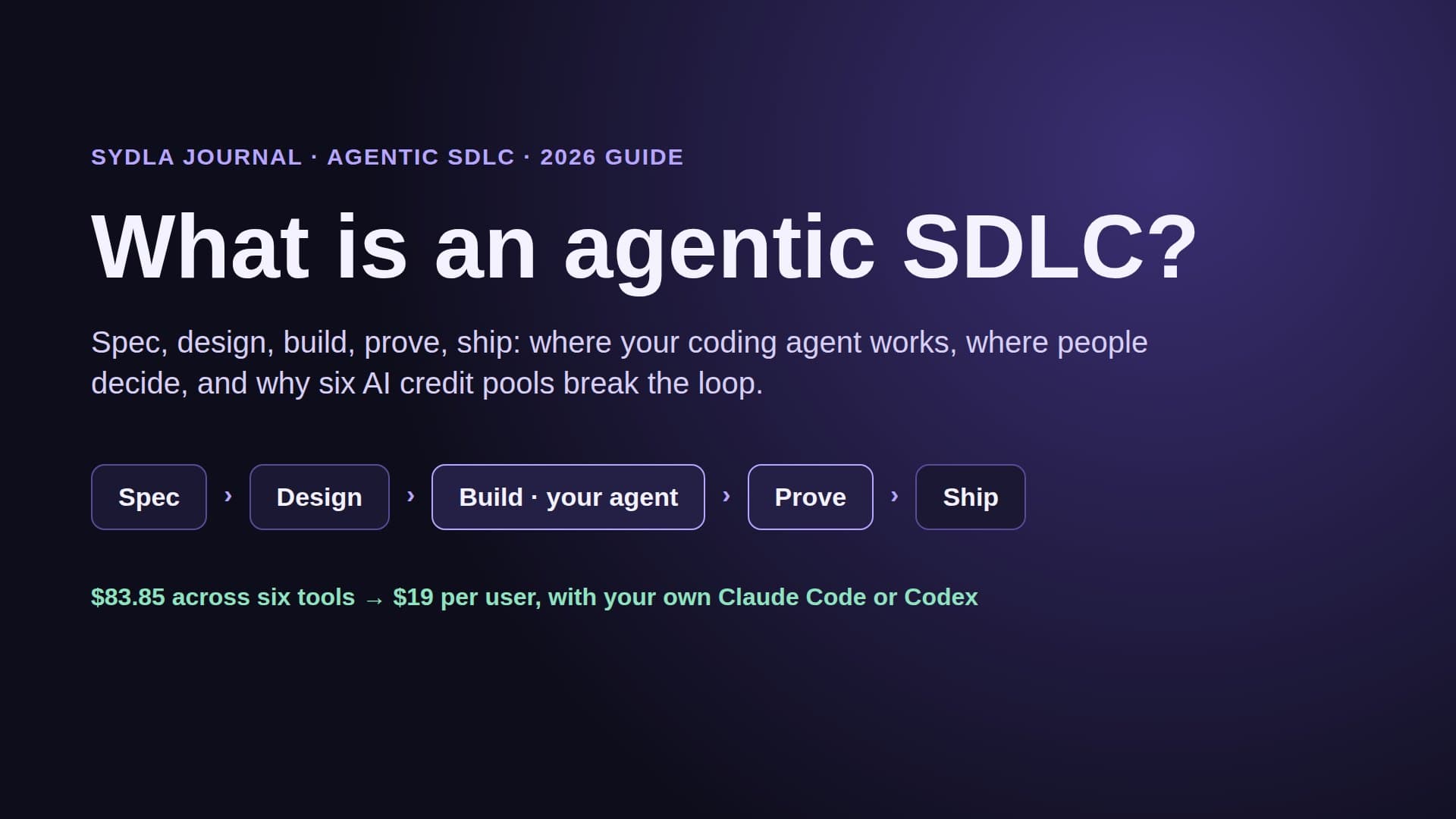
You can keep what Copilot does best and stop paying per token for what it does not. Completions use no credits, so leave them on. A $0 user-level budget blocks the credit-consuming features and keeps completions working. Then let Claude Code or Codex do the agent work on the plan you already pay for, started from a shared brief instead of an issue body. Here is the loop in Sydla:
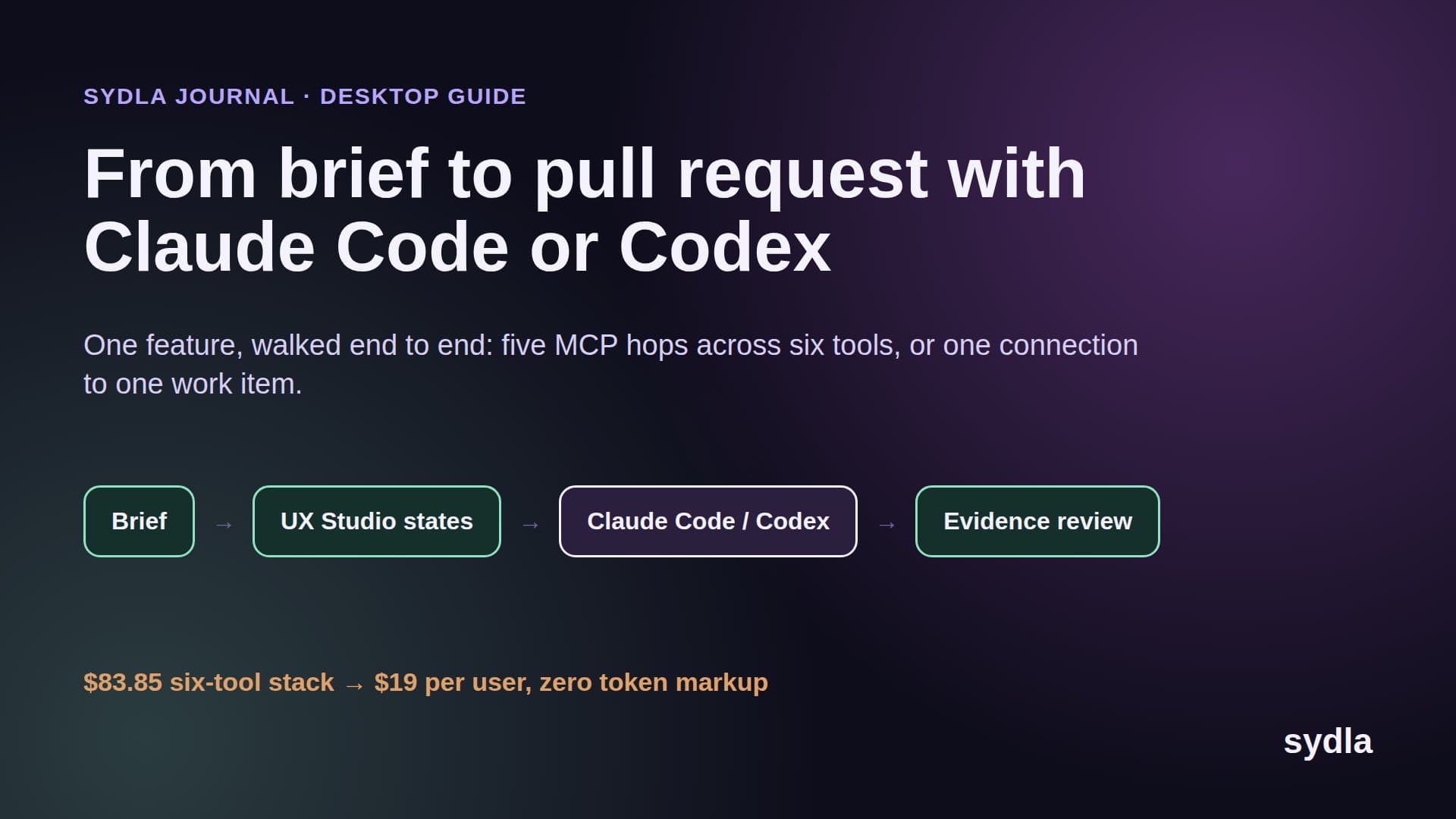
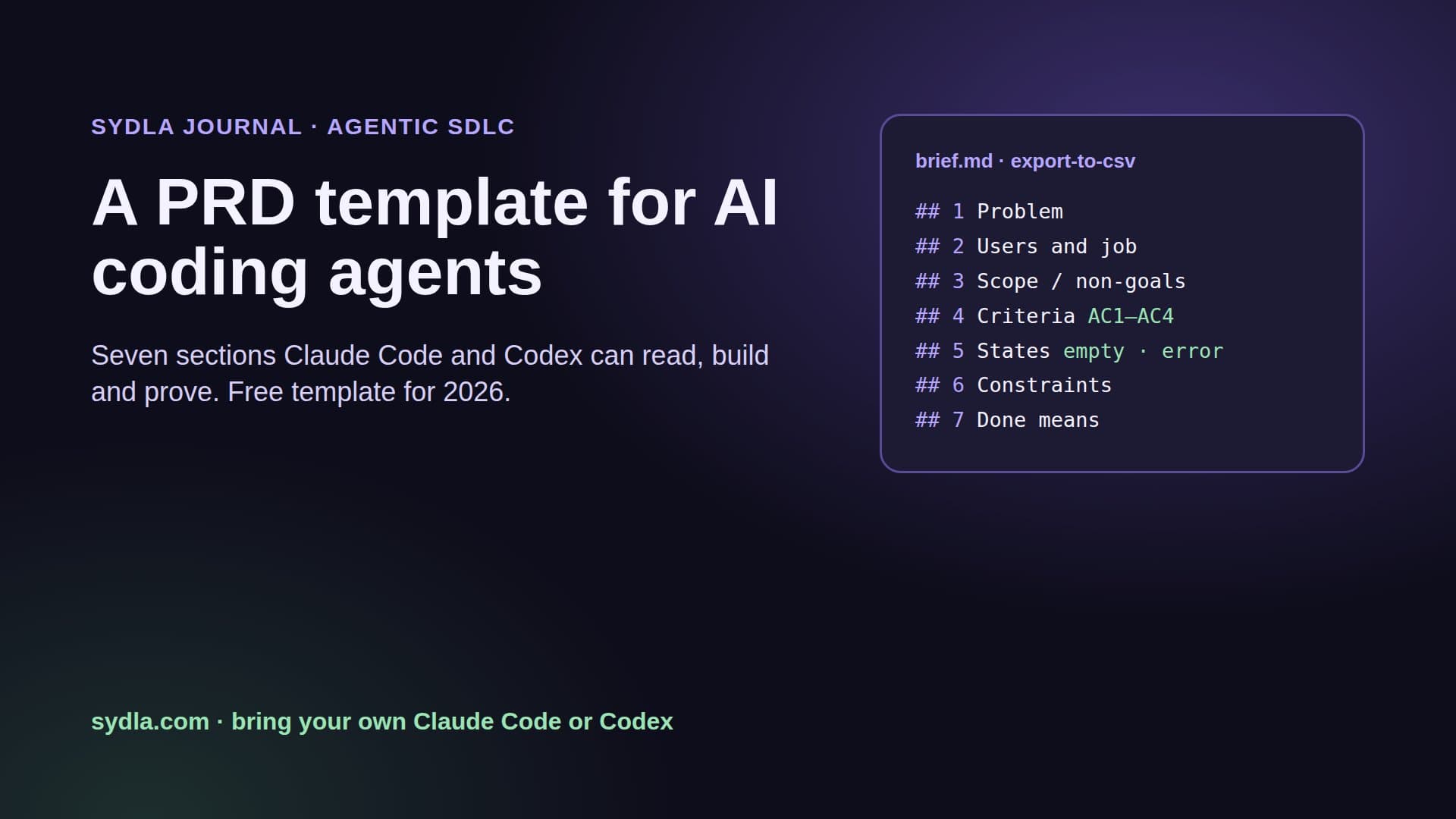
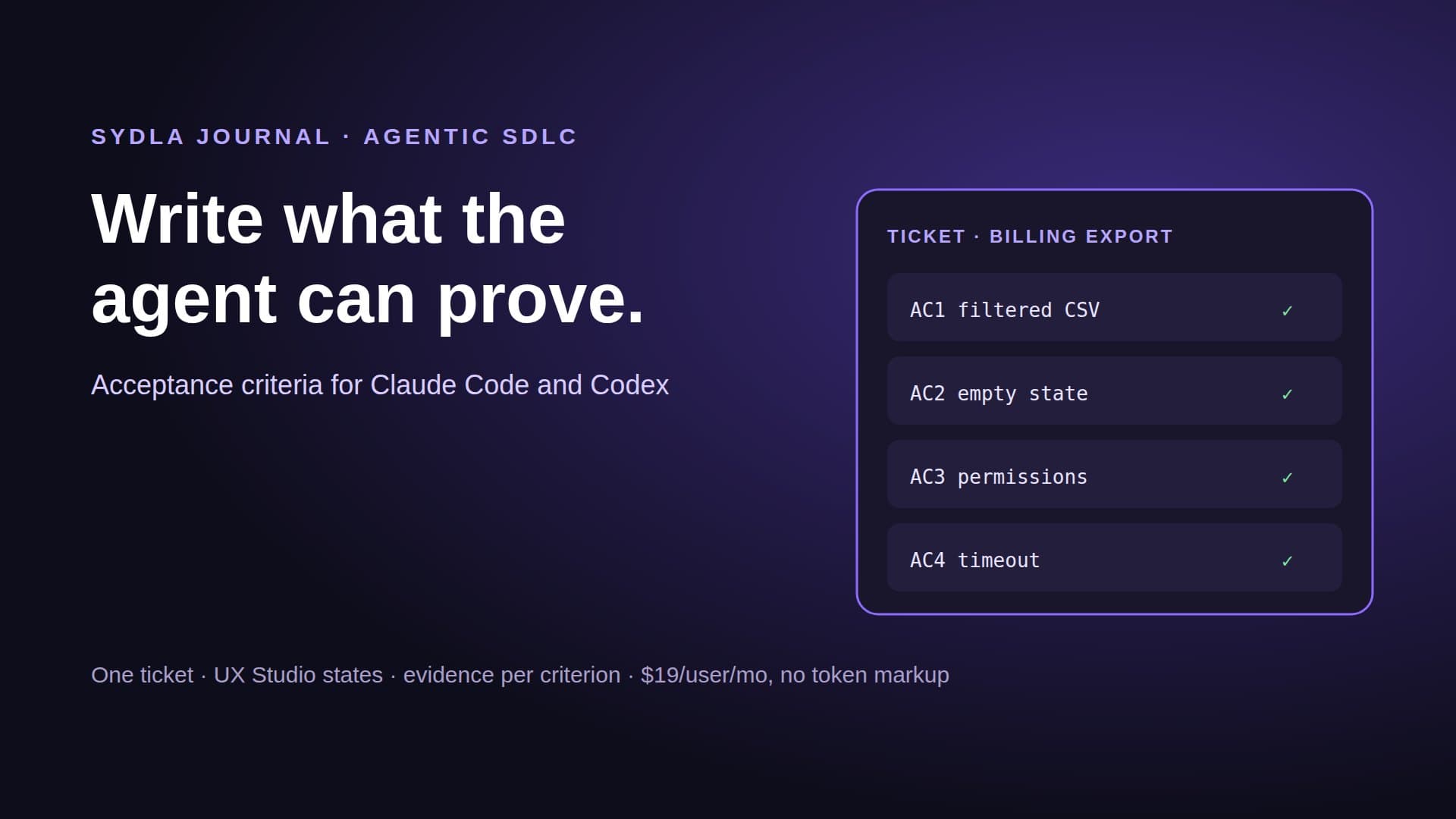
- Write the brief once. In Sydla Docs, record the goal, the users, what is out of scope and numbered acceptance criteria, for example: AC3, an admin who exports invoices with no rows sees the empty state with a date-range hint, not a blank CSV. The brief, the plan and its tickets live in one initiative. The PRD template for coding agents lists the seven sections that matter.
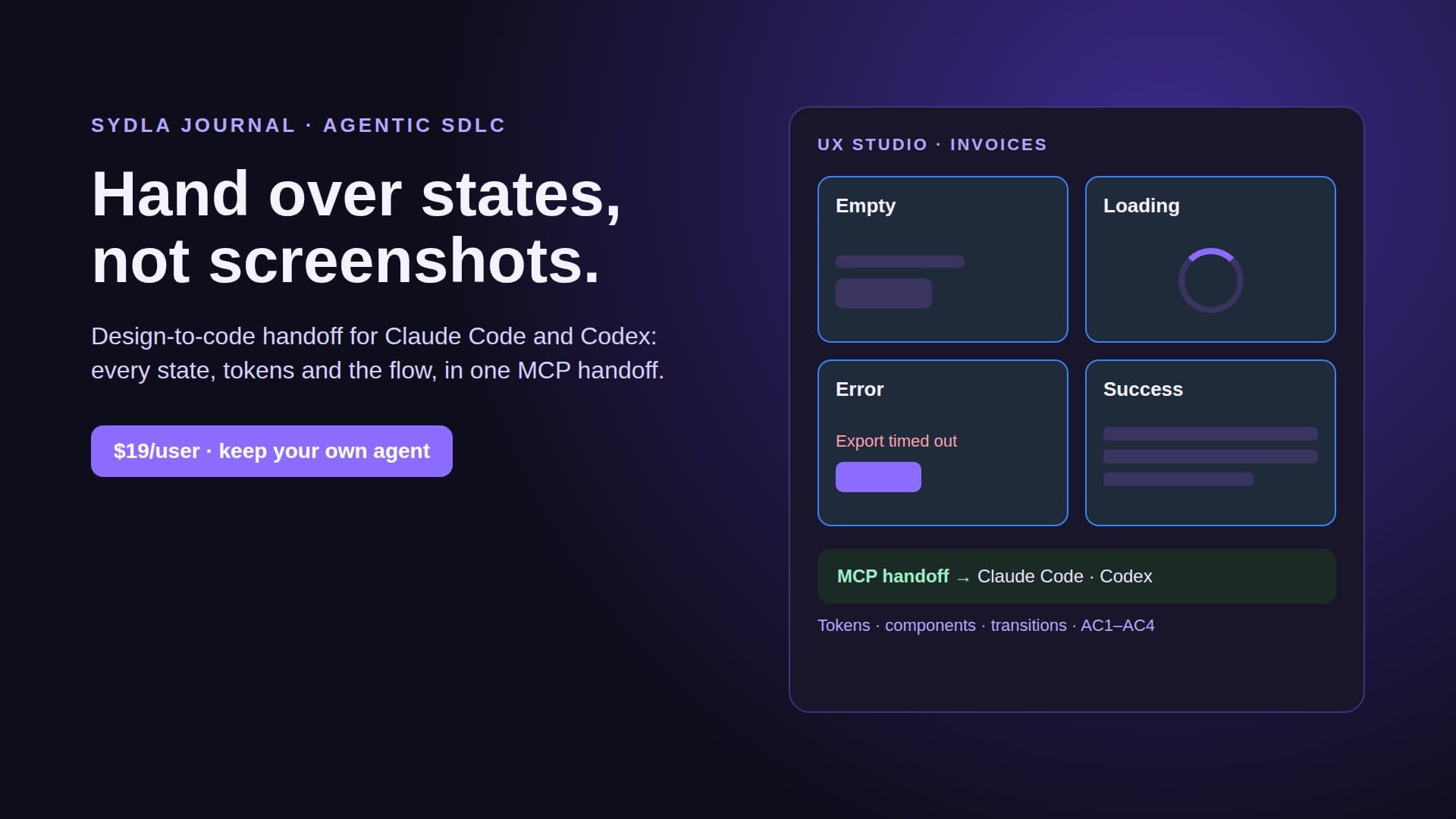
- Draw the states in UX Studio. Add the empty, loading, error, success and permission-denied screens next to the happy path, and publish the handoff on the same initiative. The agent reads states, not a screenshot pasted into an issue.
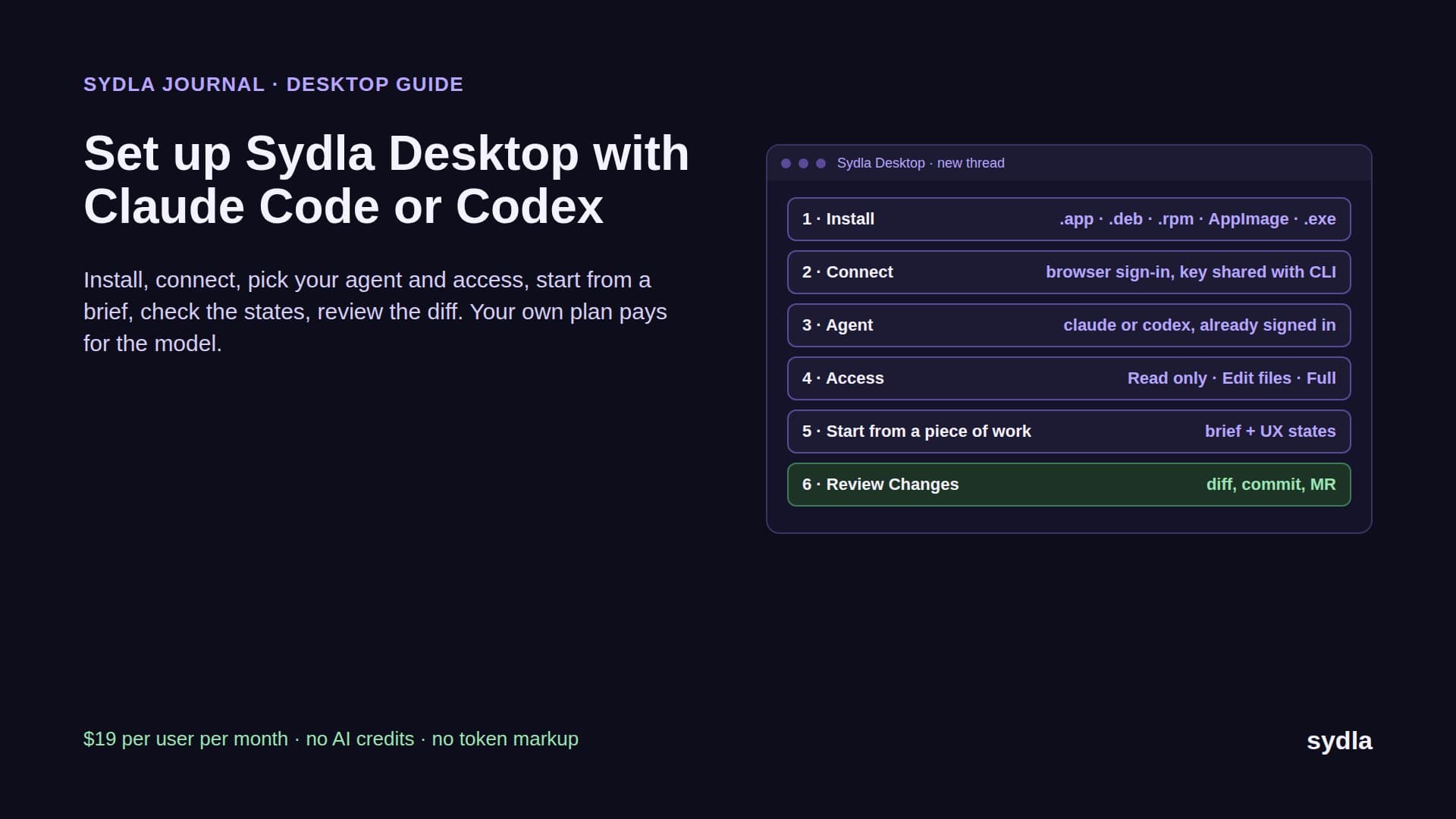
- Open a thread in Sydla Desktop. Add your repository folder. Desktop matches its Git remote to your Sydla project, so a thread started from a piece of work opens in that folder on its own branch. It launches the Claude Code or Codex CLI already signed in on your machine, on your own plan and limits. Pick Read only to frame the change, Edit files to build it, or Full access.
- Let the agent read the initiative. Through one Sydla MCP connection, the agent opens the brief, the criteria and the UX handoff. It edits, runs the tests and opens the dev server in its own headless browser to check each state against the design.
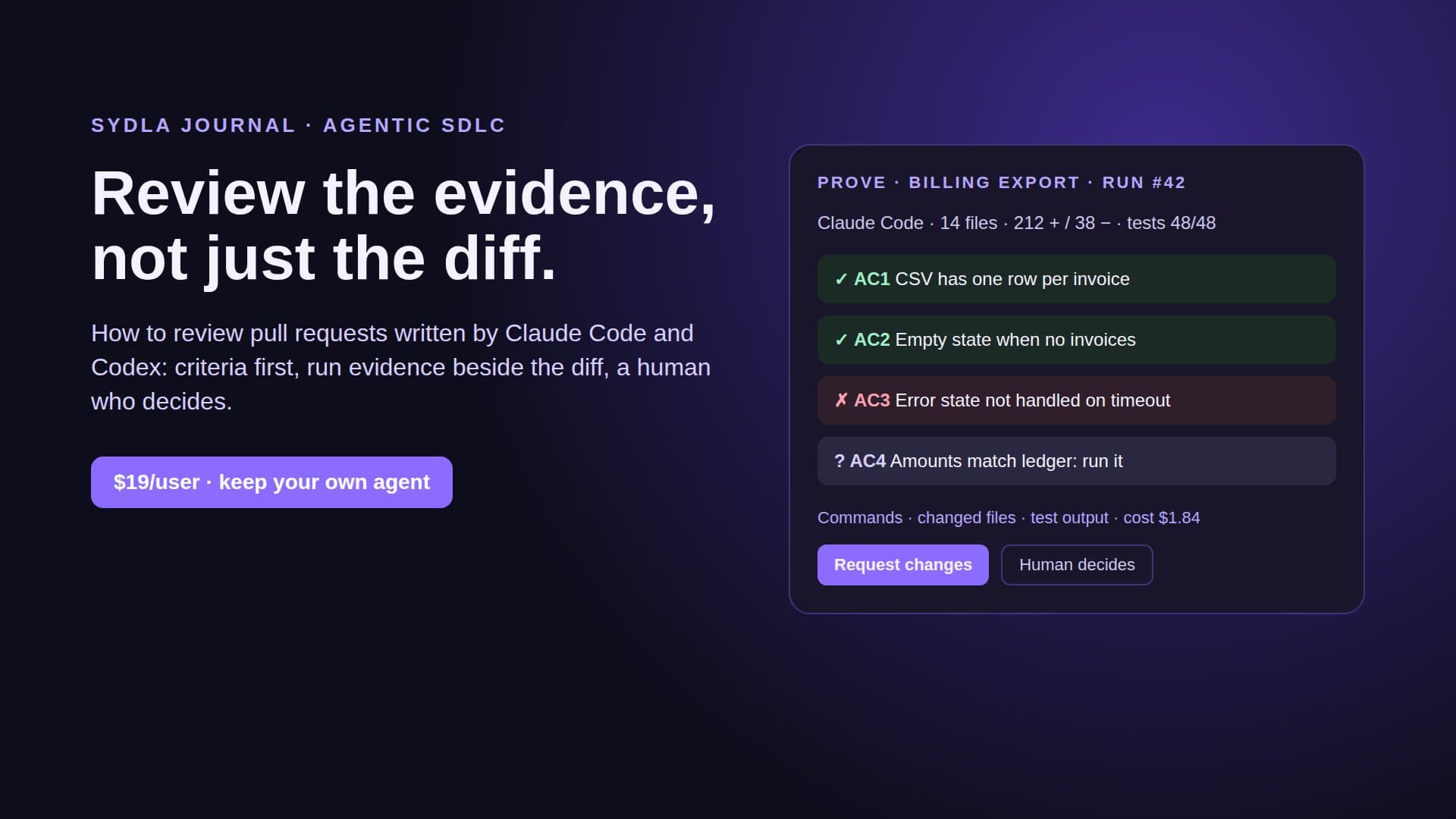
- Review the evidence, then decide. The thread shows every command and tool call, and Changes shows the diff. Check it against the criteria and the states, commit on the thread's branch and open the pull request as usual. A person makes the gate decision, never the agent. The AI pull request review guide has the four-pass checklist.
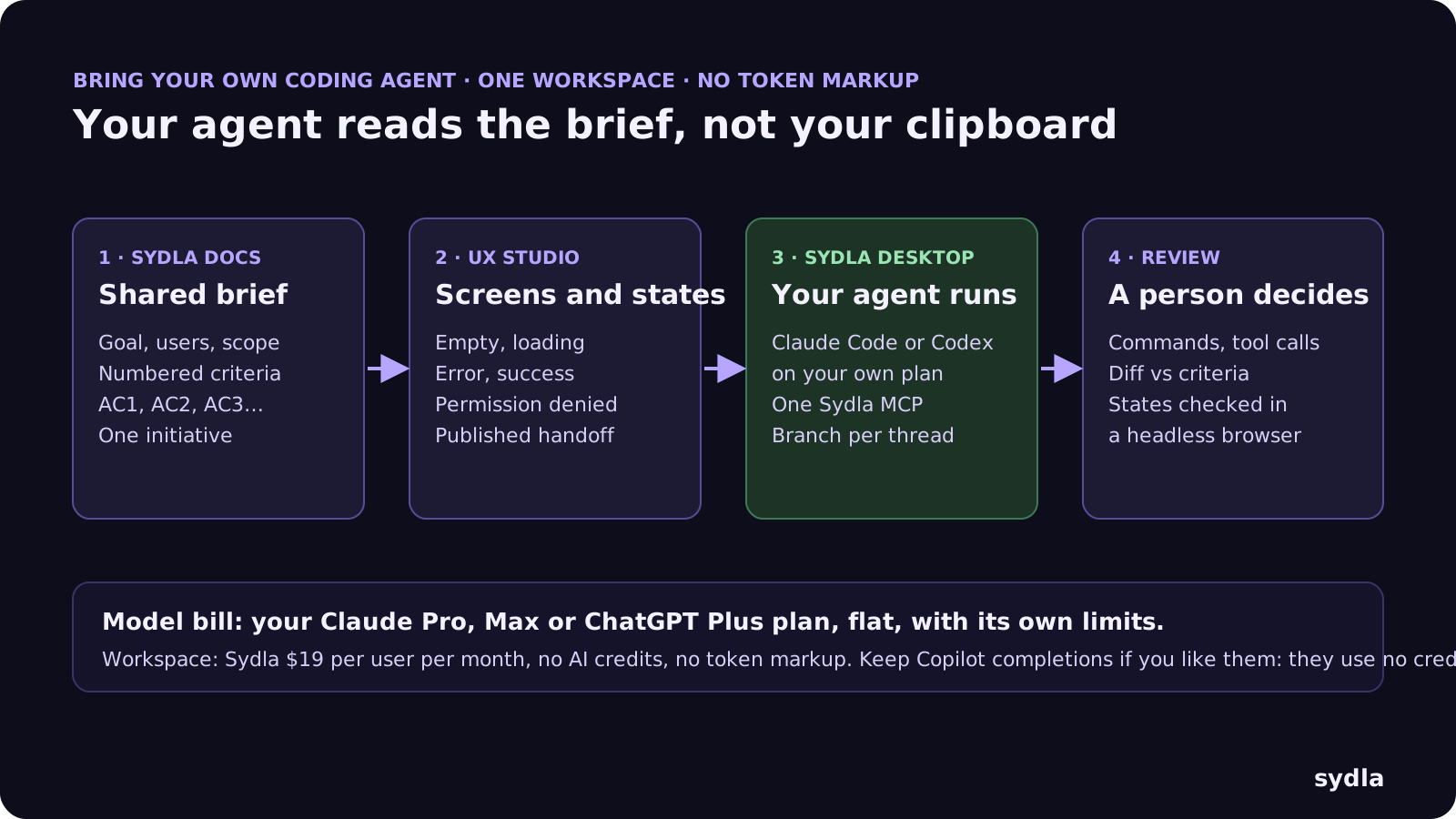
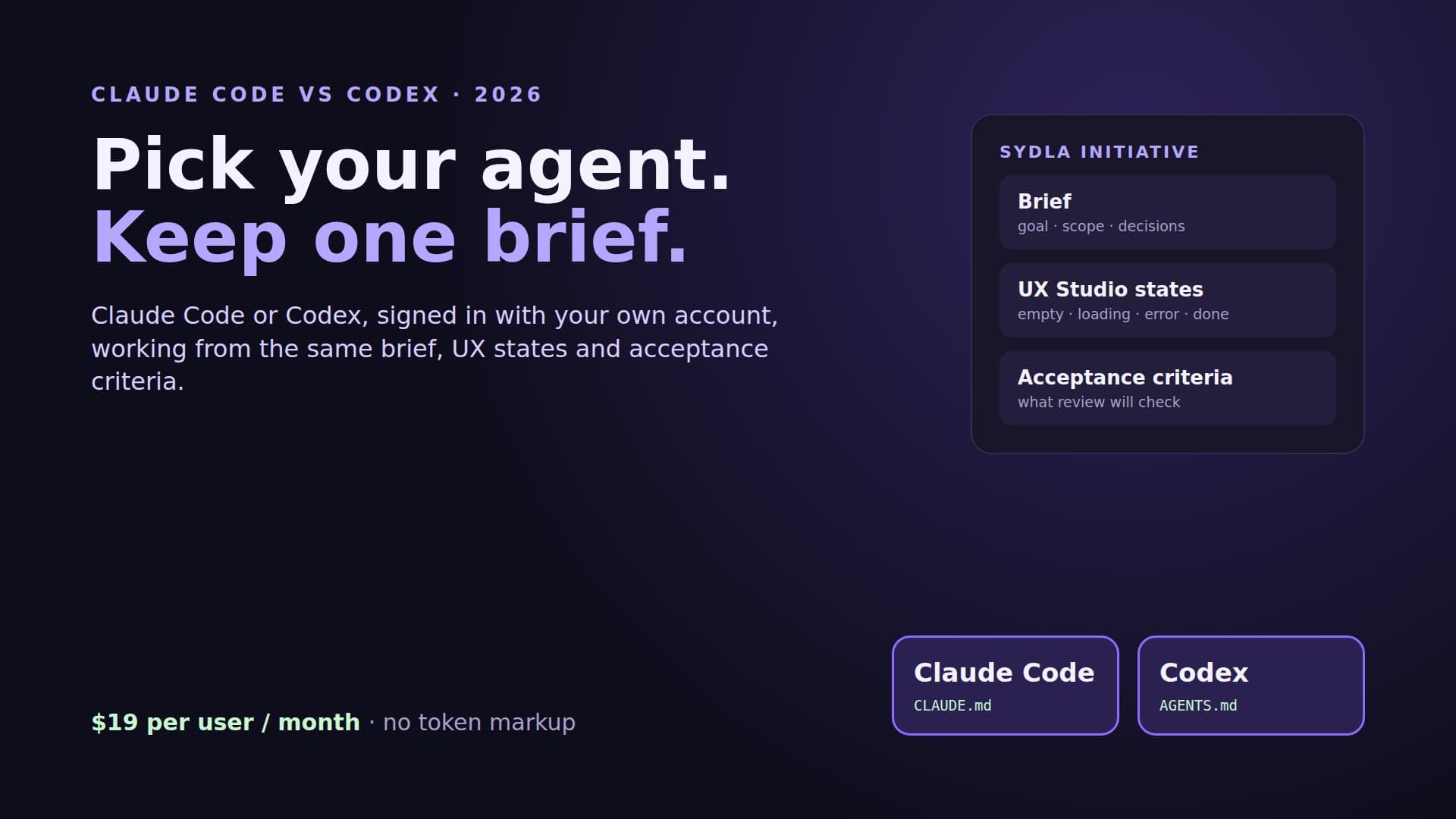
The money changes at step three. The model bill is your Claude or ChatGPT plan, flat, with its own limits. Sydla sells no AI credits and adds no markup. The Sydla Desktop setup guide covers installation, and Claude Code vs Codex for product teams helps you choose one, or both.
Which setup fits which team
There is no single right answer. It depends on how much agent work you run and where your context lives:
- You mostly use completions and light chat: Copilot Pro at $10 or Business at $19 is still good value. Set a budget so nobody is surprised.
- You run a few agent sessions a week: the included pool may cover it. Turn off paid usage or set org budgets, and watch the first full month after the promotion.
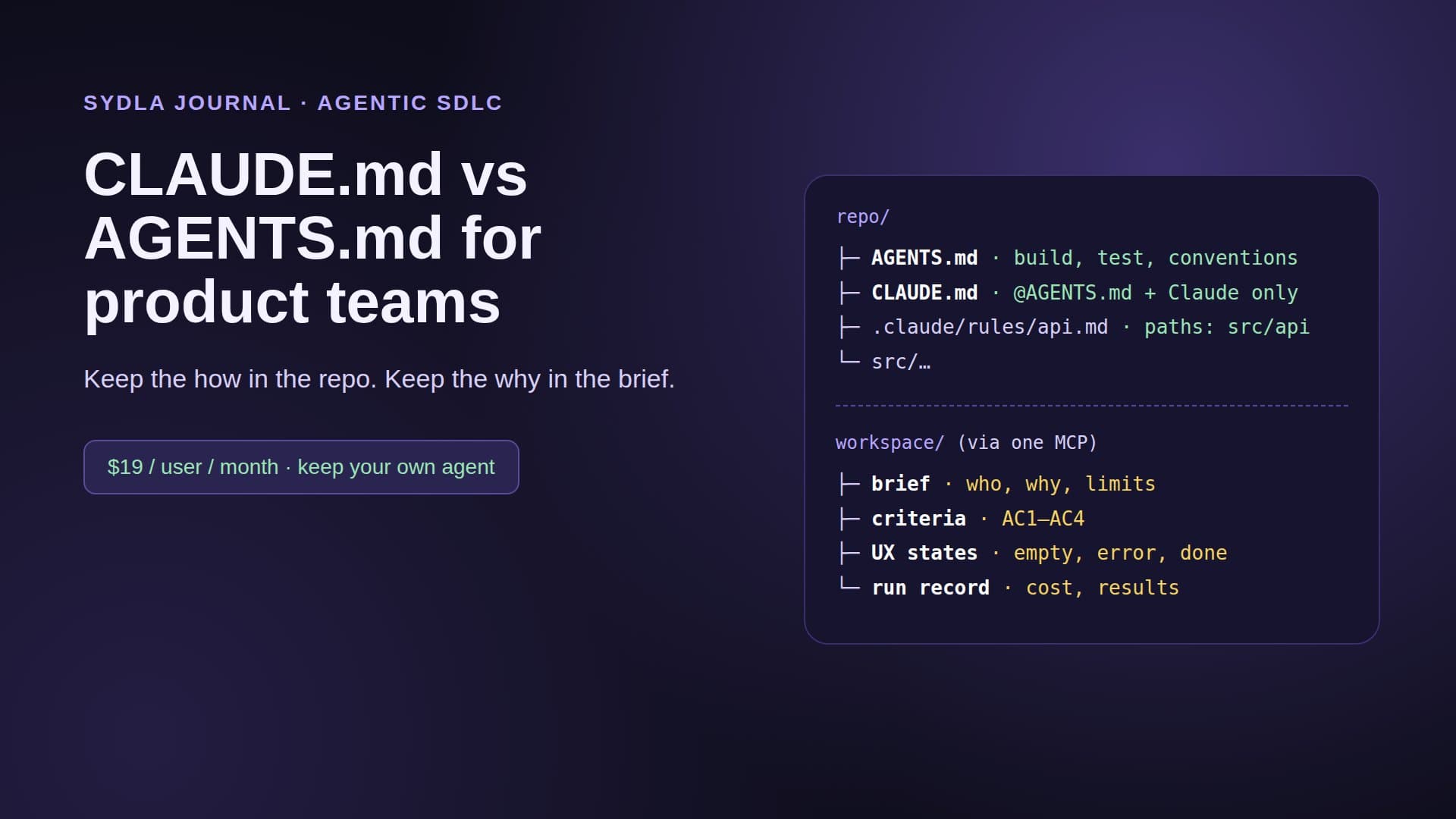
- Agents do a large share of your coding: run Claude Code or Codex on a flat plan. Keep Copilot completions if people like them, with a $0 credit budget, and stop paying per token for the same models. Our bring your own coding agent guide explains the model.
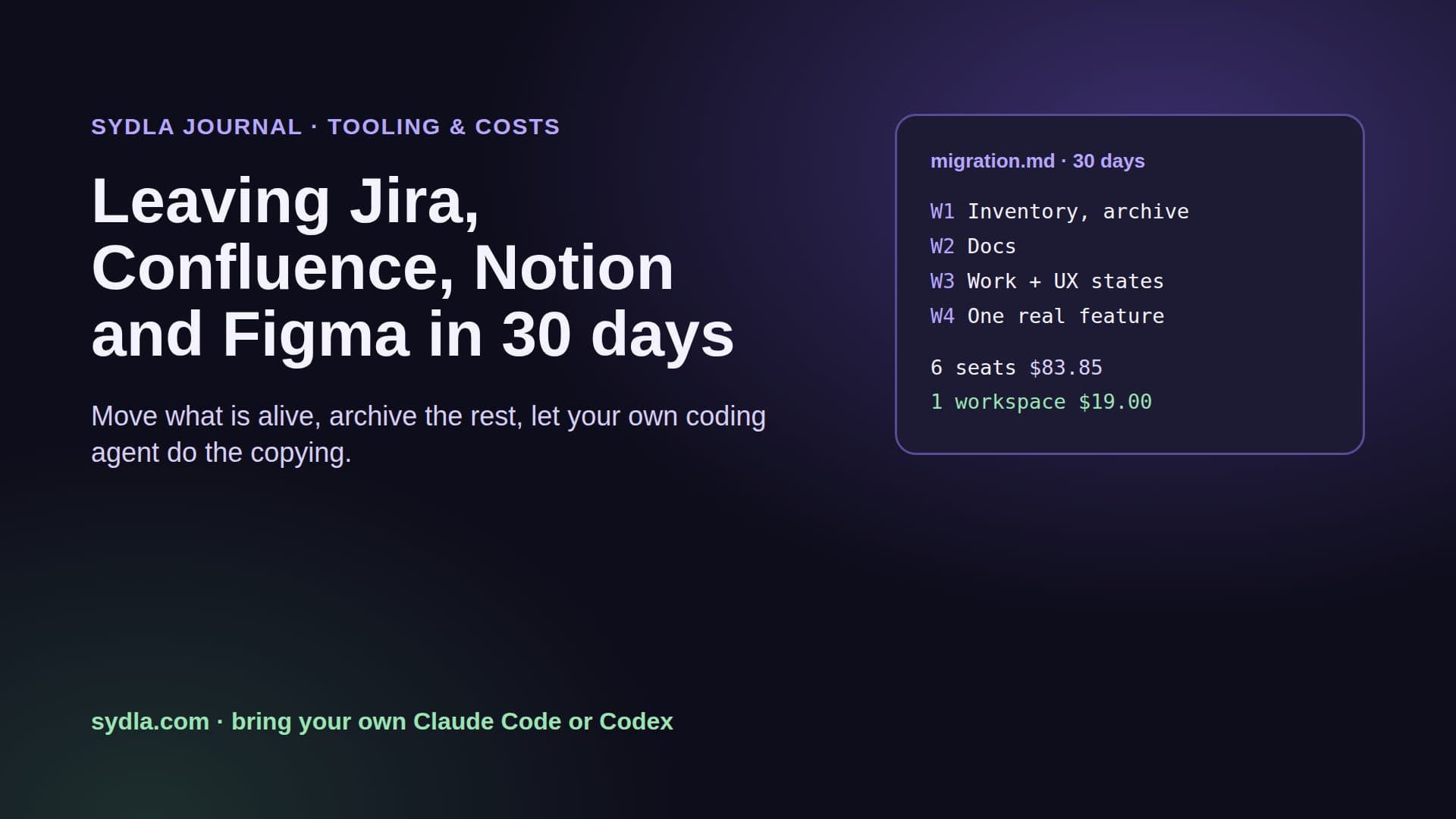
- You pay for six tools plus Copilot: move the brief, the plan, the states and the agent runs into one workspace. The 30-day migration plan shows what to move first.
Keep the completions. Drop the meter.
GitHub's switch is a fair one on paper: tokens at list price, completions still free. But for a team whose agents run all day on Claude or GPT, it turns a $19 line into a bill that grows with every cached file the agent re-reads, on top of six other meters.
Pick the next feature your team was going to assign to Copilot. Write its brief and states in Sydla this week, open a Desktop thread, and let your own Claude Code or Codex build it. Start your $19/mo AI SDLC workspace and keep your Claude Code and Codex accounts exactly as they are.
Frequently asked questions
How much does GitHub Copilot cost in 2026?
Copilot Free is $0, Pro is $10 a month, Pro+ is $39 and Max is $100. Business costs $19 per seat and Enterprise $39 per seat. Since 1 June 2026 every plan bills agent and chat usage in GitHub AI Credits worth $0.01 each. Business includes 1,900 credits per user a month and Enterprise 3,900, pooled across the organisation. Pro includes 1,500, Pro+ 7,000 and Max 20,000.
What are GitHub Copilot AI credits?
AI credits are GitHub's usage unit for Copilot since 1 June 2026. One credit equals $0.01. Each model is priced per million input, cached and output tokens, for example $4 in and $20 out for Claude Opus 5.5, and the cost is converted to credits. Code completions and next edit suggestions do not use credits and stay unlimited. Unused credits do not roll over.
What happens when Copilot Business credits run out?
On Business and Enterprise, additional usage is enabled by default, so work continues and is billed at $0.01 per credit. Admins can turn off the AI credits paid usage policy, which blocks credit-consuming features until the next monthly reset, or set budgets per user, cost center, organisation or enterprise. A $0 user-level budget blocks credit use immediately while completions keep working.
Does the Copilot coding agent use AI credits?
Yes. The Copilot cloud agent and third-party coding agents such as Claude and Codex running in GitHub consume AI credits at the chosen model's token rates. Copilot code review also uses credits, about $0.25 to $10 a review depending on depth, and since June 2026 it uses GitHub Actions minutes as well.
How can I use Claude Code without paying per token?
Claude Code is included in Claude Pro at $20 a month, or $17 billed yearly, and in Max at $100 and Ultra at $200, each with usage limits instead of a per-token bill. Codex is included in ChatGPT Plus at $20. Sydla Desktop runs those CLIs on your own plan, connected to a shared brief and UX states, for $19 per user per month with no AI credits and no token markup.