Rovo Dev vs Claude Code in 2026: pricing, credits, the end-of-life notice, and who should run your tickets
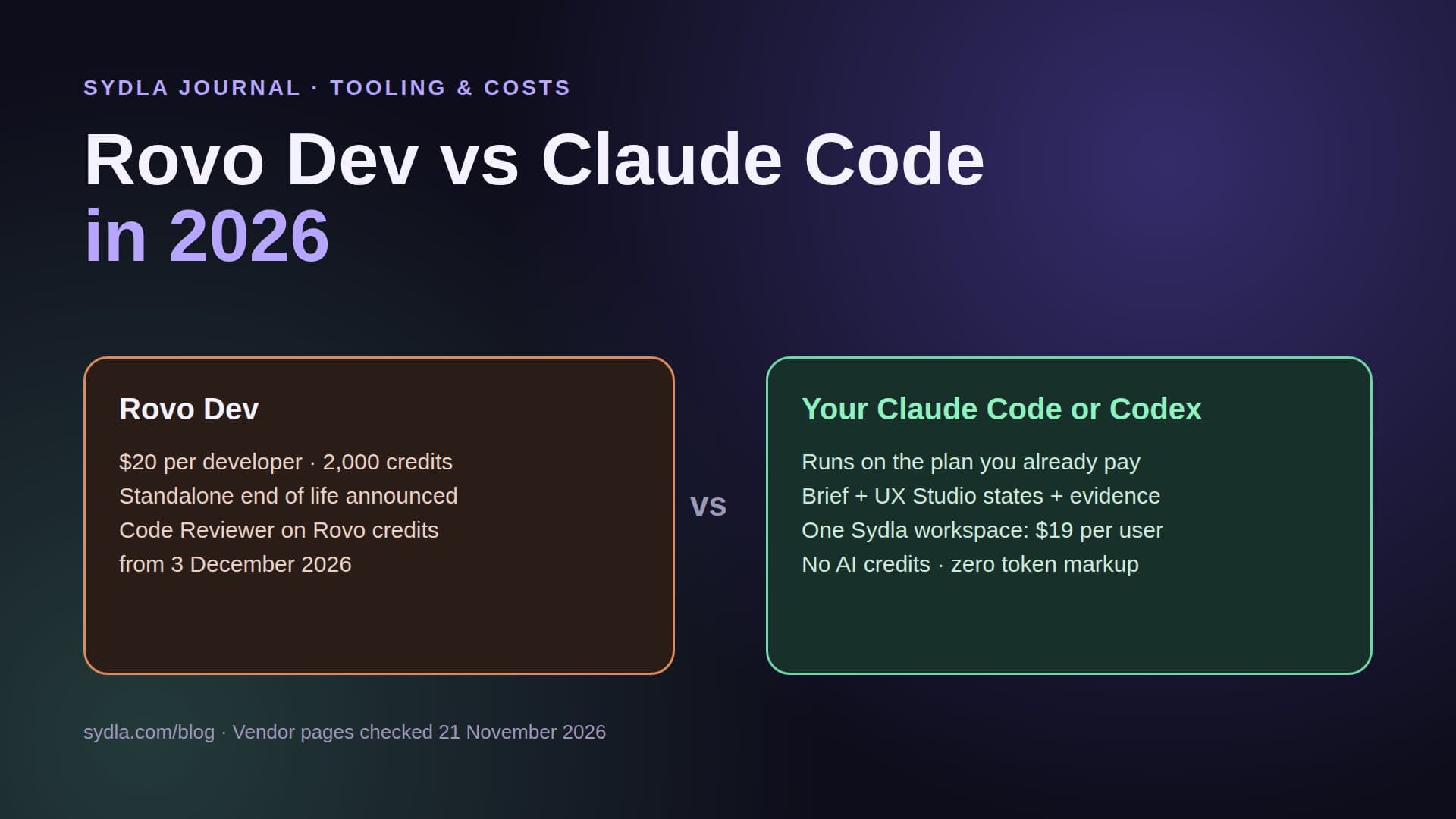
Atlassian has announced that Rovo Dev will reach end of life as a standalone product, its CLI is becoming the Rovo CLI, and Code Reviewer moves onto Rovo credits on 3 December 2026. We read the official FAQ, pricing and credit pages and put Rovo Dev next to Claude Code and Codex on price, meters, surfaces and the context each agent actually gets.
The agent your tracker sells you, or the one you already pay for
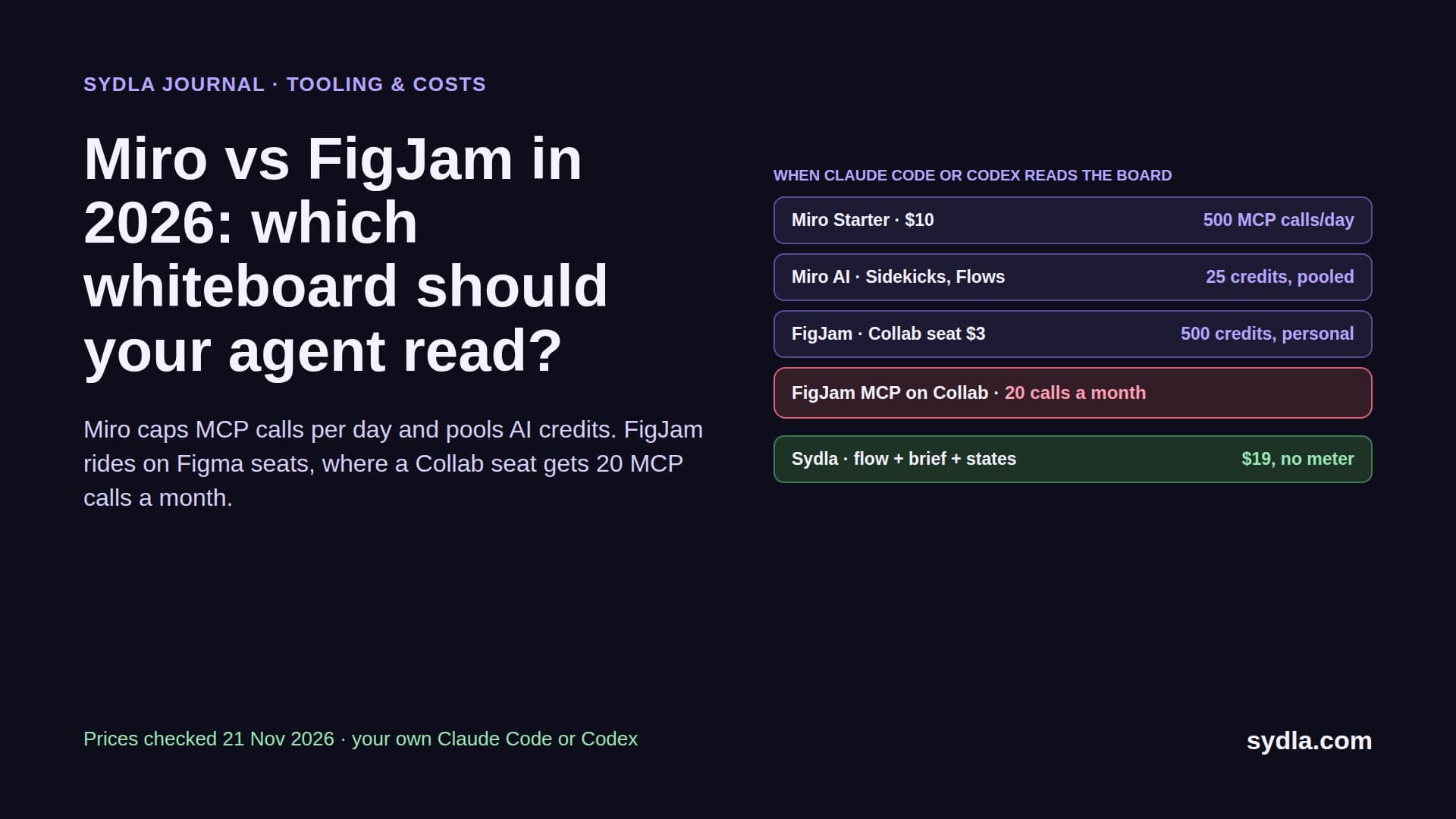
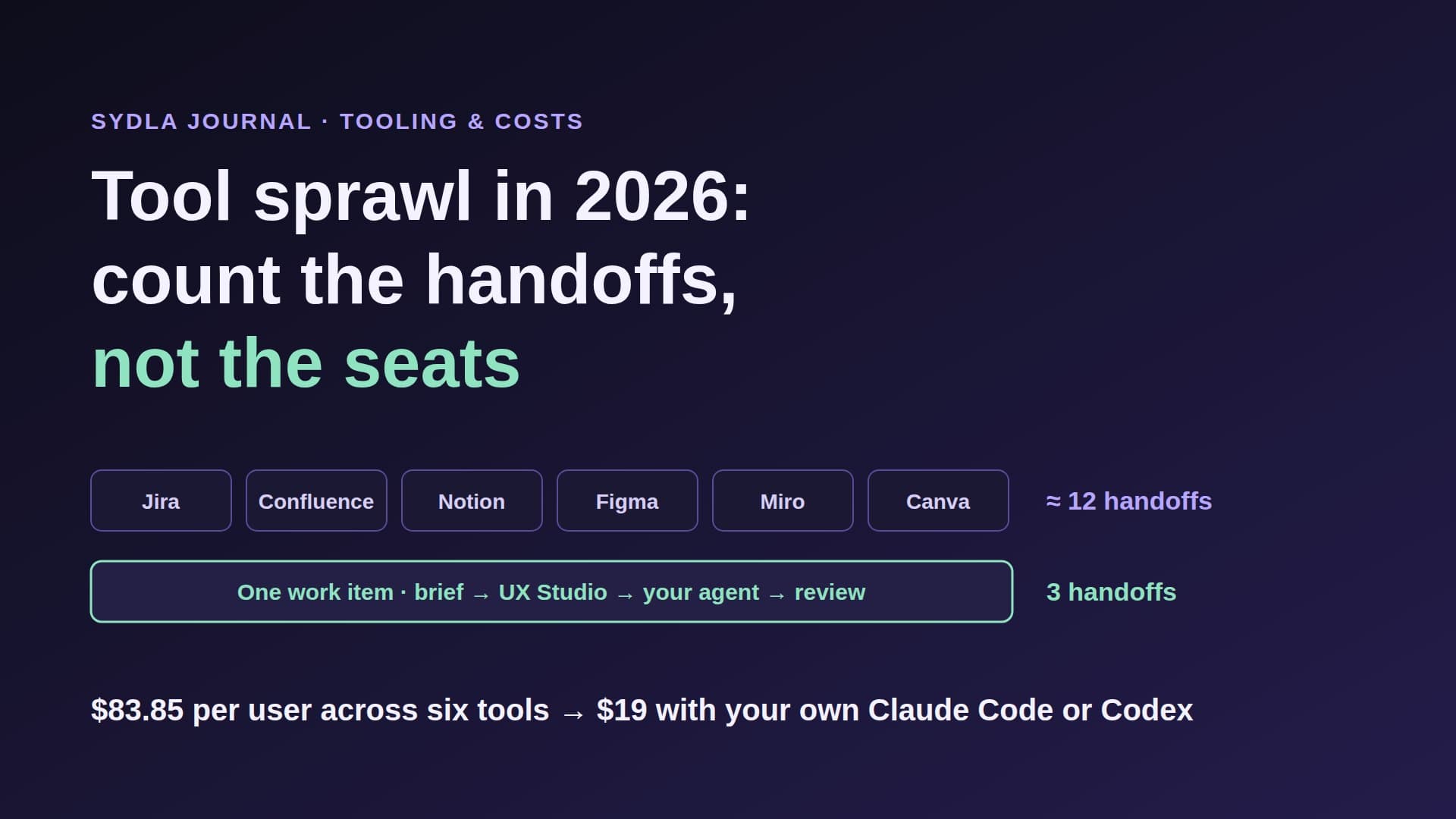
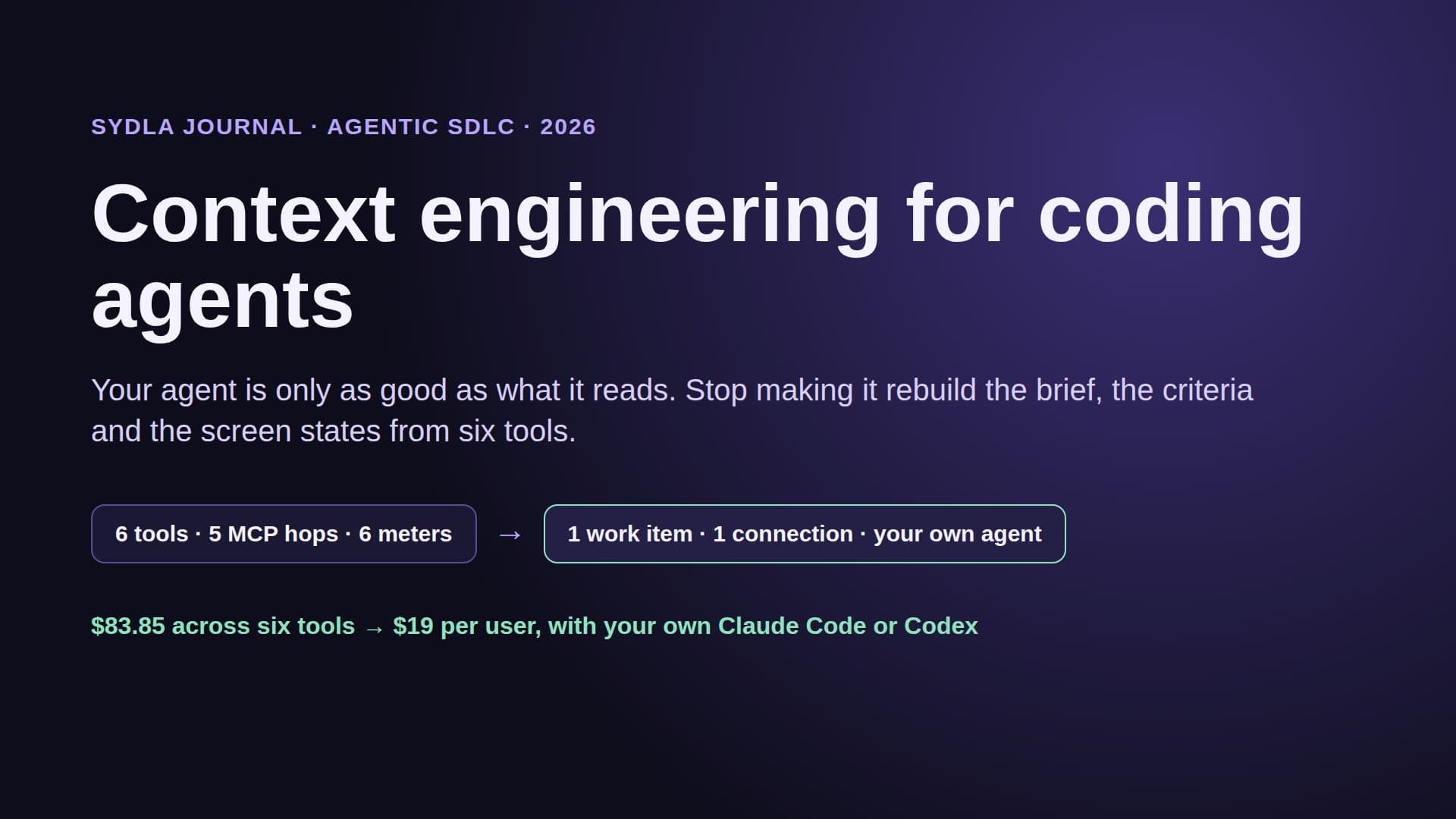
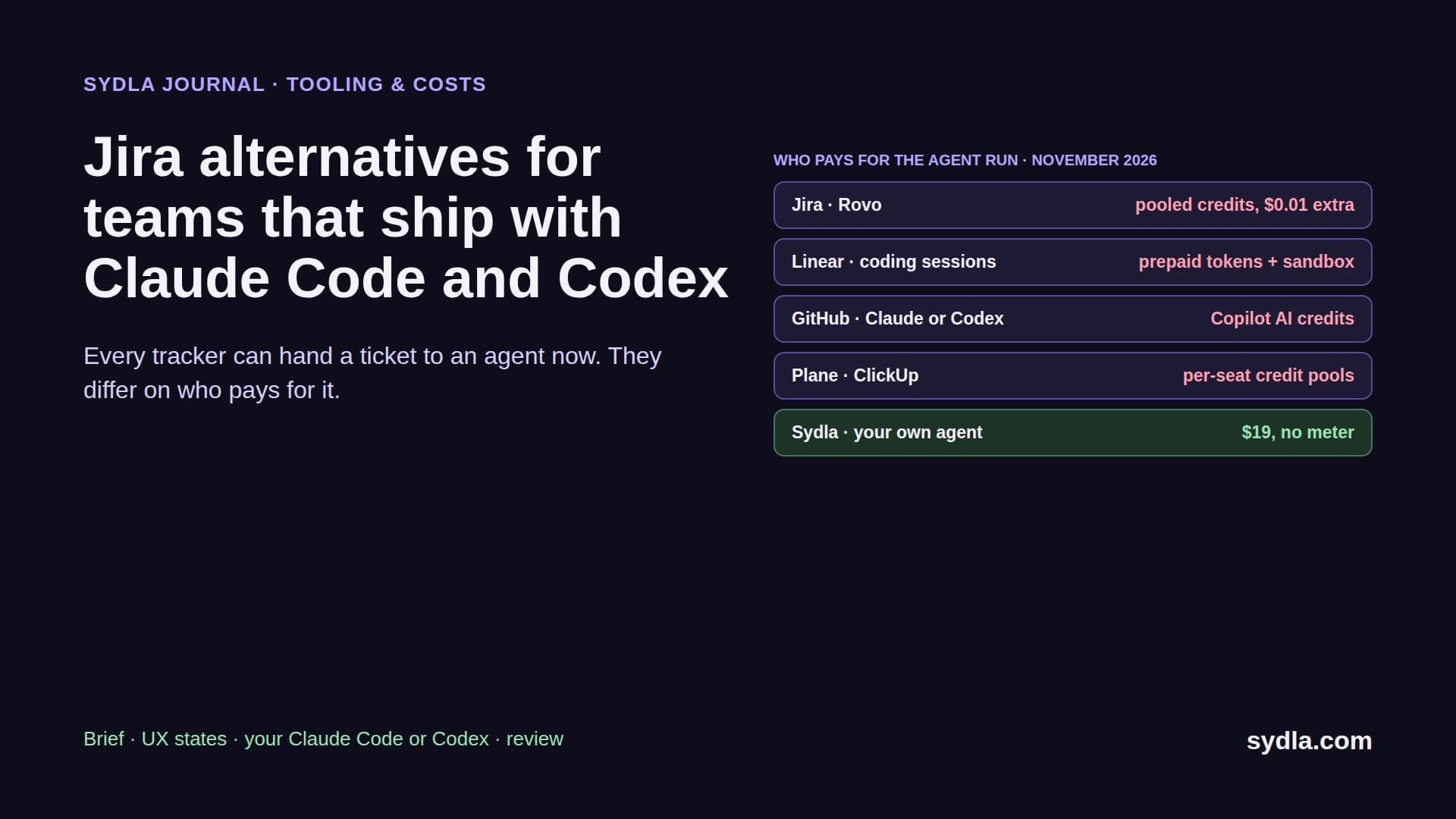
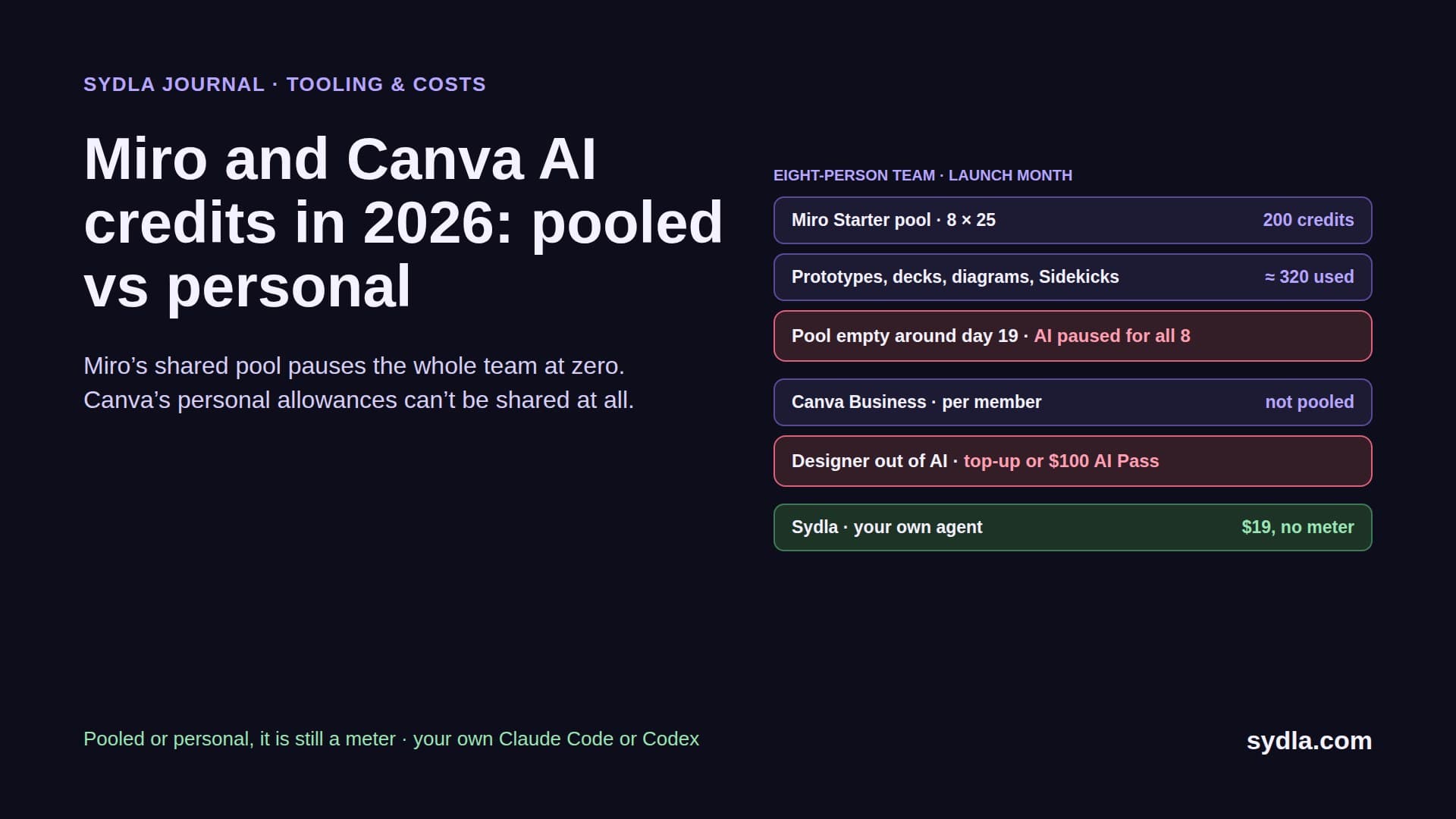
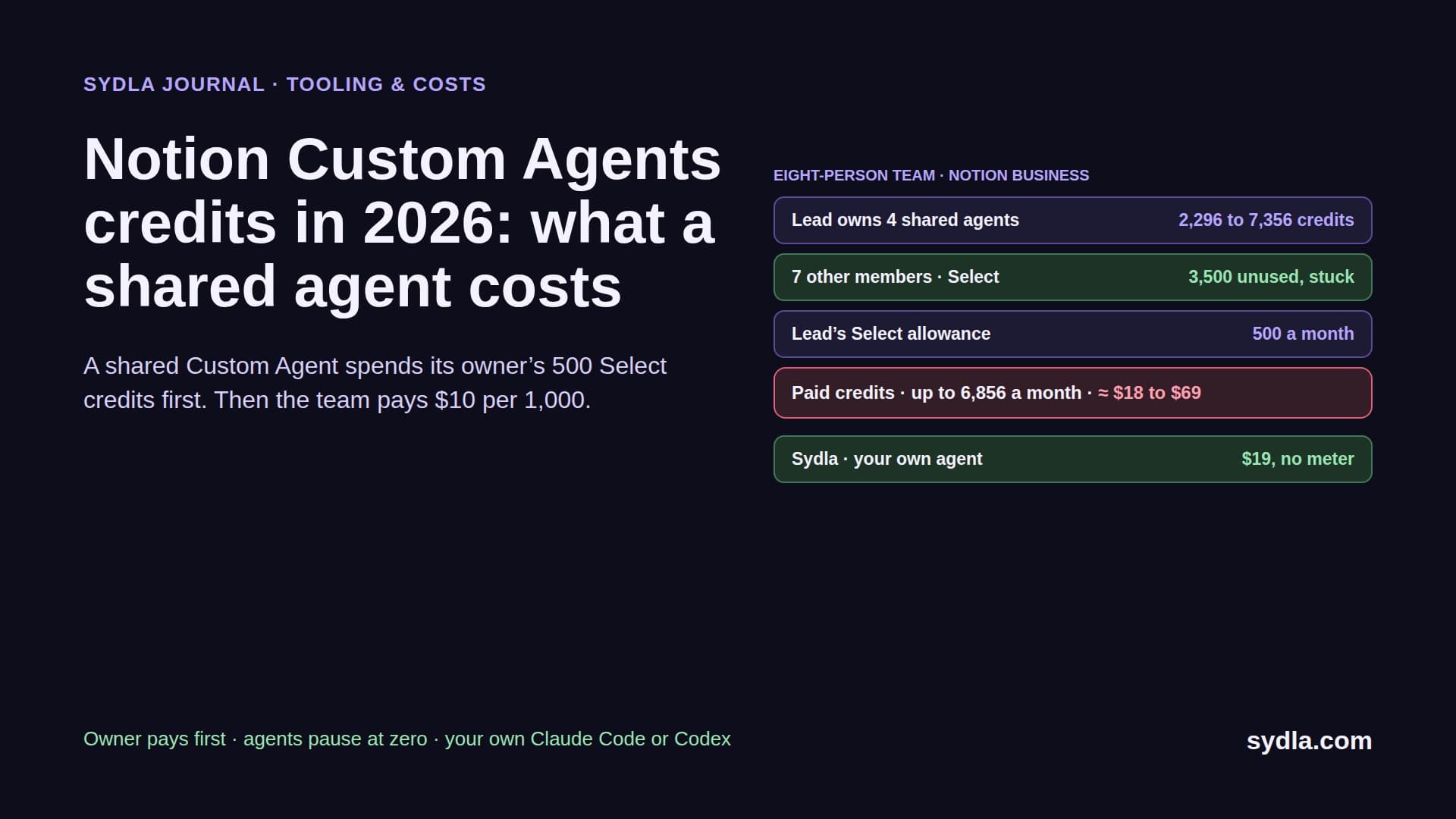
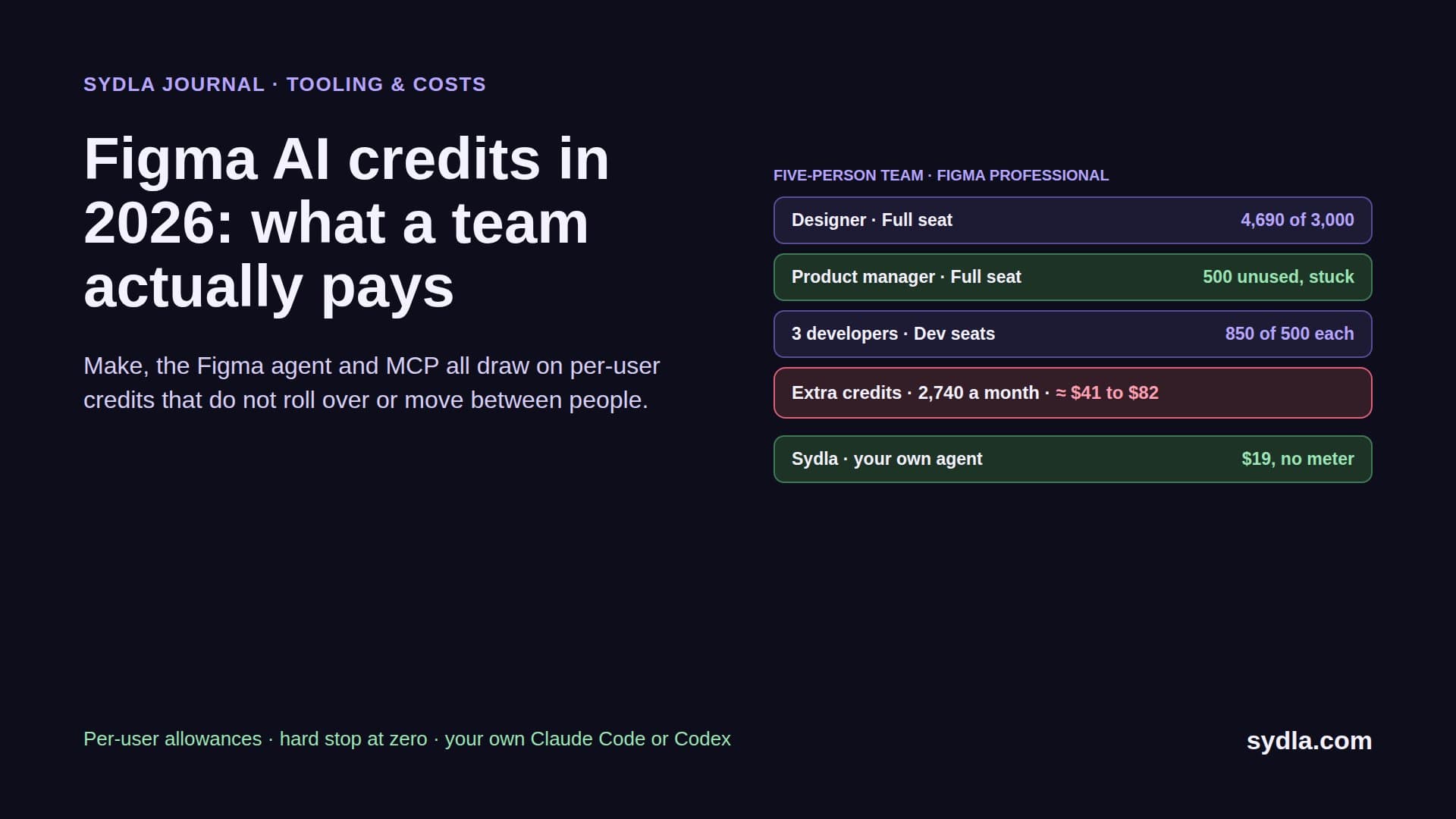
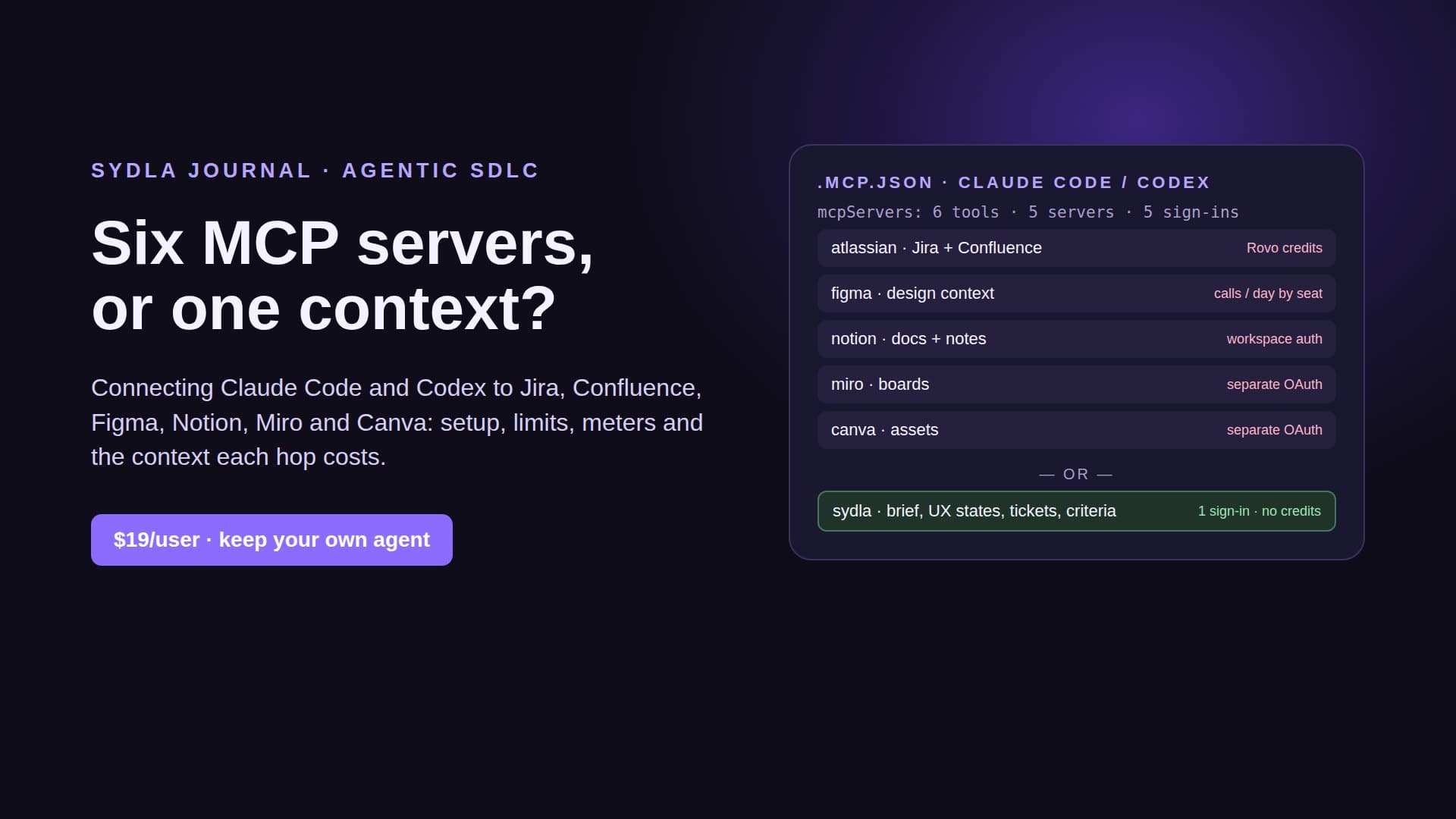
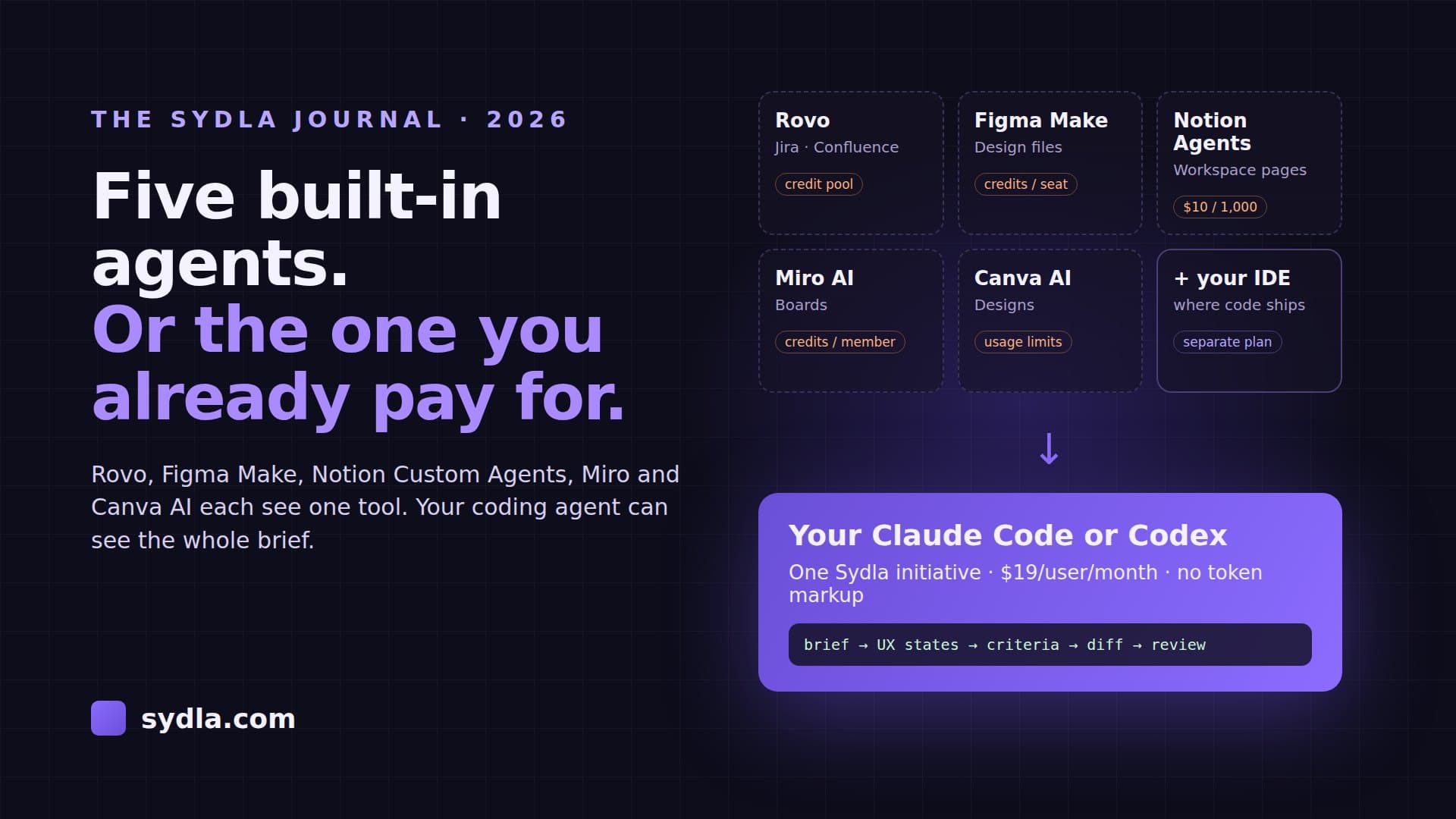
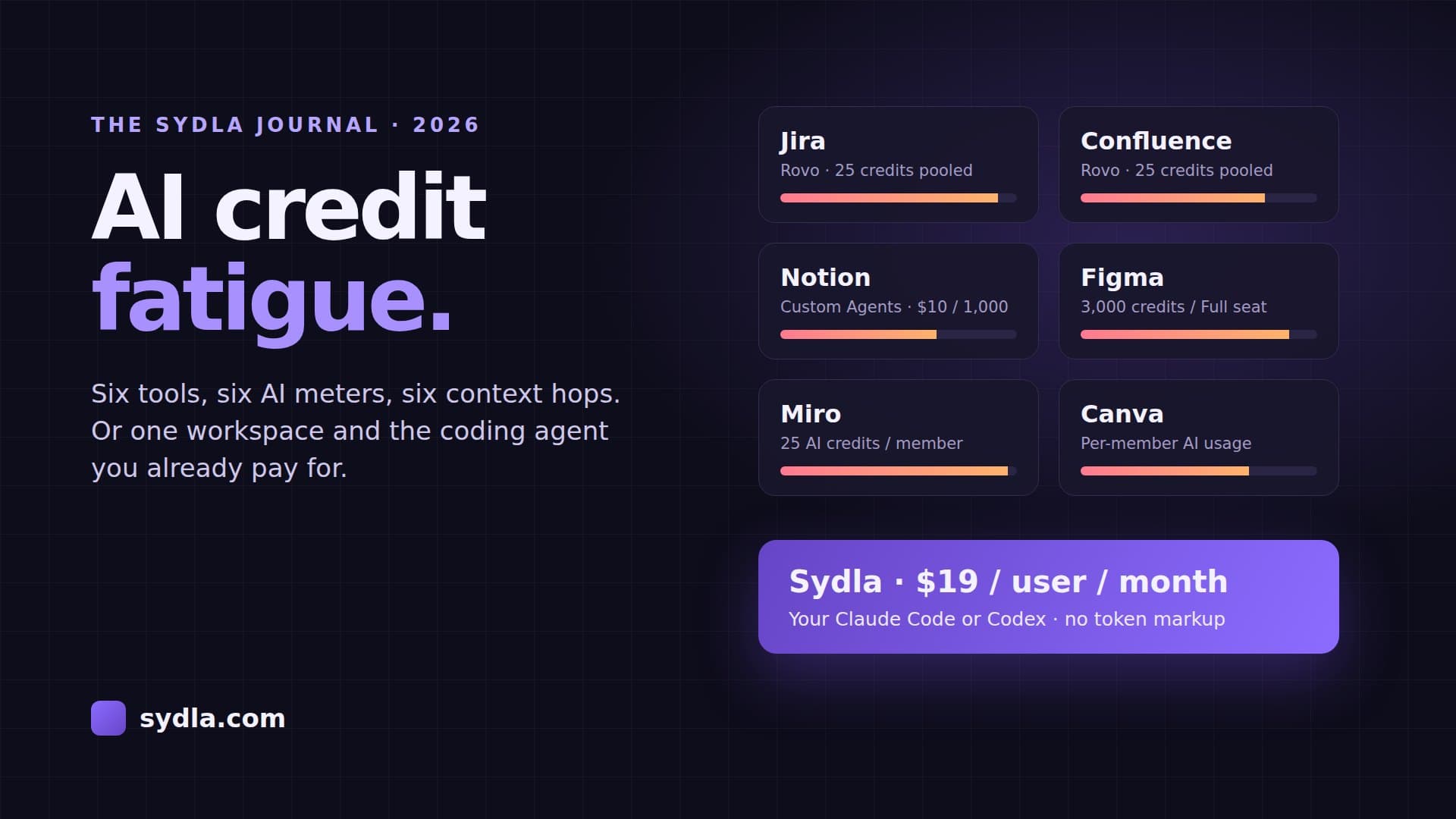
By late 2026 most product teams pay for AI twice. There is the coding agent the engineers chose, usually Claude Code or Codex on a personal or team plan. Then there is the agent bundled into every other tool: Rovo in Jira and Confluence, Custom Agents in Notion, Figma Make, Miro and Canva AI. Each runs its own credit meter, and each holds one slice of the context the agent needs. That is AI credit fatigue: six bills, six caps, and an agent that has to hop through six MCP servers to understand one ticket.
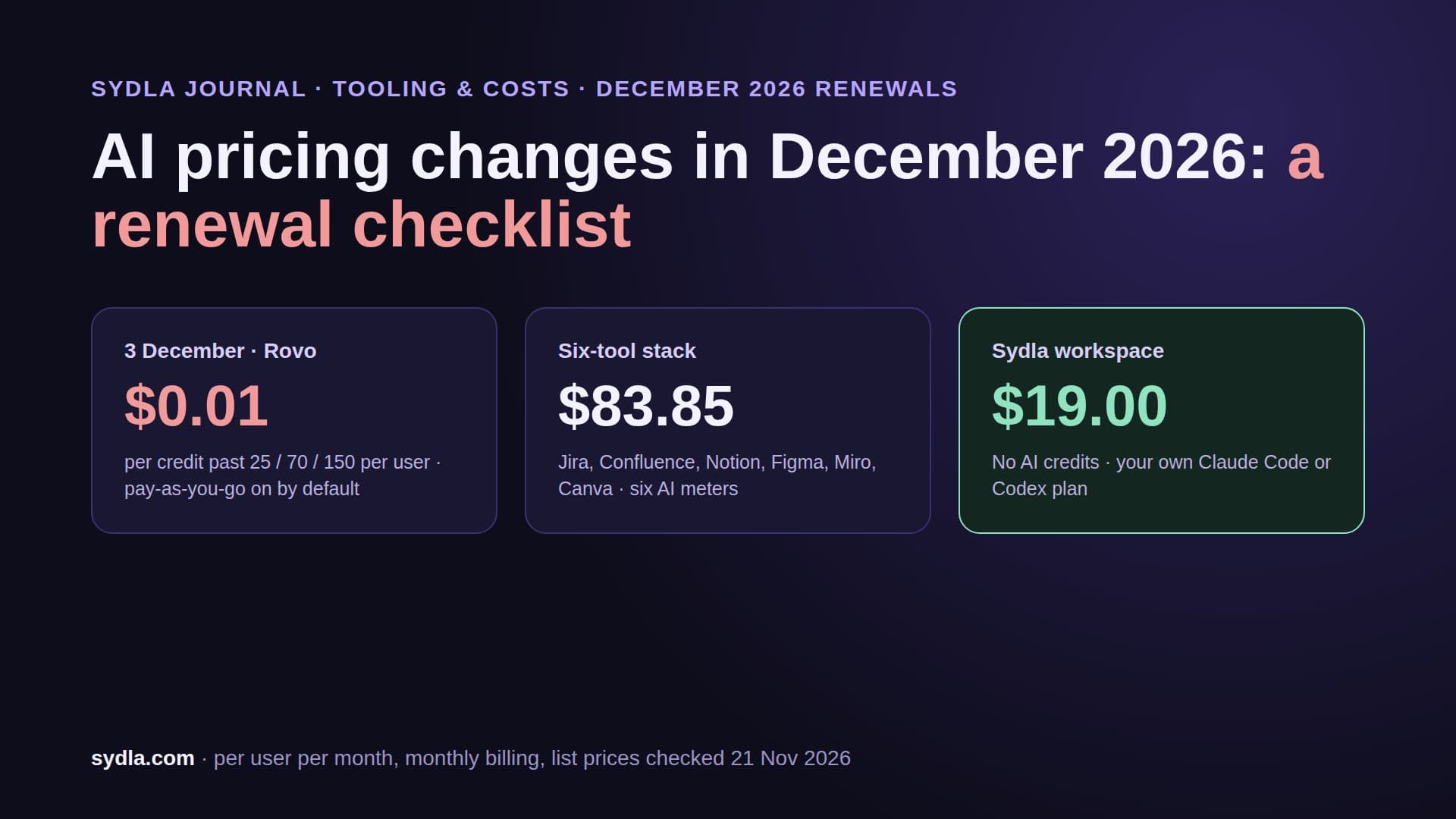
Atlassian's answer for code is Rovo Dev. In November 2026 it is also a product in transition. The official Rovo Dev FAQ says that Rovo Dev as a standalone product will reach end of life, with at least 60 days' notice before the final date. The CLI is becoming the unified Atlassian Rovo CLI, the standalone IDE features are being retired, and Code Reviewer moves onto Rovo credits inside Jira on 3 December 2026.
So the question many teams on Jira are asking is practical: keep paying for Rovo Dev through the transition, or point Claude Code or Codex at the work instead? This guide compares the two on price, meters, surfaces and context, using Atlassian's and the model vendors' own pages checked on 21 November 2026.
What Rovo Dev is in November 2026
Rovo Dev is not one product but four surfaces sharing a name and a credit balance. Here is each one and what the transition FAQ says will happen to it.
- Rovo Dev CLI. An agent in the terminal that reads your repository and acts on plans in Jira. Atlassian says it is evolving into the unified Atlassian Rovo CLI. Migration instructions and dates are still listed as TBA, and the advice is to keep using the current CLI until they are published.
- Rovo Dev in VS Code. The standalone IDE capabilities will be retired. The regular Jira and Bitbucket extension, AtlasCode, is unaffected.
- Rovo Dev in Jira. Announced on 2 April 2026: start cloud sessions from any work item, or trigger them from a Jira Automation rule, and get a pull request back. It needs Bitbucket Cloud or GitHub Cloud connected to the site. On the credits page, the Jira Coding Agent and Agents in Jira are Premium features billed in variable credits per event.
- Code Reviewer. Reviews pull requests in Bitbucket Cloud and GitHub and checks them against the linked Jira work item. From 3 December 2026 it runs under Atlassian's usage-based pricing as part of the Jira or Teamwork Collection subscription, metered in Rovo credits, with no separate Rovo Dev license.
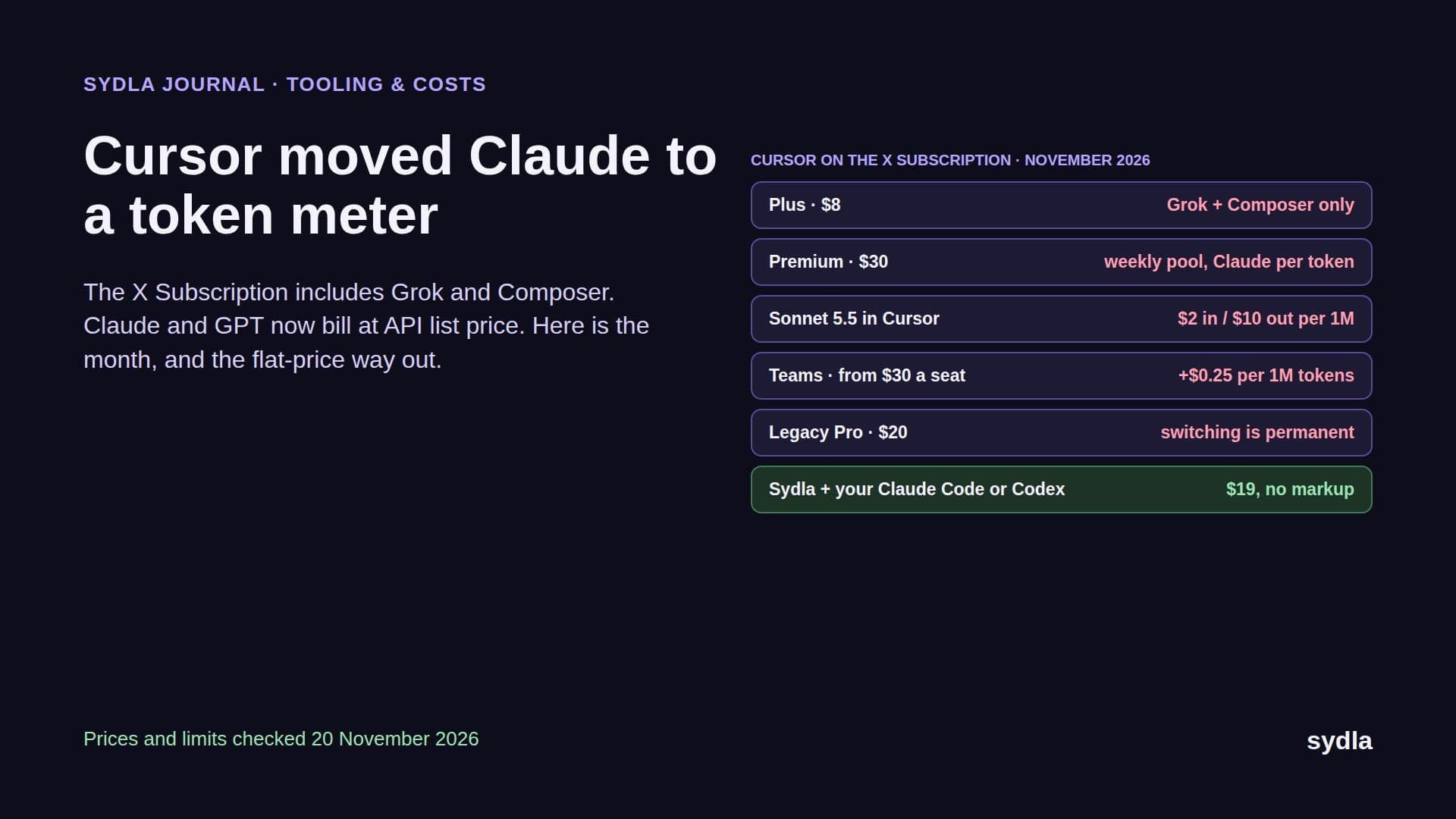
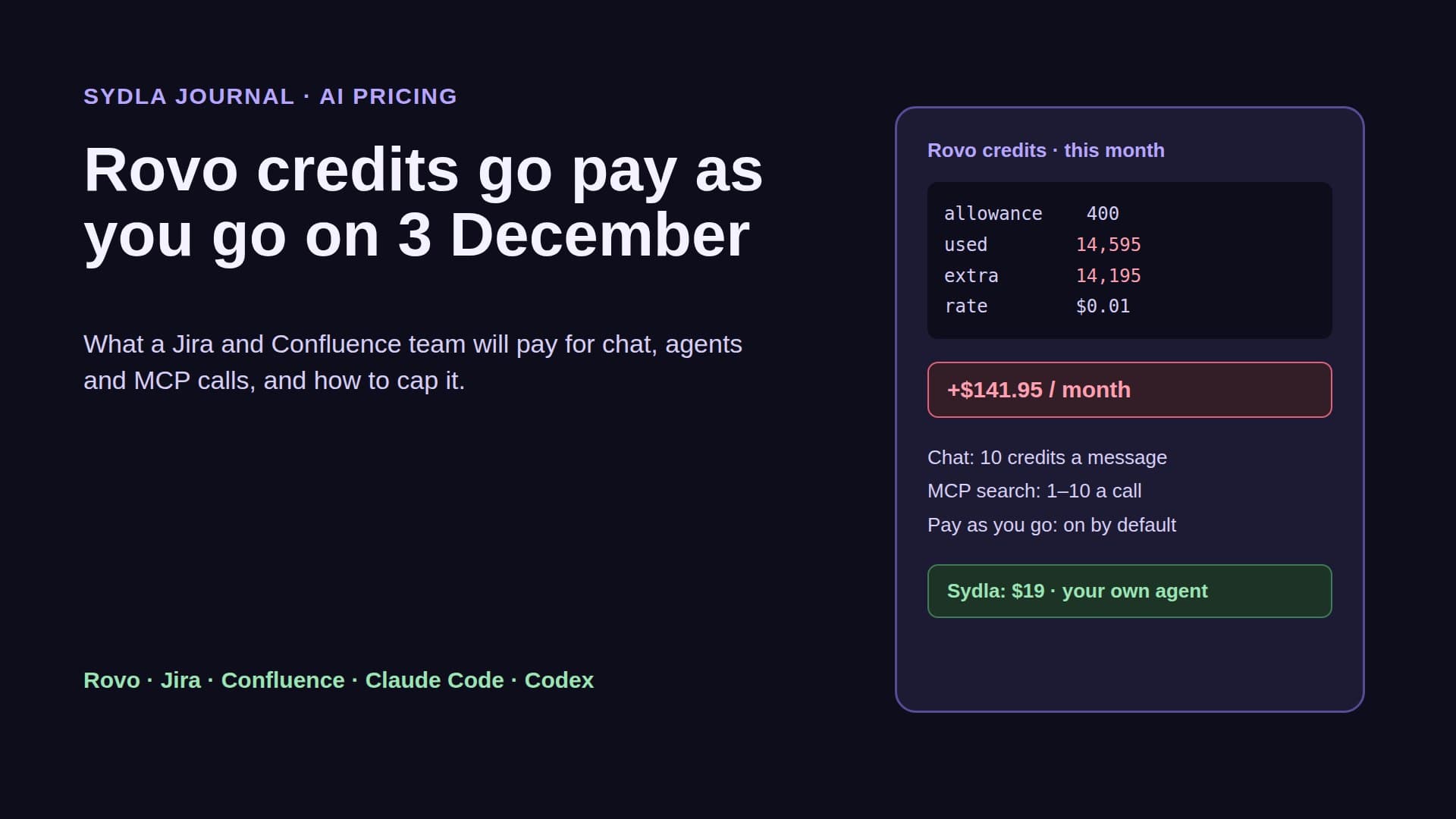
The standalone price on the pricing page is still $20 per developer per month with 2,000 Rovo Dev credits, then $0.01 per credit. Atlassian will not cancel subscriptions automatically, and annual prepaid terms are protected. What Atlassian does not publish is a credit price per task, and model choice is described as coming soon rather than available today.
What Claude Code and Codex cost
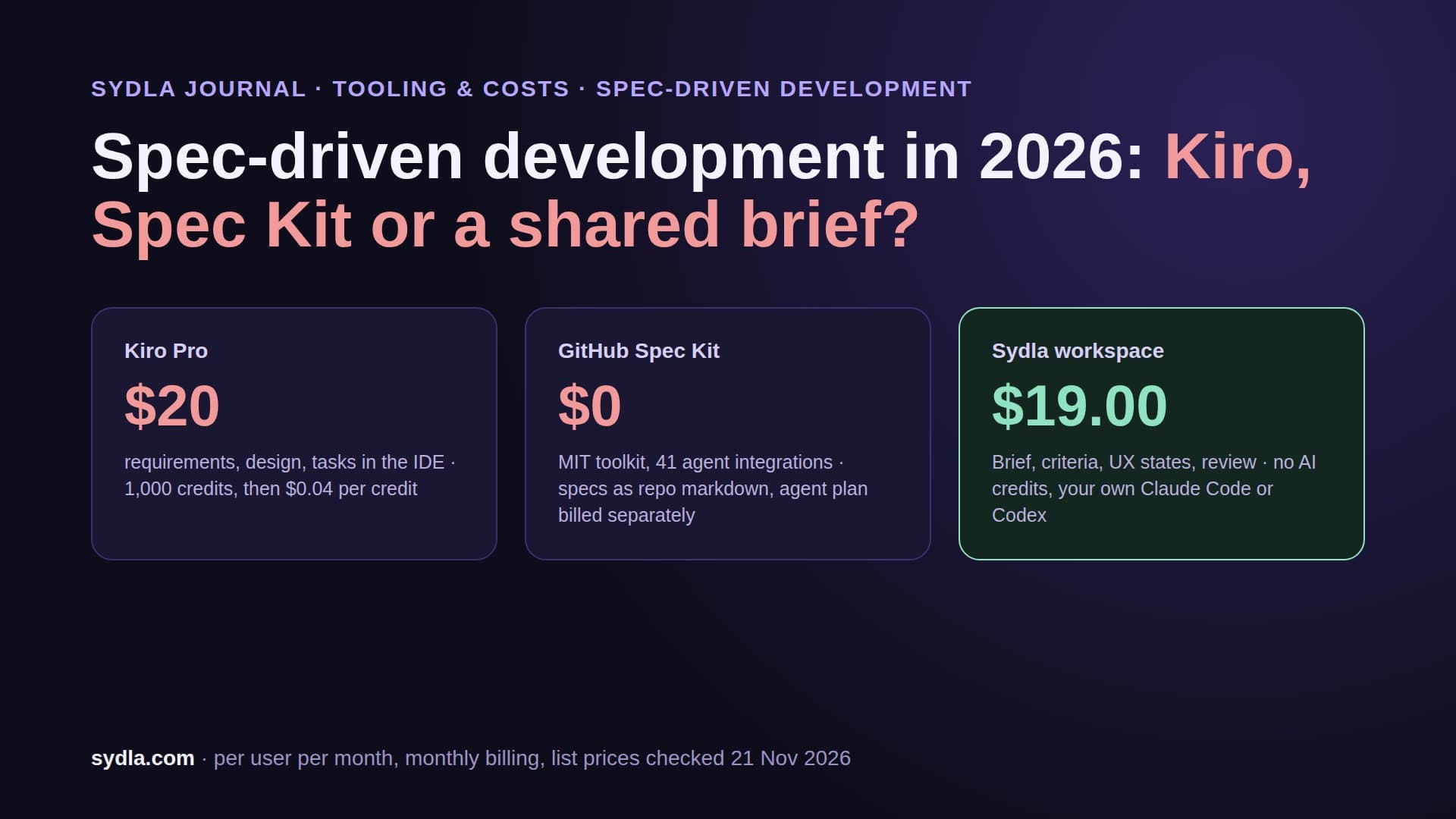
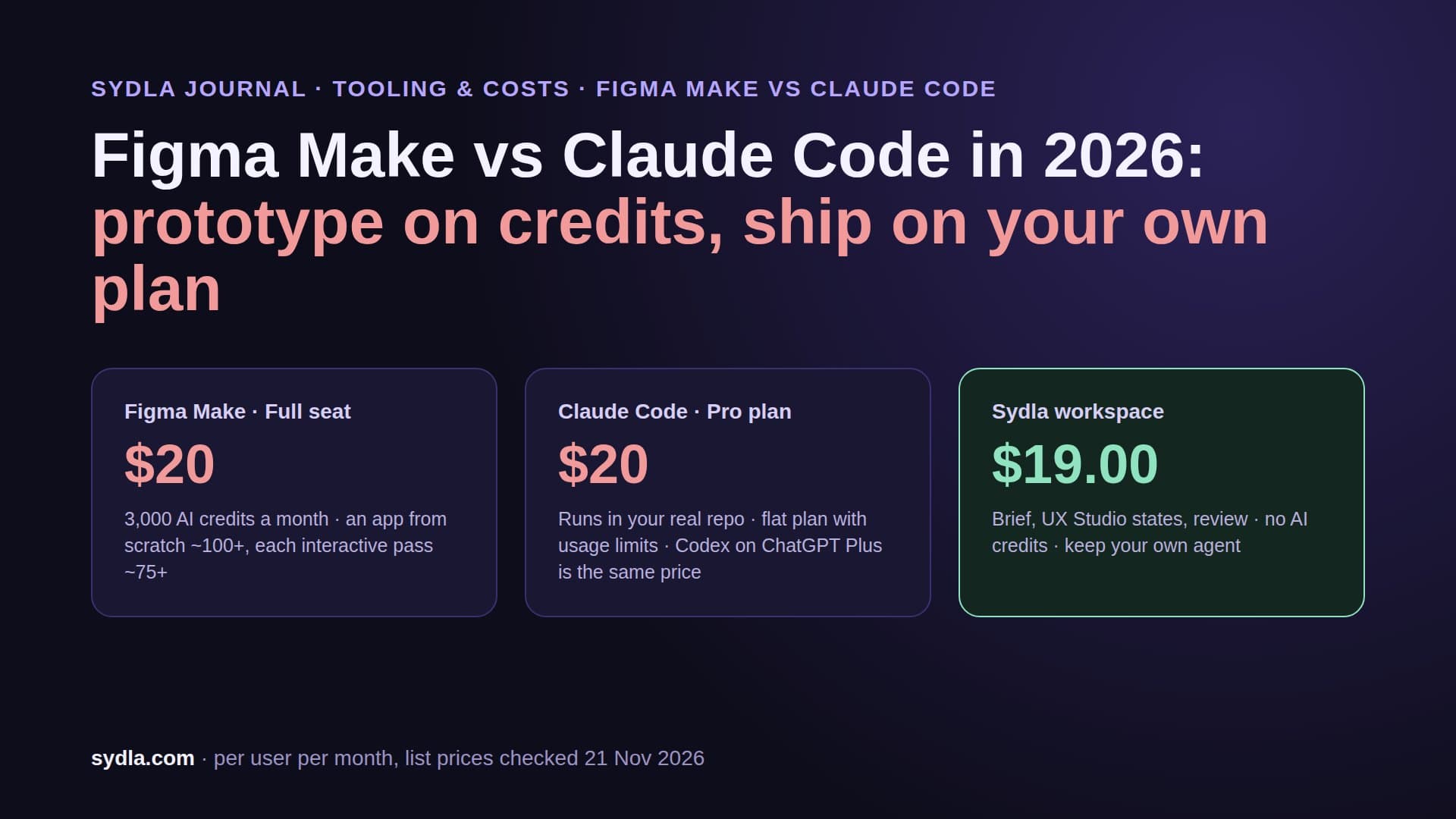
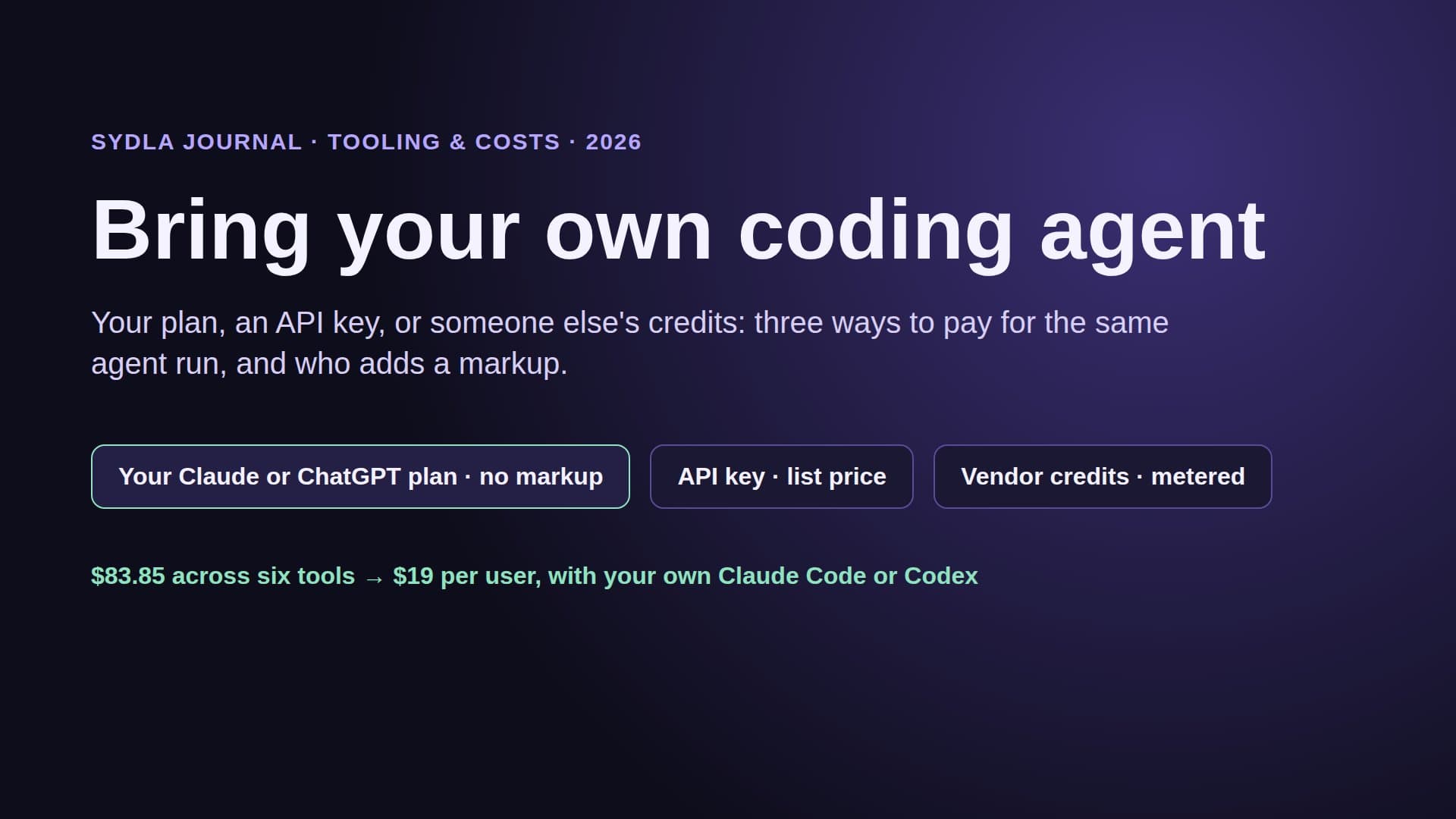
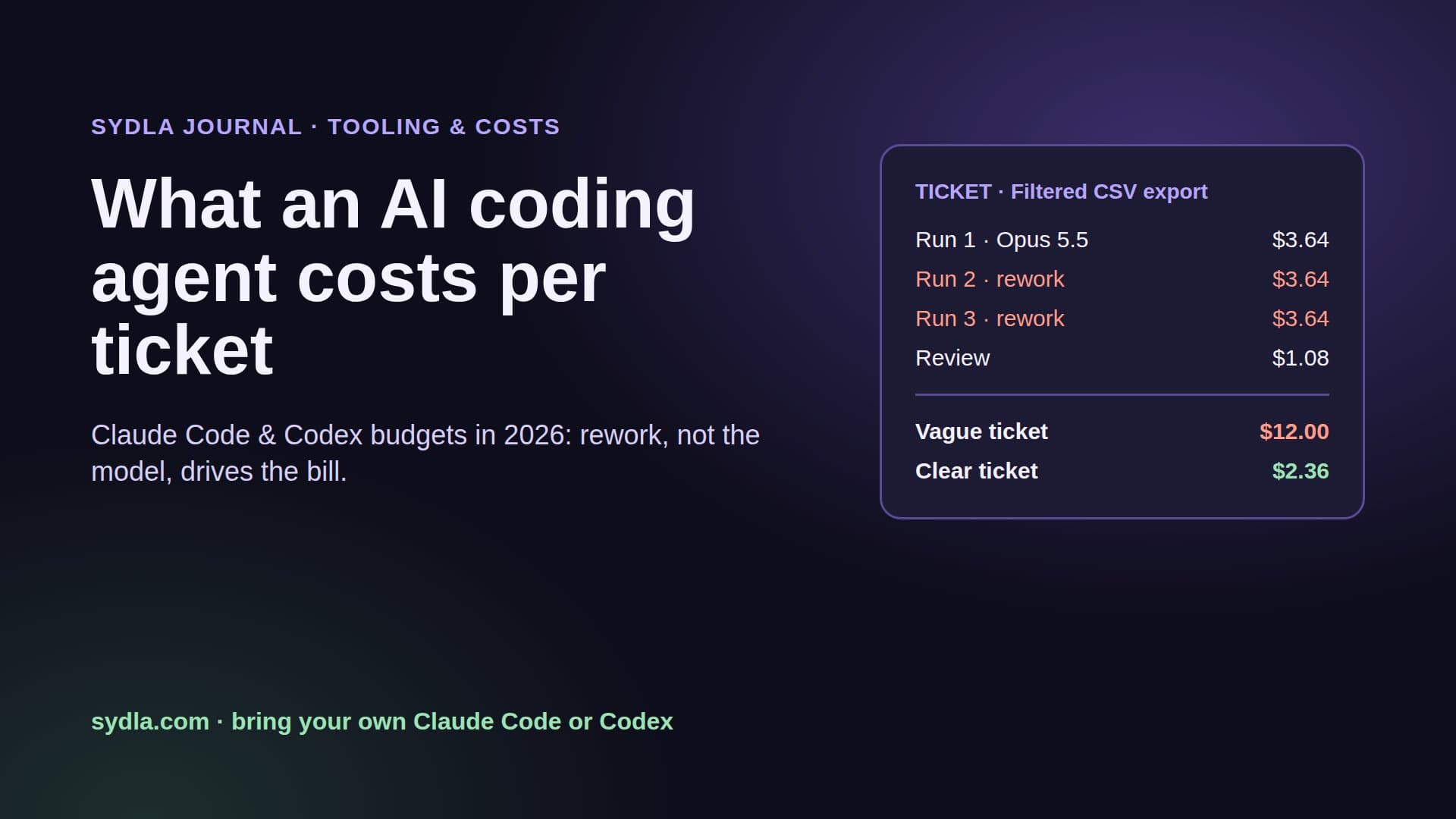
Claude Code and Codex are priced the other way round. You do not buy credits from your tracker; you sign in with a model vendor plan and the agent draws from that plan's usage limits. Claude Code comes with Claude Pro at $20, Max at $100 and Ultra at $200 a month. Codex comes with ChatGPT Plus at $20, Pro from $100 and Business at $25 a seat monthly. With an API key instead, you pay token list prices; Anthropic's own costs page puts typical Claude Code API spend at about $13 per developer per active day, as our cost per ticket guide explains.
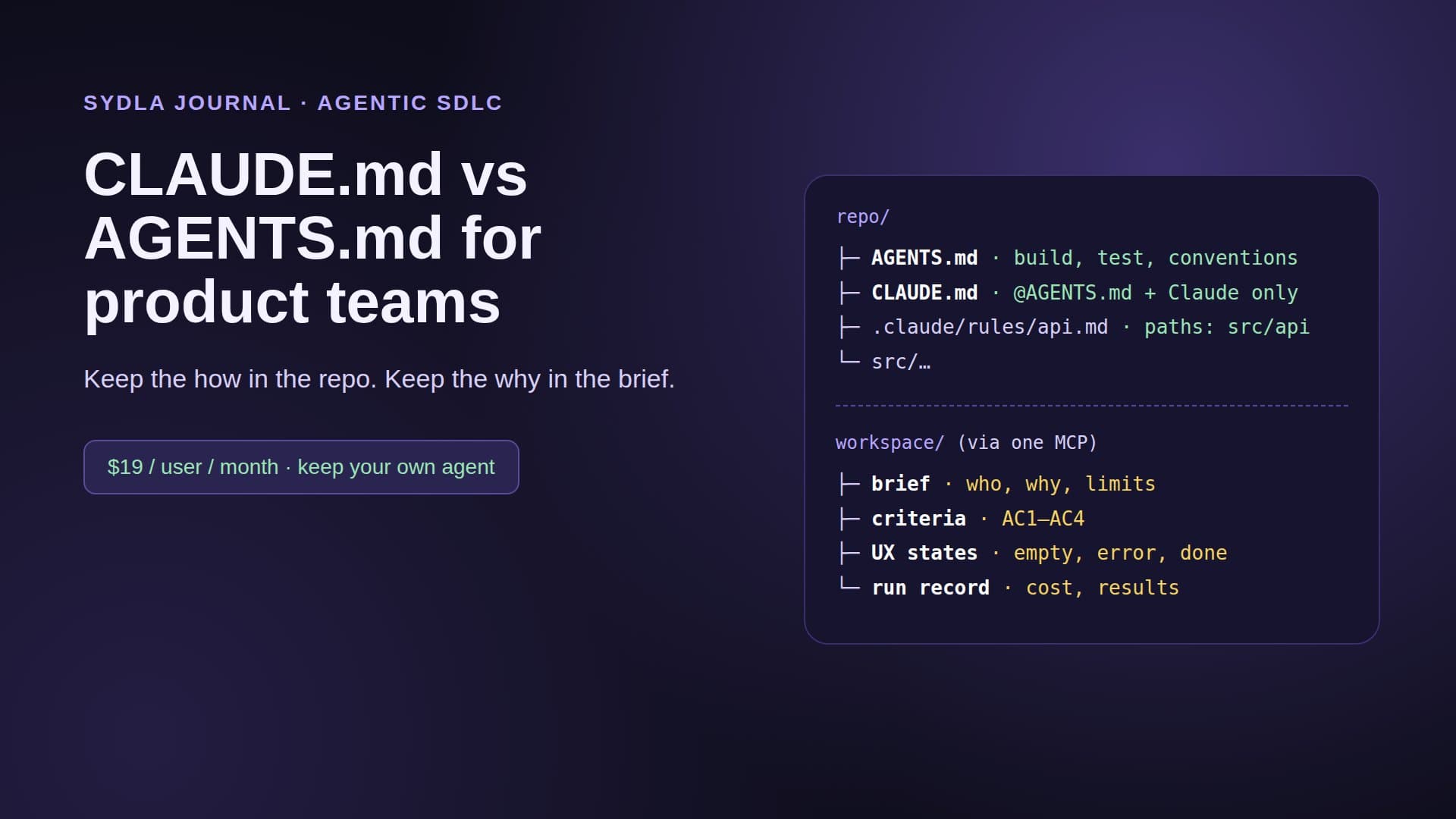
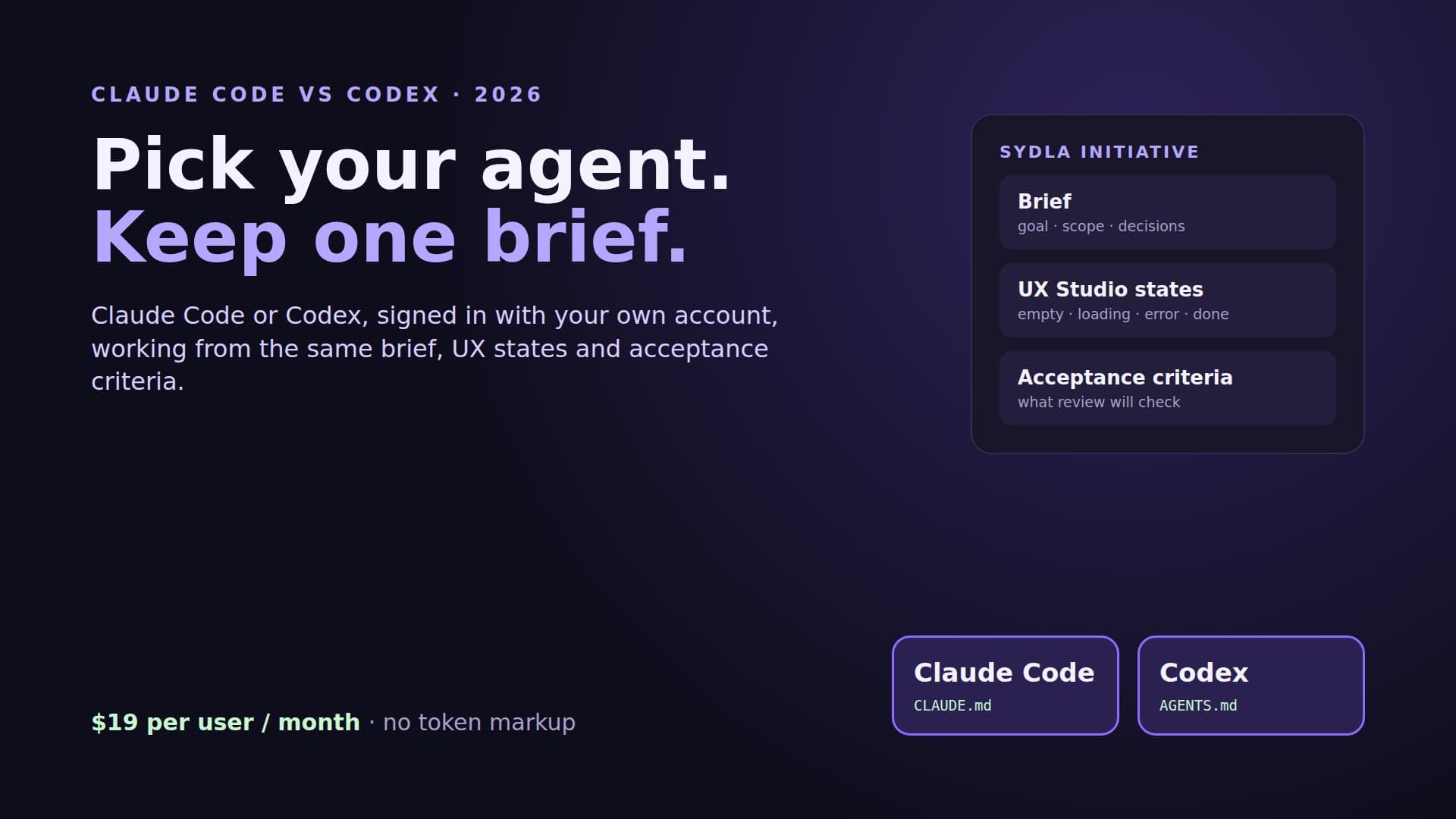
Both agents run locally in your terminal or desktop app, read your repository, follow a rules file (CLAUDE.md or AGENTS.md), and connect to any MCP server you add, including Atlassian's. You choose the model. The trade-off is that neither knows anything about your product until you hand it the brief, the criteria and the design states.
Rovo Dev vs Claude Code vs Codex, side by side
The table puts the three agents and the Sydla path next to each other on the things that change the bill and the quality of a run.
| Agent | Price | Usage and meter | Where it runs | Product context it gets |
|---|---|---|---|---|
| Rovo Dev Standard | $20 per developer | 2,000 Rovo Dev credits, then $0.01 per credit; no published cost per task | CLI (moving to Rovo CLI), VS Code (retiring), Jira cloud sessions, Code Reviewer | Jira work items and Confluence through Teamwork Graph; no design states |
| Rovo in Jira (Coding Agent, Code Reviewer) | Pooled credits | 25, 70 or 150 credits per user per month on Jira Standard, Premium or Enterprise; PAYG on by default from 3 Dec 2026 | Jira, Bitbucket Cloud, GitHub | Work item, criteria and linked pages |
| Claude Code | $20 to $200 plan | Your Claude plan's usage limits, or API list prices with a key | Terminal, IDE, desktop, CI | Whatever you connect: repo, rules file, MCP servers |
| Codex | $20 to $25+ plan | Your ChatGPT plan's allowance, or API pricing with a key | Terminal, IDE, desktop app, cloud tasks | Whatever you connect: repo, AGENTS.md, MCP servers |
| Sydla + your Claude Code or Codex | $19 per user | Workspace with no AI credits; the run uses your own plan, zero token markup | Sydla Desktop threads, web threads, one MCP connection | Shared brief, criteria, UX Studio states and run evidence in one place |
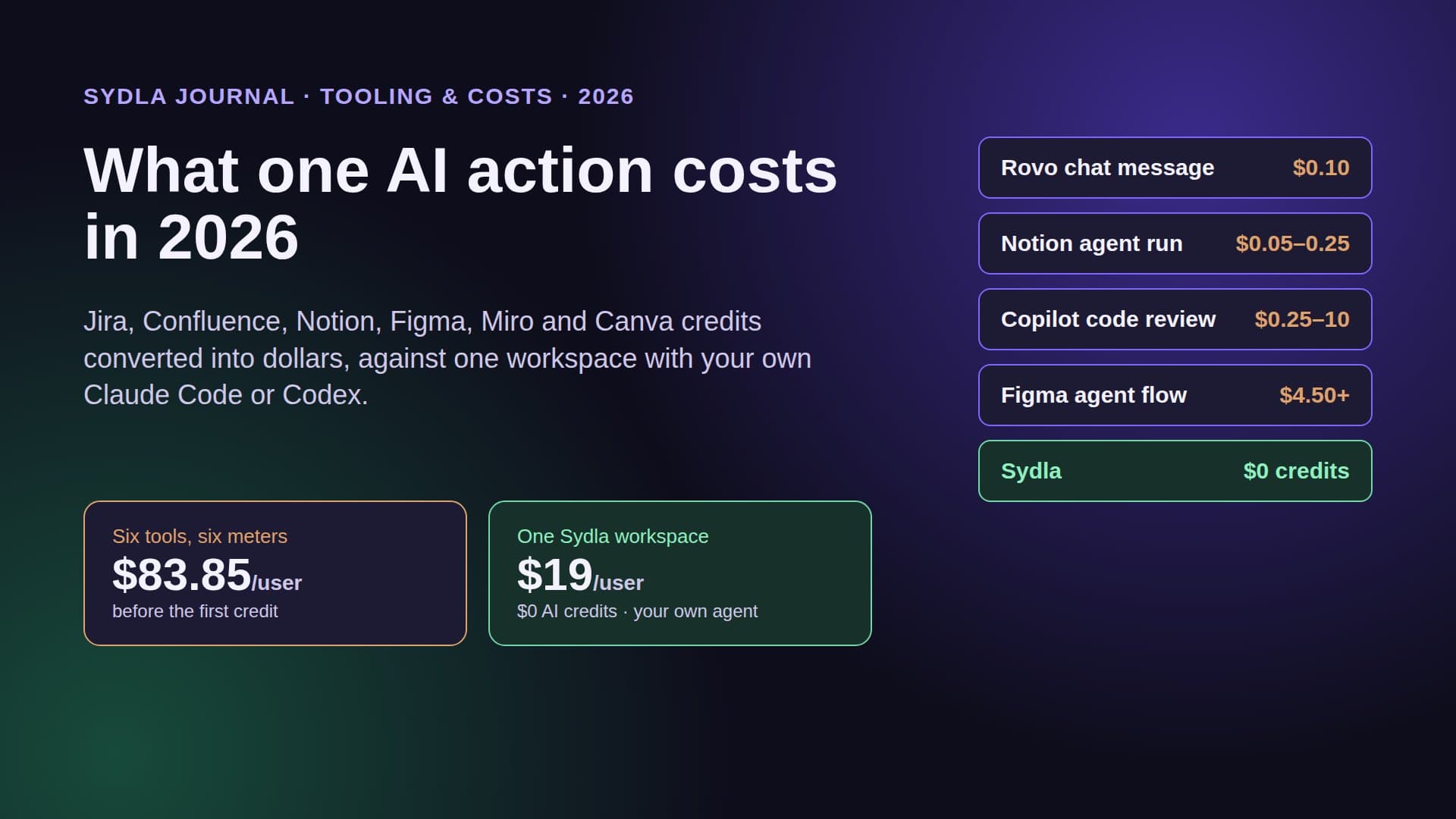
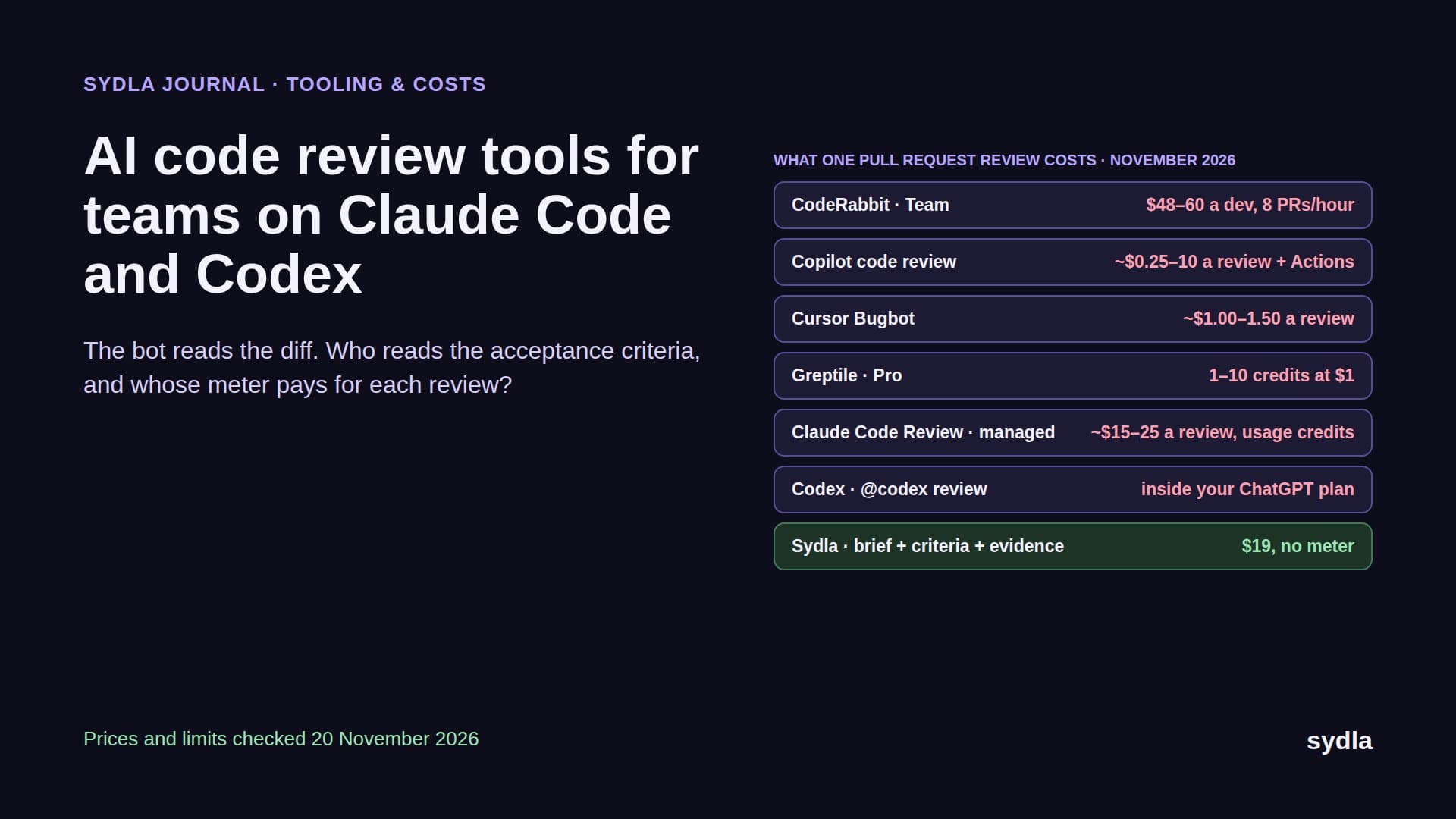
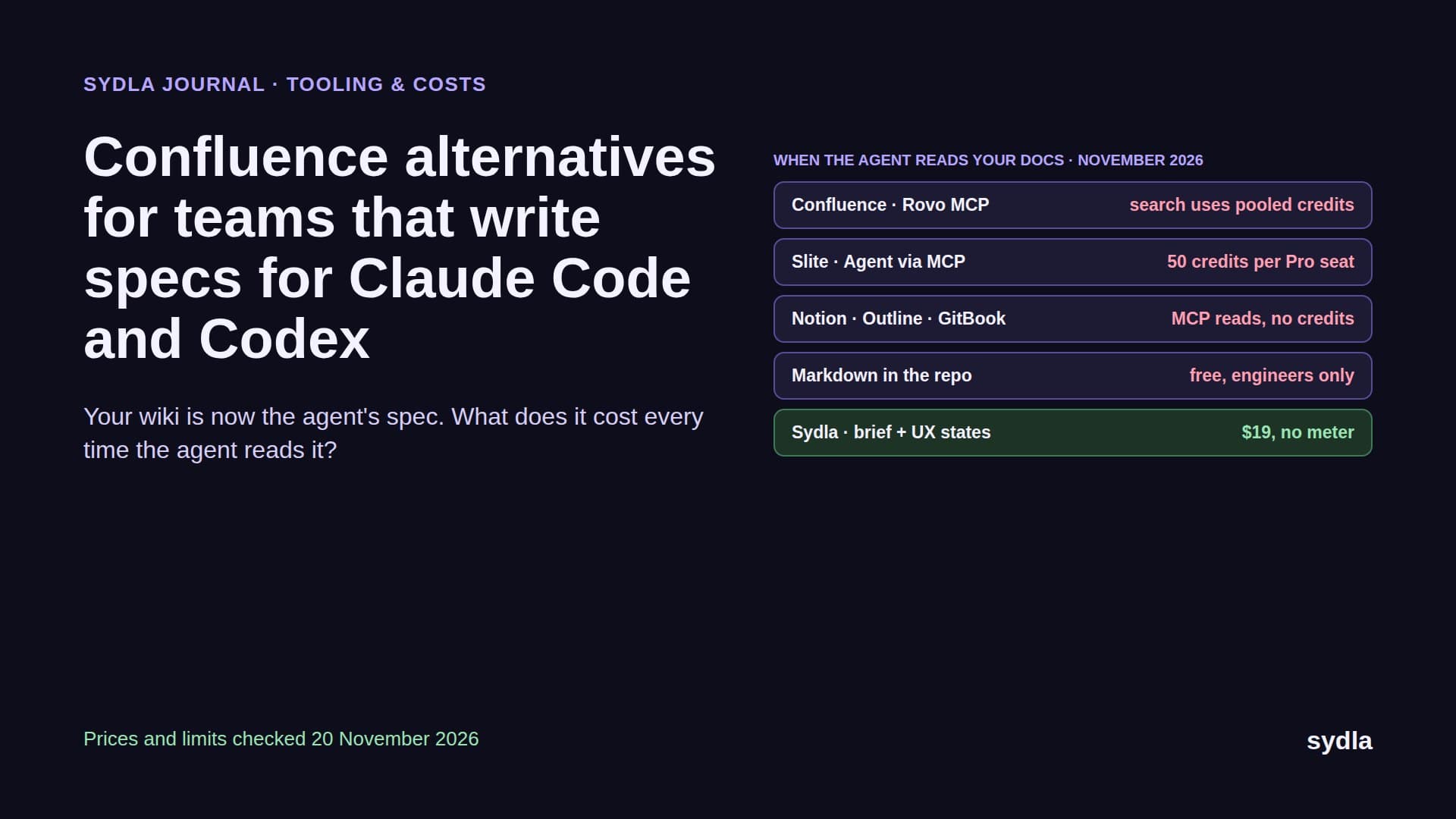
Two numbers make the Rovo side hard to forecast. First, Atlassian's Code Reviewer table says ten Jira Standard users, with 250 pooled credits, cover about 3 to 13 reviews a month. By our arithmetic that is roughly 19 to 83 credits, or $0.19 to $0.83, per review once the pool is empty. Second, the pool is shared: the same credits pay for Rovo chat at 10 credits a message, enriched MCP calls at 1 to 10, and coding sessions. A busy week of reviews can pause chat for everyone if pay as you go is off. Our Rovo credits guide walks through the 3 December switch.
The agent is cheap. The stack around it is not.
Choosing between Rovo Dev and Claude Code only settles who writes the code. The brief still lives in Confluence or Notion, the screens in Figma, the workshop in Miro and the launch visual in Canva, and each of those has its own seat and its own AI meter.
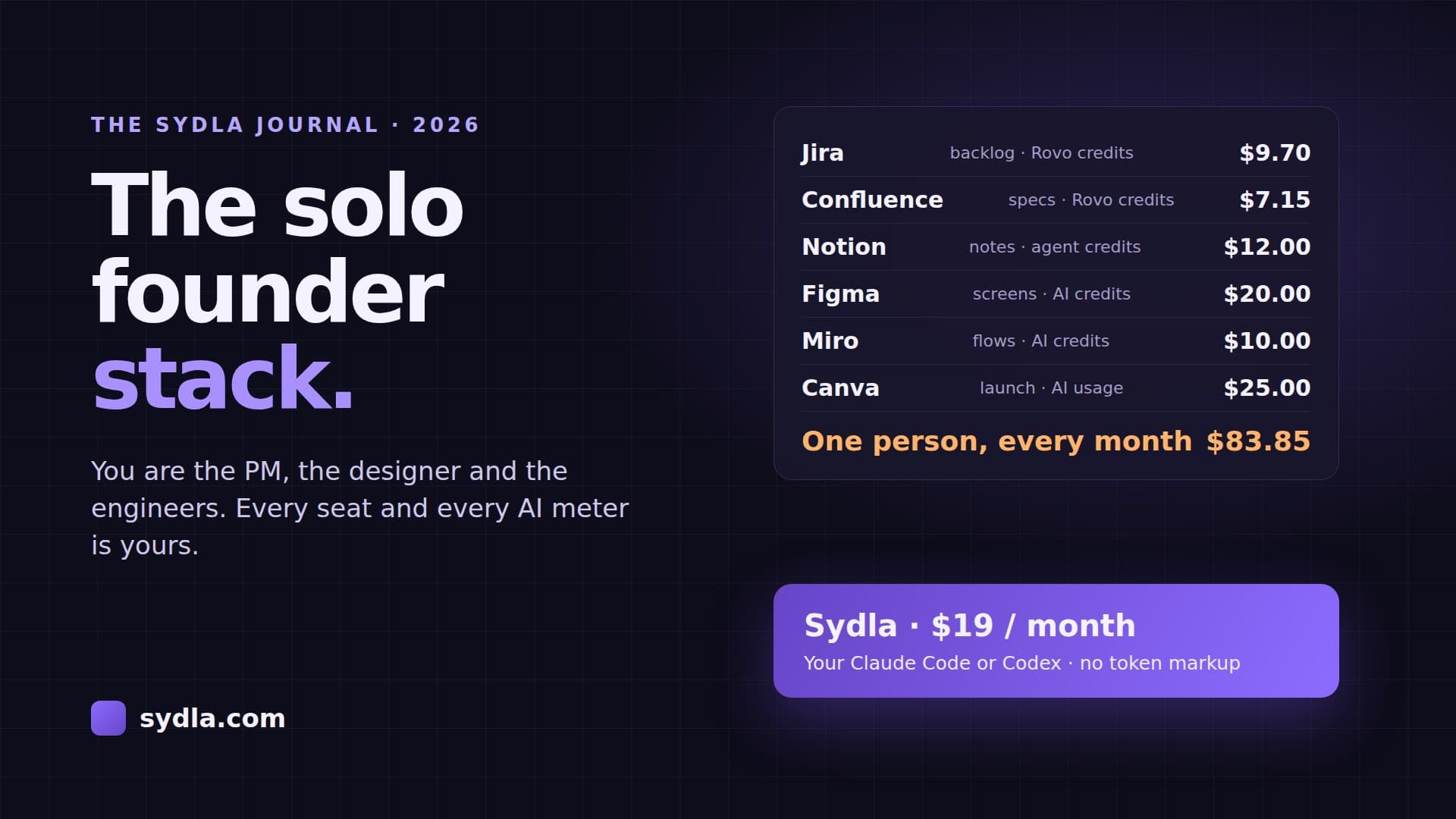
| Tool | Seat price | Bundled AI and its limit | Handoff to the coding agent |
|---|---|---|---|
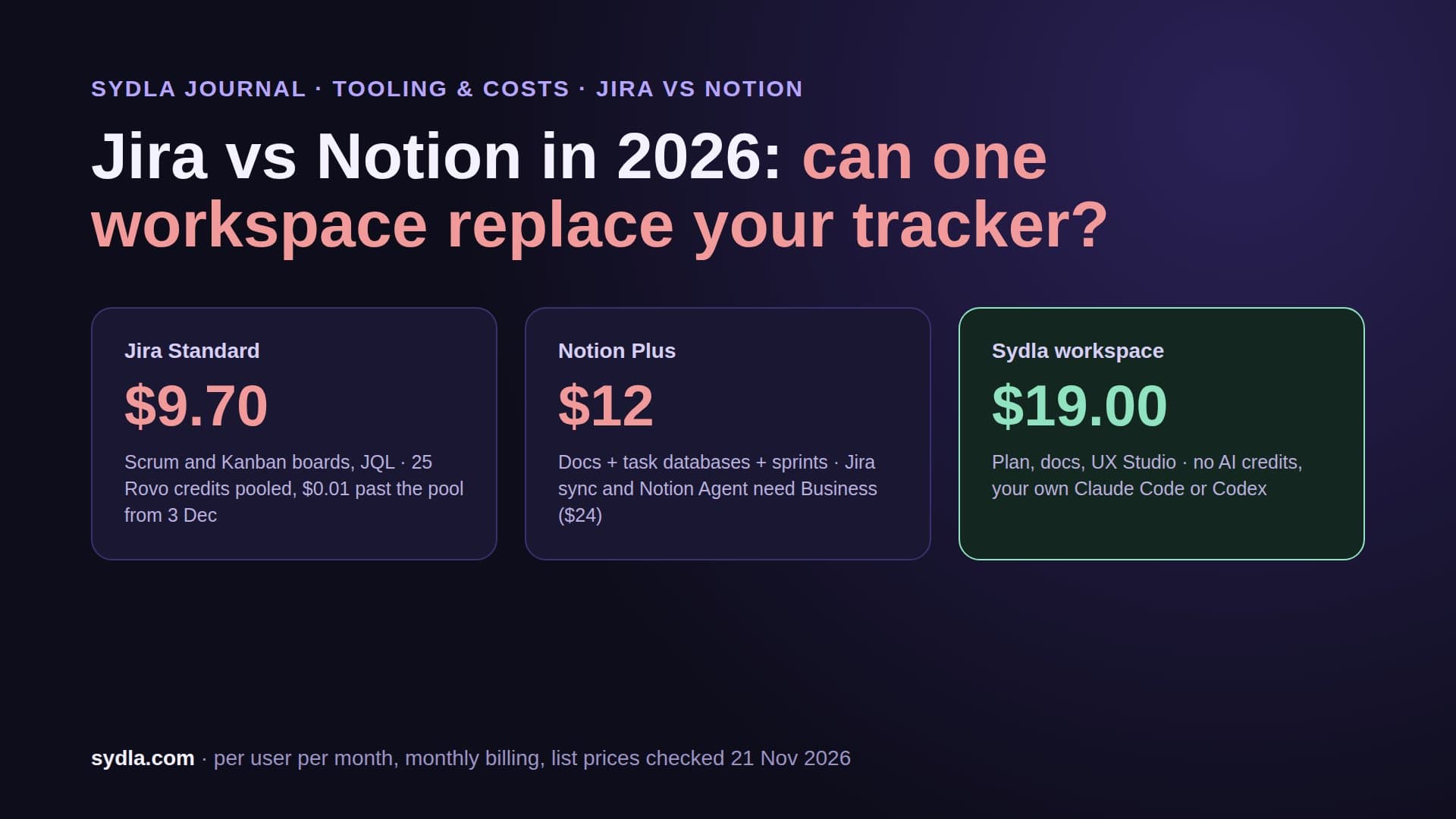
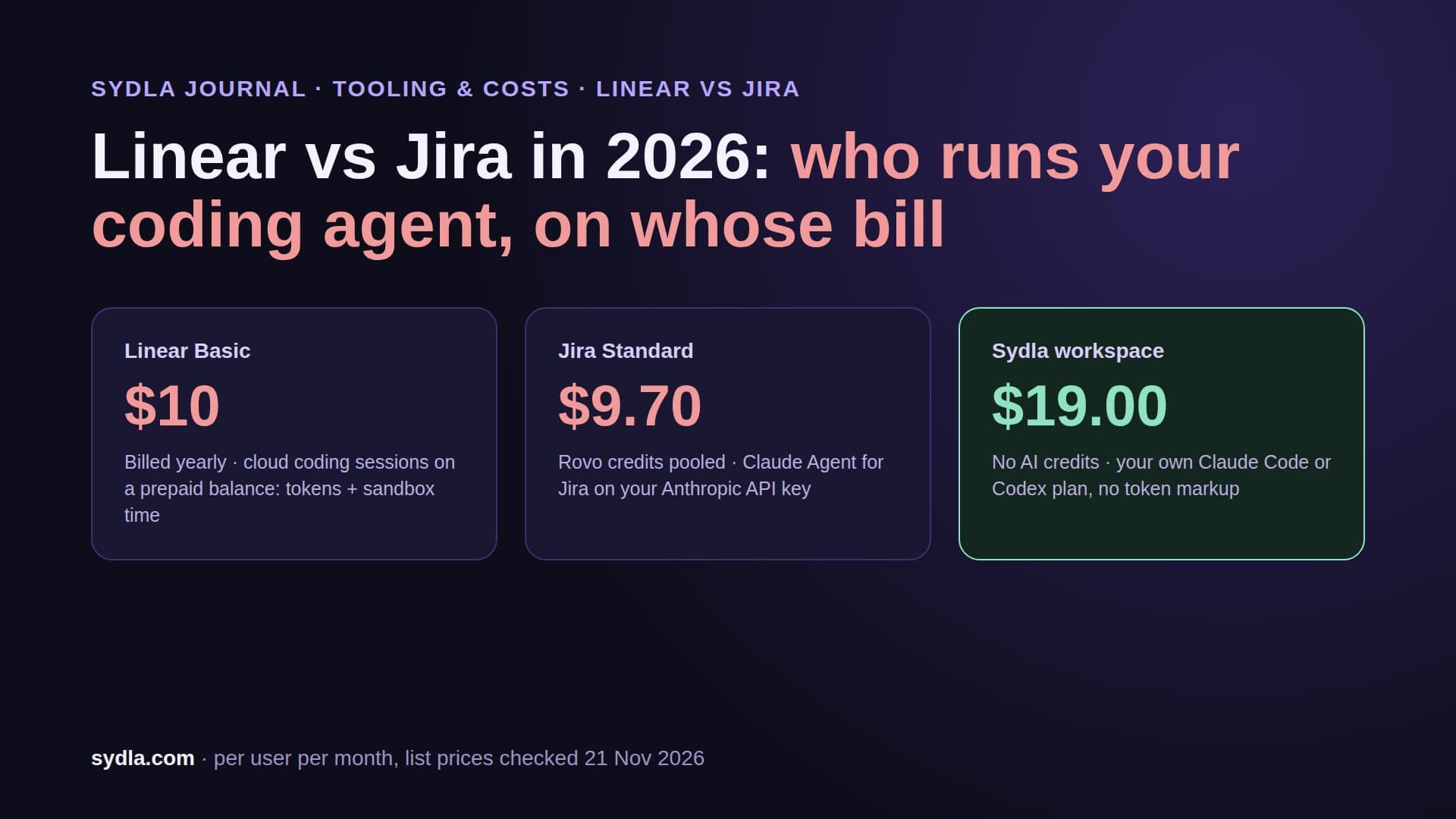
| Jira Standard | $9.70 | Rovo: 25 credits per user per month, pooled; PAYG $0.01 per credit from 3 Dec 2026 | Rovo MCP or Open in coding tool |
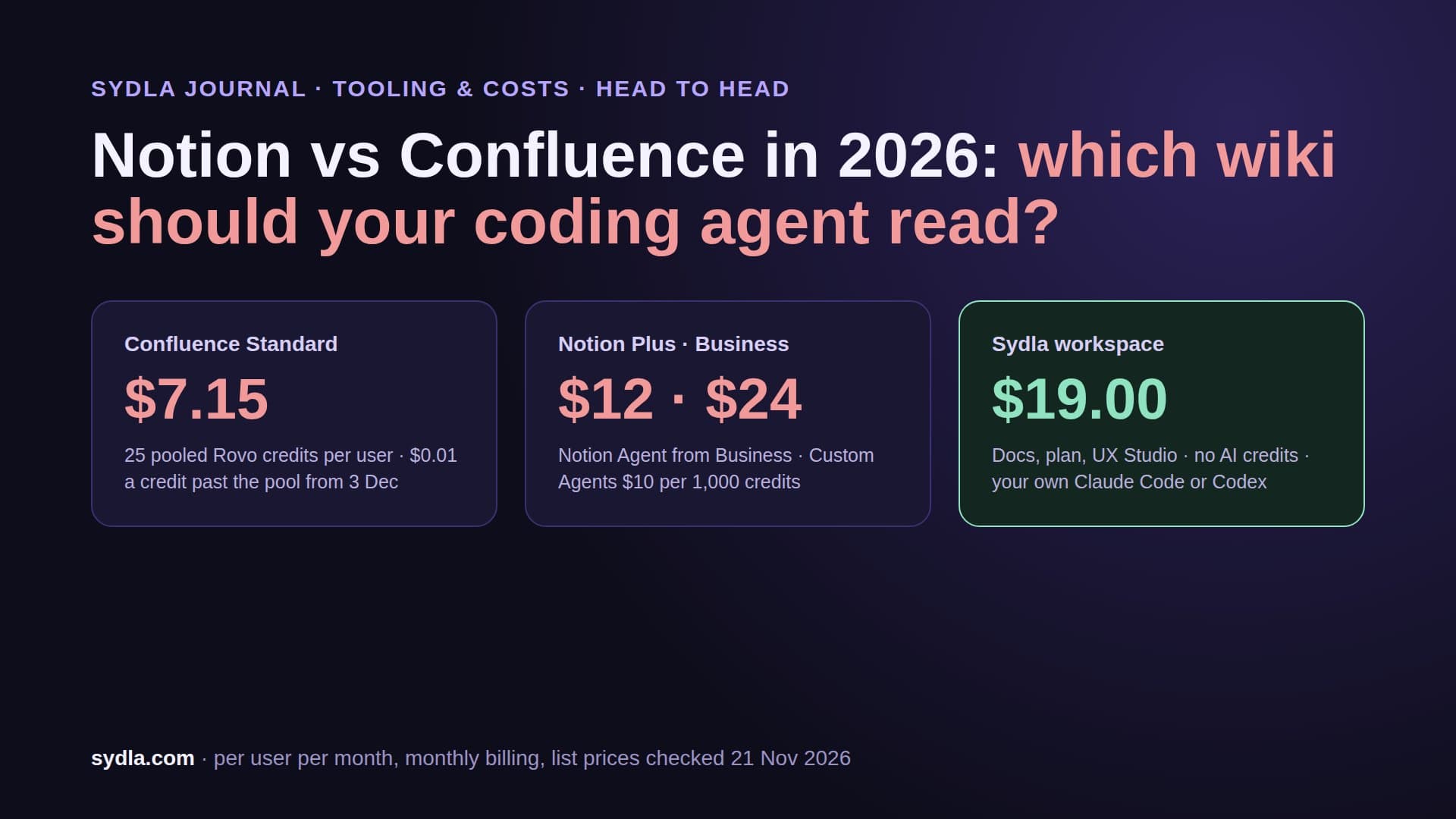
| Confluence Standard | $7.15 | Same Rovo pool, 25 credits per user | Rovo MCP; enriched calls 1 to 10 credits |
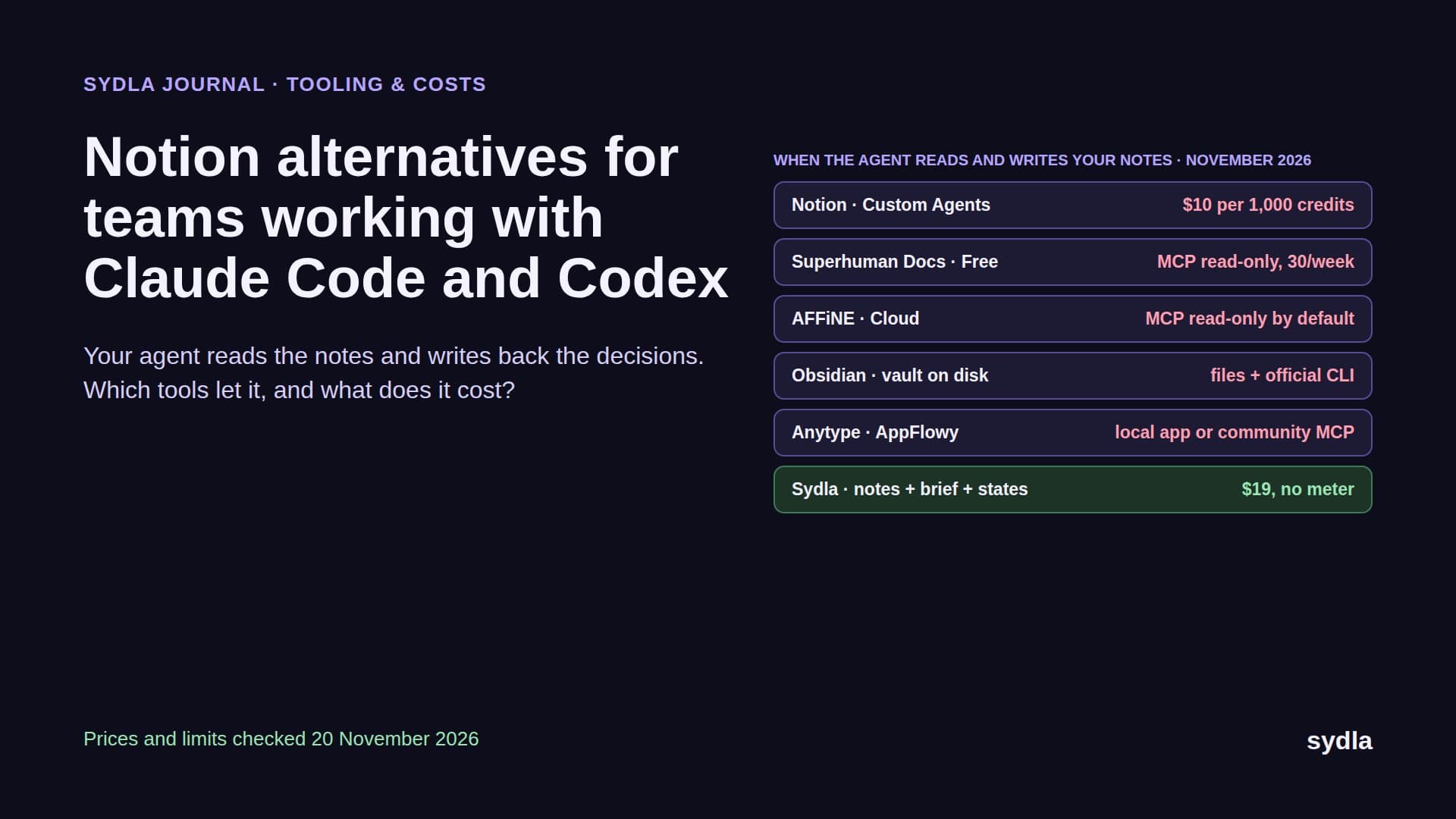
| Notion Plus | $12.00 | Custom Agents only on Business and Enterprise; extra credits $10 per 1,000 | Notion MCP server |
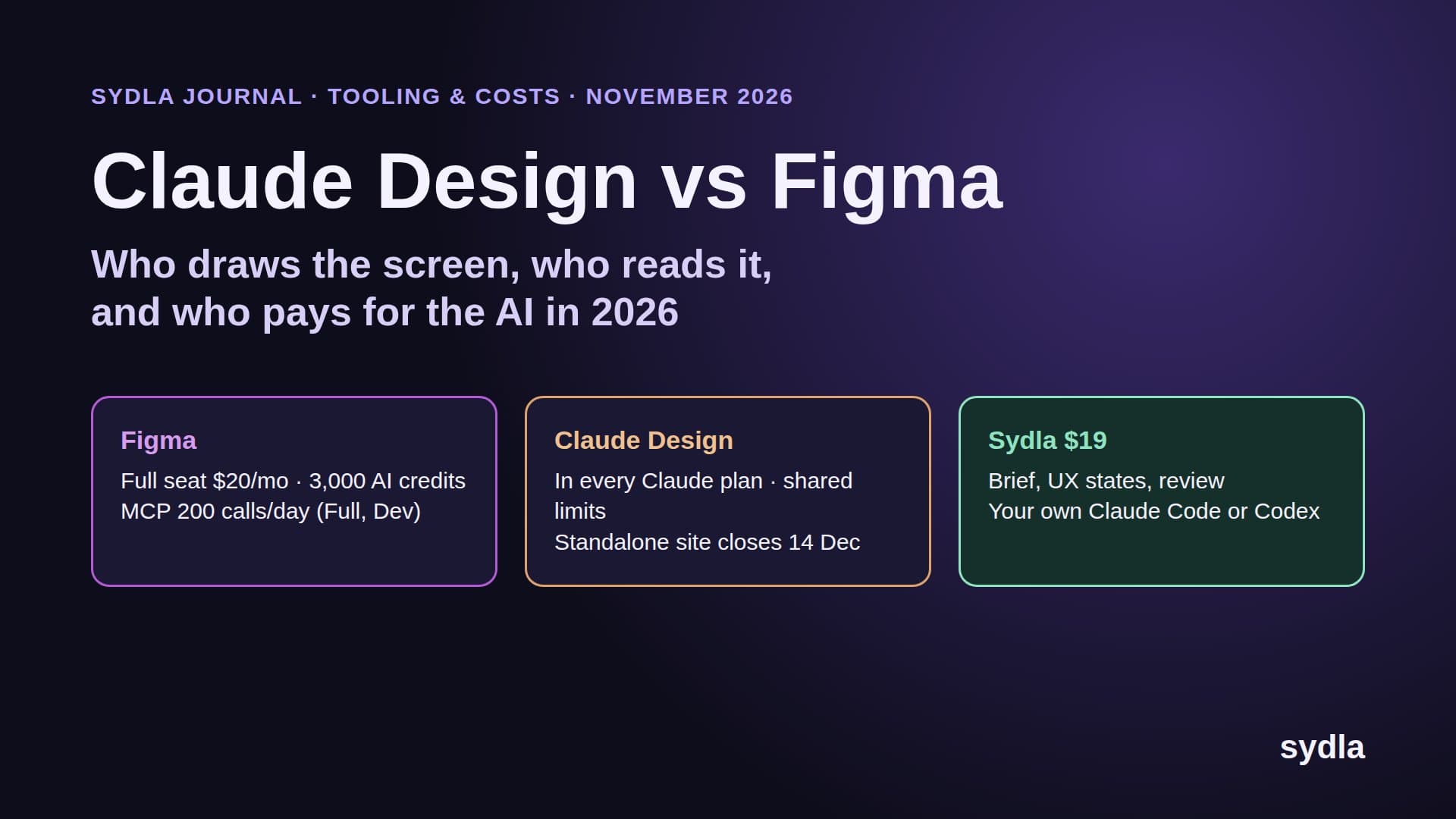
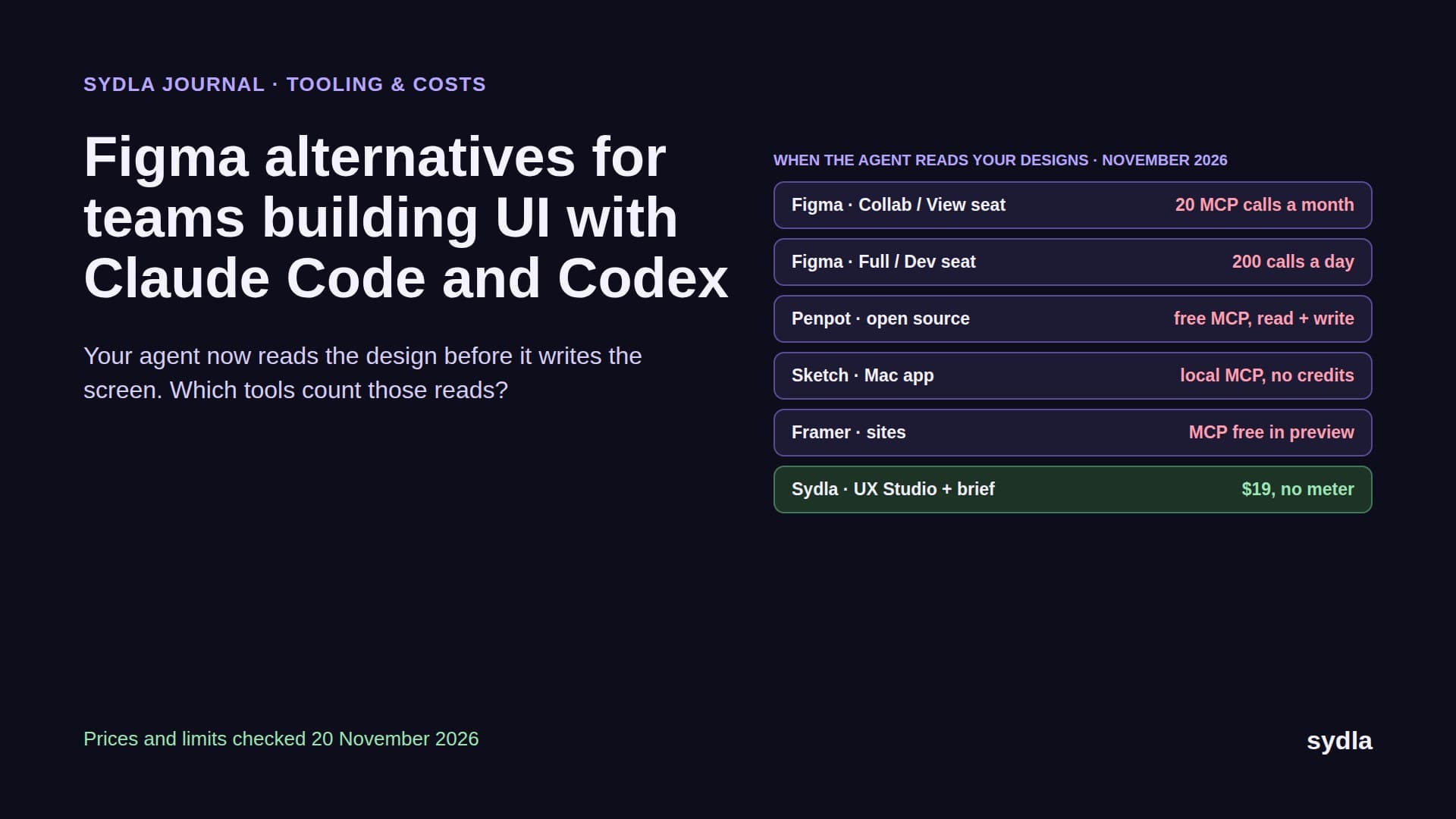
| Figma Professional Full | $20.00 | 3,000 AI credits per Full seat, per user, no rollover | Figma MCP: 200 calls a day on Full or Dev, 20 a month on View or Collab |
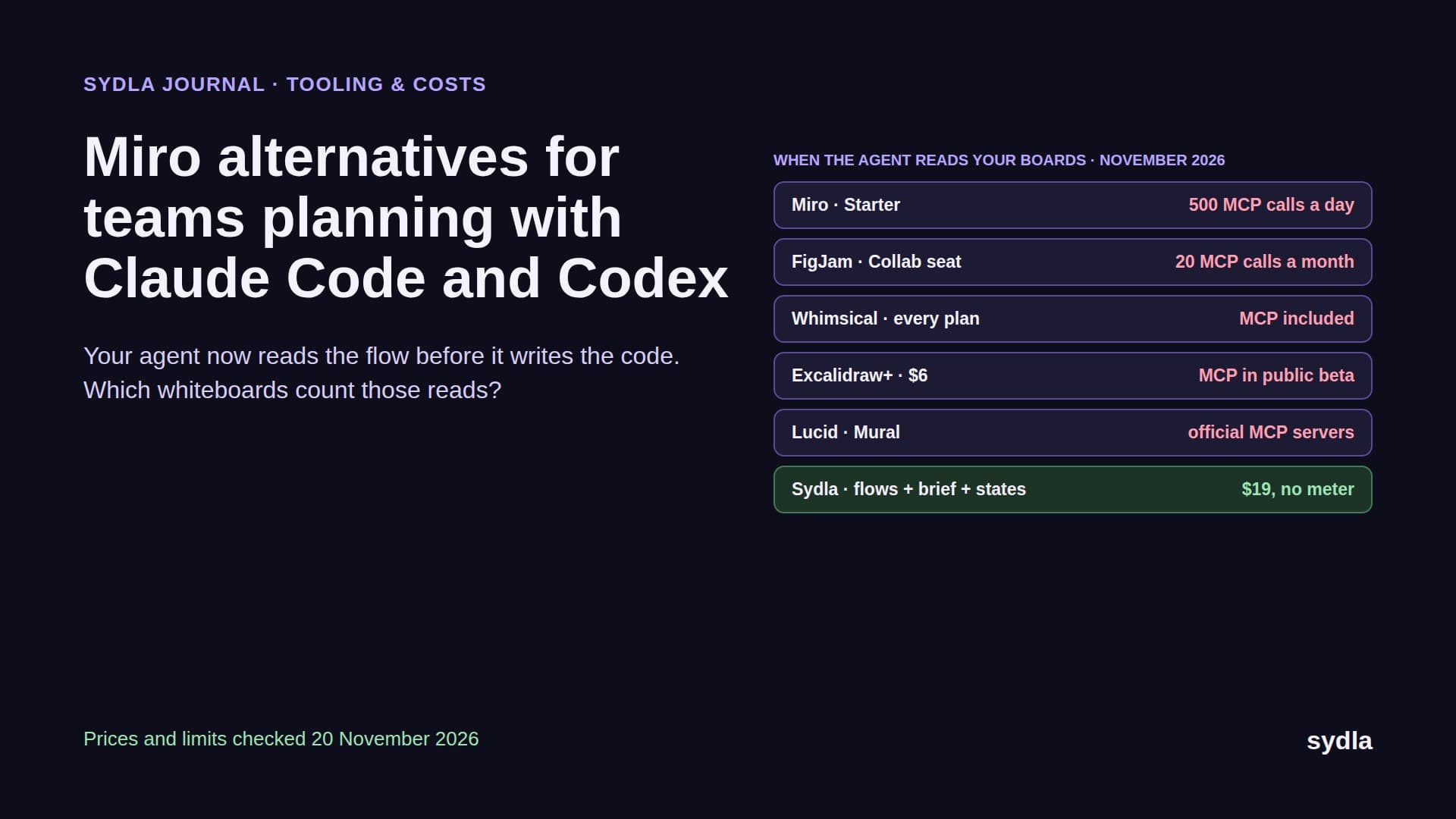
| Miro Starter | $10.00 | 25 AI credits per license, pooled per team | Miro MCP: daily call limits by plan |
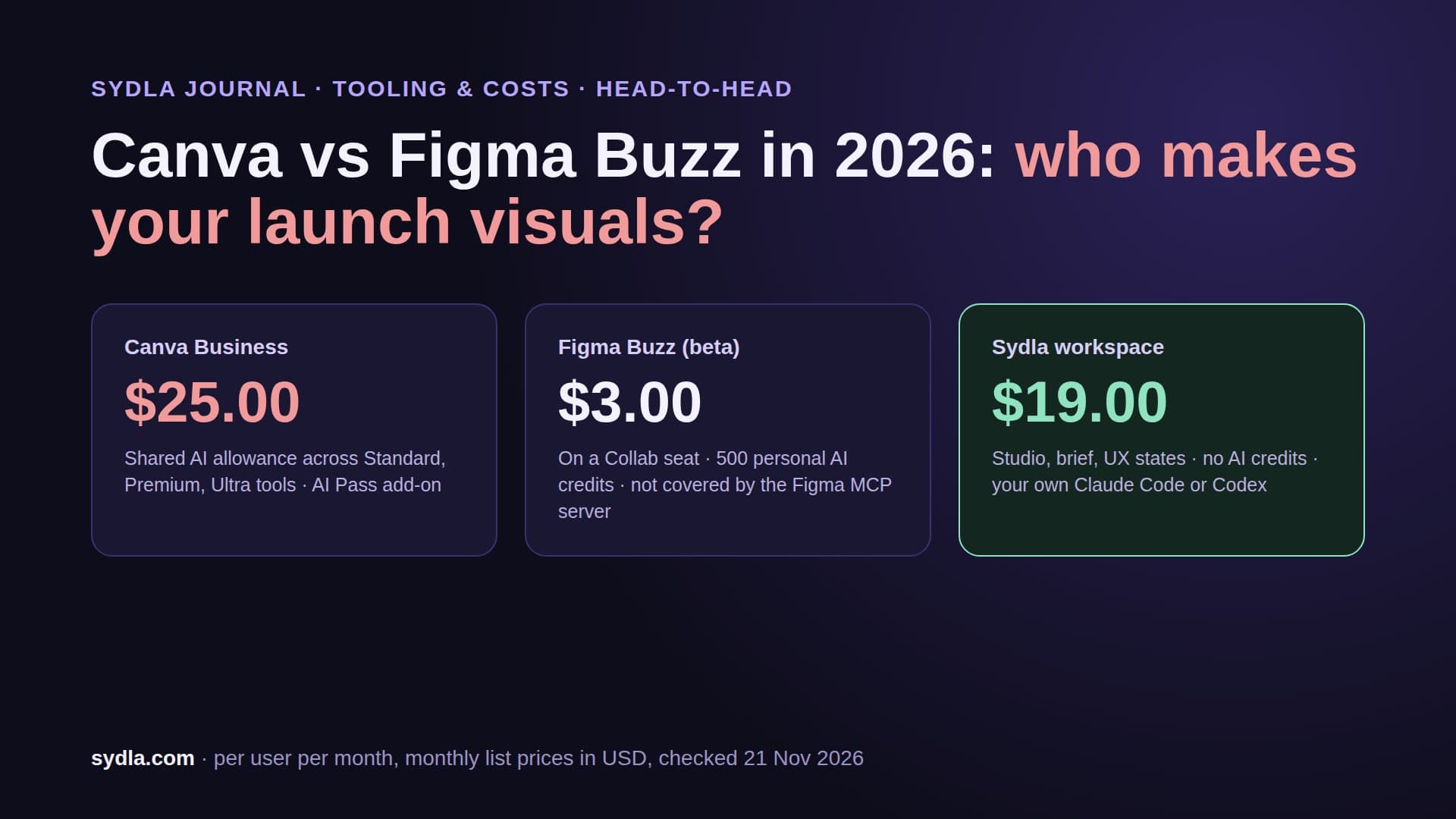
| Canva Business | $25.00 | Personal AI allowance per member, not pooled; top-ups on Business | Outside the build loop |
| Sydla workspace | $19.00 | No AI credits: bring your own Claude Code or Codex | One MCP connection or a Sydla Desktop thread |
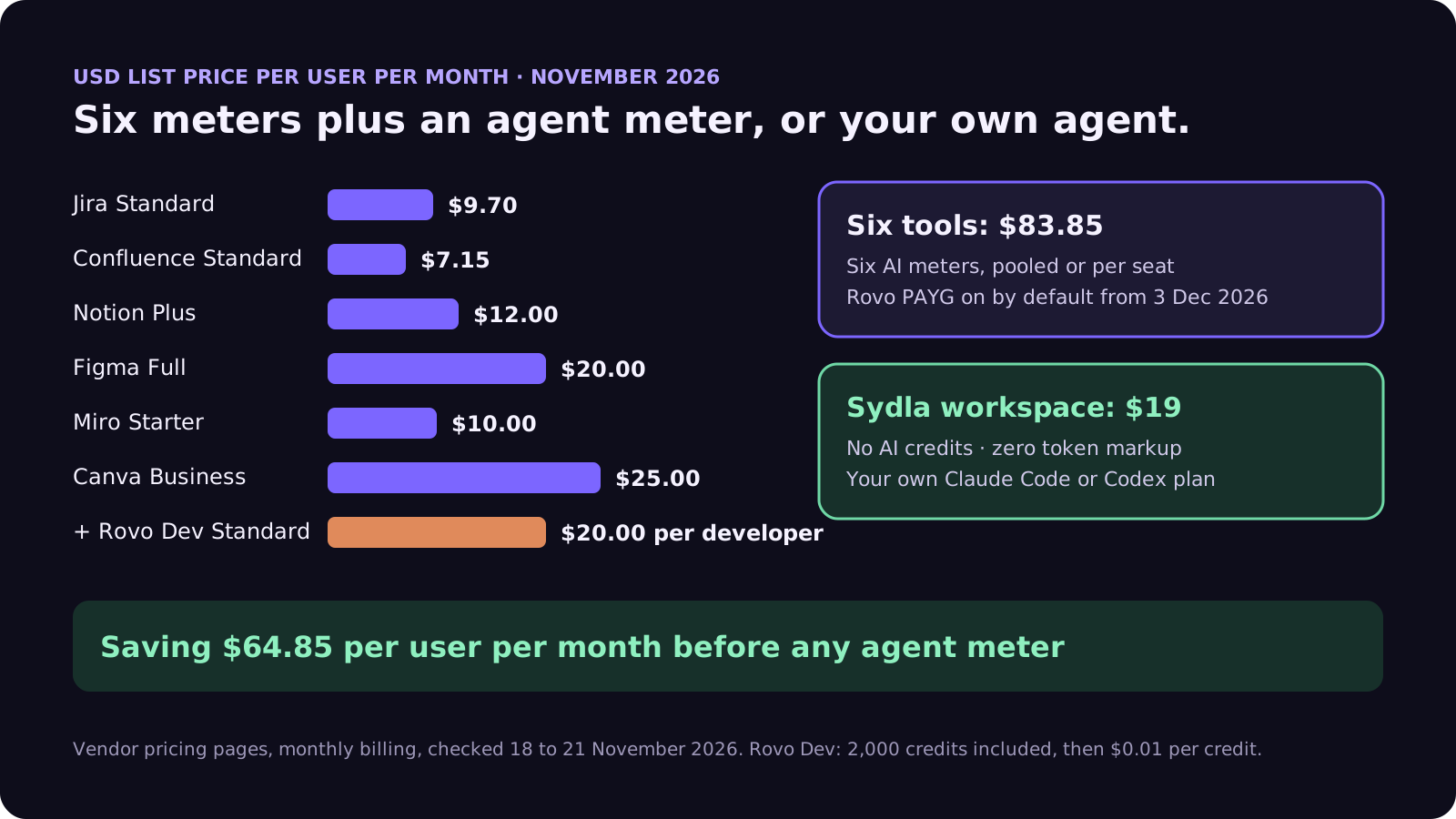
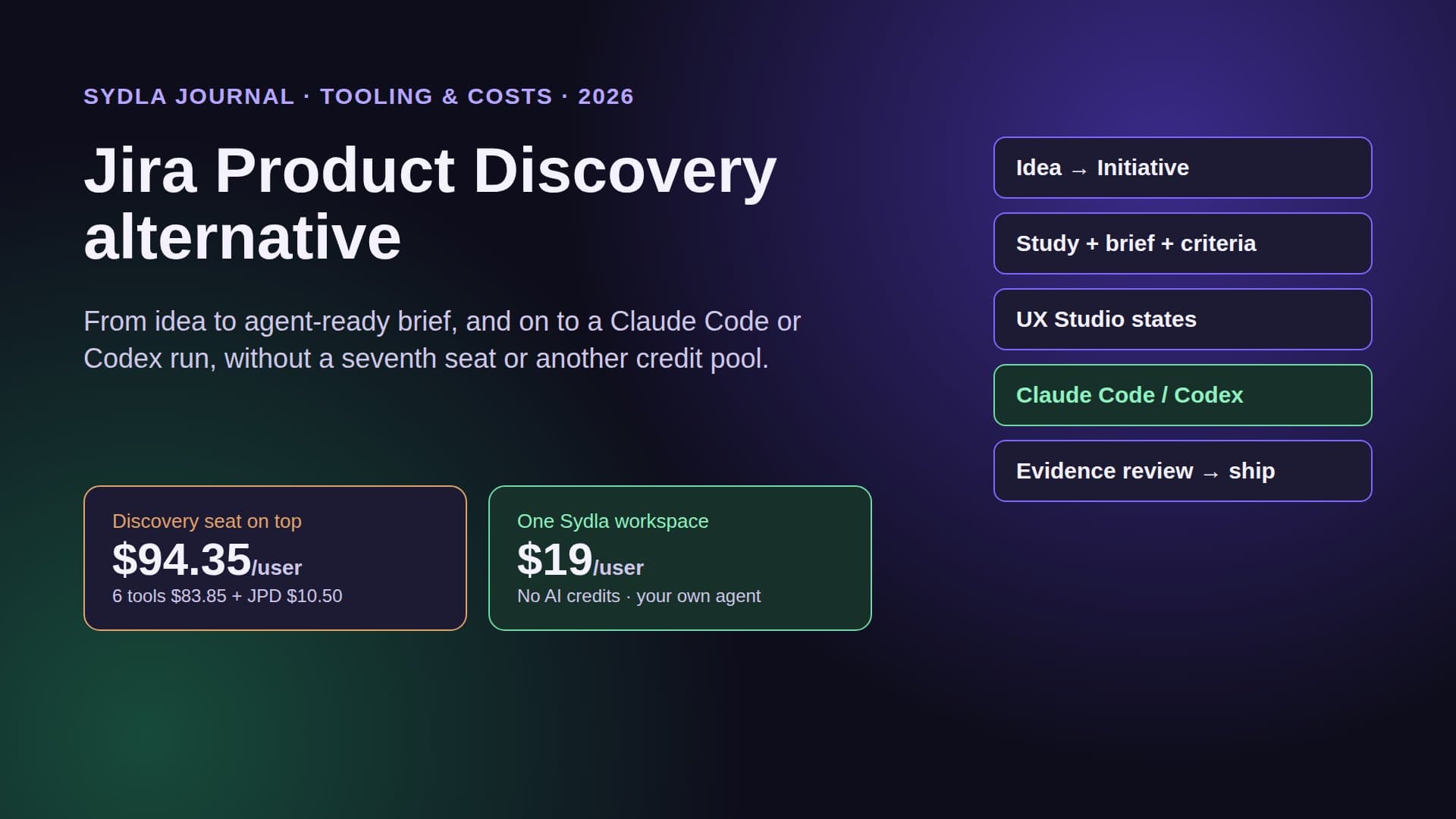
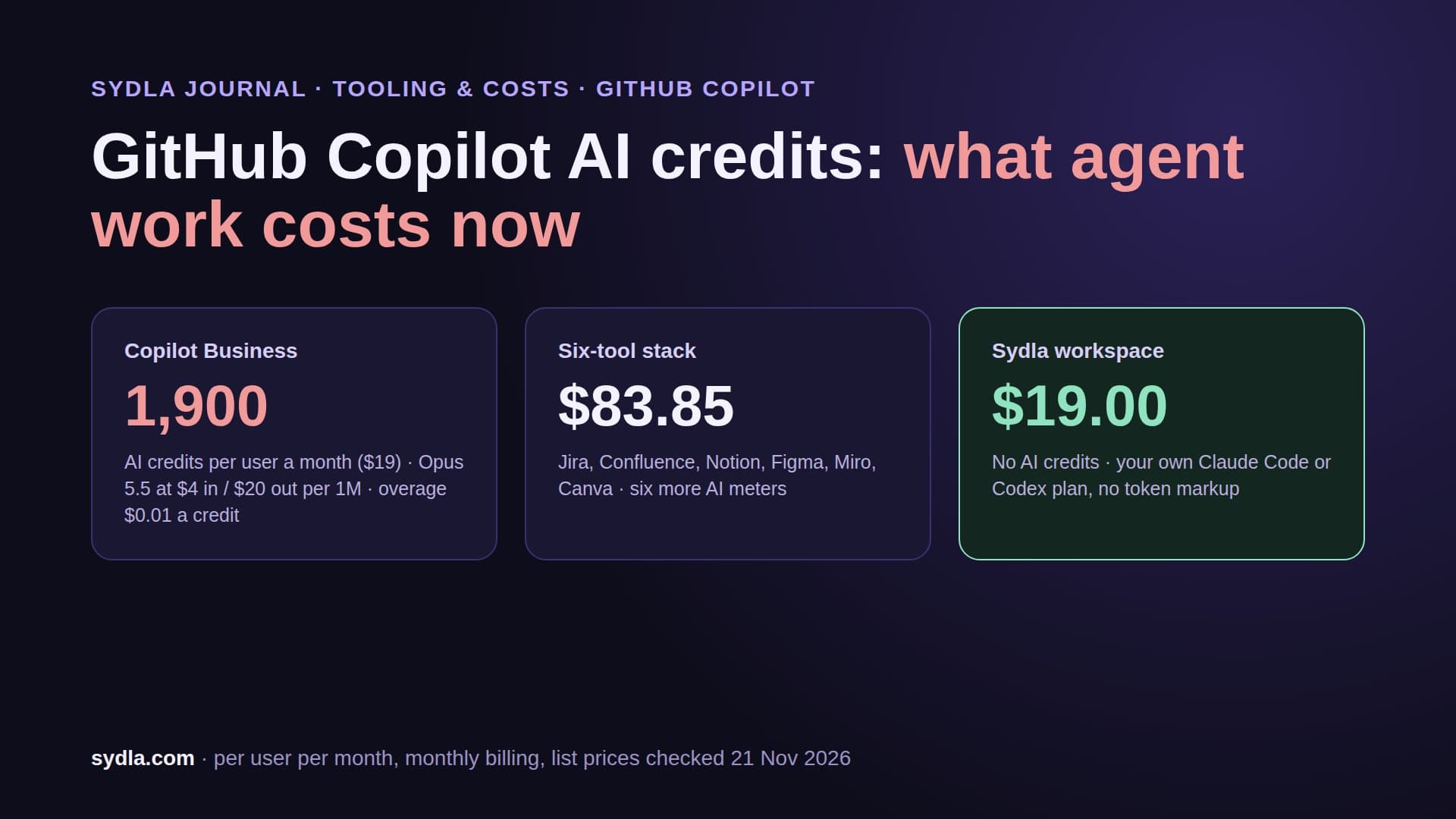
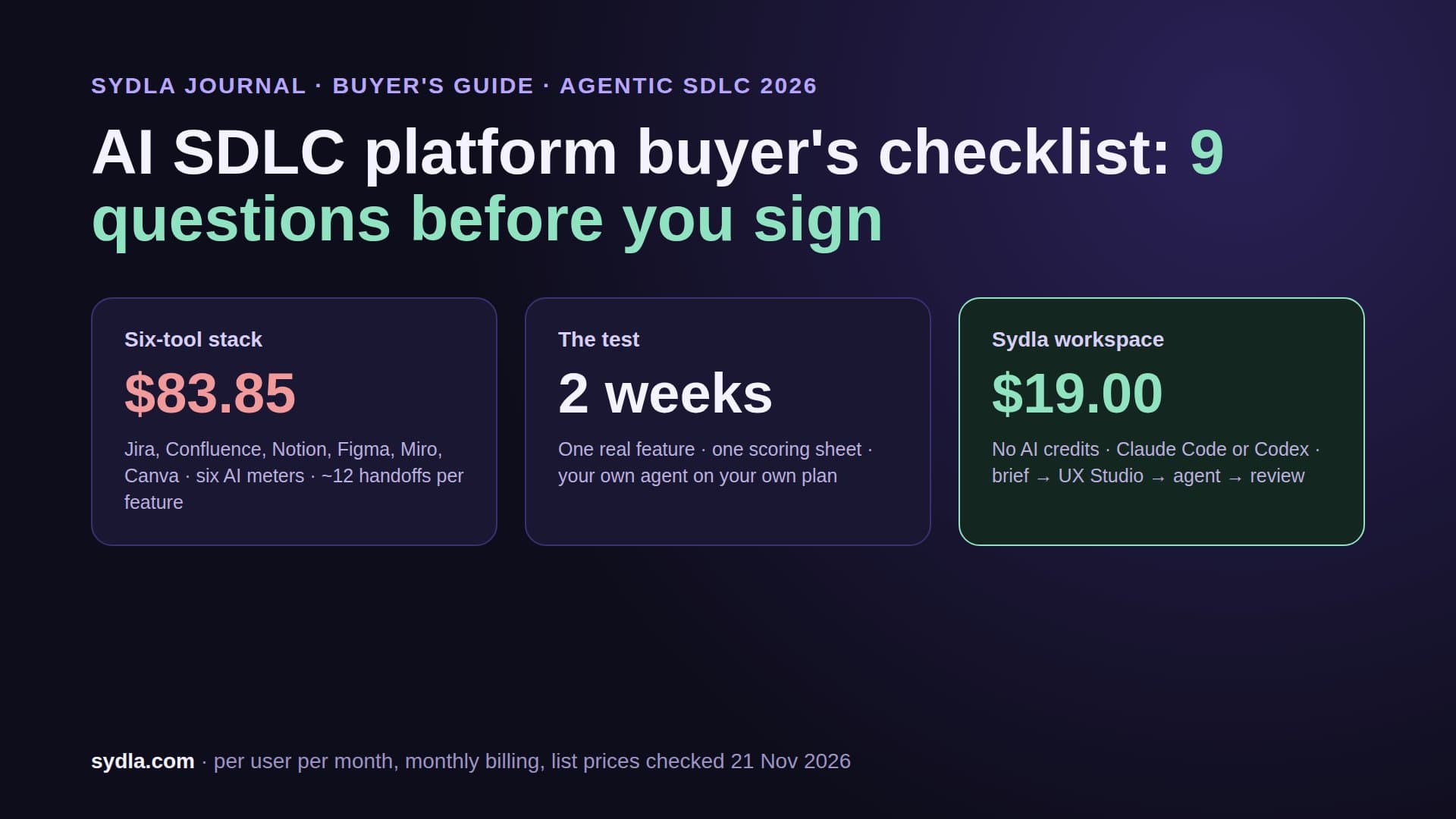
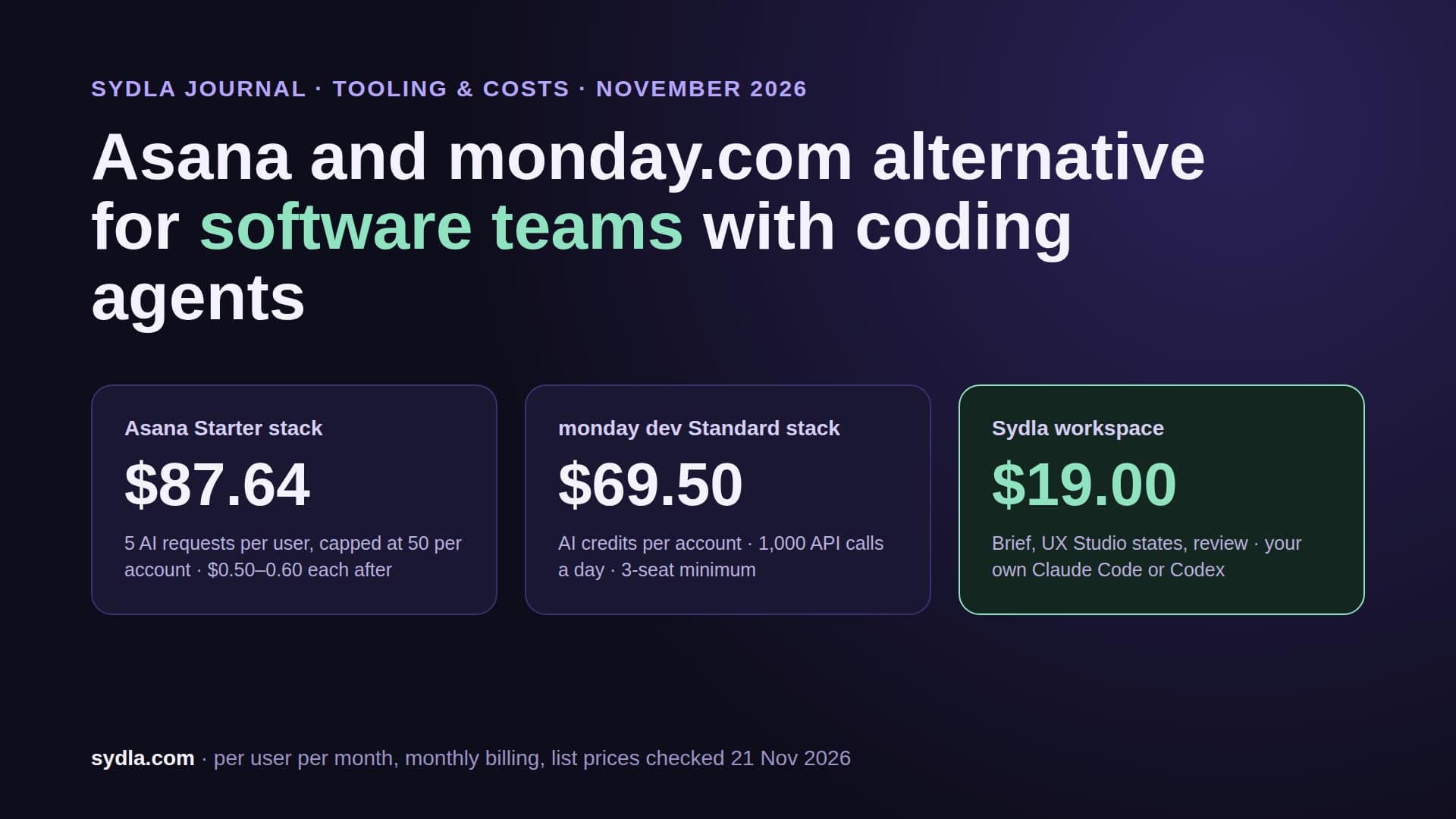
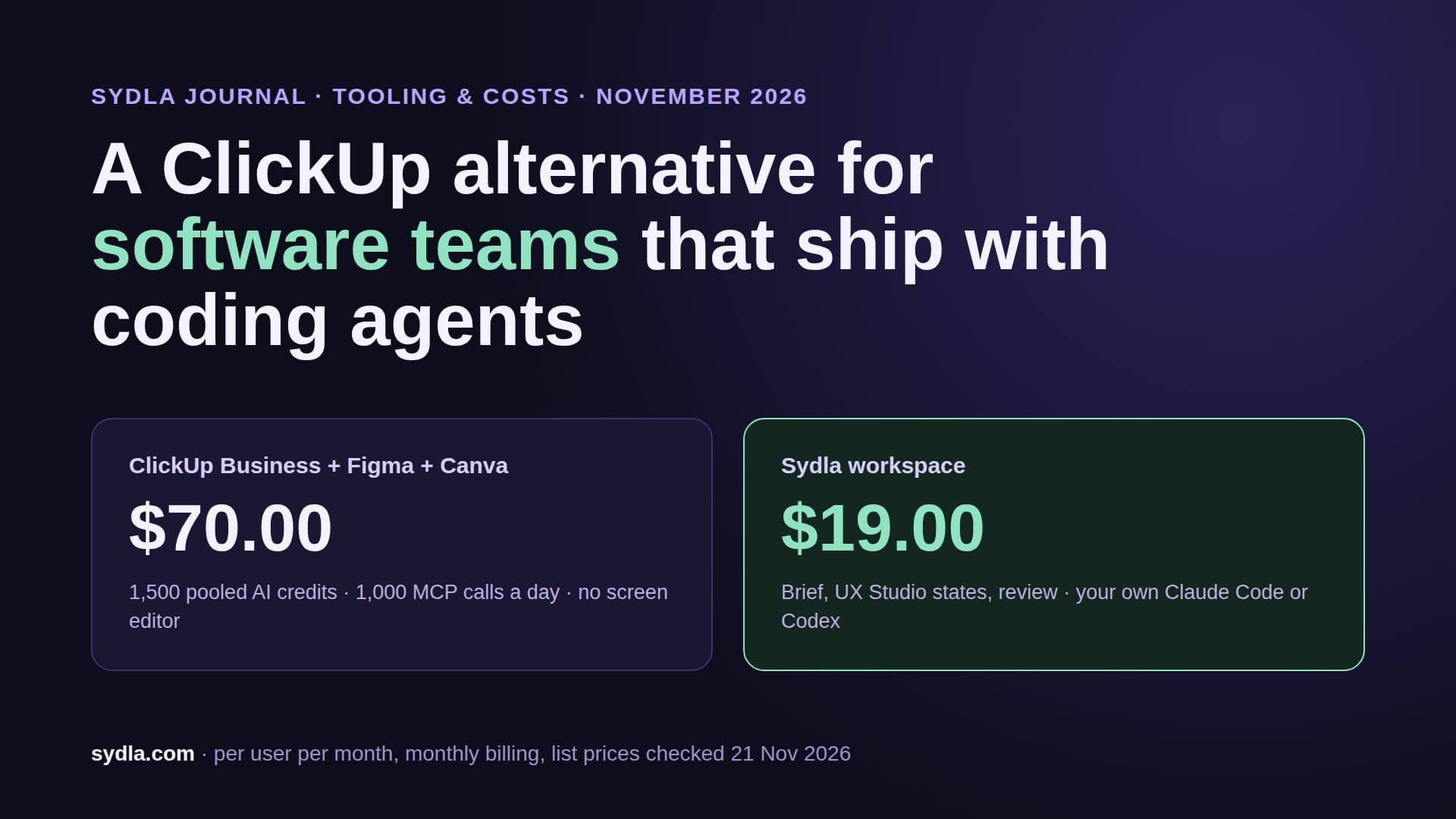
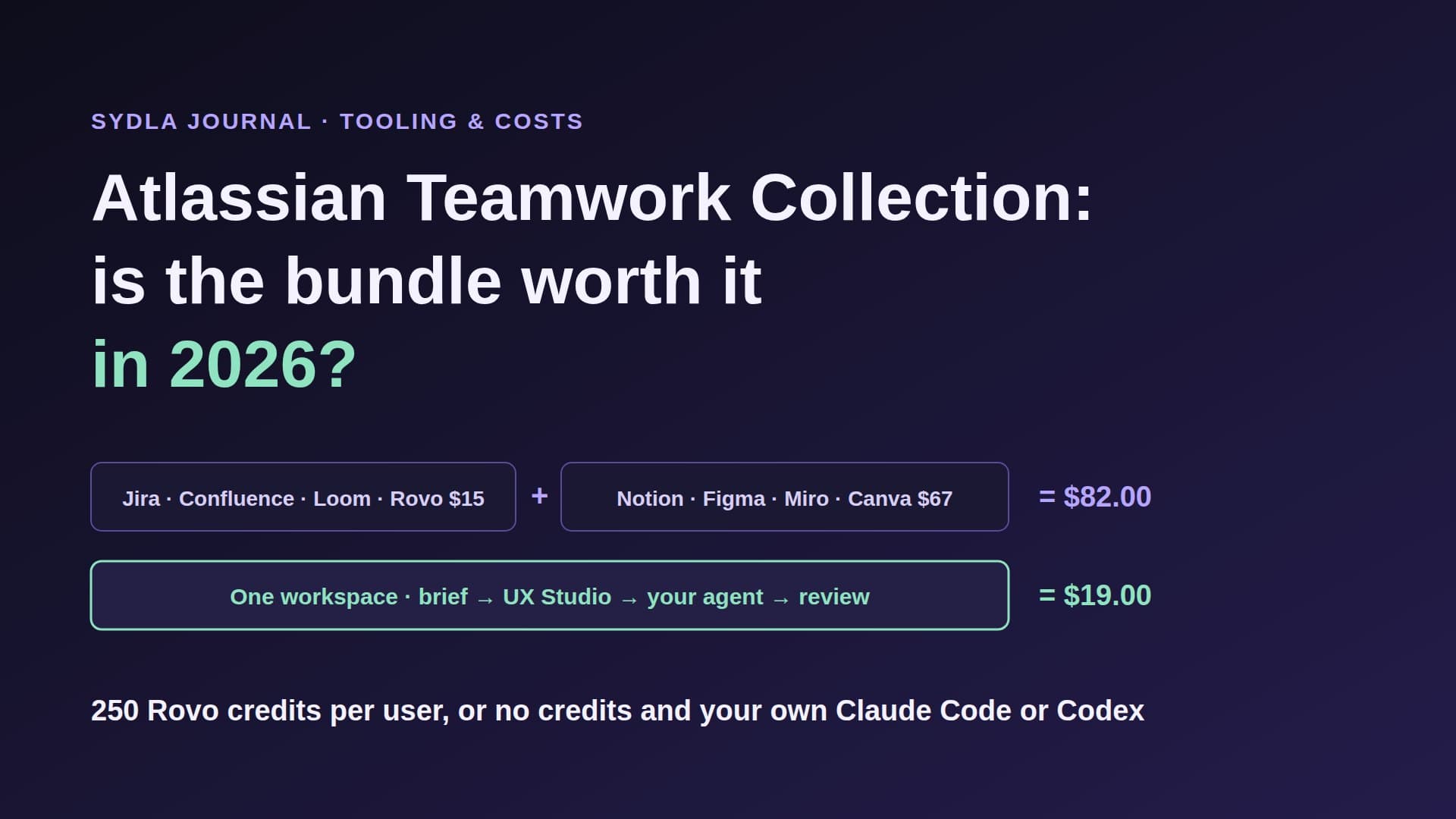
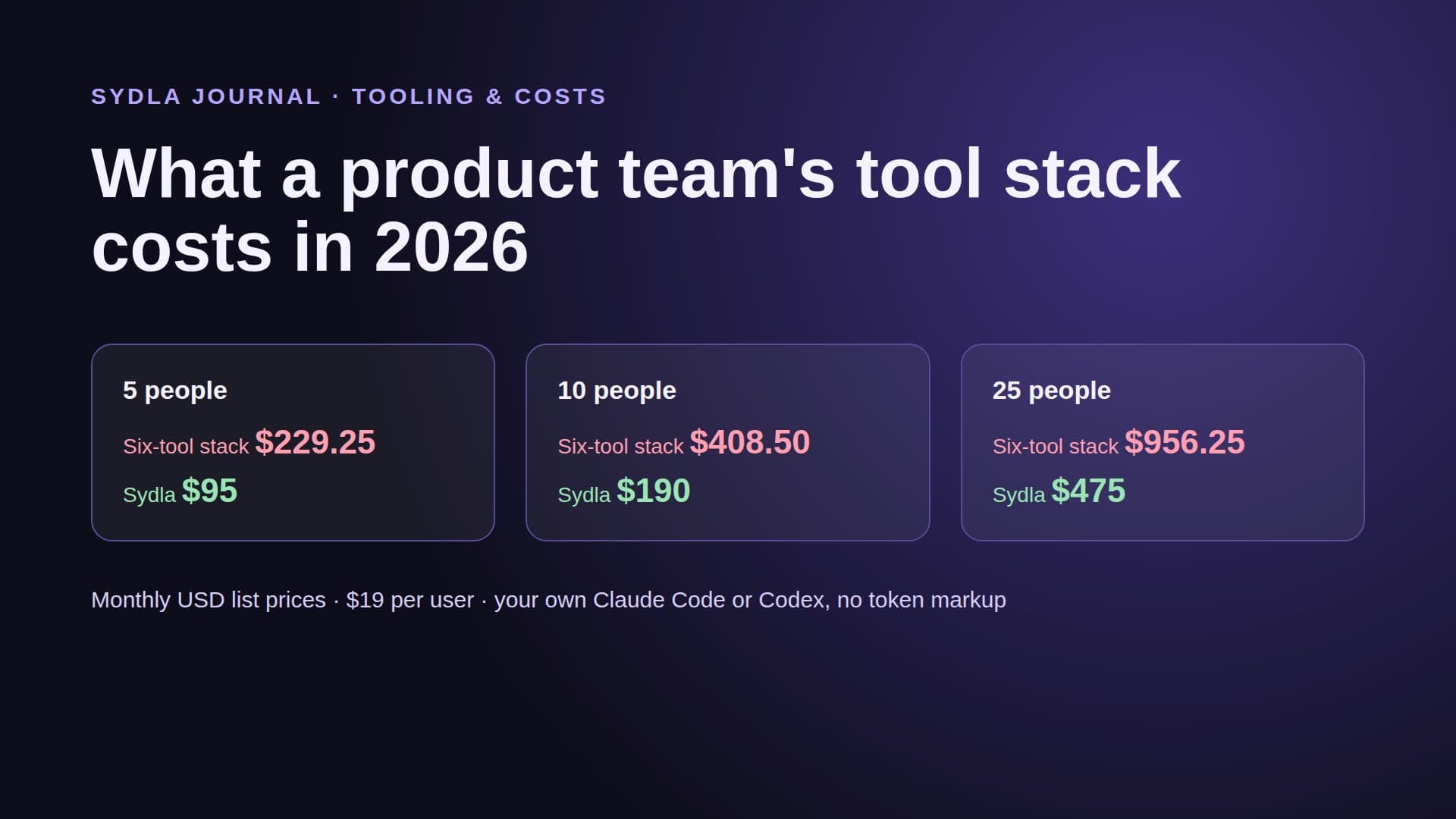
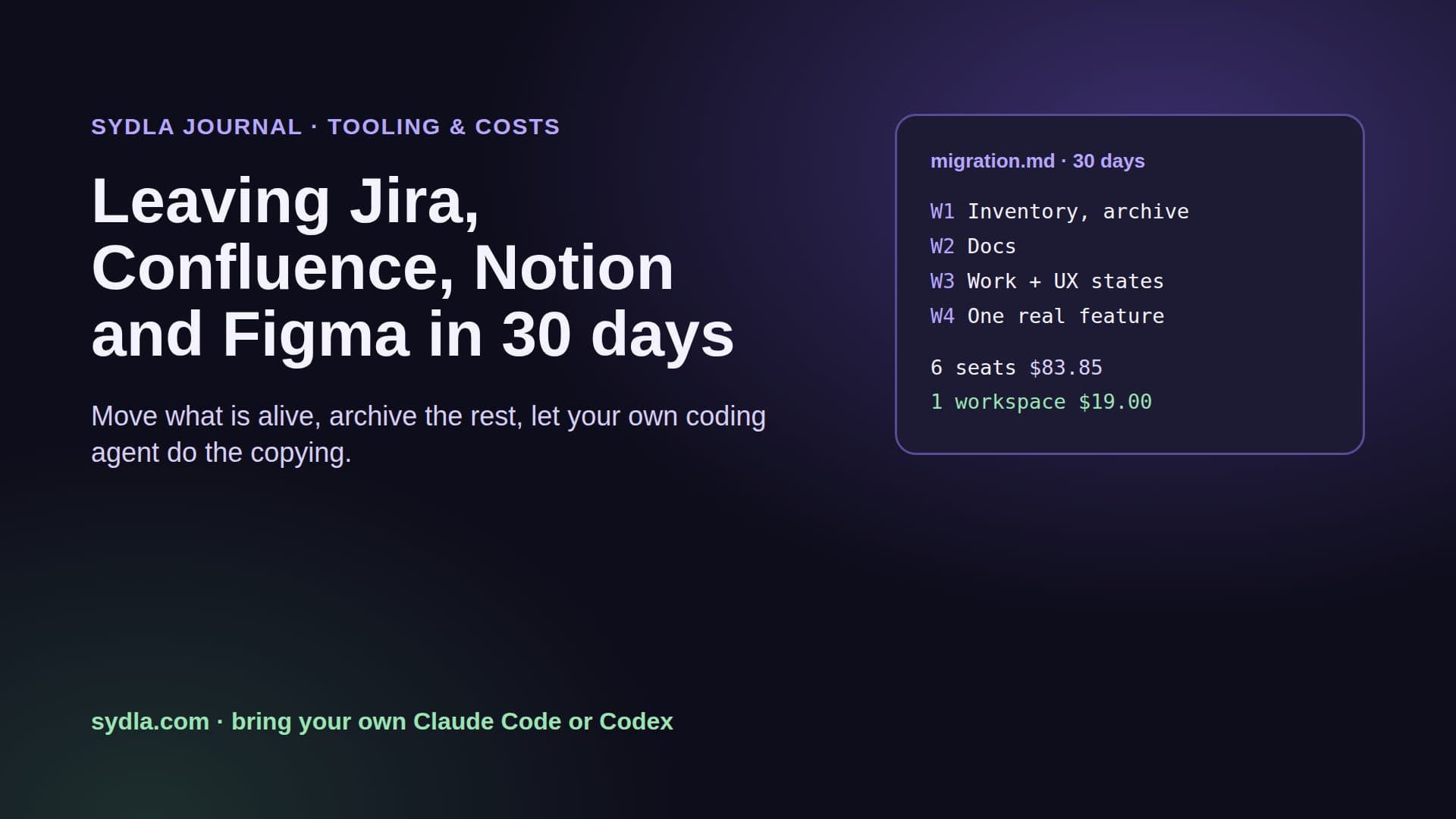
Add the seats and the six tools come to $83.85 per user per month before any overage, against $19 for Sydla, a saving of $64.85. Put Rovo Dev on top and a developer seat on the Atlassian side passes $100. The full breakdown by team size is in our stack cost guide, and the comparison overview covers each tool.
Claude Code from Jira: what Open in coding tool passes
Atlassian has made Claude Code a first-class option inside Jira. Since 16 June 2026, the Development panel on a work item has an Open in coding tool button that supports six agents at launch: Claude Code, Cursor, GitHub Copilot, OpenAI Codex, Rovo Dev CLI and VS Code. Desktop apps open with a prompt ready; for terminal tools, Jira shows the prompt to copy into your terminal.
Atlassian says the work item summary, description and linked docs go into that starting prompt, packaged through Atlassian MCP, and that the agent can pull more context through MCP as it works. That is a real improvement over pasting a ticket by hand. Atlassian does not say whether those follow-up MCP calls spend Rovo credits; enriched Teamwork Graph calls are metered at 1 to 10 credits on the credits page, so check your usage report after a week.
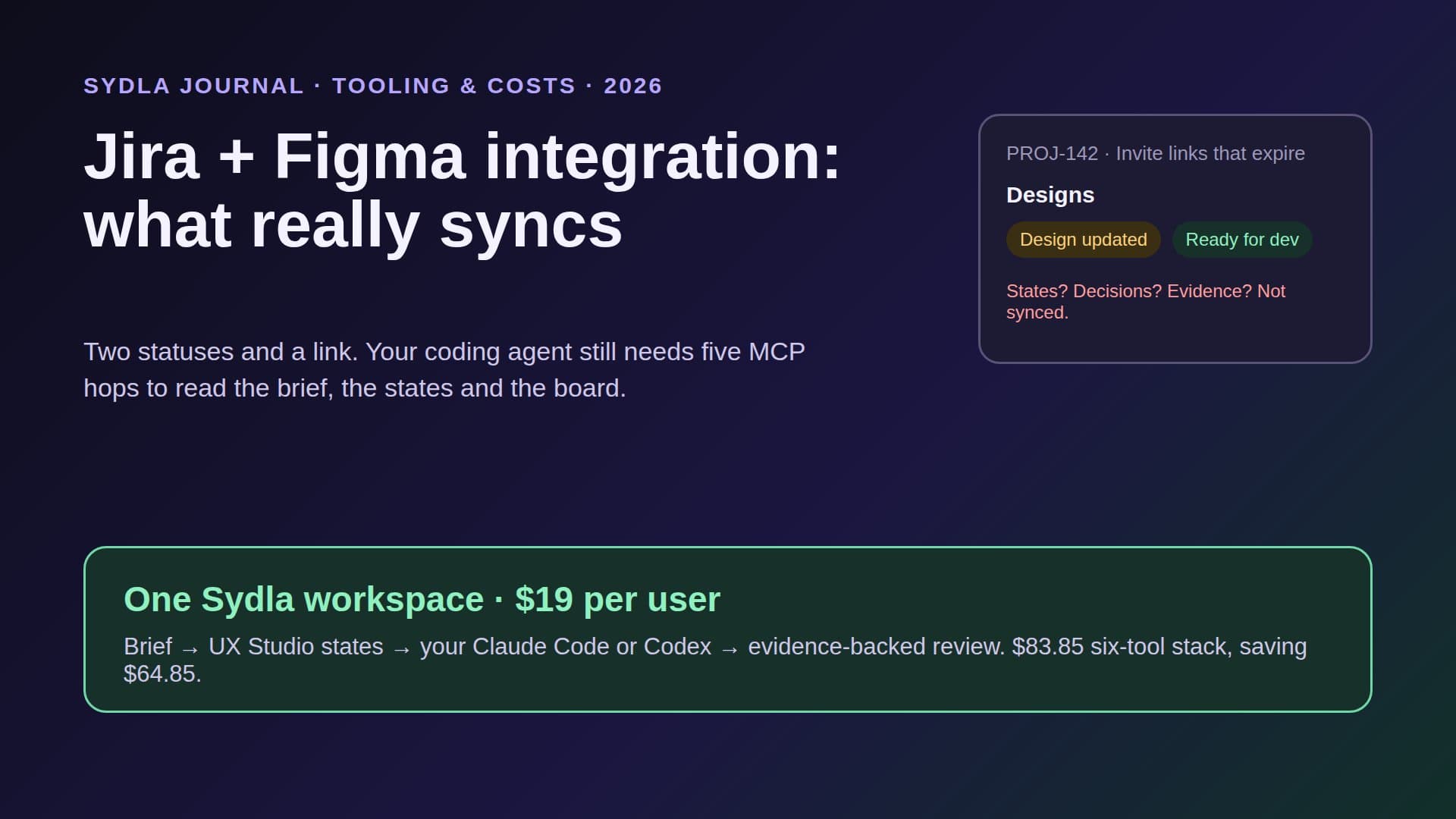
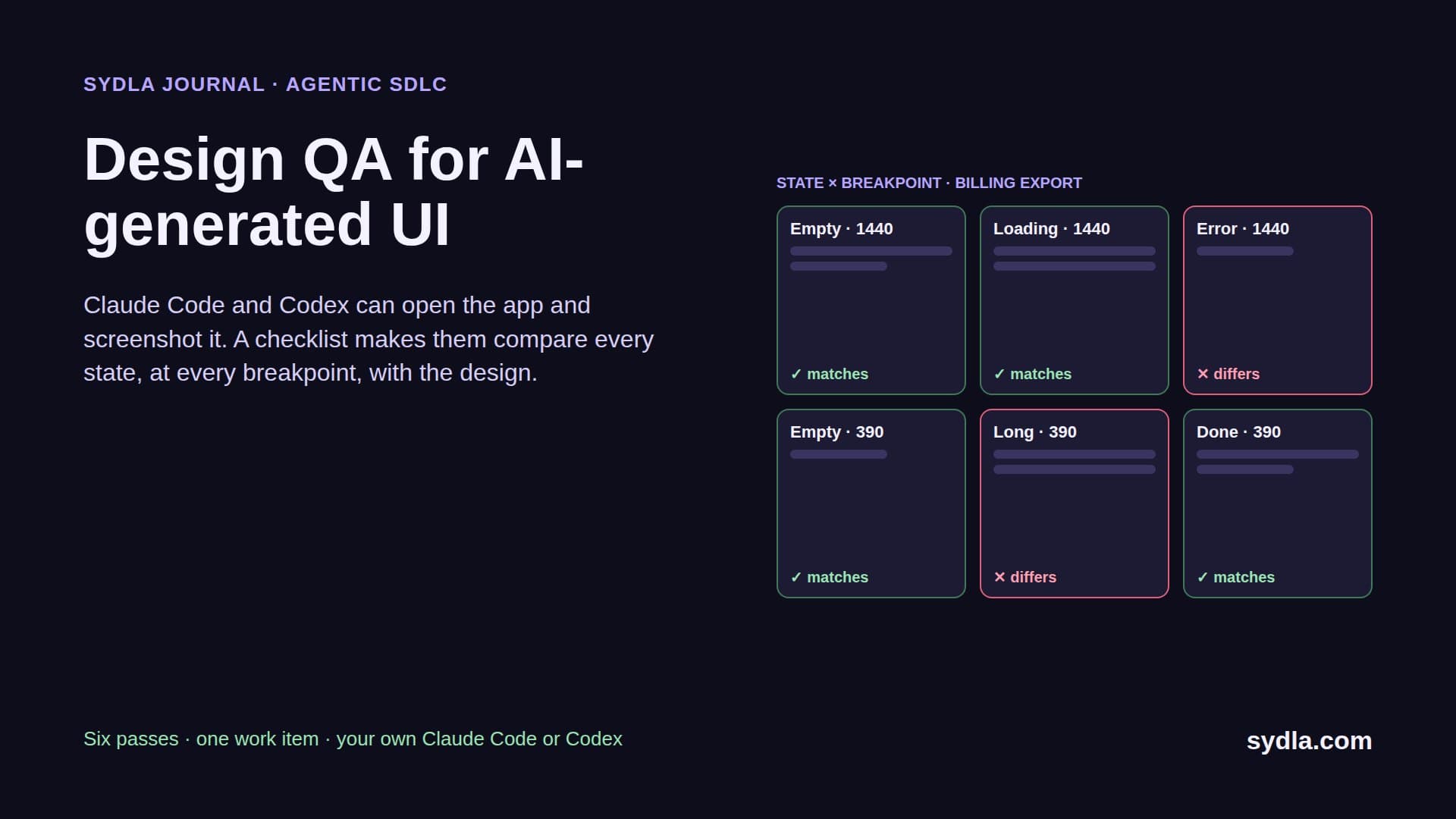
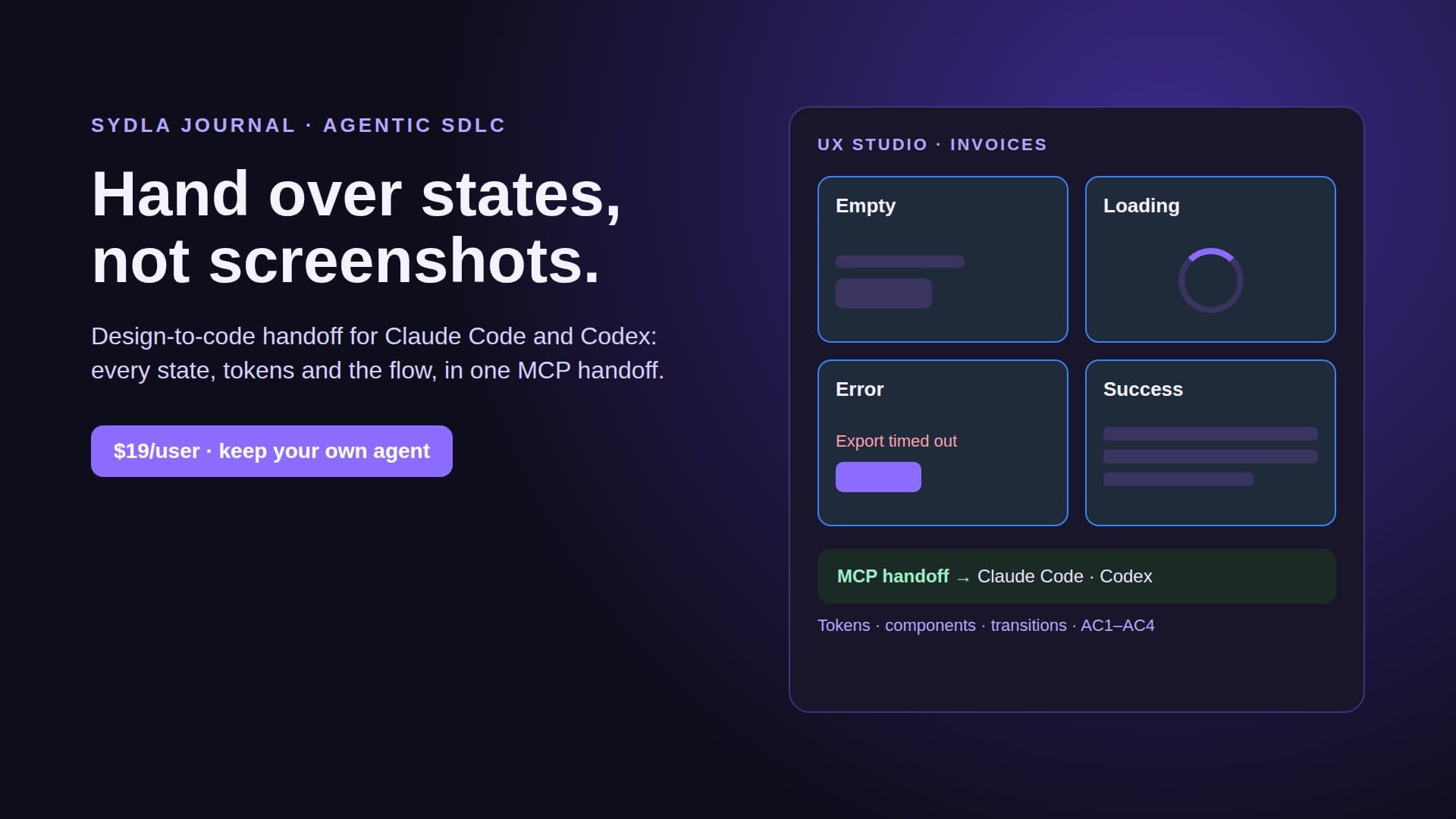
What the button cannot pass is what is not in Jira: the designed empty, loading and error states in Figma, the decisions parked on a Miro board, and the evidence format your reviewer expects. The agent gets a good ticket and a link. Our Jira and Figma integration guide shows what that link carries and what it leaves out.
Technical walkthrough: your agent on a shared brief and UX Studio states
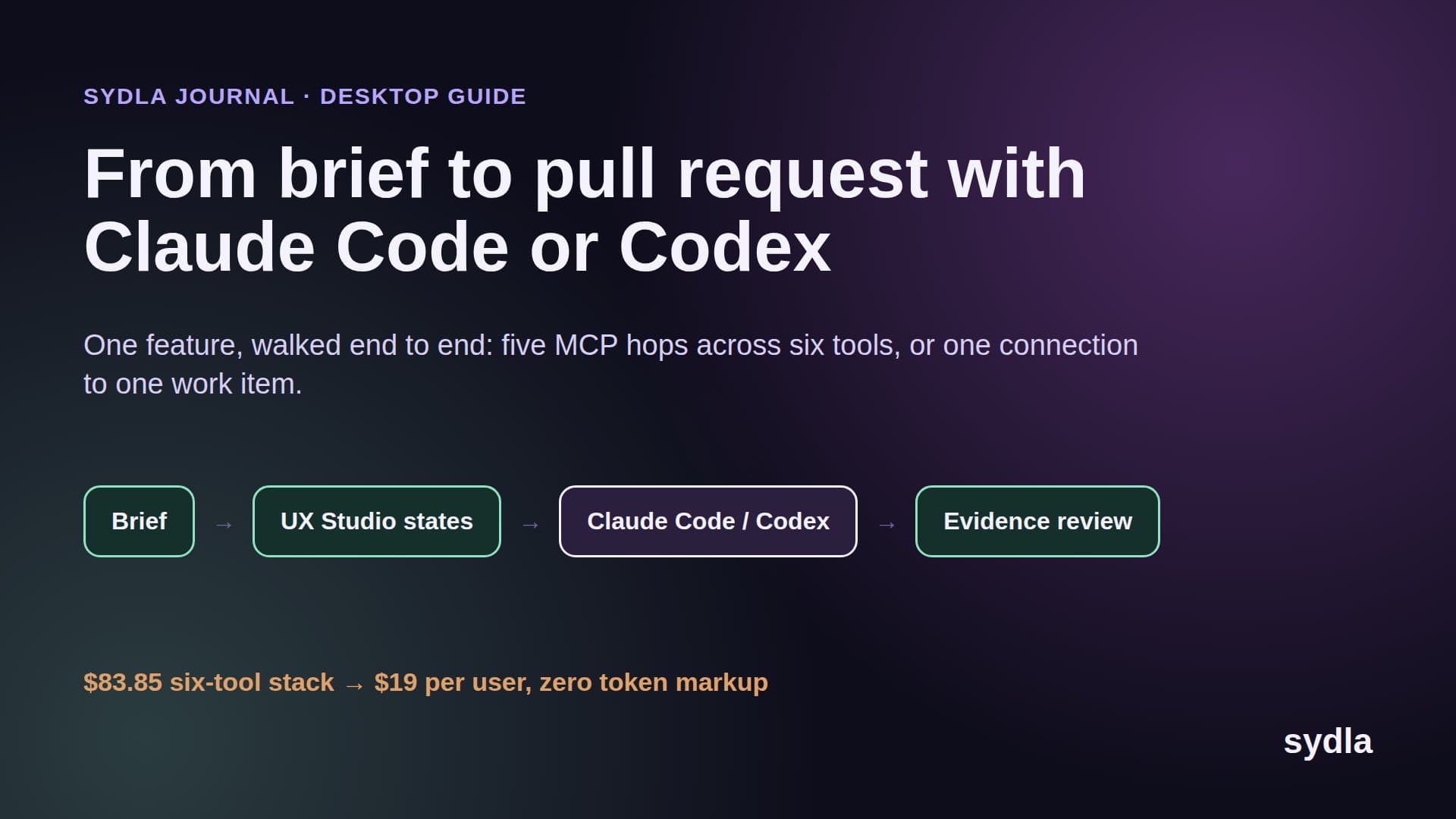
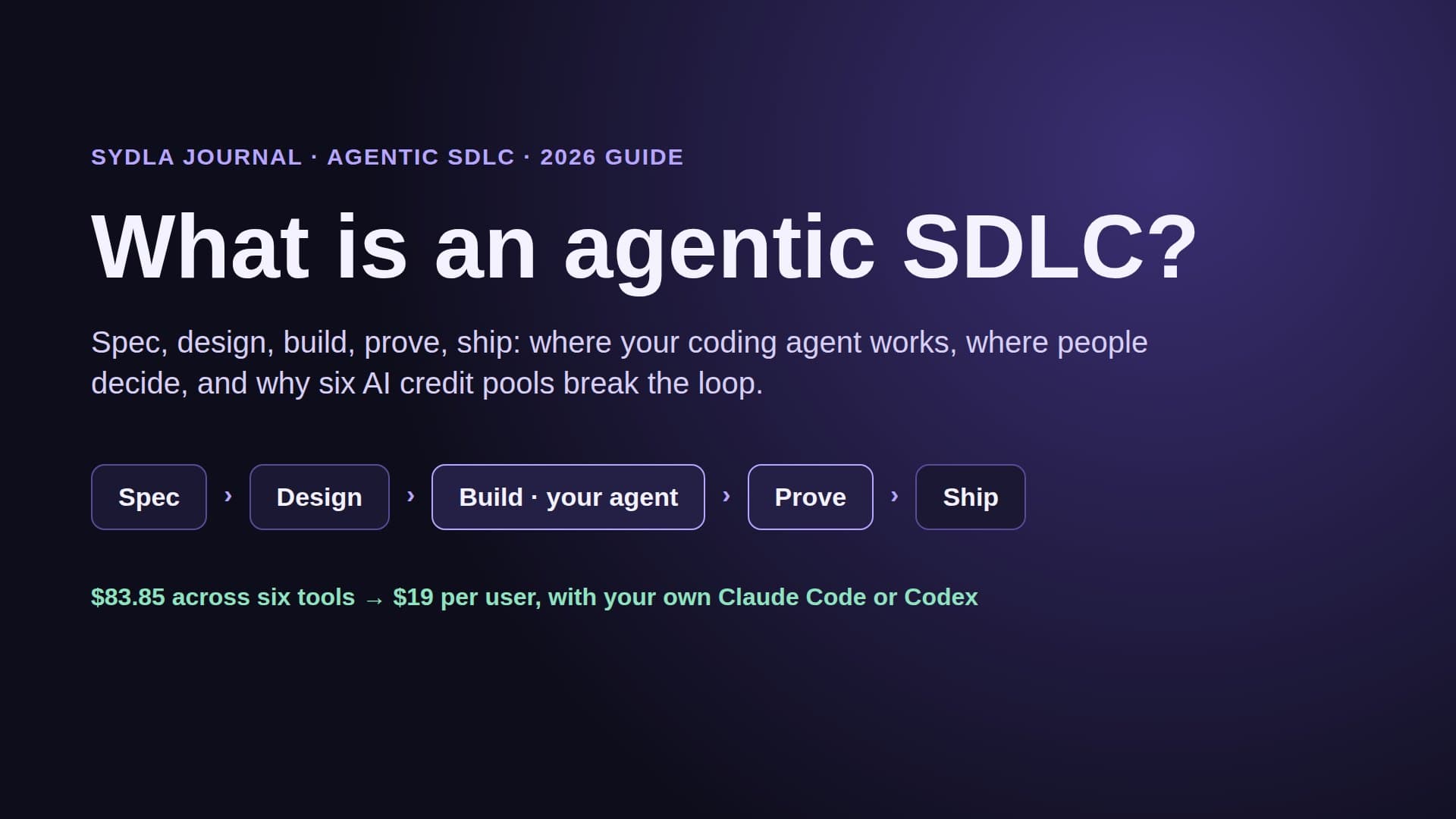
Sydla takes the opposite route. Instead of teaching six tools to hand context to an agent, it keeps the context in one workspace and lets the agent you already pay for read it. Here is the loop with Sydla Desktop.
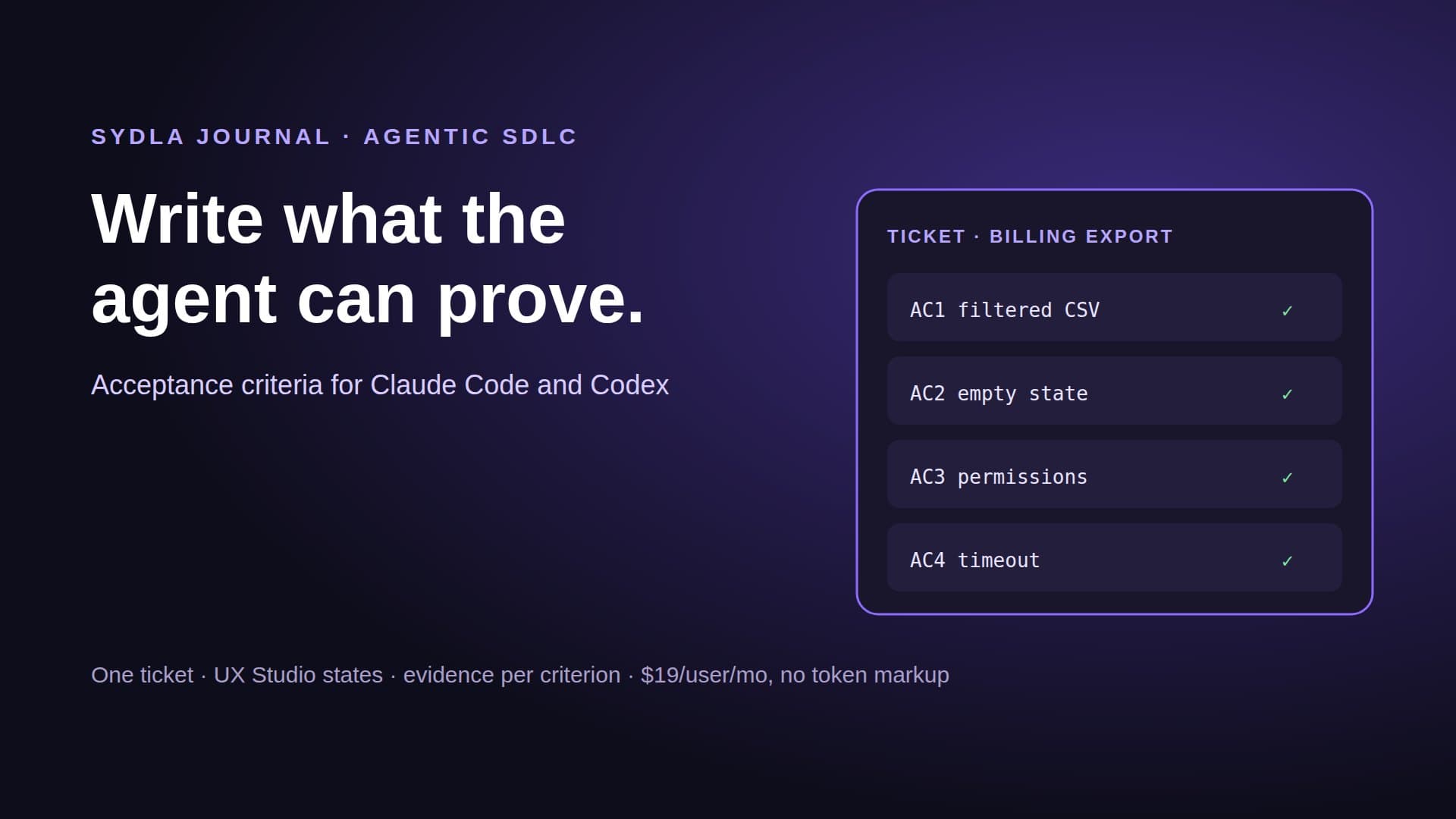
- Brief. The ticket sits in an initiative with a versioned brief and numbered acceptance criteria. Each save is signed by whoever made it, a person or an agent.
- UX Studio. The screens and their states, empty, loading, error and success, are designed next to the ticket and published as a handoff with tokens, not a frame link.
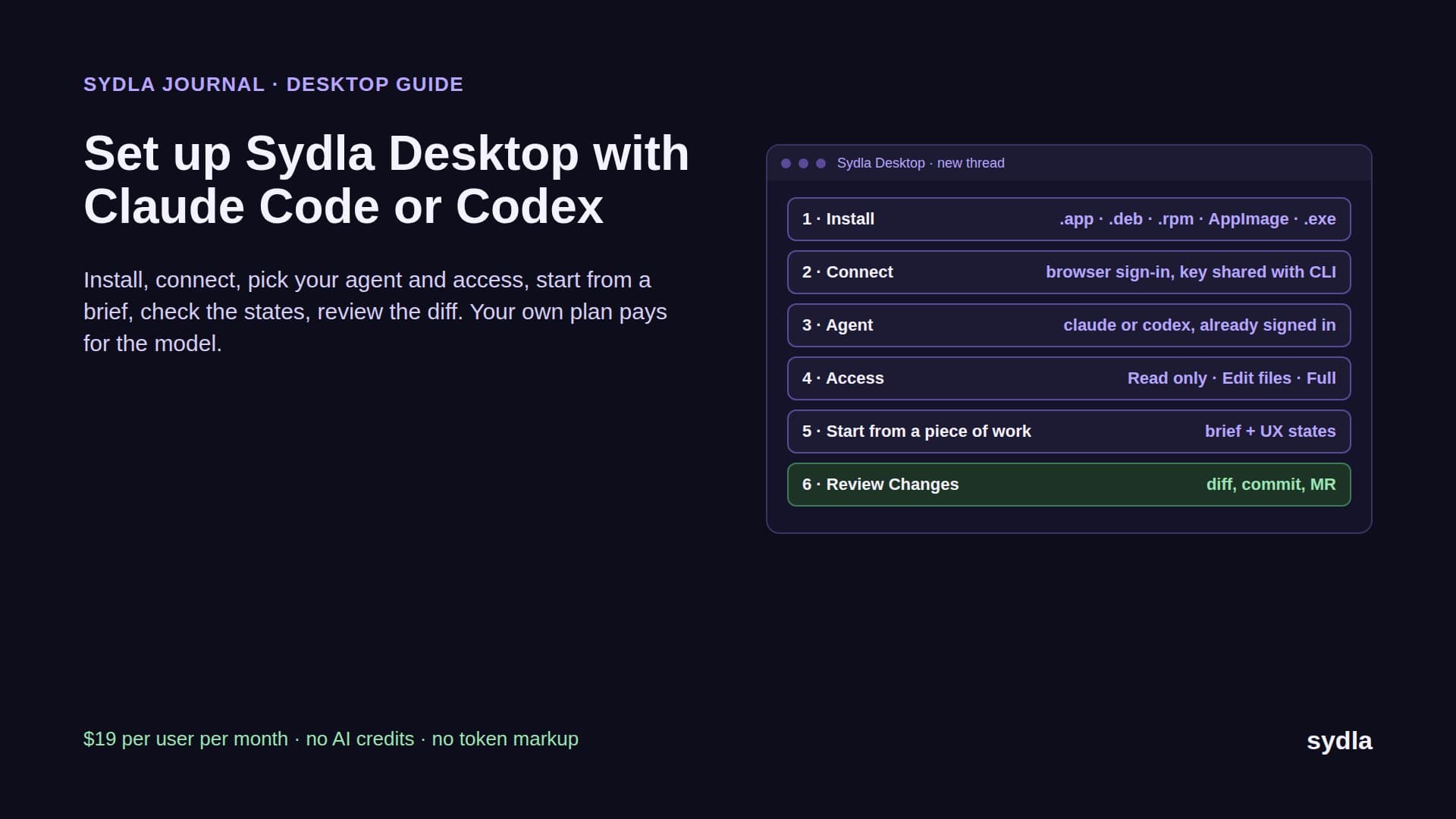
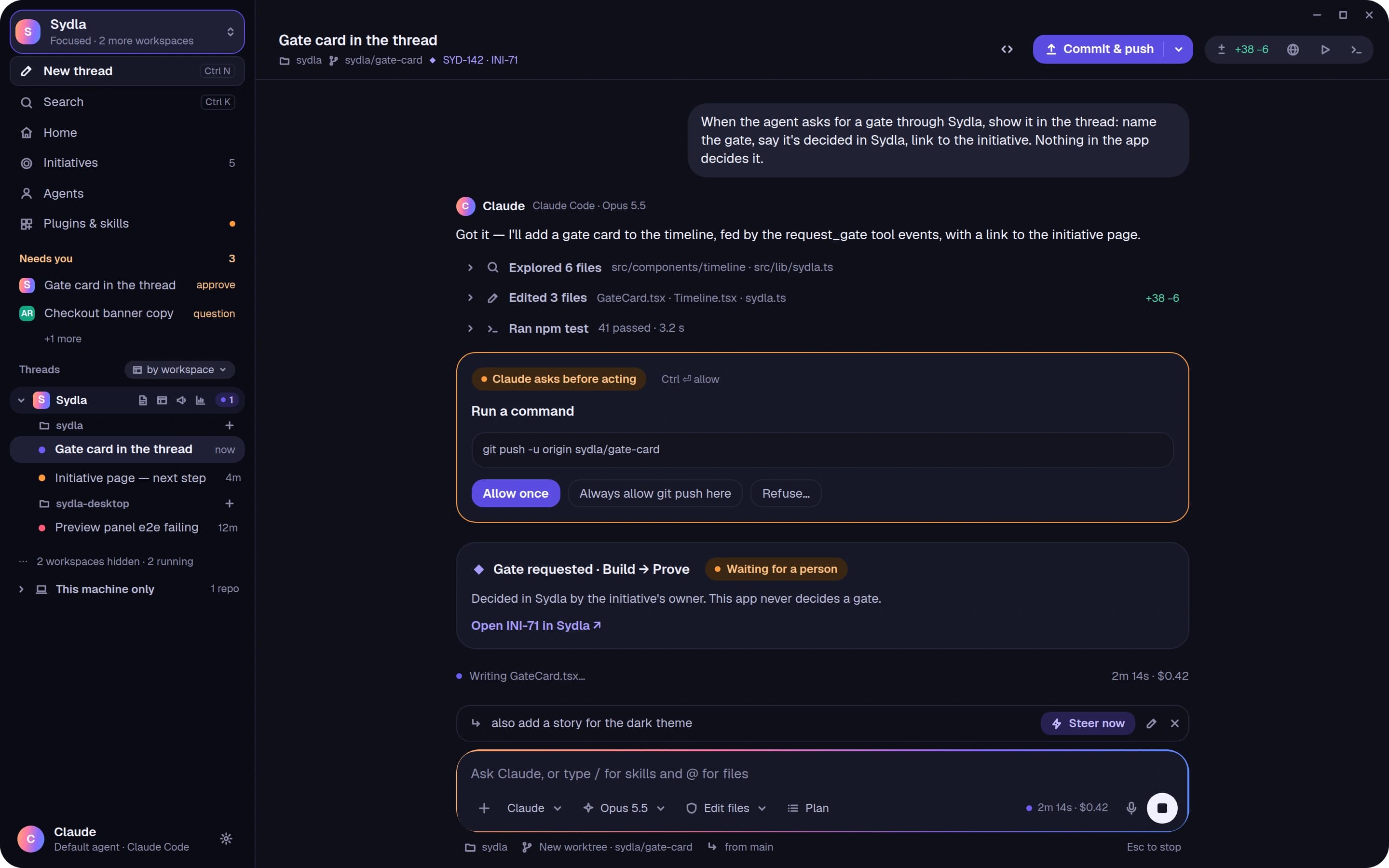
- Run. In Sydla Desktop you open the ticket, start a thread and pick claude or codex. Desktop drives the CLI you are already signed in to, so the model, the limits and the bill stay on your plan. Each thread has an access level, Read only, Edit files or Full access, with a Preview panel and a Changes view beside the conversation.
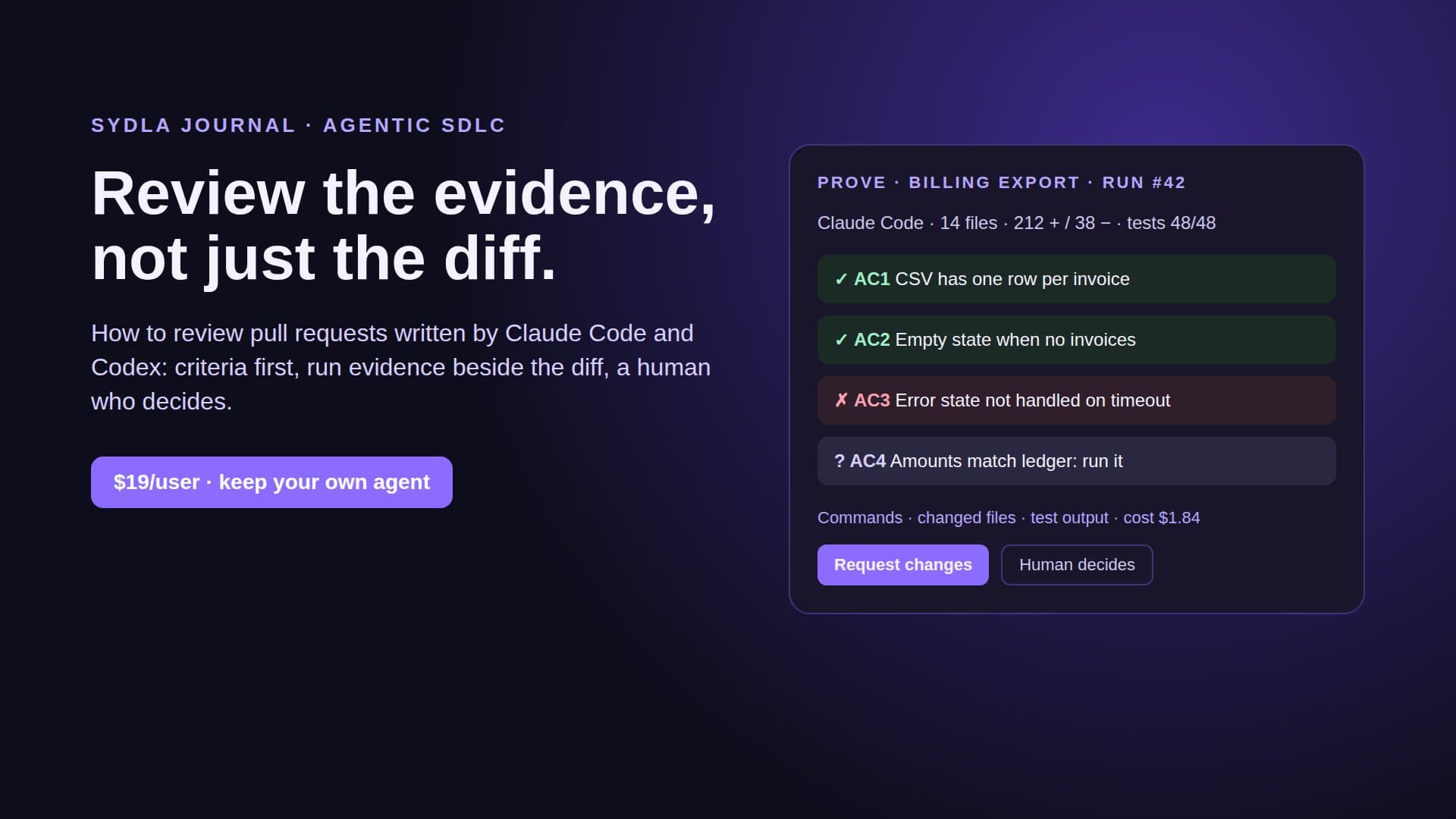
- Review. The agent records evidence against each criterion. A person reviews it next to the diff and decides the merge and release gates; an agent can request a gate but never approve one.
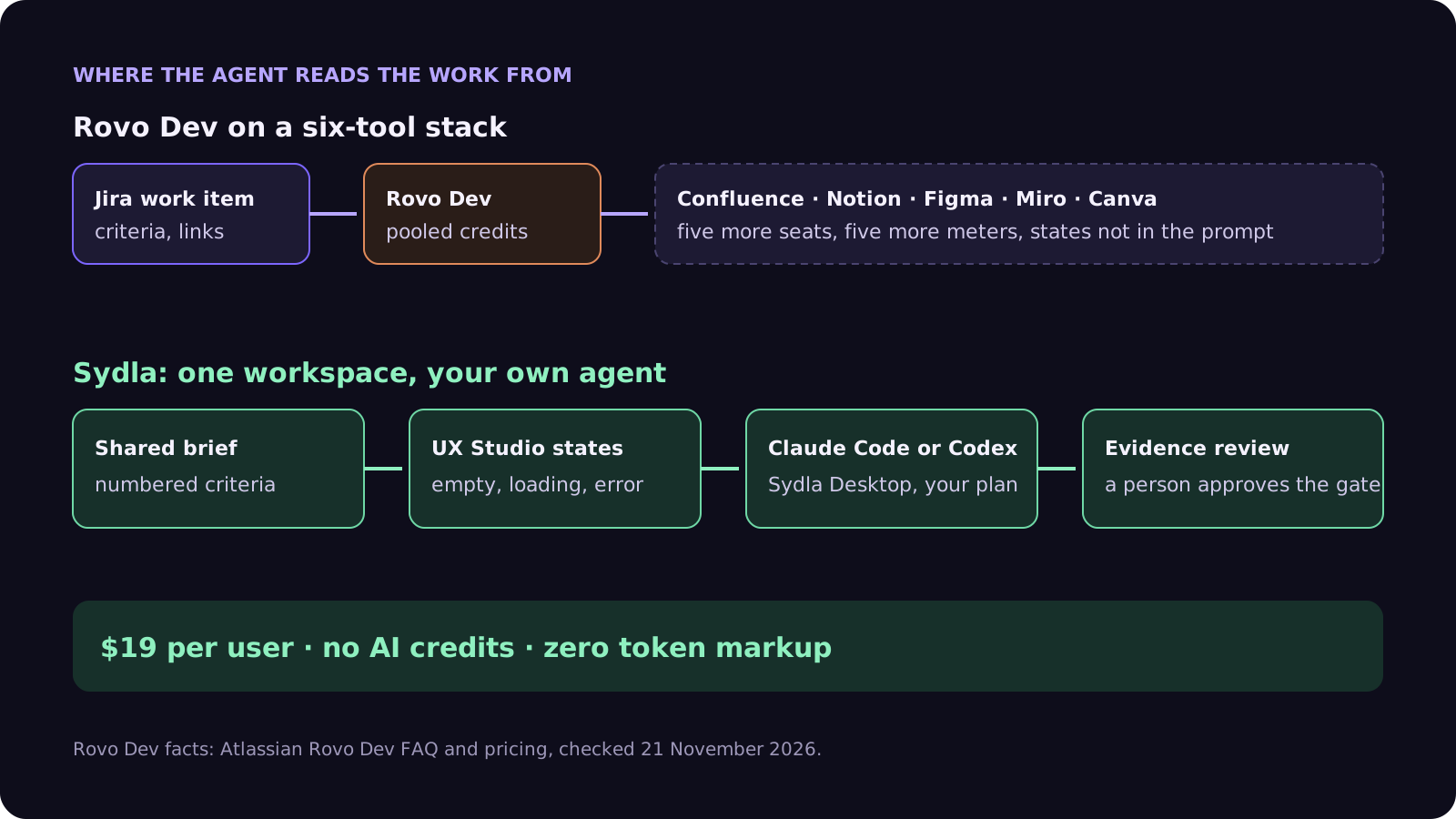
Outside Desktop, the same context is one MCP connection away. For Claude Code, add the Sydla server once with claude mcp add using the HTTP transport and the sydla.com/mcp URL. For Codex, add an mcp_servers.sydla table to config.toml with the same URL and your key in http_headers. The first prompt stays short: read the work item, list the criteria and states you will build, work on a branch, record evidence for each criterion. Our Desktop setup guide has every step, and the brief-to-pull-request walkthrough follows one feature end to end.
When Rovo Dev is the right choice
Be fair to Atlassian. If your company standardised on Jira, Bitbucket and Confluence, your security team prefers one vendor for AI, and you want reviews that check each Jira acceptance criterion with no setup, Rovo Dev and Code Reviewer fit well. Annual customers keep their prepaid term through the transition, and admin controls, audit trails and spending caps are mature.
Claude Code or Codex make more sense if your engineers already pay for a plan, want to pick the model, or work across repositories and tools that are not Atlassian's. That is most solopreneurs, indie hackers, founding engineers and lean product teams. For them, the open question is not which agent, but where the agent reads the work from. Our Claude Code vs built-in AI agents guide and bring your own coding agent guide go deeper on that choice.
A five-step plan for the Rovo Dev transition
Whichever way you lean, the end-of-life notice is a natural moment to check what you pay for.
- Export a month of usage. Pull Rovo Dev and Rovo credit usage per developer, and count how many tasks and reviews it bought.
- Decide pay as you go before 3 December. It is on by default. Set a spending cap, or turn it off if a paused review is better than a surprise bill.
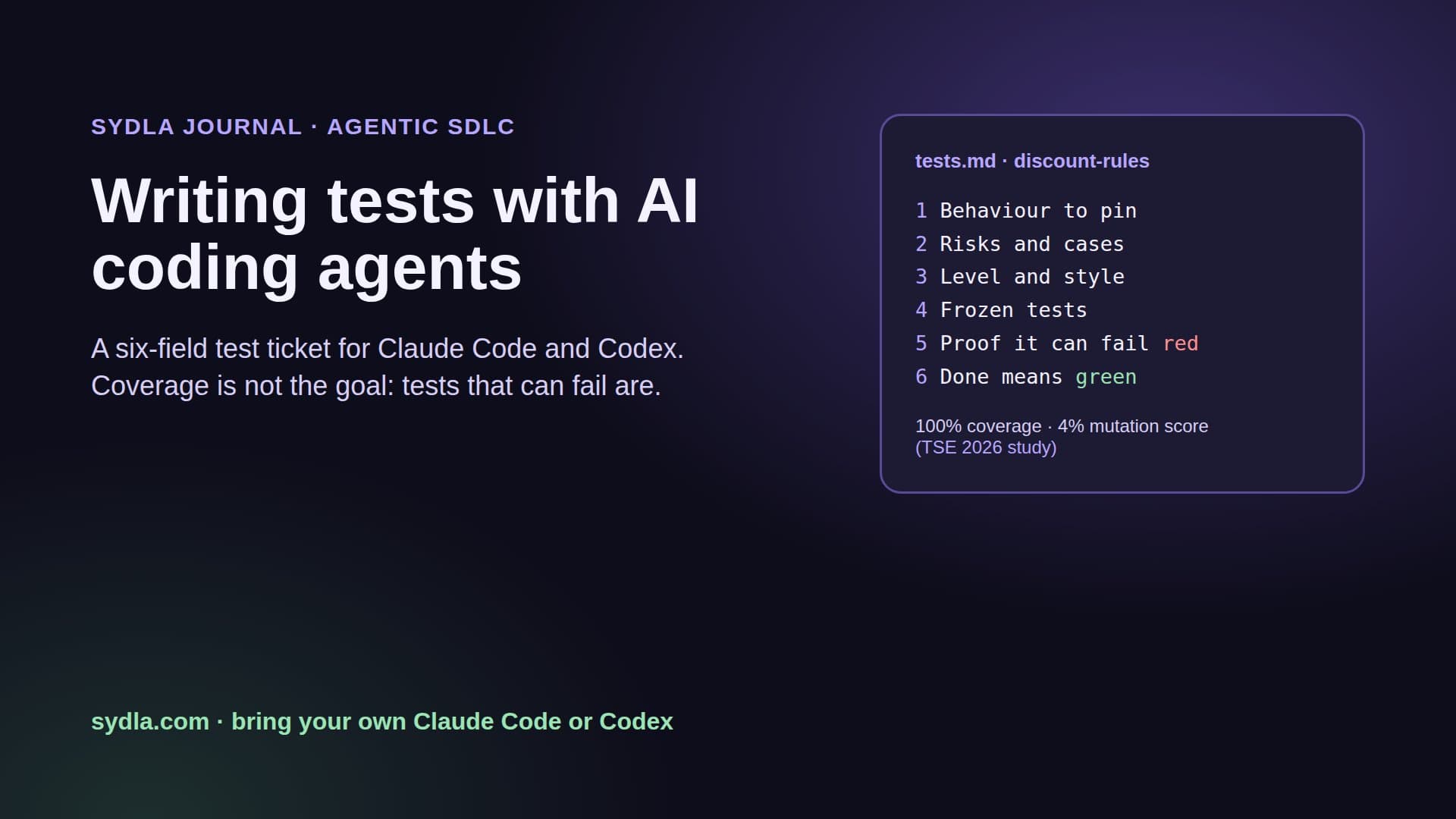
- Run one ticket both ways. Give the same ticket to Rovo Dev and to Claude Code or Codex with the same criteria, and compare the pull requests and the evidence, not the demo.
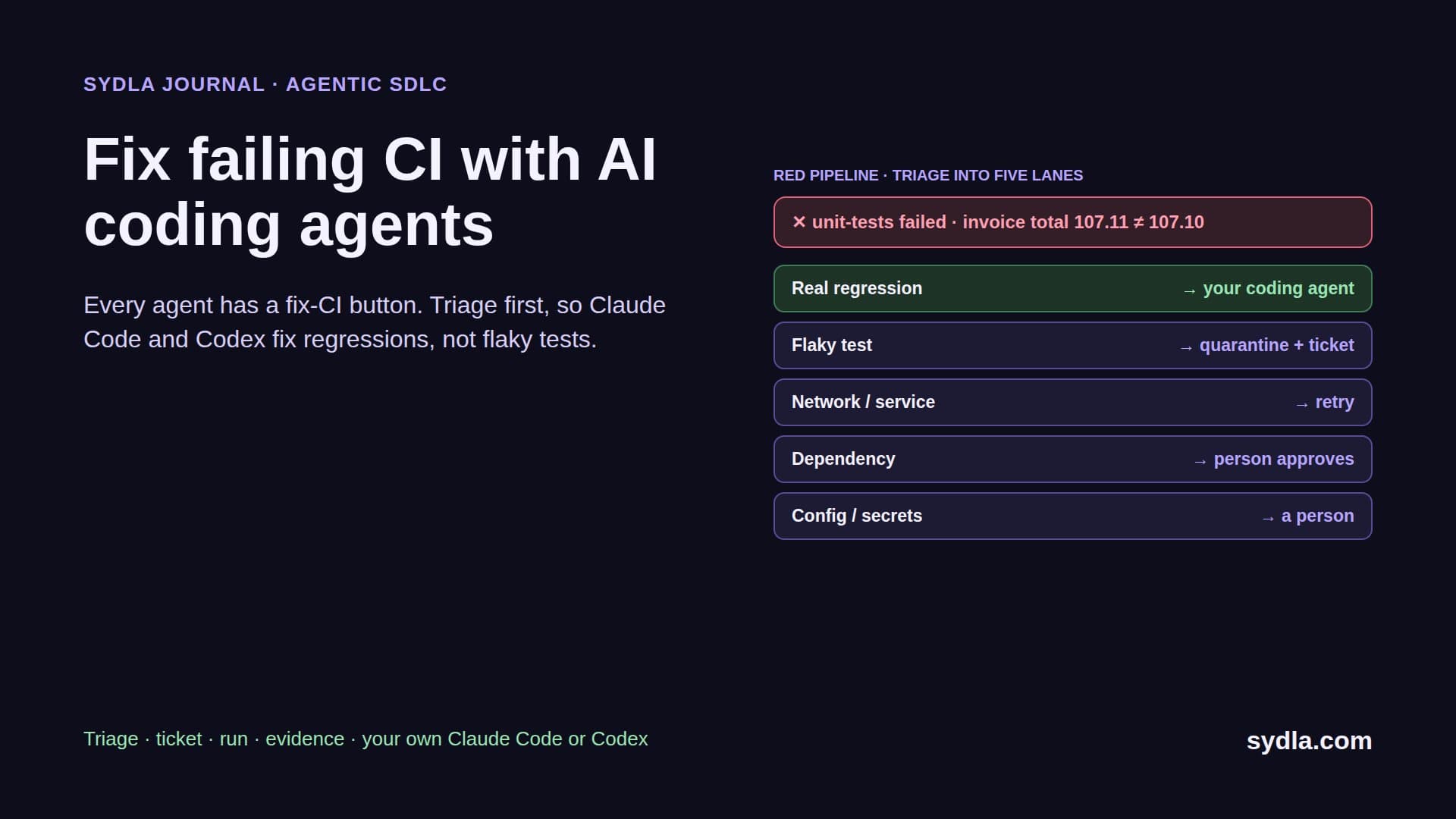
- Count the hops. List every tool the agent had to read to build the ticket properly. That number, not the agent, is usually the cost driver.
- Decide at renewal. If the hops are the problem, try one workspace. Our 30-day migration plan shows how to move only what is alive.
Try it on your next ticket
Sydla is $19 per user per month with every feature included and no AI credits to buy. Your Claude Code or Codex plan does the coding, and the brief, the states and the evidence live with the ticket. See the pricing section, read how Sydla works, then start your workspace and keep your Claude Code and Codex accounts.
Frequently asked questions
Is Rovo Dev being discontinued?
As a standalone product, yes. Atlassian's Rovo Dev FAQ says standalone Rovo Dev will reach end of life with at least 60 days' notice, and the final date was still TBA on 21 November 2026. The CLI is becoming the unified Atlassian Rovo CLI, standalone IDE features are being retired, and Code Reviewer moves into Jira and Teamwork Collection subscriptions on Rovo credits from 3 December 2026.
How much does Rovo Dev cost in 2026?
Rovo Dev Standard is listed at $20 per developer per month with 2,000 Rovo Dev credits, then $0.01 per extra credit. Inside Jira, Rovo features draw on a pooled allowance of 25, 70 or 150 credits per user per month on Standard, Premium or Enterprise, with pay as you go at $0.01 per credit on by default from 3 December 2026. Atlassian does not publish a credit cost per coding task.
Is Claude Code cheaper than Rovo Dev?
It depends on usage. Claude Code is included in Claude plans from $20 to $200 a month and draws from that plan's limits with no per-task credits, or runs on API pricing with a key. Rovo Dev starts at $20 per developer for 2,000 credits, then $0.01 per credit. Heavy users who already pay for Claude or ChatGPT avoid paying for a second agent meter.
Can I use Claude Code or Codex with Jira?
Yes. Since June 2026 Jira's Open in coding tool button sends a work item's summary, description and linked docs to Claude Code, Codex, Cursor, GitHub Copilot, Rovo Dev CLI or VS Code through Atlassian MCP. You can also add Atlassian's MCP server to either agent. Design states in Figma and boards in Miro still need their own MCP servers.
What is the best Rovo Dev alternative?
For teams that already pay for Claude or ChatGPT, keeping Claude Code or Codex and giving it better context is usually simplest. Sydla replaces Jira, Confluence, Notion, Figma, Miro and Canva in one $19 per user workspace, against $83.85 for the six tools, and runs your own Claude Code or Codex through Sydla Desktop with zero token markup and no AI credits.
Real native session with Codex. Edited waiting times; 11 acceptance tests pass. No commit or push is performed.